

Pollinator Post 1/22/25 (2)
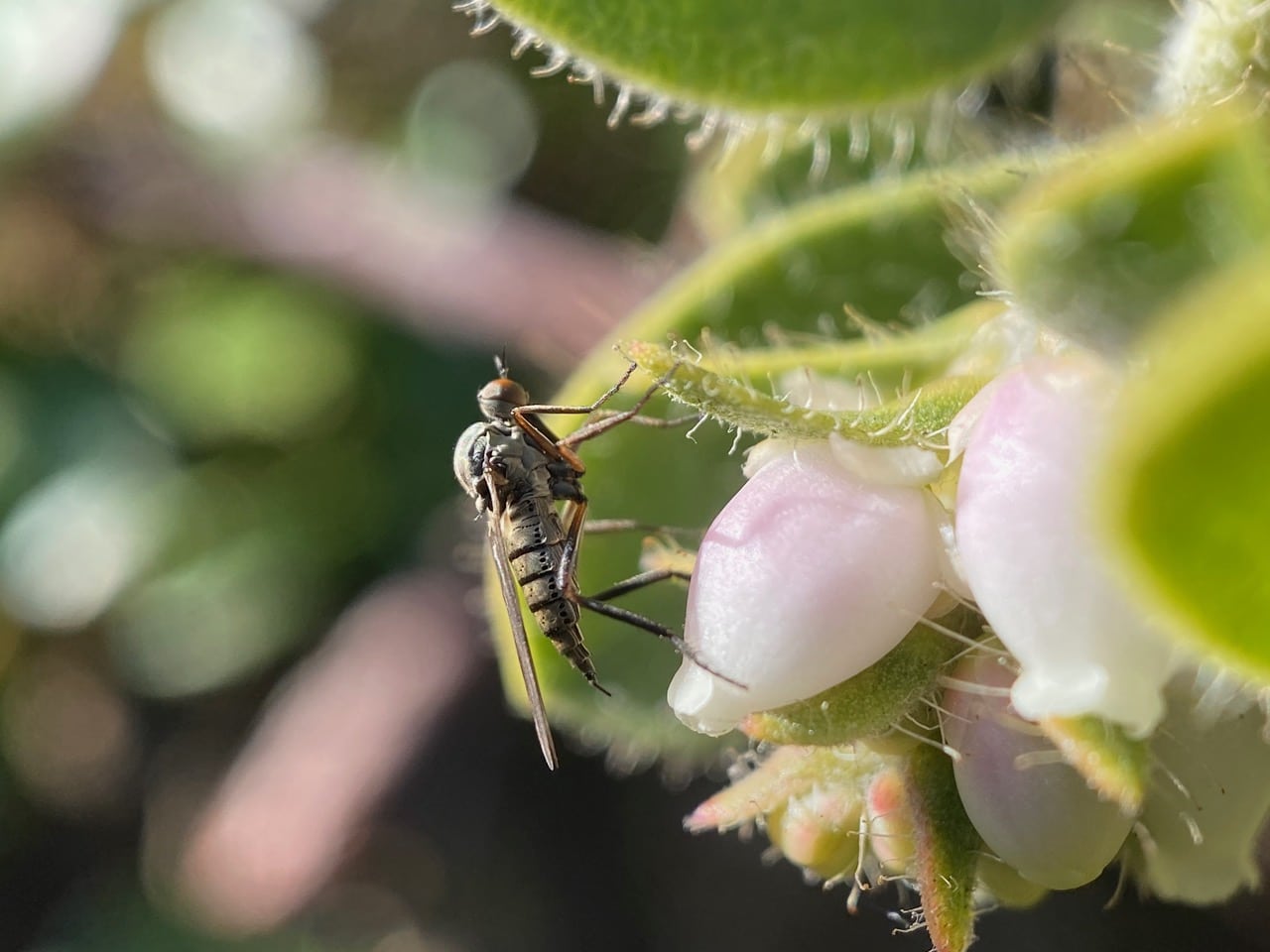
A Dance Fly is perched on a manzanita flower. Its proboscis is thick and short; its legs are sturdy, probably raptorial. A predatory Dance Fly in the family Empididae?
Dance Flies, in the family Empididae, get their name from the habit of males of some species to gather in large groups and dance up and down in the air in the hopes of attracting females. They are predominantly predatory and they are often found hunting for small insects on and under vegetation in shady areas. Both genders may also drink nectar. Male dance flies give their sweeties a nuptial gift to eat while they mate. The gift is thought to enable her to complete the development of her eggs. Males may wrap their gifts in balloons of silk or spit, hence the other common name of Balloon Flies.
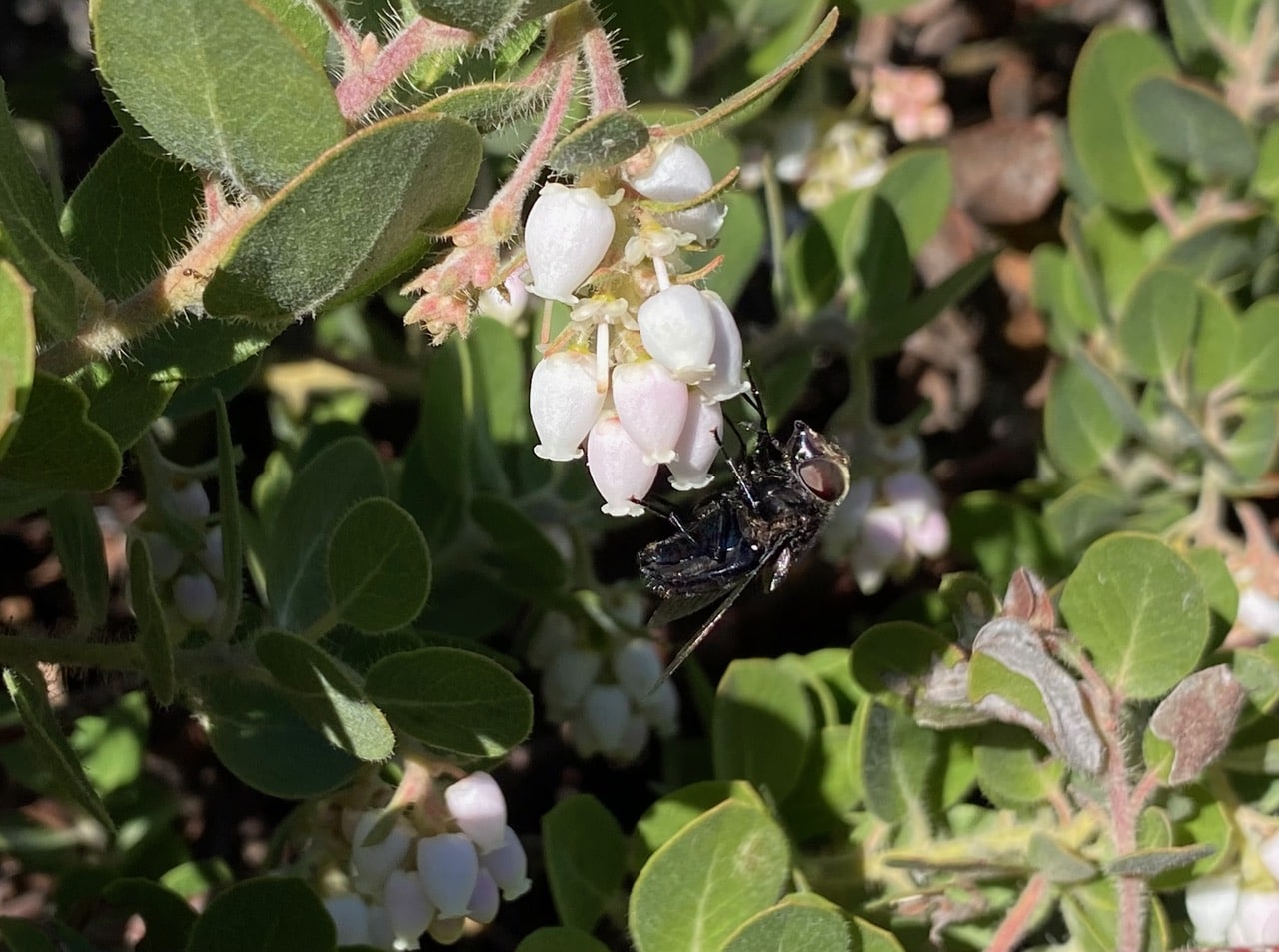
A large black insect has landed on a cluster of manzanita flowers. Wow, it’s a Purple Bromeliad Fly, Copestylum violaceum (family Syrphidae)! I have never seen these flies so early in the year, and have always associated them with summer and fall. It is easily the largest hoverfly in our area, about the size and a good mimic of the carpenter bee.
Note the unusual “snout” on the face of Copestylum. Copestylum females lay eggs in rotting plant materials. Adults visit a wide range of flowers for nectar and pollen. Not much else is known about the fly’s biology.
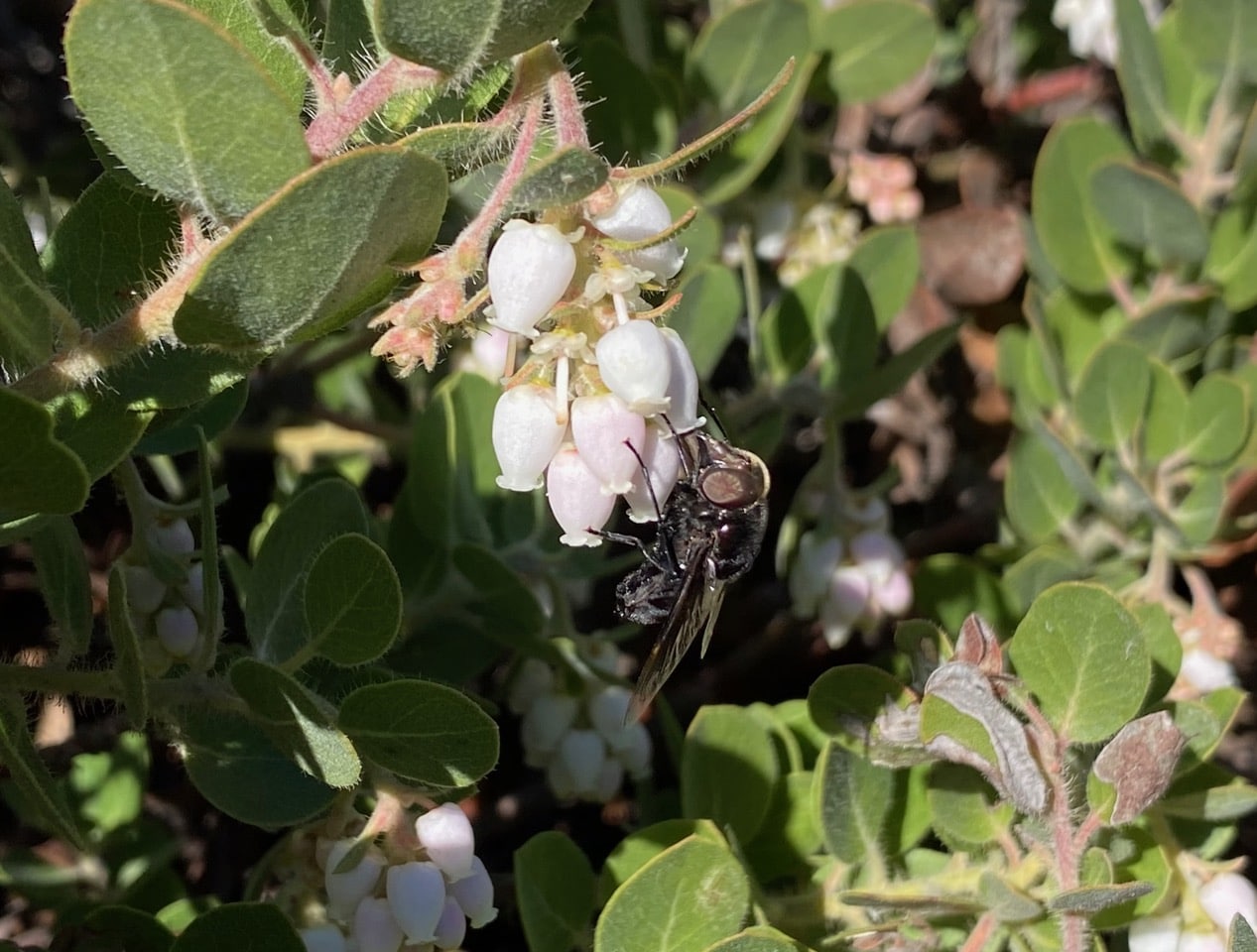
The Purple Bromeliad Fly is extending its tongue through the opening of the manzanita flower. It tongue is apparently long enough to reach the nectar within.
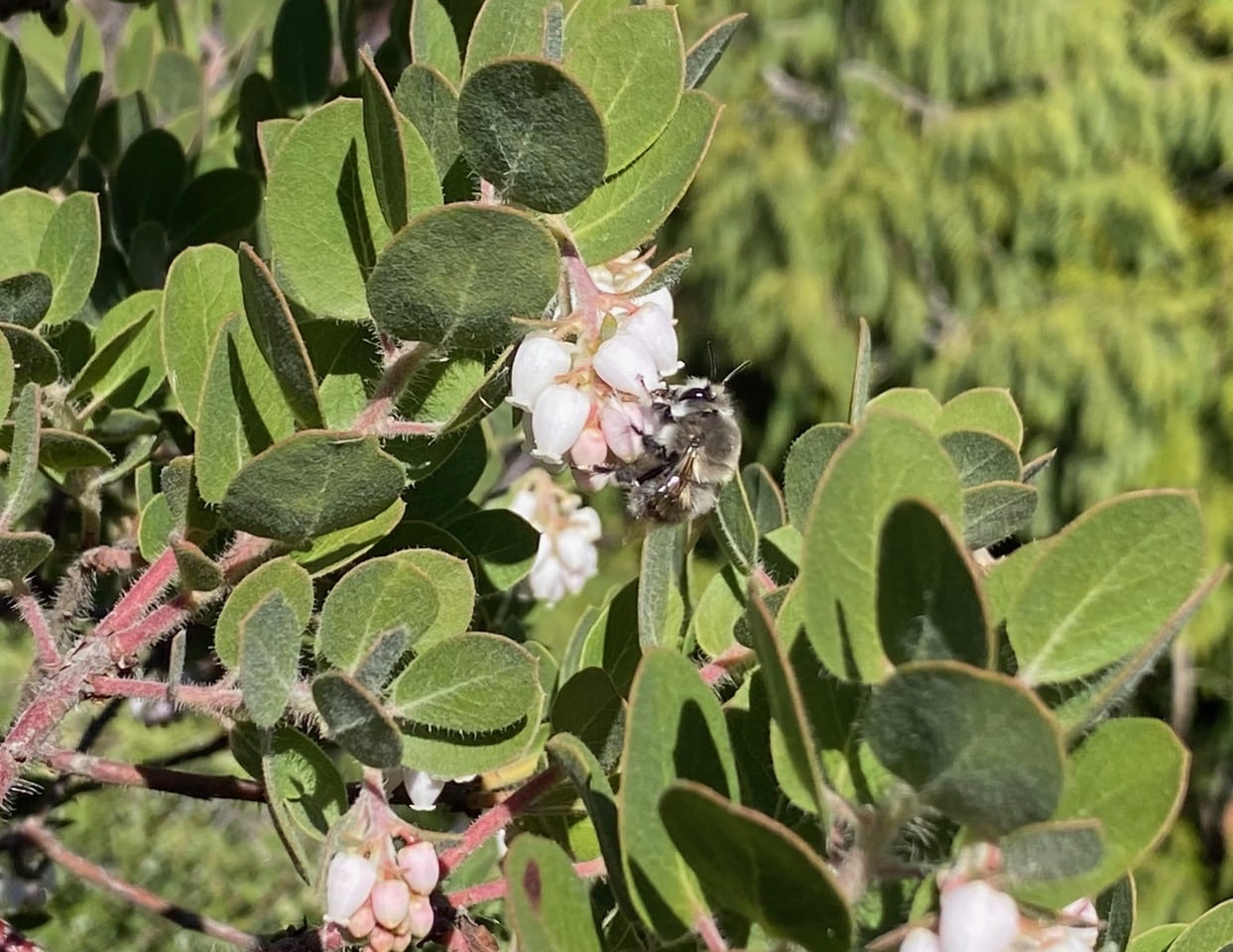
There’s a never-ending drama of the noisy and rambunctious Pacific Digger Bees, Anthophora pacifica (family Apidae) around the manzanita bushes today. They are alert and wary, never letting me close enough for a good photo. They work the flowers very quickly, only sipping from one or two flowers from each cluster they land on. Often they can be seen chasing each other in flight.
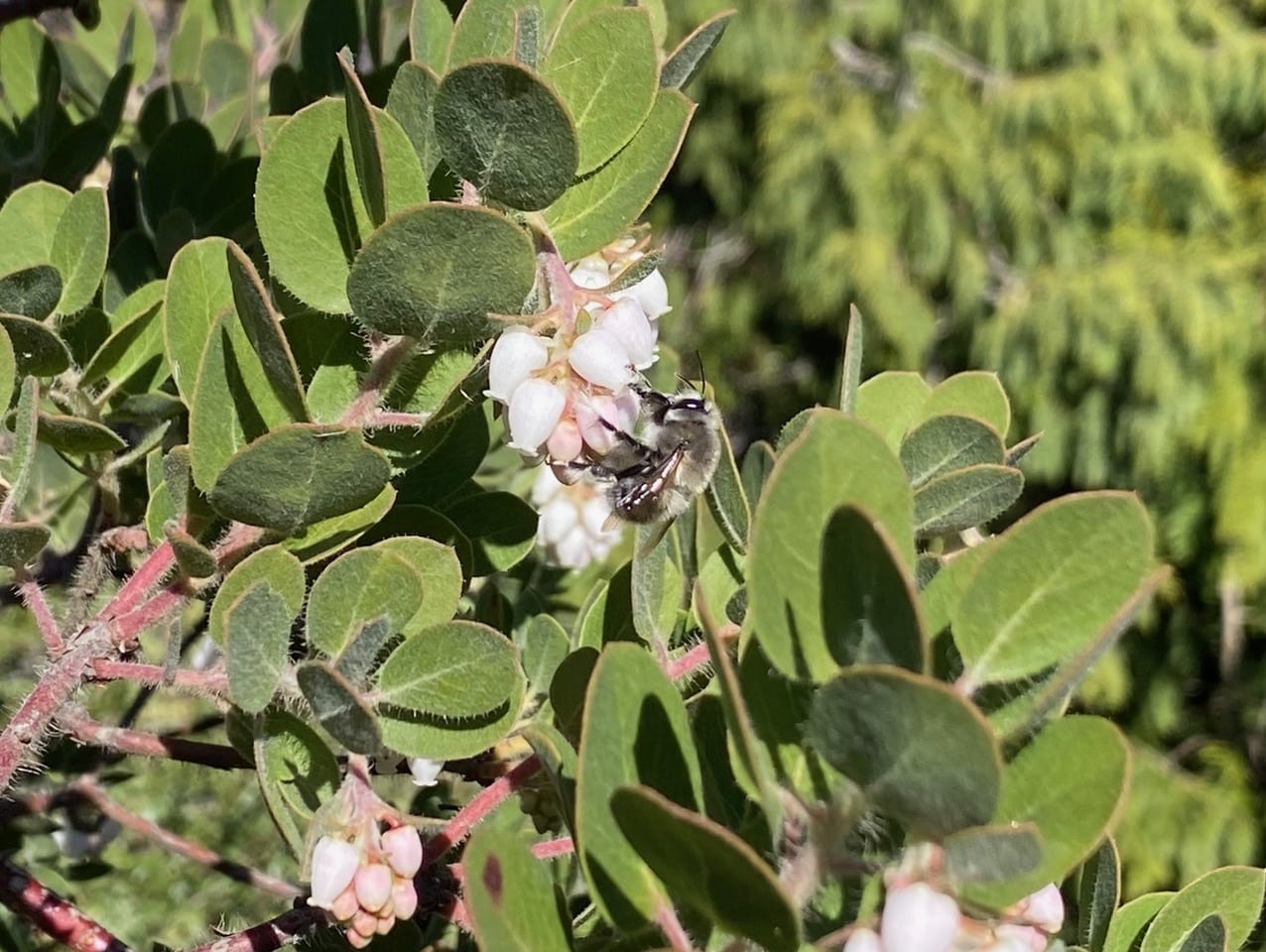

Typically, digger bees have “Roman noses” or concave profiles. The yellow integuments (partially covered by hairs) on his face distinguish this individual as a male. The Anthophora bees are equipped with long tongues that excel at accessing nectar and pollen from deep throated and tubular blossoms.
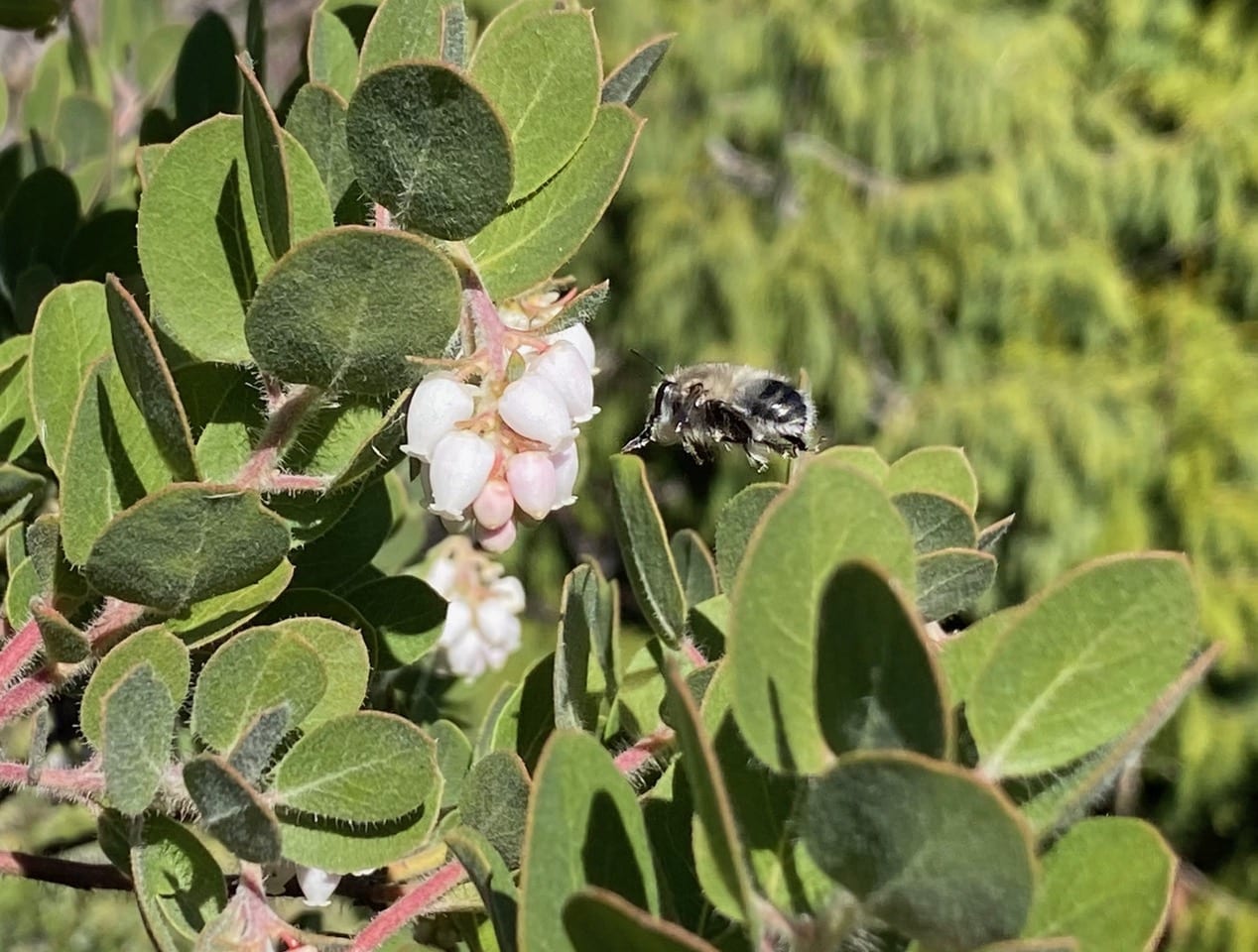
Off to the next flower!
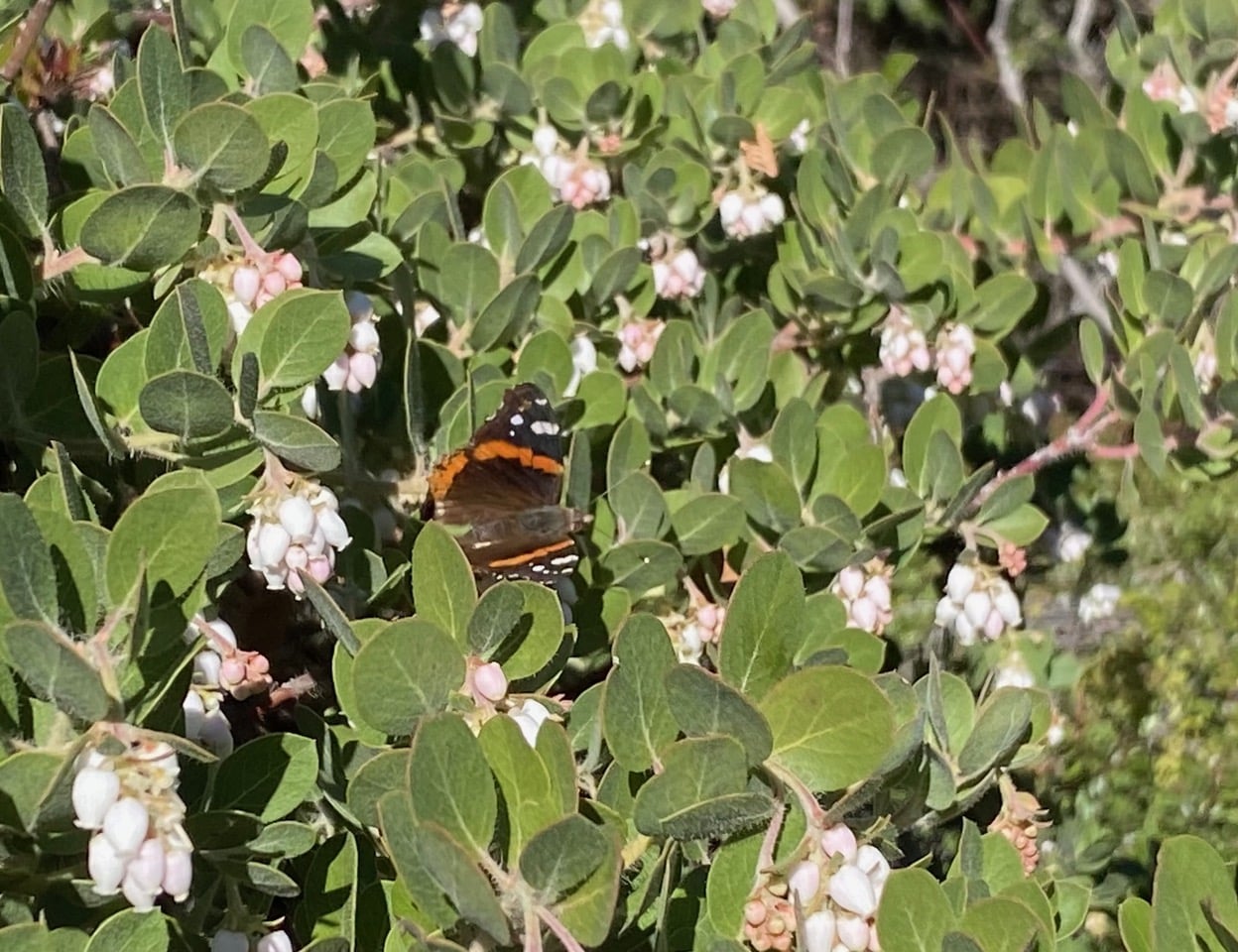
A Red Admiral butterfly has landed on a cluster of manzanita flowers. It is slow, laborious work for the large butterfly to aim its proboscis into the upside-down blossoms.
The Red Admiral, Vanessa atalanta (family Nymphalidae) is a striking butterfly with wings of black, red and white. Green eggs are laid singly on the tips of host plant leaves, notably plants in the nettle family, Urticaceae. Young caterpillars eat and live within a shelter of folded leaves; older caterpillars make a nest of leaves tied together with silk. Adult butterflies prefer sap flows on trees, fermenting fruit, and bird droppings, visiting flowers only when these are not available. Adults hibernate. The species is found in almost any habitat, from tundra to subtropics.
Do butterflies pollinate flowers? Although butterflies do not intentionally collect pollen as bees do, they can help pollinate flowers. While probing for nectar, they often unwittingly pick up pollen on their proboscis, legs, or bodies and transfer it from flower to flower, aiding in the pollination process.

A queen Yellow-faced Bumble Bee, subgenus Pyrobombus (family Apidae) is foraging on a cluster of manzanita flowers. In dense bushes such as this, the large and clumsy queen bees are often seen clambering from one cluster of flowers to the next without bothering to fly.
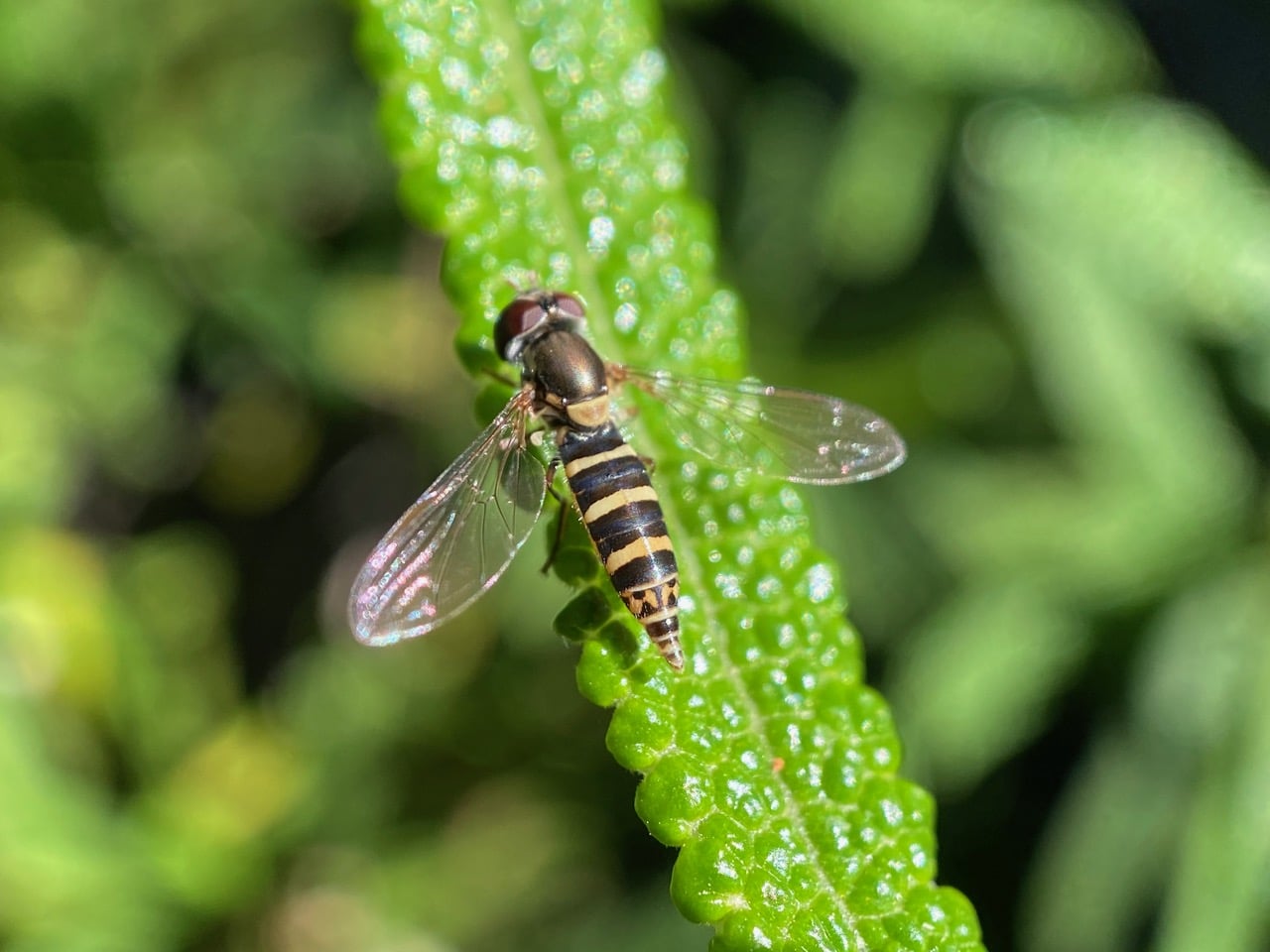
A Diamond Spottail hoverfly, Fazia micrura (family Syrphidae) has landed on a Salvia leaf. Note the characteristic four diamond-shaped yellow markings near the tip of the abdomen.
Hover Flies, also called flower flies or Syrphidae flies, make up the insect family Syrphidae. The adults of many species feed mainly on nectar and pollen, and are often seen hovering and nectaring at flowers. They are important pollinators of flowering plants in many ecosystems worldwide. The larvae feed on a wide range of foods. In many species, the larvae are insectivores and prey on aphids, thrips, and other plant-sucking insects. In other species, the larvae are saprotrophs, eating decaying plant and animal matter in the soil or in ponds and streams.
Many species of Hover Flies exhibit Batesian mimicry; they are brightly colored, with bands of yellow resembling the bees and wasps. The mimicry provides the fly with some measure of protection from potential predators, although the flies are harmless and lack a sting.
The Diamond Spottail, Fazia micrura occurs in western North America, from British Columbia south to California and Texas; and Mexico. The slender, elongate fly measures 6-7 mm. The adult and larva feed on pollen. Females lay eggs on flowers. Larvae are often encountered in the field chewing through the calyx and corolla of unopened flower buds. They are known to feed on pollen in the anthers. Usually only one larva is found in each flower. This larval diet is rather unusual for hoverflies, most of which consist of aphids on plants or decomposing matter in aquatic environments, depending on the species.