

Pollinator Post 1/20/25 (2)
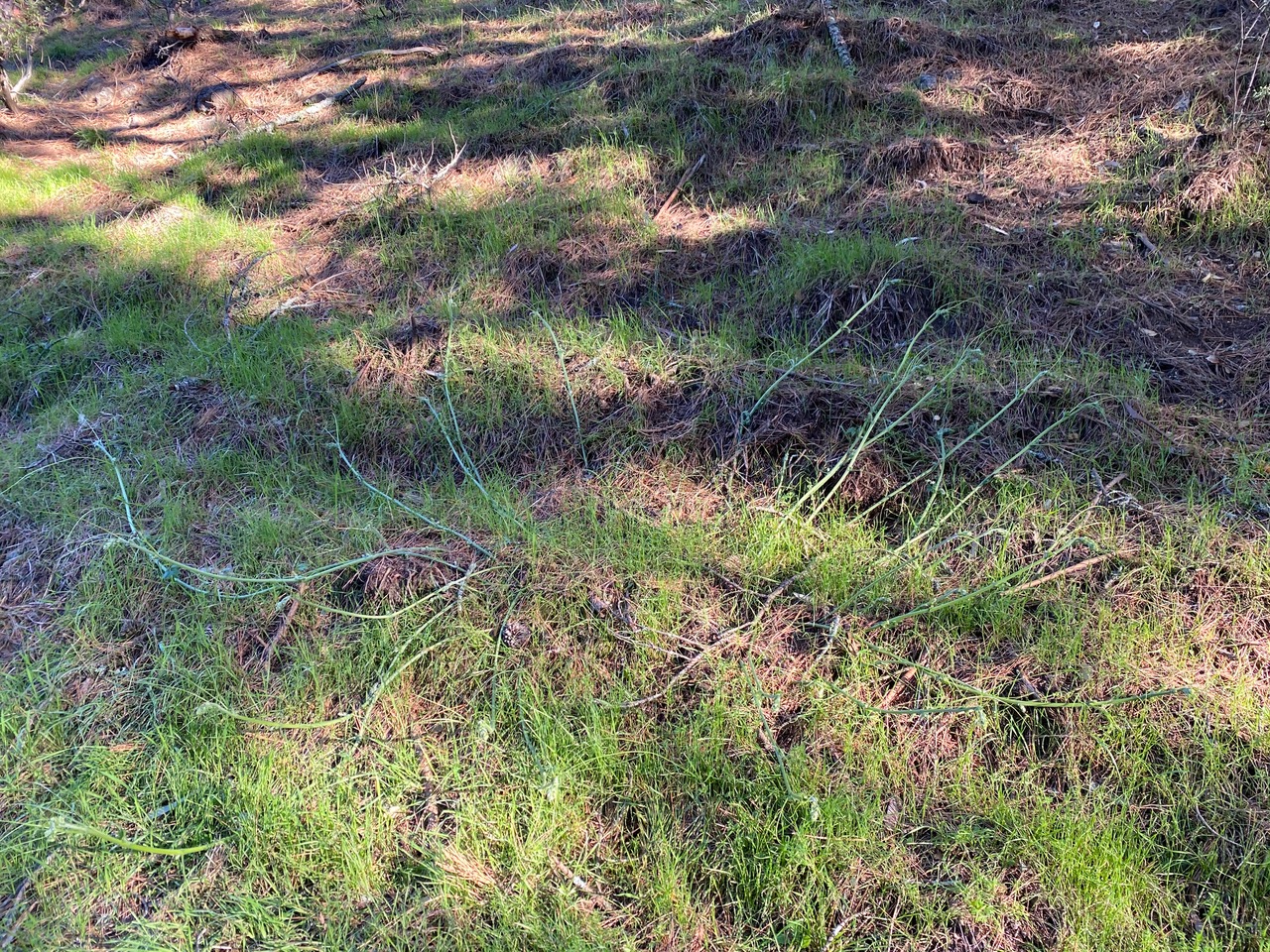
On a grassy slope next to Sanborn Drive, a Wild Cucumber, Marah sp. has reared its sinuous vines in a radiating circle. I have been looking forward to this. After the first rains, the perennial emerges from its massive tuberous root in the same spot year after year.

The vines sprawl on the ground, reaching for support. Finding no tall, rigid structure, they anchor themselves by gripping the grass blades with their spring-like tendrils.

Flower and leaf buds appear at intervals along the vines, but they are most conspicuous at the terminal shoots. Note the young tendrils that have yet to coil.
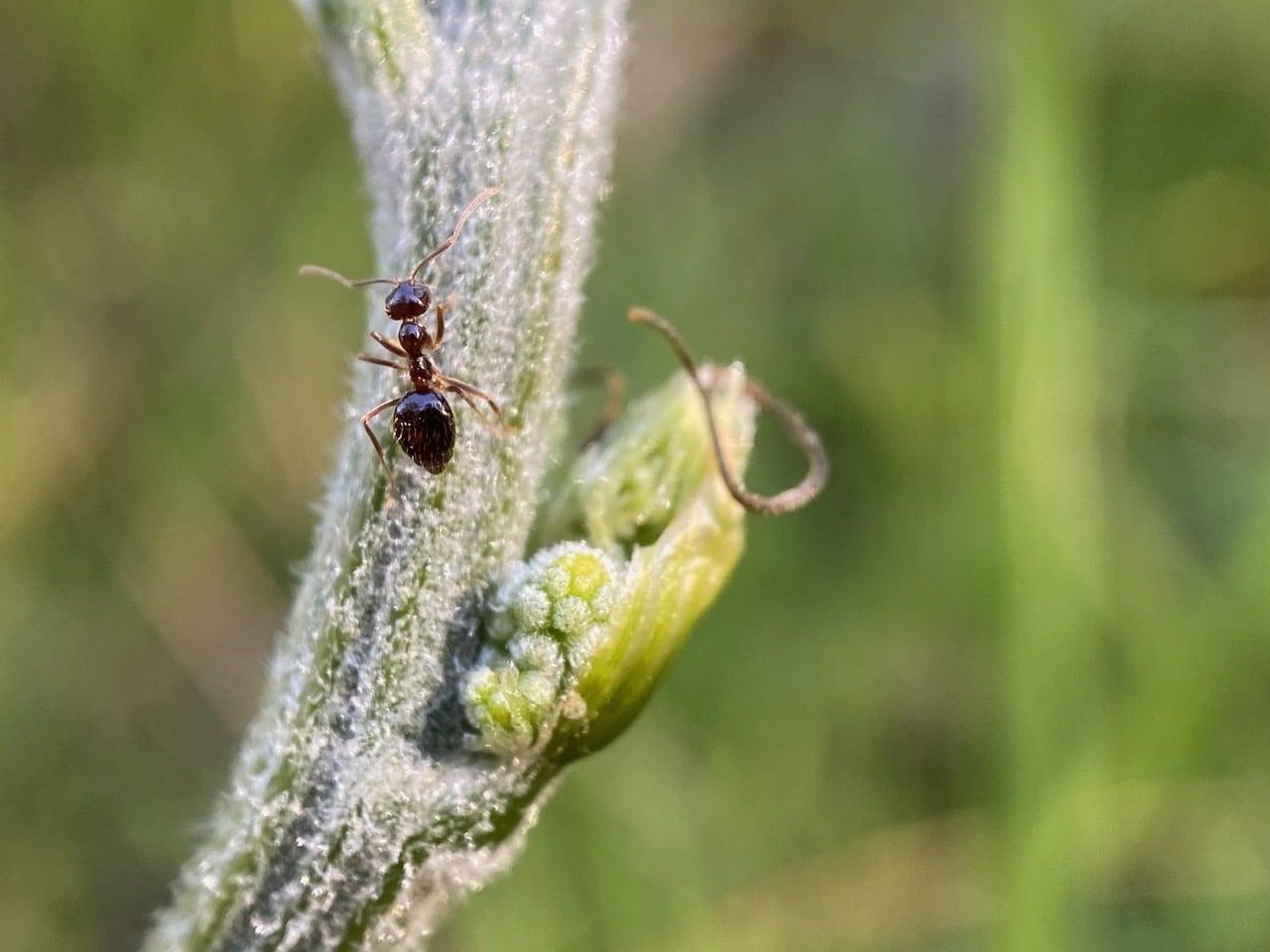
Hey, look, there’s an American Winter Ant running on the Marah vine! I have not expected to see any insect today. Not only is it windy, it is also cold, with temperature in the 40s F. Having lived in California most of my life, I have to put on my cutoff gloves to keep my fingers functional. The ant is remarkably cold tolerant!
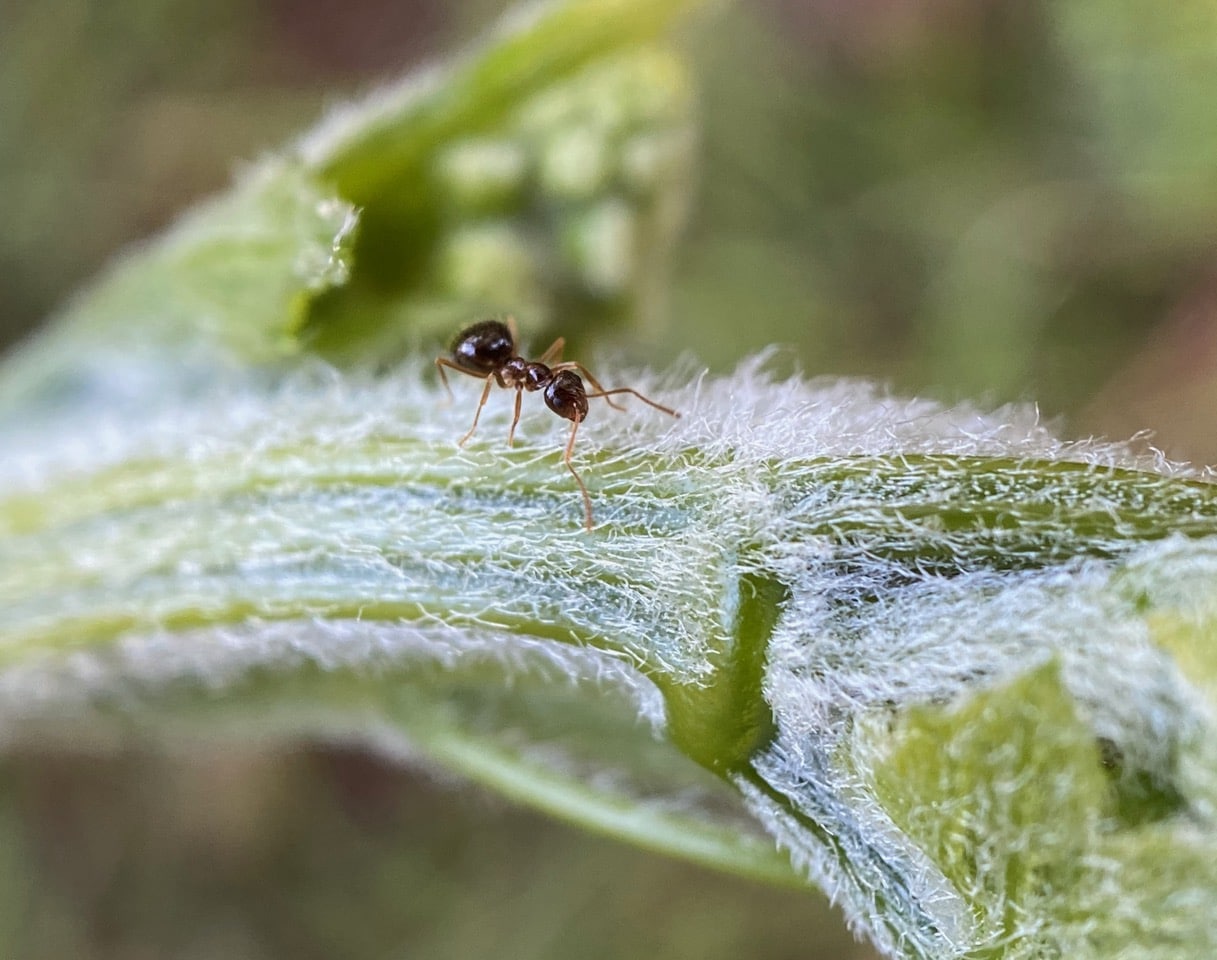
The ant crawls on the terminal buds and investigates it thoroughly.

The American Ant, Prenolepis imparis is a widespread North American ant. A dominant woodland species, it is most active during cool weather, when most other ant species are less likely to forage. This species is one of a few native ants capable of tolerating competition with the invasive Argentine Ant, Linepithema humile. They are also aggressive toward other ants and produce abdominal secretions that are lethal to Argentine Ants. Prenolepis imparis is a generalist omnivore. Foragers are known for tending to aphids or scale insects from which they consume excreted honeydew, aggregating on rotting fruit, and exploiting protein-rich sources such as dead worms. The colony enters estivation (a hibernation-like state) and becomes inactive above ground for the warmer months, during which time eggs are laid and brood are reared. Reproductives overwinter and emerge on the first warm day of spring for their nuptial flight.
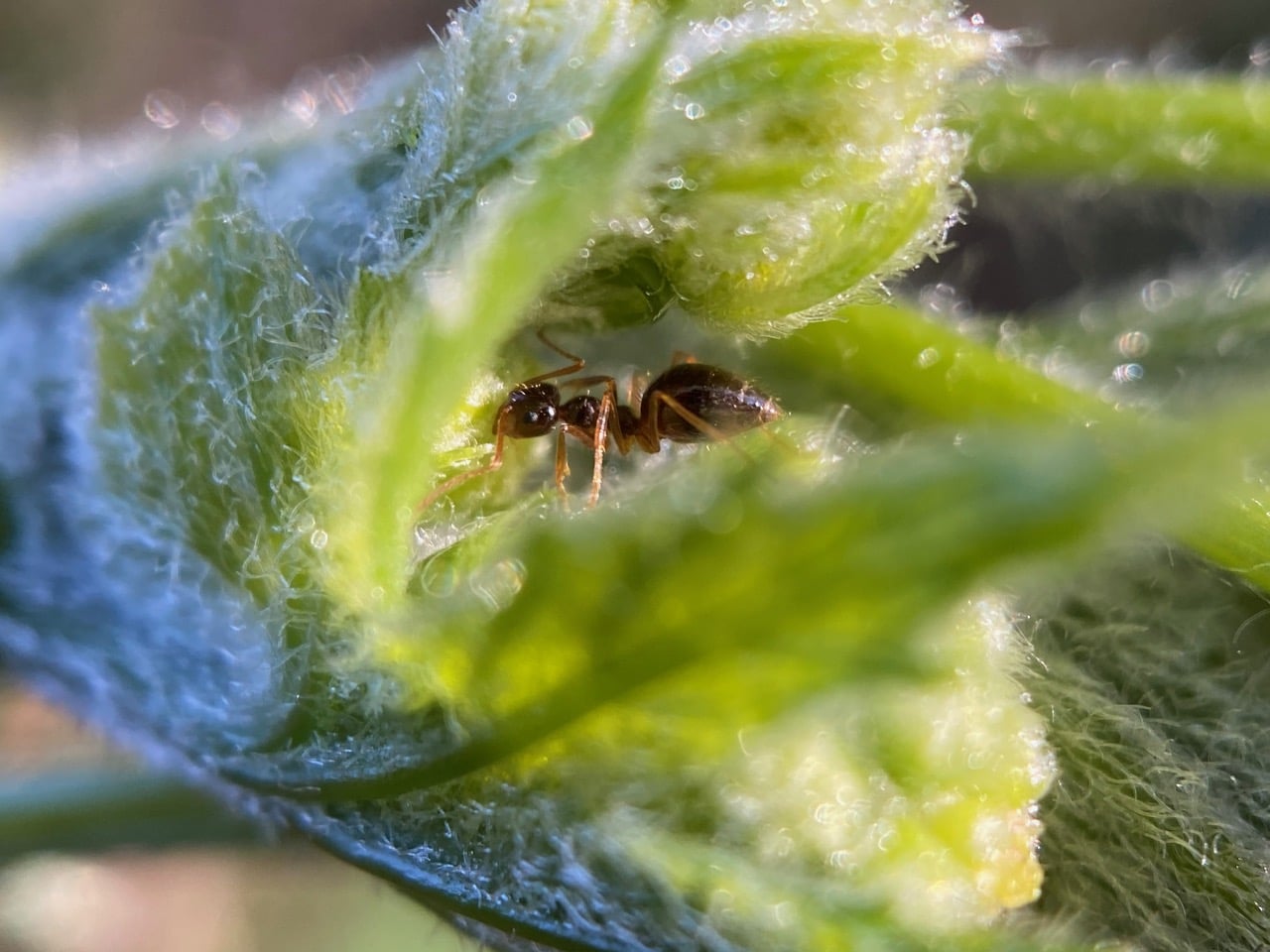
The ant checks every nook and cranny between the flower buds.
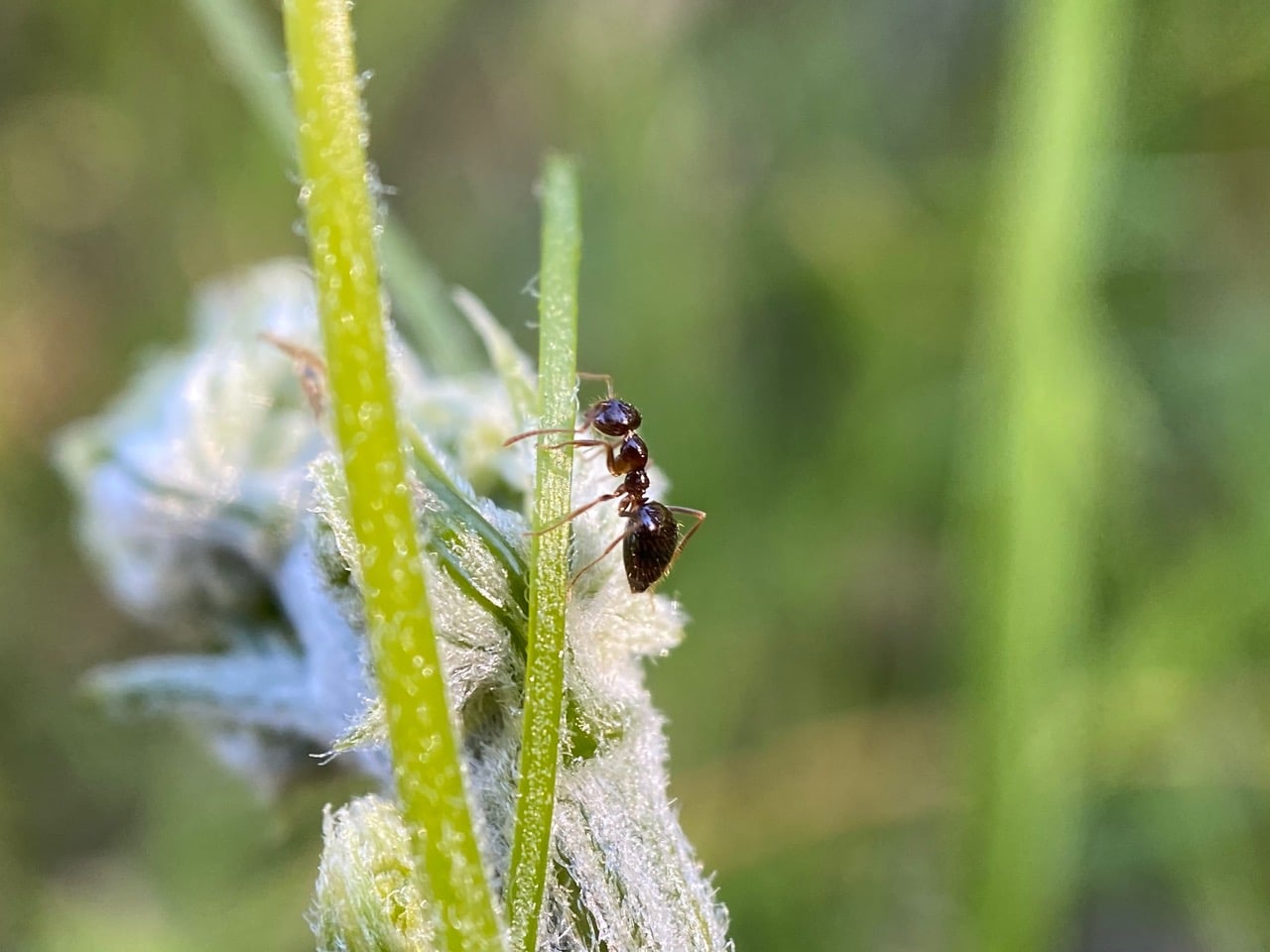
It won’t be long now before nectar is available!
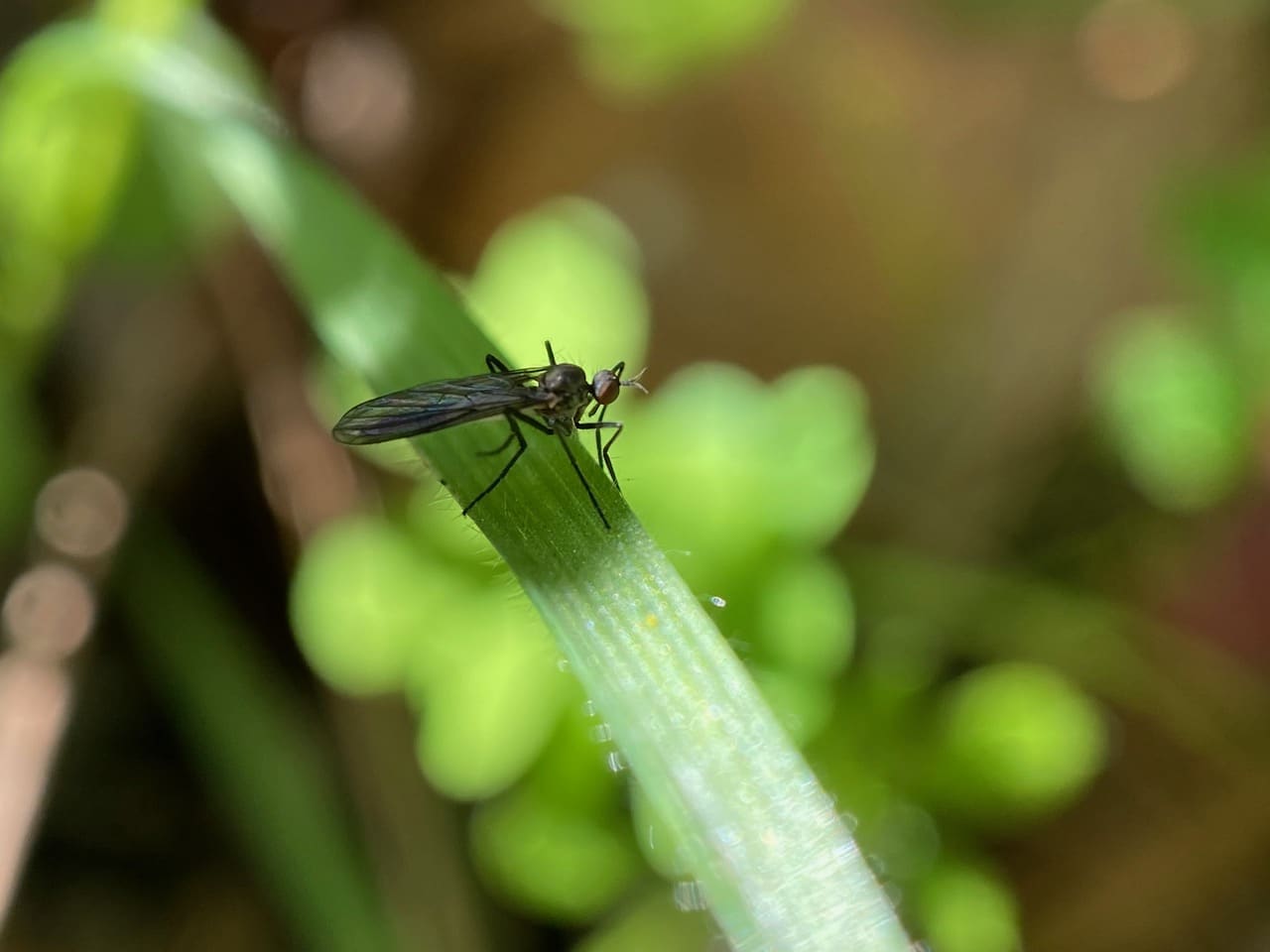
In the dappled shade under the oak trees, I find occasional small insects dancing low over the leaf litter. Rather amazing, given the windy conditions. When one finally lands on a blade of grass, I close in and find that it is a Dance Fly, mostly likely in the family Empididae. This is the same spot where, 10 days ago, I have photographed one that has captured an insect prey.
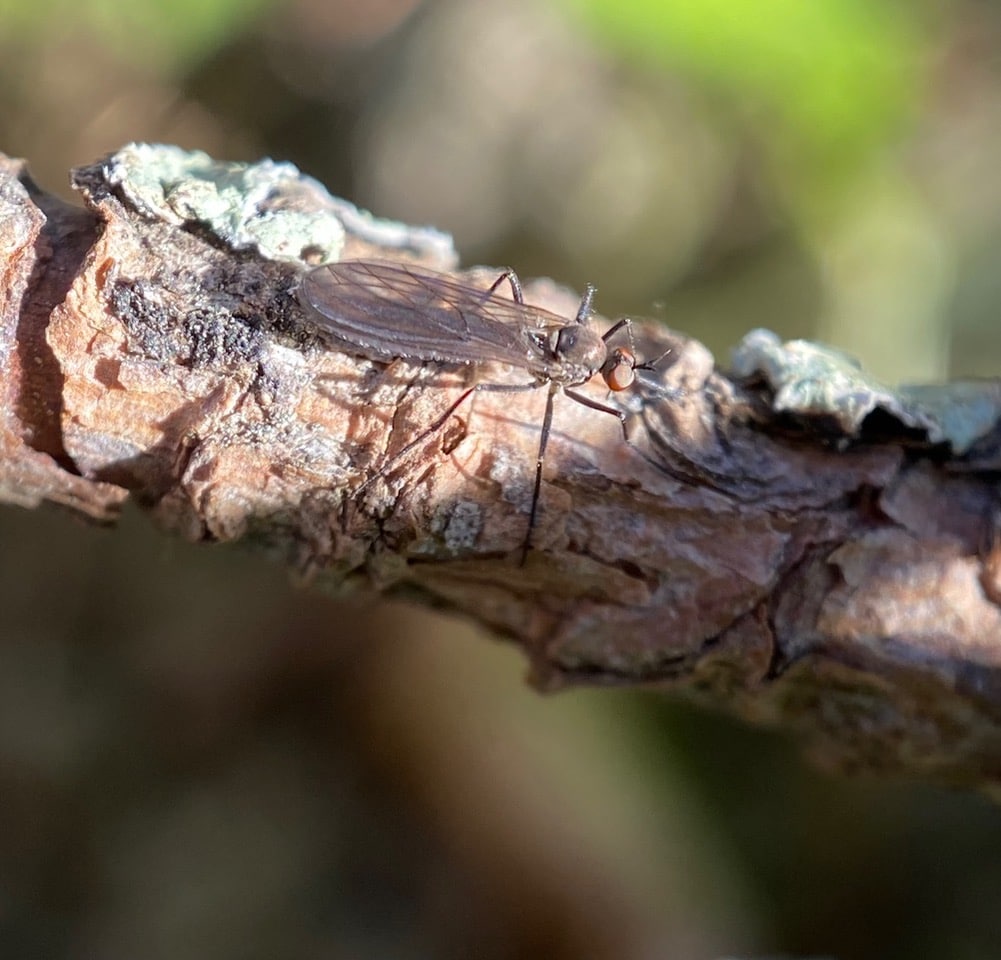
Another Dance Fly lands on a twig in brighter light.
Dance Flies, in the family Empididae, get their name from the habit of males of some species to gather in large groups and dance up and down in the air in the hopes of attracting females. They are predominantly predatory and they are often found hunting for small insects on and under vegetation in shady areas. Both genders may also drink nectar. Male dance flies give their sweeties a nuptial gift to eat while they mate. The gift is thought to enable her to complete the development of her eggs. Males may wrap their gifts in balloons of silk or spit, hence the other common name of Balloon Flies.