

Pollinator Post 1/18/24 (2)
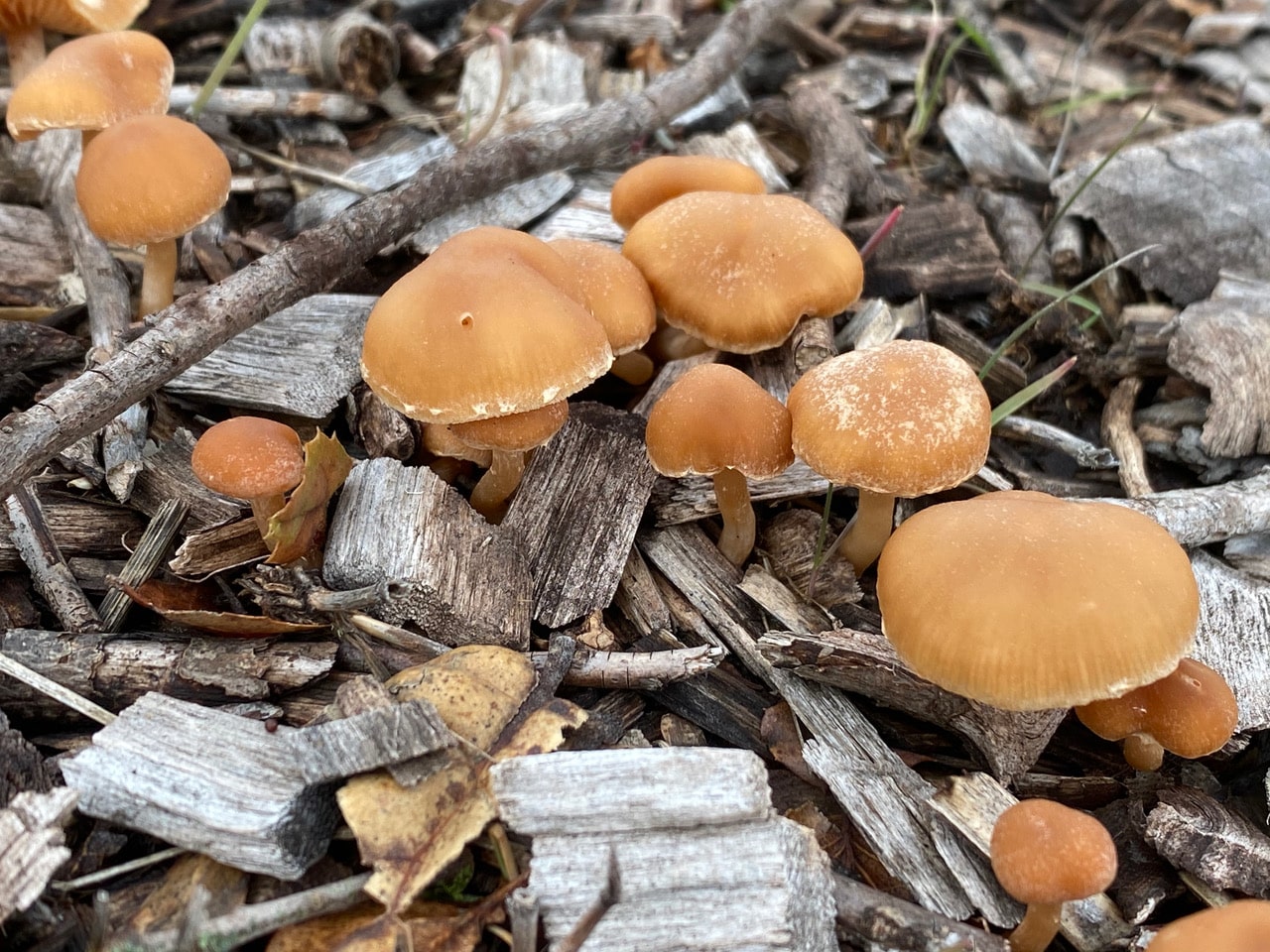
A colony of little honey-colored mushrooms have sprouted from the old wood chips along the paved road. They are likely to be Twiglets, Tubaria sp. (family Tubariaceae), often with the partial veil adhering to the margin.

Just a couple of feet away is this colony of little brown mushrooms with conical caps. Probably Conical Brittlestem, Parasola conopilea (family Psathyrellaceae)?

It’s almost noon, but not getting any warmer.
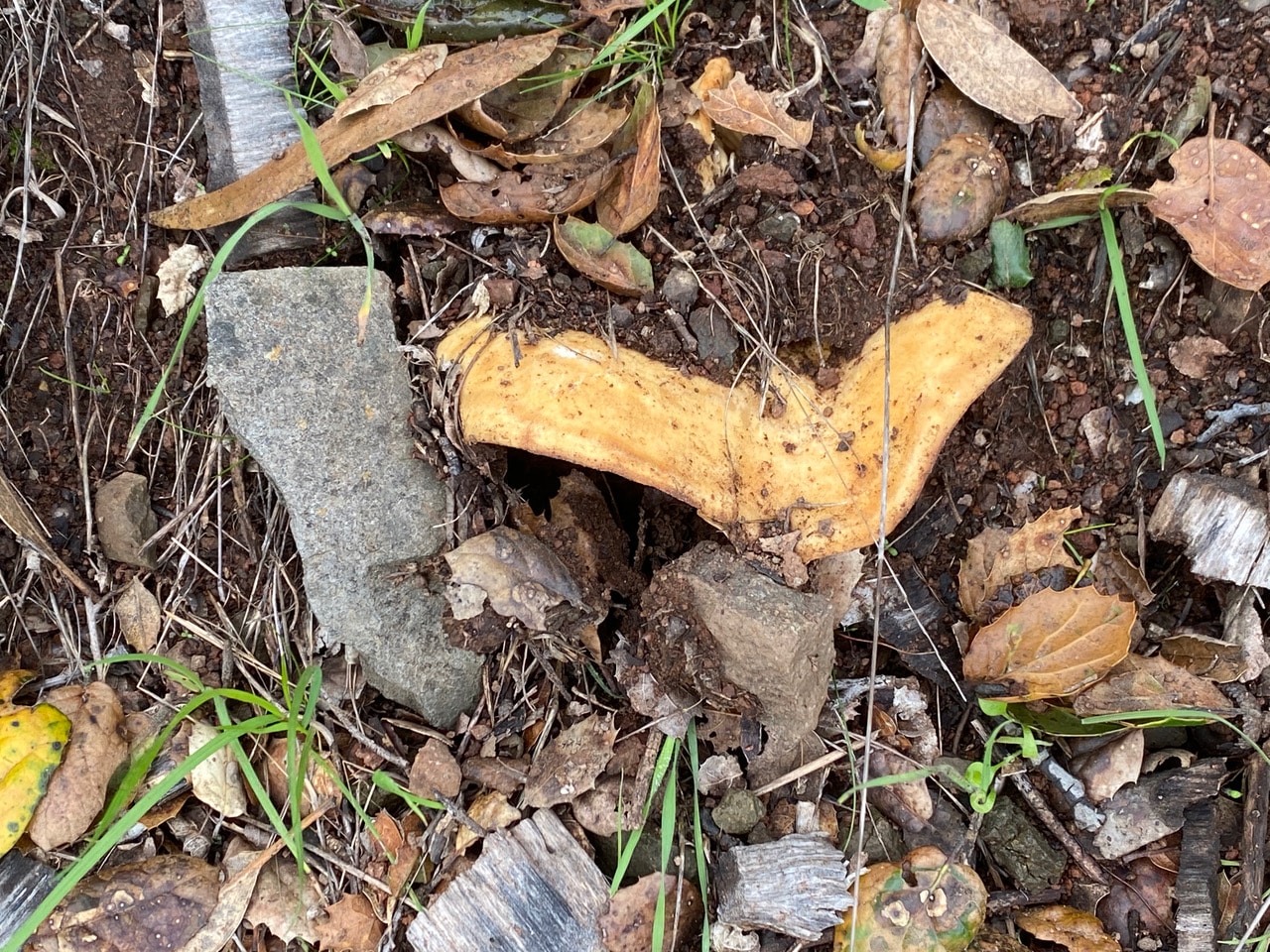
A large mushroom, about 5 inches in diameter, is pushing its way out of the rocky soil.
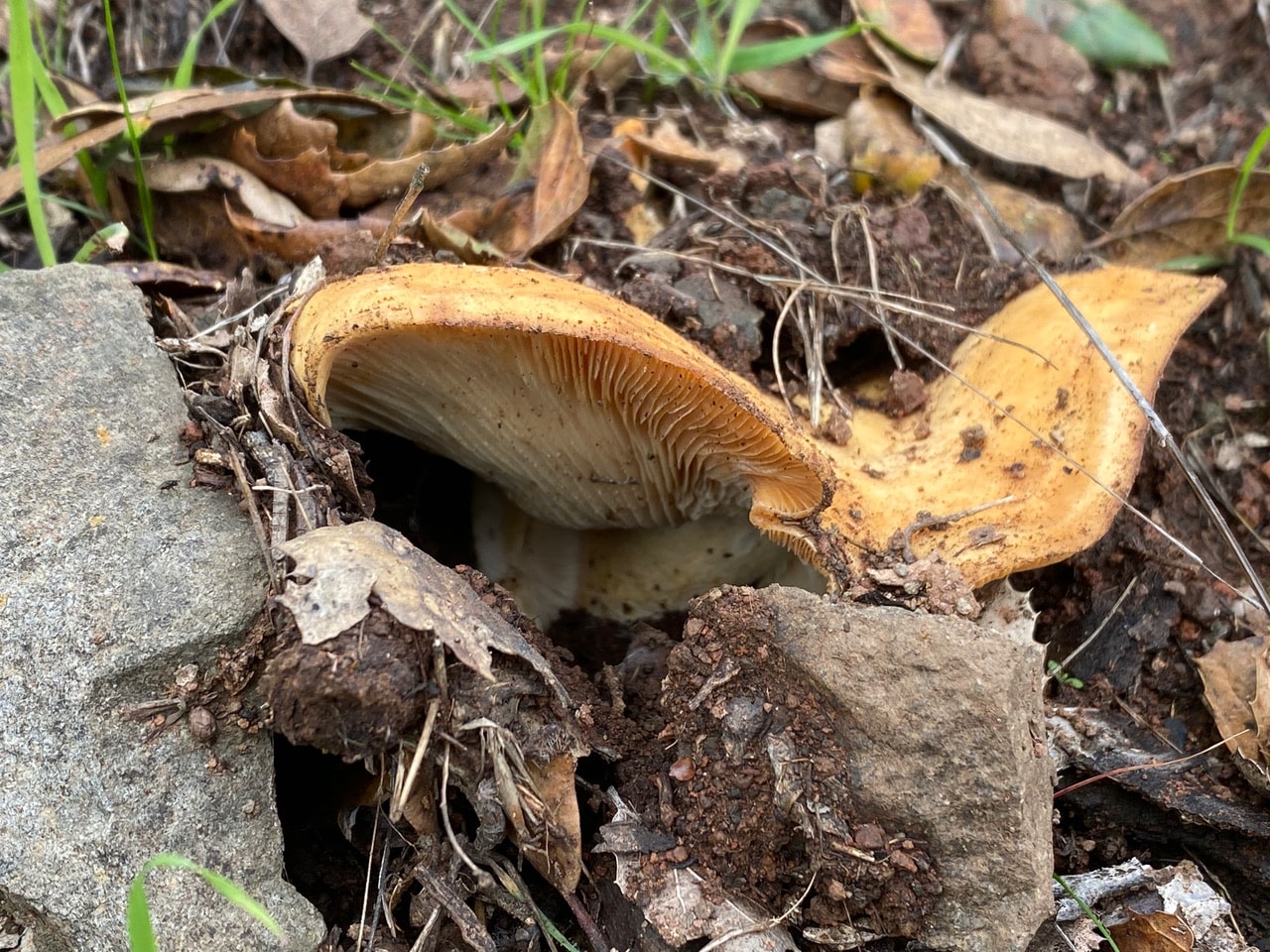
I marvel at the strength of these mushrooms!

I scramble up a steep bank to check out some cool mosses and lichens growing on a big rock. In a field of foliose lichens, I spot one of my favorite mosses growing in a neat cushion radiating white hairs.
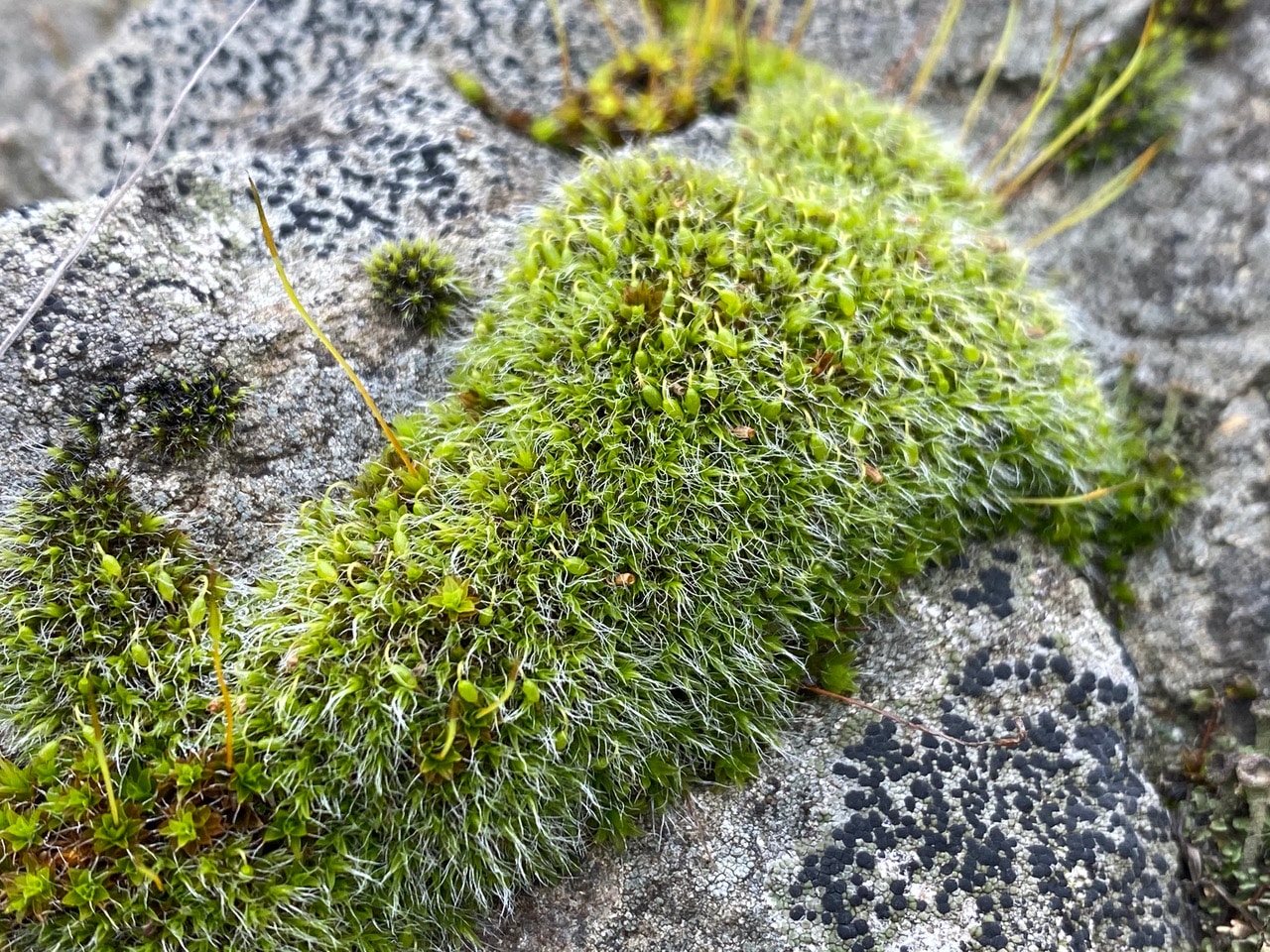
The moss is the Grey-cushioned Grimmia, Grimmia pulvinata. It is a common moss found on rocks, forming round, almost furry, grey cushions about 1-2 cm tall. A distinct character is the leaf tip, which is abruptly contracted into a long hair point, which may be as long as the leaf blade. This particular cushion is packed with spore capsules!
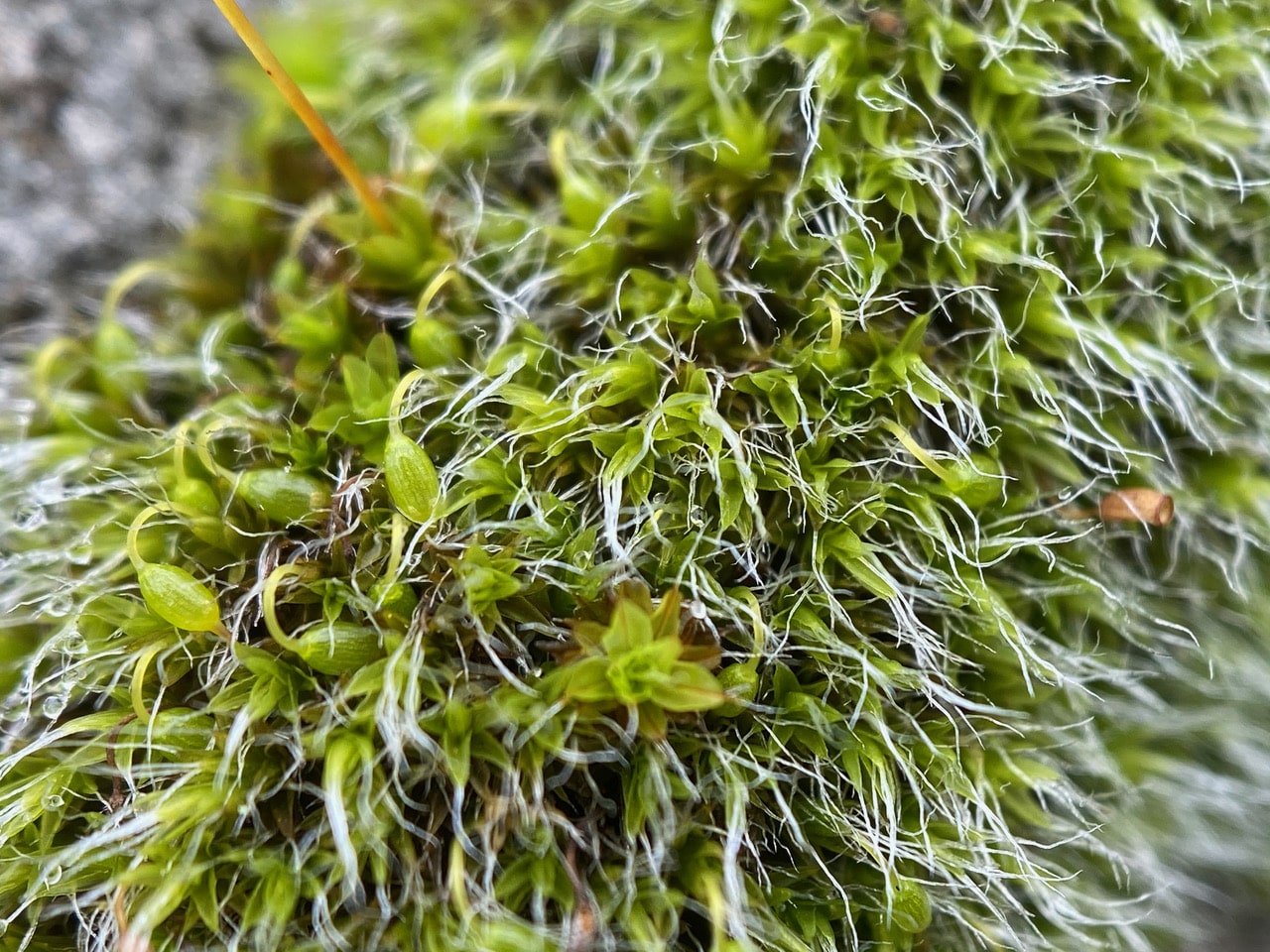
A close-up shows the abundant oval capsules in which spores are produced. They bend back into the cushion on arching setae (stems) when moist. When old and dry, the setae straighten and the capsules are held erect.
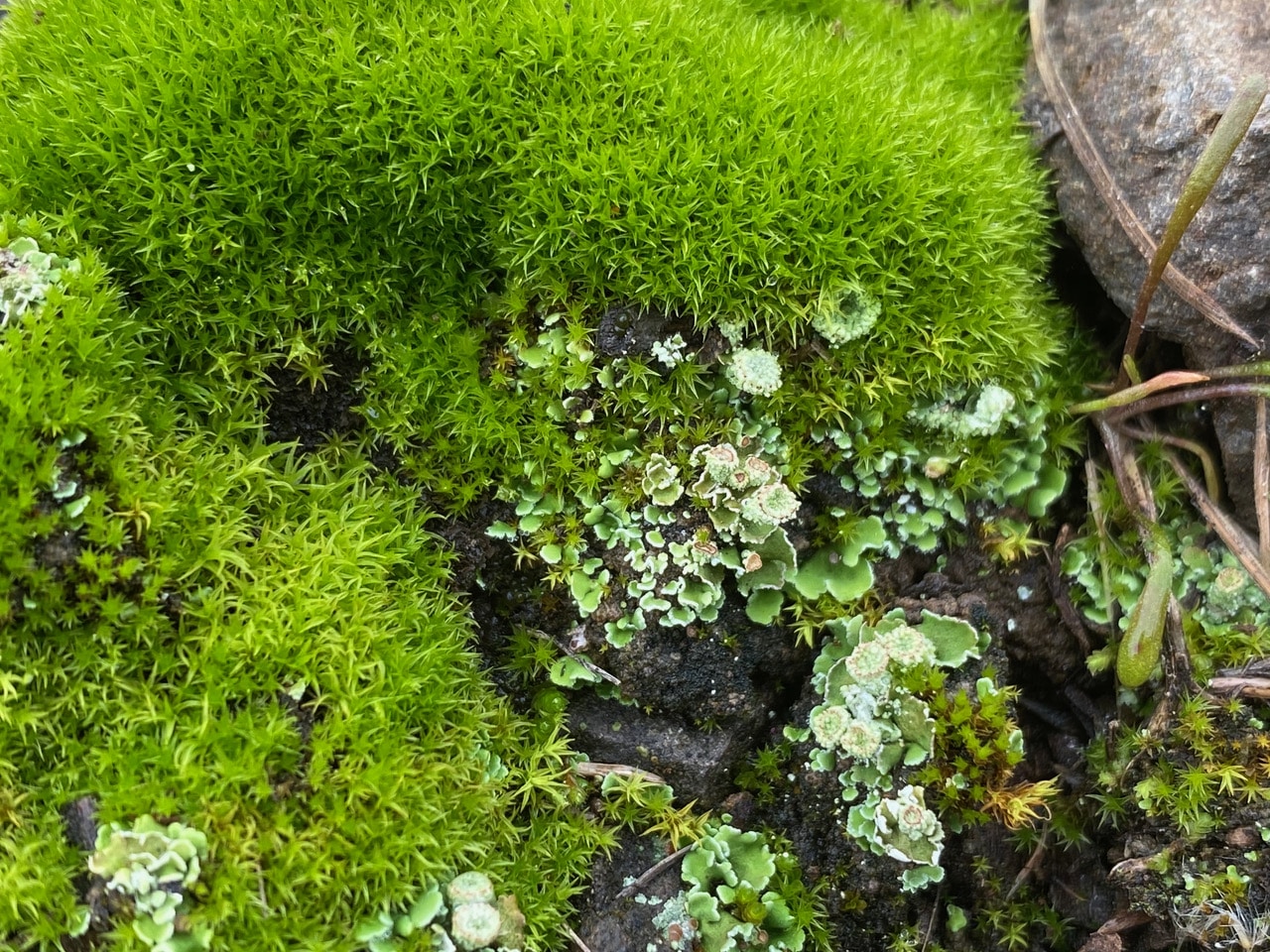
On the same rock, some lichens are breaking through a field of verdant mosses. The tiny scale-like bits appear to be the basal primary vegetative body (squamules) of a Cladonia, or Pixie Cup lichen.
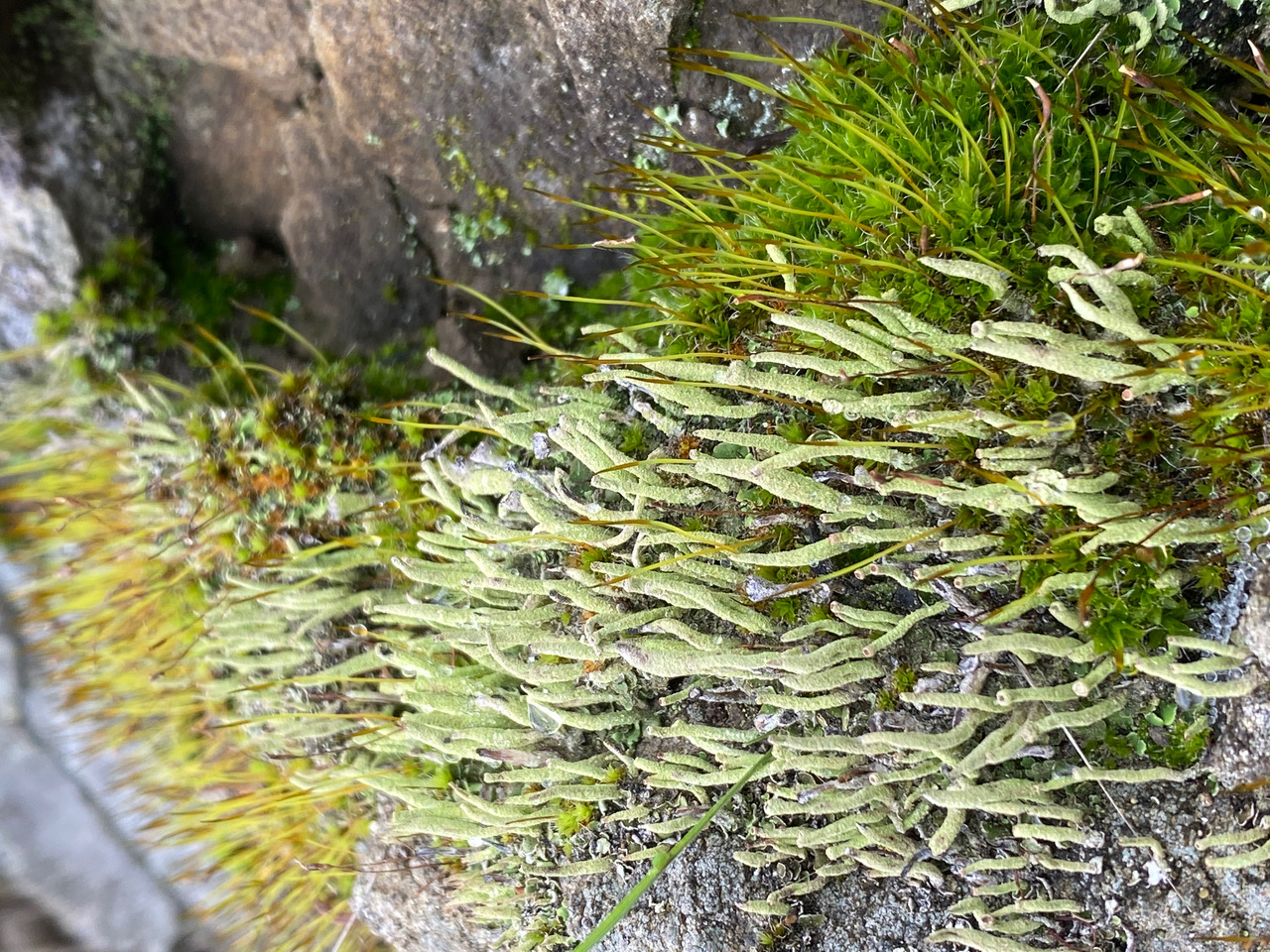
The podetia (secondary vegetative bodies) of a Cladonia lichen form a forest of strange horns protruding from the basal squamules.

Here we see why some Cladonia species are referred to as Pixie Cup Lichens. The tip of the podetia is “the business end”, where the sexual fruiting structures called apothecia grow. The cup-shaped discs produce spores of the lichen’s fungal partner.