

Pollinator Post 1/18/24 (1)
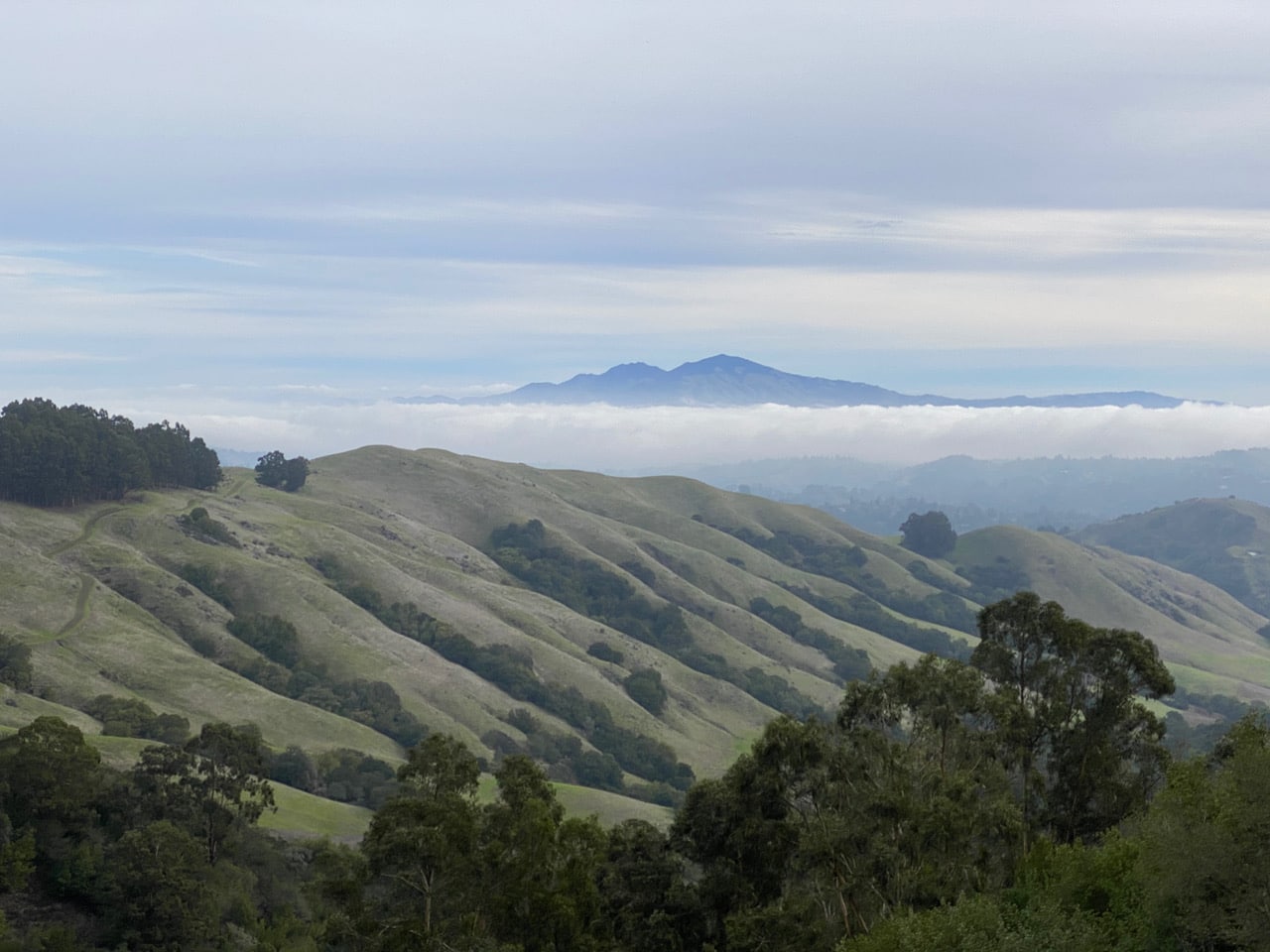
To avoid the muddy trails after the rains, I walk the paved road at Skyline Gardens this morning. It is overcast and cold. In the distance, Mt. Diablo appears as an island floating in a sea of cloud.
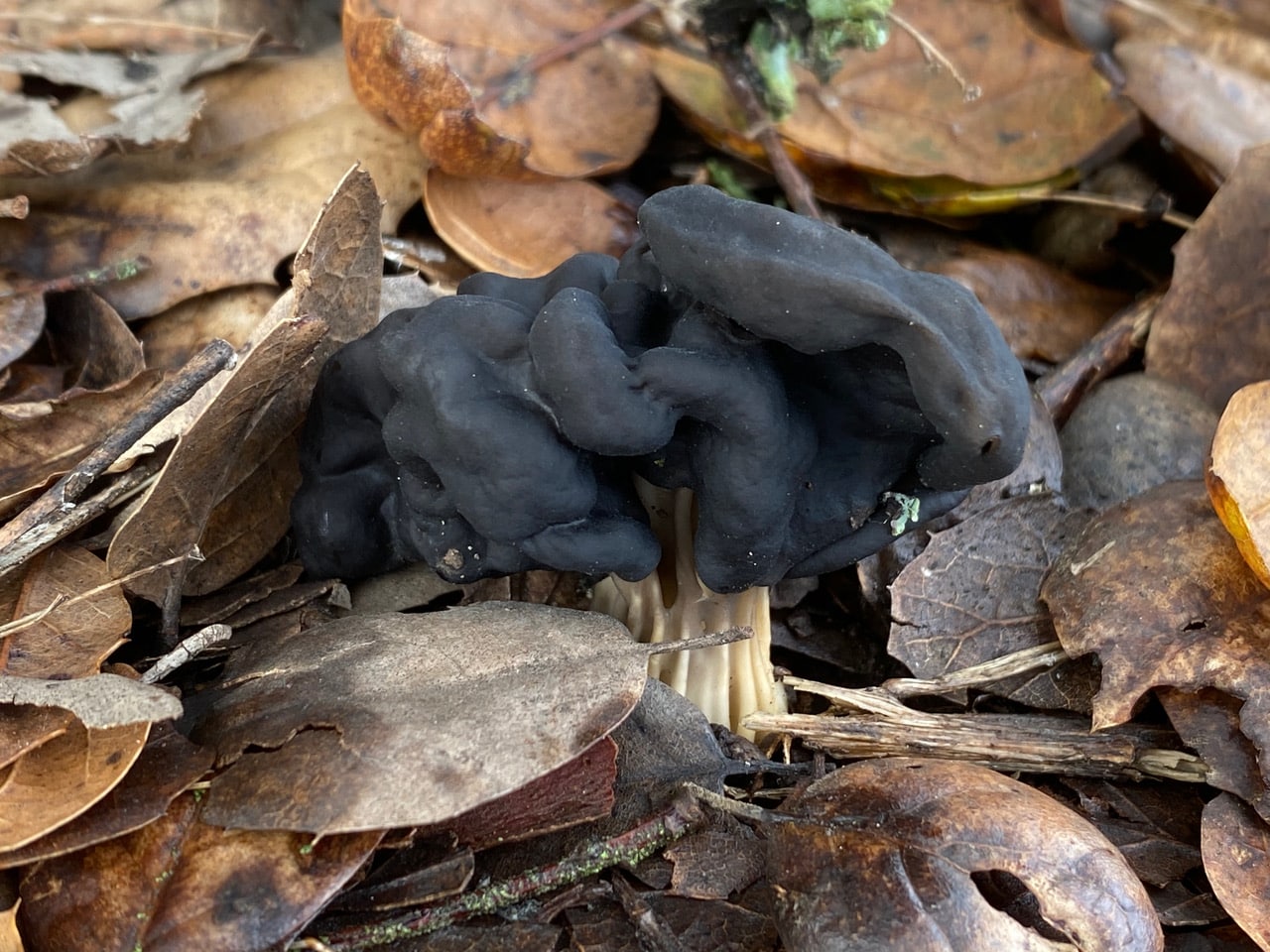
 I brush aside some of the leaf litter to expose the unusual stems of this pair of Western Elfin Saddle, Helvella dryophila. The stems are ribbed and riddled with holes, as the original Latin name of the Eastern species implies – lacunosa means “with holes”. H. dryophila is mycorrhizal with coast live oak and other oaks on the West Coast.


In the leaf litter under an oak tree, I find several of these mushrooms with black, convoluted caps and fluted white stems. I have always known them as Elfin Saddles, Helvella lacunosa (family Helvellaceae), but recently discovered that the ones in western North America have now been recognized as a separate species, Helvella dryophila.
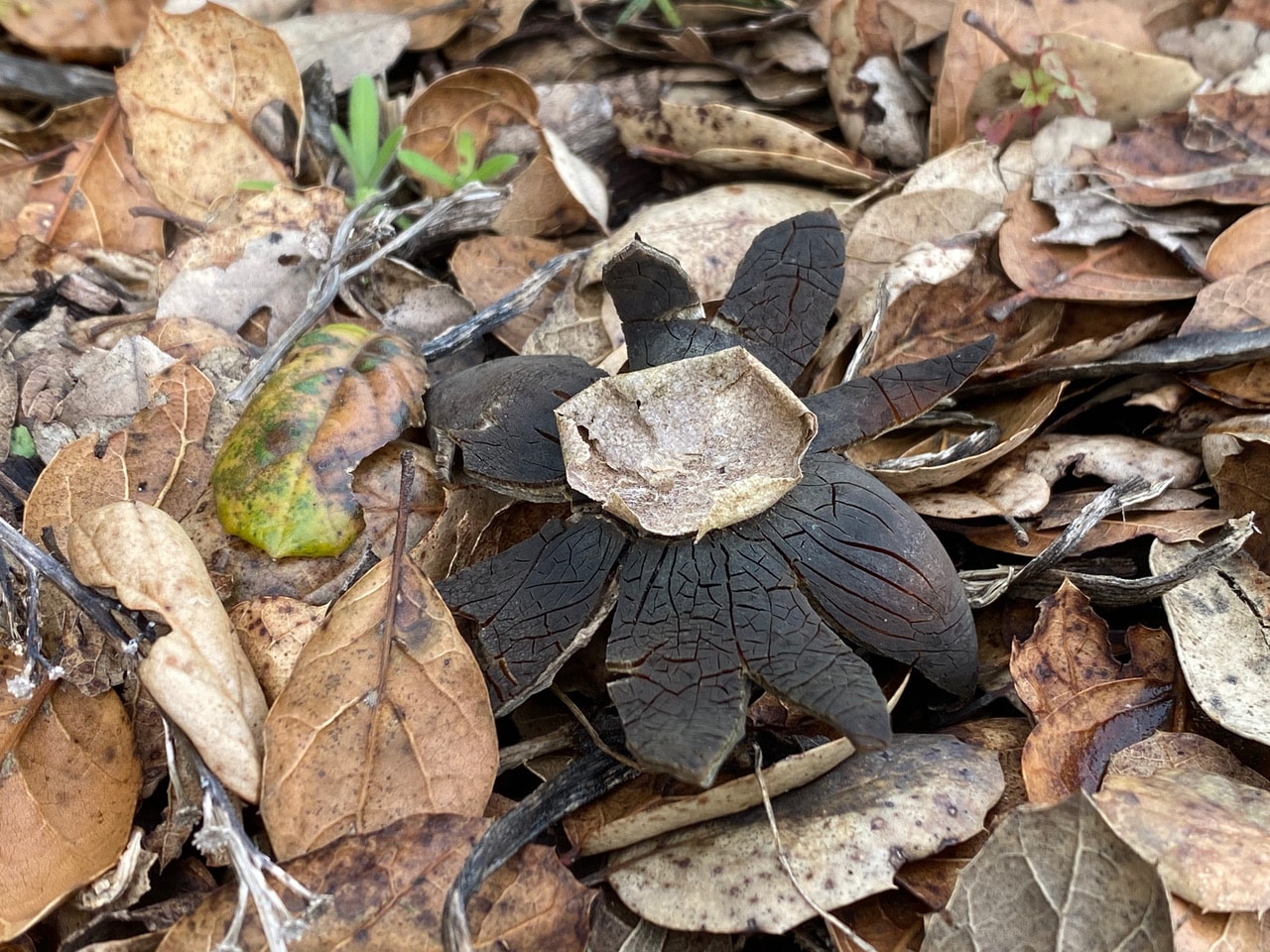
I brush aside some of the leaf litter to expose the unusual stems of this pair of Western Elfin Saddle, Helvella dryophila. The stems are ribbed and riddled with holes, as the original Latin name of the Eastern species implies – lacunosa means “with holes”. H. dryophila is mycorrhizal with coast live oak and other oaks on the West Coast. Among the leaf litter under the same Coast Live Oak are numerous scattered remnants of the Hygroscopic Earthstar fungus, Astraeus hygrometricus. Most have lost their spore sacs.
Astraeus hygrometricus, commonly known as the Hygroscopic Earthstar is a species of fungus in the family Diplocystaceae. Young specimens resemble a puffball when unopened. When mature, the mushroom displays the characteristic earthstar shape that is a result of the outer layer of fruit body tissue splitting open in a star-like manner. A. hygrometricus is an ectomycorrhizal species that grows in association with various trees, including oaks. The name of the fungus refers to the fungus’ reaction to the amount of water in the air. When it’s very dry, the ray-shaped arms fold around the central puffball (or spore sac) to protect it from predators and the elements. However as the rains begin, the different parts of the hygroscopic rays absorb water at different rates, causing them to unfold to expose the puffball. As additional raindrops fall on the exposed puffball, the spores are puffed out through the pore. The rays curl and extend far enough to raise the puffball a couple of centimeters above the ground, the better for the spores to catch the air current that will transport them far and wide. This adaptation enables the mushroom to disperse spores at times of optimum moisture, and reduce evaporation during dry periods.

Here’s one still with the spent spore sac atop the star-shaped pedestal.
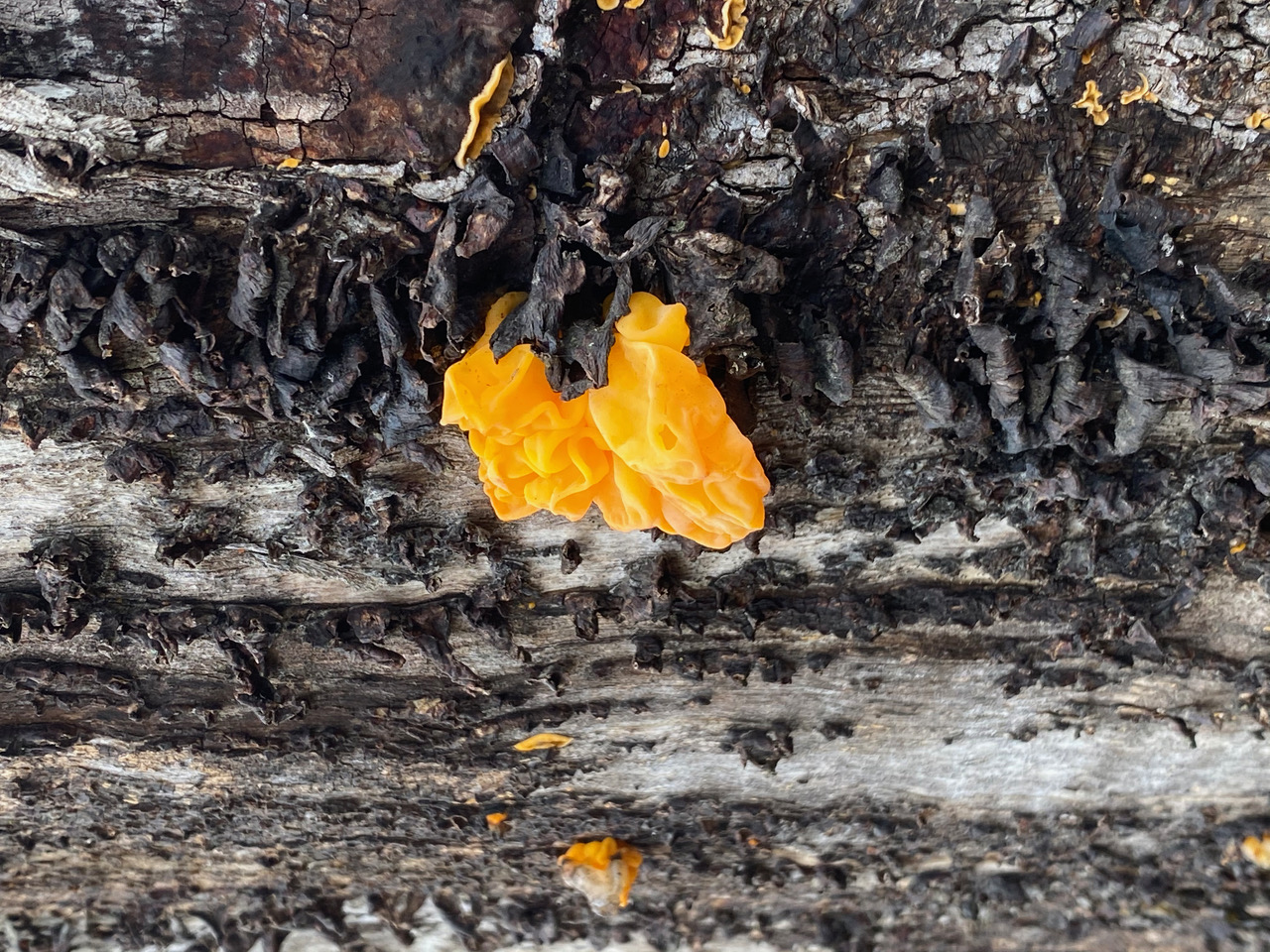
On a large tree stump, a partially dried Witch’s Butter fungus, Tremella mesenterica shows up conspicuously among its blighted host, the False Turkey Tail, Stereum sp.
The bright yellow Witch’s Butter is a common jelly fungus in the family Tremellaceae. It is frequently found on dead tree or recently fallen branches as a parasite of wood decay fungi such as the False Turkey Tail. Appearing during rainy weather the gelatinous fungus has a convoluted, brain-like surface that is greasy or slimy when wet. Within a few days after rain it dries into a shriveled mass capable of reviving after subsequent rain. The fungus occurs widely in deciduous and mixed forests, growing parasitically on the mycelium of wood-rotting fungi.
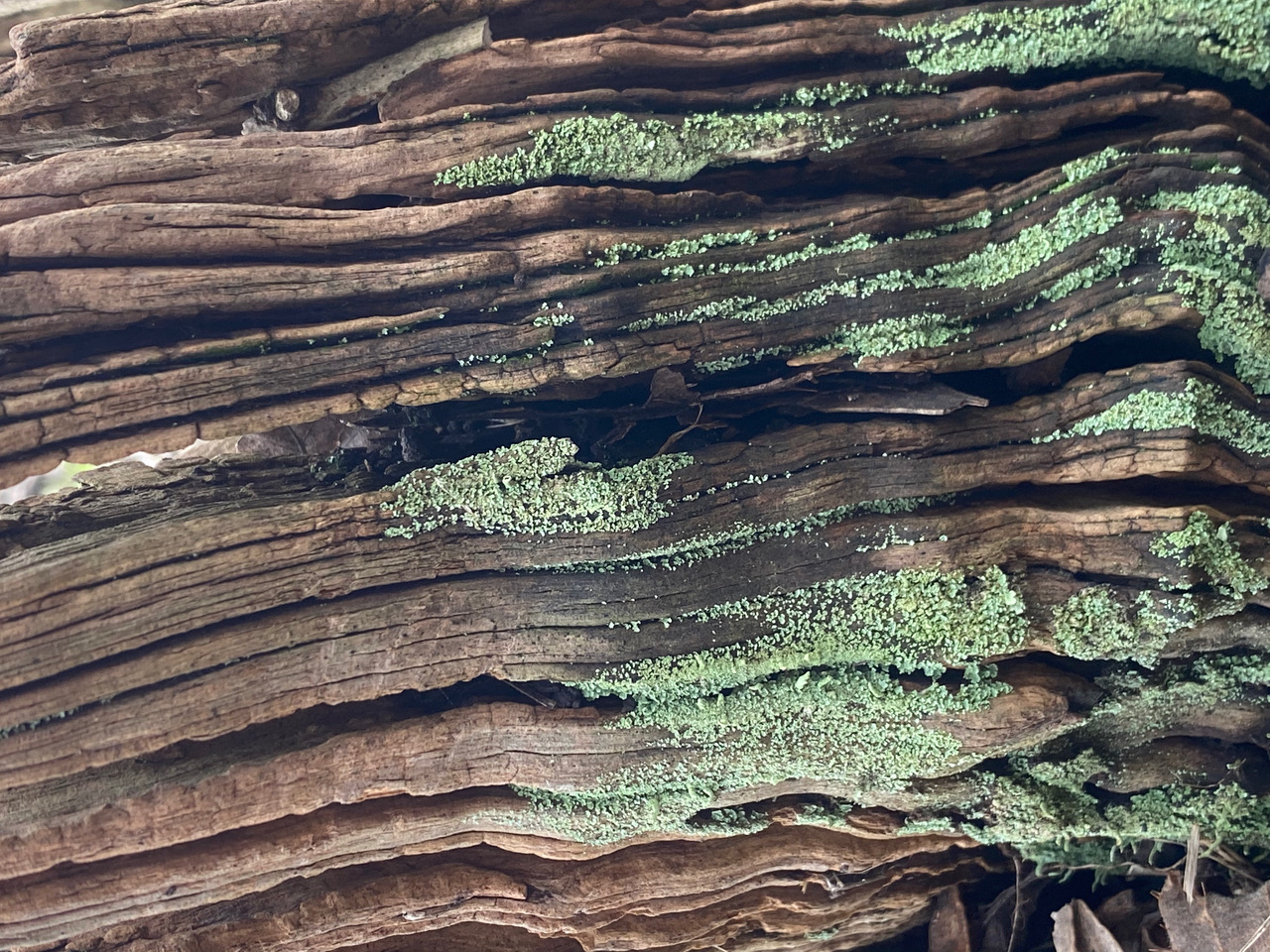
A decaying stump appears like sculptural art, with streaks of bluish-green splattered on the remaining wood fibers.
A closer inspection shows the bluish-green specks to be the beginnings of a lichen colonization.