

Pollinator Post 1/15/24
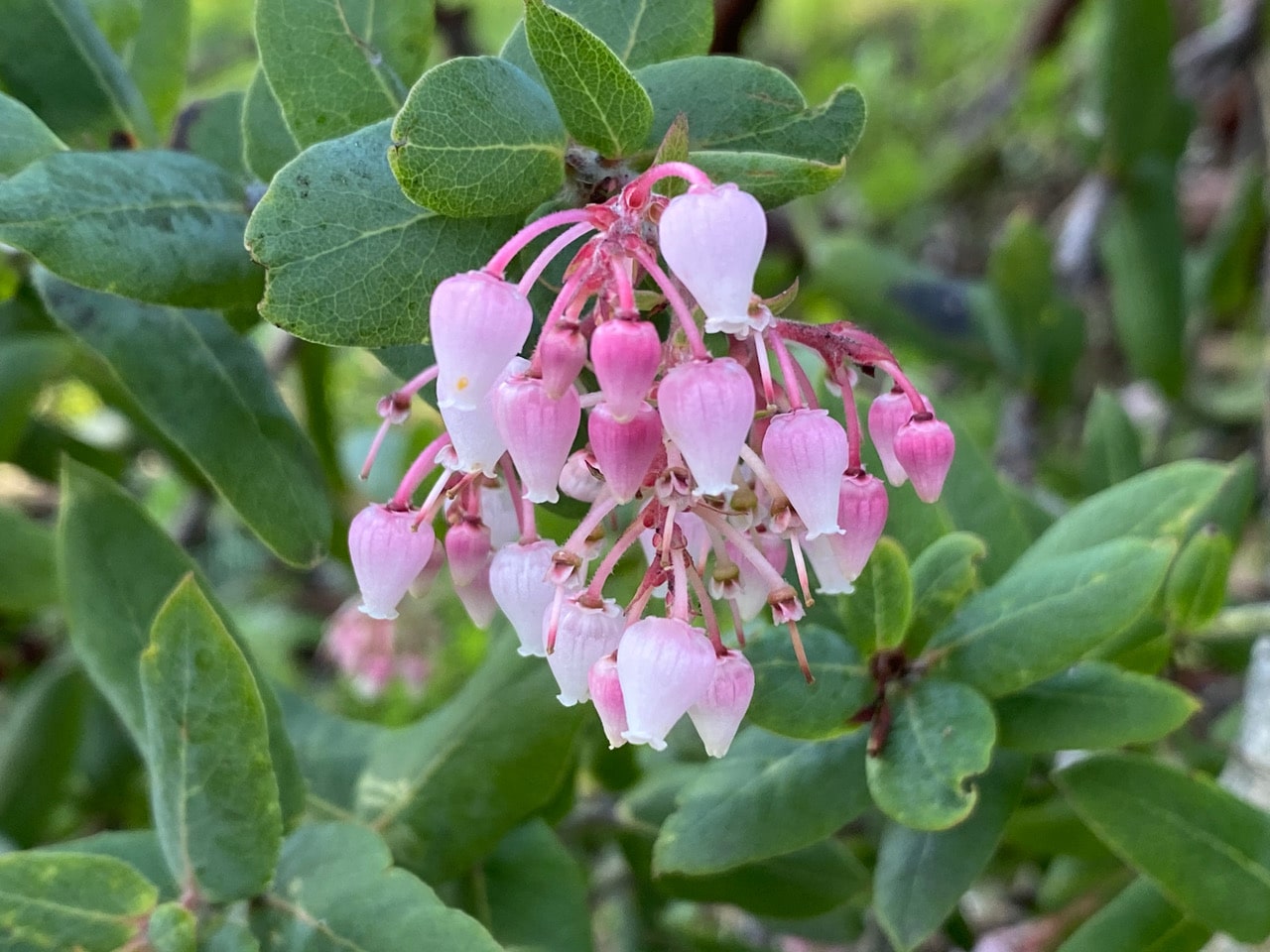
It wasn’t until I came back from a walk this afternoon that I noticed the bumble bees in my garden, buzzing around the blooming Manzanitas. Most of them are Black-tailed Bumble Bees, of various sizes. Makes me wonder if the queens have already established colonies with smaller workers. I also spotted a huge Yellow-faced Bumble Bee, obviously a queen, but she got away before I could get close enough for a photo. Much smaller in size, some hover flies were also visiting the manzanita flowers. I had to run into the house for the macro lens to photograph those. So happy for the return of the flowers and their pollinators – in mid January! It seems the Manzanitas and their pollinators are well coordinated, perfectly timed for each other.
For a winter-blooming flower in California, it’s crucial that its pollen is protected from the rains. The Manzanita flowers (genus Arctostaphylos) are structured to withstand the wet season – urn-shaped with small opening, the nodding flowers are tightly clustered.

Hanging upside-down from the manzanita flowers, a Black-tailed Bumble Bee, Bombus melanopygus (family Apidae) is reaching into the corolla with her tongue for nectar. To collect pollen, the bumble bees perform sonication or “buzz pollination”. They disengage their wings from the flight muscles; then the muscles are vibrated at a specific high frequency to cause the pollen to shake loose and to fall down onto the bee’s belly. The bee gathers the pollen into the pollen baskets on her hind legs before returning to her hive. Bumble bees are social and live in colonial hives. Many of the large individuals seen early in the season are queens. They are the only members of their colony to survive the winter, hibernating until the days begin to warm and their host plants are in bloom. These queens have mated before they went into hibernation. Now their first order of business is to each find a nesting site (usually an abandoned rodent burrow), lay eggs, brood and nurture the first batch of workers. Hence forth, the queens stay behind in the hive to concentrate on laying eggs while the workers take on hive duties and foraging. Bumble bees are among the most cold tolerant bees, and are usually the first bees we see out foraging. This is why it’s important for us to plant early blooming natives to support the queen bumble bees.
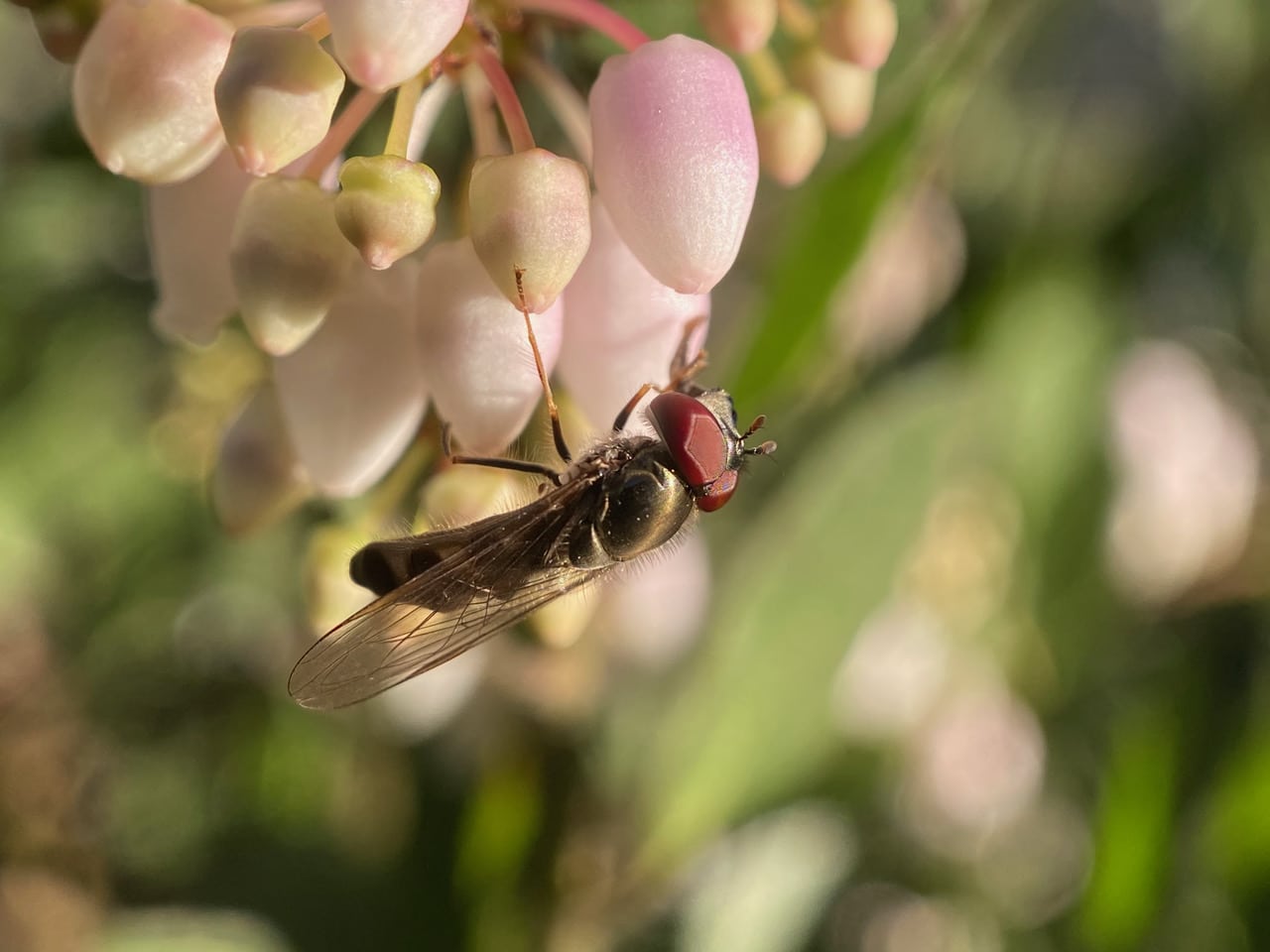
A male Sedgesitter, Platycheira sp. (family Syrphidae) lands on a cluster of Manzanita flowers. Note that its eyes meet in a central line on top of its head (holoptic eyes). Females have eyes that are separated on their heads. The Sedgesitters are cold tolerant hover flies, active even on cold, cloudy days. Larvae feed on aphids.
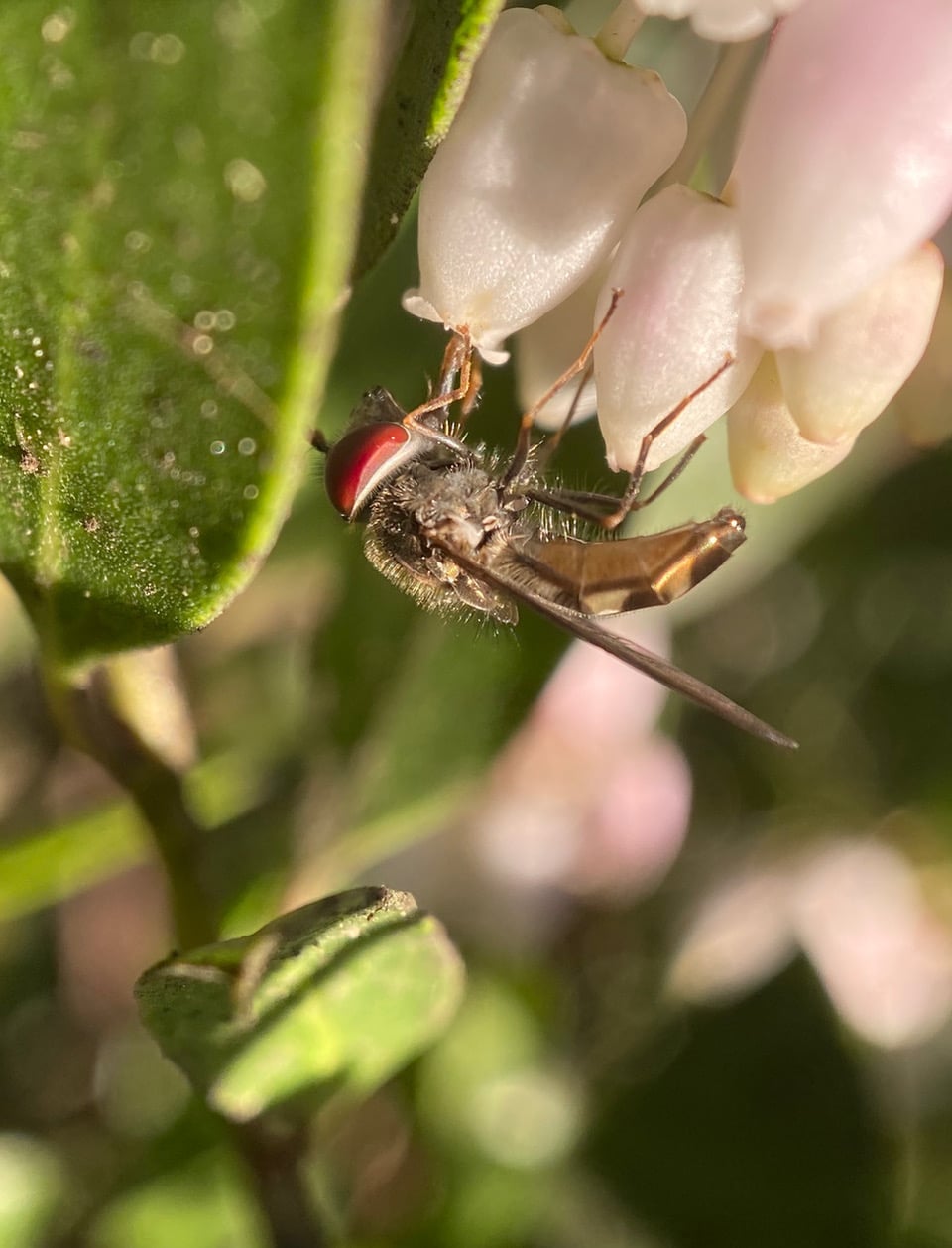
The Sedgesitter’s hairs light up in the afternoon sun as it probes a manzanita flower with its tongue. Hover flies are good pollinators, second only to bees. Adults feed on nectar and pollen. Many are sufficiently hairy for pollen to adhere to.