

Pollinator Post 1/11/26

I have delightful company today at the Regional Parks Botanic Garden in the Berkeley hills! Spencer and Ryan, entomology undergraduate students from Cornell University are visiting family in the Bay Area over the winter holidays. Spencer’s uncle, Nick, an avid naturalist himself, has contacted me to arrange for our little excursion. I have suggested the garden as it is where we are most likely to see insects this time of year.
Waiting for my new friends near the front gate, I check on the blooming Buckbrush, Ceanothus cuneathus. There is already insect activity around the flowers this sunny morning. Most of the visitors are Honey Bees, but I do see some other insects as well. A hover fly lands on a cluster of Ceanothus flower buds; through its crystal clear wings I can see the bold, white curved stripes on its abdomen. Ah, it is a White-bowed Smoothwing, Scaeva affinis (family Syrphidae).

The White-bowed Smoothwing, Scaeva affinis is a hover fly found in western North America, but rare in the east. Adult flies visit flowers for nectar and pollen, and are good pollinators. Females lay eggs near aphid colonies on plants. The larvae feed voraciously on aphids, consuming over 500 aphids during its larval stages.
Scaeva affinis is considered a migratory species, known for large movements, especially along the North American coasts. (Wow, traveling pollination and pest control service!) Large-scale migrations, involving hundreds of thousands of individuals, have been observed, such as a major event in California in 2017. There were earlier reports of migration along the U.S. East Coast between 1915 snf 1926, but fewer recent documented instances compared to the West. More research is needed on the ecology and patterns of hover fly migrations.
White-bowed Smoothwing (Scaeva affinis) · iNaturalist

Hey, here’s a smaller hover fly, the Common Sickleleg, Asemosyrphus polygrammus (family Syrphidae). I have never seen one with an orange-red abdomen like this. Is this a male? It has dichoptic eyes. Apparently in this species, both males and females have dichoptic eyes that don’t meet on top of the head.
The Common Sickleleg, Asemosyrphus polygrammus (family Syrphidae) is found in western North America. Appropriately, Polygrammus means “marked with many lines”, probably referring to the patterns on the thorax. The common name ‘sickle-leg’ probably refers to the bow-shaped tibia of the hind legs. Adults visit flowers for nectar and pollen. Larvae are rat-tail maggots. The maggots are most commonly found in dank and decaying environments such as compost, pond margins, and tree rot holes. The larvae feed on the decomposing material which is poor in oxygen but rich in organic matter. The “tails” are the siphons or breathing tubes that extend from their rear end to enable the larvae to breathe while submerged in the wet substrate. When mature, the larvae climb out to pupate on dry land. The larvae are important decomposers/recyclers and the adult flies are important pollinators.

Nick, Spencer, Ryan and I head for the Manzanitas, Arctostaphylos sp. blooming on the sunny slopes to look for insects. Sure enough there are numerous Bumble Bees foraging on the flowers. Large and plump, they are likely new queens that have recently emerged from their hibernation.
Bumble bees are social and live in colonial hives. Many of the large individuals seen early in the season are queens. They are the only members of their colony to survive the winter, hibernating until the days begin to warm and their host plants are in bloom. These queens have mated before they went into hibernation. Now their first order of business is to each find a nesting site (usually an abandoned rodent burrow), lay eggs, brood and nurture the first batch of workers. There after, the queens stay behind in the hive to concentrate on laying eggs while the workers take on hive duties and foraging. Bumble bees are among the most cold tolerant bees, and are usually the first bees we see out foraging. This is why it’s important for us to plant early blooming natives to support the queen bumble bees. Some of the early bloomers favored by the queen bumble bees are Manzanitas (Arctostaphylos), Ceanothus (Ceanothus), and Pink-flowering Currant (Ribes sanguineum)
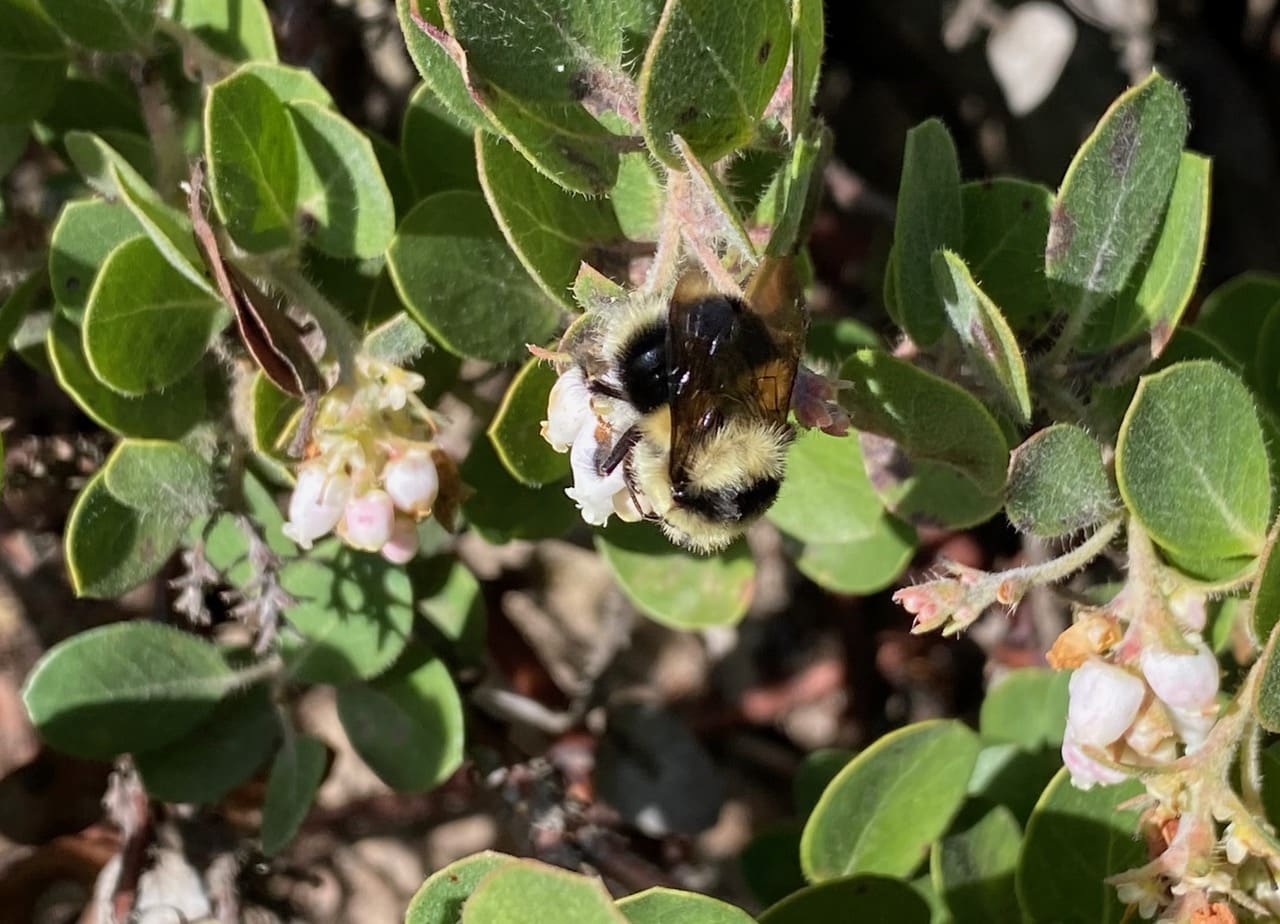
The busy black-and-yellow pattern on this bee tells me that it is a Black-tailed Bumble Bee, Bombus melanopygus (family Apidae). In our area, this species is one of the earliest bumble bees to appear on the flowers.

Bombus melanopygus is a species of bumble bee native to western North America, widely distributed from the Pacific to the Rocky Mountains, and from Alaska to Baja California. The species is found in various habitats, including agricultural and urban areas. The bees feed on many types of plants, including manzanitas, Ceanothus, golden bushes, wild buckwheats, lupines, penstemons, rhododendrons, willows, sages, and clovers. They nest underground or aboveground in structures. I have seen a colony that nested in an abandoned bird’s nest among the vines on a neighbor’s trellis.
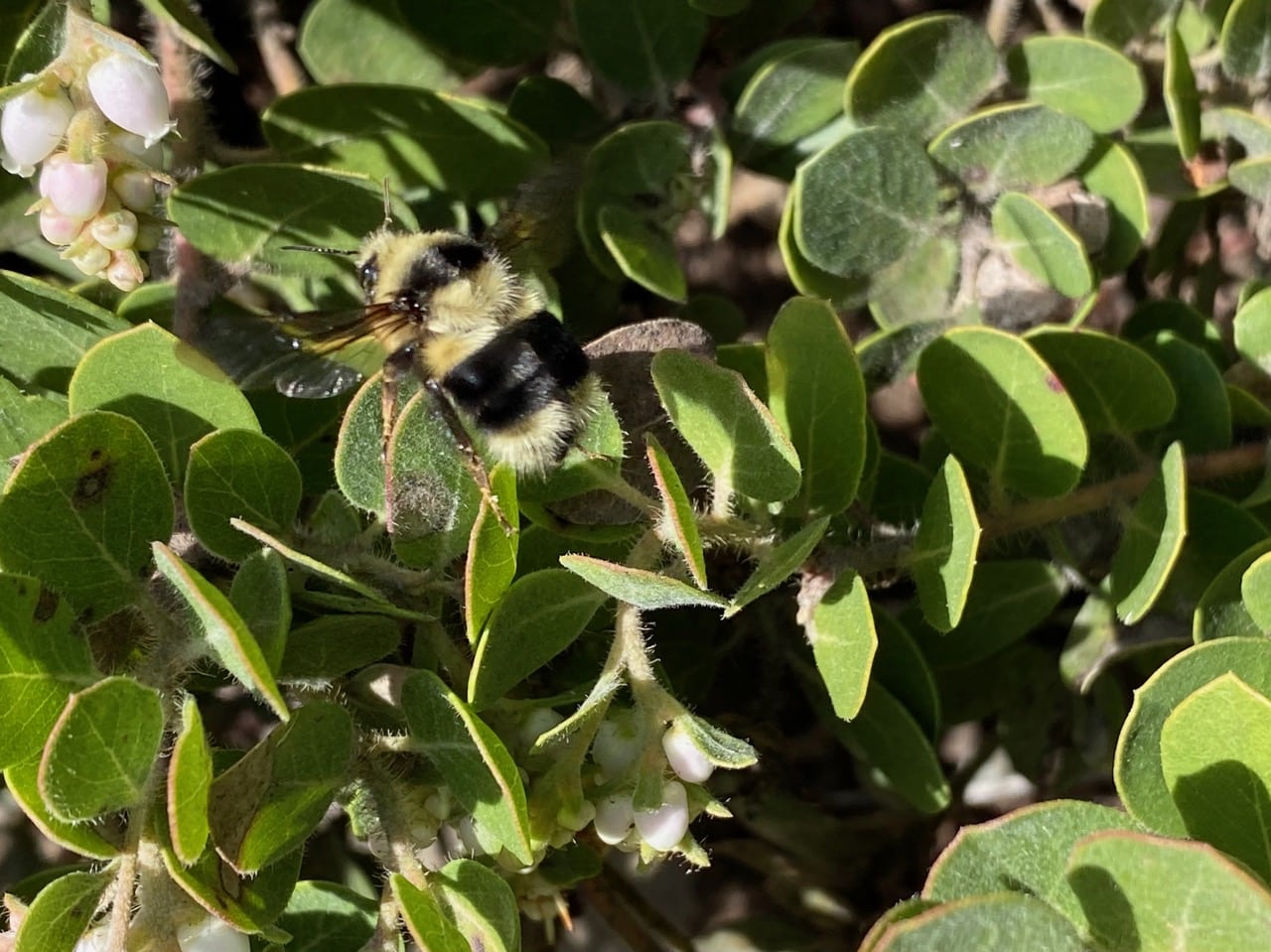
Some of these queen bumble bees are so chunky one wonders how they manage to get airborne with those little wings.
Queens are noticeably larger than worker bees, which is one of the easiest ways to distinguish them. As larvae, bumble bee queens receive a diet with significantly more protein (especially from pollen) compared to worker larvae; this special diet is essential for their development into larger, reproductive adults. This rich diet triggers specific epigenetic changes, directing the larva to develop into a queen rather than a sterile worker. The queen’s large size is crucial for her to store enough nutrients to survive hibernation, and establish a new colony, laying a large number of eggs throughout the colony’s lifespan.

Sharp-eyed Ryan points out a Black-tailed Bumble Bee that is resting motionless on a Manzanita leaf in the dappled shade of the shrub. A queen taking her royal nap! This behavior is often observed in early spring. The queens seem to tire easily during foraging trips.
I just read an article that might help explain the tendency of bumble bee queens to seek naps during the day. Bumblebees have long, hairy tongues that help them lap up nectar from flowers. The bee’s tongue is densely lined with hairs near the tip, and acts somewhat like a microscopic sponge. The closely spaced hairs create countless tiny gaps that hold nectar by surface tension. The queens, who are bigger than the workers, tended to have longer tongues, but these longer tongues have relatively less hair and are less effective at trapping nectar. Since nectar gathering is laborious and less efficient for the queens, they probably need to conserve energy and recharge frequently by taking power naps throughout the day.
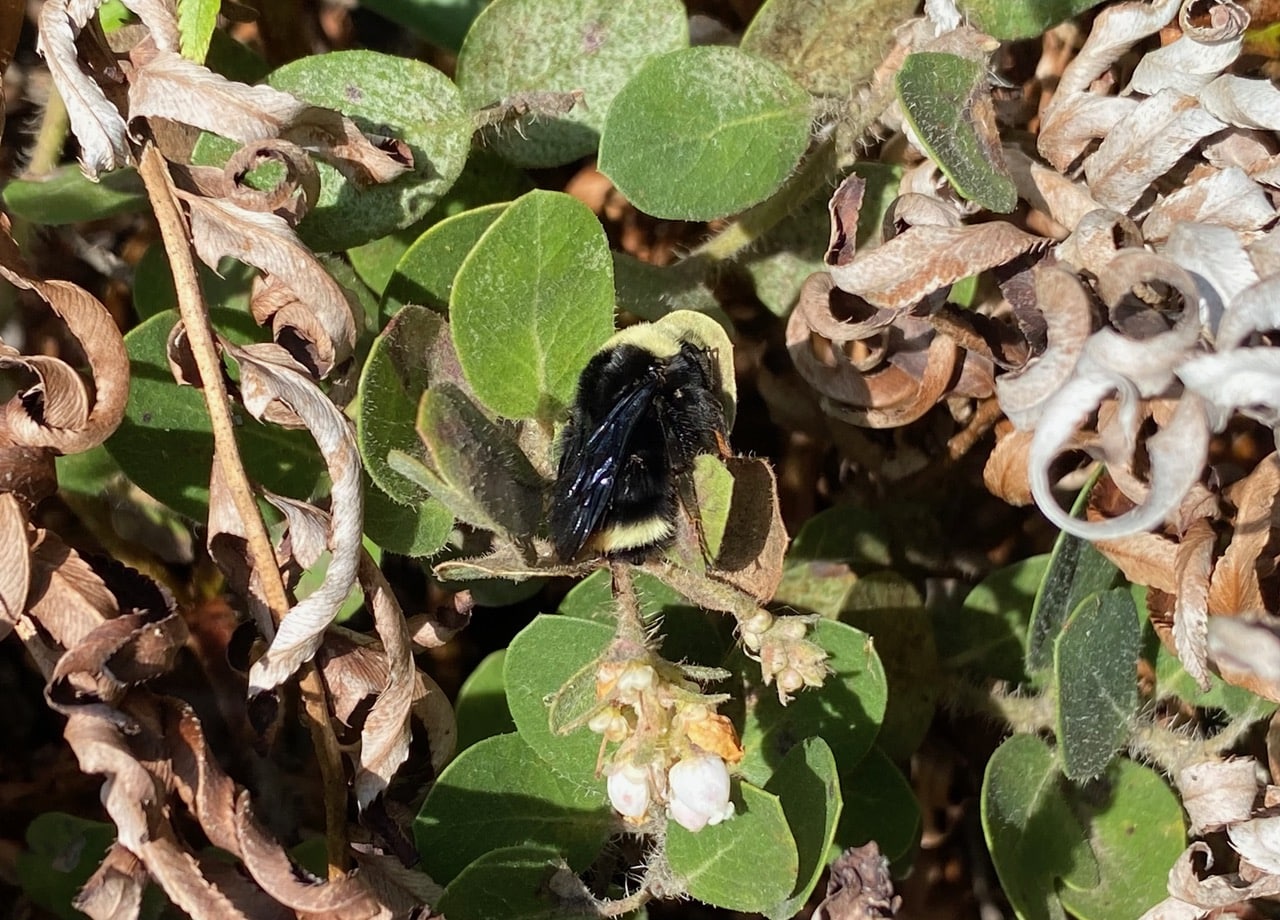
Slumped over some low Manzanita foliage among dried fern leaves, a queen Yellow-faced Bumble Bee, subgenus Pyrobombus (genus Bombus, family Apidae) is taking a nap. It is easy to tell a sleeping bee – every part of the bee droops – the head, the antennae, the wings, the legs…… zzzzz

I catch Spencer crouched in intense focus photographing something minute on a manzanita. It is a tiny Jumping Spider (family Salticidae).
Jumping spiders (family Salticidae) are free-roaming hunting spiders. They do not weave a web to catch prey. They stalk, then pounce on their prey. Just before jumping, the spider fastens a safety line to the substrate. It can leap 10-20 times their body length to capture prey. Their movement is achieved by rapid changes in hydraulic pressure of the blood. Muscular contractions force fluids into the hind legs, which cause them to extend extremely quickly. Jumping spiders are visual hunters. Their excellent vision has among the highest acuities in invertebrates. Since all their 8 eyes are fixed in place and cannot pivot independently from the body like human eyes can, jumping spiders must turn to face whatever they want to see well. This includes moving their cephalothorax up and down, an endearing behavior.
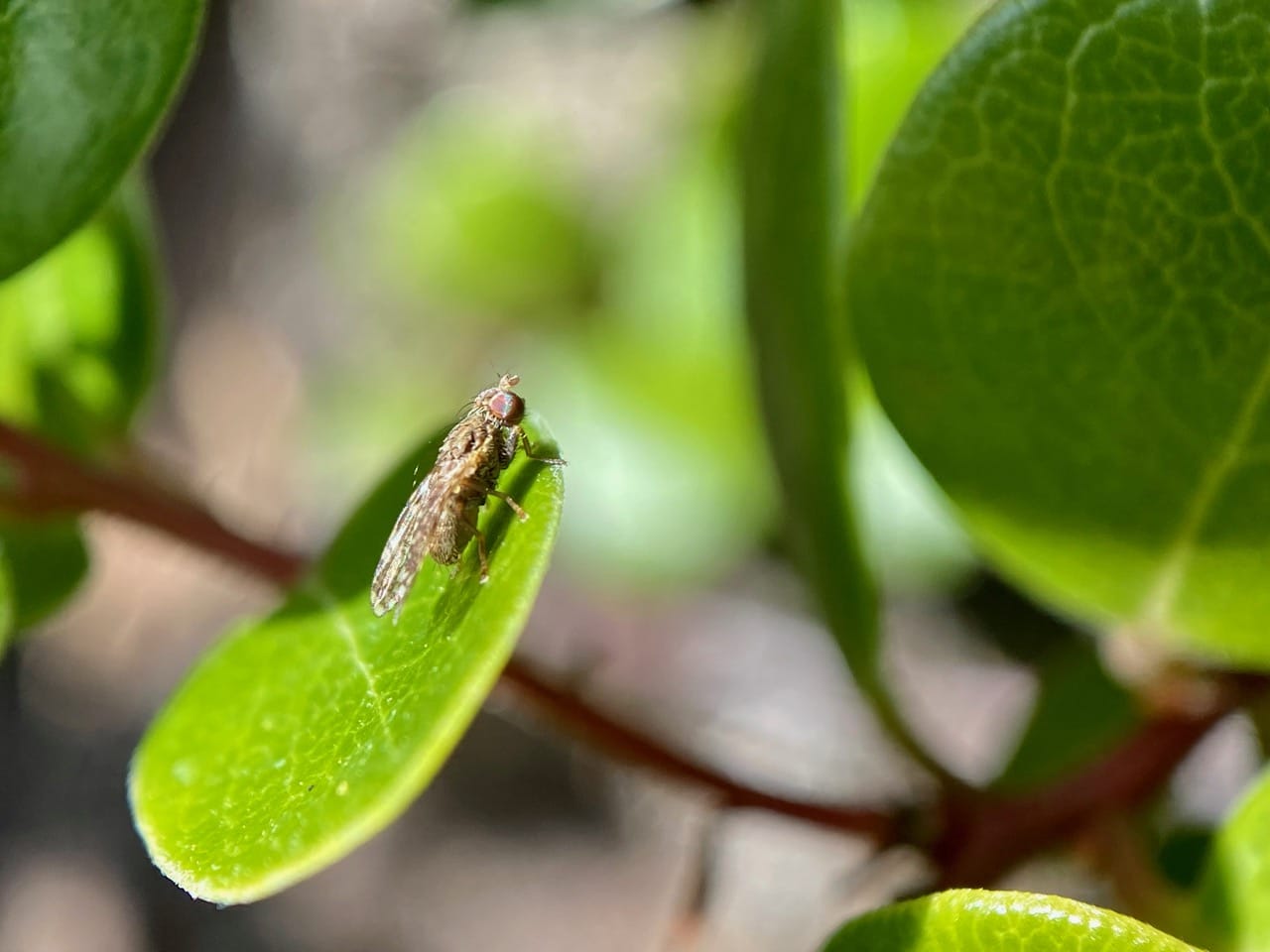
Ryan calls my attention to a small fly running around on a Manzanita leaf, waving its wings alternately. A Fruit Fly (Tephritidae) doing a wing display? iNaturalist has helped identify it as the Sunflower Seed Maggot, Neotephritis finalis (family Tephritidae).

Commonly called Fruit Flies, Tephritids are small to medium-sized flies that are often colorful, and usually with picture wings. The larvae of almost all Tephritidae are phytophagous. Females deposit eggs in living, healthy plant tissues using their telescopic ovipositors. Here the larvae find their food upon emerging. The larvae develop in leaves, stems, flowers, seeds, fruits, and roots of the host plant, depending on the species. Adults are often found on the host plant and feeding on pollen, nectar, rotting plant debris, or honeydew. Tephritid flies are of major economic importance as they can cause damage to fruit and other plant crops. On the other hand, some Tephritids are used as agents of biological control of noxious weeds.
The Sunflower Seed Maggot is a sunflower specialist, found on over 20 species of Asteraceae. Larvae feed on immature seeds and pupate in flowerheads.
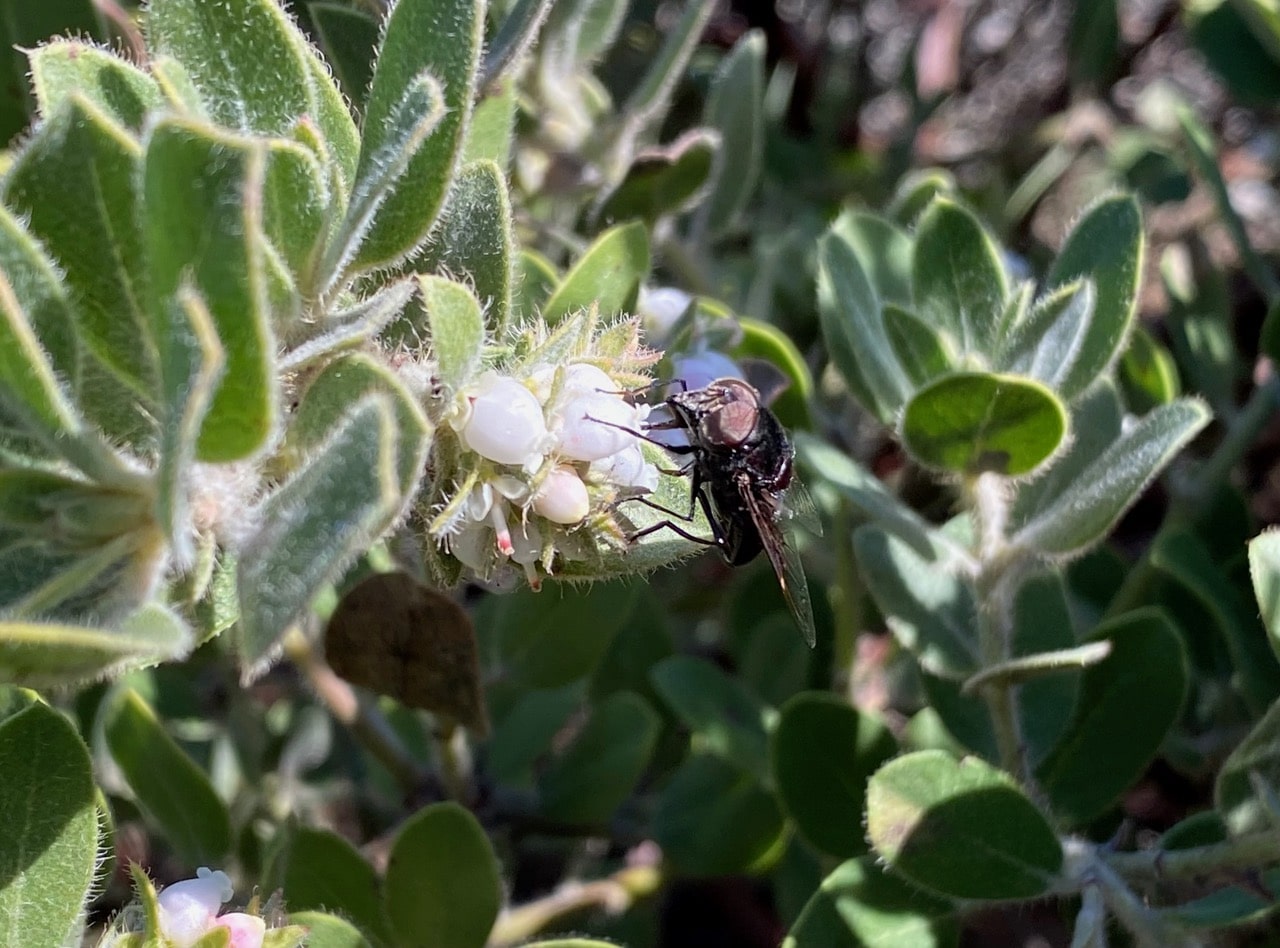
Ryan’s excited squeals send us running to see this big, glossy black fly he’s discovered. The fly is patiently taking nectar from a cluster of Manzanita flowers. It is a Purple Bromeliad Fly, Complex Copestylum violaceum (family Syrphidae), one of our largest hover flies. Note the characteristic pointed “snout” of the fly from which the proboscis is extended.
Bromeliad flies, primarily in the genus Copestylum (family Syrphidae), are a large group of hover flies found mostly in the Americas. Their larvae live in the water-filled centers (tanks) of bromeliads or in decaying cactus tissue, breaking down organic debris. The eggs of Purple Bromeliad Fly are typically laid on rotting vegetation or organic detritus near damp areas. Once hatched, the larvae prefer moist environments rich in decaying organic matter, such as compost piles and leaf litter, where they feed and grow. The adults are large and glossy; in our area, they appear to mimic Carpenter Bees. They are commonly seen hovering around flowers in gardens, meadows, or near forest edges, where they feed on nectar and pollen, contributing to pollination.
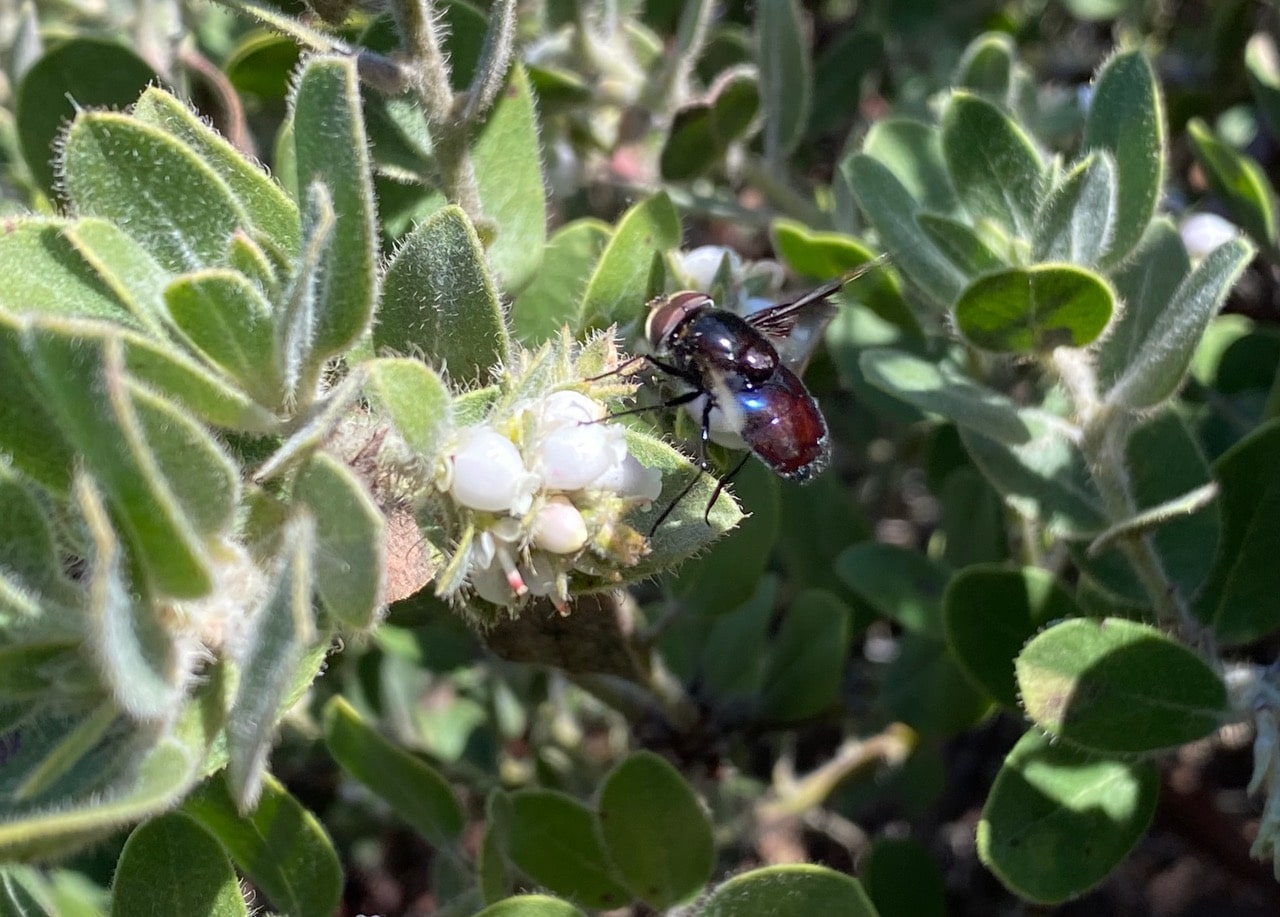
As the giant fly spreads its wings to lift off we get a glimpse of its iridescent purplish abdomen.
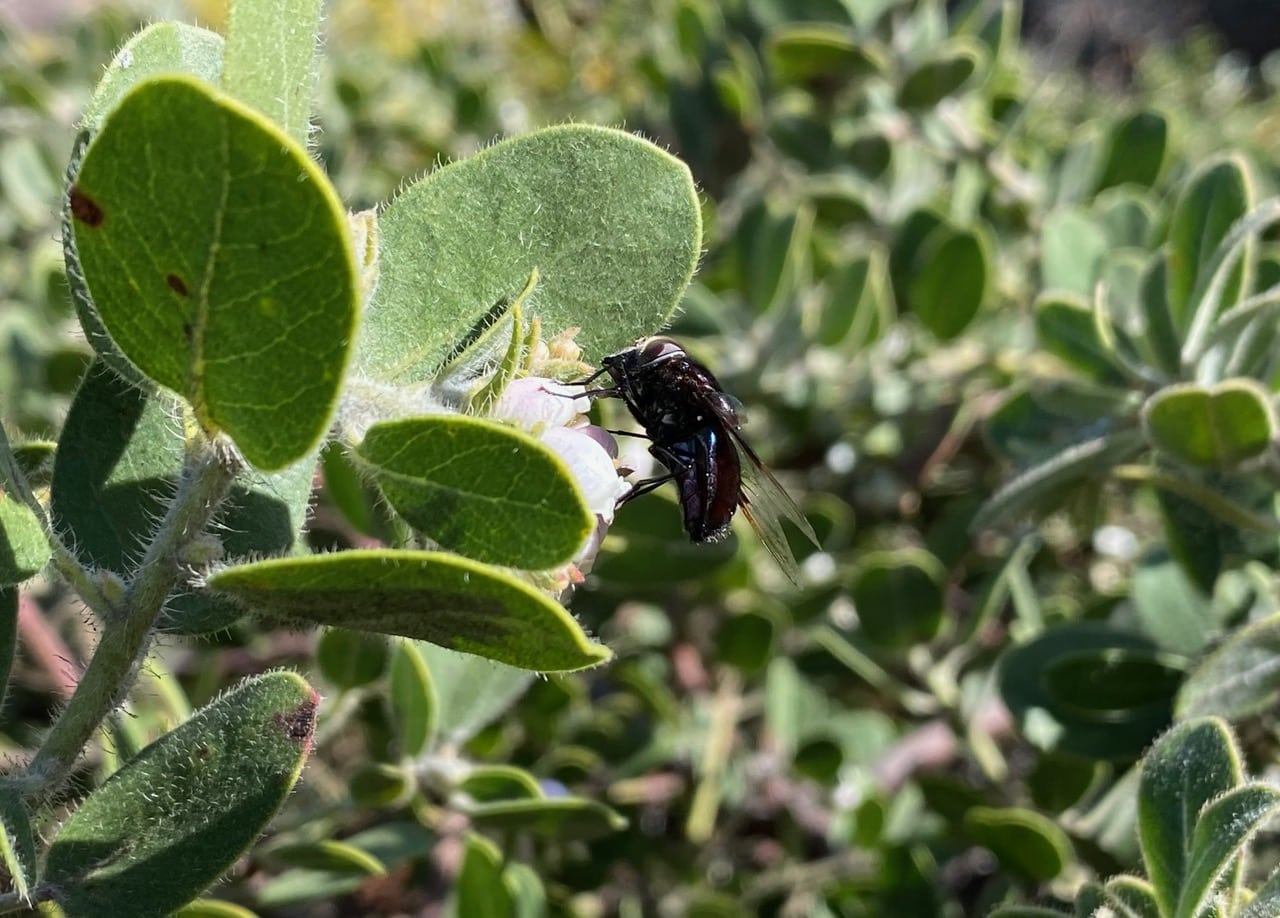
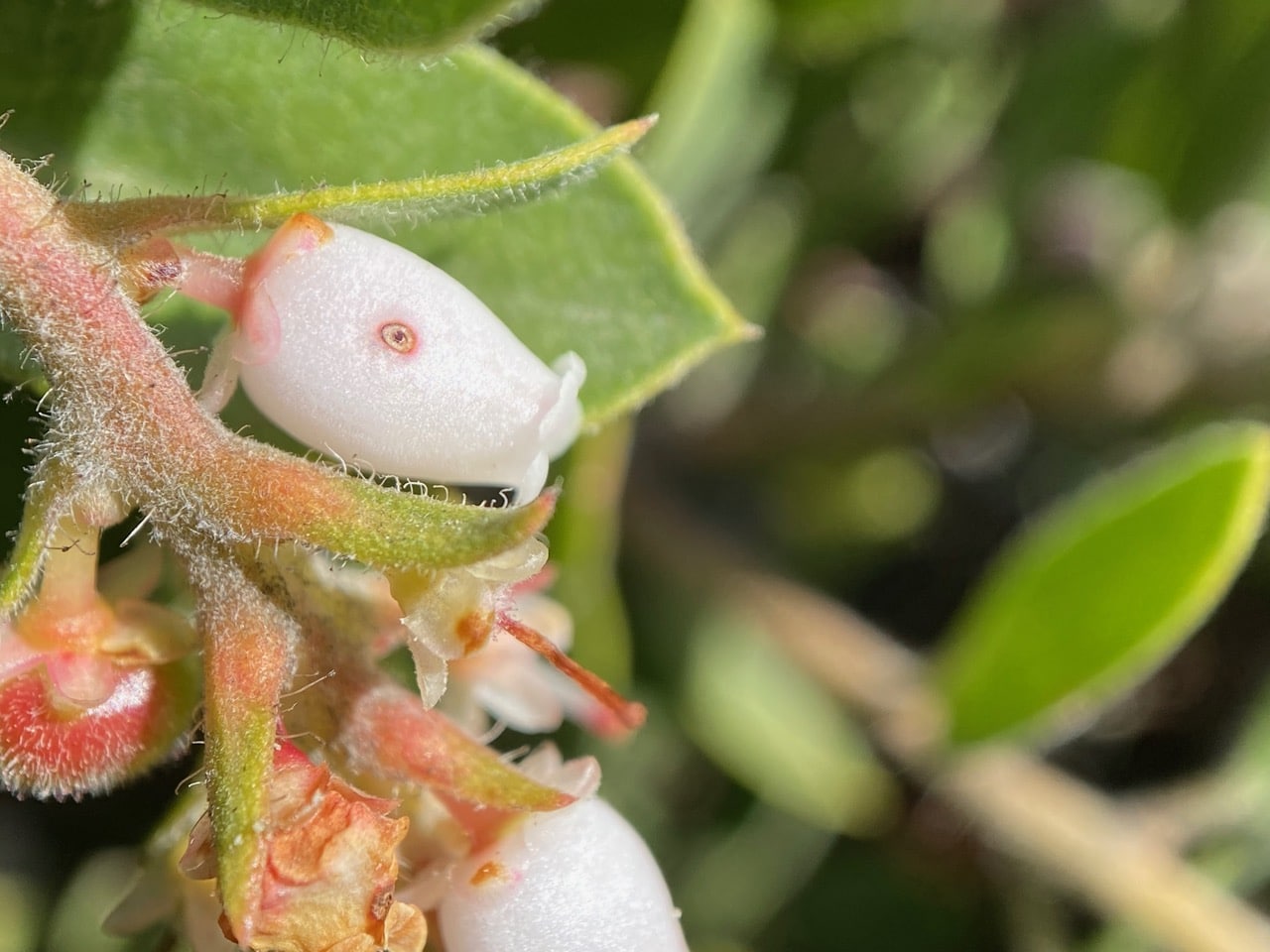
See that hole on the side of the Manzanita flower? It’s most likely the work of a nectar robber. When entry into a flower is difficult, as in the urn-shaped manzanita flowers with a small opening, or narrow tubular flowers such as the Salvias, some insects with the right mouthparts will cut a hole near the base of the flower to access the nectar directly. In doing so, they bypass the reproductive structures of the flower, thus they do not contribute to pollination. Carpenter Bees(Xylocopa) and Bumble Bees (Bombus) are notorious for nectar robbing. Often times, other insects may take advantage of the ready-made holes to access nectar. They are called secondary nectar robbers.
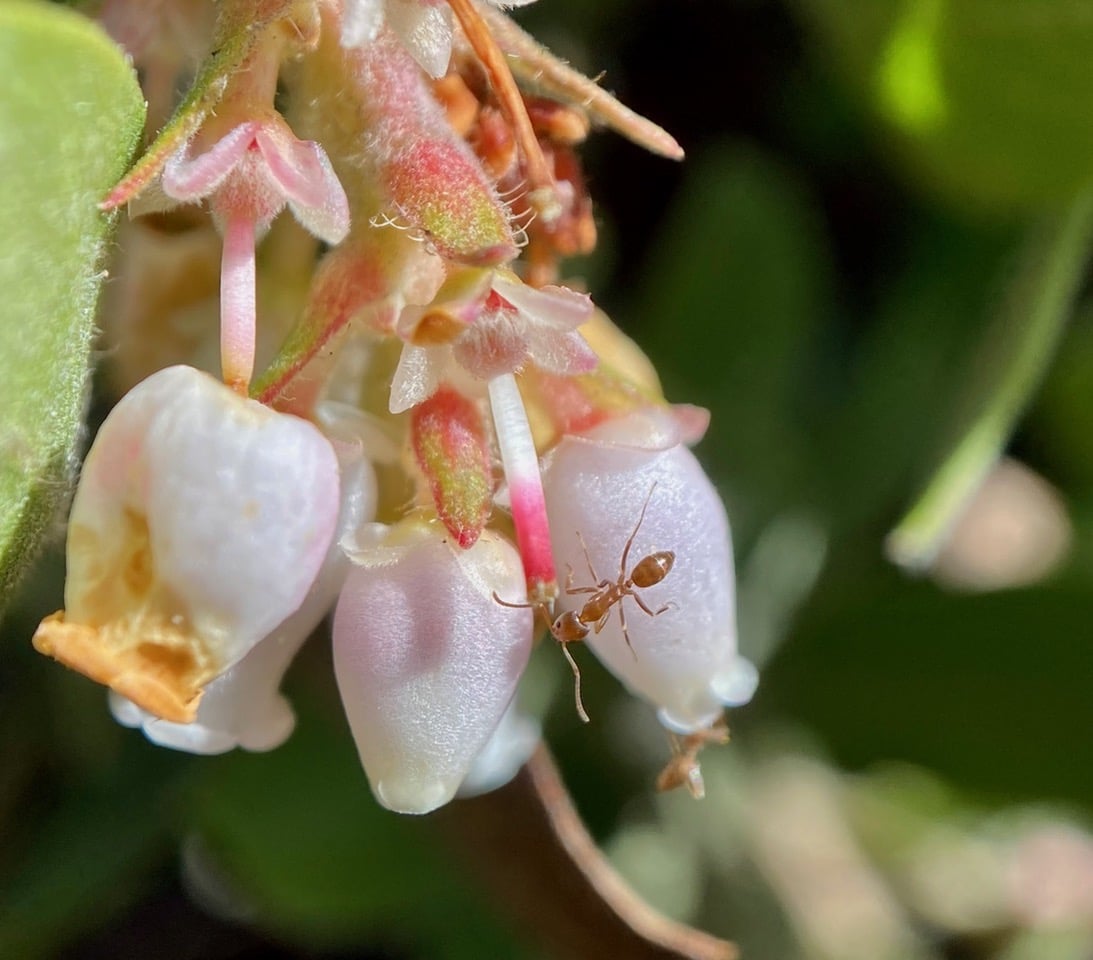
Argentine Ants are foraging on the Manzanita flowers.
The Argentine Ant, Linepithema humile (family Formicidae) is native to Northern Argentina, but it has been inadvertently introduced by humans to many countries, and is now an established invasive species in many Mediterranean climate areas worldwide. The success of the species can be attributed to their lack of aggression between the colonies. There is no apparent antagonism between separate colonies of its own kind, resulting in “super-colonies” that extend across hundreds or thousands of kilometers in different parts of the their range. Genetic, behavioral, and chemical analyses show that introduced Argentine Ants on separate continents actually represent a single global supercolony.
The Argentine Ants are ranked among the world’s worst invasive animal species. In its introduced range, the Argentine ant often displaces most or all native ants and can threaten native invertebrates and even small vertebrates that are not accustomed to defending against the aggressive ants. This can, in turn, imperil other species in the ecosystem, such as native plants that depend on native ants for seed dispersal, or lizards that depend on native ants for food.
A new study published in the Journal of Insect Science documents a serious dilemma that Bumble Bees face when Argentine Ants compete with them over nectar. Bees tend to avoid flowers already occupied by aggressive ants, which will bite to keep them away, but when they both get tangled in a fight, bees sometimes bite back. These skirmishes are a lose-lose scenario in most cases, leaving ants dead and bees with wasted energy that could’ve been spent foraging and feeding their colonies.
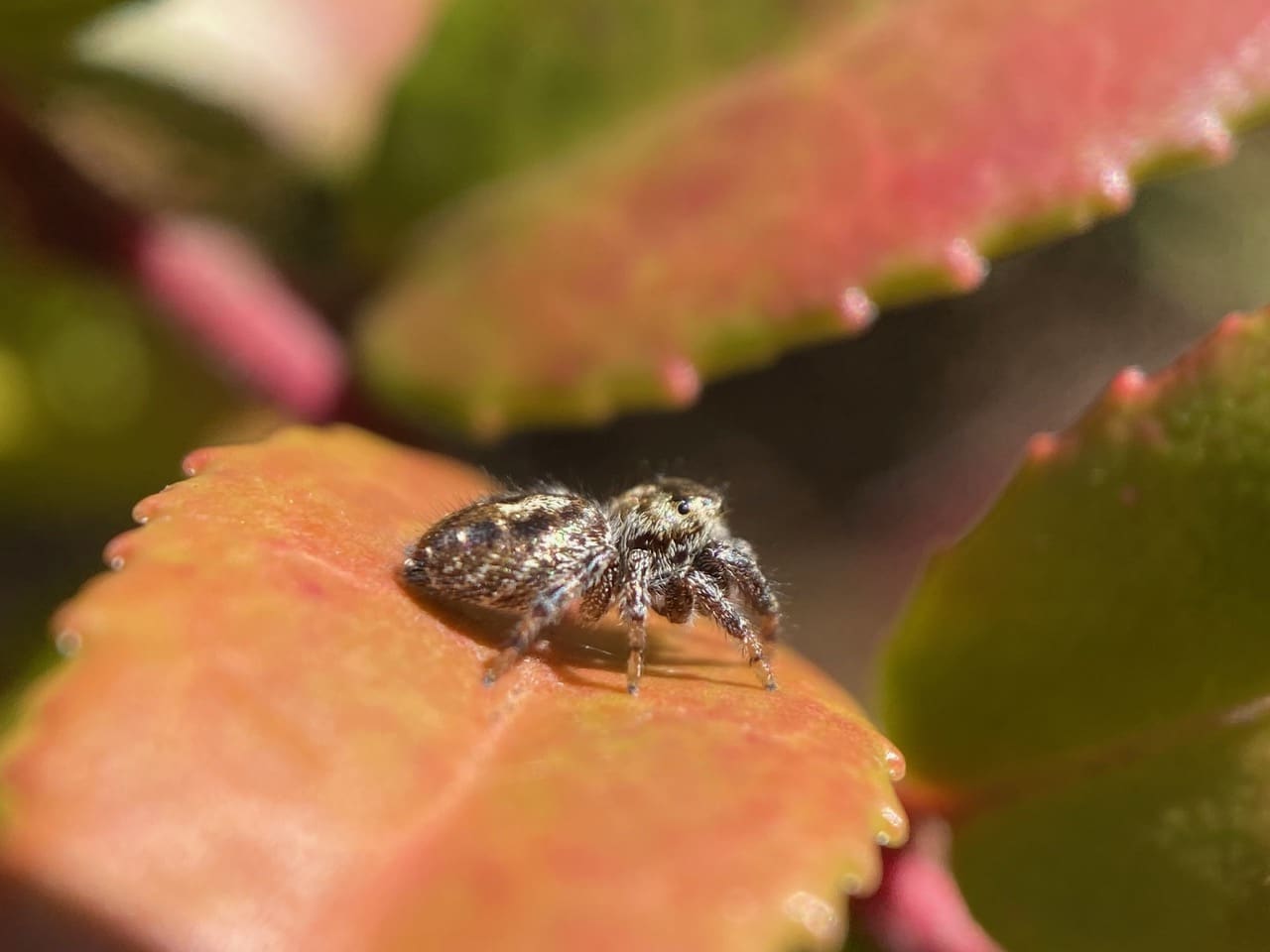
Ooh, another Jumping Spider (family Salticidae)!

We did a special detour into the Redwood forest to check for one of my favorite plants. There they are, barely visible among the leaf litter in dappled shade, already in bloom – the Fetid Adder’s Tongue, Scoliopus bigelovii. If it weren’t for the red label that marks the spot, I might have missed these flowers completely. This year, the cryptic flowers seem to have preceded the appearance of their conspicuous leaves. Why are these flowers camouflaged in their habitat as if they don’t want to be seen? Perhaps this is where the fetid odor comes in. The flowers summon their pollinators by smell!
I quickly check each flower for any small insects such as fungus gnats (family Mycetophilidae). No, none is around. The flowers of Fetid Adder’s Tongue emit an odd scent that attracts the gnats. While perched on the sepals and probing for nectar at the center of the flower, the gnat’s body may pick up pollen released from the large anther hanging above it. Flying to another flower, the gnat may inadvertently transfer the pollen onto the stigmas at the tip of the stout, three-pronged style, effectively pollinating the flower in the process.
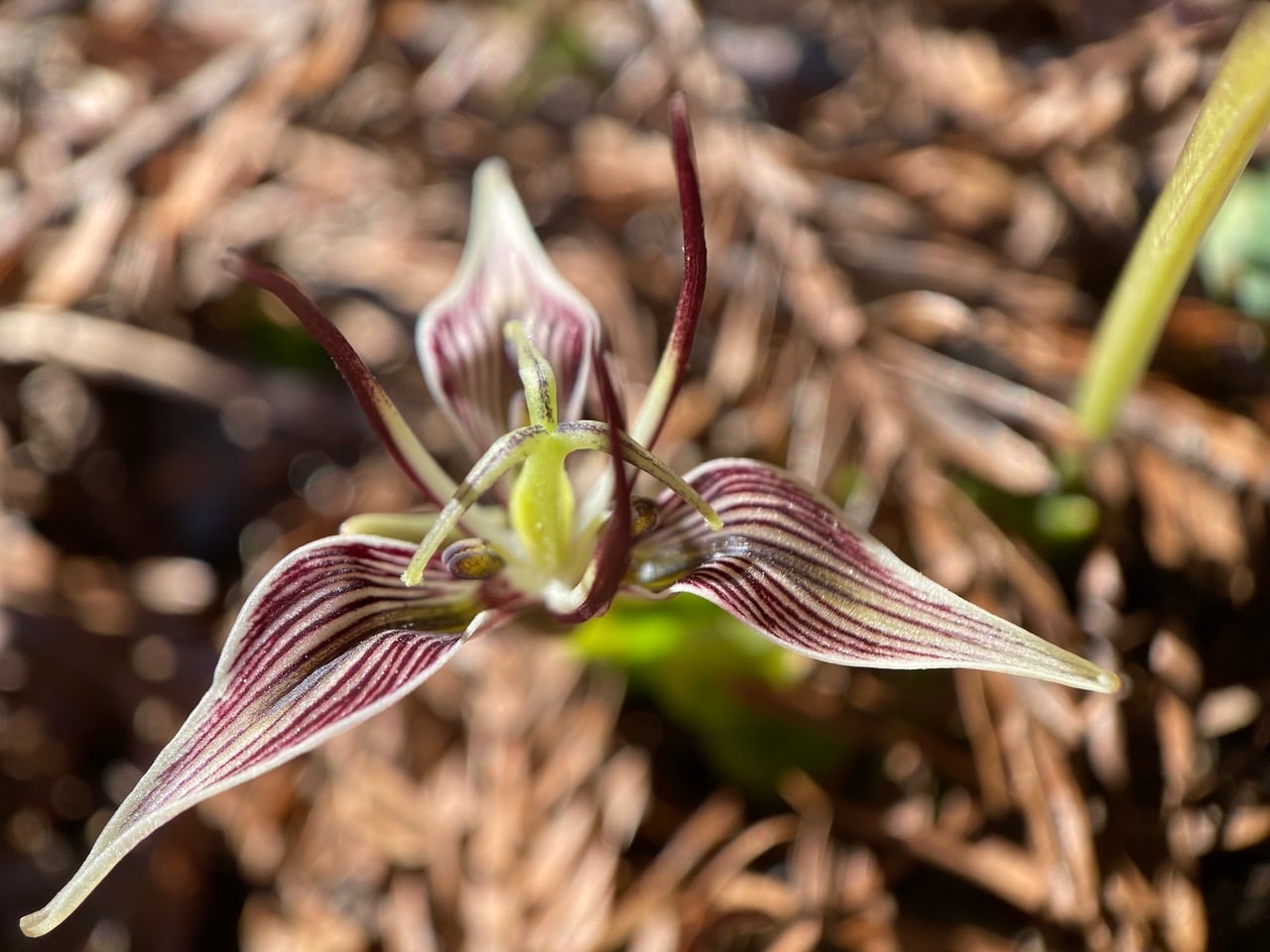
When you’re in the Redwood forest, don’t forget to bend down to smell the remarkable flower of Fetid Adder’s Tongue. Learn about the unique floral structure and how the flower is pollinated in this video: