

Pollinator Post 1/11/25 (2)

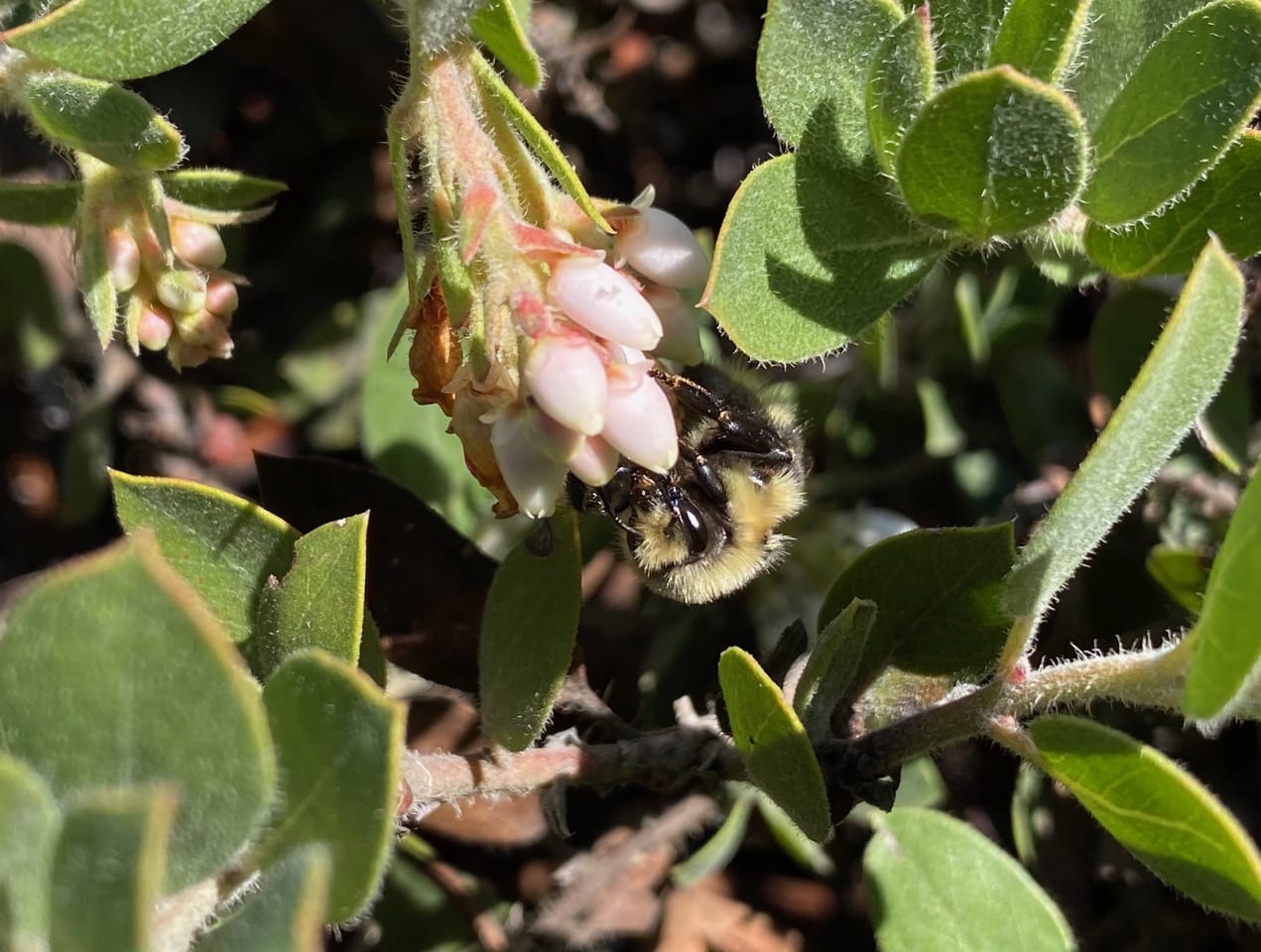
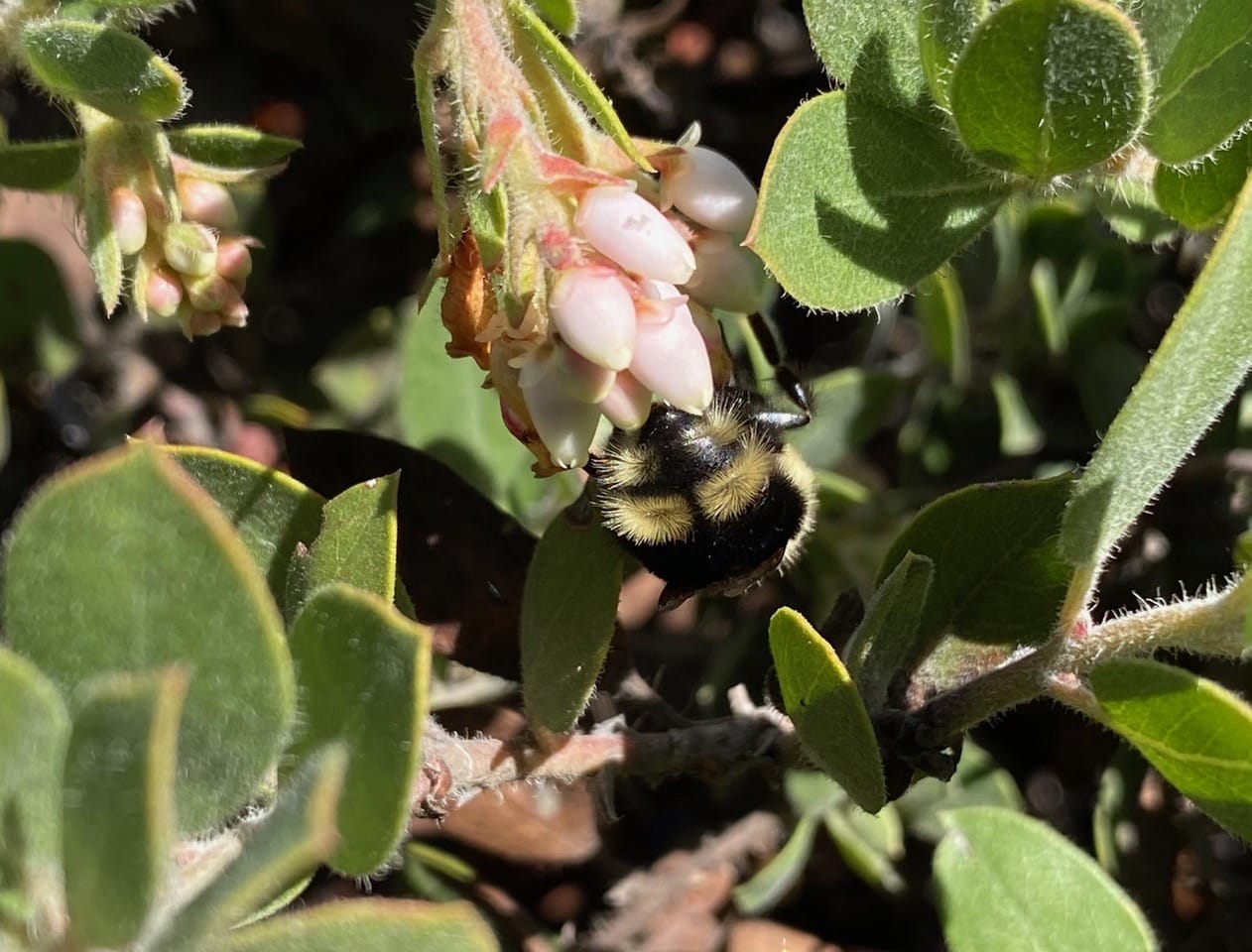
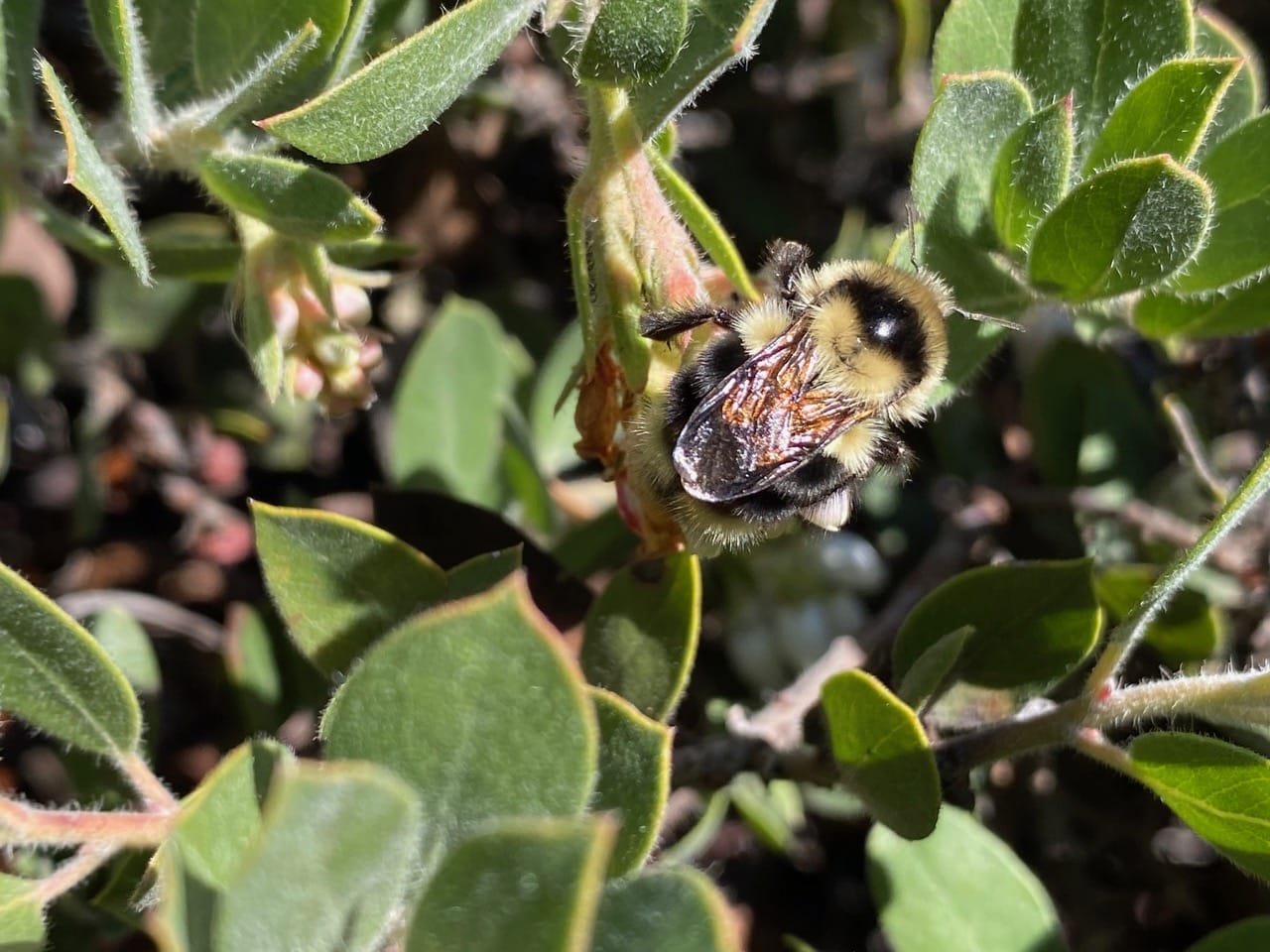
Hanging upside-down from a cluster of manzanita flowers, a queen Yellow-faced Bumble Bee, subgenus Pyrobombus (genus Bombus, family Apidae) is taking nectar from a flower.

Tender new vines of the California Pipevine, Aristolochia californica have spiraled their way up the stem of a supporting shrub.

Nearby on the ground, several vines in search of support have joined forces by twining around each other, forming thick rope-like bundles.
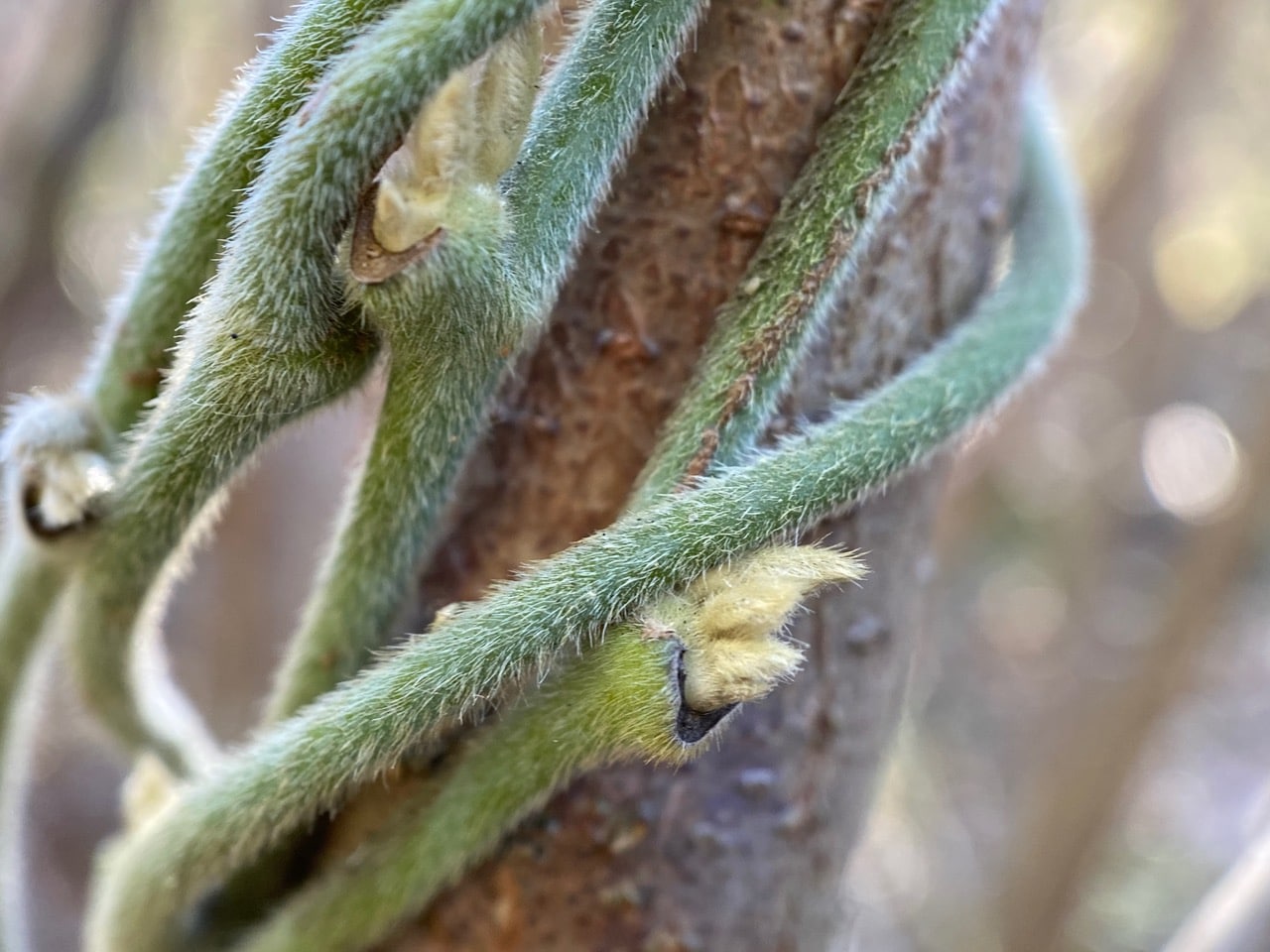
At regular intervals long the hairy vines of the California Pipevine, little furry buds appear at the nodes.
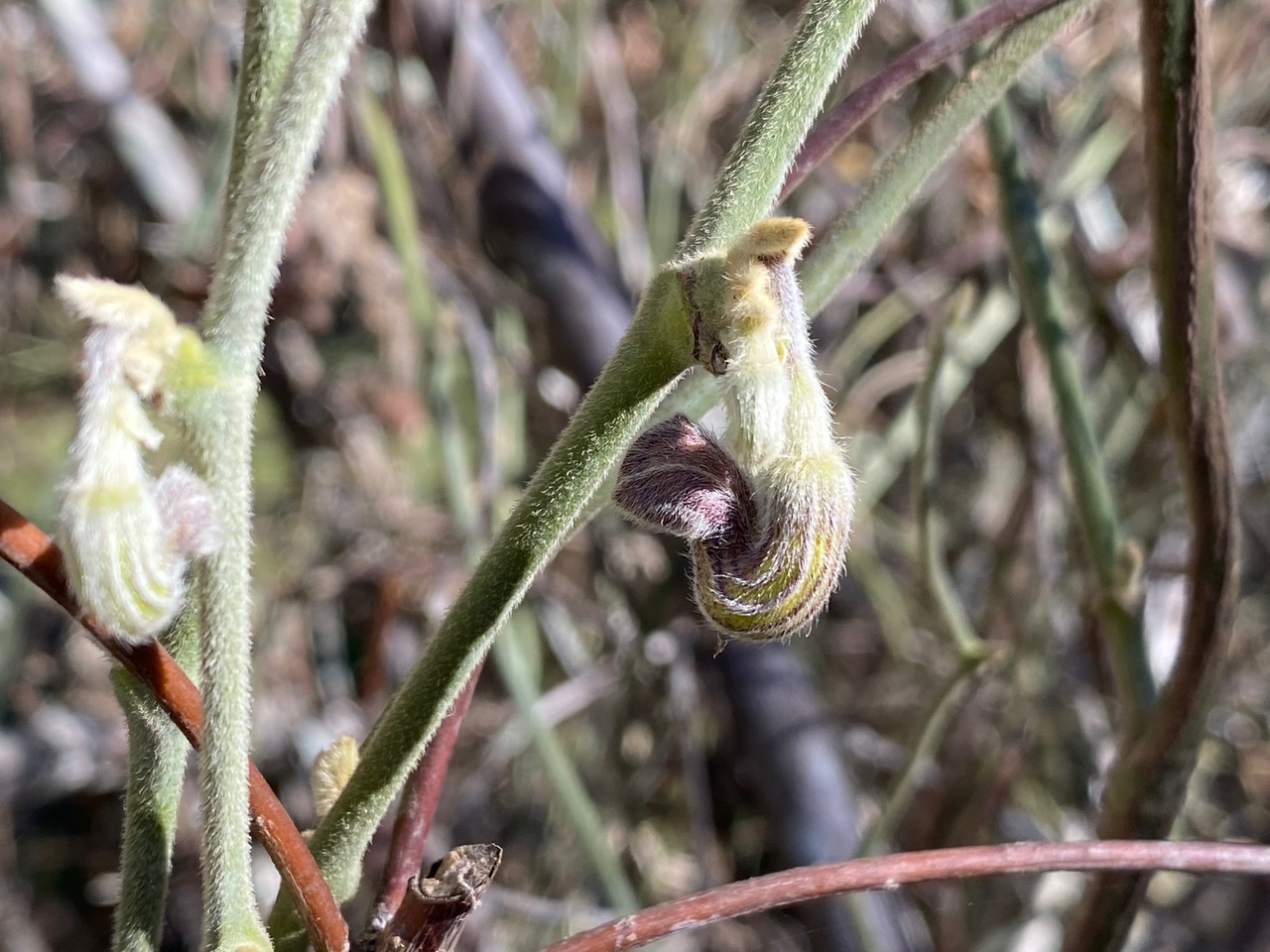
Look what this bud has unfurled – a hairy little pipe-shaped flower! In a sense, this should not have been a surprise – California Pipevine blooms before it leafs out.

A disheveled queen Black-tailed Bumble Bee, Bombus melanopygus (family Apidae) crawls through the dense foliage of a manzanita and emerges on a cluster of flowers. Wow, where has she been?

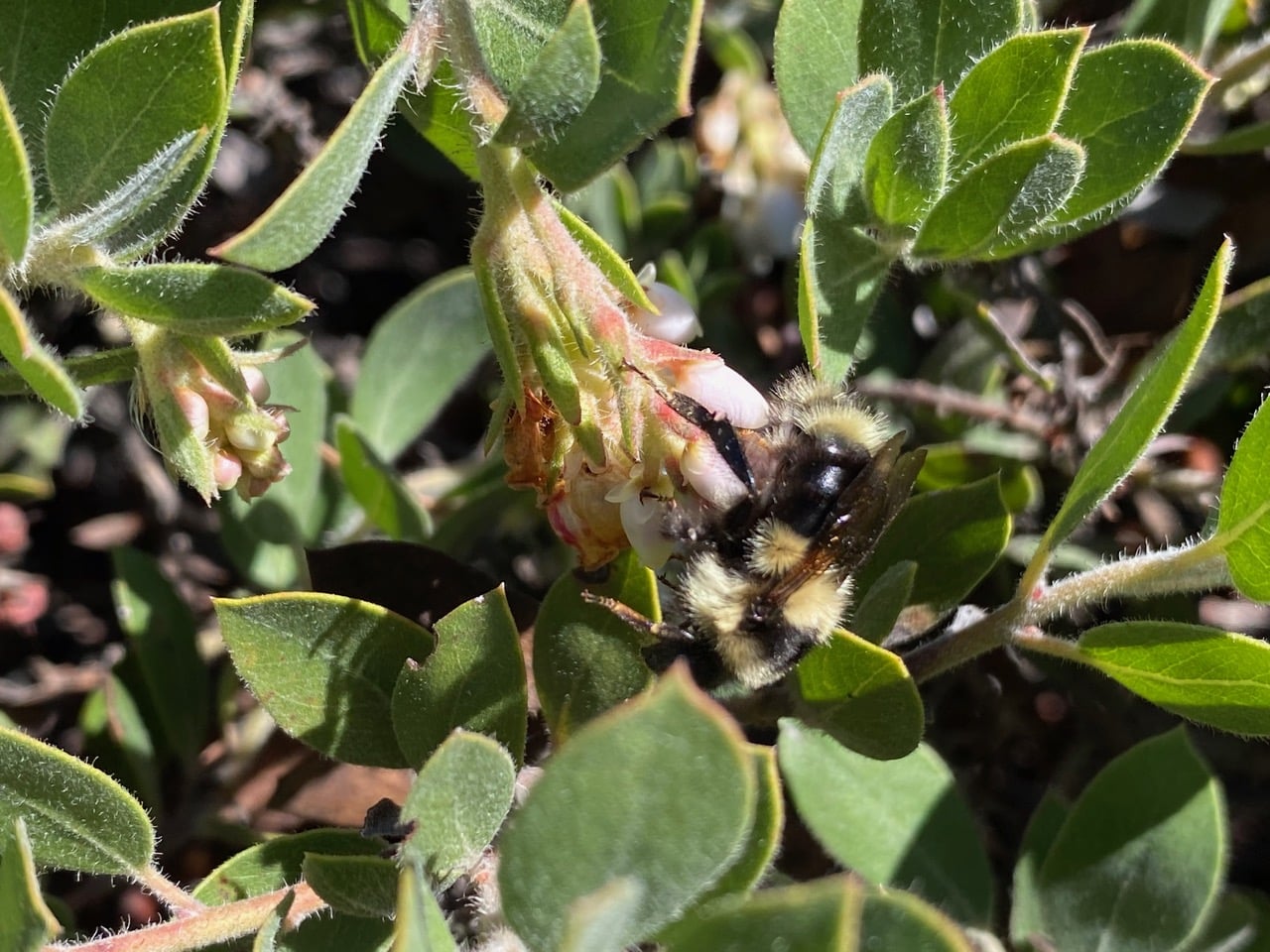
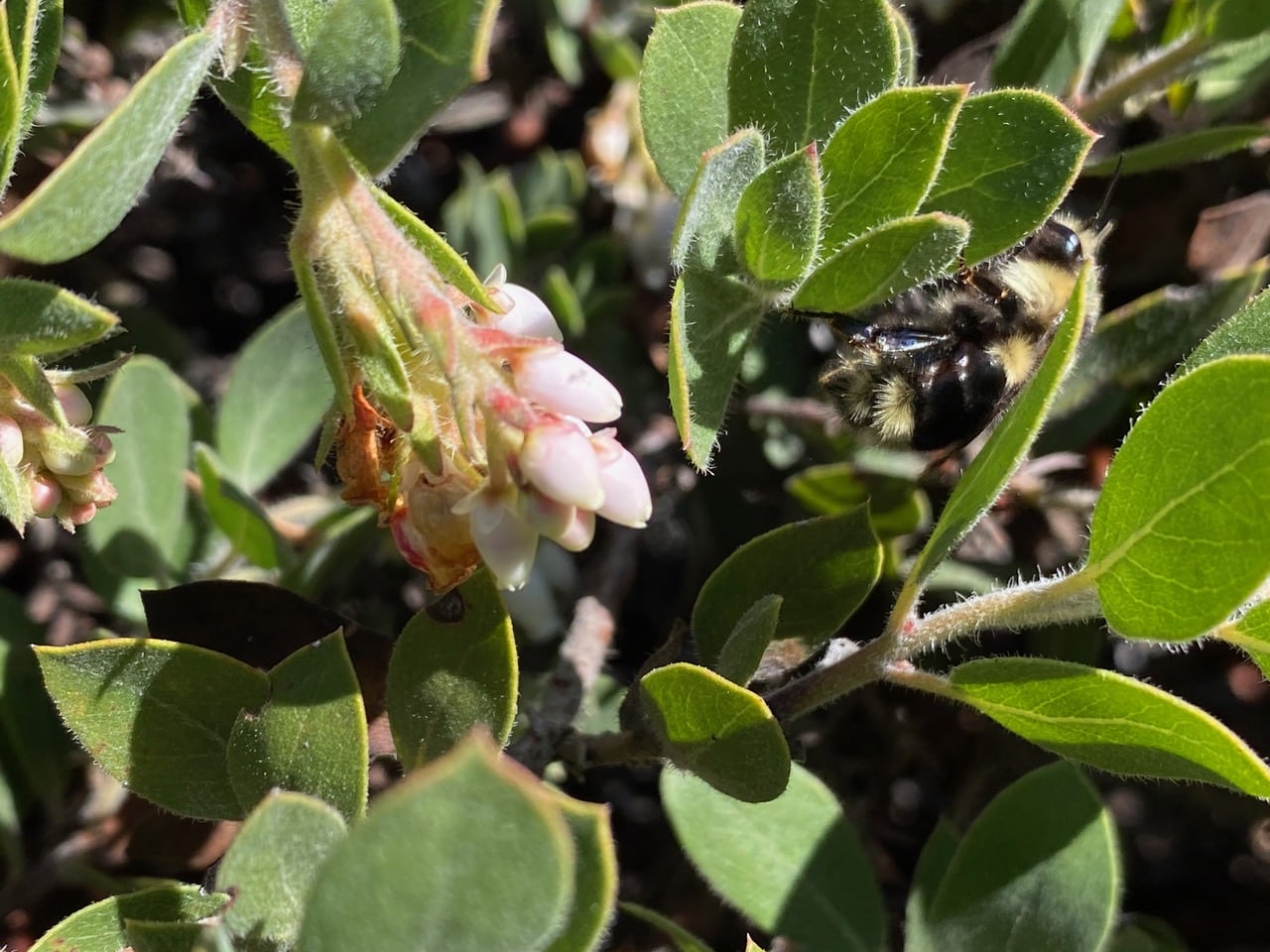

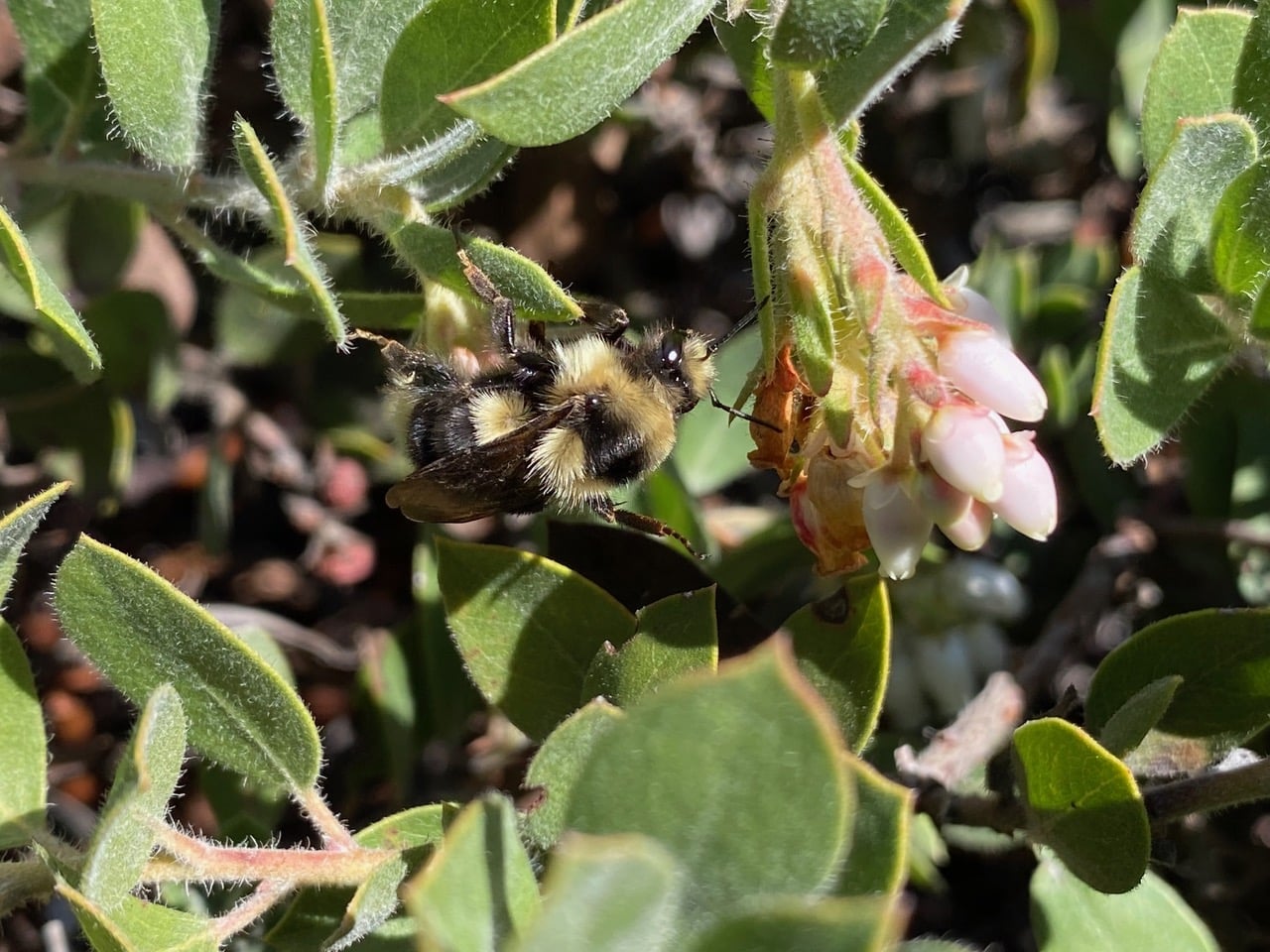
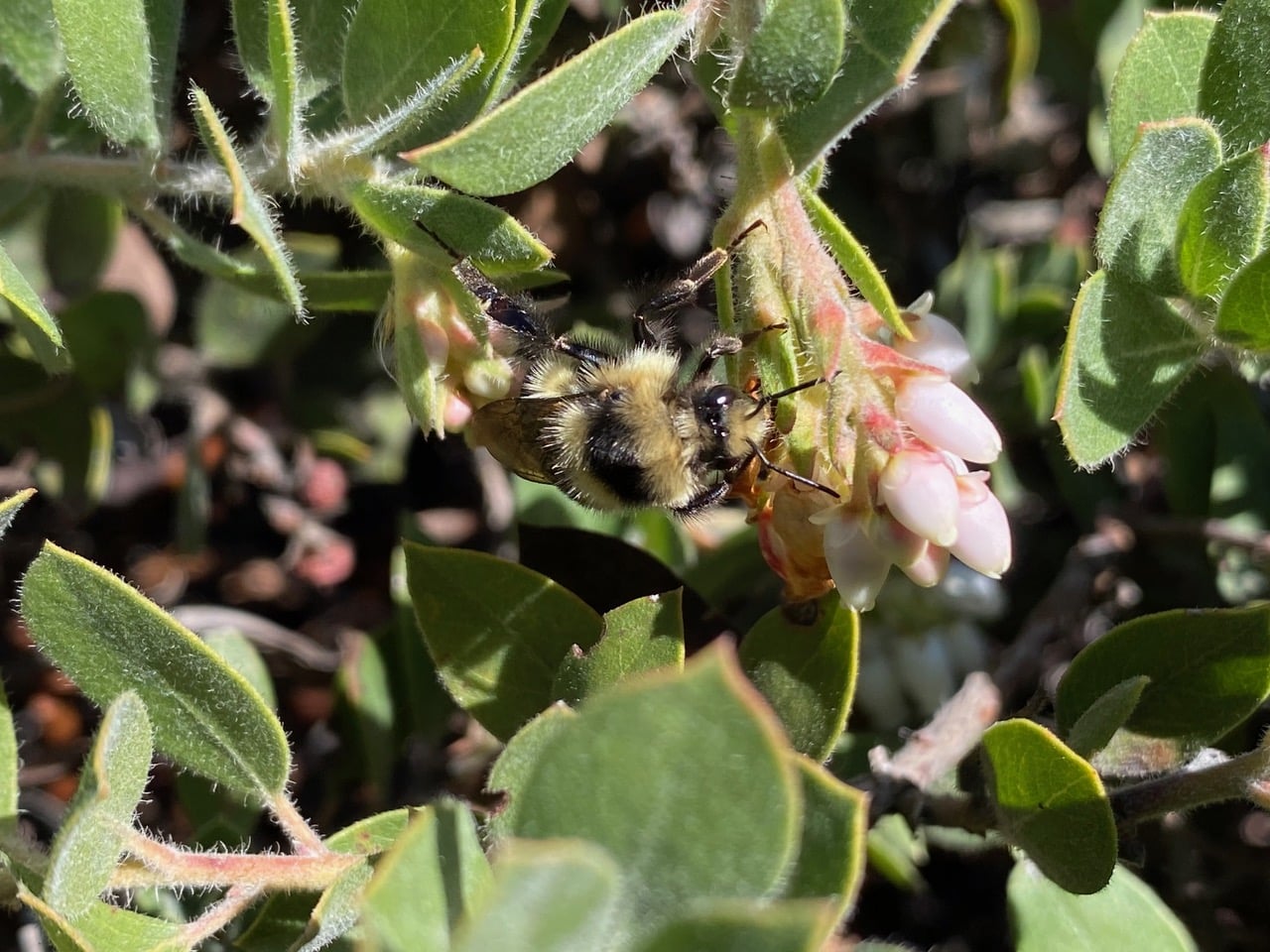

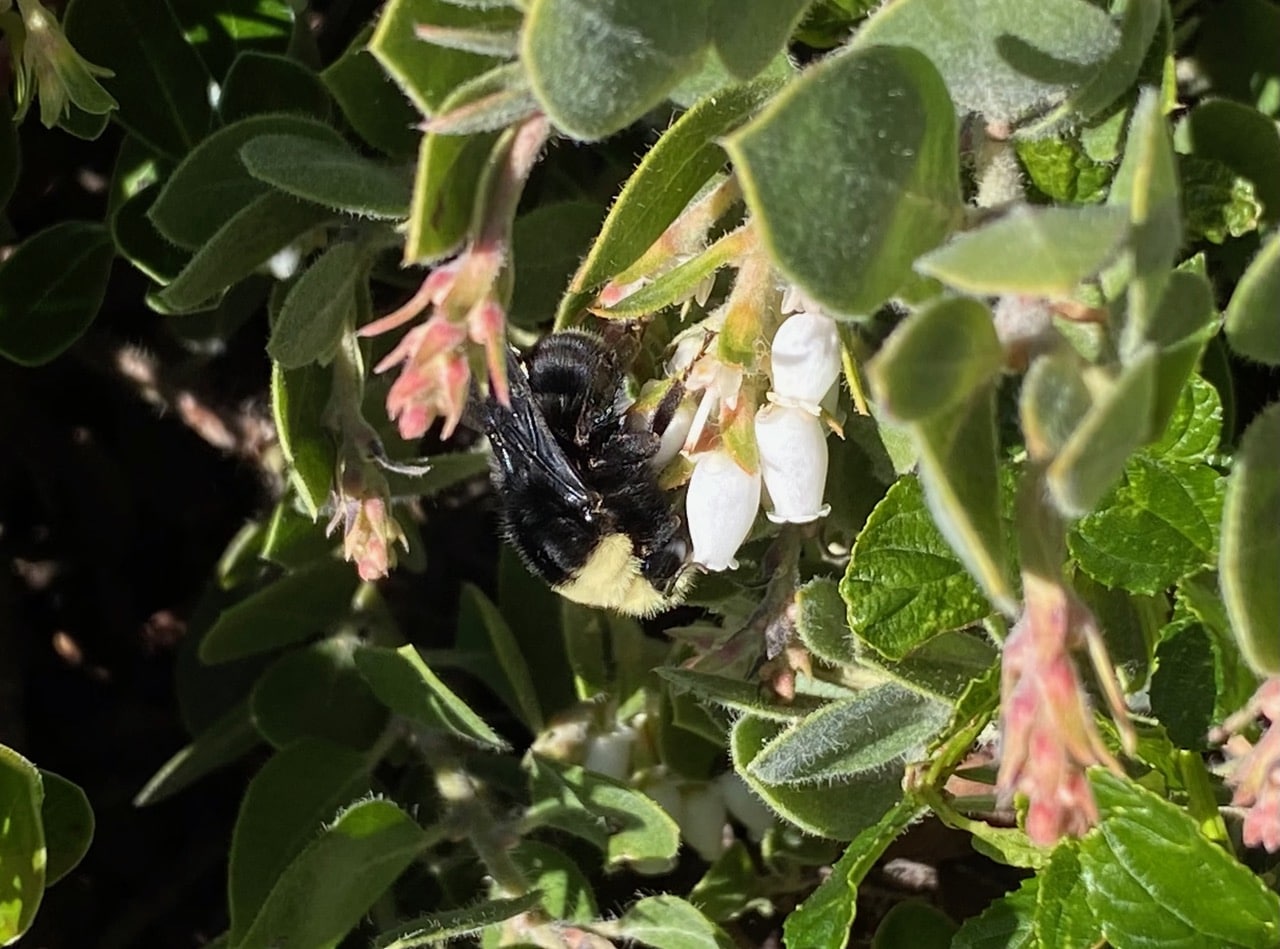
The large bumble bee proceeds to clean her left antenna with her left foreleg.
All bees have an antenna cleaner on each of their two forelegs. The antenna cleaners consists of two parts: a notch in the basitarsus, which is fitted with stiff hairs, and a corresponding spur on the tibia. To clean its antenna, the bee raises its foreleg over its antenna and then flexes it tarsus. The action allows the spur to close the notch, forming a ring around the antenna. The bee pulls each antenna through the bristles to clean it of debris such as pollen or dust which might interfere with the many sensory organs within the antenna. A bee’s antennae serve numerous functions: smell, taste, perceive humidity and temperature, feel, monitor gravity and flight speed and even detect sound waves to help guide the bee in its daily activities.
Unsteadily she investigates the cluster of flowers.
She scrambles to the next branch on foot.
She returns to the same flowers. Extending her tongue, the queen bee attempts to take nectar from the manzanita flowers which are not quite fully opened.
She is truly colossal, easily 3-4 times the size of a regular worker of her species.
Queens are noticeably larger than worker bees, which is one of the easiest ways to distinguish them. Queen bees are fed a more substantial diet during their larval development, contributing to their larger size. The queen’s large size is crucial for her to store enough nutrients to lay a large number of eggs throughout the colony’s lifespan. In the bumble bees, workers do not feed or groom the queen, as is the case in some other social lineages.
Note the black-tipped abdomen that gives the species its common name of Black-tailed Bumble Bee. The queens are so large and their body so broad that they appear to be divided in two halves laterally.
She climbs over to explore an adjacent cluster of young flower buds …
… then decides to return to the original cluster.
She fumbles around on the inflorescence, giving me a clear view of her back. Her wings seem small in proportion to her rotund body. This is the most thorough, close and unhurried look I ever had of a queen bumble bee!
She finally disappears unsteadily into the foliage. Year after year, I am baffled by the behavior of these queen bumble bees. They can appear very disoriented, and sluggish. With their huge cumbersome body, foraging is obviously not their forte. Rather, they are built for their reproductive role – laying eggs. Are they slow and sluggish because they just woke up from hibernation? Foraging is only a temporary stint for the queens, albeit a trying one. After emerging from hibernation, they have to nourish themselves, find a suitable nesting site, prepare the nest, lay eggs, incubate the eggs, and after the eggs hatch, forage to feed the larvae. It’s only after the first batch of workers mature that the queen could take it easy, stay home and concentrate on laying eggs. Thereafter the workers will take over brood care, nest building and foraging duties.
Just minutes later, I encounter another queen bee in a dense manzanita shrub across the path. This one is a Yellow-faced Bumble Bee, subgenus Pyrobombus (genus Bombus, family Apidae). The motionless bee is slumped over a cluster of manzanita flowers. Oftentimes when a bee is taking nectar, I can see some movements in its abdomen. I do not detect any of that in this queen bee. Is she asleep? Noting the location of the bee, I go on to enjoy the plants in the neighboring bed. When I return to the spot about 10 minutes later, I discover that the bee hasn’t moved at all. After a couple of minutes, she stirs, and sensing my presence, buzzes off noisily without further ado. She was merely taking a royal nap! This is another behavior I often observe in newly emerged queen bees – they are prone to napping openly on flowers.