

Pollinator Post 1/10/25

I take my morning walk at the Joaquin Miller Park in the Oakland hills today.
Walking along the fence of the FOSC Native Plant Nursery on Sanborn Drive, I am happy to see that tender young leaves have sprouted on the branch tips and nodes of the Sticky Monkeyflower, Diplacus aurantiacus above the old leaves and spent seed capsules.
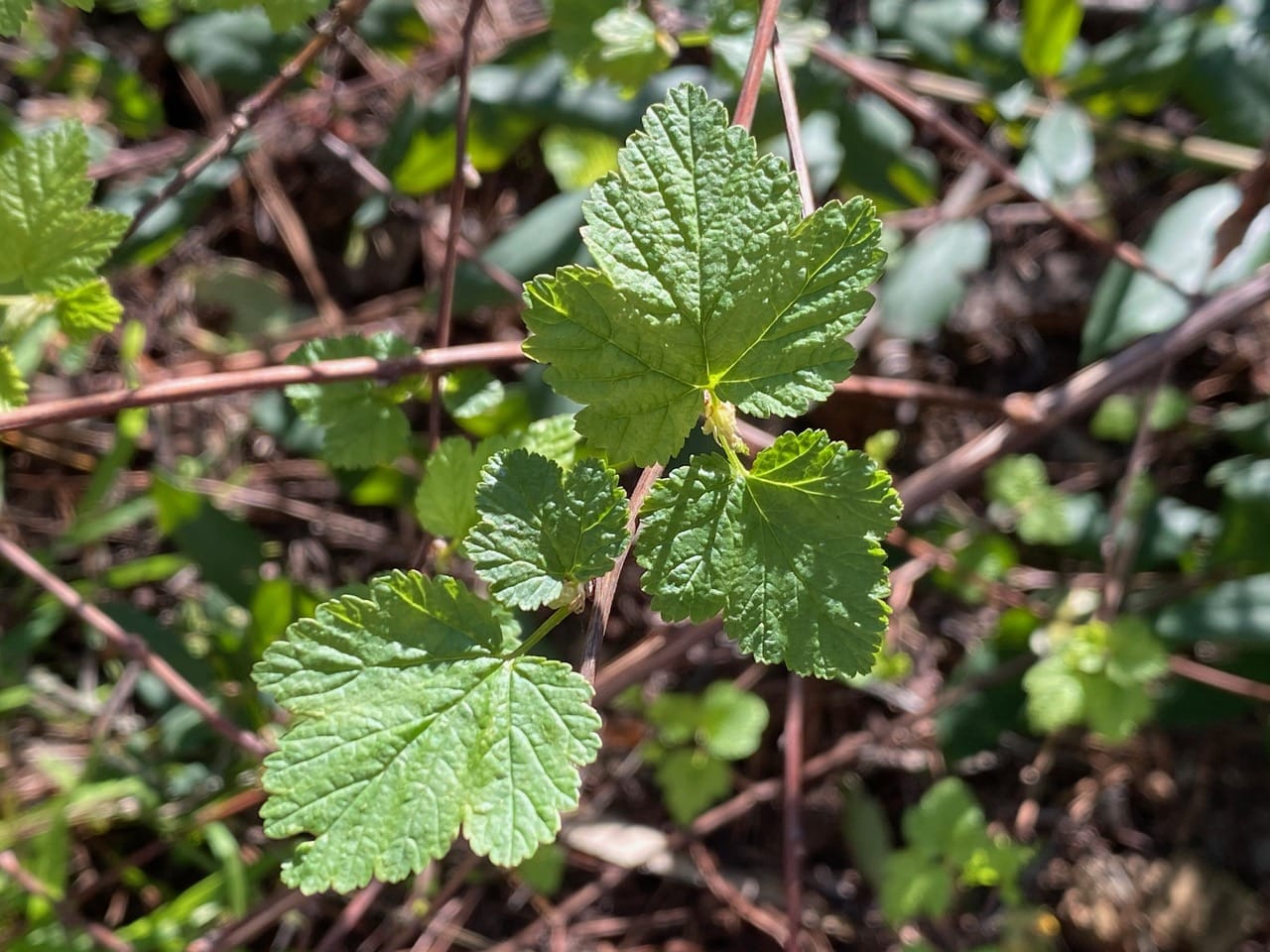
The Pacific Ninebark, Physocarpus capitatus is also leafing out nicely. Ah, nature’s renewal! In mid winter?

This grove of Monterey Pines looks intact and healthy. Elsewhere in the park many of these aging trees have succumbed to the winter storms over the last few years, and now lie rotting in giant piles along the road.
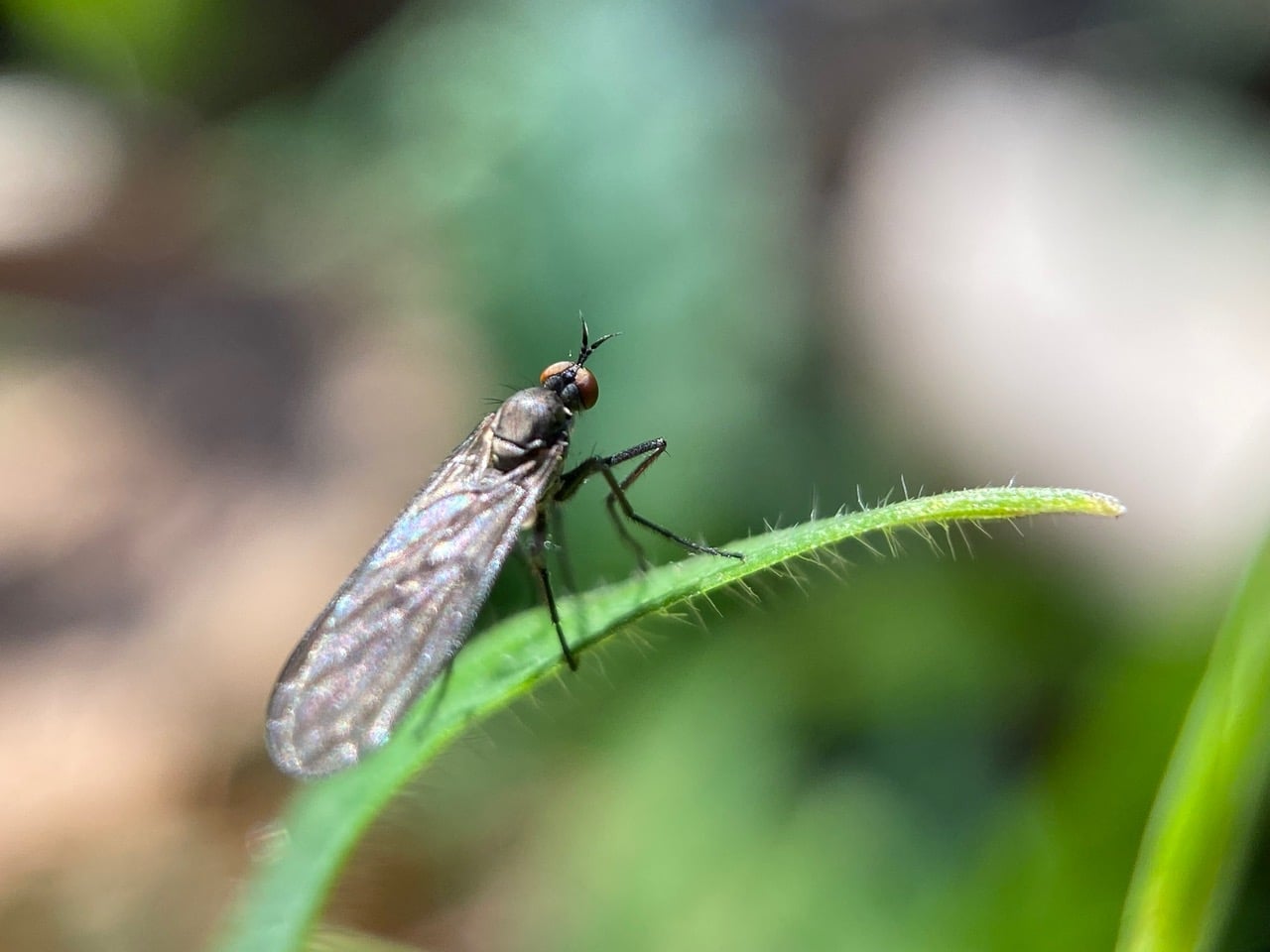
Small swarms of insects are dancing over the short grass along the road. The insects appear to be a little larger than the midges I have been seeing lately. I wait for one to land to take a closer look. Hmm…. those antennae, elongate body and long legs – a Dance Fly (superfamily Empidoidea)? I think it might belong to the family Empididae?
The Empidoidea are a large group of monophyletic superfamily of true flies. The majority of these insects are predatory, often with large compound eyes (sometimes covering almost the entire surface of the head), and tend to be associated with moist, temperate habitats. Several species within Empidoidea are of particular interest to ethologists and ecologists, due to elaborate mating rituals and life histories involving freshwater.
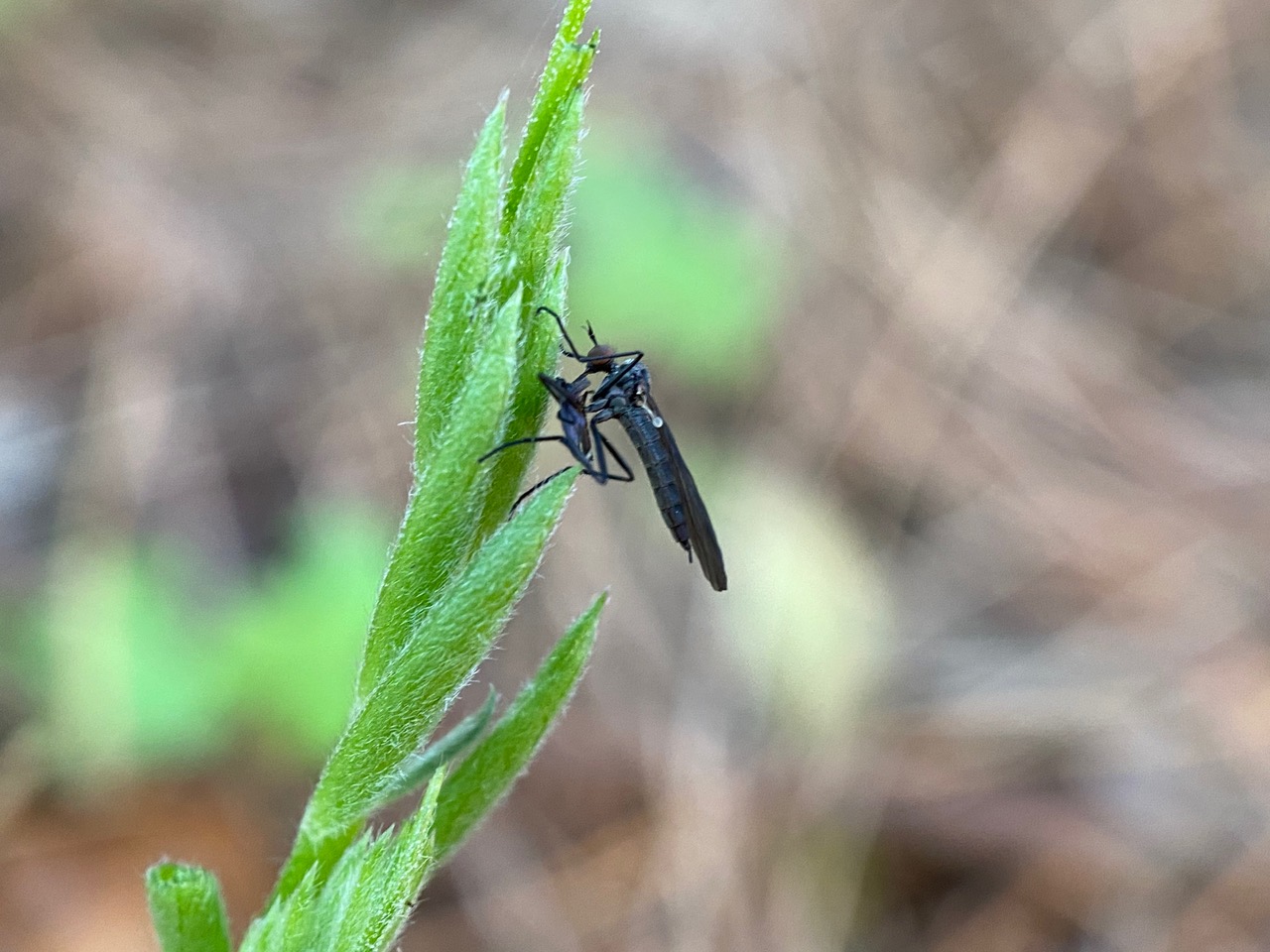
A little further on, in the shade of an oak tree, another swarm is dancing over the damp leaf litter. One insect lands conspicuously on the terminal shoot of a Vetch. Closing in, I find that it is a Dance Fly that has caught a small winged prey. Wow, what luck!
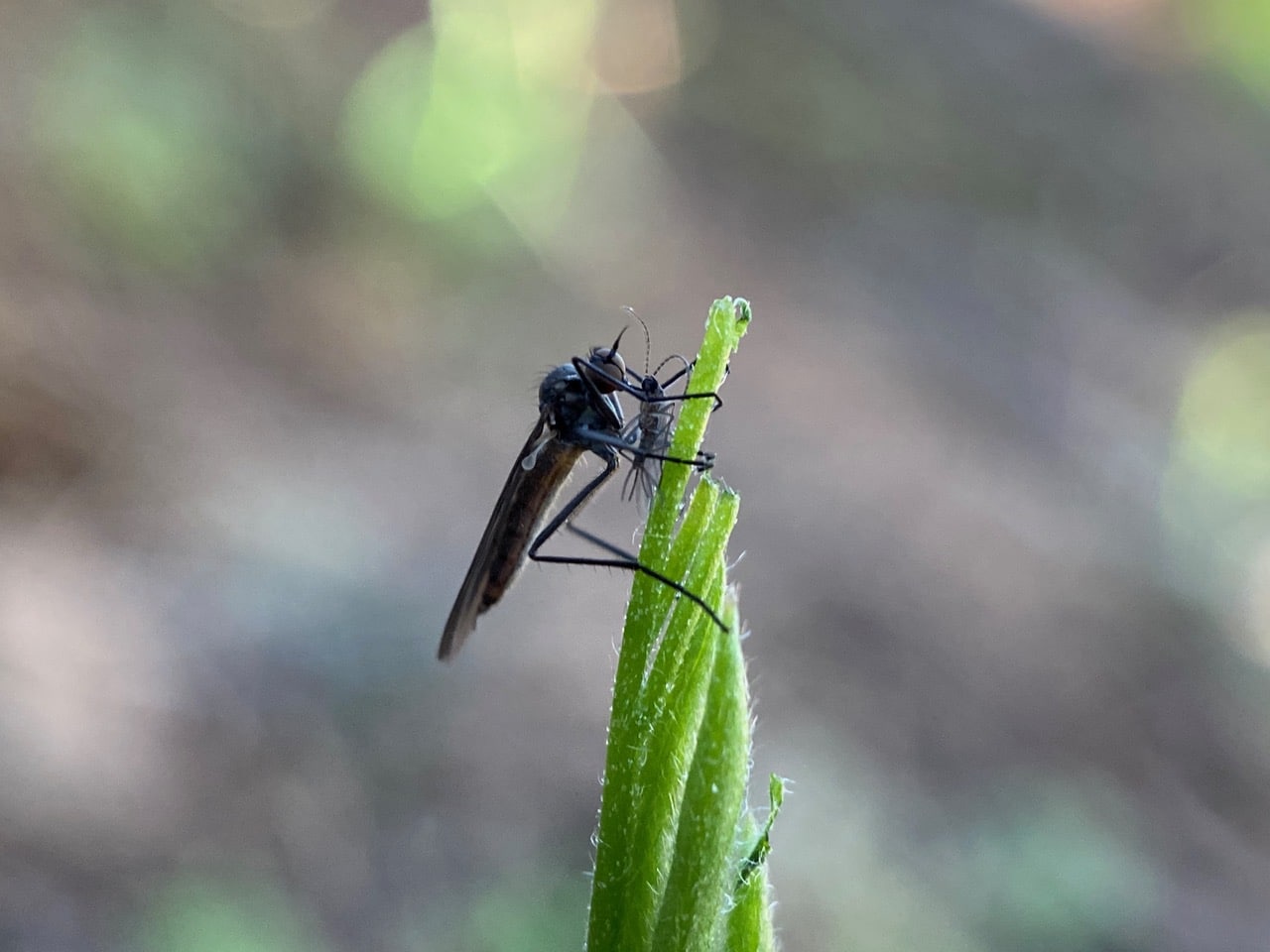
It is frustratingly dark under the oak tree. I carefully maneuver myself for better light, to no avail. The prey is not a fly, but something with long antennae, and apparently cerci at the tip of its abdomen. I watch as the predator’s head move up and down vigorously several times, plunging its stout proboscis into the prey.
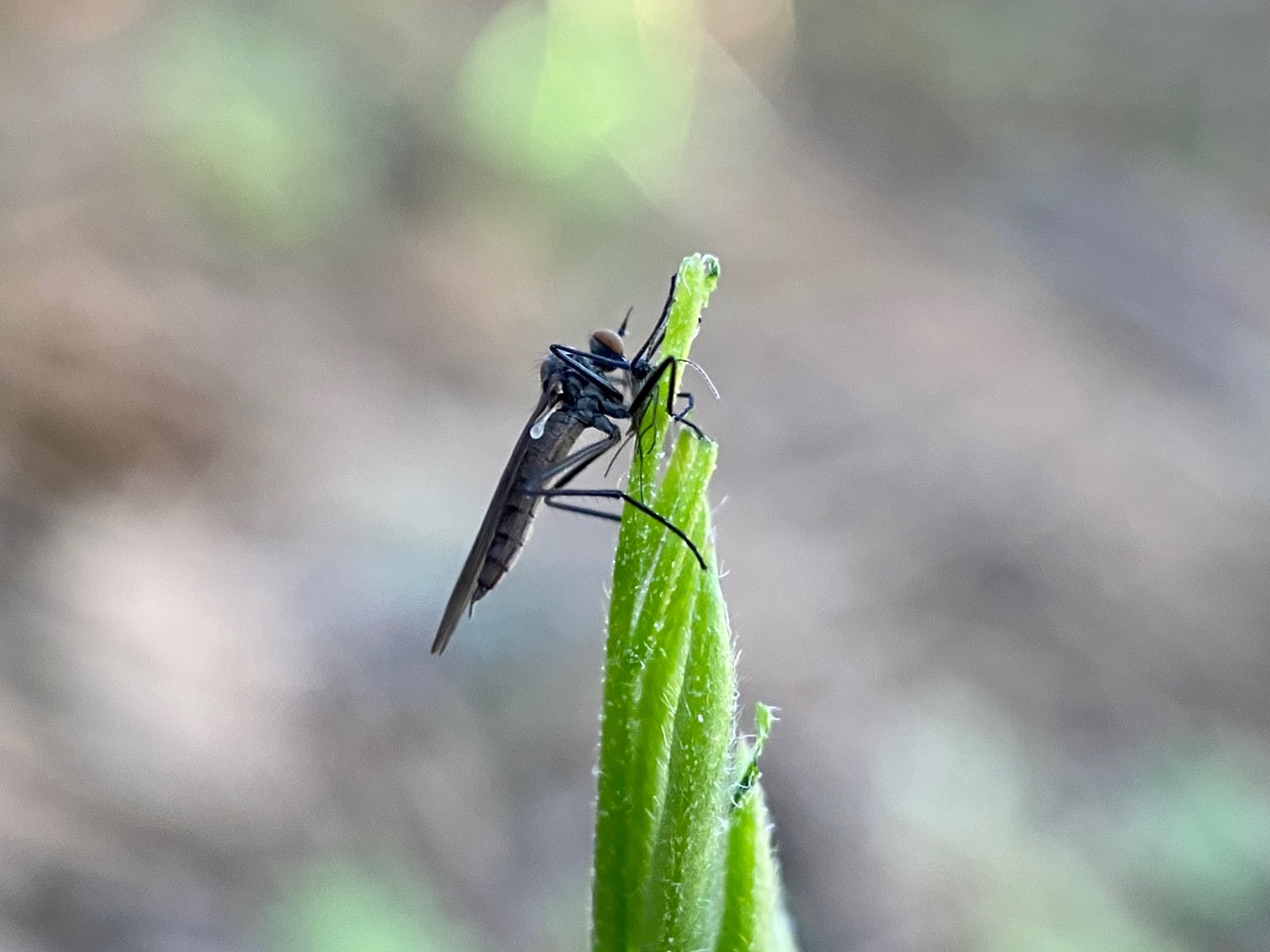
Dance Flies, in the family Empididae, get their name from the habit of males of some species to gather in large groups and dance up and down in the air in the hopes of attracting females. They are predominantly predatory and they are often found hunting for small insects on and under vegetation in shady areas. Both genders may also drink nectar. Male dance flies give their sweeties a nuptial gift to eat while they mate. The gift is thought to enable her to complete the development of her eggs. Males may wrap their gifts in balloons of silk or spit, hence the other common name of Balloon Flies.
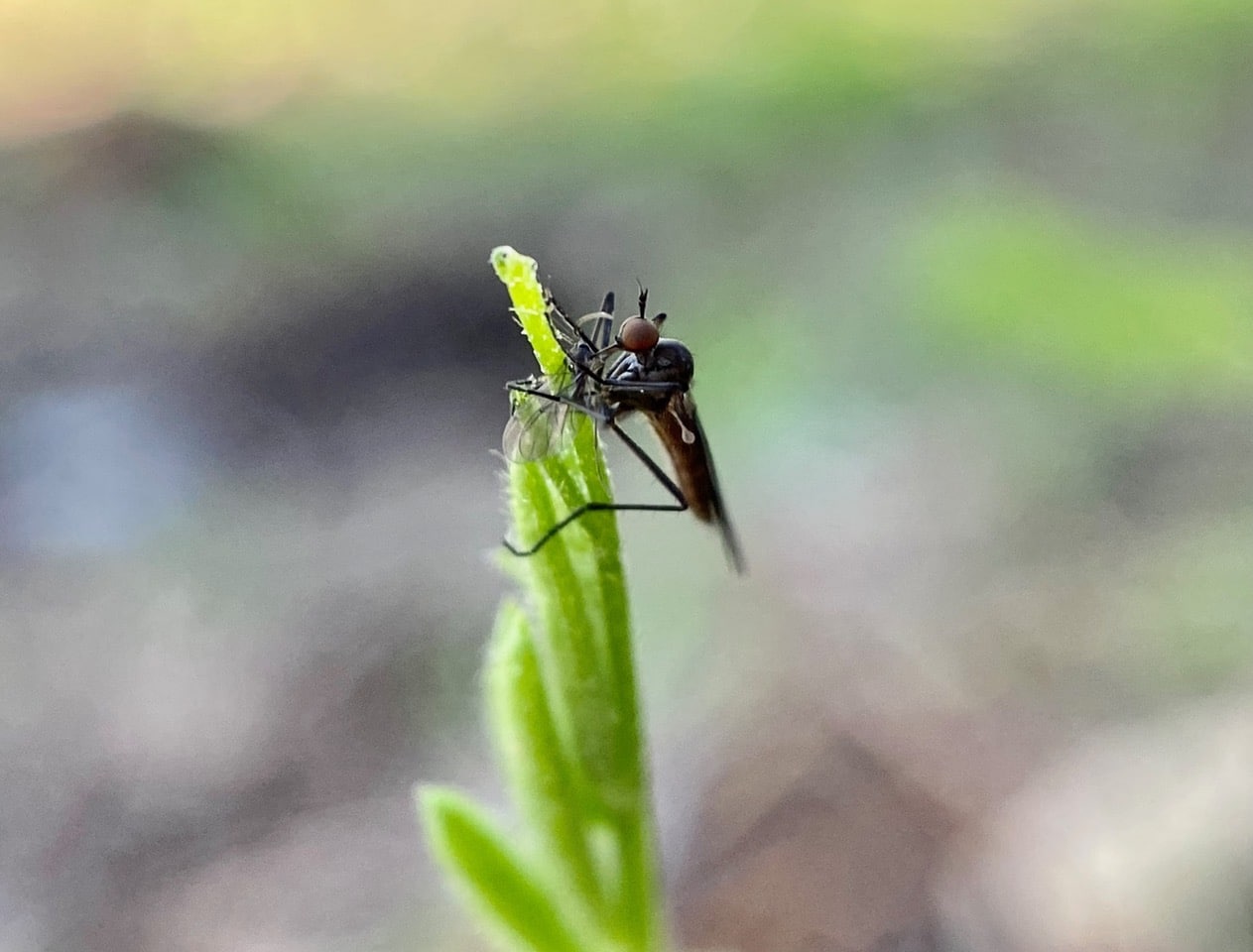
Note the white lollipop-like structure that sticks out from the fly’s thorax under the wings? It is one of a pair of halteres. Halteres are small ‘drum stick or lollipop” shaped structures found under a fly’s wings. They are modified hind wings and are used for balance when in flight. They are sophisticated gyroscopes that oscillate during flight. This is why flies are called Diptera (two-winged) – unlike other insects, they have only a single pair of wings, the other pair having been modified into halteres.