Showcase Feature
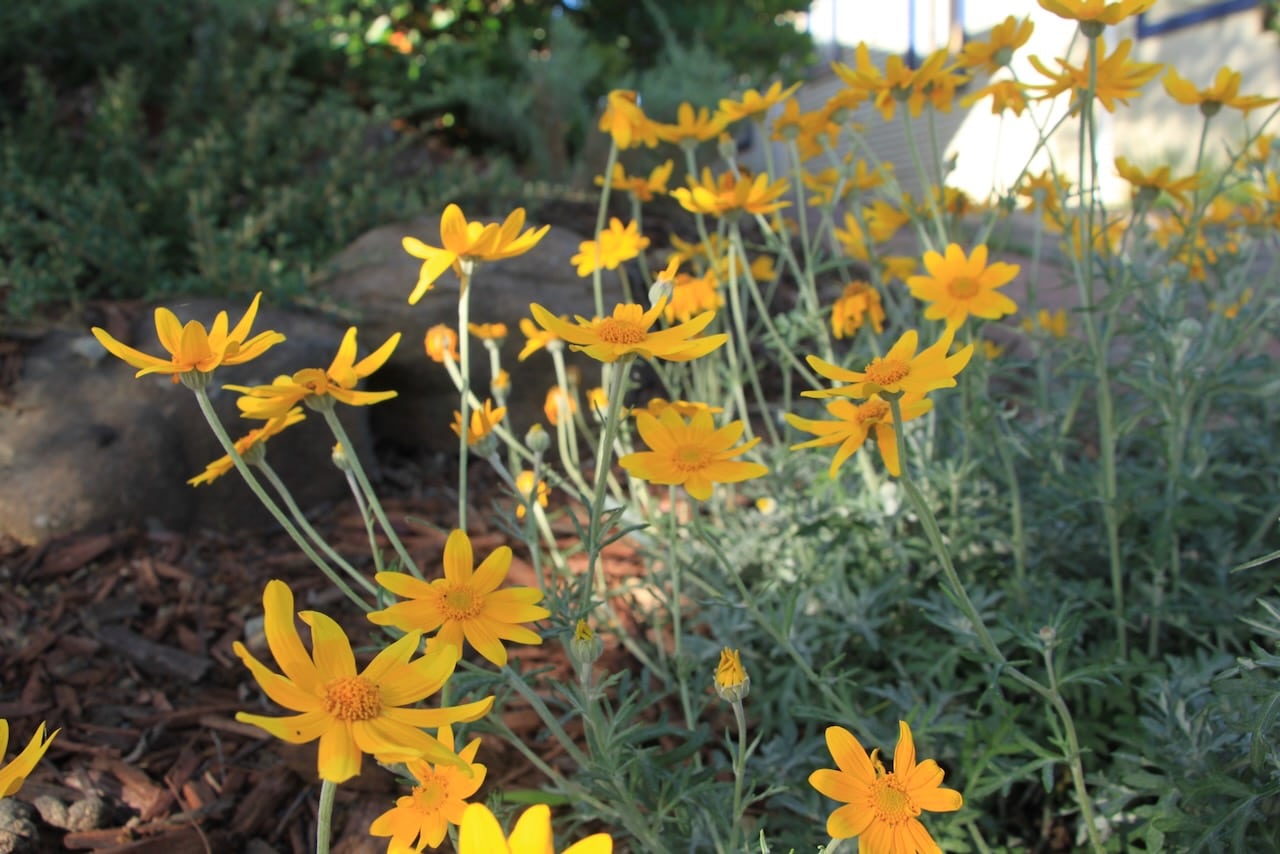
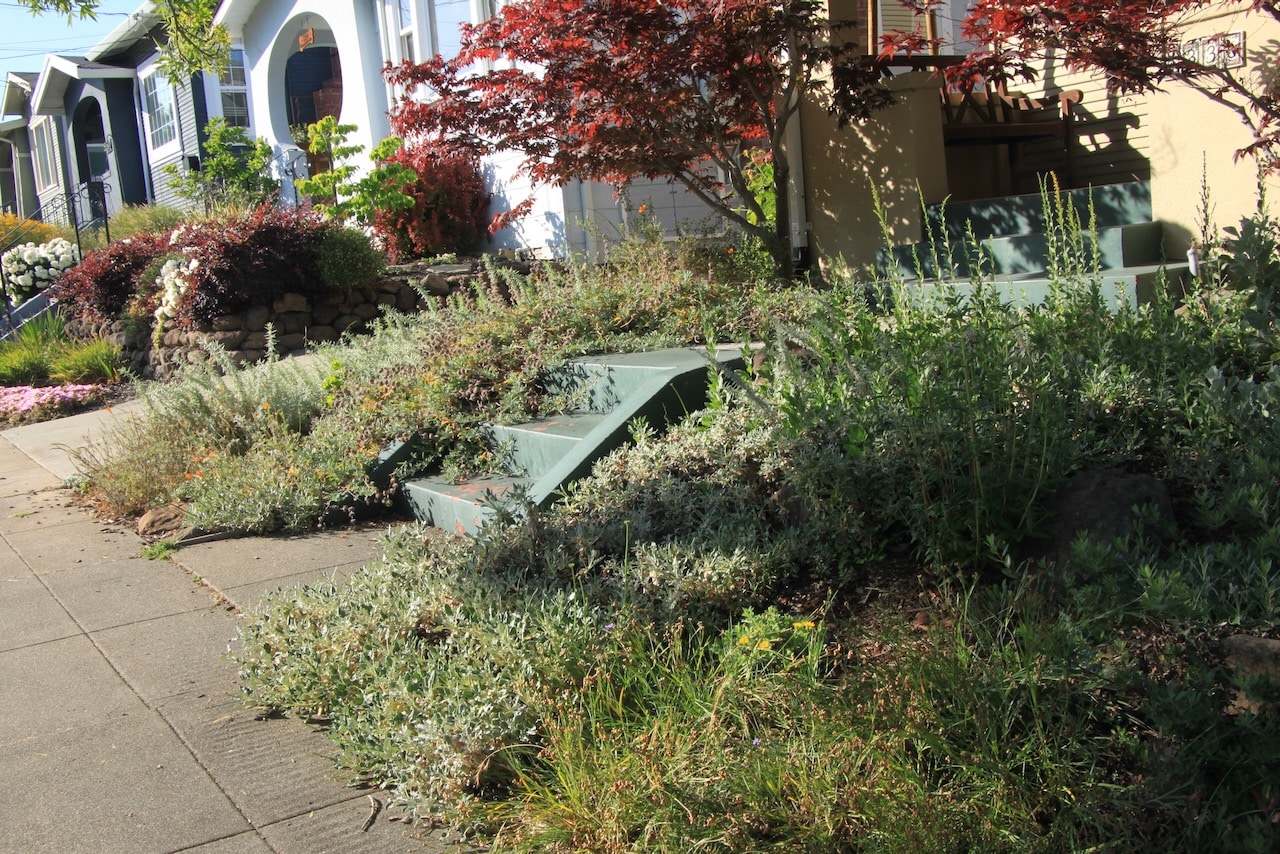
David’s neighbor, Genie Barry, a “native garden whisperer,” convinced David to remove the lawn and plant natives. The inviting, attractive, low-maintenance and low-water-use garden David designed and installed contains drifts of Sonoma sage, California fuchsia, blue-eyed grass, and goldenrod, which suit this small garden perfectly. Accents of manzanita, monkeyflower, and gum plant enliven the core plant palette.
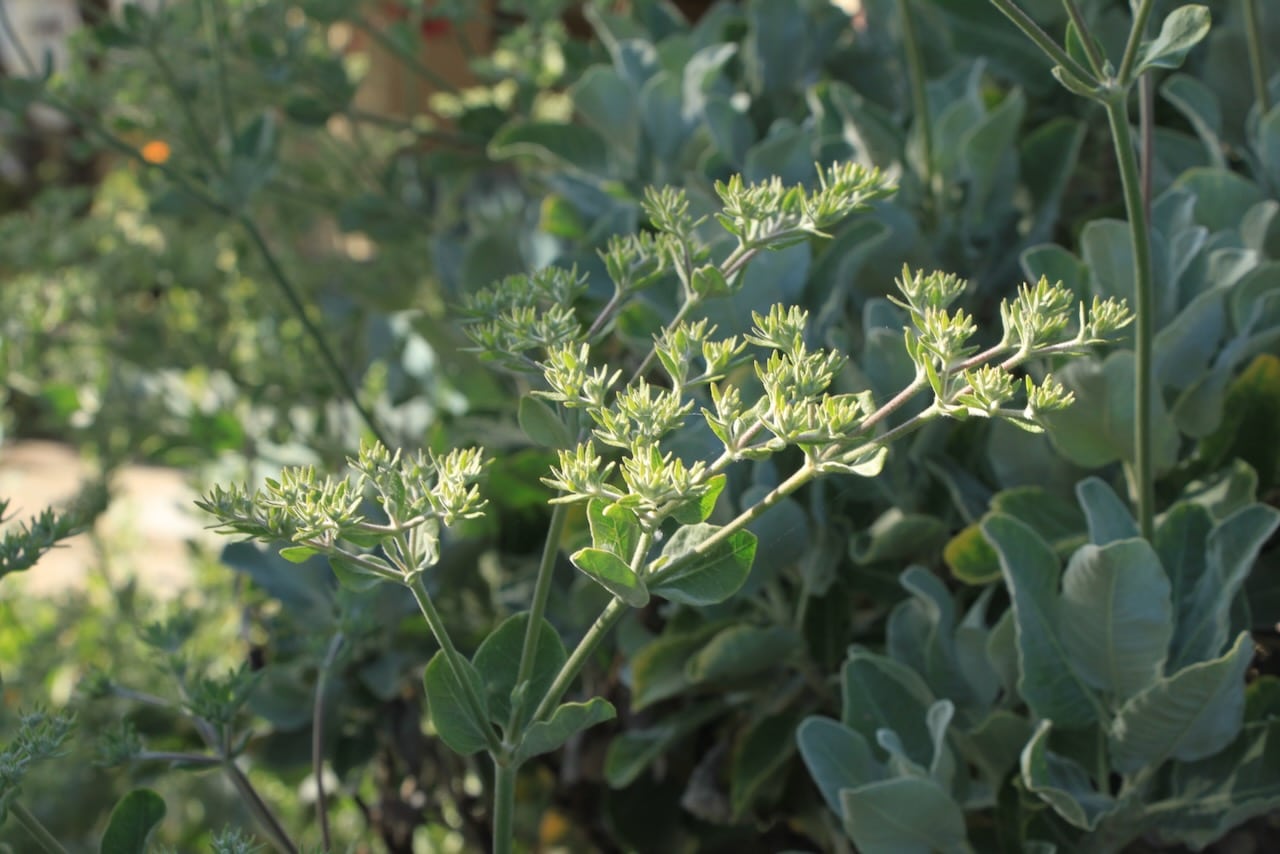
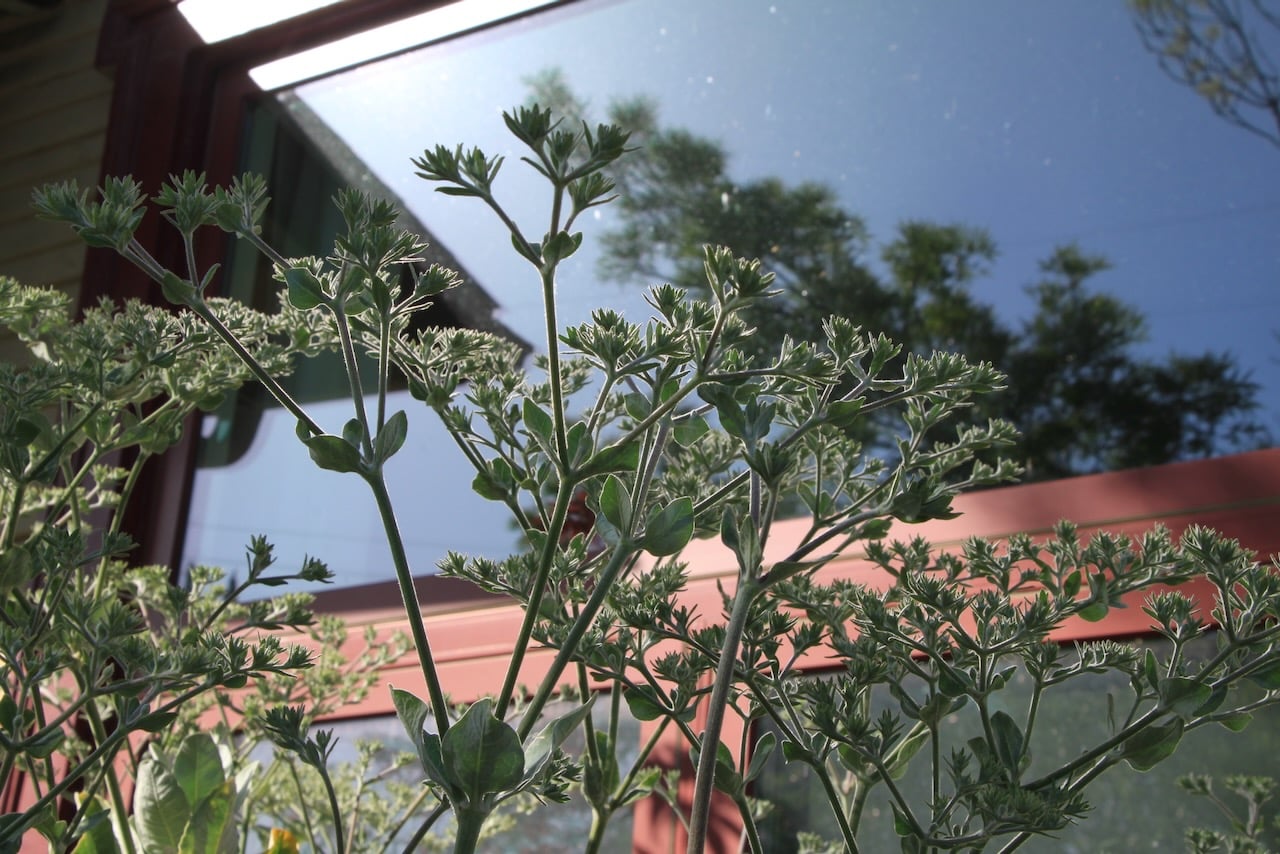
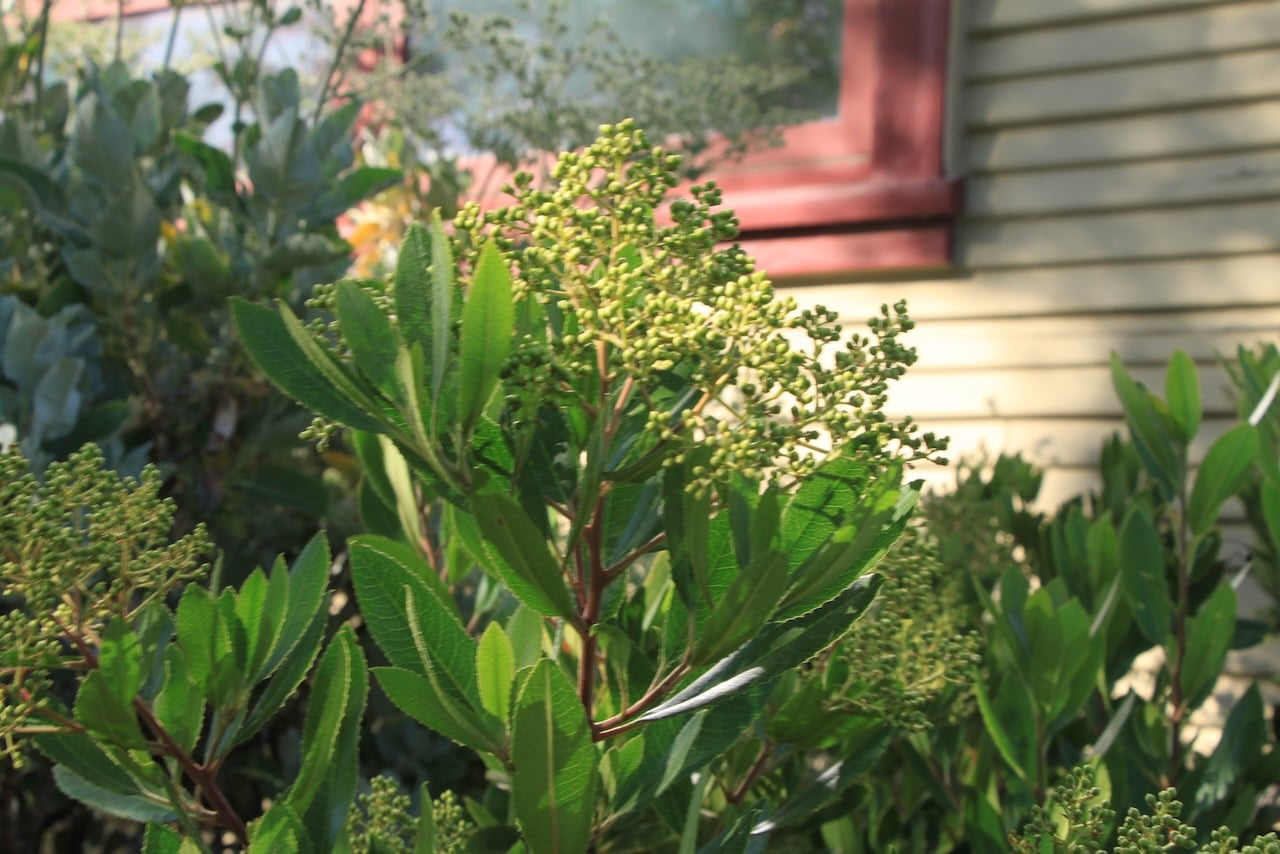
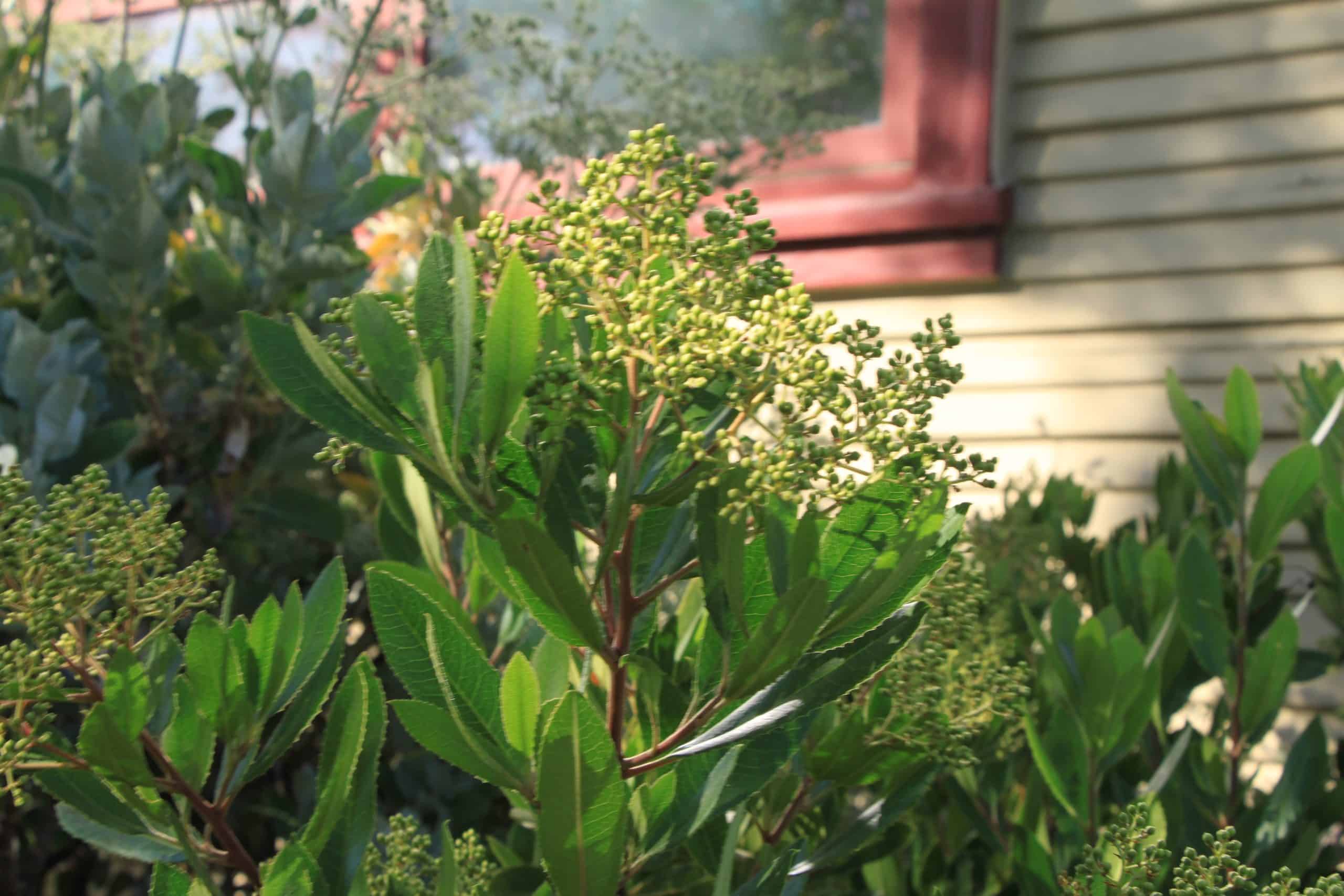
This garden has something in flower most of the year. It all begins in January, with the delicate, urn-shaped cream and pink blossoms of the Pacific mist and uva-ursi manzanita, followed in spring by the massed pinks of the rosy buckwheat, numerous blue-violet flowers of the sage, and purple-blue blossoms of the blue-eyed grass. In late summer and fall the garden is brightened by the fire engine red tubular flowers of the fuchsia and dense clusters of showy yellow goldenrod. The toyon is still young, but soon it will bear bright red berries in the fall and winter.
Other Garden Attractions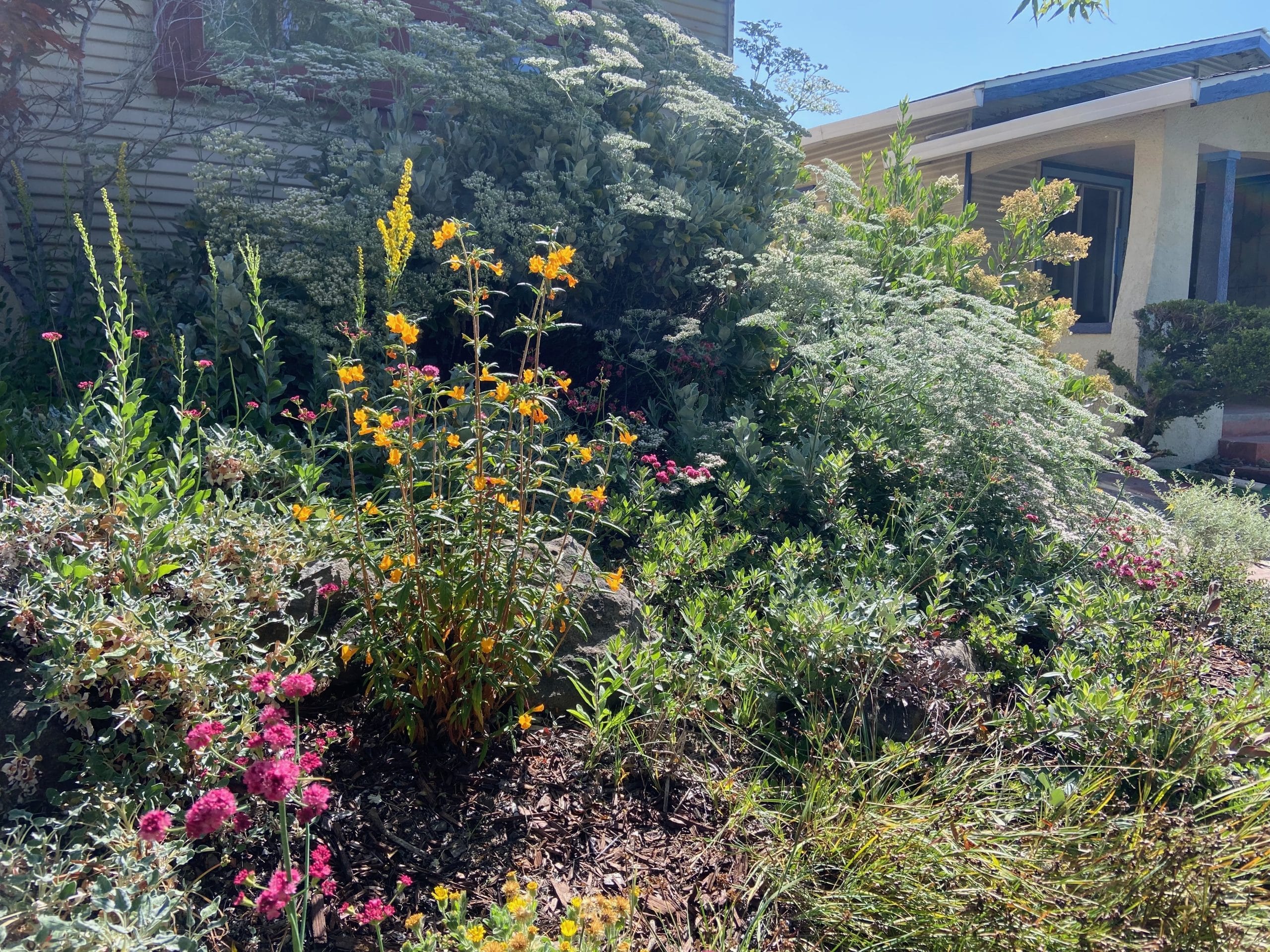
- A beautiful St. Catherine’s lace buckwheat softens the lines of the house. The toyon was placed so that it will arc over the driveway, creating a welcoming entrance to the back garden.
- Only new plants receive any water.
- Moss rock boulders provide visual interest.
- Stroll across the street to neighbor Genie Barry’s house.
Gardening for Wildlife
Large patches of plants attract more pollinators and provide more benefits to wildlife more than single plants do. The amazing, free application Merlin has heard nineteen species of birds, including swifts, gray warblers, cedar waxwings, barn owls, and white-breasted nuthatches.
Keystone species (watch this talk by Doug Tallamy!)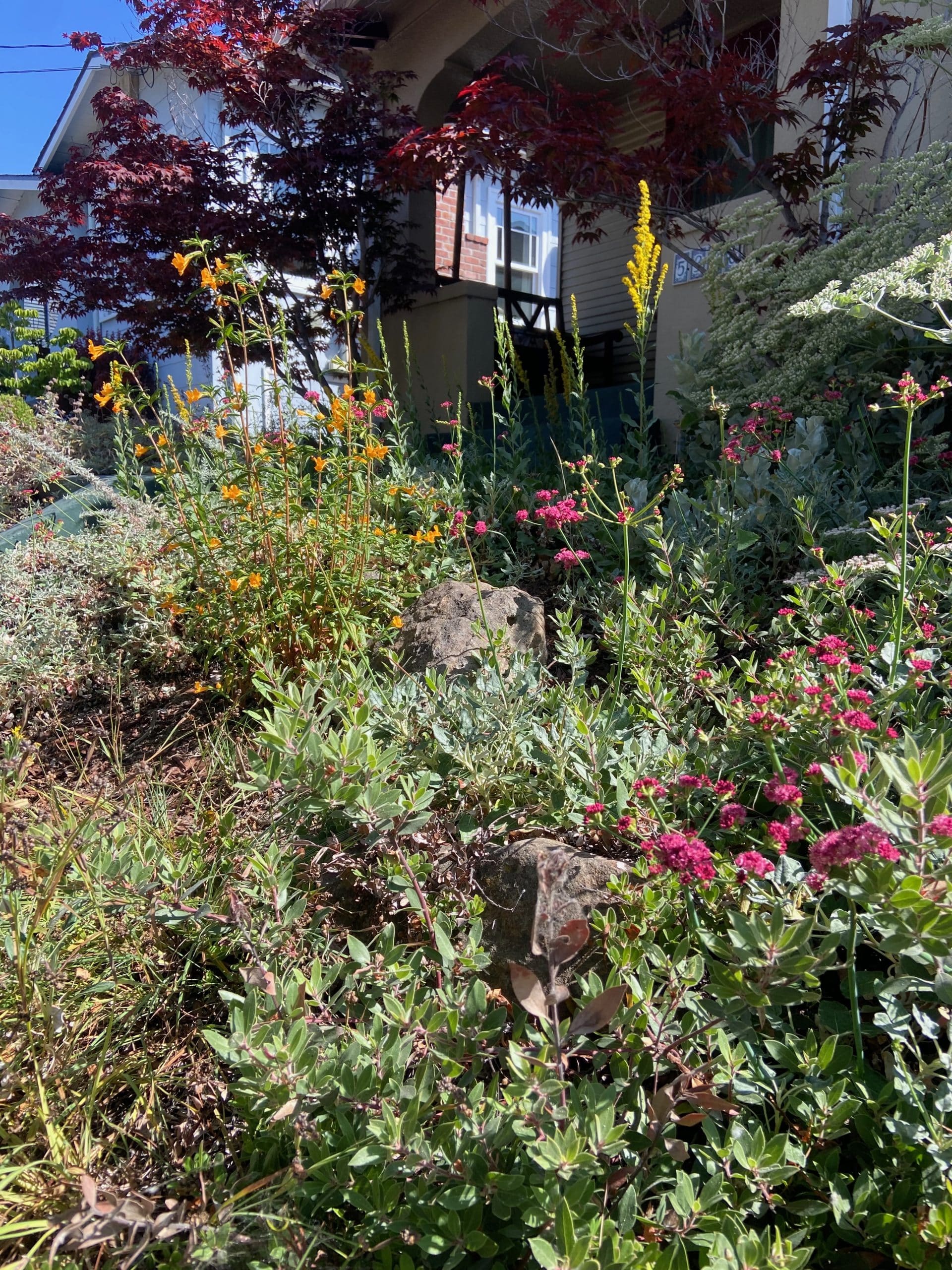
Keystone species—our own, local ecological powerhouse plants— in this garden include manzanita, sage, and buckwheat.
Green Home Features
Solar panels
At least partially wheelchair accessible? Yes.
Photos
Click to see as a slideshow: