Showcase Feature
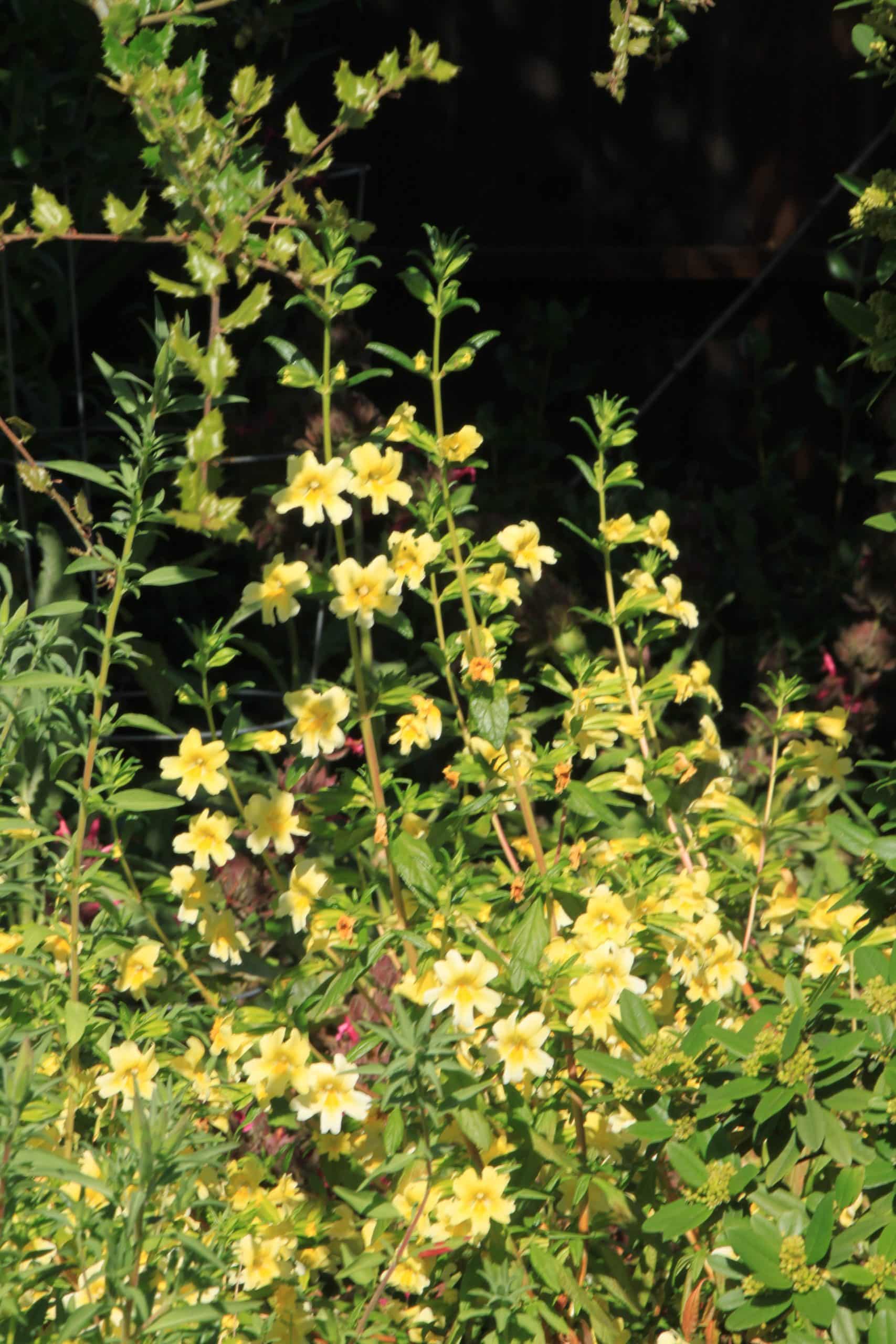
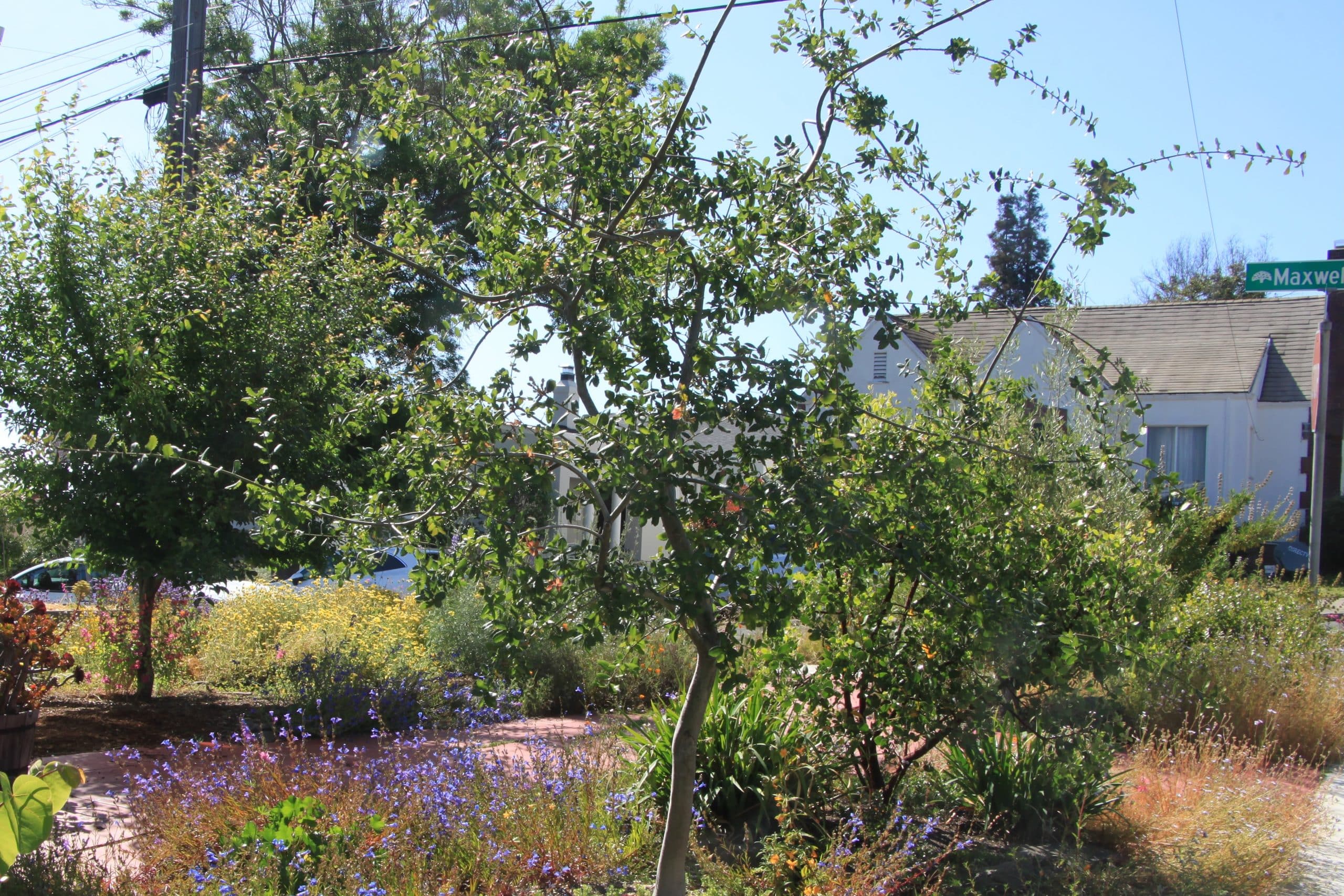
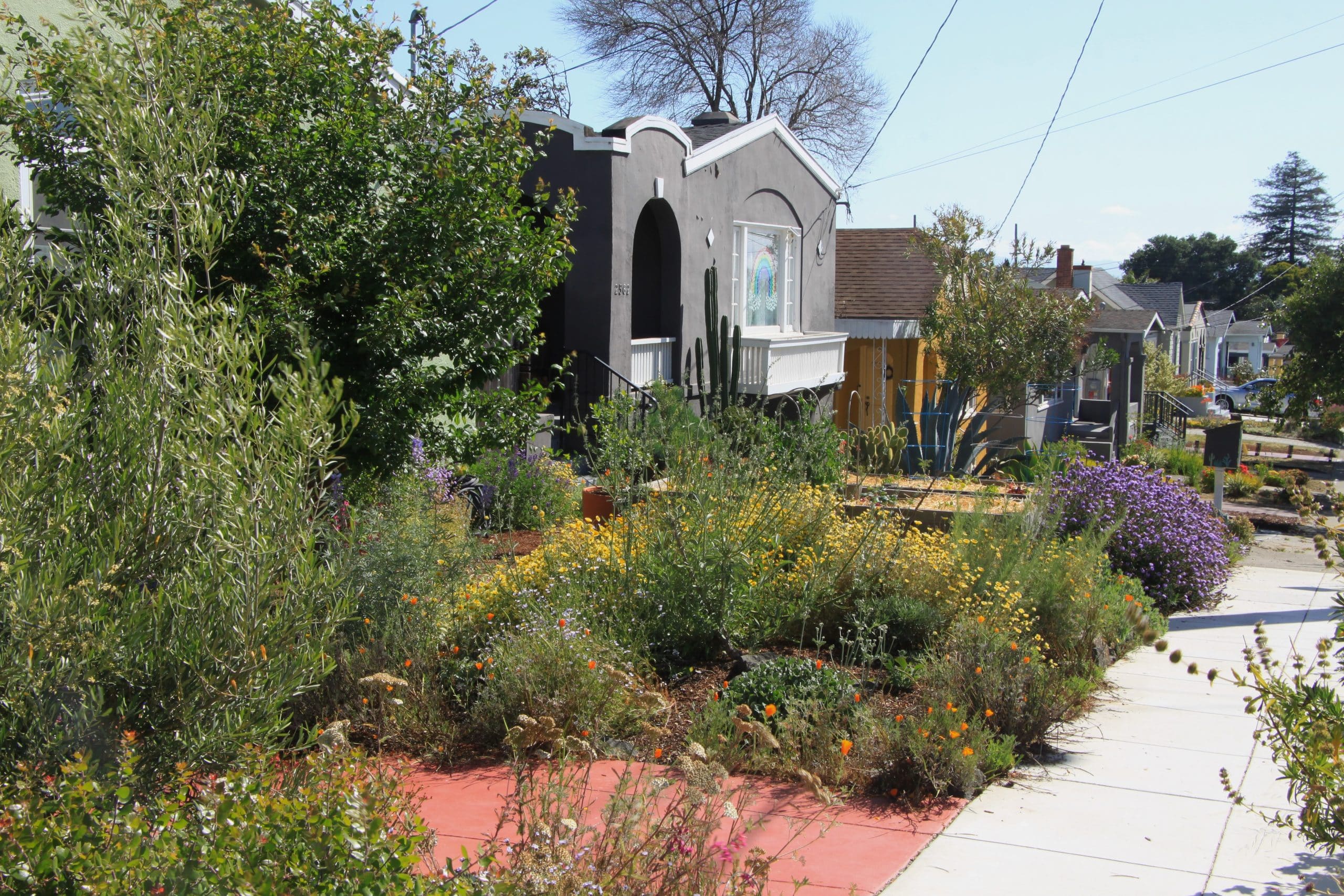
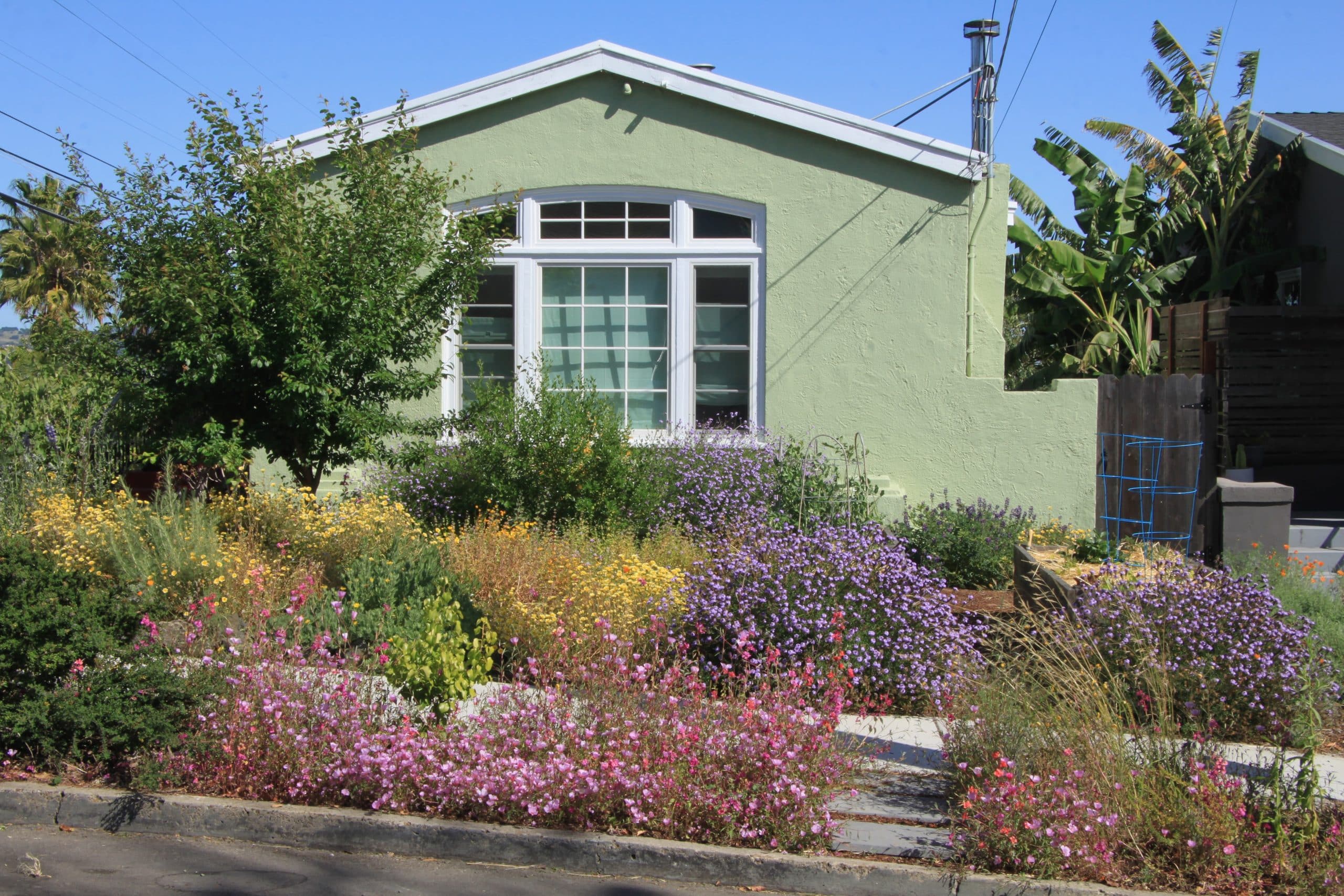
It’s hard to believe that this now-visually delightful corner lot was once an unprepossessing Bermuda grass lawn. In spring an exuberant display of yellow and white tidy tips, pink clarkia, purple verbena ‘de la mina’, electric purple-blue penstemon, lavender lupine, orange poppies, and deerweed has elicited compliments from, and conversations with, neighbors and neighborly people who are strolling by.
 A potpourri of perennials, including include oak, holly leaf cherry, elderberry, manzanitas, California lilac, and coffeeberry, anchor the garden, creating stability, structure, and greenery throughout the year. Happily, these keystone species are also ecological superstars, providing the most value to wildlife.
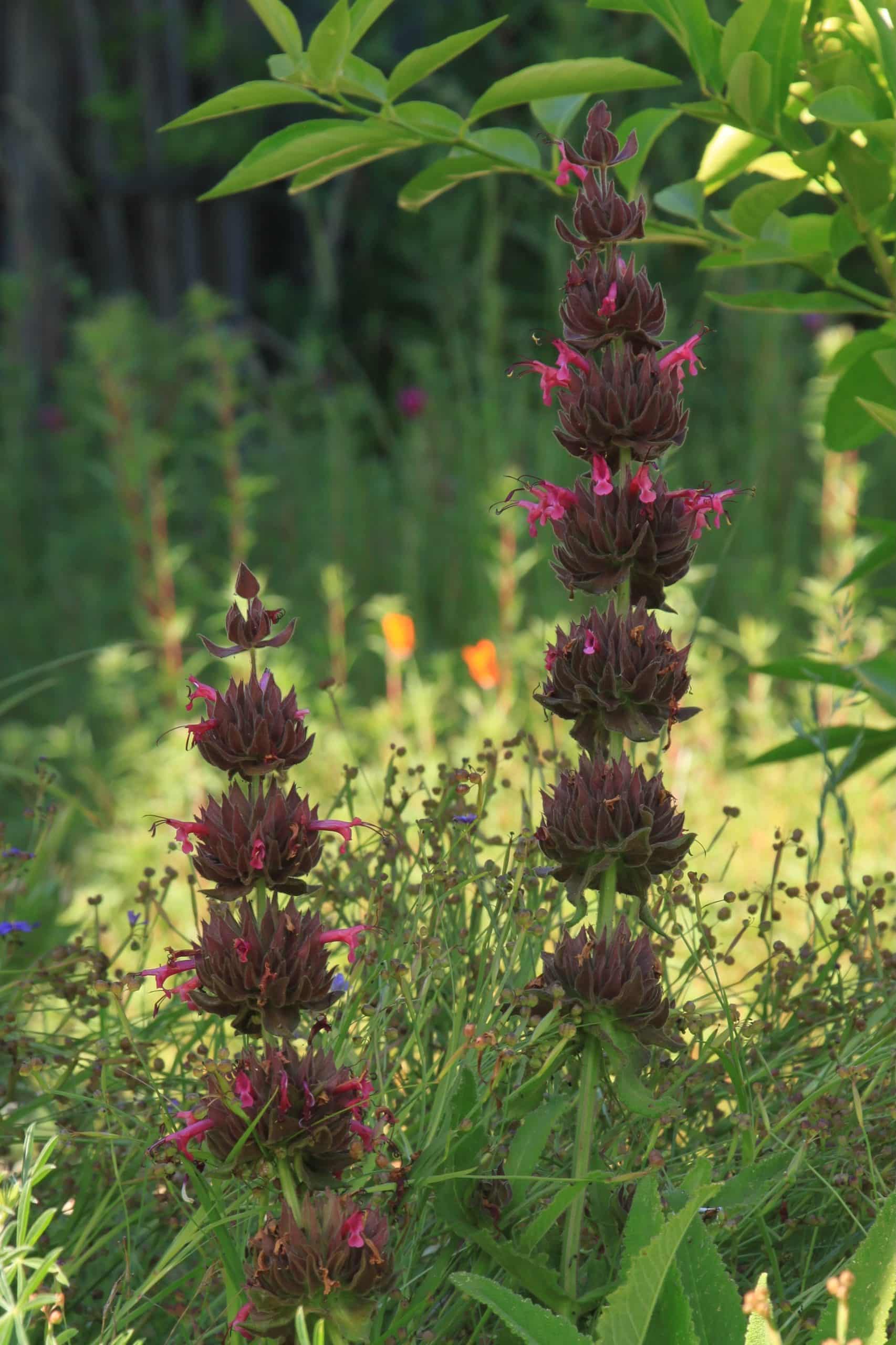
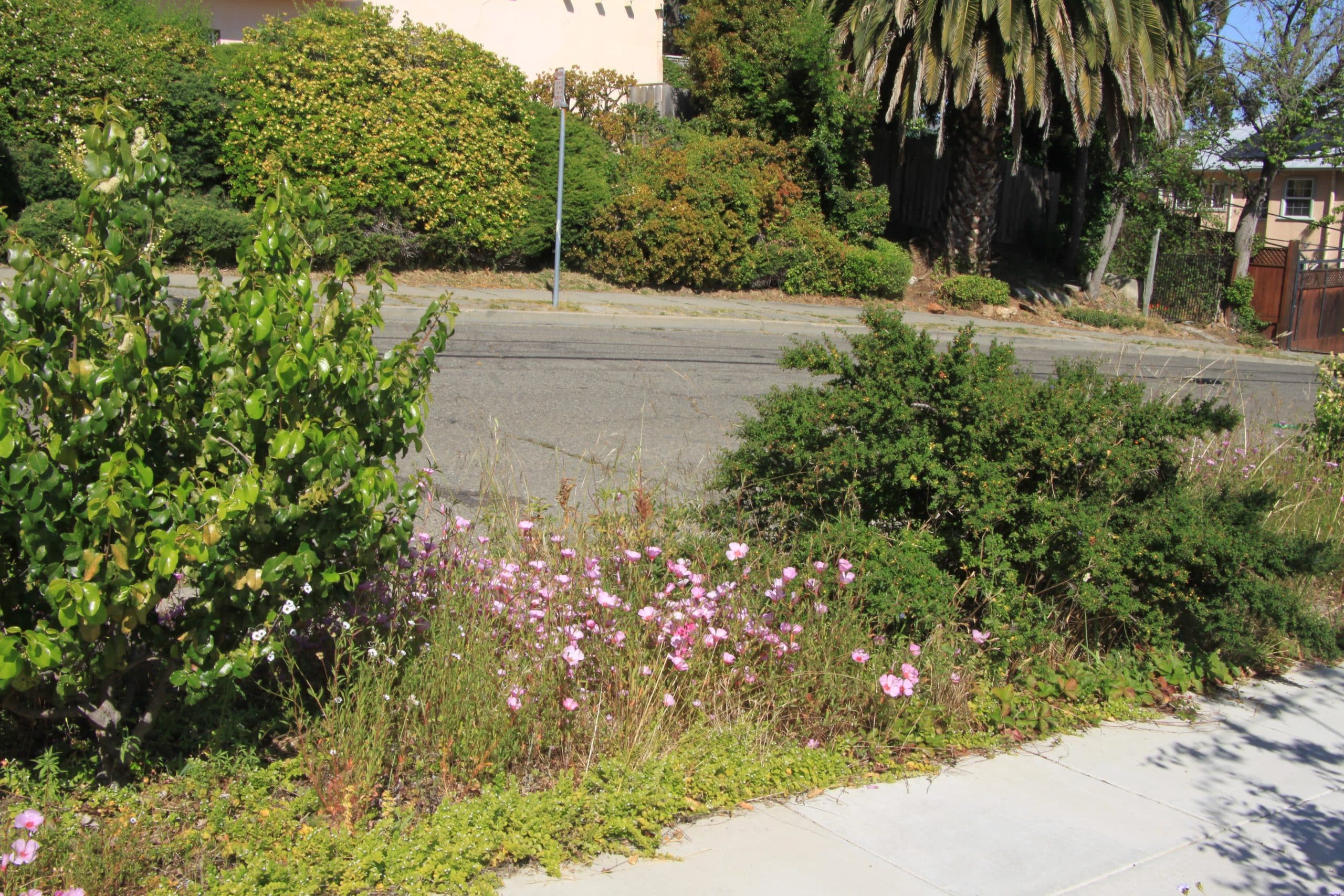
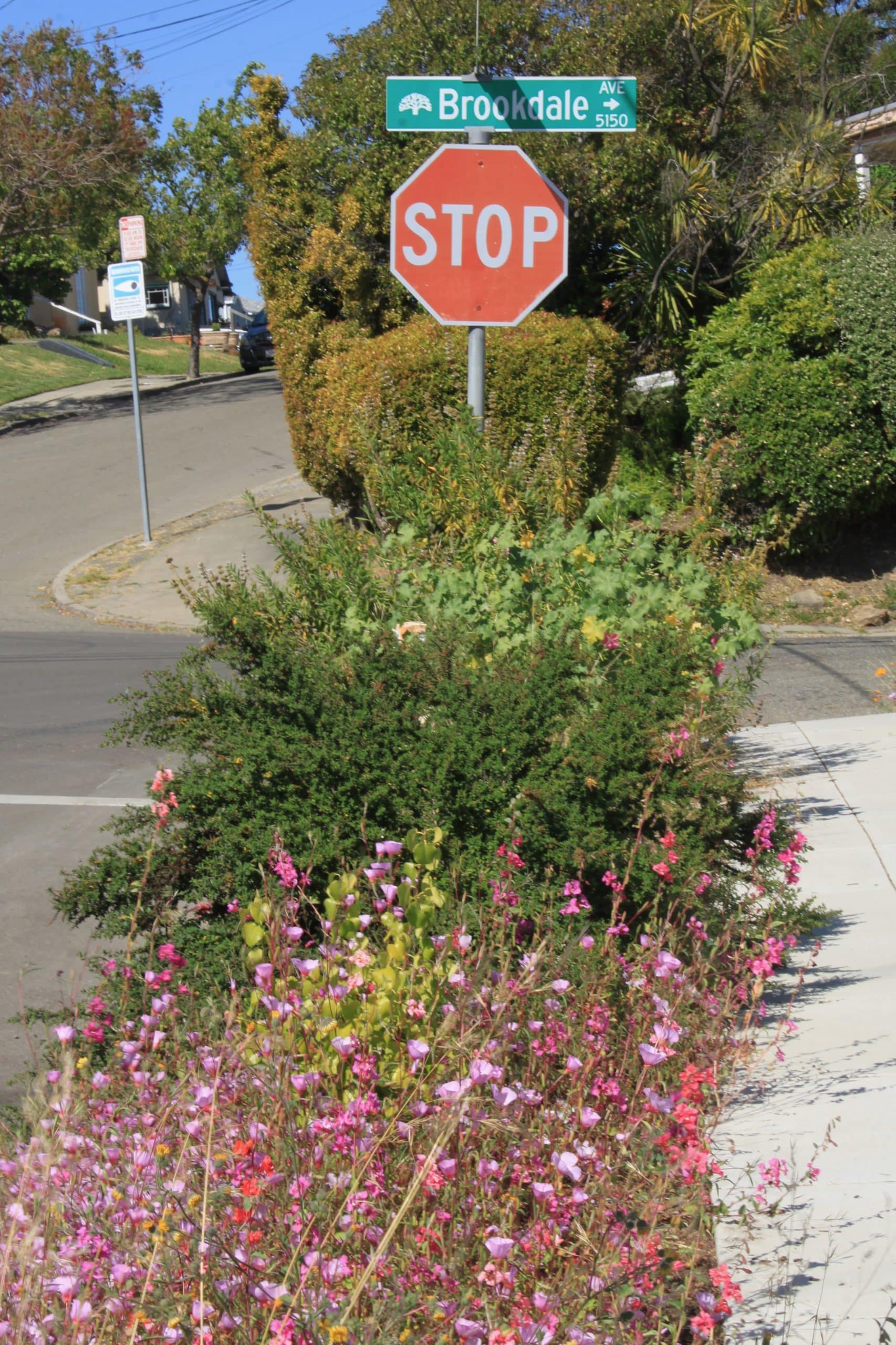
In springtime the extensive parking strips are a riot of color, with boisterous pink clarkia rubbing shoulders with black sage, California lilac, Channel Island mallow, rosy buckwheats, checkerbloom, purple needlegrass, and more.
The dry and sunny front garden and the woodsy side yard were designed and installed by Beth and her son, Rowan. The parking strips were installed with help from a friend.
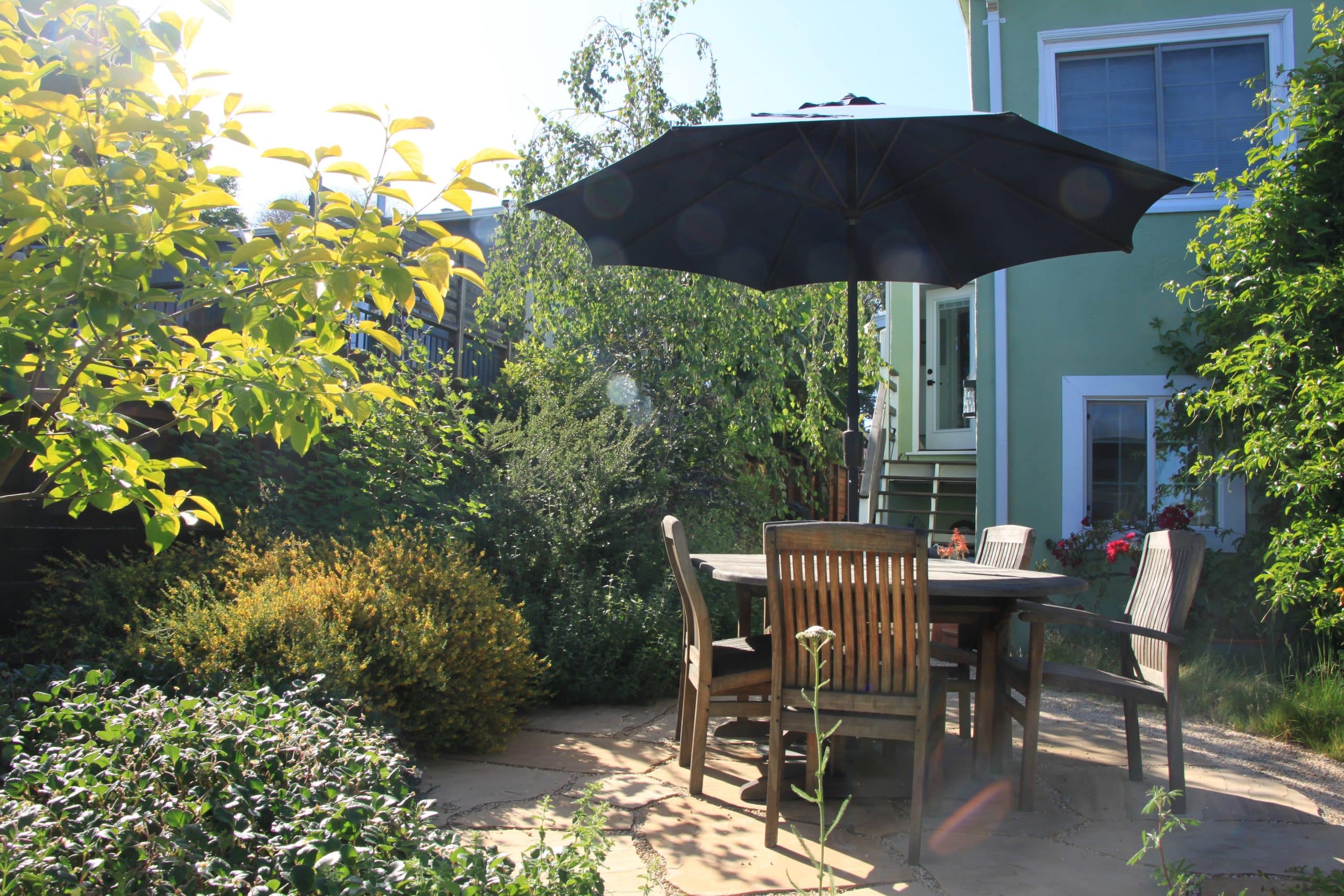
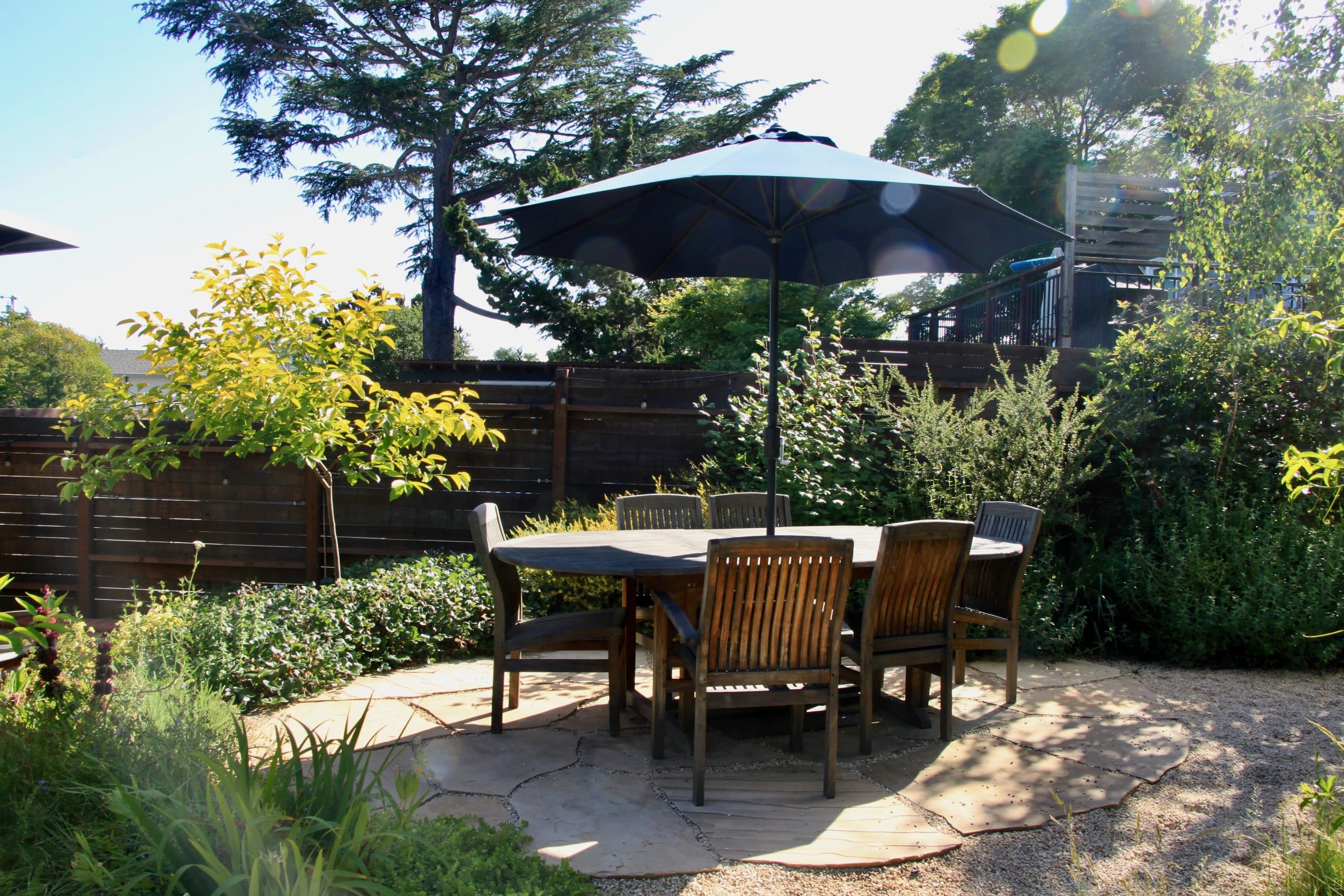
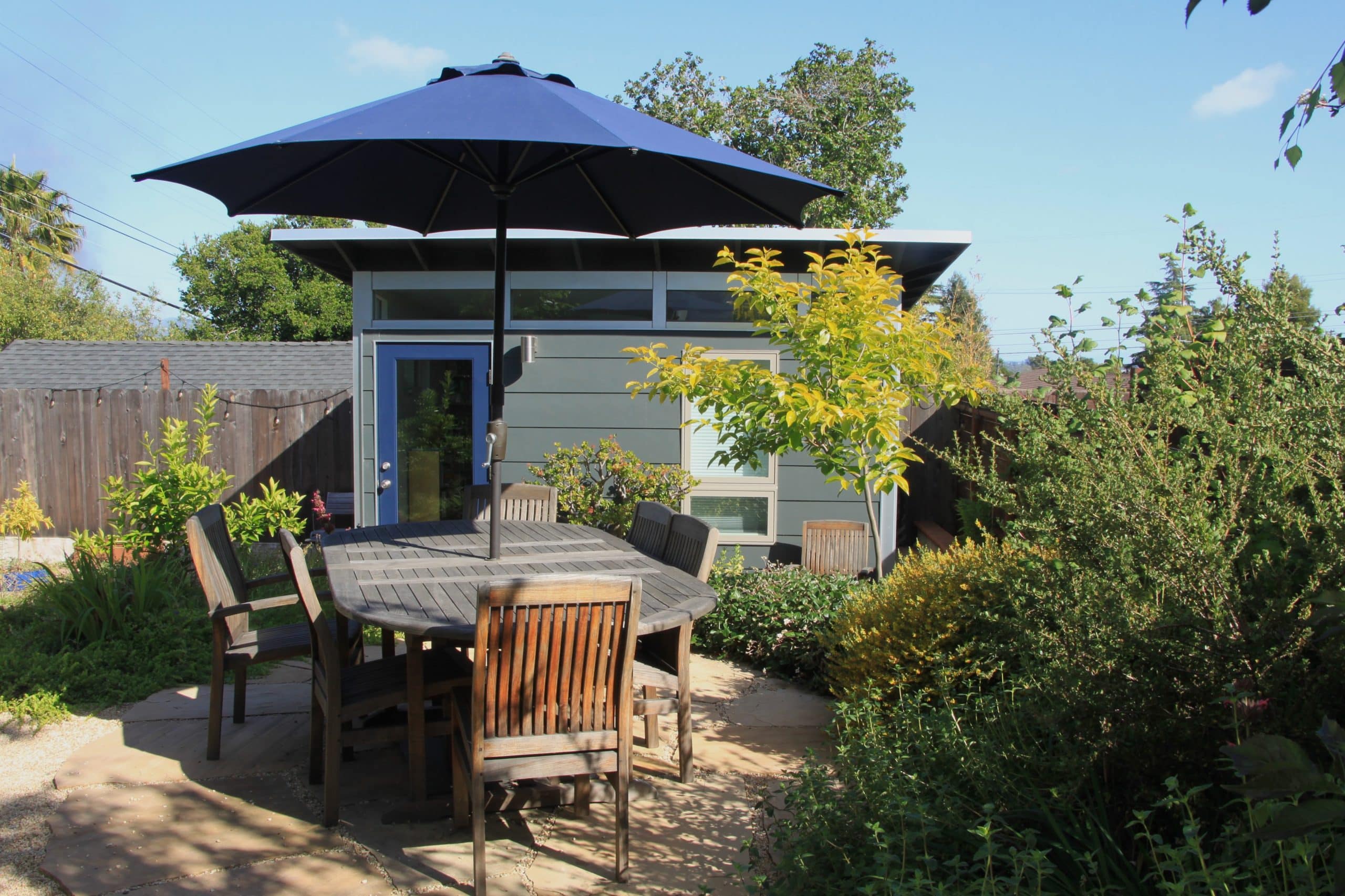
Take a seat in the lovely back garden, take in the wraparound native garden—including a California red fescue and buffalo grass meadow—and enjoy this tranquil space: you won’t want to leave.
Other Garden Attractions
• Aromatic yerba buena, and hummingbird, white and black sages are interspersed throughout the garden.
• Rain barrels capture water from the Studio Shed roof in the back yard.
• Check out the fern grotto, which is tucked on the side of the Studio Shed.
Gardening for Wildlife
This garden was designed to attract birds—and oak titmice, western bluebirds, black phoebes, Bewick’s wrens, black phoebes, among others, have been seen in the garden. Newts find shelter in shady, damp spots. White-lined sphinx moths visit the Hooker’s evening primrose at dusk, when these nocturnal flowers open. Tortoiseshell and blue acmon butterflies flutter, and carpenter, mason and bumblebees buzz, among the bounty of flowers available to them.
To keep birds safe, the family’s cats are kept indoors.
Keystone species (watch this talk by Doug Tallamy!)
Keystone species—our own, local ecological powerhouse plants— in this garden include coast live oak, holly leaf cherry, pink flowering currant, California lilac, wild rose, snowberry, hazelnut, aster, manzanita, coffeeberry, creambush, California sagebrush, black and white sage, buckwheat, and native strawberry.
Green Home Features
This family has:
* Induction stovetop: GE Profile
* Two electric vehicles and a home charger
At least partially wheelchair accessible? Yes.
Photos
Click to see as a slideshow: