Showcase Feature
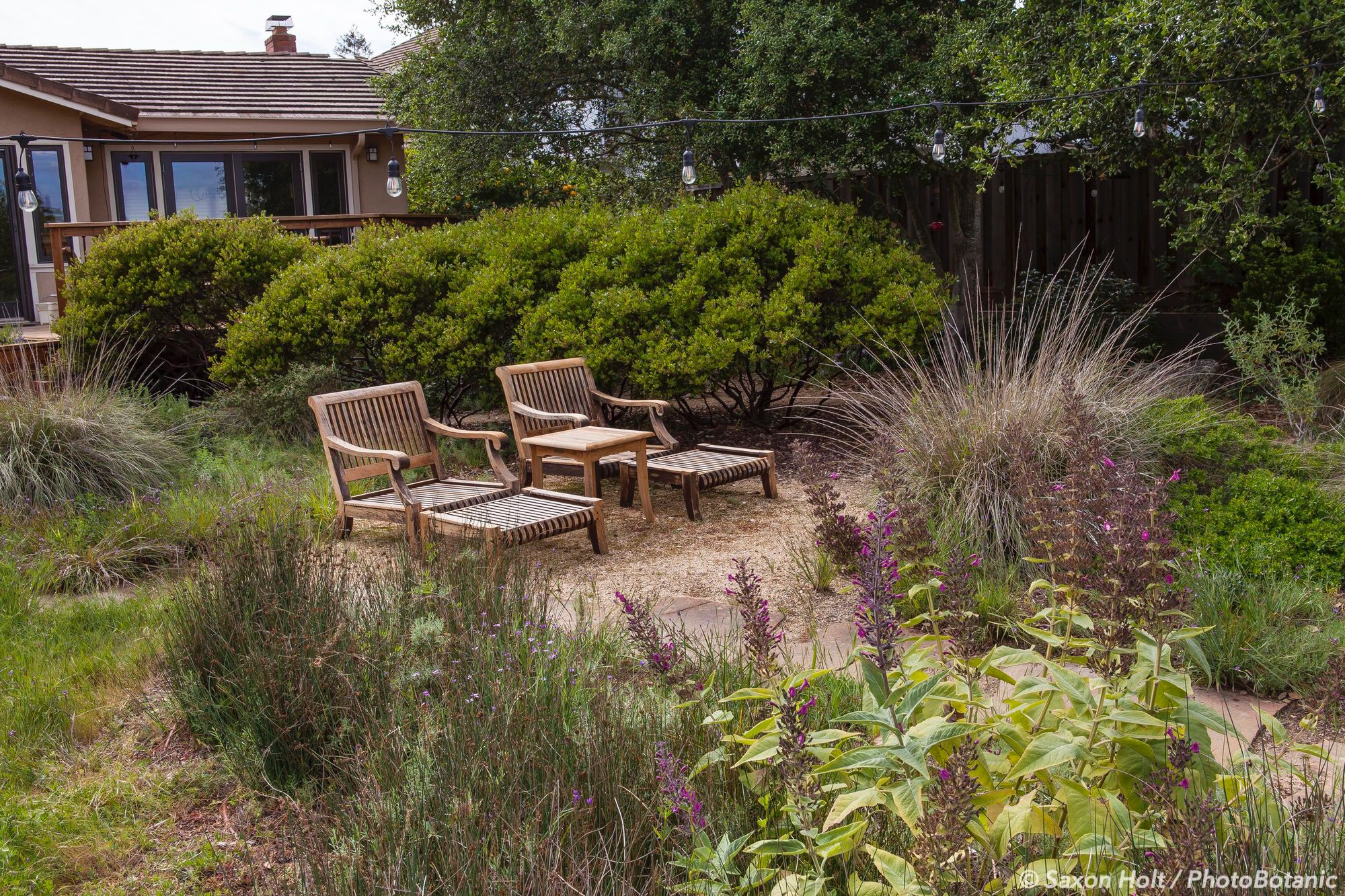
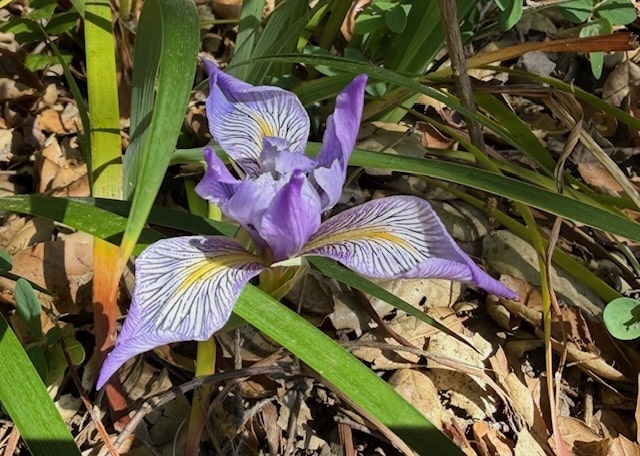
Prior to its metamorphosis, this garden contained large thirsty lawns, bordered by juniper and box hedges. Inspired by the Bringing Back the Natives Garden Tour, Cindy and Rick wanted to reduce water use, eliminate chemical use, and provide habitat for wildlife. After the Tour they went looking for a designer who could do the job and found Michael Thilgen and the team at Four Dimensions Landscape Company, who designed and installed the garden and removed the extensive lawns. Now, in the front garden a series of flagstone and decomposed granite paths wend through planted areas containing California lilac “Heart’s Desire”, Cleveland sage, lupines and more. In the large back garden a low-water-consuming native bunchgrass (red fescue) “lawn”, with accents of pu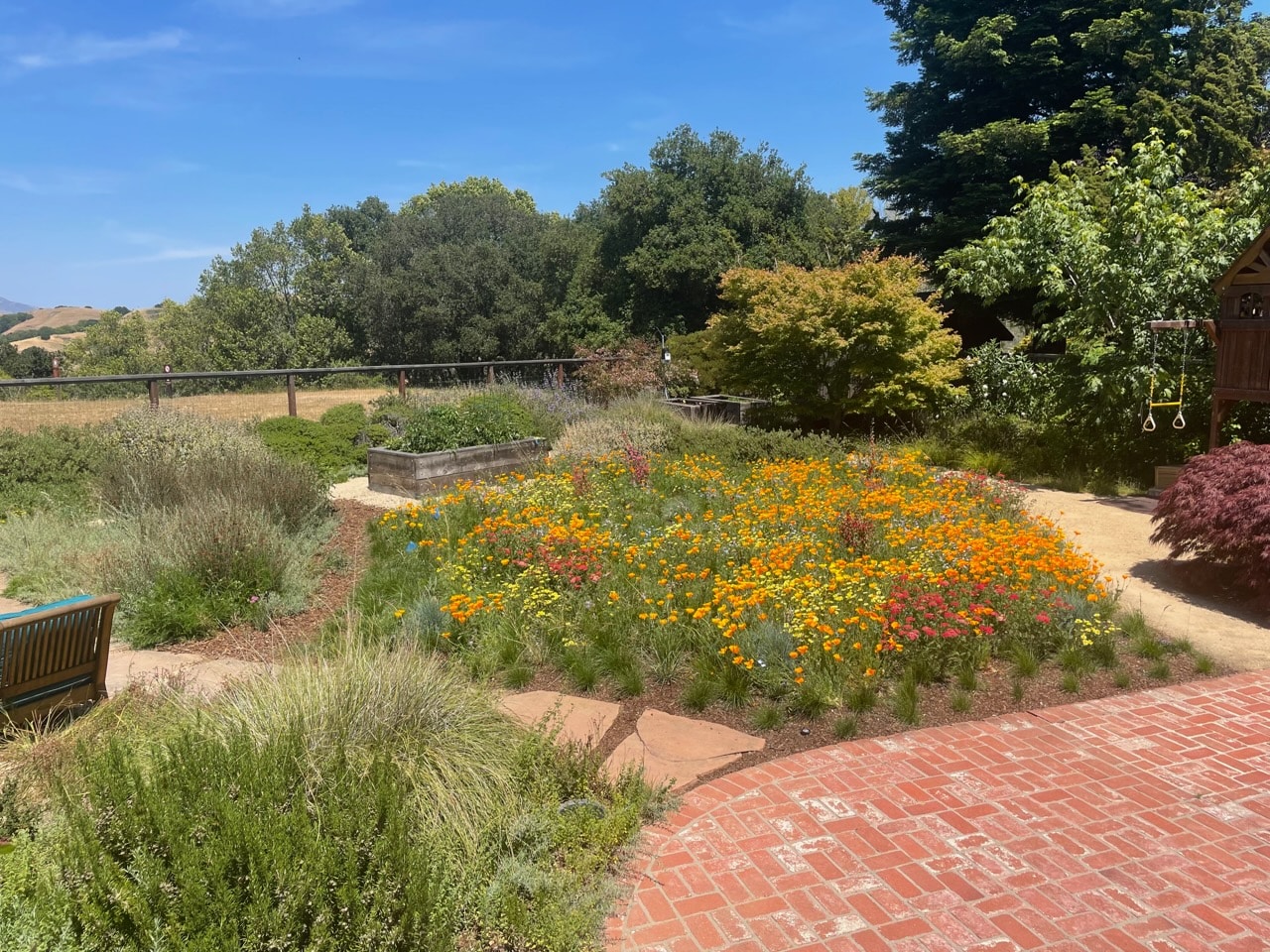 rple needle grass and wildflowers, is surrounded by mostly native trees, shrubs, and perennials. Plants bloom in the garden almost year-round. Designed to blend in with the adjacent open space, this sunny garden invites visitors to drop down into one of the numerous seating areas and enjoy the lovely views of Mt. Diablo and the East Bay Regional Park land.
Other Garden Attractions
• Water use has been reduced by more than 50% since the garden was transformed.
• Enjoy the spectacular view.
Gardening for Wildlife
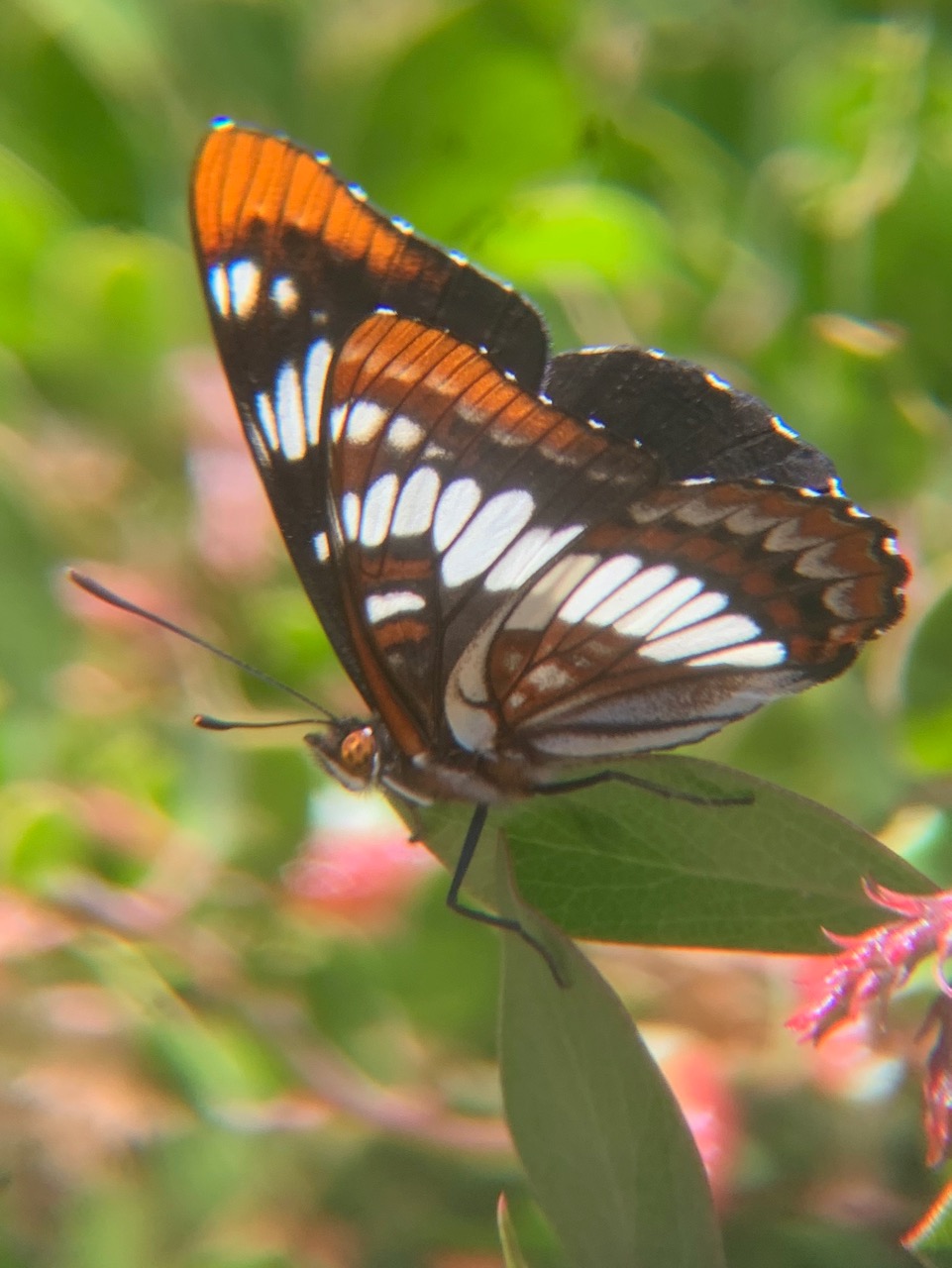
Native bees buzz the blooming California lilac and manzanitas. Northern checkerspot, Sara orangetip, fiery skipper, gray hairstreak, and swallowtail butterflies flit through the garden. Spotted and California towhees, golden- and white-crowned sparrows, and Townsend’s warblers, attracted to the many species of native seed, berry-bearing, and pollen and nectar producing plants, are just a few of the many types of birds that enjoy the native habitat.
 Firescaping
In 2025 Cindy and Rick removed all of the plants in Zone 0 – meaning within five feet of their house and deck – and laid down gravel. Some plants survived the transplanting: red currant, heuchera, and ferns. They didn’t even try to transplant the large manzanitas or coffeeberries.
In addition, they have: replaced all vents with Vulcan vents, replaced the wood fence and gates at the side of house with metal gates and fencing, and installed wildfire mesh from the wooden deck to the ground.
Keystone species in this garden (watch this talk by Doug Tallamy!)
Keystone species—our own, local ecological powerhouse plants—in this garden include oak, big leaf maple, California lilacs, manzanitas, pink flowering currants, western redbud, lupine, wild rose, buckwheats, beach strawberry, sages, and penstemon.
 Green Home Features
• Cindy and Rick recently had a heat pump water heater and an induction range installed.
• Over the years, their solar panels have saved this family $15,000 in PG&E bills.
• Their electric car is powered by the sun.
Video of Cindy and Richard Simons’ garden
2021 video of Cindy and Richard Simons’ garden
Photos
Click to see as a slideshow: