 Showcase Feature
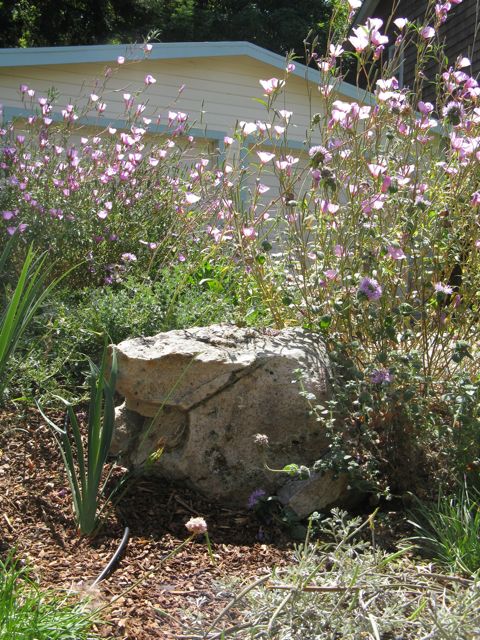
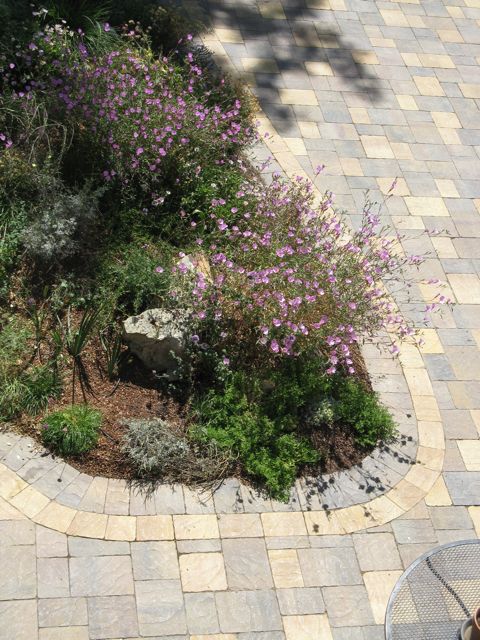
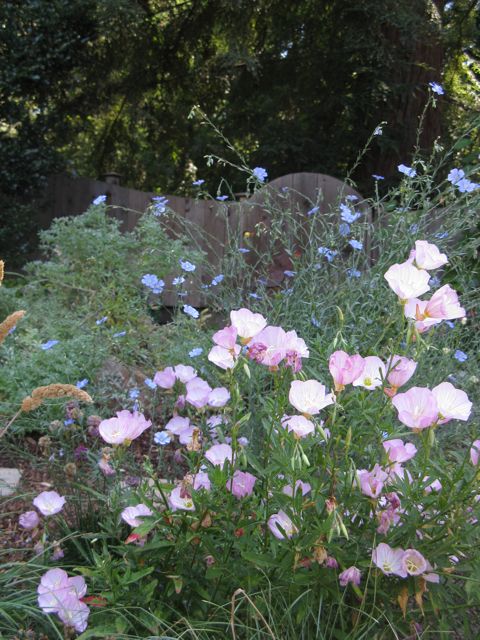
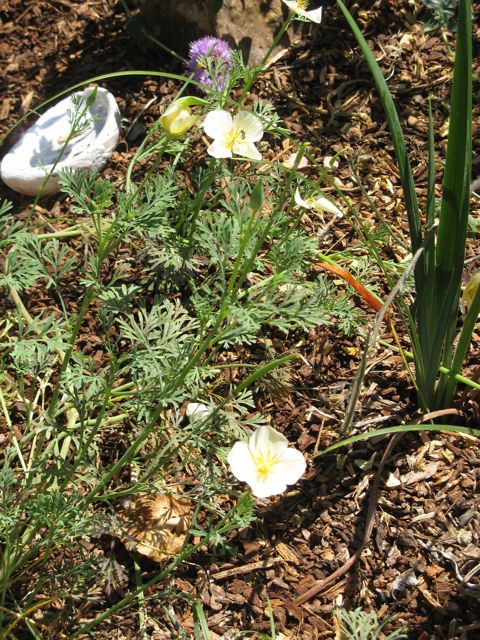
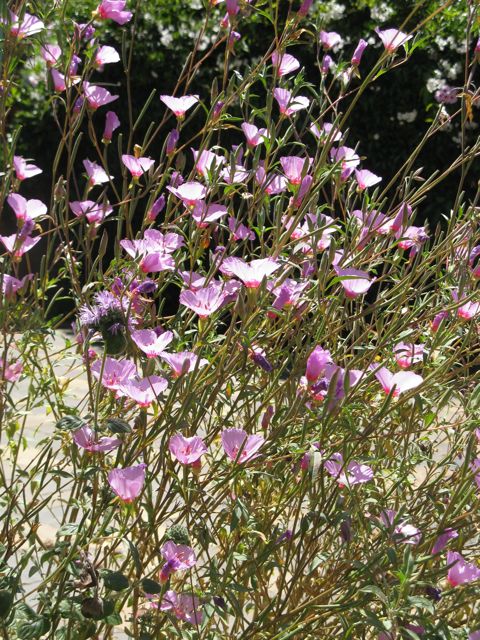
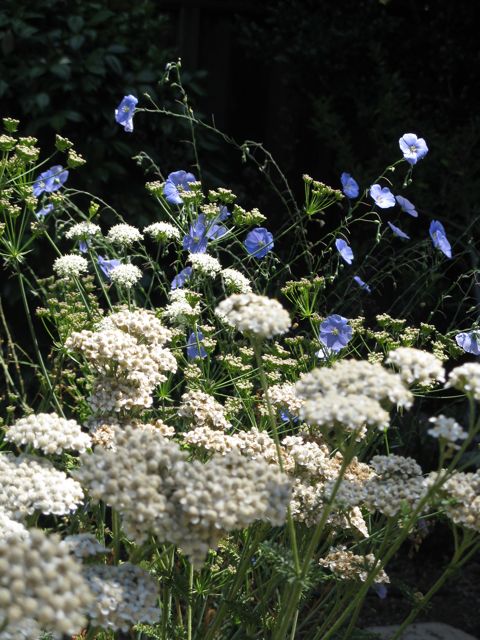
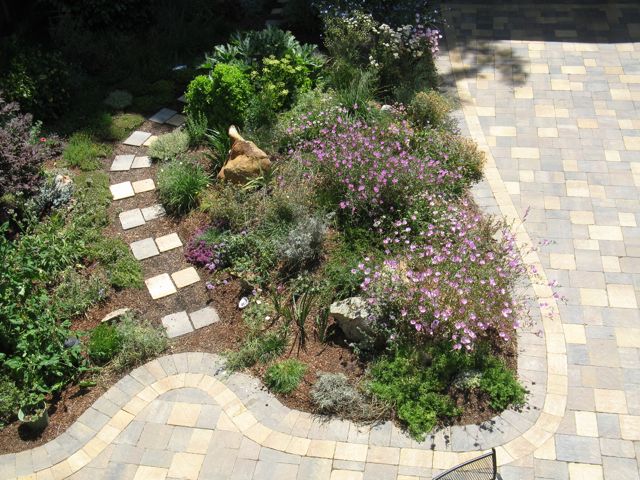
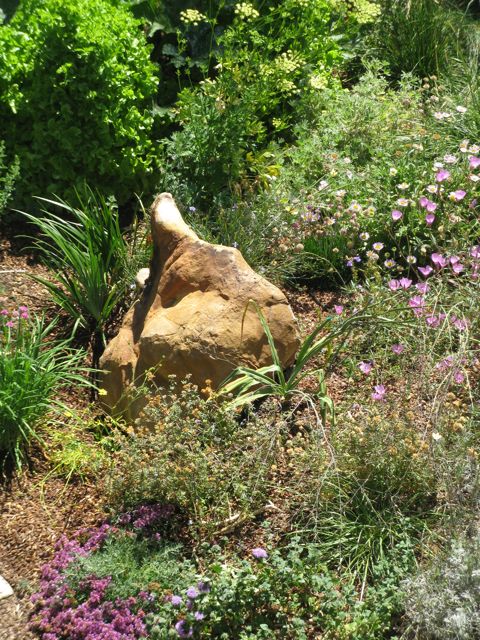
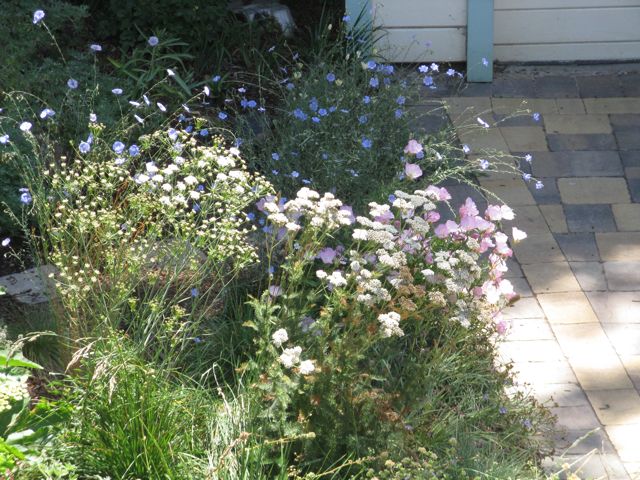
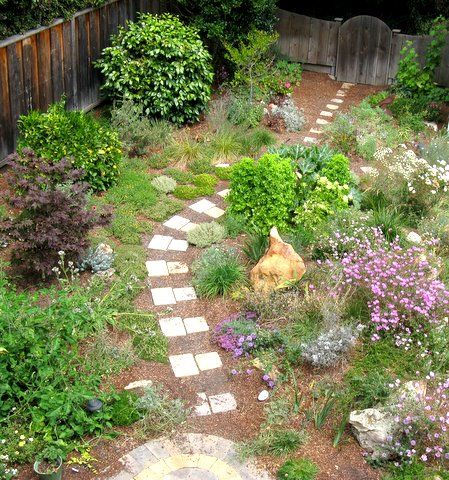
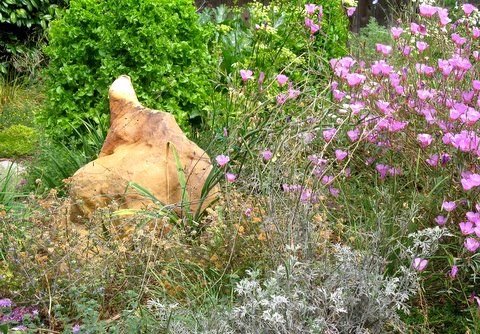
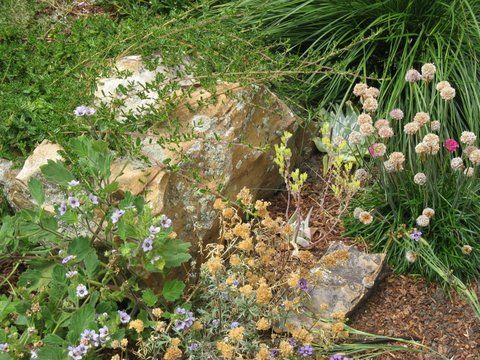
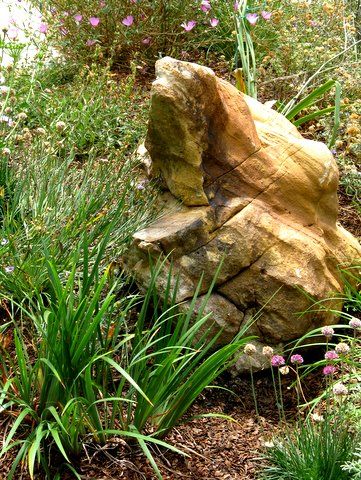
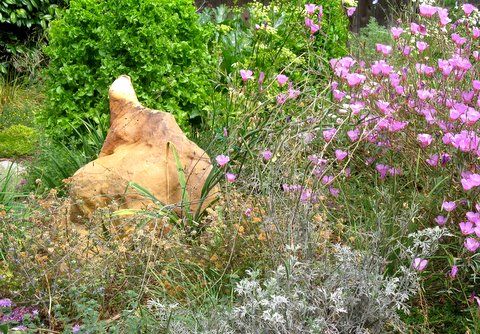
The owners took the slow, easy route when removing their lawn—they covered it with cardboard, compost, and mulch, kept watering, and let it decay for 3 to 4 months (go ahead—ask for details!). The lovely, small, secluded garden that replaced the lawn was designed by Robin North of Oaktown Native Plant Nursery and installed by Robin and Kristen Hopper, also from Oaktown, with assistance of the owners. Plants with pink, blue, and yellow flowers were placed on berms, which provide drainage. Yellow moss rock boulders were added for visual interest. In spring the pastel, delicate pink of our local native clarkia brightens the garden. Blues and lavender are provided by penstemons, flax, and blue-eyed grass. Yellow and cream appear in the form of buttercups, yampah, and yarrow.
 Other Garden Attractions
• The gently curving path decreases in width, providing the illusion of distance.
• Veggies and herbs are interspersed throughout the garden.
• Native woodland plants, such as snowberry, strawberry, redwood sorrel, and currants, are planted in the shady part of the garden.
• Espaliered apple lines one section of the fence.
 Gardening for Wildlife
Carpenter bees are attracted to the clarkia; anise swallowtail butterflies flit daintily near the yampah, its native host plant. Raccoons and the occasional skunk come down the nearby creek.
Garden Talks 11:00 and 3:00 “How to remove a lawn” by Karen Long
Photos
Click to see as a slideshow: