

Pollinator Post 3/22/26 (2)
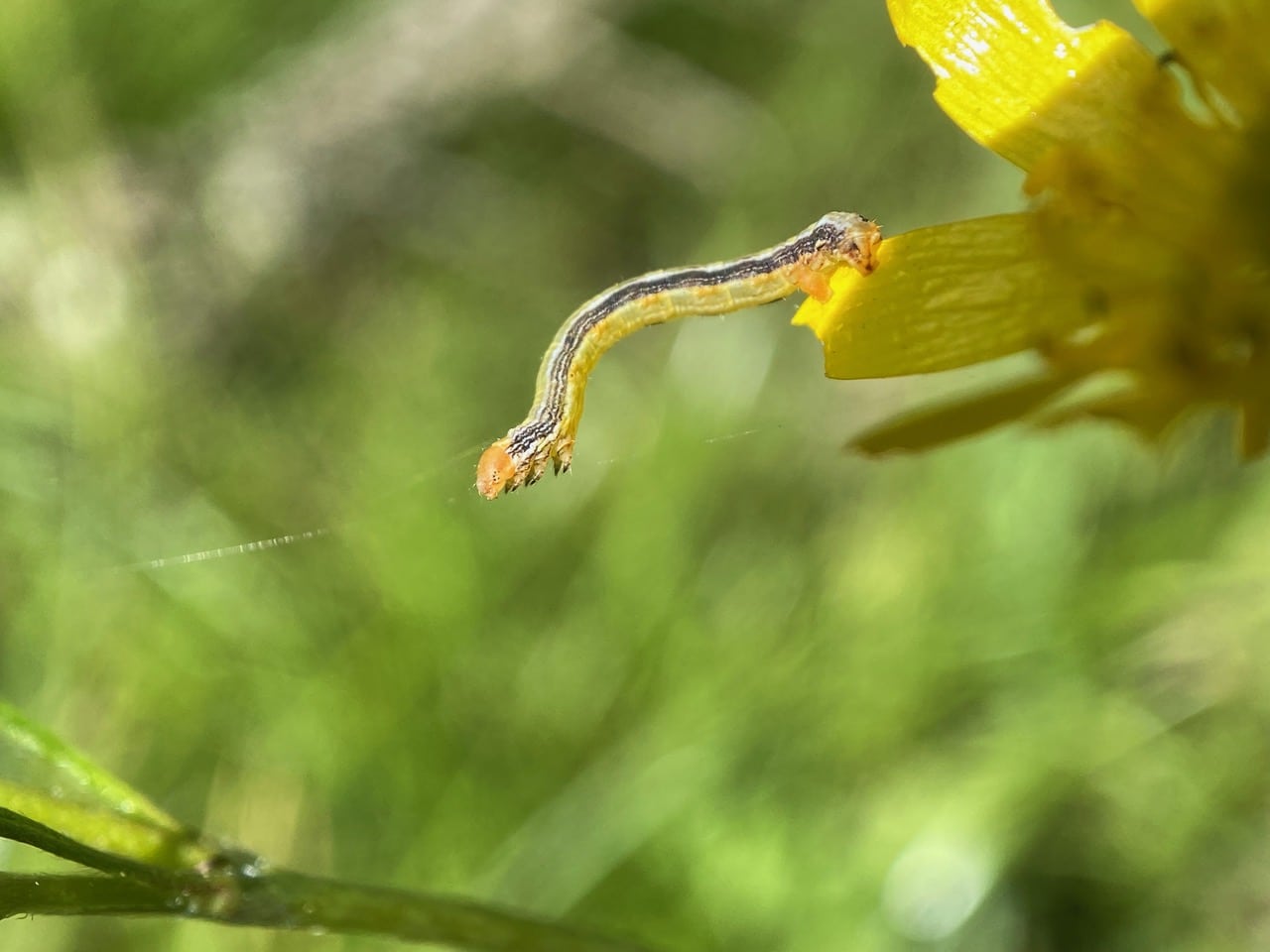
I watch in disbelief as an Inchworm descends from a decrepit Buttercup flower by reaching out and landing with its true legs on a silk thread. I have never seen an Inchworm do this, and with such precision! Wow, tight-rope walking in a looping fashion! How did the caterpillar manage to attach the silk strand in the first place? Note the absence of prolegs in the middle section of its body.
Caterpillars of the Geometer Moth (family Geometridae), also known as Inchworms, can locomote on a strand of silk. They frequently use silk to travel, lower themselves from the canopies, or escape predators. After dangling from a thread, inchworms can climb back up the silk strand to return to leaves. To climb, they often pull the silk in and tuck it onto their chest in a bundle, using their unique looping mechanism to climb back up. Like other caterpillars, Inchworms use these silk threads for escape and dispersal, dangling and navigating the silk to move between branches or to the ground to pupate. They produce their own silk from glands near their mouth to form these threads.
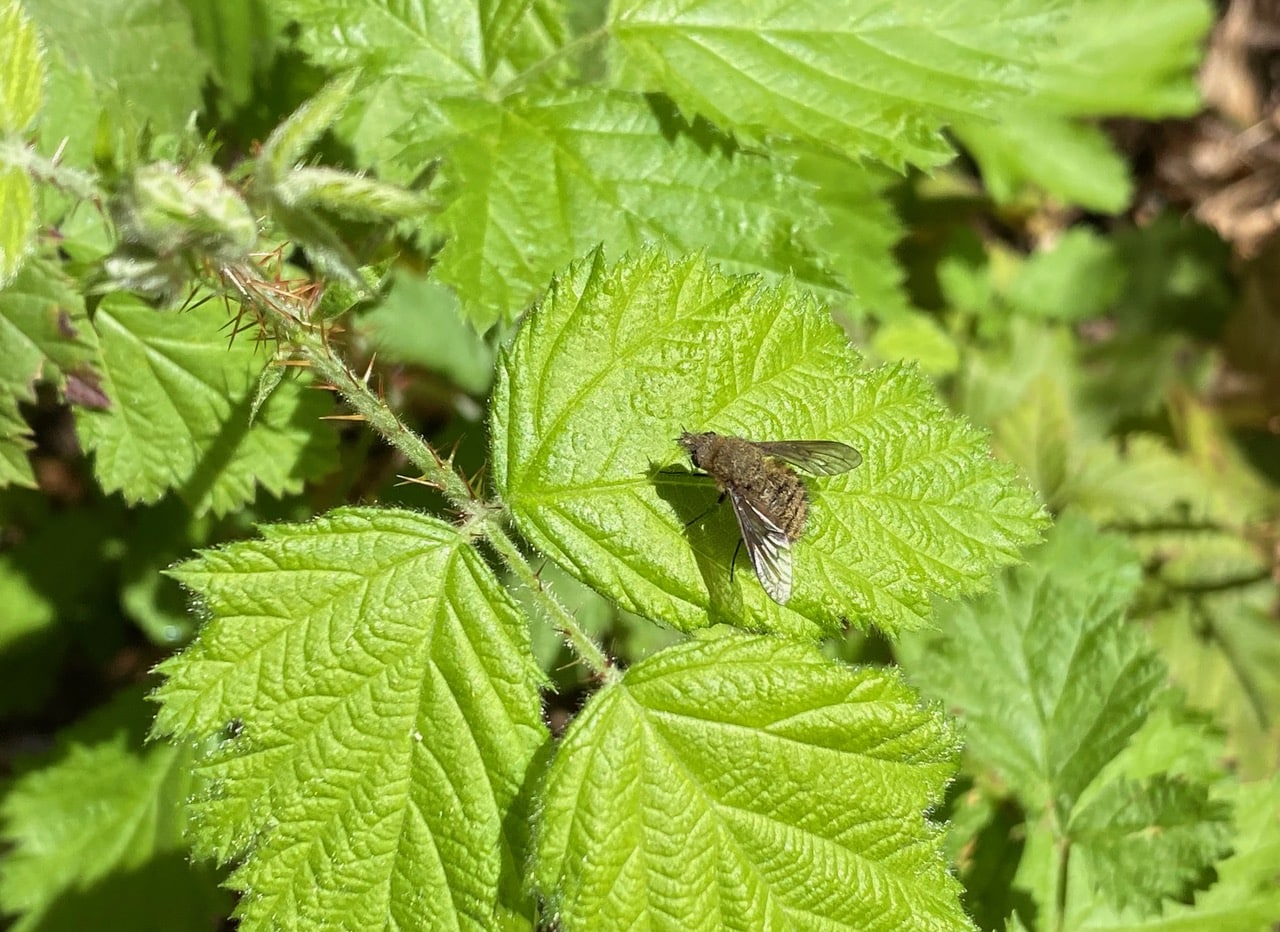
A Bee Fly, Conophorus obesulus (family Bombyliidae) is perched on a tender young leaflet of California Blackberry, seeming to be enjoying the morning sun.
The Bee Flies belong to the family Bombyliidae. Adults generally visit flowers for nectar and pollen, some being important pollinators. The larger species have stout, hairy, bee-like appearance, hence the common name of Bee Fly. They are characterized by a long, straight proboscis used for feeding while hovering. Larvae generally are parasitoids of other insects. When at rest, many species of bee flies hold their wings at a characteristic “swept back” angle. The adult females usually deposit eggs in the vicinity of possible hosts, quite often in the burrows of beetles or ground-nesting bees/wasps. Bombyliidae parasitism is not host-specific, but rather opportunistic, using a variety of hosts. Adult females of some species lay eggs in mid-air and flick them towards the nest entrances of their hosts. They typically have an eversible pouch near the tip of their abdomen known as a sand chamber, which is filled with sand grains gathered before egg laying. These sand grains are used to coat each egg just before their aerial release, presumably to improve the female’s aim by adding weight.
Conophorus obesulus is found in the western United States from California to Colorado, and north to British Columbia, Canada. Conophorus larvae are parasitoids. The females hover over the burrows of ground-nesting bees to lay eggs, which hatch and feed on the bee larvae inside the nest. Adults feed on nectar from flowers, favoring purple, violet, blue, or white blossoms. Despite the larvae’s parasitic role, the bee flies are beneficial pollinators.

I am happy to turn onto the shady Bridle Trail just when the temperature climbs in late morning.
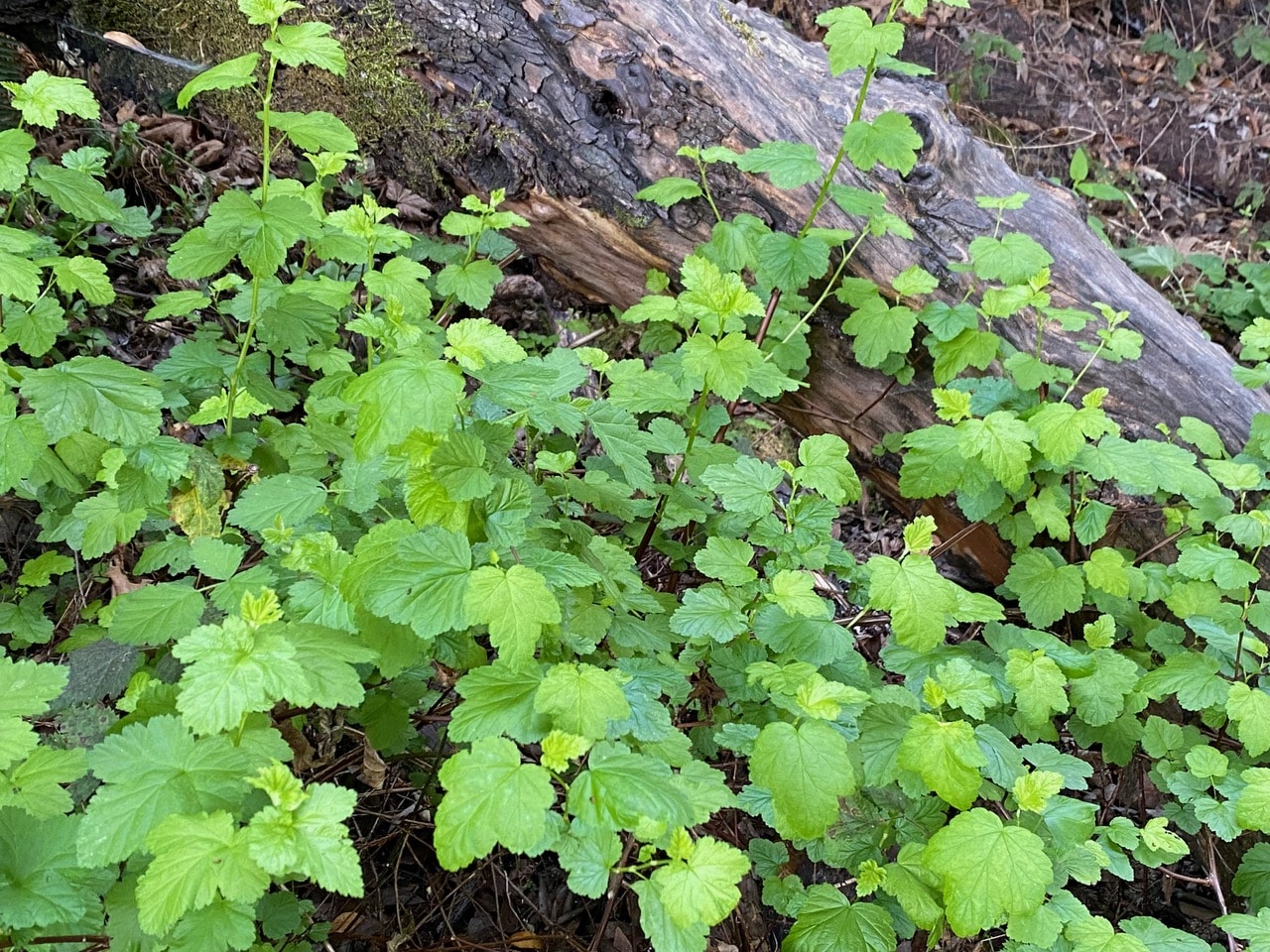
The tender green foliage along the trail on my right mostly belongs to Pacific Ninebark, Physocarpus capitatus.
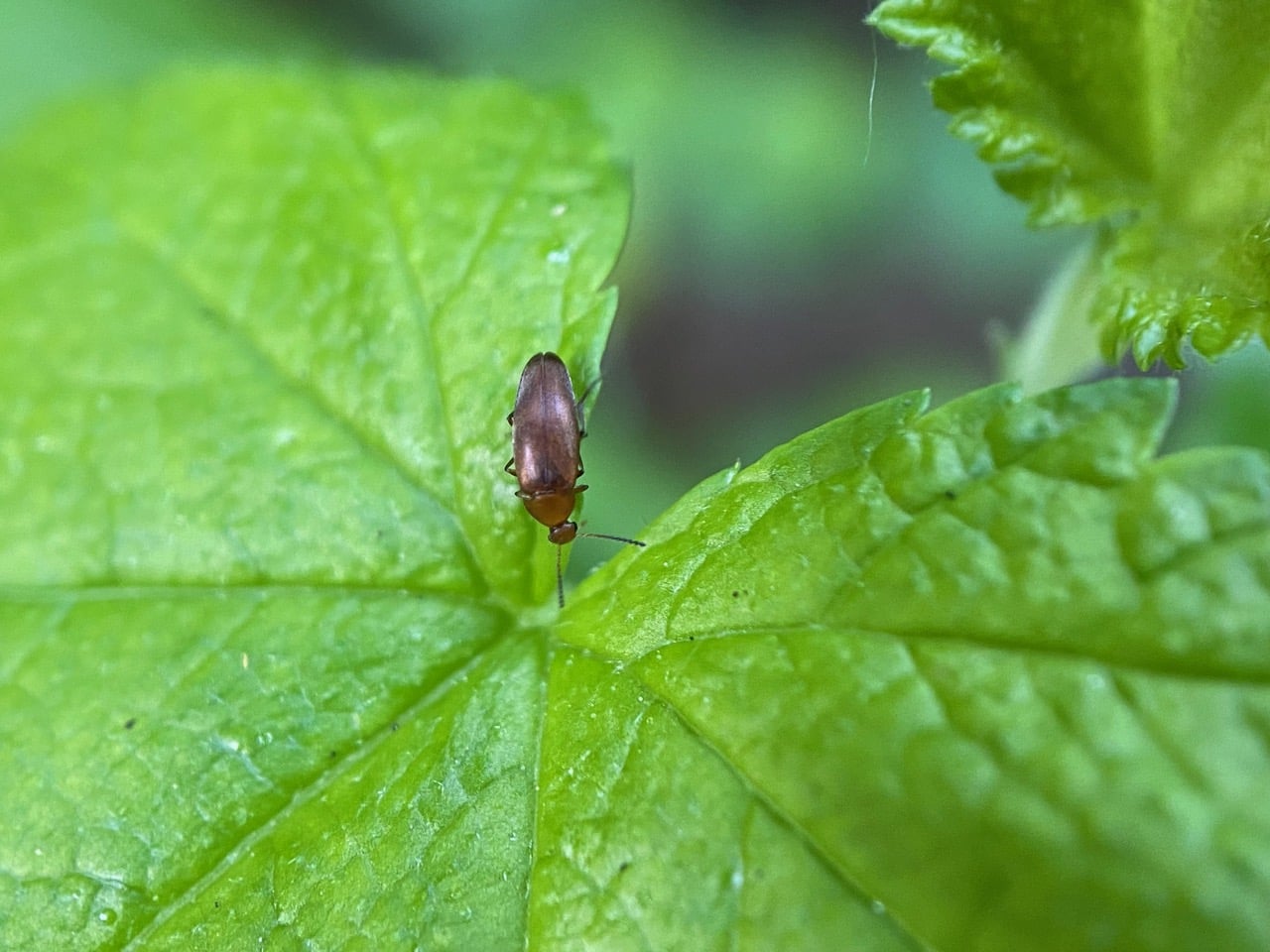
Numerous small brown beetles are scattered over the Pacific Ninebark leaves. They appear to be False Flower Beetles, Anaspis sp. (family Scraptiidae). The plants are not in bloom yet – what are the beetles doing here? They don’t seem to have caused any damage to the foliage.
The family Scraptiidae, sometimes called False Flower Beetles have a world-wide distribution. The beetles are primarily pollen and nectar feeders, frequently found on flowers, foliage, and flowering shrubs. They may sometimes feed on soft plant tissues. The larvae are typically found under the bark of dead trees. They are saproxylic, meaning they feed on decaying wood, fungi, and rotting organic matter, serving as decomposers/recyclers in the ecosystem. The beetles are generally considered minor flower visitors and do not cause significant damage to plants.

A small spider has constructed an orb web across the surface of a Pacific Ninebark leaf. Although I can only see its underside, I am almost sure that it is a Six-spotted Orbweaver, Araniella displicata (family Araneidae).
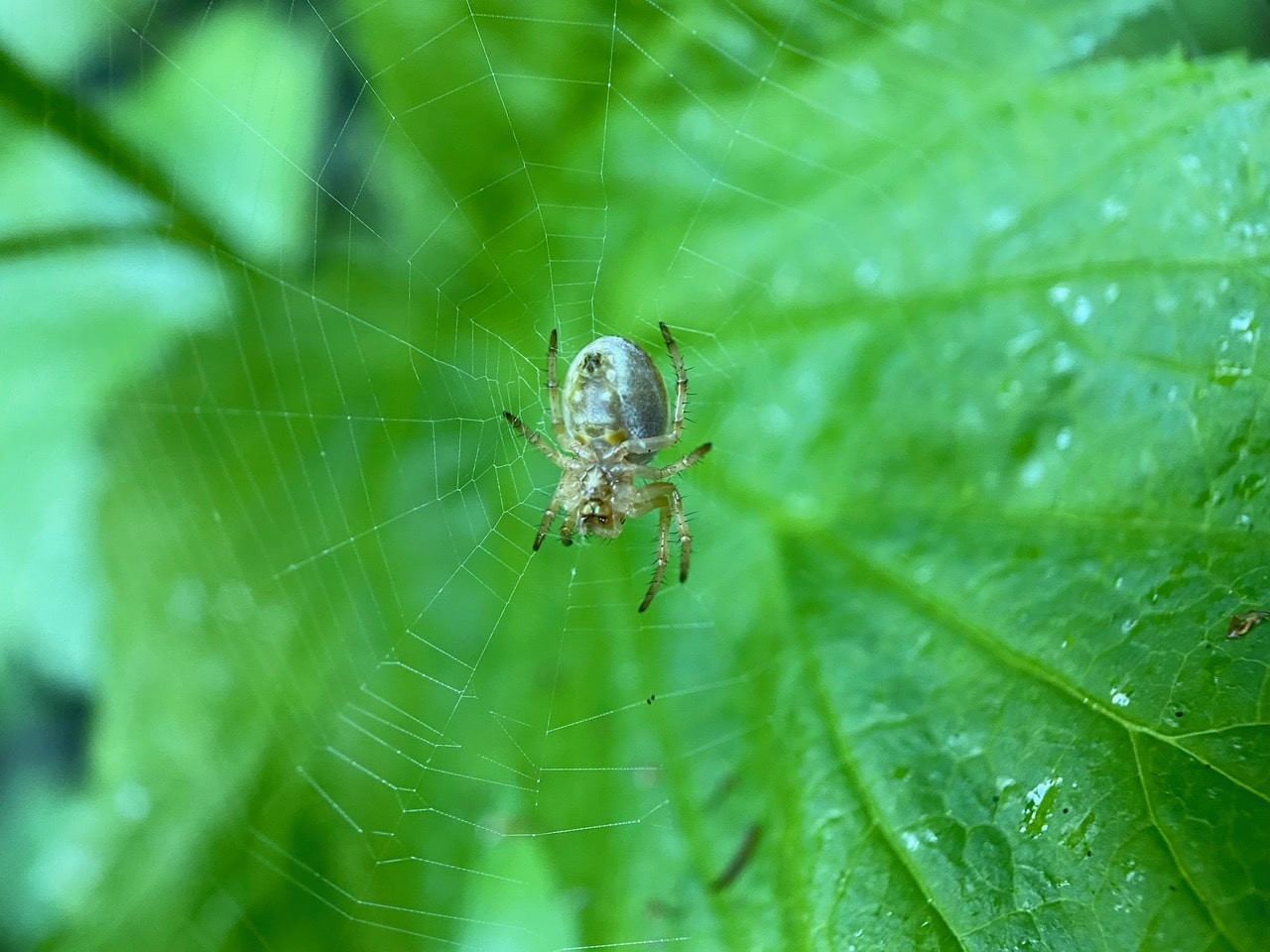
The Six-spotted Orbweaver, Araniella displicata (family Araneidae) is a small cucumber spider. It occurs throughout Europe and North America and in parts of Asia. It is found on trees and shrubs in woodland habitats. It is one of the most widely distributed arachnids in North America, but often overlooked due to its small size. Adult females measure only 4-8 mm in length, males 4-6 mm. The species is distinguished by three (sometimes four) pairs of black spots along the edges of the rear half of the abdomen. There’s quite a bit of color variation within the species.
Most orb weavers spin fairly large webs in proportion to their own body size, but not so with Araniella displicata. The web of an adult spider may be only three or four inches in diameter. The spiral snare is usually built well off the ground, and often oriented in the horizontal plane, frequently spanning the edges of a single large leaf. The spider sits in the center, hanging beneath a horizontal web. Adult Araniella displicata are often mistaken for “baby” orb weavers. In late May or early June mating takes place, and females produce egg sacs that contain 80 eggs and are covered in loose, fluffy, yellowish silk. The package may be deposited in a curled leaf that also serves as the mother’s retreat on the perimeter of the web.
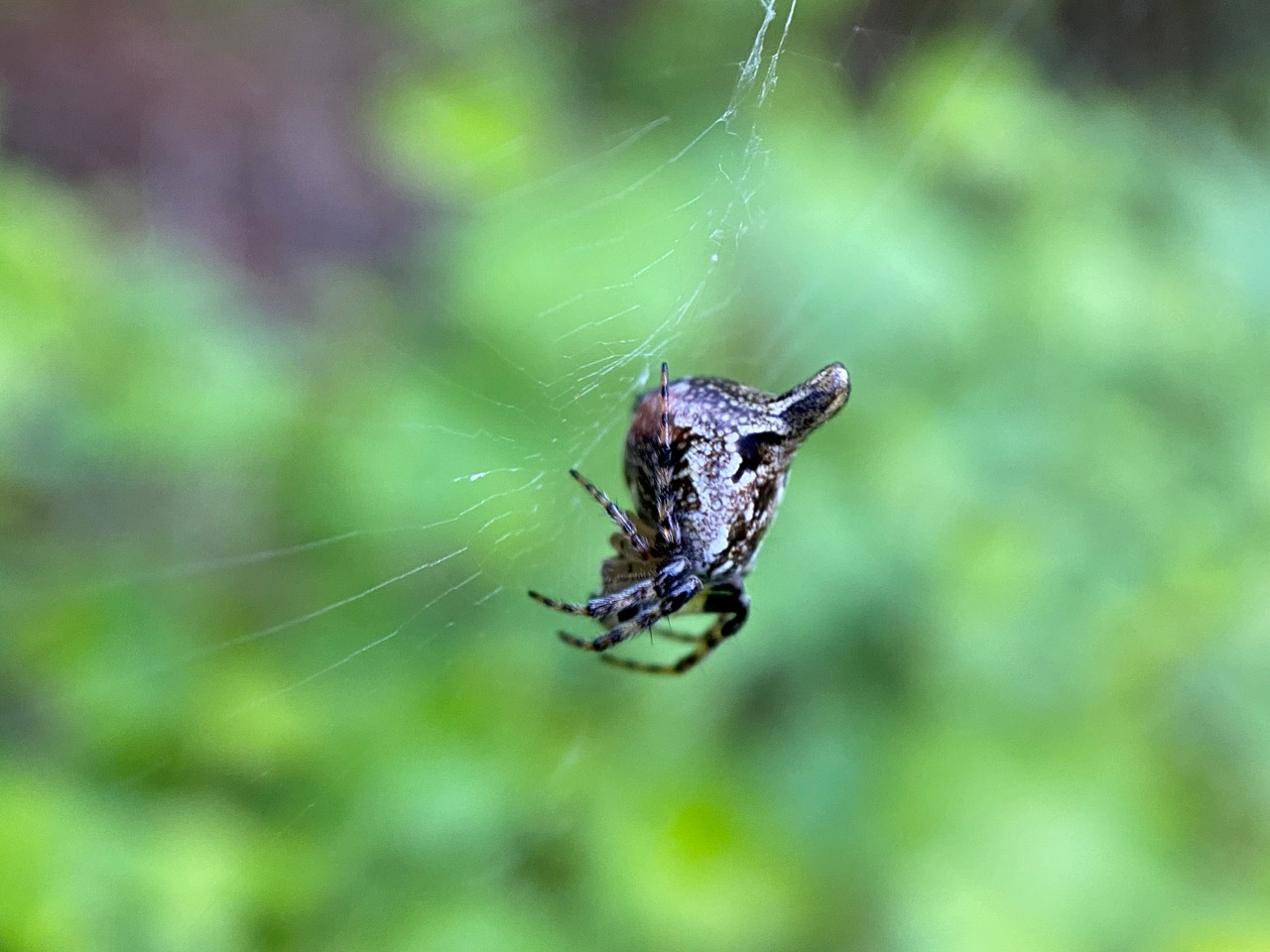
A large female Conical Trashline Orb Weaver, Cyclosa conica is resting head-down in the hub of her vertical web, her cephalothorax completely hidden behind her folded front legs. There is very little debris attached to the trashline of her web – she has not had much luck catching prey today.
Cyclosa, also called Trashline Orbweavers, is a genus of orb-weaver spiders (family Araneidae). The tiny spider (5-7.5 mm) is easily recognized by its web decoration; the spider strings together the dead bodies of insect prey and other debris and hangs them in a vertical line through the middle of its web. The decoration, which sometimes includes egg cases as well, probably serves to camouflage the spider. Cyclosa creates its webs mostly during times of complete darkness. The females occupy the web hub (center) to sit-and-wait for prey. The spider can ensnare prey at nearly any time of day, and it only leaves its spot to replace the web prior to sunrise.
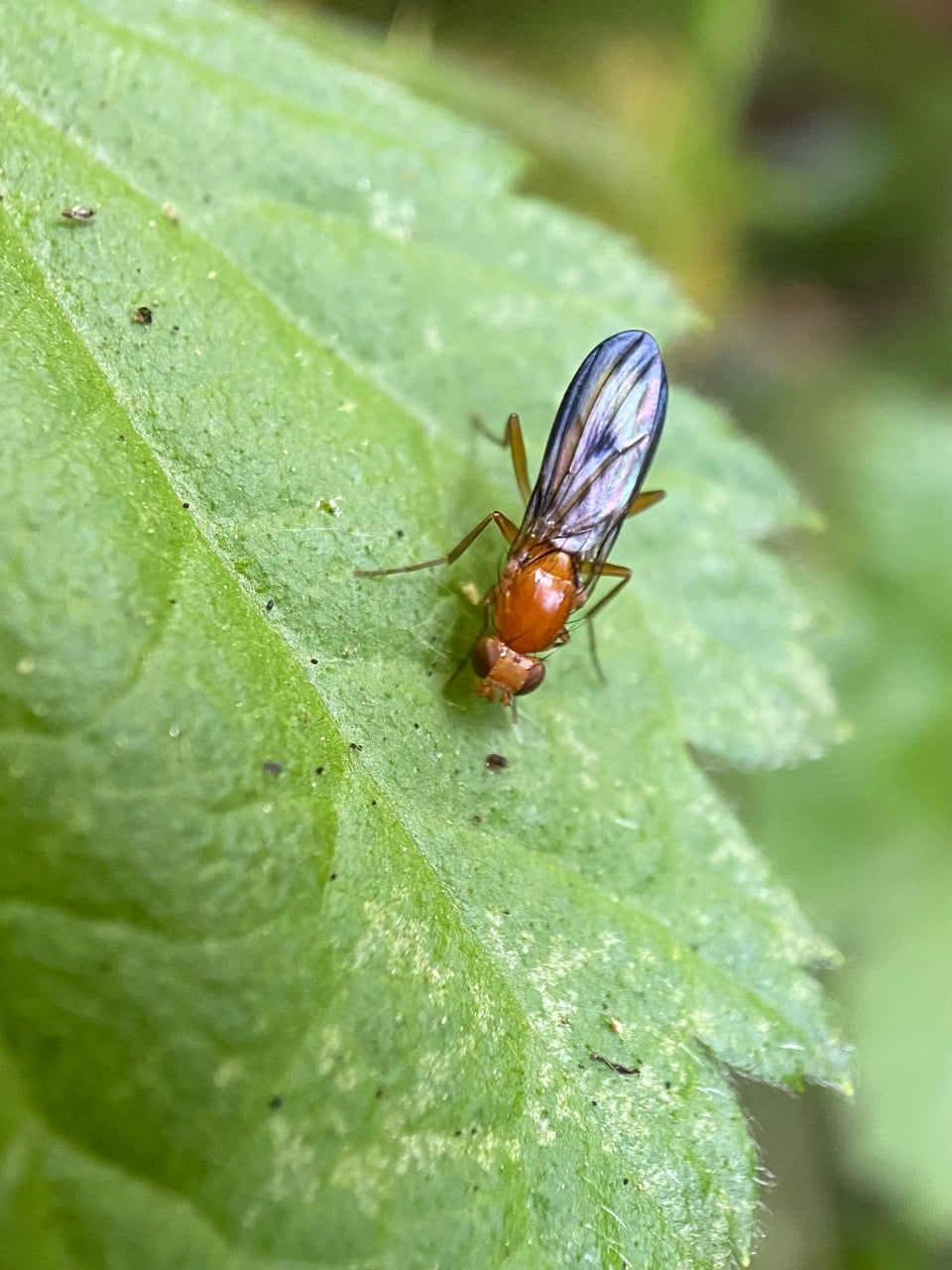
A small fly with bright yellow-orange thorax and shiny, spotted smokey wings is scavenging on a leaf of Bee Plant, Scrophularia californica. iNaturalist has helped identify it as a Druid Fly, Clusia sp. (family Clusiidae).
Clusiidae flies, or Druid Flies, are small (around 3-8 mm) flies commonly found in forests, specifically around decaying wood, rotting logs, and sometimes near mossy habitats. Adults primarily eat decaying organic matter, nectar, and sap, while larvae which are commonly found under tree bark, feed on microorganisms within rotting wood. The larvae are notable for their ability to jump.
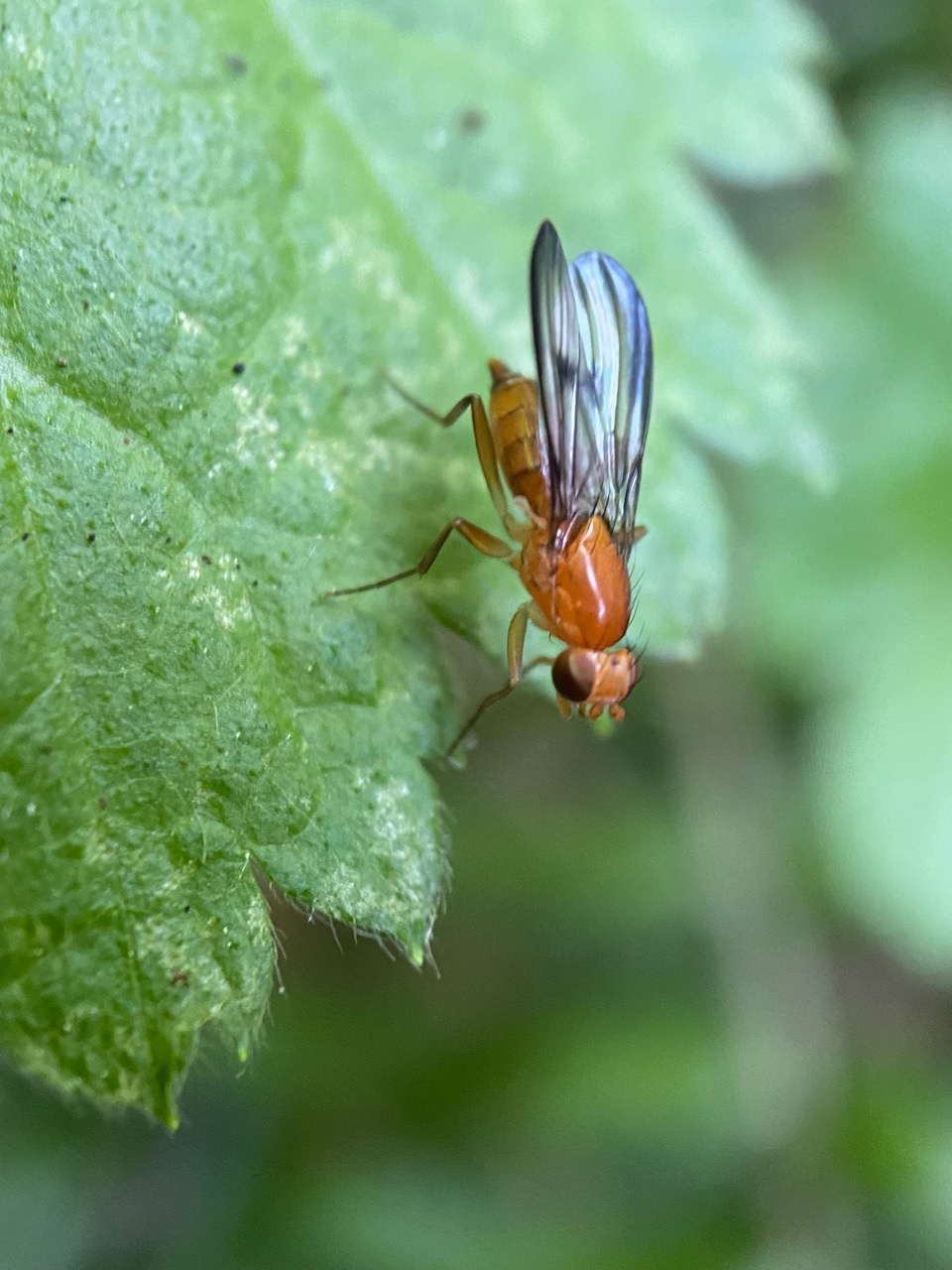
The fly occasionally lifts and partially spreads its wings above its abdomen. Is it doing a wing display, or releasing pheromones? Who is it trying to communicate with? Just about 12 inchs above this fly, there’s a similar, slightly larger and darker fly moving around on a leaf of the same plant.
Druid Flies (family Clusiidae), particularly in the subfamily Clusioninae, are known to engage in lekking behavior, where males gather in groups to display for females. Males form dense aggregations, often on exposed patches of dying or rotting wood/tree trunks where they display, fight for dominance, and attract females. Males may raise their wings, display bright forelegs, and chase away competitors in defense of their small mating spot. The competition at the lek ensures only dominant males typically secure matings. After mating, females leave the lekking site to lay eggs elsewhere, usually in more degraded, softer wood.
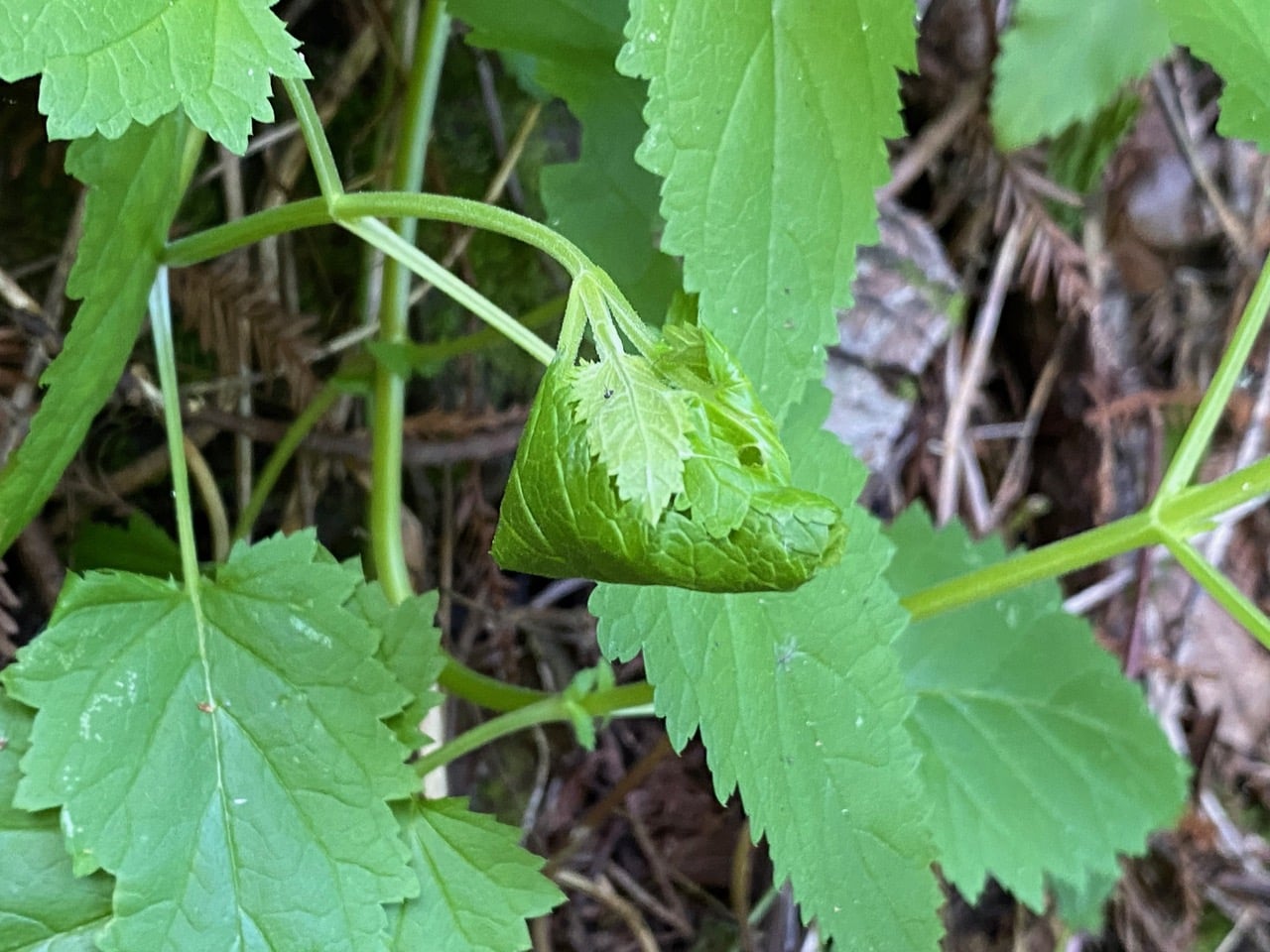
Wow, someone has bound together the terminal leaves of a Bee Plant into a neat, triangular structure. I am sure it is done using some kind of silk, but I don’t have the heart to take it apart to find out. A caterpillar, or a spider?
Some caterpillars construct shelters in which they can feed in safety, out of reach of predators and parasites. Some spiders construct shelters in which they can molt in safety, or they may enclose their egg cases in bound leaves.
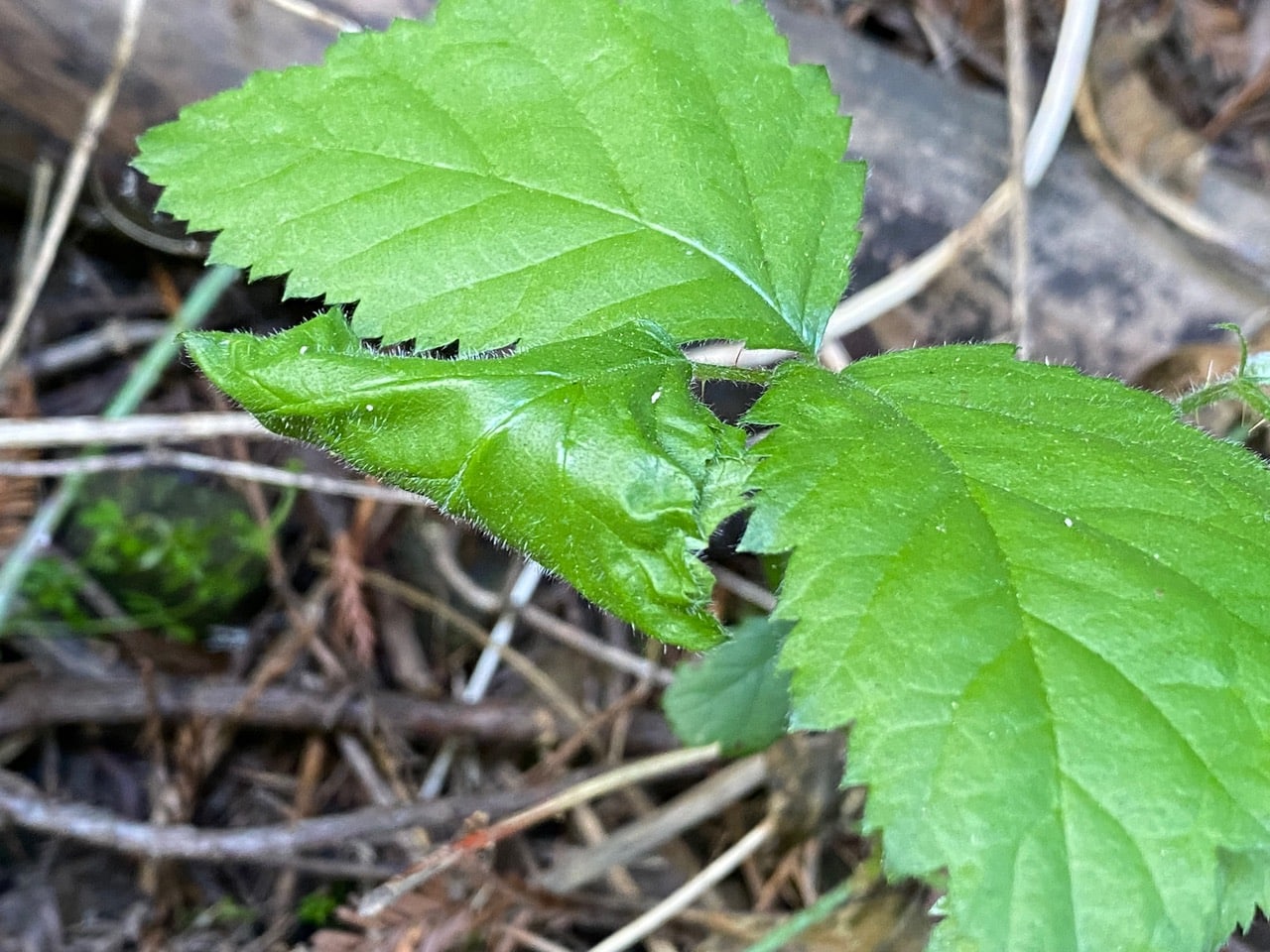
Close by, a leaflet of California Blackberry, Rubus ursinus has been rolled under cross-wise. The two ends are securely sealed with silk. Again, who made this – a caterpillar or a spider?
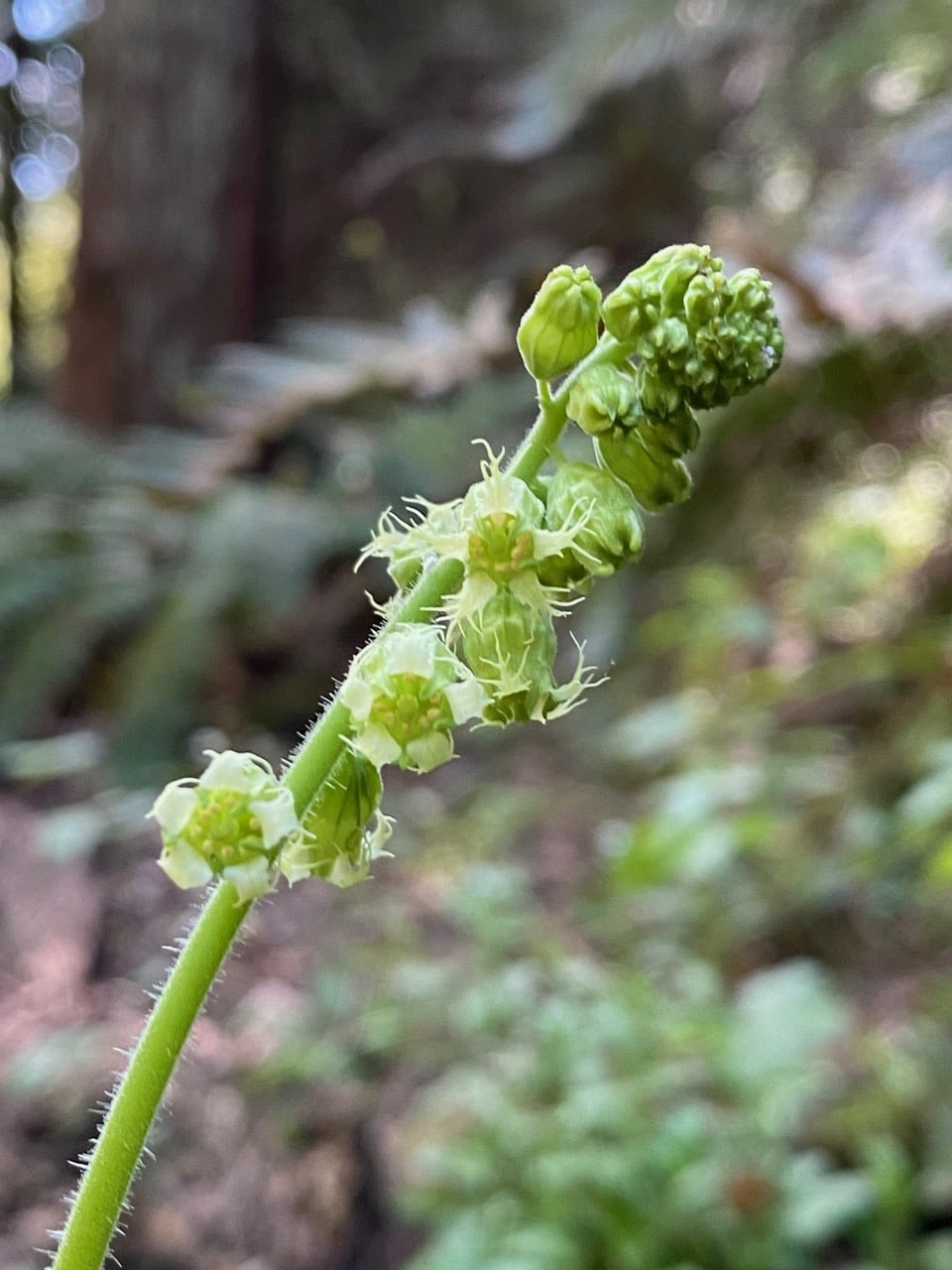
In the deep shade, a Fringecup, Tellima grandiflora is in bloom, almost invisibly. These young flowers are greenish white, indistinguishable from the surrounding foliage.
Fringecup is a durable, bee-friendly, and deer-resistant plant native to Western North America. The hardy, shade-loving perennial has tall, slender spikes of fragrant green-to-red flowers. These unique flowers display fringed, star-like petals on 1-3 ft. stalks above hairy, heart-shaped leaves. The tiny urn-shaped flowers open as pale green or cream before turning a striking pink or red with age. Hummingbirds are frequently cited as primary pollinators drawn to the flowers. Native bees and Honey Bees are also frequent visitors to the Fringecup flowers.
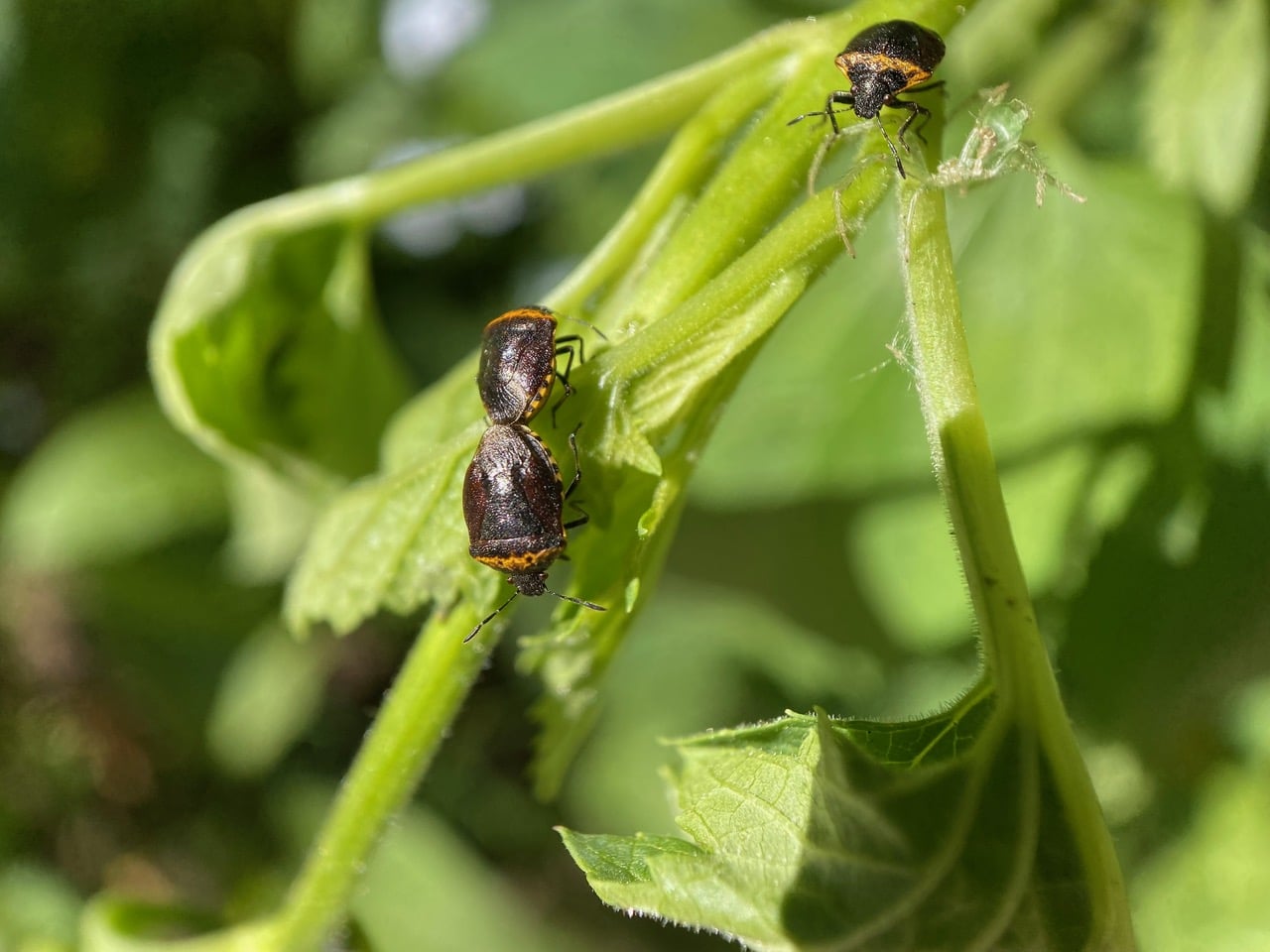
Some small Stink Bugs, Cosmopepla uhleri (family Pentatomidae) can be seen on the tender leaves of a wilted Bee Plant, Scrophularia californica with a droopy tip.
Cosmopepla uhleri is a stink bug native to the western regions of the United States, including California and Oregon. It is black with an orange transhumeral band that has black spots. The bug uses Bee Plant, Scrophularia californica as a host.
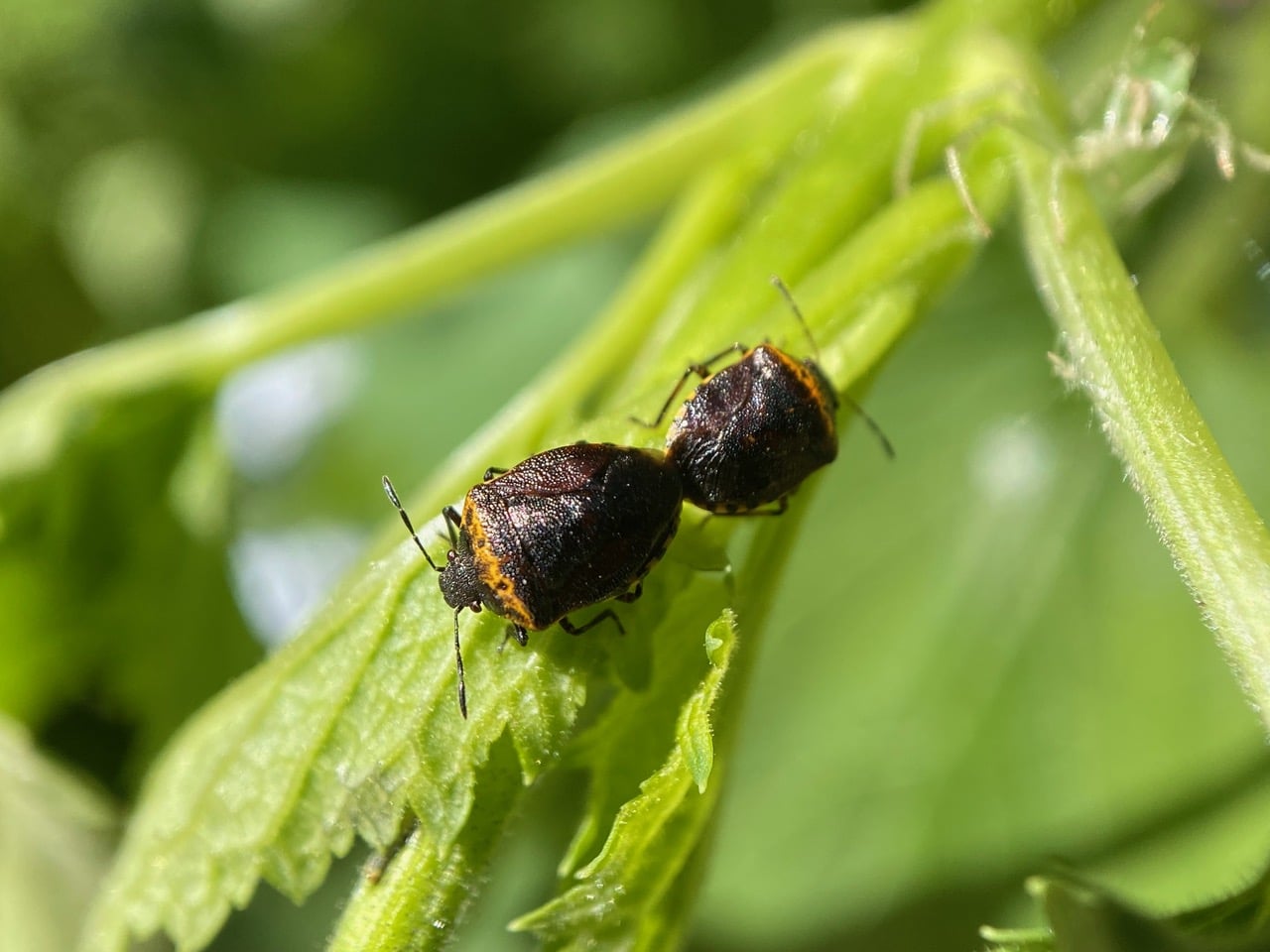
Pentatomidae is a family of insects belonging to the order Hemiptera or “true bugs”. As hemipterans, the pentatomids have piercing-sucking mouthparts, and most are phytophagous, including several species that are severe pests on agricultural crops. Stink Bugs feed on plant fluids by inserting their needlelike mouthparts into stems, leaves or seed pods. While feeding, they inject materials into the plant to aid in digestion and sap removal. Penetration by the mouthparts can cause physical damage, much like stabbing the plant with a fine needle.
All Pentatomids have 5-segmented antennae (hence their family name, Penta – five and tomos – section.) They generally have a large triangular scutellum in the center of the back. The adult is generally shield-shaped when viewed from above. The common name of Stink Bug refers to their ability to release a pungent defensive spray when threatened, disturbed, or crushed.
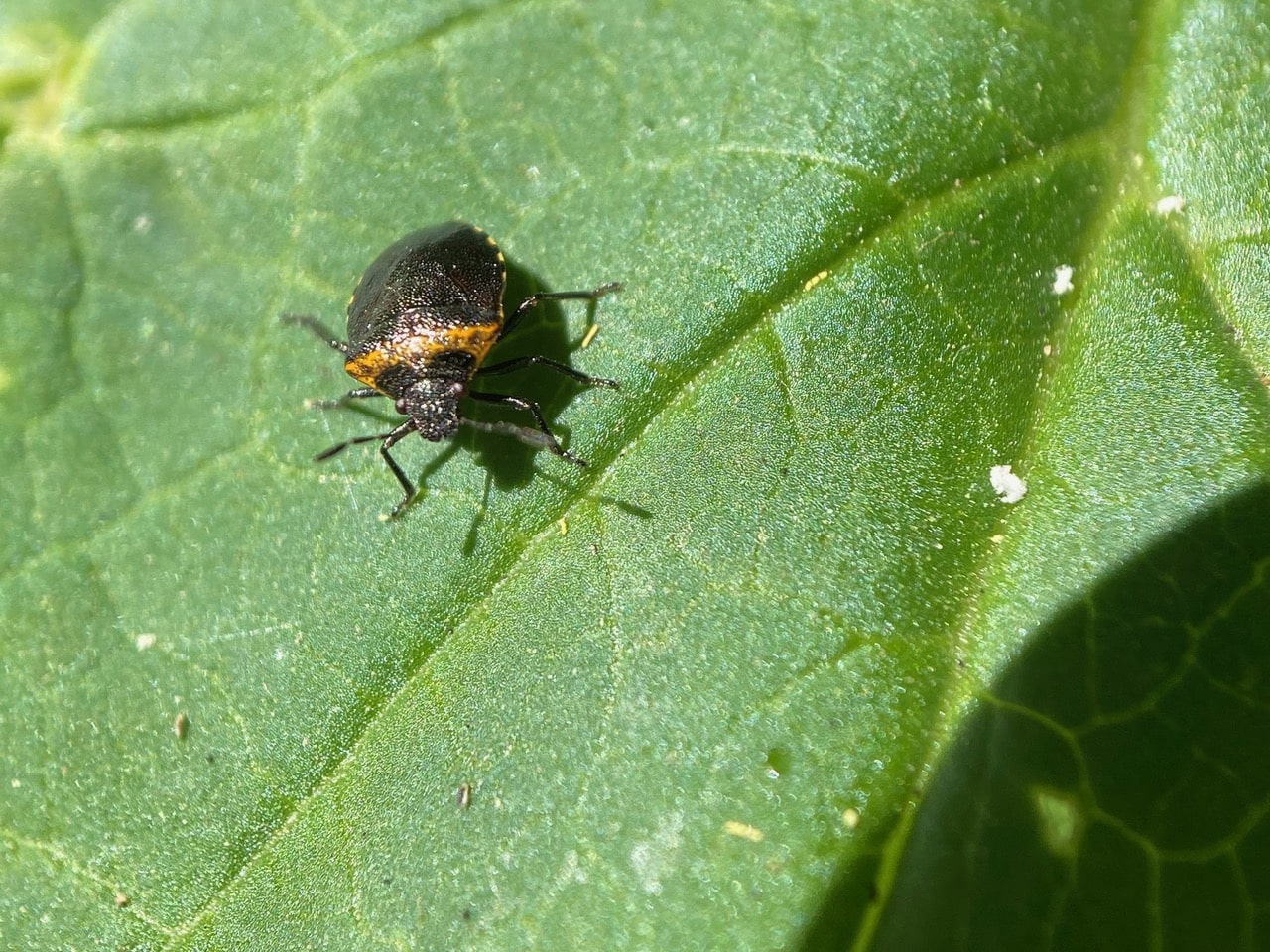
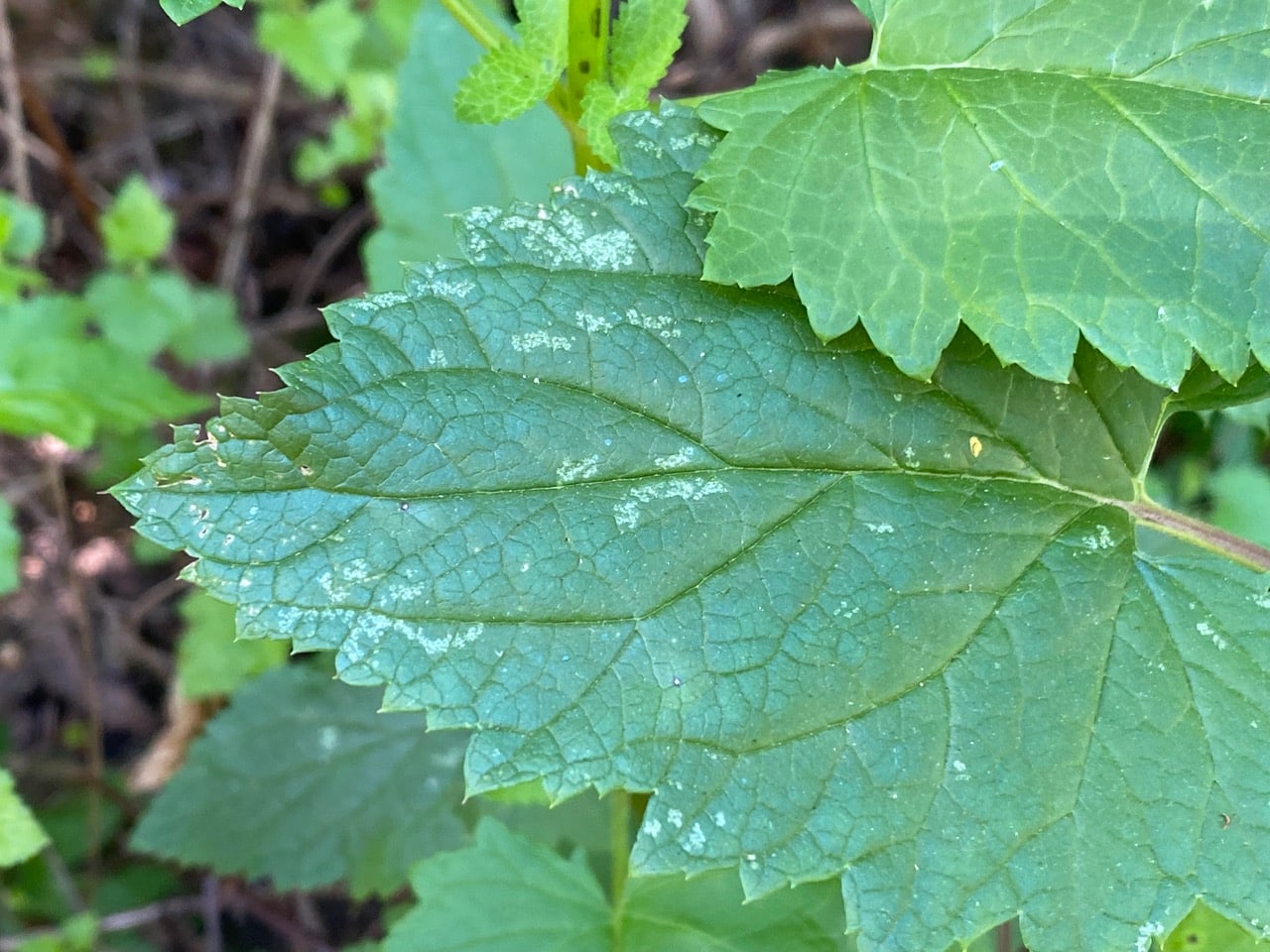
If you find these finely stippled feeding scars on your Bee Plant leaves, it’s probably the work of the Stink Bugs, Cosmopepla uhleri.

A Greater Bee Fly is taking nectar from the flowers of Forget-Me-Not, Myosotis sylvatica. While it is hovering with fast wing beats to stay in place, the fly is also lightly touching its long skinny legs on the flower to steady itself. It takes precise aim to get that long proboscis down the tiny opening of the corolla.
Here’s another video of a Greater Bee Fly, taken on 3/13/26 at Skyline Garden. It shows the feeding action at closer range:
Bombylius major, commonly known as the Greater Bee Fly is a parasitic bee mimic fly in the family Bombyliidae. It derives its name from its close resemblance to bumble bees. Its flight is quite distinctive – hovering in place to feed, and darting between locations. The species has long skinny legs and a long rigid proboscis held in front of the head. Bombylius major is easily distinguished from the other local species of Bombylius for having wings with dark leading edge, hyaline trailing edge with sharp dividing border. This feature is visible even as the fly is hovering. Adults visit flowers for nectar (and sometimes pollen) from a wide variety of plant families, excelling at small tubular flowers, and are considered good generalist pollinators. Often the pollen is transferred between flowers on the fly’s proboscis.
The bee fly larvae, however, have a sinister side. They are parasitoids of ground-nesting bees and wasps, including the brood of digger bees in the family Andrenidae. Egg deposition takes place by the female hovering above the entrance of a host nest, and throwing down her eggs using a flicking movement. The larvae then make their way into the host nest or attach themselves to the bees to be carried into the nest. There the fly larvae feed on the food provisions, as well as the young solitary bees.
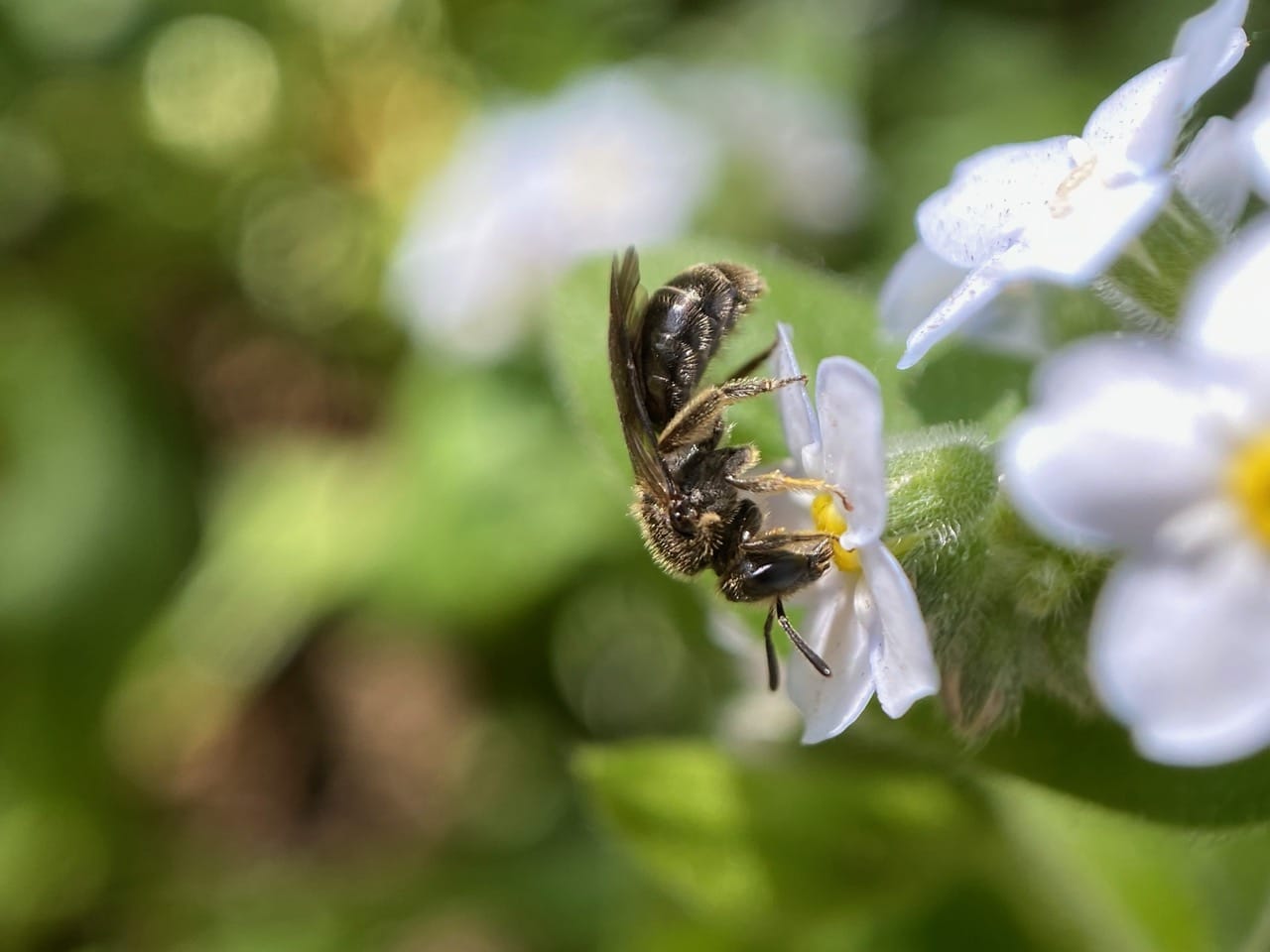
A small bee is foraging on a flower of Forget-Me-Not, probing with its tongue through the tiny opening that is highlighted by a raised yellow ring. It is a Sweat Bee, Lasioglossum sp. (family Halictidae).
Lasioglossum species are found worldwide, and they constitute the largest bee genus. The subgenus Dialictus are the most likely to be seen in the U.S., with over 300 species of these tiny metallic bees. The majority of Lasioglossum are generalists. Because they are so abundant throughout the flowering season, the bees are often important pollinators. Their sheer numbers are enough to achieve excellent pollination of many wild flowers, especially of plants in the Asteraceae, which have shallow floral tubes that are easily accessed by these minute bees.
Lasioglossum are closely related to the genera Halictus and Agapostemon. These genera are commonly called “sweat bees” because of their attraction to human sweat, which they drink for its salt content. Lasioglossum are dusky black to brown slender bees with bands of hair on their abdomen. Female Sweat Bees (family Halictidae) carry pollen in the scopae on their entire hind legs and underside of their abdomen.
Lasioglossum exhibit a range of social behaviors; the genus includes solitary, communal, semi social, primitively eusocial, and even parasitic species. Almost all Lasioglossum in the U.S. nest in the ground. Generally these nests are built in the spring by fertilized females (called foundresses) that spent the winter in hibernation. In social species, the foundresses behave much like the queen bumble bees – they lay the first batch of eggs that develop into the first generation of female workers. The nest grows with each additional generation of bees. Later broods may consist of both males and females. They mate, and at the end of the season the fertilized females hibernate til the following spring, repeating the life cycle of the colony.
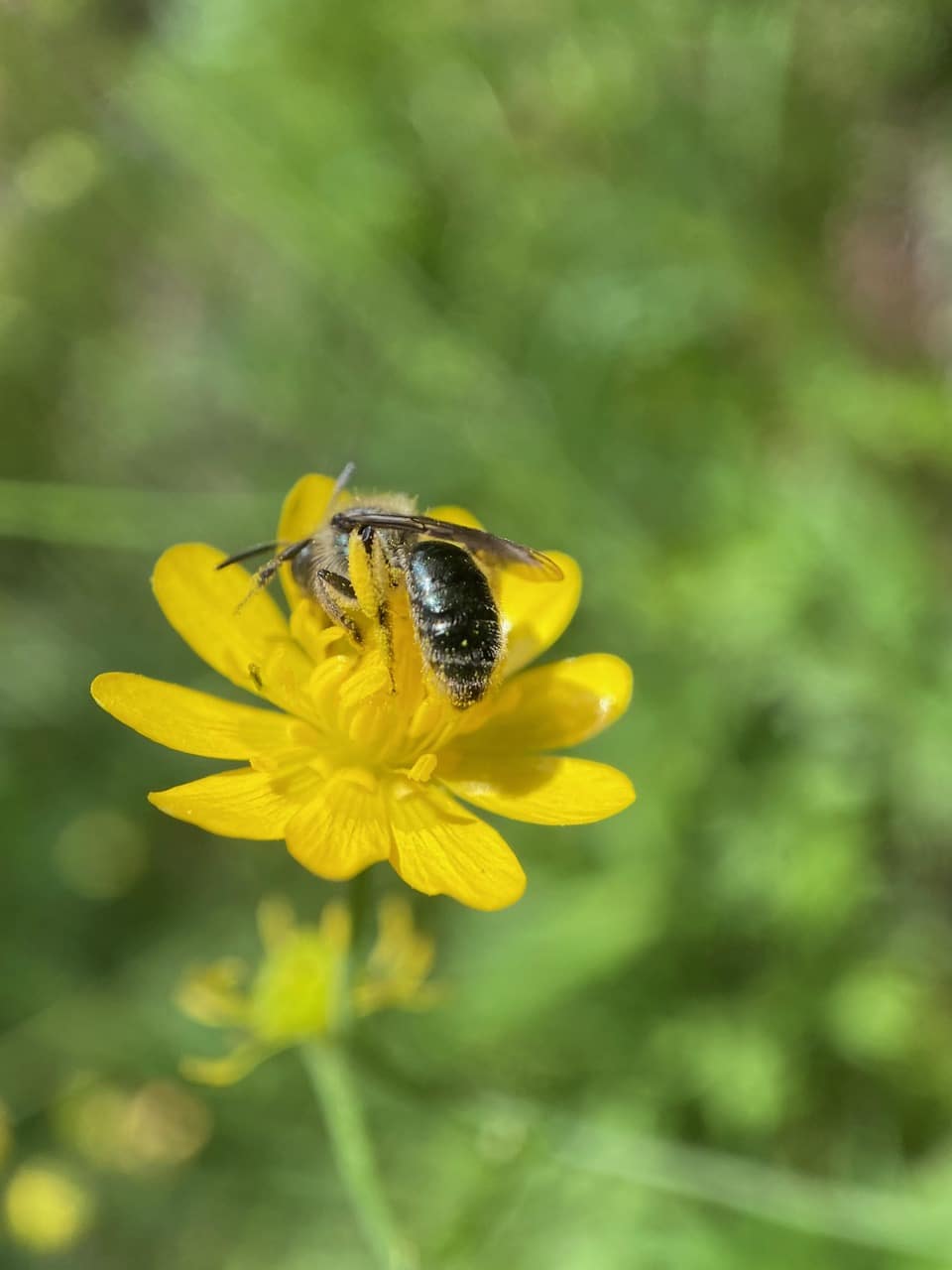
Remember these black Mining Bees (family Andrenidae) on buttercup flowers that I talked about in the previous Pollinator Post? Well, there’s interesting news. My photos on iNaturalist has caught the attention of John Ascher, eminent bee expert familiar with our local native bee fauna. He disagreed with my identification of the bee as belonging to the subgenus Diandrena, and suggested the subgenus Ptilandrena instead. I have since posted another series of photos of the bees, hopefully with enough visual details to cinch the case.
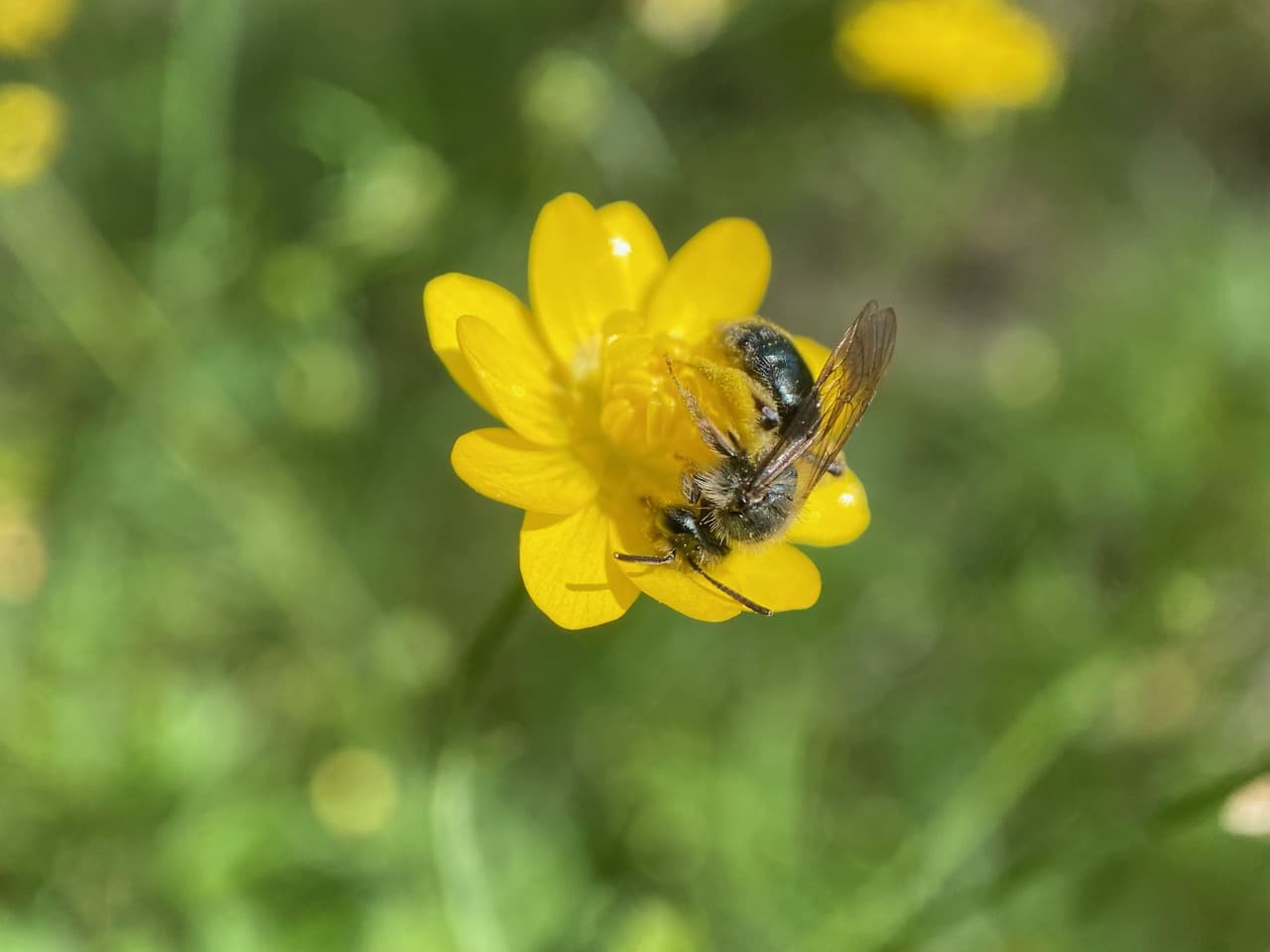
With the help of Google AI, I have learned the following about the subgenus Ptilandrena:
Ptilandrena is a subgenus of small-to-medium-sized Andrena mining bees (7-9 mm) known for being early spring foragers. Ptilandrena are generally dark or black, with sparse grayish or white hair on the thorax, often appearing “furry”. In the scientific name Ptilandrena, the prefix “ptil-” is derived from the ancient Greek word ptilon which means “feather” or “down”. Many Ptilandrena are oligolectic, meaning they specialize in collecting pollen from a limited range of plants. Andrena erigeniae, found in the eastern United States, for example, relies almost exclusively on Claytonia (Spring Beauty) for pollen. They are ground nesters, often creating aggregations (large groups of individual nests) in well-drained, sunny, or partially shaded soil. They are active in early spring, typically emerging from March to May, with one generation per year.
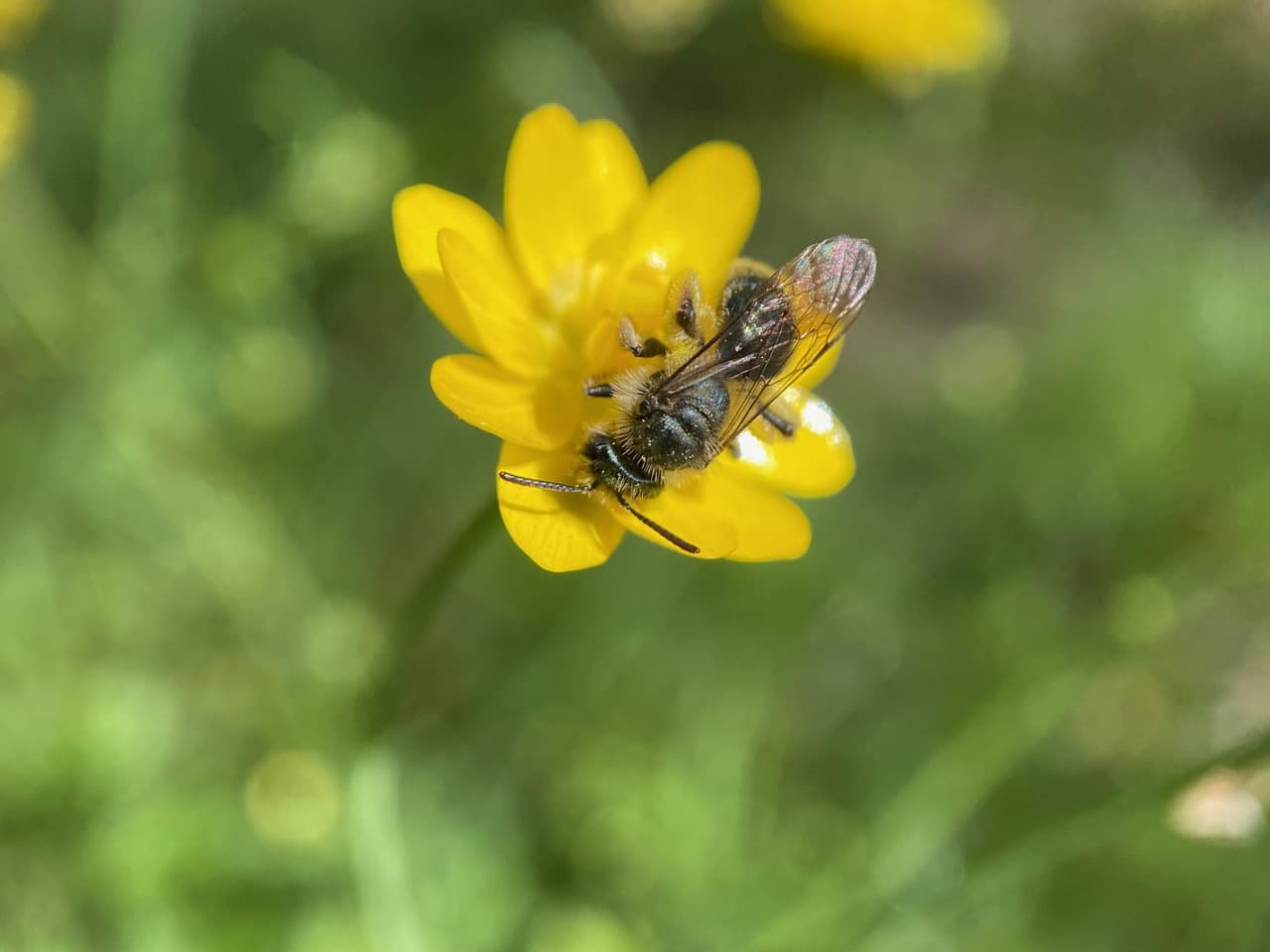
It’s exciting that we are finally closing in on the identity of our buttercup-loving Andrena ! To add to the difficulty and confusion, Dr. Ascher shared that there are often both subgenera, Diandrena and Ptilandrena foraging in the same patch of flowering buttercups. The bees can be distinguished by the venation of their forewings – Diandrena has two submarginal cells, while Ptilandrena has three. Unless I have exceptionally good photos that show these features, I am happy to simply call these adorable bees by their genus name, Andrena.