

Pollinator Post 2/12/26
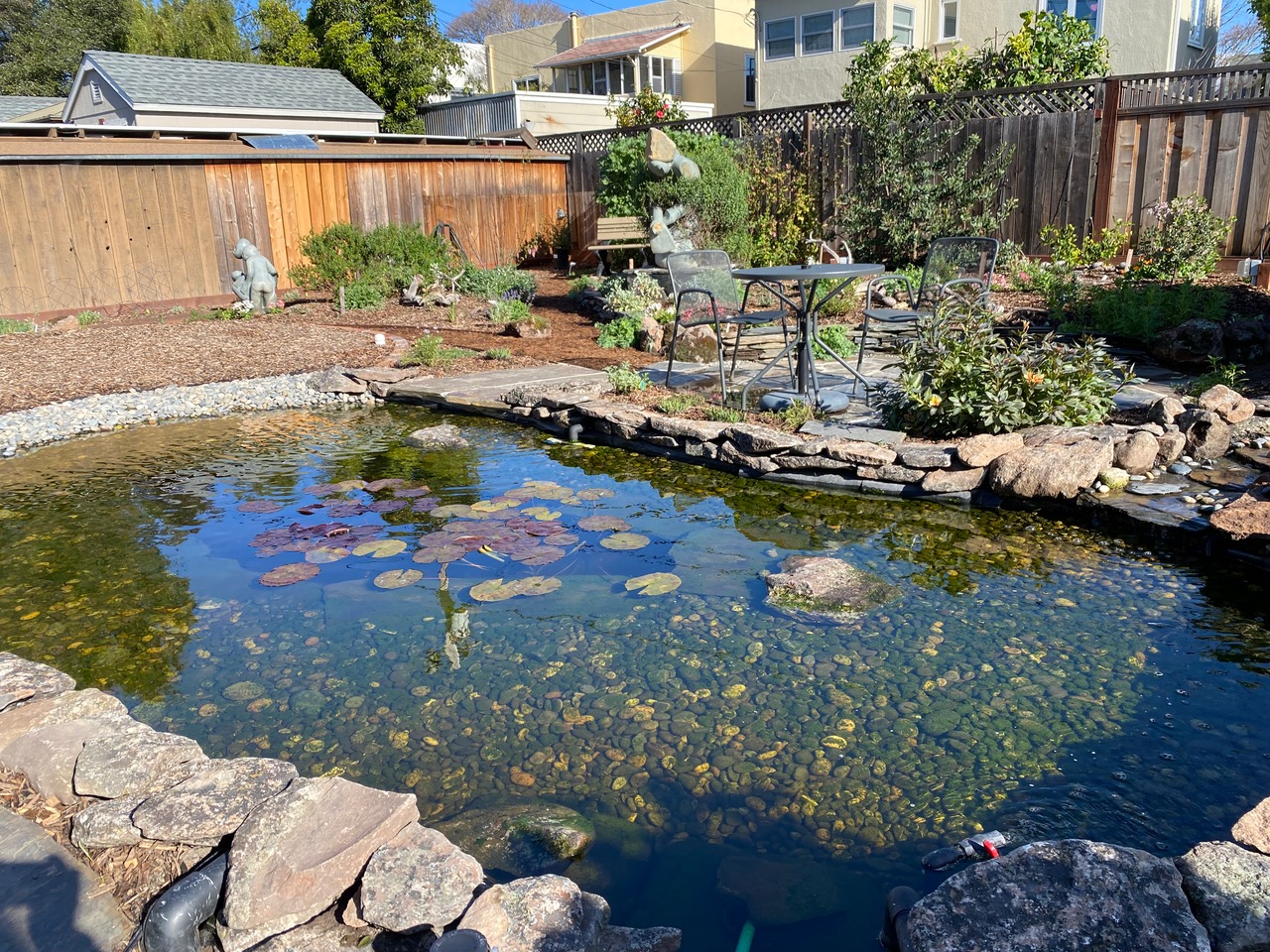
It’s always a treat to explore Jenny and Craig’s home garden in Alameda. As I enter the backyard, I see that there have been many changes since my last visit. The pond has been significantly enlarged, with algae already well established in the bottom substrate. Almost all the non-native ornamentals have been replaced by new plantings of California natives. The place looks sparser and more open than I remember, as the new plants are still very small. With so much recent upheavals and soil disturbances, I don’t expect to see many pollinators today. After all, 70% of our native bees are ground nesters, and many moths and butterflies overwinter as pupae in the leaf litter or topsoil.
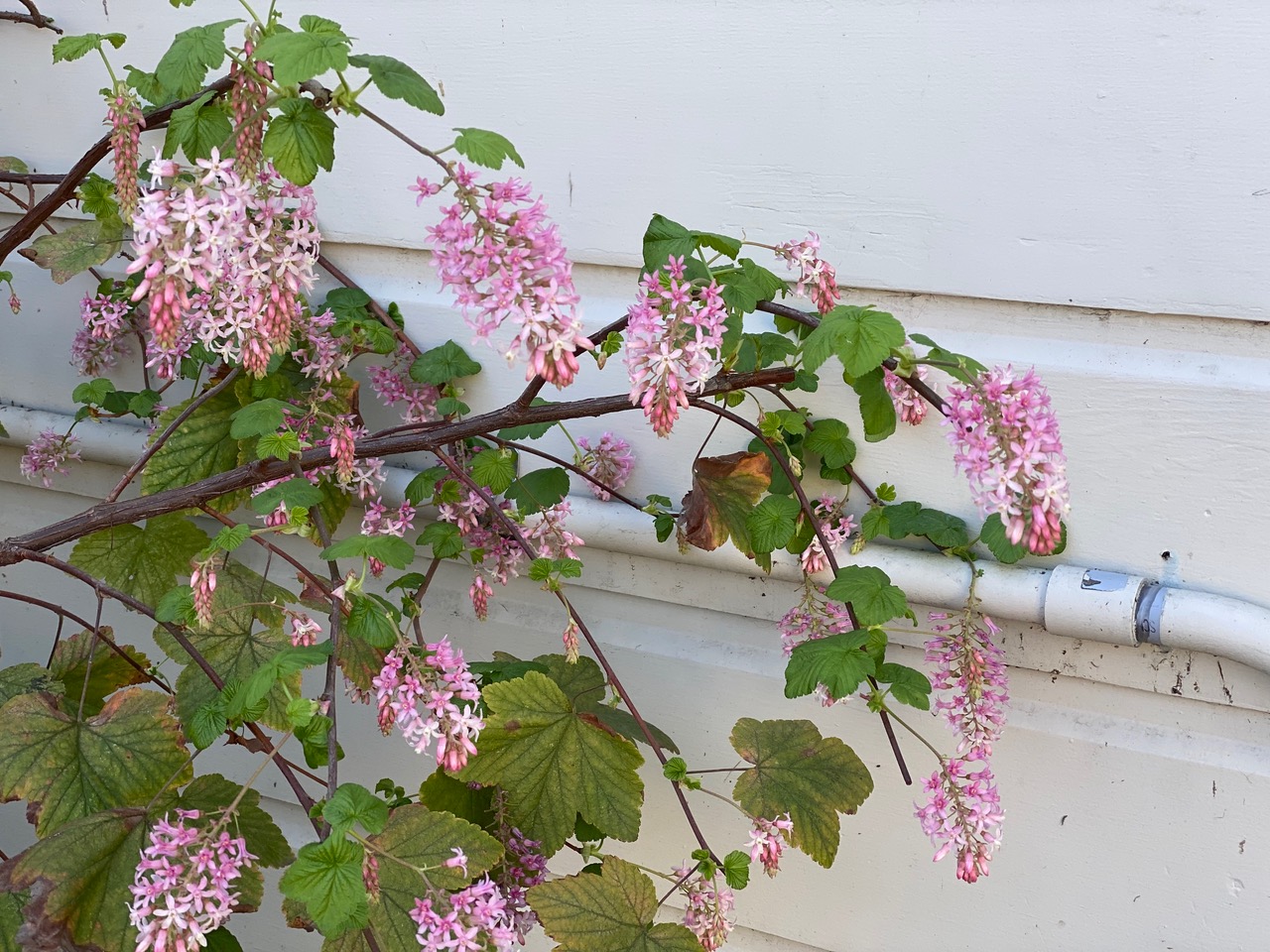
In a corner of the backyard against the wall of the house, the old Red-flowering Currant, Ribes sanguineum is blooming profusely. But because it is in the shade, there is no insect activity around these beautiful hanging inflorescences.
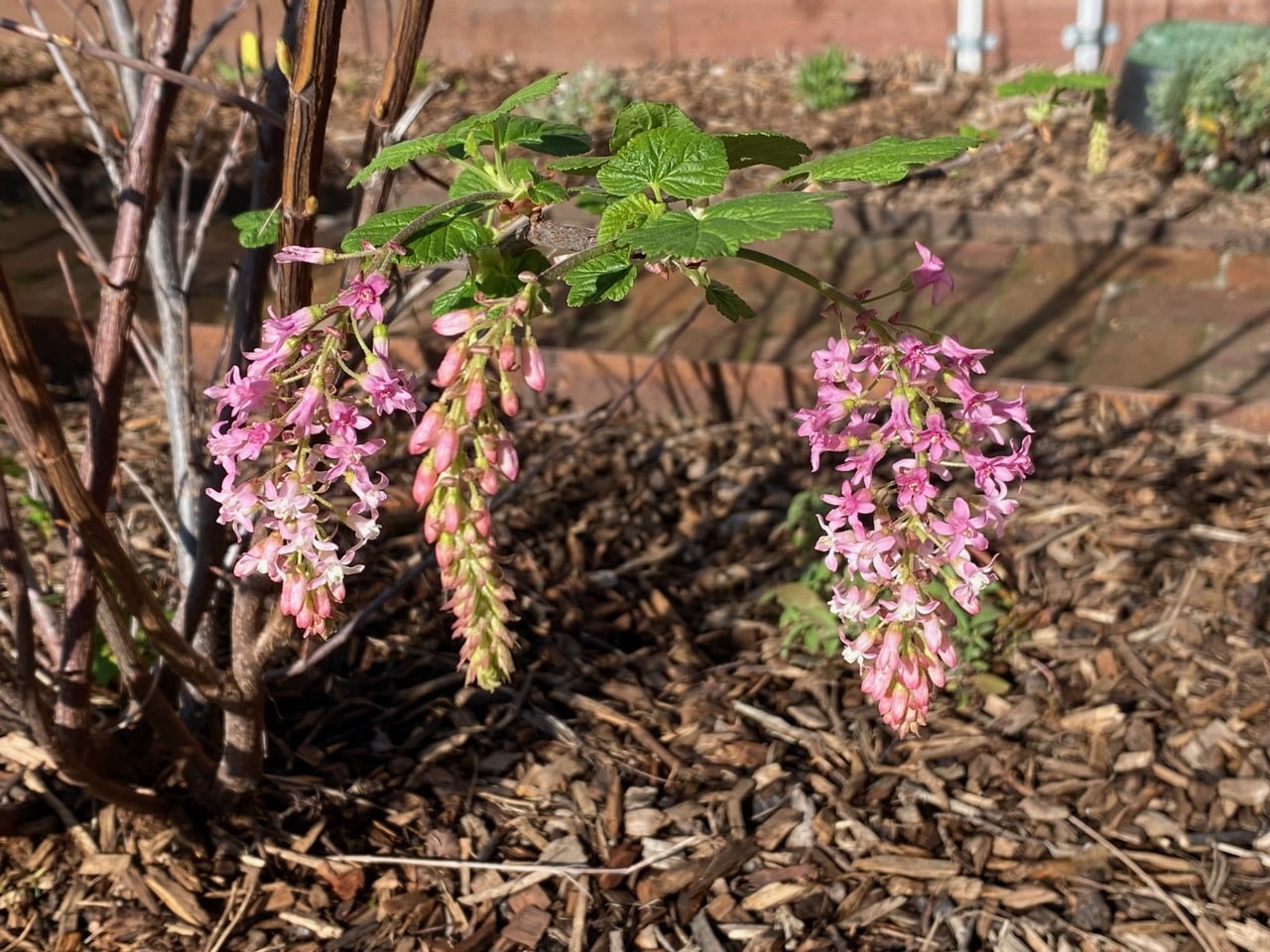
This low-hanging branch of another Red-flowering Currant is in the sun, and there appears to be small insects hovering around the flowers.
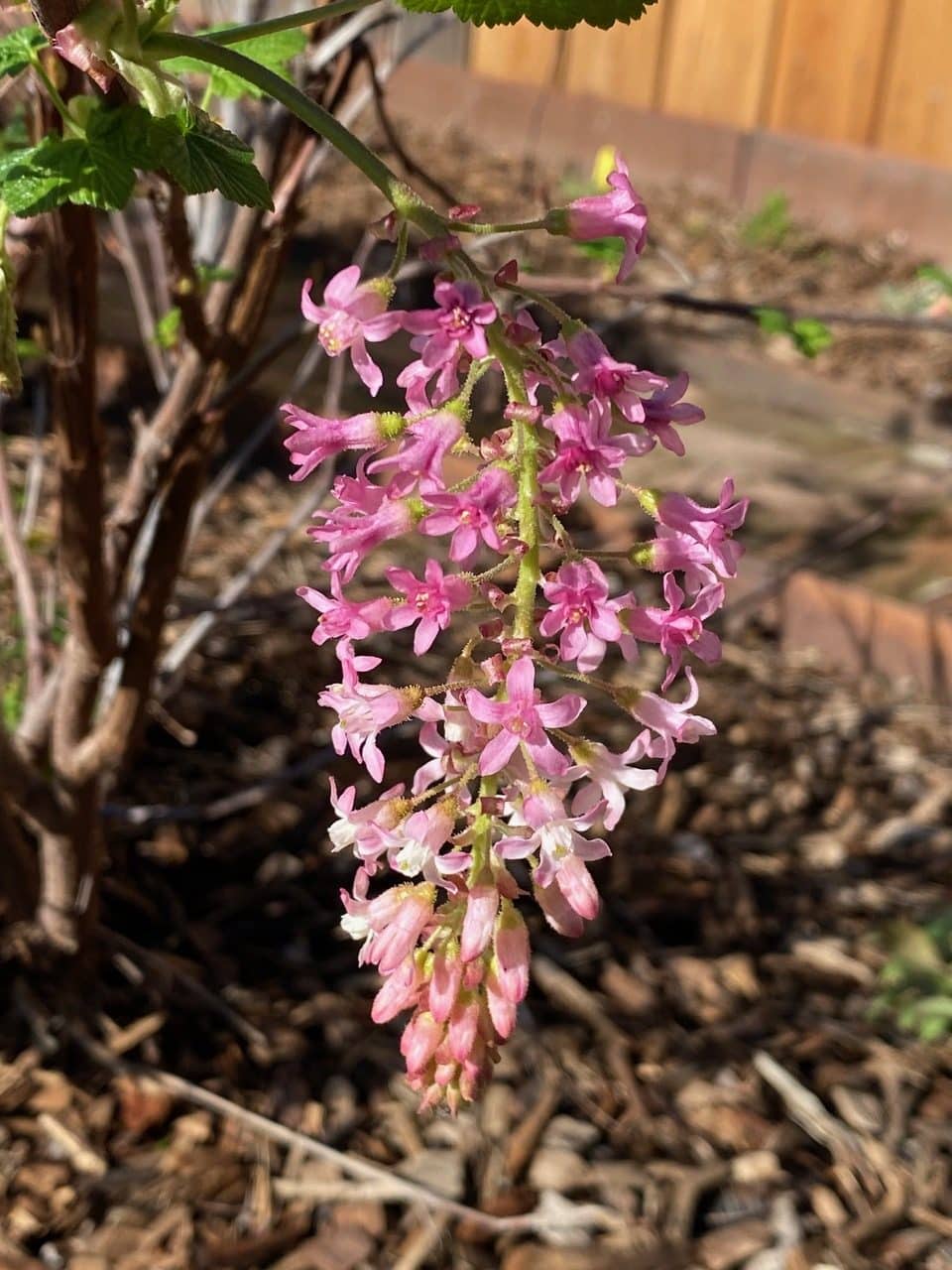
Are there any evolutionary advantages for many of our early blooming natives to have drooping flowers? Besides the Currants (Ribes), Gooseberry (Ribes), Manzanita (Arctostaphylos), Osoberry (Oemleria) and Blue Witch (Solanum) come to mind. Perhaps the downward pointing flowers offer protection for the reproductive structures from our winter rains?
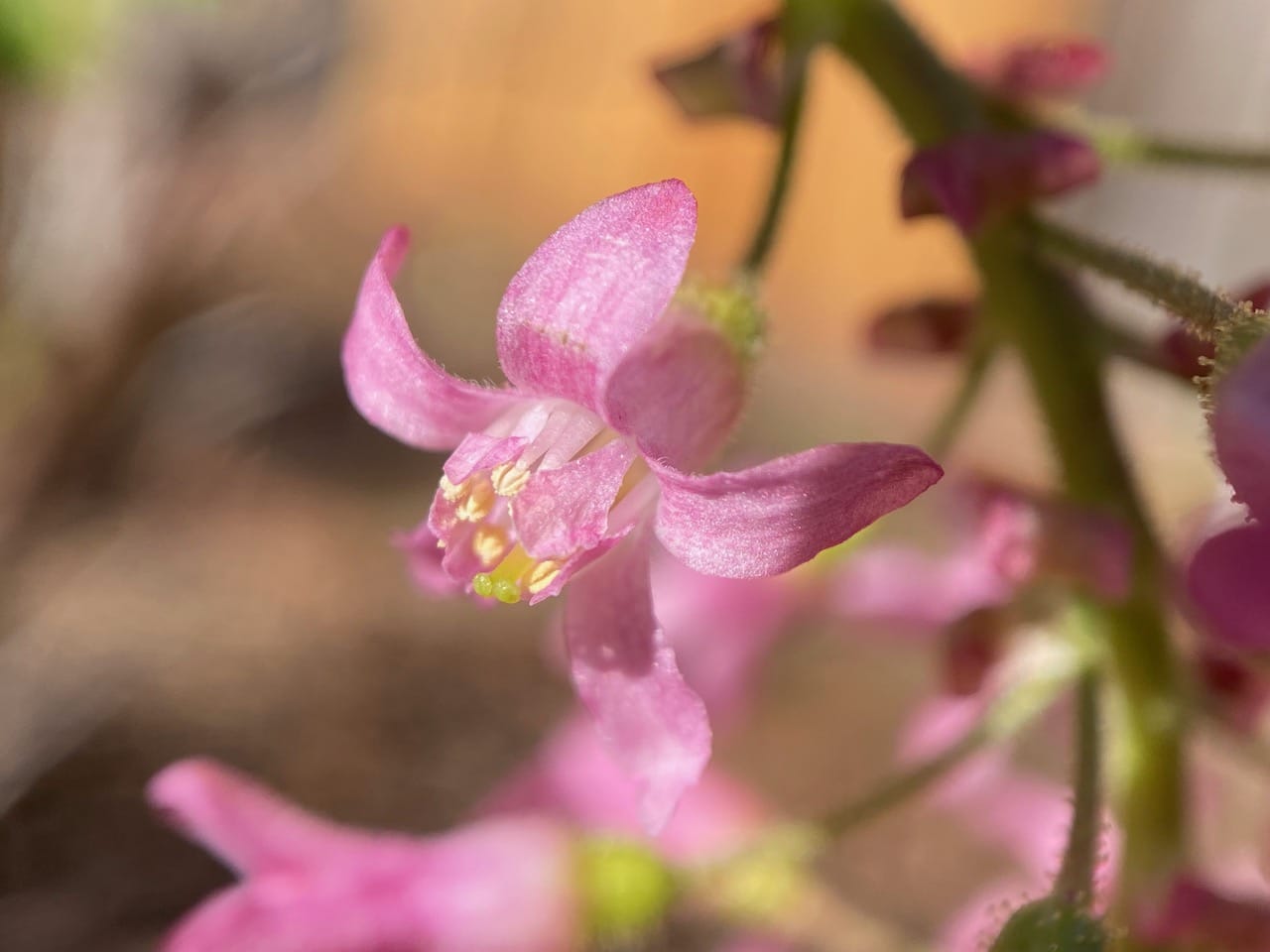
Close-up of a flower on an inflorescence of the Red-flowering Currant. The large pink parts of the flower are actually the sepals that have fused into a tube with flaring tips. The small pink petals stand erect, surrounding the reproductive structures within. Five fluted stamens surround a stout, green, lobed stigma in the center. Rain can be easily deflected by the flaring sepals and downward oriented petals, sparing the reproductive structures within. It is a floral design well-adapted for California’s wet winter. The flowers require pollinators with fairly long tongues to reach the nectar at the base of the tubes.

A Hover Fly has landed on one of the Ribes flowers. The Western Forest Sedgesitter, Platycheirus trichopus (family Syrphidae) is probing the flower with its proboscis. It is not likely to be able to reach the nectar at the base of the flower. The fly is probably feeding on pollen near the front of the flower.
The Sedgesitter, Platycheirus sp. (family Syrphidae) is found in grass and herb vegetation. Adults of many species feed on pollen of wind-pollinated plants, such as Salix, Plantago, Poaceae, Cyperaceae, but they also visit other flowers. Many stay active during cold and rainy weather. Larvae feed on aphids.
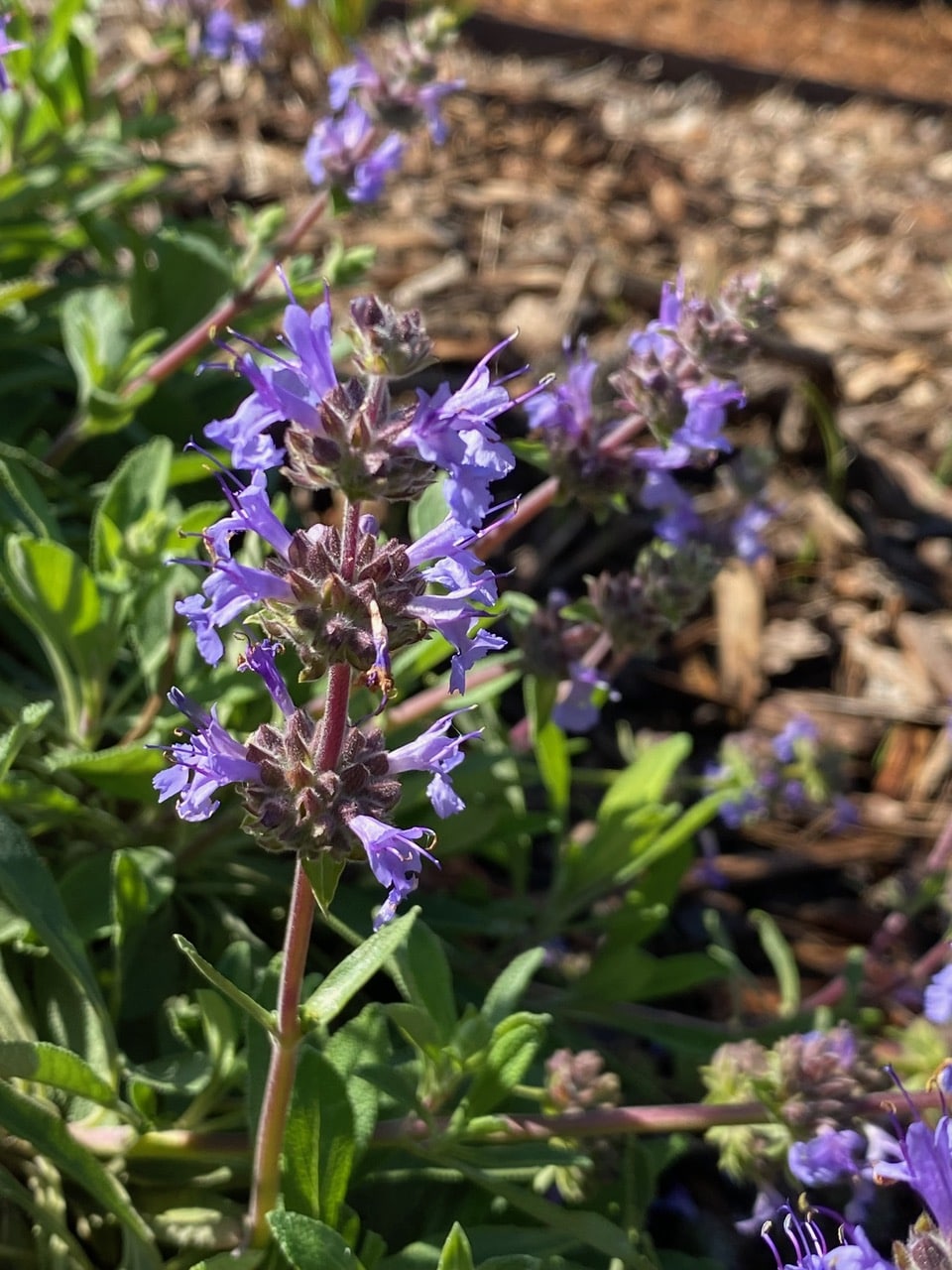
I stop by a Dara’s Choice Sage, Salvia ‘Dara’s Choice’ whose blooms appear to be attracting some insects. The plant is a hybrid between Black Sage,Salvia mellifera and Sonoma Sage, Salvia sonomensis.
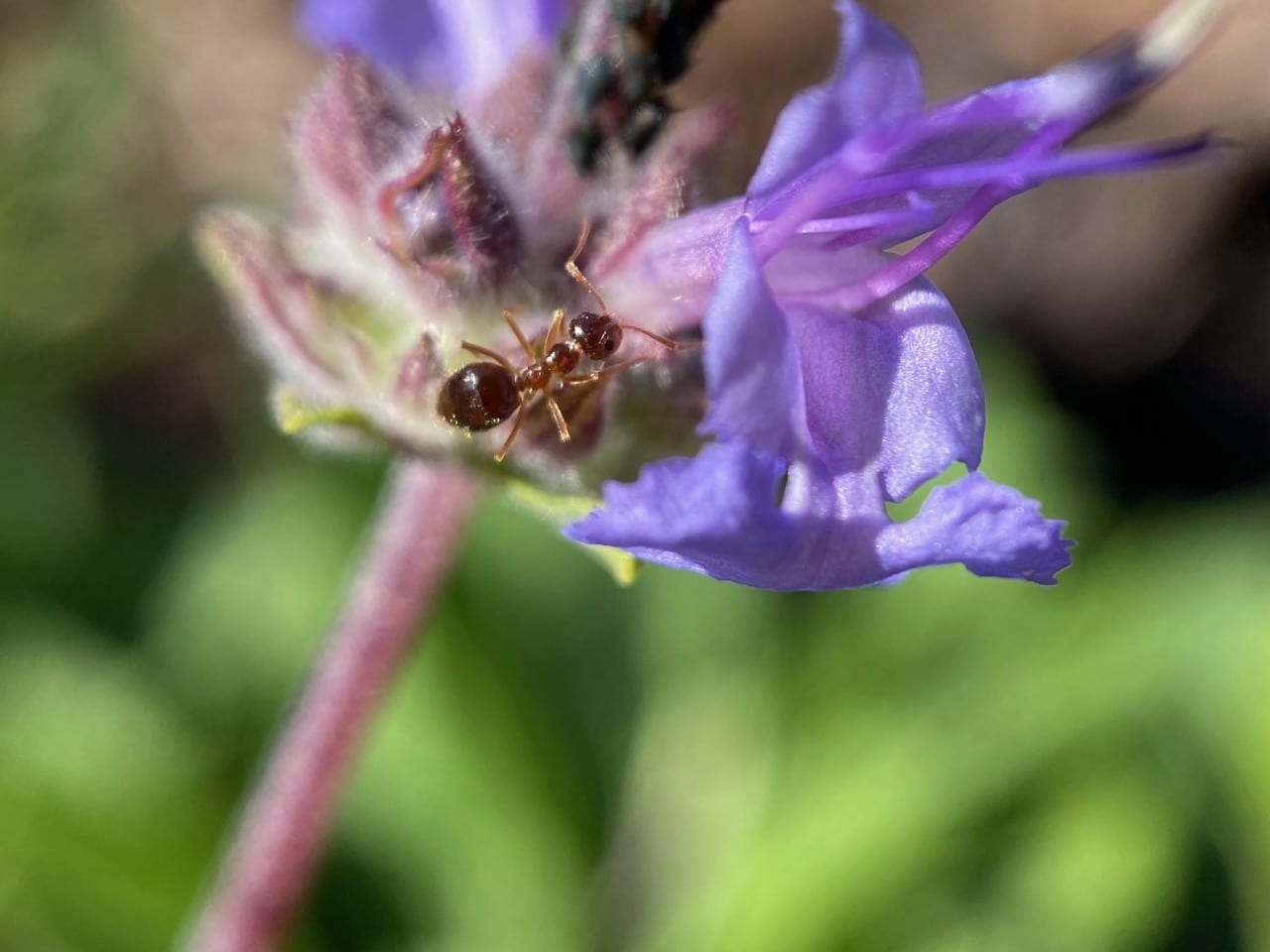
While trying to photograph a Honey Bee on Dara’s Choice Sage, I notice something much smaller crawling on a whorl of flowers. It is an American Winter Ant.
The American Ant, Prenolepis imparis is a widespread North American ant. A dominant woodland species, it is most active during cool weather, when most other ant species are less likely to forage. This species is one of a few native ants capable of tolerating competition with the invasive Argentine Ant, Linepithema humile. They are also aggressive toward other ants and produce abdominal secretions that are lethal to Argentine Ants. Prenolepis imparis is a generalist omnivore. Foragers are known for tending to aphids or scale insects from which they consume excreted honeydew, aggregating on rotting fruit, and exploiting protein-rich sources such as dead worms. The colony enters estivation (a hibernation-like state) and becomes inactive above ground for the warmer months, during which time eggs are laid and brood are reared. Reproductives overwinter and emerge on the first warm day of spring for their nuptial flight.
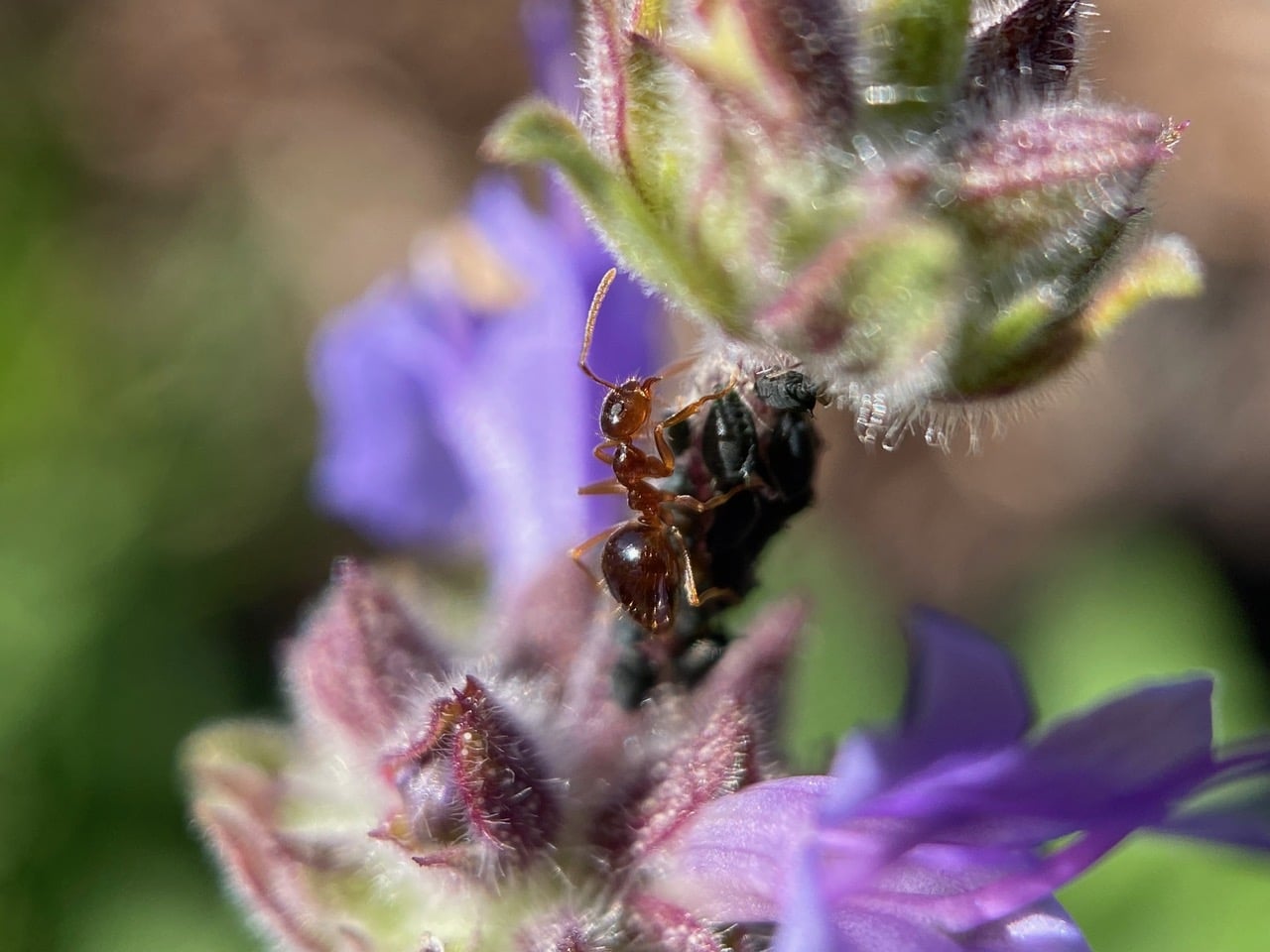
Curiously, the ant spends an inordinate amount of time fussing over a short segment of the flower stalk or peduncle.
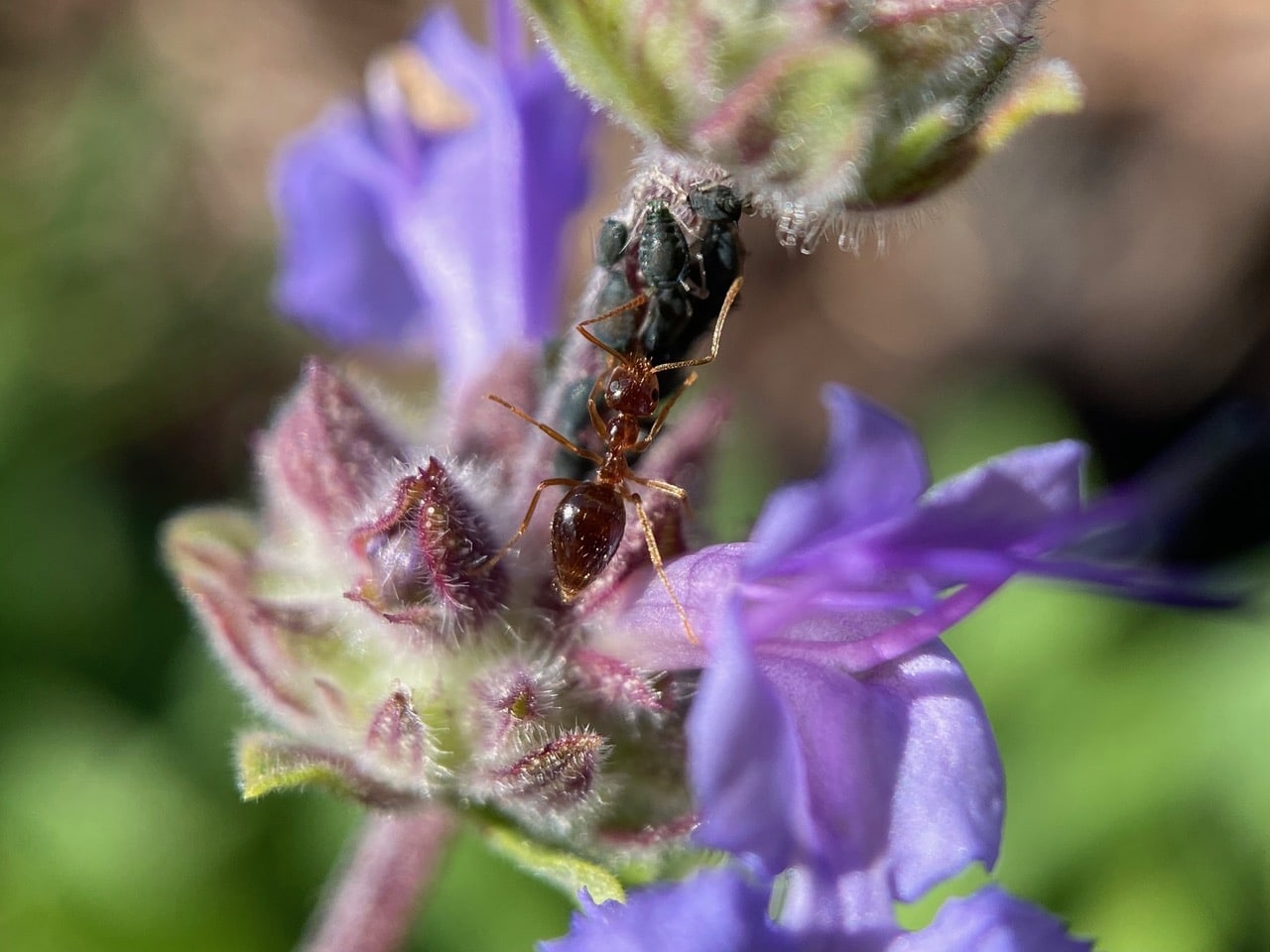
Ah, I finally discover the cause of the ant’s excitement – a small colony of dark green aphids. The ant is tapping them with its antennae to induce them to produce a sweet reward.
Ants and aphids share a well-known mutualistic relationship. The aphids produce honeydew, a sugary food for the ants; in exchange, the ants care for and protect the aphids from predators and parasites. Some ants will “milk” the aphids to make them excrete the sugary substance. The ants stroke the aphids with their antennae, stimulating them to release the honeydew. Aphid-herding ants make sure the aphids are well-fed and safe. When the host plant is depleted of nutrients, the ants carry their aphids to a new food source. If predatory insects or parasites attempt to harm the aphids, the ants will defend them aggressively. Some species of ants continue to care for aphids during winter. The ants carry the aphids to their nest for the winter months, and transport them to a host plant to feed the following spring.
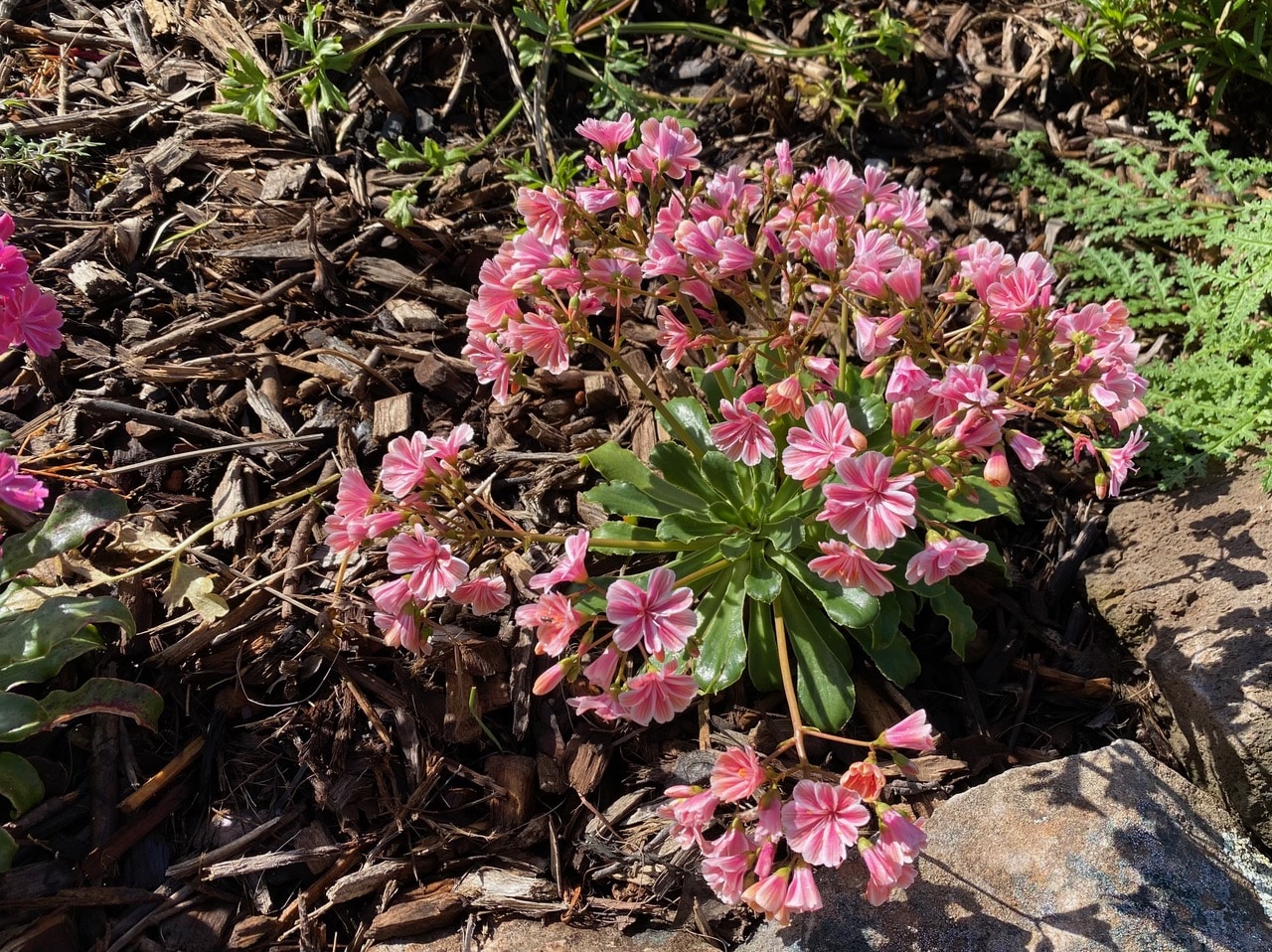
What surprises me the most is the new addition of the Bitterroot, Lewisia cotyledon in the garden. Jenny has selected a lovely assortment of Bitterroot with flowers in various shades of pink. Will these hardy plants thrive in a garden that is so generously mulched and irrigated? I have always associated Lewisia with rock gardens and container plantings, and have never seen them planted in soil rich in organic matter.
Native to the rocky slopes of Western North America, Lewisia is deer-resistant and well-adapted to hot, dry summers and freezing winters. Its succulent evergreen foliage grows into a low rosette of spoon-shaped leaves. Sturdy upright stems support cheerful flowers, attracting butterflies and bees. Lewisia performs best in full sun or morning sun and afternoon shade. Named for explorer Meriwether Lewis, this native plant has long been used by Native Americans for food and medicine. Today, Lewisia, commonly known as Bitterroot, is used mainly in alpine gardens, rock gardens, planters, gravel walkways, or any garden with lean well-drained soil.
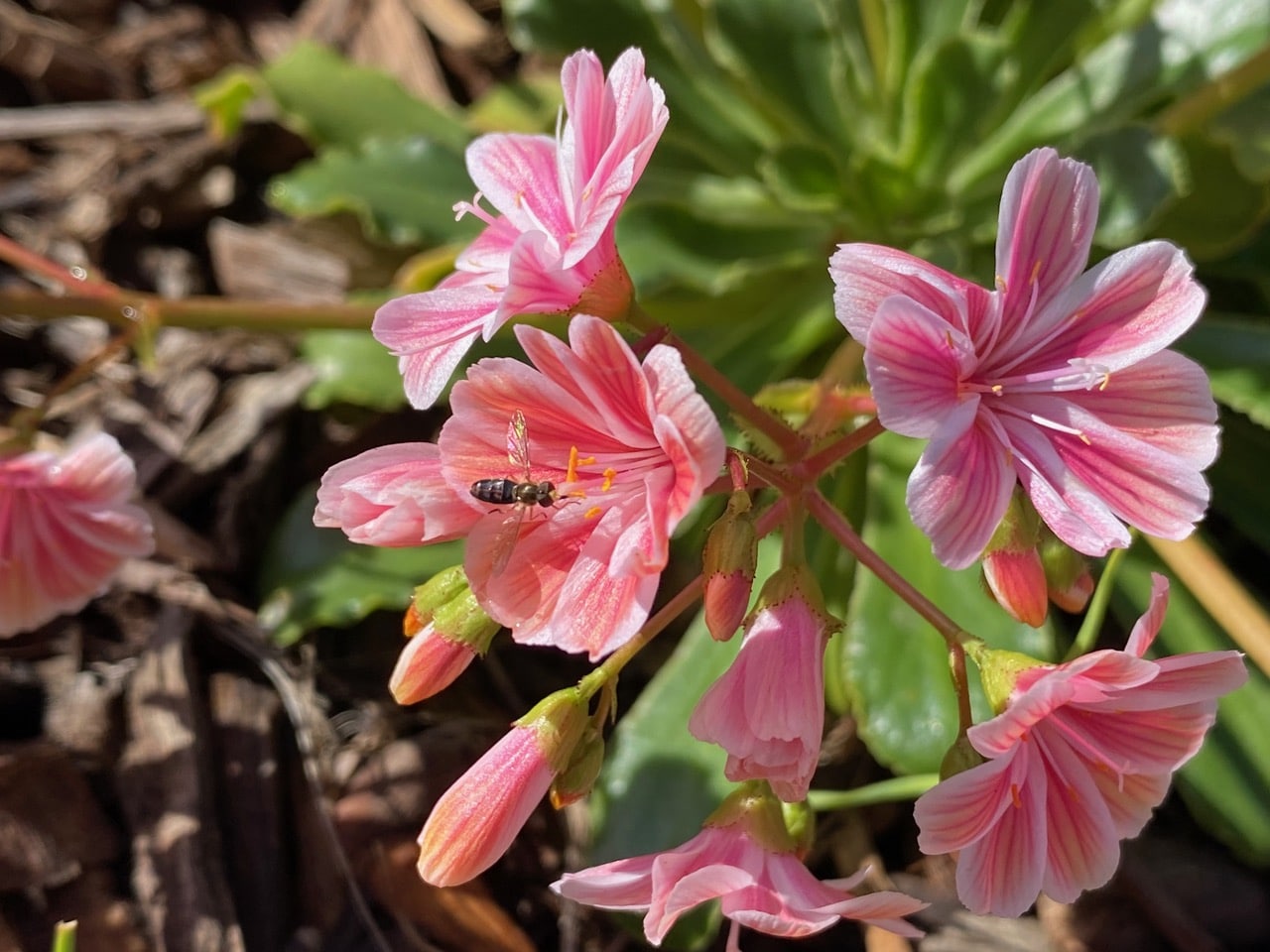
Hey, a small insect has landed on a Lewisia flower.
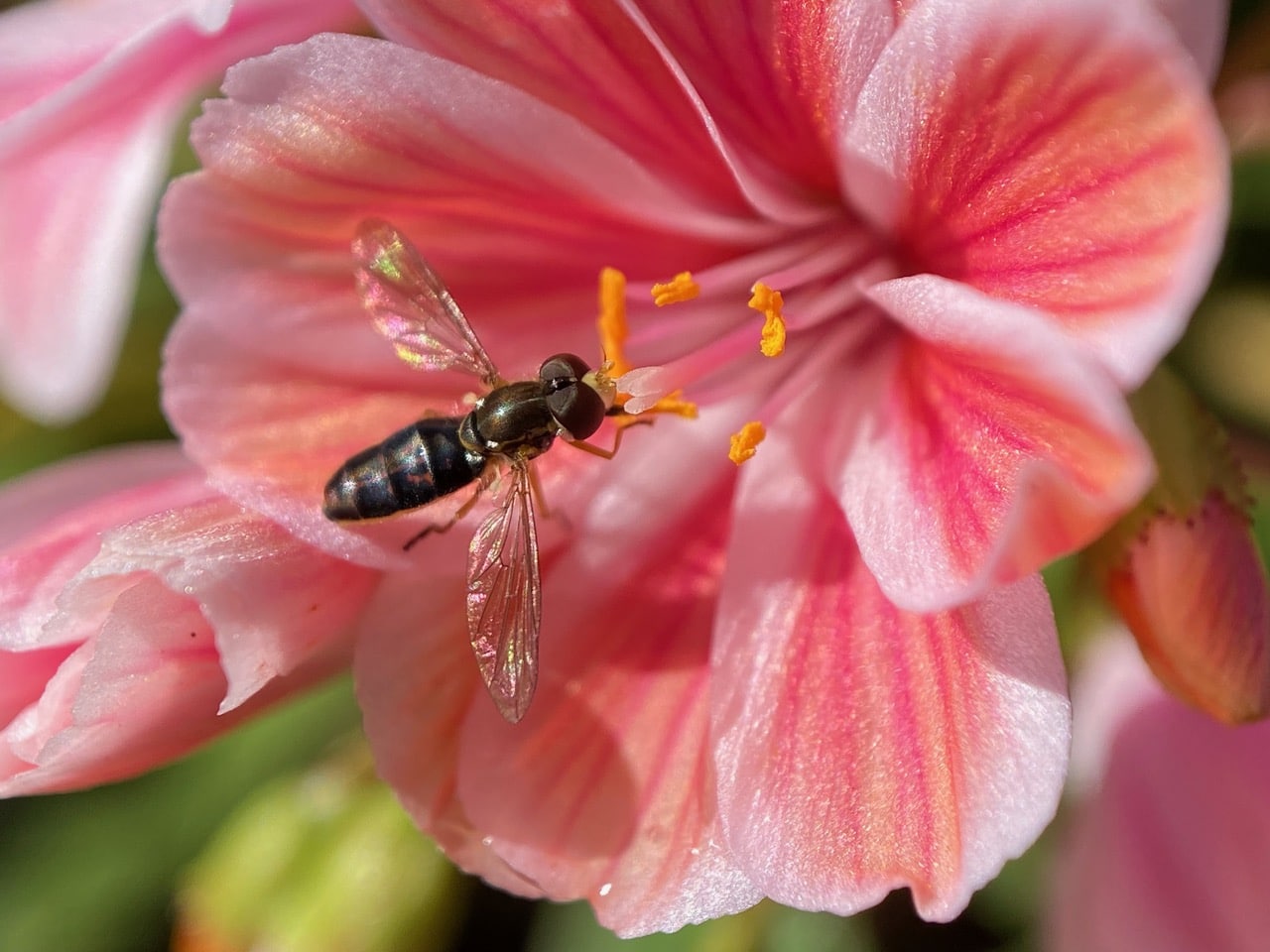
The male Calligrapher Fly, Toxomerus sp. (family Syrphidae) is feeding on pollen from the anthers.
Toxomerus is a very large genus of Hover Flies. They are found in North and South America. The majority of species are only 6-9 mm in length. They are notable for their mimicry of stinging Hymenoptera to avoid predators. Their unique abdominal patterns are diagnostic at the species level within the genus. There is marked sexual dimorphism – the females have a broader abdomen with lighter coloration and pattern. Most larvae feed on soft bodied insects, such as aphids; a few feed on pollen. Adults feed on the pollen of a wide range of flowers. A female can lay up to hundreds of eggs at a time and will place them where prey or pollen food sources are readily available. They can be found in a wide variety of habitats, often in dense ground cover.
The genus name Toxomerus comes from Greek toxon for ‘bow’ and meron for ’thigh’, referring to the bow-shaped hind femur. Colors vary with overall temperature during pupation: higher temperatures produce more yellow, while lower temperatures produce adults with darker markings.
.
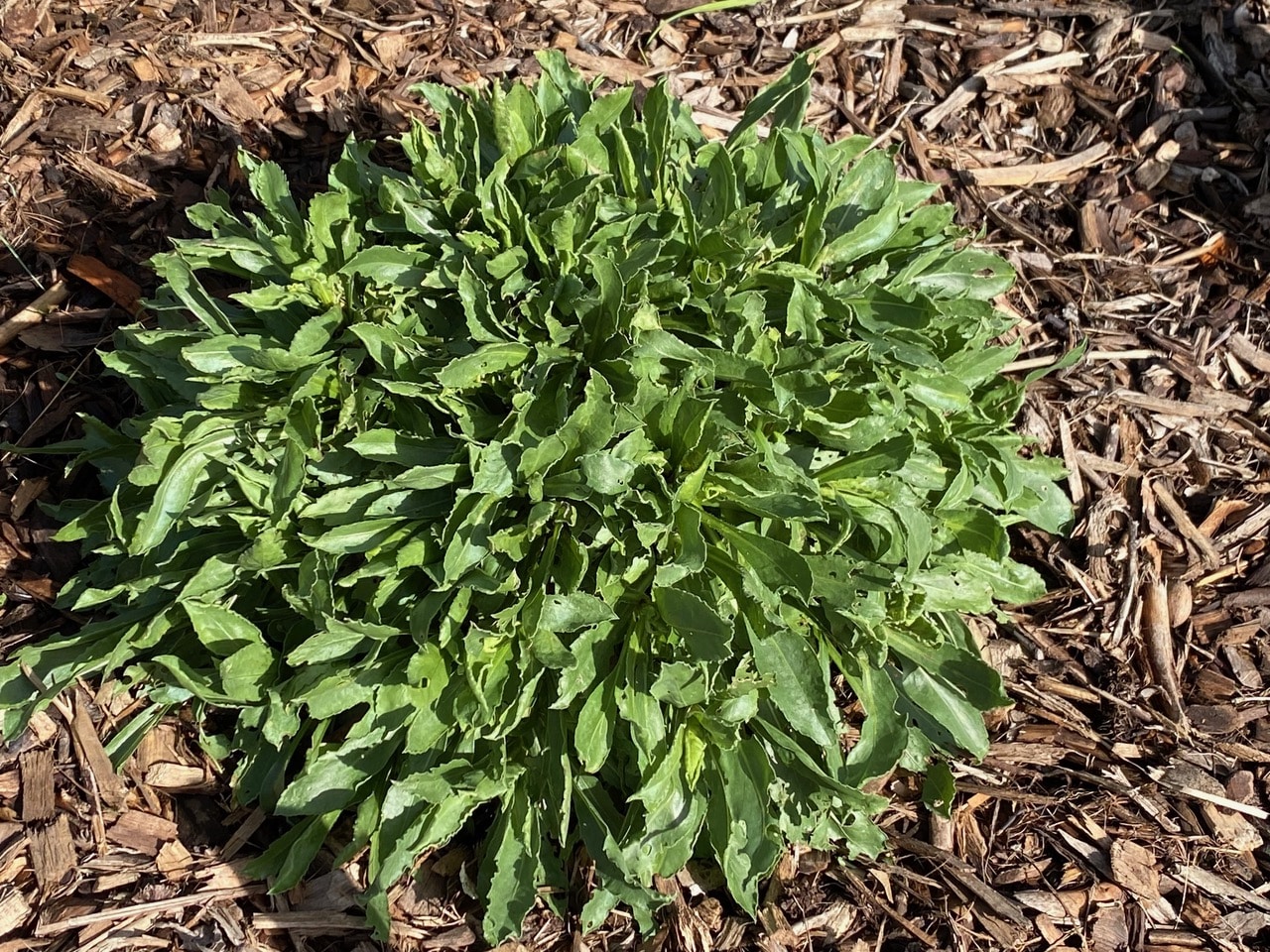
Who is this mound of dense foliage riddled with feeding scars? Jenny tells me it is an Oregon Gumweed, Grindelia stricta.
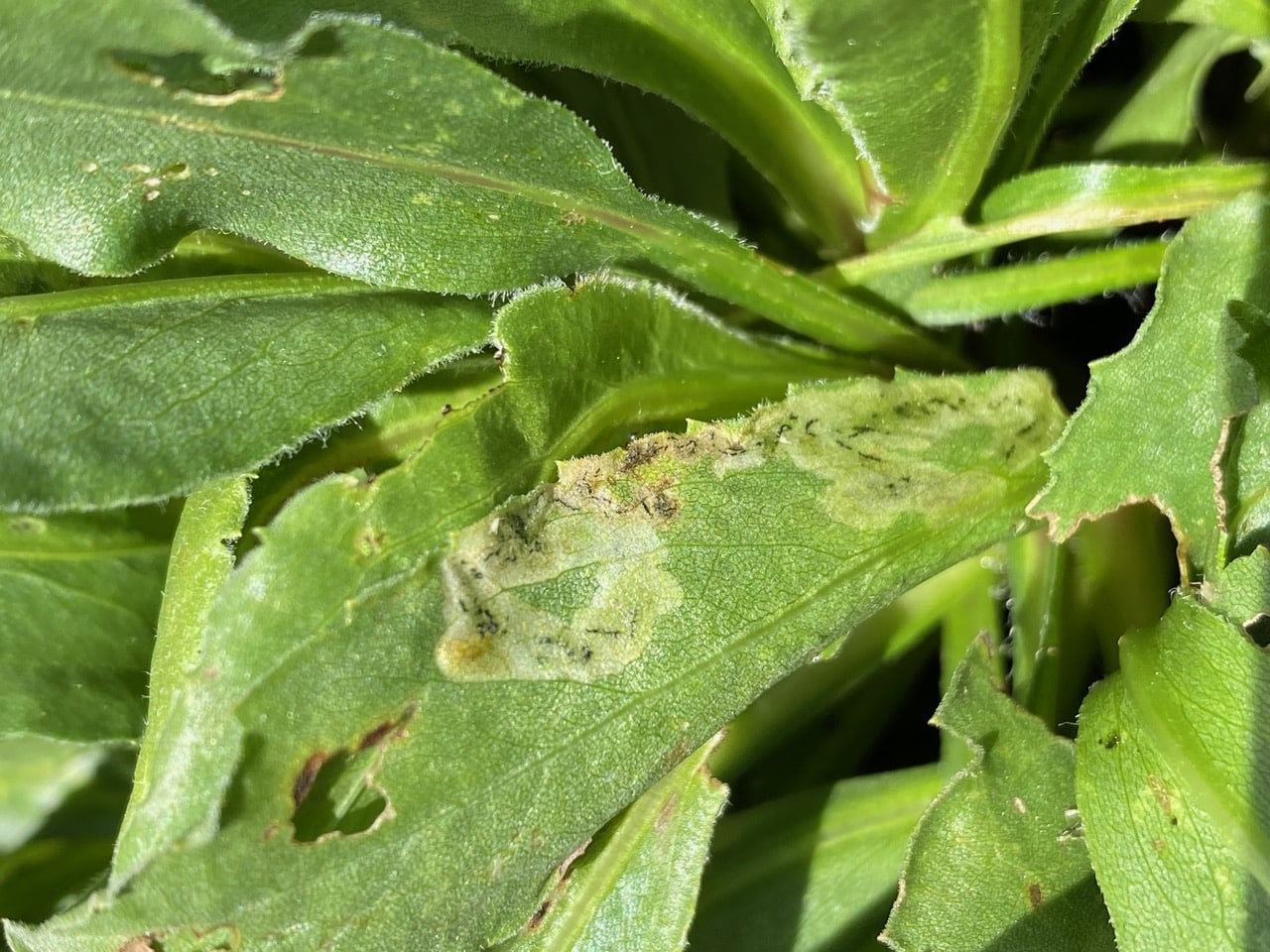
Look, that Grindelia leaf is home to a Leaf-miner. Note the lighter areas where tissues between the upper and lower leaf surfaces have been eaten by the larval insect. The miner has left an abundance of black frass (insect poop) in its track.
A leaf miner is any one of numerous species of insects in which the larval stage lives in, and eats, the leaf tissue of plants. The vast majority of leaf-mining insects are moths (Lepidoptera), sawflies (Symphyta), and flies (Diptera). Some beetles also exhibit this behavior. Leaf miners are protected from many predators and plant defenses by feeding within the tissues of the leaves, selectively eating only the layers that have the least amount of cellulose, and lowest levels of defensive chemicals. The shape of the mine is often characteristic of the species and therefore useful for identification. Damage by leaf-miners is mainly cosmetic, and is unlikely to affect the plant’s health.
Leaf Miner Fly Babies Scribble All Over Your Salad | Deep Look – YouTube
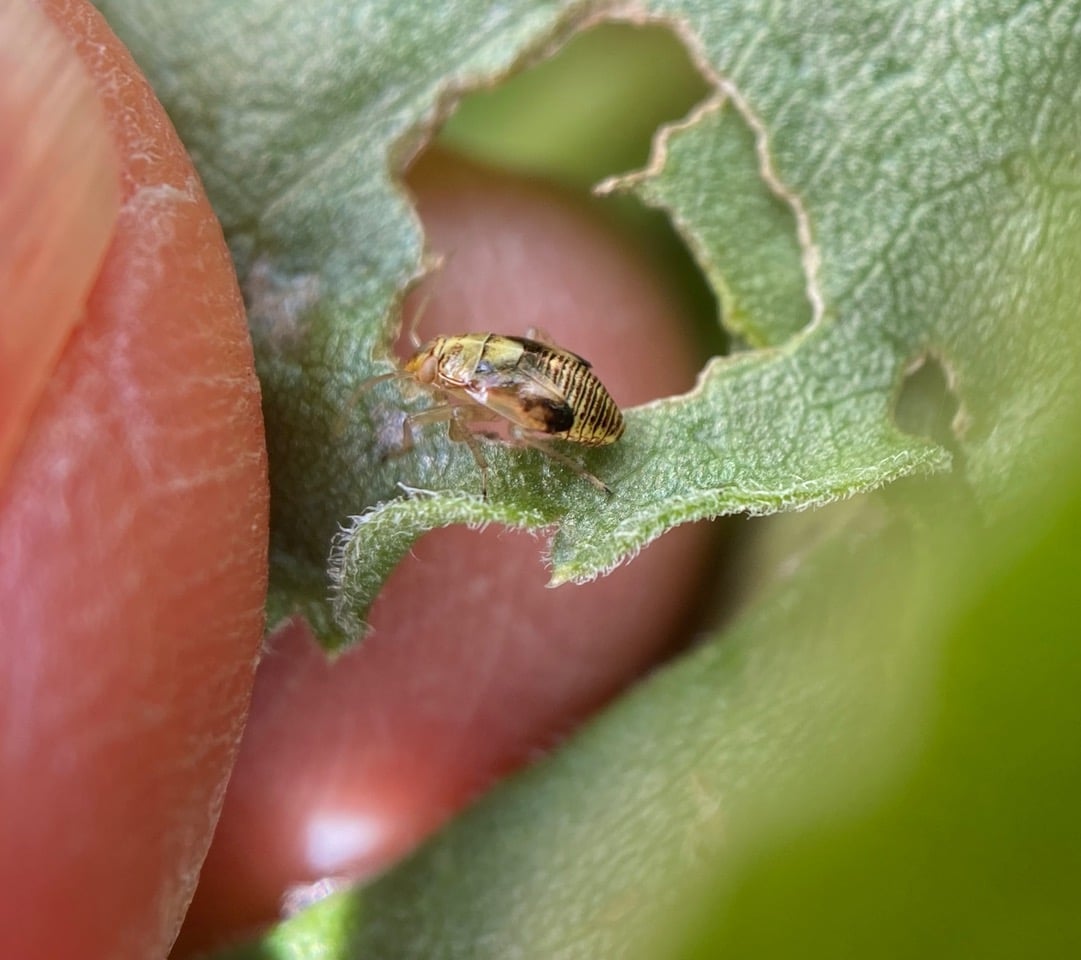
Ooh, that’s a beautiful nymph of a Plant Bug! iNaturalist has helped identify it as a member of the genus Proba (family Miridae). Although the bug is walking on a Grindelia leaf riddled with holes, it is not responsible for that kind of feeding damage. Like other members of the order Hemiptera, it has piercing-sucking mouthparts that make tiny, punctate holes in the plants it feeds on. Note the nymph’s wing pads that don’t completely cover its banded abdomen.
Hemipterans (“true bugs”) undergo incomplete metamorphosis (hemimetaboly), developing through three distinct stages: egg, nymph, and adult. Nymphs hatch from eggs and resemble smaller, wingless versions of adults. They typically molt five times, with wing buds (or wing pads) developing in later stages, before transforming into winged adults without a pupal stage.
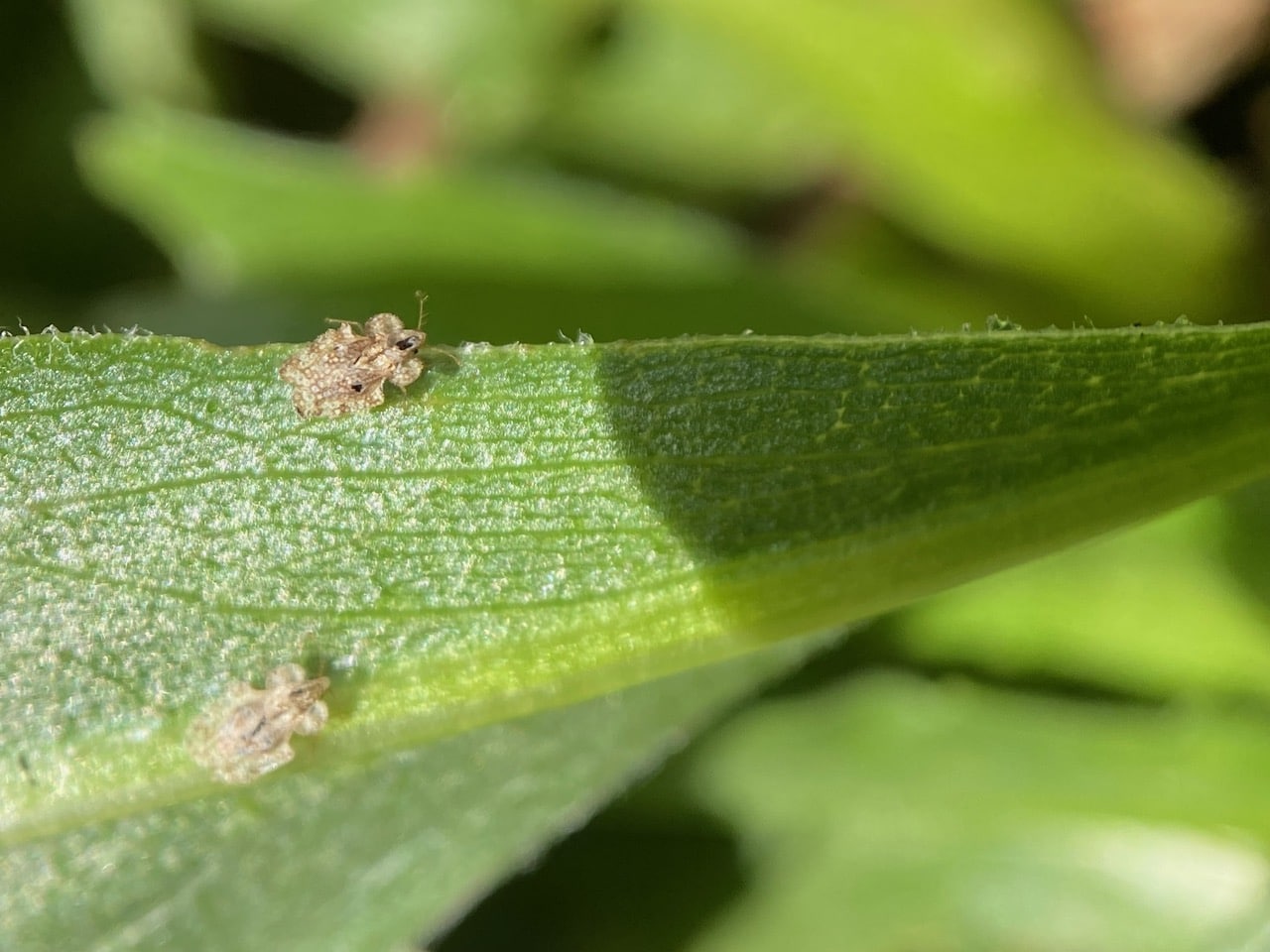
I turn over a leaf in my search for the culprit that chewed the Grindelia leaves. Hey, more herbivorous insects, but these Lace Bugs are also Hemipterans, so they too are not capable of chewing.
The Tingidae are a family of very small (2-10 mm) insects in the order Hemiptera that are commonly referred to as lace bugs. They are called lace bugs because the pronotum and fore wings of the adult have a delicate and intricate network of divided areas that resemble lace. Their body is flattened dorsoventrally, and the head is often concealed under the hood-like pronotum. Lace Bugs feed by sucking sap from plants, extracting the protein they need and excreting liquid waste as honeydew. The most common symptom of feeding is the stippled and mottled yellowish foliage. In heavy infestations, black sooty mold may develop on the honeydew, impairing photosynthesis by the plant. This may result in some dieback of twigs and branches and a reduction in flowering the following year. Tingids are usually host-specific and can be very destructive to plants. Each individual usually completes its entire lifecycle on the same plant, if not the same part of the plant.
The genus Corythucha is primarily distributed in the northern hemisphere, including Europe, North America and eastern Asia.
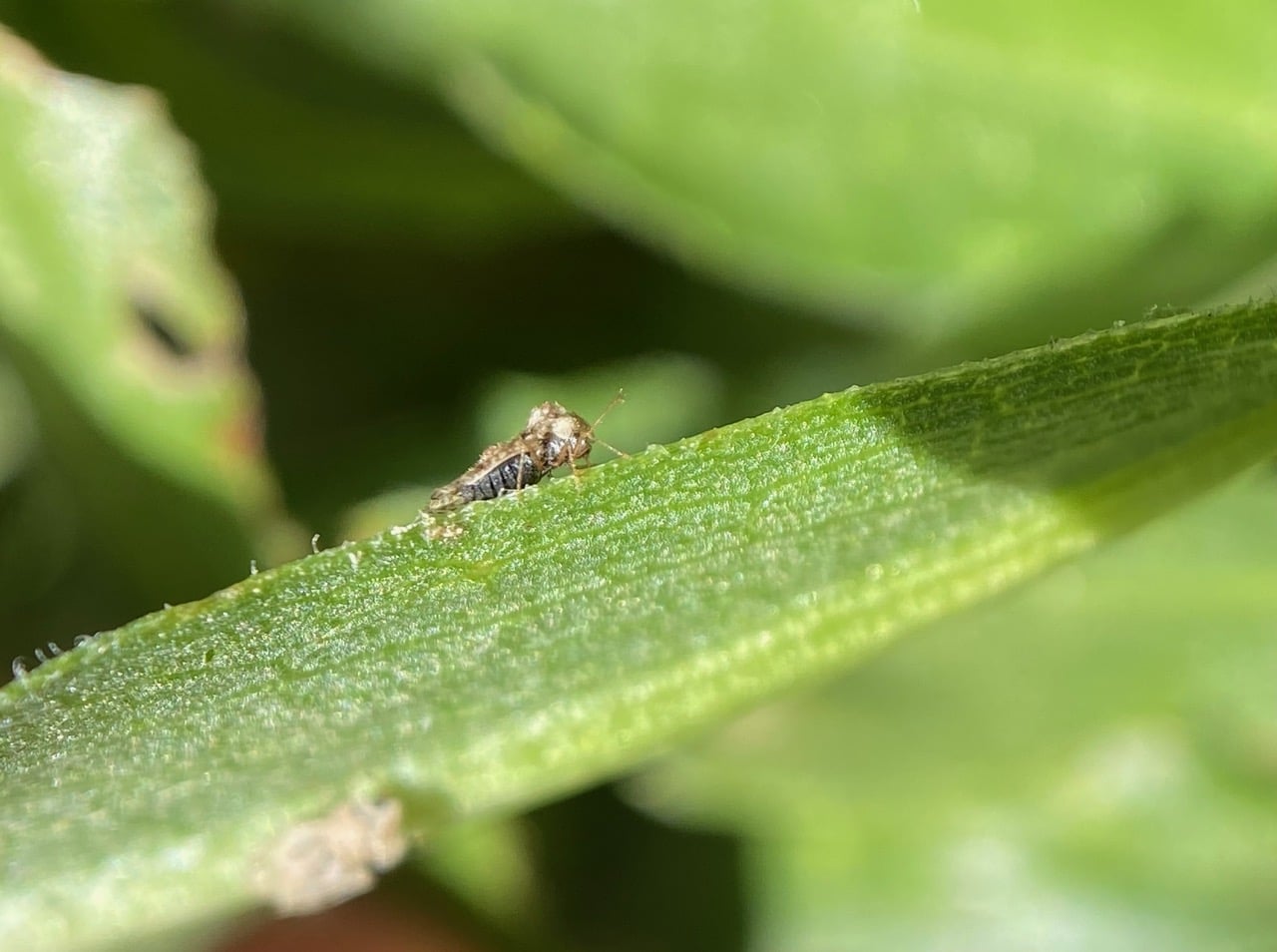
The decorative cloak of the Lace Bug glows golden in the sunlight. In this side view, beneath the fancy forewings and hood, the Lace Bug looks like any plain old bug.
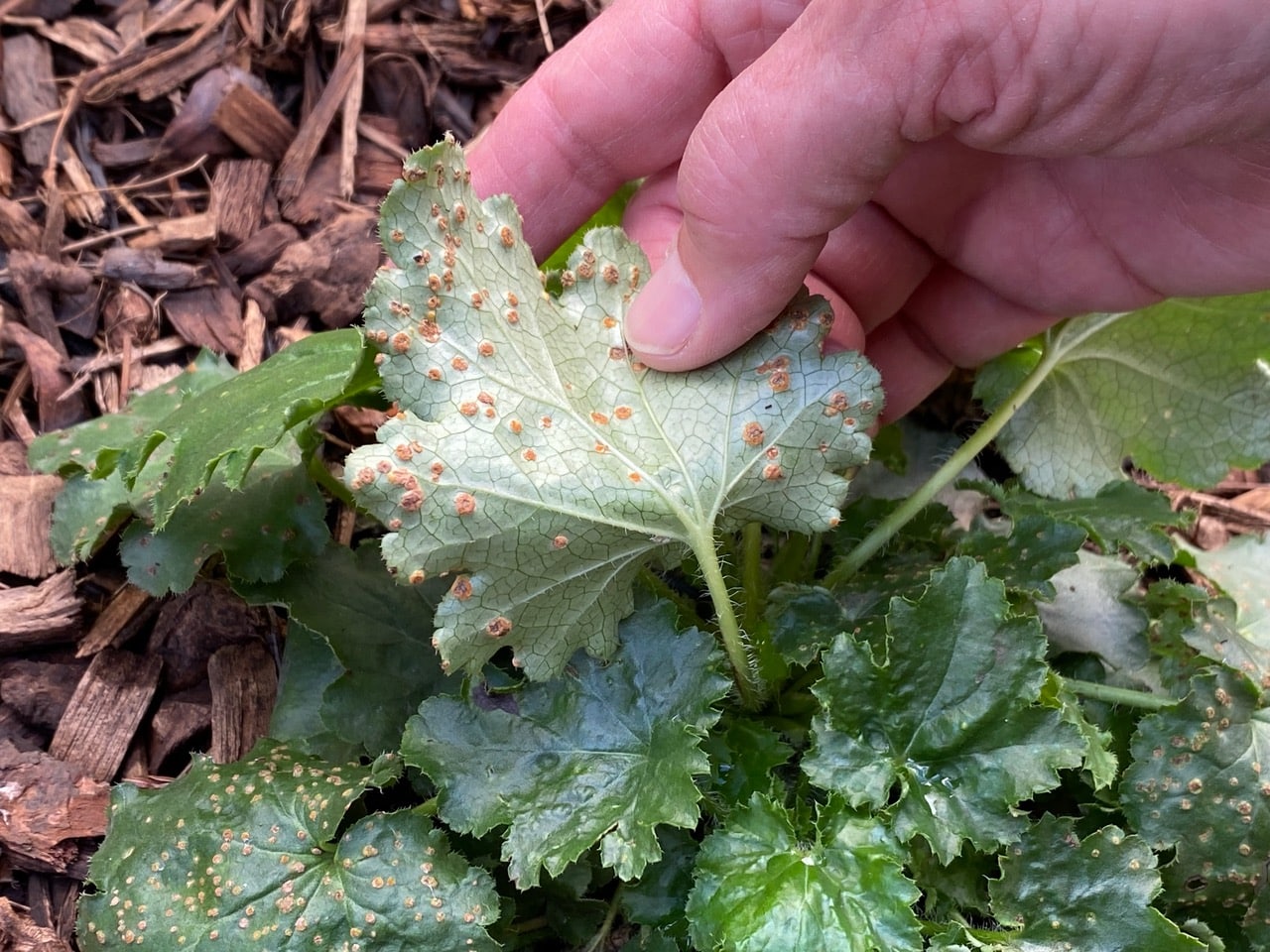
Jenny leads me to a shady patch on the side of the house where she has recently planted a few Alumroot, Heuchera sp. She is concerned about the yellowish orange pock marks that have appeared on their leaves. She turns over a leaf so I can take a closer look at the raised pustules on the underside.
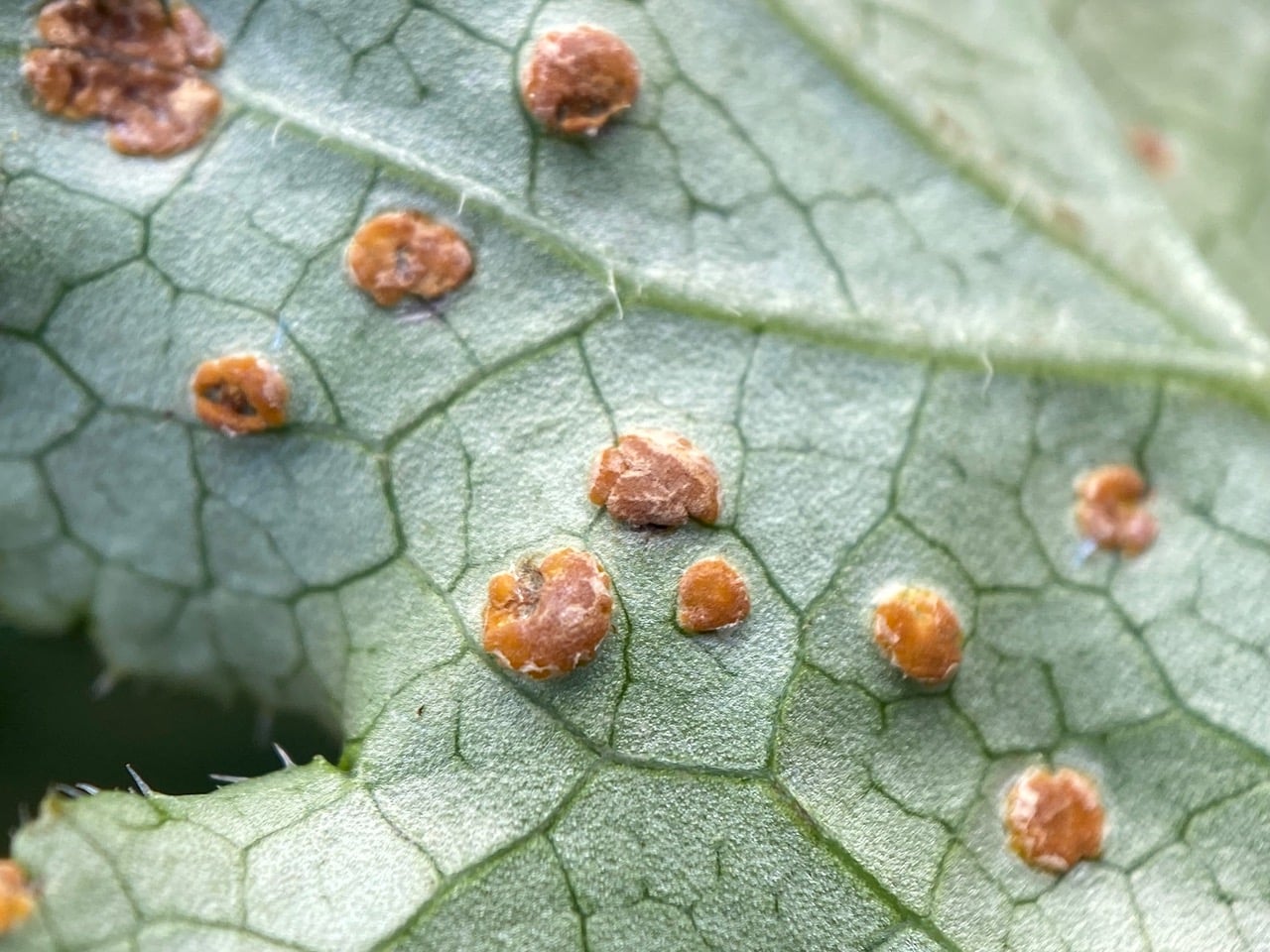
iNaturalist has helped identify these growths as Orange-yellow Rusts in the genus Puccinia.
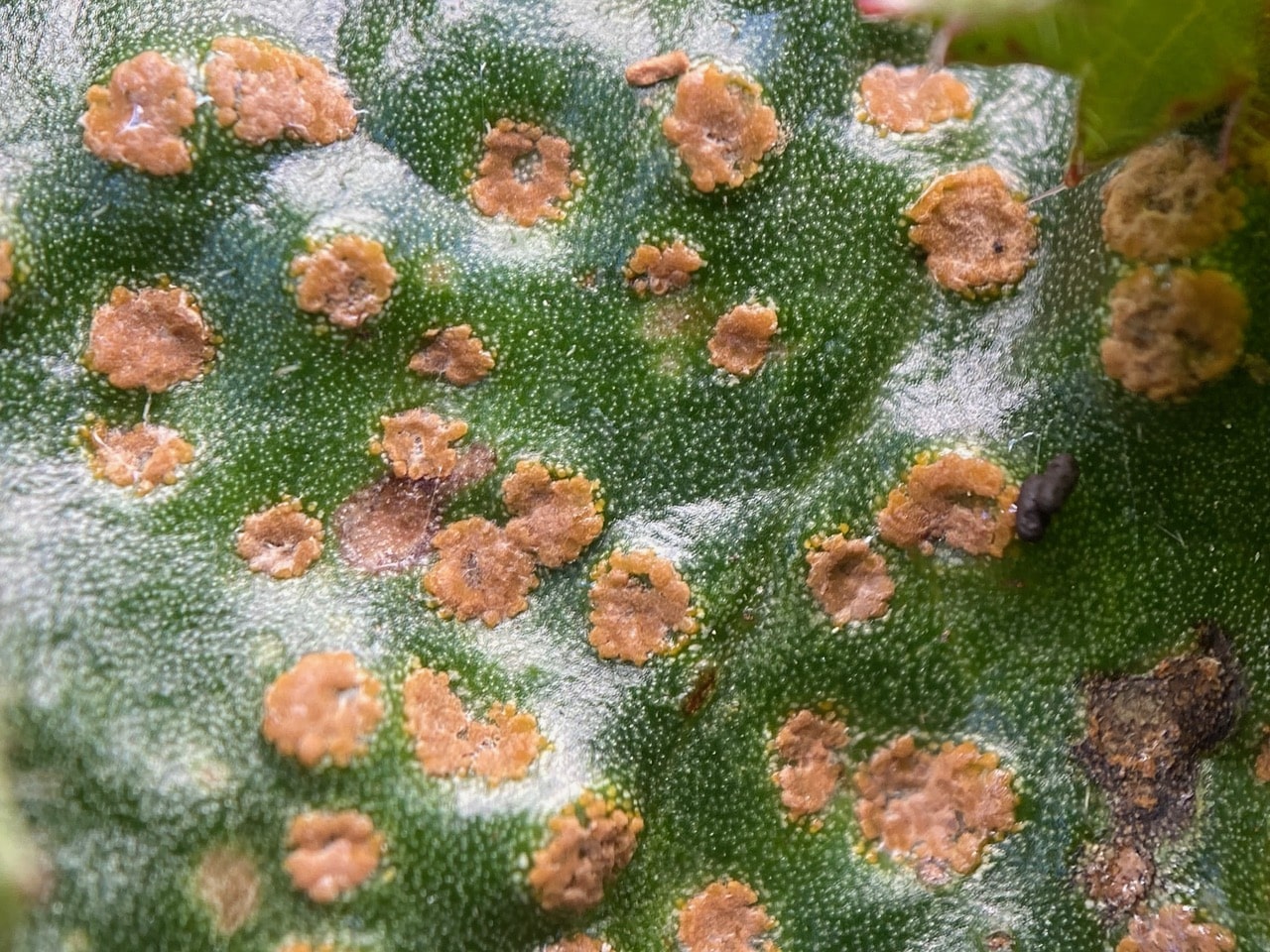
Upper surface of the infected leaf.
Rusts are plant diseases caused by pathogenic fungi of the order Pucciniales. They get their name for the deposits of powdery rust-colored spores on plant surfaces, primarily on the underside of leaves. Rusts are characterized by powdery, pustule-like spots in shades of orange or yellow, turning brown or black as the infection matures. Rust fungi are highly specialized pathogens that affect many kinds of plants. Each species has a very narrow range of hosts and cannot be transmitted to non-host plants. Rust fungi thrive in humid, moist environments, especially with cool to moderate temperatures. Many rust fungi produce up to five spore types from morphologically and cytologically distinct spore-producing structures during their life cycle. The spores of rust fungi may be dispersed by wind, water or insect vectors. Rusts generally do not kill the host plant, but can severely reduce growth and yield.
According to a gardening website: To control rusts, promptly remove and dispose of infected leaves or plants to prevent further spread. Water plants in the early morning to avoid leaving foliage wet overnight, and avoid overhead sprinkler use.