

Pollinator Post 1/22/26 (2)
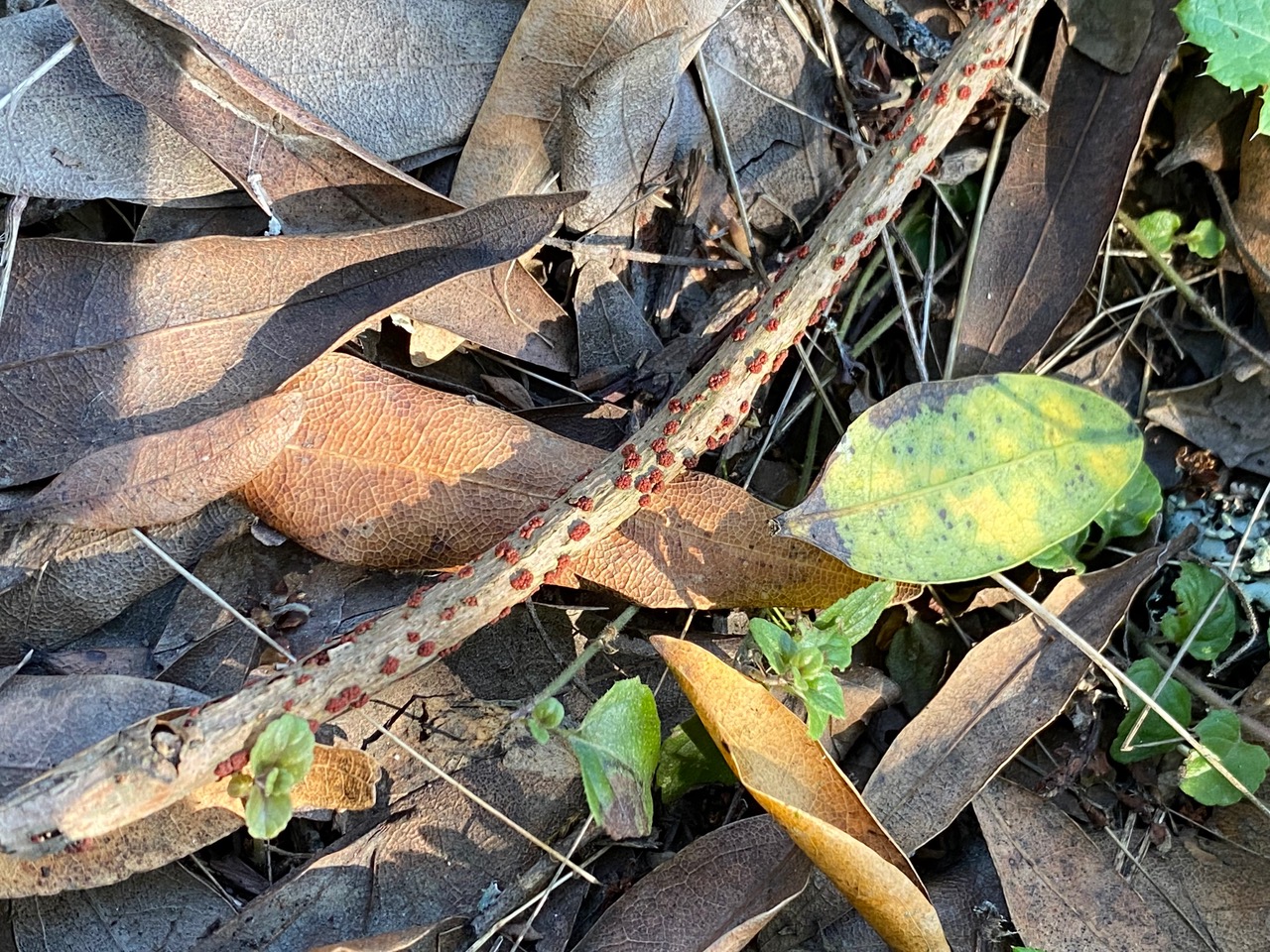
Among the leaf litter under the trees, I spot reddish bumps on a dried Poison Oak twig. Slime mold sporangia?

I am stumped by what appears under the macro lens. iNaturalist has helped identify these as a pathogenic fungus Coral Spot, Nectria cinnabarina.
Nectria cinnabarina infects trees in the cool temperate regions of the Northern Hemisphere. It is typically saprophytic (feeding on dead plant matter) but will act as a weak parasite if presented with an opportunity via wounds in the tree or other stressors that weaken the tree’s defense. The fungus typically invades dead tissue first and then spreads to living tissue via hyphae that grow through the xylem. The pathogen forms pink fungal blobs (sexual stage) on the outside of dead wood which turn a reddish-brown color and become quite hard. The blobs are usually 1-4 mm in length. Other symptoms include small twig and branches dying back and branch necrosis. The pathogen thrives in dead wood and airborne spores infect living trees and shrubs through wounds.
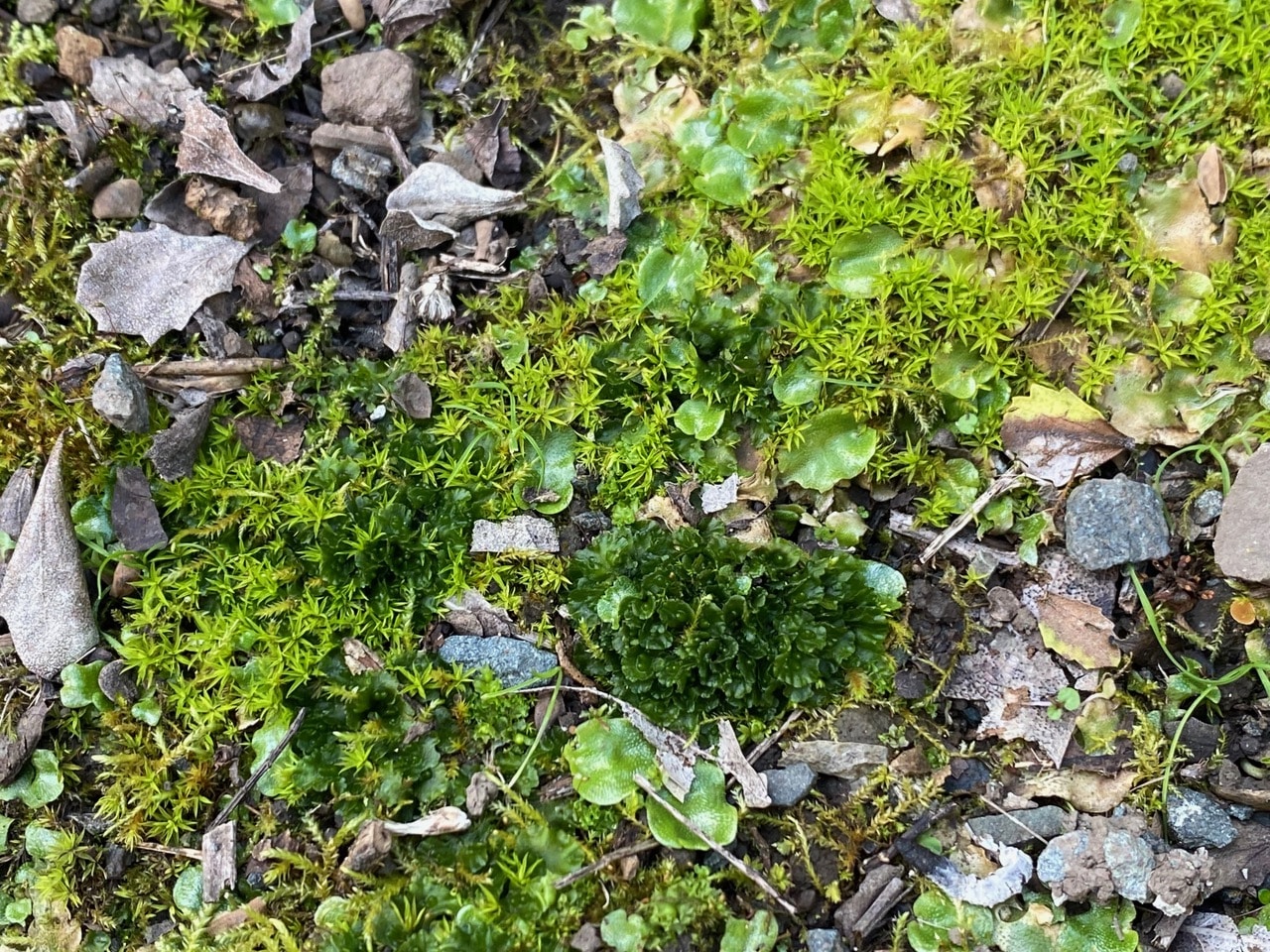
Hey, all the major categories of Bryophytes can be seen in this single frame! The fine, star-shaped leaves belong to a Moss, the flat, tongue-shaped thalli belong to a Liverwort, and the dark green clump is a Hornwort.
Liverworts, together with mosses and hornworts, are collectively known as Bryophytes. They are non-vascular plants, which means they have no roots or vascular tissue, but instead absorb water and nutrients from the air through their surface (e.g. their leaves). Most of them only grow a few centimeters in height, and since they don’t need roots, they can grow on the surface of rocks, walls, pavement, etc. Bryophytes thrive in damp, shady environments, but they can also be found in diverse and even extreme habitats, from desert to arctic areas. Unlike flowering plants, bryophytes reproduce by spores instead of seeds. Bryophytes play an important role in the environment. They colonize sterile soils, absorb nutrients and water and release them slowly back into the ecosystem, contributing to the formation of soil for new plants to grow on.
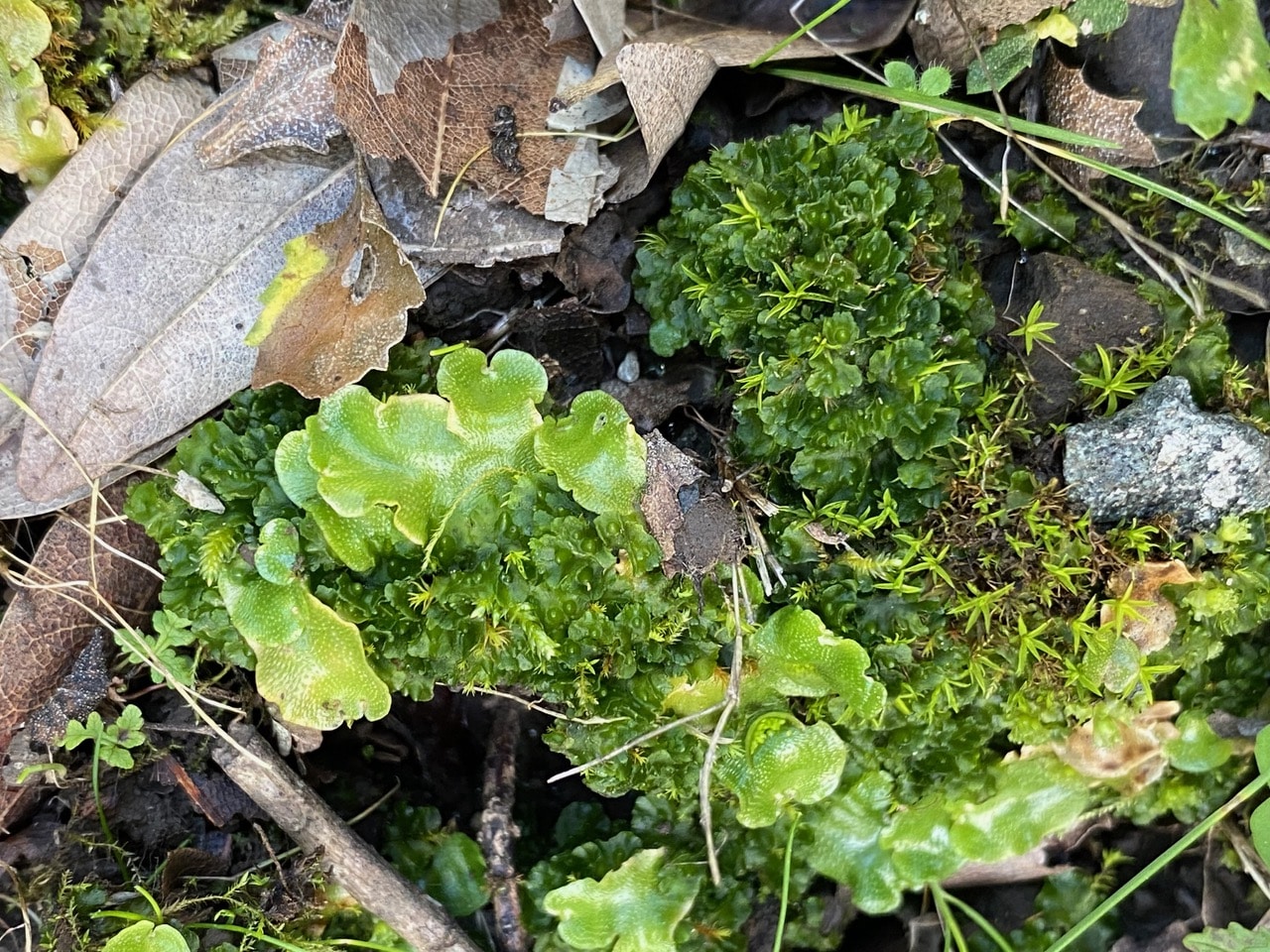
Close-up of the Bryophytes.

Hornworts often grow among mosses, appearing in dark patches that look like someone has spilled grease on the mosses. These translucent, dark green leaves are the gametophytes of a Hornwort, a plant in its own phylum, the Anthocerotophyta. The Anthocerotophyta are characterized by their long, horn-shaped sporophyte, from which they get their common name “hornworts”. Over the past few years, I have been watching out for the hornwort to produce sporophytes on this mossy bank, but to no avail. With lack of rain, the gametophytes had dried up before they could produce any sporophytes.
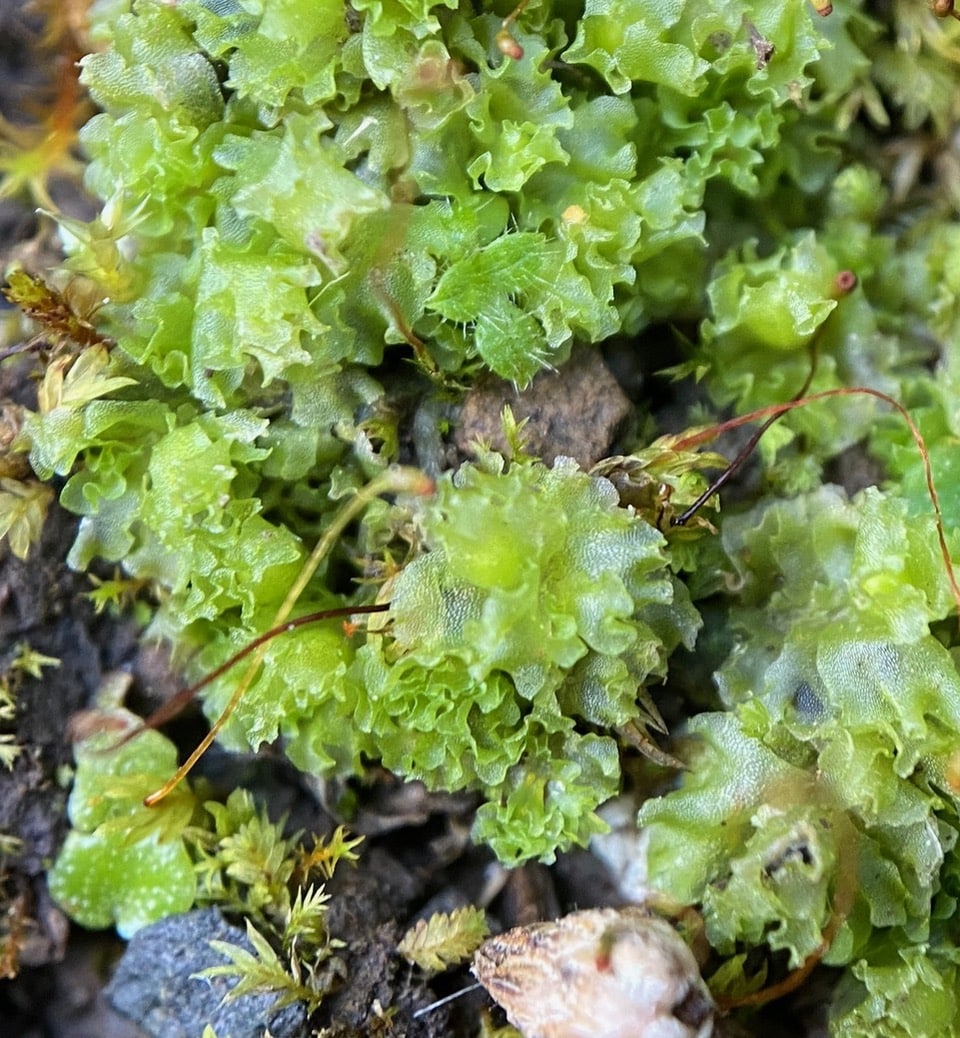
Among the mosses, I spot some lighter green patches with a different texture. A closer look through the macro lens reveals Frillworts, Fossombronia sp. These delicate, ruffled liverworts look like miniature heads of butter lettuce.
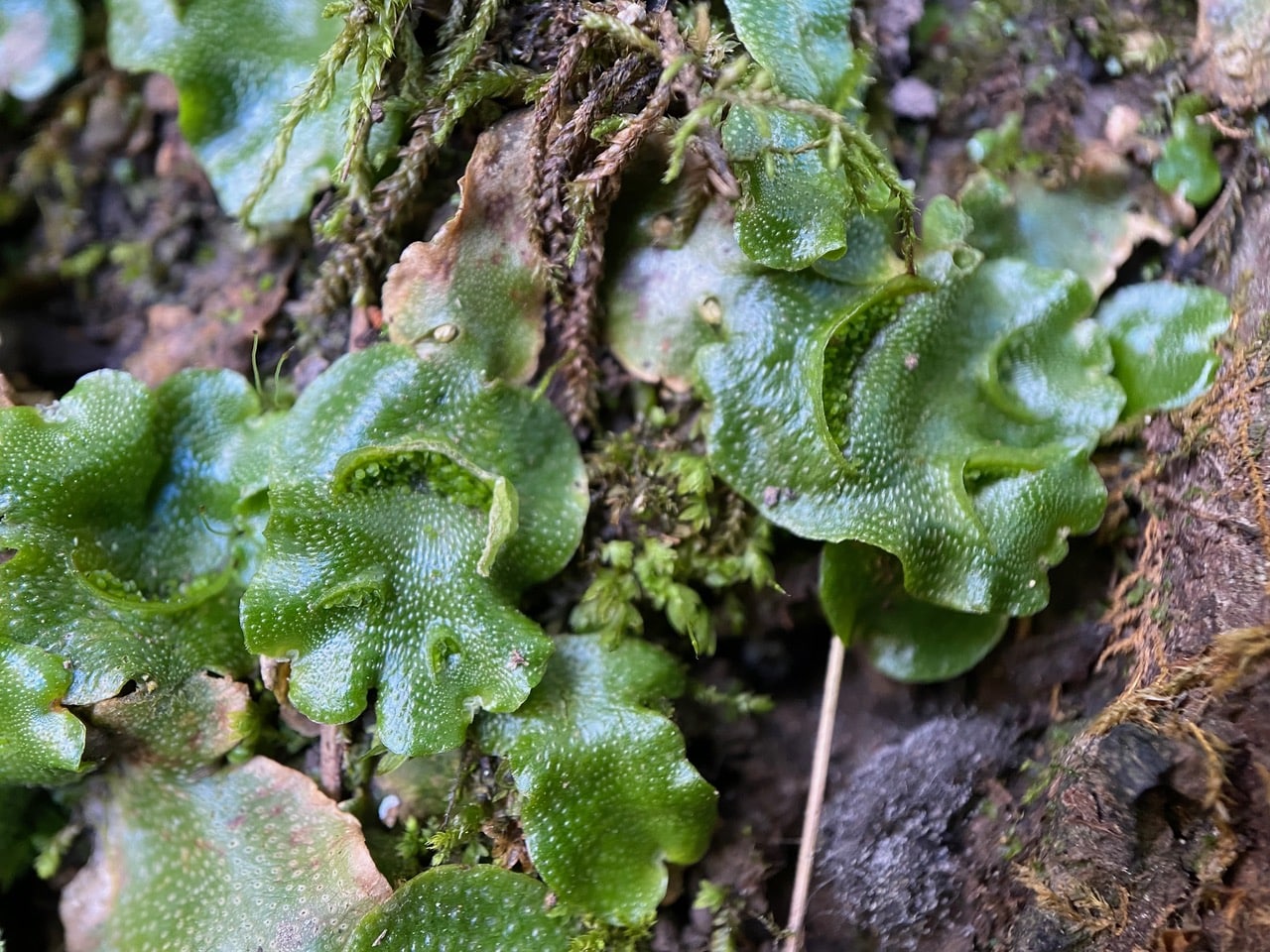
I stop by a wet bank under a tree to admire a vibrant patch of Crescent-cup Liverwort, Lunularia cruciata. Many of the tongue-shaped thalli have crescent-shaped gemma cups filled with tiny gemmae. What fun!

As in other liverworts, the main plant body or thallus is a haploid gametophyte. L. cruciata mainly reproduces asexually with the production of gemmae, which are small vegetative propagules housed in small crescent-shaped gemmae cups. As a rain droplet splashes into the gemmae cup, it propels the gemmae out and away from the parent, where they will germinate. This is probably why the liverwort is such a successful species, with a world-wide distribution.
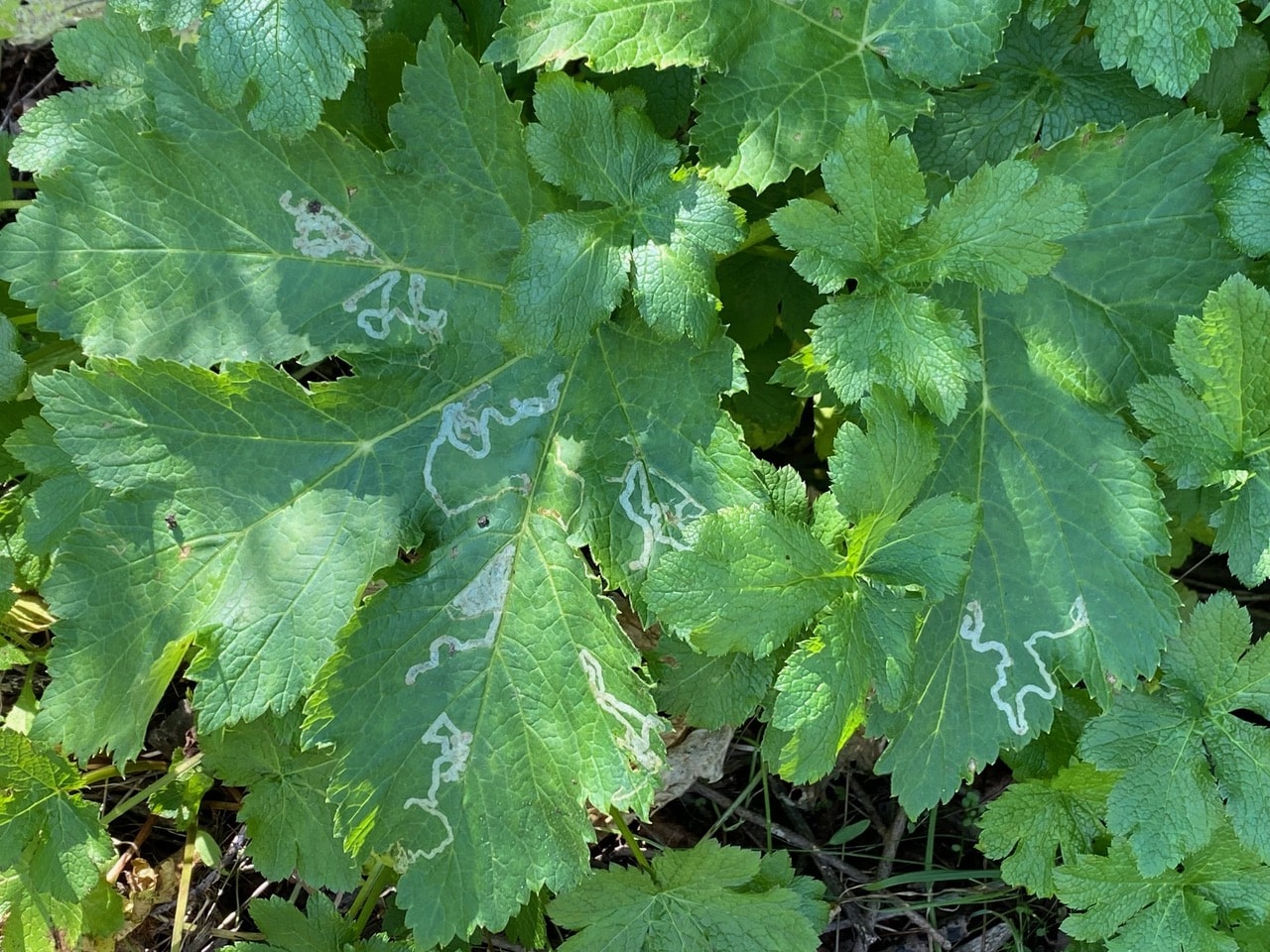
Squiggly white lines on the leaves of the Cow Parsnip, Heracleum maximum are typically the work of the larvae of Leaf Miner Flies in the genus Phytomyza (family Agromyzidae).
The Agromyzidae are a family commonly referred to as the Leaf-miner Flies, for the feeding habits of their larvae, most of which are leaf miners on various plants. They are small flies, most species in the range of 2-3 mm. Agromyzidae larvae are phytophagous, feeding as leaf miners, less frequently as stem miners or stem borers. A few live on developing seeds, or produce galls. There is a high degree of host specificity. A number of species attack plants of agricultural or ornamental value, so are considered pests. The shape of the mine is often characteristic of the species and therefore useful for identification. Adults occur in a variety of habitats, depending on the larval host plants.
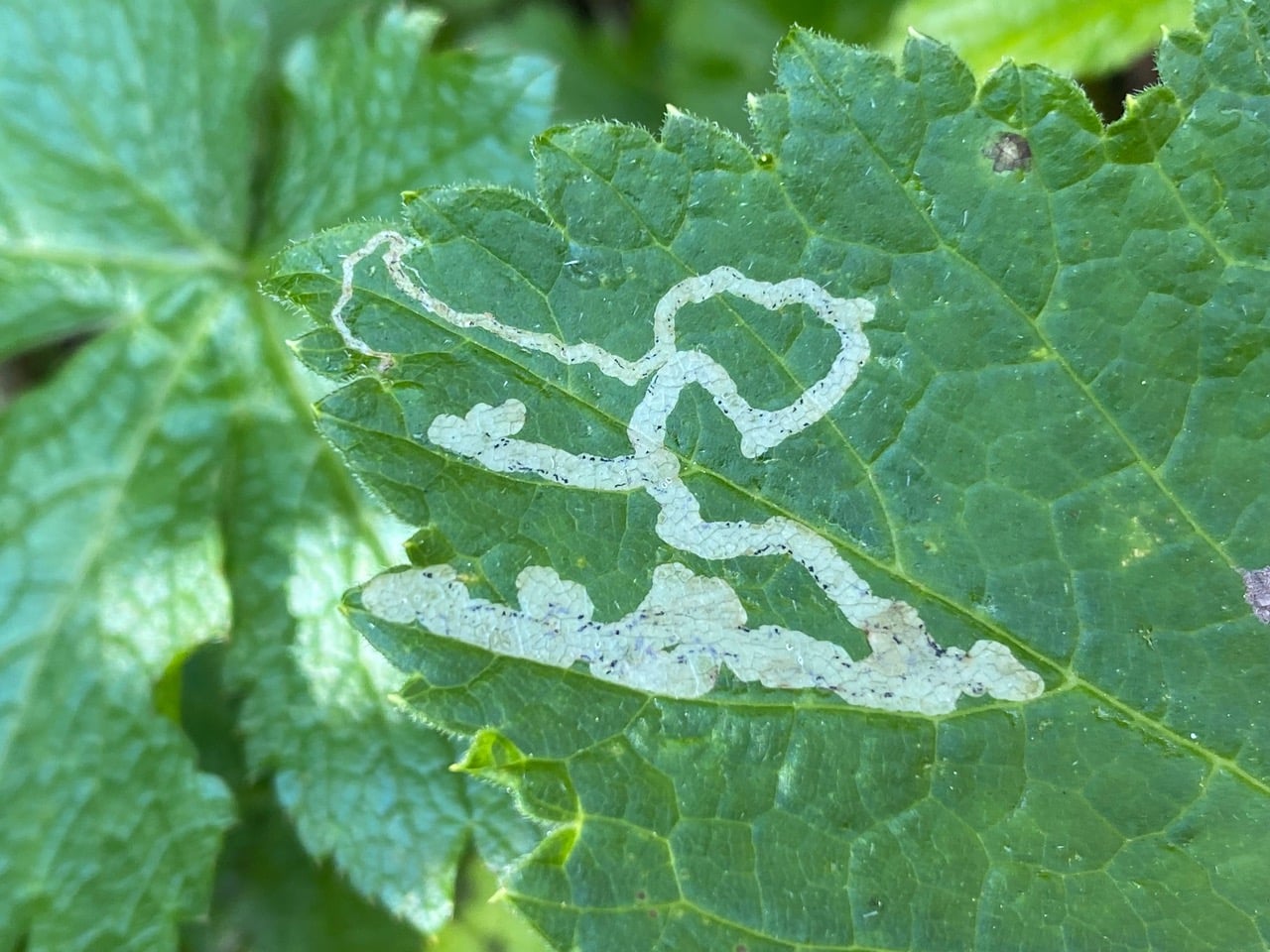
Note the bits of black frass in the tunnels left by a larva of the Leaf Miner Fly. One can usually trace the developmental journey of the larva from the narrowest point of the tunnel where it has hatched from an egg. As the larva feeds and grows between the leaf surfaces, it enlarges the tunnel, until at the very end the tunnel terminates where the larva pupates, often on the leaf surface. The damage is typically cosmetic and rarely kills the plant.

By the side of the narrow trail, young Soap Plants, Chlorogalum pomeridianum rejoice in the winter sunshine. Although their leaves are not wavy as is typical of the species, I recognize the plants from the stubby brown fibers sticking up from the ground. Soap Plant grows from a 7-15 cm bulb covered in a thick, brown, fibrous, or hairy tunic. The bulb is rich in saponins, which creates a lather for cleaning, and the fibers can be used to make brushes. The plant goes dormant in the summer after blooming in late spring.

Sprawling by the edge of the trail, a Wild Cucumber, Marah fabacea has started to bloom, sending its tendrils every which way to seek support.
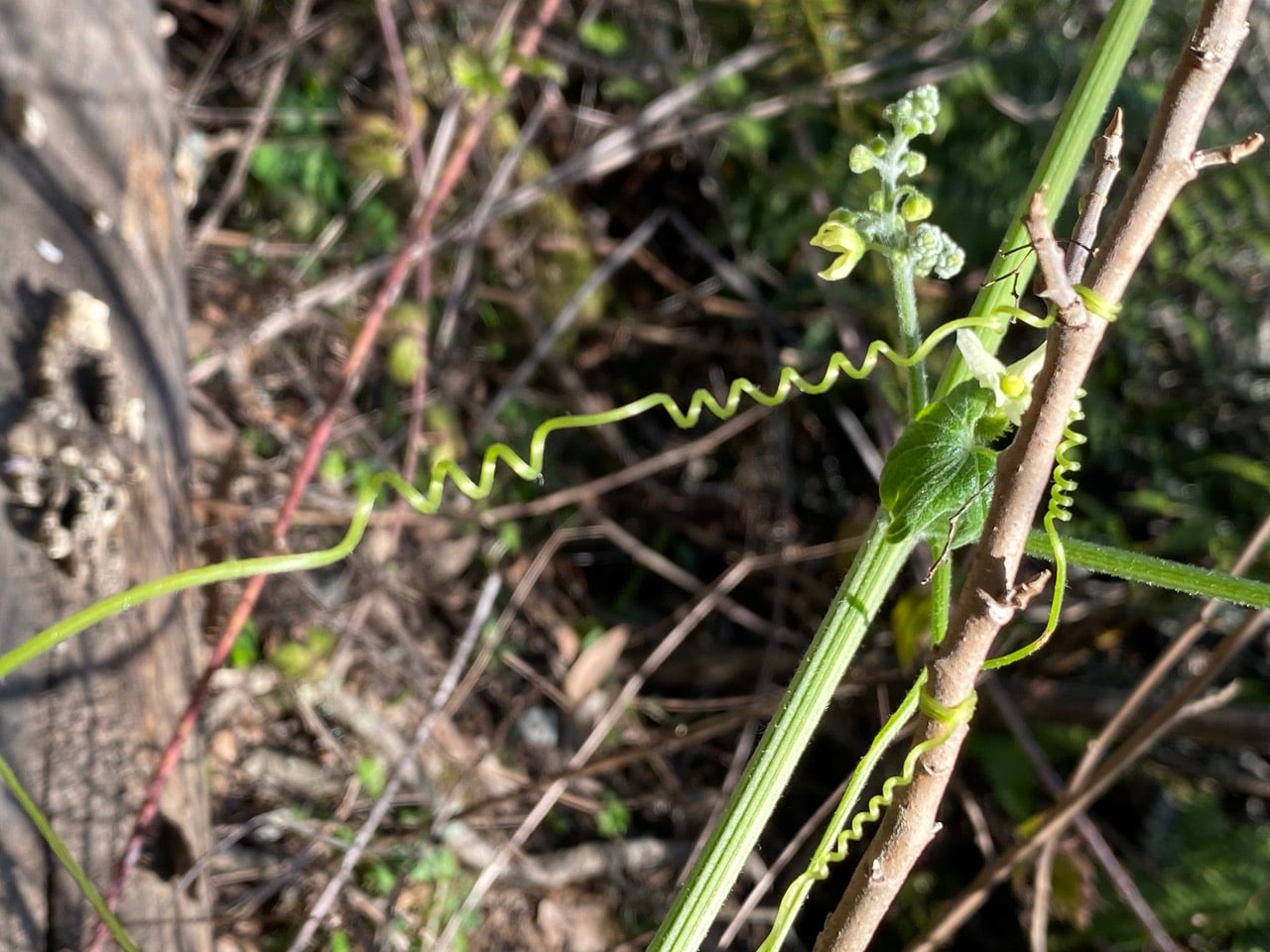
Note the straight section of the tendril that has grabbed onto the stem of a Poison Oak close by. Ever wonder why there’s always a coiling reversal in the spring-like tendrils of the Wild Cucumber?
Long tendrils enable Marah to climb/trail over neighboring vegetation in order to reach sunlight. You can invariably find a straight section along a tendril coil where the coiling direction is reversed. Charles Darwin had noticed this behavior and coined it “perversion”. Scientists have actually studied the cucumber tendrils seriously and found some fascinating properties. Once a tendril curls around a support, it forms a counter-clockwise helix and clockwise helix with a straight section between the two. If the tendril is pulled, more turns are added to both helices to better grasp the support.
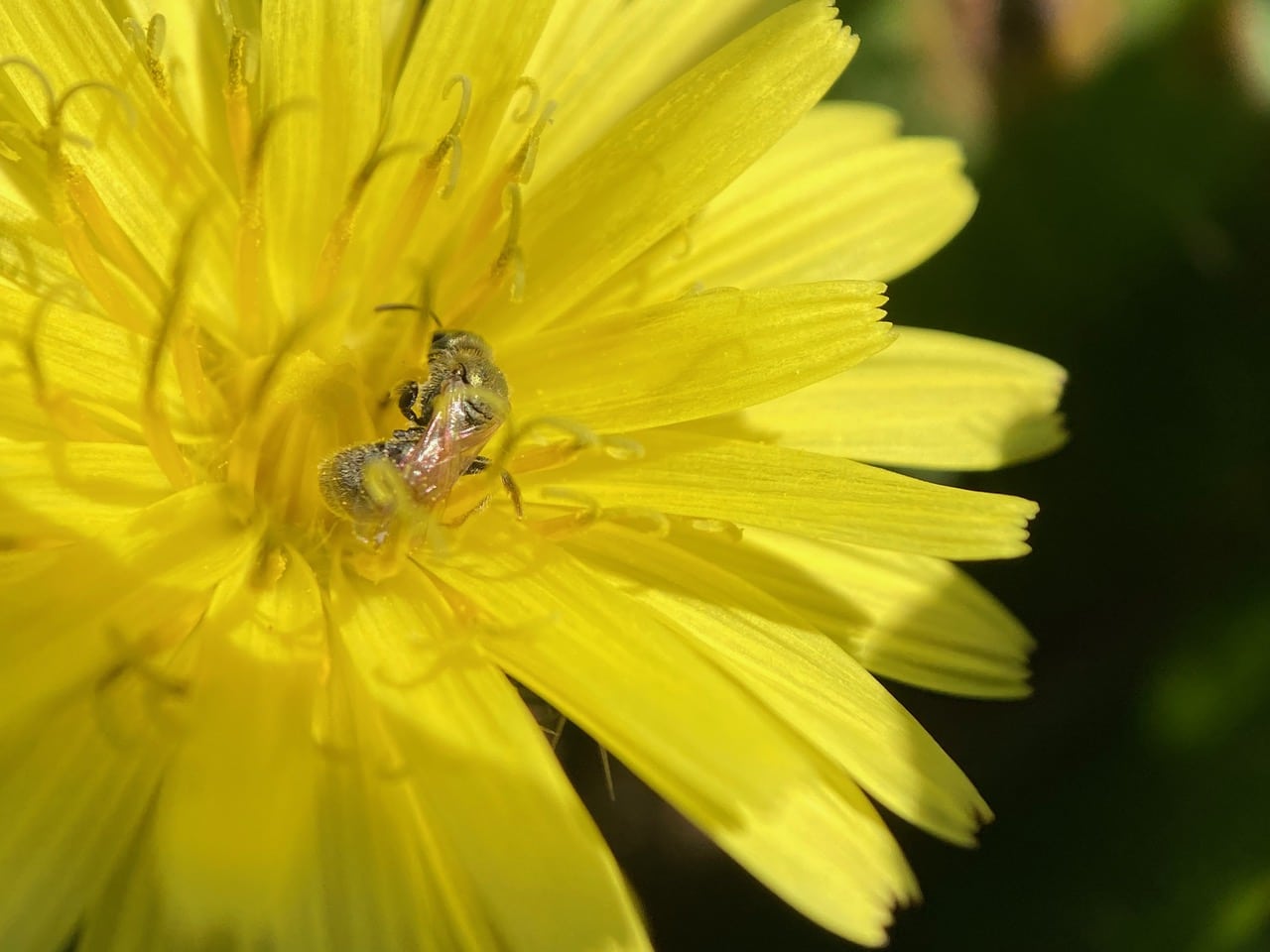
A tiny, shiny bee is foraging in a flowerhead of Bristly Oxtongue, Helminthotheca echioides. The Metallic Sweat Bee, Lasioglossum (Dialictus) sp. (family Halictidae) is the only bee I have seen all morning.
Lasioglossum species are found worldwide, and they constitute the largest bee genus. The subgenus Dialictus are the most likely to be seen in the U.S., with over 300 species of these tiny metallic bees. The majority of Lasioglossum are generalists. Because they are so abundant throughout the flowering season, the bees are often important pollinators. Their sheer numbers are enough to achieve excellent pollination of many wild flowers, especially of plants in the Asteraceae, which have shallow floral tubes that are easily accessed by these minute bees.
Lasioglossum are closely related to the genera Halictus and Agapostemon. These genera are commonly called “sweat bees” because of their attraction to human sweat, which they drink for its salt content. Lasioglossum are dusky black to brown slender bees with bands of hair on their abdomen. Female Sweat Bees (family Halictidae) carry pollen in the scopae on their entire hind legs and underside of their abdomen.
Lasioglossum exhibit a range of social behaviors; the genus includes solitary, communal, semi social, primitively eusocial, and even parasitic species. Almost all Lasioglossum in the U.S. nest in the ground. Generally these nests are built in the spring by fertilized females (called foundresses) that spent the winter in hibernation. In social species, the foundresses behave much like the queen bumble bees – they lay the first batch of eggs that develop into the first generation of female workers. The nest grows with each additional generation of bees. Later broods may consist of both males and females. They mate, and at the end of the season the fertilized females hibernate til the following spring, repeating the life cycle of the colony.
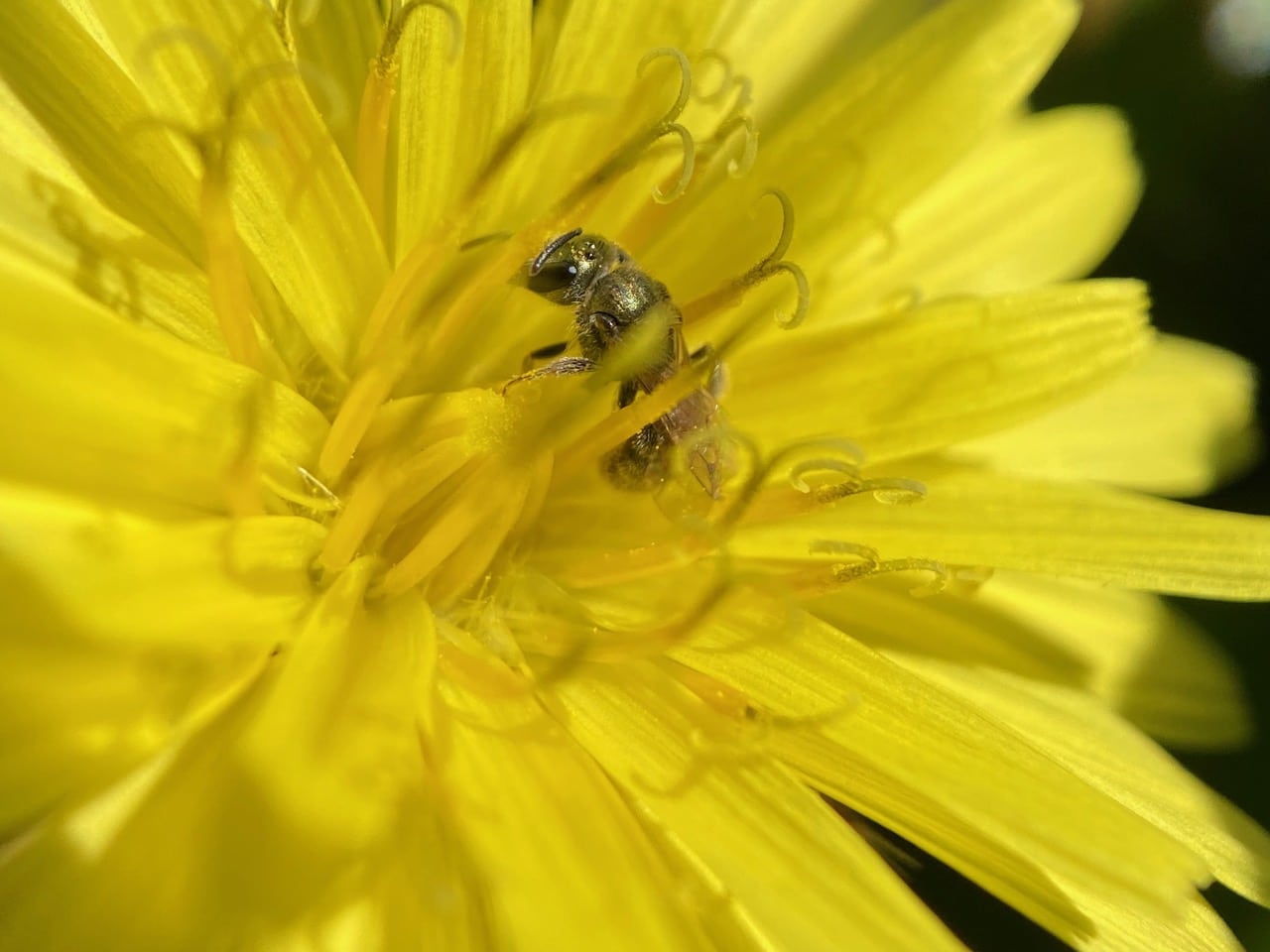
Dialictus is a subgenus of sweat bees belonging to the genus Lasioglossum. Most of the members of this subgenus have a metallic appearance. They are commonly found in the Northern Hemisphere and are found in abundance in North America. Members of this subgenus also have very diverse forms of social structure making them model organisms for studying the social behavior of bees.