

Pollinator Post 1/6/26 (2)
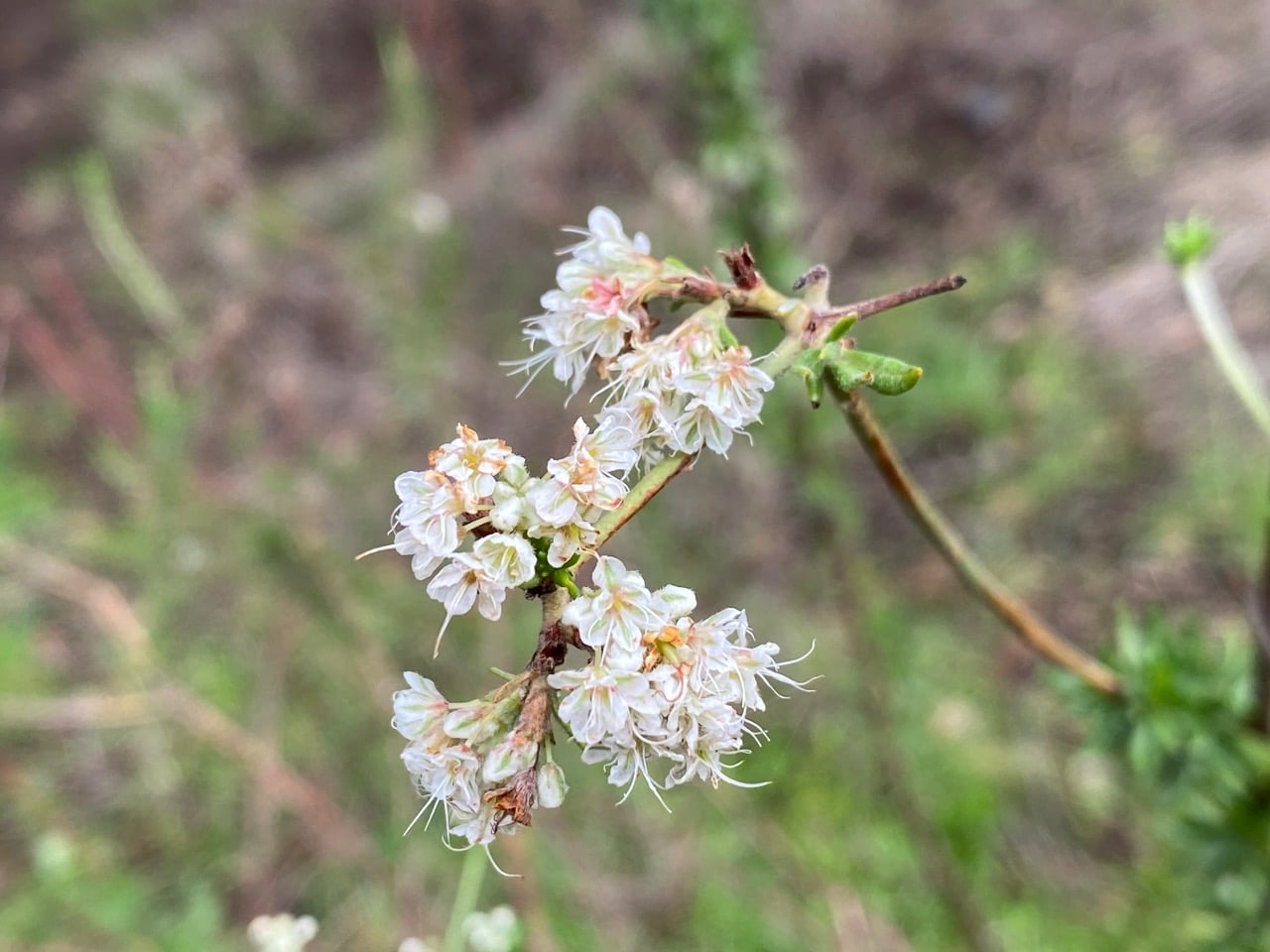
I am rather surprised to see a scruffy California Buckwheat, Eriogonum fasciculatum still in bloom by the side of the road. Battered by the storms, the cluster of bedraggled flowers are devoid of pollen.
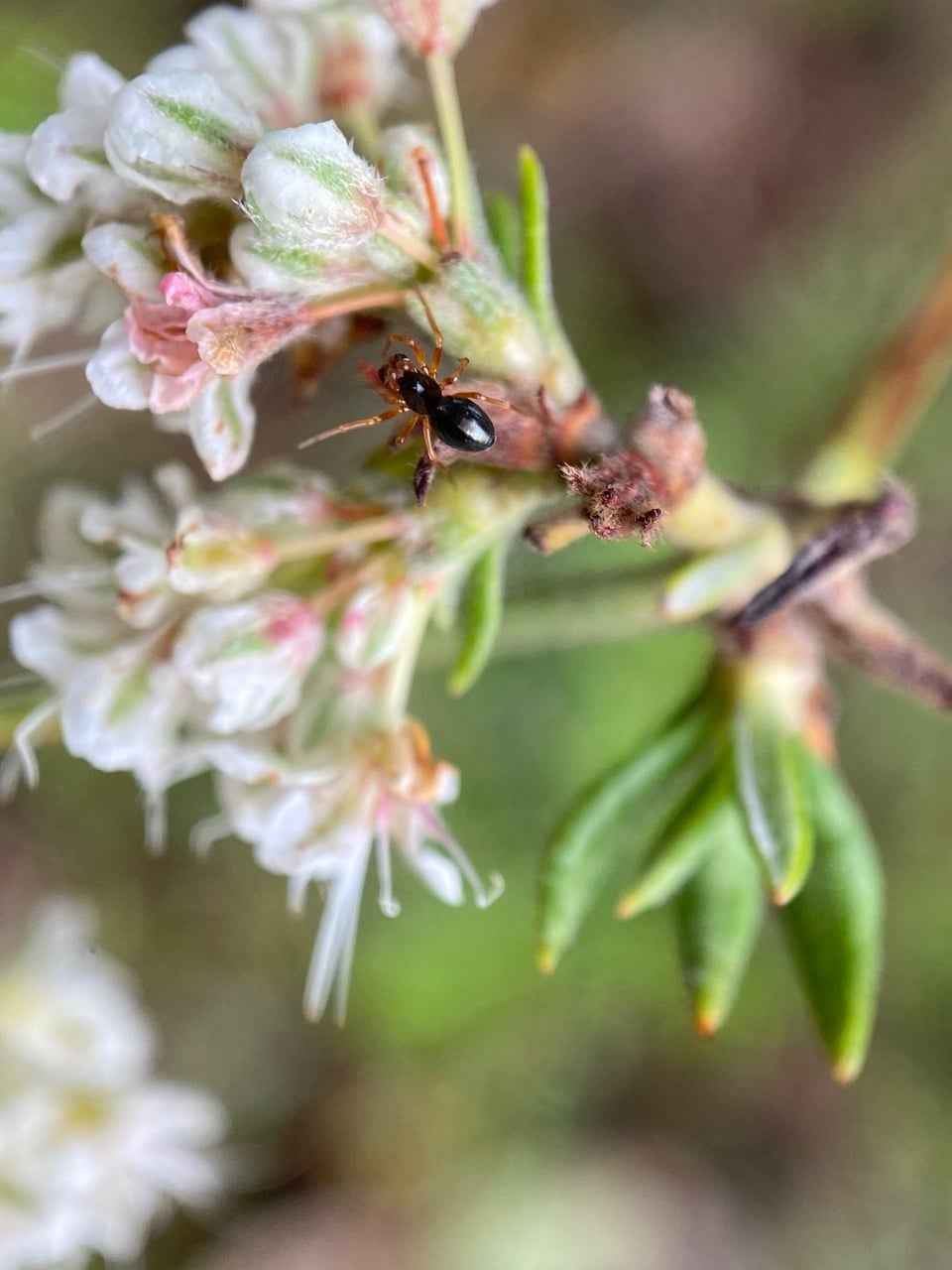
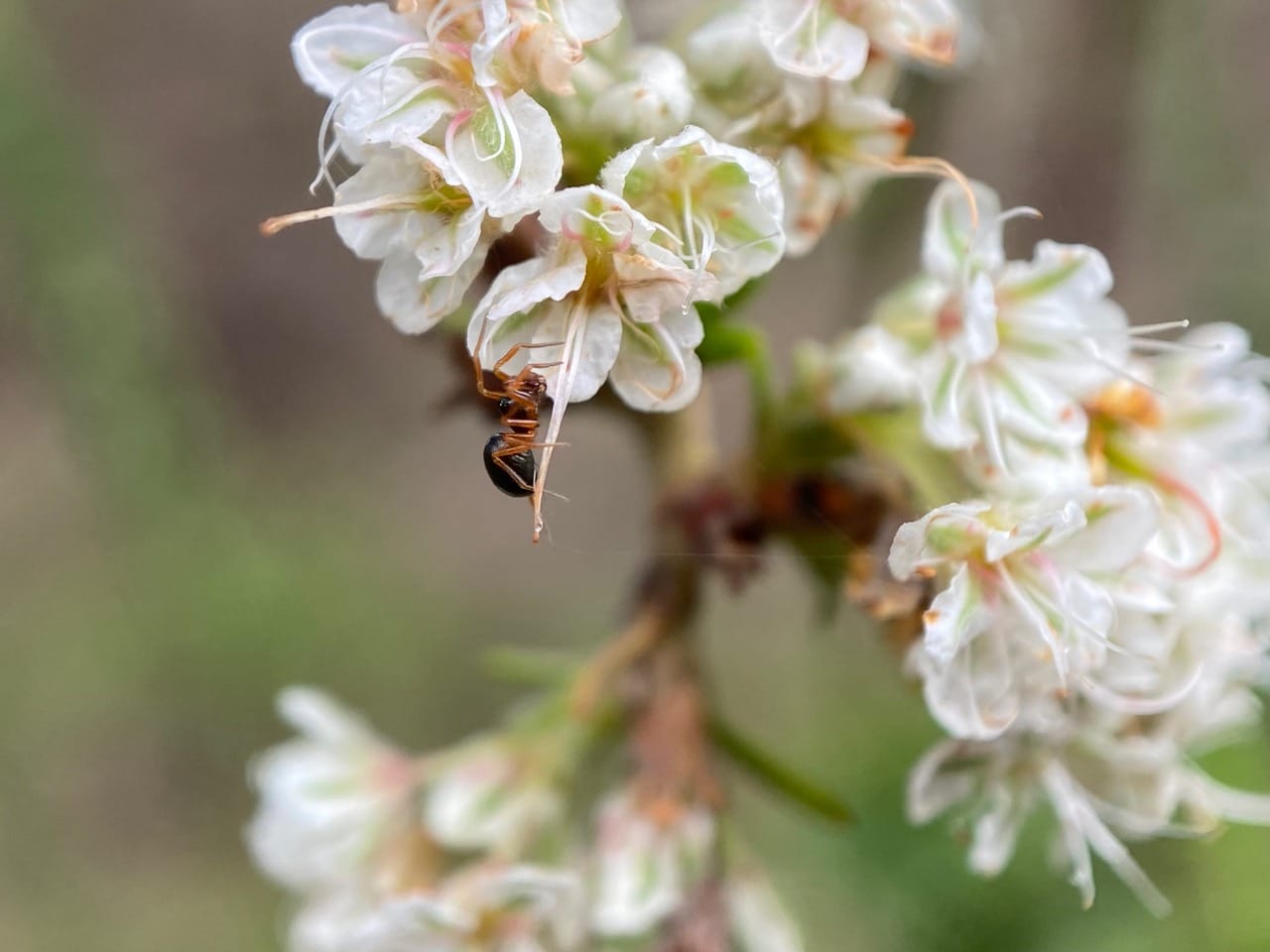
On closer inspection, what I first took to be an American Winter Ant on the buckwheat flowers turns out to be a tiny spider.

The spider is busy weaving a network of silk strands linking various points on the inflorescence. Here it is attaching silk from its spinnerets to the style of a flower.

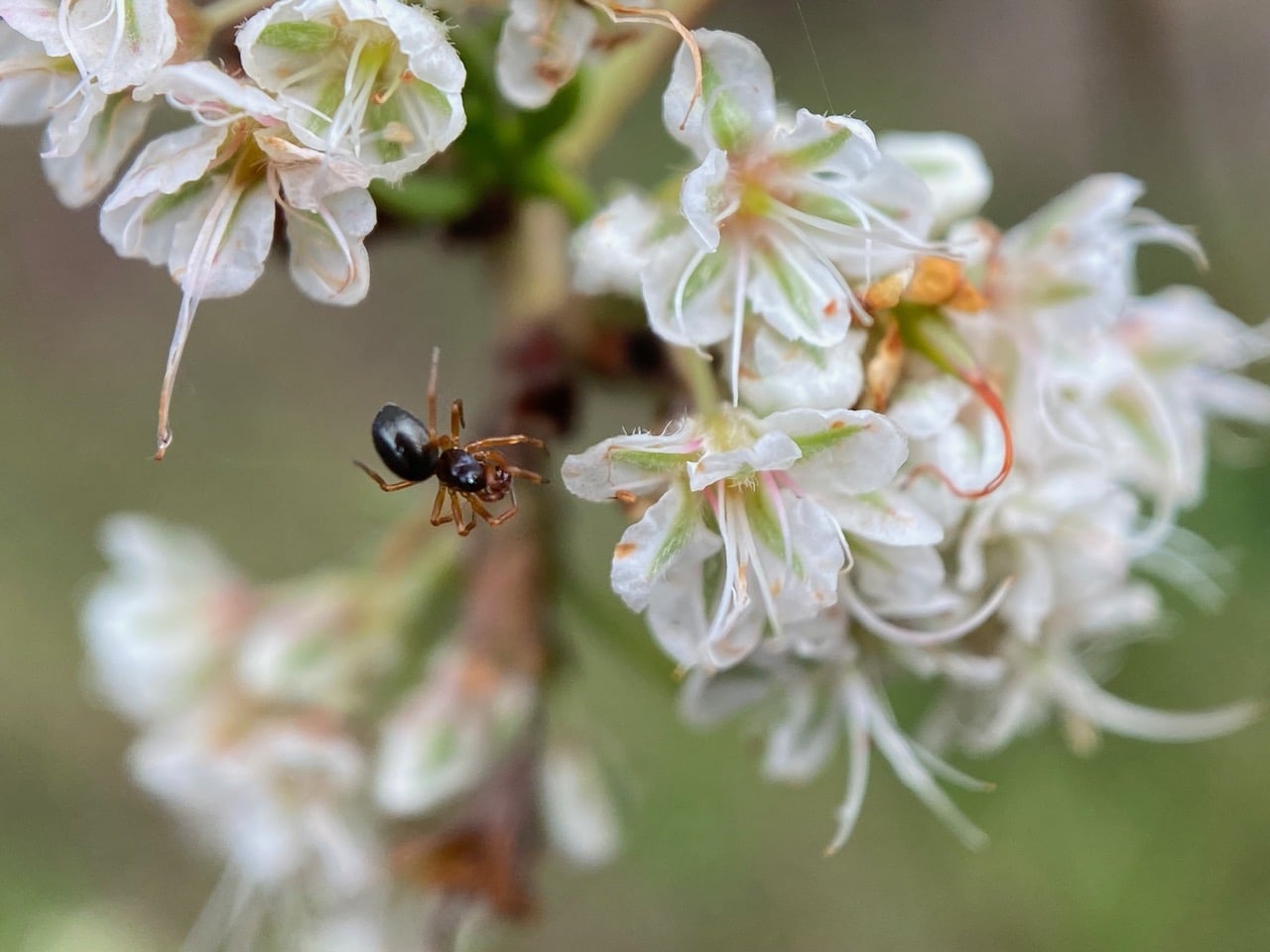
The spider nimbly crosses the gaps between the flowers by riding on its on silk strand (not visible in this light).
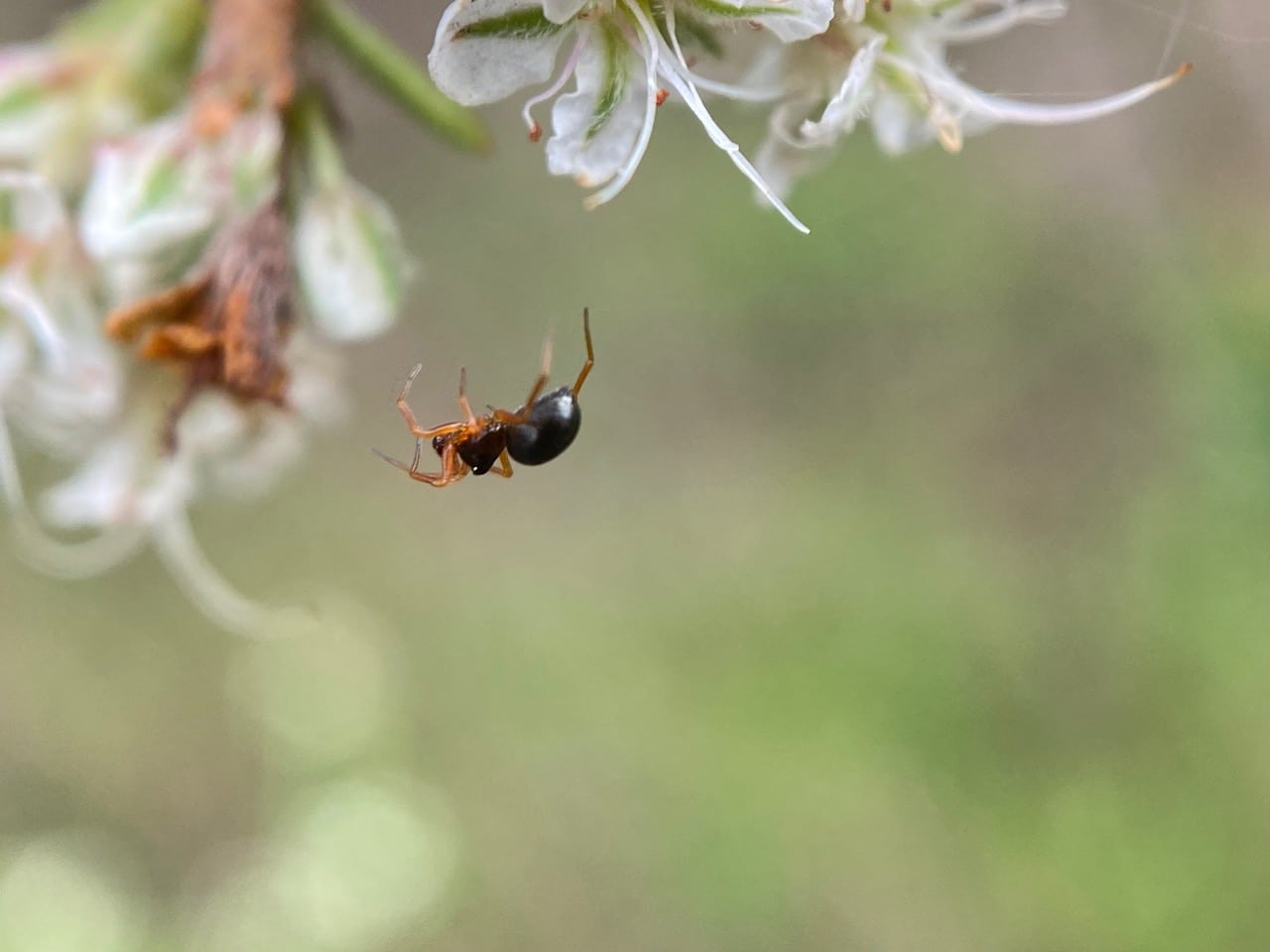
Tight rope walking in space!
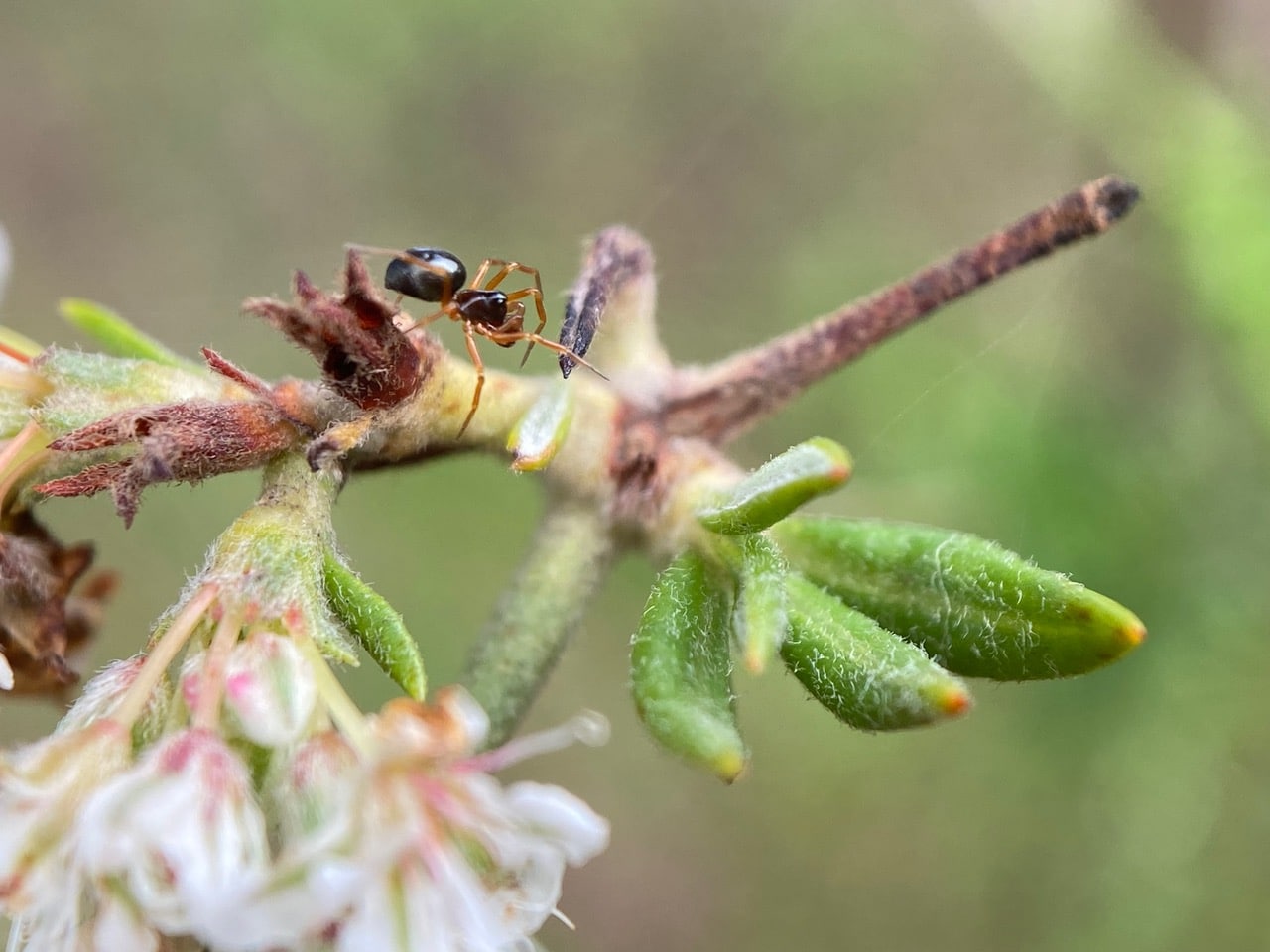
The busy spider is also attaching silk to the stem and leaves of the buckwheat.

If you squint hard enough, you might see the faint silk lines that the spider has attached to the branch and adjacent vegetation.
iNaturalist has helped identify the spider as Agyneta sp., a member of the Sheetweb and Dwarf Spiders (family Linyphiidae). There are two subfamilies: the true sheet weavers (Linyphiinae), and their tiny relatives the Dwarf Sheetweavers (Erigoninae). The web of these spiders form a flat or curved surface suspended from vegetation or over an opening on the ground. The spiders hang beneath the web and attack prey that wander or fall onto the web surface by biting directly through the silk webbing. Most species are tiny; some are among the smallest of spiders. A few of the common and larger species build distinctive webs for which they are named, for example, the “bowl-and-doily” spider, and the “filmy-dome” spider. Many of the dwarf sheet weavers aren’t known to build a web, but wander through the leaf litter on the ground in search of prey. Linyphiids are famous for dispersing by ballooning (flying by means of silk strands carried in a breeze), and these spiders are often responsible for the sheets of gossamer which sometimes coat fields and fences.

A young Soap Plant, Chlorogalum pomeridianum has captured raindrops on its wavy leaves.
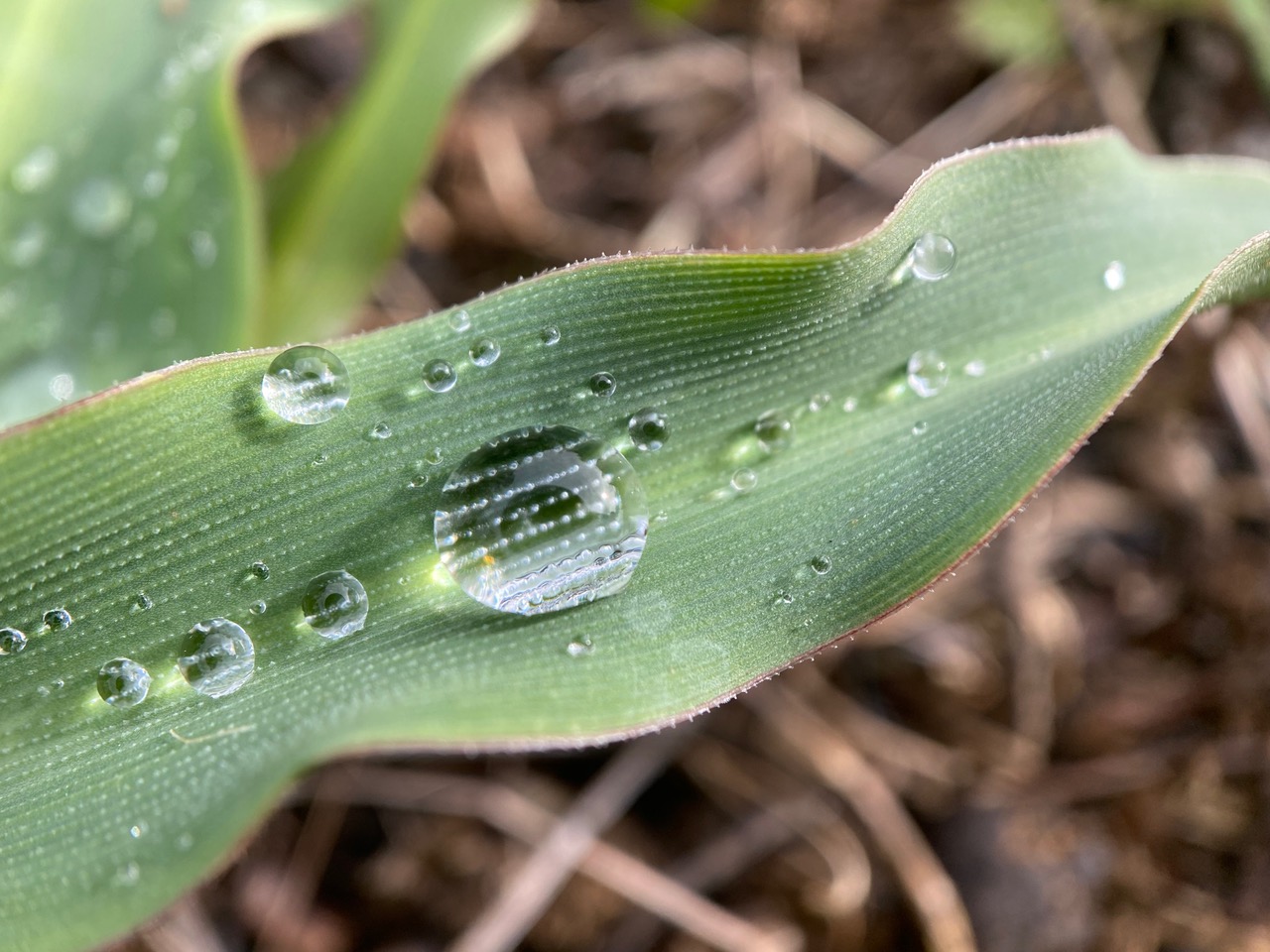
I love how the curved surface of each drop magnifies the features of the leaf it is resting on.

Whoa, that’s the biggest woodlouse I have ever seen, about 3/4 inch in length! It is also rather pale in color, maybe freshly molted? iNaturalist has helped identify it as a Giant Canyon Woodlouse, Porcellio dilatatus (family Porcellionidae).
A Woodlouse (plural: woodlice) is a small, land-dwelling crustacean, not an insect, related to crabs and lobsters, known for its segmented body and ability to live in damp places, feeding on decaying matter, and play a crucial role in decomposition, recycling nutrients back into the soil. Some species, called pillbugs, can roll into a ball (conglobation) to protect their soft undersides. These terrestrial isopods use gills to breathe, requiring moist environments. They excrete waste in the form of ammonia gas. Females carry fertilized eggs in their marsupium, through which they provide developing embryos with water, oxygen and nutrients.
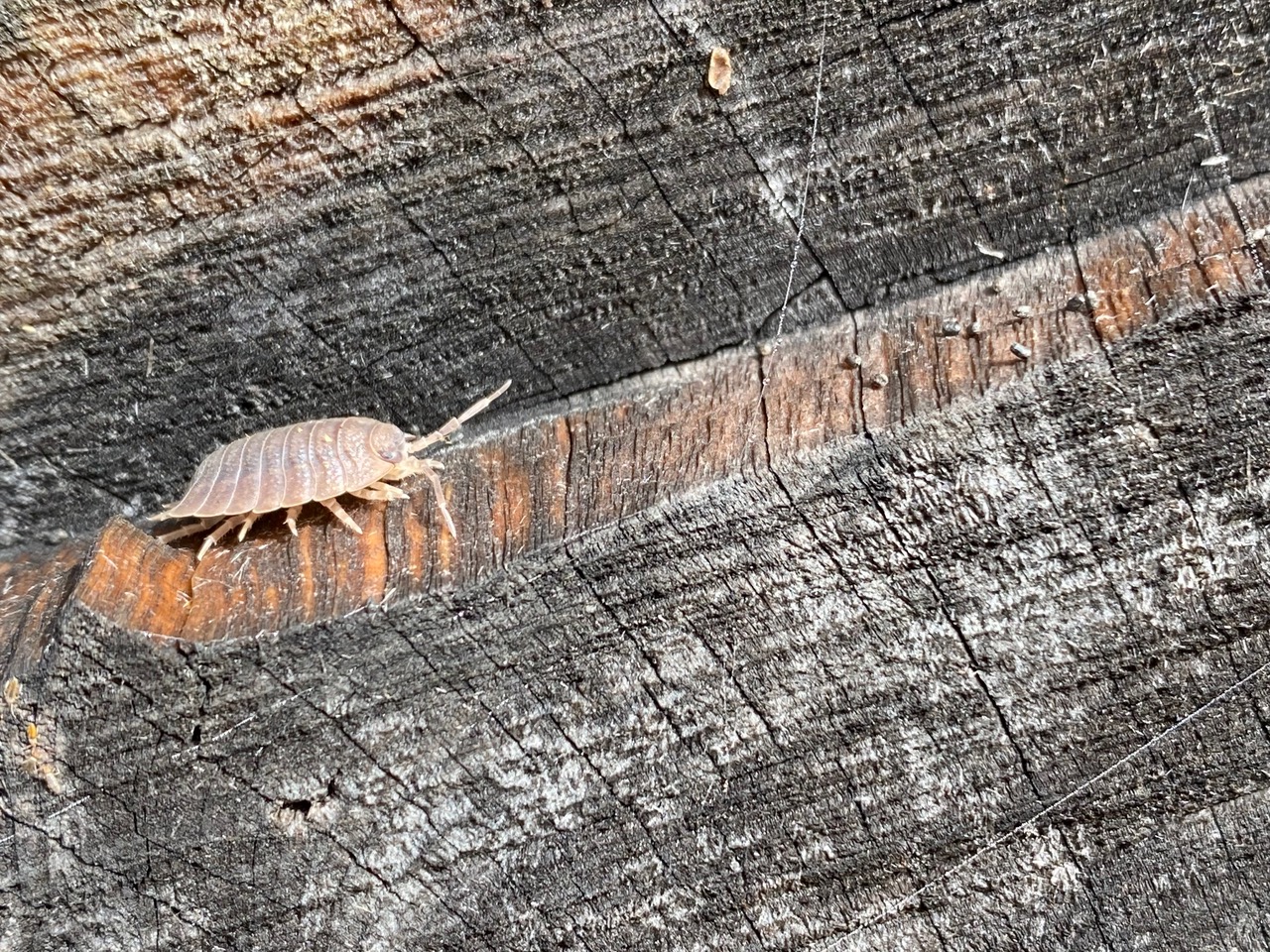
Note the typical features of the woodlouse: segmented, dorso-ventrally flattened body with seven pairs of jointed legs.
The Giant Canyon Woodlouse (family Porcellionidae) is widespread in Europe, and has been introduced to North America. Fully grown, the large woodlouse can reach up to 15 mm in size. As typical for woodlice, they are saprophages, feeding on decaying organic matter, usually from plants. They can be found in greenhouses, seed boxes, and flower pots. Unlike pillbugs, Porcellio dilatatus and other members of the Porcellio genus (sowbugs) cannot roll into a ball. Their flatter bodies, prominent tail-like appendages (uropods), and different skeletal structures prevent them from achieving the tight, spherical shape for defense that “rollers” can. The species is often bred as a nutritious food source for reptiles and amphibians, while also functioning as a “clean-up crew” in bioactive terrariums.

Ooh, here’s another critter running around on the wood surface. It is much smaller, under 2 mm. It is a Springtail, similar to the one we saw on the Wild Cucumber flower earlier.
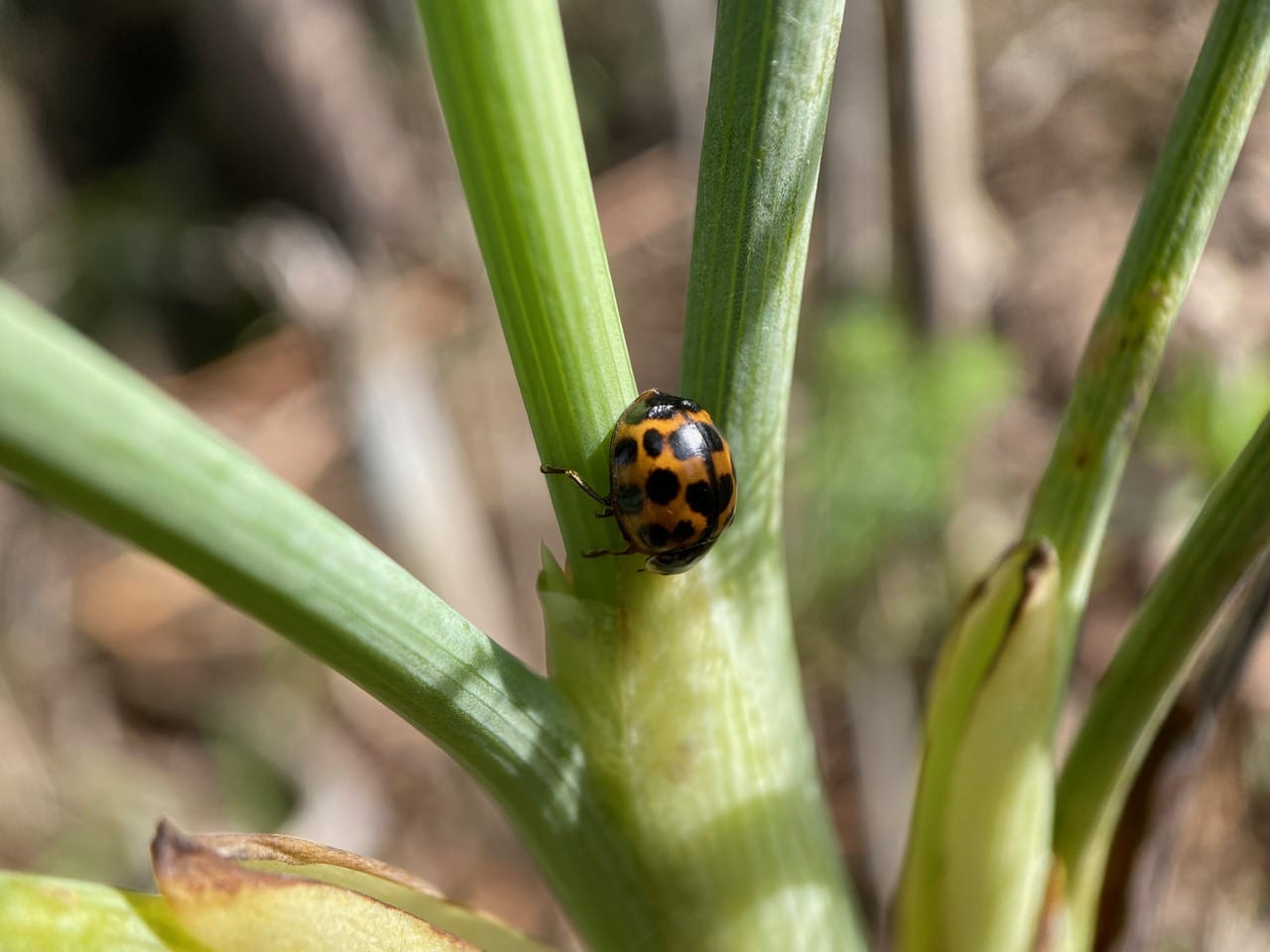
An Asian Lady Beetle, Harmonia axyridis (family Coccinellidae) is resting on a Fennel stem.
The beetle is a voracious predator of arthropod pests such as aphids, mites, thrips, scale and Lepidoptera eggs. Introduced from Asia for biological control of arthropod pests during the twentieth century, it has since become established all over the US. The adult beetles are highly variable in appearance, varying in color as well as the number and size of spots. It is believed that the Asian Lady Beetles are aggressive competitors of native ladybeetles. This supposition remains to be proven scientifically. Adult beetles aggregate in high numbers to overwinter, favoring human dwellings. When threatened the beetle produces a yellow viscous, foul-smelling defensive compound, making themselves unwelcome house guests.
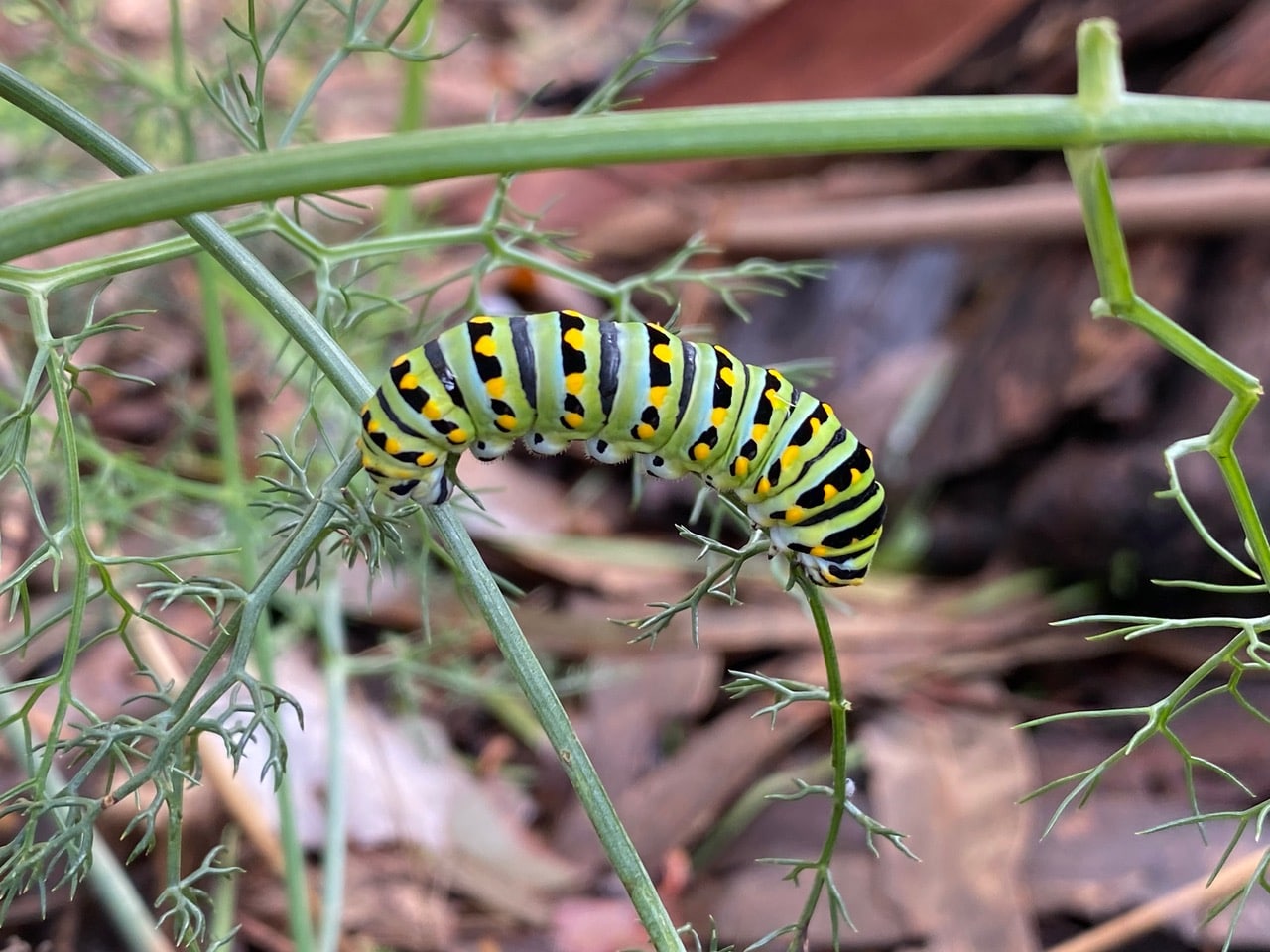
Surprise! An Anise Swallowtail caterpillar, about 11/2 in. long is munching away on the leaves of a Fennel. One would think that the larva should be safely pupating through the winter in a chrysalis by now.
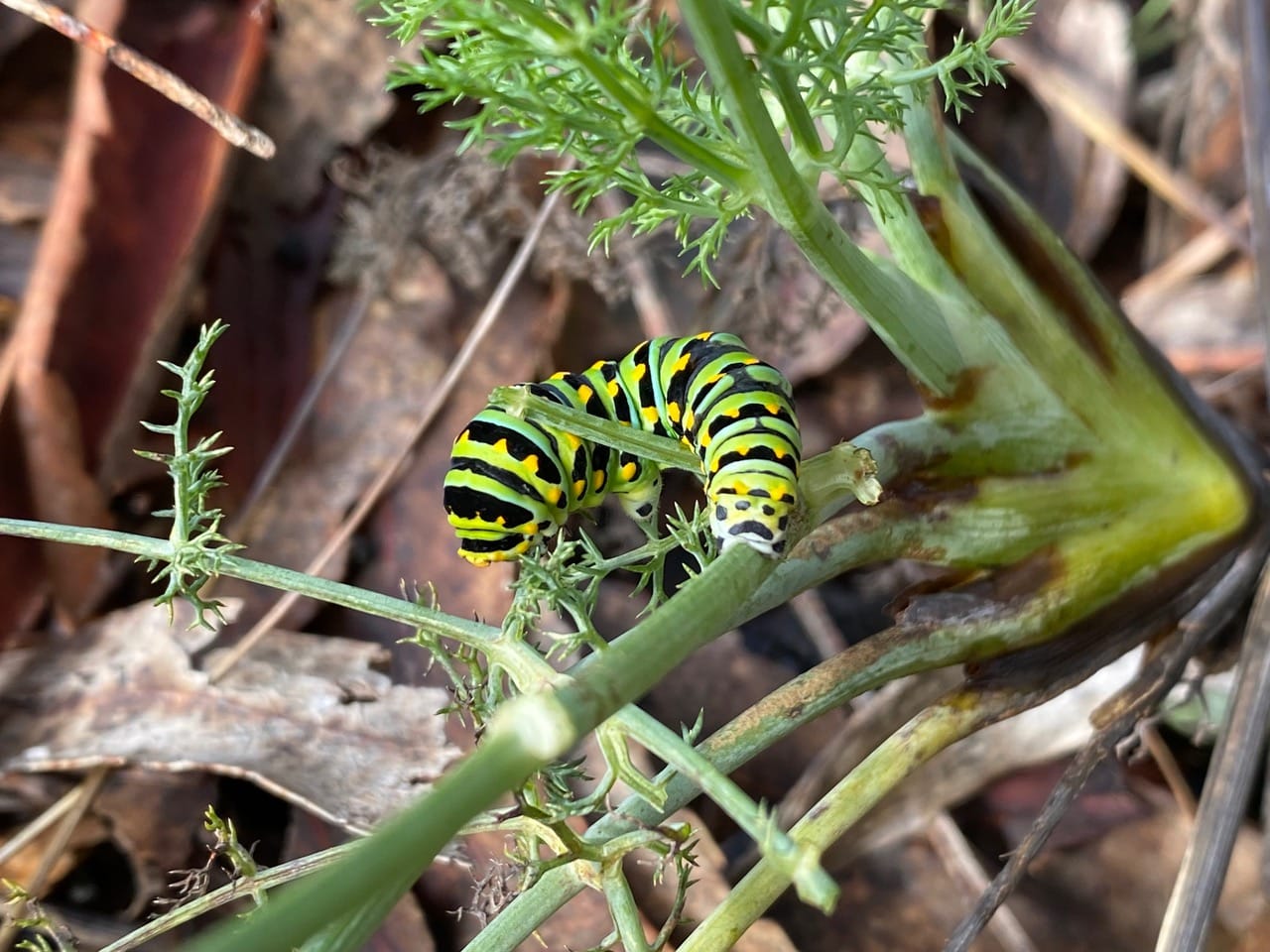
Just a couple of feet away, a slightly smaller Anise Swallowtail caterpillar is feeding at the base of another Fennel, Foeniculum vulgare. Will these late season caterpillars make it through the winter, and successfully develop into adult butterflies?
The Anise Swallowtail, Papilio zelicaon (family Papilionidae), is a common swallowtail butterfly of western North America. It is found in fairly open country, most likely seen on bare hills or mountains, in fields or at the roadside. Adult females lay eggs singly on the underside of host plant leaves. In the first two instars, the caterpillar is a bird poop mimic – dark brown, almost black, with an irregular white band at its middle. After that it becomes more green at each successive molt until, in the fifth (last) instar, it is predominantly green, with markings in black, orange, and light blue. Its major food plants are members of the carrot family, Apiaceae (including fennel), and also some members of the citrus family, Rutaceae.

A freshly broken tree branch lies on the ground. The Turkey-Tail fungi, Trametes versicolor growing on it are scattered in broken pieces around it.
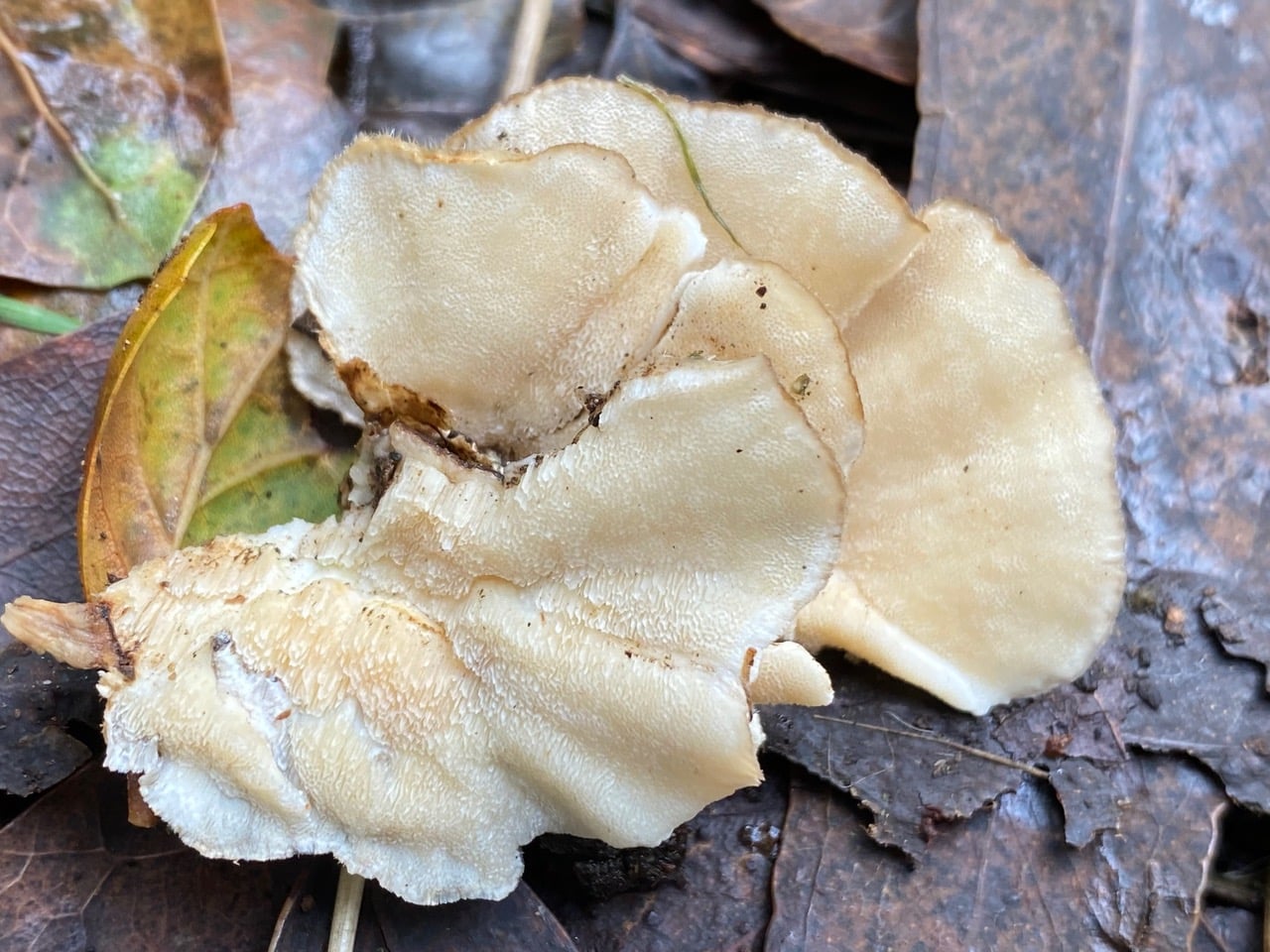
Here’s a great opportunity to look at the underside of the mushrooms without having to pick them! The pale undersurface of this cluster of the broken Turkey-Tail mushrooms show the tube-like structures that end in pores on the undersurface. Turkey Tail mushroom is an example of a Polypore fungus, in which spores are released from pores instead of gills as in most other mushrooms we are familiar with. The False Turkey-Tail mushroom, or Hairy Curtain Crust, Stereum hirsutum, is also a Polypore, but its pores are much smaller, invisible to the naked eye. The undersurface of the False Turkey-Tail tends to be smooth and dark – an easy way to distinguish the two similar Polypores.
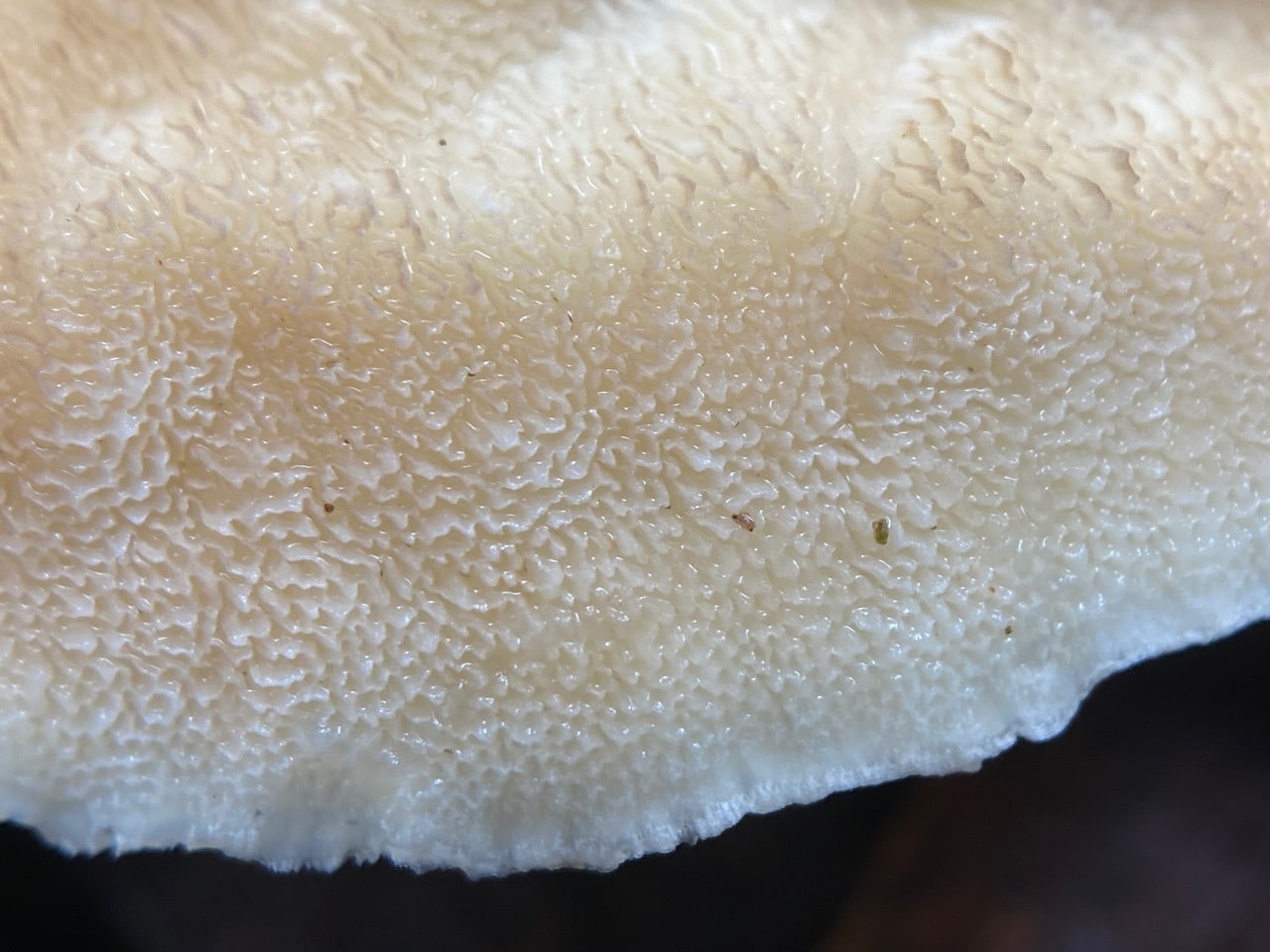
Close-up of the “pored” surface on the underside of the Turkey Tail mushroom.