

Pollinator Post 12/28/25
I head for the Regional Parks Botanic Garden in the Berkeley hills on this cool, sunny morning. The garden abounds in Manzanita (genus Arctostaphylos), which are early bloomers. This is where I’m most likely to find insects this time of year.
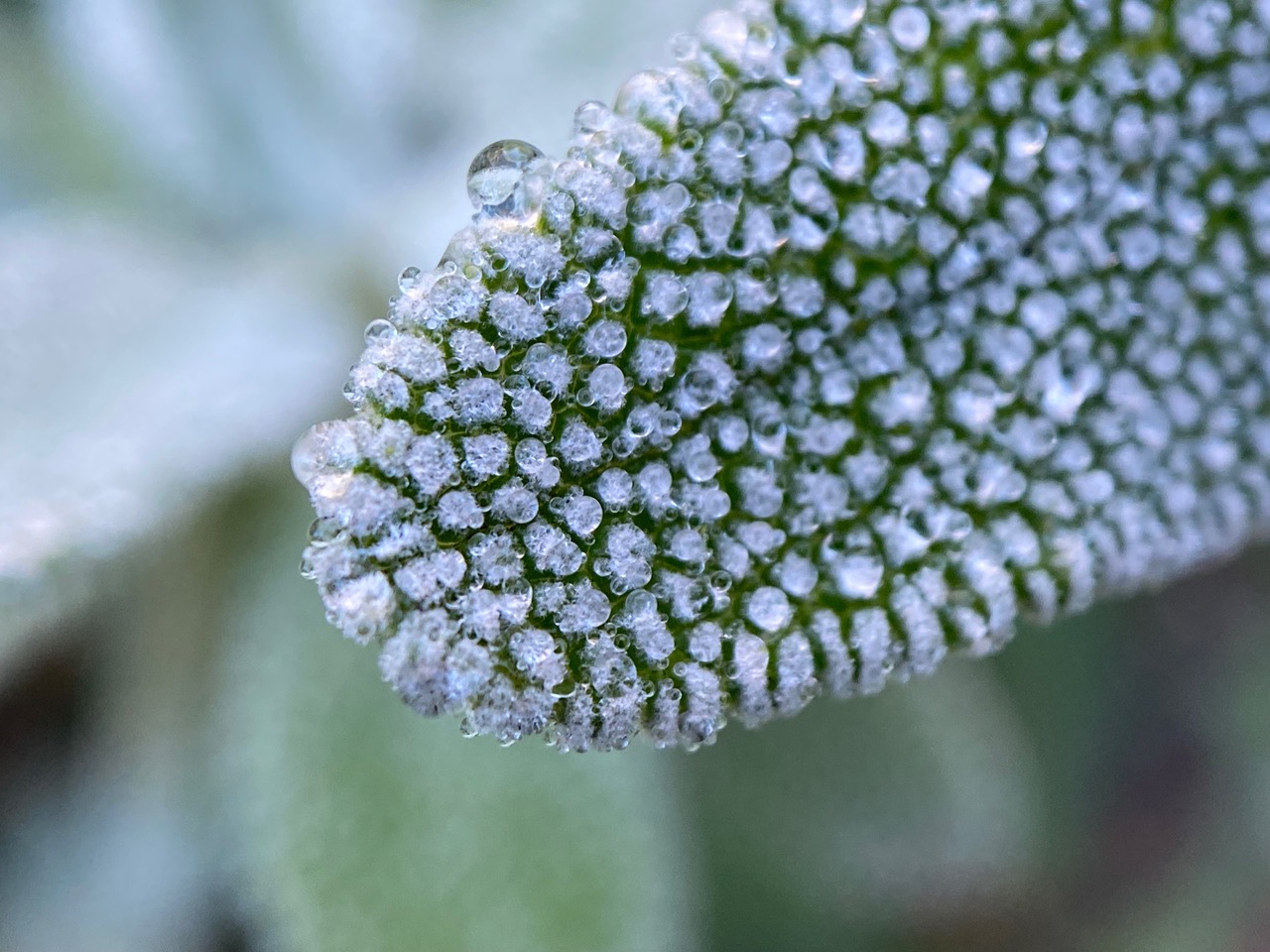





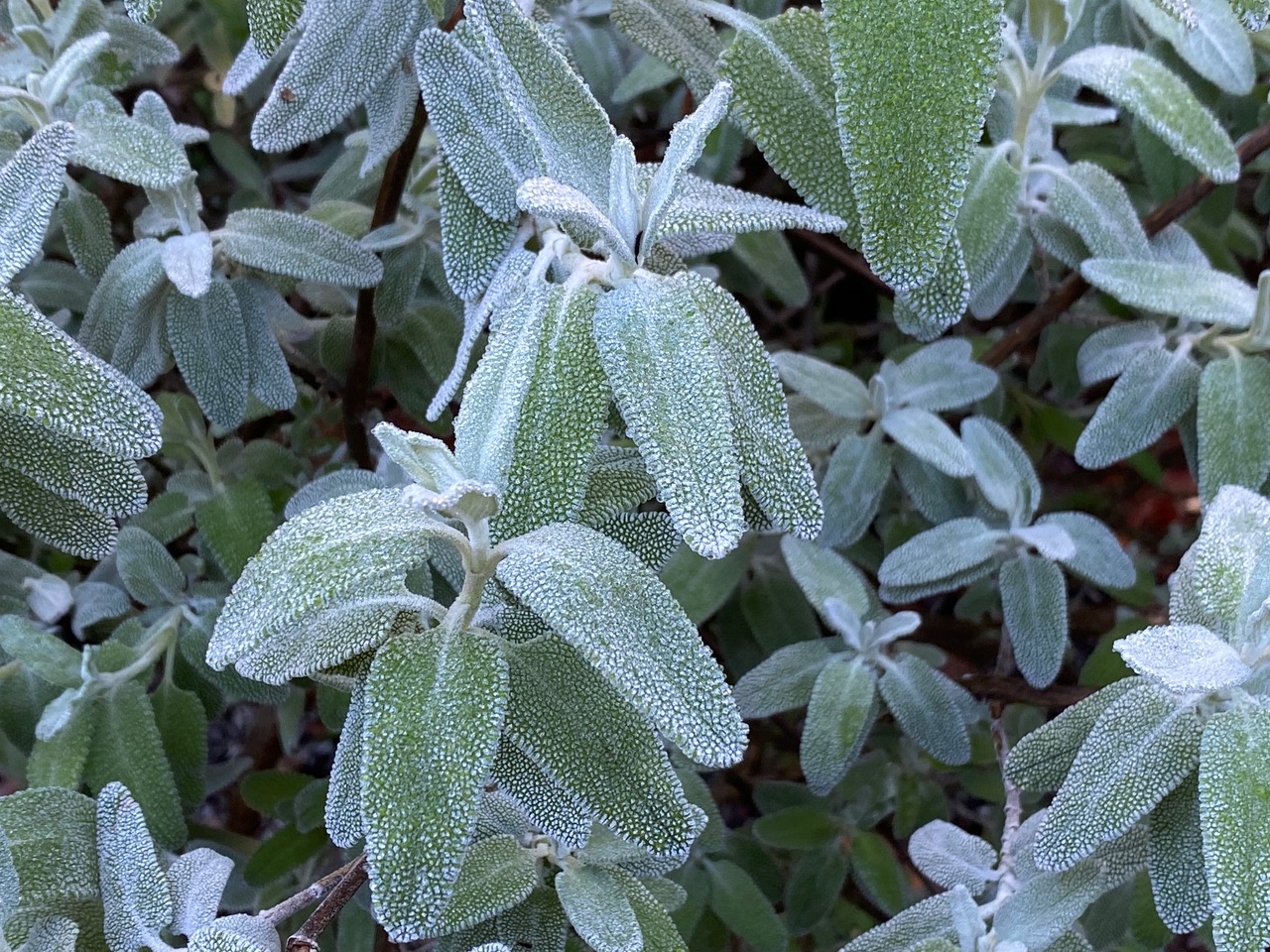
Is that unidentified Sage, Salvia sp. covered with frost? Although it is chilly, I don’t think the temperature is low enough for ice formation.
On closer inspection, I see that tiny water droplets have condensed on the leaf, causing the white hairs to form distinct clumps on the leaf surface, giving that frosty appearance. There does not seem to be any ice crystals.
There are reddish fleshy growths on the leaf margins of this prostrate hybrid Manzanita. They are galls induced by the Manzanita Leafgall Aphid, Tamalia coweni (familt Aphididae).
The Manzanita Leaf-gall Aphid, Tamalia coweni (family Aphididae) is a widespread species native to the west coast of North America. Feeding by the aphid on Arctostaphylos leaves induces red or reddish-green pod-shaped galls within which the aphids feed and develop. The tiny, gray or greenish aphids feed by sucking on tissue within the leaf galls. These aphids feed only on manzanita. Throughout most of the year adult females (which may be winged or wingless) give birth to live young without mating. In the fall, a sexual generation of winged males and females is produced. The winged aphids disperse, mate, and the females lay overwintering eggs on the bark at the base of the plant. Eggs hatch in late winter or spring and the emerging aphids walk up to the leaves, settle to feed, and initiate galls. They have several generations per year. The galls do not significantly affect plant health, but some consider them aesthetically objectionable.
The morning sun has lit up the mosses growing on a wooden fence in the shade. The green gametophytes have plumped up from the rains, and are producing conspicuous sporophytes on slender stalks. Moss sporophytes are the spore-producing structures with capsules (sporangium) at the end of slender seta (stalk). Spores are produced inside the capsules, and the setae elevate the capsules for better spore dispersal by wind. While it can photosynthesize, the sporophyte relies on the gametophyte for essential water and minerals.
Angiosperms (flowering plants) still have both sporophyte (2n) and gametophyte (n) stages, with the large, leafy plant we see being the diploid sporophyte generation, and the gametophyte is extremely reduced and hidden within the flower. Inside the flower, male gametophytes (pollen) and female gametophytes (embryo sac) develop into its anthers and ovules respectively, the reproductive structures of the flower. It blew my mind when I first learned this in a botany class.
Another wooden fence is covered with miniature lichens with upright, golf-tee-like reproductive structures. These are lichens in the genus Cladonia, commonly known as Pixie-cup Lichens or Trumpet Lichens. The “tees” are stalk-like growths called podetia, often topped with powdery soredia (for asexual reproduction) or small, colorful apothecia (for sexual spores).
Lichens are unique, composite organisms formed from a symbiotic partnership between a fungus and an alga (or cyanobacteria). The fungus provides structure and absorbs water-nutrients, while the photosynthetic partner (alga/cyanobacteria) creates food, allowing lichens to thrive in harsh environments like rocks, trees, and even extreme climates where neither component could survive alone. They appear in diverse forms (crusty, leafy, shrubby) and colors, acting as important bioindicators for air quality and biodiversity.
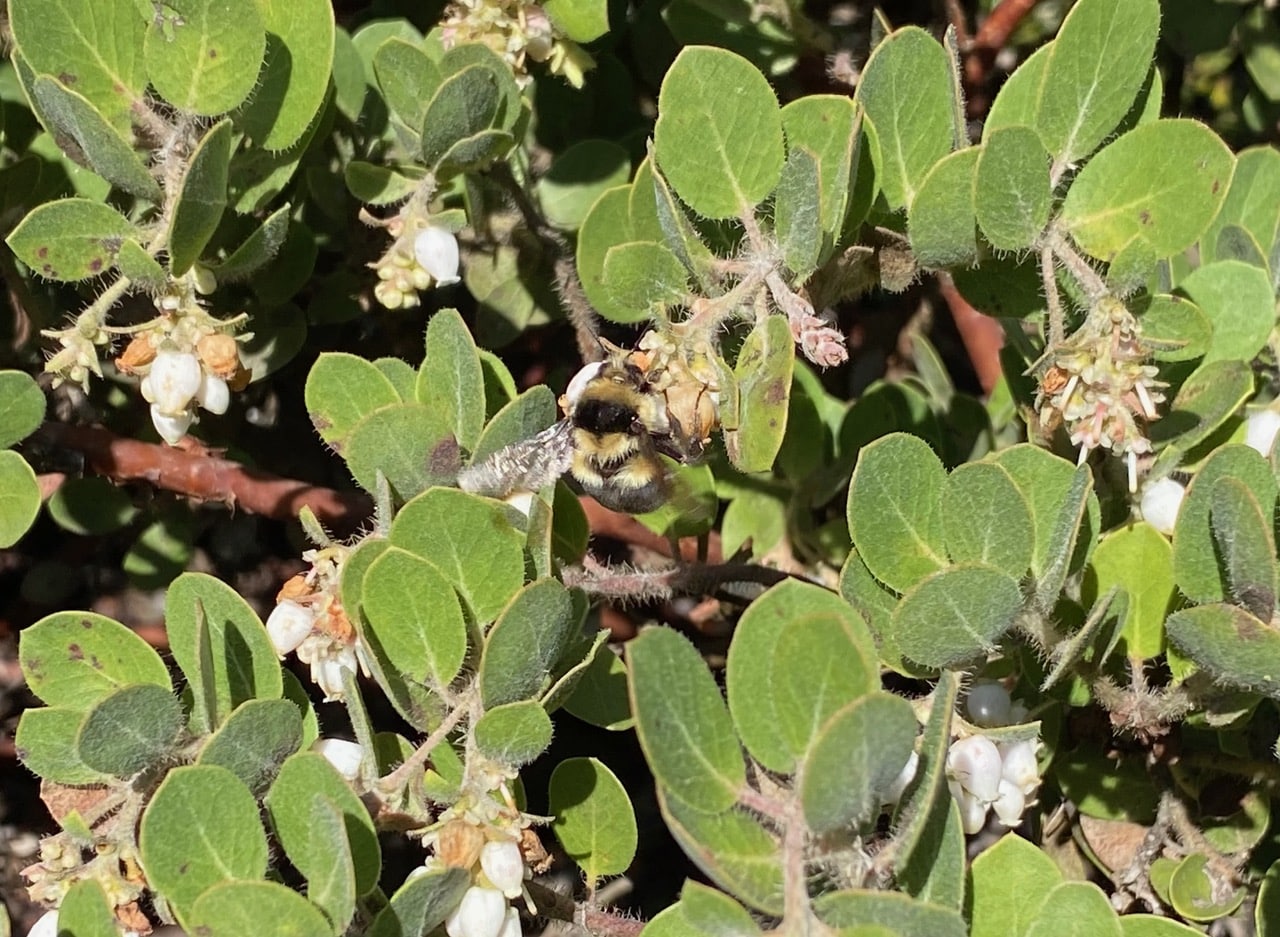
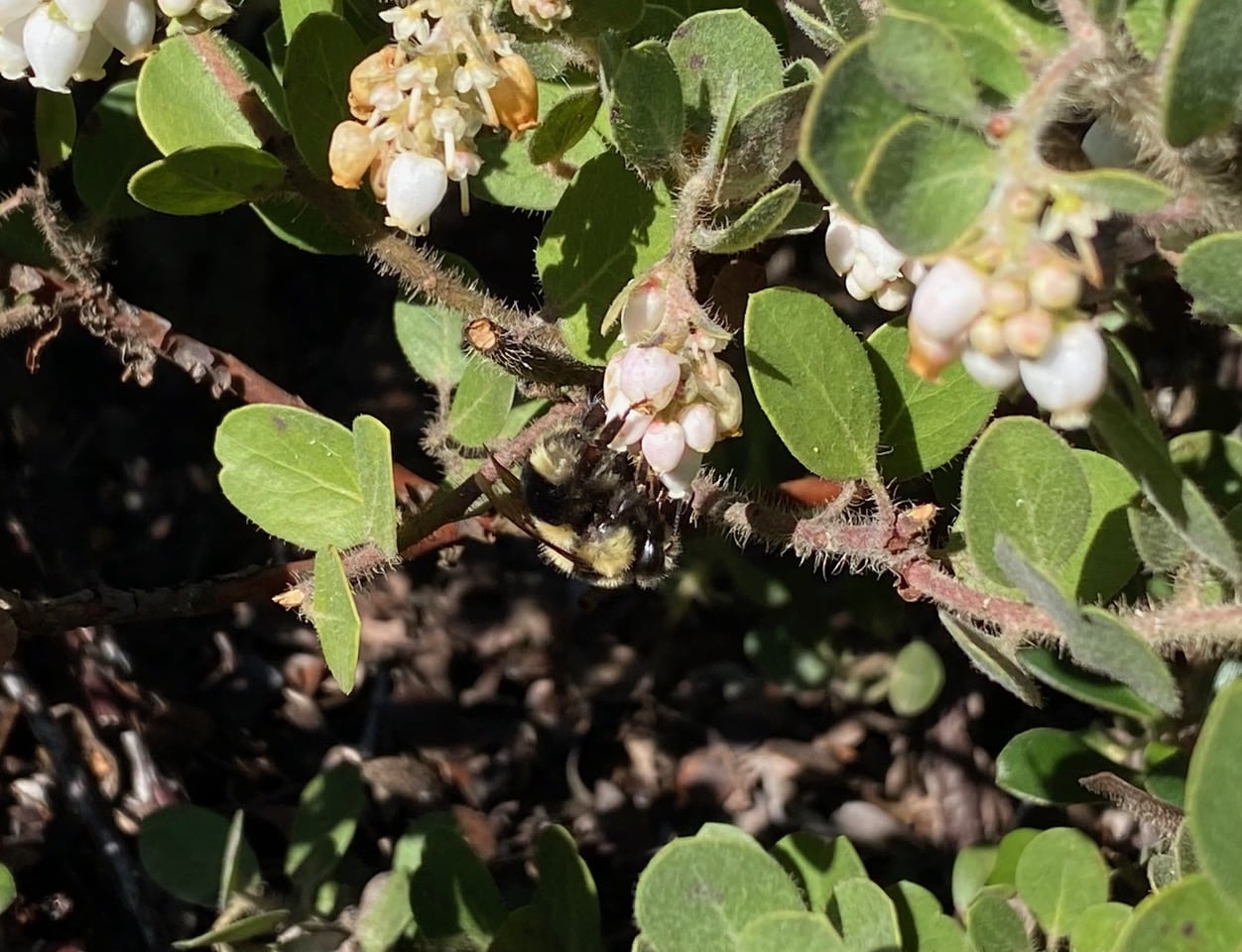
Several large Black-tailed Bumble Bees, Bombus melanopygus (family Apidae) are buzzing around the manzanitas blooming on the sunny slopes. The bees appear to be queens that have recently emerged from their hibernation. They don’t seem to be collecting pollen, but are concentrating on taking nectar. They most likely have not established their colonies yet, with no young to feed. Pollen is a protein-rich food, mostly fed to the growing larvae.
Bumble bees are social and live in colonial hives. Many of the large individuals seen early in the season are queens. They are the only members of their colony to survive the winter, hibernating until the days begin to warm and their host plants are in bloom. These queens have mated before they went into hibernation. Now their first order of business is to each find a nesting site (usually an abandoned rodent burrow), lay eggs, brood and nurture the first batch of workers. Henceforth, the queens stay behind in the hive to concentrate on laying eggs while the workers take on hive duties and foraging. At the end of the season, usually in late summer, the colony produces gynes and drones (males). These mate with others from neighboring colonies. The mated queens go off to find a safe place to hibernate through the winter, while the rest of the colony, including the old queen dies. And so the cycle is repeated.
Queens are noticeably larger than worker bees, which is one of the easiest ways to distinguish them. Queen bees are fed a more substantial diet during their larval development, contributing to their larger size. The queen’s large size is crucial for her to store enough nutrients to lay a large number of eggs throughout the colony’s lifespan.
The Black-tailed Bumble Bee, Bombus melanopygus (family Apidae) is a species of bumble bee native to western North America, widely distributed from the Pacific to the Rocky Mountains, and from Alaska to Baja California. The species is found in various habitats, including agricultural and urban areas. The bees feed on many types of plants, including manzanitas, Ceanothus, golden bushes, wild buckwheats, lupines, penstemons, rhododendrons, willows, sages, and clovers. They nest underground or aboveground in structures. I have seen a colony that nested in an abandoned bird’s nest among the vines on a neighbor’s trellis.
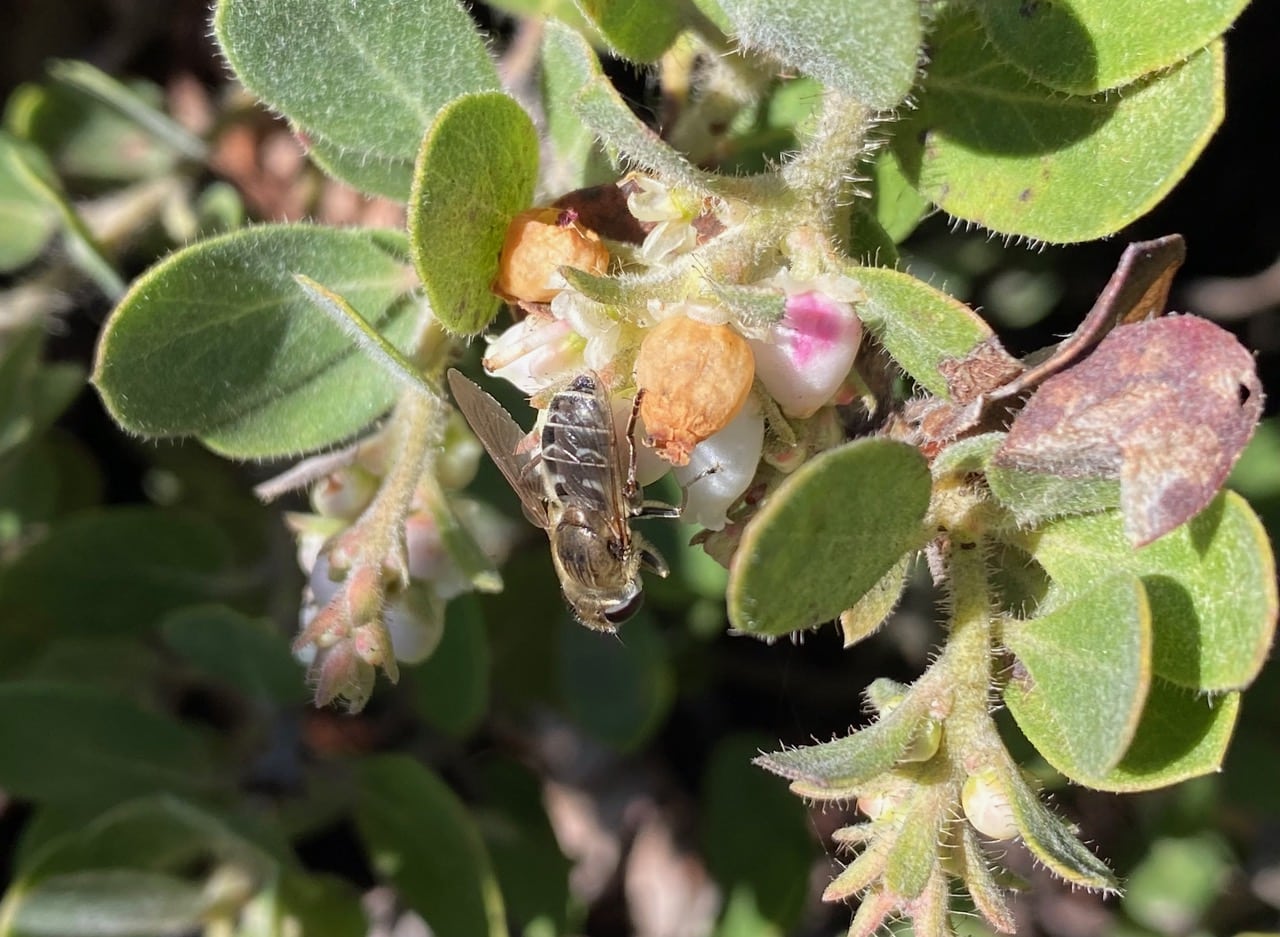
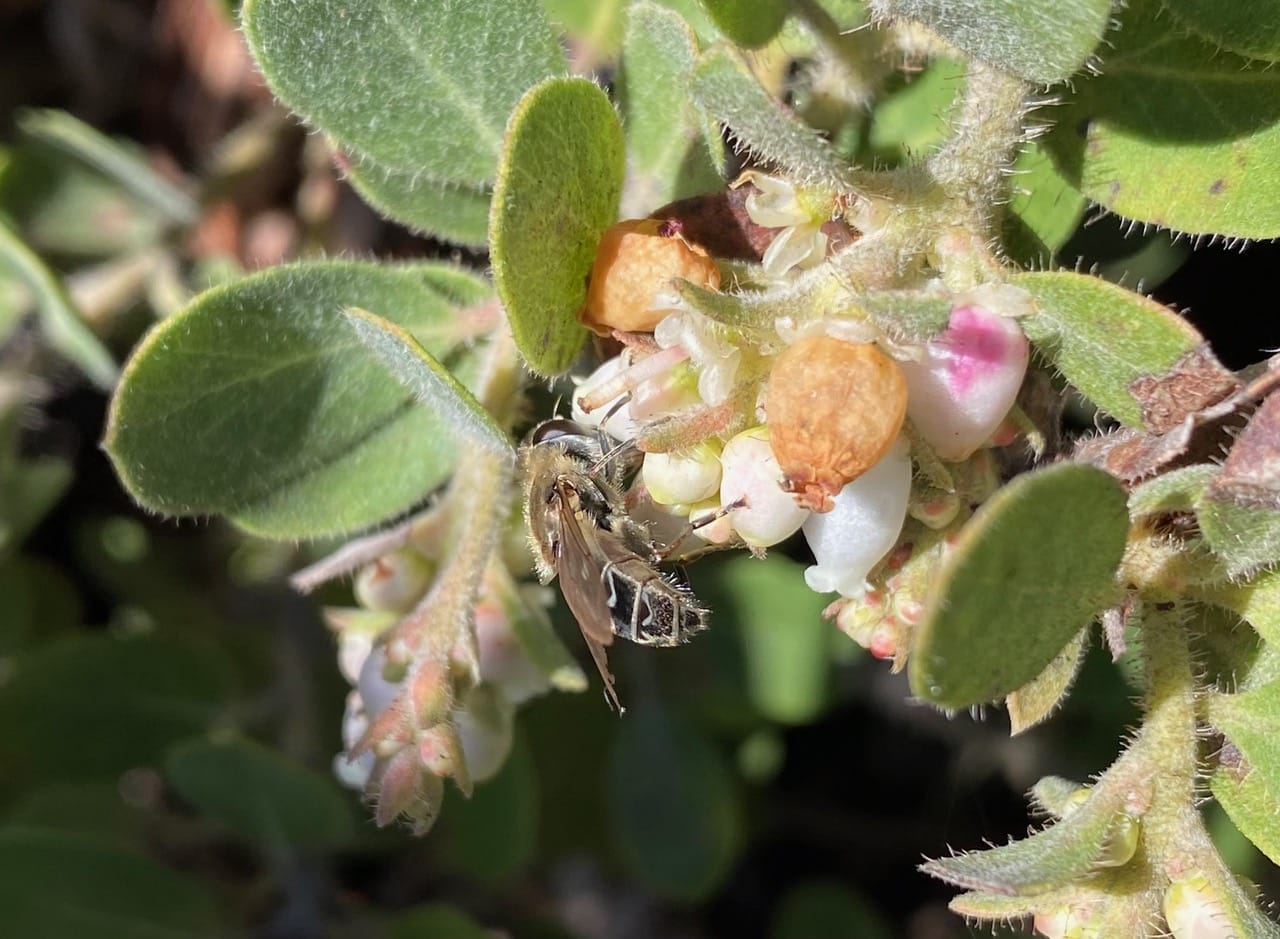
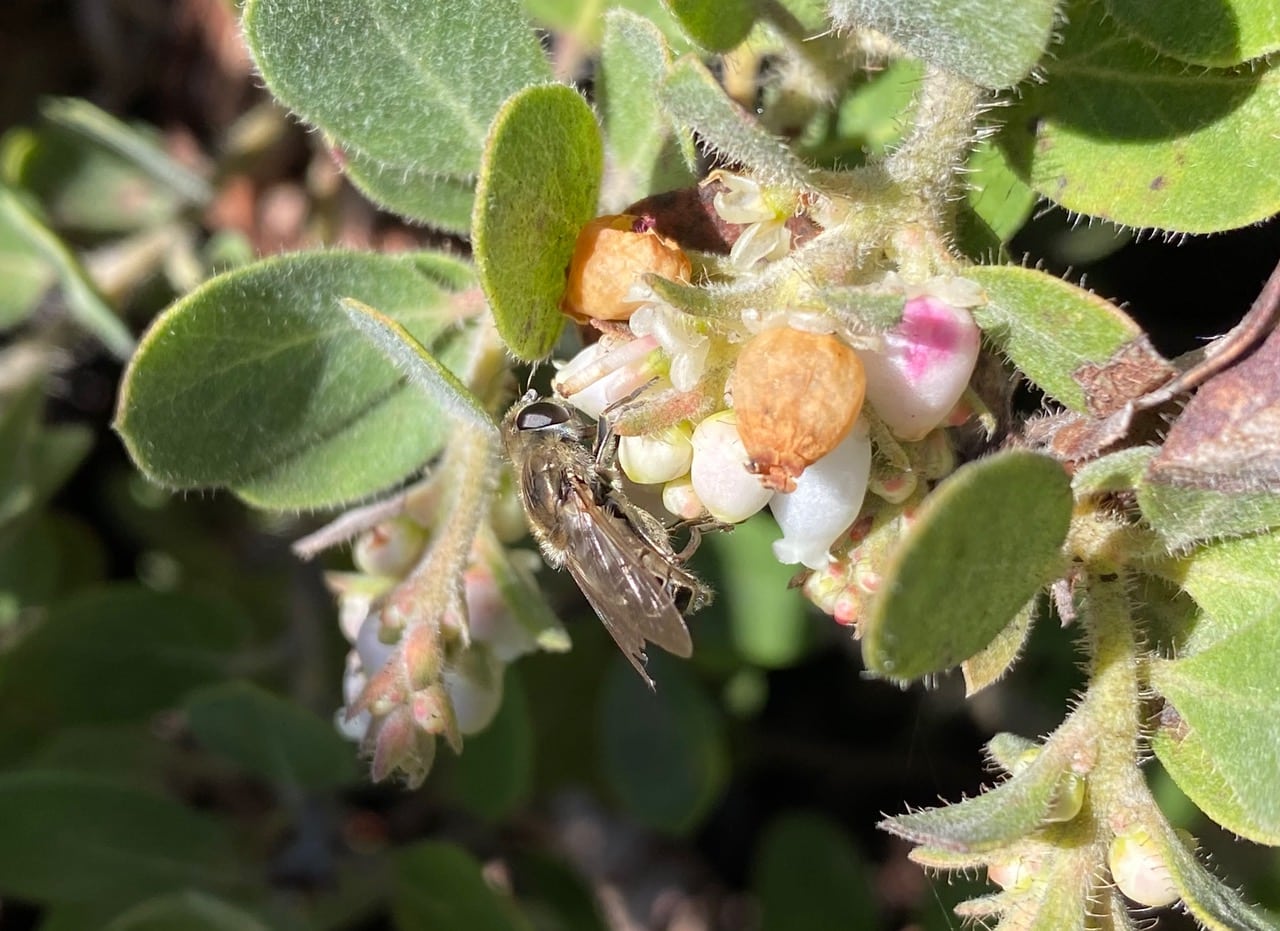
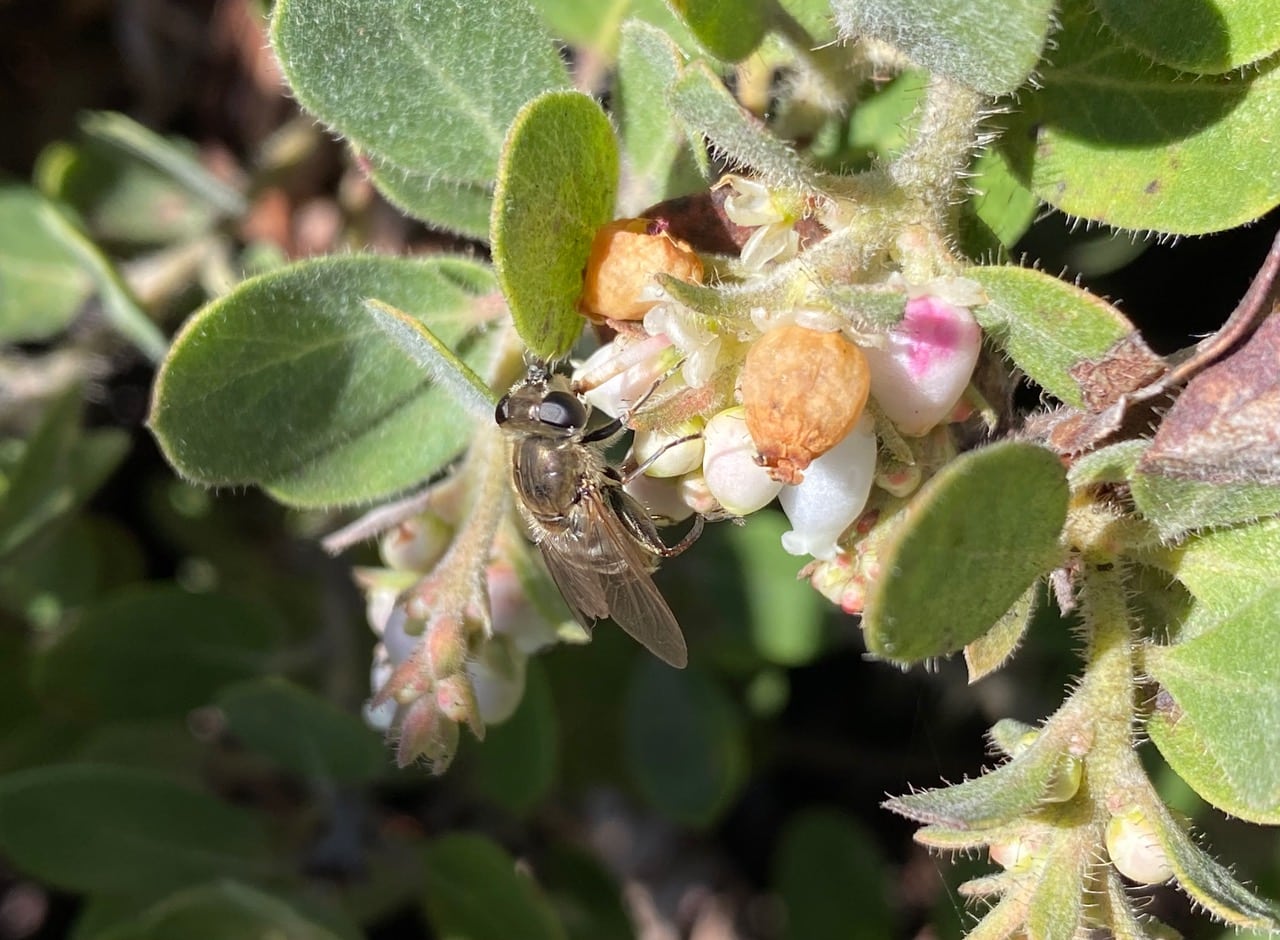
Hey, I recognize the distinctive abdominal pattern on that hover fly! It is a Common Sickleleg, Asemosyrphus polygrammus (family Syrphidae).
The Common Sickleleg, Asemosyrphus polygrammus (family Syrphidae) is found in western North America. Appropriately, Polygrammus means “marked with many lines”, probably referring to the patterns on the thorax. The common name ‘sickle-leg’ probably refers to the bow-shaped tibia of the hind legs. Adults visit flowers for nectar and pollen. Larvae are rat-tail maggots. The maggots are most commonly found in dank and decaying environments such as compost, pond margins, and tree rot holes. The larvae feed on the decomposing material which is poor in oxygen but rich in organic matter. The “tails” are the siphons or breathing tubes that extend from their rear end to enable the larvae to breathe while submerged in the wet substrate. When mature, the larvae climb out to pupate on dry land. The larvae are important decomposers/recyclers and the adult flies are important pollinators.
Note the bow-shaped tibia of the hover fly’s hind leg. This is the reason for the common name, Sickleleg. Apparently the fly’s proboscis is long enough to access the nectar at the base of the Manzanita flowers.
As the dorsal surface of fly’s thorax rotates into view, I can see the fine lines that form a neat pattern. The specific epithet of the fly, polygrammus means “marked with many lines”. Again, the bow-shaped tibia of the hind leg is visible.
In front of the visitor center, a Common Flower Fly, Syrphus sp. (family Syrphidae) settles on a low-hanging branch of a conifer to bask in the sun. This hover fly is a classic Batesian mimic of a bee or wasp.
Hover flies (family Syrphidae) are often mistaken for bees. This is called Batesian Mimicry after Henry Walter Bates who studied butterflies (among other things) in the Amazon and first described the phenomenon of harmless species mimicking unrelated harmful species as a form of protection from predators. Hover flies that mimic bee species make predators think twice before grabbing them.
Members of the genus Syrphus have long hairs on the lower lobe of the calypter. Adults visit flowers for nectar and pollen. Females seek out aphid colonies to lay their eggs, as their larvae feed on aphids.
Common Flower Flies (Genus Syrphus) · iNaturalist
I pick up a fallen cone under the tree. Ah, it must be an Ingelmann Spruce?
Spruce cones are typically cylindrical and oblong, hanging downward from branches, unlike fir cones that point up, with thin, flexible scales that don’t have the woody texture or prickly bracts of pine cones. They remain intact when they fall, releasing winged seeds from papery scales, and can range in color from green/purple when young to brown when mature, often appearing in large crops after stressful years.
Near the front gate, long pendulous chains of immature flowers (catkins) are hanging on a male Coast Silk-tassel, Garrya elliptica.
The Coast Silk Tassel, Garrya elliptica (family Garryaceae) is an evergreen shrub or small tree. It is dioecious, meaning male and female flowers are borne on separate plants. Flowers appear in winter, male catkin-like clusters are yellowish to greenish then gray, 8-20 cm long (“silk tassels”), female flower clusters are shorter, 5-9 cm long.
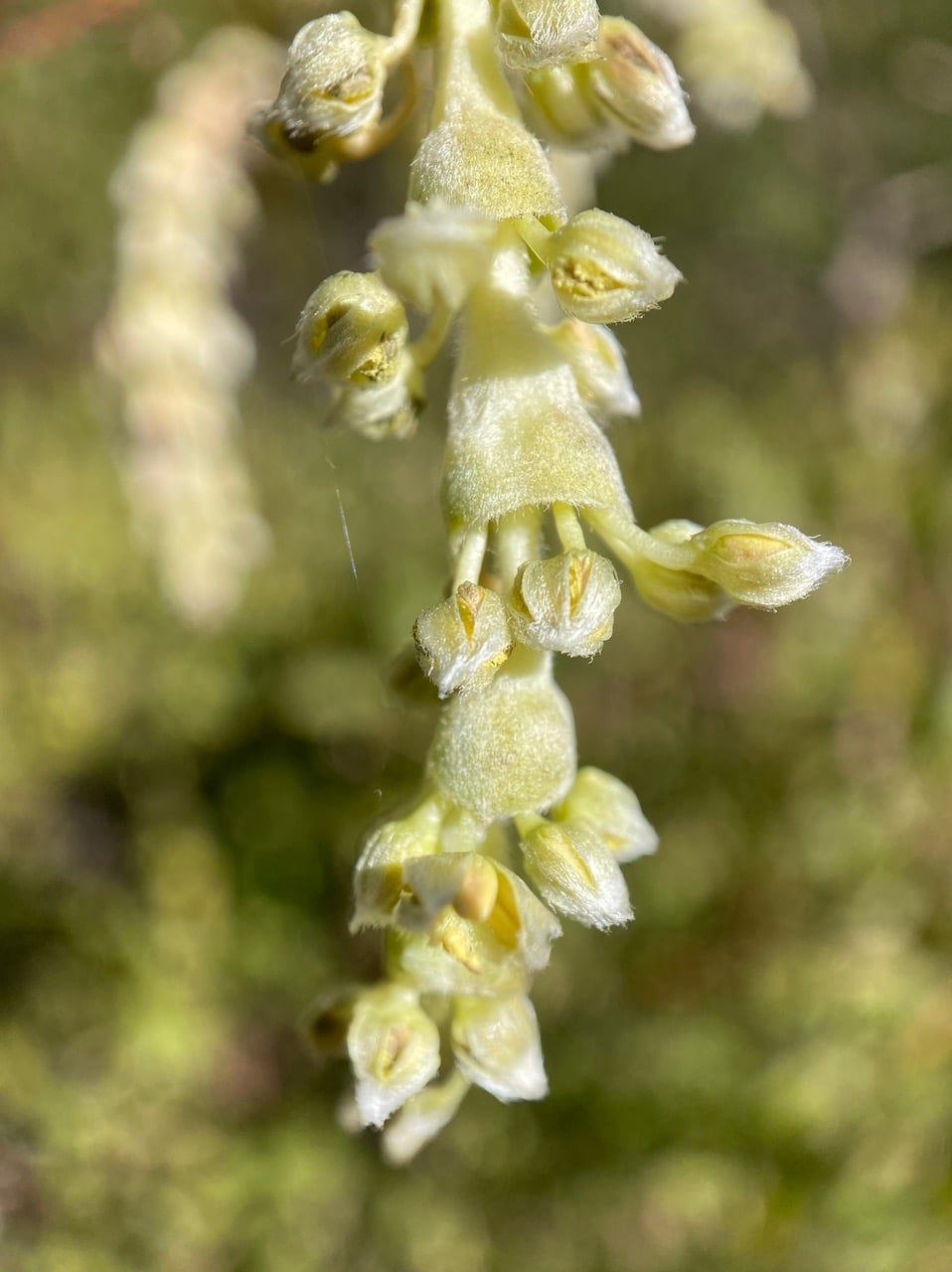
Nearby, another male Coast Silk Tassel has started to bloom. Within each catkin, tiny male (staminate) flowers are clustered and subtended by two bracts that are fused and form a cup or bell-shaped structure. The flowers are highly reduced, lacking petals. These flowers are wind-pollinated. As the wind blows, pollen is shaken out of the exposed stamens. What a clever design, and so beautiful!
Coast Silk Tassel is an example of plants that are wind pollinated. About 12% of flowering plants and most conifers are wind pollinated. These plants do not waste energy on flower features that attract animal pollinators; instead, their flowers generally have these characteristics:
– Small, petalless, and unscented, with muted colors.
– No nectar
– Stamen (male flower part) and stigma (female pollen-receiving part) are exposed to air currents.
– Male flowers produce a great deal of pollen, which is very small, dry, and easily airborne.
This close-up of a male Coast Silk Tassel catkin shows flowers that are more mature. Most of the exposed stamens are spent, having released their pollen to the wind.
Although the Silk Tassel flowers do not attract pollinators, the shrub is a charming addition to any garden. The purple berries of the Silk Tassel are a valuable food source for various wildlife such as birds, deer, foxes, and rodents, providing them with nourishment in winter when other food is scarce.
For the female plants to produce the berries, they need a male plant close by to supply the pollen. Many years ago when I was a volunteer at the Native Here Nursery in the Tilden Regional Park, there was a female Coast Silk Tassel near the front gate that produced bumper crops of berries every year. John Taylor, one of the managers of the garden at the time regaled me with the story of how the female plant was coaxed into reproductive stardom. For a long time, the lonely female never produced any fruits, until the volunteers, in a brilliant match-making attempt, moved a potted male plant next to her. Since the dioecious Silk Tassel is not insect-pollinated, successful reproduction is dependent upon having the sexes within pollen-wafting distance of each other!