

Pollinator Post 12/27/25

I walk the shoreline of Bay Farm late this morning. As usual, I pause at this large Coyote Brush to check for insects. Even in the dead of winter, the shrub continues to amaze me with its obscure denizens.
A tiny wasp is exploring a leaf of the Coyote Brush, Baccharis pilularis. For its size, I immediately think of parasitoid wasp.
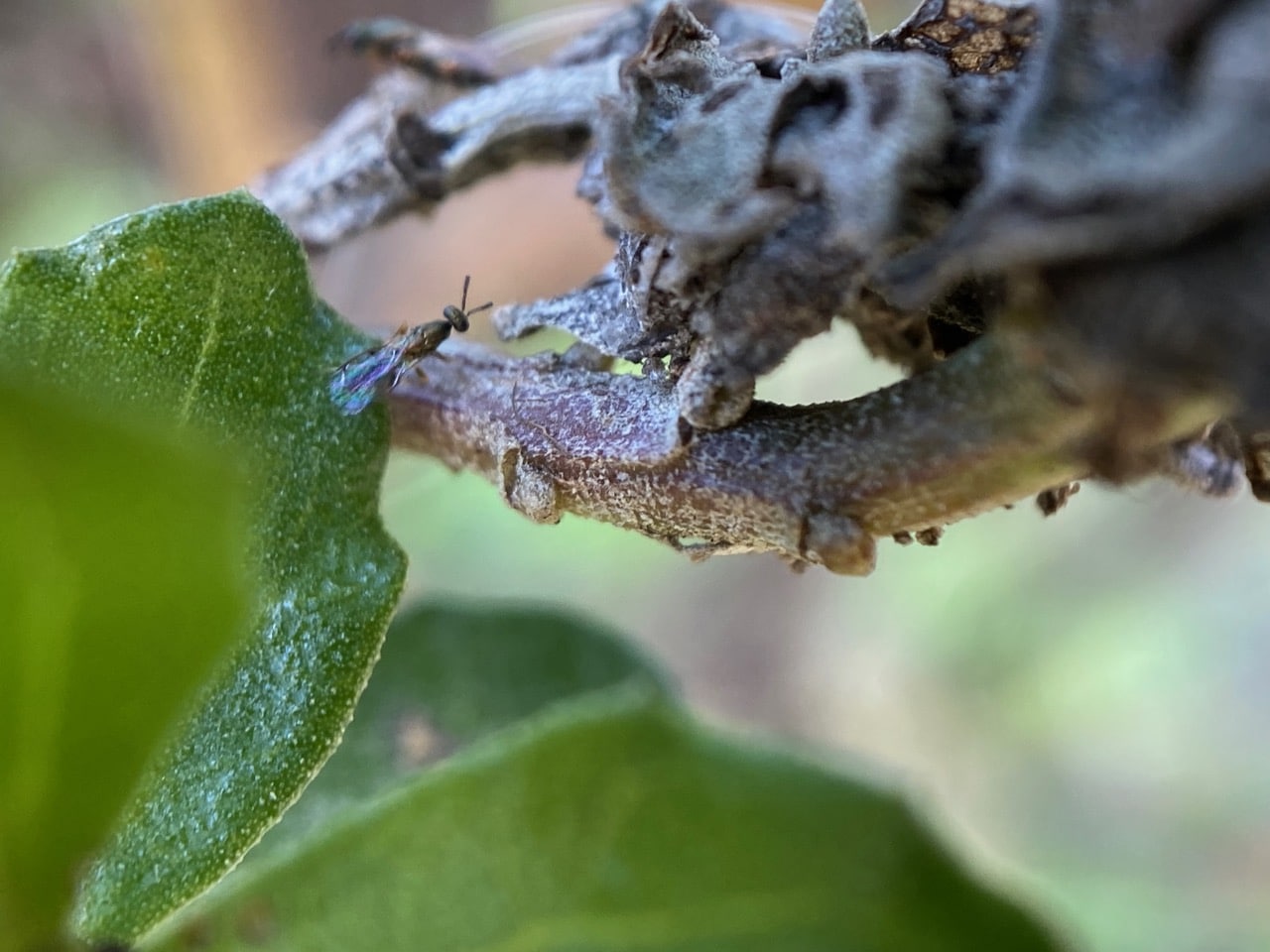
iNaturalist has confirmed that it is indeed a parasitoid wasp in the superfamily Chalcidoidea, likely in the genus Brasema (family Eupelmidae).
Eupelmidae is a diverse family that is found throughout the world in virtually all habitats. Most are internal or external parasitoids of the immature stages of moths, butterflies, true bugs, beetles, lacewings, grasshoppers, cockroaches, gall midges, and other wasps. Some are parasitoids within the egg case of spiders. Other species are hyperparasites, parasites that attack a host that is also a parasite. Species of Eupelmidae have been used as biological control agents of agricultural and forest pests.
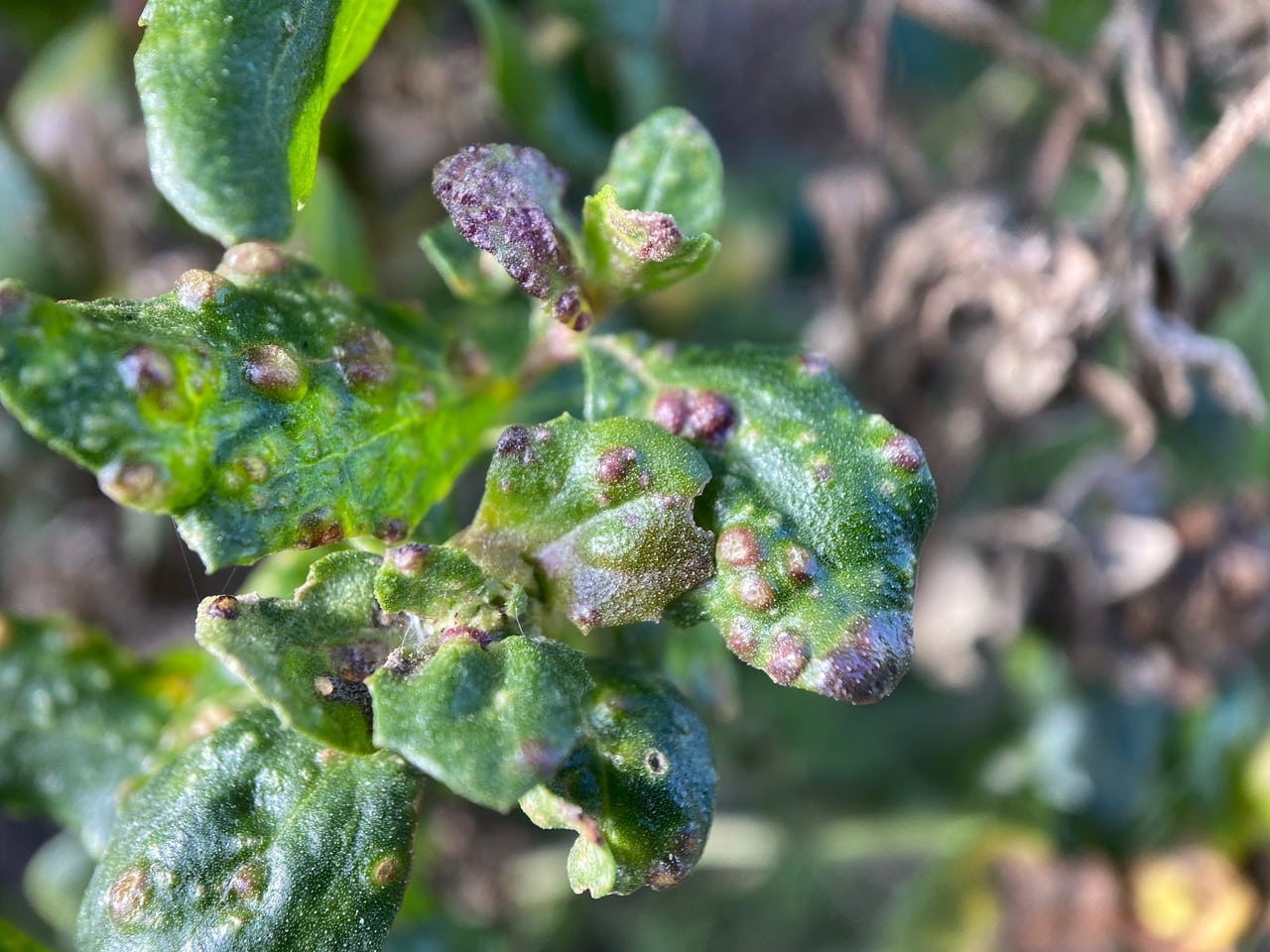
Reddish-purple pimples dot the surfaces of the terminal leaves of the Coyote Brush.
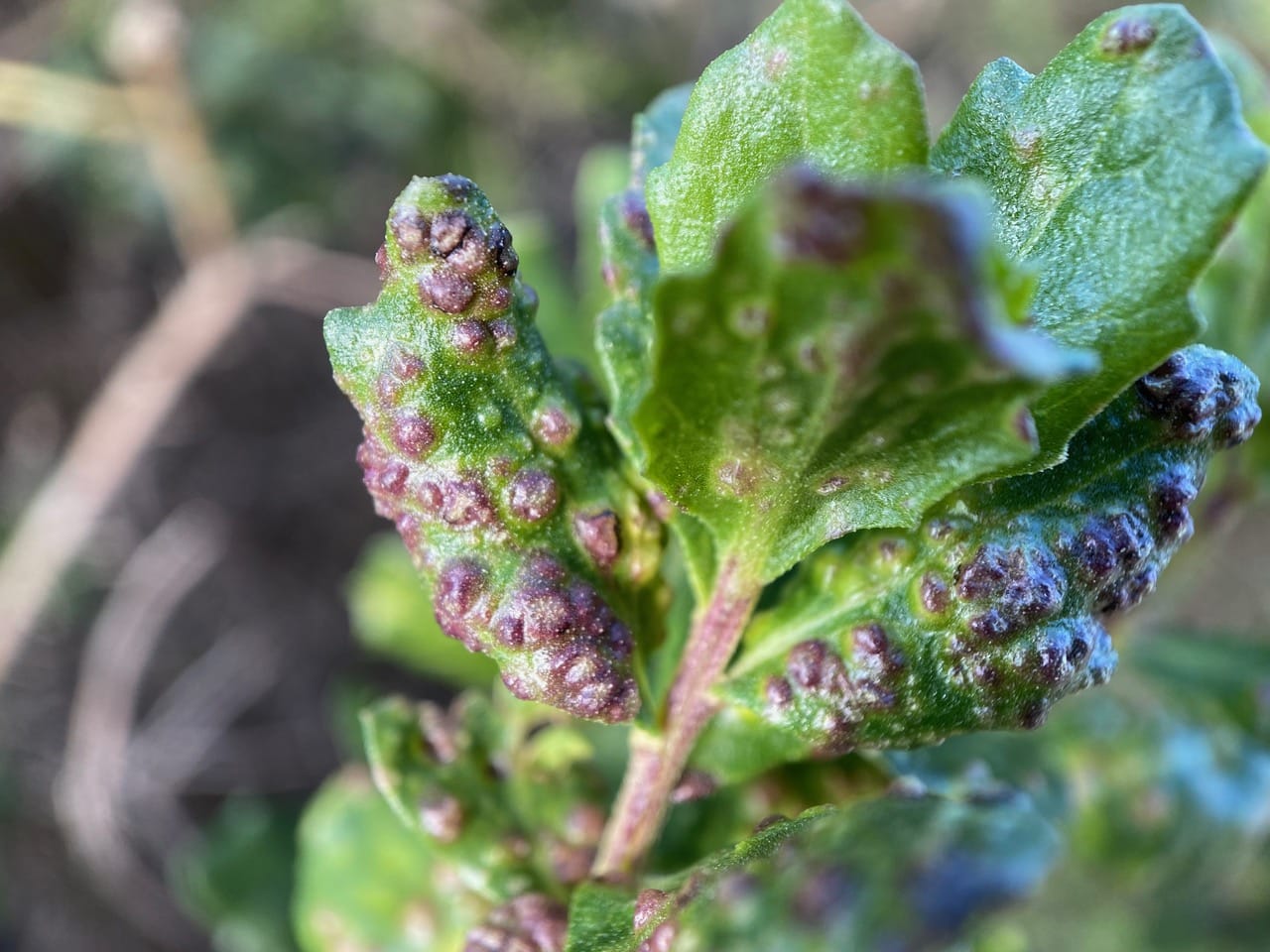
These grotesque pimples are actually leaf galls induced by a gall mite, Aceria baccharipha (family Eriophyidae), commonly known as the Baccharis Leaf Blister Mite.
Eriophyid Mites are microscopic mites that often go undetected. Unlike most adult mites that have four pairs of legs, eriophyid mites have only two pairs. They are slow-moving, usually white or yellow in color, and have a distinctive “carrot” shape. They are very host-specific. Most eriophyid mites make their home on the surface of leaves where their feeding can cause bronzing or reddening but some are also responsible for creating galls on leaves or witches’-broom on stems and flower buds. Adult females overwinter in cracks and crevices of twigs and bud scales. Females lay eggs in the spring. The young mites that hatch out resemble the adults. Numerous generations are produced each year. They are primarily spread by wind.
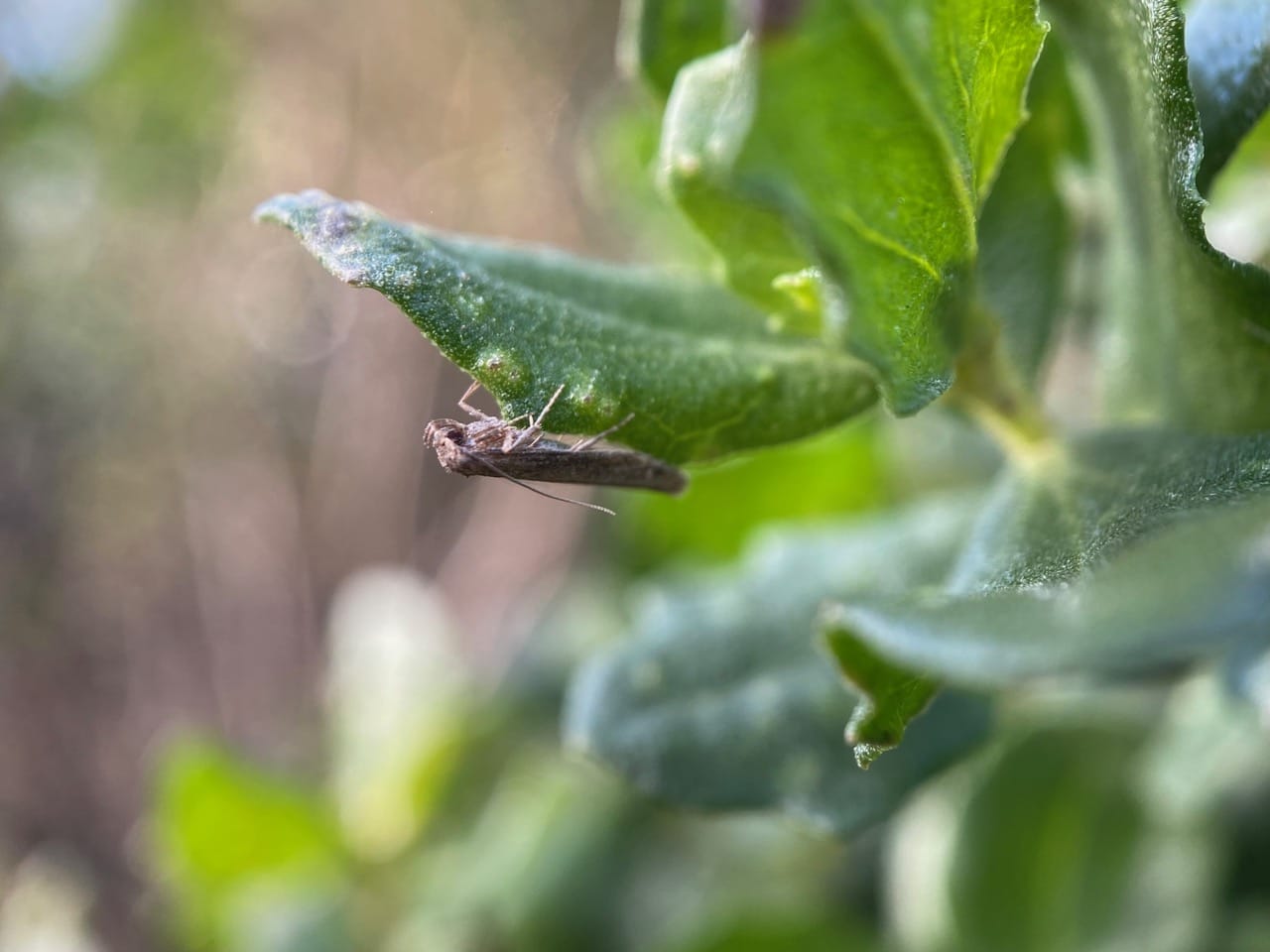
A small moth lands on one of the leaves of Coyote Brush. The pair of horn-like structures on its head is distinctive of micromoths in the superfamily Gelechioidea.
The horn-like structures on Gelechiidae (twirler moths) and their relatives (superfamily Gelechioidea) are actually highly developed mouthparts, the labial palps, which are elongated, curved appendages extending forward from the head, often with a pointed tip, giving them a “curved-horn” appearance that aids in identification within this large moth superfamily.
iNaturalist suggested that the moth might be a Coyote Brush Stem Gall Moth, Gnorimoschema baccharisella (family Gelechiidae, superfamily Gelechioidea). This moth induces hard, spindle-shaped stem galls on coyote brush throughout its range. Each gall contains a single larva. Gall development begins after overwintering eggs hatch in the spring and the larvae burrow into the terminal shoots. The stems swelll around the larvae, leaving large cavities within which the larvae feed. In summer, the larvae cut exit holes through the gall walls and drop to the ground to pupate. Adults emerge August and September. Eggs are laid in fall on the outer branches. Many insects often take over the vacated galls to feed on the fungi that grow on the accumulated frass left by the moth larvae.
Ron Russo wrote in his Field Guide to Plant Galls of California and Other western States: “Tilden (1951) found at least 10 parasites associated with this moth in addition to 17 other insects that were connected to the gall or the moth in some manner. The intricacies of these complex relationships stagger the mind for such a common, yet so disregarded, shrub.”