

Pollinator Post 1/8/23 (2)

At the end of the Water Tank Road, Andy and I decide to loop back to Siesta Gate on Skyline Trail. We are treated to some pretty rain drops on plants.

The convex surfaces of water drops act as magnifying lens to accentuate the veins of a wavy leaf of Soap Root, Chlorogalum pomeridianum.
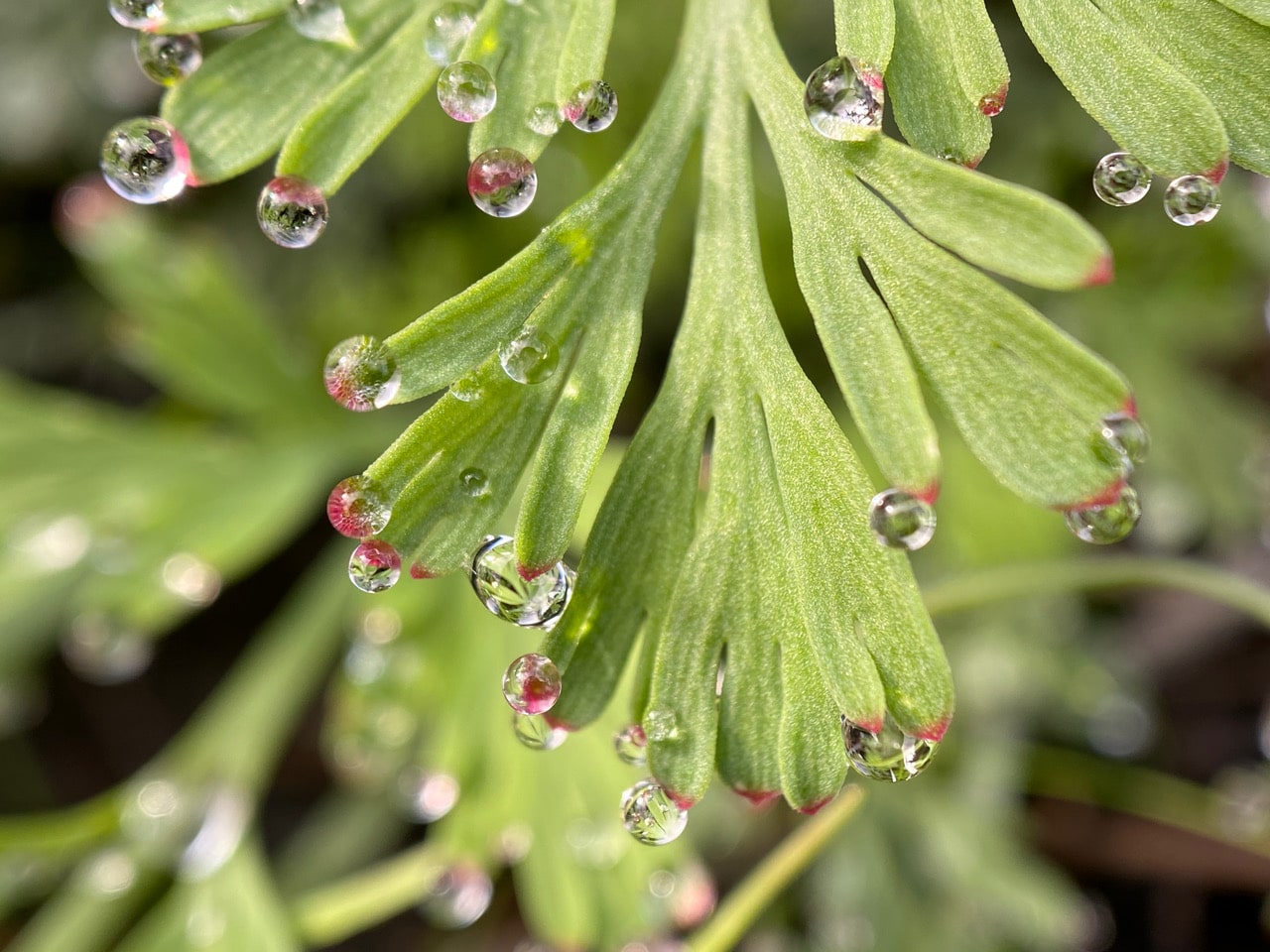
Rain drops glisten on the divided tips of a California Poppy leaf.
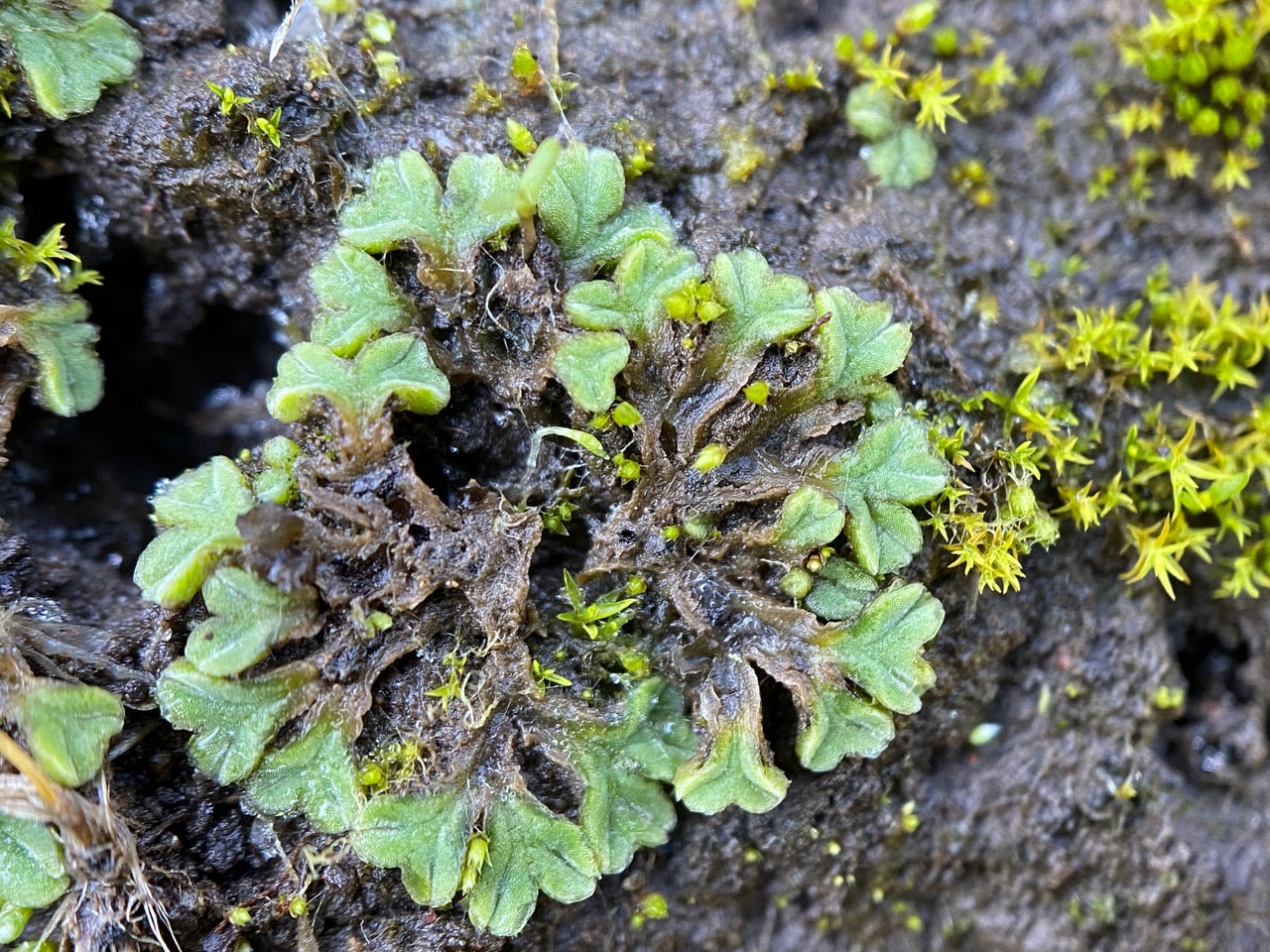
The Common Crystalwort, Riccia sorocarpa (family Ricciaceae) grows in irregular rosettes on bare soil on the margins of the trail. The thalloid liverwort seems to thrive in these wet conditions. While Calflora claims the species is native to California, the species map shows a worldwide distribution.

We stop by the California Bay trees, Umbellularia californica that are in bloom. It is just about the only plant in bloom right now.
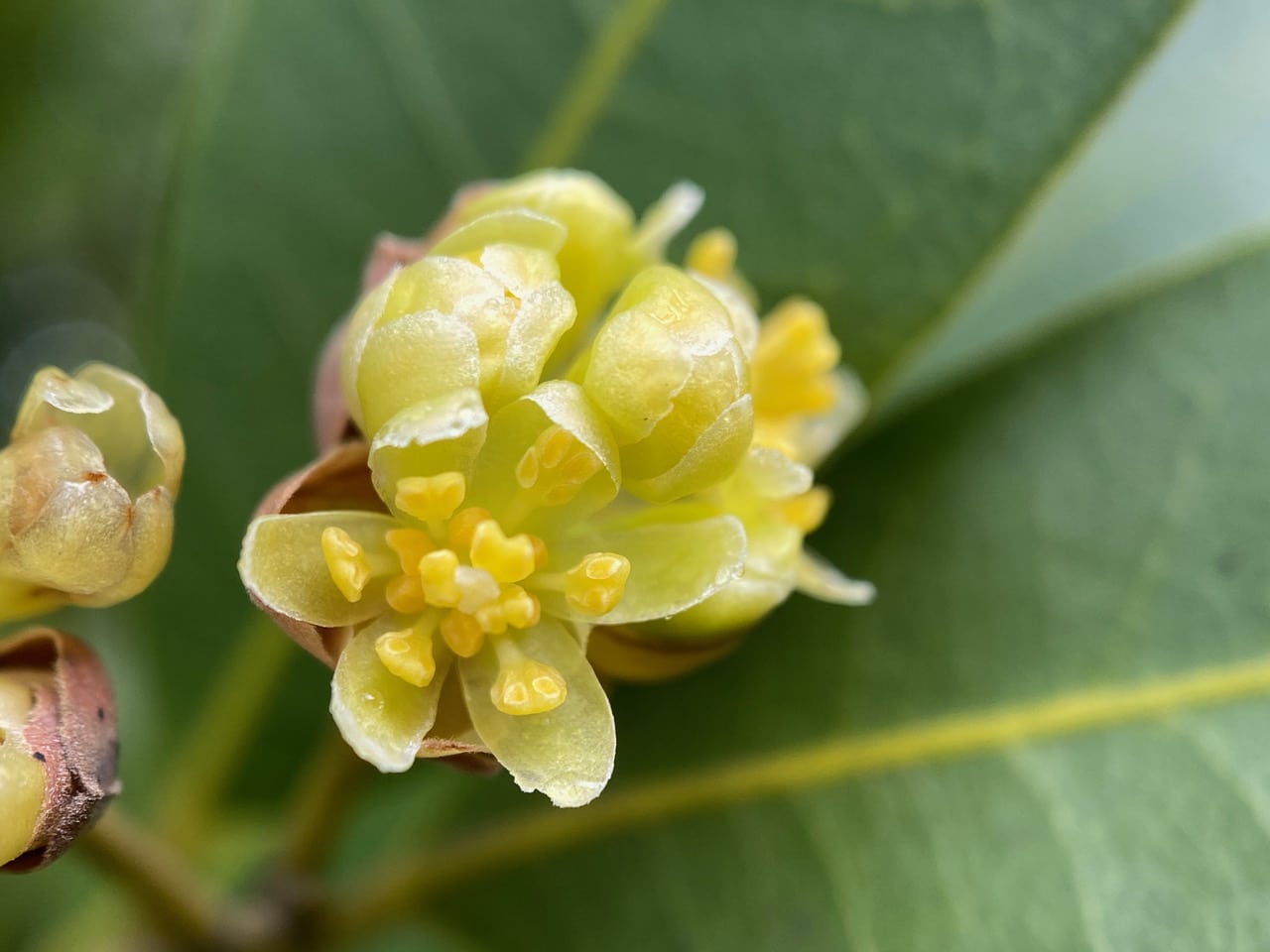
Might there be insects attracted to the flowers? In the middle of winter? Who pollinates these flowers?

Small insects can be seen dancing around the California Bay flowers. At this temperature (50 F)? Some have been trapped on a barely visible spider web. They appear to be delicate midges with prominent antennae. iNaturalist has helped identify these as Winter Midges, Diamesa sp. (family Chironimidae, subfamily Diamesinae).
The Chironomidae are also known as nonbiting midges, with a global distribution. Males are easily recognized by their plumose antennae. Adults feed on fresh fly droppings, nectar, pollen, and honeydew, some possibly serving as pollinators. Larval stages can be found in almost any aquatic or semiaquatic habitat, including tree holes, rotting vegetation, soil, and in sewage. Larvae of some species are bright red in color due to a hemoglobin analog; these are often known as “bloodworms”. The larvae and pupae are important food items for fish, amphibians, and predatory aquatic insects. Adult midges are eaten by fish and insectivorous birds, bats, and predatory flying insects.
The genus Diamesa comprises some remarkably cold-tolerant species. A flightless species can walk on glacier ice in below-zero temperatures.
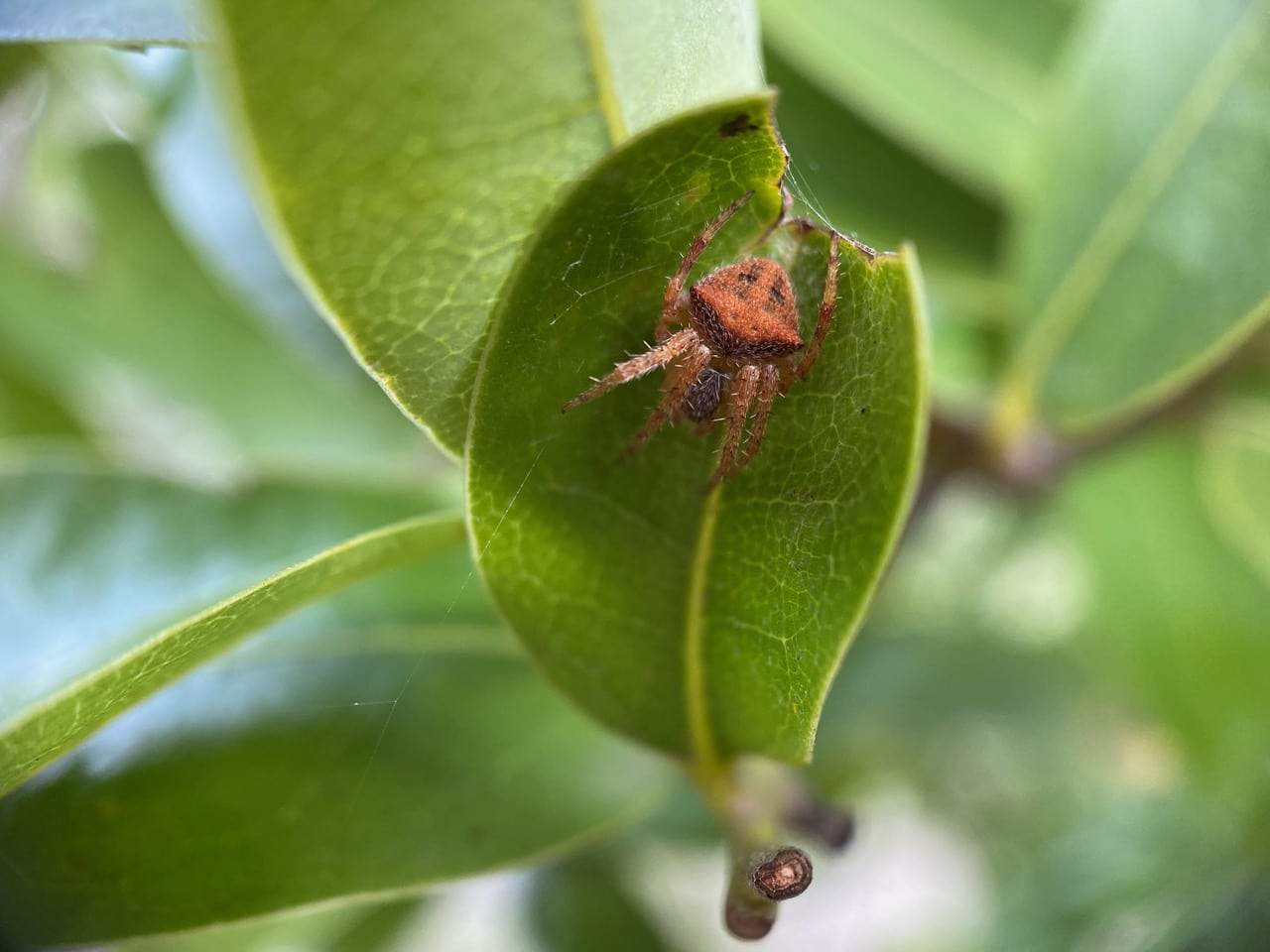
Here’s the lucky owner of the web, a small Orbweaver Spider in the family Araneidae. Note that the wily spider is holding onto a strand of silk that extends from the web. She can sense the vibration of any struggling prey while safely hidden behind a leaf.
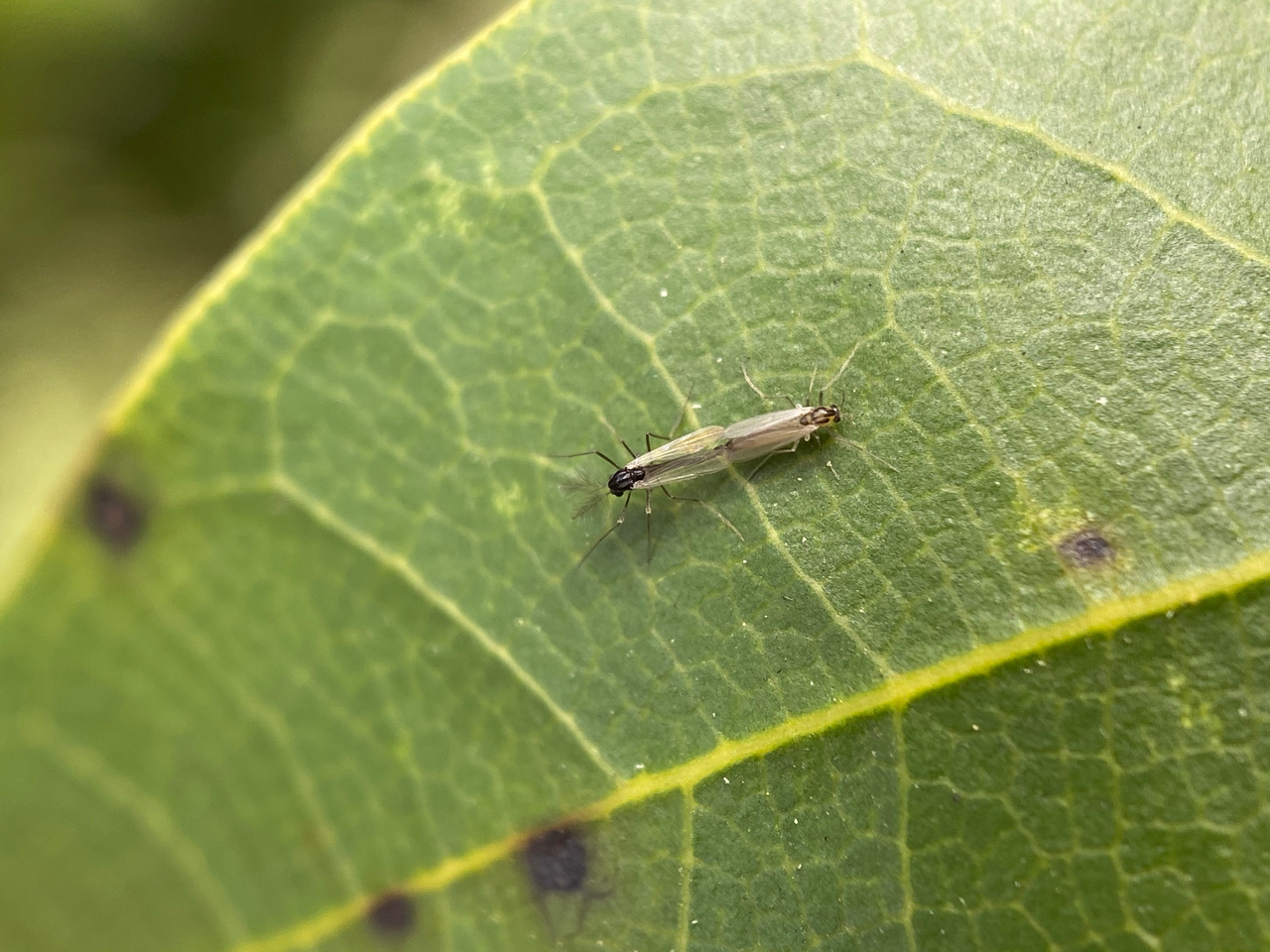
A pair of Winter Midges is mating under a California Bay leaf. The one on top with the plumose antennae is the male.
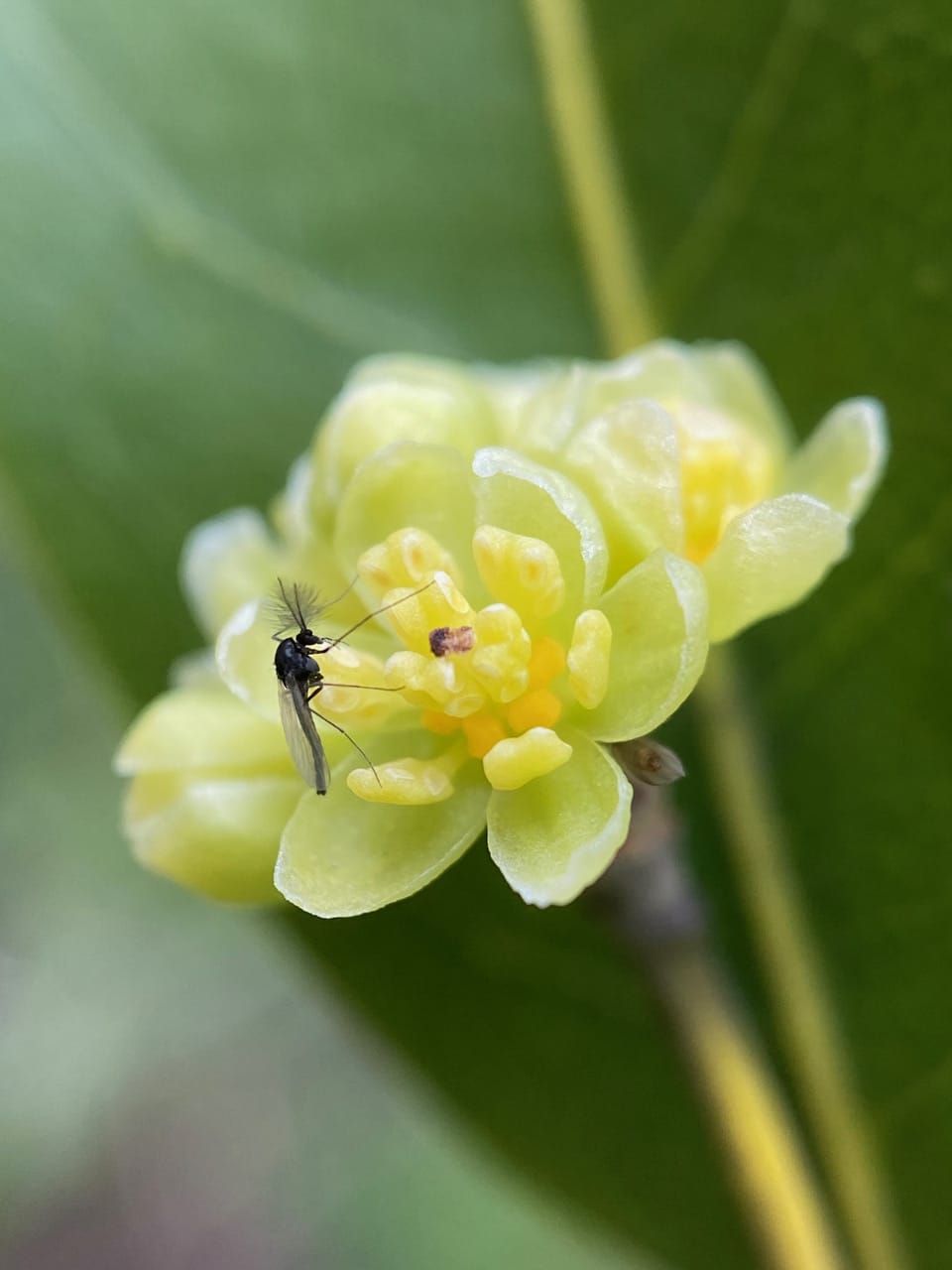
Close-up of a male Winter Midge on a California Bay flower.
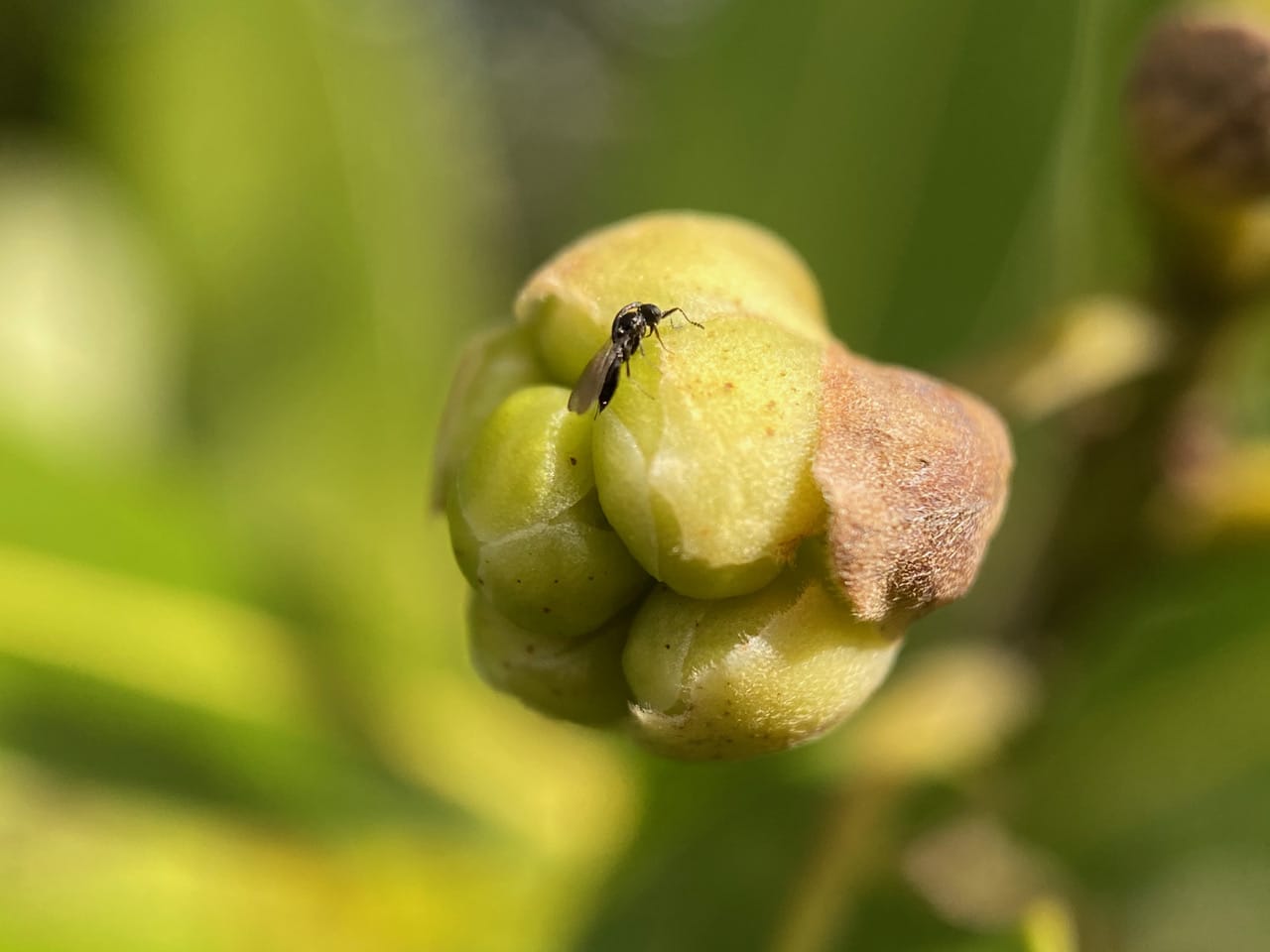
Wait, that does not look like a midge. I think it’s a wasp! What’s that structure arching over its thorax?

iNaturalist has helped identify the insect as a parasitoid wasp in the genus Inostemma, family Platygastridae. The wasps are parasitoids of gall midges (family Cecidomyiidae). Females have a long handle arising from the dorsal side of abdomen and projecting forward over the thorax. The projection houses the ovipositor when not in use. Is this female looking to lay her eggs in a gall midge developing within one of the flower buds? Her incredibly long ovipositor can penetrate deep through the plant tissues. Obviously the gall midges are currently active on the California Bay too! Who would’ve thought there’s so much insect drama going on in the middle of winter!