

Pollinator Post 1/25/23 (2)


A young Bee Plant, Scrophularia californica is making a dash for the sun.

Green leaves are unfolding from buds on the thorny Gooseberry branches.

That succulent specimen looks like an unfamiliar Crystalwort (a kind of liverwort) in the genus Riccia.
 There’s a bonanza of liverworts today! This one that looks like a miniature butter lettuce is a Frillwort in the genus Fossombronia.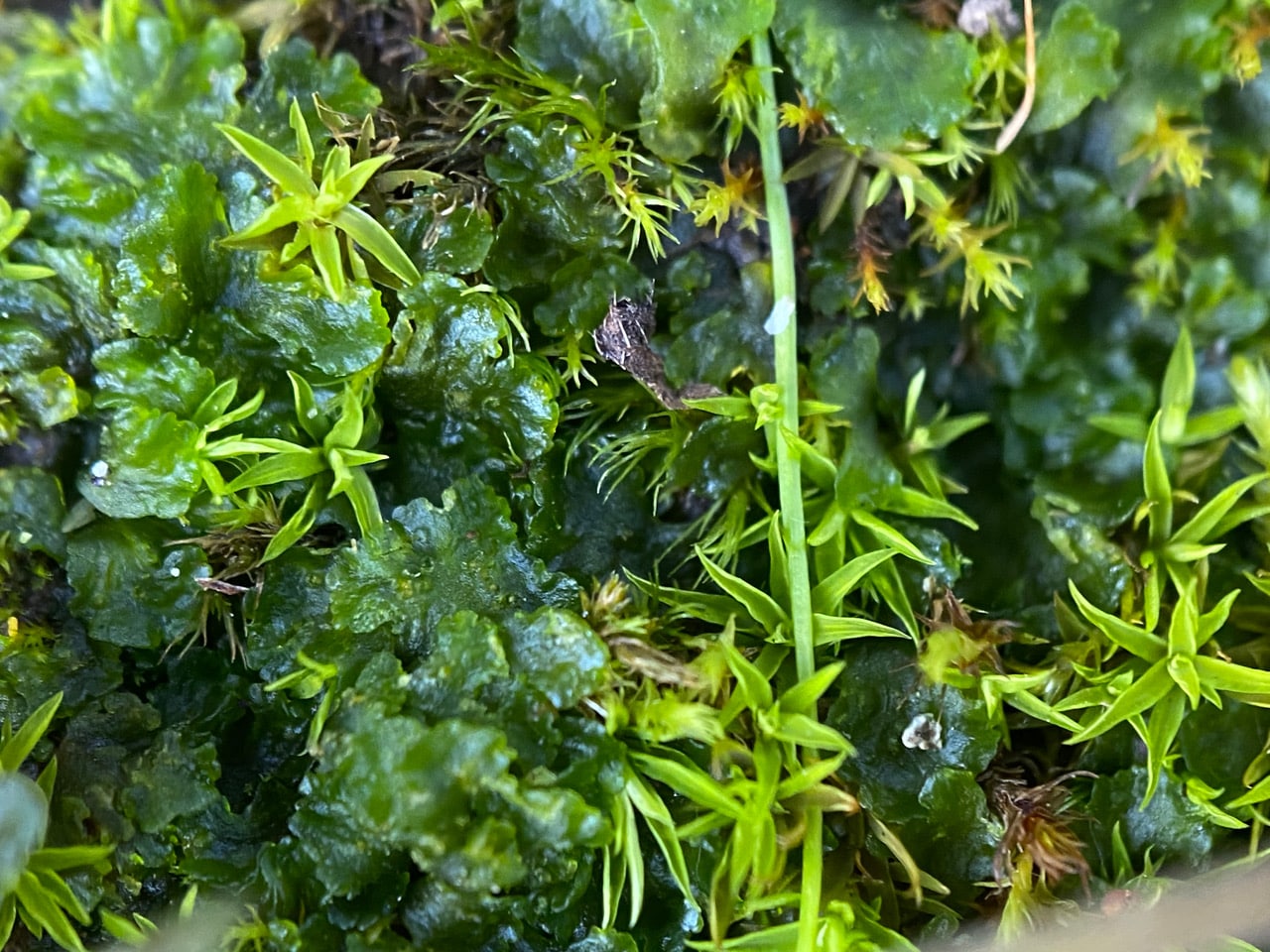
Here’s something different. The ruffled dark green thalli appear as though they have been soaked in oil. My heart misses a beat. It’s probably a Hornwort, either in the genus Phaeocerus or Anthoceros. Those two can be distinguished by their spore colors – Phaeocerus has yellow spores, Anthoceros has dark brown or black spores. I have to come back when the hornwort has produced its horn-shaped sporophyte. I’m thrilled ‘cos I haven’t seen a Hornwort in ages!
All this talk about mosses, liverworts and hornworts (collectively known as the Bryophytes) must be overwhelming for those not familiar with them. Often overlooked because of their small size and lack of colorful flowers, they are possibly the most ancient terrestrial plants. They are non-vascular, which means they have no roots or vascular tissue, but instead absorb water and nutrients from the air through their surface. Bryophytes thrive in damp, shady environments, but they can be found in diverse and even extreme habitats, from deserts to arctic areas.
The Bryophytes show an alternation of generation between the haploid gametophyte generation, which produces the sex organs and sperm and eggs, and the diploid sporophyte generation, which produces the spores. The long-lived and conspicuous generation is the gametophyte. Sperm are flagellated and must swim in search of the egg which may be on a different plant. Because their reproduction is tied to water, Bryophytes are often called the “amphibians of the plant world”. The sporophyte releases spores, from which the gametophytes ultimately develop. The sporophytes appear only occasionally and remain attached to and nutritionally dependent on the gametophyte.

View from Siesta Nose overlooking the Siesta Valley. All the hills have greened up beautifully!

On the thin, rocky soil of Siesta Nose I notice another kind of Liverwort. The growth form is reminiscent of the Crystalwort genus Riccia, but this species appears more gray-blue than the common ones.
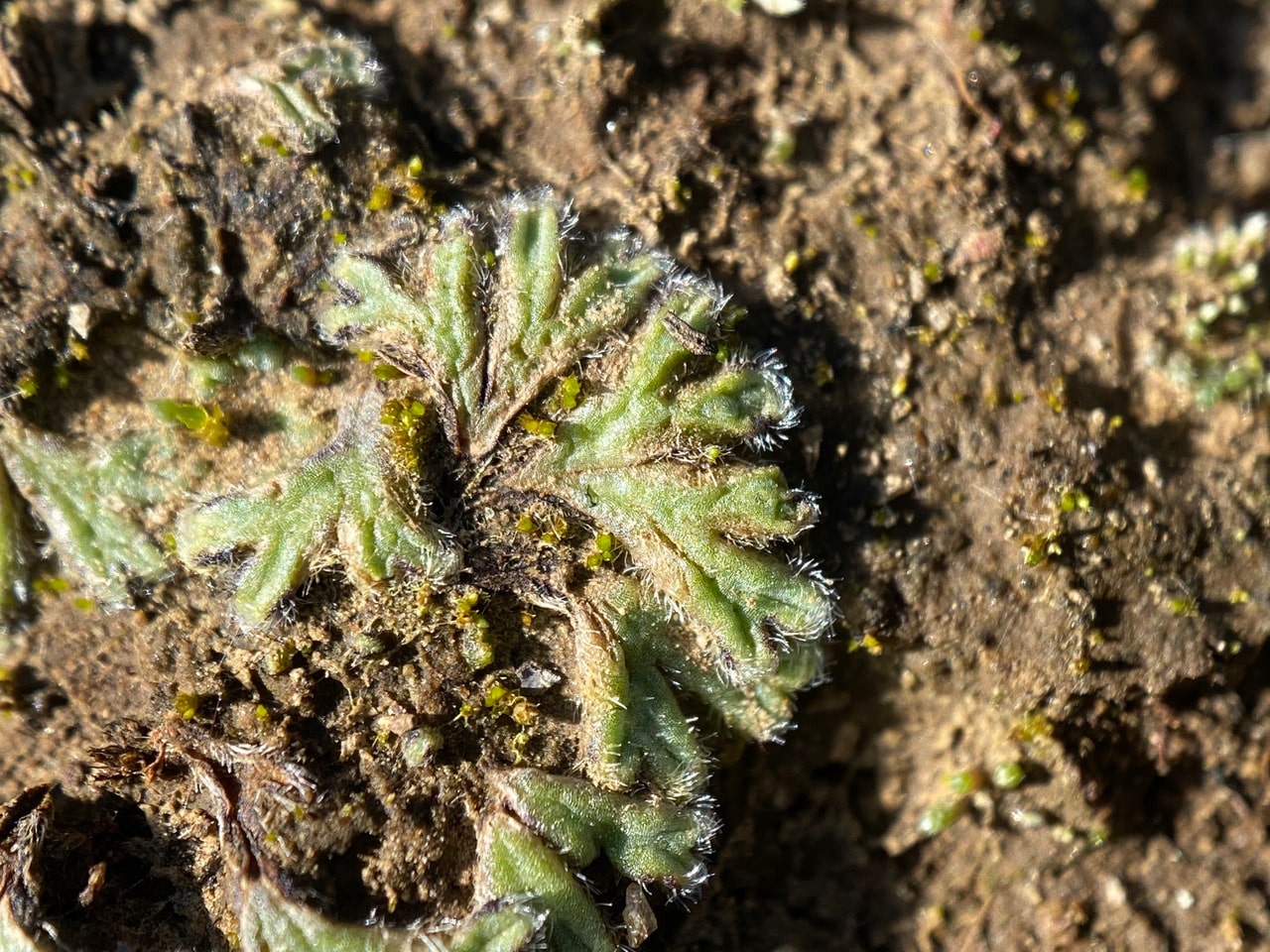
Closer inspection reveals white hairs around the edges of the thalli. iNaturalist has helped identify this as the Hairy Crystalwort, Riccia trichocarpa. Wow, all this diversity of bryophytes found in a brief morning walk along a half mile section of Skyline Trail!
Why do we care about these minute and apparently insignificant plants? Bryophytes play a very important role in the environment; they colonize sterile soils, absorb nutrients and water and release them slowly back into the ecosystem, contributing to the formation of soil for new plants to grow on. Their main talent is absorption. They can capture humidity from rain or even fog, retaining excess rain and preventing floods and soil erosion. They act as sponges and provide a water reserve for the forest, and provide shelter and food for many invertebrates. What’s not to love about Bryophytes!?