

Pollinator Post 2/12/23
With little time to spare this morning, I take a short walk along the paved road to the Water Tank.
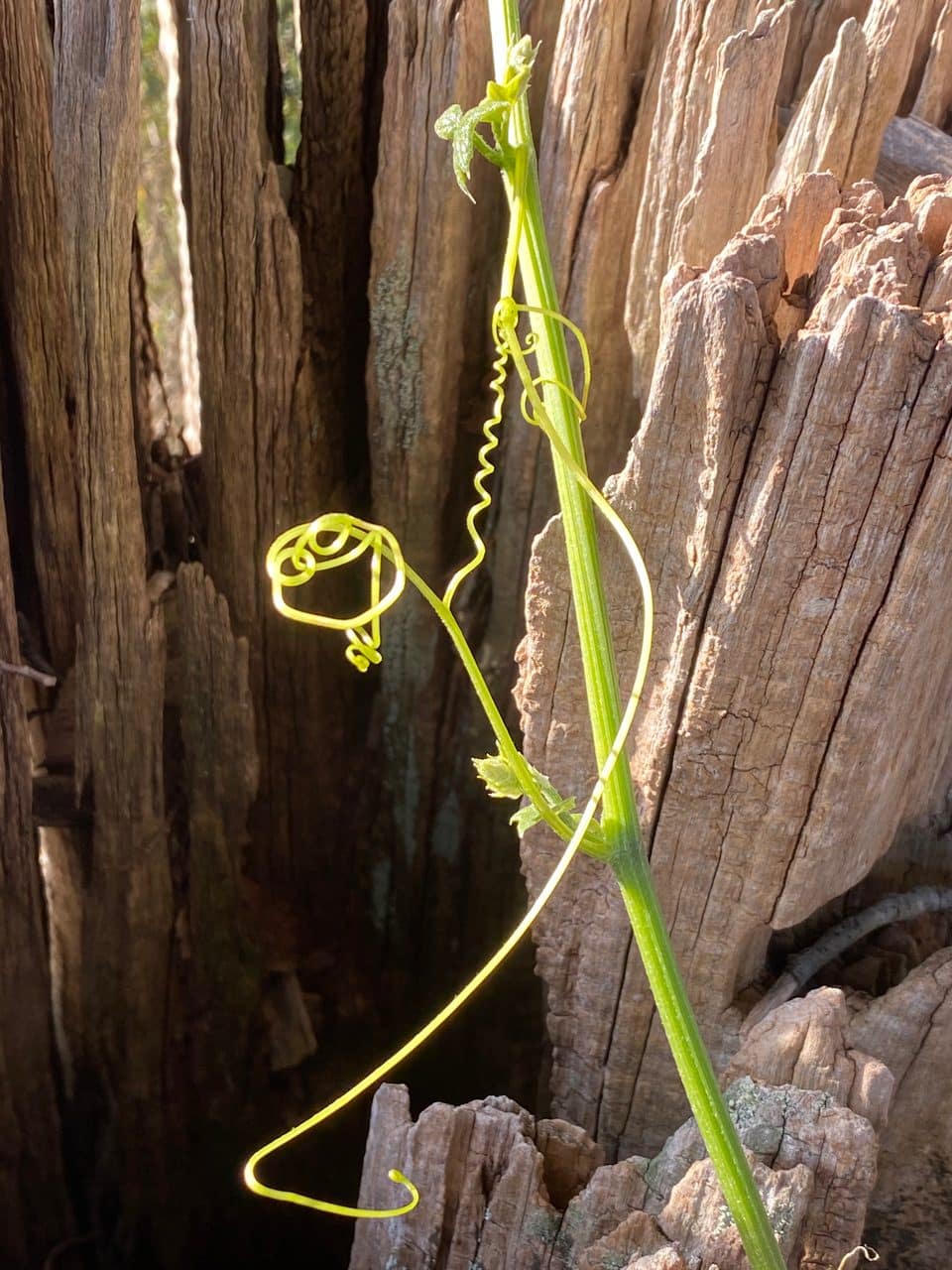
In an attempt to clamber up an old tree stump, a Wild Cucumber, Marah sp. has entangled itself with multiple tendrils of its own.
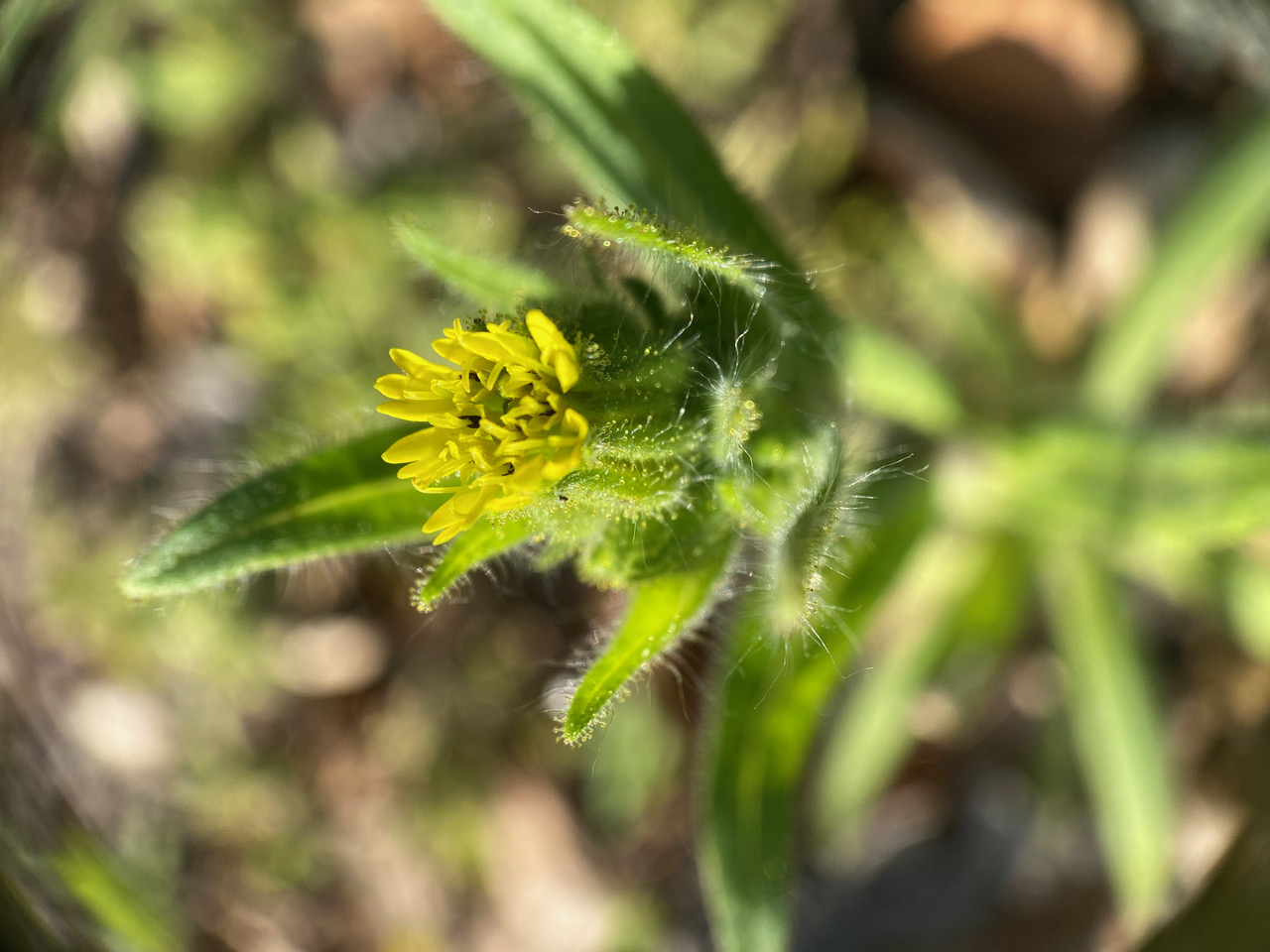






In a shady patch under oak trees, some small tarweeds, barely inches tall, are already blooming. I am not convinced that this is Coast Tarweed, Madia sativa, although the flowers look similar.
The recent rains have turned the folded hills to the northeast an electric green. That’s Mt. Diablo in the distant blue. What a beautiful time of the year!
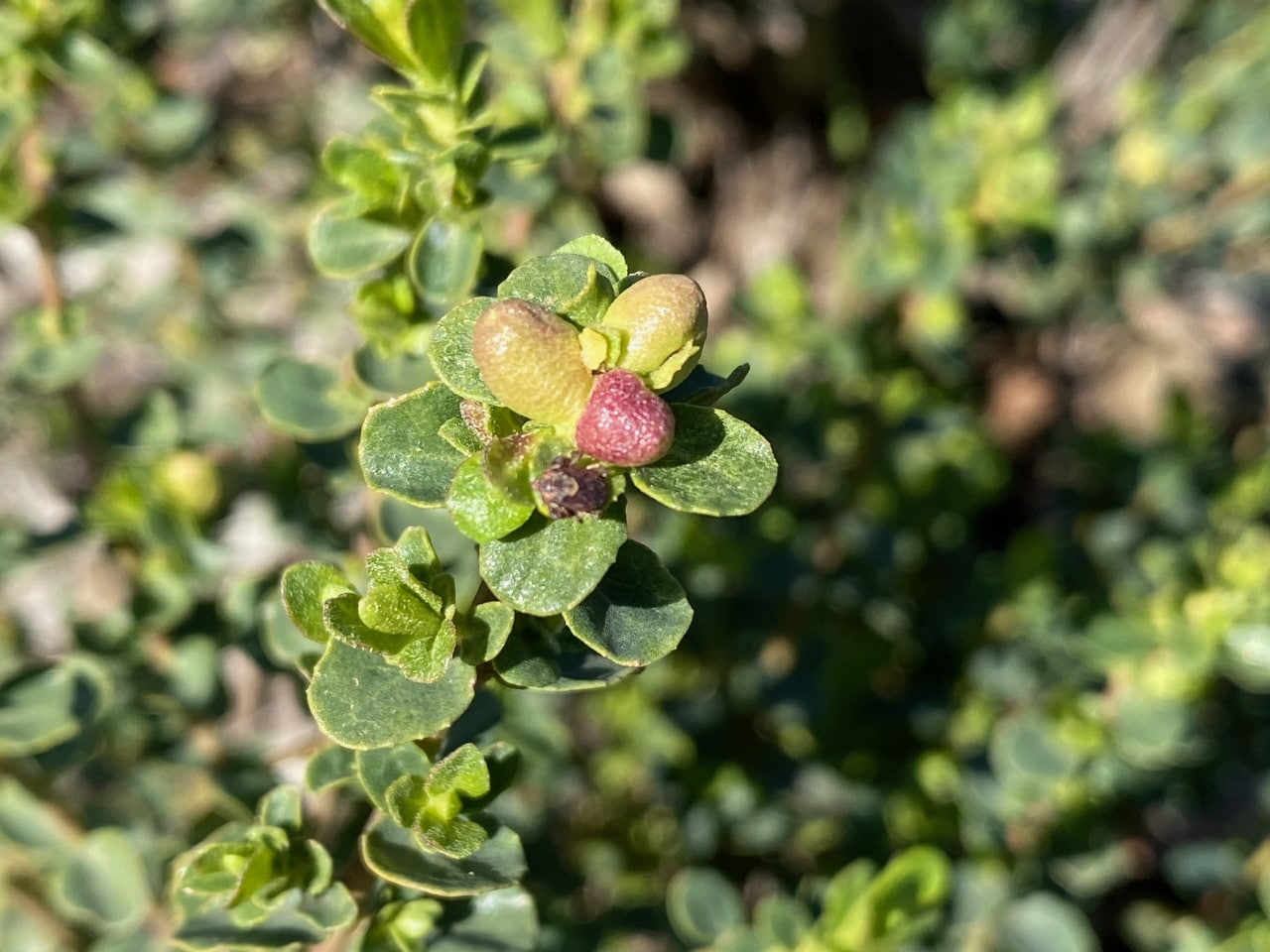
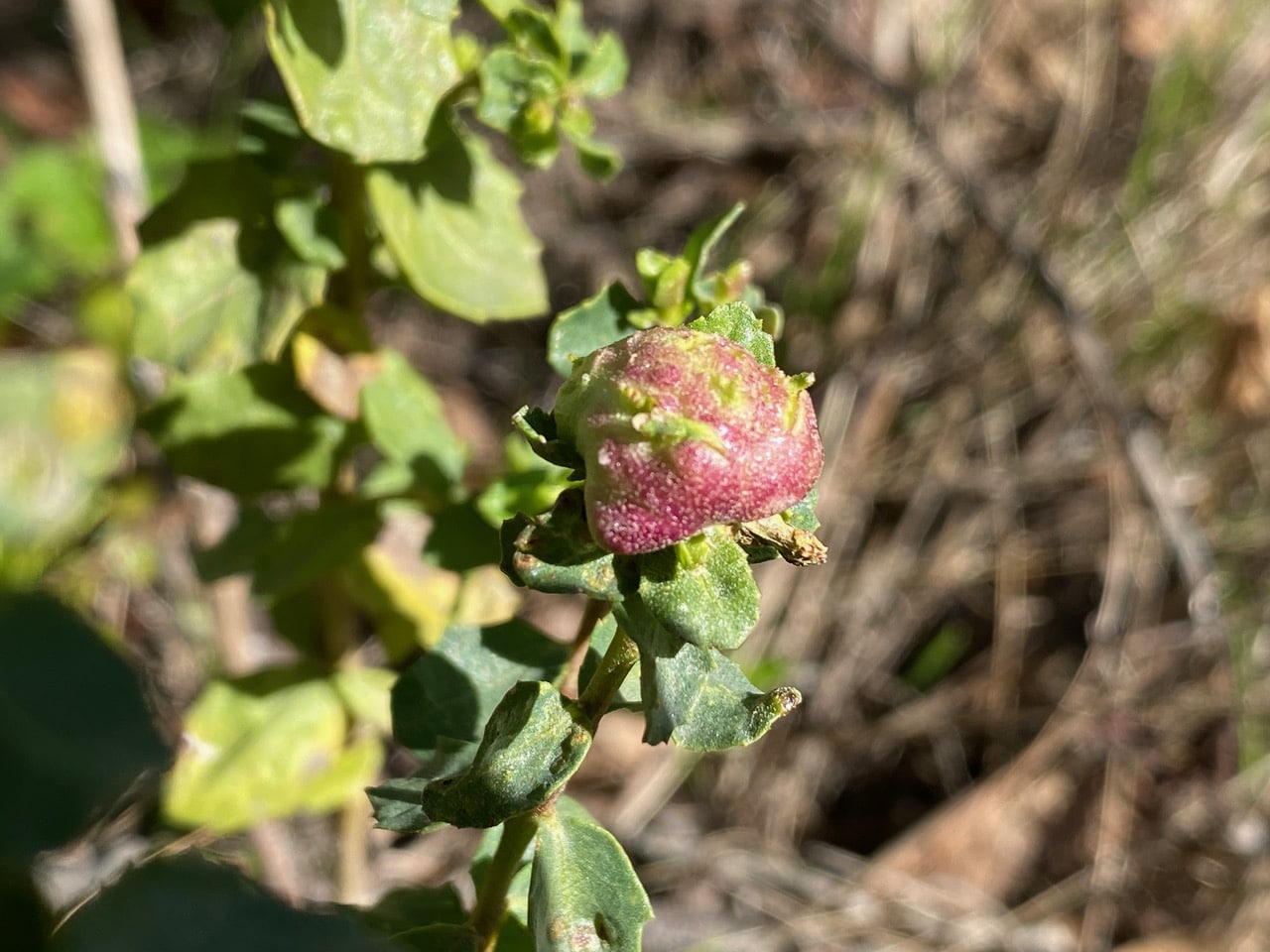
Little bud galls are developing on the branch tips of the Coyote Brush, Baccharis pilularis. These swellings are induced by the gall midges, Rhopalomyia californica (family Cecidomyiidae).
According to Ron Russo’s Field Guide to Plant Galls of California and other Western States, female midges lay clusters of eggs on terminal buds. The larvae that hatch out burrow between bud scales and commence feeding. The gall tissue swells around each of the larvae.
Adjacent galls often fuse into a large gall that holds multiple midge larvae. The galls that are in full sun sometimes turn a reddish purple, due to the development of the sunscreen pigment, anthocyanin. When fully grown, larvae burrow to the surface of the gall, where they develop their partially protruding white cocoons and pupate. Adults look like miniature mosquitoes.
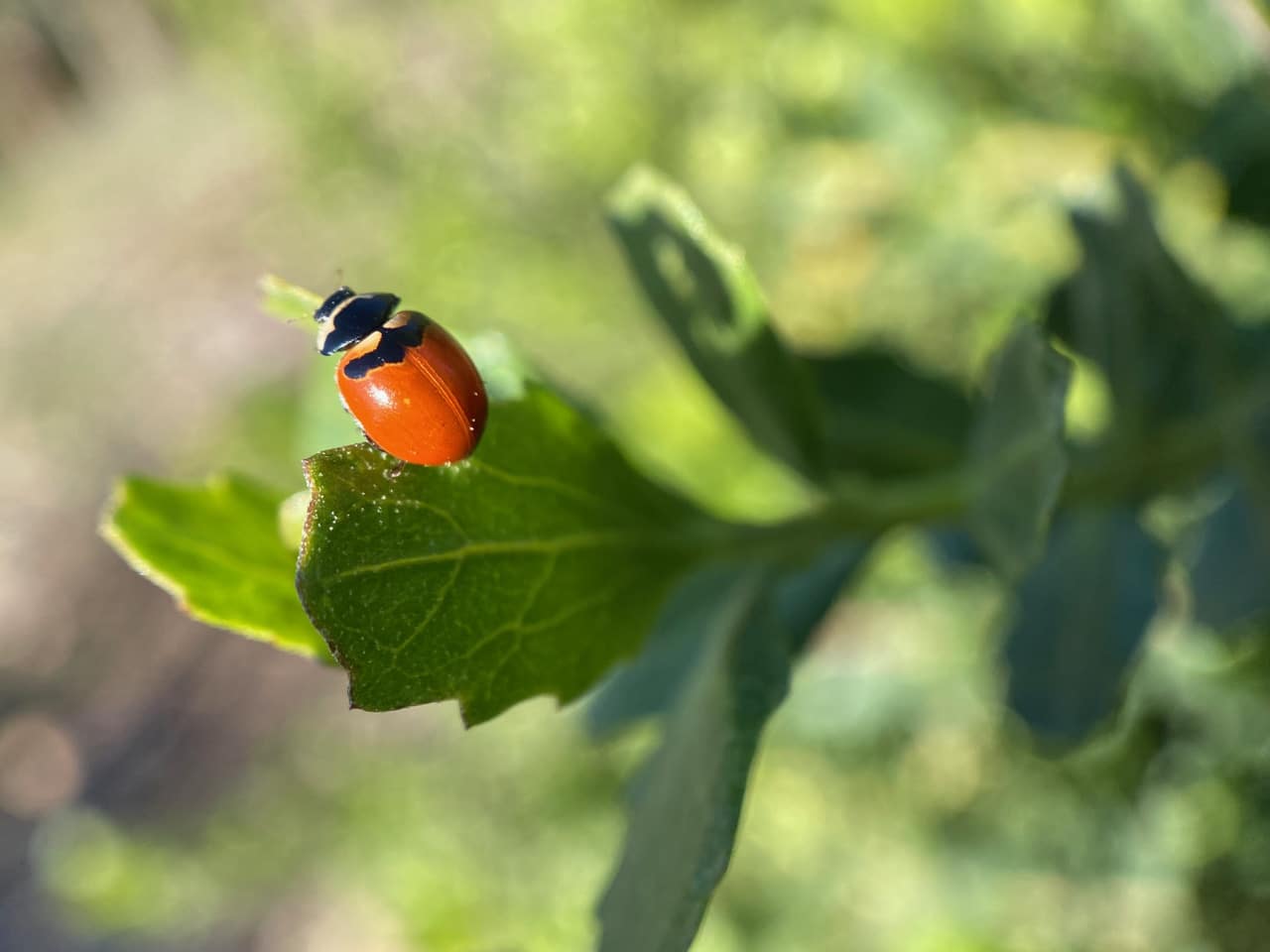
Not everything red on the Coyote Brush is a gall. Here’s a Convergent Ladybeetle, Hippodamia convergens (family Coccinellidae). This native species is known to overwinter in large aggregations in the forested hills. They disperse to mate and feed in early spring.
Hey, here’s a different Ladybeetle! It doesn’t have spots on its elytra.
Here’s a dorsal view of the Ladybeetle. It is the Three-banded Ladybeetle, Coccinella trifasciata, native to North America. “Three-banded”? The species is rather variable depending on its range. The ones found east of the Rockies are indeed three-banded. Species Coccinella trifasciata – Three-banded Lady Beetle – BugGuide.Net
Here in California, we have the subspecies Coccinella trifasciata subversa, also known as the Pacific Three-banded Ladybeetle.
Photos of Pacific Three-banded Lady Beetle (Subspecies Coccinella trifasciata subversa) · iNaturalist These beetles are active from spring through summer months and on warm days of fall; diapausing (that’s insect version of hibernation) through the colder winter months.
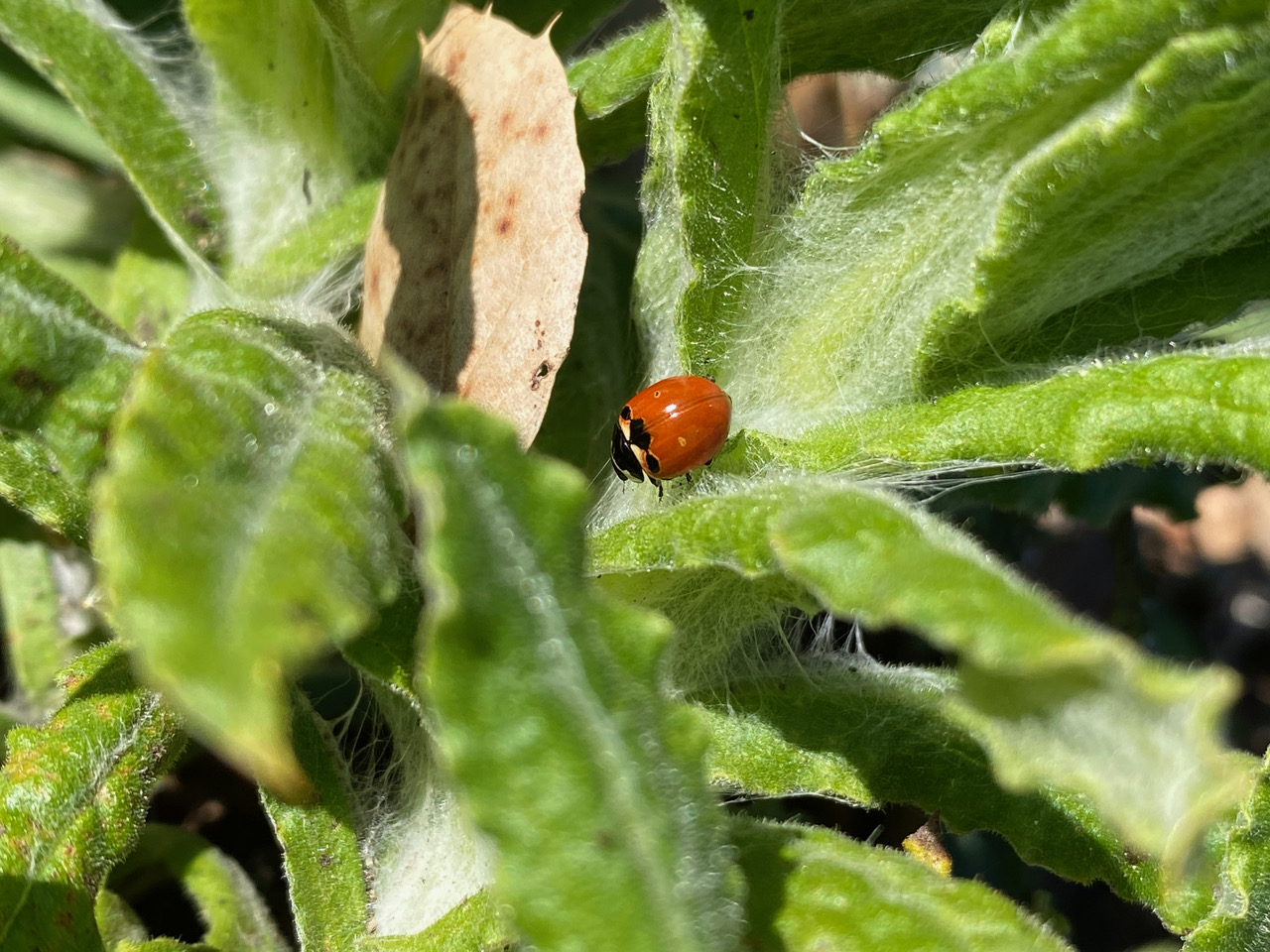
A Pacific Three-banded Ladybeetle crawls around on the hairy foliage of California Everlasting. What can it possibly be hunting for?
These beetles feed on aphids and other soft-bodied insects.
Another view of the lady beetle. The pattern is a little different from the individual we just saw on the Coyote Brush. This one wears its heart on its elytra right behind the pronotum – just in time for Valentine’s Day!
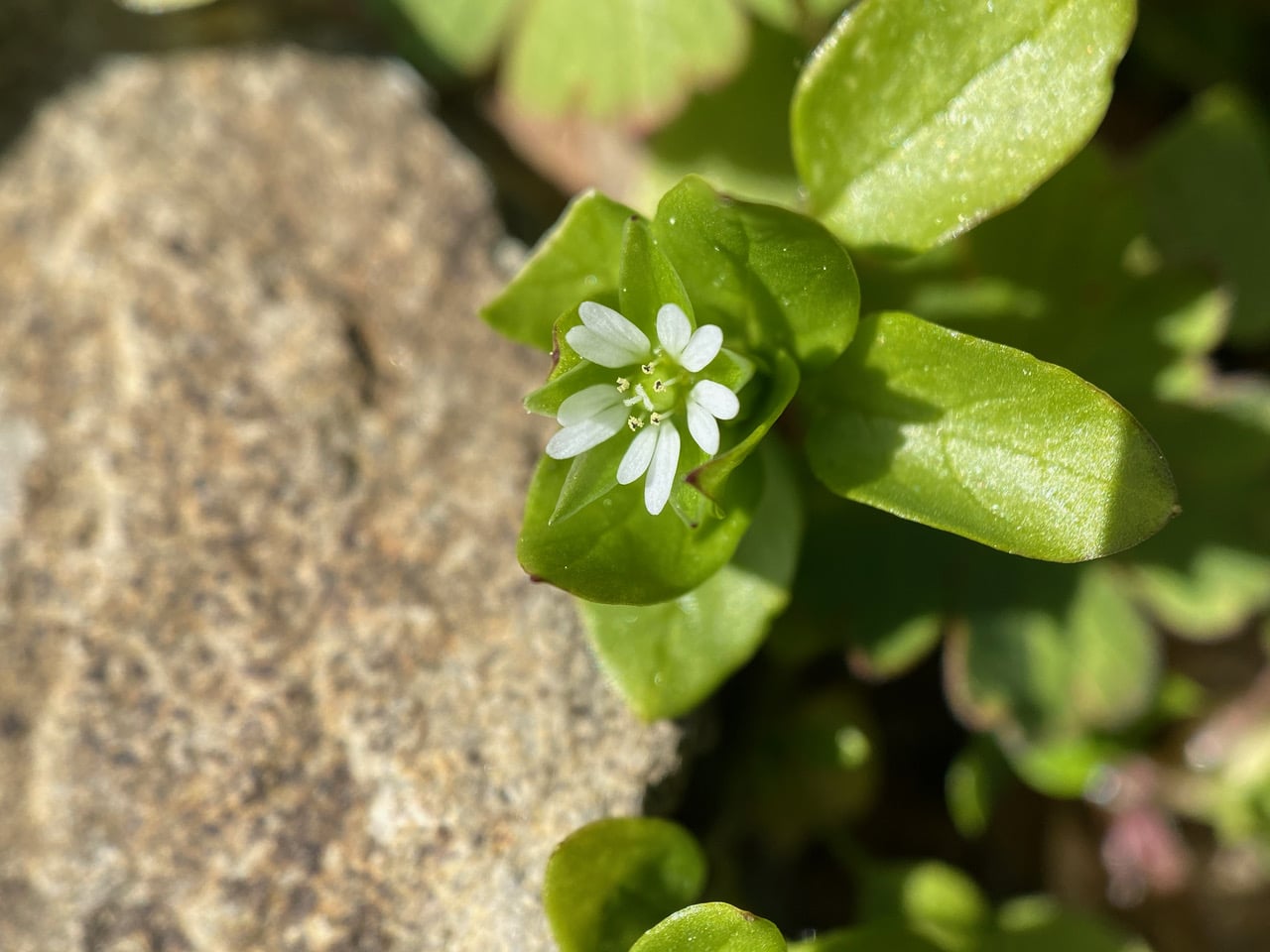
A bright green patch of Common Chickweed sprawling on the side of the road is already bearing little flowers! Stellaria media is an annual and perennial in the family Caryophyllaceae. It is native to Eurasia and naturalized throughout the world. While in some places, the plant is fought as a garden weed, in other places this species is used as a cooling herbal remedy, and grown as a vegetable crop and ground cover for both human and poultry consumption. The small white flowers have five very deeply lobed petals. There are usually three stamens and three styles. There appears to be 5 stamens and three styles on this particular flower.
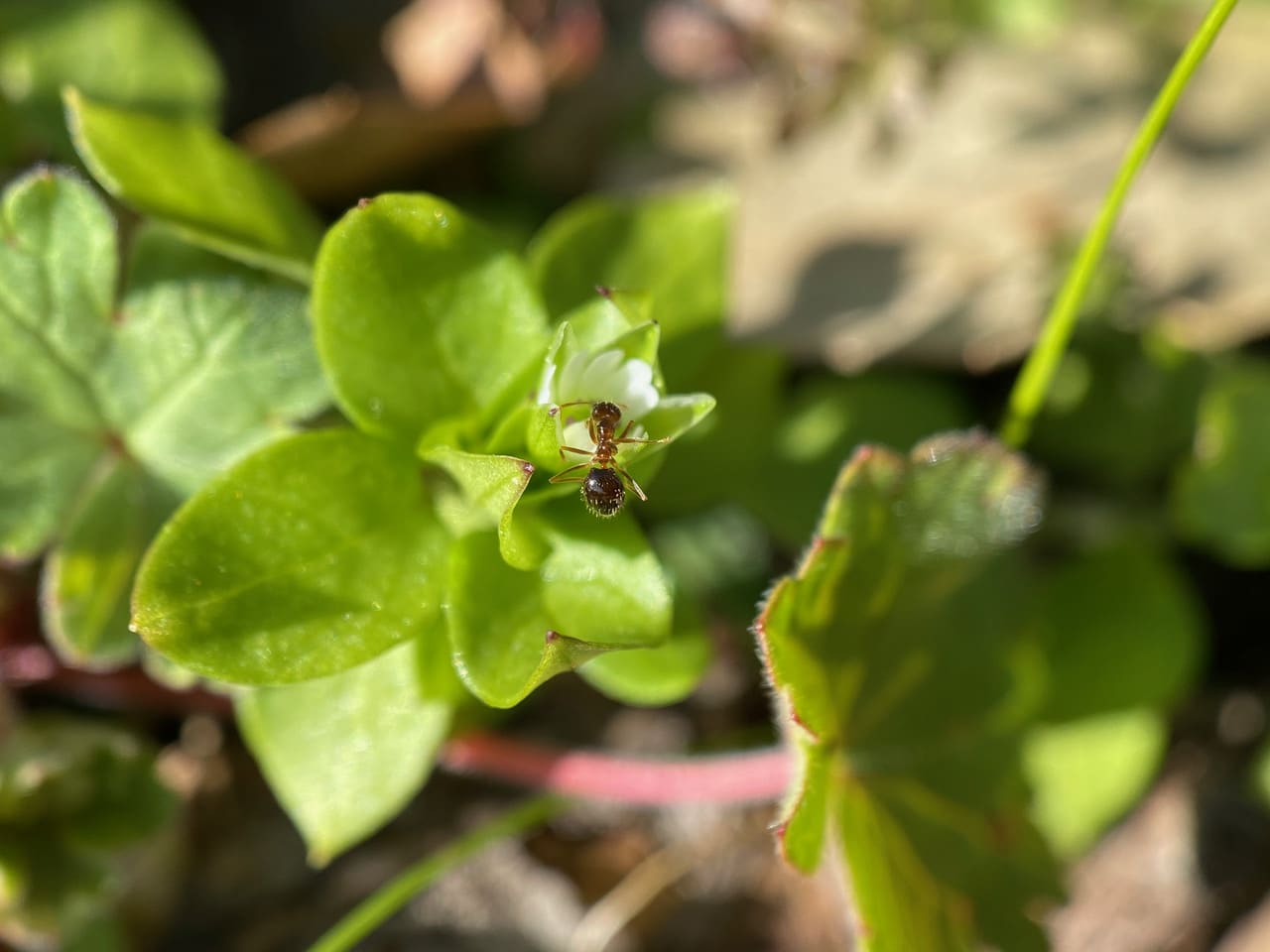
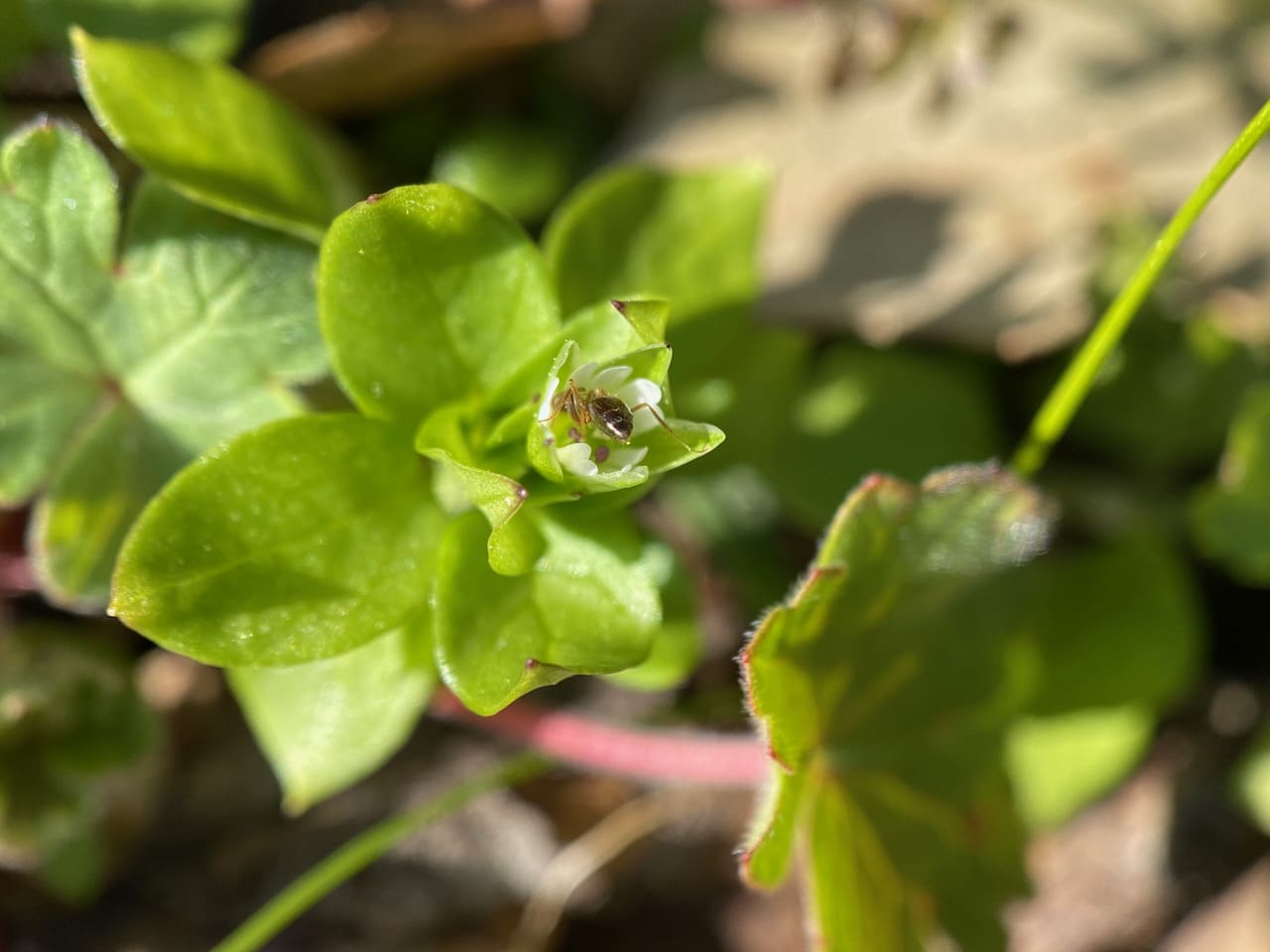
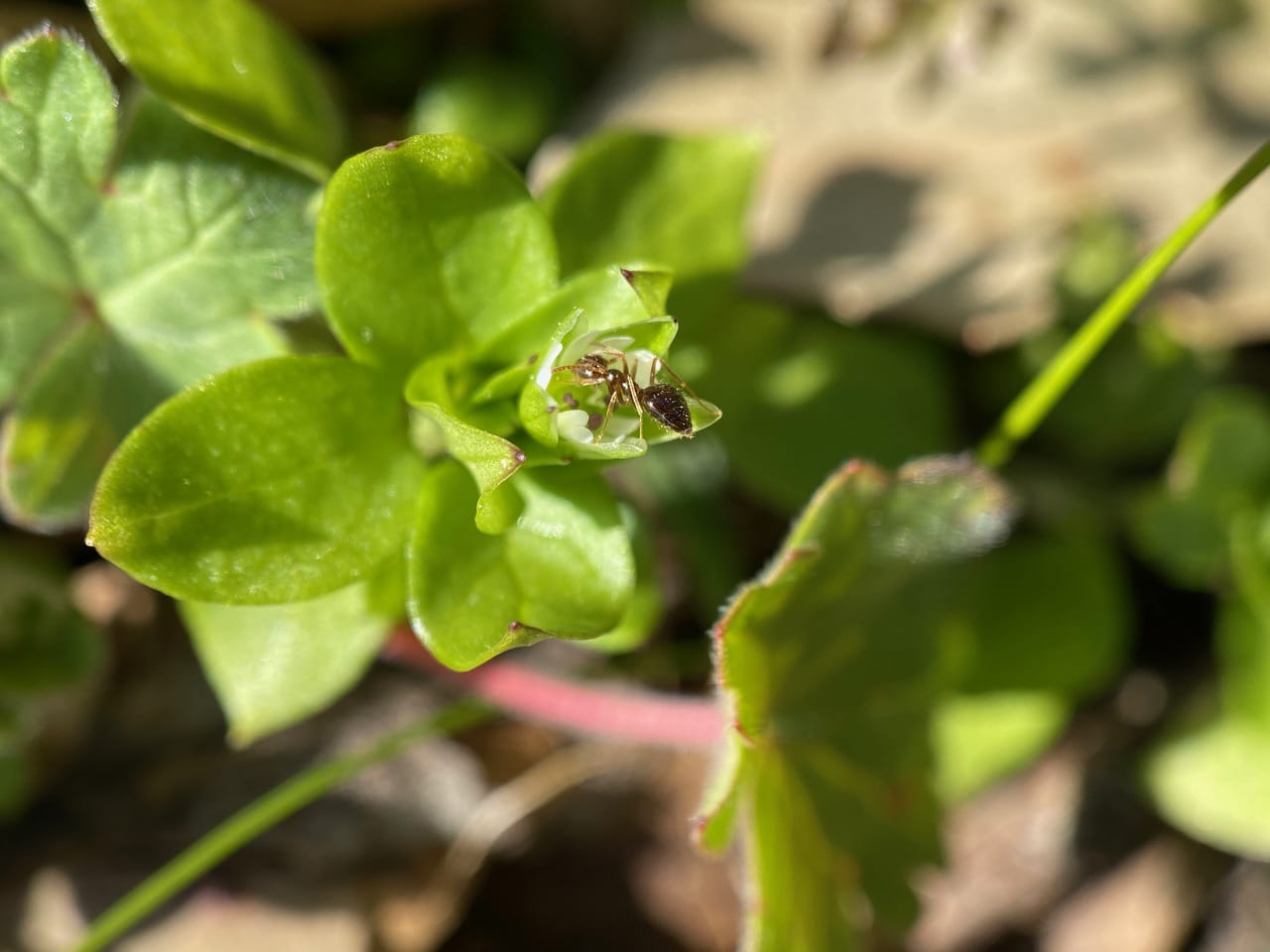
From the corner of my eye, I spy an Argentine Ant, Linepithema humile investigating an adjacent chickweed flower.
The ant enters the newly opened flower and spends quite some time rummaging in there, probably taking nectar.
As the ant backs out of the flower, it cleans its antennae with its front legs. It runs away a short distance, but returns to sample the same flower again. I am willing to bet that Stellaria media is pollinated by ants! It makes sense that a sprawling ground cover plant with tiny flowers depends on ants for pollination. I have observed the same relationship in Yerba Buena, Clinopodium douglasii (family Lamiaceae).
On the uphill side of the road, the Coast Barberry, Berberis pinnata are getting ready to bloom. Other common names for this handsome shrub are Wavyleaf Barberry and Shinyleaf Mahonia. The plant is easily recognizable by its holly-like serrated leaves that are arranged pinnately. I look forward to the bright yellow flowers.