

Pollinator Post 2/17/23

I stop briefly to check on the Lupin Aphids, Macrosiphum albifrons on the Silverleaf Lupine, Lupinus albifrons. Yep, they are still there, on the same plant at Diablo Bend. The aphid’s wax-coated bodies are so well camouflaged against the hairy foliage that it takes some searching to find them. Ooh, do you see the single white hoverfly egg above the aphids? Mama hoverfly has done well laying her egg here. When the larva hatches out, it will not lack food. Hoverfly larvae are voracious predators of aphids.

Another predator has moved in – the California Ladybeetle, Coccinella californica (family Coccinellidae). Native to California, the species is found in the coastal counties north of the Traverse Range. Adults have a red elytra that is usually spotless and a black pronotum with a white patch on either side. Both adult and larval Ladybeetles feed on aphids and other soft-bodied insects.
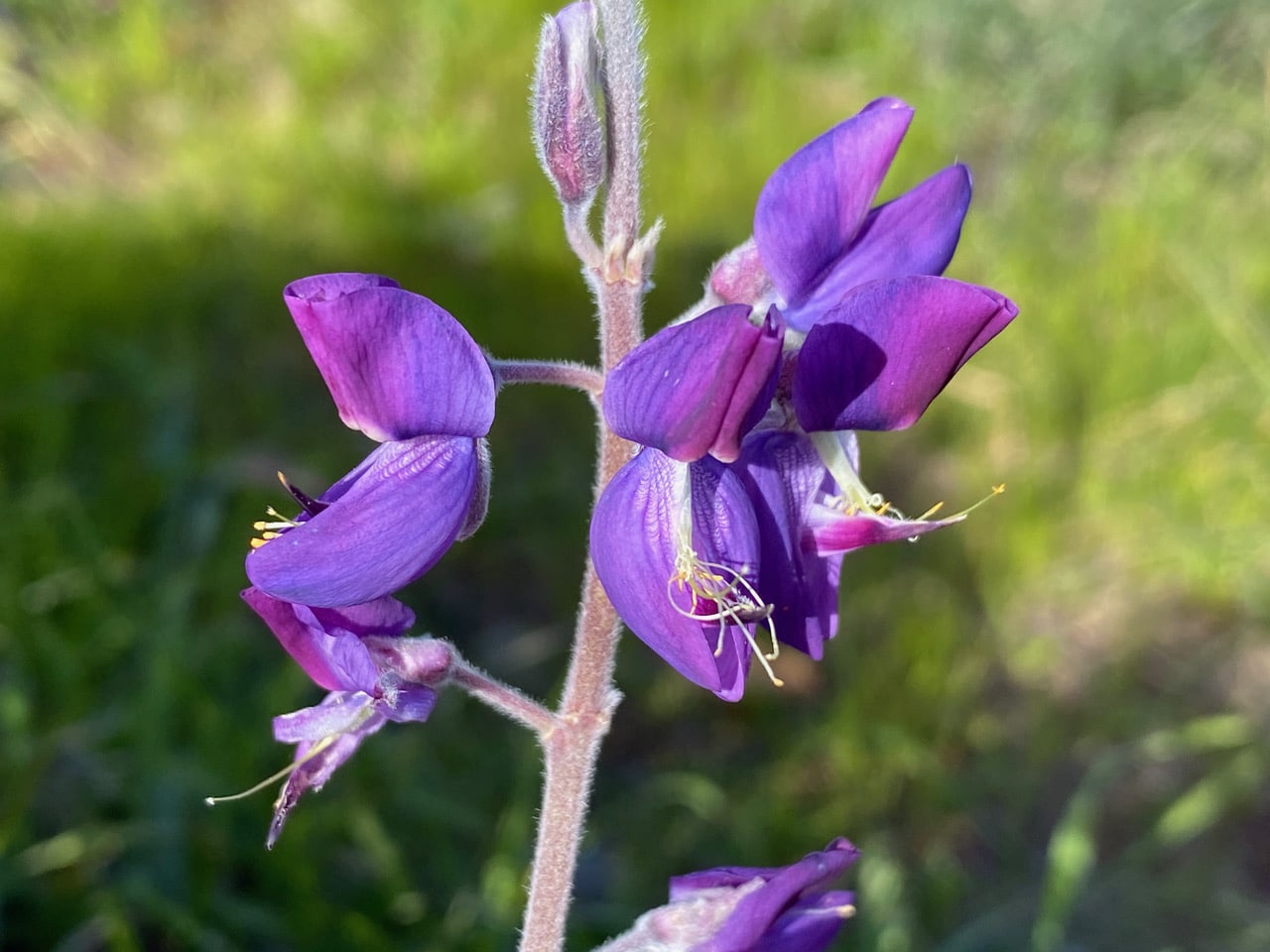





I have to laugh when I see these flowers. Early floral resources are very much in demand when the Bumble Bee queens are trying to establish their colonies. These lupine flowers have been so thoroughly pollinated that they have been eviscerated – their reproductive parts have spilled out of the protective keel and wing petals.
The burning question on my mind today is the pollination of our common native, the Wild Cucumber, Marah sp. The plants are starting to bloom everywhere now; I need to take a good look at the flowers to try to figure out their pollination ecology. This picture was taken on 2/15 along the Bypass Trail. To reiterate what we already know:
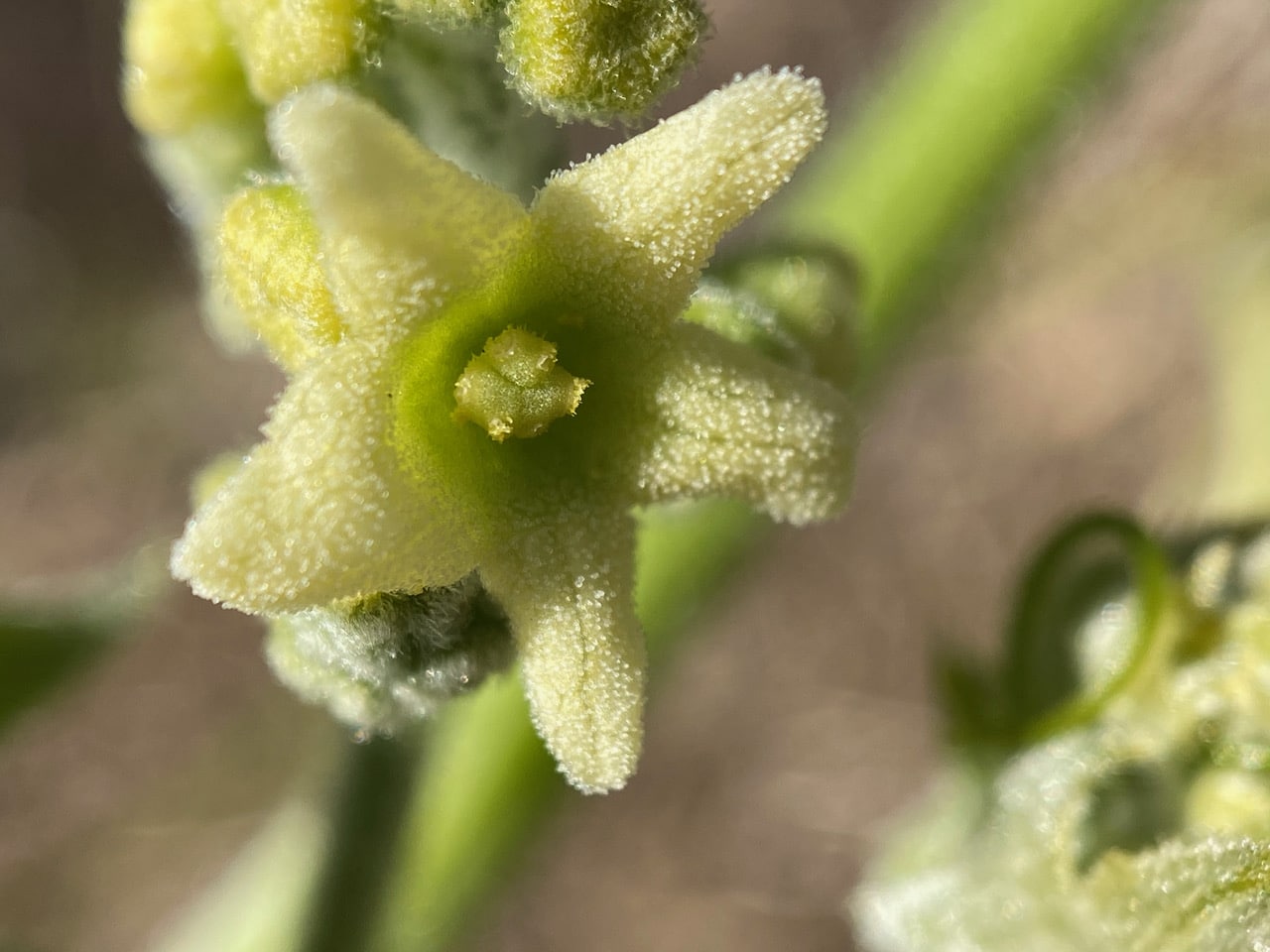
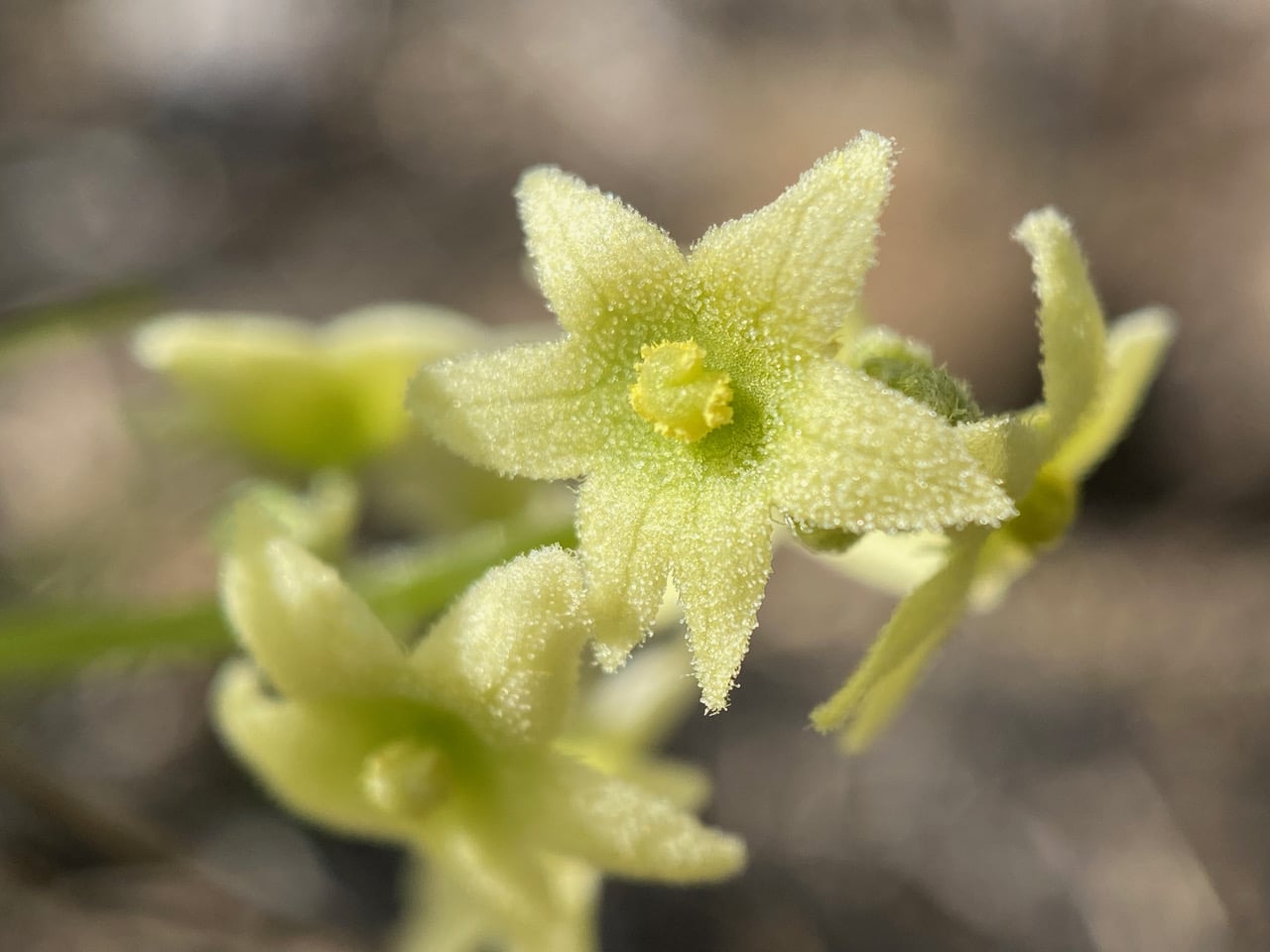
Wild Cucumber flowers are monoecious: separate male and female flowers are found on the same plant. Male flowers appear in open spikes while solitary female flowers appear at the leaf axil, often beneath the male flowers. A small hairy inferior ovary is already evident when the female flower is very young. This will eventually develop into a spiky fruit.
The wild cucumber is pollinated by insects, but the plant is self-fertile, meaning that pollen from the male flowers can fertilize the female flowers on the same plant.
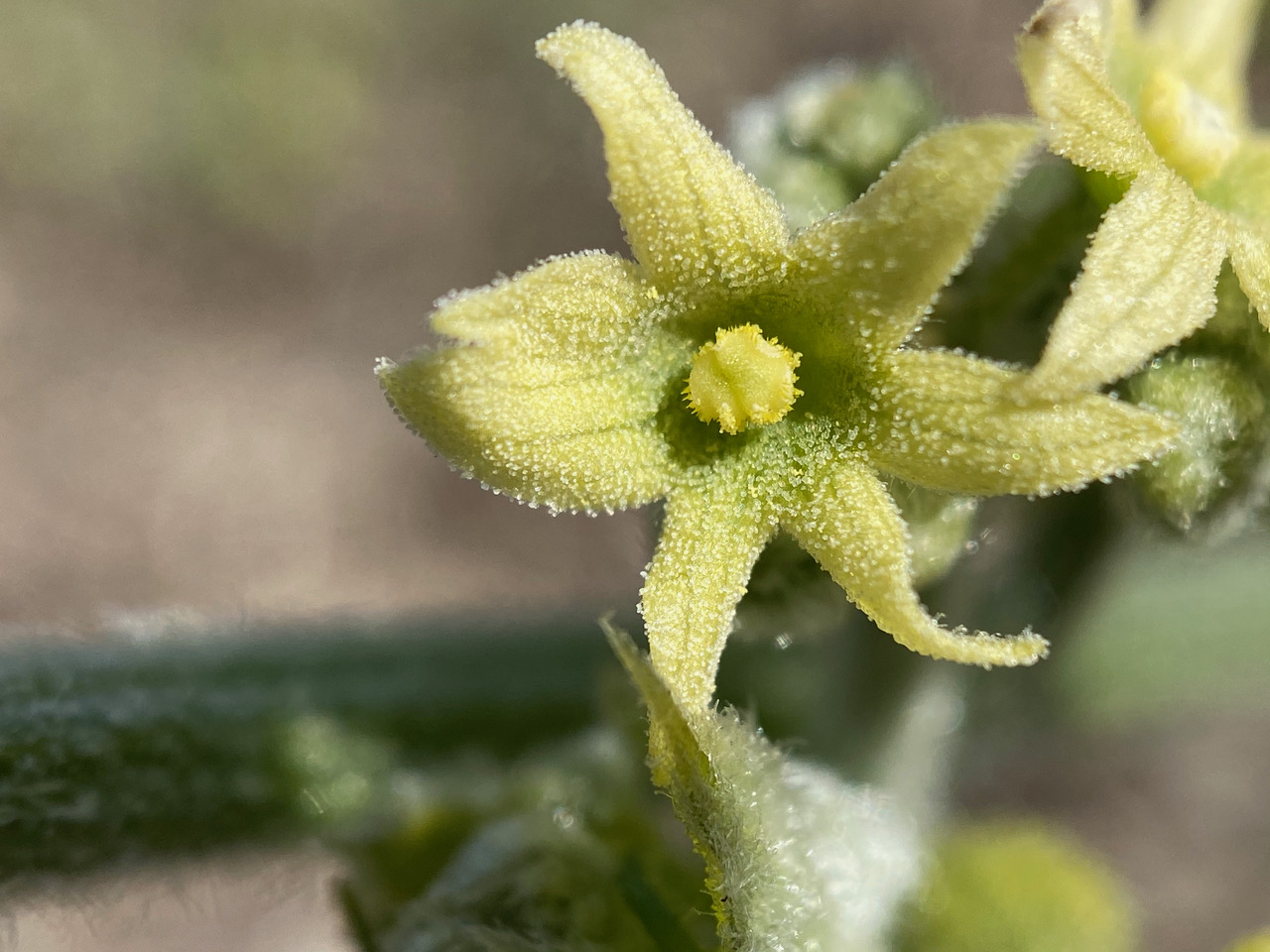
I find that the male and female flowers appear almost identical when they are young. They both have a fleshy round button in the middle. In a mature male flower, this “button” differentiates into what looks like a three-chambered structure, and yellow pollen is released from these rather unusual stamens.
Another mature male flower.
Yet another male flower, releasing pollen from the lobed stamens.
Hey, what’s that Spotted Cucumber Beetle doing on the female flower?
This female flower has sustained feeding damage to its pistil and petal. Is the Cucumber Beetle responsible?
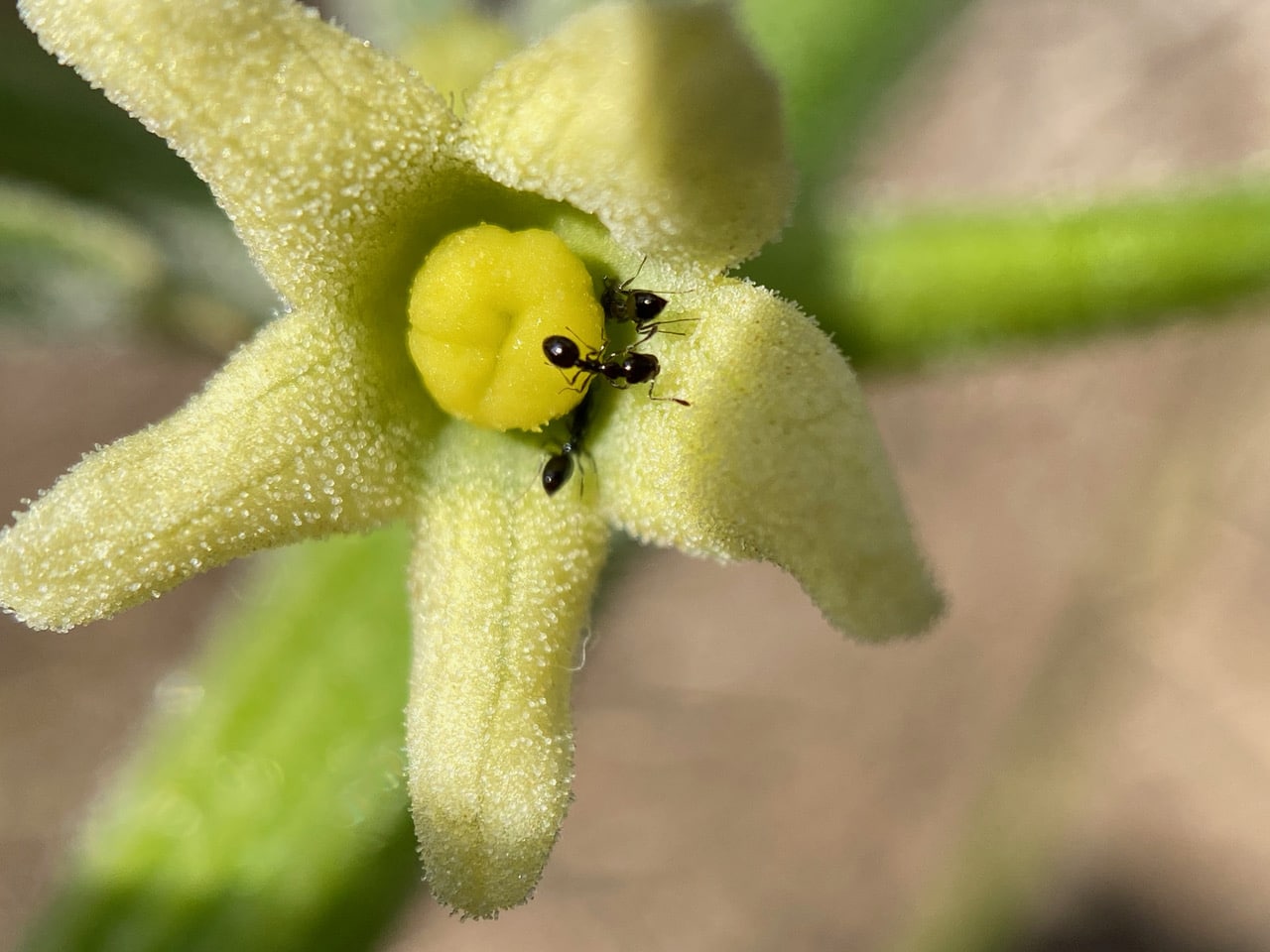
I tilt the vine to lift another female flower into the sunlight for closer examination. I am delighted to find three Argentine Ants milling around the central pistil. They descend the shallow cup of the corolla, probably seeking nectar. The female flower has an inferior ovary, below the corolla. So the central button we see here is not the ovary, but most likely the stigma. It appears moist and succulent, probably in a receptive phase for receiving pollen. It does not take a great leap of imagination to see that if any of these ants have pollen on its body, it could be easily rubbed off on the stigma of the female flower.
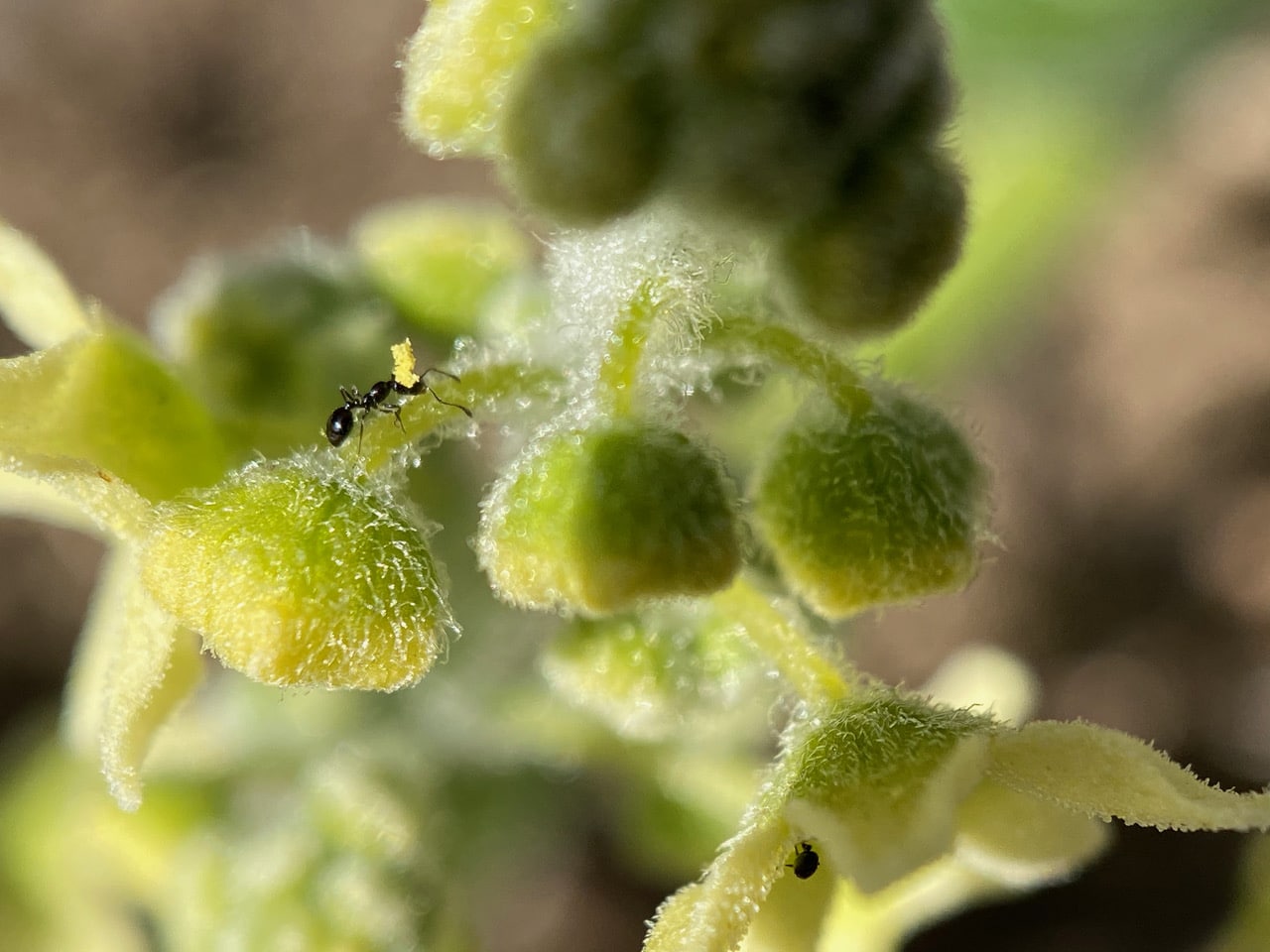
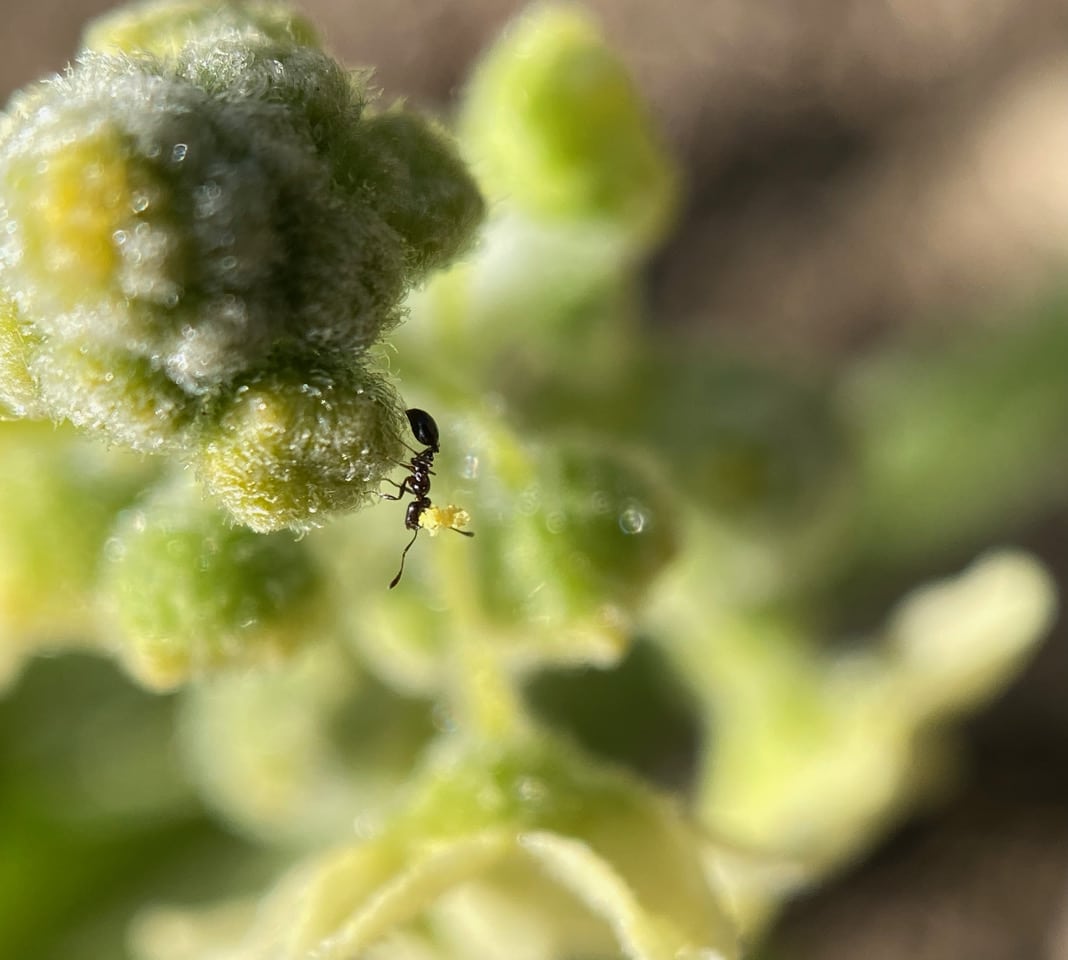
Scrutinizing the clusters of male flowers again, I notice an ant that just emerged from a flower, a big blob of yellow pollen comically stuck to its head. That is a hefty load for an ant! Marah pollen is obviously sticky, meant to be transported by insects.
The ant does not seem to be bothered by the pollen load, and continues to roam the buds on the same inflorescence.
The ant finally descends onto the stem of the plant where it is greeted by another Argentine Ant.
A self-fertile plant such as Marah does not need insects with flight capability to transfer its pollen. Ants suffice just fine. They can simply walk from one flower to another flower on the same plant to deliver their payload of pollen. Pollination accomplished!
It is rather interesting that the non-native Argentine Ant is serving as a pollinator for our native Wild Cucumber. It is a simple enough procedure, requiring no special skill besides an appetite for sweet nectar. I have only seen one other species of ants at Skyline so far, the native Fusco-group Field Ants. Maybe many of the native ants have been extirpated by the highly successful Argentine Ants. The Wild Cucumber is fortunate that the invaders have taken over the ecological role of the native ants as pollinators, ensuring the continued reproduction and survival of Marah.