

Pollinator Post 2/18/23
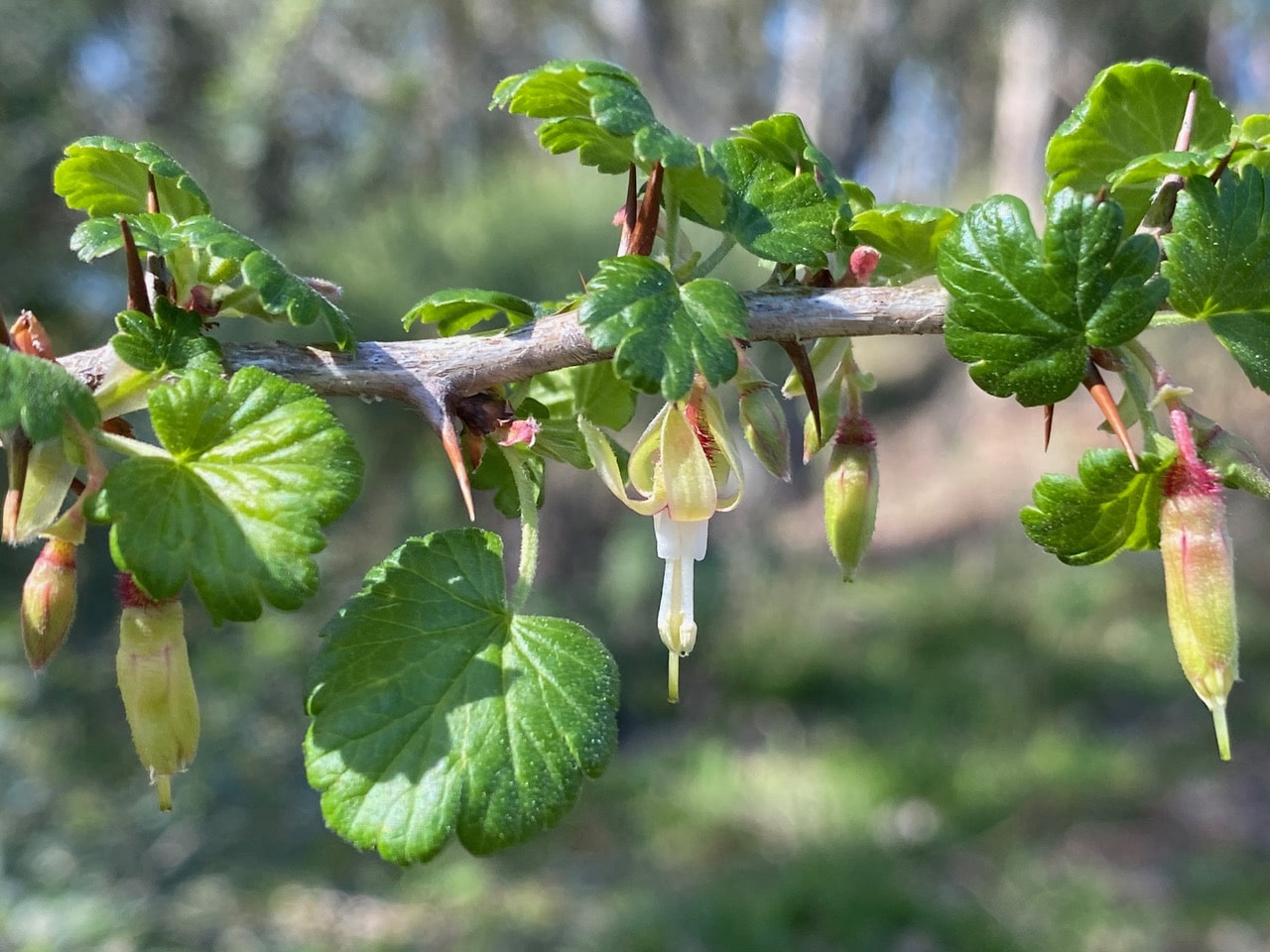
Someone has been weeding the edges of the paved road to the Water Tower, mindlessly tossing some clumps of grass onto a blooming Hillside Gooseberry, Ribes californicum. I relieve the branches of their unwanted weights and pause to admire the delicate hanging flowers.
The genus Ribes includes gooseberries and currants. The gooseberries are easily distinguished by their spiny stems. The charming hanging flowers have sepals that are reflexed, or folded backwards along the length of the flower. The petals are white and extend forward to form a loose tube from which the stamens emerge. The plant is known to attract bees, butterflies, hummingbirds and other pollinators.
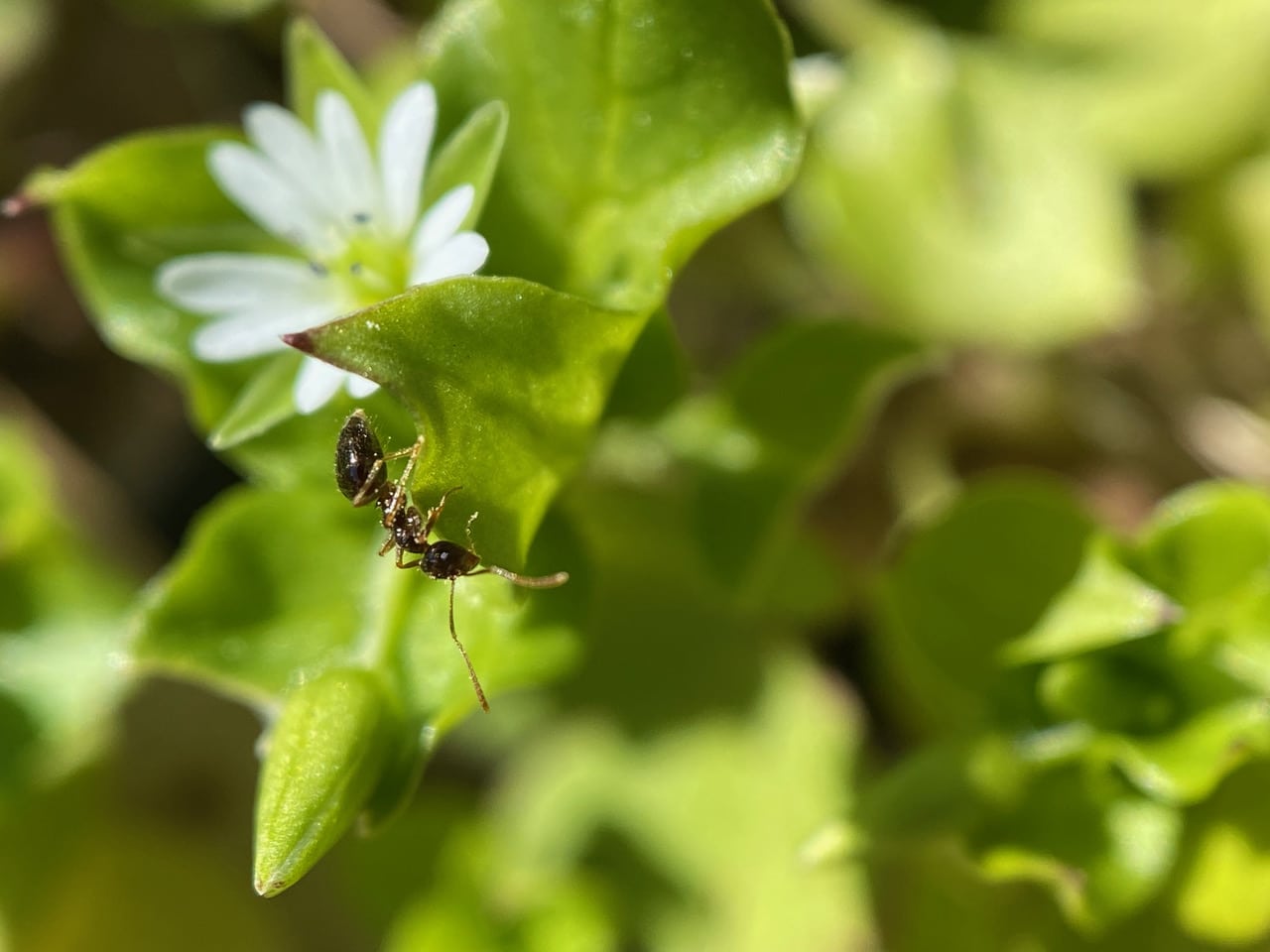
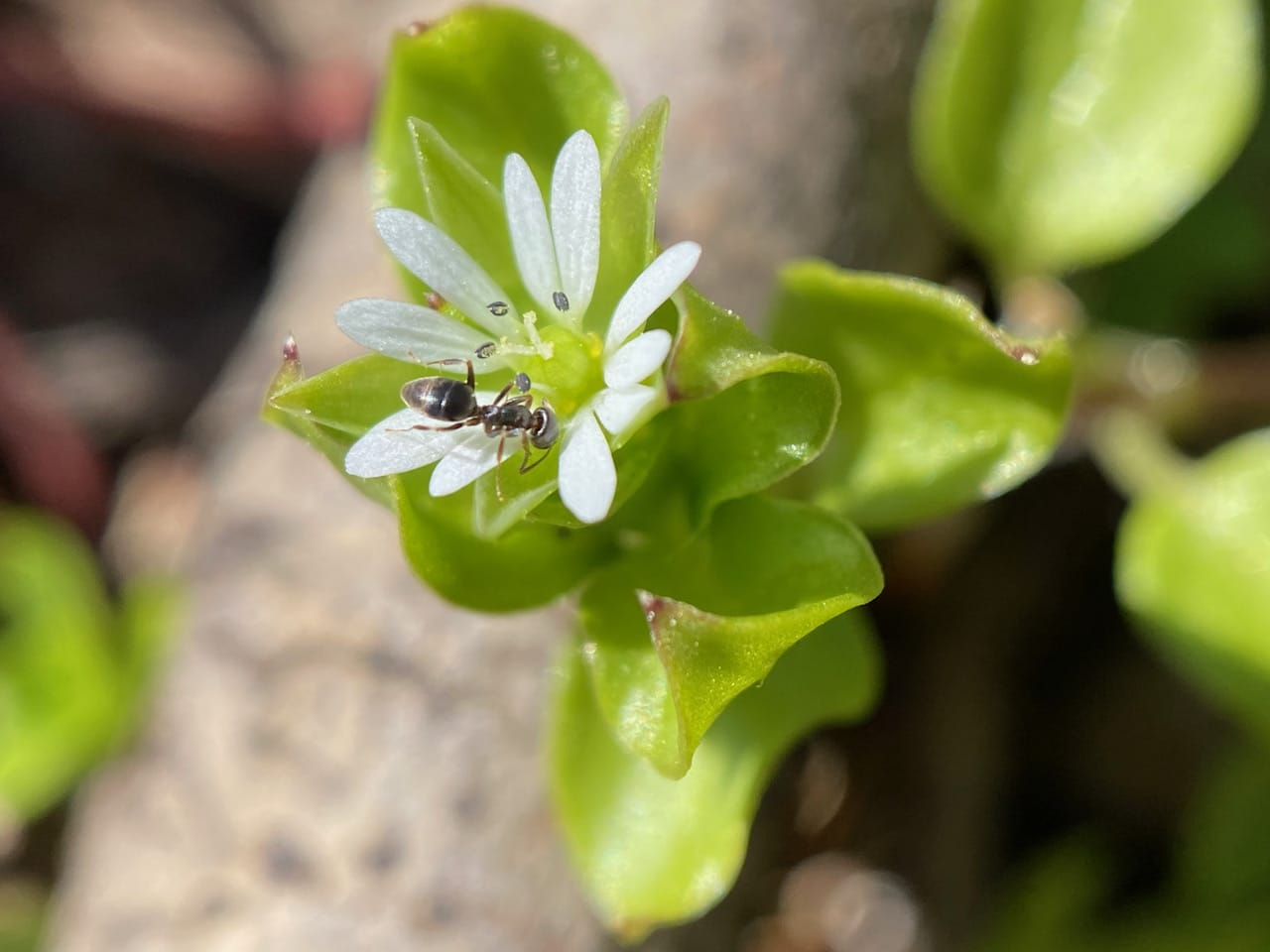 An Argentine Ant, Linepithema humile enters a Common Chickweed flower eagerly.
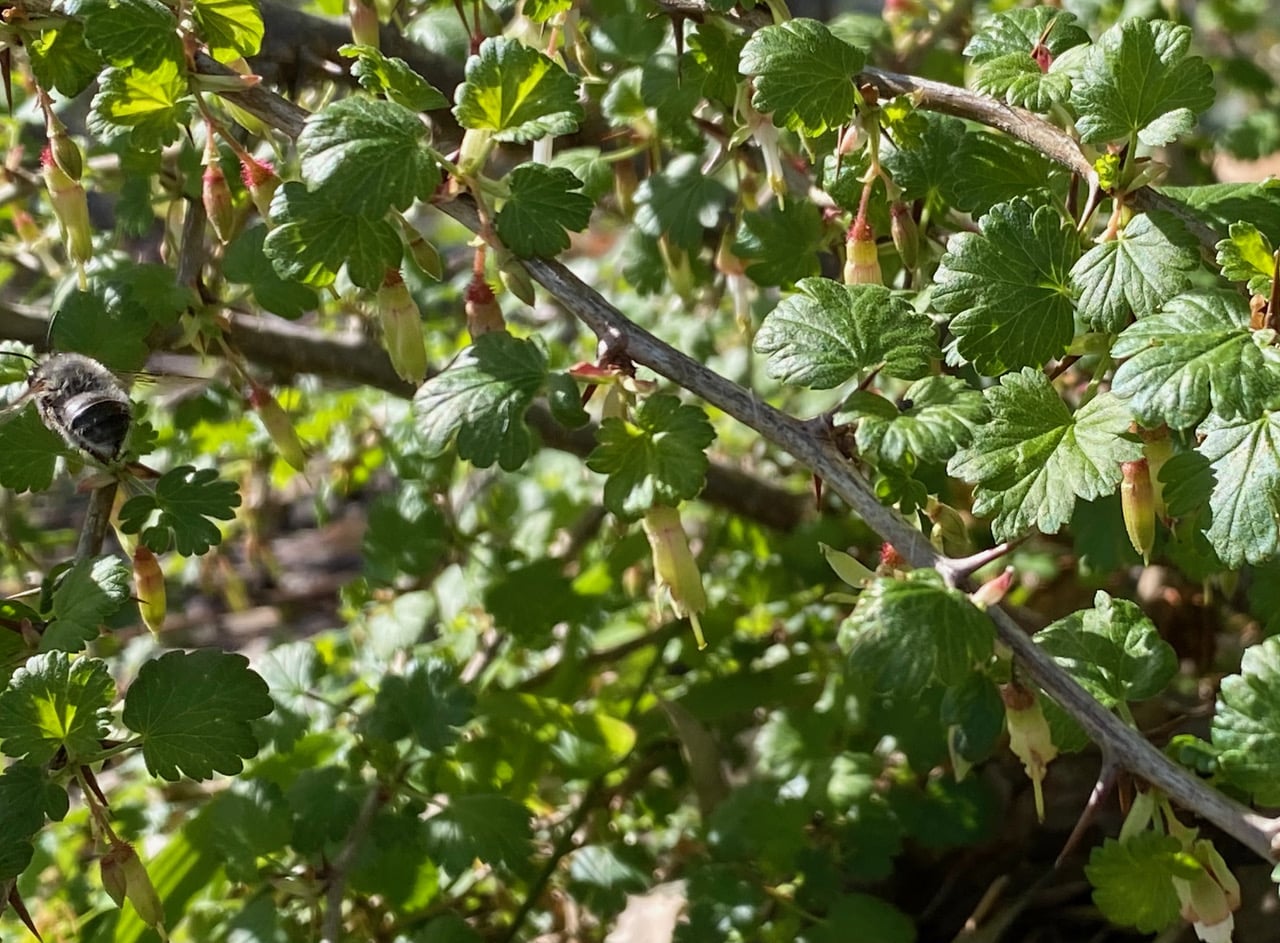
A couple of bees are buzzing around me noisily, occasionally landing to feed on the flowers. They are stout-bodied, all gray, about the size of worker bumble bees. I push my camera shutter frantically to match the break-neck speed of these bees. See the bee exiting the left of the frame? These are some of the most exasperating bees to photograph.
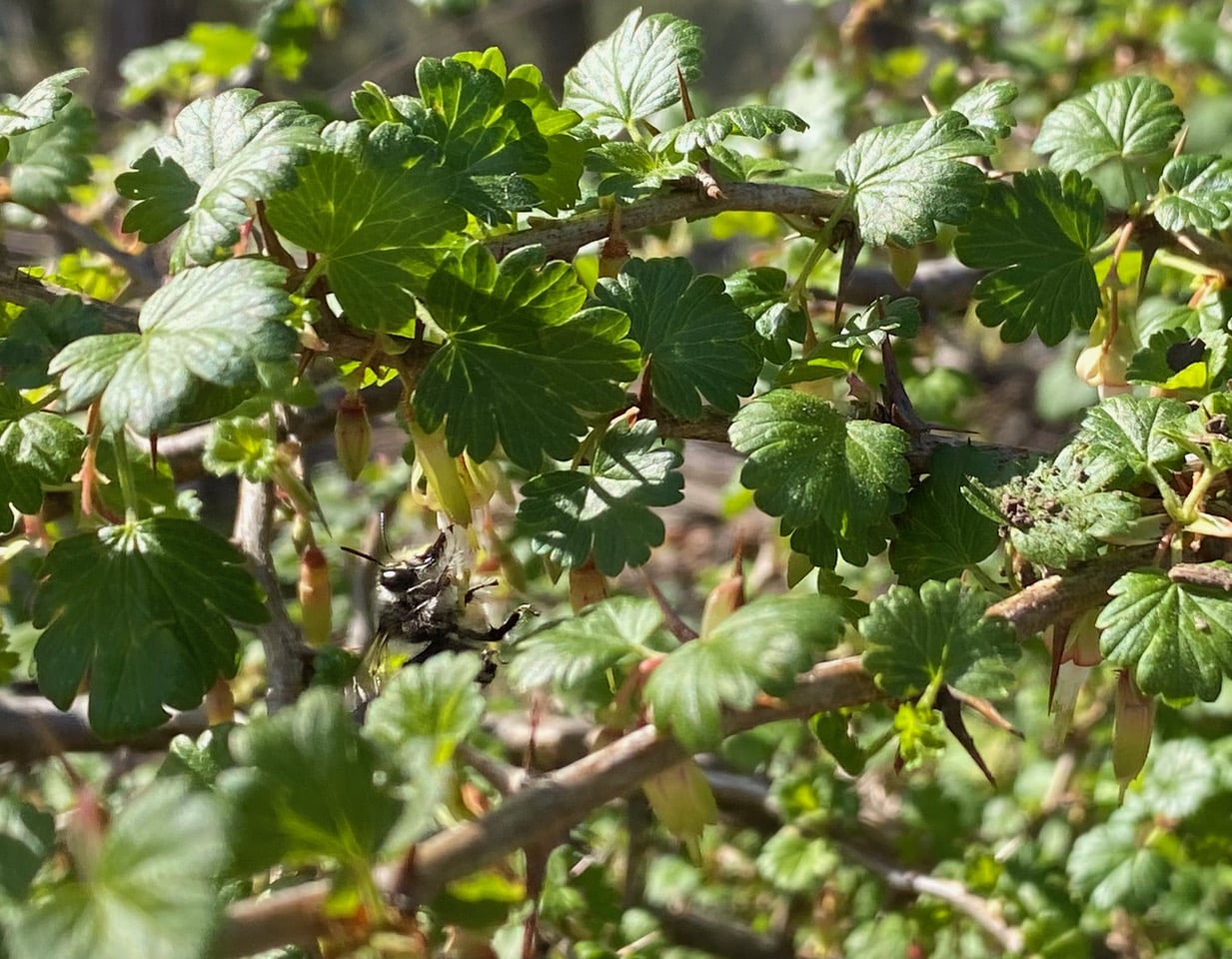
A lucky shot of a bee landing to take nectar from a Gooseberry flower. It is a male Digger Bee, in the genus Habropoda (family Apidae). Lately I have been seeing these bees around the early flowers of the Silverleaf Lupine at Skyline, on Ceanothus flowers in various places, and on the Ribes in my own garden.
How do I know that it is a male? It has a large white patch on its face which the females lack. Also his antennae are somewhat longer. A female would have a pale scopa (special pollen-collecting hairs) on her hind legs. There are 12 species of Habropoda in California. Habropoda depressa is widespread and common, active February through May. Habropoda are generalist foragers, visiting flowers from several plant families. As the common name implies, females construct nests in the ground. The males usually emerge first in early spring. They ply the ground listening for the females to emerge. And if they hear one, they will dig down to meet her. No patience whatsoever.
I stop by the vivid green patch of Common Chickweed, Stellaria media that I have photographed on 2/12. There are now more flowers, and more ant activity on the sprawling plants.
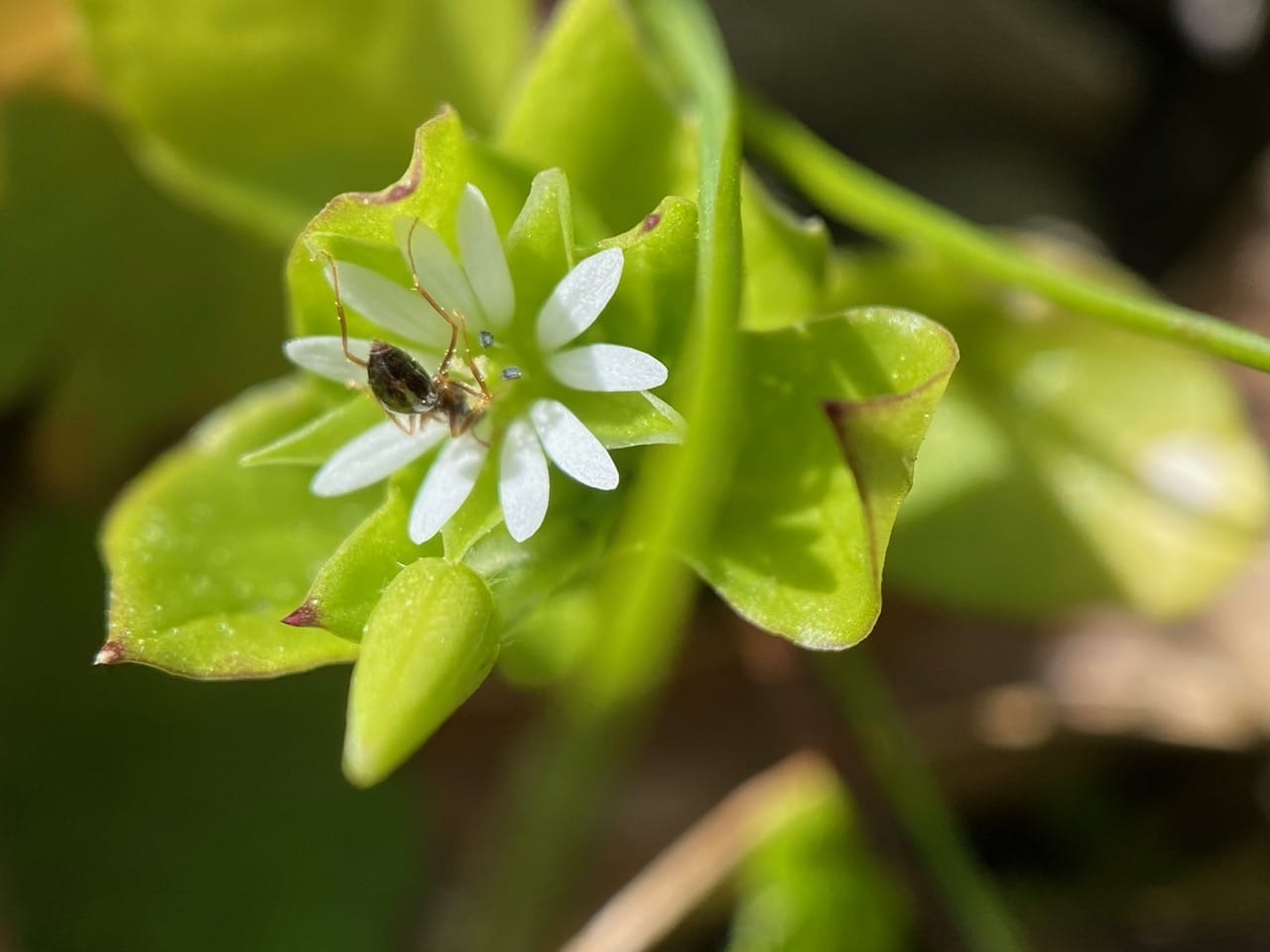
An Argentine Ant, Linepithema humile enters a Common Chickweed flower eagerly.In reaching down into the corolla to access the nectar, the ant’s body invariably comes in contact with the reproductive structures of the flower. Note the pollen grains on the ant’s legs. I am sure that the Common Chickweed relies on ants for pollination.