

Pollinator Post 3/2/23 (1)

A week has elapsed since our weird bout of cold and snowy weather. I am elated to enjoy some sunshine at last as I walk the Skyline Trail from the Steam Train entrance.
The Osoberry, Oemleria cerasiformis (family Rosaceae) is in peak bloom. The recent snow and rain apparently has not done the shrubs any harm. Actually the pendulous inflorescences might be adaptations for withstanding these weather conditions. Think of the other native flowers that bloom this time of year – the Manzanita, the Silk Tassels, the Hazelnut, the Milk Maids, the Pipe Vines, the Mission Bells. The reproductive parts are well protected from the elements by the inverted corolla.

A tiny, long-legged fly alights on the outside of an Osoberry flower. Its long straight proboscis out, it seems to be feeding. On what?
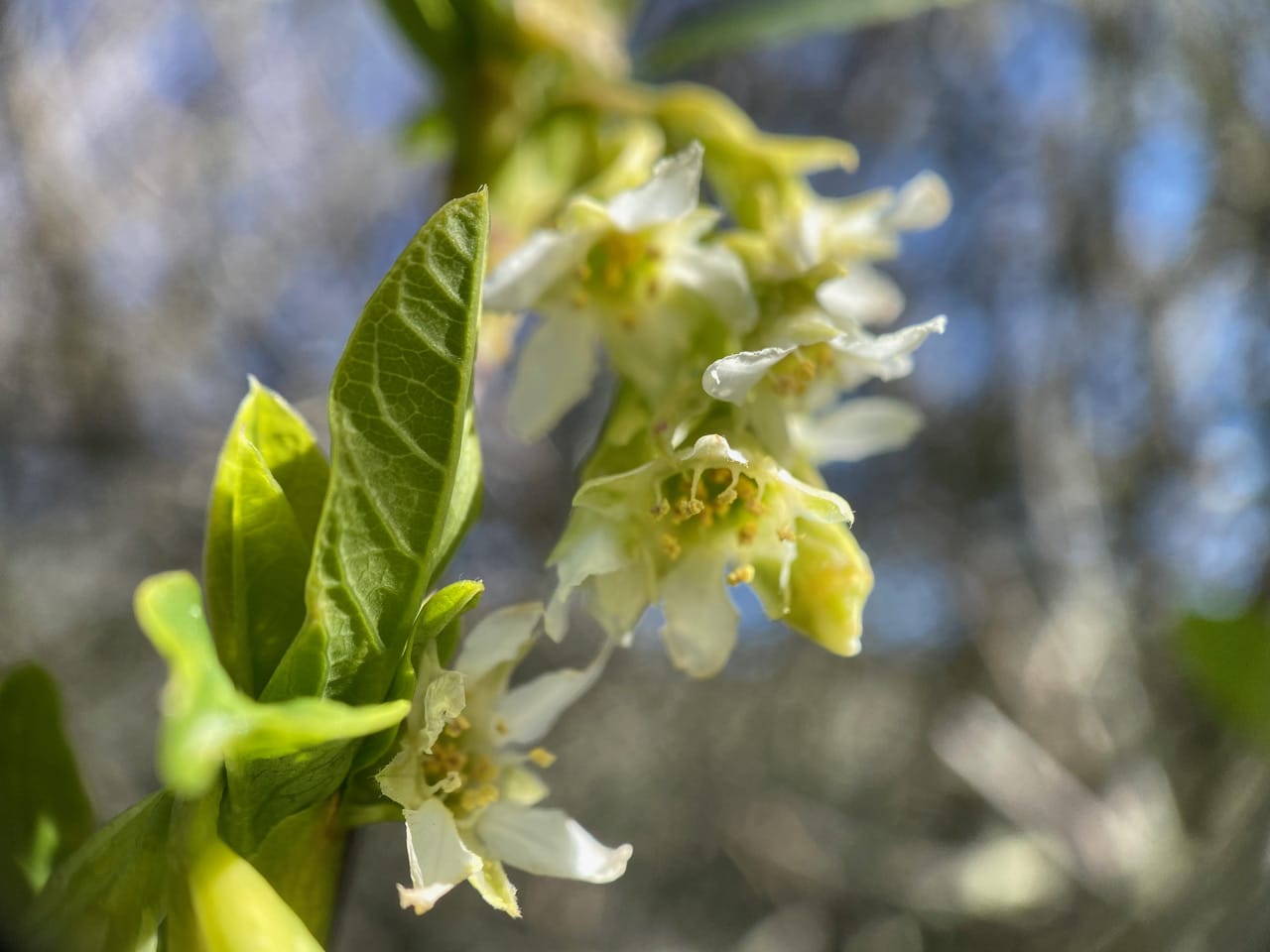
This is a male plant. Osoberry is dioecious, with male and female flowers borne on separate plants. Male and female flowers superficially look the same, until you peek inside. Small, five-lobed flowers are borne on drooping cluster, usually appearing before the leaves. Each flower is white with a green calyx.

Male flowers have 15 stamens that produce lovely gold pollen. Although the male flowers are known to have an unpleasant odor, reminiscent of cat urine, I do not detect any smells on this cold morning.
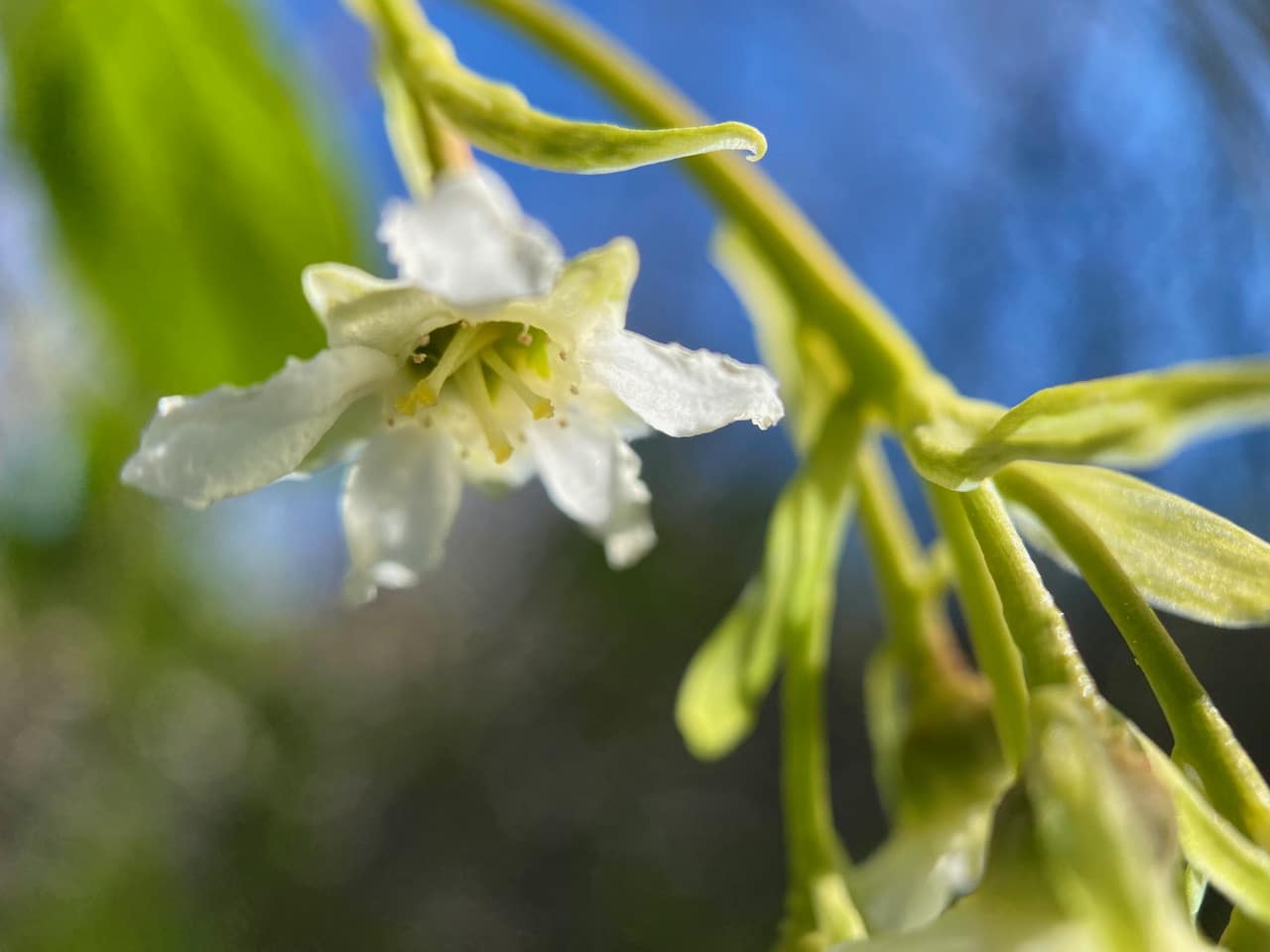
Further along the trail, I find a female Osoberry. While the female flowers also has 15 stamens, they are vestigial and do not produce pollen. Note the five pistils in the middle of the flower.

Here’s another female flower on the same plant. Note the five pistils and the vestigial, sterile stamens. Female flowers are known to have a pleasant fragrance, likened to cucumber or watermelon. After pollination, the pistils will develop into little bitter fruits that are eaten by birds and other animals.
Since female plants are much less common than the males, I mark this plant with a bit of red yarn so that I could return to it easily to watch for fruit development later on.
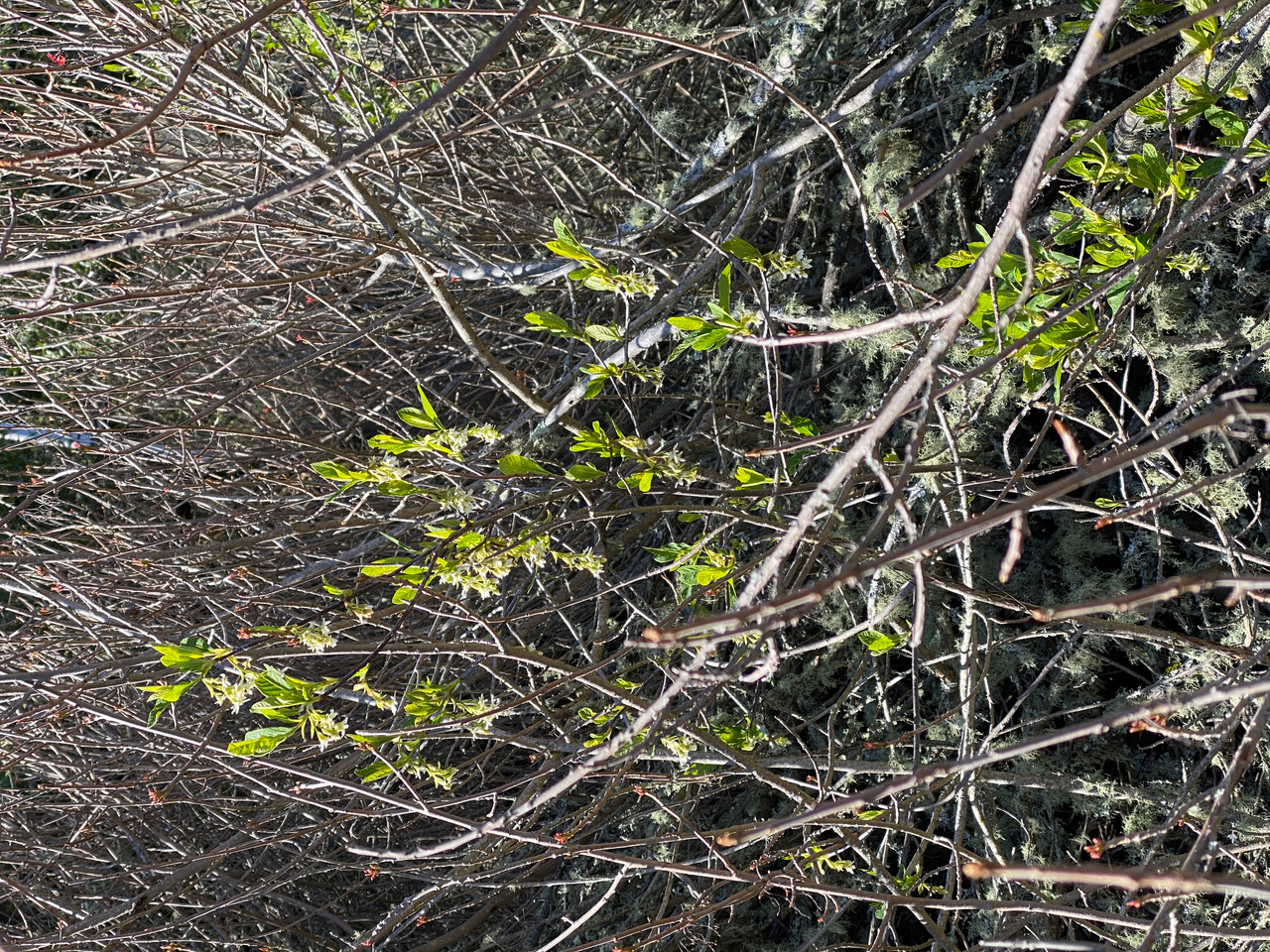
I stand up and reflect on how insanely difficult it is to photograph the flowers of Osoberry. Not only are the flowers hanging upside down, the shrubs are usually surrounded by Poison Oak (at least at Skyline Gardens).
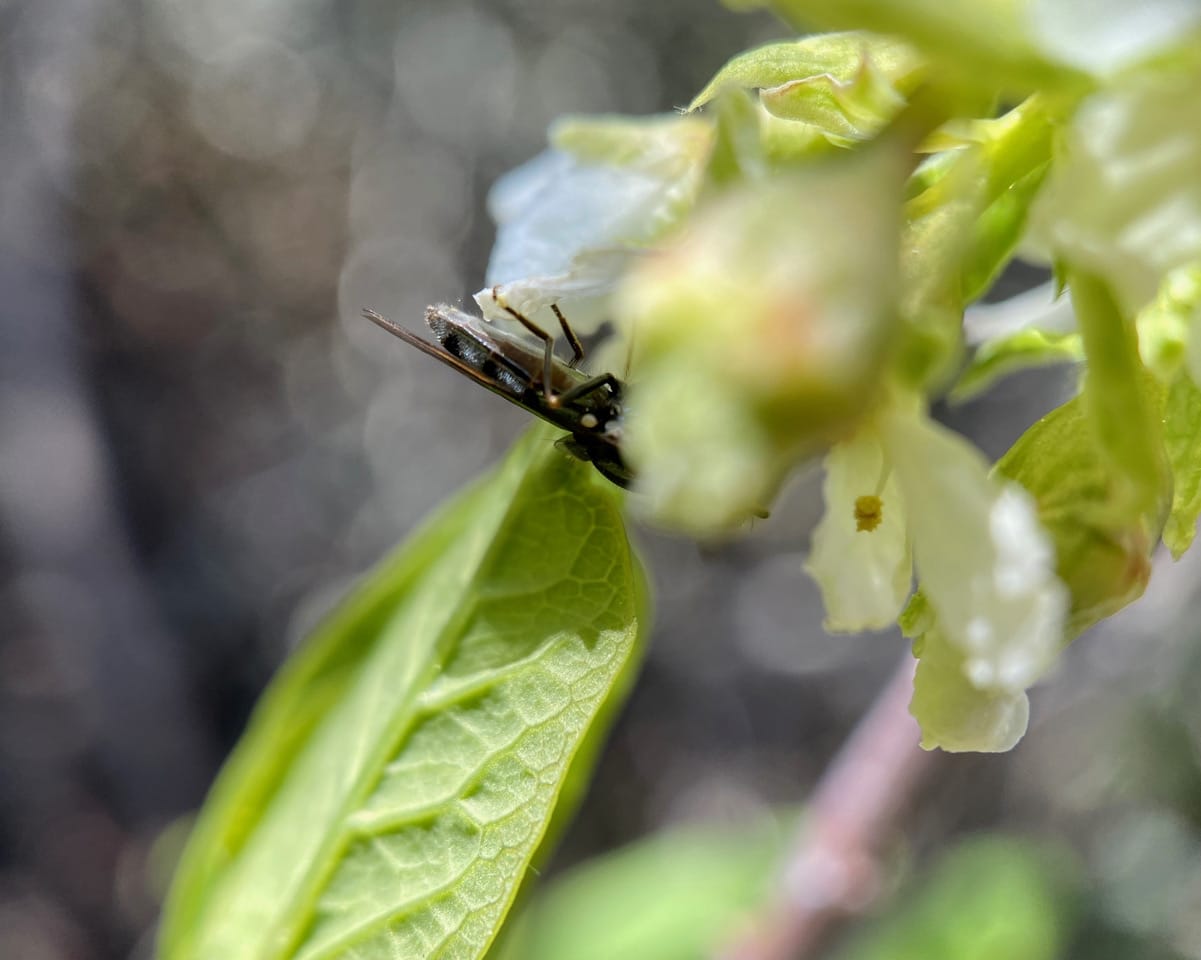
Just then a fly hovers over a cluster of Osoberry flowers near me and lands. Throwing caution to the wind, I promptly drop to my knees again to take its pictures. Here it is, with its head buried in a flower. It is a Metallic Hoverfly or Sedgesitter, Platycheirus sp. (family Syrphidae). Found mostly in grass or herb vegetation, these hoverflies stay active during cold and rainy weather; it is believed that lower temperatures are optimal for this genus. Platycheirus species appear to all have aphidophagous larvae (that feed on aphids).
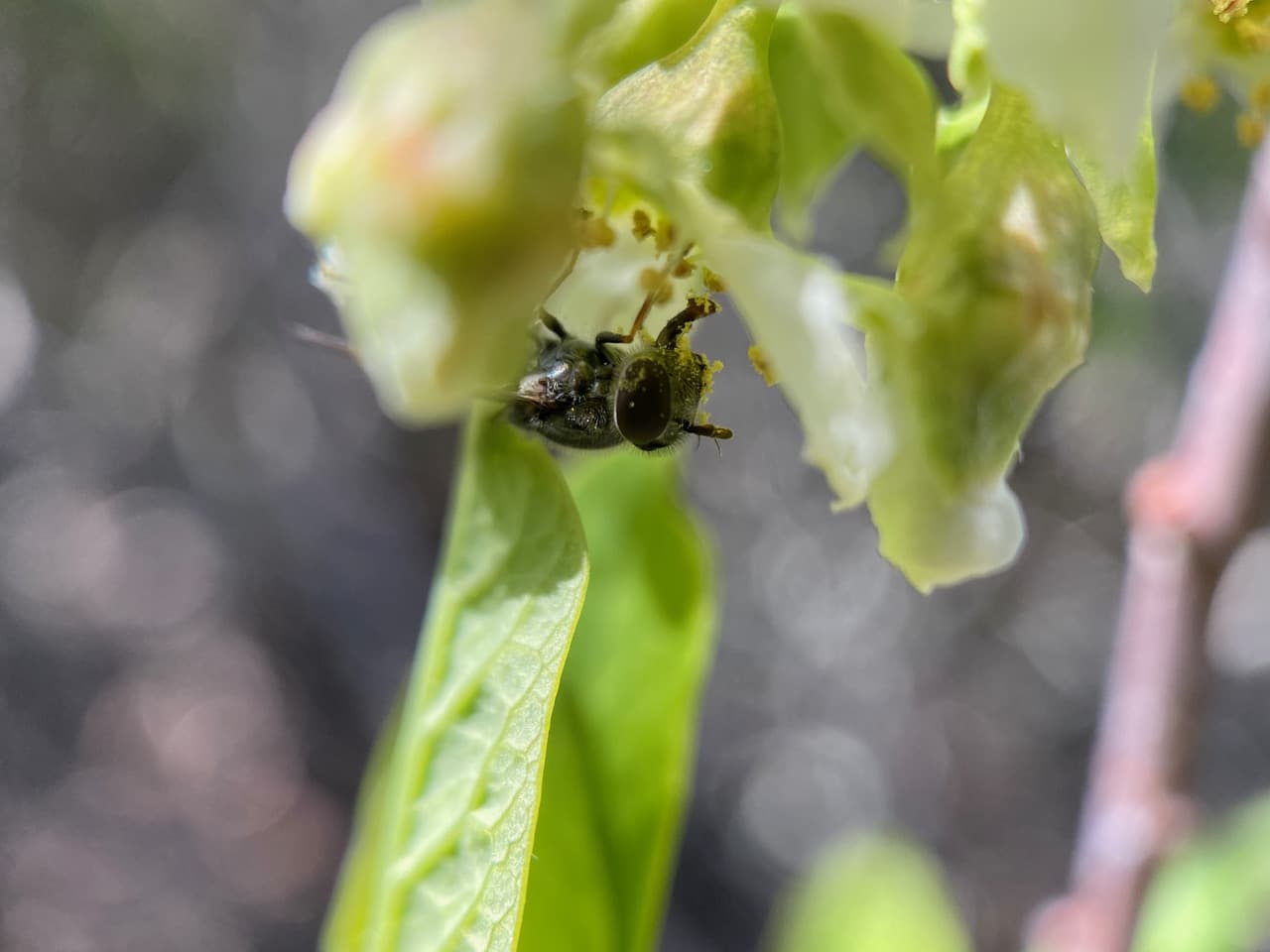
With its sponging mouthparts out, the Syrphid Fly is feeding on the pollen of the male flower.
Flies do not have the mouthparts to chew solid food; they must consume liquid food. If the food is solid, such as pollen, the fly must first digest it. First it begins to digest the food on the outside of its body, by secreting saliva and digestive juices onto the food particles. Once the food is soft enough to eat, the fly then mops or sucks up both the food and the digestive juices with its mouthparts, and the food goes directly to its stomach.
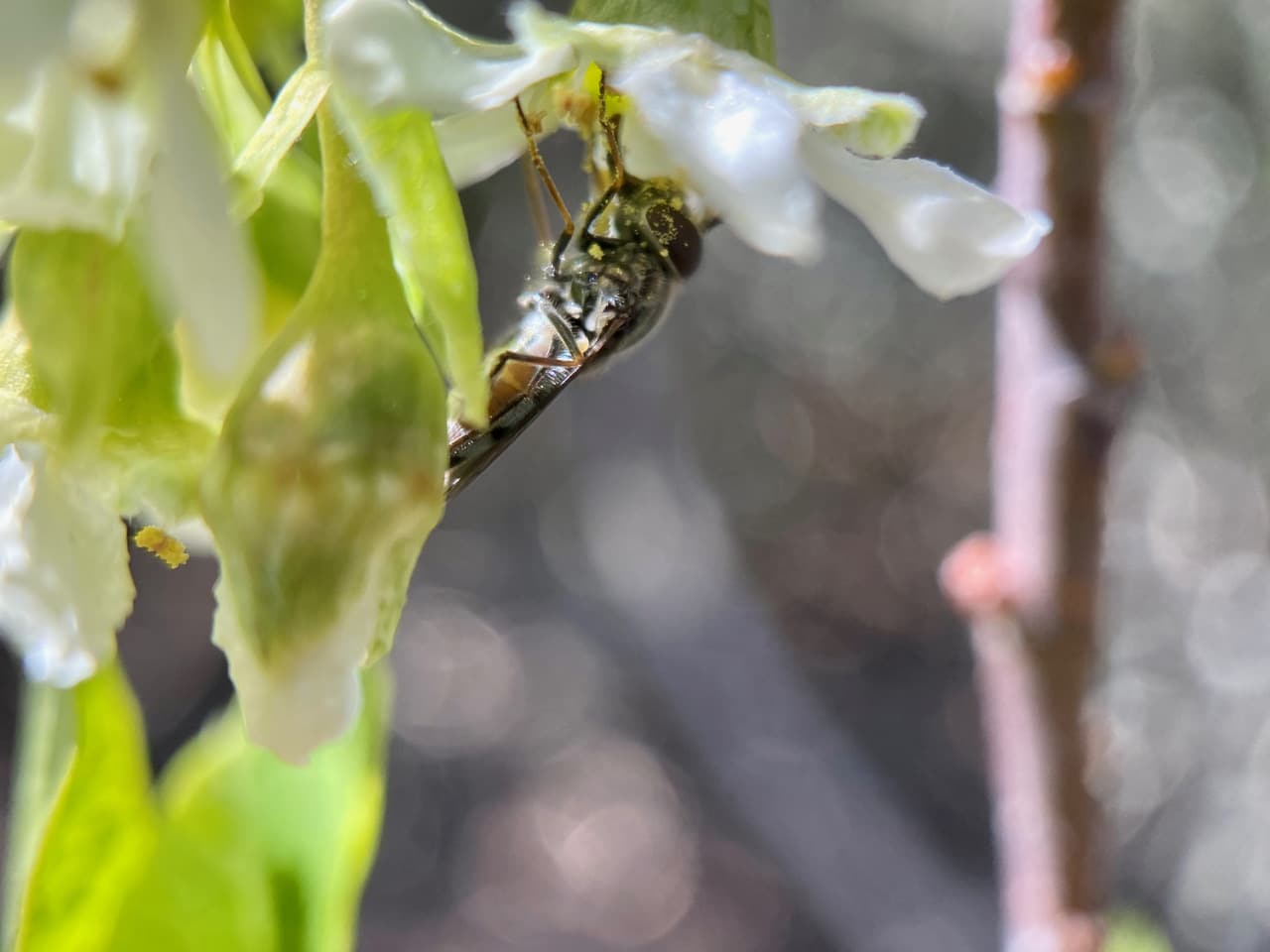
The fly slowly makes its way to another flower.
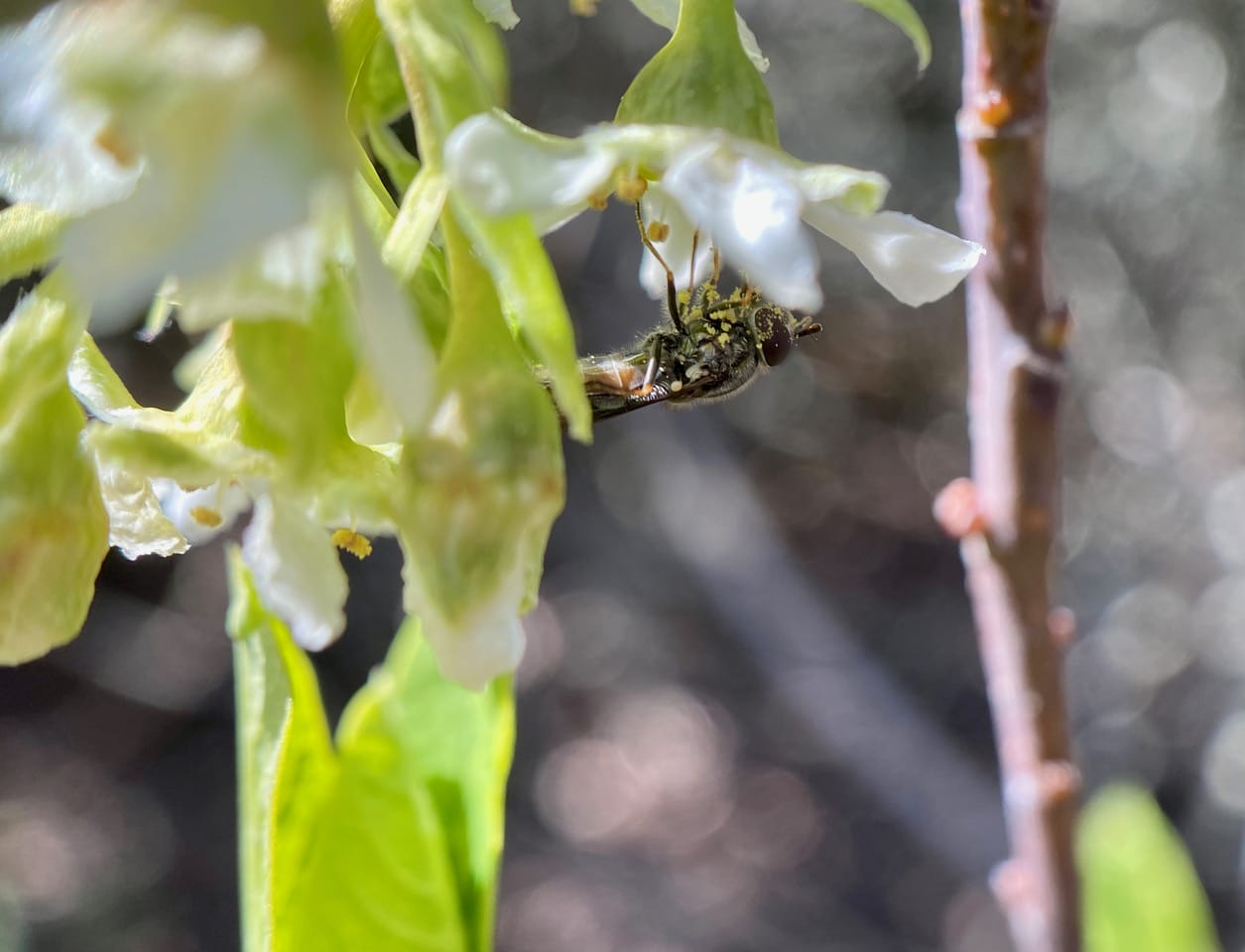
The fly’s body is already covered with pollen. Because of their habit of visiting flowers for nectar and pollen, many Syrphid Flies are important pollinators, second only to bees.
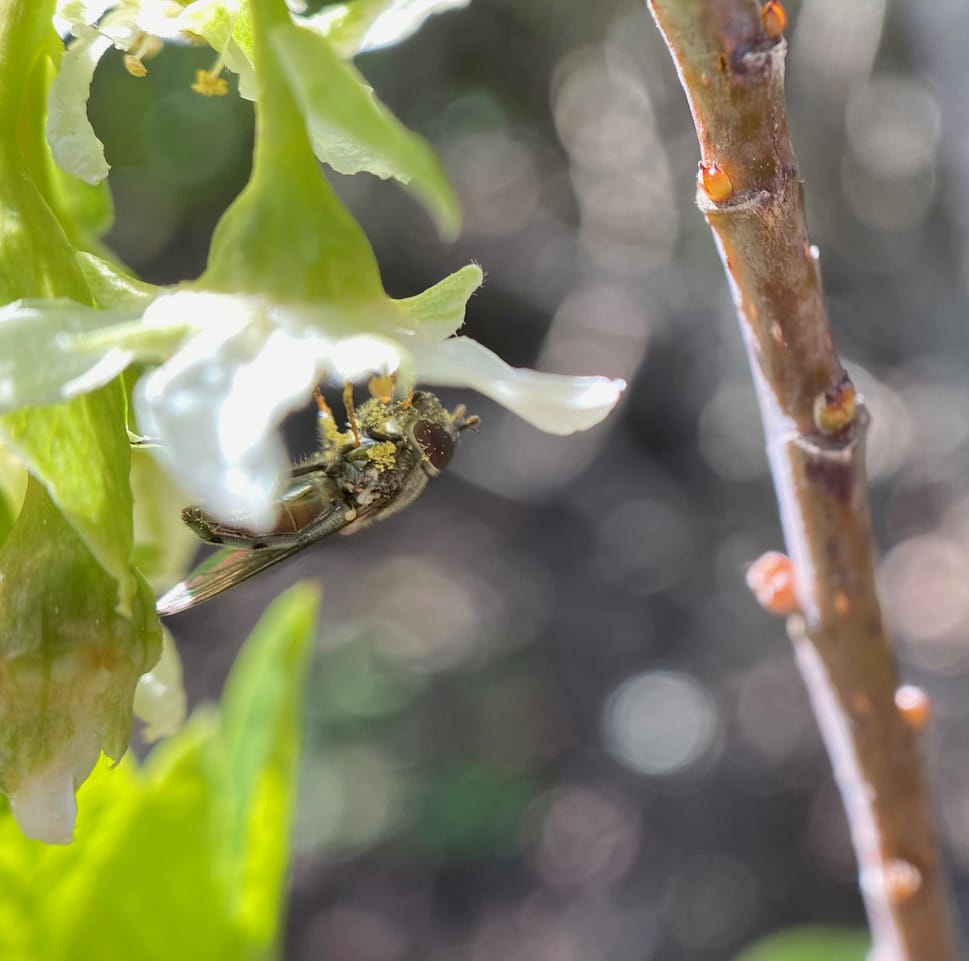
I am curious about that shiny, swollen structure under the fly’s head. Is that a distended crop?
Sometimes, if a fly can’t digest the food completely, it sends the food to an inner sac called a crop, where it continues to be broken down until it can be digested.