

Pollinator Post 3/15/23 (2)
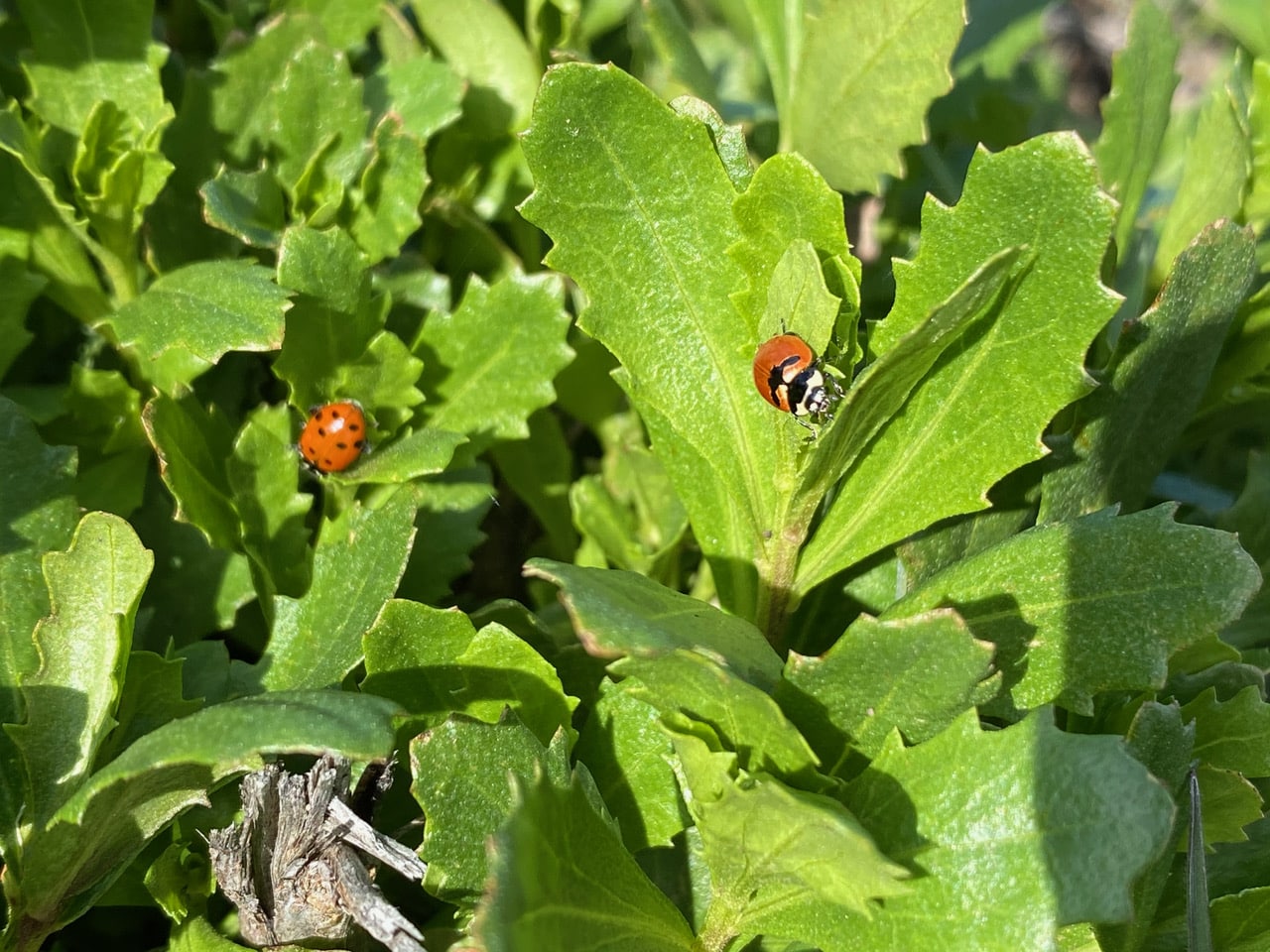
Hey, two different species of lady beetles on the Coyote Brush, Baccharis pilularis. The one on the left is the common Convergent Lady Beetle, Hippodamia convergens. To the right is a Three-banded Lady Beetle, Coccinella triffasciata ssp. subversa. What are they doing on the plant? They seem to be enjoying the sunshine. Lady beetles (family Coccinellidae) are generally predatory, feeding on aphids and other soft-bodied insects. The Three-banded subspecies range hugs the west coast from California to British Columbia.
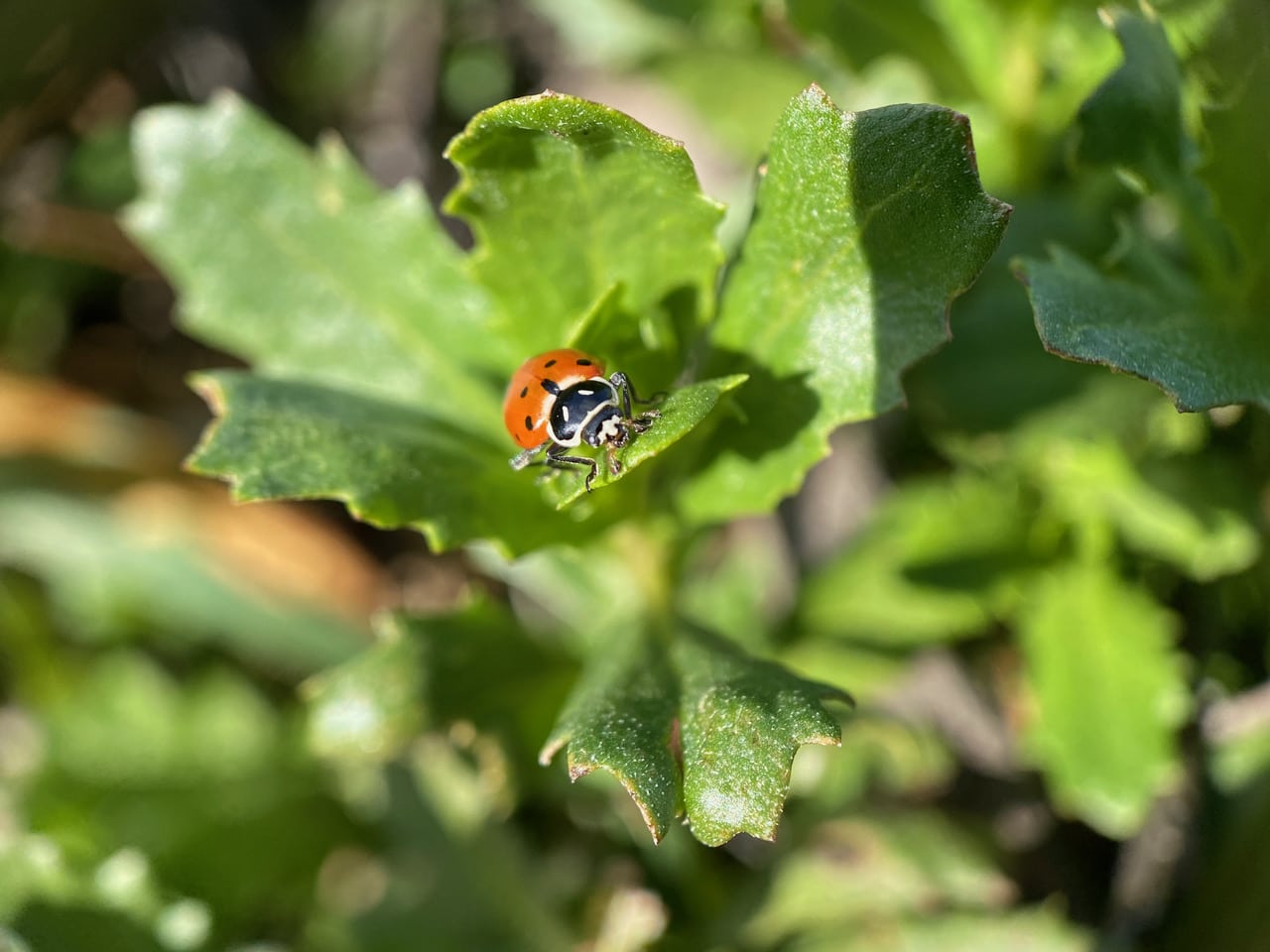
Here’s a front view of the Convergent Ladybeetle, Hippodamia convergens showing the characteristic marking that gives rise to their name – the two white dashes on the black pronotum that “converges” toward the back.

Hey, there’s actually a third species on the plant! This pair of California Lady Beetles, Coccinella californica are mating.
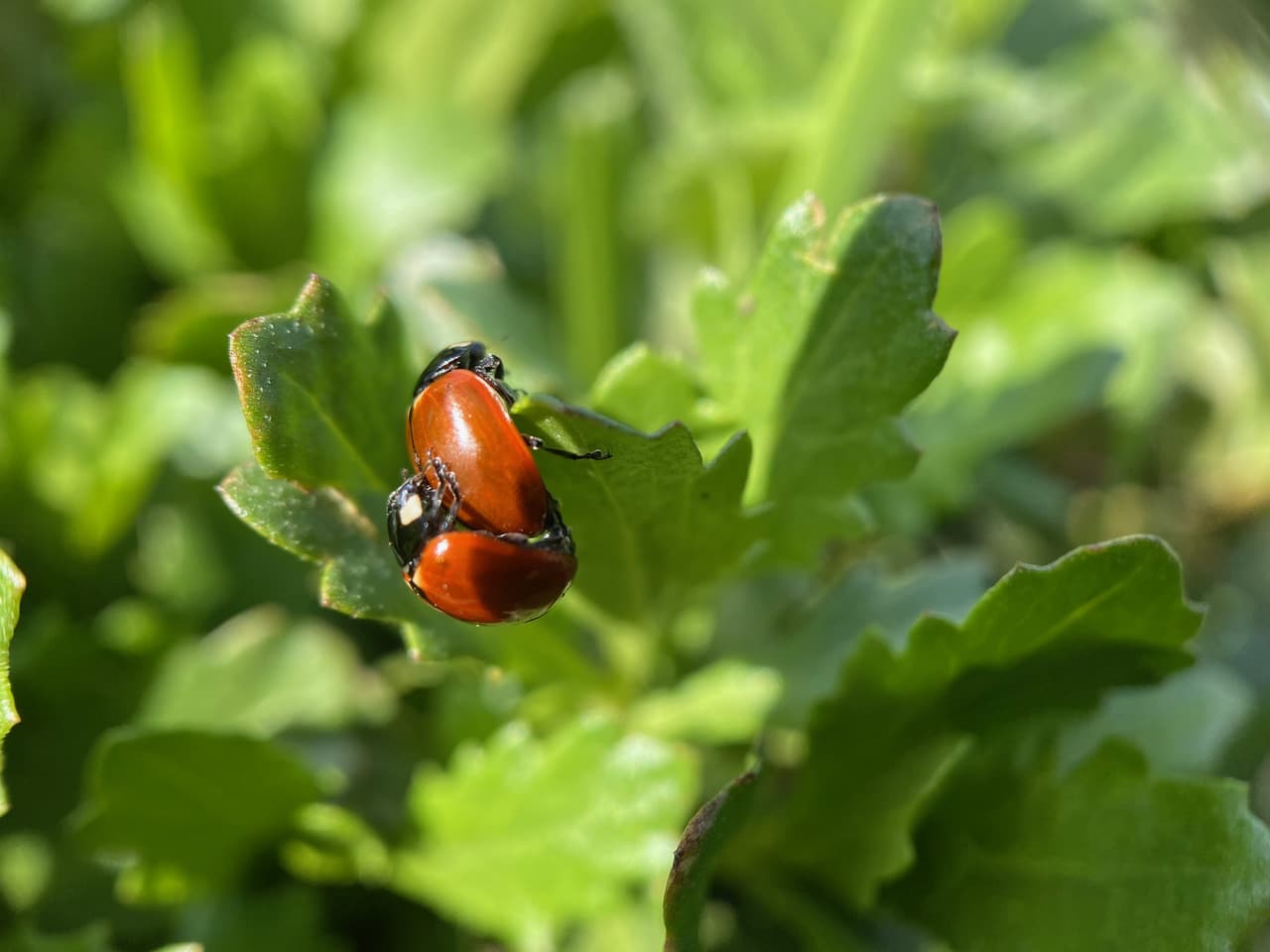
California Lady Beetles have no spots on their wings. There are two widely spaced white spots on their pronotum. Note that the female is distinctly larger than the male on her back. She is strolling around nonchalantly while the male hangs on tenaciously.

Among the leaf litter under a familiar oak tree I look for the Earthstar fungus. Sure enough, there’s plenty of them, all spent. The heavy rains must have really helped these fungi disperse their spores. Here’s one with a deflated spore sac still on its star-shaped pedestal.
Astraeus hygrometricus, commonly known as the Hygroscopic Earthstar is a species of fungus in the family Diplocystaceae. Young specimens resemble a puffball when unopened. In maturity, the mushroom displays the characteristic earthstar shape that is a result of the outer layer of fruit body tissue splitting open in a star-like manner. A. hygrometricus is an ectomycorrhizal species that grows in association with various trees, including oaks. The name of the fungus refers to the fungus’ reaction to the amount of water in the air. When it’s very dry, the ray-shaped arms fold around the central puffball (or spore sac) to protect it from predators and the elements. However as the rains begin, the different parts of the hygroscopic rays absorb water at different rates, causing them to unfold to expose the puffball. As additional raindrops fall on the exposed puffball, the spores are puffed out through the pore. The rays curl and extend far enough to raise the puffball a couple of centimeters above the ground, the better for the spores to catch the air current that will transport them far and wide. This adaptation enables the mushroom to disperse spores at times of optimum moisture, and reduce evaporation during dry periods.


Here’s another tired looking spore sac with the rays of the pedestal curling over it now that the air is dry. I wonder how many times the fungus can keep opening and closing with changing humidity. In dry conditions, the rays close up to protect the spore sac. In rainy conditions, the rays open up and lift the spore sac up so the pelting raindrops could force the spores to be expelled through the central hole on top of the spore sac. What an ingenious spore dispersal mechanism!
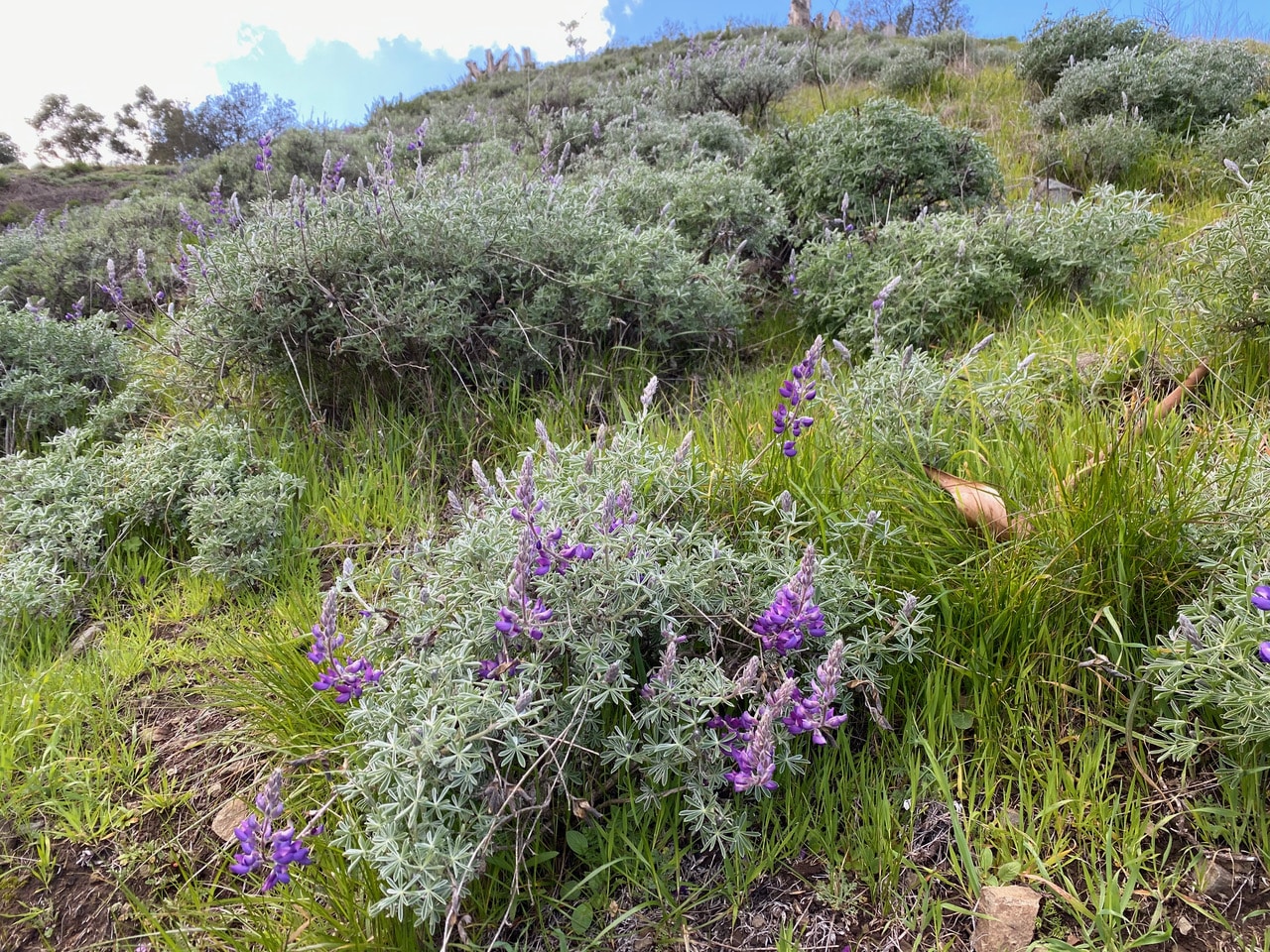
More Silverleaf Lupine flowers are blooming at Diablo Bend.

The Lupin Aphids, Macrosiphum albifrons (family Aphididae) population continues to grow on the infested plant by the trail.
The species is native to North America but does little harm to their host plants. It is first reported in the UK in 1981 where it now occurs widely. Infestations there cause lupine plants to wilt and collapse. It is thought that the aphids can grow unchecked in the UK because they have no natural predators there.

Ha, here’s a predator on our lupine – a hoverfly larva. About a month ago, I discovered the aphids on this particular plant because I saw a hoverfly (family Syrphidae) lay eggs on it. Female hoverflies like to lay eggs near aphid colonies to ensure that their young would have plenty to eat when they hatch. There must be many hoverfly larvae hunting aphids on the plant now.
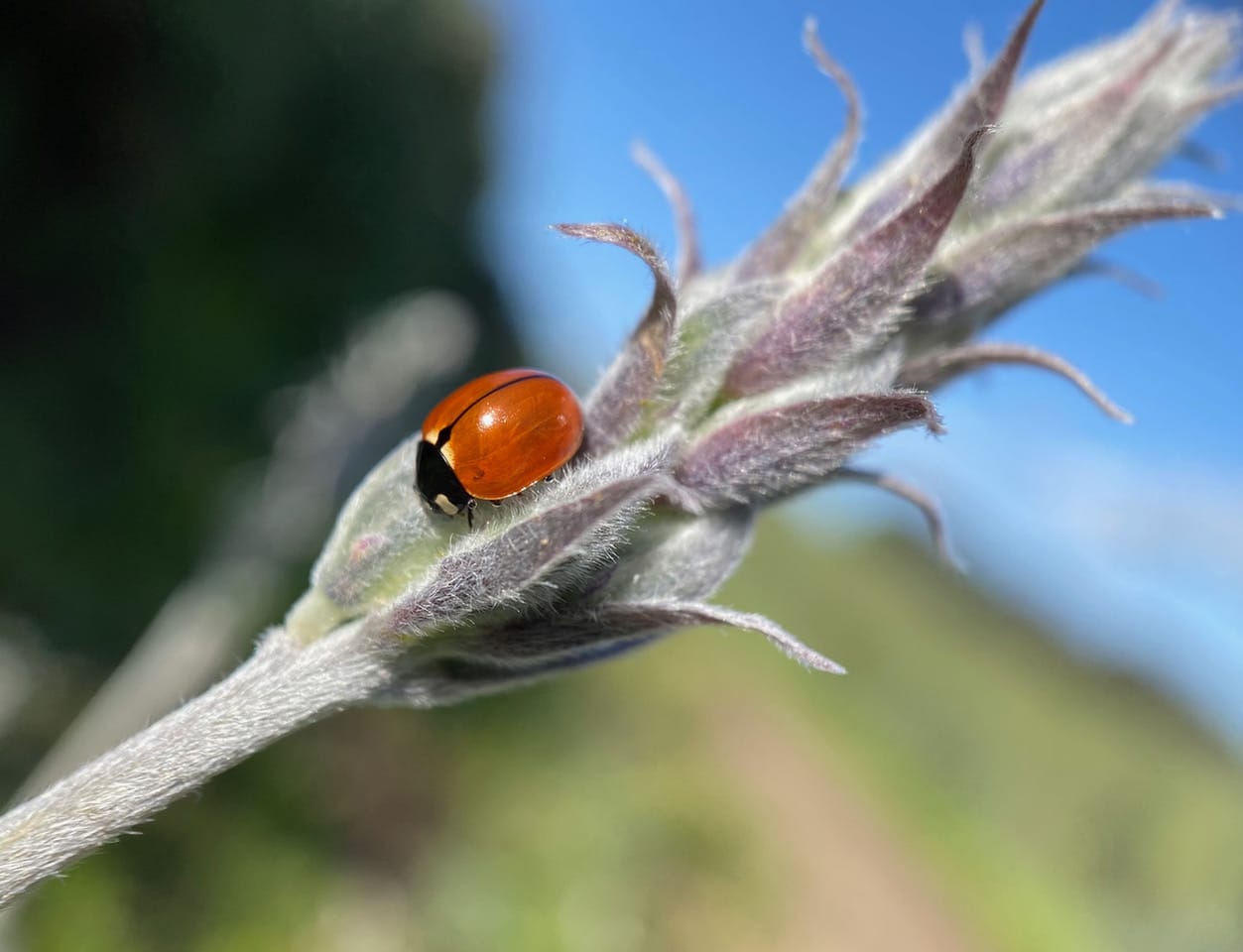
Here’s another aphid predator, the California Lady Beetle, Coccinella californica. Both adult and larval lady beetles are voracious aphid predators.

A Root Maggot Fly (family Anthomyiidae) lands on an immature inflorescence of Silverleaf Lupine.
The name Anthomyiidae was derived from Greek anthos (flower) and myia (a fly). Some species are commonly called “root-maggots”, as the larvae are found in the stems and roots of various plants. As larvae, some also feed on decaying plant material. Others are scavengers in birds’ nests; some are leaf miners.
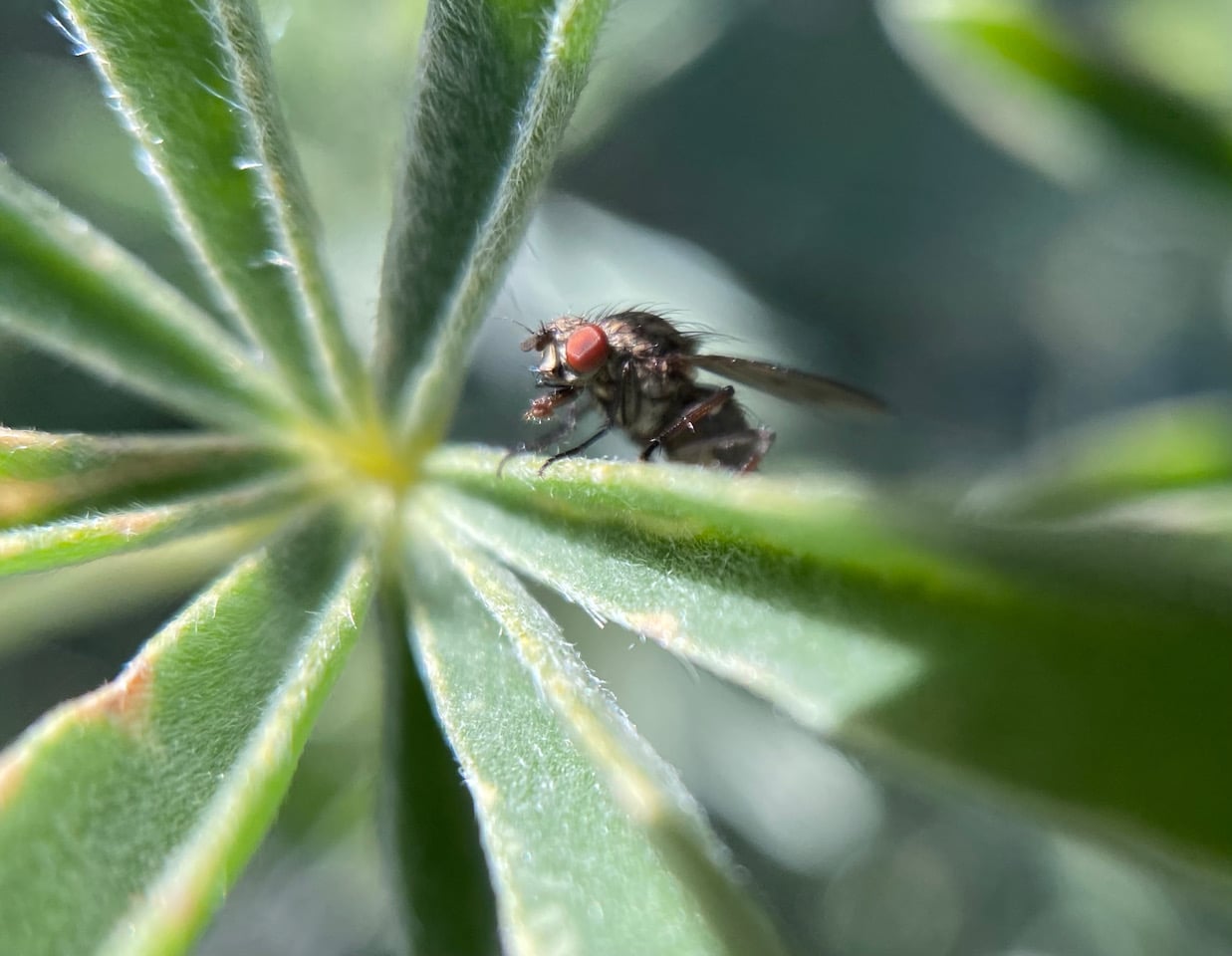
The Anthomyiid fly has extending its tongue…

With its sponging mouthparts, the fly is sucking up something on the leaf. Maybe honeydew expelled by the aphids?
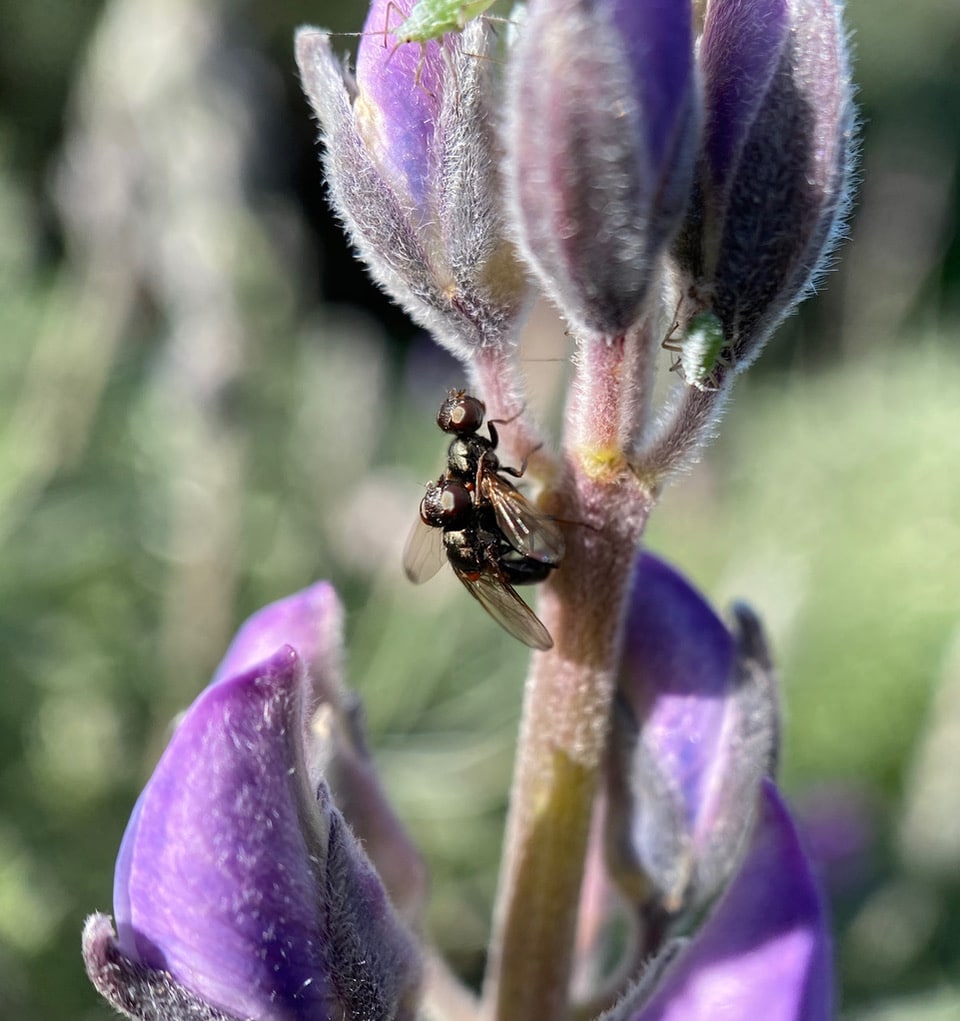
Ah, splendor among the flowers – a pair of Picture-winged Flies, Curranops sp. (family Ulidiidae) are mating on Silverleaf Lupine.
The Picture-winged Flies are among the more common, ornate, and entertaining of all Diptera, thanks to their lovely wing patterns and cute courtship behaviors. Most have some kind of pattern of spots, bars, or lines on the wings, and many have metallic bodies. Photos of Wing-waving Flies (Family Ulidiidae) · iNaturalist United Kingdom By comparison, our little flies seem atypical of the family, lacking bold markings on the wings.
Many Picture-winged Flies are often found on certain plants, dung, logs, wooden fences, or tree trunks. These locations serve as food sources, basking sites, or display sites for courtship. Many species actively wing-wave as they walk over foliage or tree trunks and dead wood. Unlike their close relatives the Fruit Flies (family Tephritidae) which are mostly phytophagous (feeding on living plants), the Ulidiids are mostly saprophagous, with larvae that develop in decaying vegetation/fruit, dung, decaying wood or organically-rich wet mud. Hence the Ulidiids are essentially decomposers/recyclers of organic matter, almost never pests.
Interestingly, all the entries for the genus Curranops on iNaturalist are from the Bay Area, and most of the flies were photographed on Silverleaf Lupine in early spring. Photos of Curranops apicalis · iNaturalist The naturalists who submitted the pictures have wondered if there were any specific association between the fly and the plant. According to Spencer Pote, the fly expert who identified our fly, Curranops is very poorly known both taxonomically and biologically. Nothing is known of the life cycle of Curranops at all, and there are only two rare species in the genus, known from a smattering of specimens.

Another Curranops fly on an adjacent Silverleaf Lupine. The fly holds its wings at right angles to its body, and occasionally fans them gently. Is this a courtship display for attracting a mate? Note that the wings lack markings except for a faint dark spot at the tip.
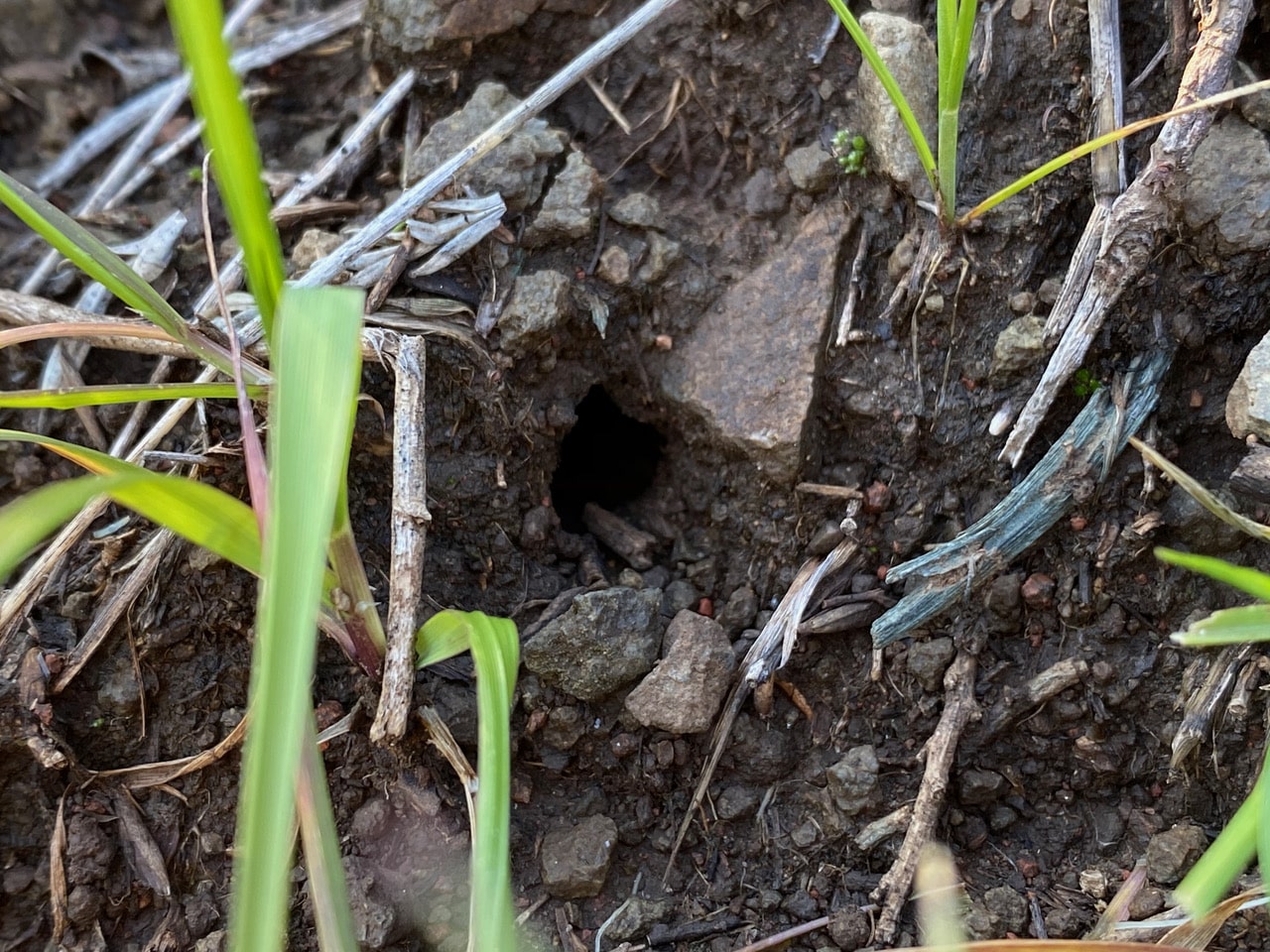
As I was busy photographing insects on the lupine, I kept hearing a loud buzzing around me. Finally looking up, I realized that it was an agitated Digger Bee. In large circles, it continued to buzz around me a few times, then headed for the vertical bank behind the lupine and vanished. I parted the weedy grasses around the spot where the bee disappeared on top of the bank, and found this hole. The bee has entered its nest! It is directly behind the lupine I was photographing – no wonder the bee was annoyed! What a perfect place for a Digger Bee to have a nest – in the midst of a large stand of Silverleaf Lupine! Like the Bumble Bees they resemble in appearance and size, the Digger Bees are able to access the pollen and nectar of the lupine flowers with ease.
Digger Bees are members of the tribe Anthophorini, family Apidae. All Digger Bee species are solitary, though many nest in large aggregations in the soil. The larvae develop in cells with waterproof linings. They are generally large, robust, hairy bees, with visibly protruding faces, and the apical portion of the wings are studded with microscopic papillae. The abdomen is often banded. The wings often appear disproportionately short compared to other bees. Their “buzz” is often a high-pitched whine, as they hover and feed on flowers. Males commonly have pale white or yellow facial markings.