

Pollinator Post 3/16/23 (1)
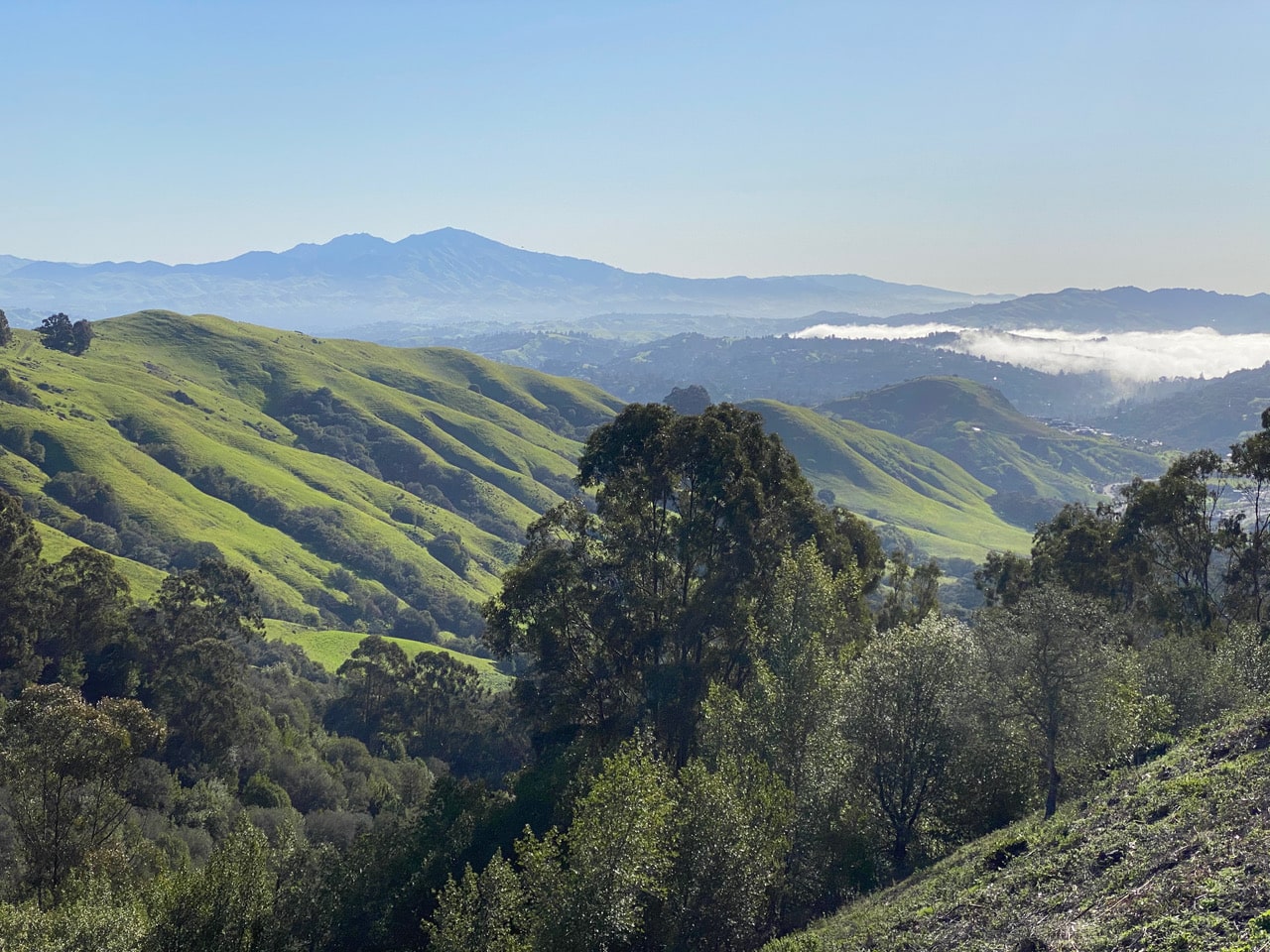
It’s almost 10 am, but some hills are still shrouded in fog viewed from the paved road above Skyline Gardens. A great way to start the day!
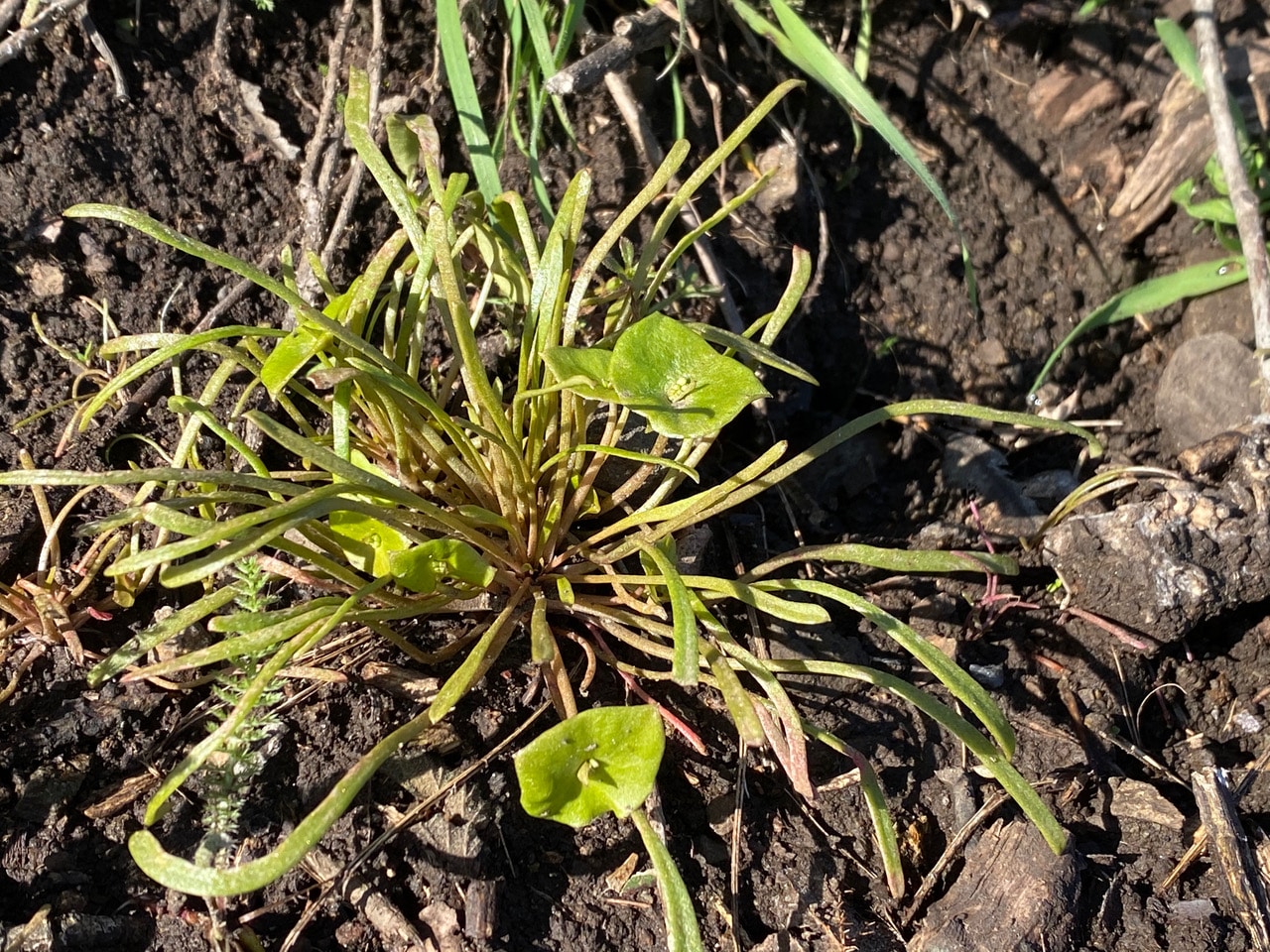 The Miner’s Lettuce, Claytonia perfoliata usually puts on three different foliage in succession during its development – strap-shaped, spade shaped, and circular-perfoliate. This individual seems to buck the trend by skipping the second stage all together.
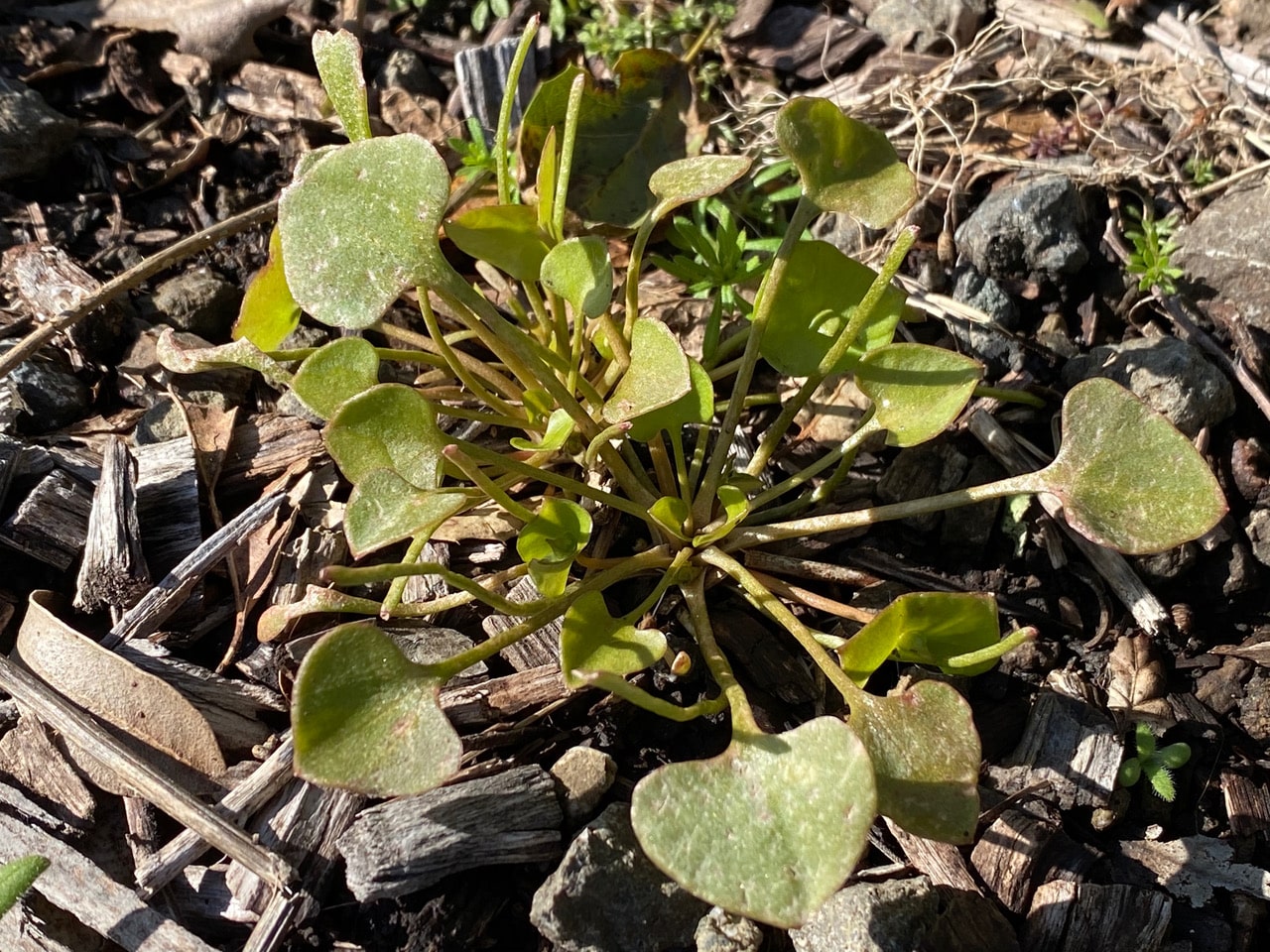




The Miner’s Lettuce, Claytonia perfoliata usually puts on three different foliage in succession during its development – strap-shaped, spade shaped, and circular-perfoliate. This individual seems to buck the trend by skipping the second stage all together. Not far from it is another plant that is in the second stage with spade-shaped leaves. I love the individualities that plants express.
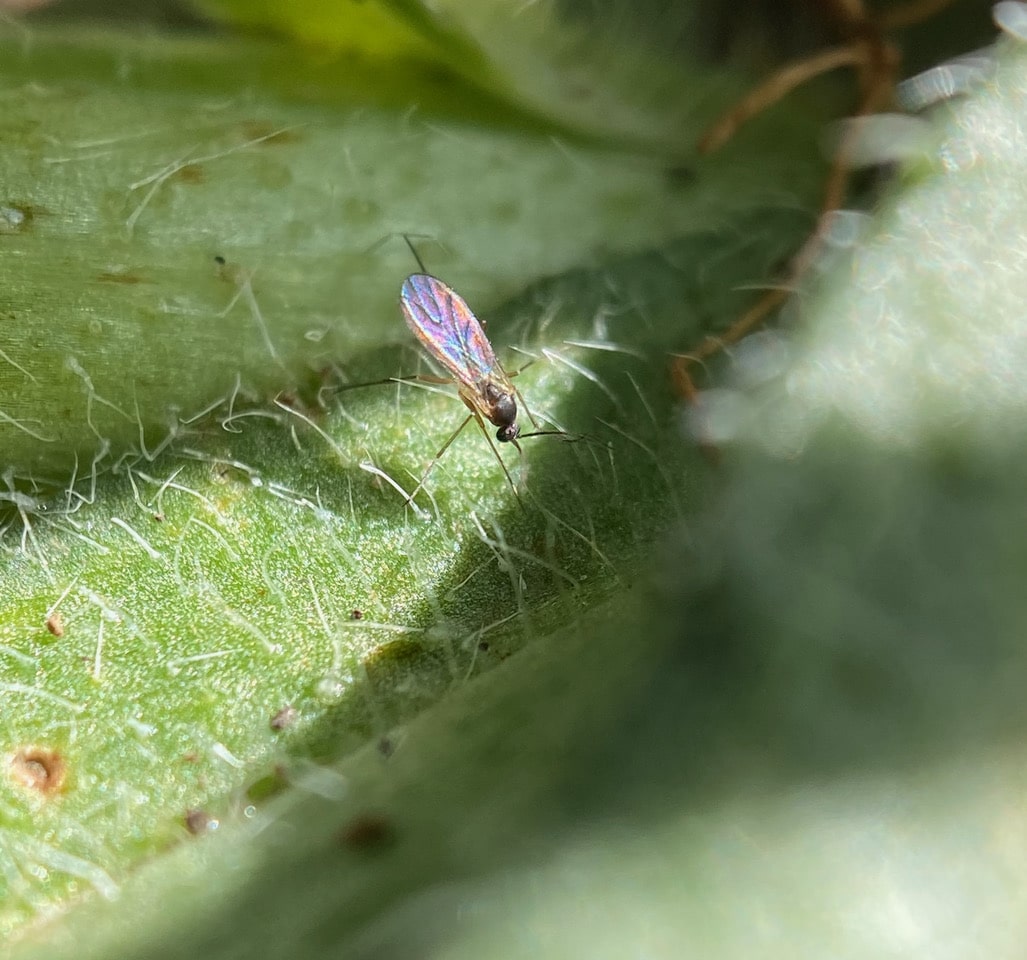
The blooms on the Common Fiddleneck, Amsinckia intermedia are slow in unfurling. But its lower foliage is a playground for the shade-loving Fungus Gnats (family Mycetophilidae).
Fungus Gnats are generally found in damp habitats favored by their host fungi and sometimes form dense swarms. Adults can usually be distinguished from other small flies by the strongly humped thorax, well-developed coxae, and often spinose legs. The larvae usually feed on fungi; some species have been recorded on mosses and liverworts. Larvae of some species are predators.
A Convergent Lady Beetle, Hippodamia convergens (family Coccinellidae) is basking on a Phacelia leaf.
California Poppies have opened up to greet the sun.
A vibrant California Manroot, Marah fabacea has grown up through a Silverleaf Lupine bush. The triumphant vine has made extensive use of its tendrils to hoist itself into the sun.
A young Coast Live Oak, Quercus agrifolia has sent out tender buds on the tips of its branches.
The buds have unfurled into tender leaves on this oak. Why are the young leaves of some plants red?
There are two main theories as to why plants produce the reddish pigments in young leaves: 1) because they have a sunscreen photoprotective function, which shields the leaves against excess visible light and 2) the red coloration serves as a warning to insects that the leaves contain high levels of tannins and anthocyanins, which function as anti-herbivore defense. The anthocyanins are mainly found in or just below the upper surface of the leaf. There seems to be evidence in favor of both theories.
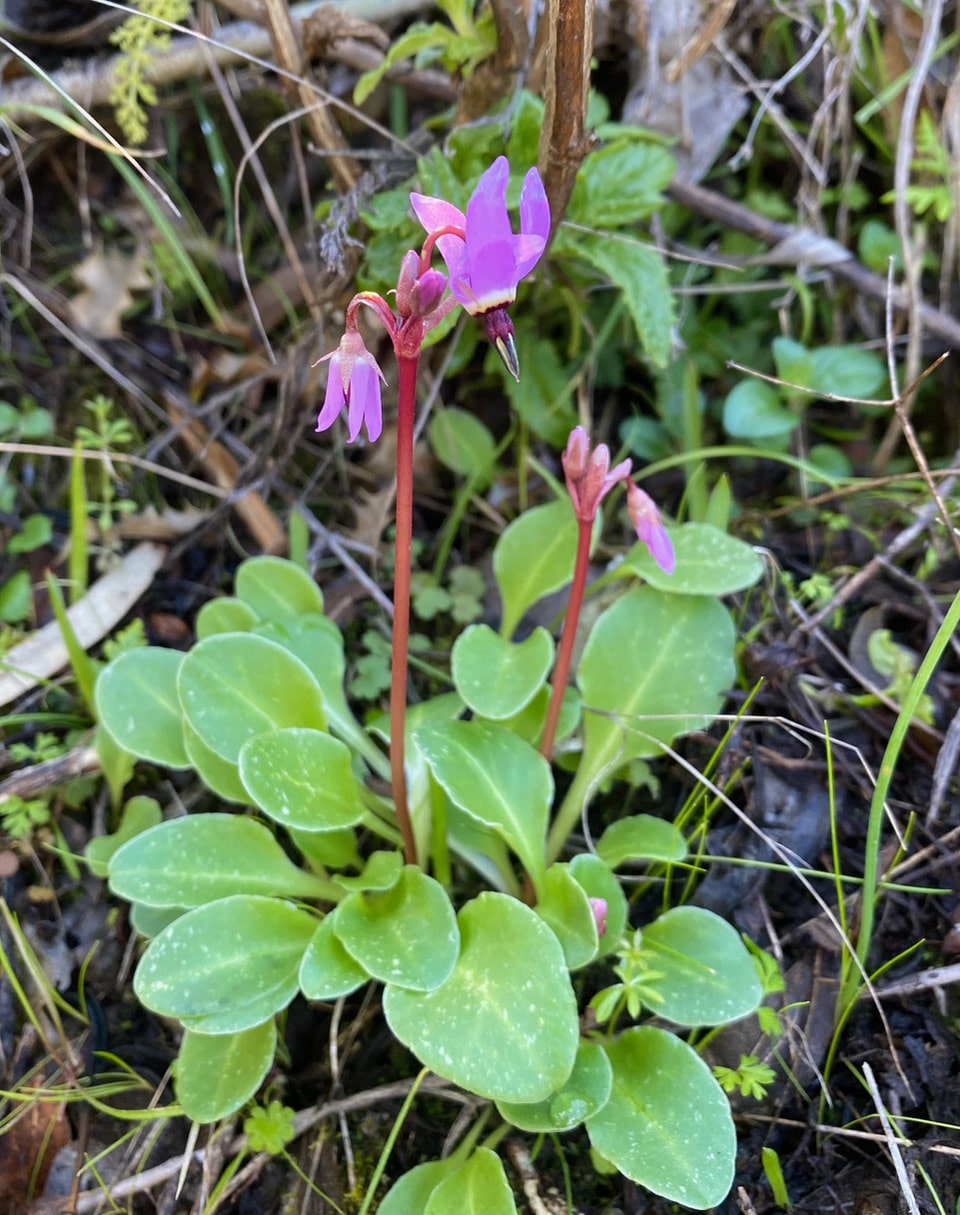
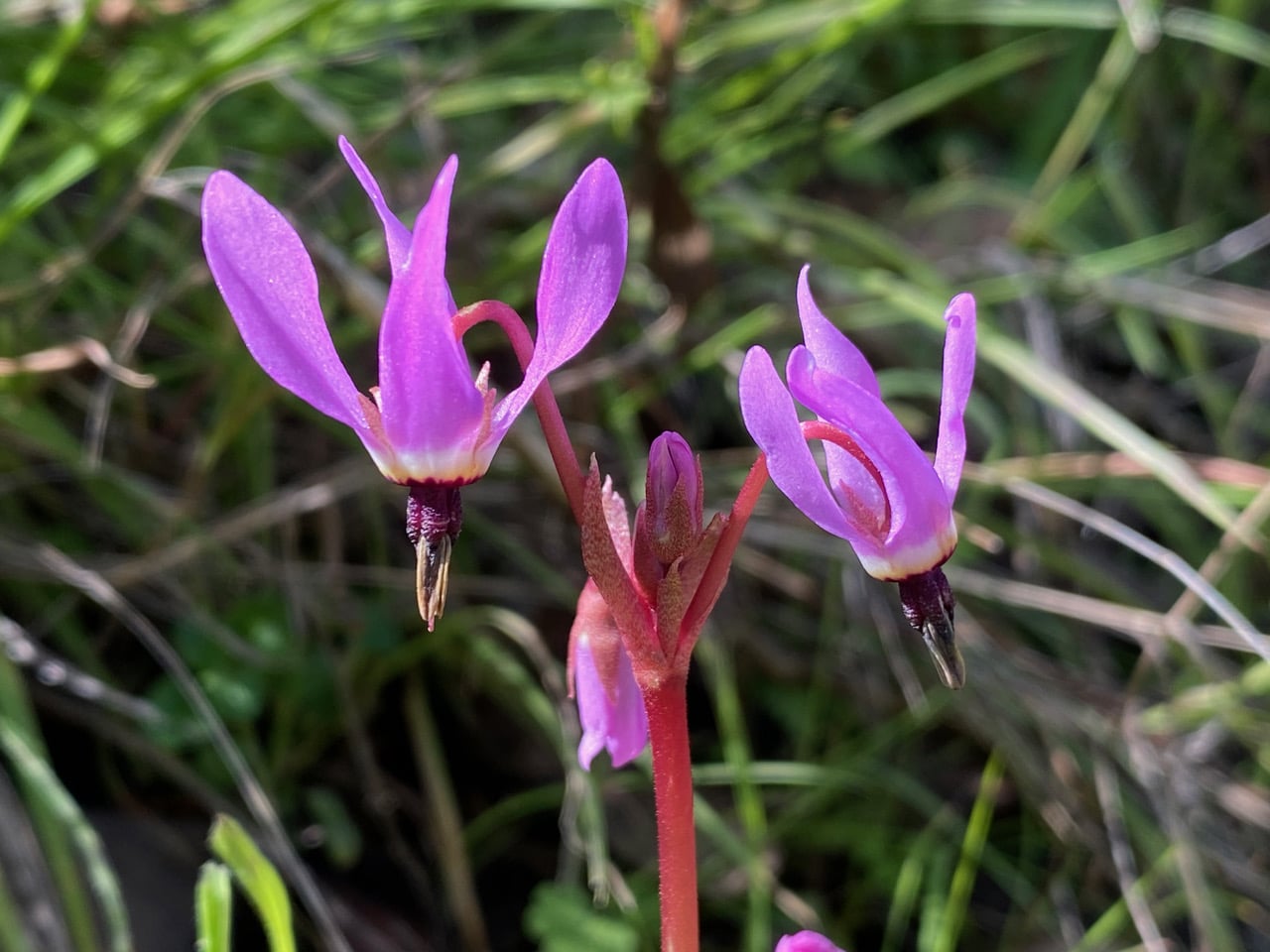
On the shady, moist banks along Skyline Trail just south of Siesta Gate, some Henderson’s Shooting Stars, Primula Hendersonii are blooming beautifully.
The nodding flowers have sepals and petals that are reflexed backwards, offering free access to any bumble bee to come along and collect pollen from the protruding anthers. The anthers are clustered into an anther cone in the middle. During buzz pollination, the bee grasps the cone of anthers with its legs and jaw, and vibrates at a specific frequency to shake the pollen out of the anthers. Other native plants that rely on buzz pollination include the Solanum, Manzanita and huckleberry.
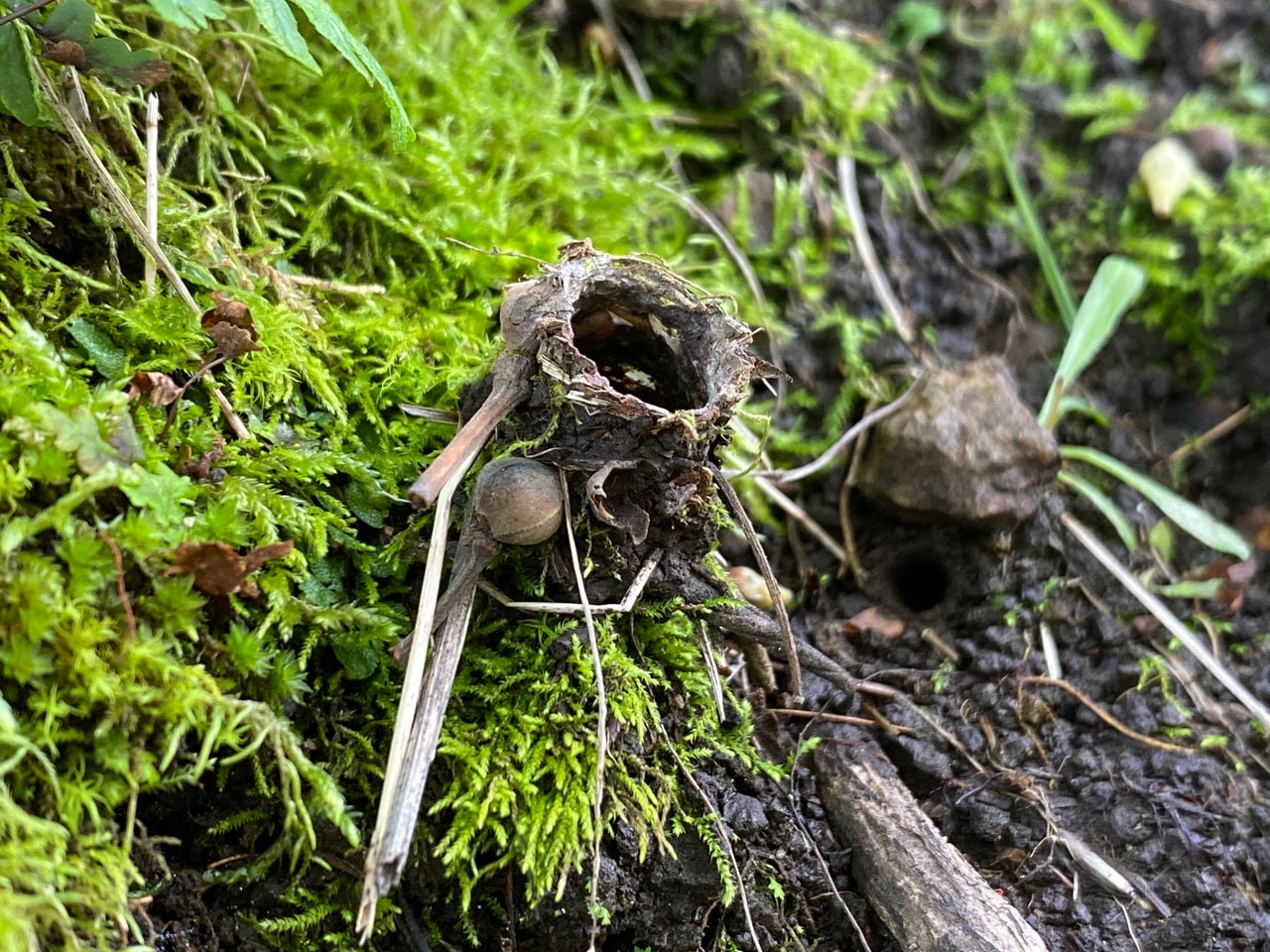
A Turret Spider has survived an eroding bank through the winter storms, thanks to the surrounding mosses. The turret probably prevent the spider’s underground home from being inundated by flood water. The spider seems to have added some interesting plant debris to its turret lately, including a seed pod. The turret is constructed of soil, silk and plant debris. Usually the attached twigs and leaves radiate outward, spoke-like, from the turret, extending the spider’s sensory reach to detect passing prey.
The California Turret Spiders, Atypoides riversi are found only in California, in the Coast Range and Sierra foothills, limited to moist woodlands, often on north-facing slopes, and near shady streams and thickets. They belong to an ancient lineage of spiders, the mygalomorphs, which includes the tarantulas and trapdoor spiders. Mygalomorph fangs swing straight down like pickaxes, instead of from side-to-side like pincers. Turret spiders are ambush predators. At dusk, the spider comes up for food, poised just inside the turret, ready to grab any passing prey.
Just a stone’s throw from Siesta Gate, a False Tarantula, Calisoga longitarsis has been busy house cleaning after the rains, dumping clods of soil outside its burrow by the trail. Among the trash are bits and pieces of insect body parts – rejects/left-overs from past meals.