

Pollinator Post 3/18/23 (1)
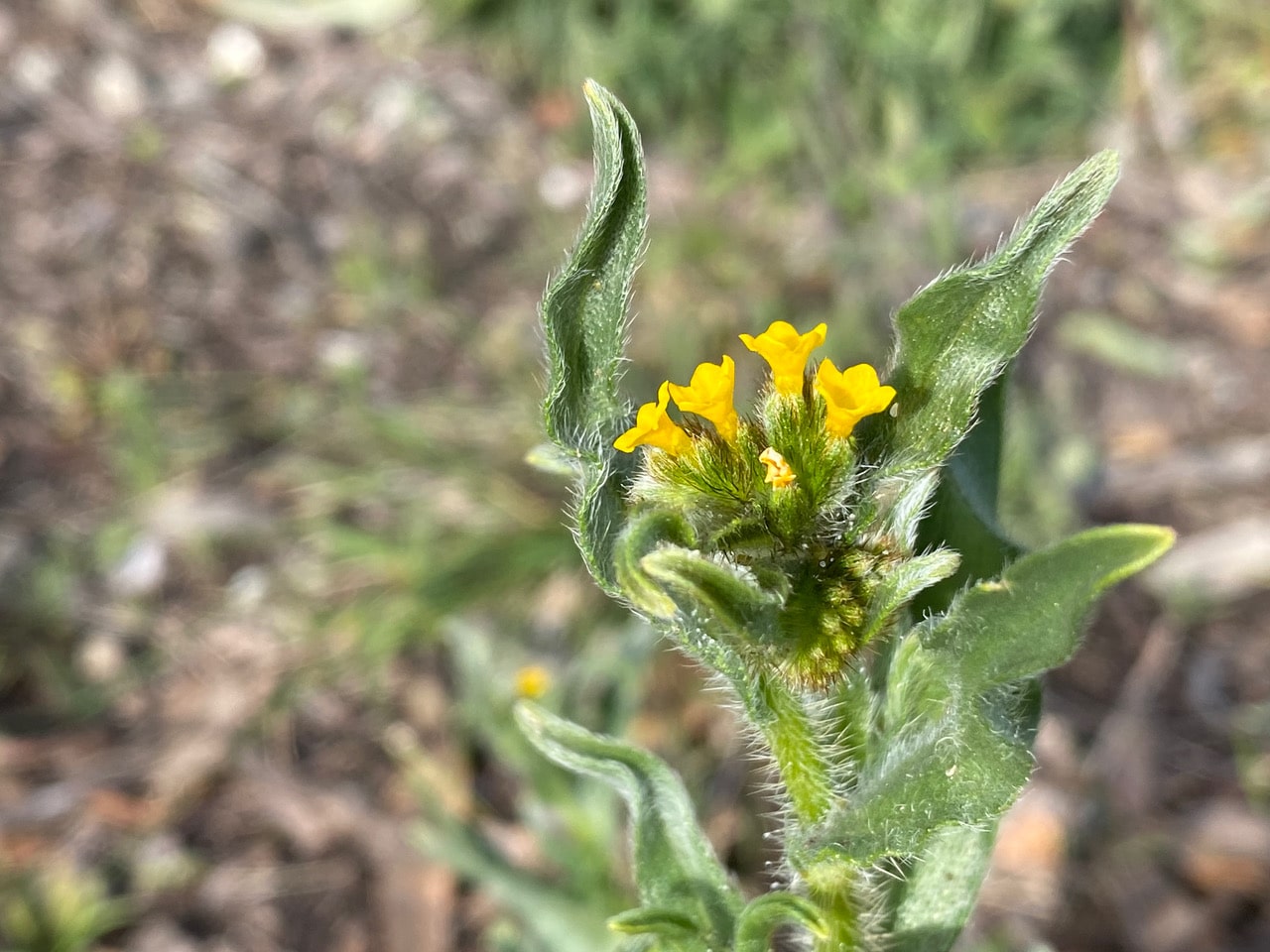
The fastest way for me to reach the Swale is via the paved road up the hill to the Water Tank.
Yellow, trumpet-shaped flowers are unfurling from the scorpionoid coils of buds at the tips of the Common Fiddleneck, Amsinckia intermedia.
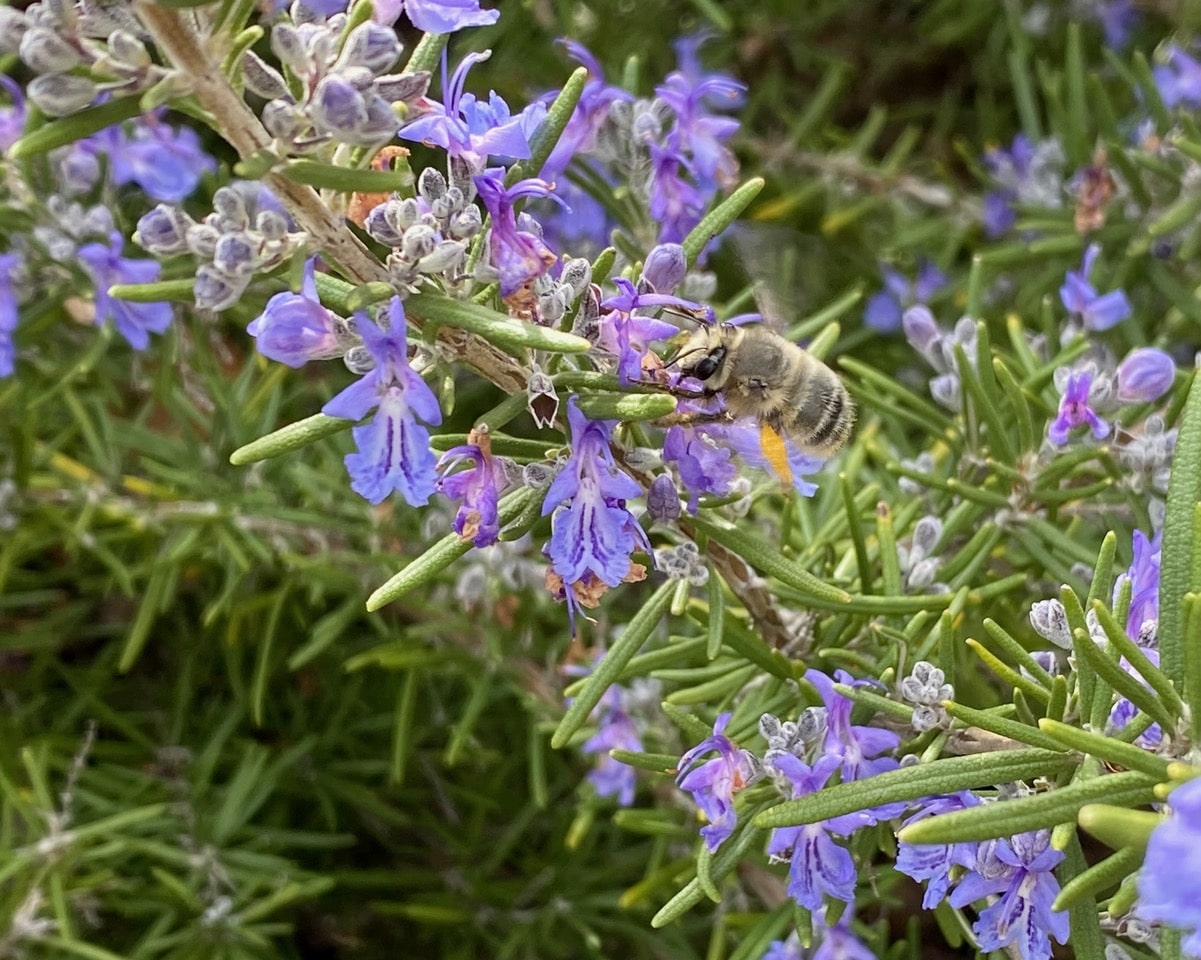
Reaching the Water Tank, I discover many Digger Bees (tribe Anthophorini) buzzing around a Rosemary shrub, Salvia rosemarinus in full bloom by the fence.

Interestingly the Digger Bees are the only bees foraging on the plant this morning. Where are the bumble bees? I think this Digger Bee has been collecting pollen from other floral sources. The Rosemary pollen is a pale beige color.
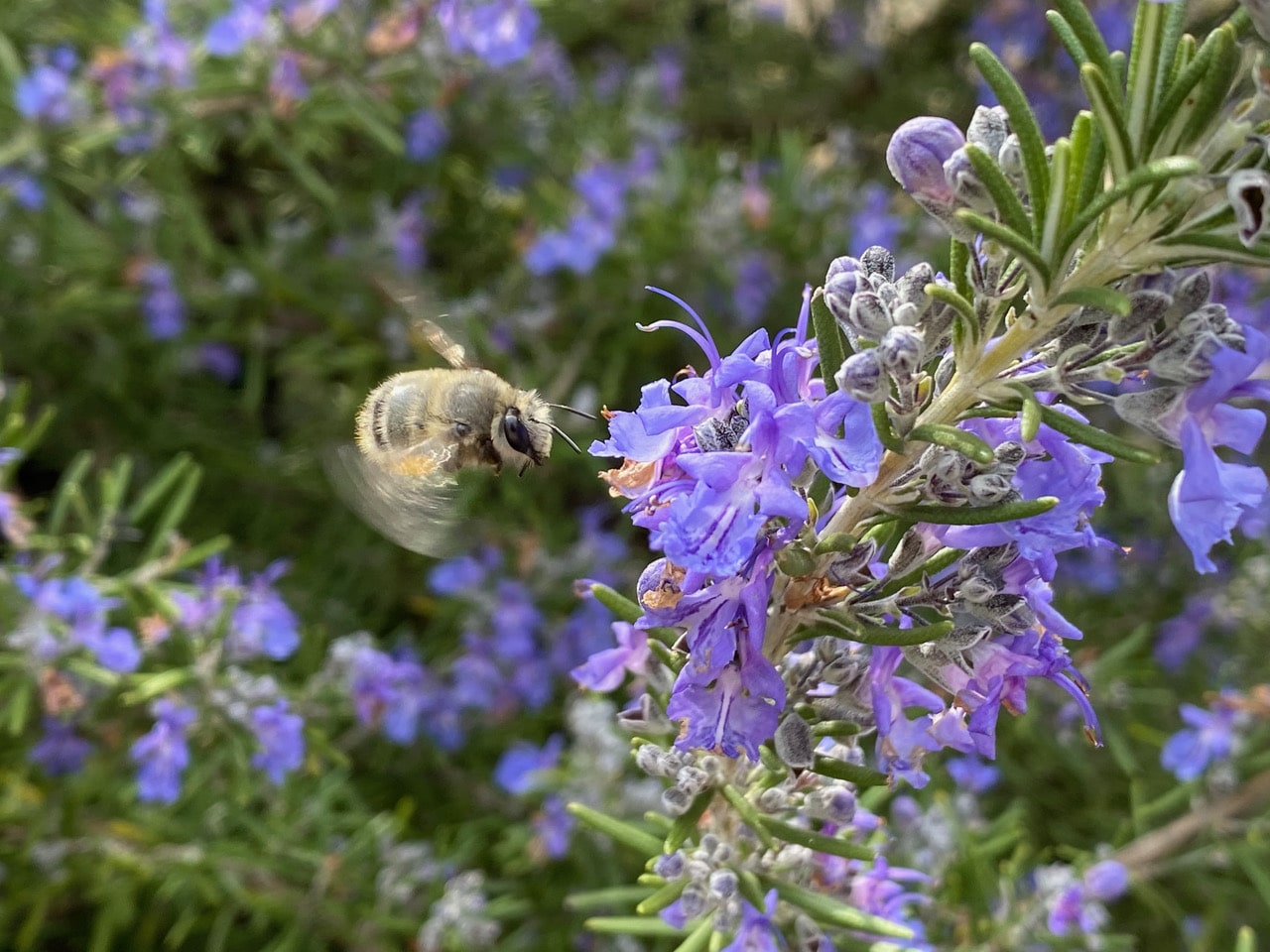
The chubby, furry Digger Bees resemble the bumble bees in many ways, but are a lot noisier. They are a fearless, rowdy lot, but fun to watch. Unlike the bumble bees, the Digger Bees are solitary, each female establishing her own underground nest. But the bees tend to nest in aggregations in good habitats.

Taking the shortcut through a broken fence, I finally get on the Bypass Trail to the Swale. Ah, the Silverleaf Lupines, my destination!
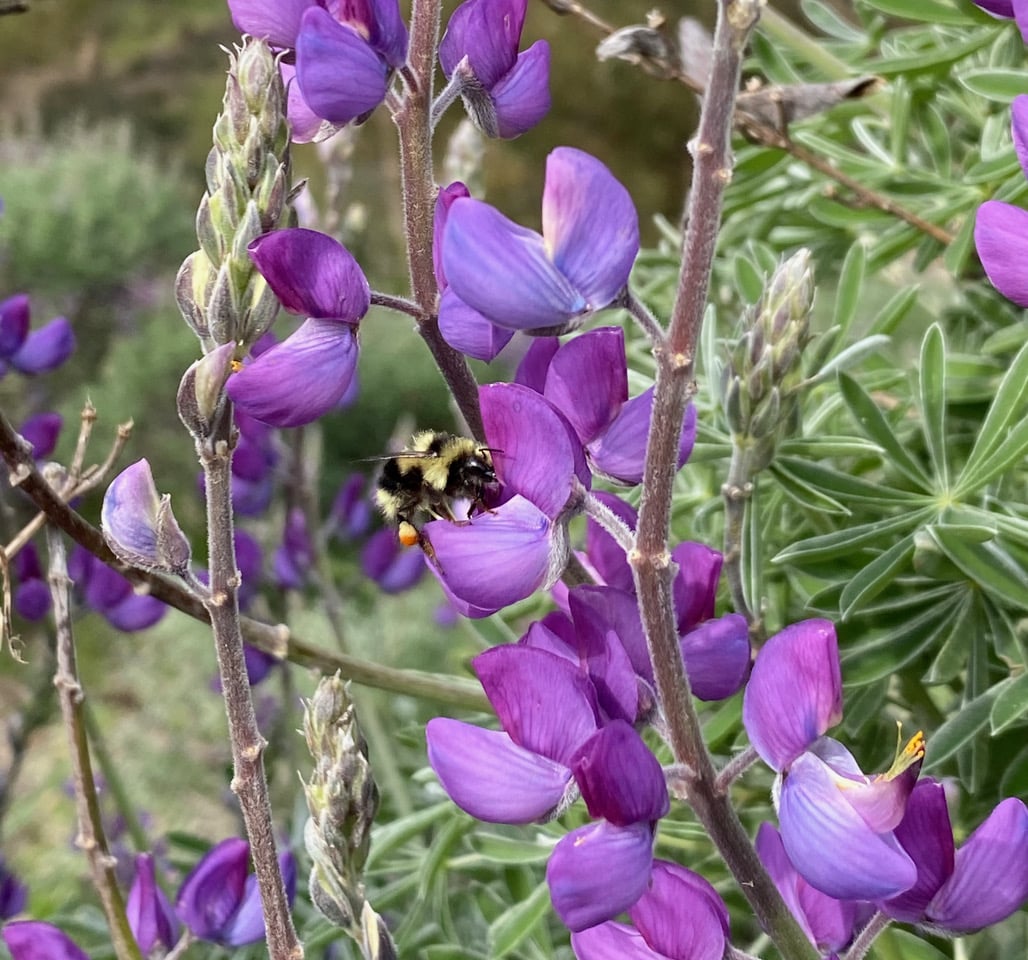
The Black-tailed Bumble Bees, Bombus melanopygus are the first to appear in early spring in our area. This worker bee seems to be wearing candy corn on her hind legs. Obviously she has been collecting pollen from different flowers with different pollen colors. The bright orange pollen is from the Silverleaf Lupine she’s visiting now. In contrast, you hardly ever see mixed pollen in the corbiculae (or pollen baskets) of a Honey Bee. As first noted by Aristotle in honey bee workers, many insect pollinators show a preference to visit flowers of just one species during a foraging trip. This “flower constancy” probably benefits plants, as pollen is more likely to be delivered to the flowers of the same species, and not wasted on the wrong flowers. But it is less clear why insects should ignore rewarding alternative flowers. Perhaps it is a matter of foraging efficiency – once the bee has learned to access the pollen from one type of flower, the job is easier in subsequent attempts on the same type of flowers.
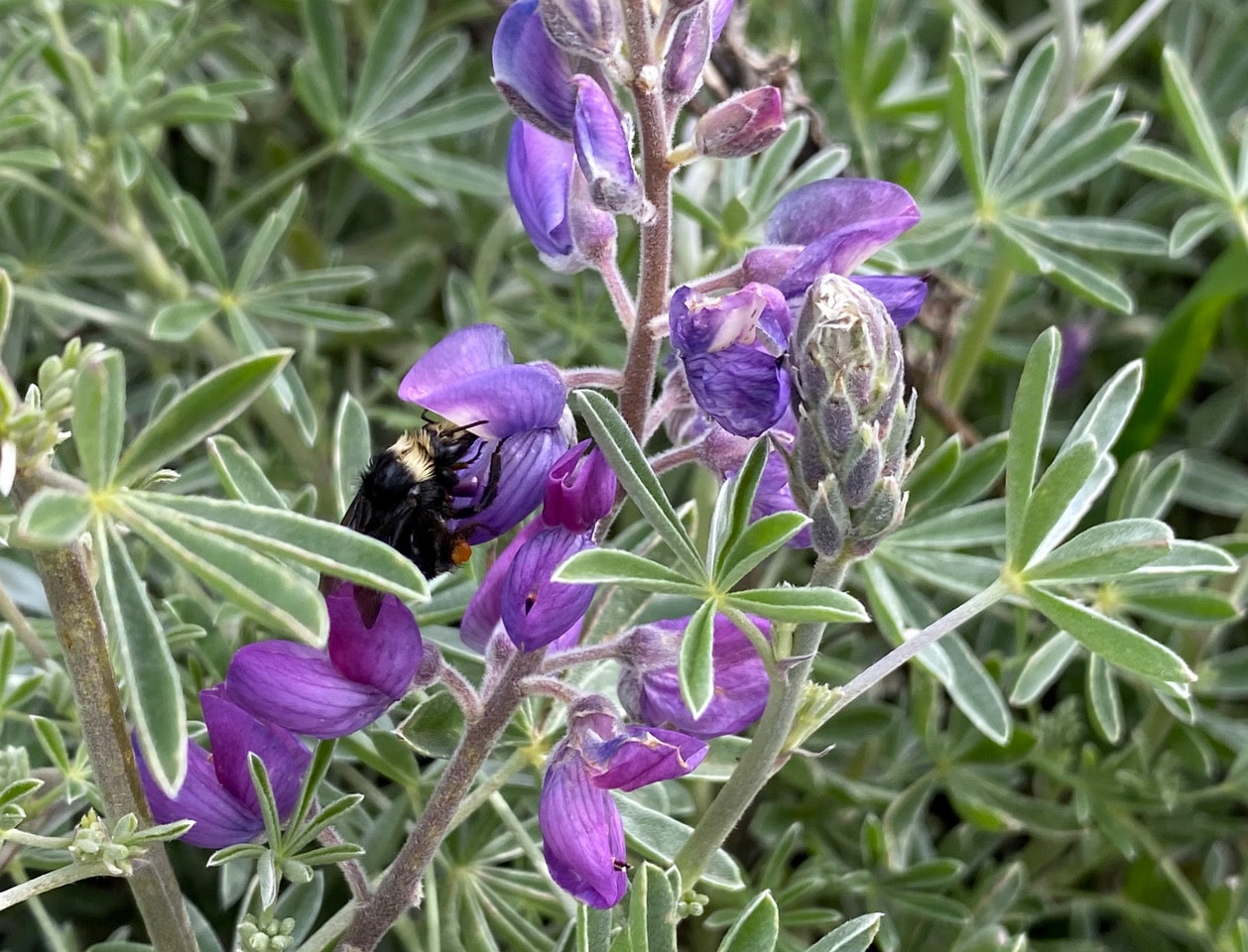
An occasional Yellow-faced Bumble Bee, Bombus vosnesenskii is also seen foraging on the lupine flowers. Their number seems to be building up, perfectly timed to synch with the blooming of Lupinus albifrons.
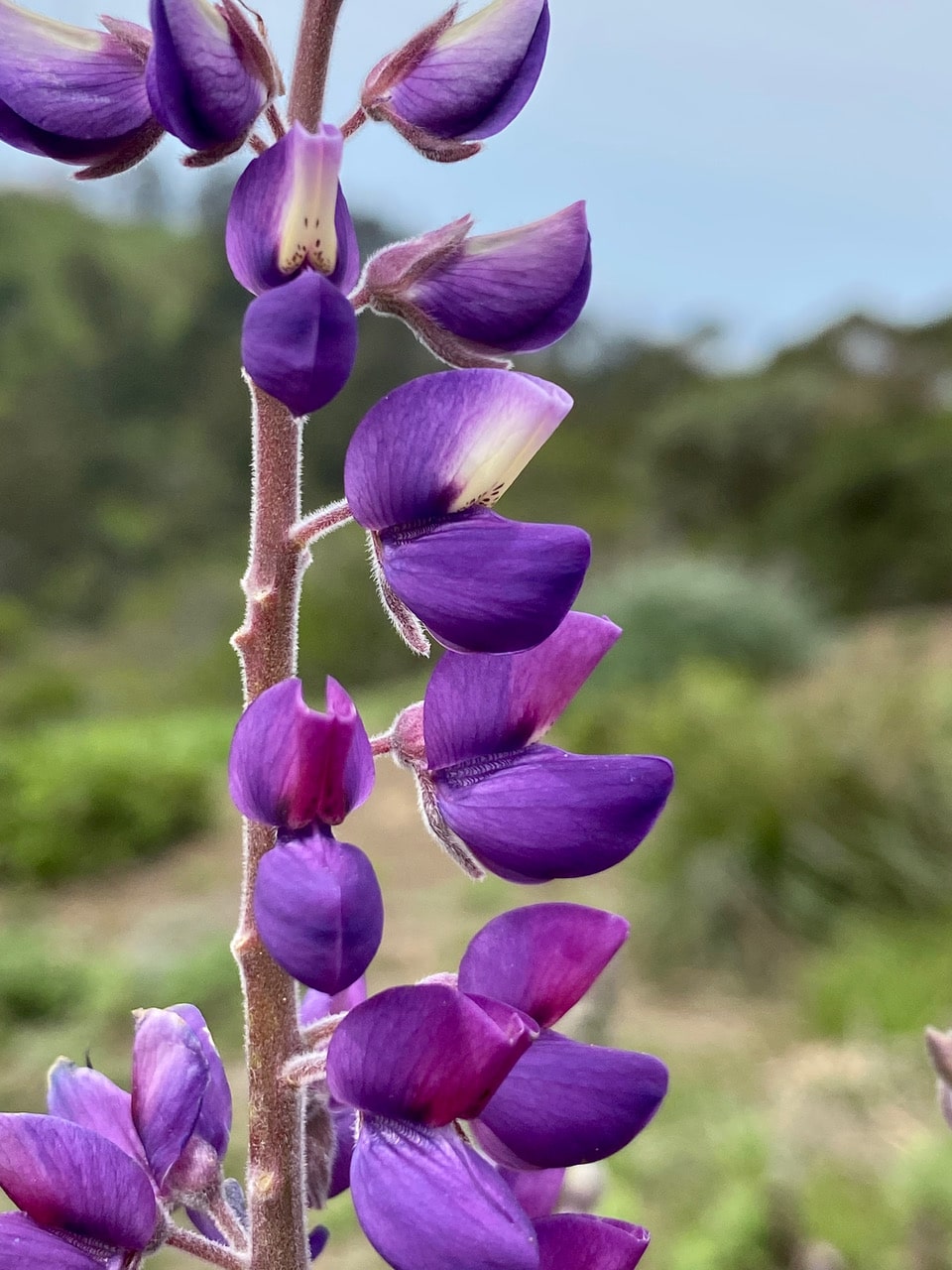
Why are the colors of the banners of the lupine flowers different on this inflorescence? When the flowers first open, they have white banners (the upper, erect fused petals). After the flowers are pollinated, the banners turn a reddish-purple (as seen in the older flowers in the lower part of the inflorescence) when the levels of the anthocyanin pigment rises 3-5 times. The color change is a response to ethylene (a gaseous plant hormone) produced by the pistil (female part of the flower) after it has been pollinated and is no longer receptive. Most bees are “red-blind” – their eyes do not see well in the red part of the visible spectrum. As the red banners no longer beckon to them, the bees concentrate their foraging efforts on the fresh flowers with the biggest rewards. This arrangement benefits both the plant and pollinator, maximizing pollination efficiency.
See the purple spots on the white banners? These are part of the message the flowers are sending to the bees. The spots/dashes converge toward the base of the petals, serving as nectar guides – telling the bee where to aim its tongue to get a sip of nectar. It’s all part of a secret language between the lupine flower and its pollinators.