

Pollinator Post 3/18/23 (2)
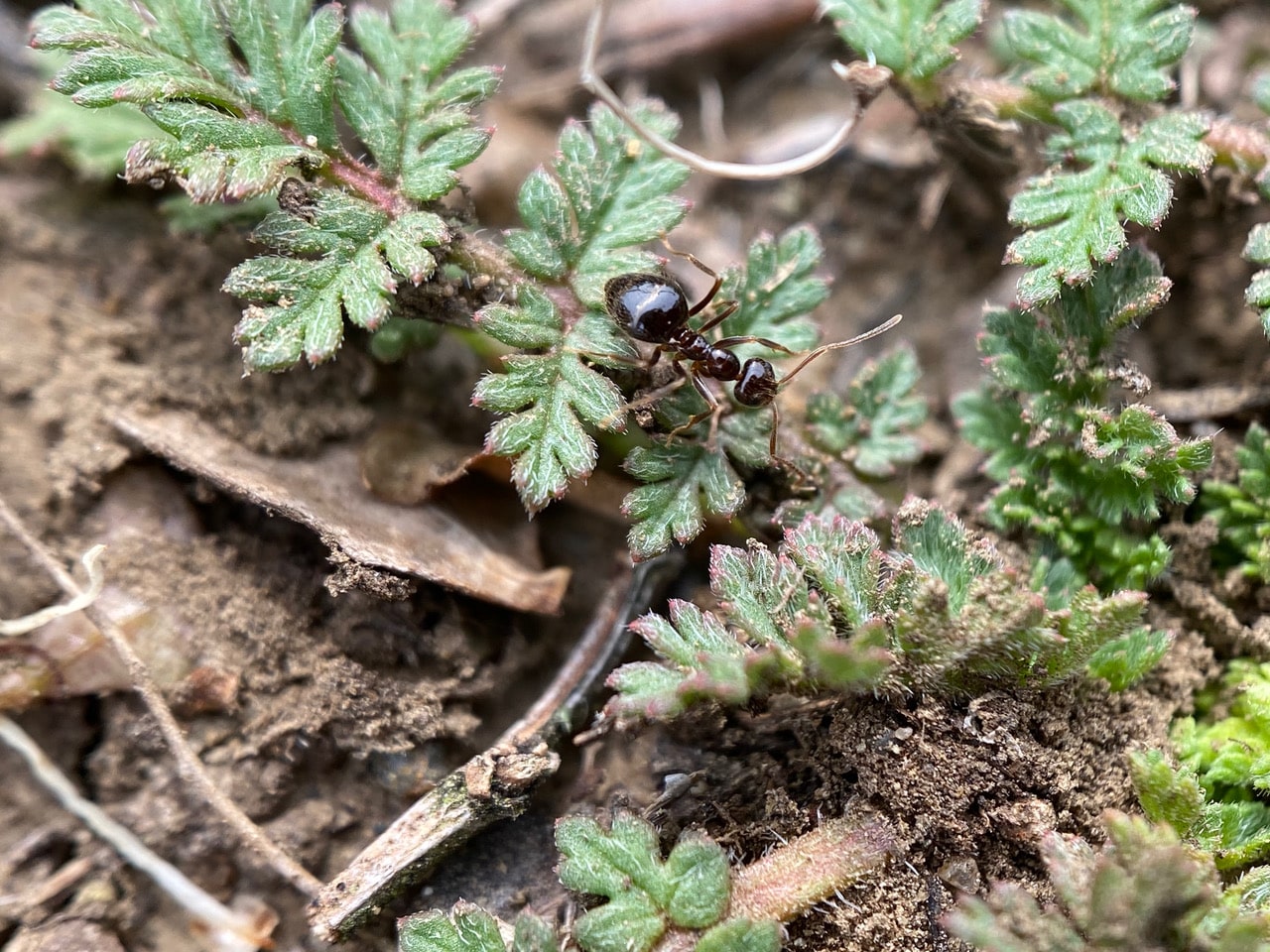
Along Bypass Trail near the Swale, an American Winter Ant, Prenolepis imparis is crawling over Erodium foliage on the ground. I think I can now recognize the ant with reasonable confidence. It is slightly larger than the Argentine Ant, and has a more robust abdomen.
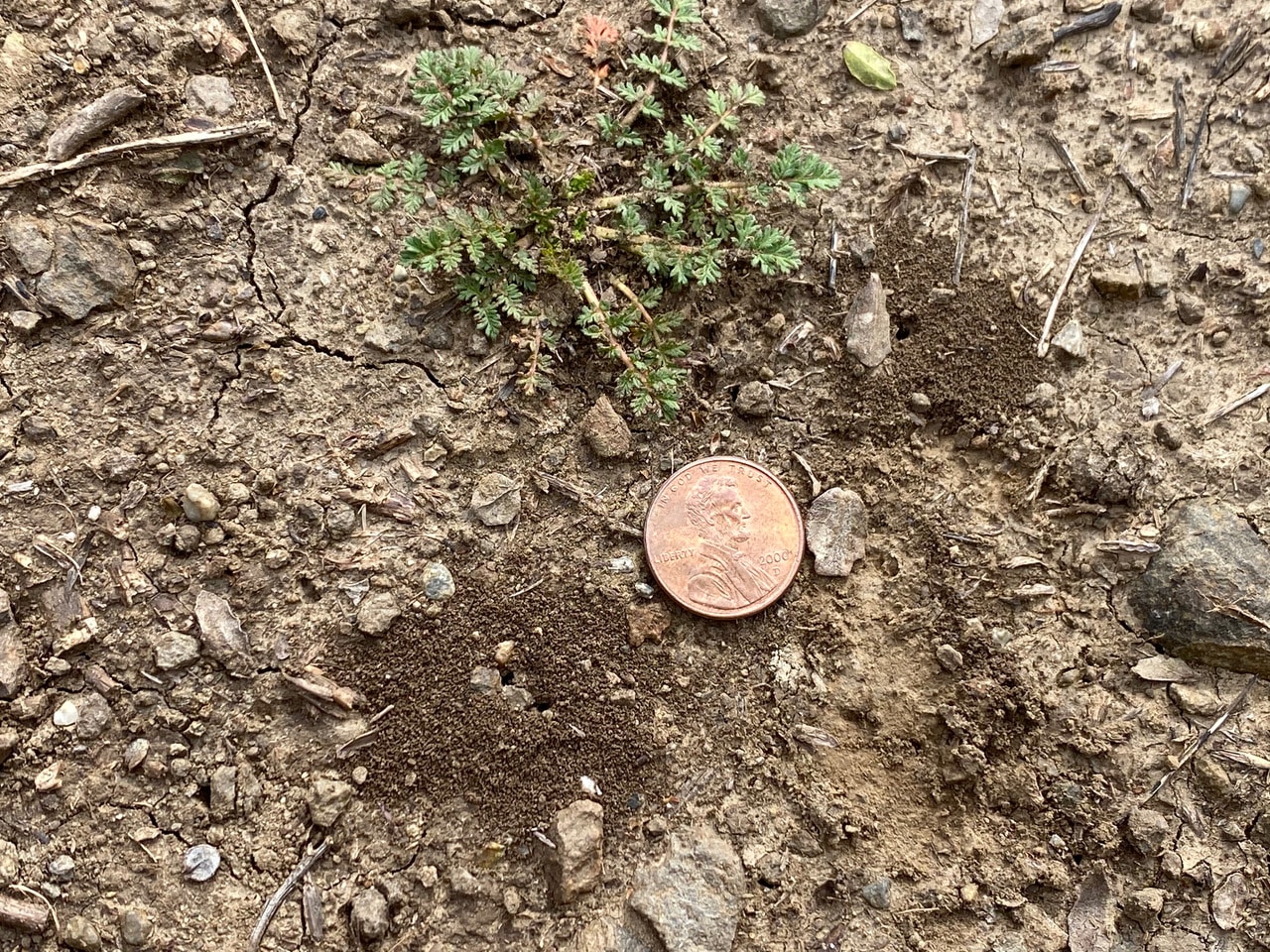 What are these? Miniature ant’s nests? If it weren’t for the darker soil brought up from below, I wouldn’t have noticed these mounds at all.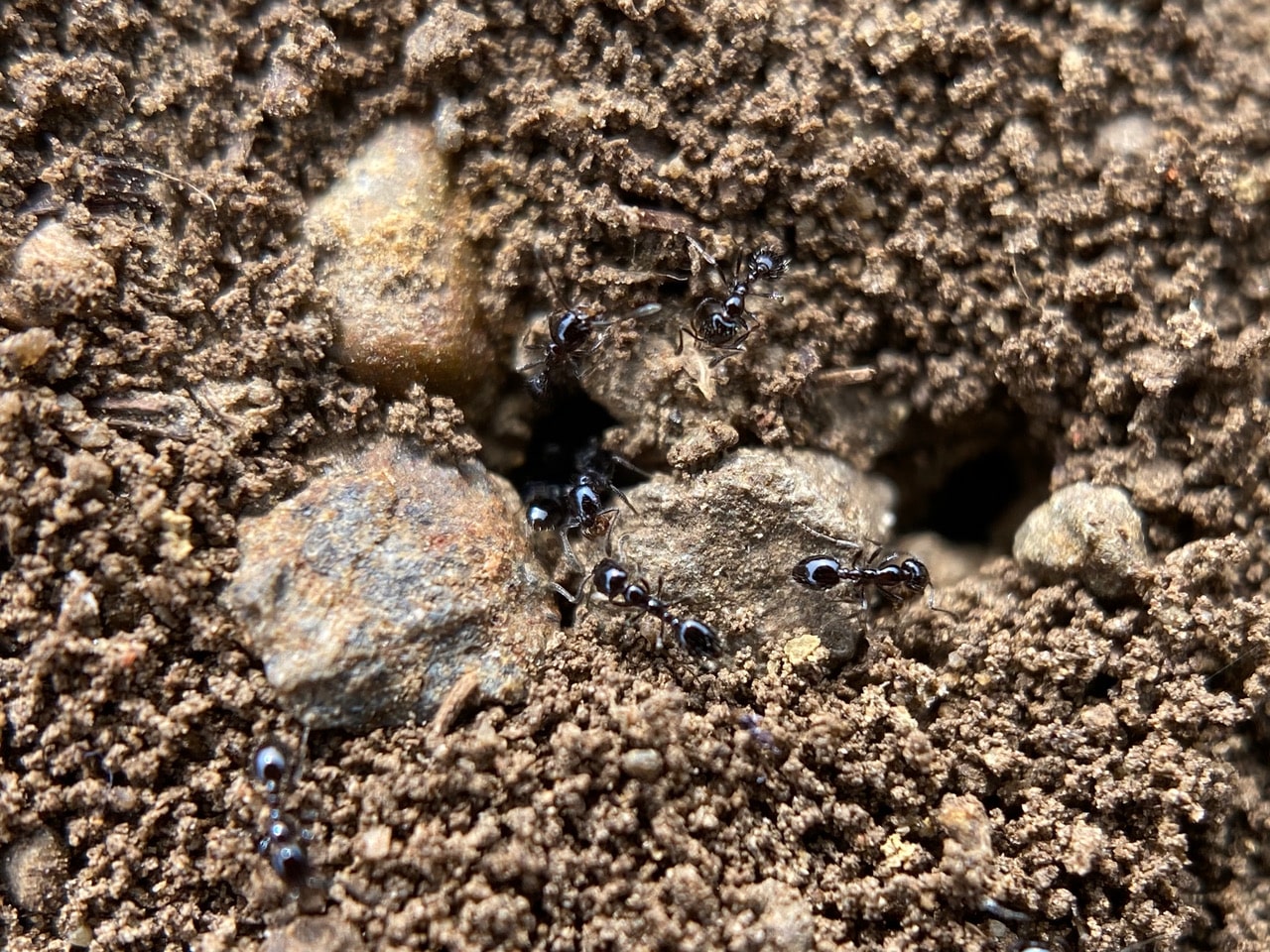
Getting down on my hands and knees with my macro lens, I see that there are indeed shiny, black ants moving in and out of the holes in the center of the shallow mound. Wow, these are the smallest ants I have ever seen! Apparently in the process of excavating a nest, the ants are moving soil to the surface one mouthful at a time and dumping it away from the nest entrance. The whole process is orderly and methodical, and totally mesmerizing to watch!
The Ergatogyne Trailing Ant, Monomorium ergatogyna (family Formicidae) is native to California, Nevada, and Utah and are usually found in cities or on the coast. The ant is a shiny black color and contains only a single worker caste, making them a monomorphic species. It is also polygyne, meaning a colony contains multiple fertile queens living together. The workers are only 1.5 – 2mm long. The ants are scavengers that consume anything from bird droppings, dead insects to aphid honeydew. Sadly, Argentine Ants have been discovered to be actively pushing this species out of its original territory.
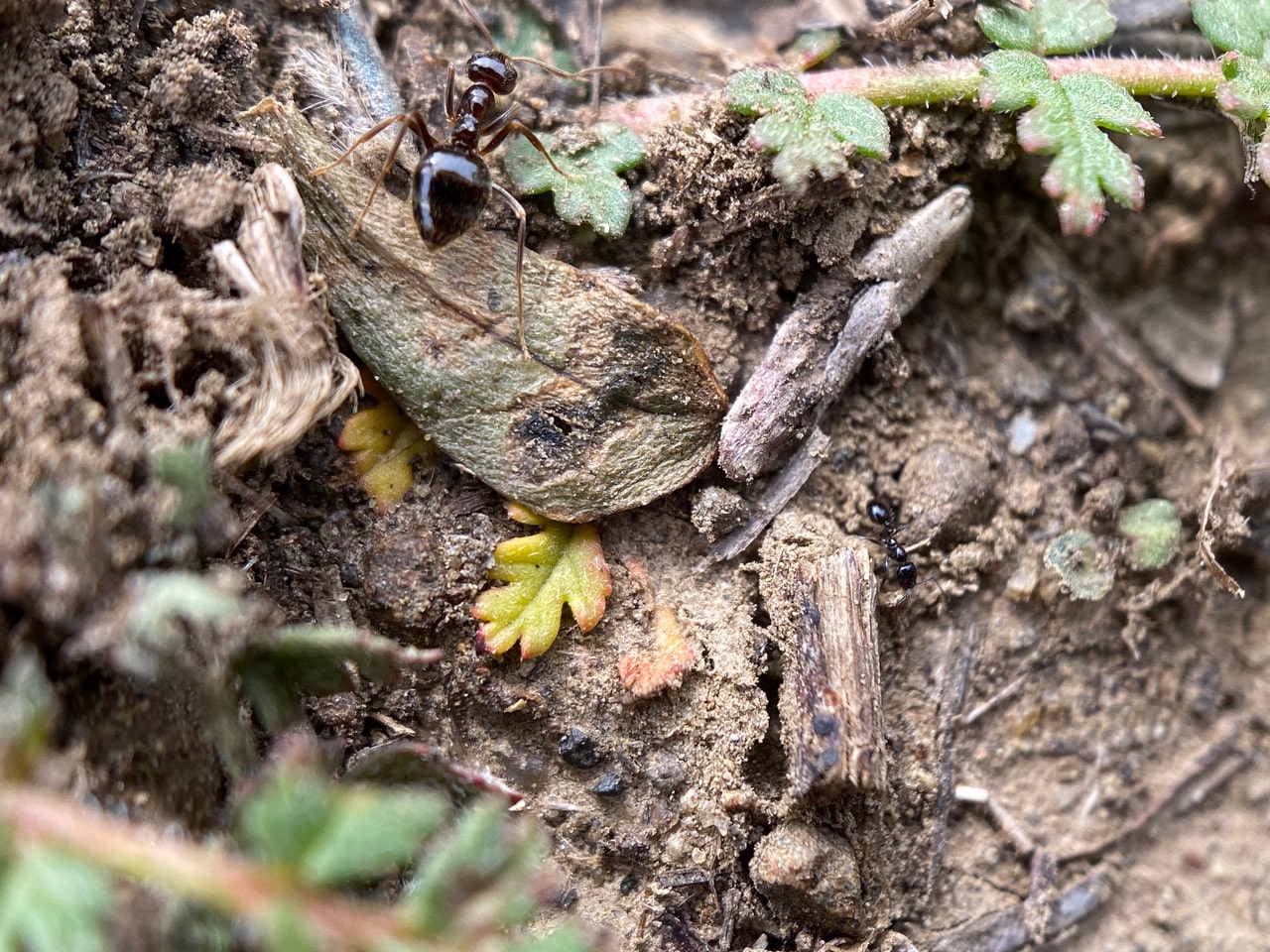 Here’s an American Winter Ant and an Ergatogyne Trailing Ant in the same frame. By comparison, the Winter Ant is a hulking giant!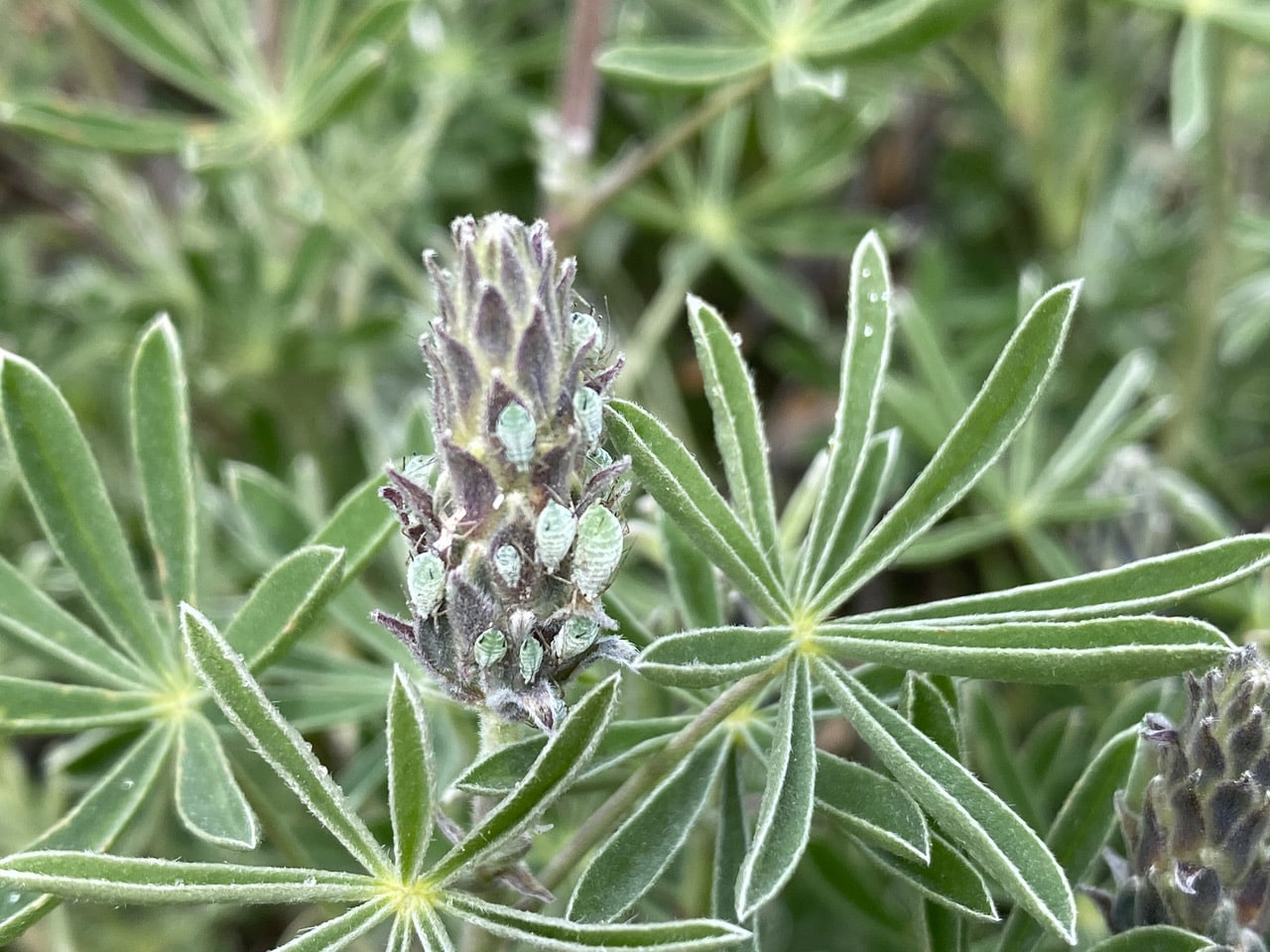
At Diablo Bend, I head straight for the Silverleaf Lupine by the trail that is infested with aphids. It is the plant on which I am most likely to find other interesting insects. The aphid is in fact a keystone species that holds the ecosystem together. As a fast- reproducing, easy-prey species, the aphids feed a complex food web of predators, parasitoids, and scavengers.
See those little droplets on the lupine leaves? They are the honeydew that has been excreted by the aphids as they feed on plant sap. These sugary drops are much sought after by other insects such as ants.
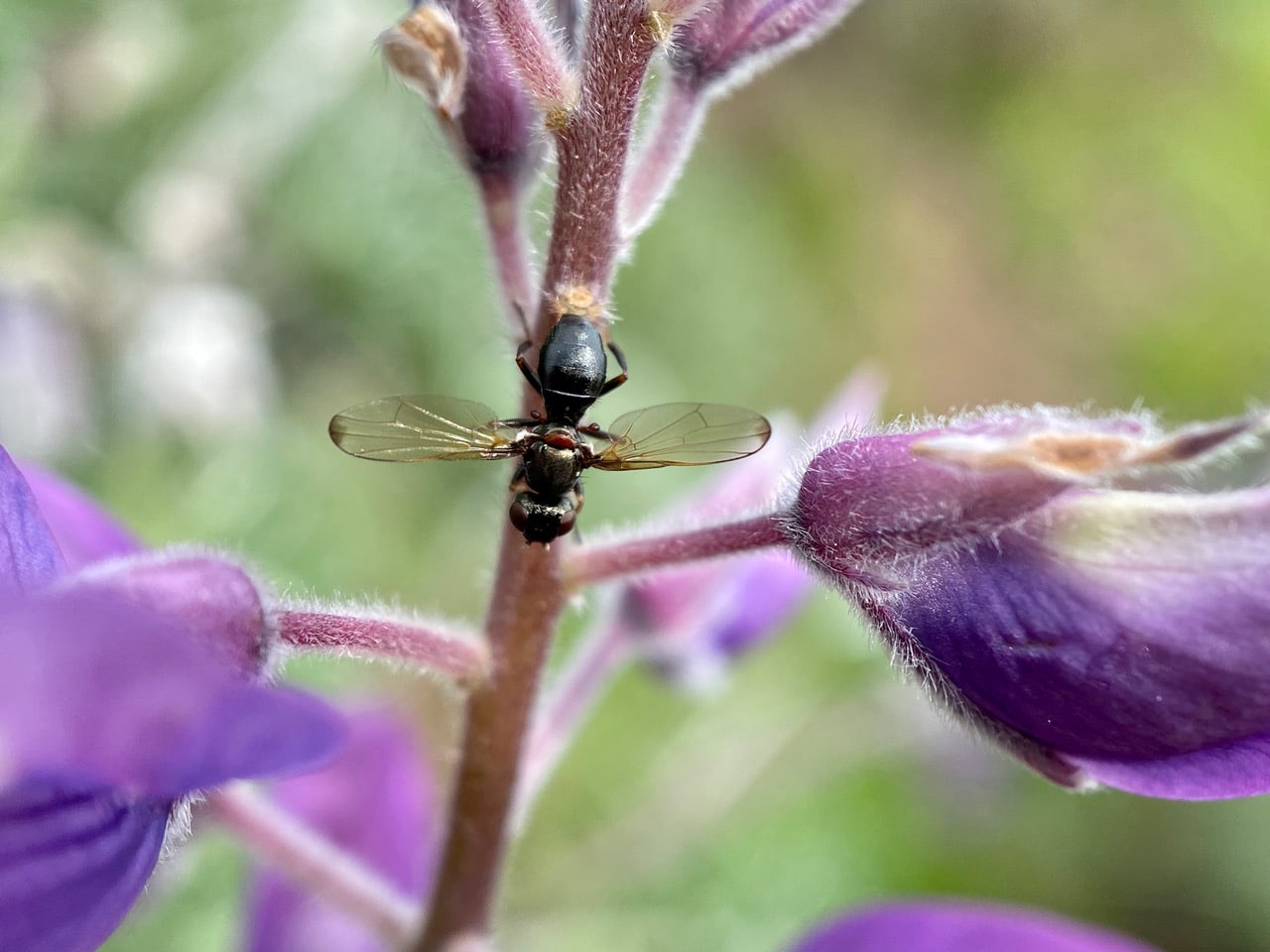
This is not the first time that I find a Picture-winged fly, Curranops sp. (family Ulidiidae) on this particular lupine. This is where I have encountered a mating pair before. What is the attraction here?
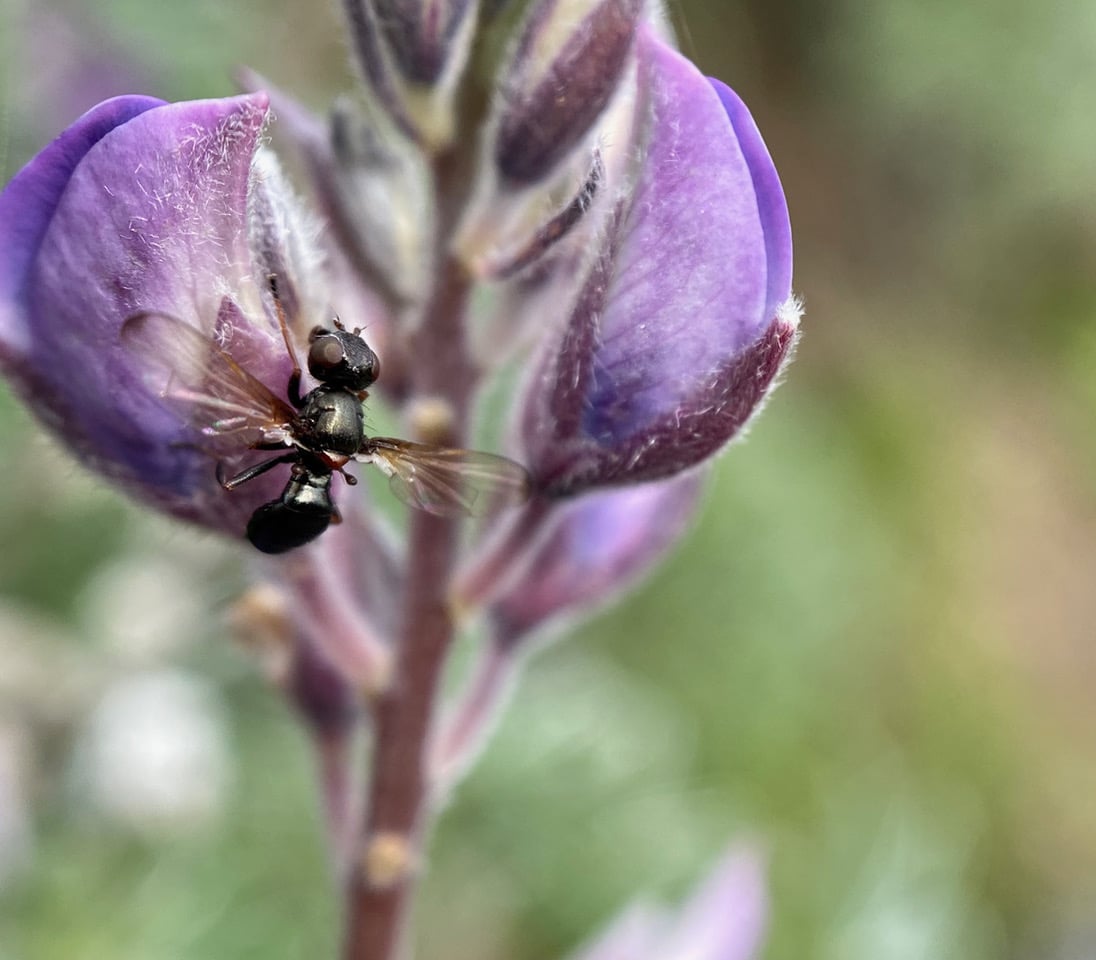
The Curranops is roaming all over the flowers, slowly waving its wings. It has avoided the inflorescences that are heavily infested with aphids.
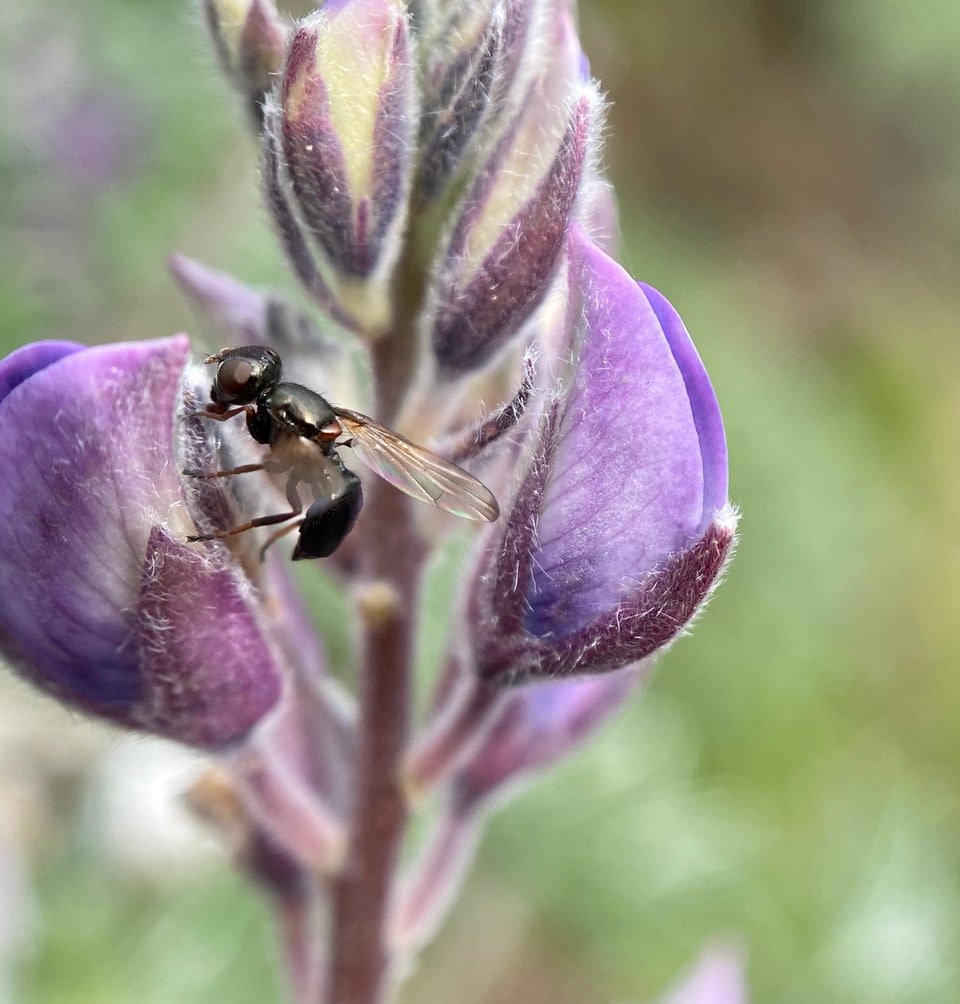
For most of the time the fly has its head lowered and its mouthpart extended, as if hoovering something from the surface of the flowers.
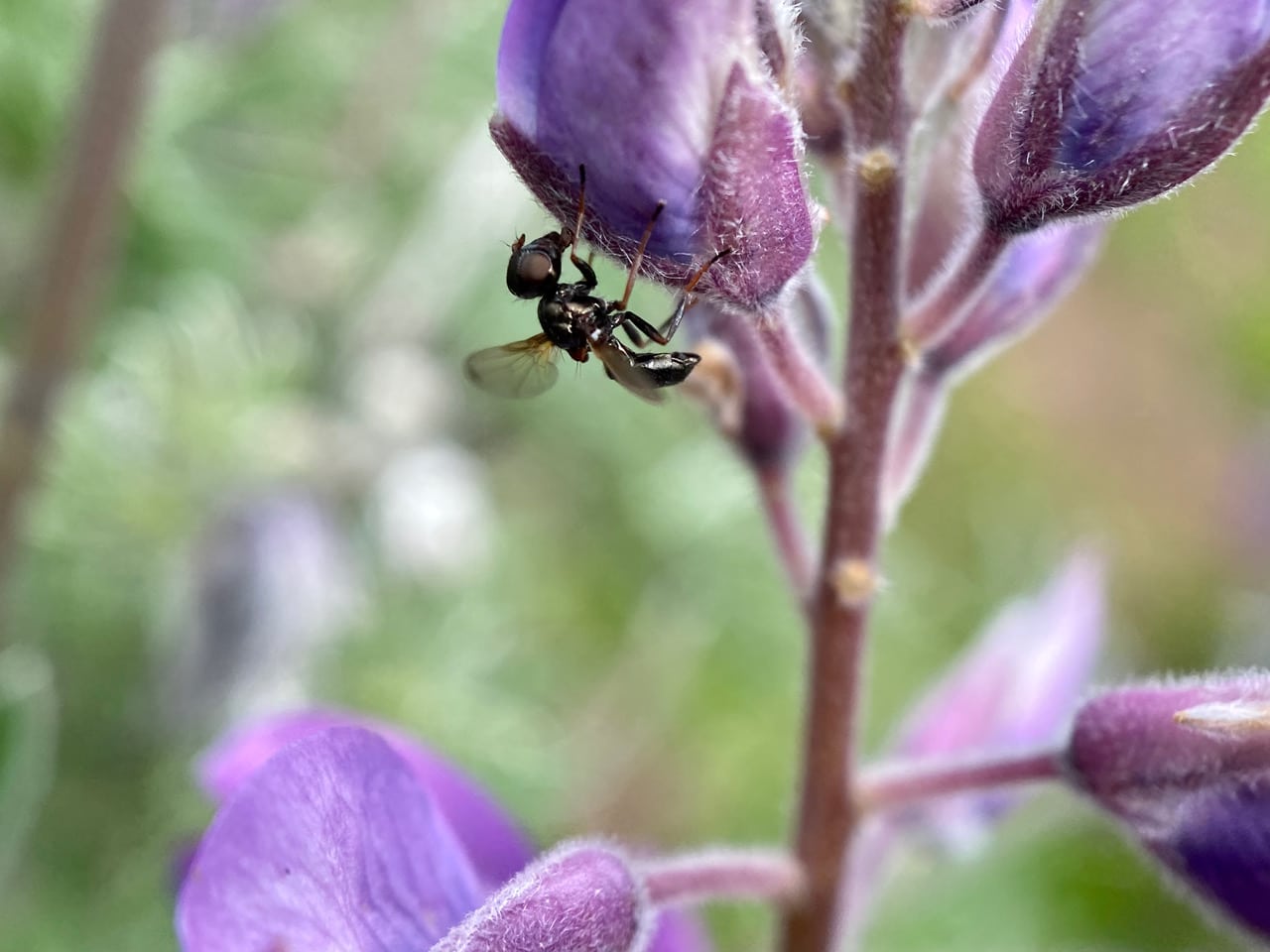
What is the fly feeding on? Aphid honeydew?

If possible, it’s always good practice to get a clear picture of an insect’s wings, as wing venation can sometimes be useful for taxonomic identification.
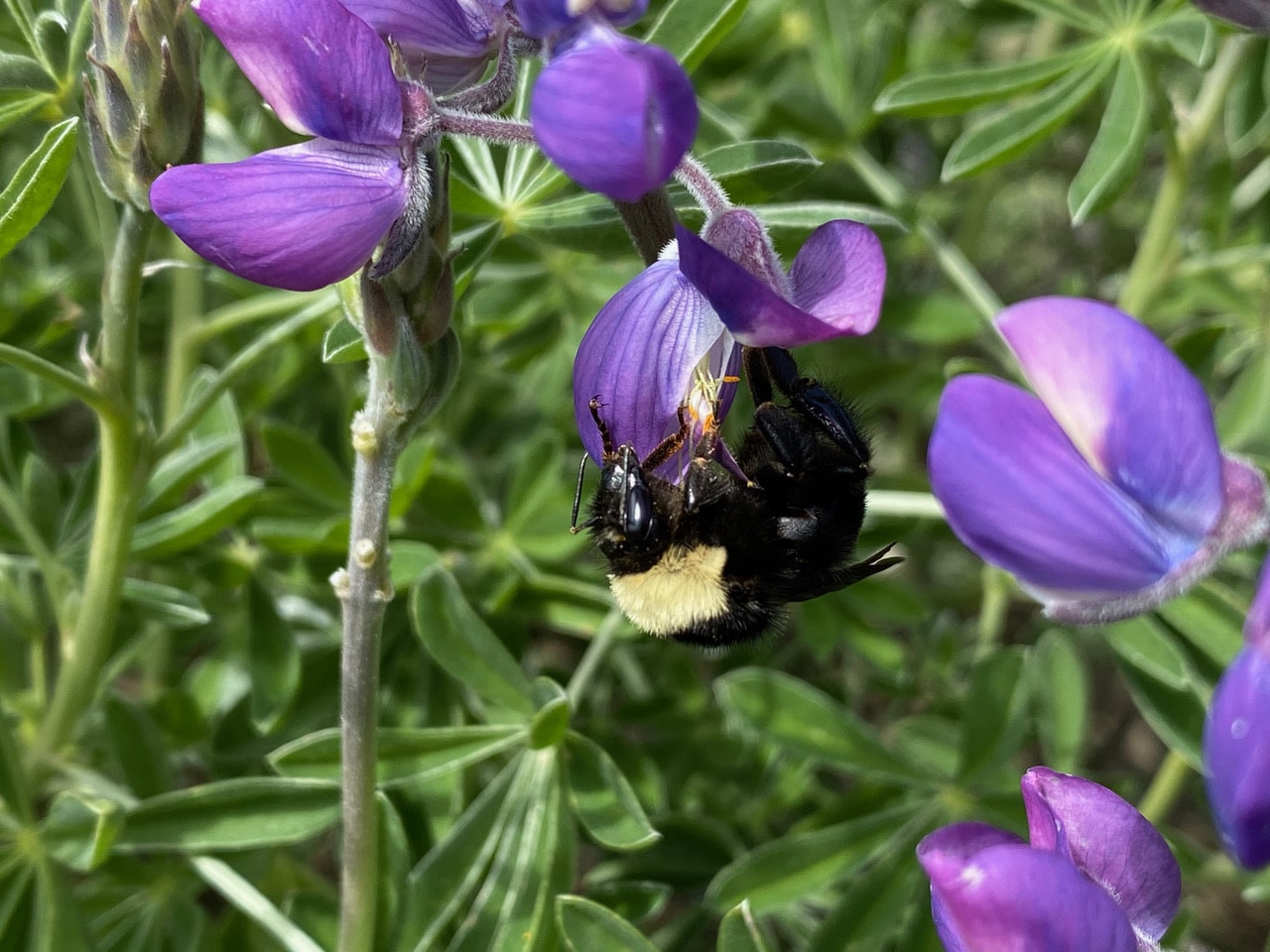
Remember the large Bumble Bee hanging from a Silverleaf Lupine on 3/16? I have received confirmations from iNaturalist that it is indeed a California Bumble Bee, Bombus californicus.
Bombus californicus, the California Bumble Bee, is found in Central and the western half of North America. The species is now classified as Vulnerable by the IUCN. It was the most common bumble bee in California until about the 1990s when its numbers and distribution began to decline. Many factors may have contributed to its decline, including invasive species, pesticide use, commercial bumble bee rearing, habitat destruction, and climate change.
Although morphologically the species is quite variable, the “typical” color pattern of female B. californicus is black with only a single strong yellow band anteriorly on the thorax, and another single yellow band near the apex of the abdomen. Males exhibit considerably more variation.
The California Bumble Bee is an important pollinator in alpine environments in its native range. They are social bees having a queen and workers. Their colonies last for one year. New queens overwinter, usually underground, and found new colonies from scratch the following year. Queens emerge from April through mid July. Workers are present from April to September. The species is known to pollinate sage, blueberry bushes, red clover, California poppies, and many other species of flowers.
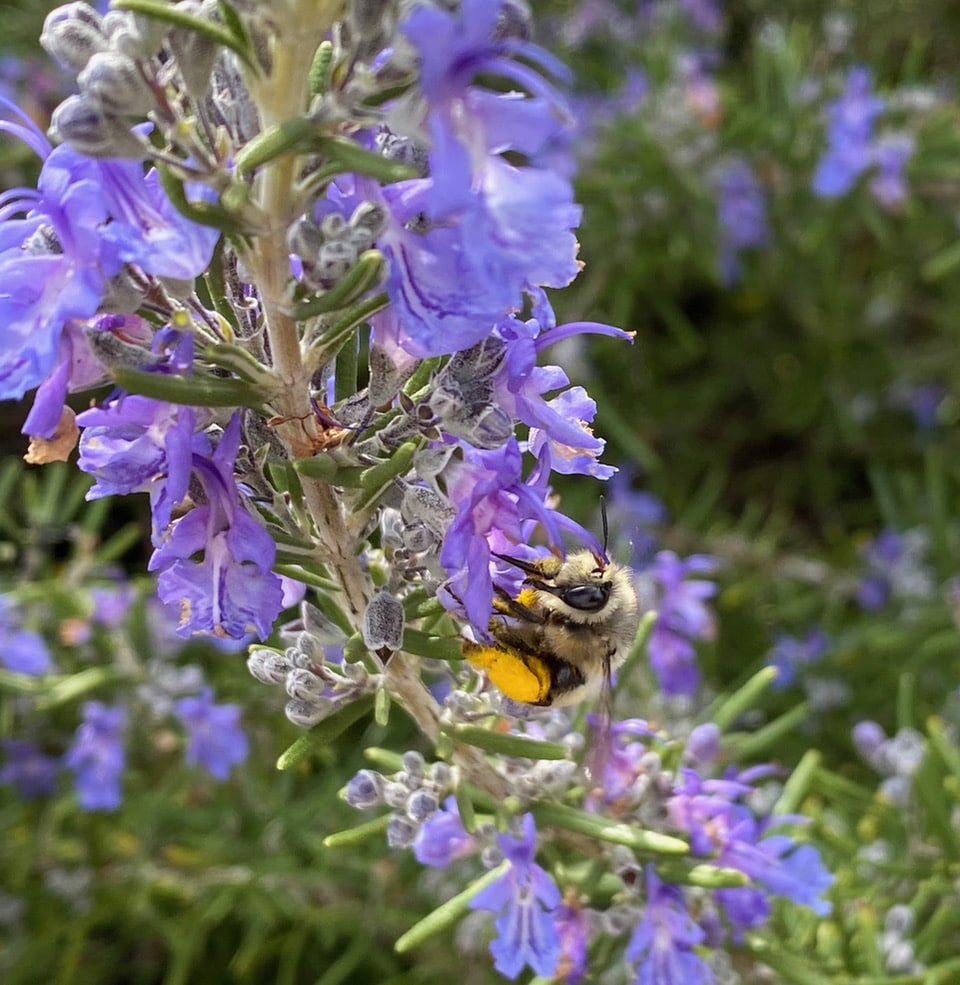
Remember the Digger Bees we have been seeing lately, visiting the Silverleaf Lupine, Gooseberry and Rosemary? The bees have been identified to the species by a bee expert on iNaturalist – they are the Pacific Digger Bee, Anthophora pacifica (family Apidae) Photos of Pacific Digger Bee (Anthophora pacifica) · iNaturalist Australia
Anthophora, commonly called Digger Bees, are entertaining, unusually noisy bees with a distinctive way of flying. They zip speedily around flowers, stopping abruptly to hover in front of a blossom, sometimes angling their long tongues down a flower’s throat without landing. Or they buzz raucously while clinging to the flowers, and thrust their faces so deeply into them that their bodies get coated in pollen.
Anthophora are generally somewhat larger than honey bees and robustly built like bumble bees, but with black or black-and-white-striped abdomens and furry thorax. Typically, digger bees have “roman noses” or concave profiles. Male digger bees of many species have white or yellow markings on their faces. Females have shaggy hairs on their back legs, used to carry pollen.
Anthophora are solitary bees, i.e. each female builds and provisions its own nest. However, digger bees are often gregarious, preferring to build their nests close by one another, sometimes forming large aggregations that number in the hundreds. As their name suggests, digger bees typically nest in the soil, either in level ground or vertical banks. Female Anthophora construct ground nests by digging with their front legs and using their mandibles to loosen dirt. The males often hang around nest entrances, awaiting the emergence of a female for a chance to mate with her. When she appears, the males jump on her en masse, sometimes creating chaotic “mating balls”. It’s a boisterous affair!
Female Anthophora are capable of buzz pollination – i.e. they vibrate their wing muscles to shake pollen from the anthers of some flowers. Digger bees are generalist pollinators that visit an impressively wide range of plants. They are exceptionally effective pollinators and play an important role in maintaining wildflower diversity, in part because their long tongues allow them to pollinate deep-throated and tubular blossoms inaccessible to other bees.