

Pollinator Post 4/1/23 (1)

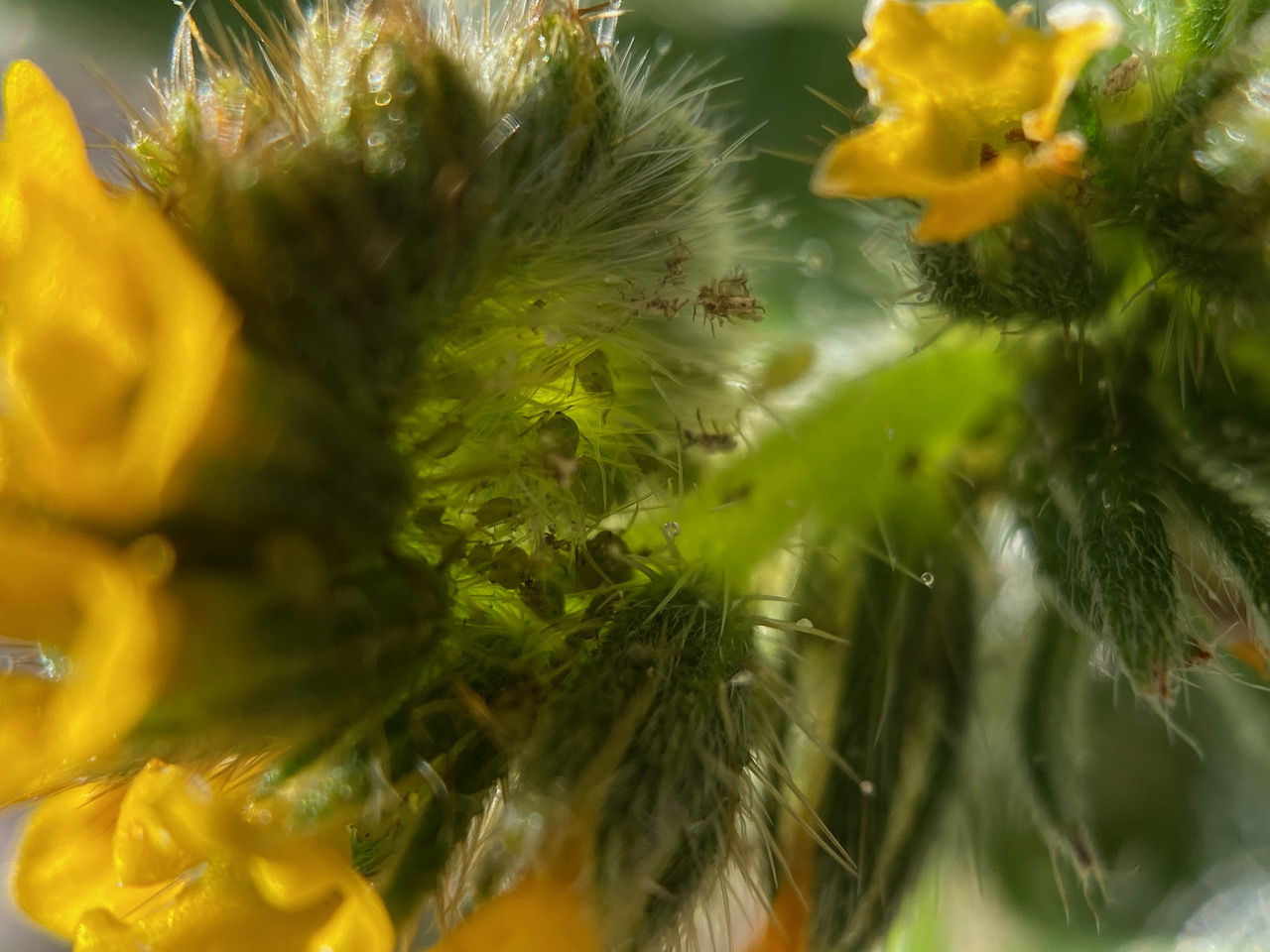
Backlit by the sun, dozens of little green aphids can be seen within the coiled flowerhead of a Common Fiddleneck, Amsinckia intermedia.



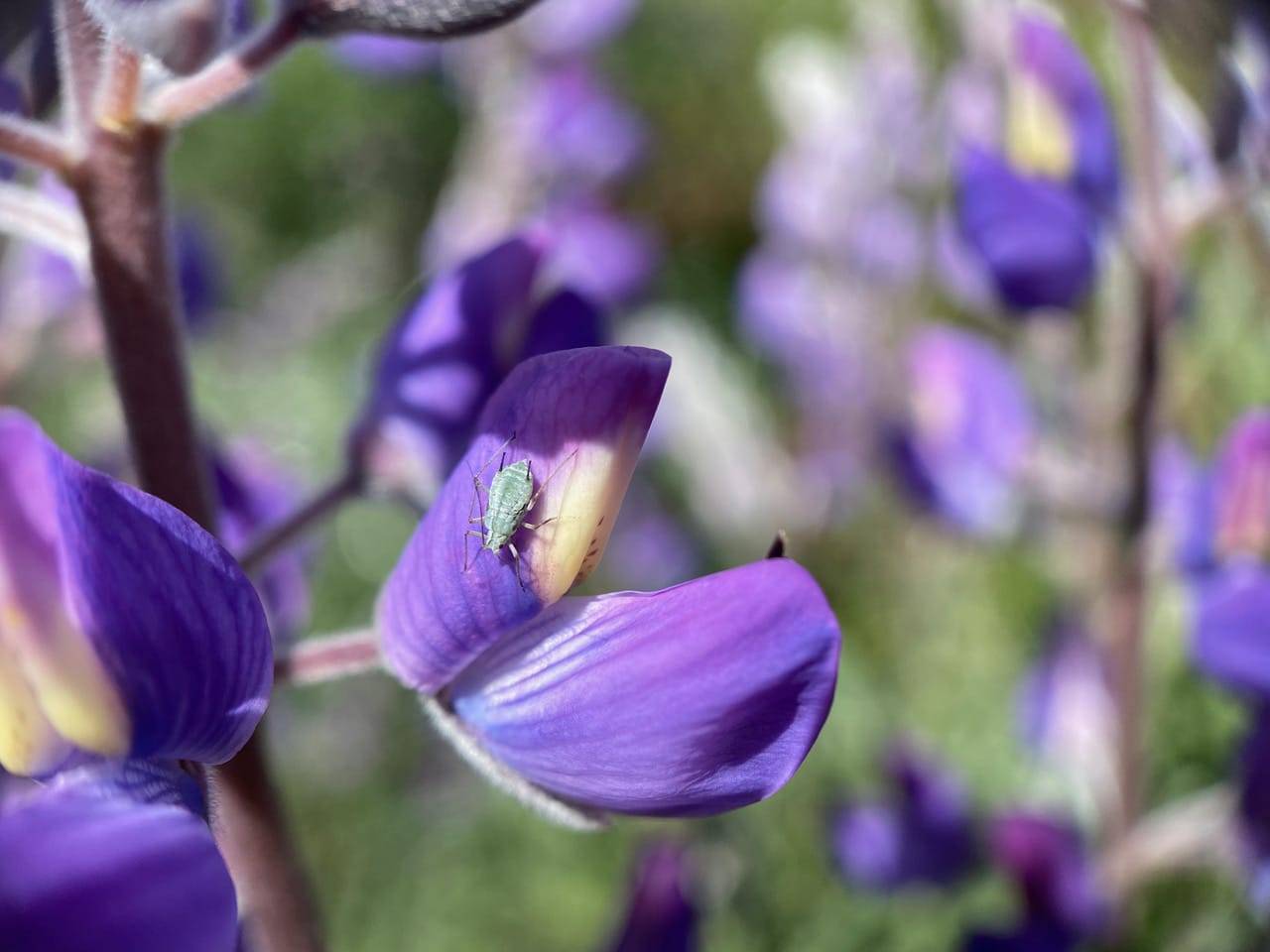 At Diablo Bend, I stop to check on the aphid-infested Silverleaf Lupine by the trail. Things seem to have calmed down, with fewer aphids on the plant than before. What happened?
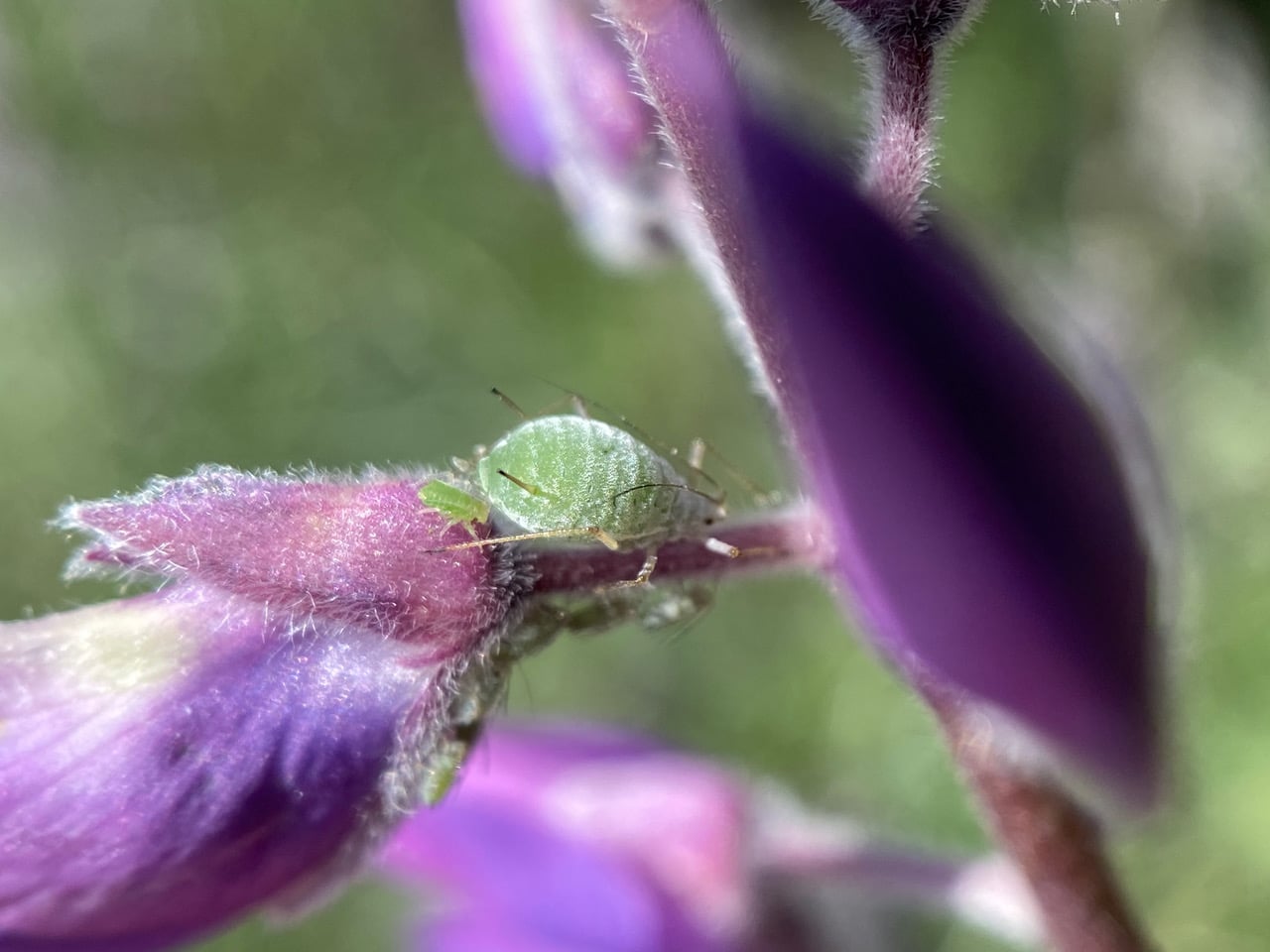



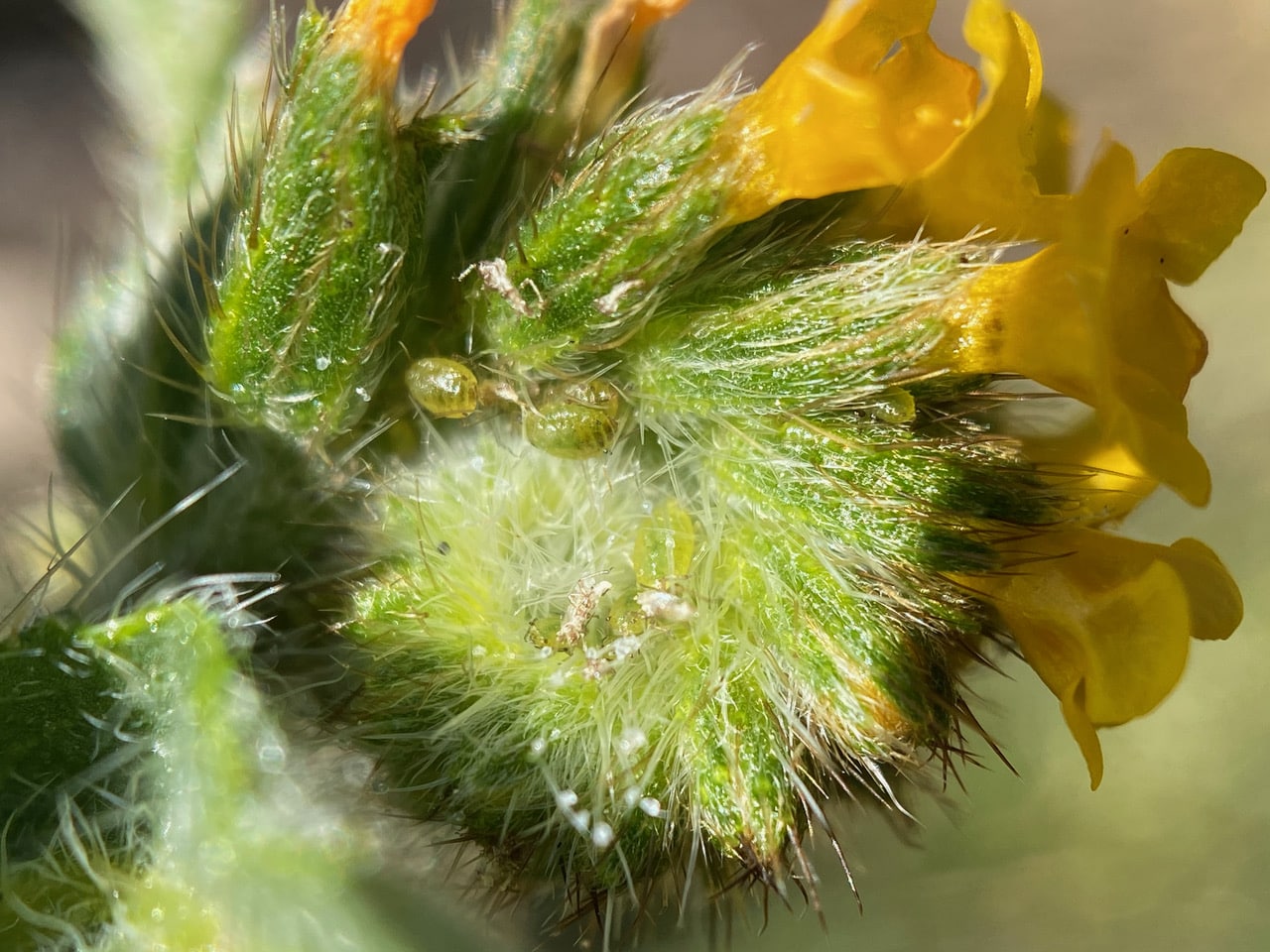
It seems the flowerheads are the hub of aphid activity on this Common Fiddleneck. The white stuff near the aphids are the exuviae or exoskeletons shed by the aphids when they molt. There are generations of the insect on this plant now.
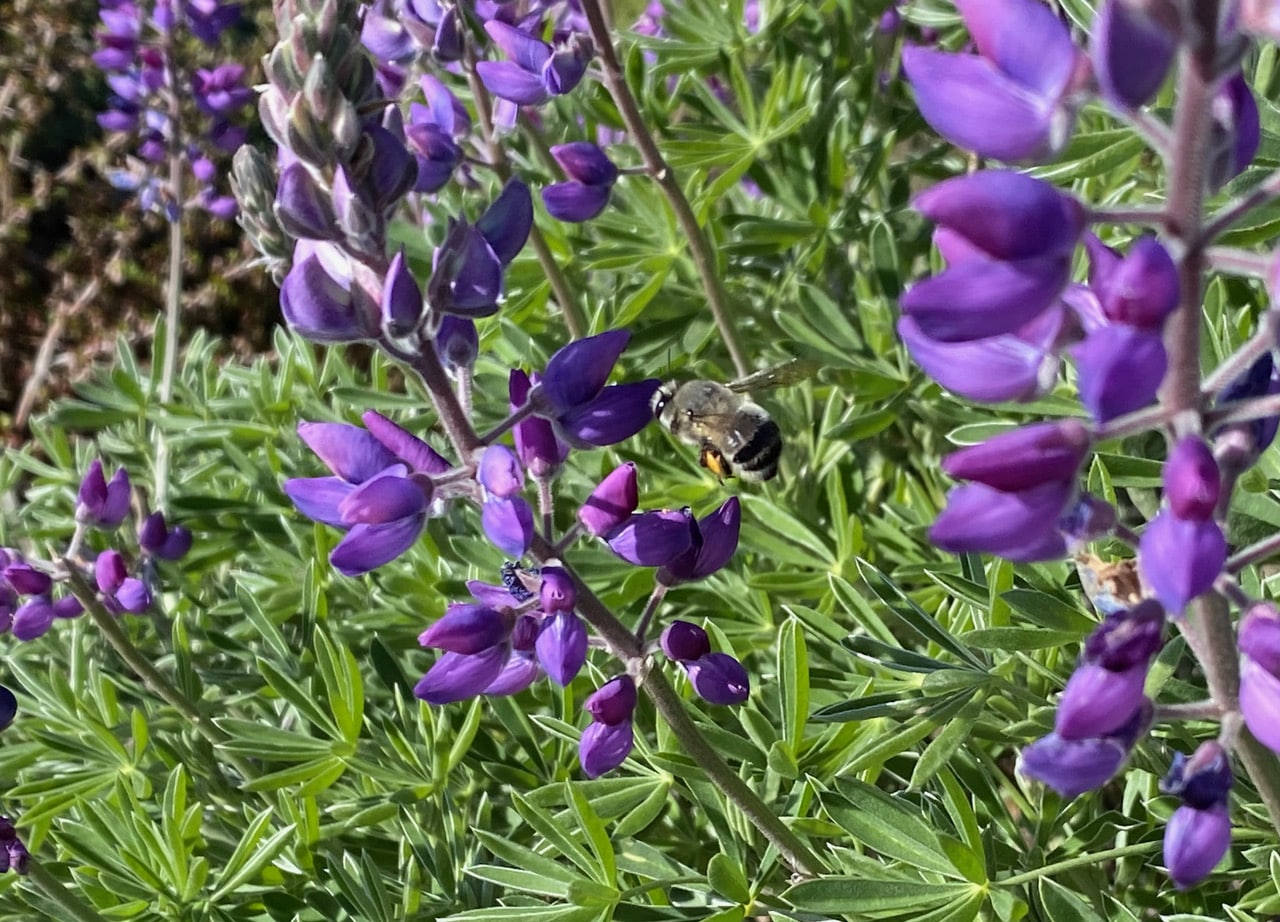
A female Pacific Digger Bee, Anthophora pacifica is busy foraging among the flowers of Silverleaf Lupine, Lupinus albifrons. I can tell it is female because she already has some pollen in the scopae (pollen collecting hairs) on her hind legs. Males do not collect pollen to provision the nest, neither do they possess the scopae.
Like the bumble bees that they resemble in size and heft, Digger Bees are able to access the pollen and nectar of the lupine flowers.
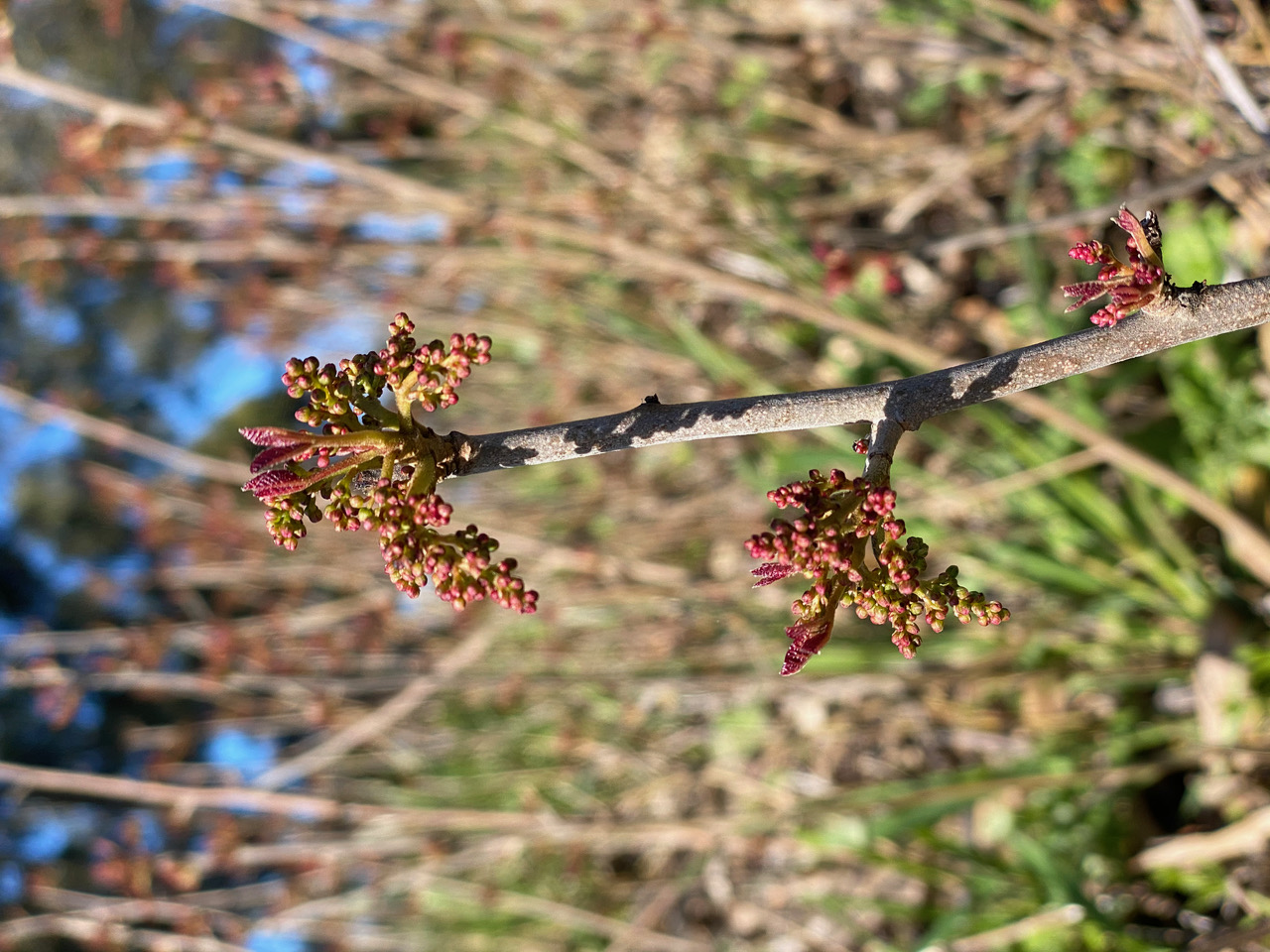
Pacific Poison Oak, Toxicodendron diversilobum is sending out reddish leaf and flower buds on the stems that have been bare for months.
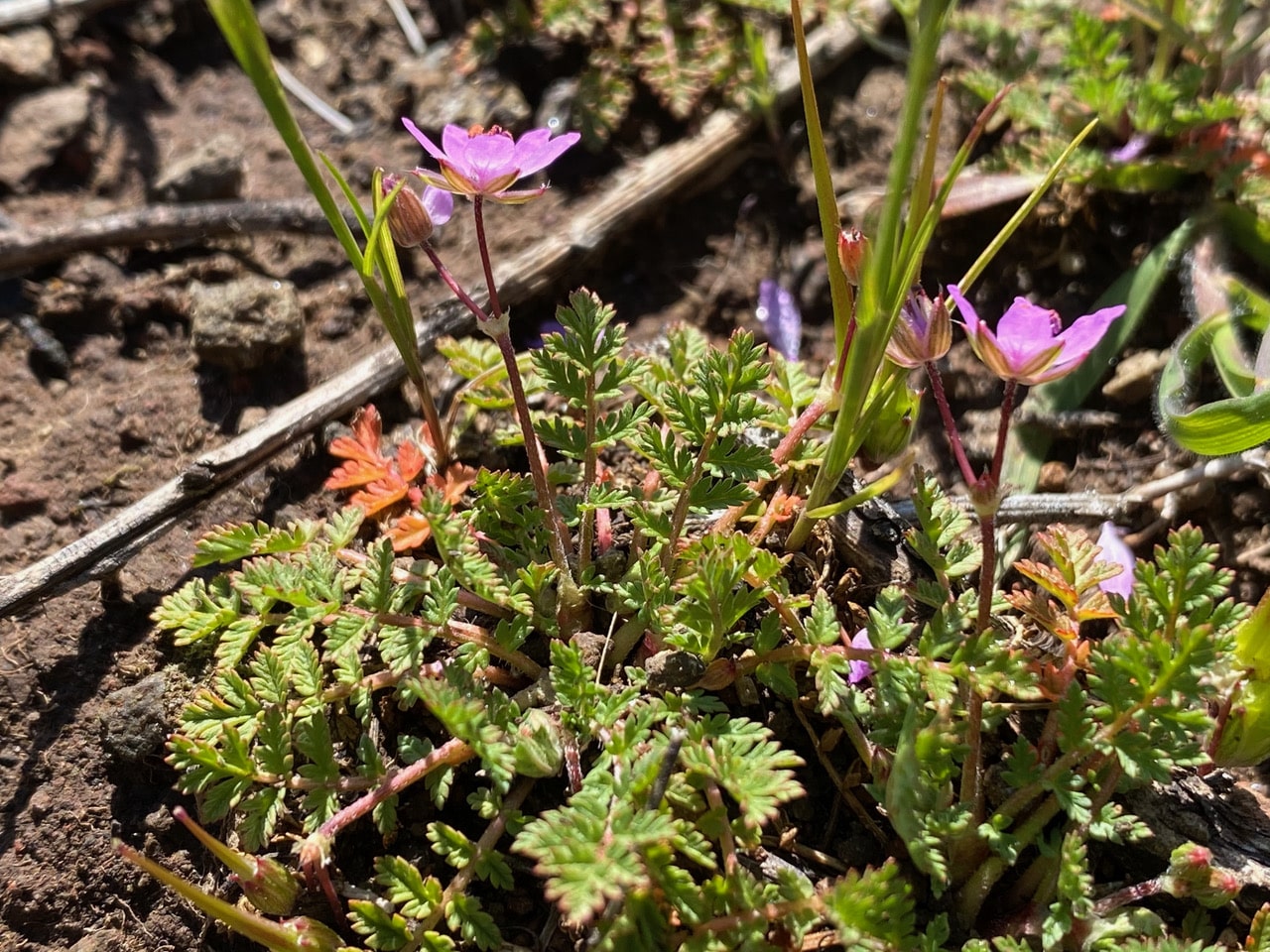
On the bare soil of an east-facing slope, a vibrant patch of Redstem Stork’s-Bill, Erodium cicutarium has sprung up.
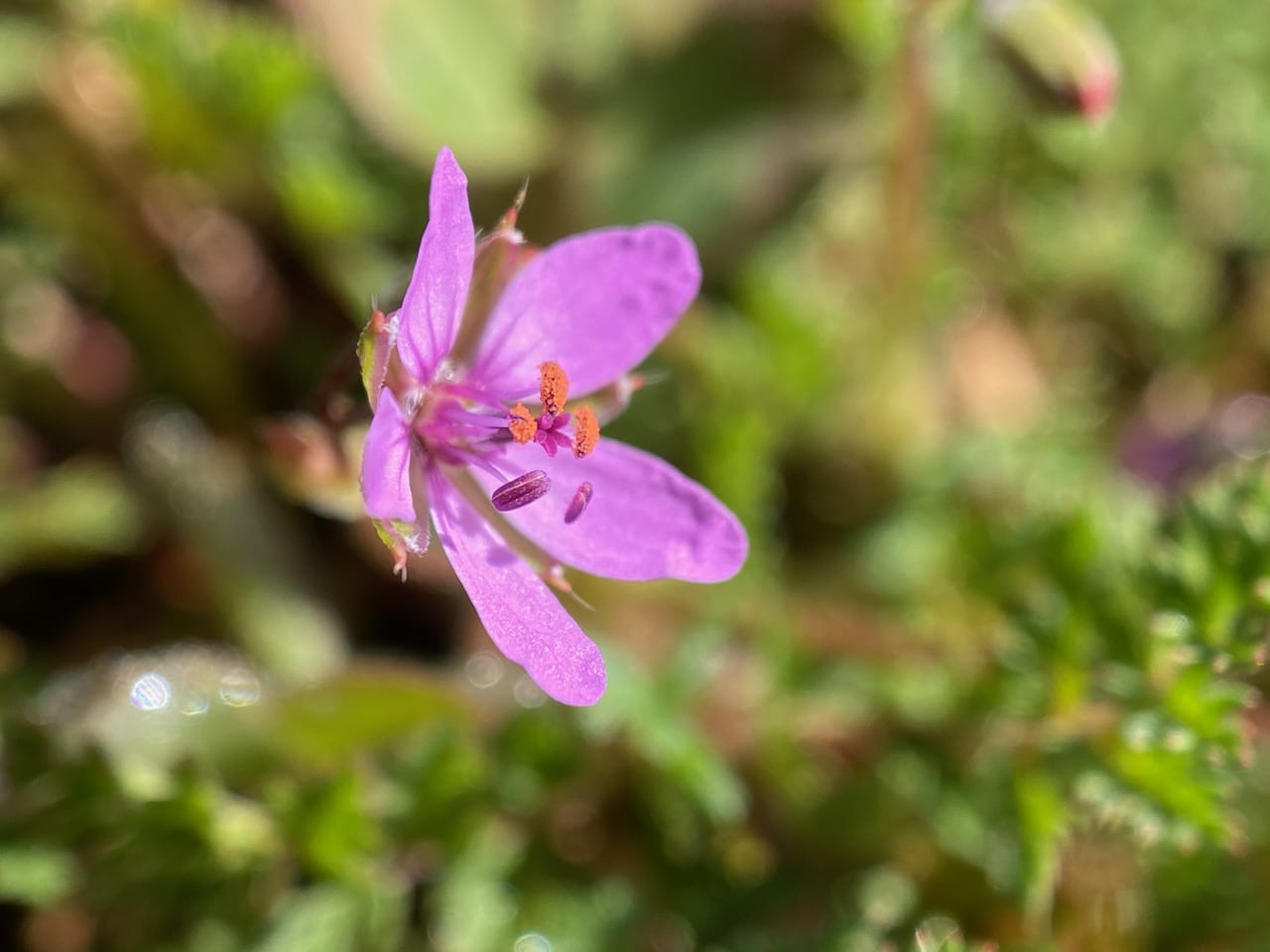
Erodium is usually removed as an invasive weed at Skyline Gardens, but I can’t help but admire the beauty of its flower. Three of the five anthers in this flower are releasing orange pollen. The anthers surround a dark pink, 5-lobed stigma. Dark pink lines on the petals serve as nectar guides for pollinators.
Taking the short-cut to Skyline Trail, I scramble down the hillside at Yampah Bowl. Look, there are a couple of Baby Blue Eyes, Nemophila menziesii blooming on the slope.
While admiring a Baby Blue Eyes flower, I detect swift movements along one of the stamens. Hello! It’s a Globular Springtail, the cutest animal in the world! The springtail runs up and down a couple of the stamens, probably looking for pollen?
Springtails (Collembola) are ancient, very small, six-legged animals (hexapods) that are no longer considered insects. They usually live in and around soil, aiding with nutrient cycling in the soil, and helping to form soil microstructure as well as being a ready supply of food for many predators. Collembolans thrive in humid, moist environments. Herbivorous and detritivorous species fragment organic matter present in soil and leaf litter, supporting decomposition and increasing the availability of nutrients for various species of microbes and fungi. Carnivorous species maintain populations of small invertebrates such as nematodes, rotifers, and other collembolan species. Springtails commonly consume fungal hyphae and spores, but also have been found to consume plant material and pollen, animal remains, and bacteria.
Globular springtails (order Symphypleona) are round, globe-shaped, with antennae longer than their heads. They are usually between 1-3 mm long.
See the little Springtail at the edge of the petal? That’s how tiny these critters are!
The common name Springtail comes from the ability of many Collembola to spring away from trouble using an appendage called the furcula (meaning ‘fork’), held under tension beneath the abdomen. When released, the furcula snaps against the substrate, flinging the springtail into the air and allowing for rapid escape.
At Diablo Bend, I stop to check on the aphid-infested Silverleaf Lupine by the trail. Things seem to have calmed down, with fewer aphids on the plant than before. What happened?A big Lupin Aphid, Macrosiphum albifrons has just given birth to a baby.
20 minutes later, the baby has joined the rest of the brood under mama. The nymphs appear to be of the same size and age, probably all born within the last 24 hours.
Aphids have many generations a year. Most aphids in California’s mild climate reproduce asexually throughout most or all of the year with adult females giving birth to live offspring – often as many as 12 per day – all clones of the mother. The young aphids or nymphs molt, shedding their skin about four times before becoming adults. When the weather is warm, many species can develop from newborn to reproductive adult in 7-8 days. Because each adult aphid can produce up to 80 offspring in a matter of a week, aphid populations can increase in staggering speed.
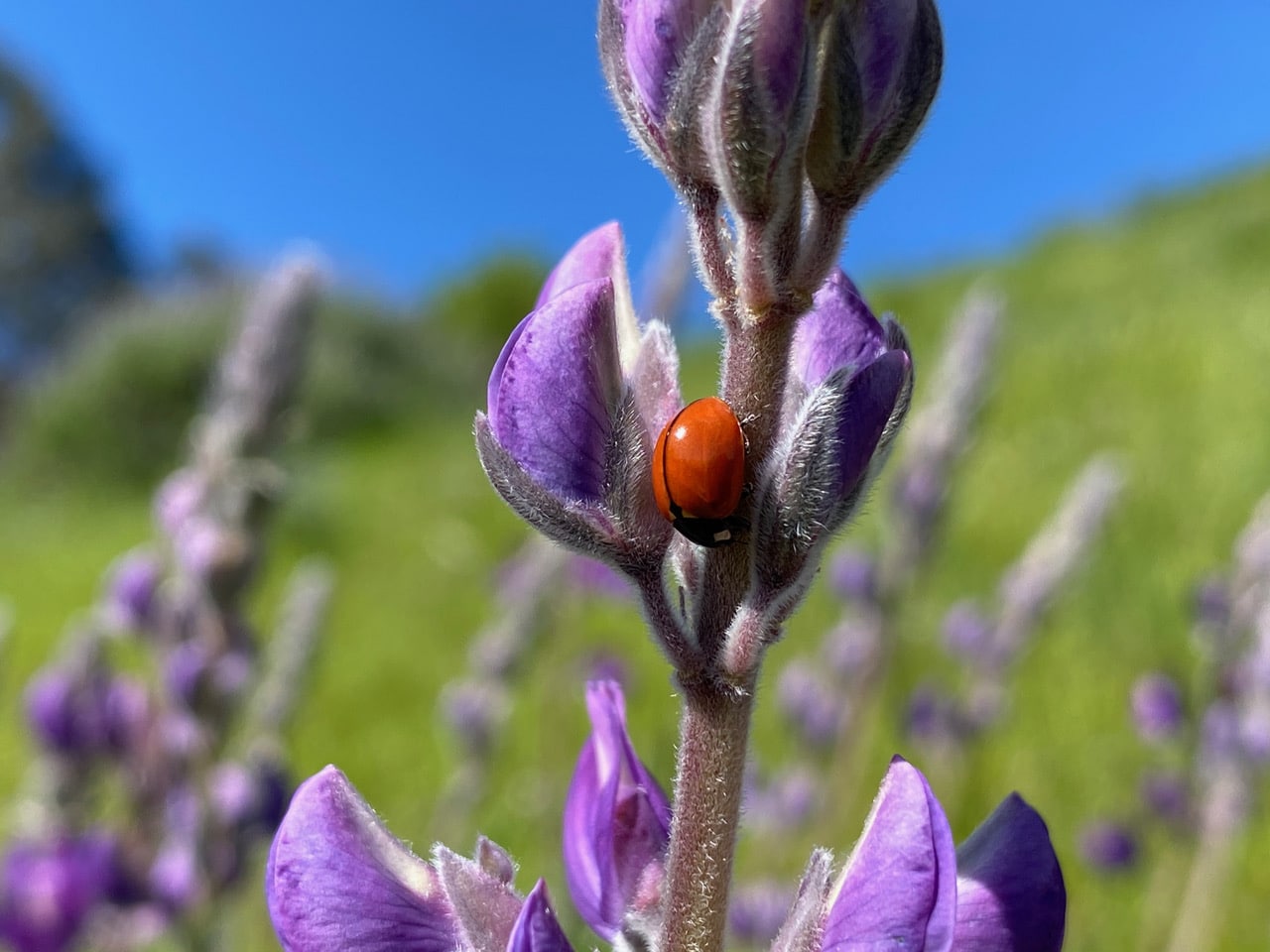
Ah, this might be one of the reasons that the aphid population is held in check despite their rapid reproduction – predation! Ladybeetles, both adults and larvae, are voracious predators of aphids.
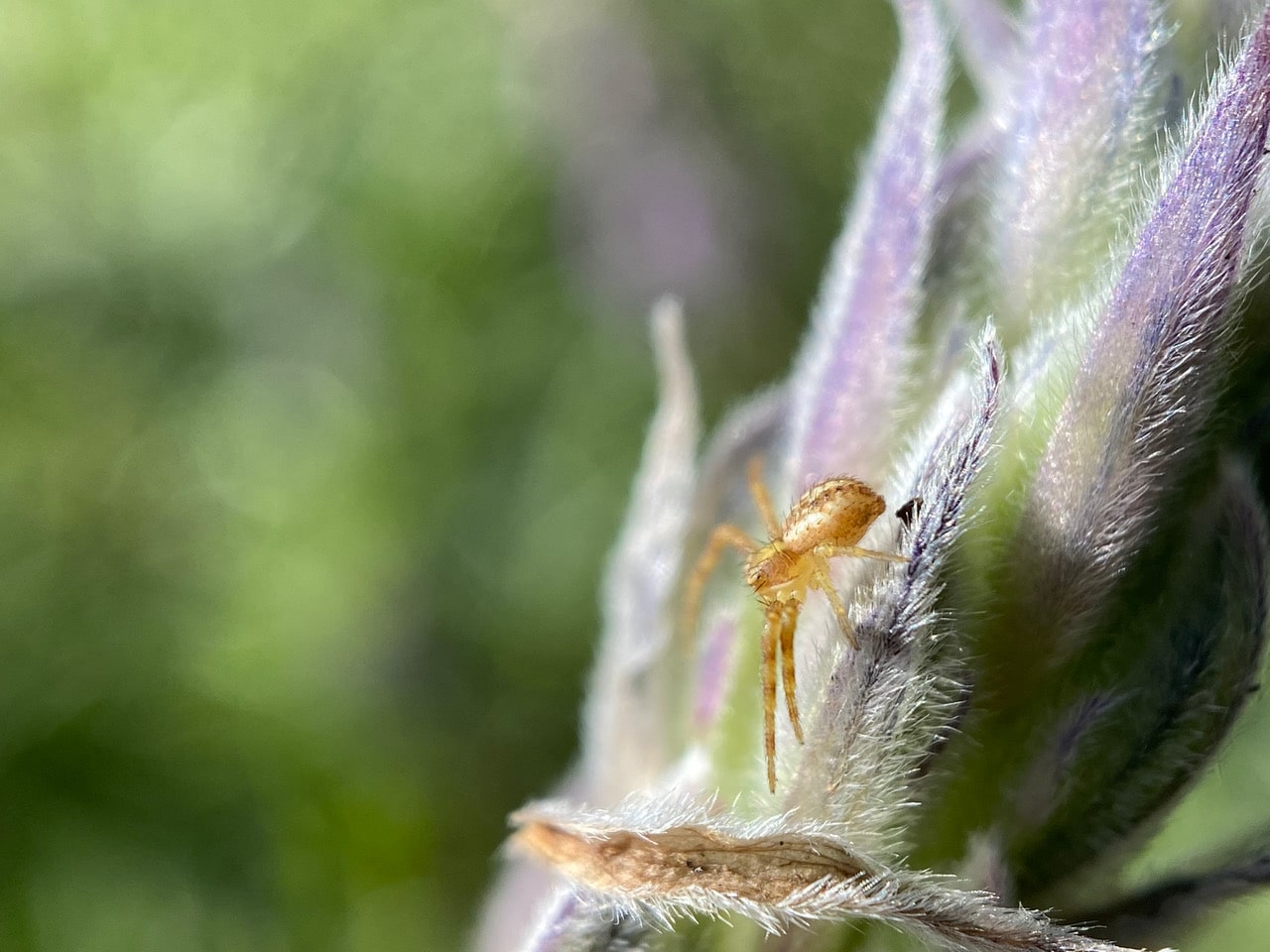
A very young Crab Spider (family Thomisidae) might find aphids an easy meal.
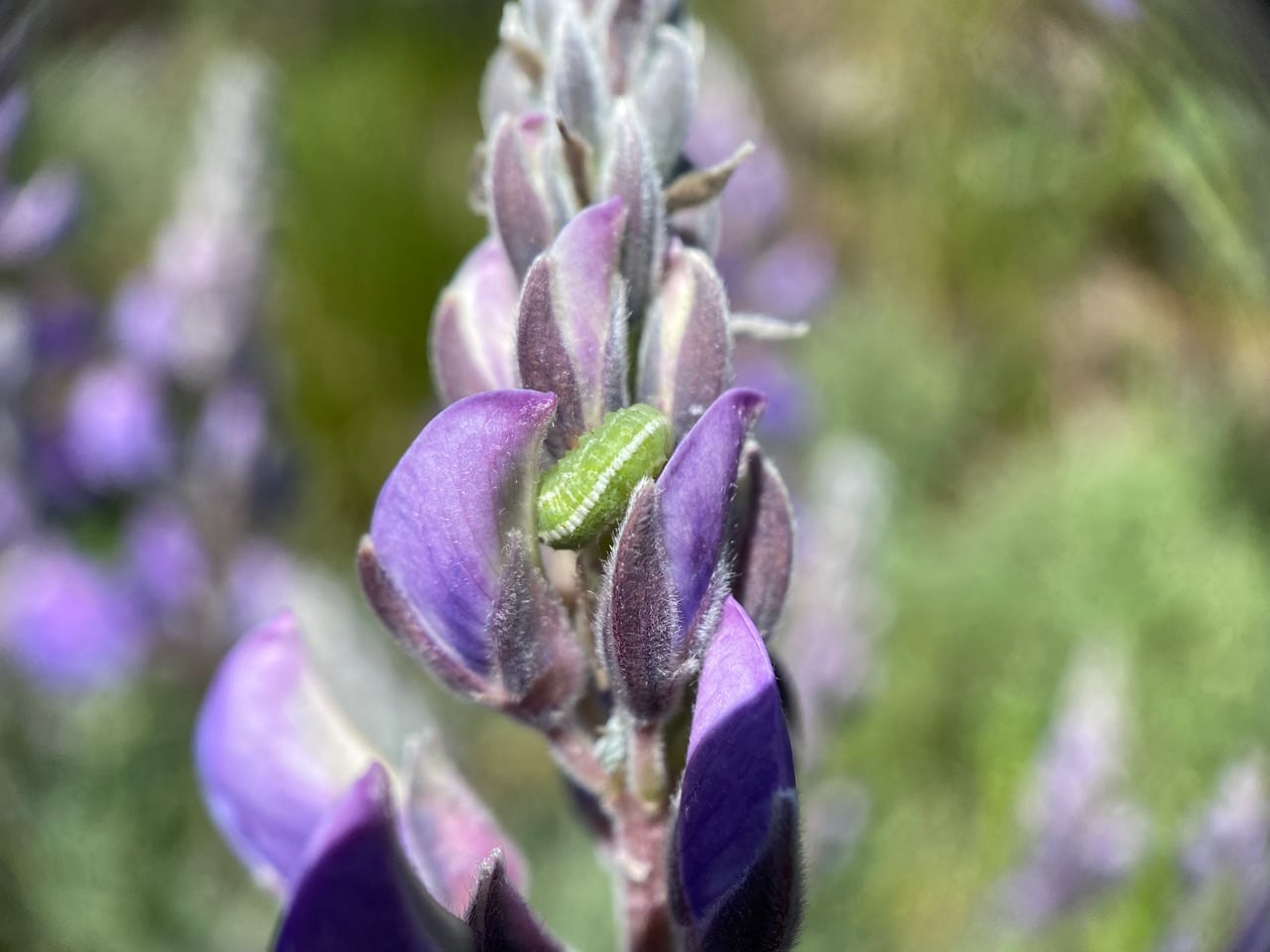
Ah, here’s another aphid predator – a Hover Fly larva (family Syrphidae). Female hover flies of many species like to lay their eggs near aphid colonies to ensure an abundance of food for their offspring when they hatch.
Ooh, here’s another hover fly larva!
Yet another one – all on the same plant! This Syrphid larva is the smallest, and its muted colors blend in remarkably well with the lupine flower buds.
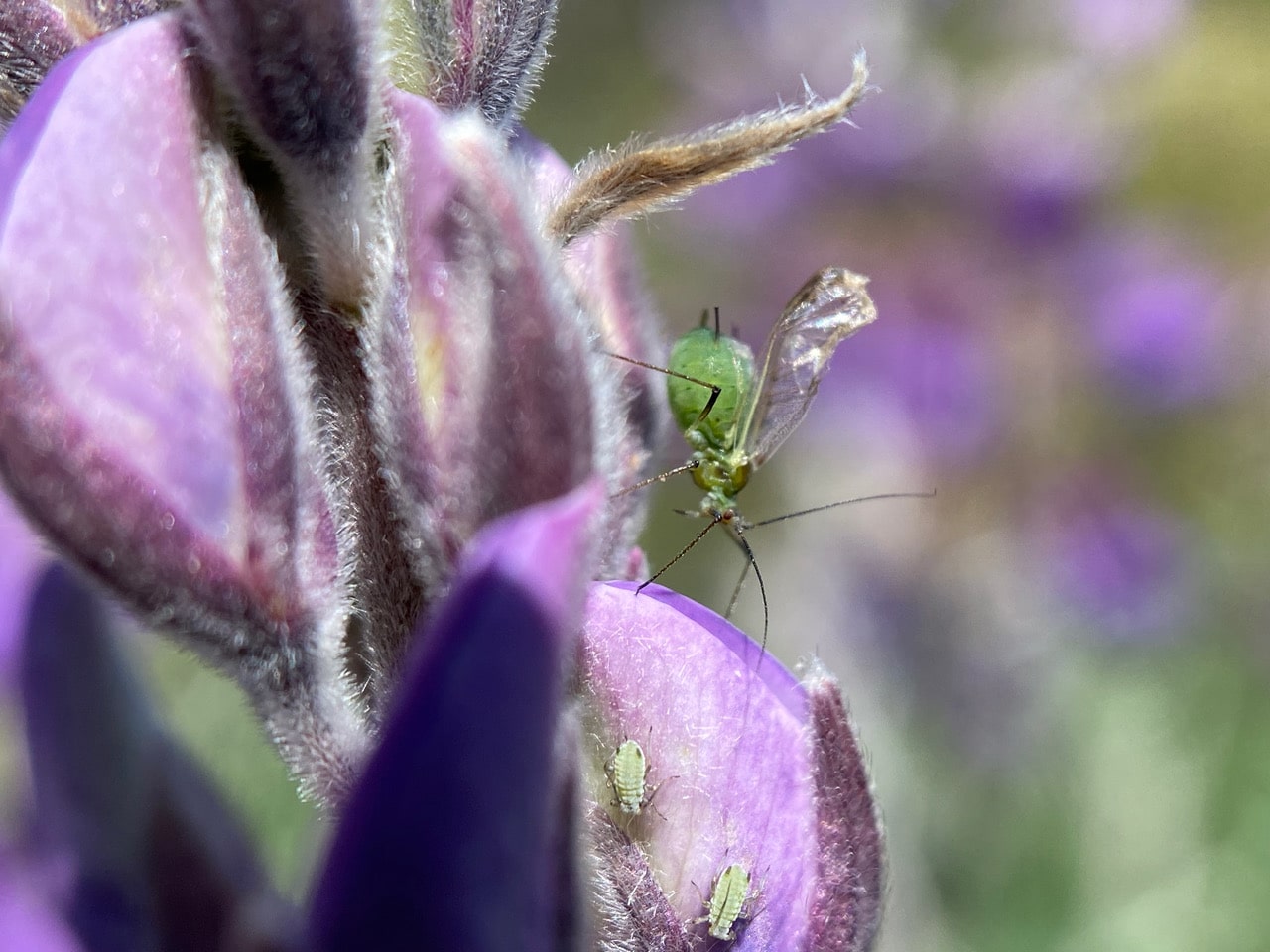
On an adjacent lupine plant, I find a winged aphid and a couple of young nymphs. So the aphids have started to spread!
Generally adult aphids are wingless, but most species also occur in winged forms, especially when populations are high or during spring and fall. The ability to produce winged individuals provides the aphids with a way to disperse to other plants when the quality of the food source deteriorates, or when predation pressure is high.