

Pollinator Post 4/6/23 (2)
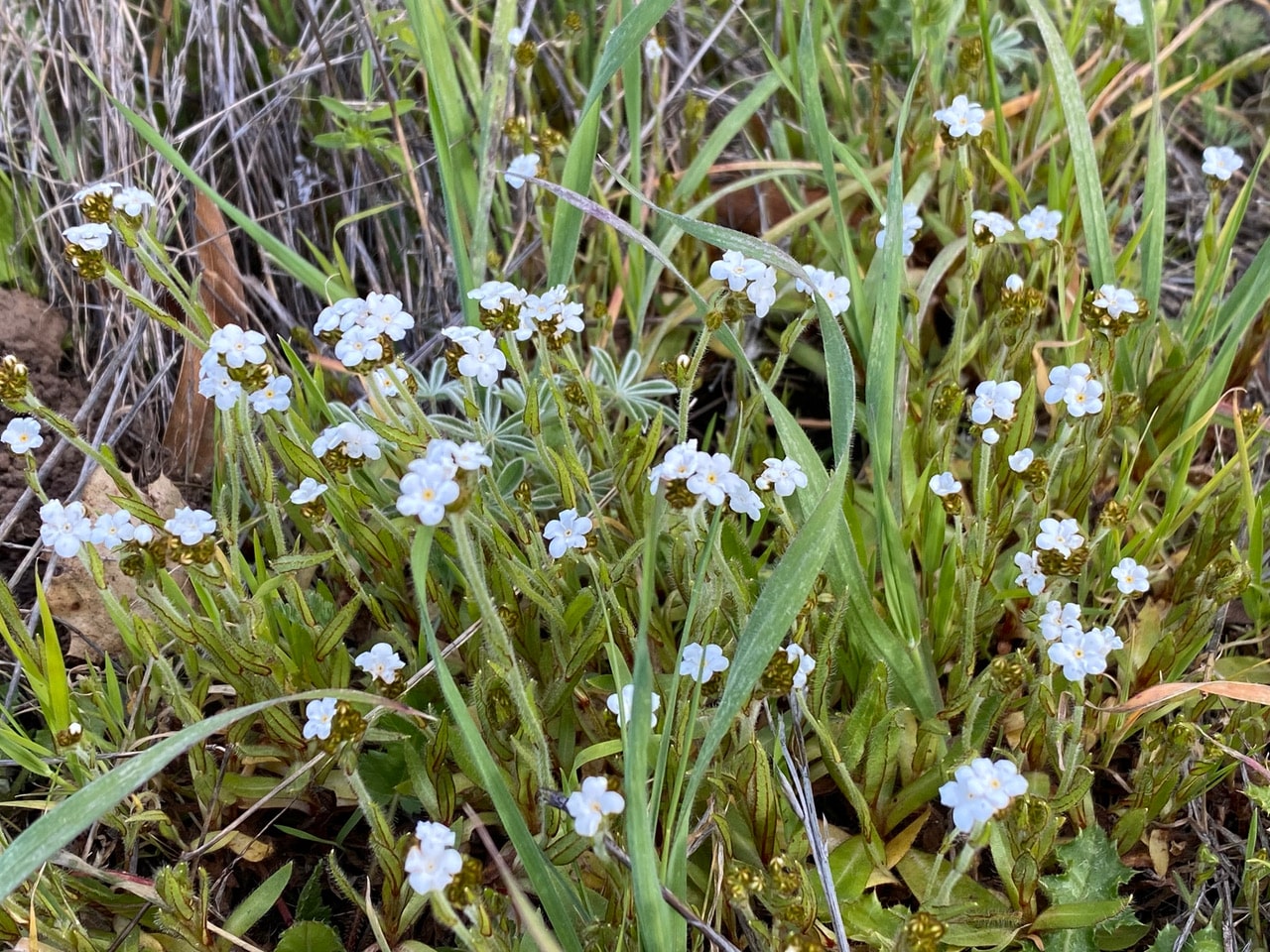
Popcorn Flowers, Plagiobothrys nothofulvus (family Boraginaceae) carpet the floor of the grassy slope at Diablo Bend, providing a beautiful backdrop for the blooming Silverleaf Lupines.
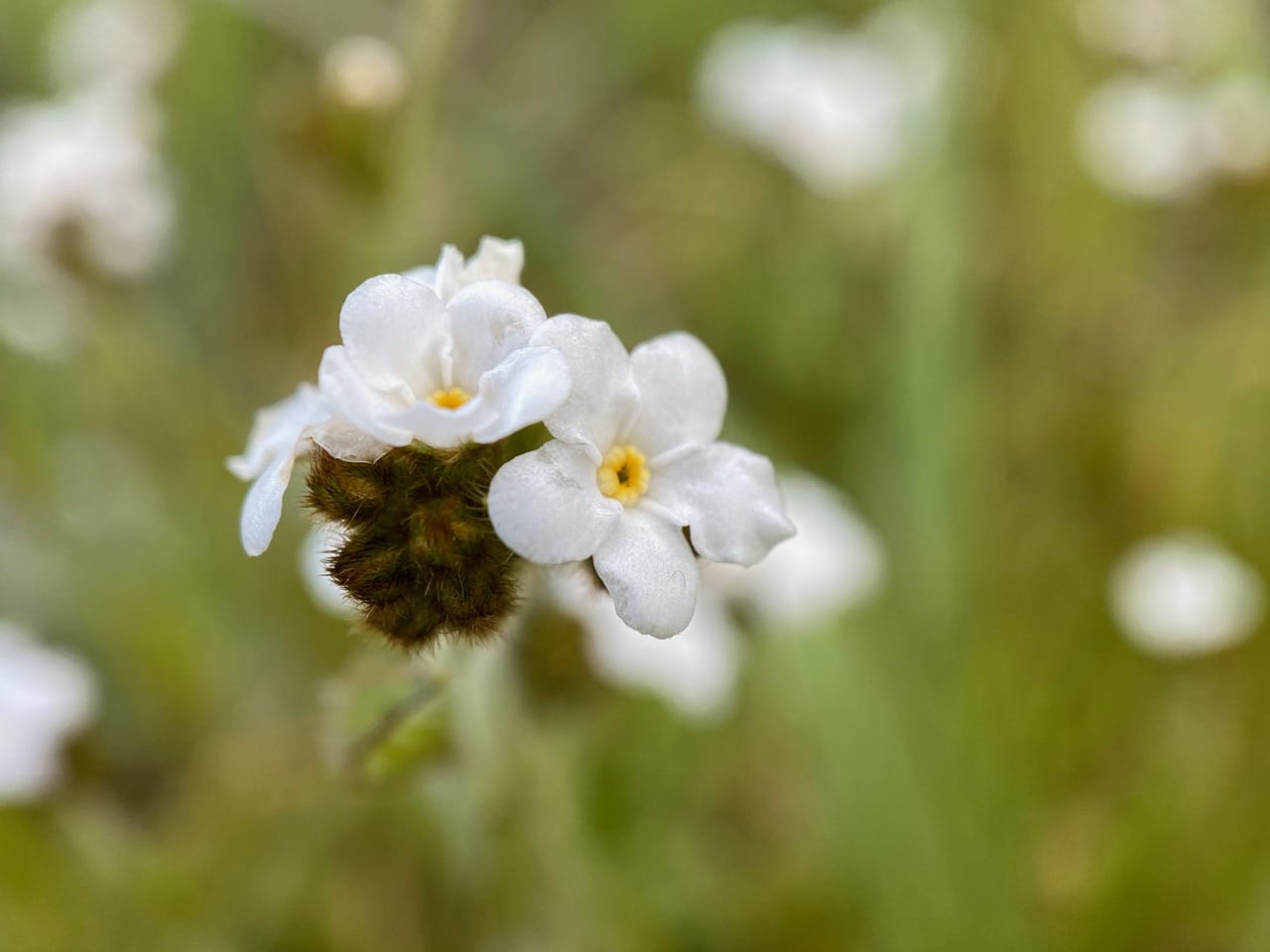
The flowers of Plagiobothrys nothofulvus generally bloom from February-April. As in many other members of the family Boraginaceae, the flowers unfurl from a scorpioid (coiled) cyme. The flower consists of five petals and are bisexual with both male and female parts hidden within a narrow floral tube.
I am delighted to spot an insect flitting amongst the Popcorn Flowers. As it gets closer, I realize incredulously that it is a tiny bumble bee – probably a first-brood Black-tailed Bumble Bee, Bombus melanopygus? I continue to be surprised by the size of these worker bees that are raised by their queen moms.
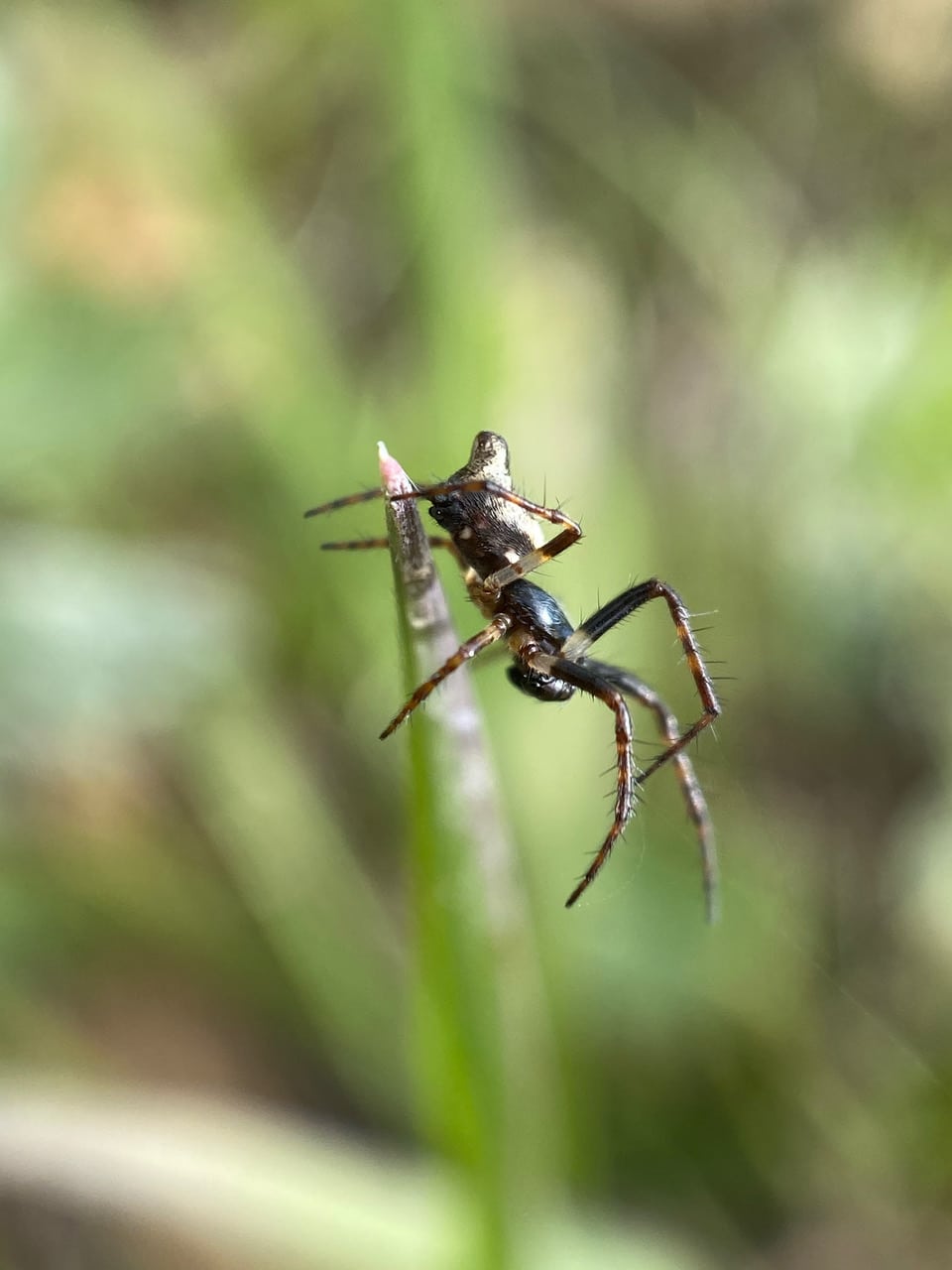
A movement in the grass alerts me to the presence of a dark, medium-sized spider. It is gliding on an invisible silk strand strung between the vegetation. The spider pauses occasionally on the grass tips along the 3 foot span that it traverses effortlessly, giving me a shot at photographing it. The spider has a prominent protuberance on its abdomen – a Conical Trashline Orbweaver, Cyclosa conica? (If it is, it is the largest one I have ever seen. The trashline spiders seen on their webs are usually much smaller.) This individual is obviously a male, with a large pair of boxing-glove-like pedipalps it holds under its face.
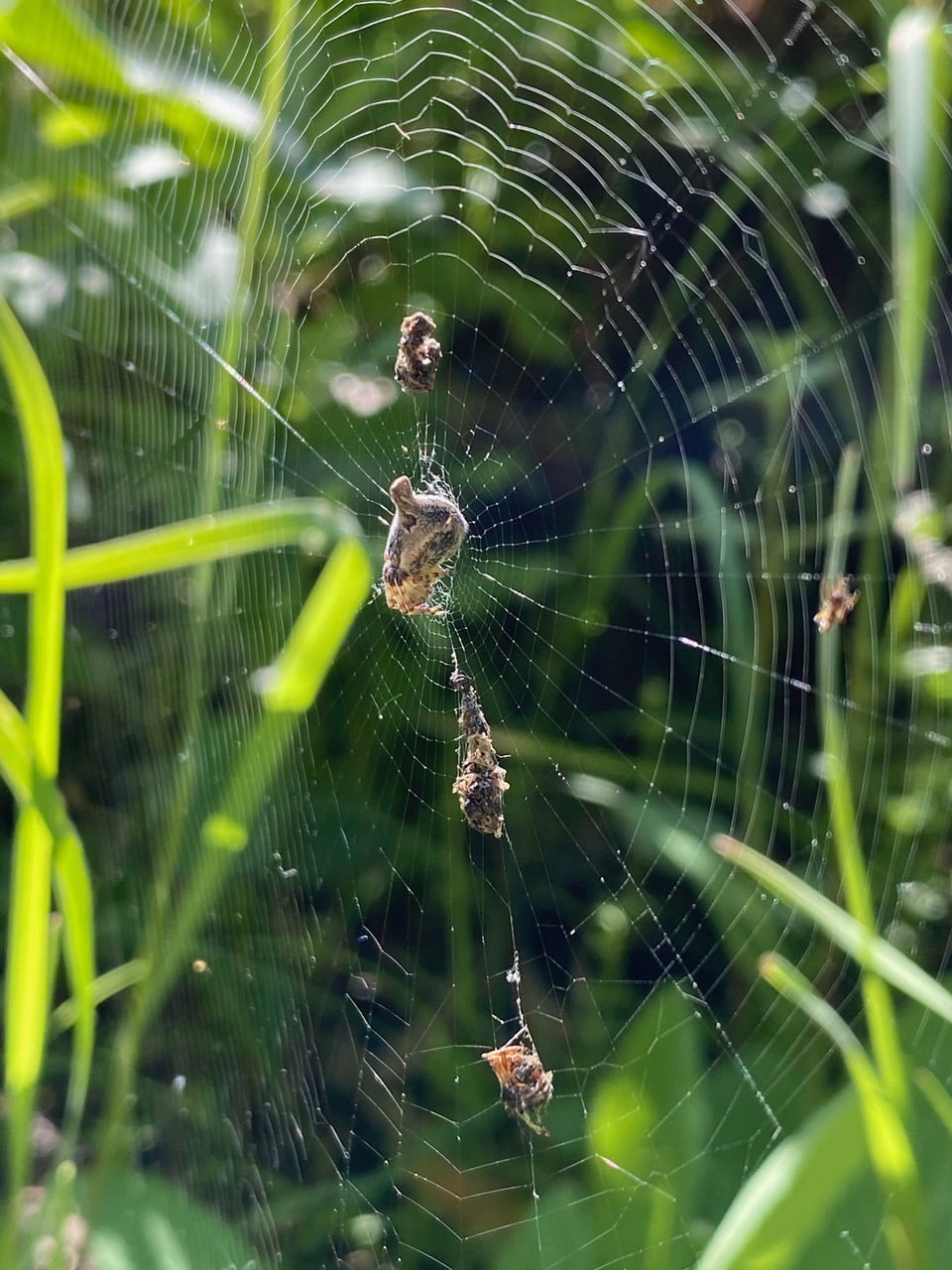
This is an old posting from 4/1/22.
A Trashline Orbweaver, Cyclosa conica sits head-down in the middle of her web. The tiny spider has a prominent protuberance on the abdomen, the function of which is unknown.
Cyclosa, also called Trashline Orbweavers, is a genus of orb-weaver spiders (family Araneidae). The tiny spider (5-7.5 mm) is easily recognized by its web decoration; the spider strings together the dead bodies of insect prey and other debris and hangs them in a vertical line through the middle of its web. The decoration, which sometimes includes egg cases as well, probably serves to camouflage the spider. Cyclosa creates its webs mostly during times of complete darkness. The females occupy the web hub (center) to sit-and-wait for prey. The spider can ensnare prey at nearly any time of day, and it only leaves its spot to replace the web prior to sunrise.
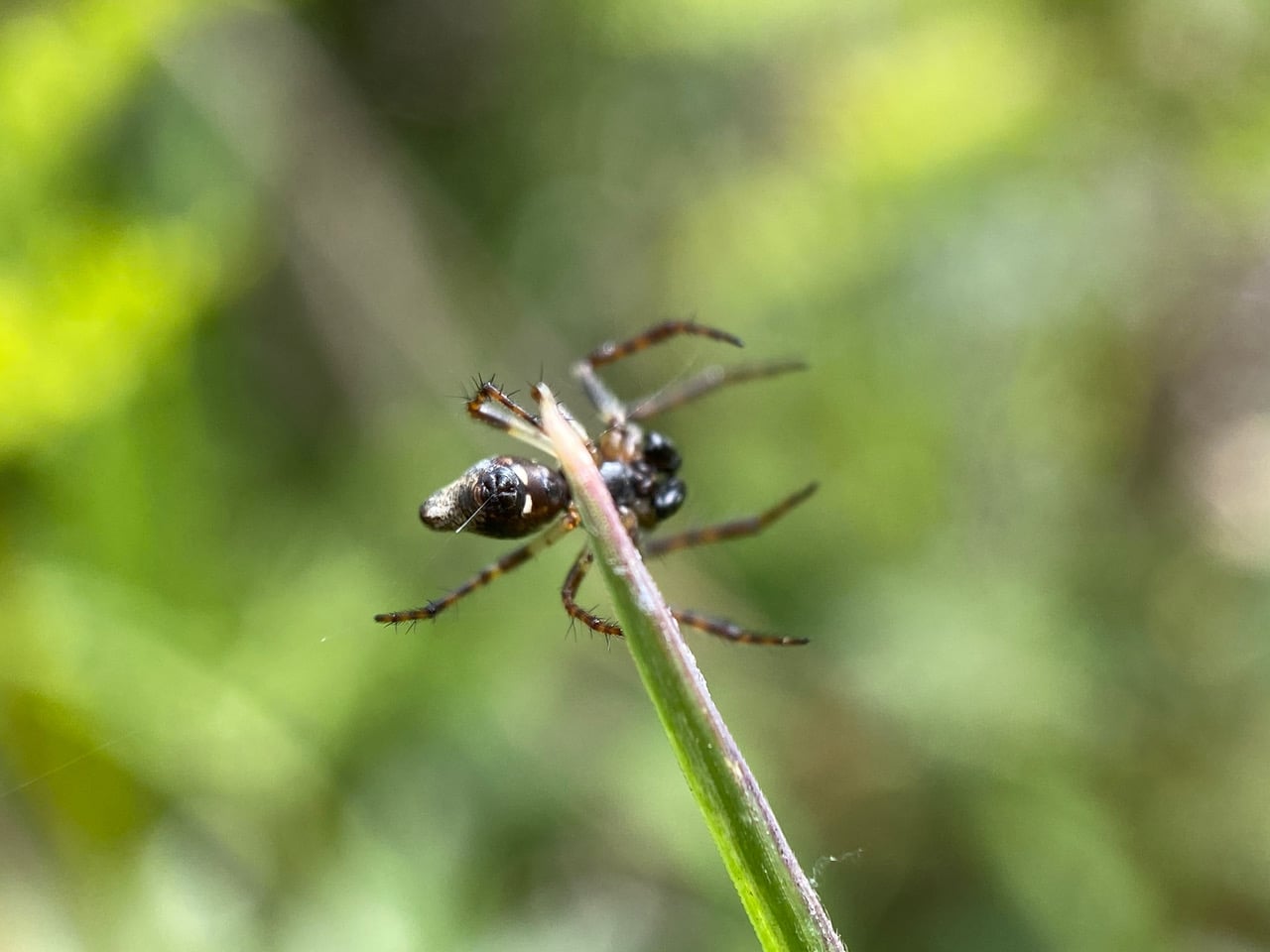 A fleeting view of the underside of the male spider shows its spinneret from which silk is being extruded.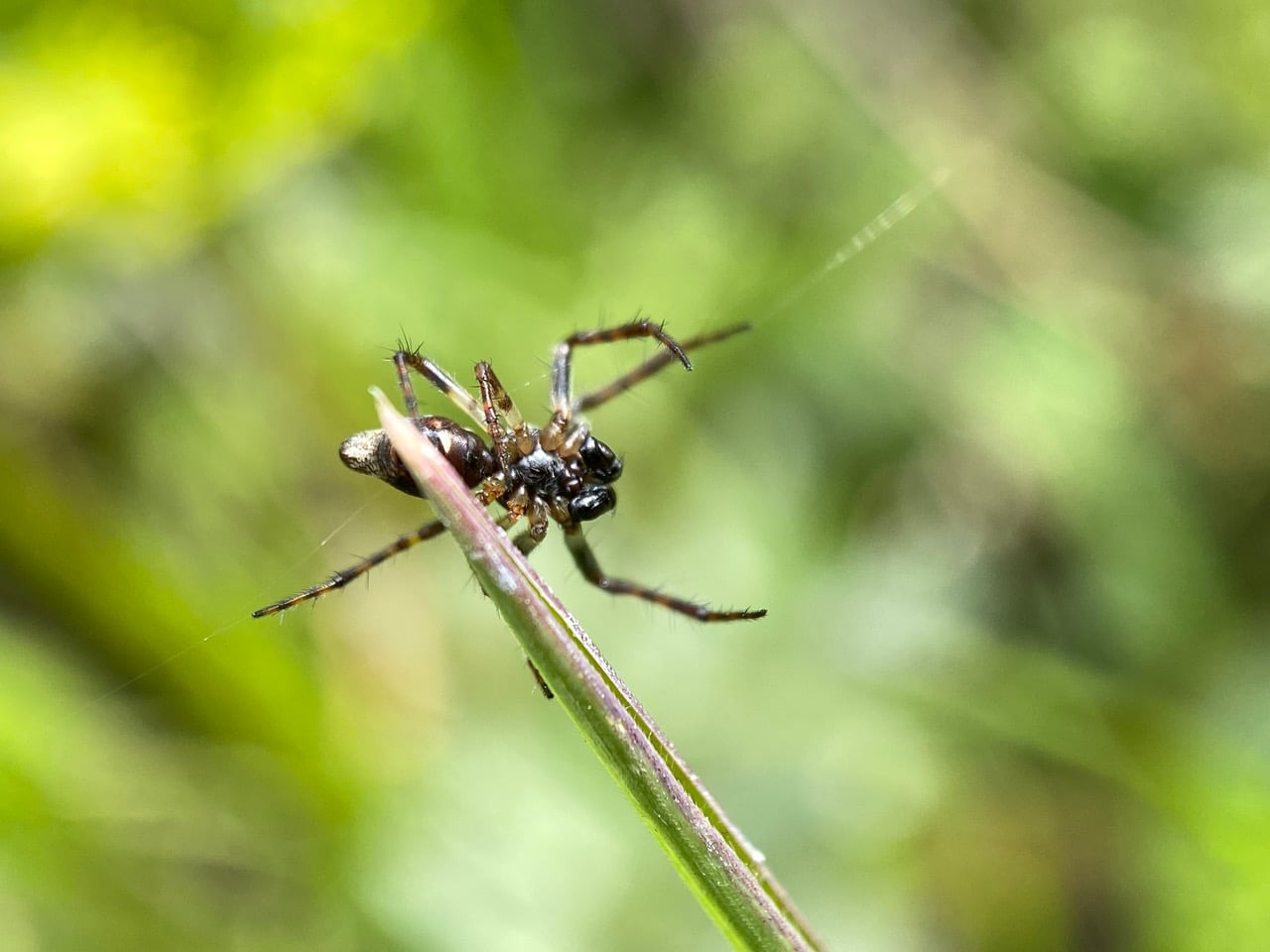
Here’s a good look at those pedipalps from the underside. Note also that the spider is handling a strand of silk with its front leg.
The pedipalps, or palps, which in arachnids function as an organ of touch, constitute the second pair of appendages. In females and immature males, the pedipalps are used to handle food and also function as sense organs. The palps are modified in the males of all adult spiders to carry sperm for mating.
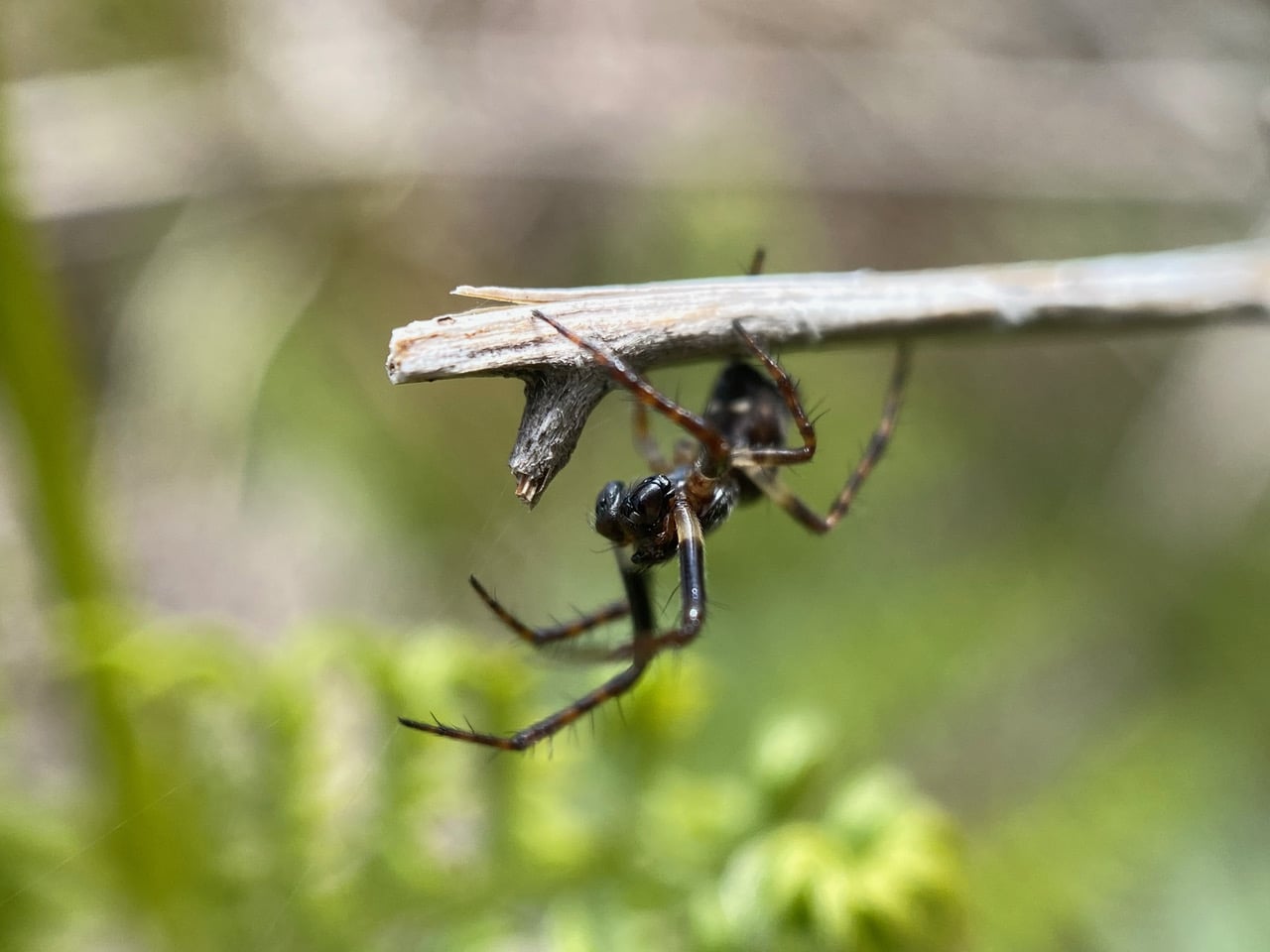
While the spider is hanging upside-down, I get another good look at its large pedipalps held under its face.

The spider seems to have some white markings on the underside of its abdomen…
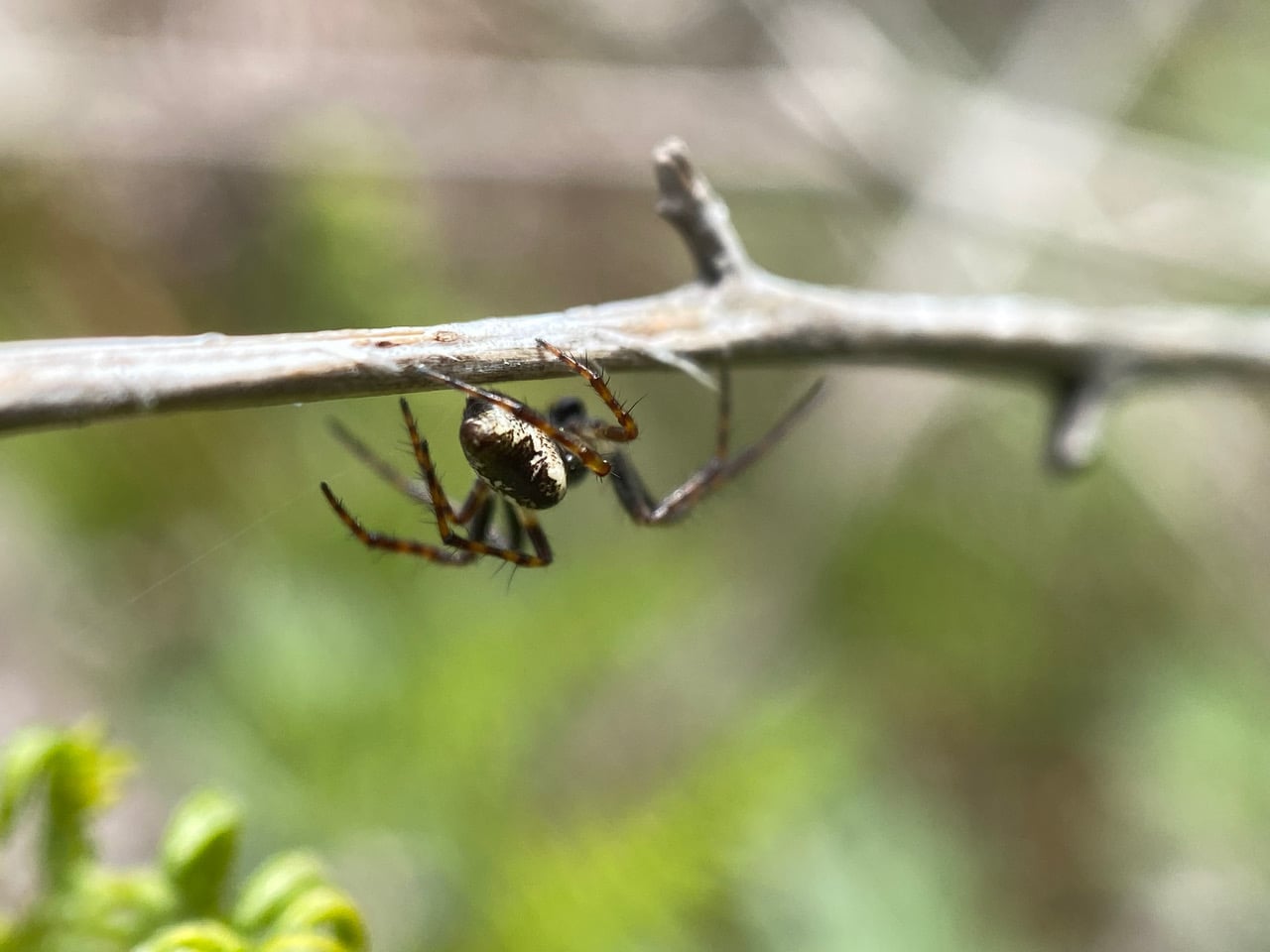
… and some intricate markings on the upper abdomen.
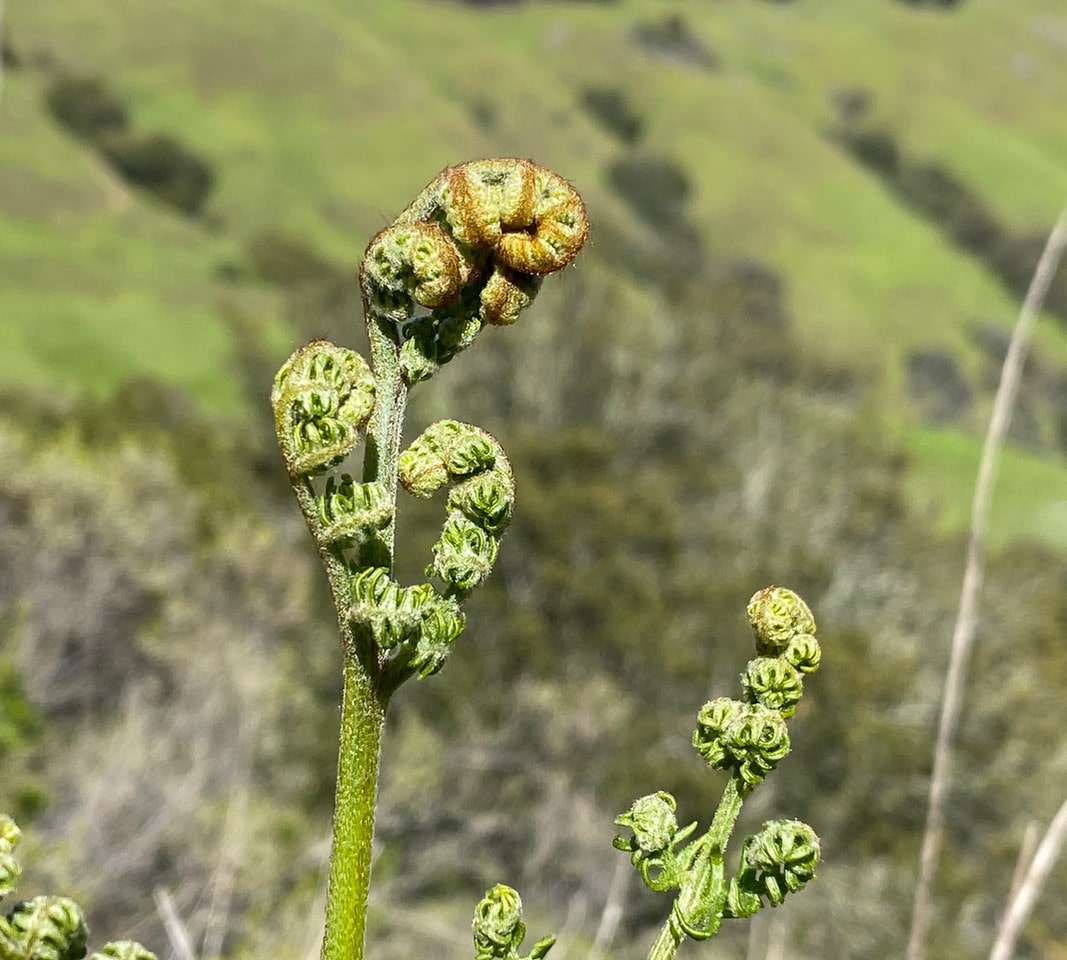 Fiddleheads of Western Bracken Ferns, Pteridium aquilinum have broken through the ground to unfurl at the edge of the cliff.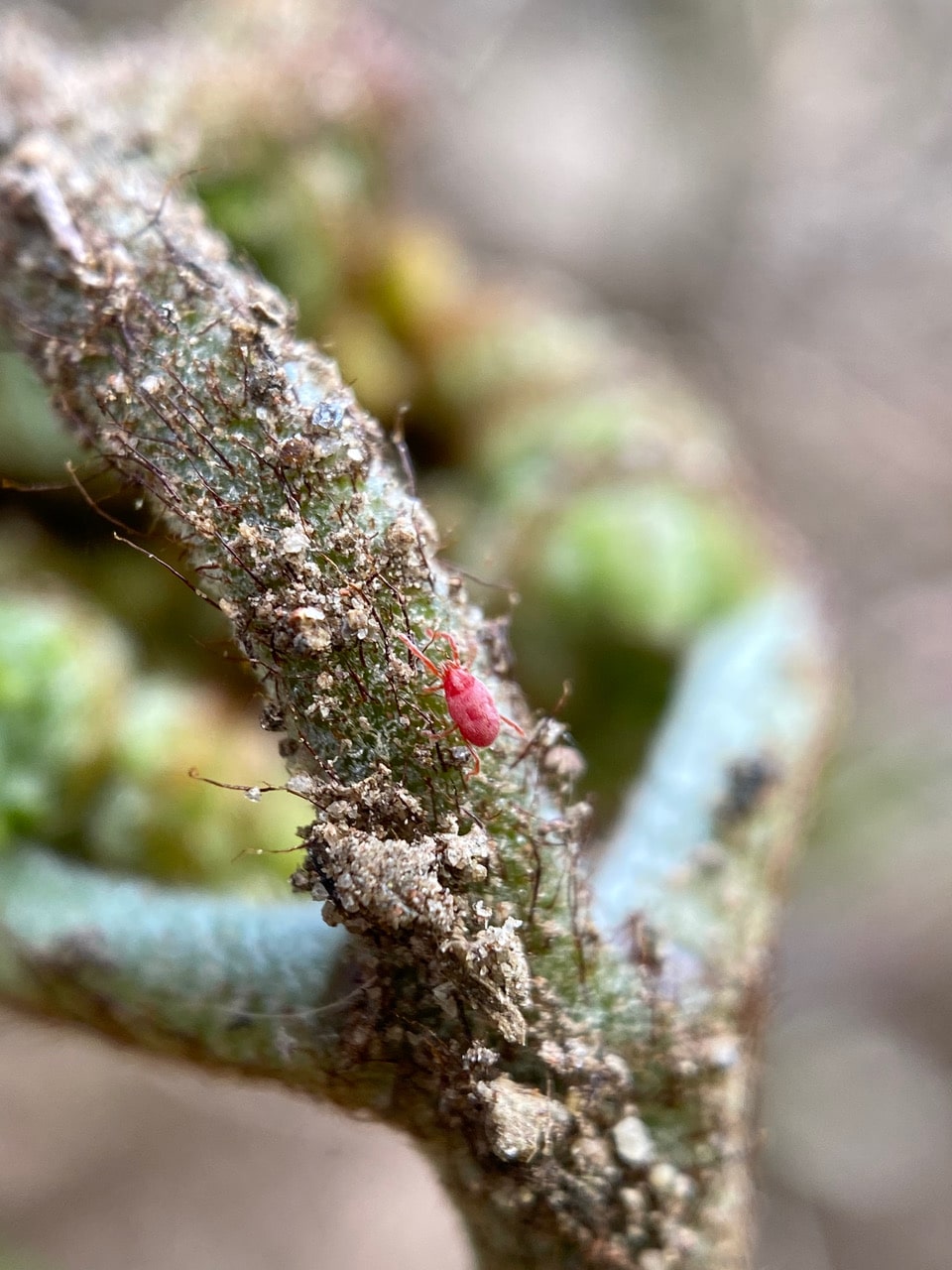
Crawling on the central spine of an unfurling Bracken Fern frond, a red mite catches my attention.
Mites are arachnids closely related to spiders and ticks, but generally smaller in size. While they technically have two body regions, visually it looks like a single unsegmented body with legs. Mites have four life stages: eggs, larva (hatchling), nymph and adult, although there can be multiple nymph stages. As larvae, mites have three pairs of legs. However, as nymphs and adults, mites have four pairs of legs.
Mites occupy a wide range of ecological niches. Many are important decomposers in various habitats. They eat a wide variety of material including living and dead plant and fungal material, lichens and carrion; some are predatory. Others are parasites of plants and animals; some are gall inducers. The majority are beneficial, living in the soil or aqueous environments and assisting in the decomposition of decaying organic matter, as part of the carbon cycle.
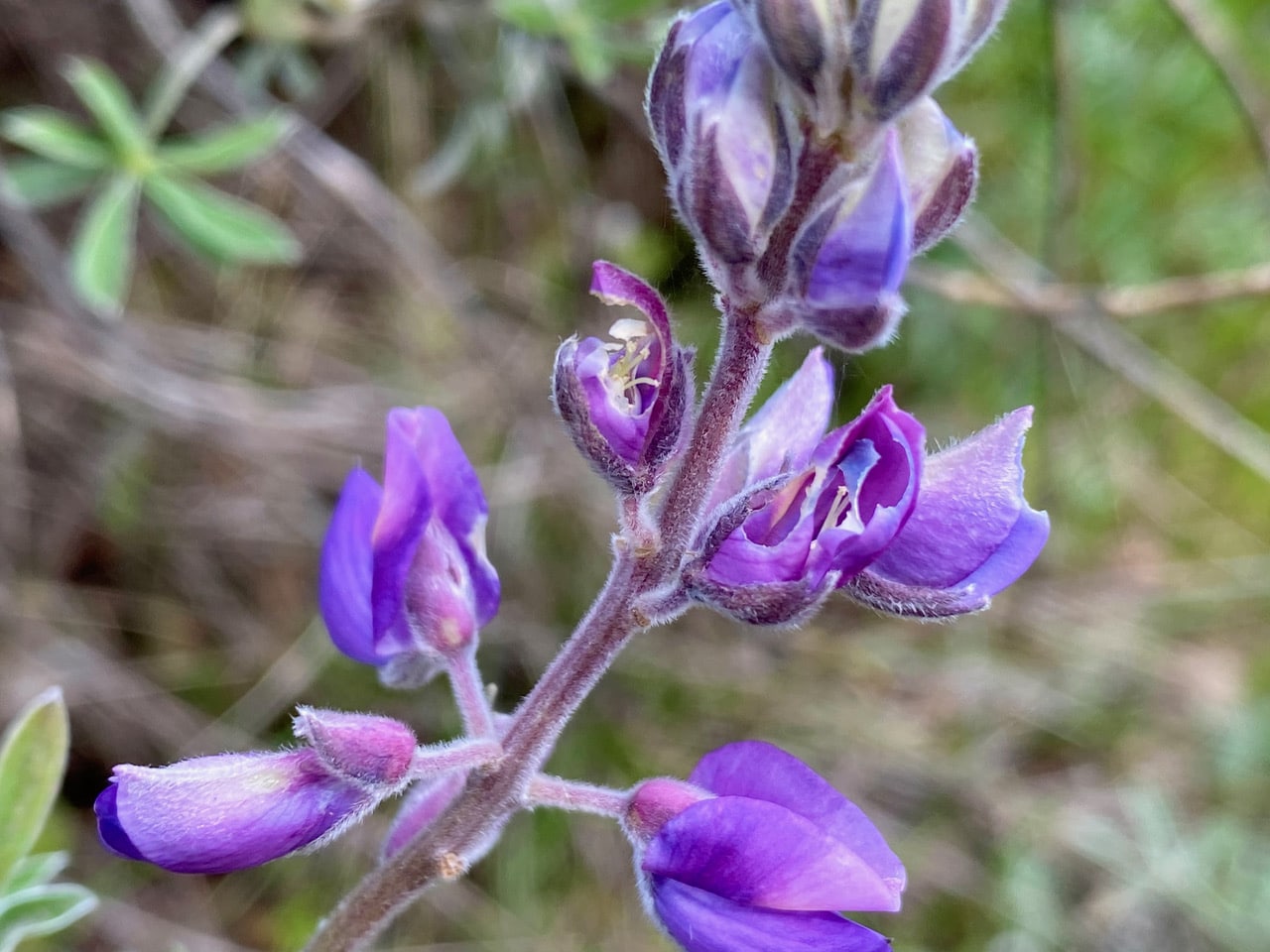
Whoa! Someone has breached the structural defenses of the Silverleaf Lupine by chewing through several petal layers of the unopened flowers. Is the perpetrator after nectar or pollen hidden within the keel?

A miniature garden has popped up under the Silverleaf Lupines, featuring the Blue Dicks, Dipterostemon capitatus.
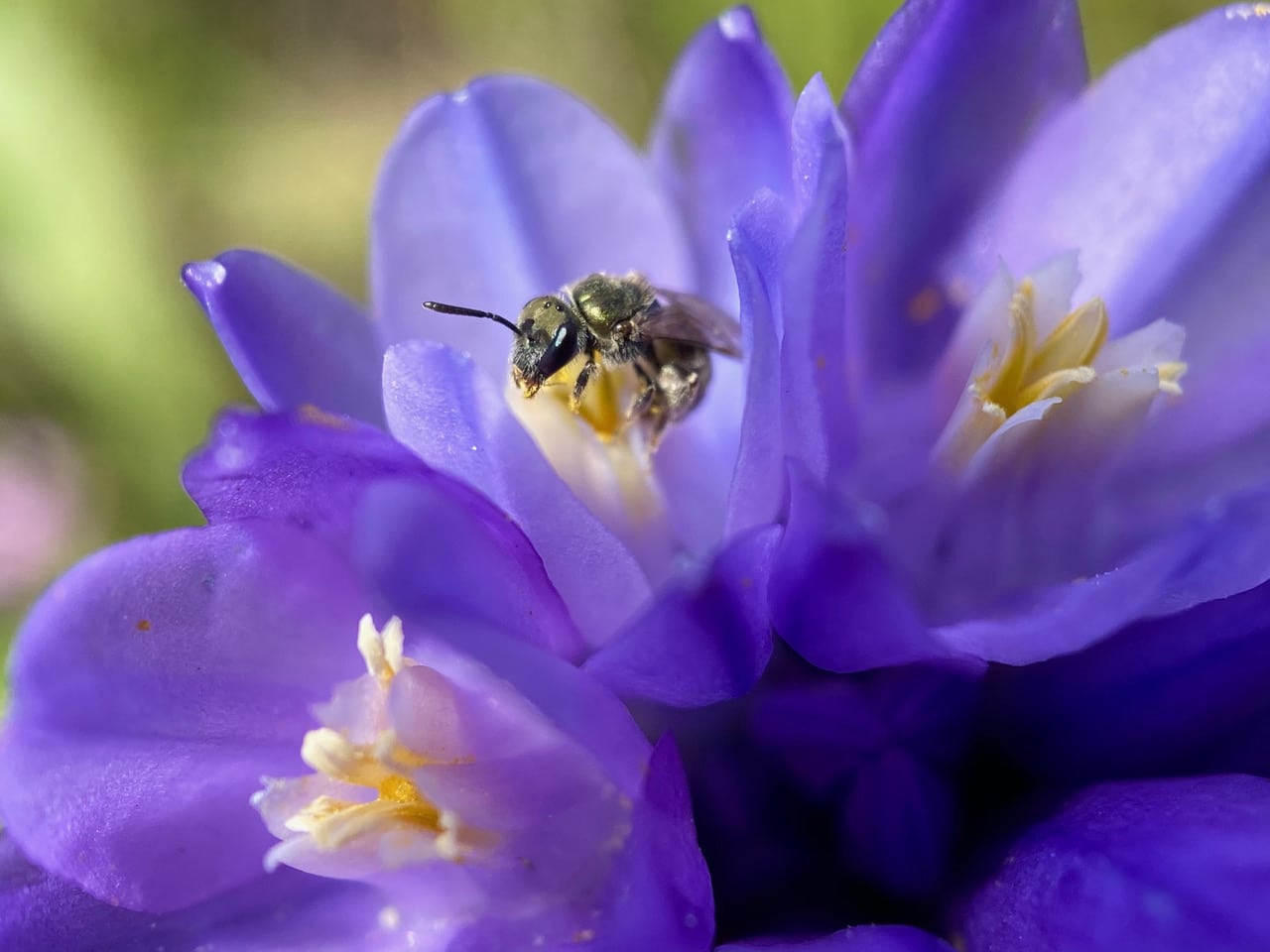
A shiny dark bee in the genus Lasioglossum (family Halictidae) is collecting pollen on a flower of Blue Dicks, Dipterostemon capitatus. Yay, our first Sweat Bee of the year!
Halictidae is the second-largest family of bees. They are commonly called Sweat Bees, as they are often attracted to perspiration.
The sweat bee genus Lasioglossum is the largest of all bee genera, containing over 1700 species worldwide. They are highly variable in size, color, and sculpture; among the more unusual variants, some are kleptoparasites, some are nocturnal, and some are oligolectic. Most Lasioglossum species nest in the ground, but some nest in rotten logs.
Social behavior among species of Lasioglossum is extraordinarily variable; species are known to exhibit solitary nesting, primitive eusociality, and social parasitism. Colony sizes vary widely, from small colonies of a single queen and four or fewer workers to large colonies of over 400 workers and perennial life cycles.
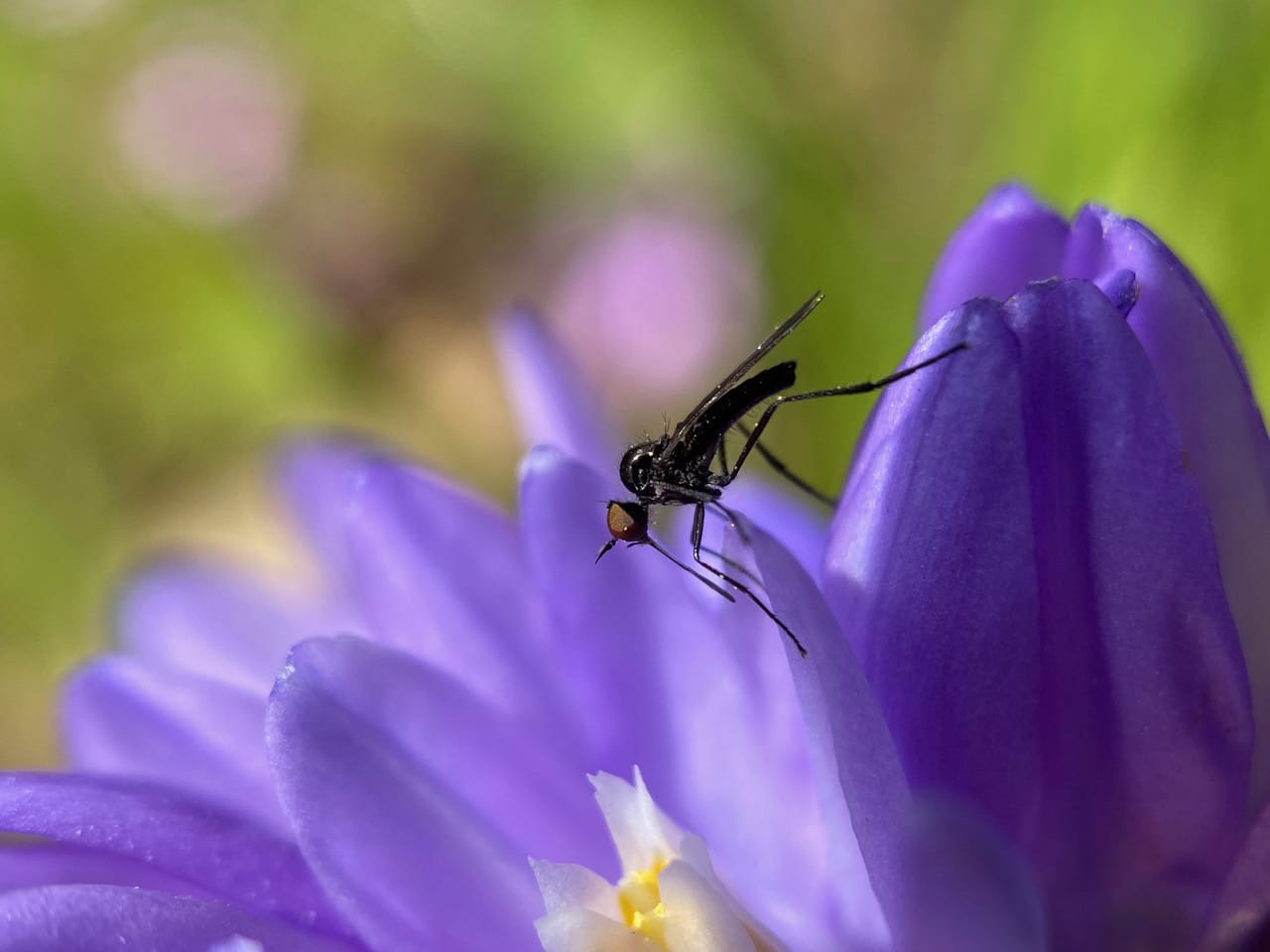
Another visitor to the Blue Dicks flowers is much smaller.
It is a member of the superfamily of Empidoidea, consisting of Dance Flies and Long-legged Flies. The majority of these insects are predatory, often with large compound eyes (sometimes covering almost the entire surface of the head), and tend to be associated with moist, temperate habitats. Some have long straight probosces with which to stab their prey. In many species of Dance Flies (family Empididae), males would present captured prey to females as nuptial gifts. The nuptial gift keeps the female busy during copulation.
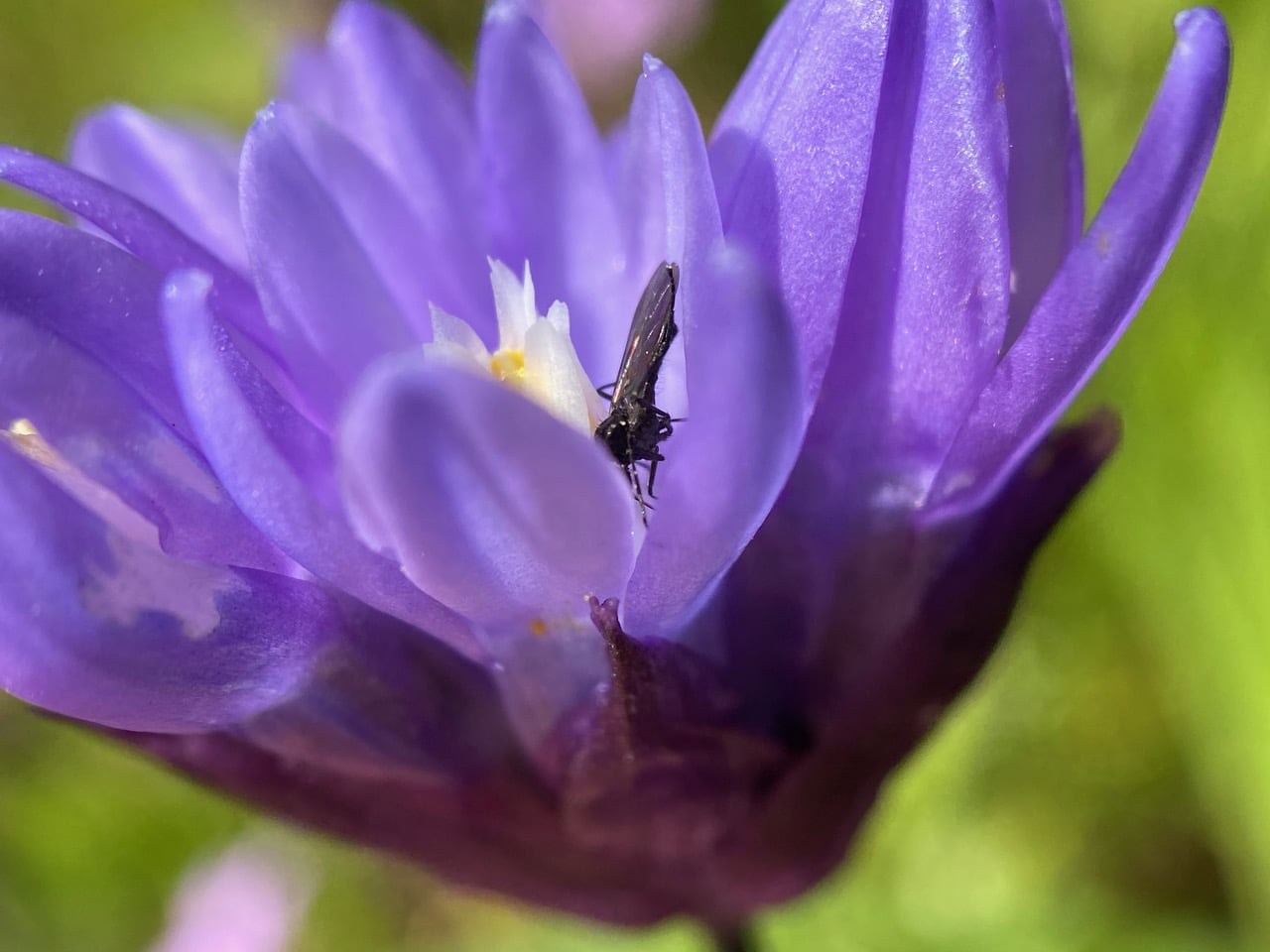
The Empidoidea descends into the Blue Dicks flower, apparently to feed on nectar and/or pollen.

The fly emerges with some pollen adhering to its body. A possible pollinator for Blue Dicks?
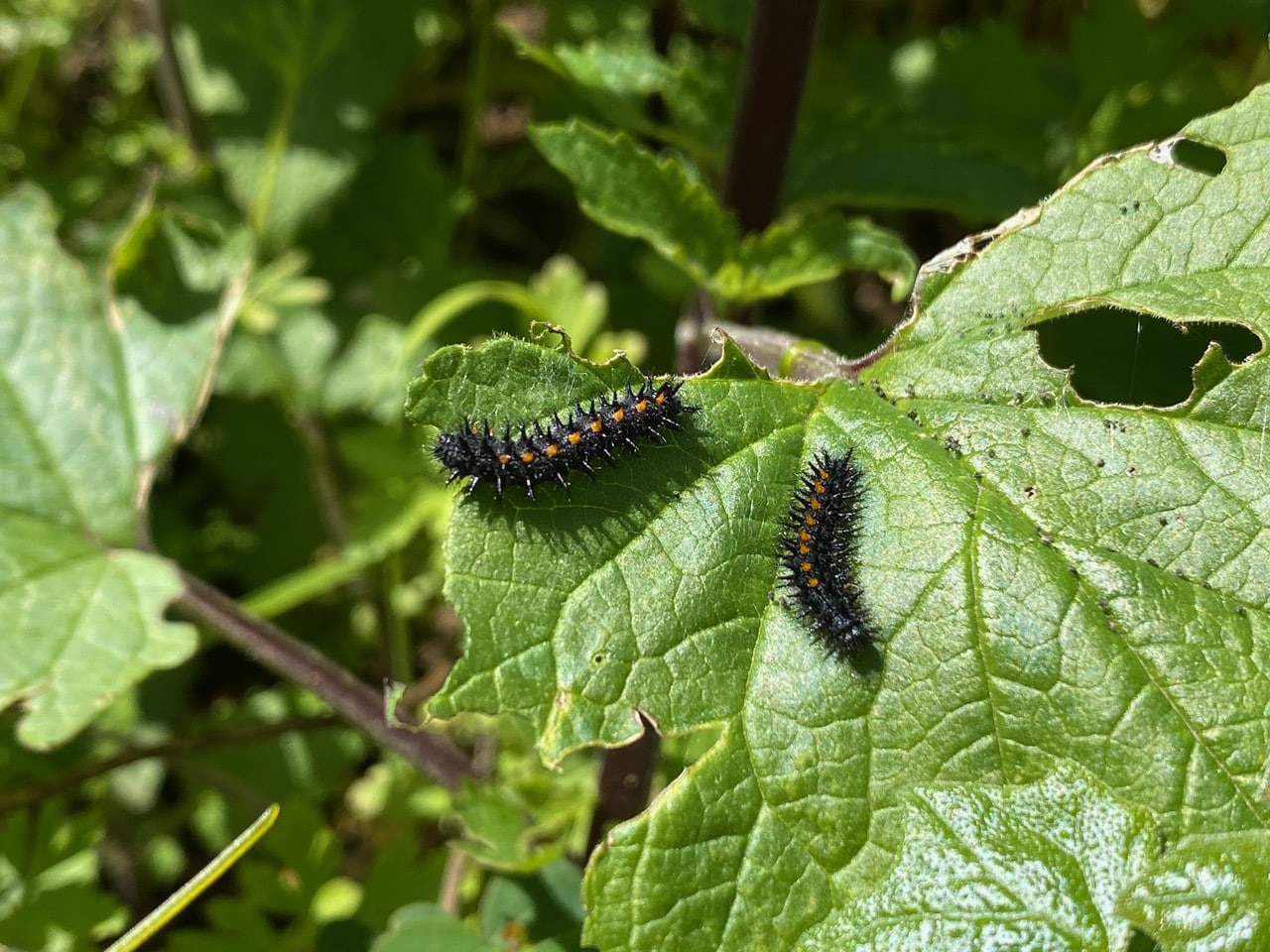
I stop at the large stand of California Bee Plant, Scrophularia californica to check on the Variable Checkerspot caterpillars. Yes, they are still there, and my, have they grown! Naturally there’s also more feeding damage on the leaves. While adult butterflies have a long tube-like proboscis for drinking nectar, their caterpillars have powerful mandible for chewing leaves.