

Pollinator Post 4/21/23
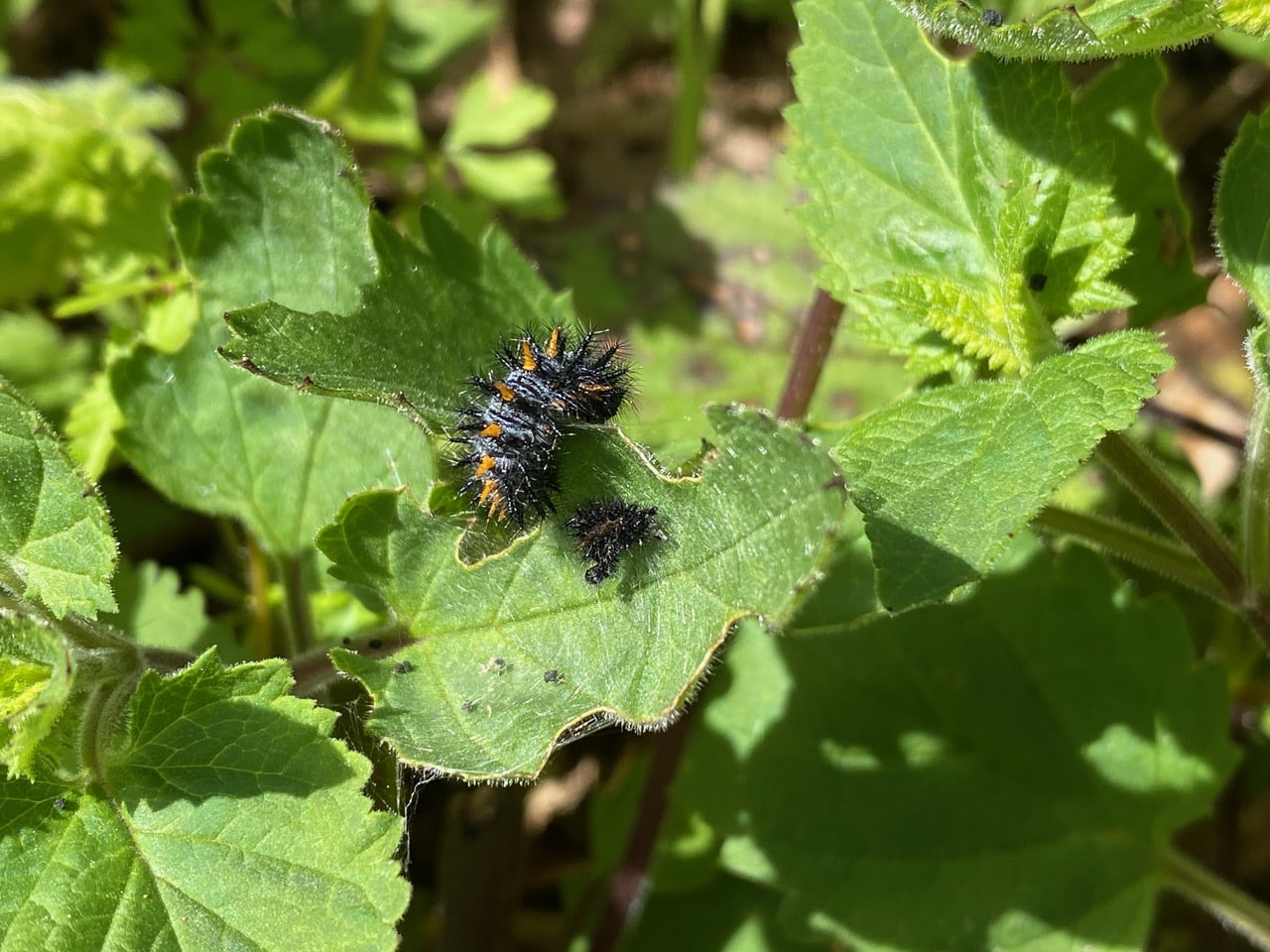
The dozen or so Variable Checkerspot caterpillars, Euphydryas chalcedona (family Nymphalidae) on the California Bee Plant, Scrophularia californica continue to feed and molt, leaving frass and shed skins on the foliage. They seem to be compulsive silk spinners, laying down a mat of silk wherever they go, reaching higher on the plants to take advantage of the tender new growths as the season progresses. For this reason, they are easily spotted on the plant.
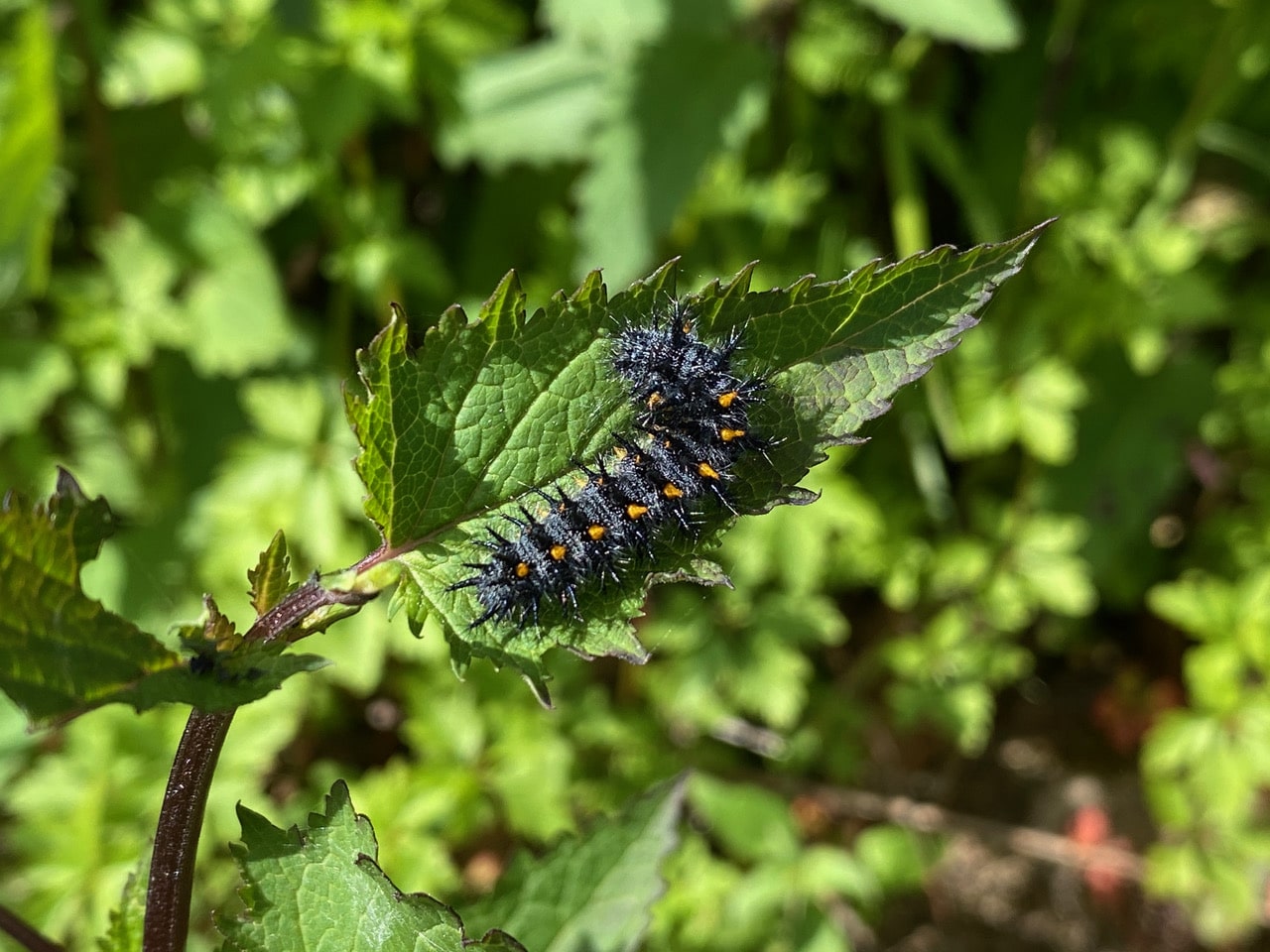




The Variable Checkerspot, like many other butterflies, has developed a defense strategy of unpalatability to birds as a means of resisting predation. This is due to the presence of iridoid glycoside compounds in the scrophulariaceous plants that make up the majority of its larval diet. The main iridoid glycoside found in the adult butterflies is catalpol, sequestered from the larval food plant.
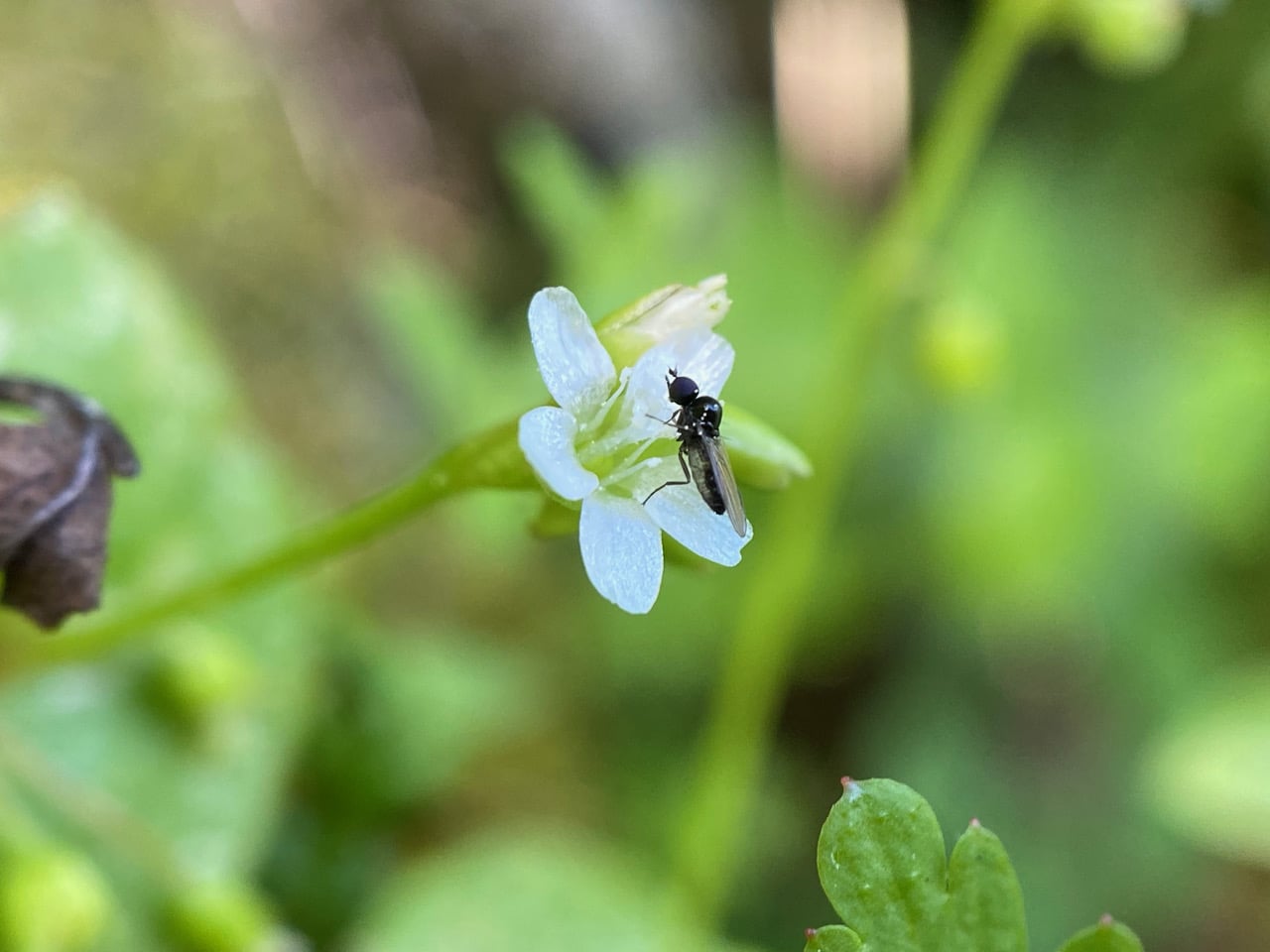
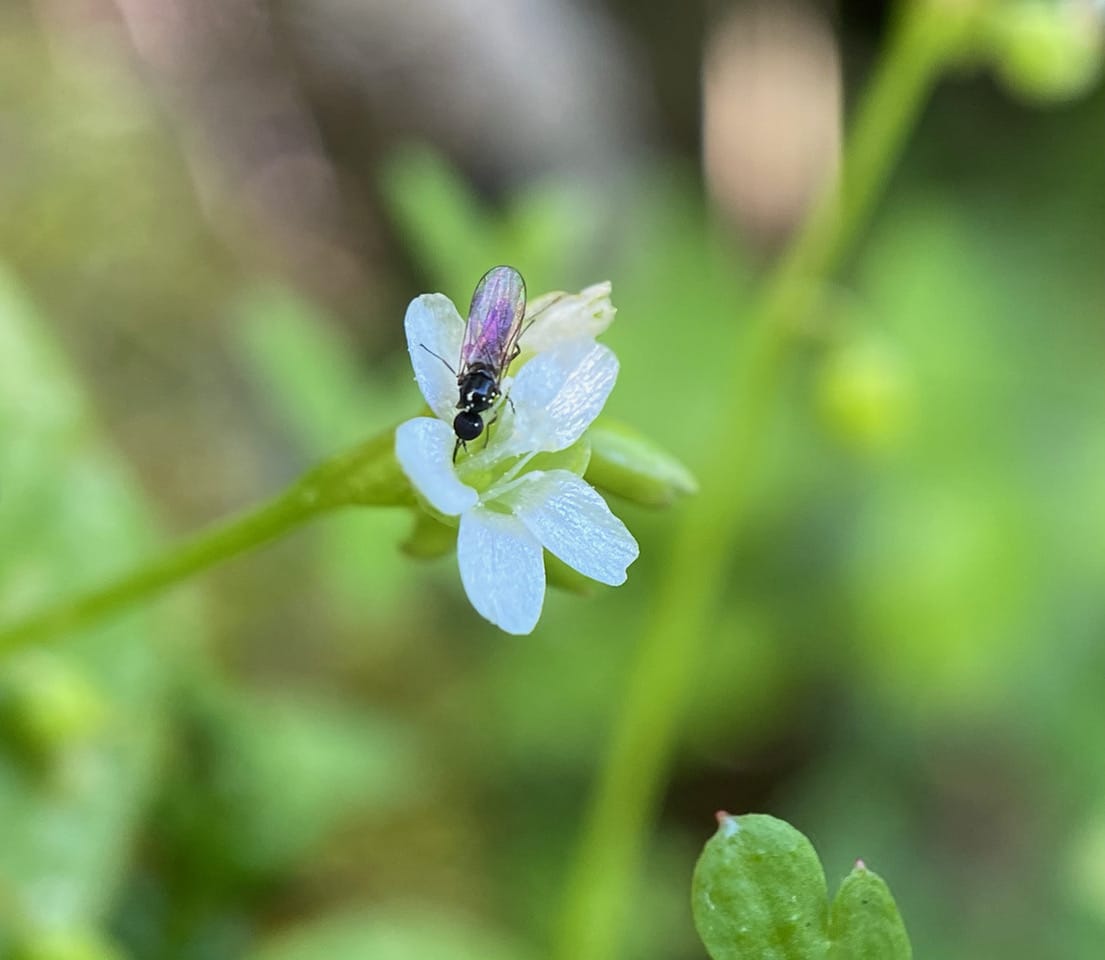
Dotted with pollen grains, a Micro Bee Fly (family Mythicomyiidae) is visiting a flower of Miner’s Lettuce, Claytonia perfoliata.
The tiny fly seems to be reaching down to take nectar at the base of the flower.
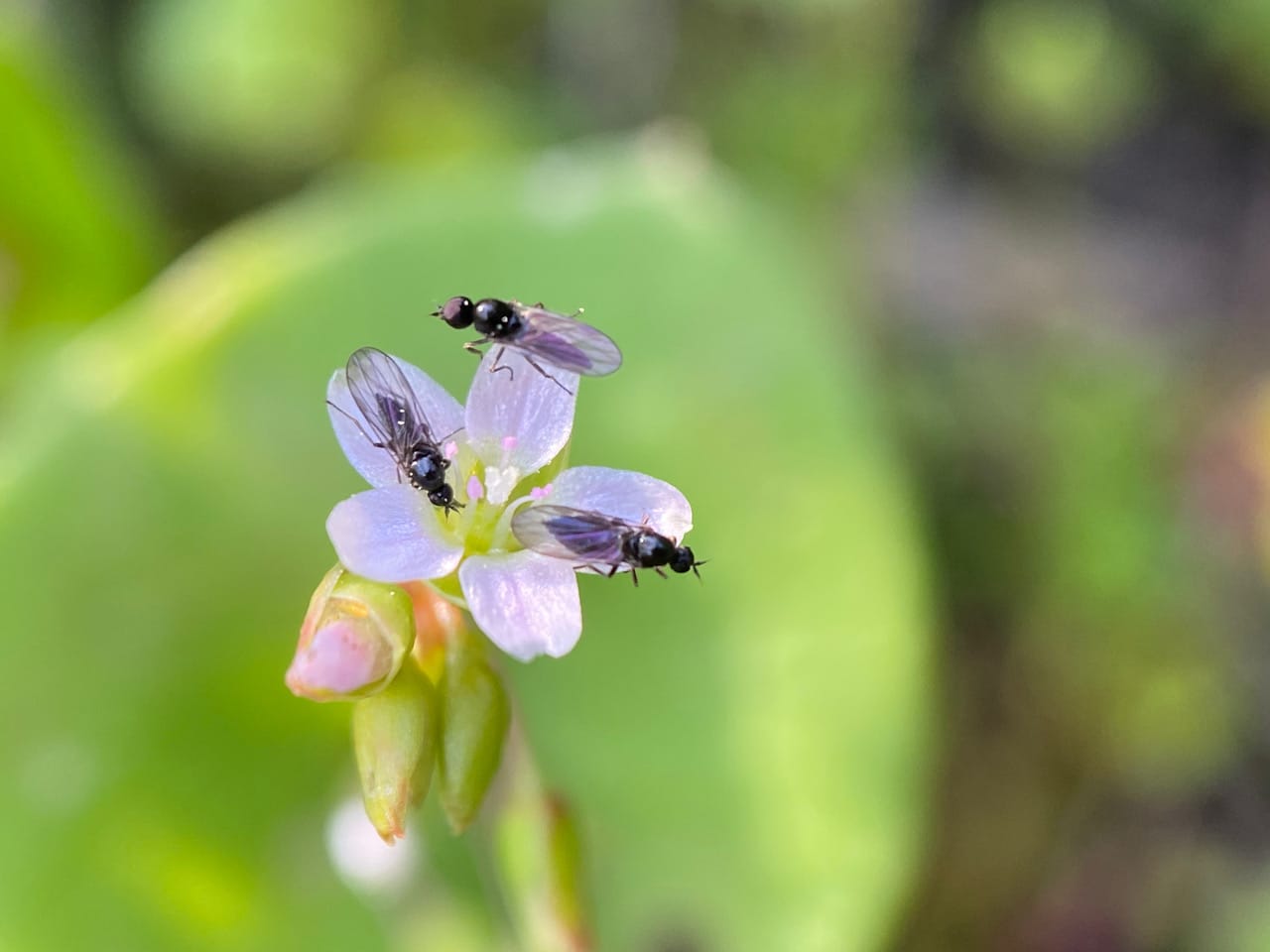
Mythicomyiidae are very tiny flies (0.5 – 5.0 mm) found throughout most parts of the world. Because of their extreme small size, the flies are not well known or studied, and their taxonomy is still in a state of flux. They are currently treated as close relatives of Bombyliidae or Bee Flies. The Mythicomyiids have a humpbacked thorax and lack the dense hairs common in the Bombyliidae. Besides the anatomical differences, the Mythicomyiids hold their wings together over the abdomen at rest (held at an angle in Bombyliidae). The larvae of many Mythicomyiids are known as gregarious parasites of solitary bees.
Wow, there are three of them on the same flower! There seems to be sexual dimorphism in these flies that I haven’t noticed before as I haven’t seen them side by side. The one with the big head and holoptic eyes (that meet in a line on top of the head, occupying most of the surface of the head) must be a male.
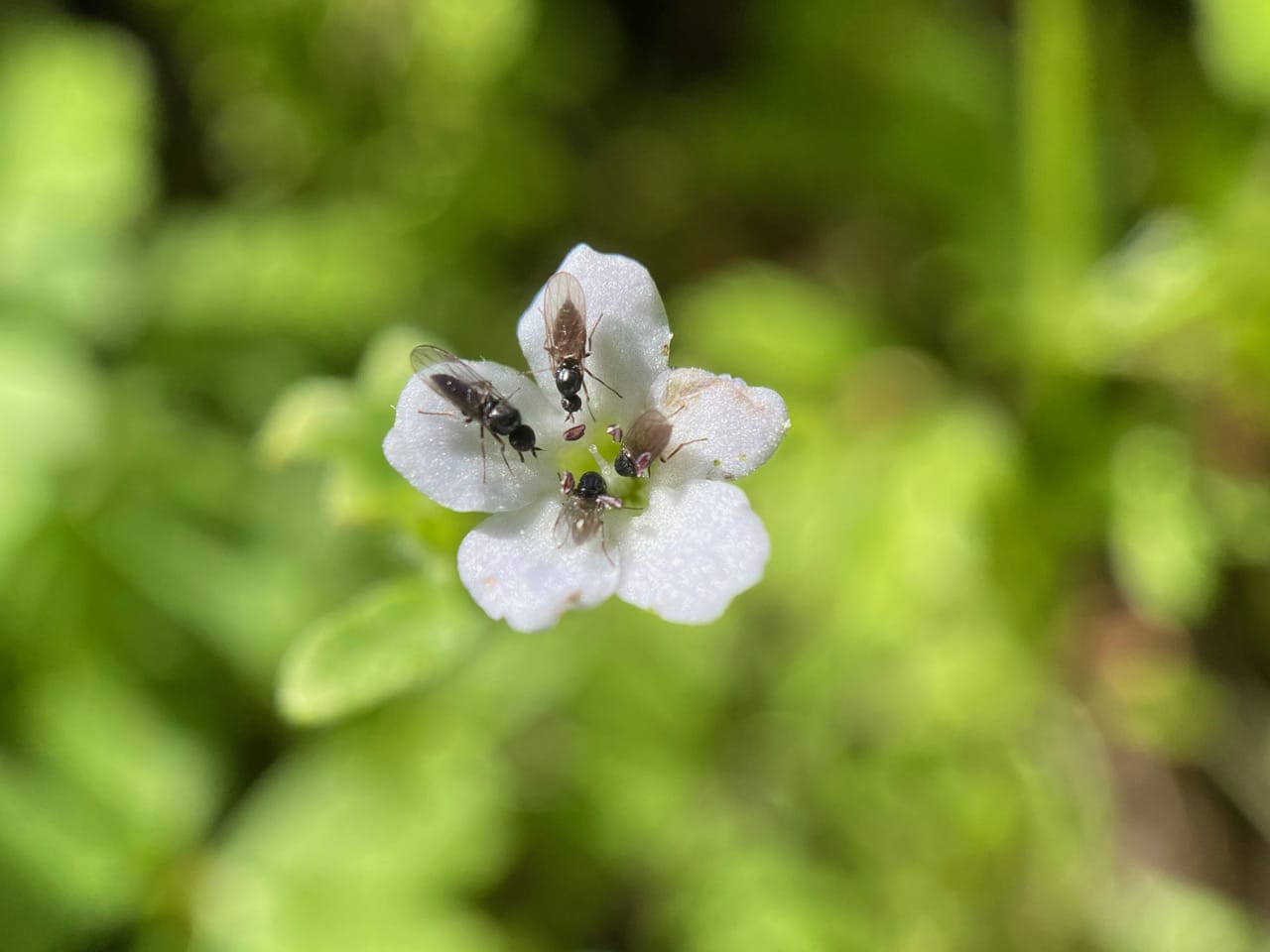
Four Micro Bee Flies (family Mythicomyiidae) have flocked to this Miner’s Lettuce flower, all reaching in for nectar. The flies seem just the right size for making contact with the reproductive parts of the tiny flower. I have no doubt that Mythicomyiids are significant pollinators for the Miner’s Lettuce.
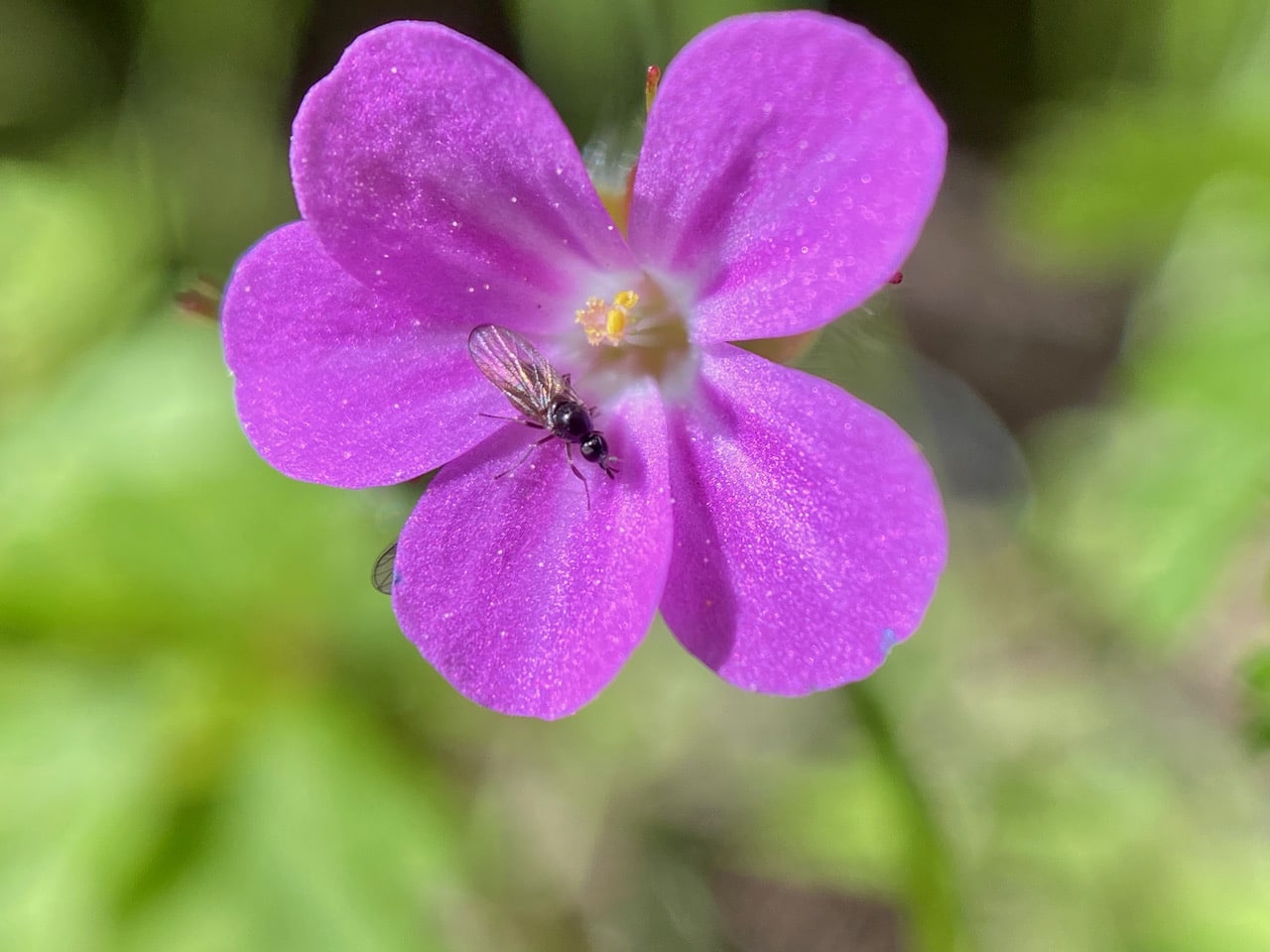
Here’s another Mythicomyiid fly on a larger flower of the weedy Robert’s Geranium, Geranium robertianum. It is probably here to collect pollen or nectar.
It’s most likely a female, as evidenced by the small head and broad abdomen.
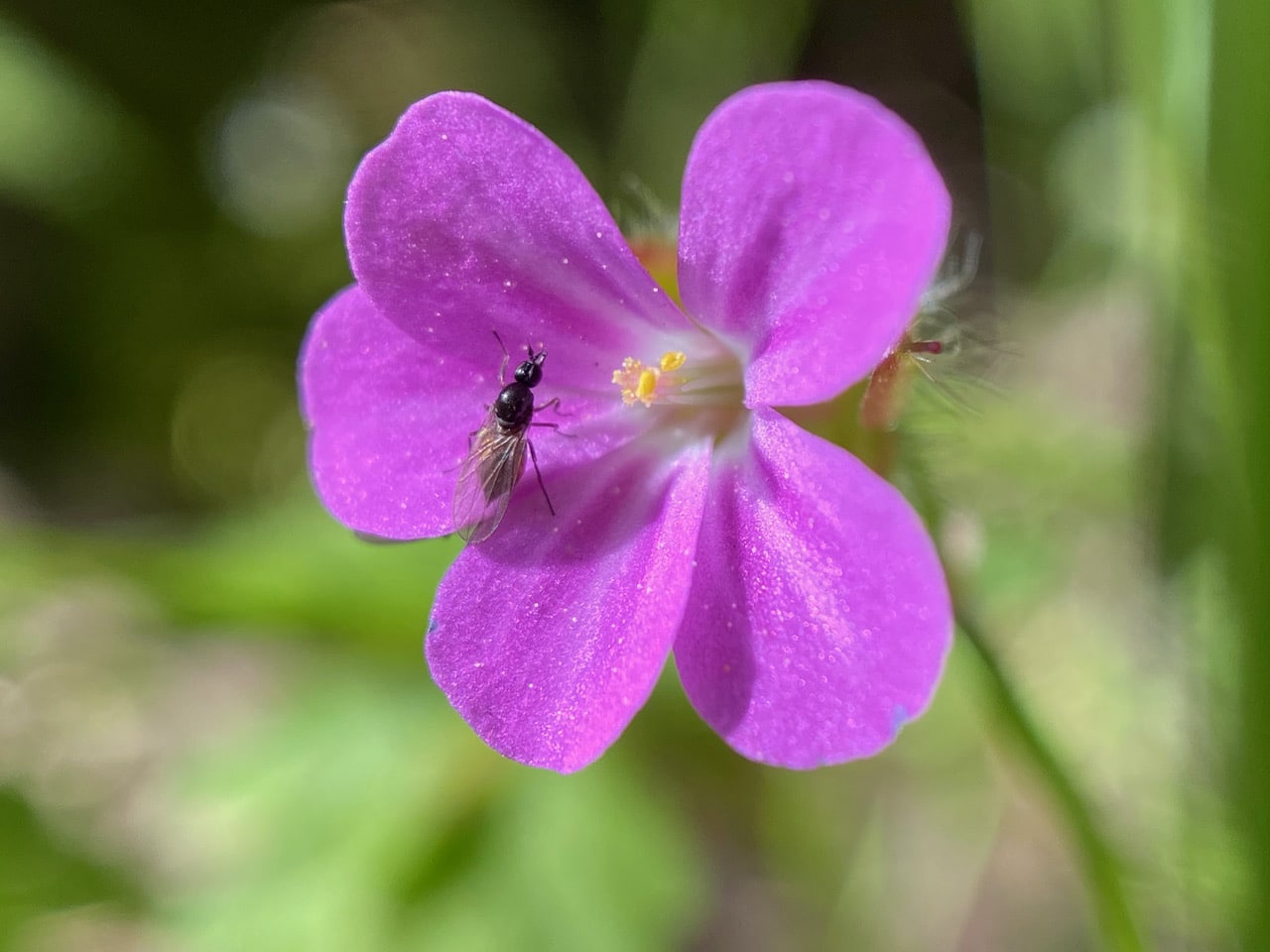
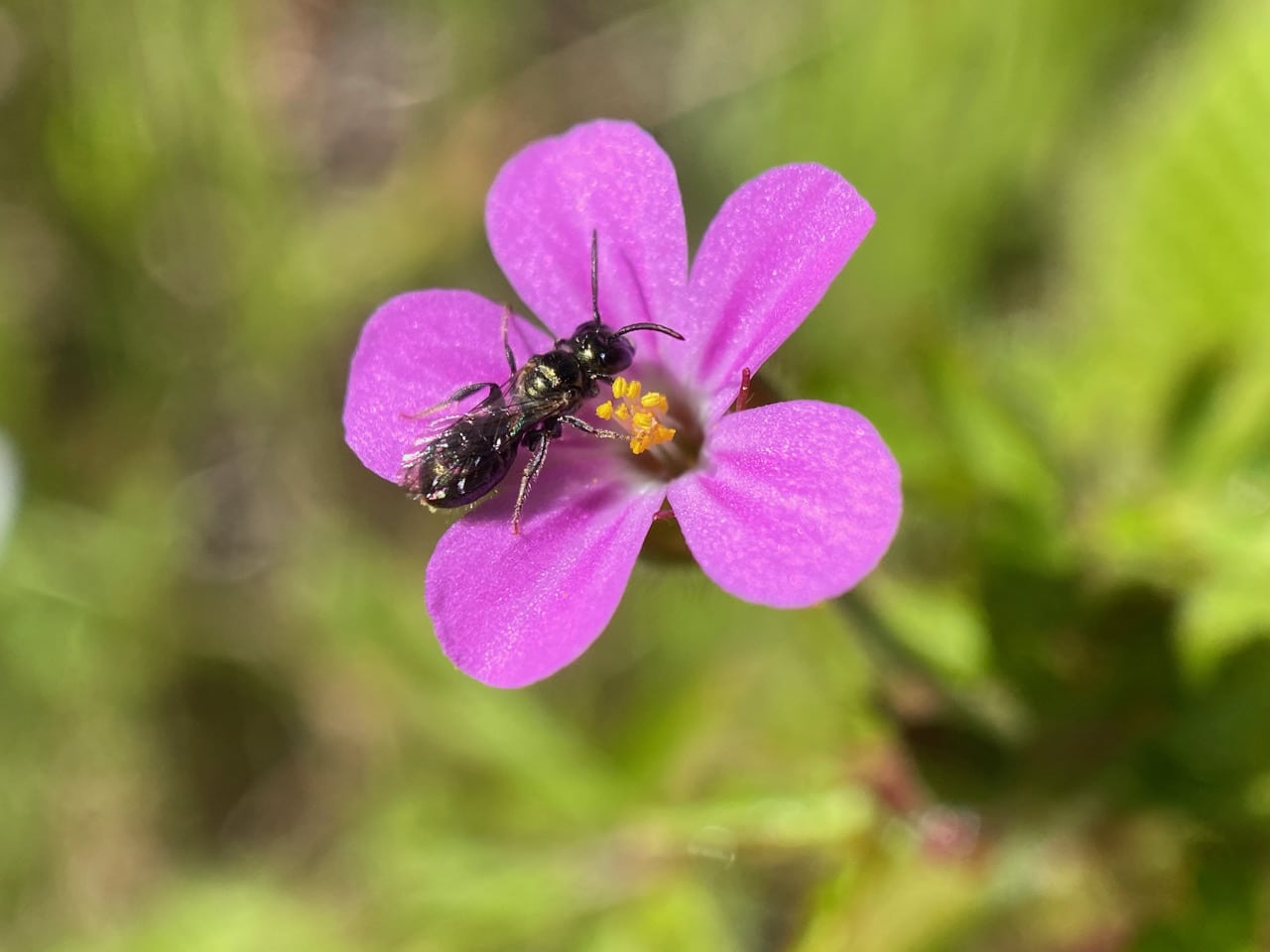
Hey, here’s a bee on a flower of Robert’s Geranium, Geranium robertianum. I’m not sure what bee it is, but iNaturalist has suggested that it might be a member of the subgenus Neochelostoma, genus Chelostoma (family Megachilidae), commonly known as Scissor Bees.
The ID makes good sense. In Megachilidae (commonly known as Leafcutter Bees), the females have scopae (pollen-collecting hairs) on the underside of their abdomen, and not on the hind legs as in most other bees. The bee in the picture (apparently a female because of short antennae) shows no sign of scopae on her hind legs. A native species of Chelostoma is a pollen specialist on Phacelia.
The Fringe Pod, Thysanocarpus curvipesis is doing especially well this year, appearing in abundance among the grasses on the steep hillsides. The small inconspicuous plant is hardly noticed until its whimsical seed pods appear. The tiny, dull-colored flowers are borne singly along spindly stalks.
Fringe Pod, Thysanocarpus curvipes is an annual herb in the mustard family Brassicaceae. It is native to North America from British Columbia to Baja California, where it grows in many types of habitat. The plant produces a slender branching or unbranched stem 10 to 80 cm tall. The inflorescence is a raceme of flowers with 4 white or purple-tinged petals and purple sepals. The fruit is a flattened, rounded or oval dislike capsule with a thin wing around the edge. The fruit is under a centimeter long and the wing is variable in appearance, flat or wavy, sometimes perforated.
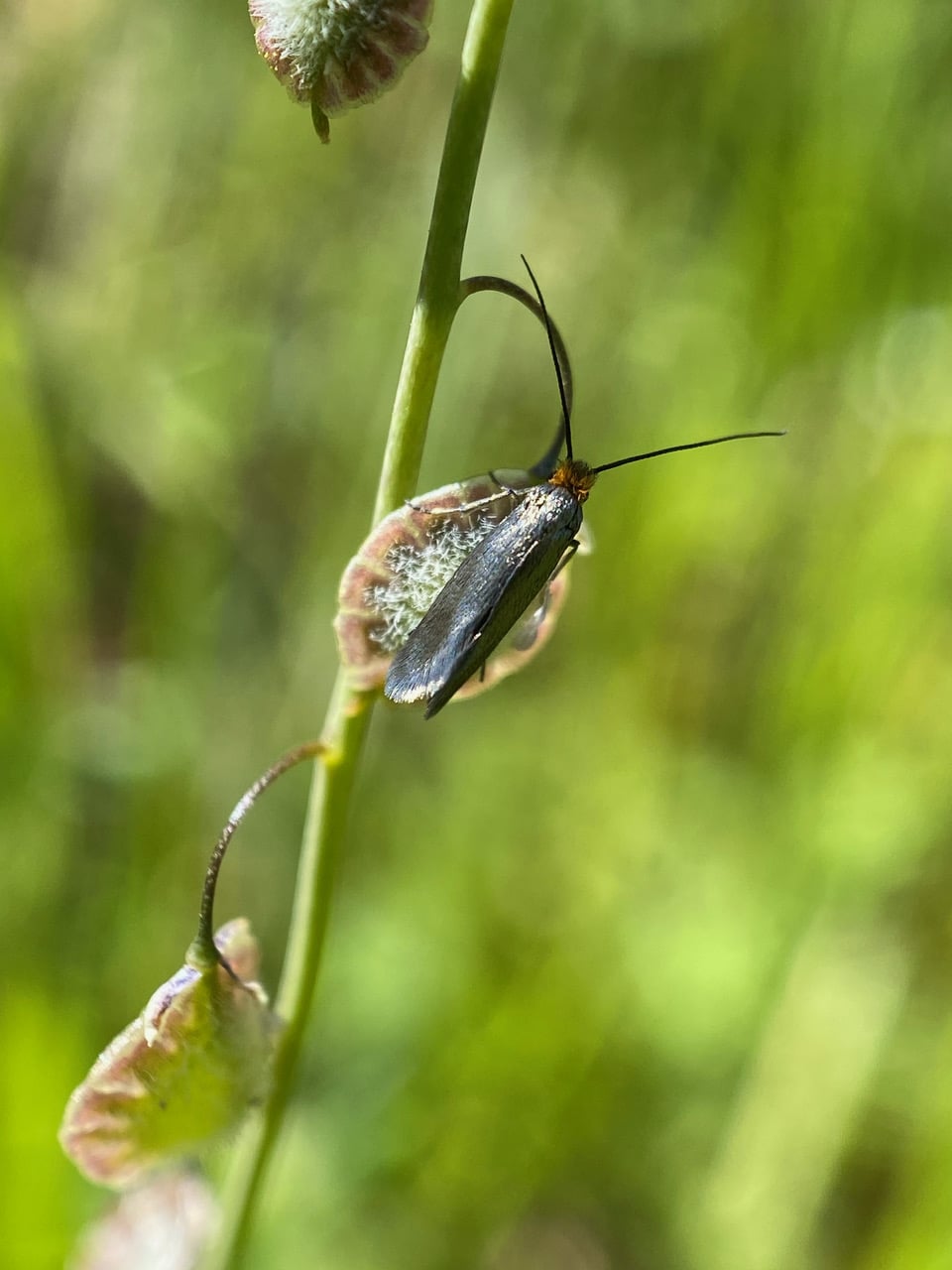
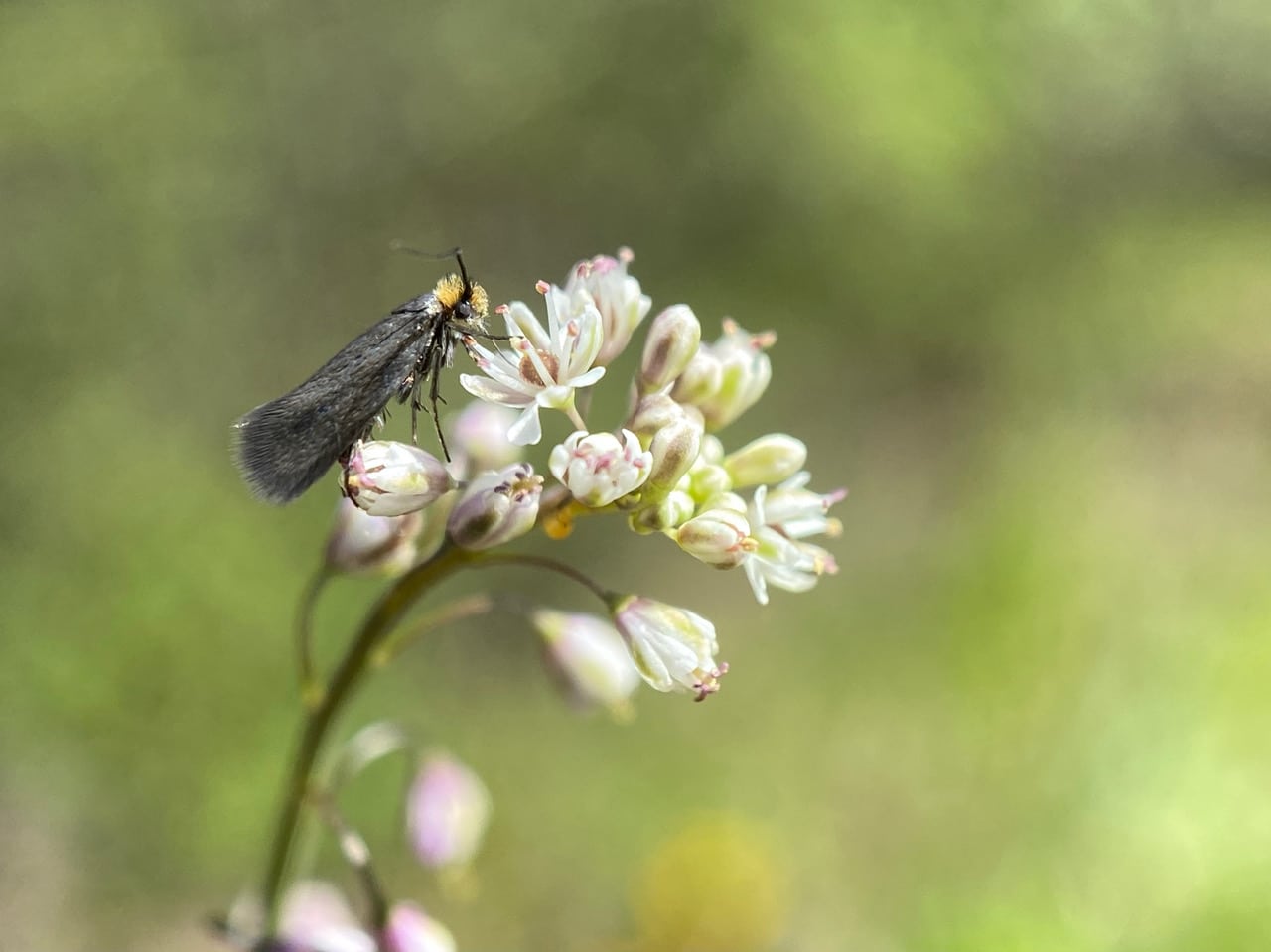
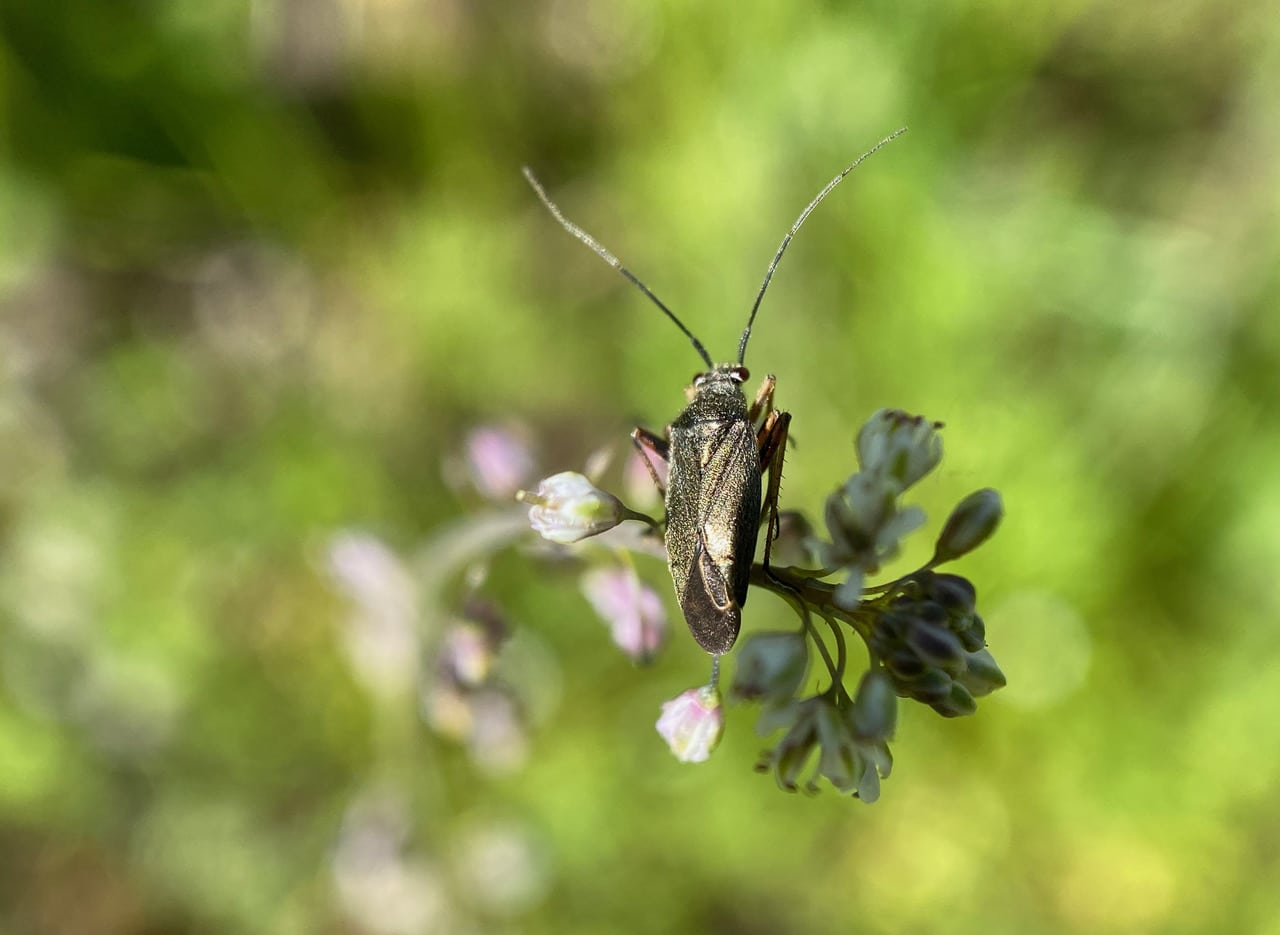
A Fairy Longhorn Moth, Cauchas simpliciella (family Adelidae) is perched on a Fringe Pod capsule.
The Adelidae or Fairy Longhorn Moths are a family of small diurnal moths, with wingspans of 4-28 mm, and males often have especially long antennae, 1-3 times as long as the forewing. Many species are known for their lekking behavior, where males gather to display competitively for the females for the right to mate. During lekking events, males would swam around the tips of branches with an undulating flight, their white antennae conspicuously visible. Adelidae are usually closely restricted to specific host plants. The females insert their eggs in the plant or just oviposit among leaf litter, and the caterpillars make a case, completing their development on the ground. Fairy Longhorn Moths feed in sunshine on nectar from the flowers of herbaceous plants.
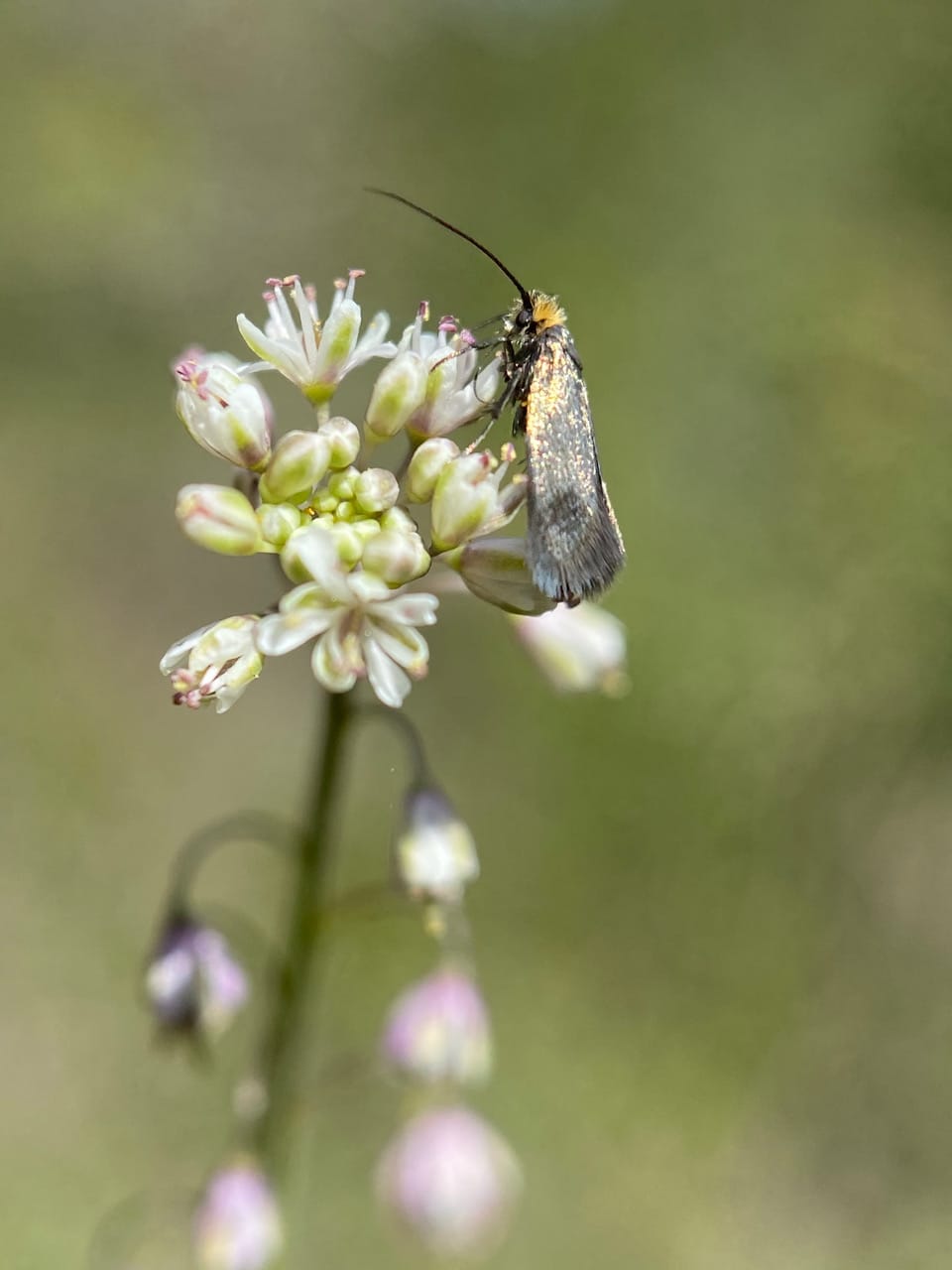
Cauchas is a genus of the Fairy Longhorn Moth family Adelidae, subfamily Adelinae. Adults are small, with relatively short antennae compared with other members of the family. Wingspan about 10 mm. Forewings are rounded at the tips, dark bronze to bright purplish depending on angle of incidence. A mob of orange hairs is conspicuous on the head. The larval host plants for the Cauchas moths are all native mustards in the Brassicaceae family.
The moth’s wings are covered with iridescent scales that reflect different hues of bronze/purple at different angle….
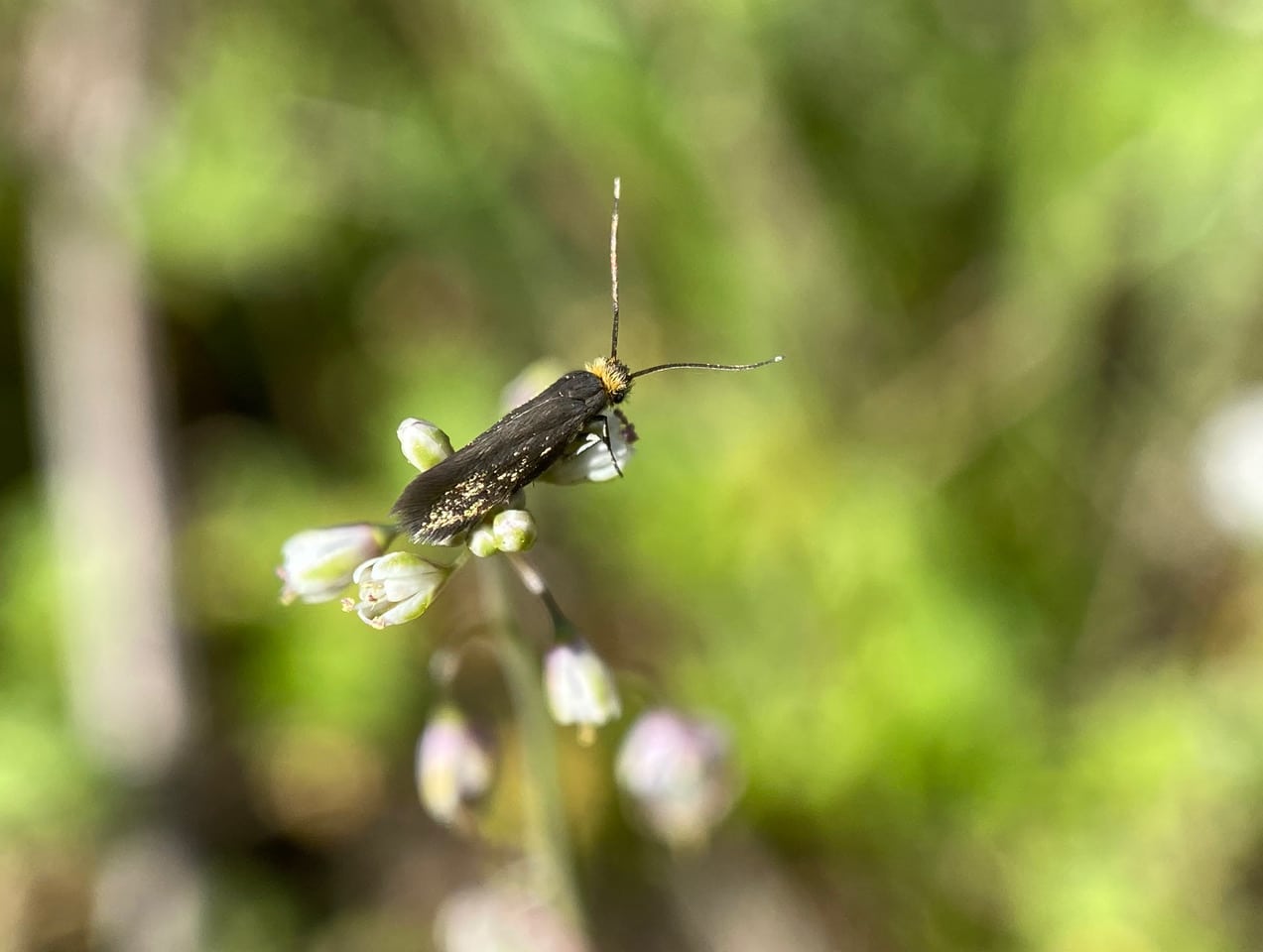
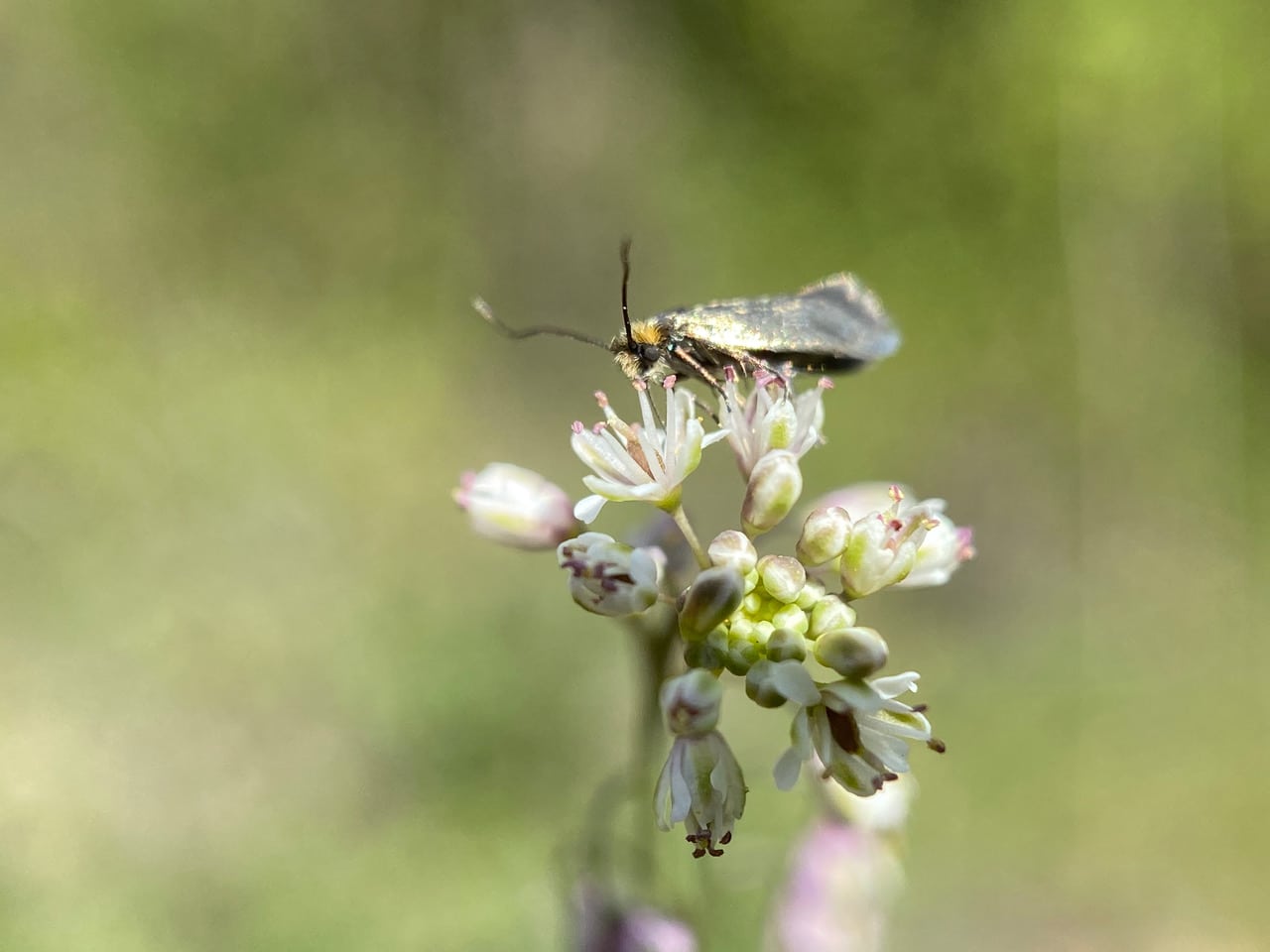
The moth seems to be taking nectar from the Fringe Pod flowers. Are they responsible for the pollination of the plant?
The head of Cauchas simpliciella is covered with a scruffy mop of orange hair.
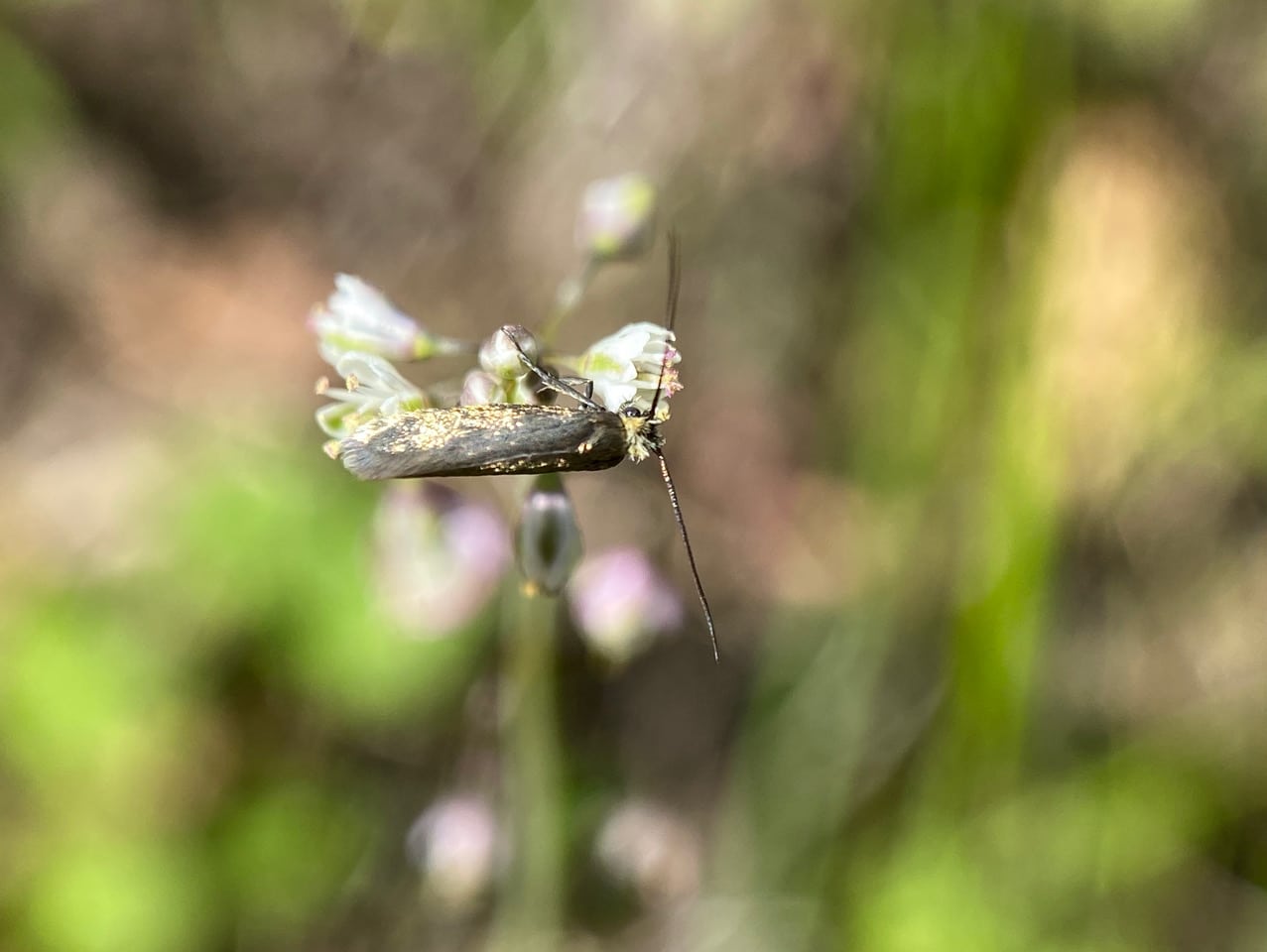
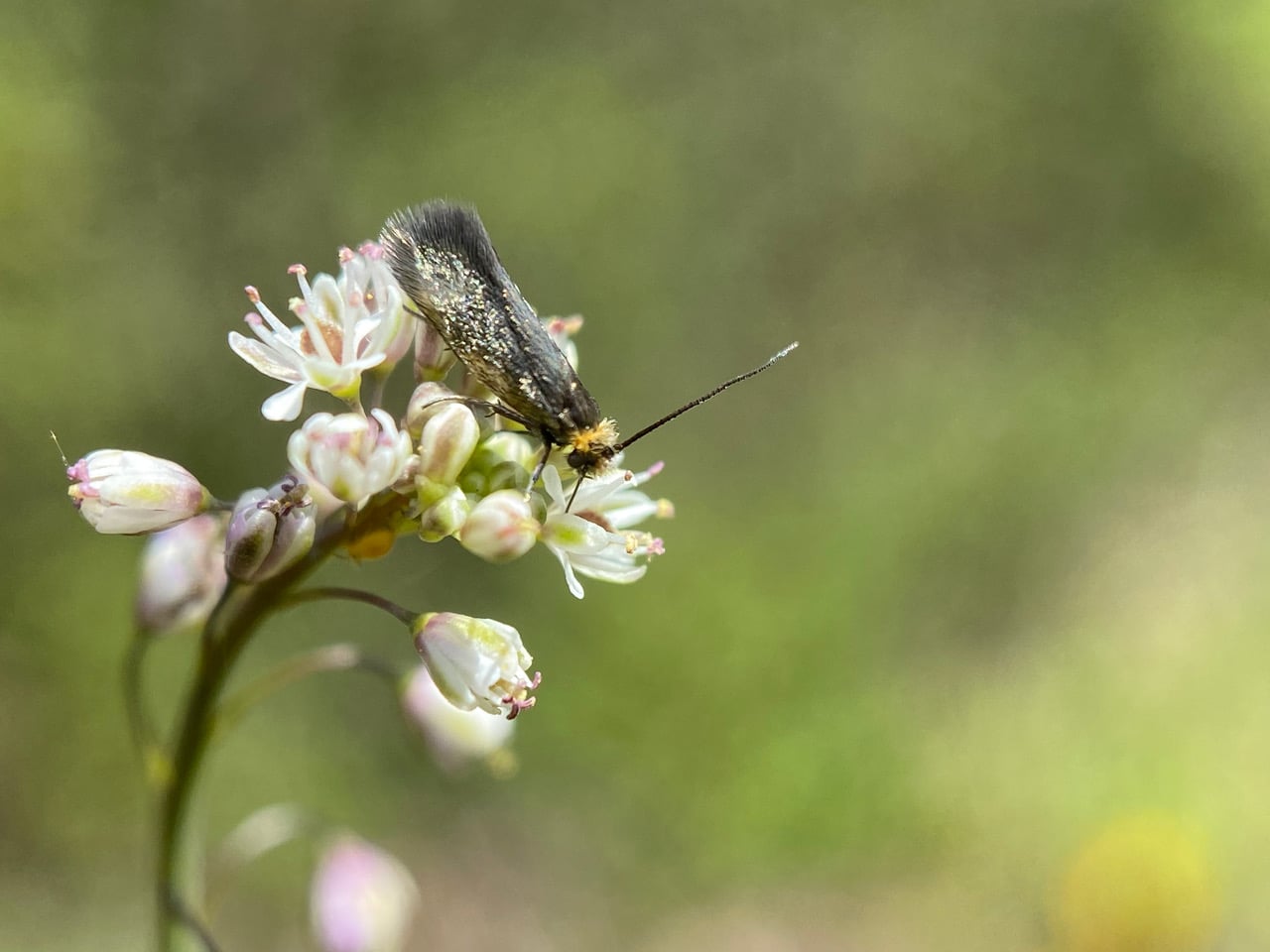
The moth’s wings have not lost scales. The spotty appearance is due to the scales lying at different angles on the wings reflecting sunlight differentially. The flashing of the wings produces quite a mesmerizing show. Is this part of the courtship display of the little moths?
Hey, that’s an imposter! It’s not a moth, but a Plant Bug, Irbisia sp. (family Miridae). It’s interesting that the two unrelated insects would turn up at the same place on the same plant (Fringe Pod), wearing the same shimmering bronze outfit! What is the purpose of the iridescence in the two species?
Mirid bugs are also referred to as plant bugs or leaf bugs. Miridae is one of the largest family of true bugs in the order Hemiptera. Like other Hemipterans, Mirids have piercing, sucking mouthparts to extract plant sap. Some species are predatory. One useful feature in identifying members of the family is the presence of a cuneus; it is the triangular tip of the corium, the firm, horny part of the forewing, the hemielytron. The cuneus is visible in nearly all Miridae.

Mule’s Ears are lighting up the steep grassy hillside along Skyline Trail.
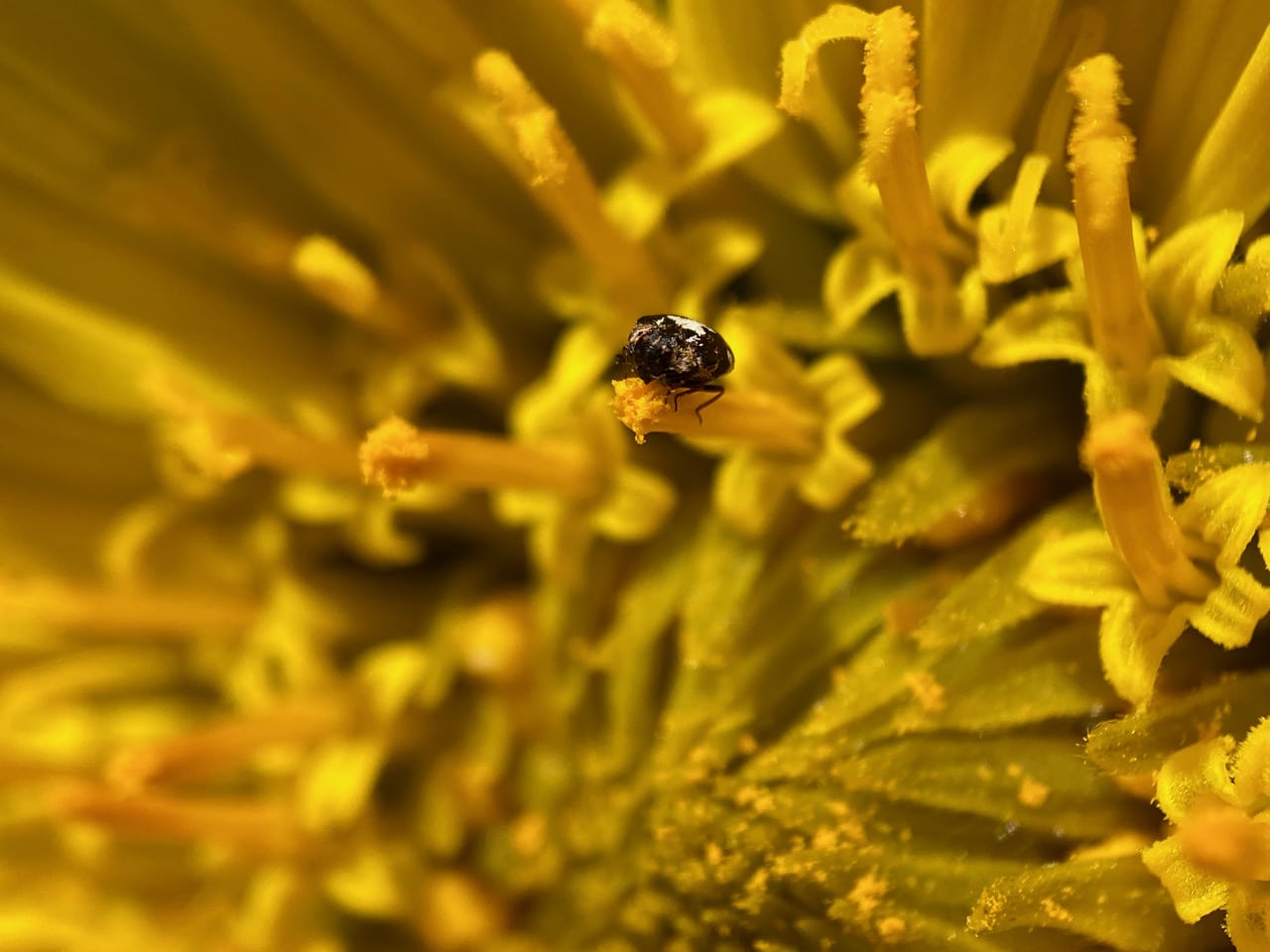
A tiny Skin Beetle, Anthrenus lepidus (family Dermestidae) is perched on an anther cylinder of a Mule’s Ear flower, gorging on pollen released on the tip. Asteraceae
Dermestidae are a family of Coleoptera (beetles) that are commonly referred to as skin of carpet beetles. Ranging in size from 1 to 2 mm, the beetles typically have clubbed antennae that fit into deep grooves. Most Dermestids are scavengers that feed on dry animal or plant materials, such as skin or pollen, animal hair, feathers, dead insects and natural fibers. The larvae are used in taxidermy and by natural history museums to clean animal skeletons.
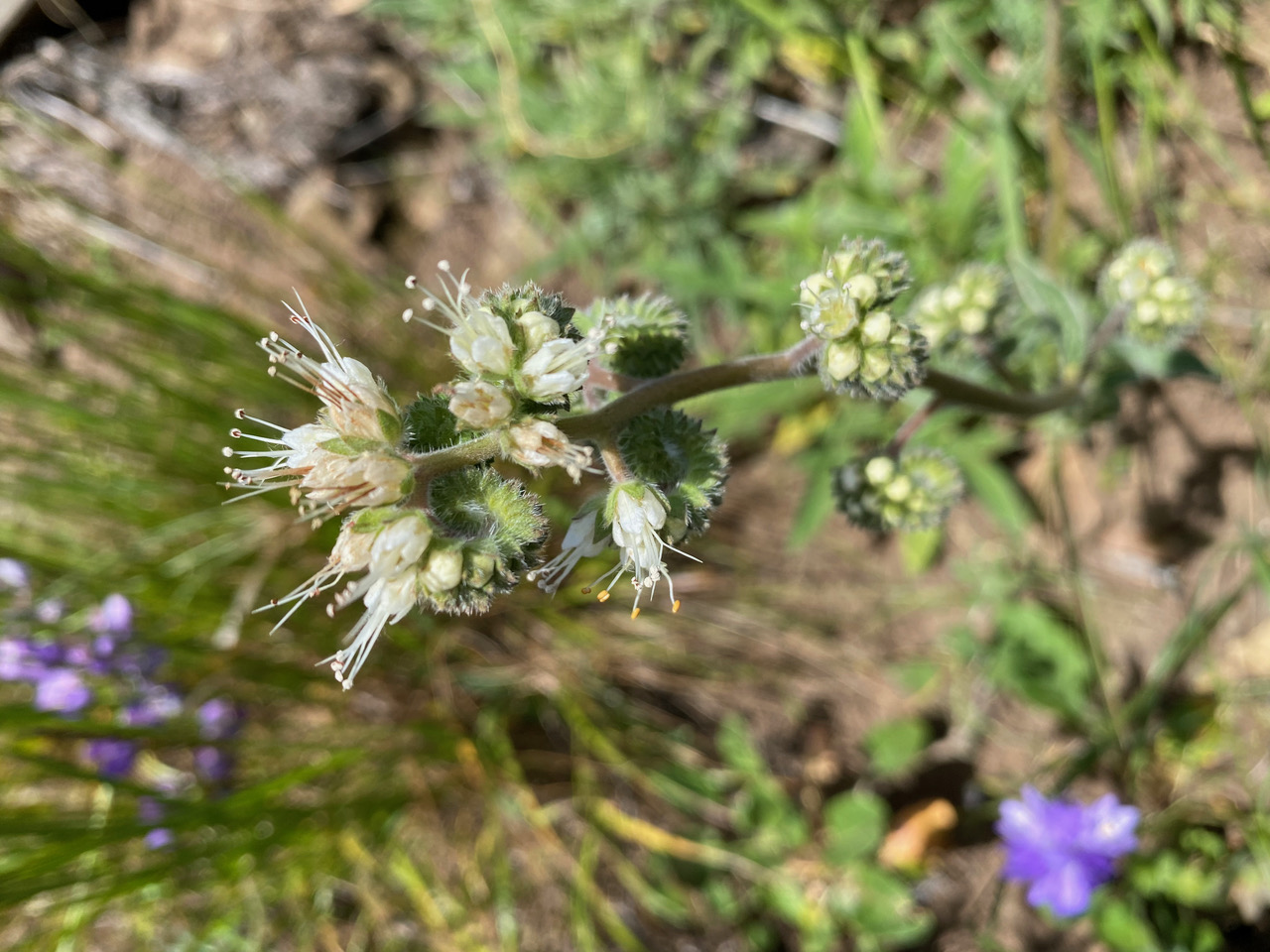
The Imbricate Phacelia, Phacelia imbricata is blooming at Diablo Bend.
Phacelia imbricata is a species in the Boraginaceae family. The perennial herb is native to much of California, where it can be found in varied habitats in mountains, valleys, and coastline. The plant is hairy and bristles with stiff hairs. The flower cluster is a one-sided curving or coiling cyme of many white bell-shaped flowers with long, exserted reproductive parts.
The California Poppies have finally joined the palette at Diablo Bend .