

Pollinator Post 5/10/23 (1)
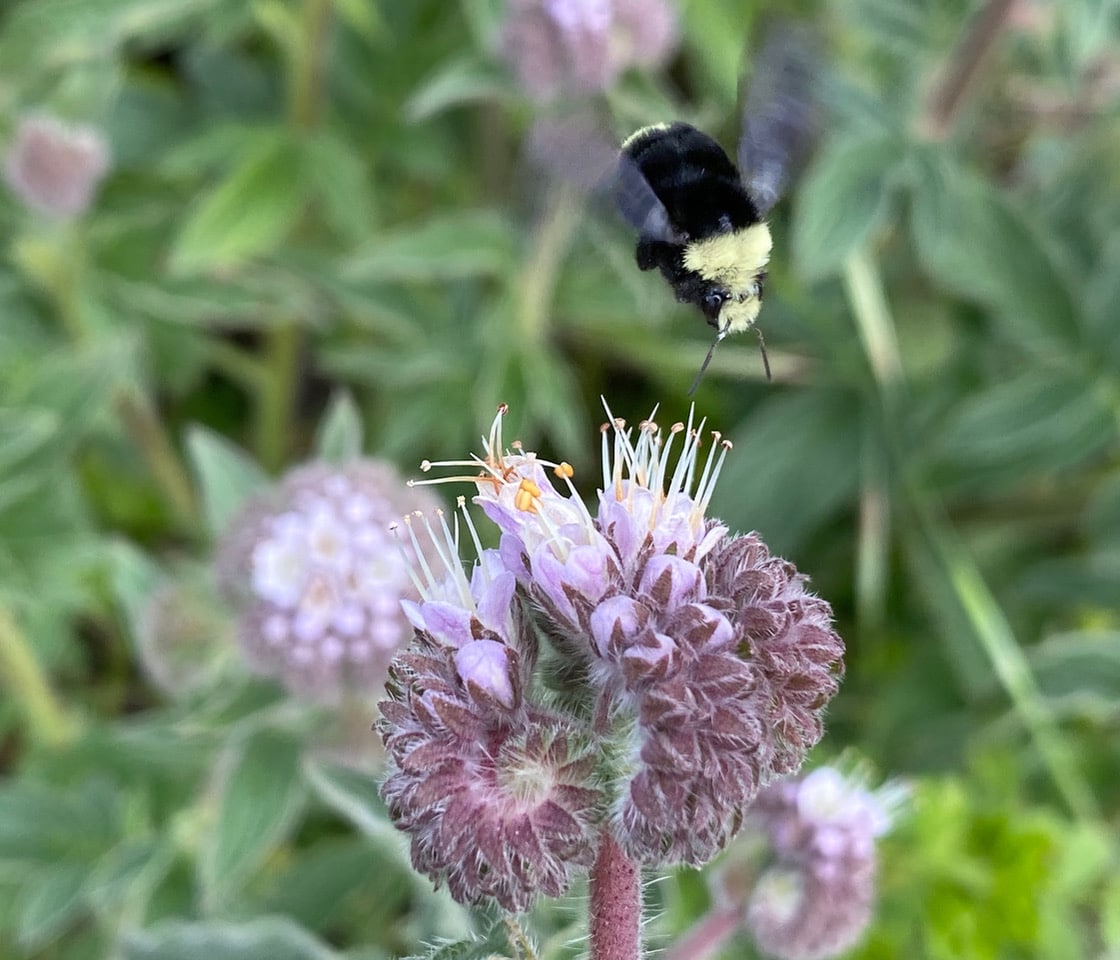
Arriving at Siesta Gate, I am elated to find several Yellow-faced Bumble Bees, Bombus vosnesenskii buzzing around the freshly opened flowers of California Phacelia, Phacelia californica. There have been so few of the bees this year, the sight of one is cause for celebration. I have come in the afternoon as the morning has been cold and cloudy. The current temperatures hover in the mid 50’s F, just warm enough for these bees to take flight.
We have long been taught that most invetebrates are exothermic or “cold-blooded”, their body temperatures rising and falling with ambient temperatures. However, bumble bees are able to thermoregulate to a certain extent. While bumble bees often fly in air temperatures as low as 50 degrees F or lower, they cannot take off unless their flight muscles are above 86 degrees F, and the temperature of the thorax during flight must be maintained between 90 and 100 degrees F regardless of ambient temperature. How is this done? The hairs do provide some insulation, but to raise their temperature for flight they simply uncouple their wing muscles so that the wings themselves do not move, and use the muscles to shiver and raise their thorax temperature. Then when their thorax is warm enough they can fly. This is why we often find grounded bumble bees, often the queens, during cold spells in the spring.
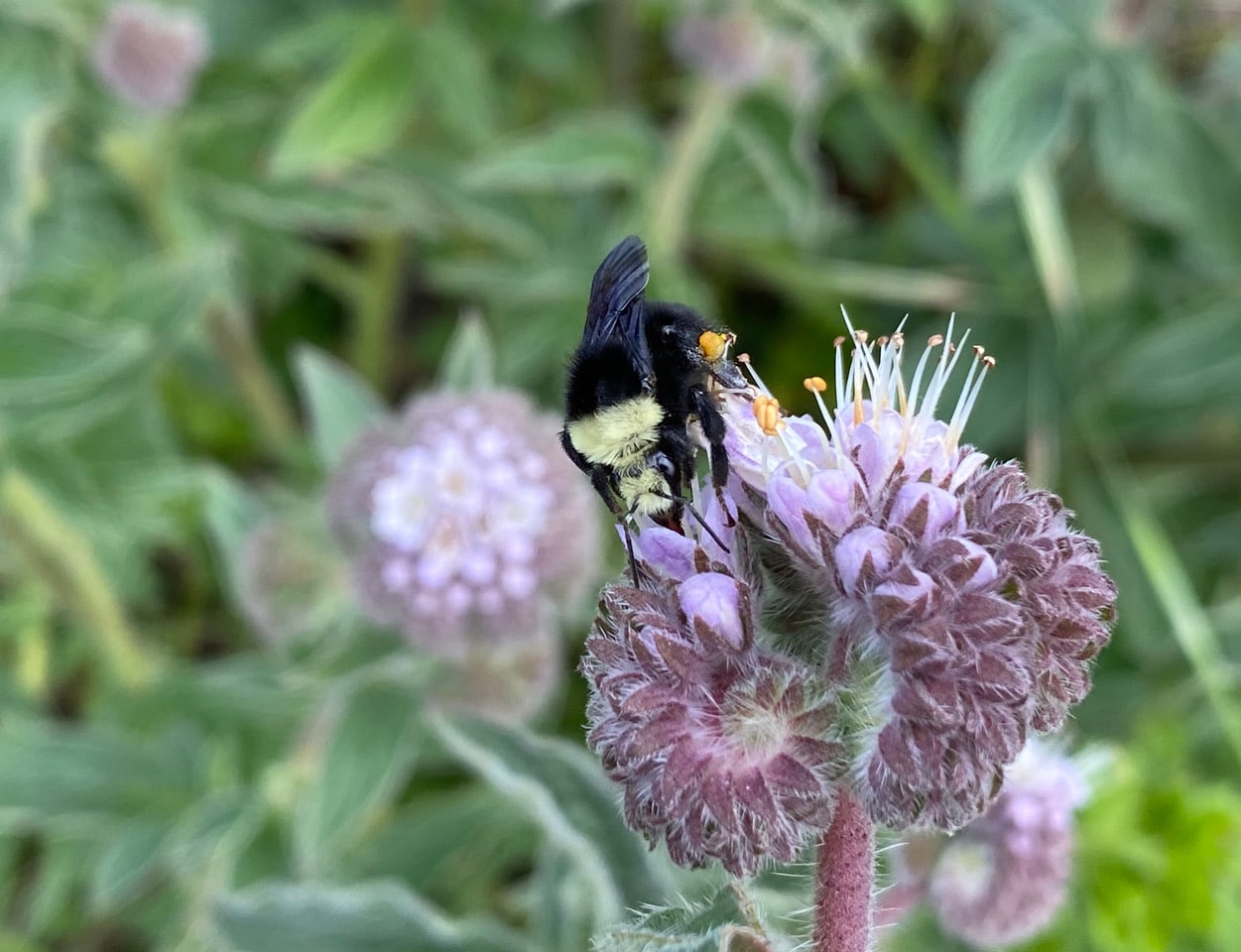
When bumble bee queens are brooding in cold weather, early in colony establishment, she needs to warm up her brood patch (the bald patch on the underside of her abdomen) to keep her eggs warm, so she needs to transfer heat from her thorax to her abdomen. Later the workers will also help to regulate the nest temperature, keeping it at around 90 degrees F. The heat is transferred from the thorax to the abdomen by the heart pumping warm hemolymph (insect blood) from the thorax through the narrow petiole or “waist”. (Yes, like the wasps and other bees, bumble bees do have a waist hidden under their fur.)

Some plants, such as the Nightshades, Shooting Stars and Manzanita need to be pollinated by sonication or buzz pollination. Only certain bees are capable of this, notably the bumble bees. Again the bees use their ability to uncouple their wings from the flight muscles to achieve this feat, vibrating vigorously to shake pollen out of the poricidal anthers of these specialized flowers.
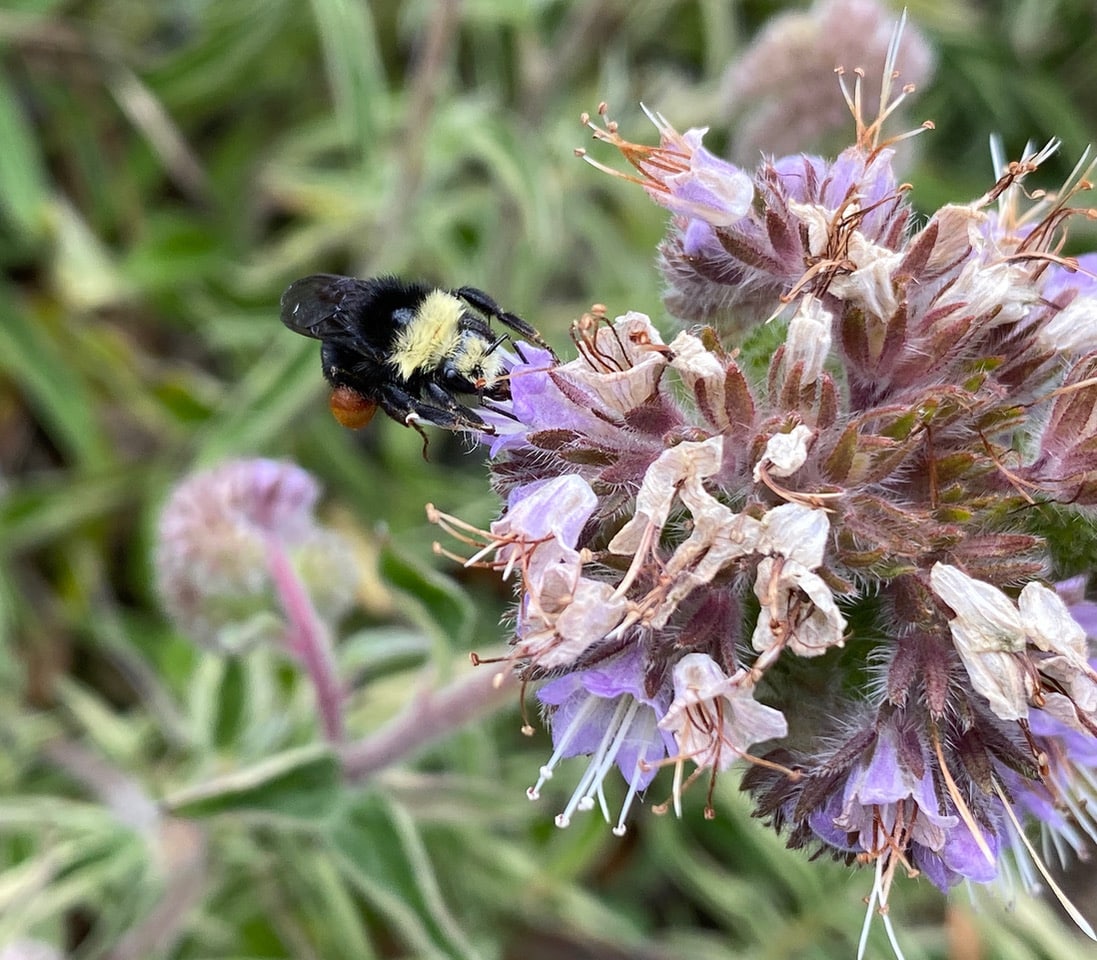
Bumble bees gather nectar into their honeystomachs (located in the abdomen) to transport it back to the nest. When full, the honeystomach can take up as much as 95% of the abdominal space and hold 90% of the body weight. The bee needs energy during foraging, so she will consume some of the contents of the honeystomach. To do this, there is a small valve which allows some of the nectar to pass into the bee’s own digestive system. It has been estimated that a full honeystomach will give a bumble bee about 40 minutes of flying time.
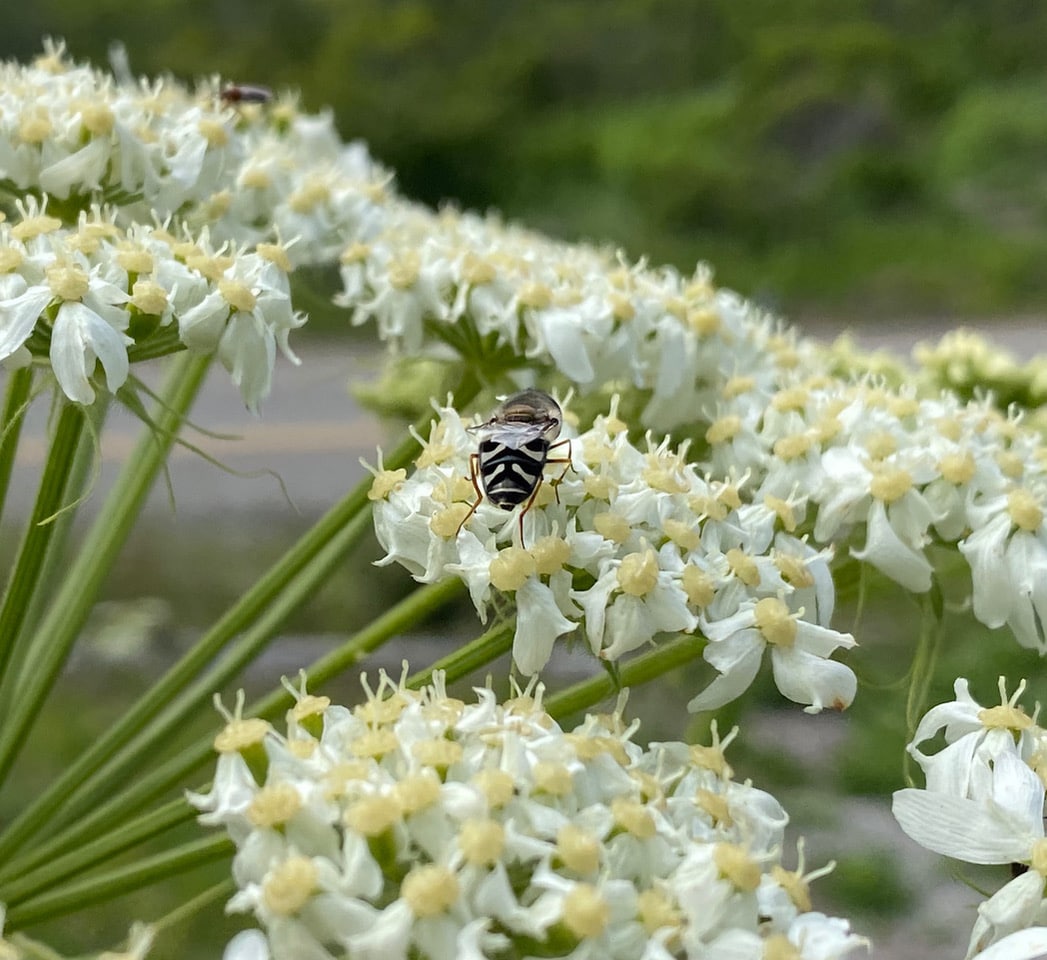
In a departure from the usual black-and-yellow color scheme of most Hover Flies (family Syrphidae), the White-bowed Smoothwing, Scaeva affinis wears a black/white outfit. This large distinctive fly has three pairs of white comma markings on the abdomen.
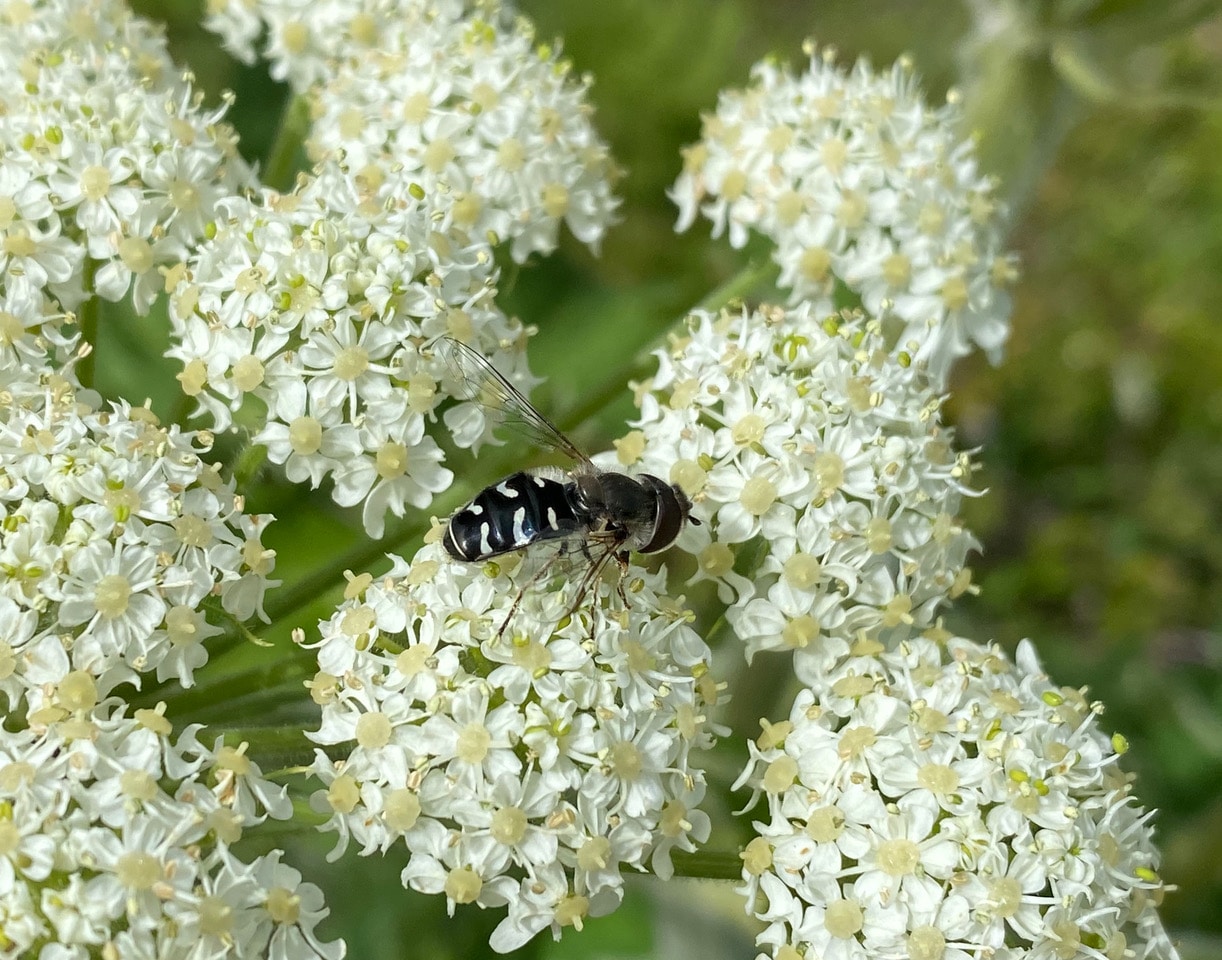
Like most Syrphid Flies, Scaeva affinis adults visit flowers for nectar and pollen. Their larvae, green with a white longitudinal stripe down the middle are aphidophagous, consuming over 500 aphids during their larval stages.
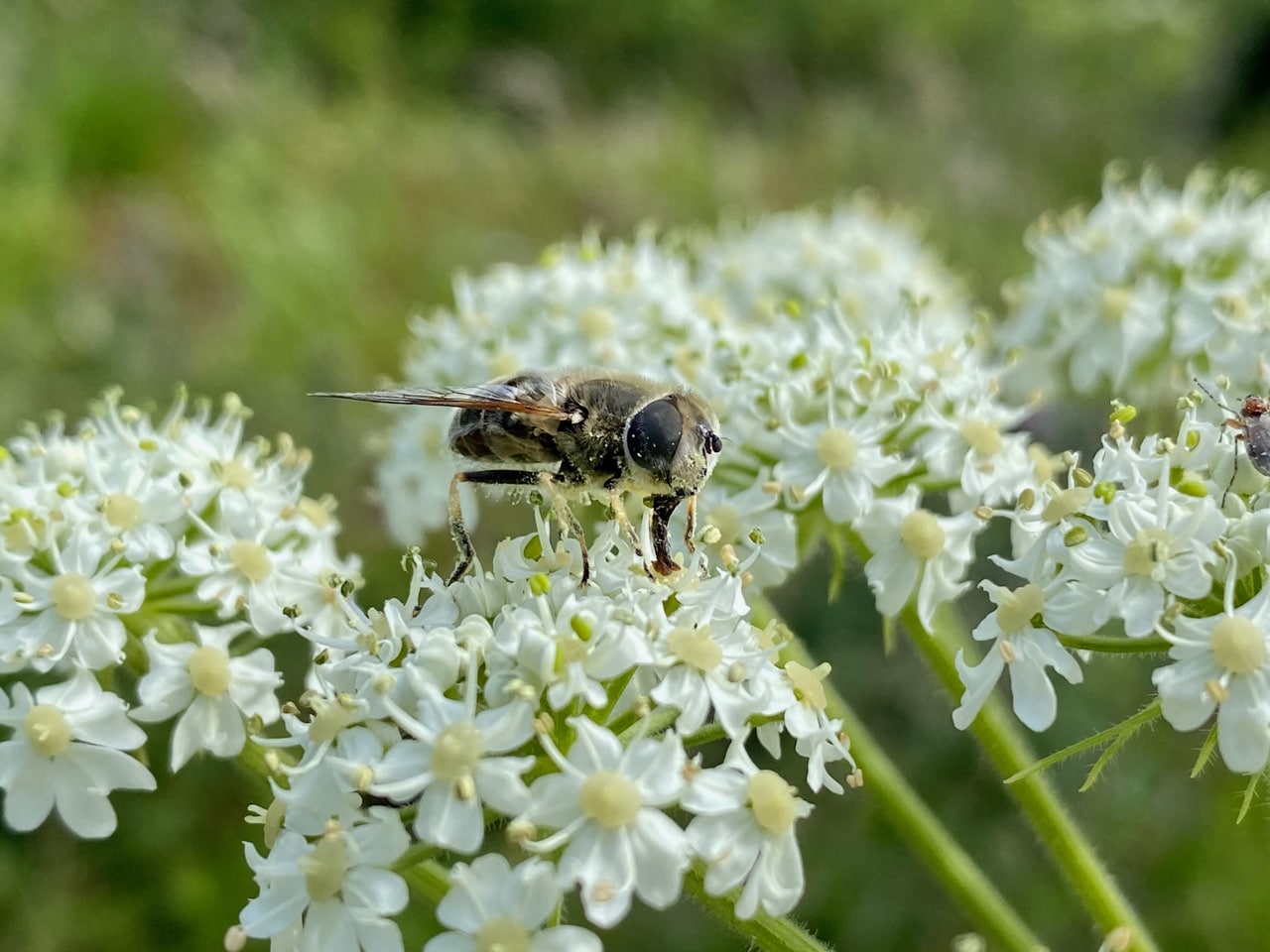
Here’s another Hover Fly, the Black-footed Drone Fly, Eristalis hirta (family Syrphidae) on the Cow Parsnip flowers. With its proboscis extended, the fly is taking nectar from the style base of the flowers. The tip of the fly’s extended mouthparts is a sponging structure that is used to sop up liquid food.
The flowers of Cow Parsnip, Heracleum maximum are “inferior”, with ovaries below the corolla. The cream-colored swollen style bases are located above the petals but are often mistaken for ovaries. Moist and succulent, the style bases are probably the site where nectar is produced.
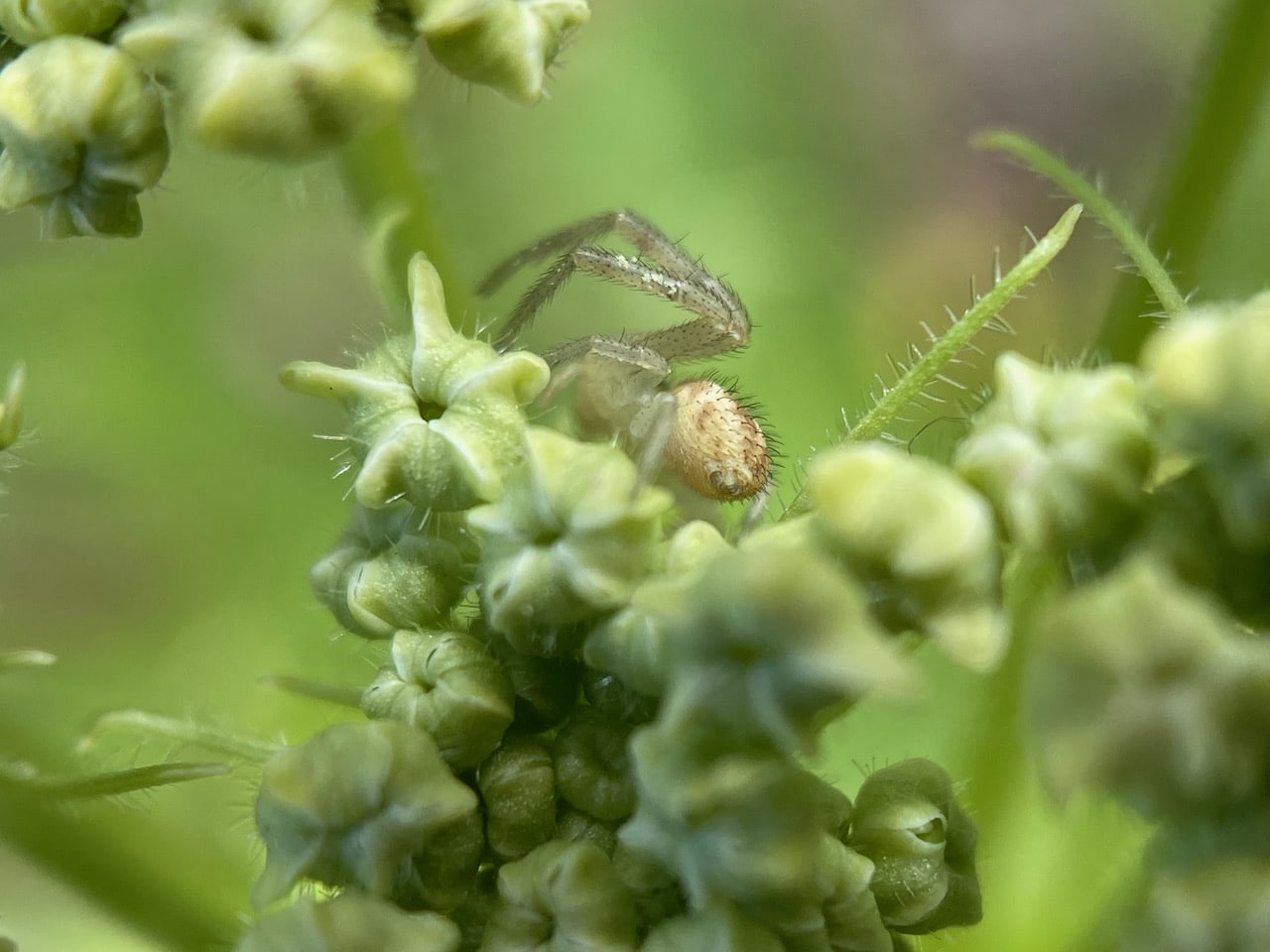
A very young Crab Spider, Mecaphesa sp. (family Thomisidae) is lurking among the flower buds of Cow Parsnip.
Members of the family Thomisidae do not spin webs, and are ambush predators. The two front legs are usually long and more robust than the rest of the legs. Their common name derives from their ability to move sideways or backwards like crabs. Most Crab Spiders sit on or beside flowers, where they grab visiting insects. Some species are able to change color over a period of some days, to match the flower on which they are sitting.
Mecaphesa is distinguished from the other genera of Crab Spider by the size and arrangement of the eight eyes (in two curved rows of four). Mecaphesa is also often hairy, with tiny hairs protruding from the head, legs, and body.

White foamy masses have appeared on the foliage of the California Sagebrush, Artemisia californica. Aah, it’s Spittle Bug season again!
The foam mass is made by a nymph of a bug called the Froghopper (family Cercopidae). Like the adults, the nymphs use their piercing, sucking mouthparts to feed on plant juices. The nymph produces a cover of foamed-up plant sap reminiscent of saliva, hence the common name of spittlebug. Whereas most insects that feed on sap feed on the nutrient-rich fluid from the phloem, Cercopidae tap into the much more dilute sap flowing upward via the xylem. The large amount of excess water that must be excreted and the evolution of special breathing tubes allow the young spittlebug nymphs to grow in the relatively protective environment of the spittle. Symbiotic bacteria in the insects’ digestive system provides them with the essential amino acids that their diet lacks. The foam serves a number of purposes. It hides the nymph from the view of predators and parasites, and it insulates against heat and cold, and protects the delicate nymphs from desiccation. Moreover, the foam has an acrid taste that deters predators.

I pick up a foam mass with my finger and gently part the foam to reveal the occupant inside. It is a rather mature nymph of a Froghopper. I quickly place it back where it came from. No harm has been done. The nymph will just reattach itself to the plant and start sucking again, and in no time another foam mass will be produce to envelop the young bug.

A large insect flies past me and lands on a stalk of grass. With fuzzy black-and-yellow bands, it superficially looks like a bumble bee, but everything else identifies it as a fly – the tiny antennae, the large eyes, and the two wings that are held at an angle from the body like a fighter jet. It is a Hover Fly (family Syrphidae)!
The Volucella bombylans complex comprises numerous hover flies that are bumble bee mimics, also known as Bumble Bee Hoverflies. These flies look like a bumble bee with a furry black and yellow body, but they are given away by their heads, plumed antennae, large eyes and a single pair of wings. Fast fliers, the adults feed on nectar and pollen, with a preference for blue and yellow flowers. The females lay eggs in the nests of bumble bees and social wasps. The larvae live as scavengers on the bottom of the host’s nest, feeding on waste and dead host larvae.
This provides a glimpse into a different larval niche from what most folks know about Syrphid Flies. We are familiar with the many Syrphid species that have larvae that feed on soft-bodied insects such as aphids. Quite a few other species have larvae that are aquatic filter-feeders that live in decomposing organic matter. Overall, the Syrphid larvae display a degree of habitat diversity that is unusually broad for a single family of Diptera.
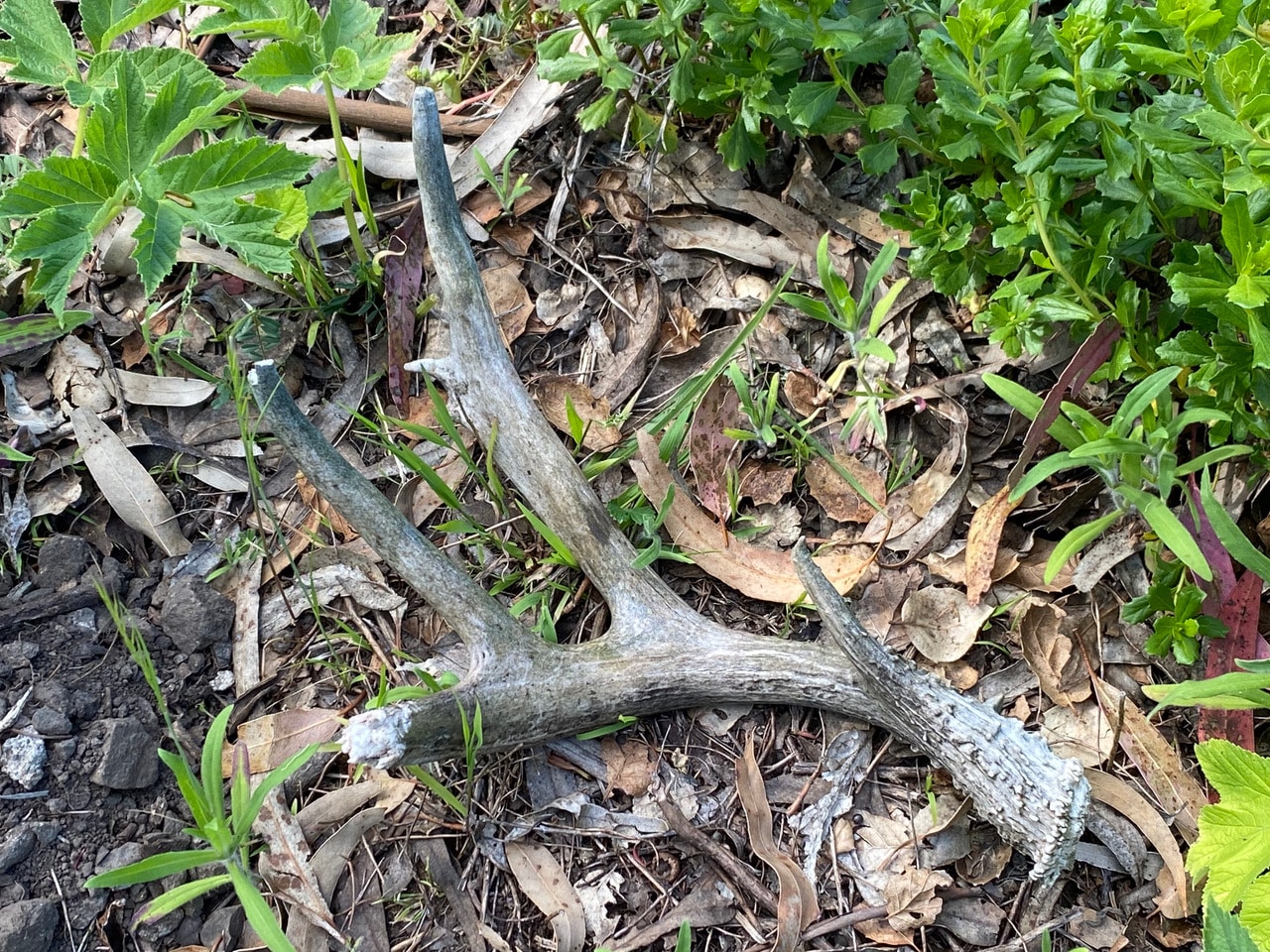
Stepping off the paved road, I came face to face with a shed deer antler on the ground. It is well worn and has two broken tines. It must have been shed last fall (or an earlier year) after the deer rut season when the males fight for the right to mate with the females. The young bucks living in the garden are barely putting on their new antlers this year. Antlers are one of the fastest growing tissues in the animal kingdom. New antlers are grown every year and are usually shed after the rutting season. I look for gnaw marks on the antler, but find none. Shed antlers are often gnawed by rodents for their calcium content. That’s why it’s best to leave an antler when found – it has survival/nutritional value for other wildlife.

A Soldier Beetle, Podabrus cavicollis (family Cantharidae) is munching on an insect it has captured on an Italian Thistle.
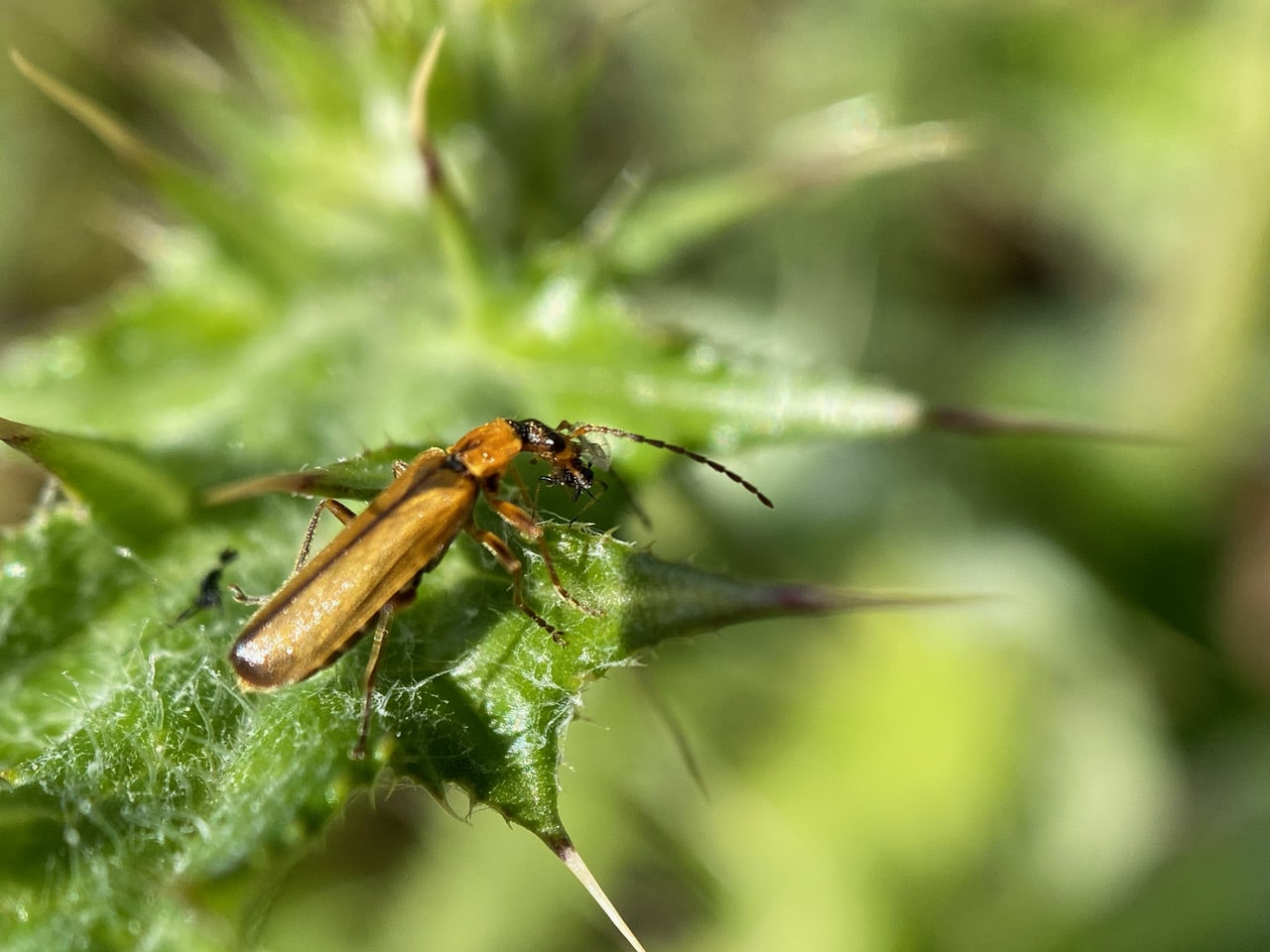
The Soldier Beetles (family Cantharidae) are relatively soft-bodied, straight-sided beetles. One of the first described species has a color pattern reminiscent of the red coats of early British soldiers, hence the common name. They are also known commonly as Leatherwings because of their soft elytra.
Soldier beetles often feed on both nectar and pollen as well as predating on other small insects. The larvae are often active, and feed on the ground, hunting snails and other small creatures. Soldier beetles are generally considered beneficial insects by gardeners.