

Pollinator Post 5/15/23 (1)
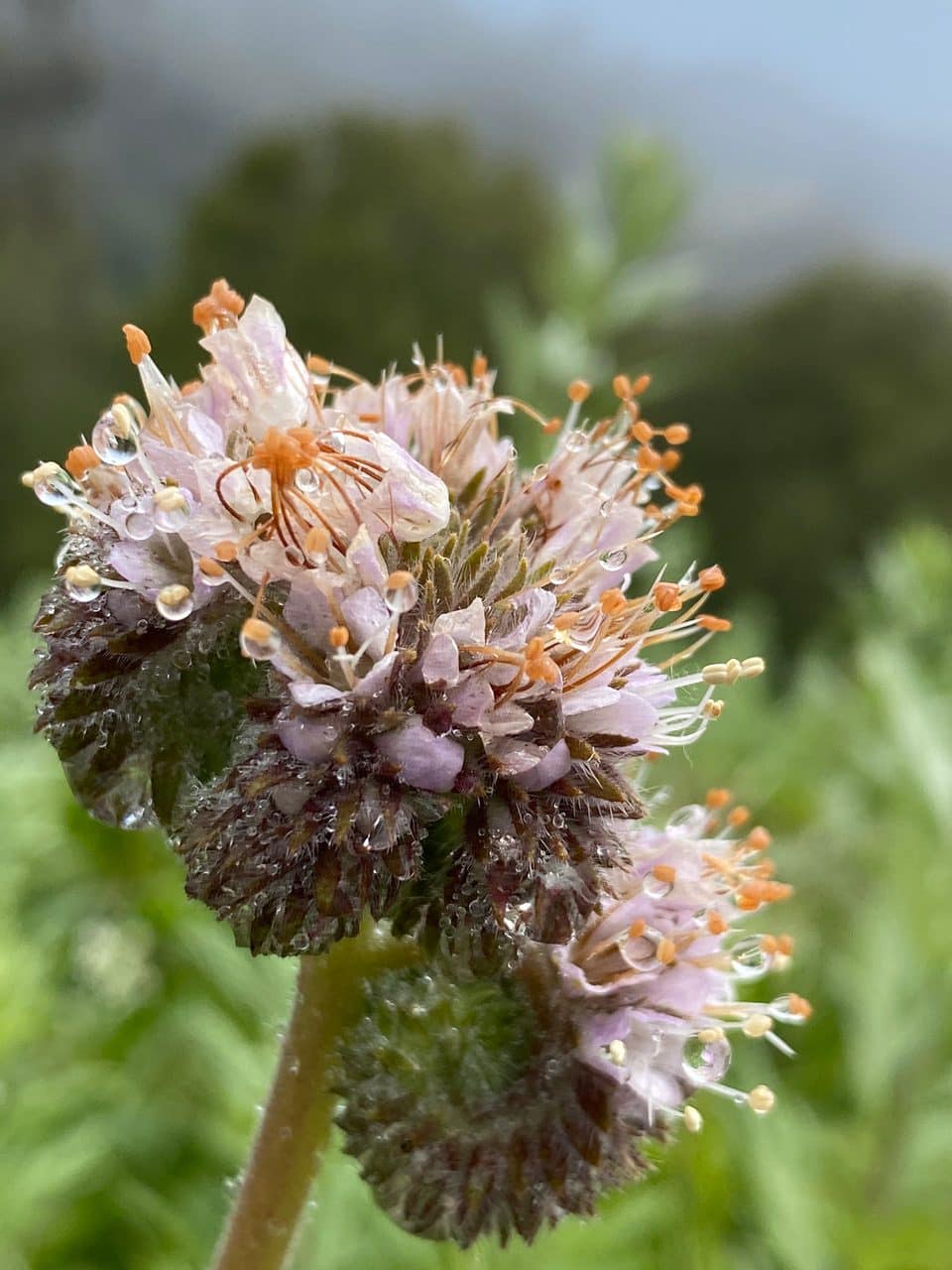

Fog is billowing through the hills as I arrive at Siesta Gate this morning. The California Phacelia, Phacelia californica at Siesta Gate is covered with dew drops. These plants get a lot of their moisture from fog.
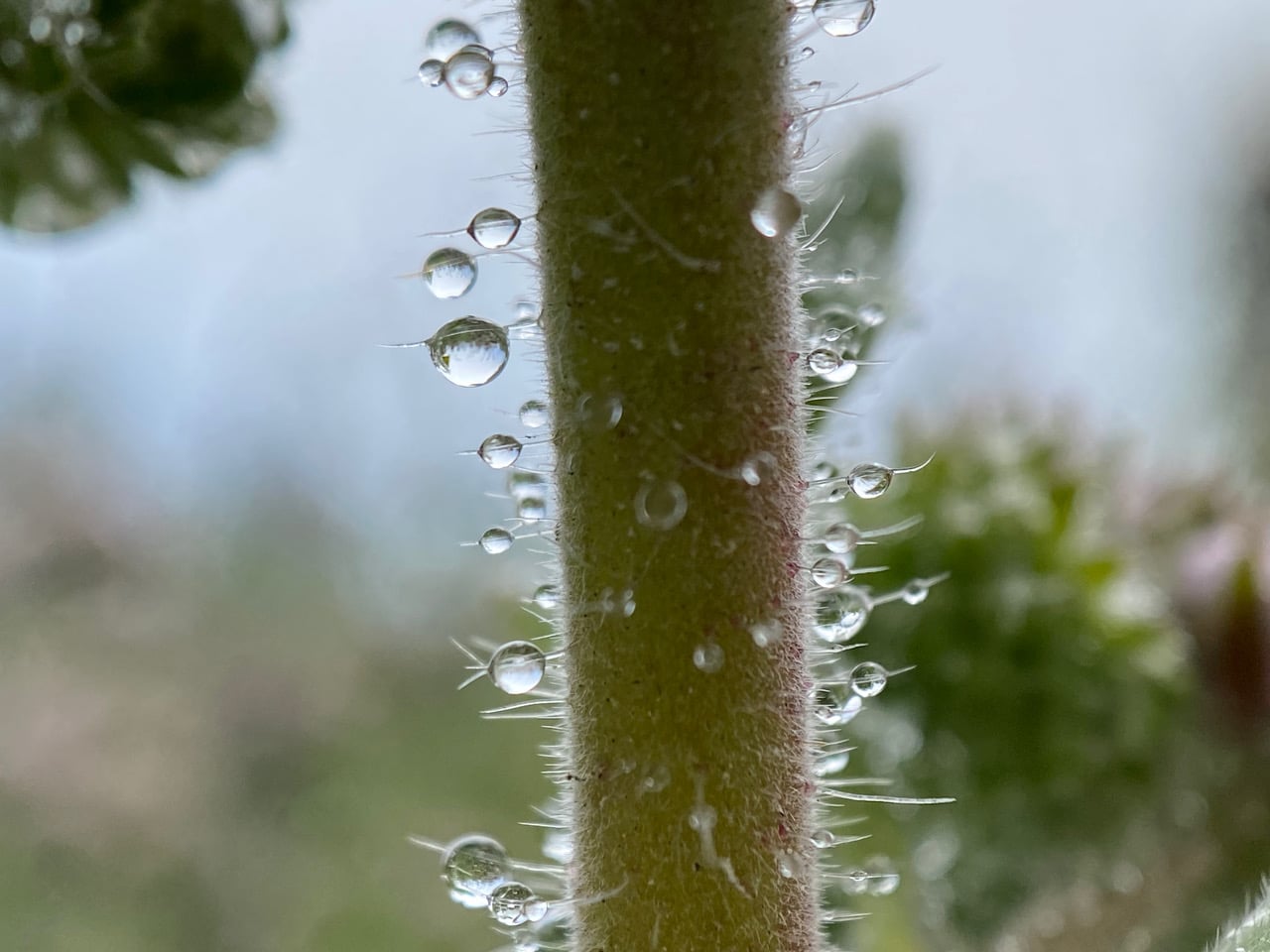
Condensed fog on the hairy stem of California Phacelia.
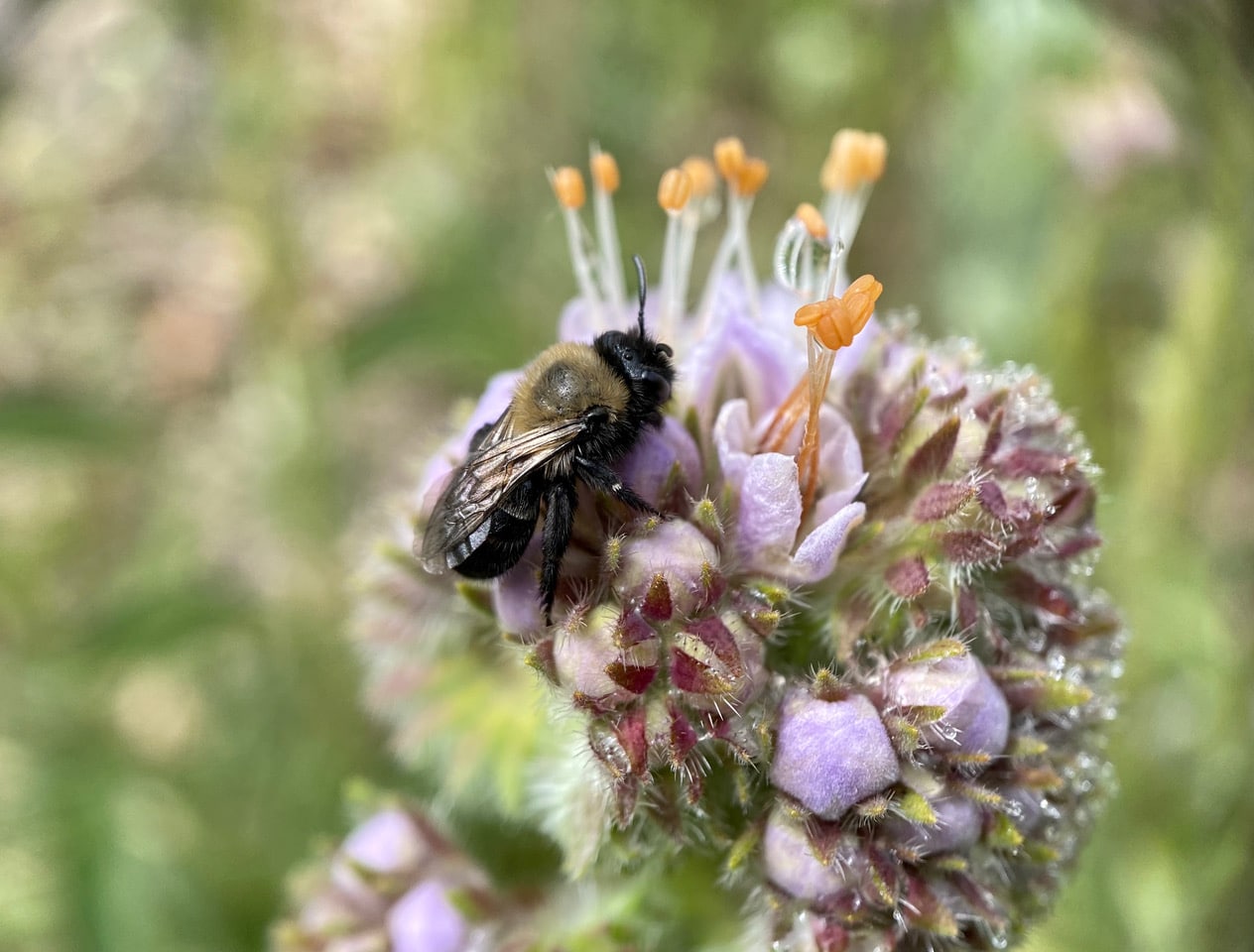
Light level is so low I wonder if it is possible to use the camera. A little bee is barely awake on this fresh inflorescence of California Phacelia.
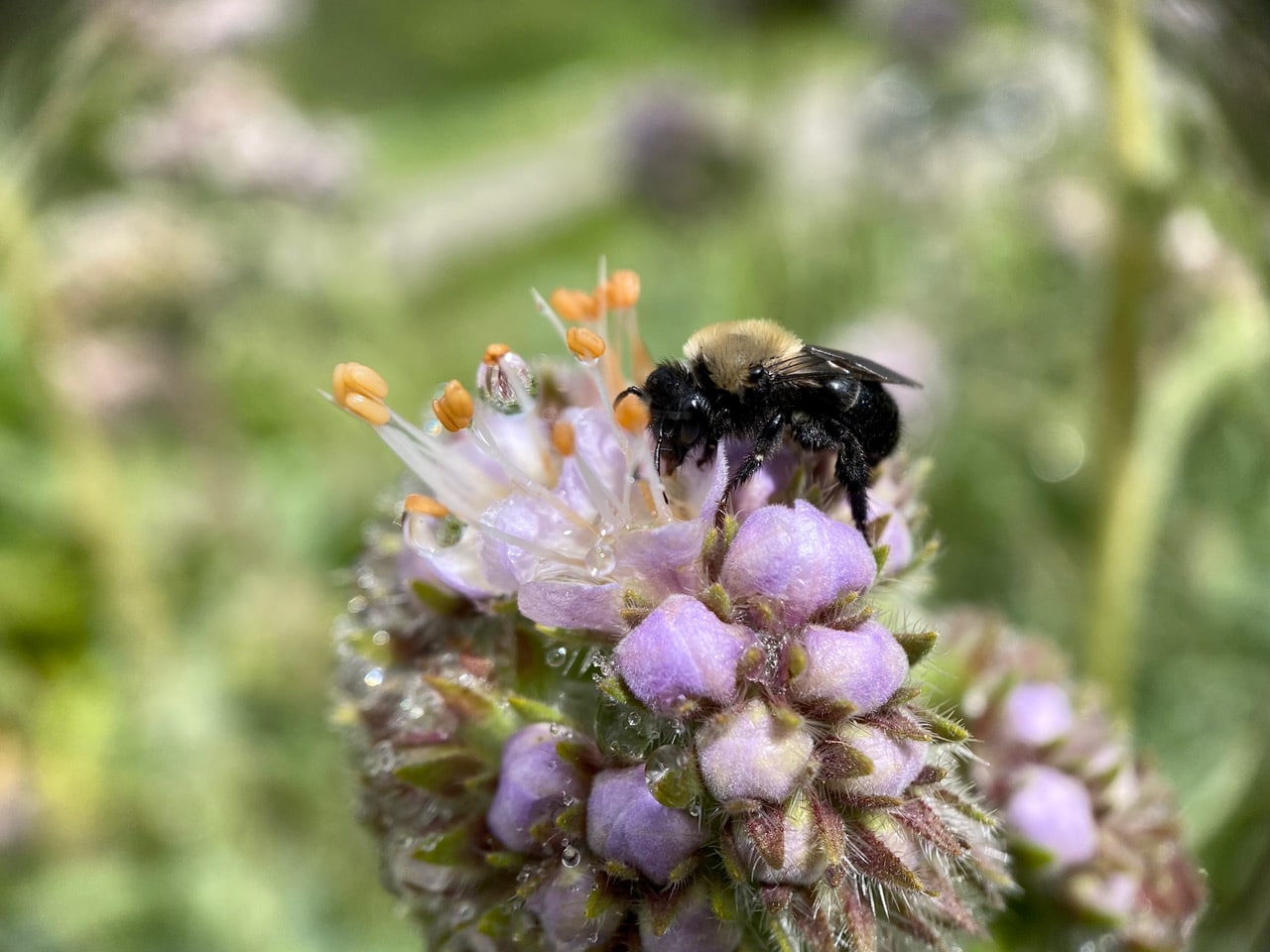

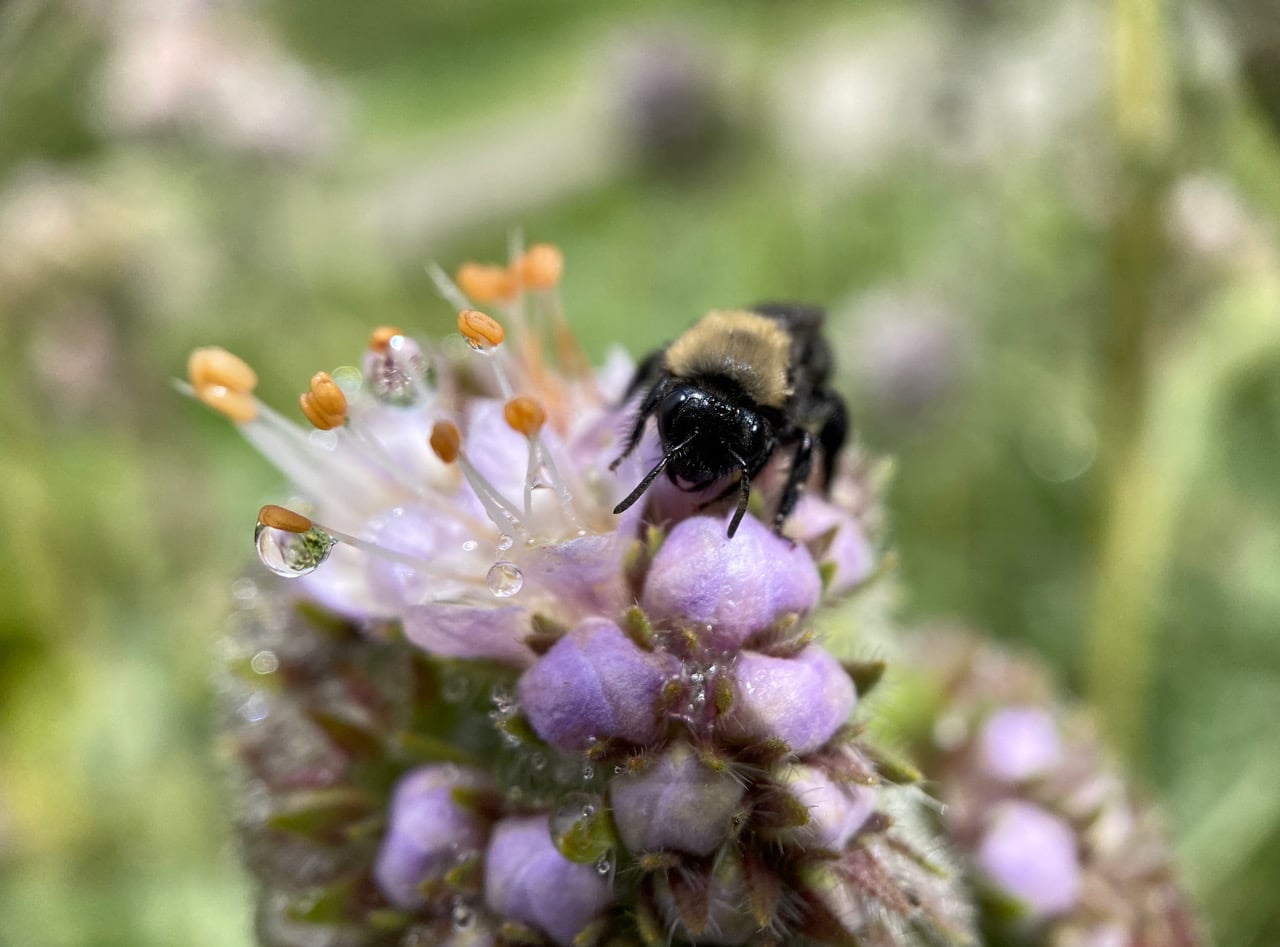





She seems to be in good shape, not too wet.
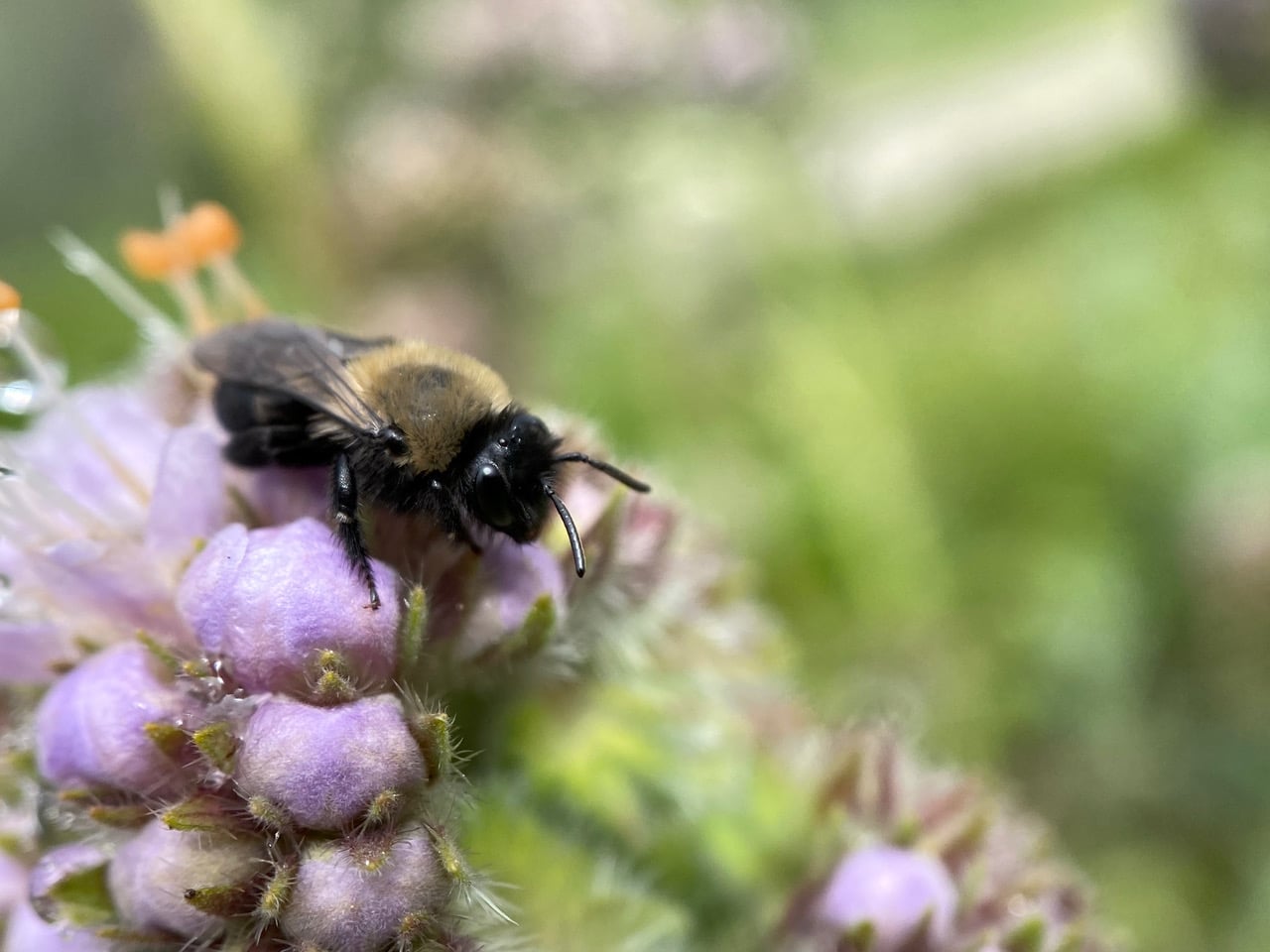
The bee starts to groom herself.
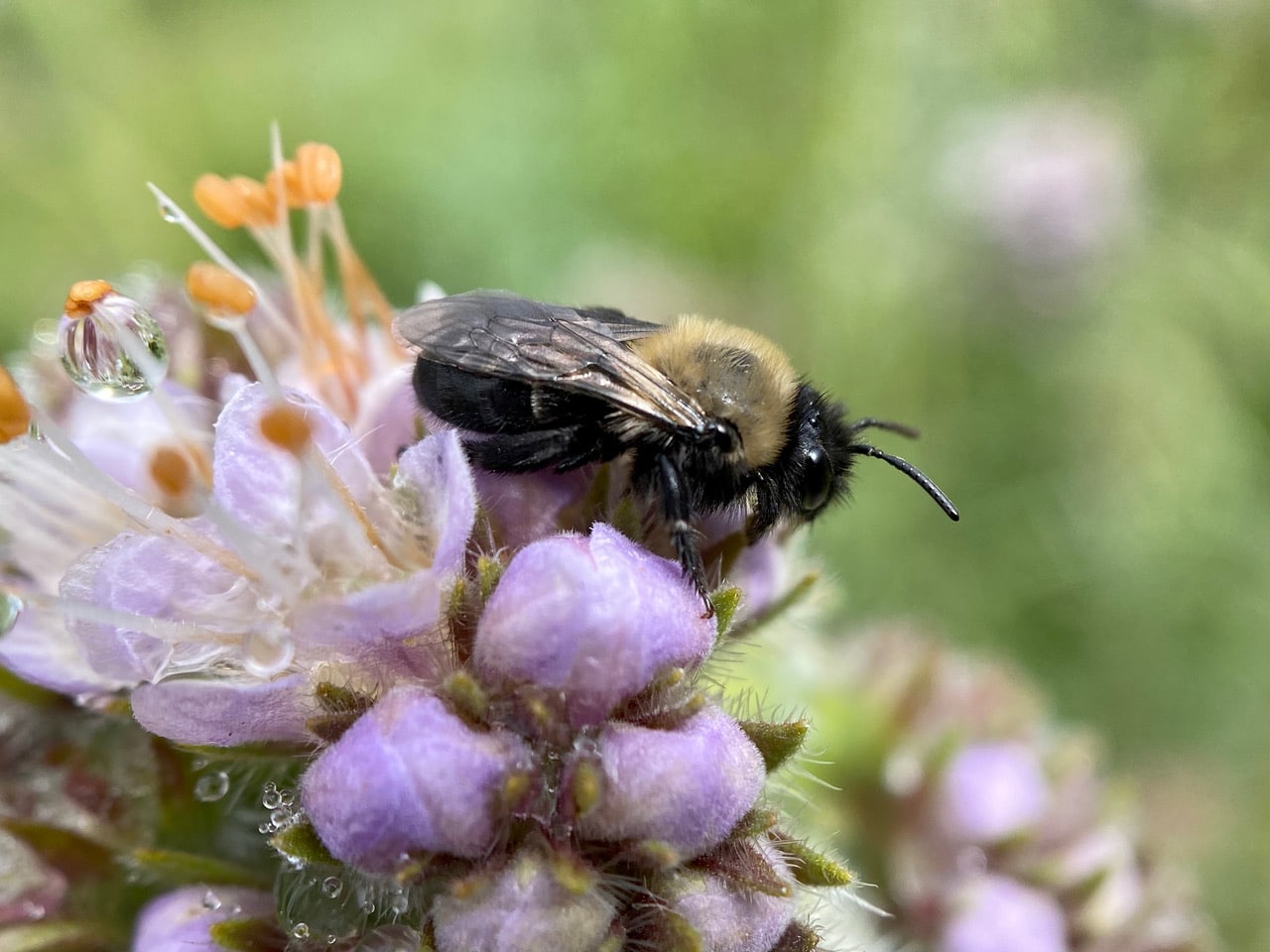
A distinctly heart-shaped face. Hmm… a Cellophane Bee, Colletes sp. (family Colletidae)?
Amazingly, from this series of sketchy photos, John Ascher, the primier bee expert I met on iNaturalist has helped identify this bee to the subspecies! John thinks it is a Pasco Cellophane Bee, Colletes consors ssp. pascoensis. I can find only two other observations of this bee on iNaturalist, and no information about its natural history.
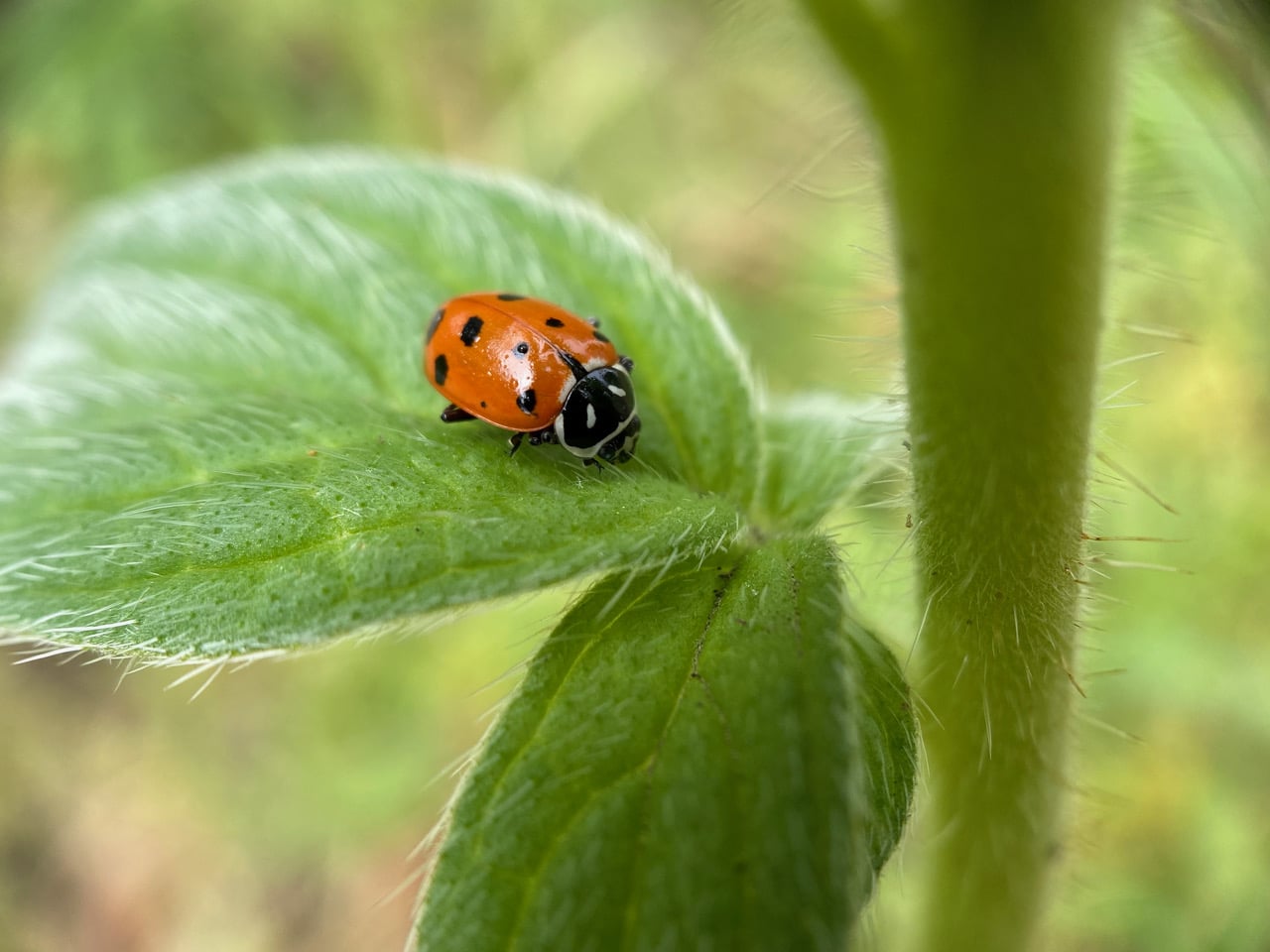
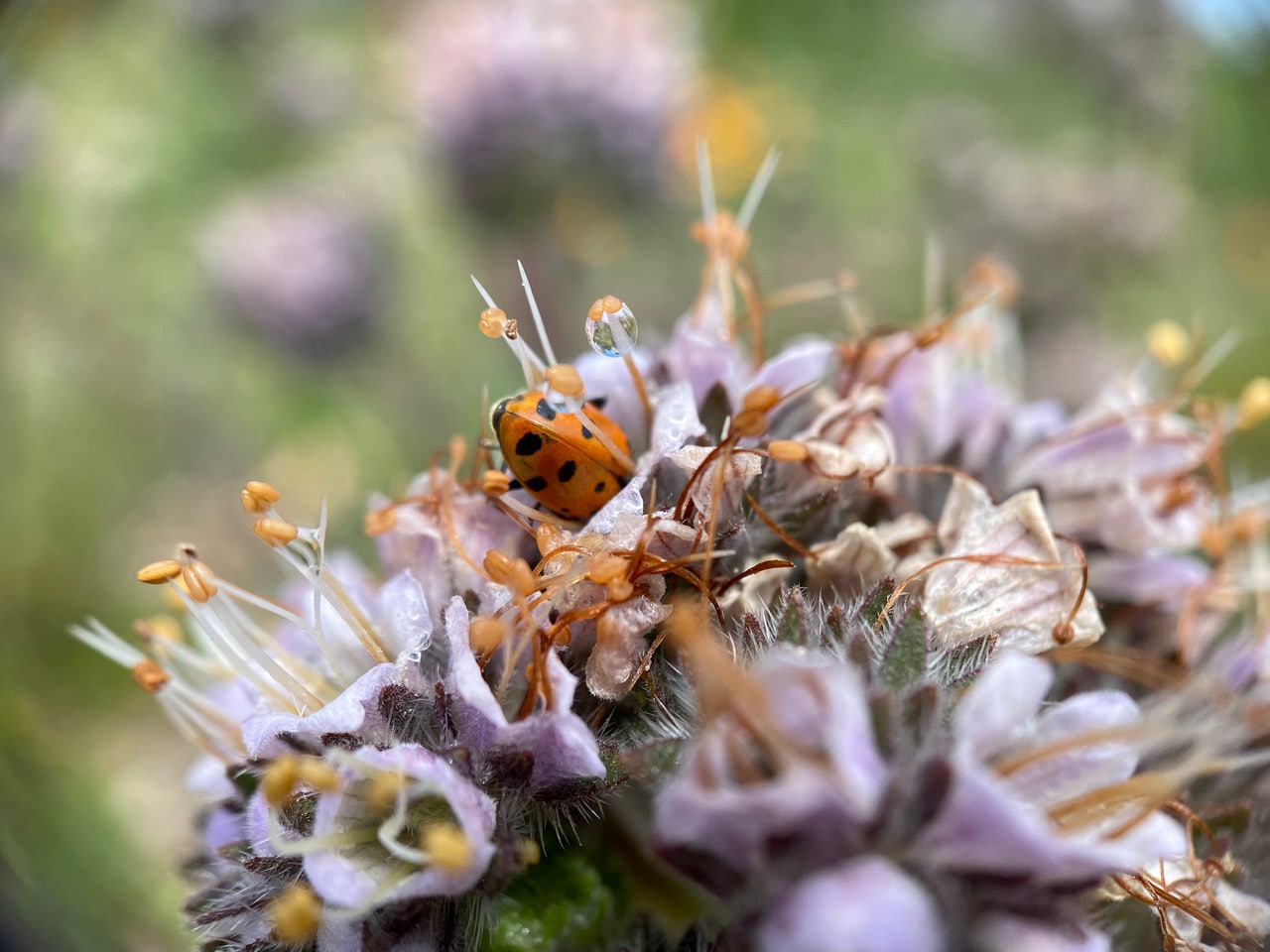
Even the Convergent Ladybeetle, Hippodamia convergens (family Coccinellidae) is wet from the fog!
We humans usually think of the lady beetles as friendly, harmless insects. Why then would they wear such eye-catching aposematic coloration? The combination of the bright red color and black spots serve as a warning to discourage predators. Ladybeetles produce alkaloids, toxic chemicals that make them unpalatable to hungry spiders, ants, or other predators. When threatened, ladybeetles exude small droplets of hemolymph (insect version of blood) from their leg joints, an unusual response known as “reflex bleeding”. The alkaloids in the blood produce a foul odor, another warning to the predator. Research shows that a ladybeetle’s colors are an indication of how toxic it is. Ladybeetles with richer colors were also found to have better quality diets early in their lives. The correlation suggests that when resources are plentiful, the well-nourished ladybeetles can invest more energy in producing toxic defense chemicals and warning pigmentation.
This Convergent Ladybeetle has no black spots on its elytra. Apparently there’s quite a bit of variations within the species. The two white converging lines on its pronotum still identify the beetle as Hippodamia convergens.
Ooh, this one has its head in a Phacelia flower. It is not moving. Is it feeding, or merely sleeping?
As the sun makes its appearance, insects come alive. This Convergent Ladybeetle is foraging on a young inflorescence of the Imbricate Phacelia, Phacelia imbricata. Although Ladybeetles are commonly known as predators of aphids and other soft-bodied insects, they also feed on pollen and nectar when prey is scarce.
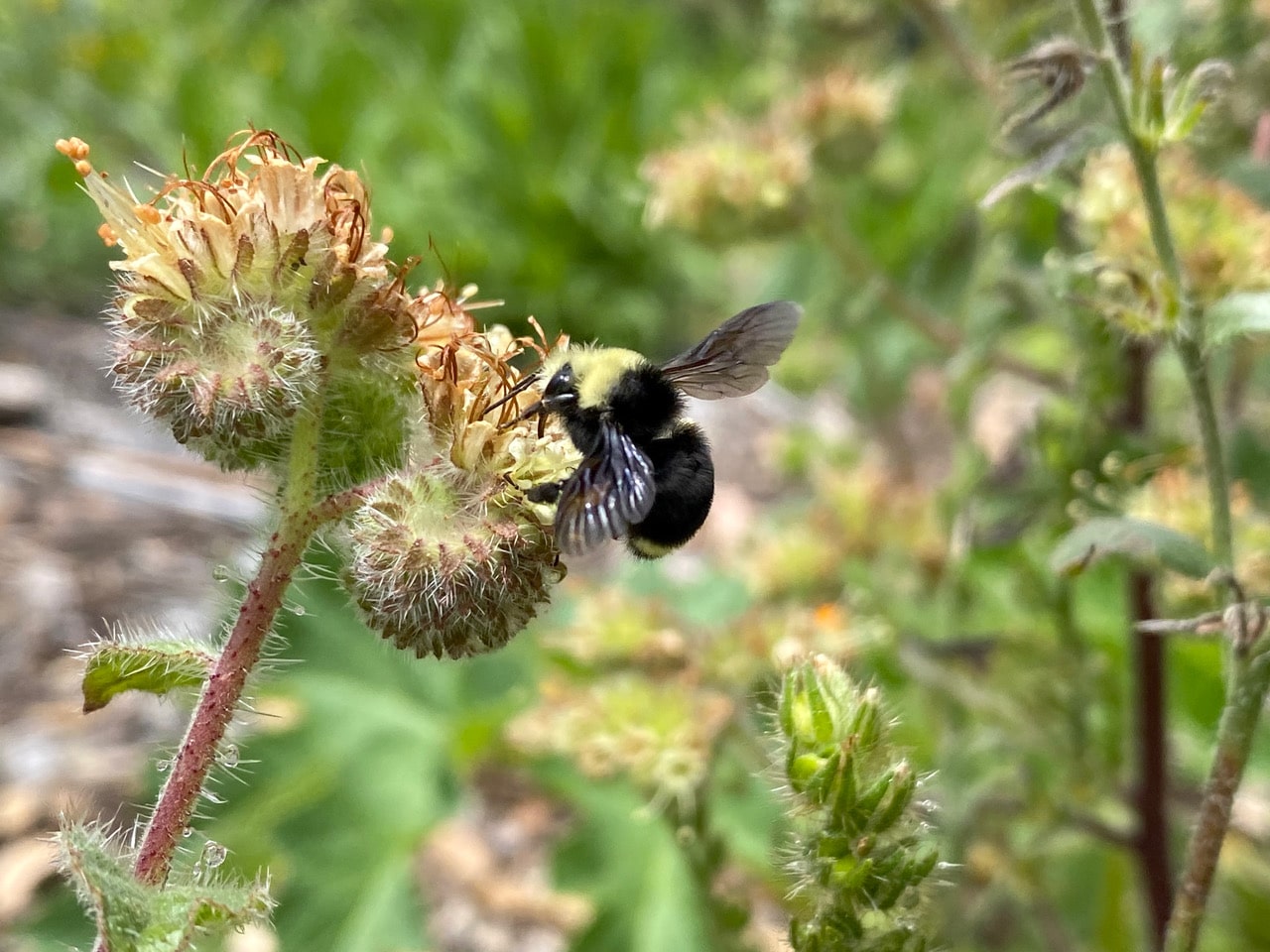
With her tongue extended, the Yellow-faced Bumble Bee, Bombus vosnesenskii is taking nectar from the flowers of Imbricate Phacelia, Phacelia imbricata.
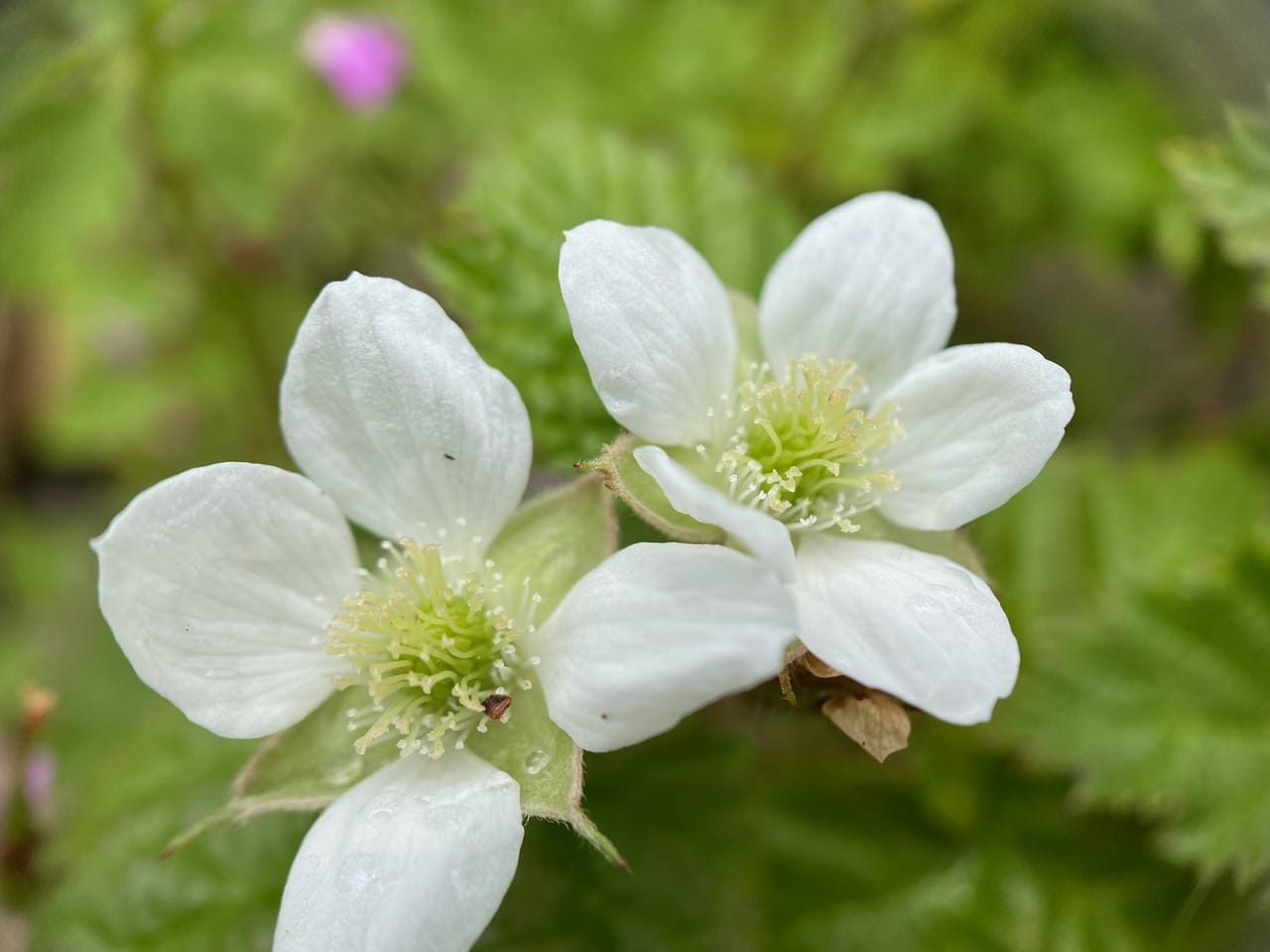
The trailing California Blackberry, Rubus ursinus growing along the paved road to the radio tower are predominantly females. I wonder why? The species is dioecious, the male and female flowers are borne on separate plants. Perhaps the plant has been reproducing asexually by natural layering, resulting in only one gender? Natural layering typically occurs when a flexible branch touches the ground, whereupon it produces adventitious roots. At a later stage the connection with the parent plant is severed and a new plant (a clone) is produced as a result.
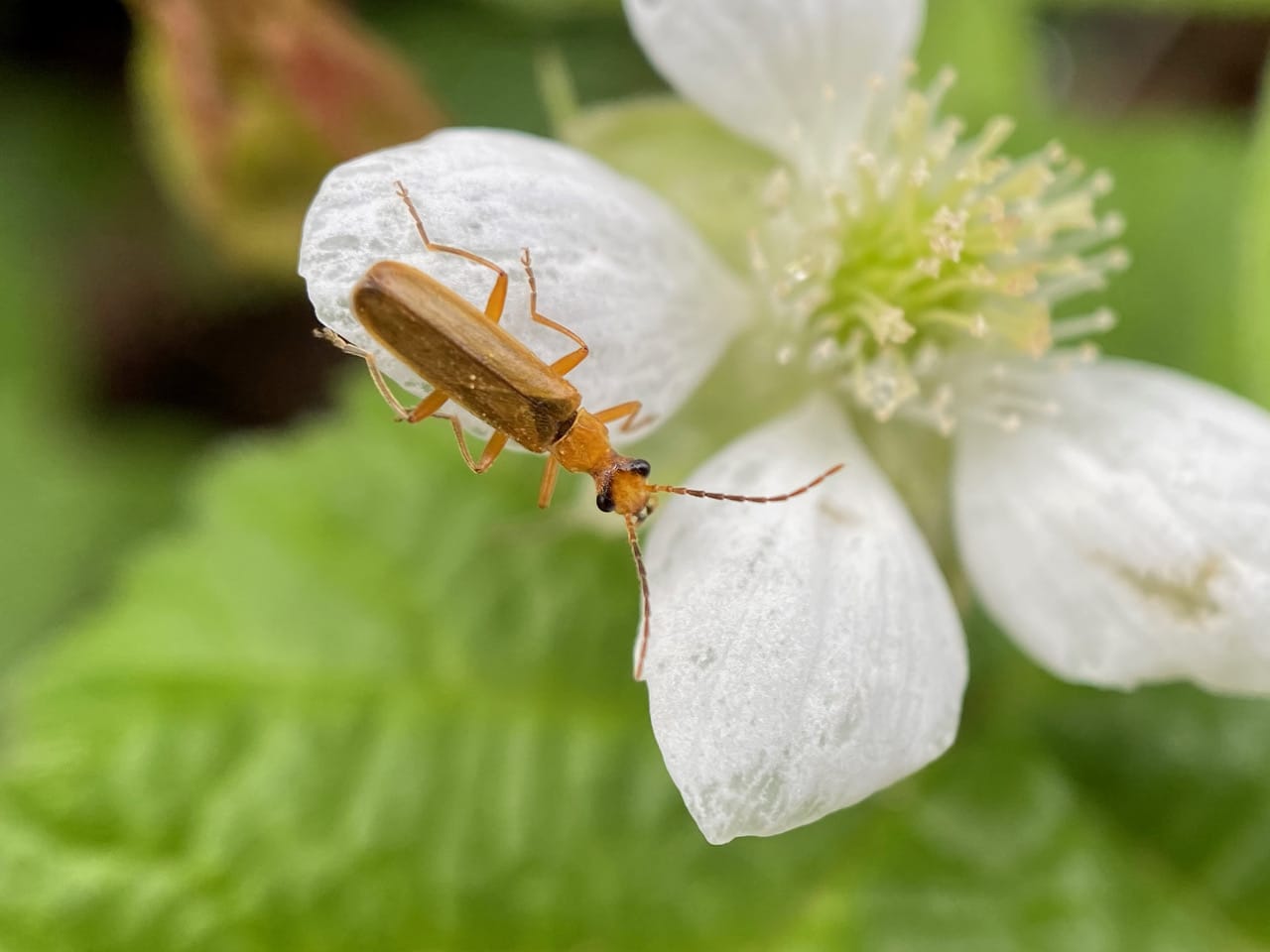
A Soldier Beetle, Podabrus cavicollis (family Cantharidae) is foraging on a California Blackberry.
The Soldier Beetles, family Cantharidae are relatively soft-bodied, straight-sided beetles. One of the first described species has a color pattern reminiscent of the red coats of early British soldiers, hence the common name. They are also known commonly as Leatherwings because of their soft elytra.
Soldier beetles often feed on both nectar and pollen as well as predating on other small insects. The larvae are often active, and feed on the ground, hunting snails and other small creatures. Soldier beetles are generally considered beneficial insects by gardeners.
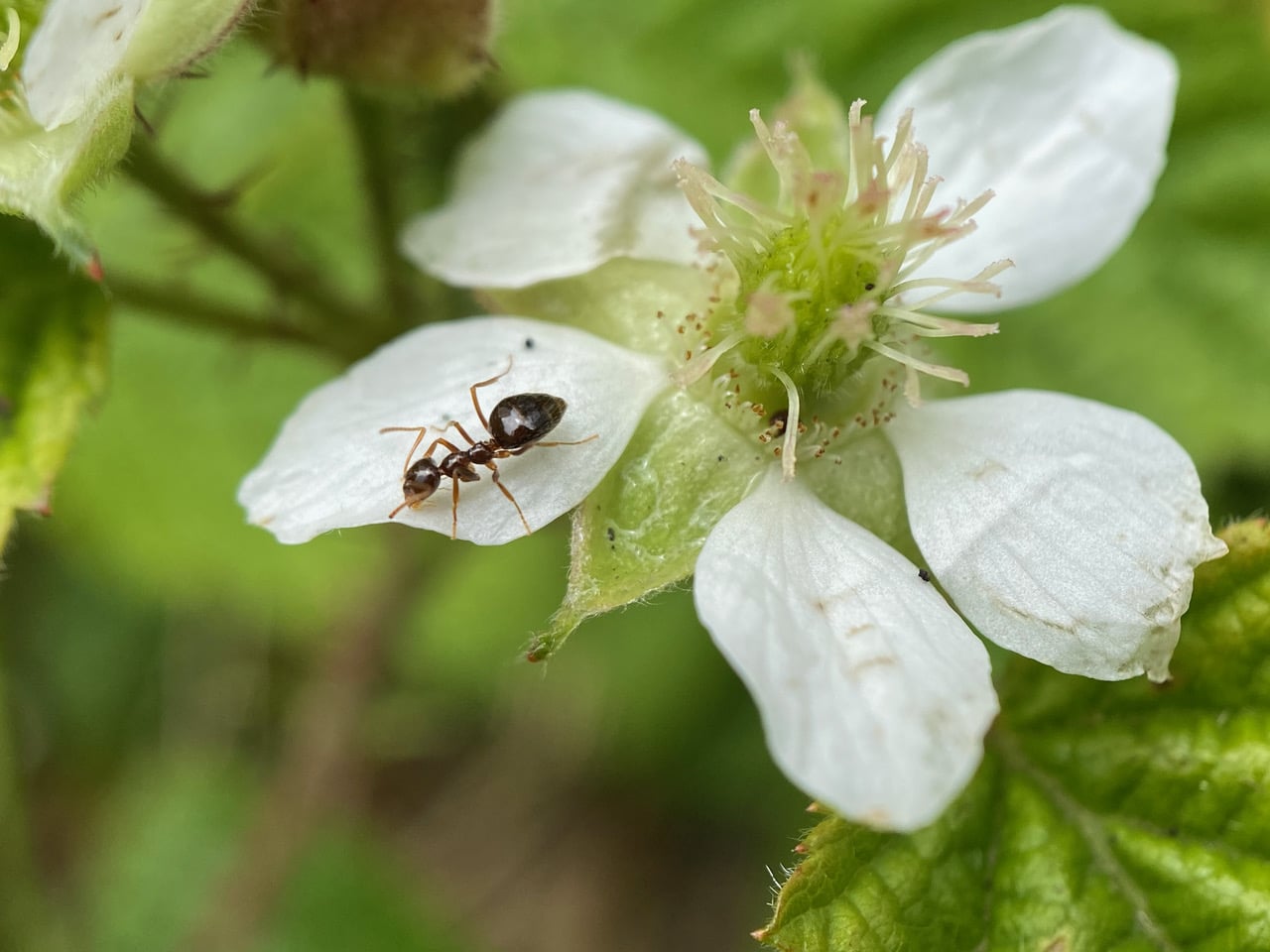
An American Winter Ant, Prenolepis imparis is foraging on a female flower of California Blackberry.
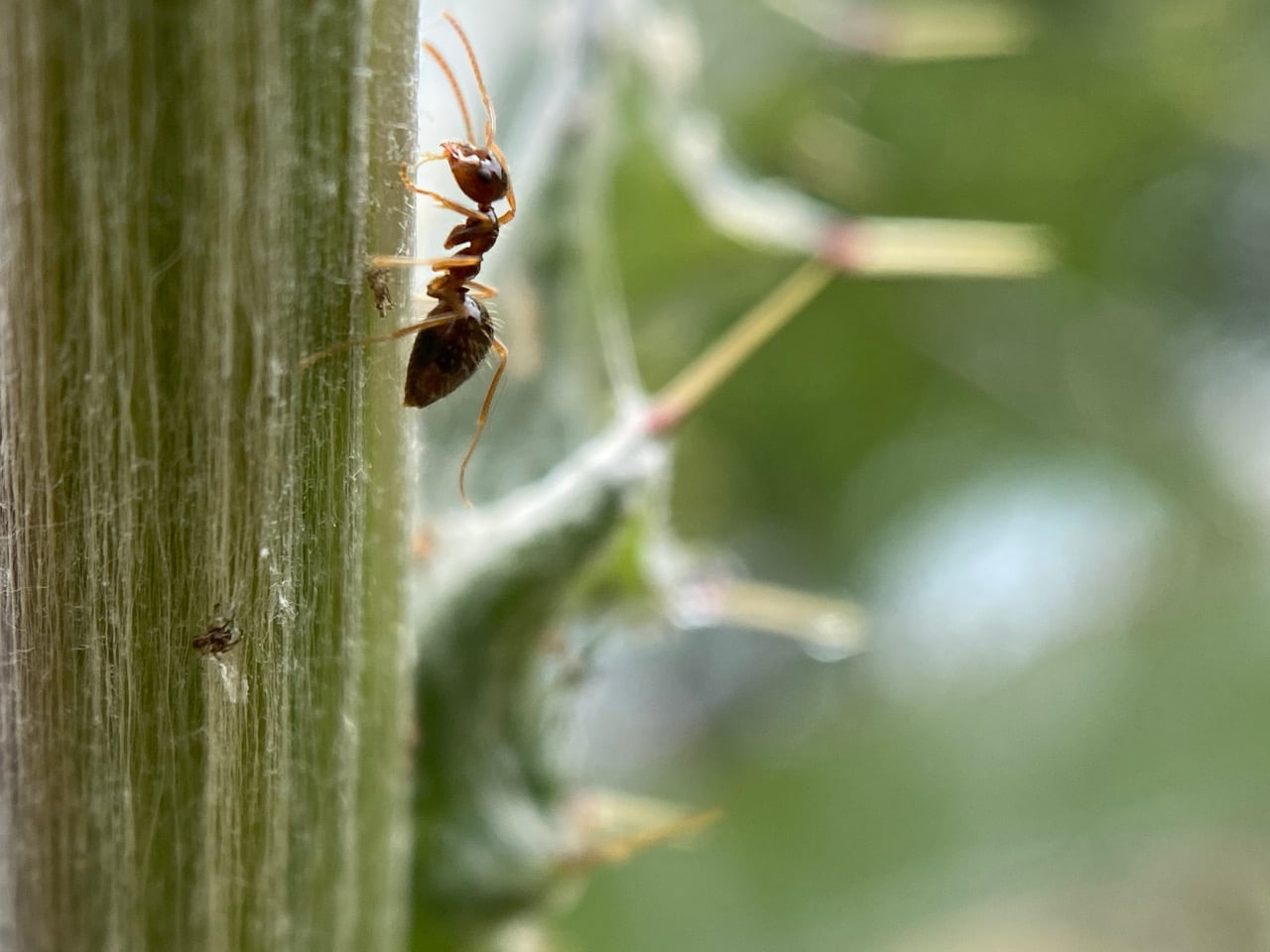
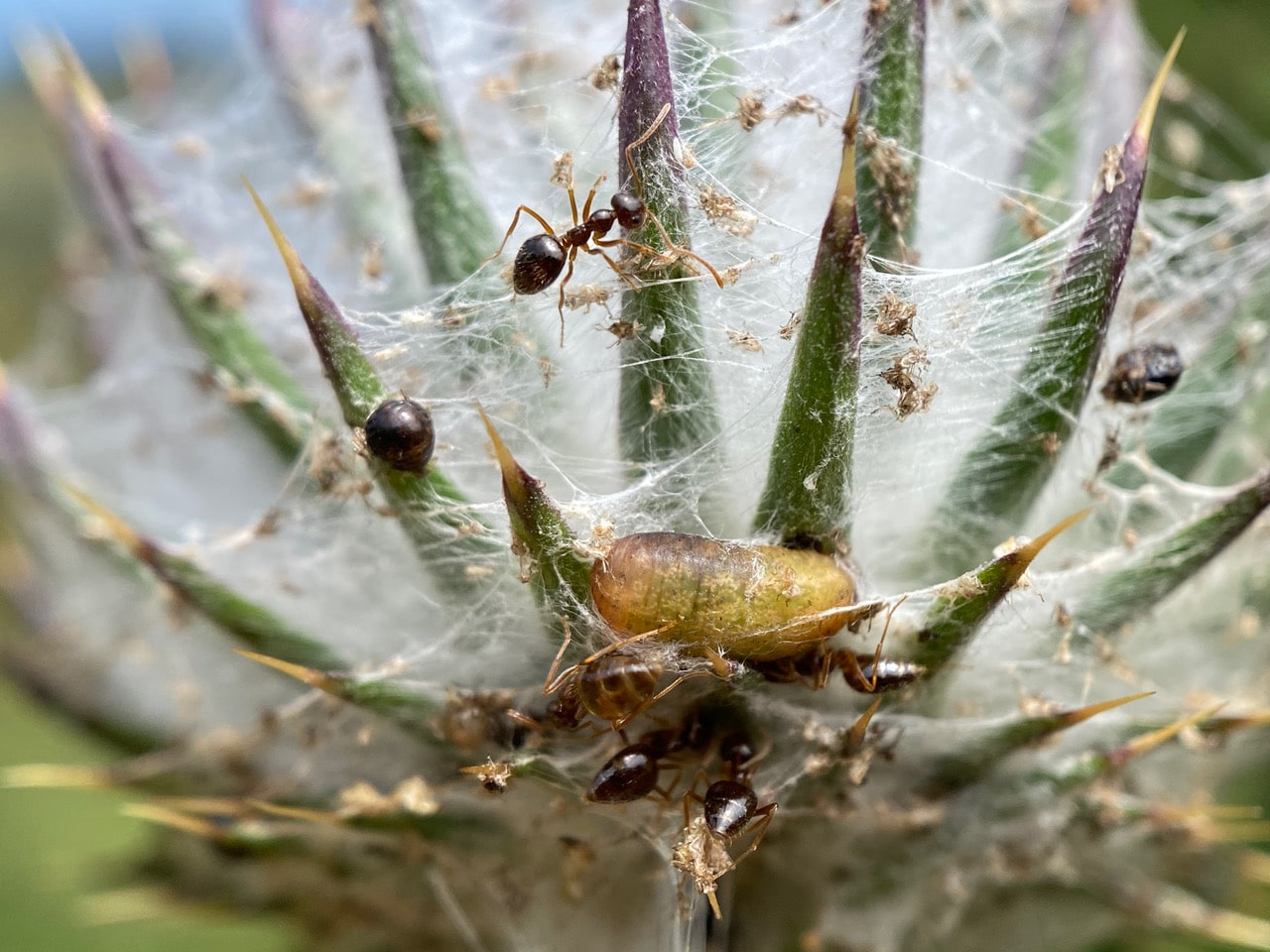
I stop by the aphid-infested Cobweb Thistle, Cirsium occidentale that is growing by the paved road to the Water Tank. Some American Winter Ants are active on the plant.
Much to my surprise, I cannot find a single green aphid. There are only aphid carcasses, and aphid mummies on the plant. I look for the Syrphid larvae that were previously prevalent among the flowerheads, and can’t find any. Wow, did the American Winter Ants get rid of all the predators? What happened to all the live aphids then? Did the ants stow them away somewhere in anticipation of the warming weather? Winter Ants are not active above ground all year. They go underground when the temperatures rise.
A few ants are fussing around what appears to be a brownish Syrphid pupa. Why have they not dispatched of the pupa as they have of the Syrphid larvae?
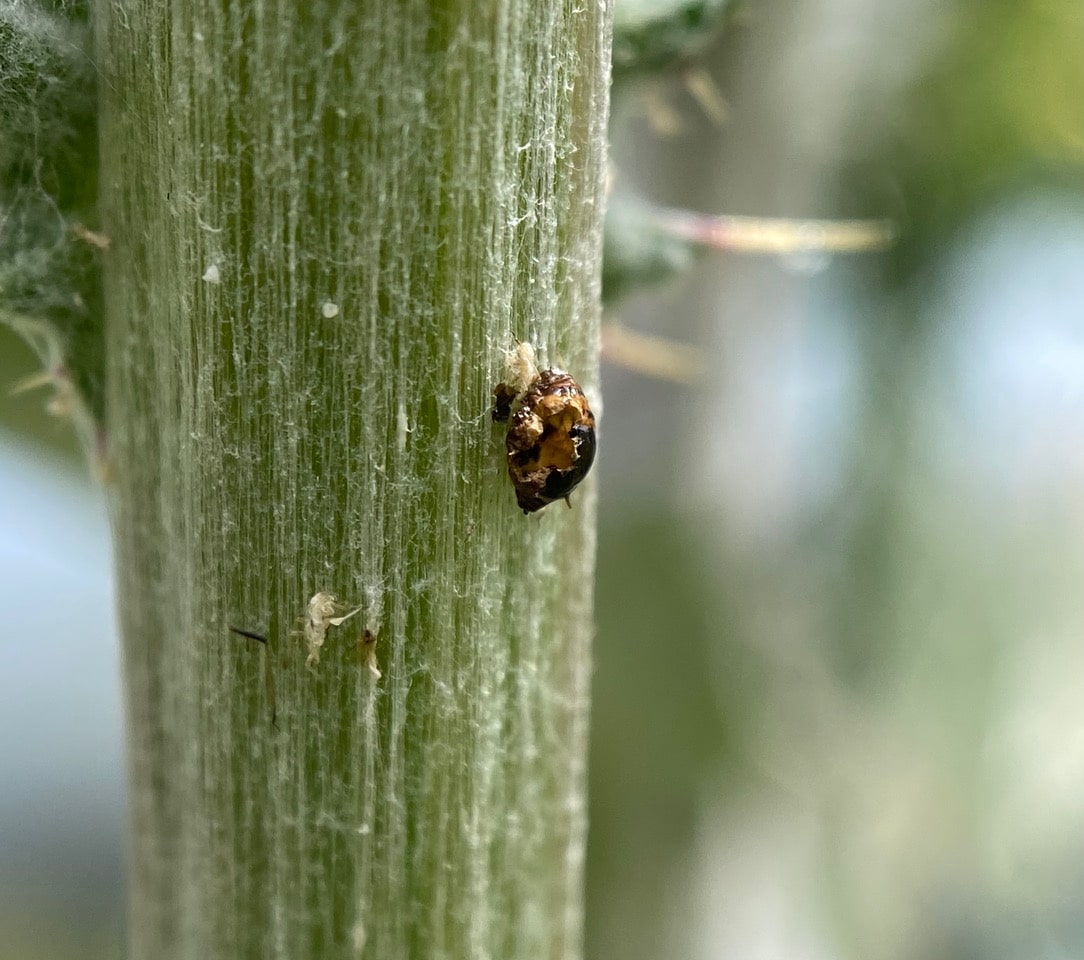
A few aphid mummies are left on the plant. These are aphids which have been parasitized by a tiny wasp in the genus Aphidius (family Braconidae). The wasp larvae are growing and feeding within the aphids, eventually to emerge as adult wasp by cutting a round hole on the back of their hosts.
That’s a aphid mummy which has been chewed through. The ragged hole is not typical of the perfectly round exit holes made by an emerging Aphidius wasp. Did the ants chew through this aphid mummy to feed on or to destroy the parasitic wasp within? An alternative explanation is that this is an inside job of a hyperparasite. (A hyperparasite is a parasite of a parasite.) The Aphidius wasp might have been parasitized by a hyperparasite, which has developed faster than its host and made an escape. It’s a jungle in there!
A Nodding Thistle Receptacle Weevil, Rhinocyllus conicus (family Curculionidae) is resting motionless on a hairy and spiky leaf of the Cobweb Thistle. Wow, this can potentially add a complicating factor to the already complex situation. How will the ants respond to an insect that attacks their plant? Or would the ants care, as they seem to be wrapping up the season.
The adult weevil is black and covered with a thin black and yellowish mottled coat of hairs. It is a short-snouted beetle up to 6 mm long. Eggs are laid on or near the bracts of the thistle flower head. The larvae burrow into the flower head and feed on the flower parts and developing seeds. Adults cause damage as well when they feed on the foliage.
The weevil is native to Eurasia and North Africa. Introduced to the United States for thistle biocontrol in 1969, it is now widely established in the country. The weevil is found to be very effective in reducing the spread of invasive thistles, including Italian thistles. However, the weevil will also readily attack native thistles in the genus Cirsium, in some cases contributing to population decline. For this reason this weevil is no longer used for thistle biocontrol.