

Pollinator Post 5/19/23 (1)
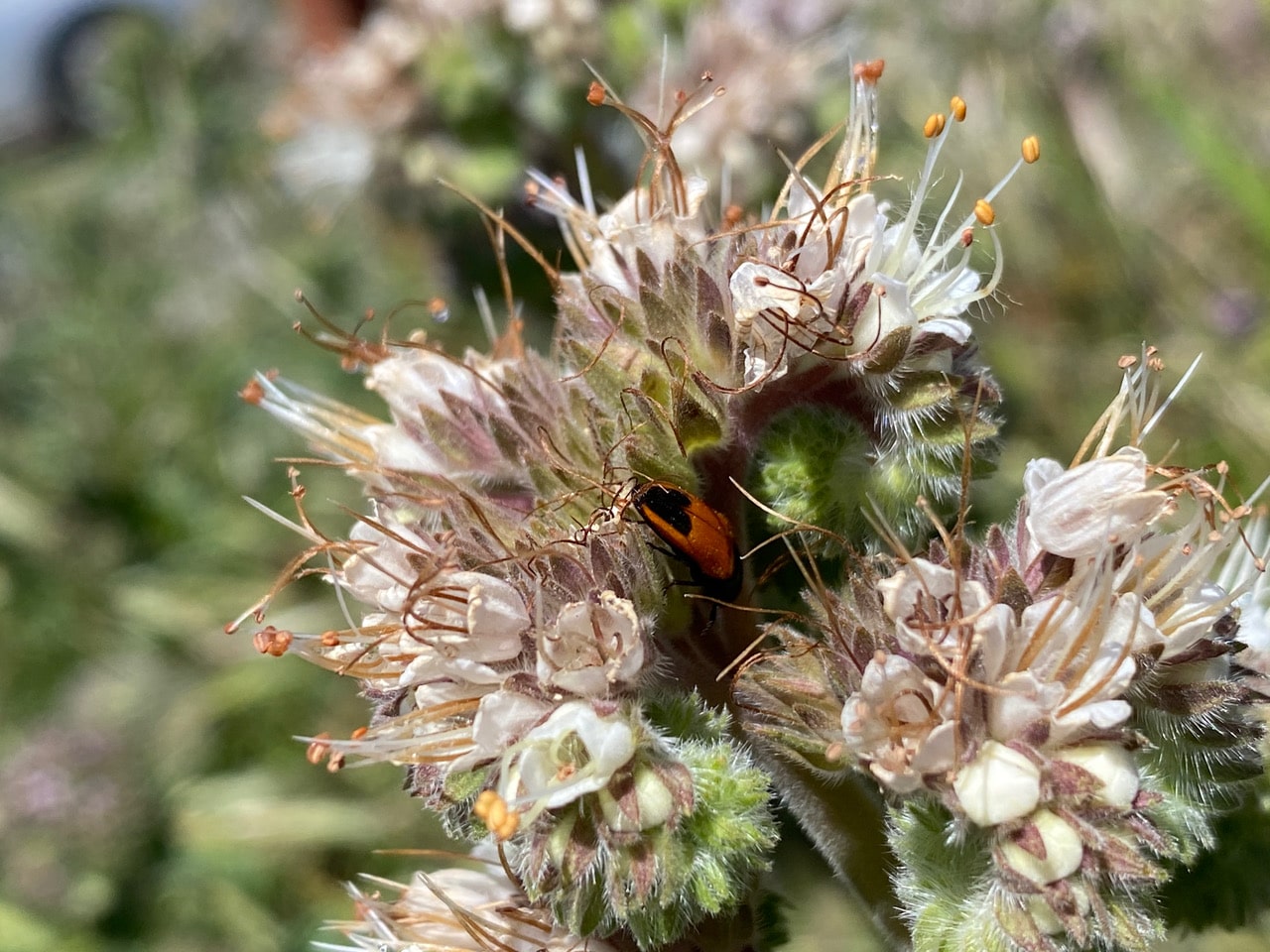
A small orange insect is partially hidden in an inflorescence of California Phacelia, Phacelia californica.
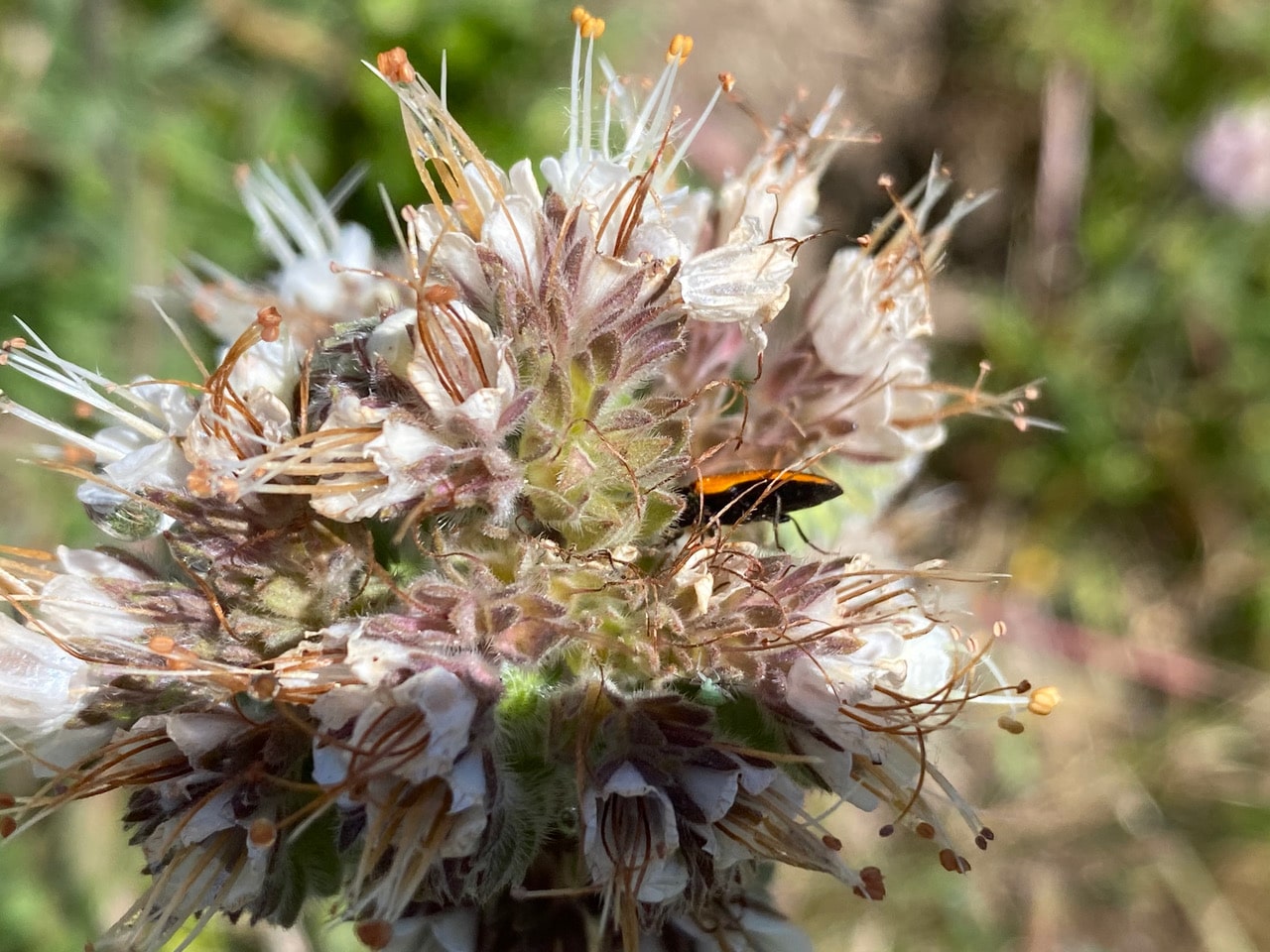


A side view shows a rather flat body.
Close-up of the beetle shows a large black heart-shaped marking on the orange elytra and a black thorax.
iNaturalist has helped identify this as a Click Beetle, Ampedus cordifer (family Elateridae). The beetle is found mostly in the northern hemisphere, primarily in North America, Europe, and Asia.
Elateridae or Click Beeltes are a cosmopolitan beetle family characterized by the unusual click mechanism they possess. A spine on the prosternum can be snapped into a corresponding notch on the mesosternum, producing a violent “click” that can bounce the beetle into the air. Clicking is mainly used to avoid predation, although it is also useful when the beetle is on its back and needs to right itself. How do click beetles jump? – YouTube
Adult Click Beetles are typically nocturnal and phytophagous (feeding on plants). Their larvae, called wireworms, are usually saprophagous, living on dead organisms, but some species are agricultural pest, and others are active predators of other insect larvae.
Ampedus larvae burrow in rotting wood, pupating in mid-summer. The larvae feed on wood, with a preference for wood in more advanced stages of decay. Adult Ampedus beetles are thought to be diurnal; they feed on pollen, and are often found in large numbers on flowers and vegetation. Females attract males using pheromones, and lay eggs in fallen wood.
Ampedus cordifer is a black beetle with orange elytra that has a large black spot on the ends of each that look like a heart when they are together. The species name “cordifer” means heart-bearer. There is a single, small black spot on the top of each elytra. The species is found in the extreme western states in the US, Baja California, and BC Canada. Often found in wood pile in oak woodland.
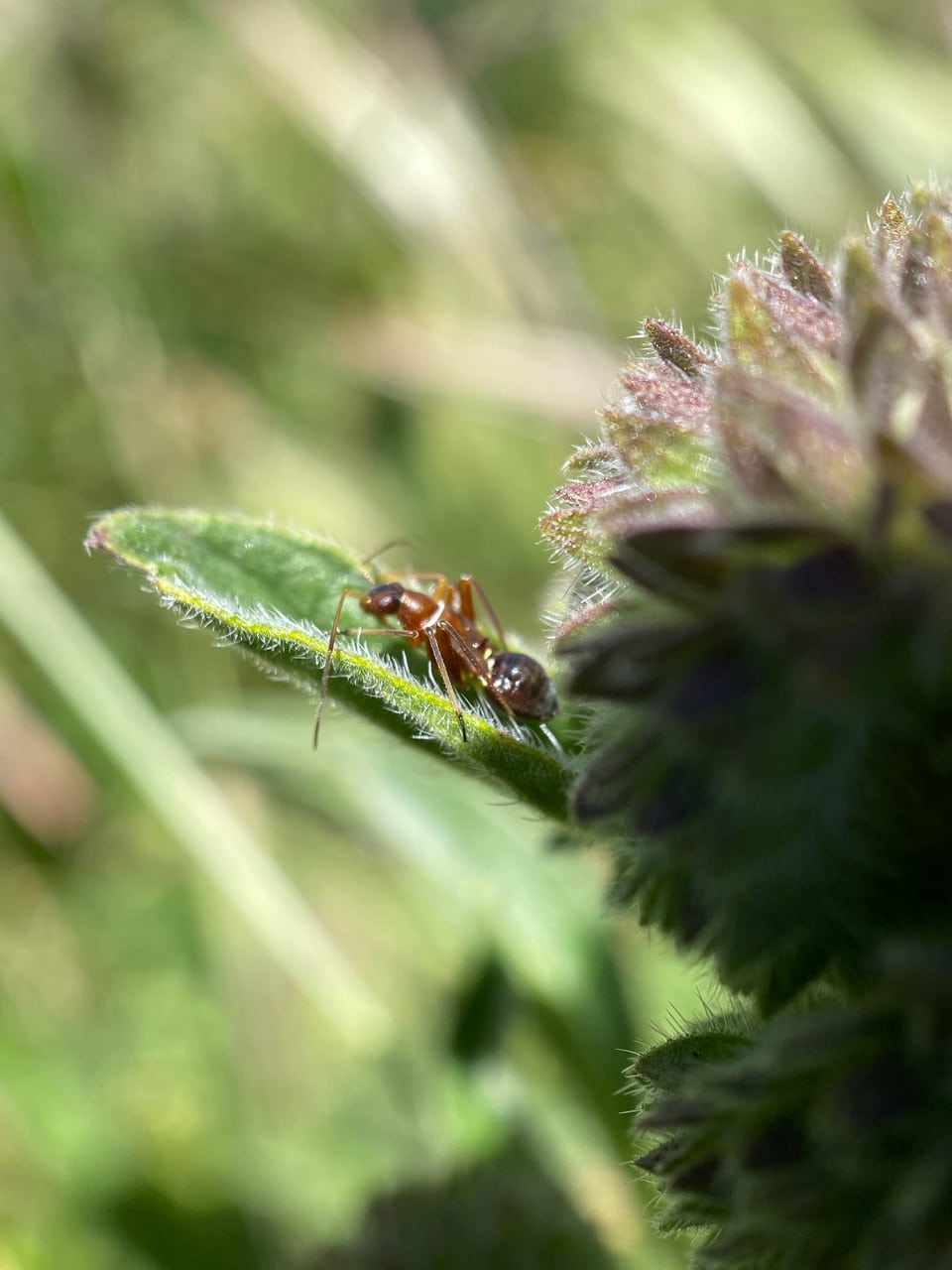
My heart misses a beat when I spot this ant-like critter on a Phacelia leaf. I have often seen the adult form of this Plant Bug, Closterocoris amoenus (family Miridae) on Sticky Monkeyflowers, and have read about their ant-mimic nymphs. It is exciting to actually see one! The nymph is rather wary and runs away before I can get a better picture of it.
Spiders are the most common ant mimics. Additionally, some insects mimic ants to escape predation (protective mimicry), while others mimic ants anatomically and behaviorally to hunt ants in aggressive mimicry.
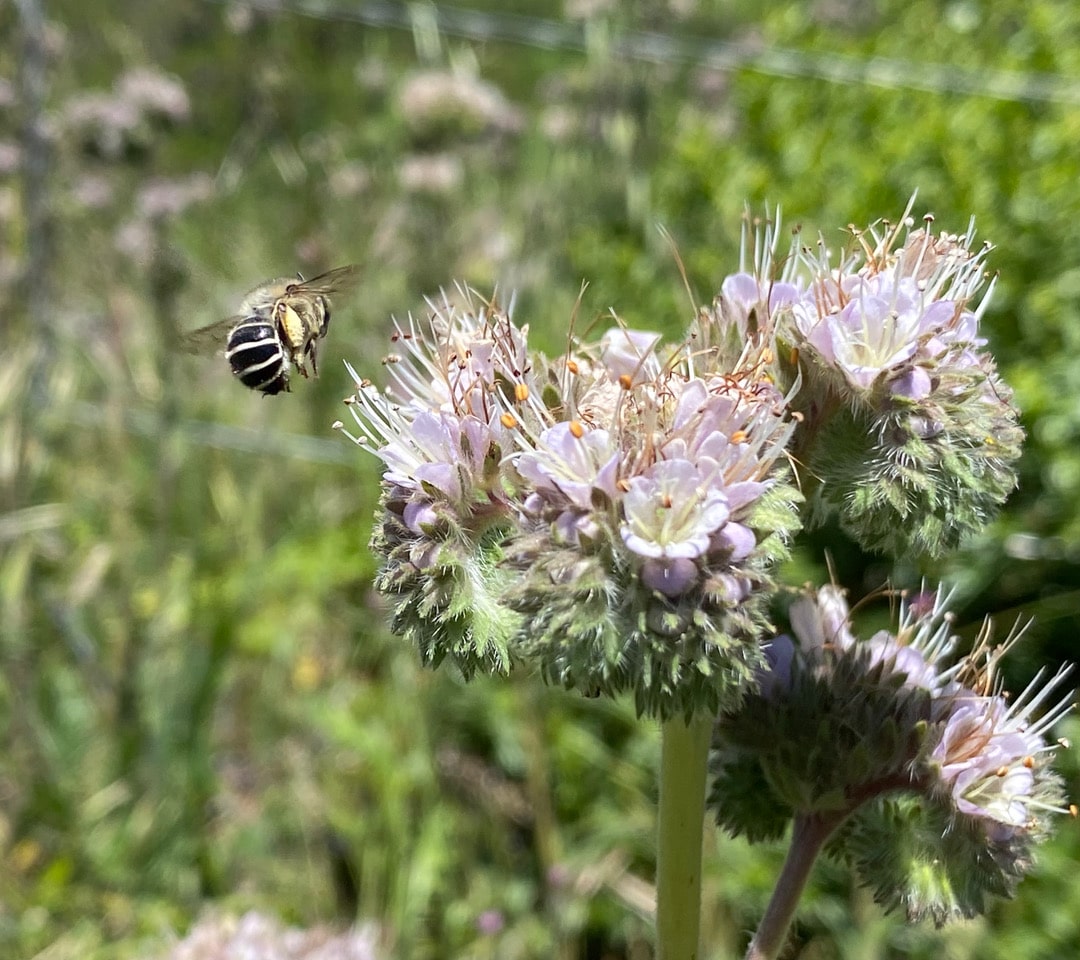
A large bee with distinct black-and-white banded abdomen is visiting the Phacelia flowers. It is most likely a Digger Bee, Anthophora sp. (family Apidae). The female has gathered some cream-colored pollen in the scopae on her hind legs.
Anthophora are generally somewhat larger than honey bees and robustly built, with black or black-and-white-striped abdomens and beige or golden-brown thorax hairs. Both male and female Anthophora possess exceptionally long tongues. Males have pale masks on their faces. Typically, digger bees have “Roman noses” or concave profiles.
Anthophora are solitary – that is, each bee builds and provisions its own nest. However, they are often gregarious, nesting close by one another, sometimes forming large aggregations. As their name suggests, digger bees typically nest in the soil, either in level ground or vertical banks.
Digger Bees are generalist pollinators that visit a wide range of plants. They are exceptionally effective pollinators and play an important role in maintaining wildflower diversity, in part because their long tongues allow them to pollinate deep-throated and tubular flowers inaccessible to many bees. In addition, female Anthophora are skilled at buzz pollination, whereby they vibrate their wing muscles to shake pollen from the anthers of flowers.
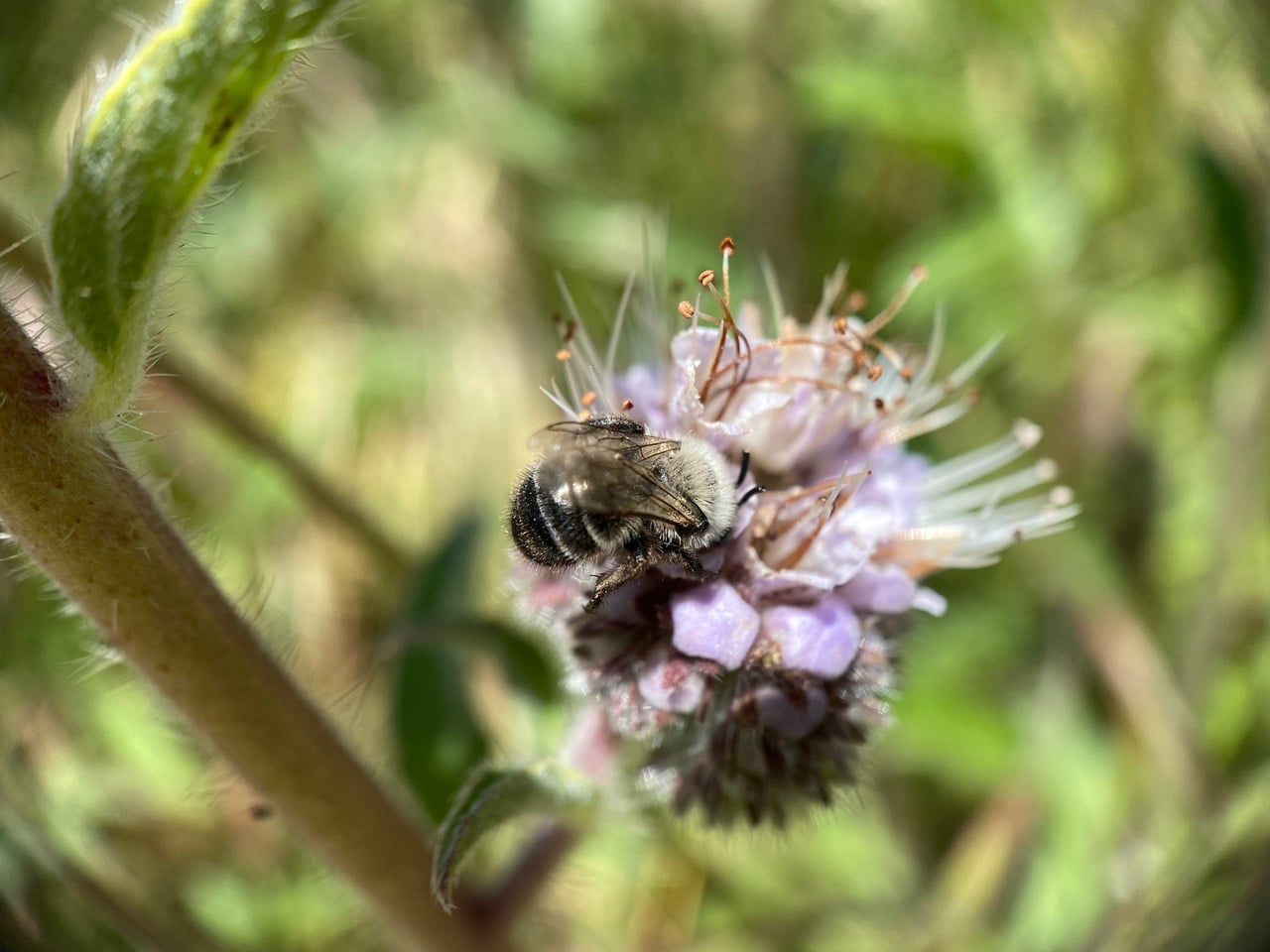
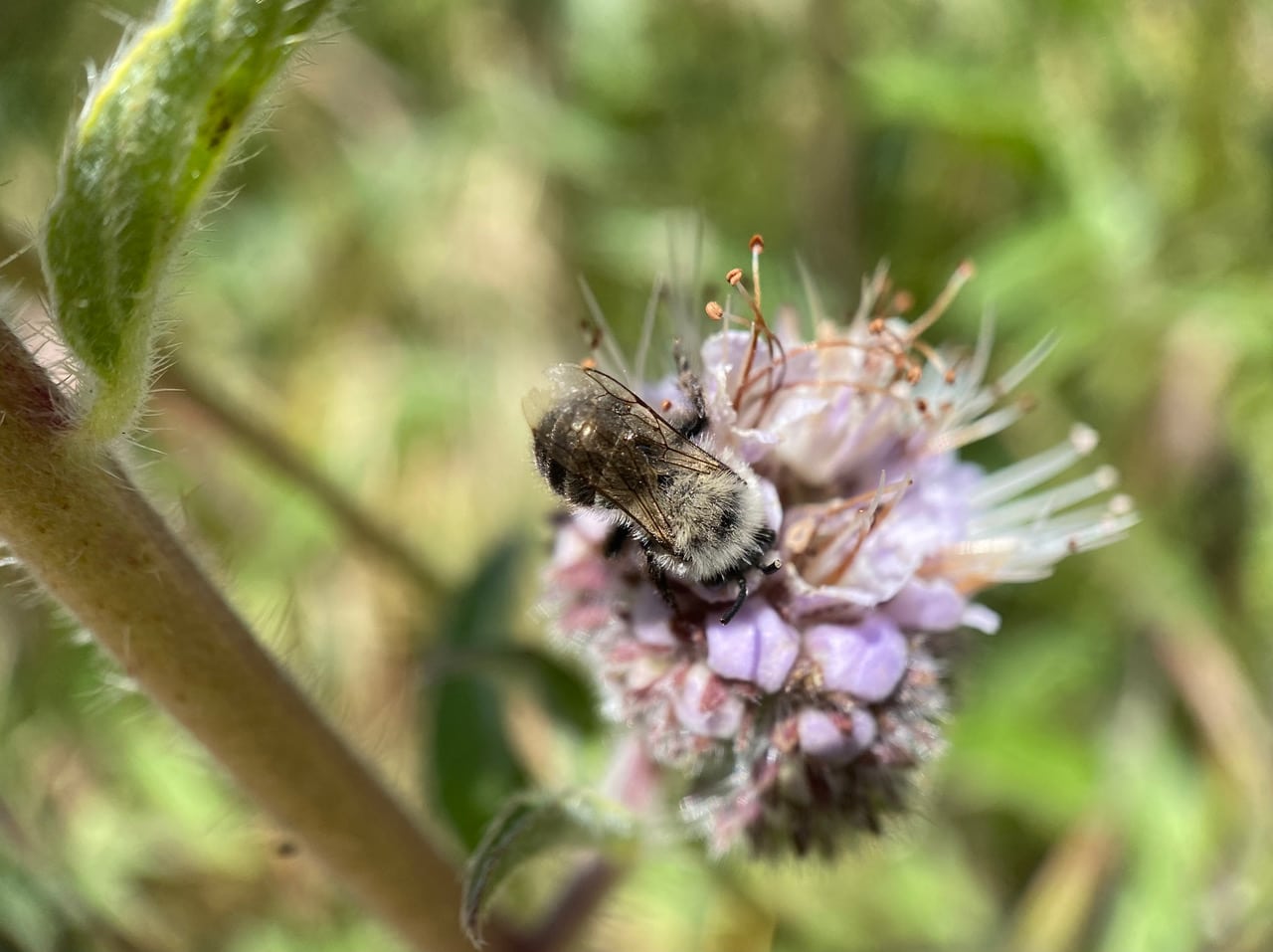
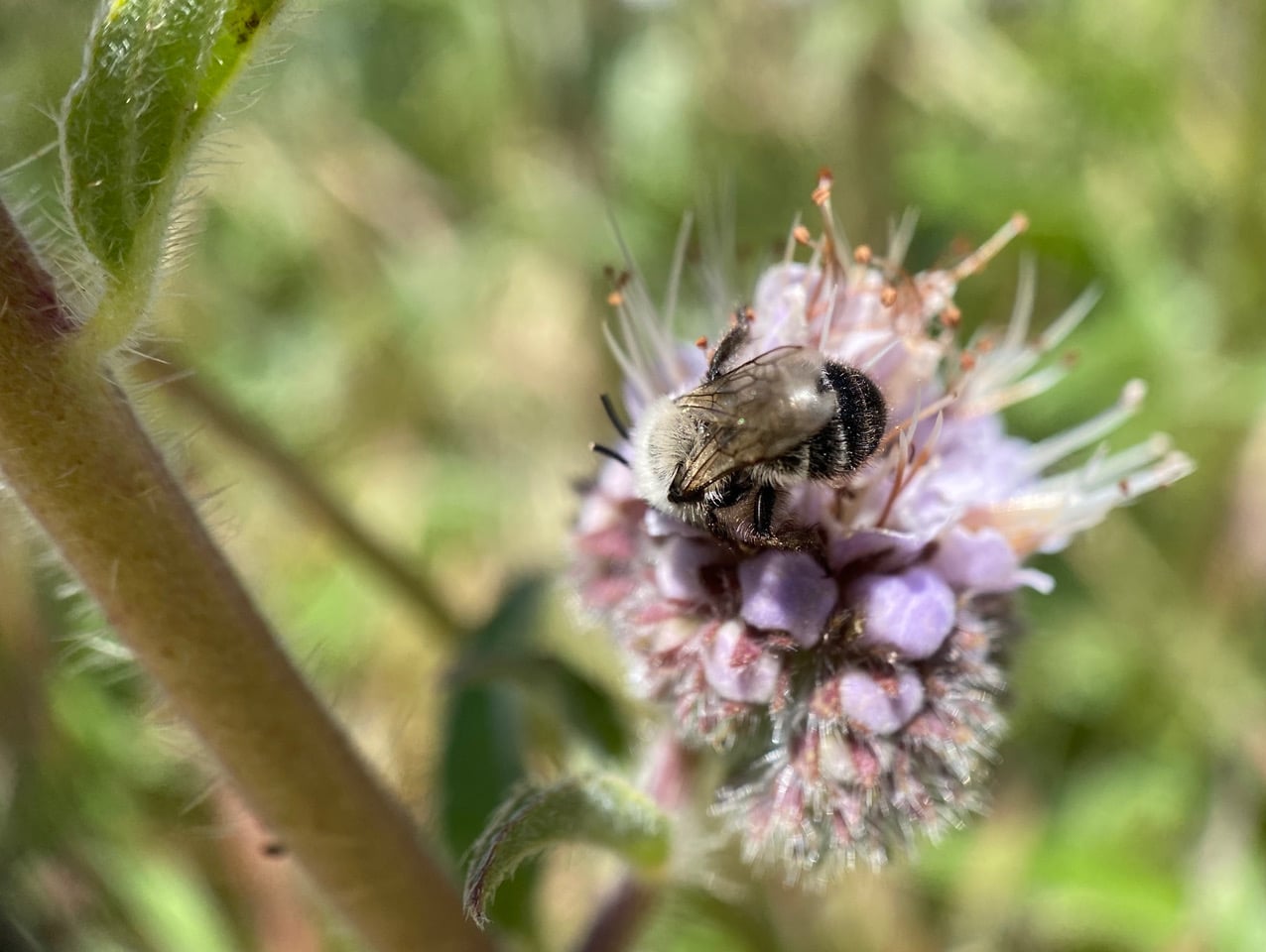
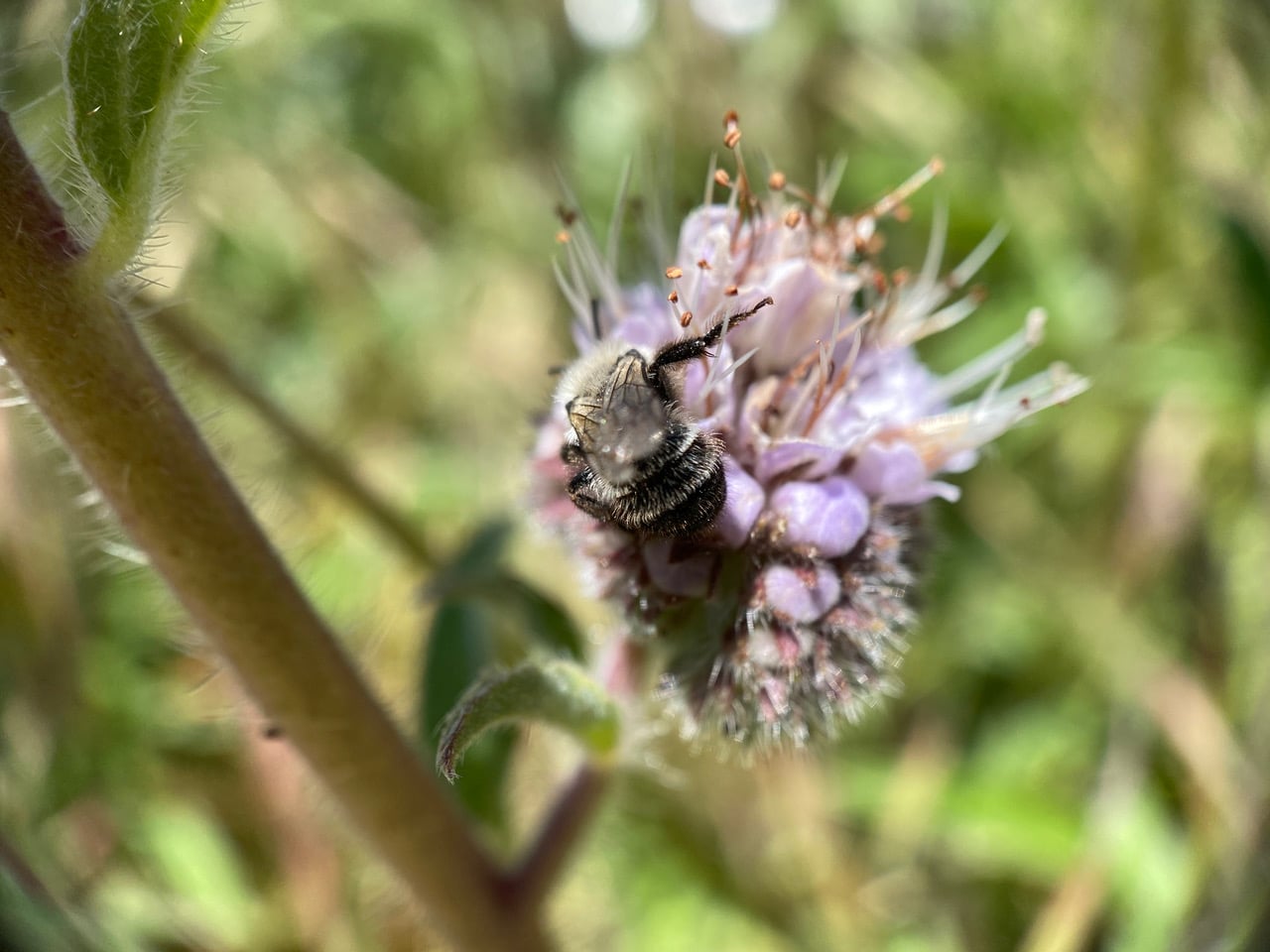
Here’s that cute little Pasco Cellophane Bee, Colletes consors ssp. pascoensis (family Colletidae) that frequently visits the California Phacelia flowers.
Because of their short tongues, Colletes sometimes struggle to access nectar at the base of flowers.
The little bee is patient and persistent, working on the same flowers for a long time as long as the nectar is plentiful.
I don’t get to see the bee’s face much as it is always buried in flowers.
The bee family Colletidae includes generalists and specialists, and they are likely important pollinators of many wildflowers. All Colletidae in North America are solitary ground nesters, but some species nest in large aggregations. There are two major genera of Colletidae in North America: the Masked Bees (genus Hylaeus) and Cellophane Bees (genus Colletes). The most obvious shared characteristics of Colletidae is also the hardest to see: their short tongue. The eyes of Colletes are angled (rather than being parallel), making the face slightly heart-shaped.
The genus name Colletes means “one who glues”, referring to their habit of applying a glue- or cellophane-like lining to the walls of nest cells, using their specialized tongues. This lining gives rise to their common names: cellophane bees, polyester bees, and plasterer bees. Colletes tongue is unique: short, flat, and forked at the tip. Colletes line their nests with a distinctive cellophane-like substance made from saliva and secretions from the Dufour’s gland on the abdomen. Using their specialized tongue, they paint the walls with saliva, then with secretions from the Dufour’s gland, they add a coat of varnish. This creates a clear covering that is strong, durable, and resistant to mold and water.
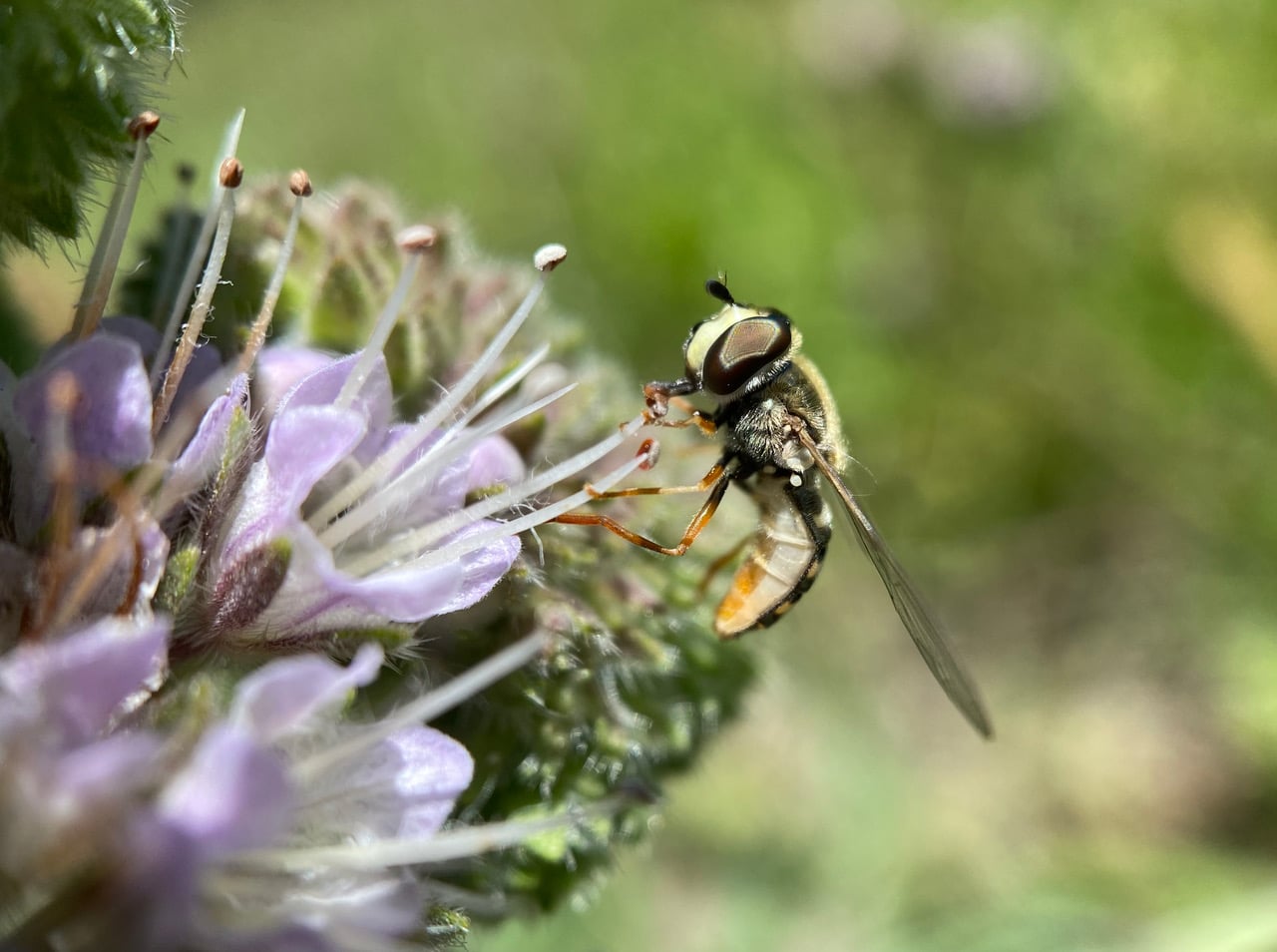
Perched delicately on the stamens of a California Phacelia flower, a female Large-tailed Aphideater, Eupeodes volucris (family Syrphidae) is feeding on fresh pollen right off an anther. The males of this species have holoptic eyes that meet along a central line on top of the head. Adults visit flowers for nectar and pollen, and are good pollinators. Larvae are voracious predators of aphids.
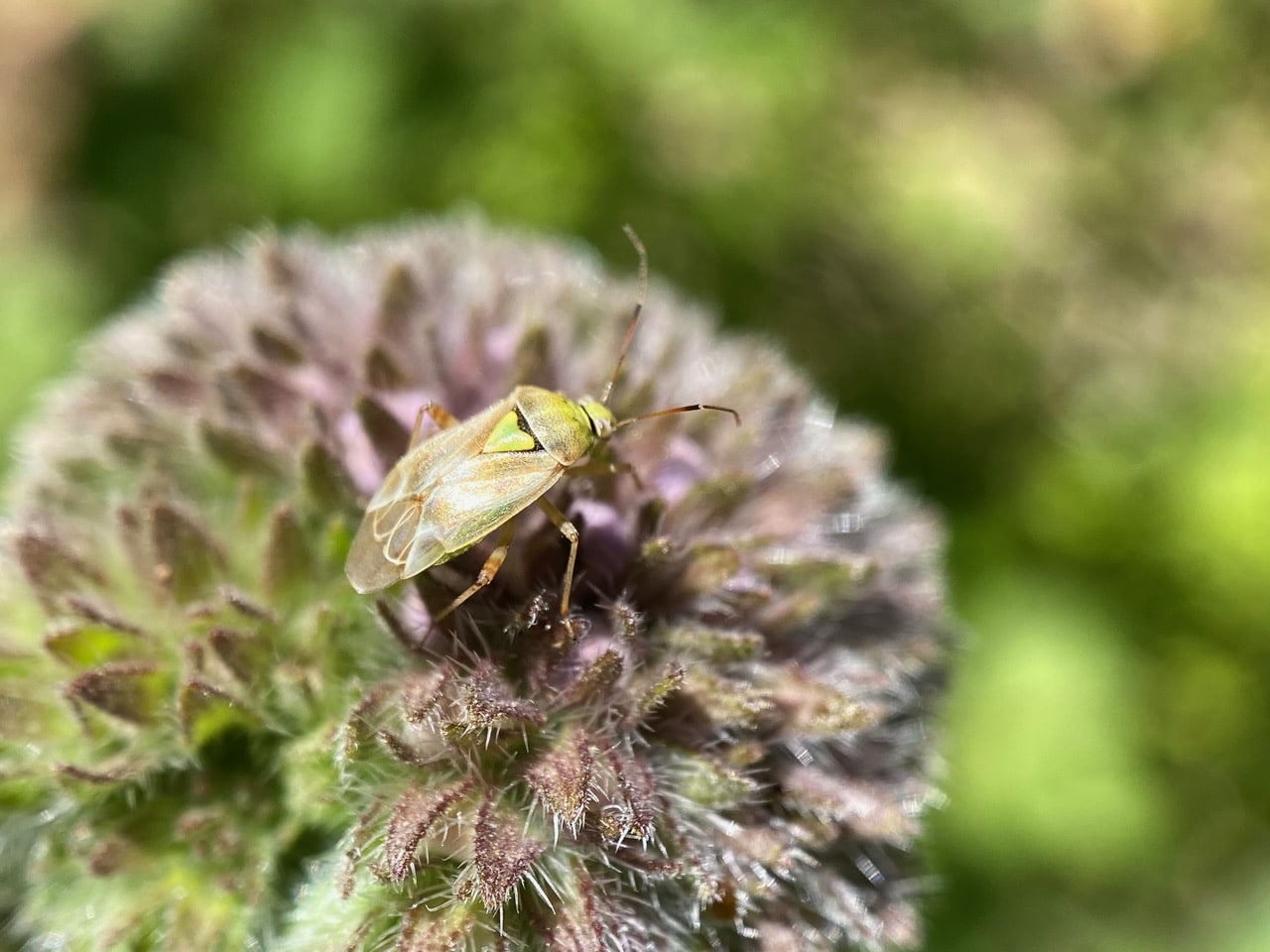
A Western Tarnished Plant Bug, Lygus hesperus (family Miridae) is roaming an immature inflorescence of California Phacelia.
Commonly referred to a Lygus Bug, the species is a serious pest on strawberry in the Central Coast of California. Adults are about 6 mm long, oval and rather flattened. They are greenish or brownish and have reddish-brown markings on their wings. In the center of their back is a distinct, bur small, yellow or pale green triangle that helps distinguish them from other insects. The cunei (singular cuneus), triangular-shaped areas near the end of the forewings are translucent, blending with the coloration of surrounding body parts. The immature forms are pale green and resemble aphids. They can be distinguished from aphids by their more rapid movements.
In general the Lygus Bug’s abundance is highest after winters of higher rainfall. This causes more lush grows of vegetation such as mustards and other weeds that support a higher abundance and survival of the bugs during the winter and spring. Damage to crops and garden plants are caused by the bugs’ piercing-sucking mouthparts that extract fluids from the plant tissues.
One useful feature in identifying members of the family Miridae or plant bugs is the presence of a cuneus; it is the triangular tip of the corium, the firm, horny part of the forewing, the hemielytron. The cuneus is visible in nearly all Miridae.

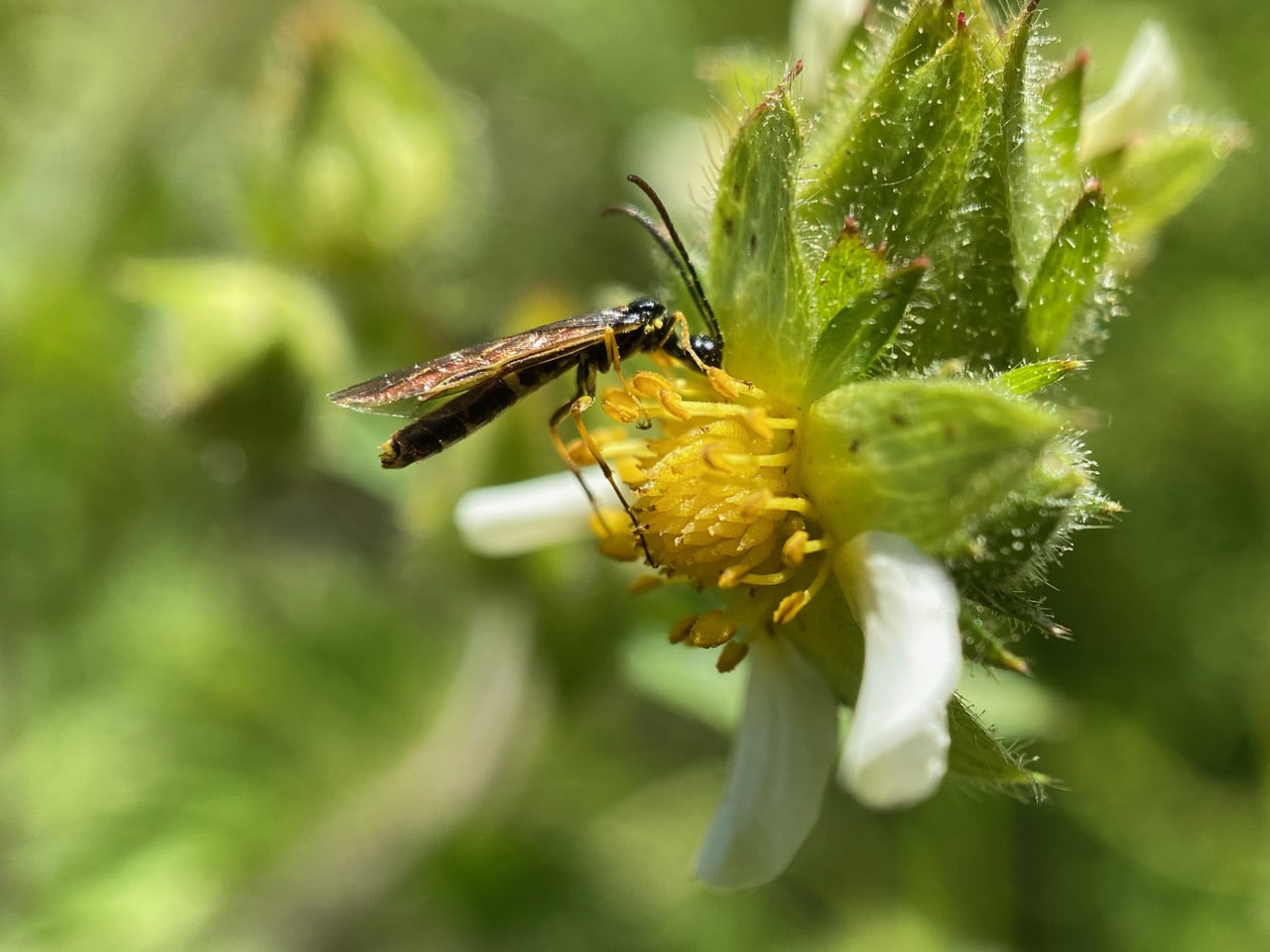
A Stem Sawfly, Calameuta sp.(family Cephidae) is seeking nectar on a flower of Sticky Cinquefoil, Drymocallis glandulosa.
Sawflies are part of the insect order, Hymenoptera, together with bees, wasps and ants. They are considered to be the most primitive group and form the sub-order Symphyta. They differ from the bees, wasps and ants in not having a narrow ‘waist’ and in their wing venation. The common name comes from the saw-like ovipositor that the females use to cut into plant tissues to lay their eggs. Larvae are caterpillar-like and can be distinguished from lepidopteran caterpillars in that all body segments following the three bearing true legs have a pair of fleshy prolegs. Like the lepidopteran caterpillars, sawfly larvae walk about and eat foliage. In many species, the larvae feed in groups.
Stem Sawflies in the family Cephidae feed on grasses (including grain crops) and shrubs (including berries, roses, willows). The larvae bore in the stems. The genus Calameuta is found in western North America. Calameuta larvae are grass stem borers. Adults are commonly attracted to yellow flowers.
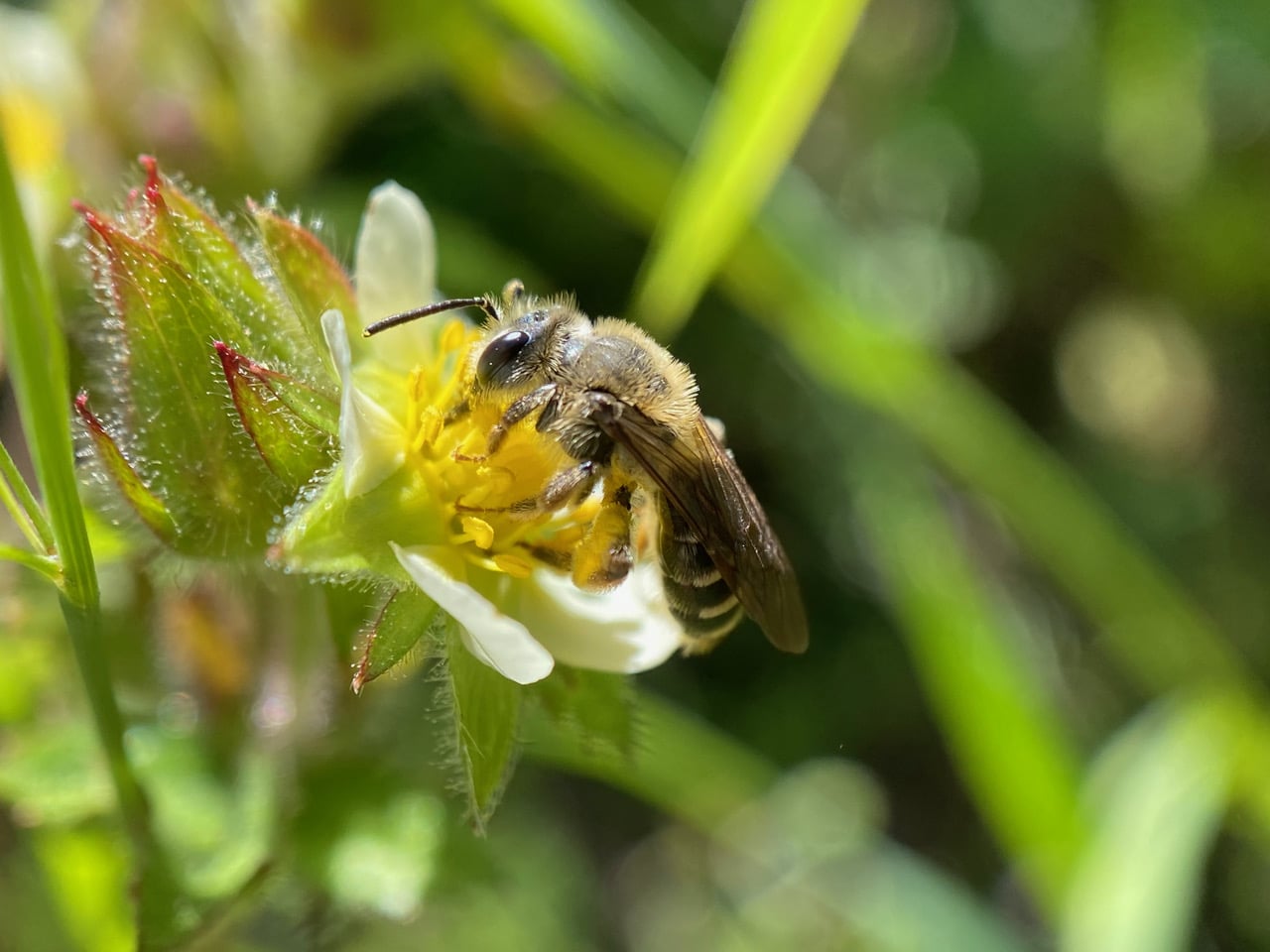
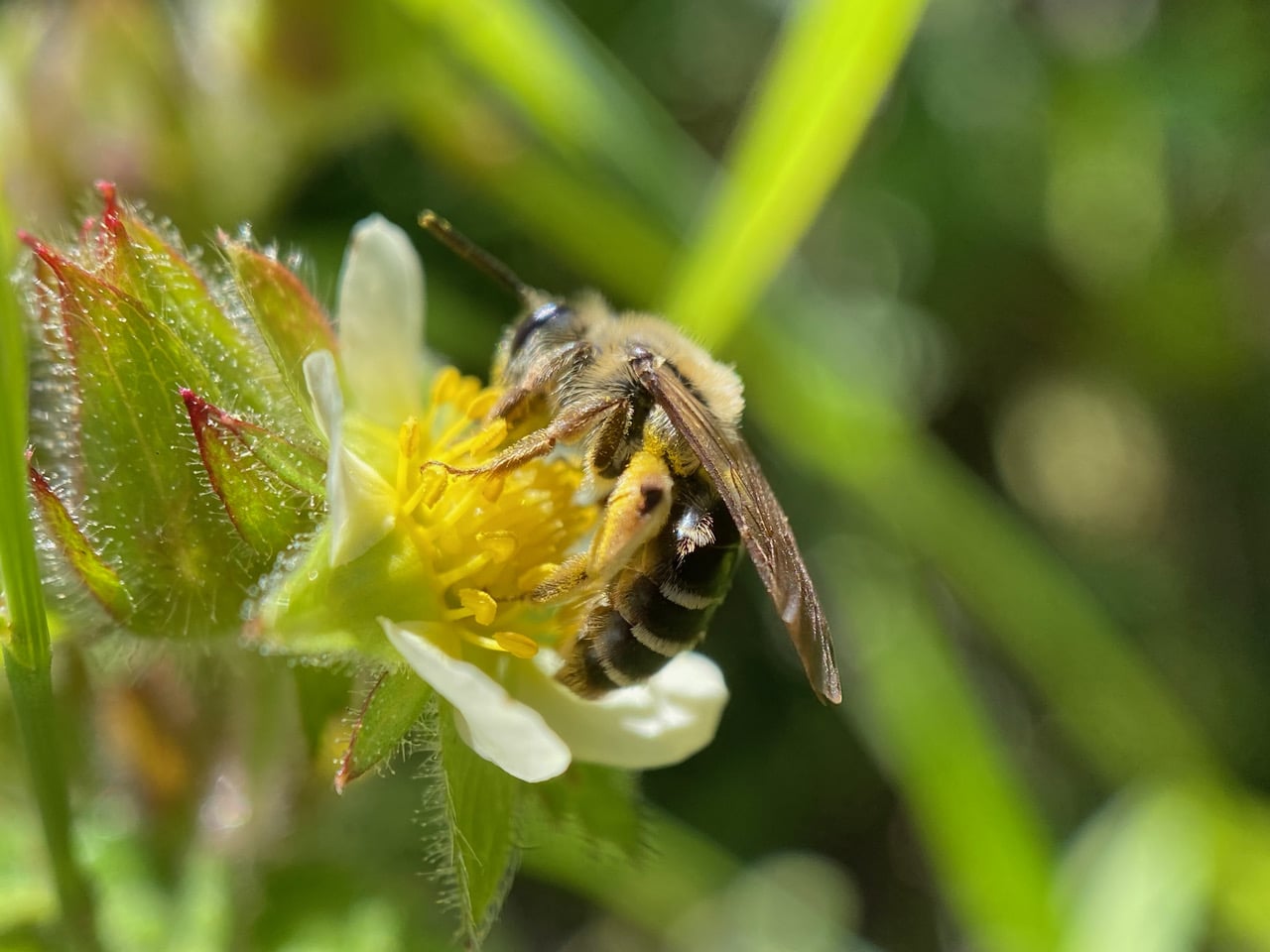
A Mining Bee, Andrena sp. (family Andrenidae) is foraging on a flower of Sticky Cinquefoil.
Andrenidae is the largest of all bee families, with more than 4500 species in more than 40 genera. These bees are found worldwide, mostly in the western hemisphere. Sometimes called mining bees, Andrenidae nest in the ground. All Andrenidae line their nests with a waterproof substance secreted by the female to protect her young from soil moisture and bacteria.
Andrena is one of the largest bee genera in the world. The floral preferences of Andrena species span the range of bee diets; some are broad generalists, and a number are strict specialists. Andrena are among the first bees to fly in the spring; their ability to withstand the chill is still a puzzle to scientists. The bees can’t fly until their body temperatures reach 50-60 F. They rely on the warmth of the sun to get them to speed, and it is not uncommon to see them warming up on leaves or rocks. This cold-hardiness makes Andrena excellent pollinators of early spring wildflowers and cultivated crops.
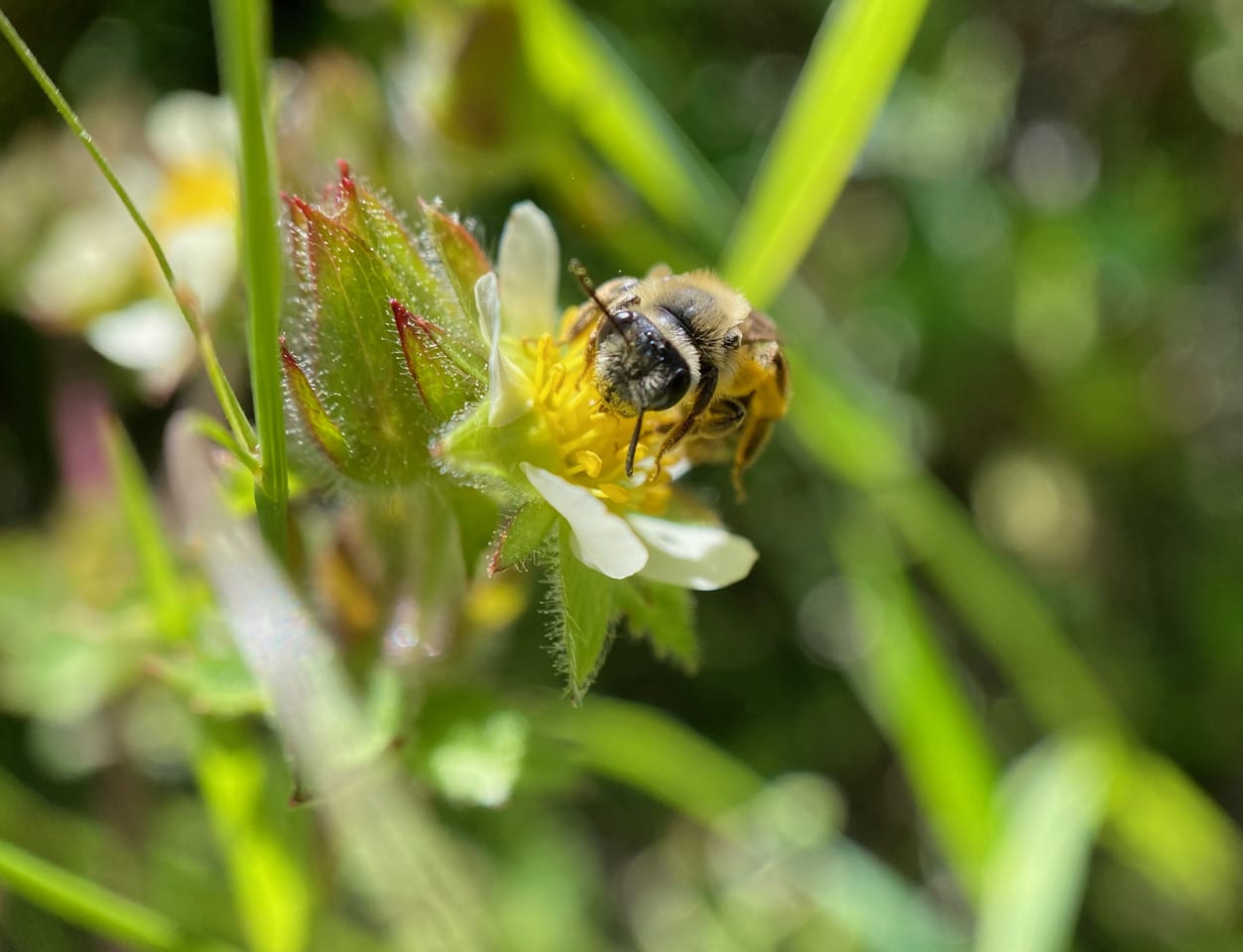
A front view of the bee’s face shows a facial fovea – a hair-lined depression between the eyes and antennae. This feature is characteristic of the genus Andrena.
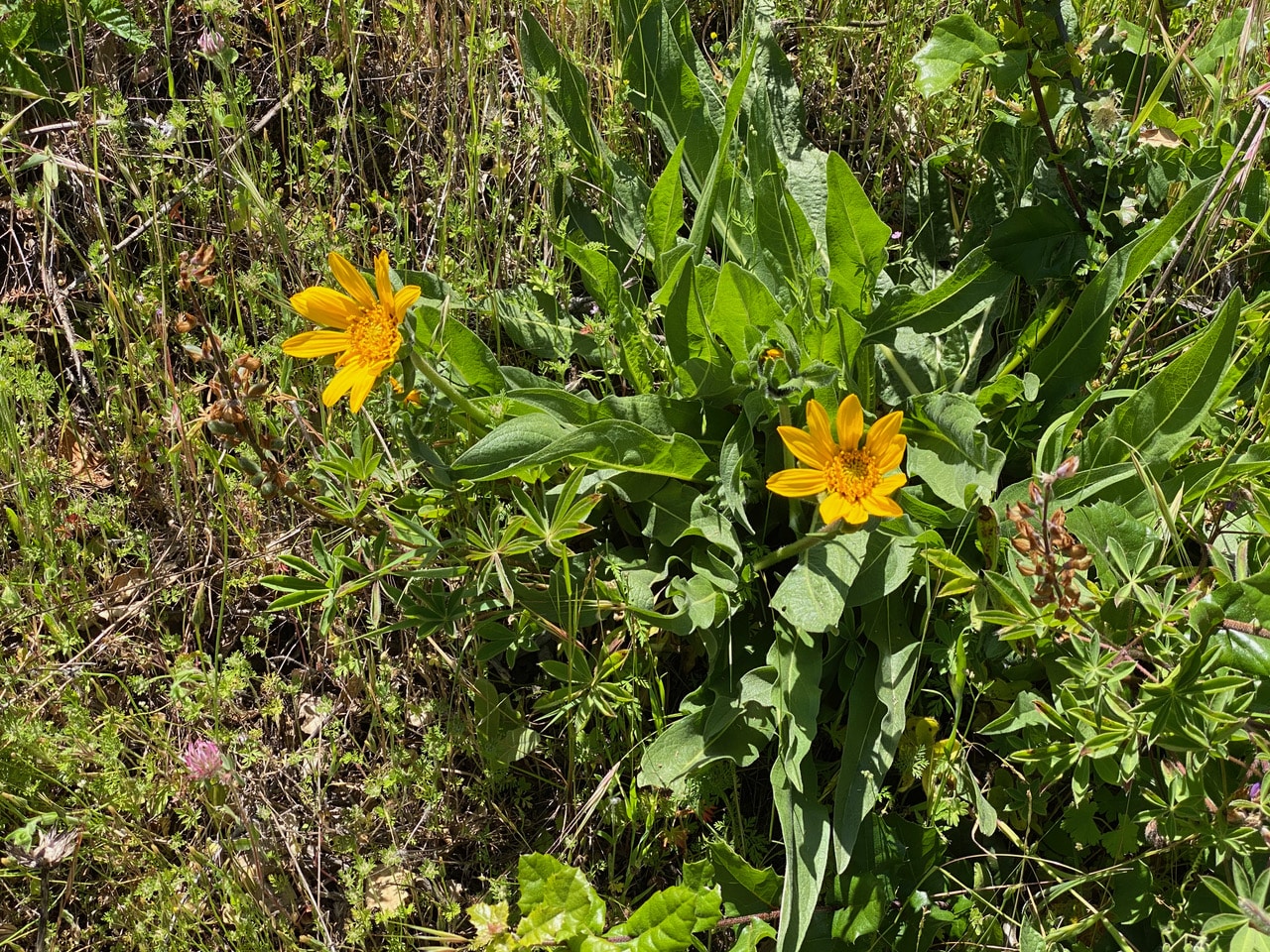
While most of the Woolly Mule Ears have gone to seed, our second species of Mule Ears is starting to bloom! The Narrow-Leaf Mule Ears, Wyethia angustifolia is a smaller plant, with green, relatively hairless leaves.
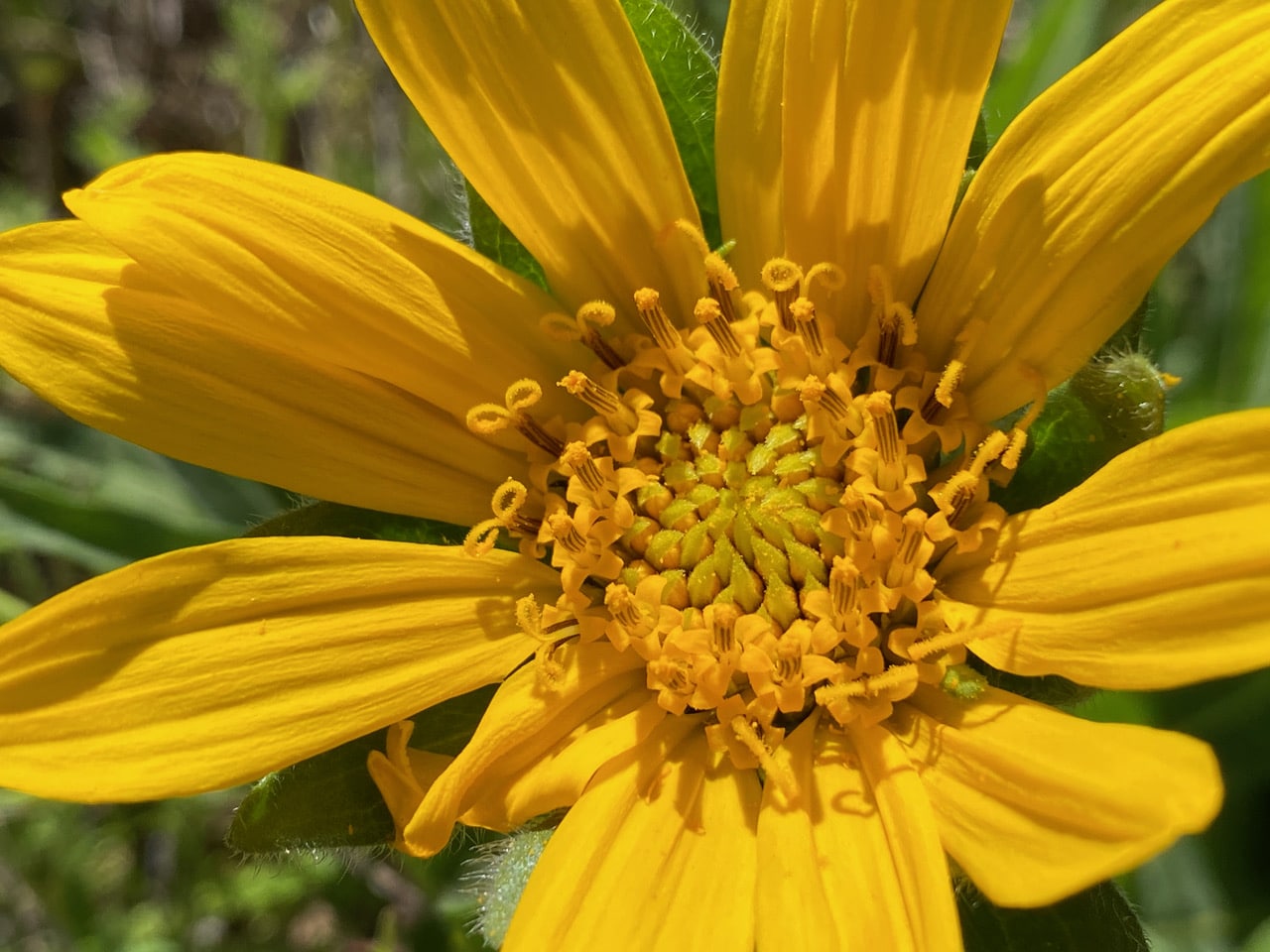
In Asteraceae, what is commonly mistaken as a “flower” is in fact not a single flower, but an inflorescence of numerous flowers, packed in the center of the flowerhead or capitulum. The individual flowers or florets are star-shaped, and made of 5 fused petals. The flowers clustered in the middle are called disc flowers, while the ones on the rim are called ray flowers. The latter have an irregular corolla – tubular at the base but elongated on the outside into a generally flat projection, the ray, or ligule. The rays are the petal-like parts. Asteraceae
Flowers in the sunflower family have another unusual feature: secondary pollen presentation. Each individual flower is roughly tubular in shape, and, the anthers are tucked inside the tube facing the interior of the flower. Members of the sunflower family are protandrous, meaning the male parts mature before the female parts. The flower relies on the female parts to bring the pollen out of the floral tube and into the environment where the pollinators can access it. In many cases, the style acts like a tiny piston, literally pushing the pollen out into the world. After some time, the style splits at the tip and each side curls back on itself to reveal the stigmatic surface. Only at this point are the female parts of the flower mature and ready to receive pollen. With luck, much of the flower’s own pollen would have been collected and taken away to other plants by pollinators. Self-pollination is thus avoided.
My naturalist/writer friend David Lukas has recently written about this topic, with fascinating details. Assembling a Composite
A Northern Checkerspot butterfly, Chlosyne palla (family Nymphalidae) visits a flowerhead of Mule Ears for nectar.
Males perch in valleys or patrol near host plants for females. Eggs are laid in groups on the underside of host plant leaves, which the caterpillars eat. The caterpillar of this species feeds on goldenrod (Solidago), rabbitbrush (Chrysothamnus) and asters – all members of Asteraceae. Caterpillars feed together when young, sometimes in a slight silk web.