

Pollinator Post 5/26/23 (3)
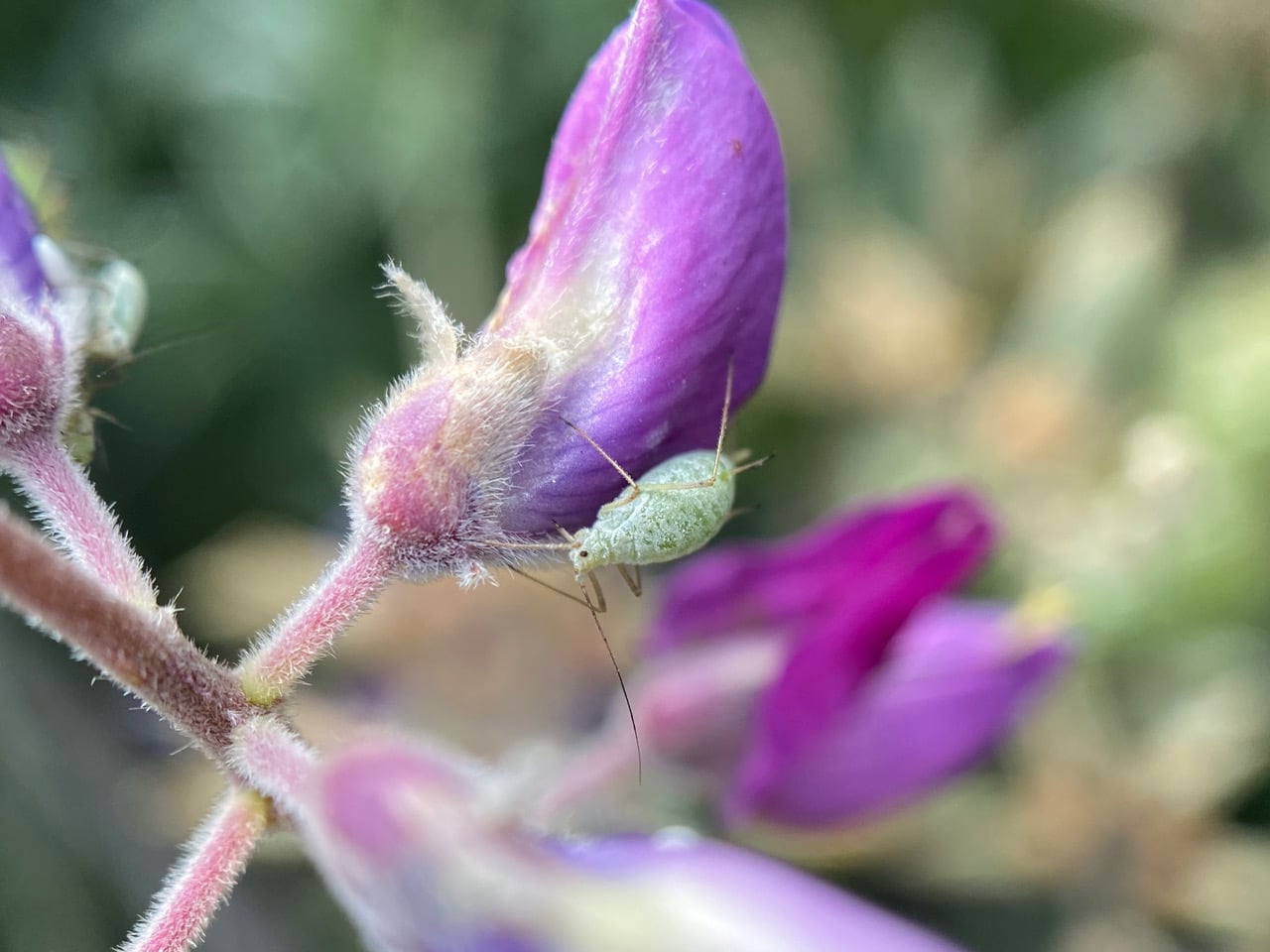
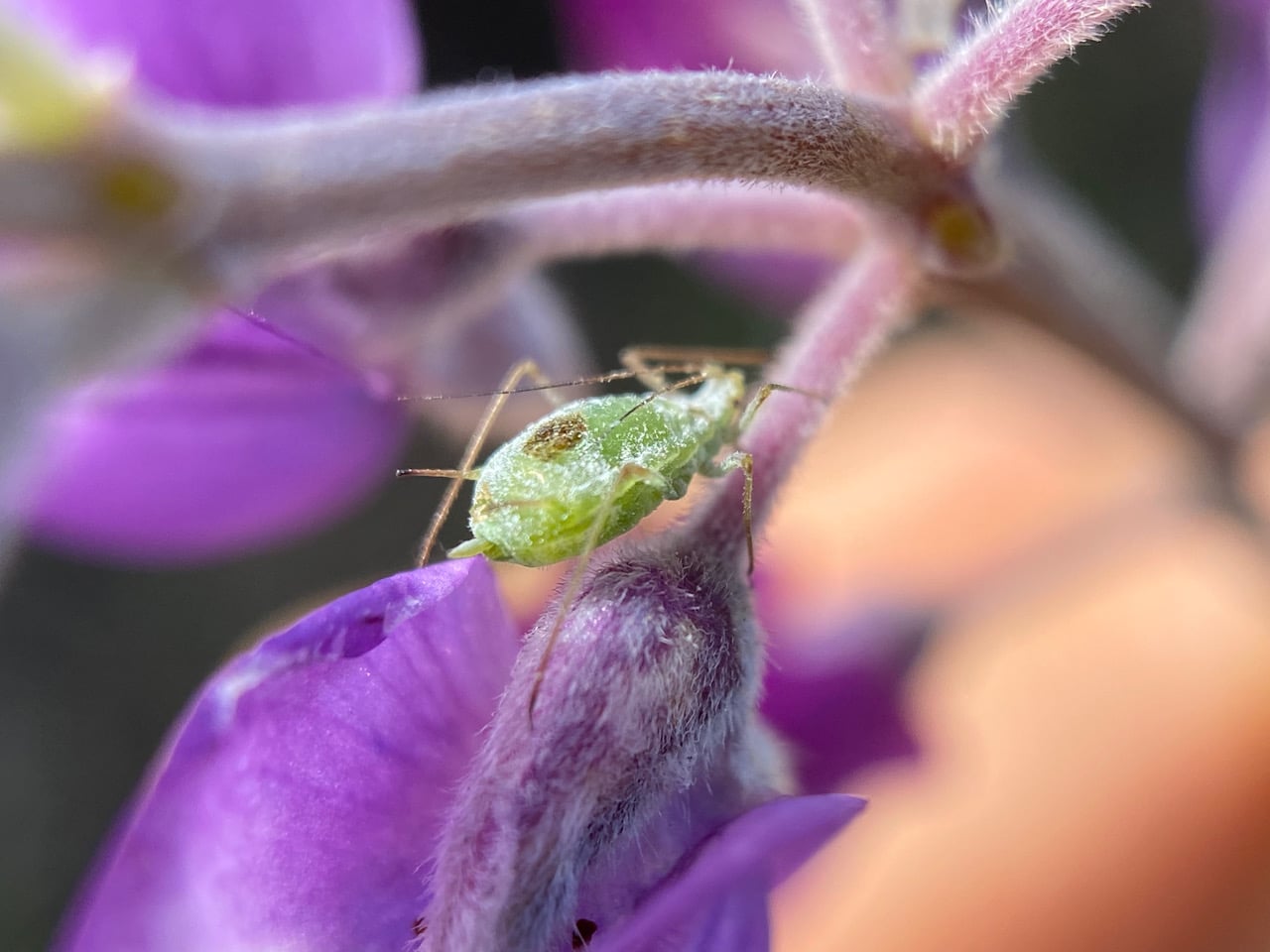
I am glad I didn’t turn back before reaching Diablo Bend. I would’ve missed the aphids on the Silverleaf Lupines. For a while, I have thought that the initial aphid infestation on the plants in early spring has resolved itself. I am rather surprised to see this plump aphid on a flower today.
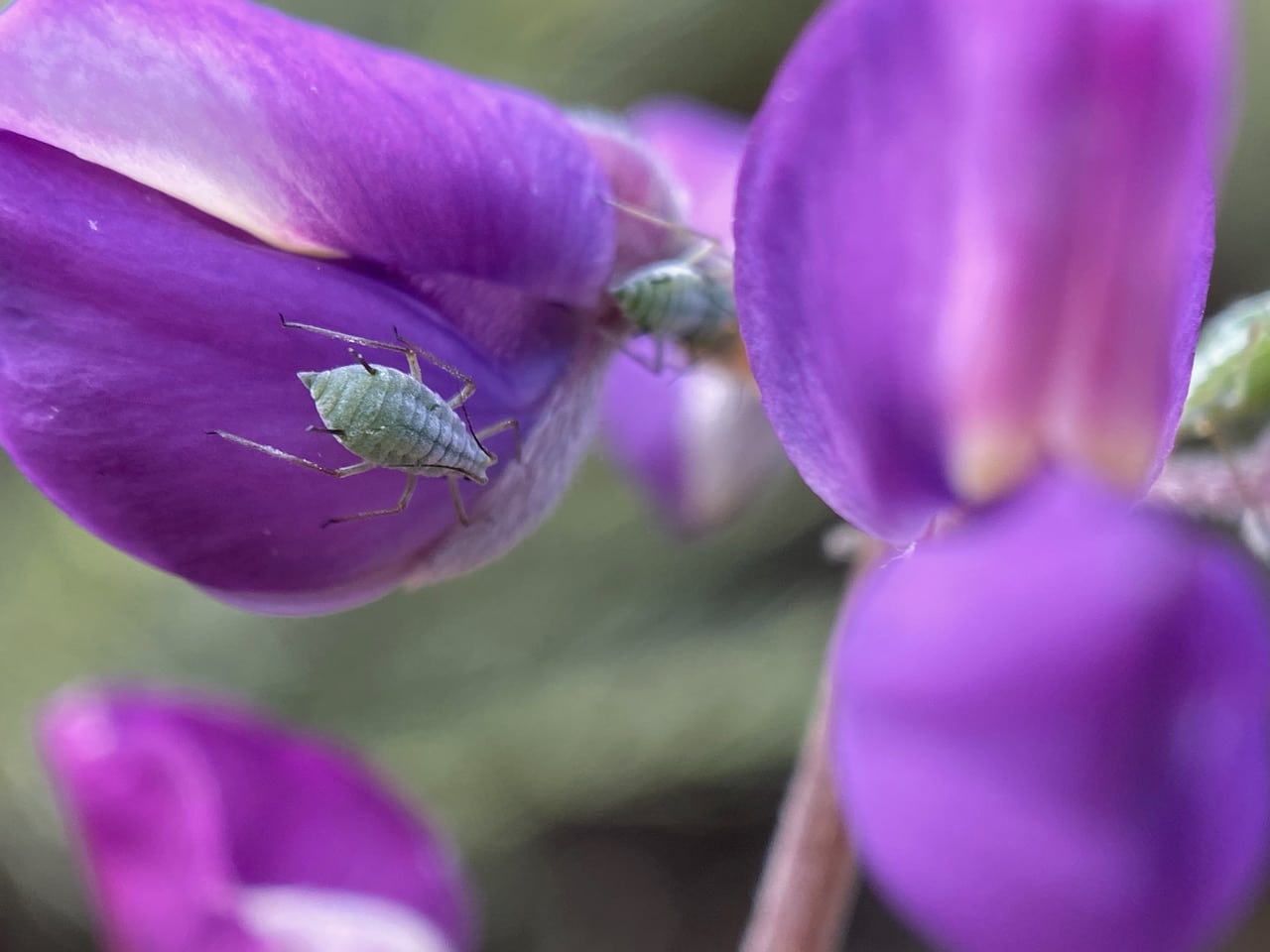
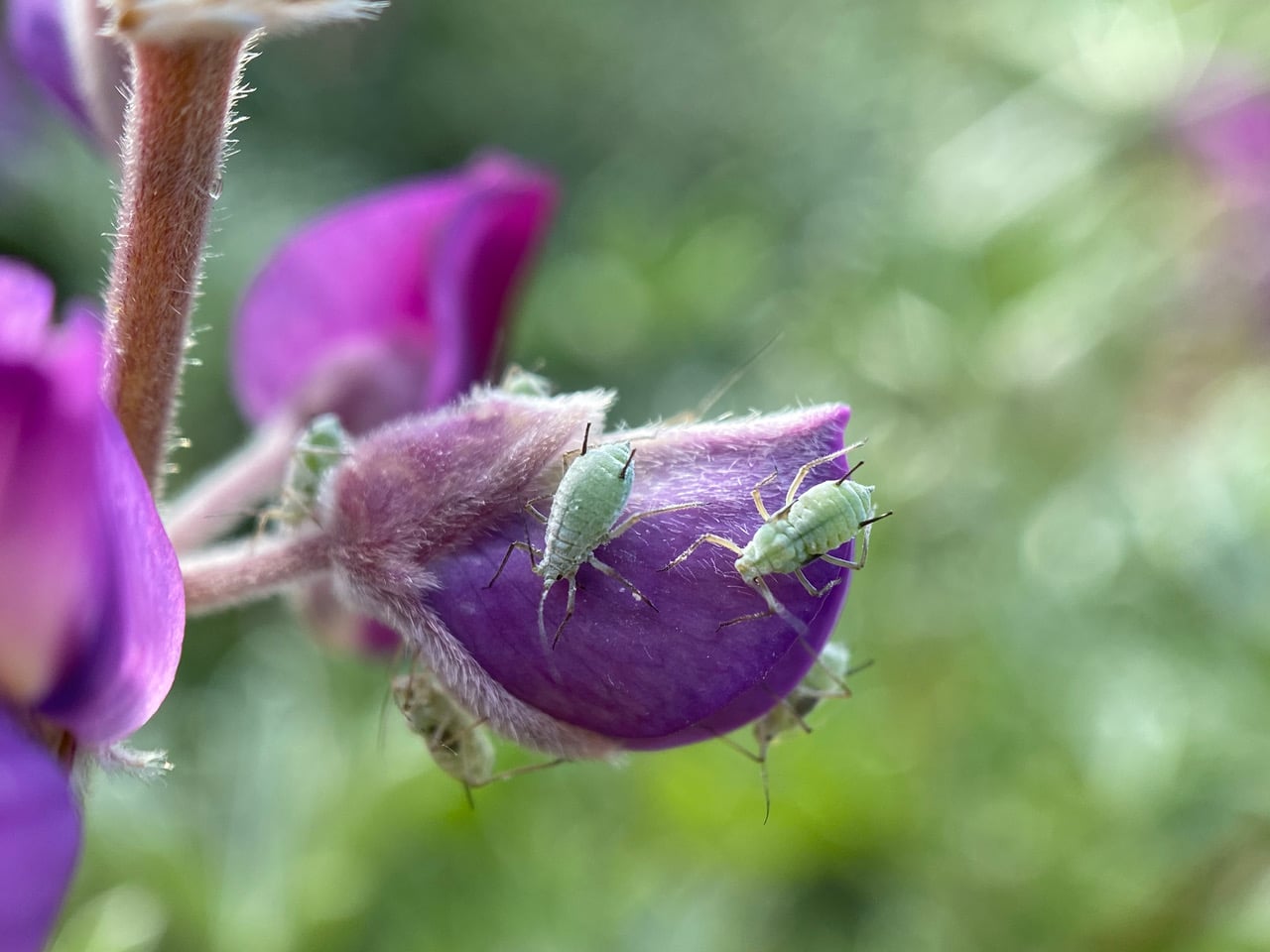
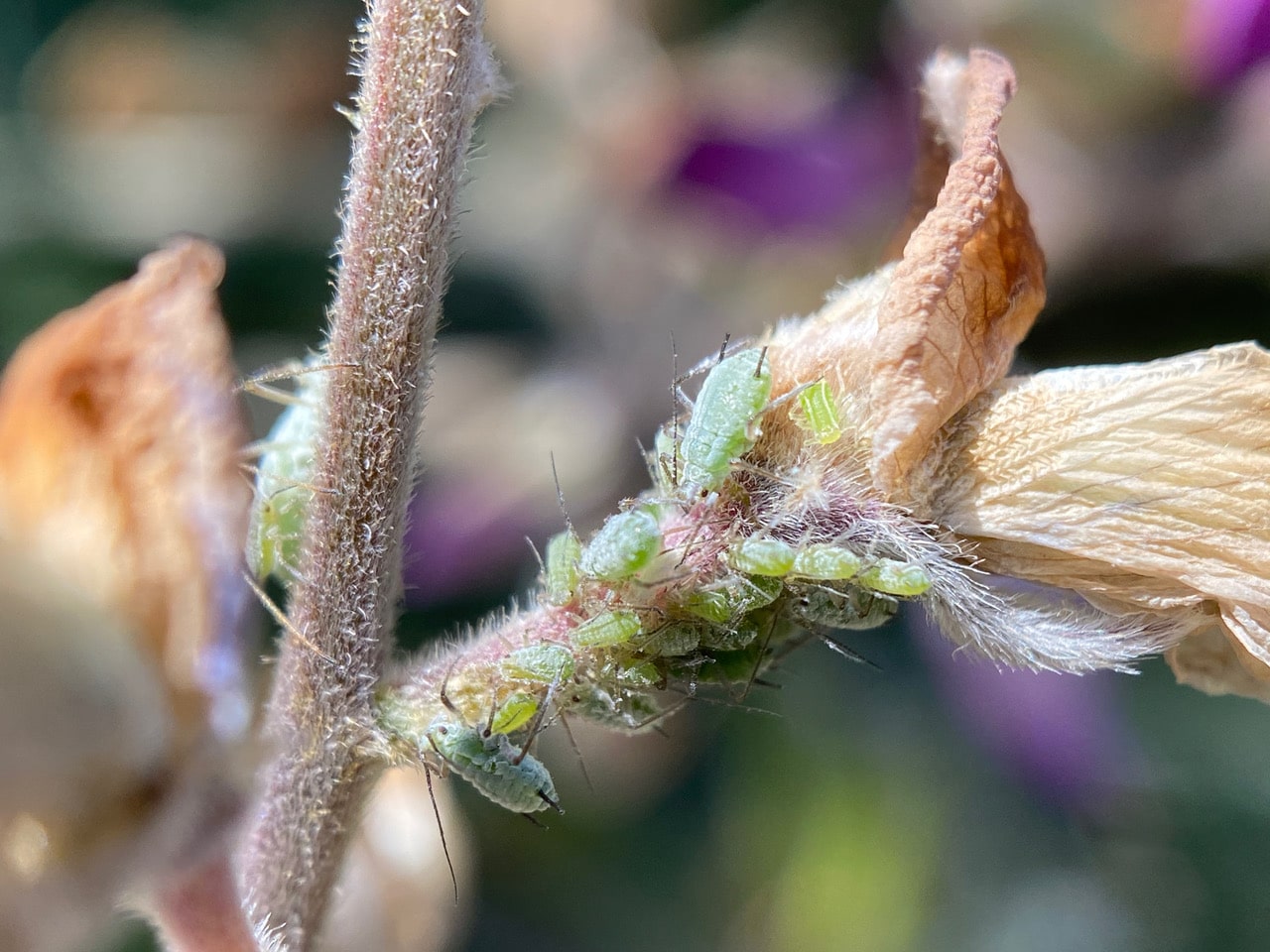




Then I see more of the aphids…
And more…
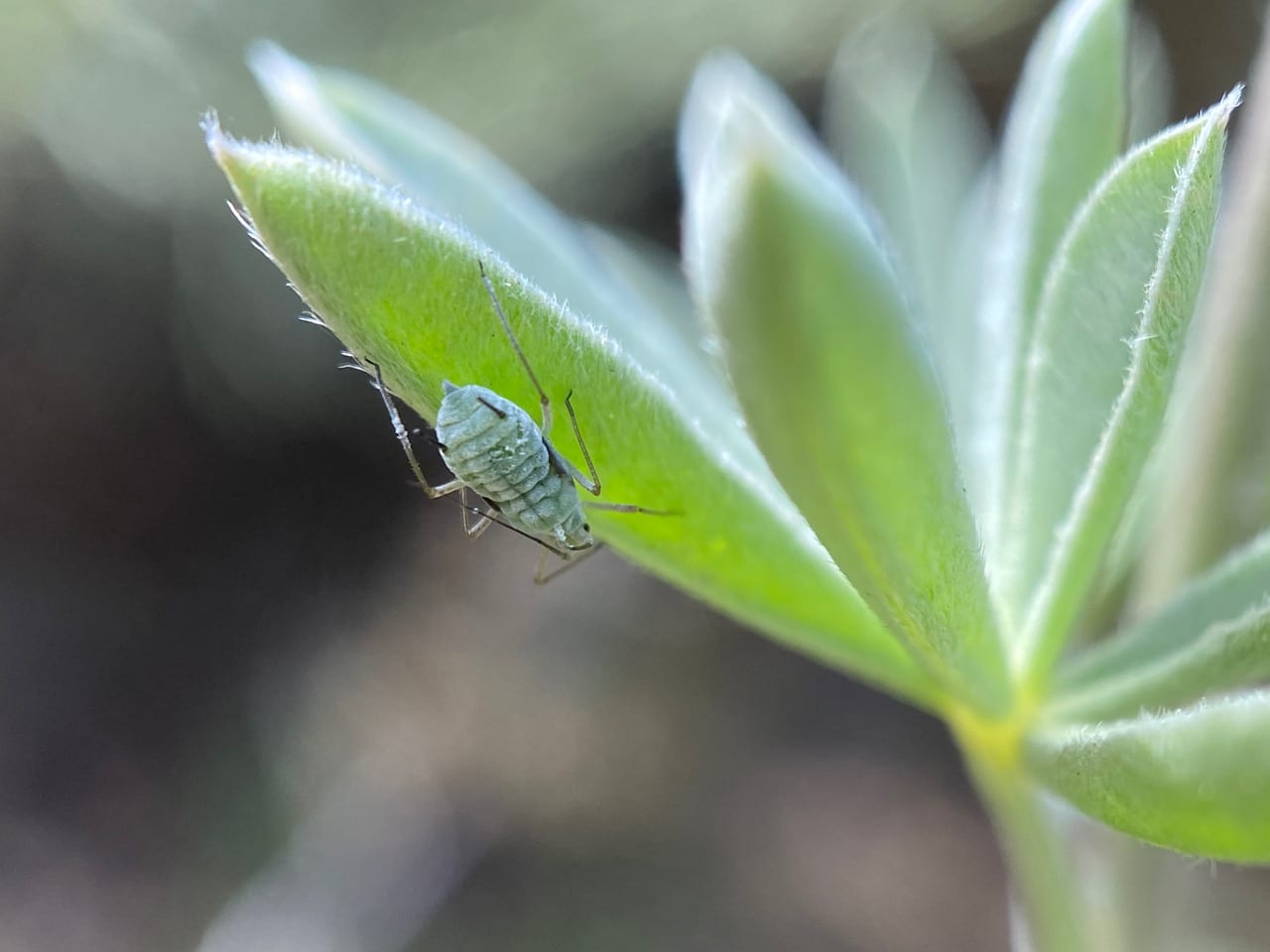
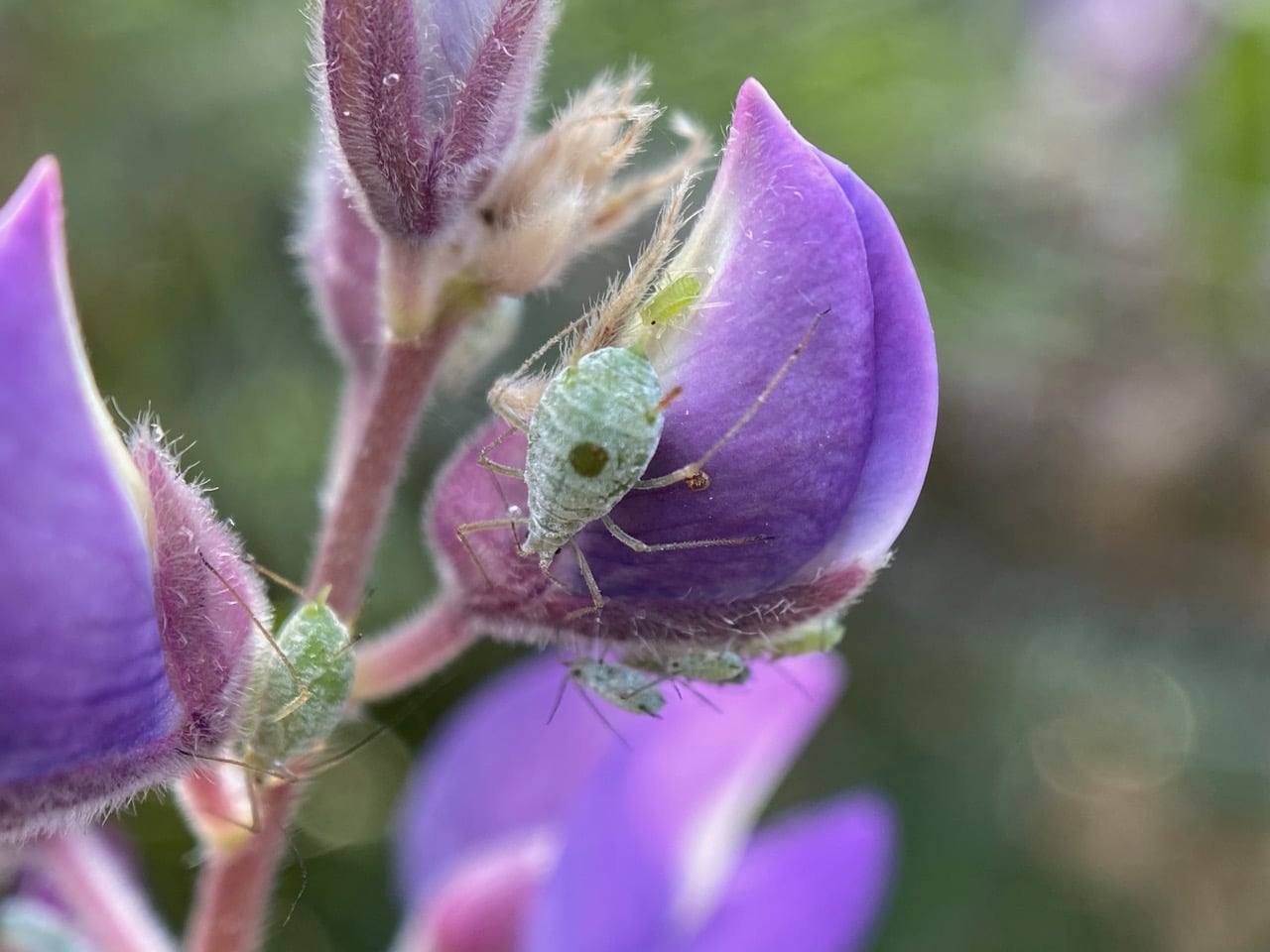
The Lupin Aphid, Macrosiphum albifrons is specific to lupines and spends its entire life cycle on lupines. It has been recorded from 21 Lupinus species. It lives mainly on the leaves, stems and flower spikes. Originating in North America, it has spread to England and much of Europe, where it is considered an invasive pest. The aphids sequester the toxic alkaloids of their host plant for their own defense. As aphids go, this species is rather large, and they are dusted with a powdery white wax. Waxy secretions on the integument of aphids are thought to limit their contact with the sticky, sugary honeydew excreted from the same or other individuals in the colony, and possibly providing protection against fungi, parasitoids, predators, dehydration and/or frost. This species is not known to be tended by ants.
A Lupin Aphid on a leaf.
What happened to this large aphid? It has a dark wound on its back.
There are even aphids on the aborted flowers. These are nymphs – how are they going to grow up when there’s no longer fluids and nutrients flowing their way? Aphids are rather sedentary, hardly moving around much.
Here’s another large aphid with a dark wound on the back. A predator with a piercing mouthpart, like a bug? It appears that aphid reproduction is still going on. Tiny babies are still being produced.
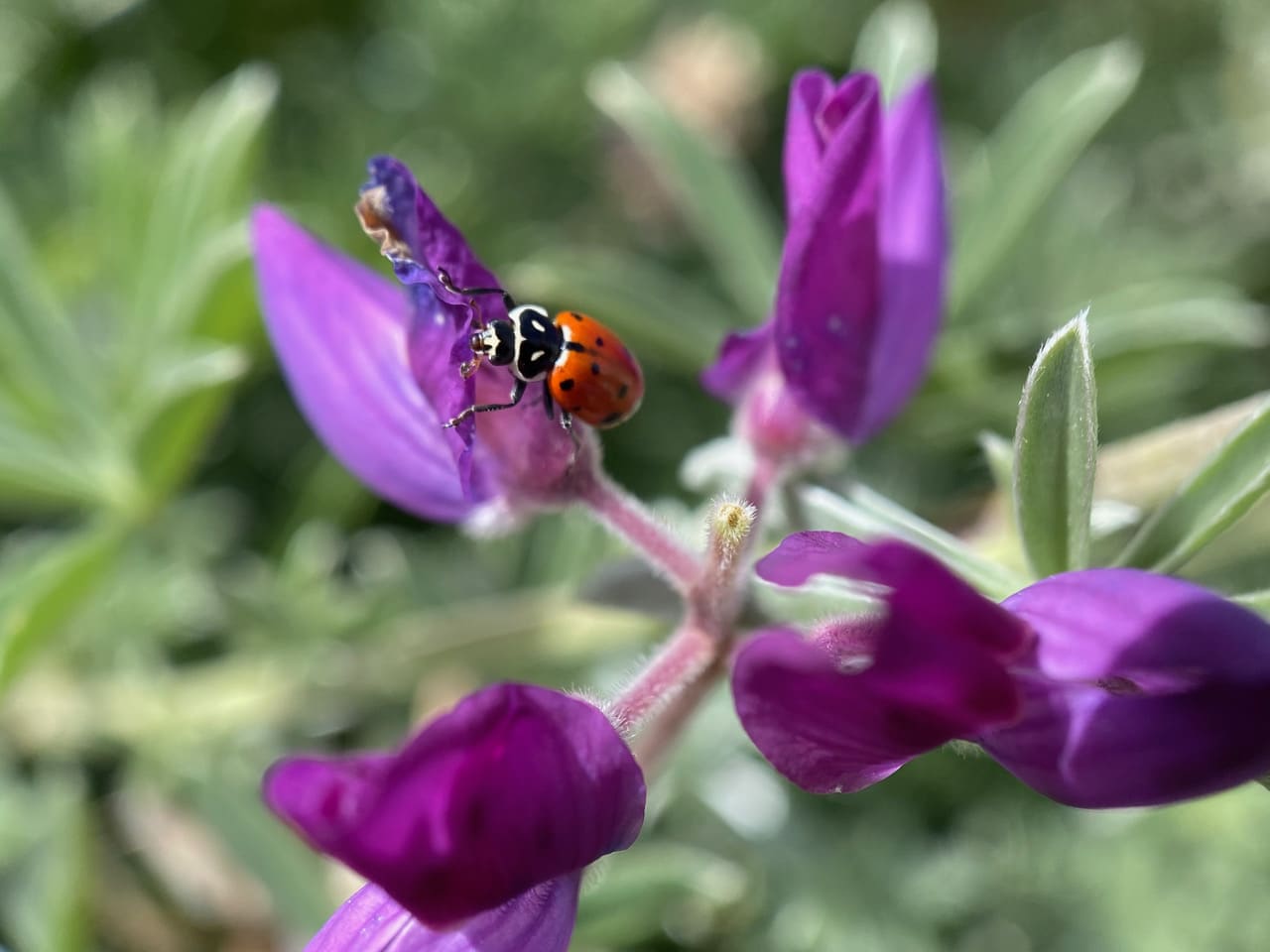
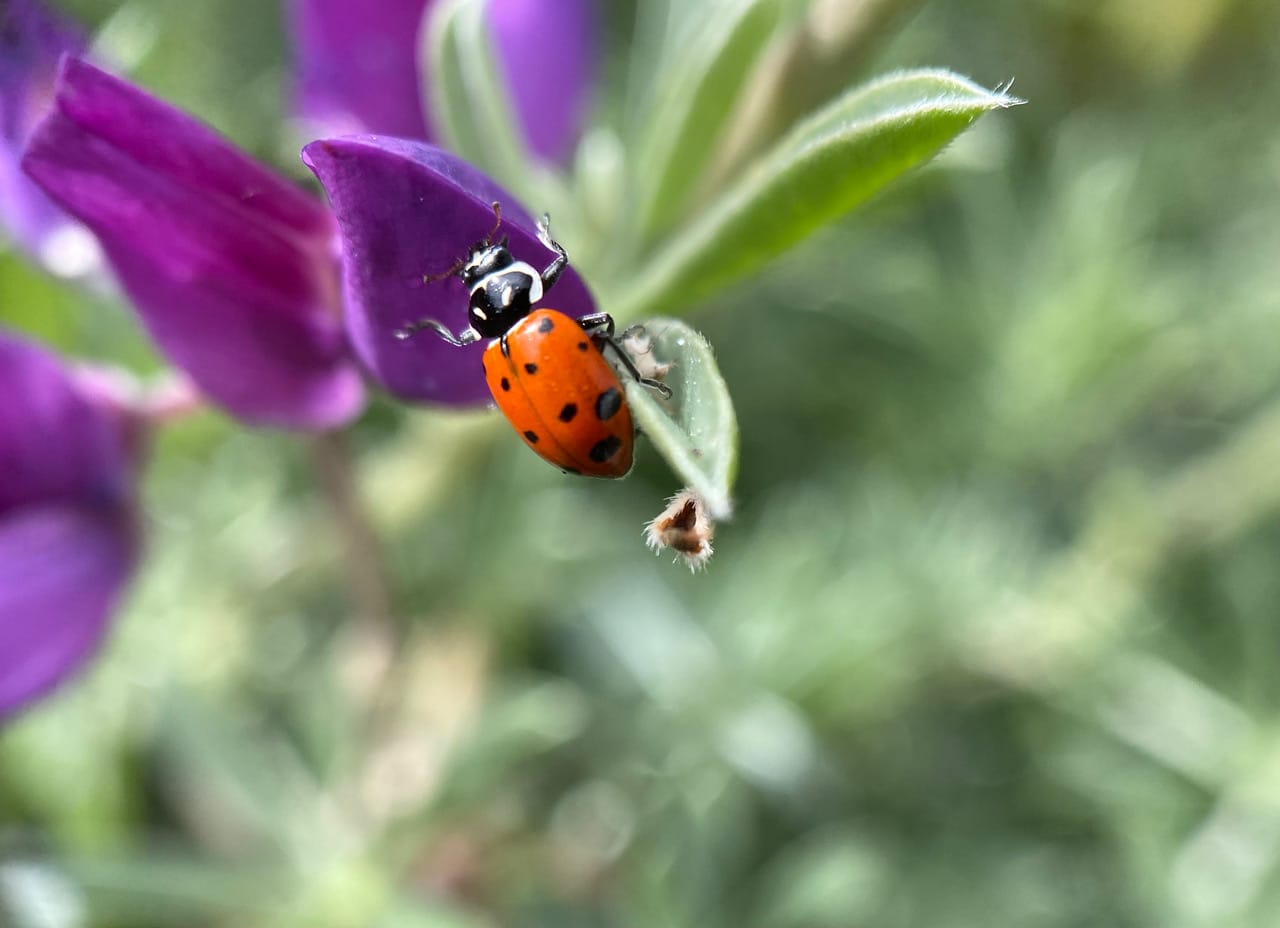
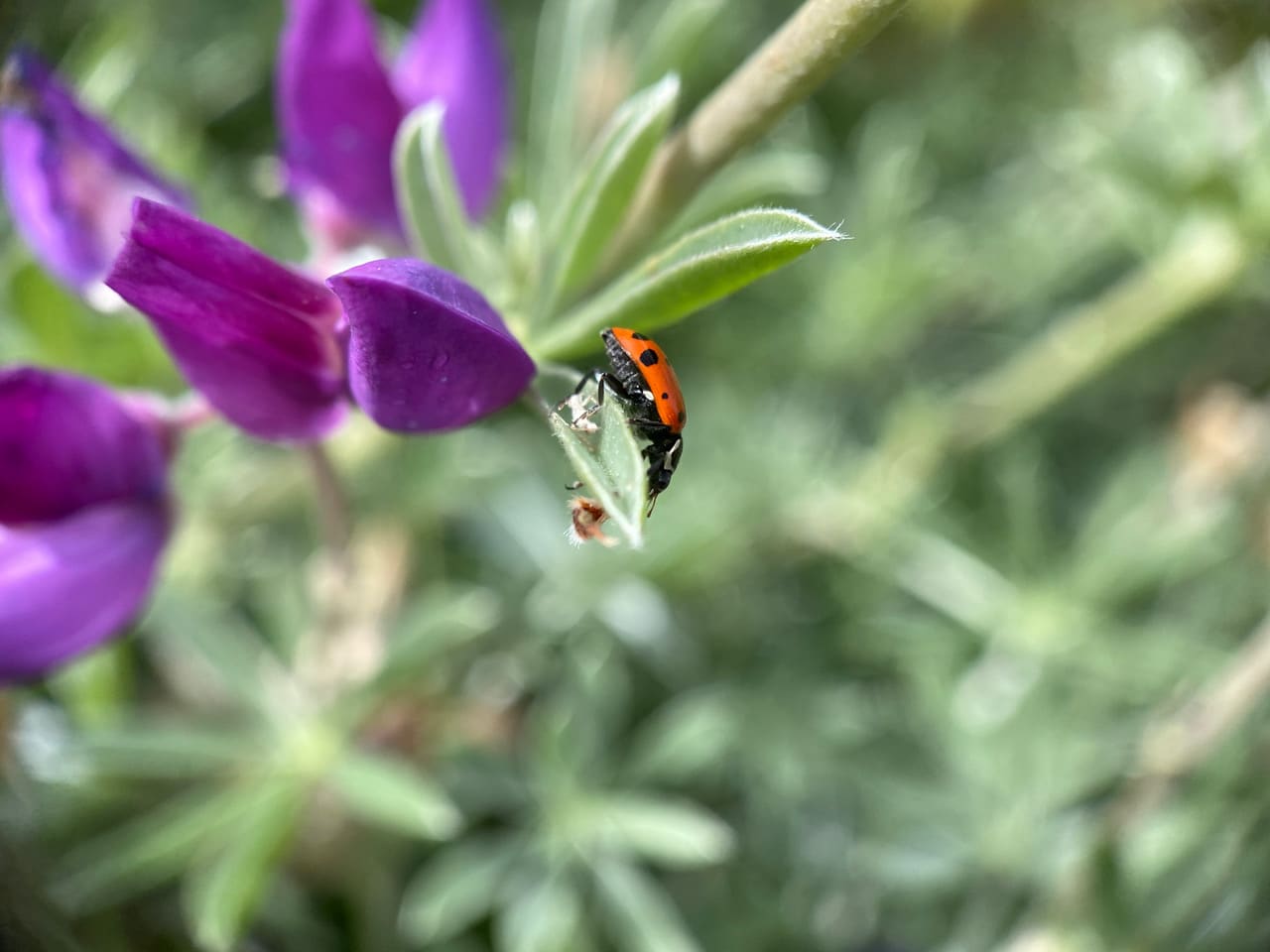
Several Convergent Ladybeetles, Hippodamia convergens (family Coccinelidae) can be seen hunting on the lupine.
They are very thorough in their search, checking every nook and cranny on the plant, especially the fresh flowers where aphids are most likely to be found.
A Convergent Ladybeetle may eat its weight in aphids every day as a larva and consume as many as 50 aphids per day as an adult.
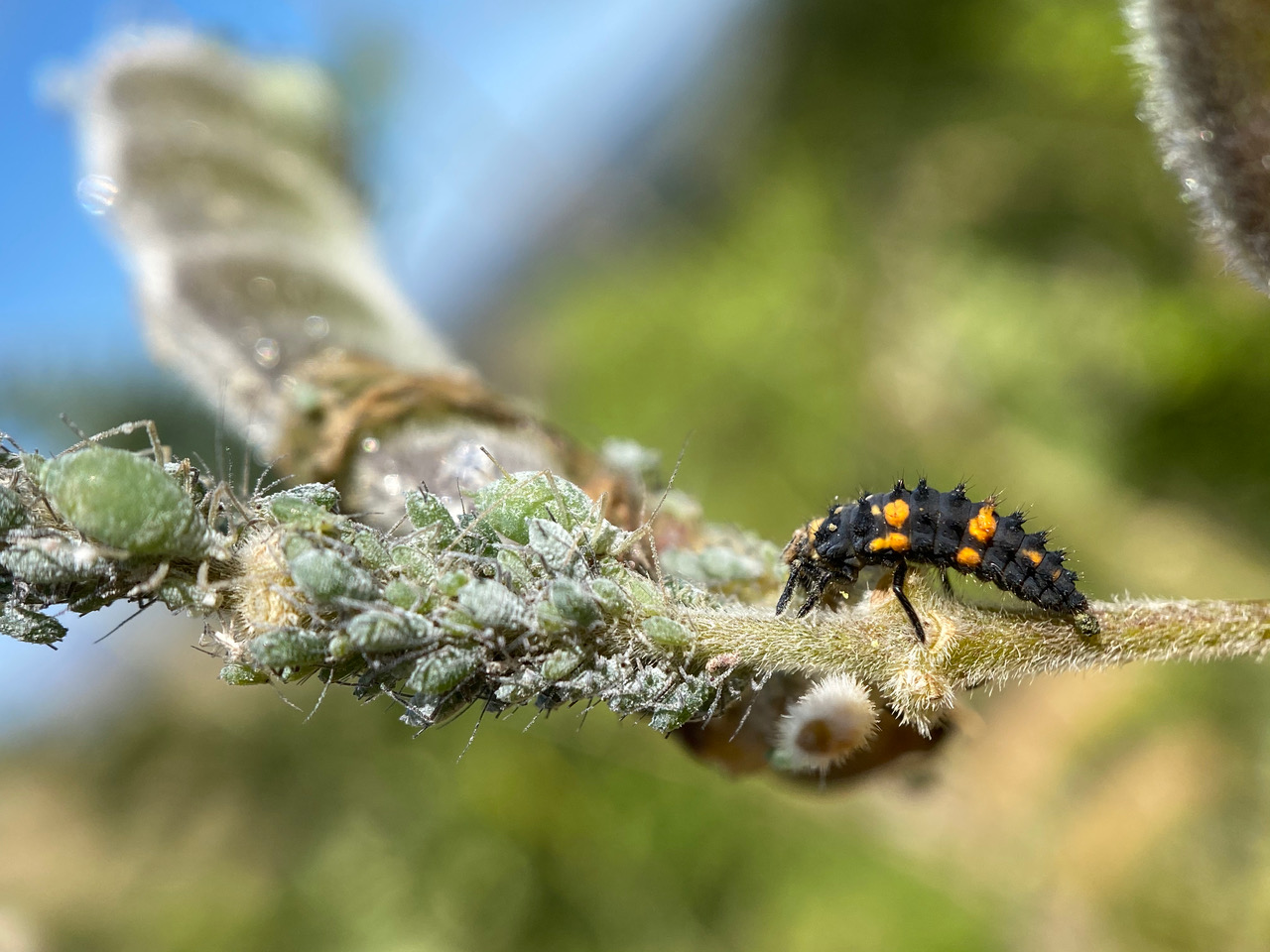
Hey, A Ladybeetle larva, also an aphid predator!
Ladybeetle larvae are dark and alligator-like with three pairs of prominent legs. There are usually patches of cream, yellow, or orange on their body segments. They feed primarily on aphids, mites, small insects, and insect eggs.
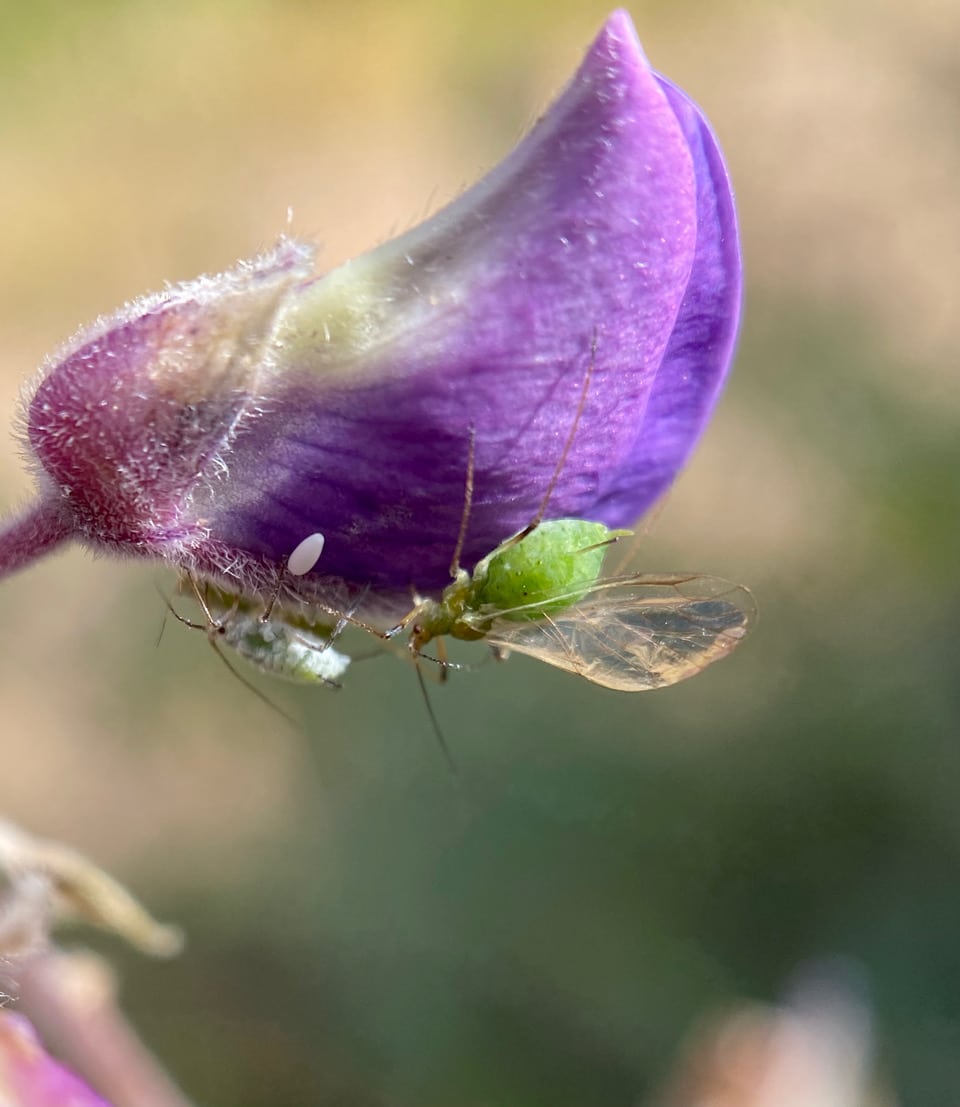
Ooh, a Hoverfly egg! A Hoverfly (family Syrphidae) has laid an egg near the aphid colony. Seen here are an aphid nymph and an alate (winged individual). Alates are usually produced when the colony is overcrowded, the food resources are dwindling, or when predation pressure is high. The winged aphids disperse in search of greener pastures.
Syrphid eggs look like miniature grains of rice, about 1 mm long or less, white or grayish. The underside is flattened and the top and sides are convex. Eggs are usually laid singly near aphids, to ensure that there’s no competition for food for the larva when it hatches out. Syrphid larvae are voracious predators of aphids.
On the other side of the trail my eyes gravitate to a Seven-spotted Ladybeetle, Coccinella septempunctata (family Coccinelidae) resting head-down on a lupine pea pod.
Native to Europe, the species has been repeatedly introduced to North America as a biological control agent to reduce aphid numbers. It has since spread to many states, where it has outcompeted some native species, including the Coccinella. The Seven-spotted Ladybeetles are large; adults may reach a body length of 0.5 in. Their distinctive spots and conspicuous colors warn of their toxicity, making them unappealing to predators. When threatened, the beetles can secrete a fluid from joints in their legs which gives them a foul taste.
Looking up from the Ladybeetle, I realize why it is there – a dense aggregation of aphids! These pea pods are already withering. Seven-spotted Ladybeetle adults may consume several hundred aphids per day and each larva eats 200 to 300 aphids as it grows.
On a separate branch of the same lupine, a Ladybeetle larva is feeding on aphids, clearing the stem as it moves up.
Thanks to all this natural pest control, the aphid infestations have been kept relatively low, limited only to three or four adjacent Silverleaf Lupine along the trail at Diablo Bend. The plants with light aphid infestation go on to produce good crops of seed pods.
Previously posted on 4/27/23 (1)
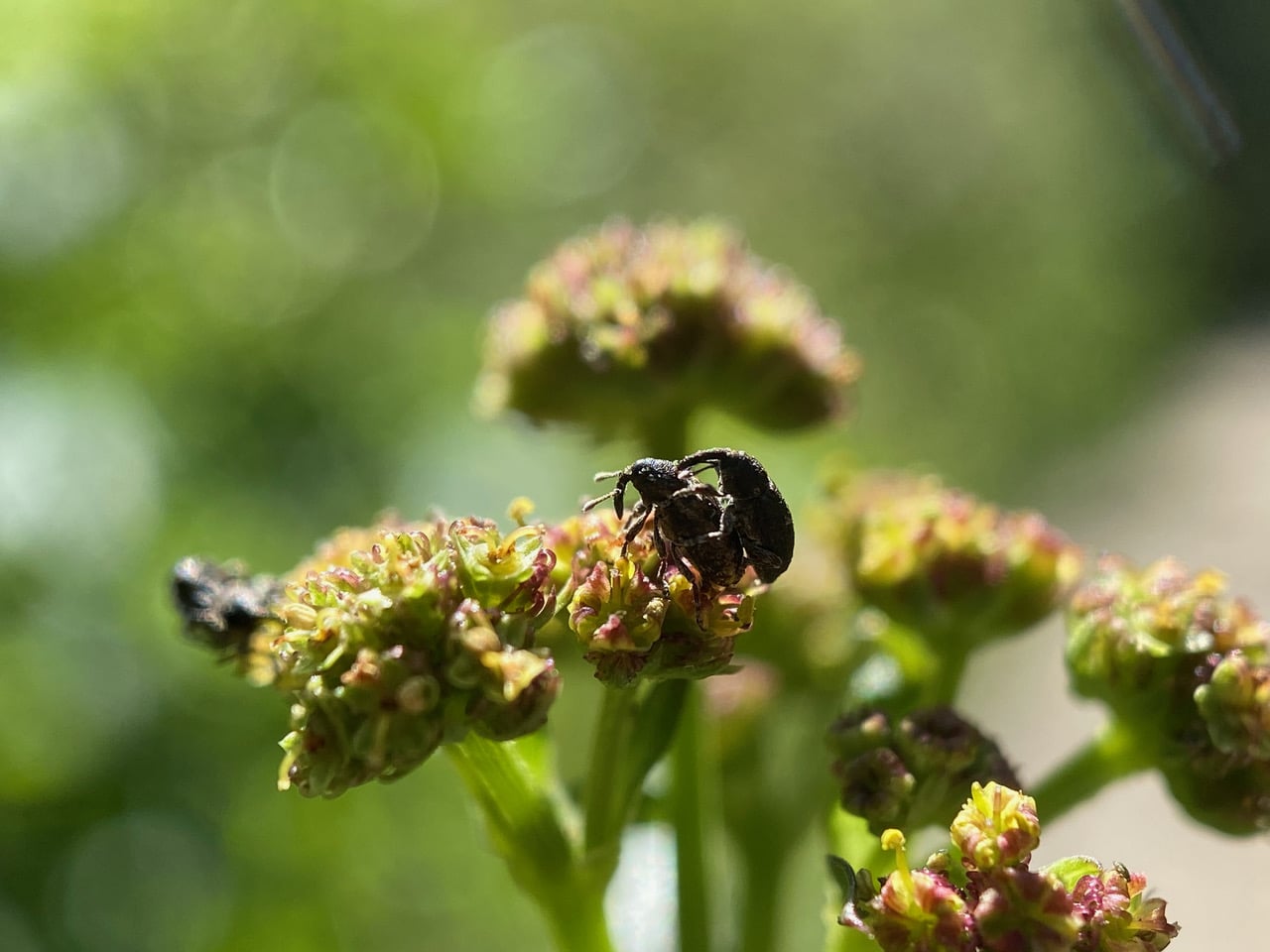
More weevils in copula! These tiny weevils are apparently specific to the Pacific Sanicle, Sanicula crassicaulis. I have never seen them on any other plant in the garden.
Why am I re-posting this? I am thrilled to come across this delightful news recently: Scientists have discovered that many species of weevils are beneficial to plants, especially as “brood-site pollinators – the insects use the same plants they pollinate as breeding sites for their larvae. This is a special kind of pollination interaction because it is usually associated with high specialization: because the insects spend their whole life cycle in the plant, they often only pollinate that plant. Brood-site pollinators rely only on their one plant partner as a source of food and a site for egg-laying. Cheers to Pacific Sanicle and its weevil partners!