

Pollinator Post 5/29/23 (1)

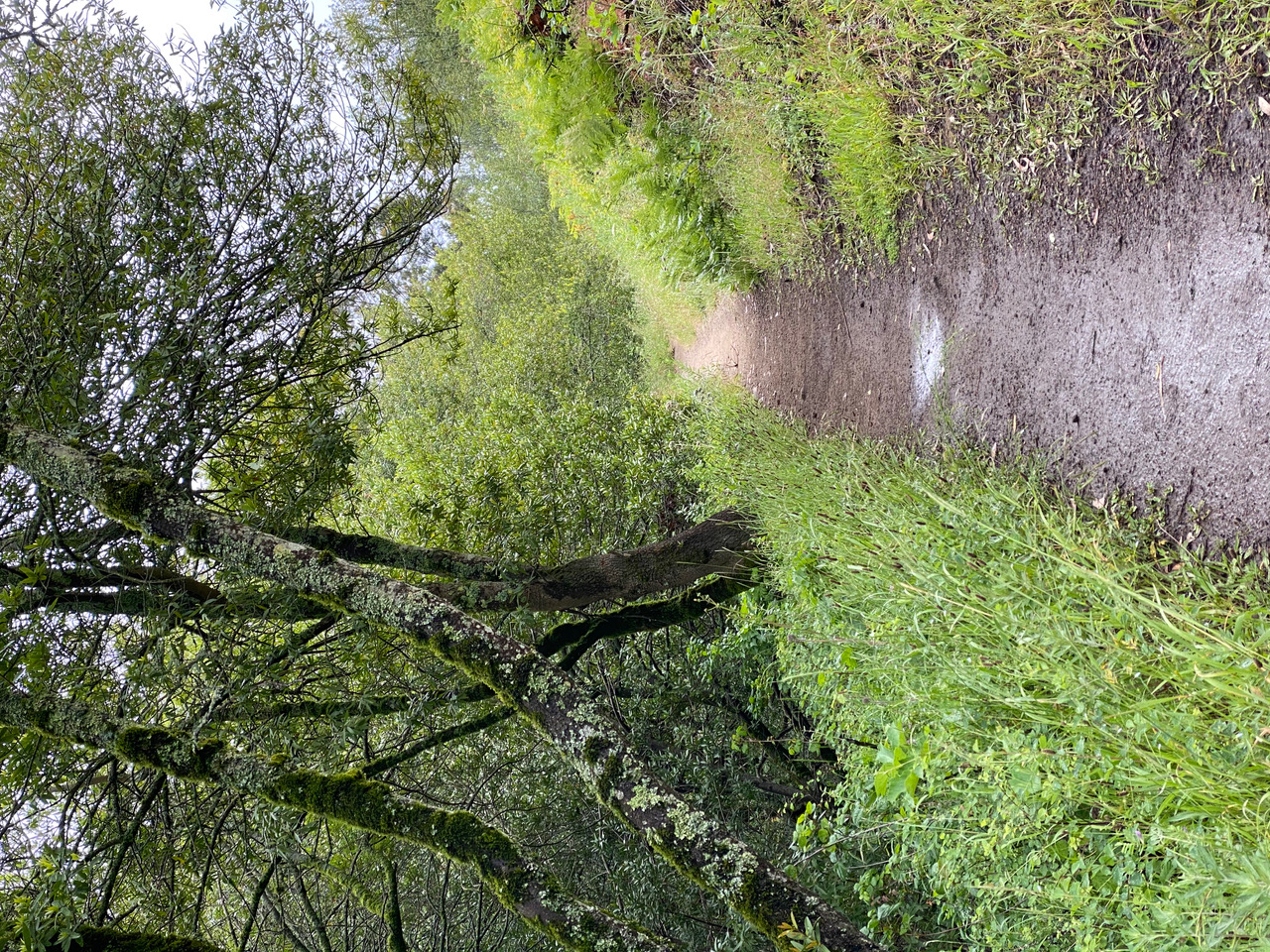
At 10 am, parts of the Skyline Trail under trees are still wet with fog drip. It can get surprisingly wet up here, even without rain.
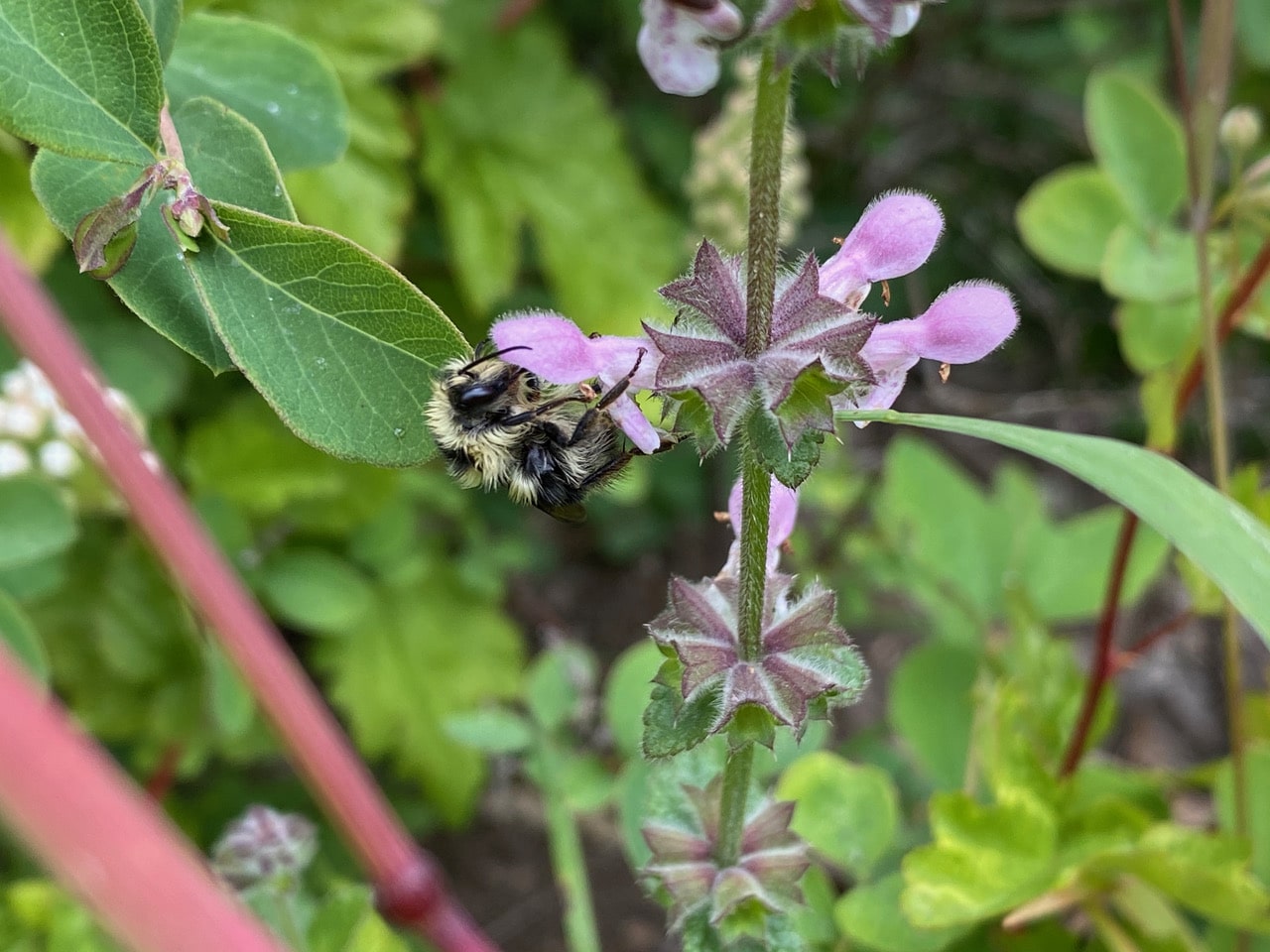
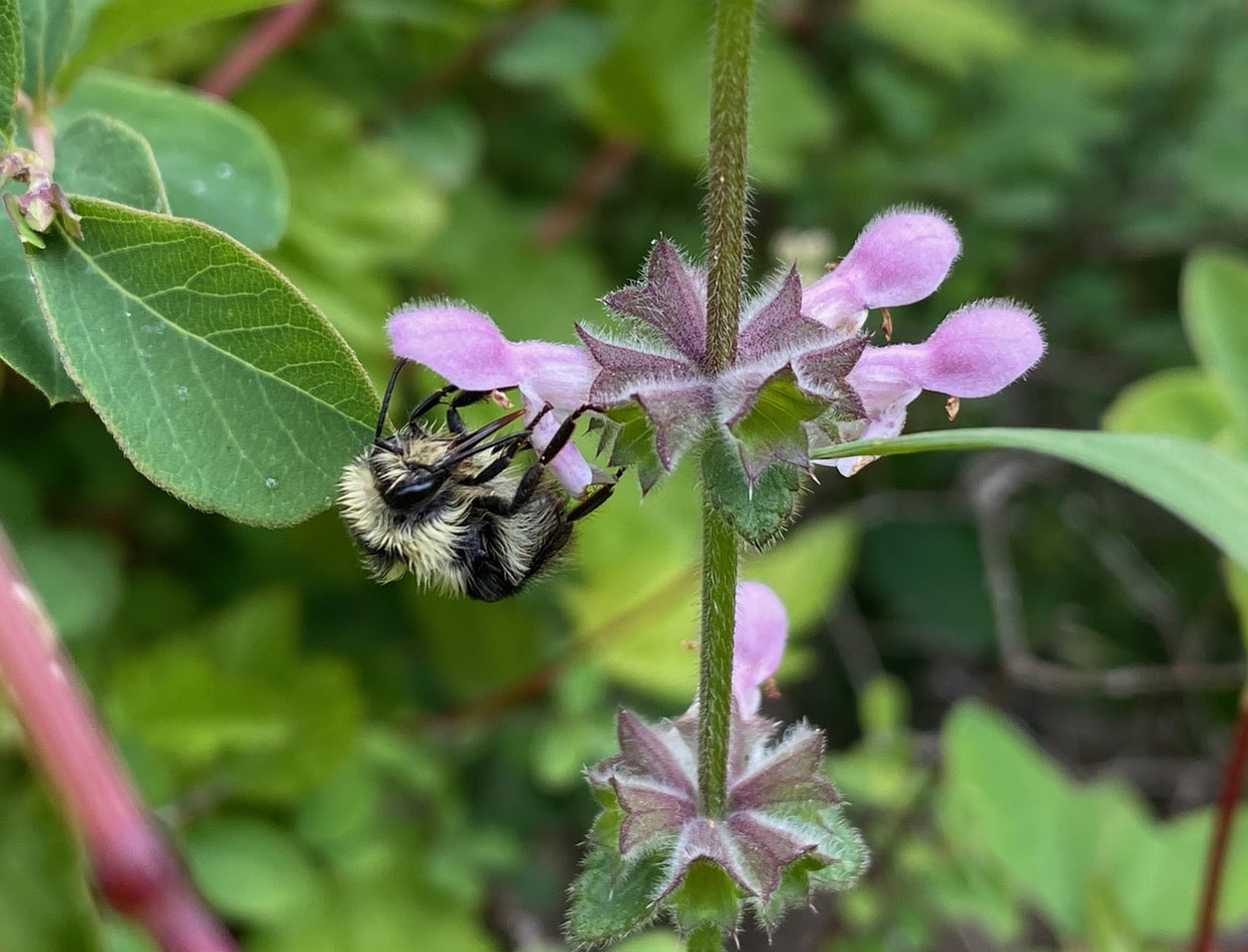 Bumble Bees have long tongues with which they can access the nectar from deep-throated flowers. The bee’s movements are slow and clumsy as she tries to get to the adjacent flowers – she must be cold.





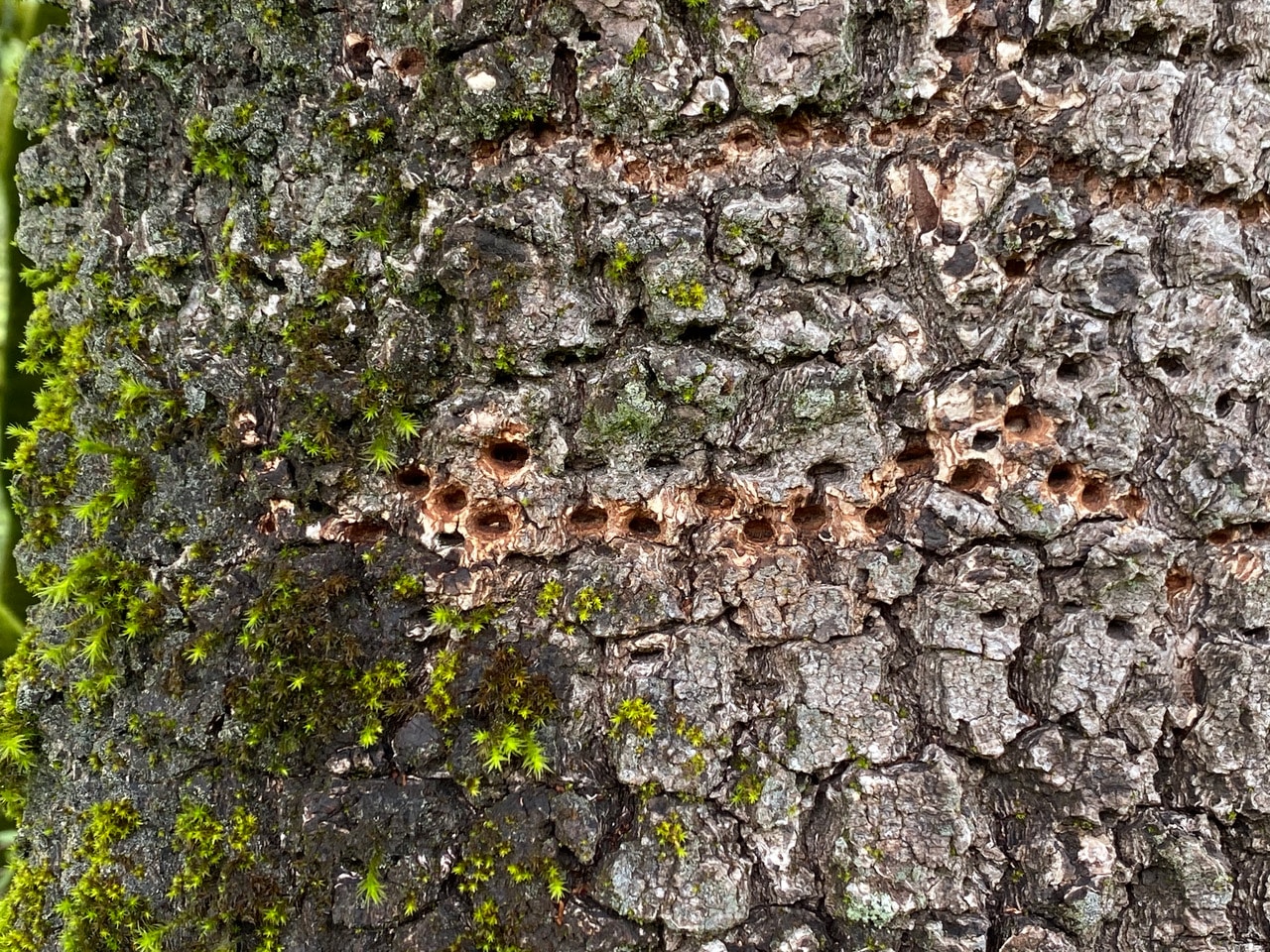
Hey, fresh drillings by Sapsuckers on the bark of Bay Trees!
Sapsuckers belong to the woodpecker family. These birds feed on sap and insects by drilling rows of holes in the bark of trees and then returning to the tree later to drink the running sap and eating the insects that were attracted to the sap around the area of the holes.
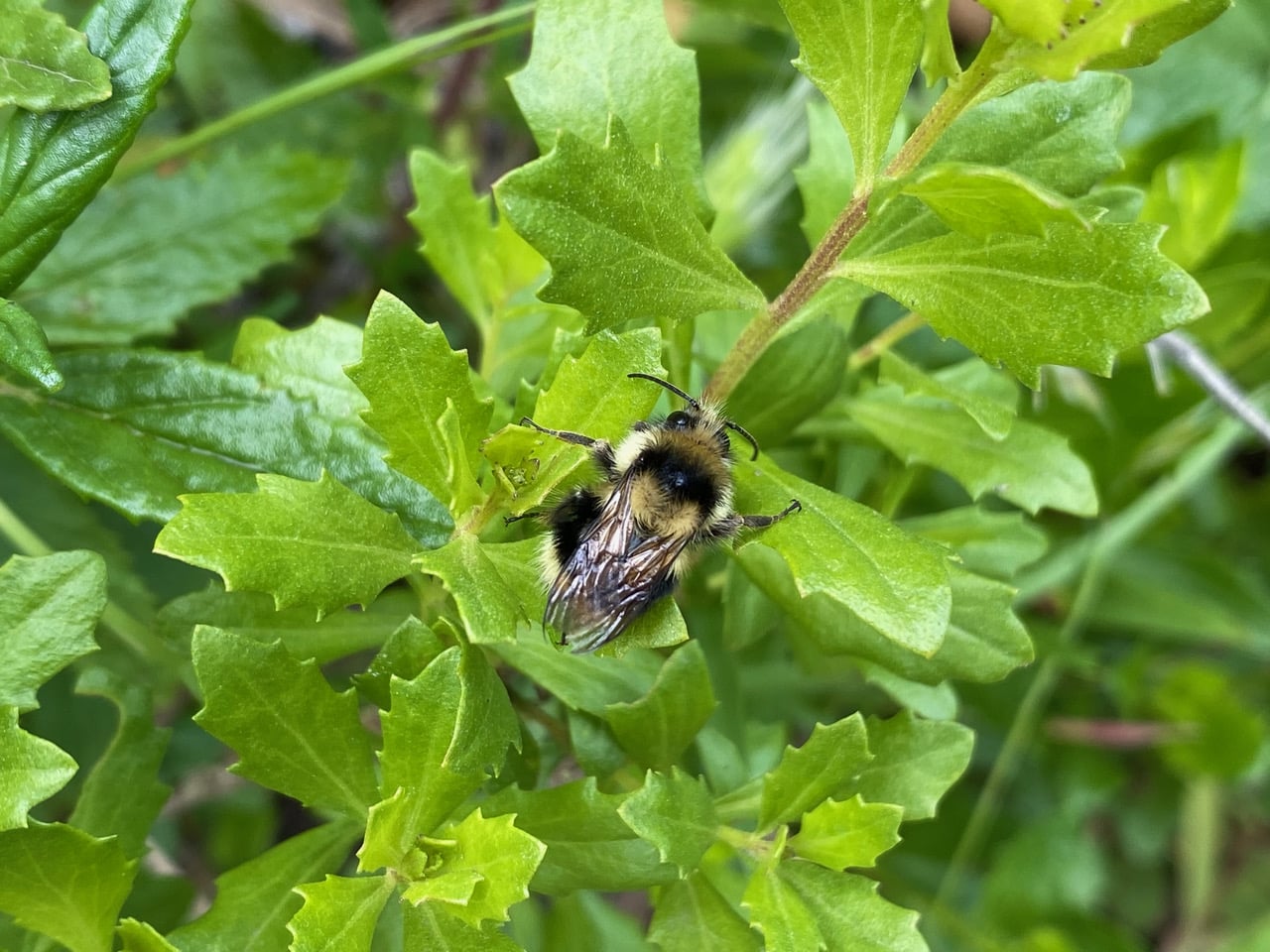
A wet and disheveled Black-tailed Bumble Bee, Bombus melanopygus is taking nectar from a flower of Wood Mint, Stachys ajugoides. Why is she so wet? Why didn’t she return to her nest last evening before the fog rolled in?
Bumble Bees have long tongues with which they can access the nectar from deep-throated flowers. The bee’s movements are slow and clumsy as she tries to get to the adjacent flowers – she must be cold. Nearby, another Black-tailed Bumble Bee lands unsteadily on the foliage of a Coyote Brush. She is not wet. I watch her for a while as she starts pumping her abdomen rhythmically. She is trying to warm herself up.
We have long been taught that insects are “cold blooded”, their body temperatures rising and falling with ambient temperature. As it turns out, Bumble Bees are capable of physiological thermoregulation. Their flight muscles can only function within a narrow temperature range, between 30 C and about 44 C. On cold days, bumble bees shiver their flight muscles to produce heat. The flight muscles are in the thorax, and this is the body segment that bumble bees warm up with their shivering. The circulatory system of a bumble bee is an open one, consisting of one blood vessel (the “heart”) running from the head to the abdomen.
As blood is pumped through the heart from the thorax into the abdomen, it passes through a narrow “waist” or petiole that connects the two body segments. In cold conditions, the warm thoracic blood is pumped in a slow, steady flow through the petiole. As it passes through the petiole, it passes cooler blood flowing outside of the heart from the abdomen back to the thorax. As the cooler blood passes the warmer blood, it picks up heat from the blood being pumped through the heart. Then it carries the heat back into the thorax. This elegant physiological mechanism is called countercurrent heat exchange. The mechanism allows the bumble bee’s flight muscles to be warmed up quickly, and it prevents unnecessary loss of heat from the abdomen when the bee is foraging on cold days.
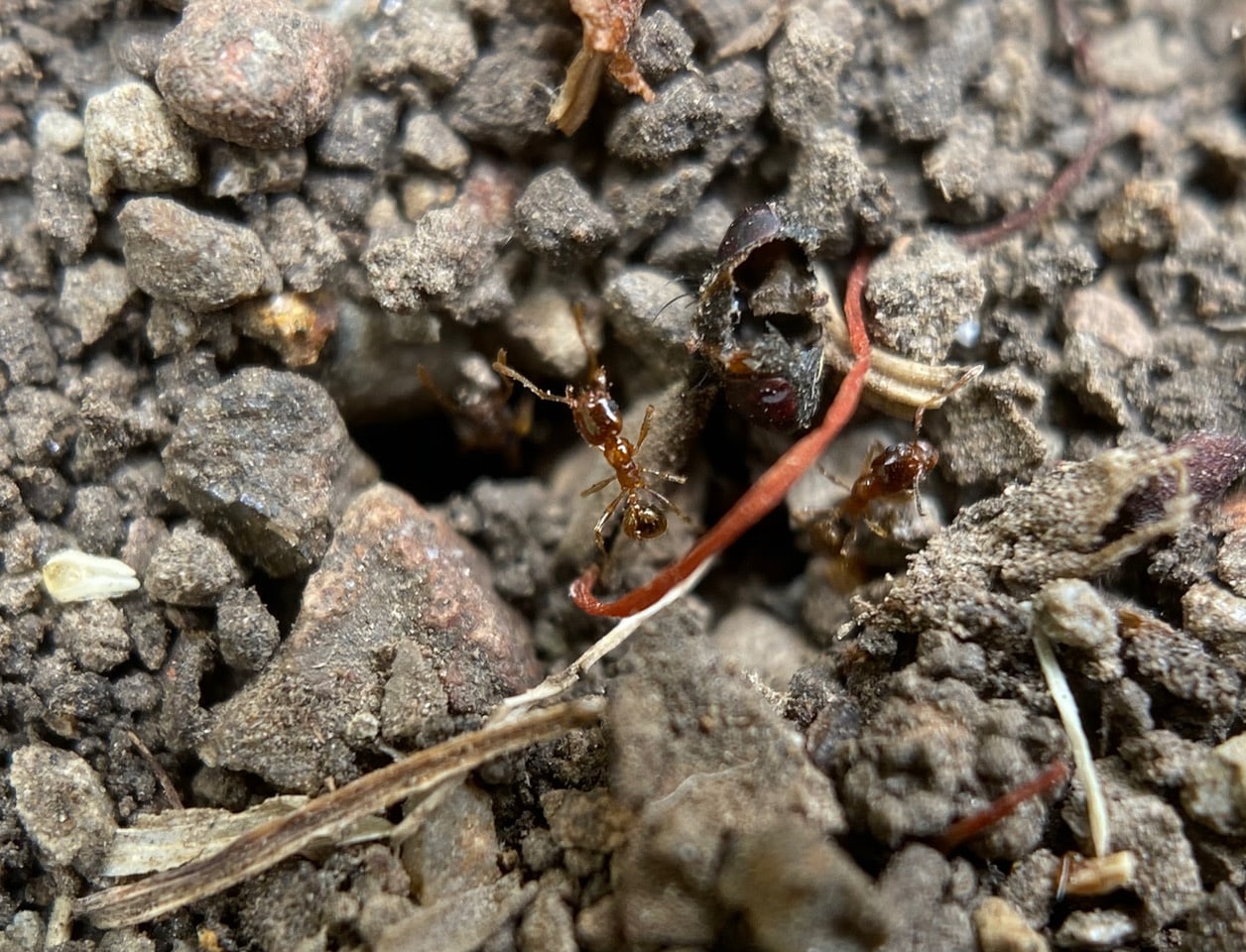
I come across some tiny ants moving in and out of a small hole on the trail. The ants are so small they are barely visible to the unaided eye. Through my macro lens, I watch as the ants move debris around the entrance, apparently trying to seal it up.
iNaturalist has helped identify the ants as the Big-headed Ants in the genus Pheidole, most likely P. californica. The genus is widespread and ecologically dominant. It probably includes more than 1000 species. The genus first evolved in the Americas, eventually spreading across the globe. Most species of Pheidole are dimorphic, meaning the colonies contain two castes of workers, the “minor” workers, and the “major” workers, or “soldiers”. The latter generally have much larger heads and mandibles in comparison to their usually fairly modest body size. A colony may contain one or several queens, and also in mature colonies, alates (virgin winged females and males).
The distinctive major workers have earned the genus Pheidole the nickname of “big-headed ants”. The major workers are employed within the nest to break up large food items, or outside to carry large items, such as seeds. Most Pheidole species are seed consumers.
Its proboscis extended, a Diamond Spottail Hoverfly, Fazia micrura (family Syrphidae) is feeding on the pollen of Yarrow, Achillea millefolium.
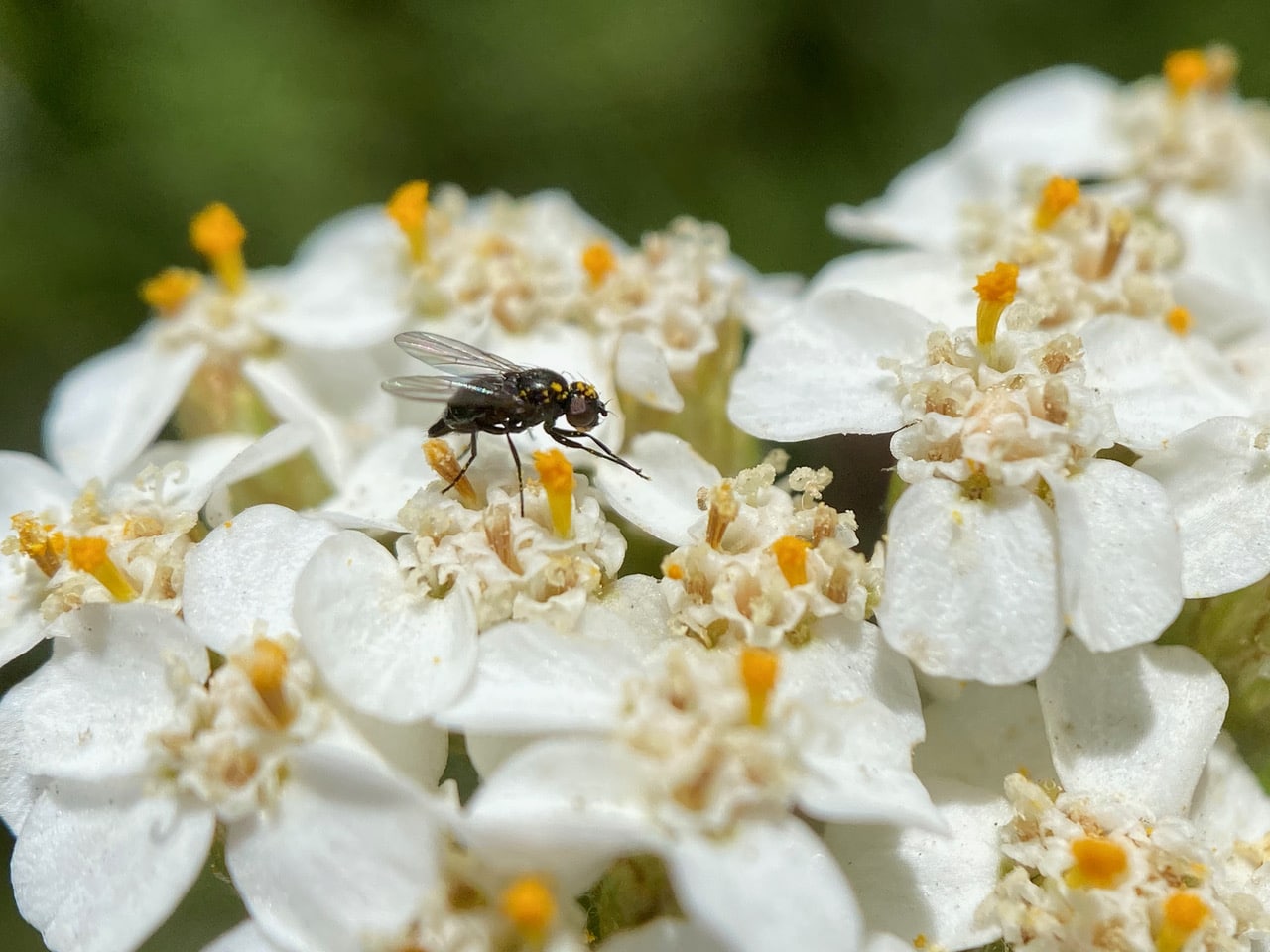
Weighted down by pollen, a tiny dark fly is walking on an inflorescence of Yarrow. Judging from its diminutive size and the pointy oviscape at the tip of its abdomen, I think it is a Leafminer Fly (family Agromyzidae).
A leaf miner is any one of numerous species of insects in which the larval stage lives in, and eats, the leaf tissue of plants. The vast majority of leaf-mining insects are moths (Lepidoptera), sawflies (Symphyta), and flies (Diptera). Some beetles also exhibit this behavior. Leaf miners are protected from many predators and plant defenses by feeding within the tissues of the leaves, selectively eating only the layers that have the least amount of cellulose, and lowest levels of defensive chemicals.
The Agromyzidae are a family commonly referred to as the Leaf-miner Flies, for the feeding habits of their larvae, most of which are leaf miners on various plants. They are small flies, most species in the range of 2-3 mm. Agromyzidae larvae are phytophagous, feeding as leaf miners, less frequently as stem miners or stem borers. A few live on developing seeds, or produce galls. There is a high degree of host specificity. A number of species attack plants of agricultural or ornamental value, so are considered pests. The shape of the mine is often characteristic of the species and therefore useful for identification. Adults occur in a variety of habitats, depending on the larval host plants.
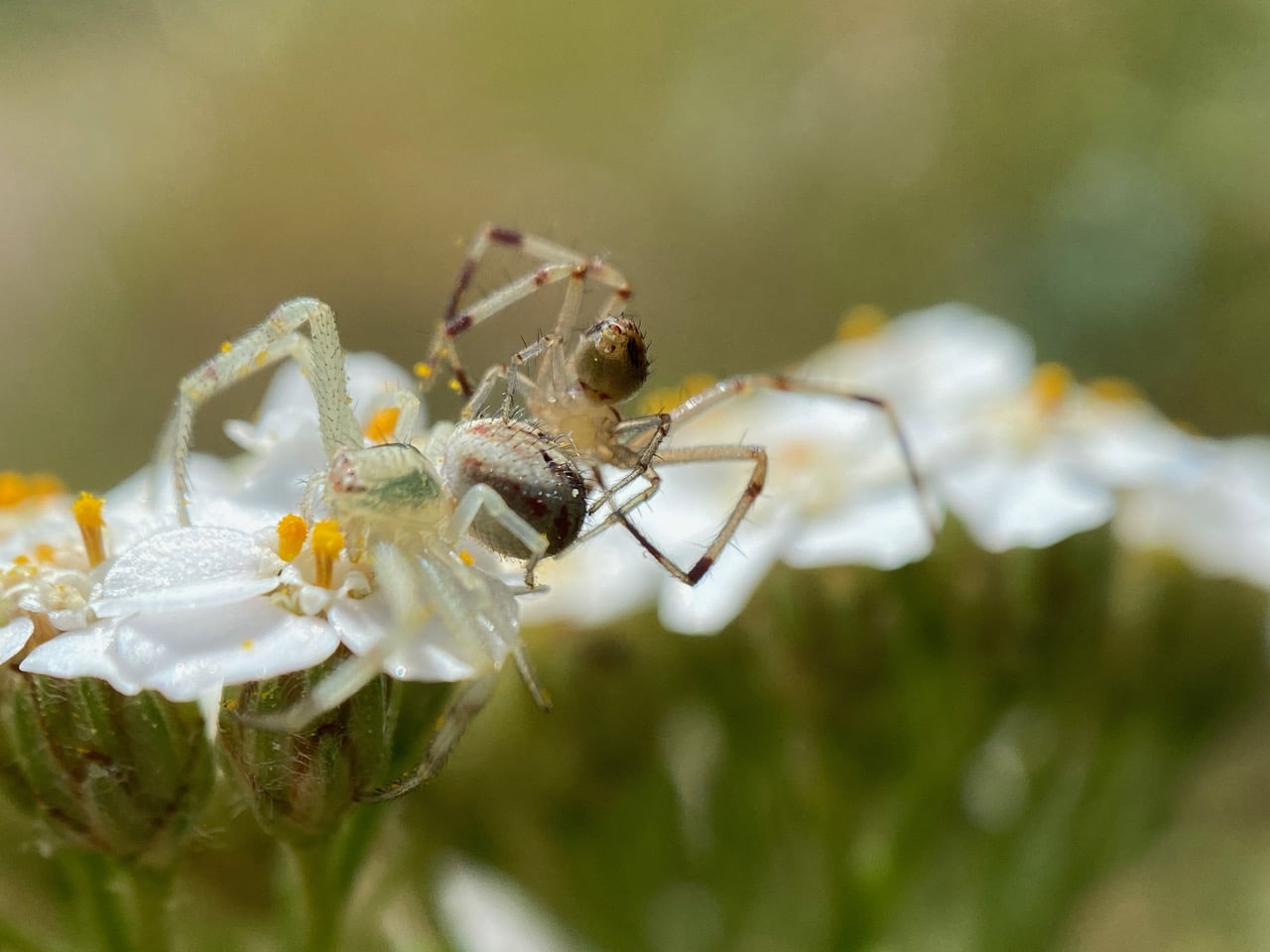
Spotting a spider on a Yarrow inflorescence I ready my macro lens for a photo. Why is there a tangle of legs, and more than 8 legs?! On closer inspection, there are actually two spiders – a small brownish one on top of a common female Crab Spider, Mecaphesa sp. (family Thomisidae). Crab spiders exhibit strong sexual dimorphism, with males and females morphologically distinct from each other. Is this a romantic encounter? The scene looks more like a predation.
Crab Spiders (family Thomisidae) do not make webs to catch prey. They are ambush predators that silently wait in the flowers until the prey appears. The spider grabs the prey with the long front legs and delivers a deadly dose of venom using its slender fangs. Females are generally larger than males, sometimes many times larger. Males have more slender body and longer legs. They are darker in color and have brown markings on the abdomen. Females are more sedentary, while the males tend to wander in search of mating opportunities by following the silk threads laid down by the females.
Sensing my intrusion, the pair runs to the edge of the inflorescence, and disappears under it. I wait for something to happen, and spend some pleasant time talking with friends who happen to come by on the trail.
When I check back on the inflorescence 15 minutes later, the spider pair has reappeared on the flowers. This time the male is on the female’s left side. He has obviously been moving around on his sweetie. His focus is always on the underside of her body. These observations can be explained by the mechanics of spider reproduction.
Male spiders have no external genitalia with which to impregnate the female. Instead, they have a specialized organ called the embolus, located at the tips of the pedipalps. Before mating, the male spins a sperm web, on which he deposits a globule of sperm. This is then sucked up by capillary action into the expandable emboli. When fully ‘charged’ the tips of the pedipalps become swollen, and bulbous, appearing like a pair of boxing gloves he holds in front of his face. Now he is ready to mate.
The female genital structure, or epigynum, is a hardened plate on the underside of the abdomen in front of the gonopore. During mating, the male inserts his pedipalps into the female’s epigynum and injects sperm from the emboli. After the sperm is transferred into the epigynum, they move into receptacles (spermathecae) that connect to the oviducts. Eggs are fertilized as they pass through the oviducts and out through the gonopore. Male spiders usually die soon after, or even during the mating process.
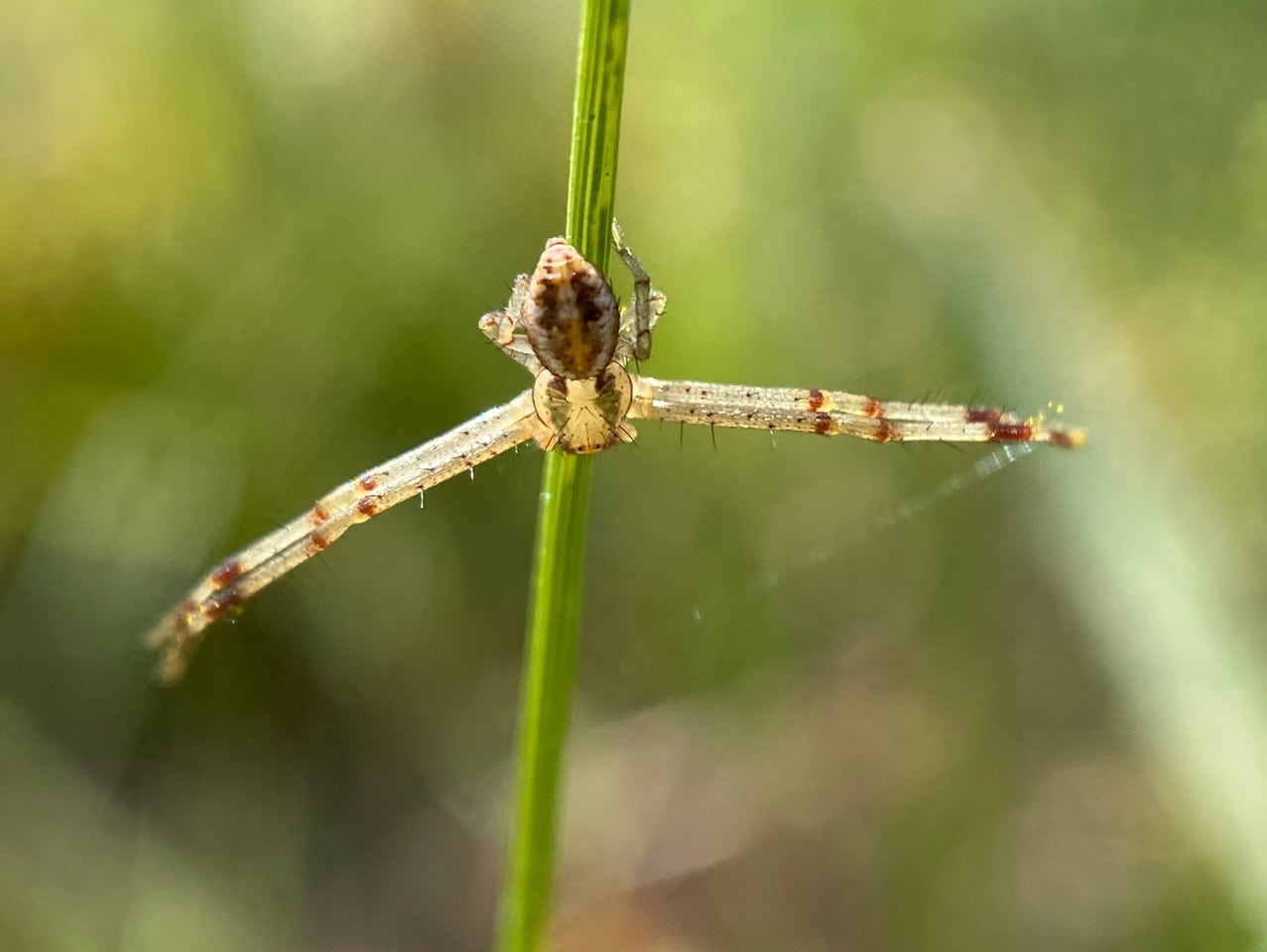
The male spider makes a quick dismount, and rappels away on a strand of silk….
… landing on a grass stalk. I guess this is a victory sign that he’s been successful!
The Gumweed, or Slender Tarweed, Madia gracilis (family Asteraceae) is beginning to bloom.
The aromatic annual herb is native to western North America. Growing up to 3 feet tall, the stem is branching, and hairy and glandular in texture. The inflorescence is a loose array of flowerheads. Each head is lined with phyllaries that are coated densely with stalked knobby resin glands. It bears yellow, lobe-tipped ray florets a few millemeters long and several black-anthered disc florets.
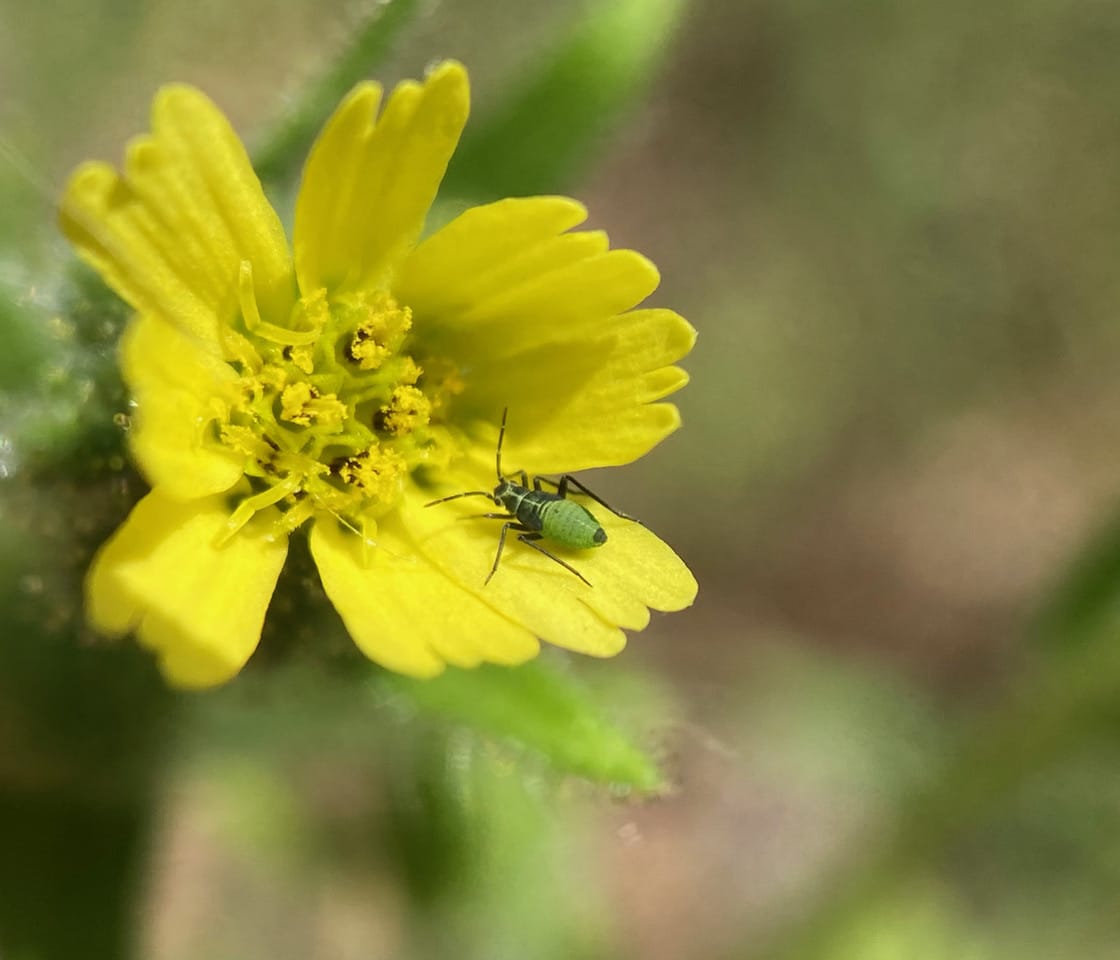
A small bug nymph is on a ray floret of a Gumweed flowerhead. It is most likely an immature plant bug in the family Miridae.
A nymph is a sexually immature form usually similar to the adult and found in such insects as bugs, grasshoppers and cockroaches, which have incomplete, or hemimetabolic metamorphosis. Incomplete metamorphosis has three stages – egg, nymph, and adult. Nymphs generally look much like their adult stage except for being smaller and lacking wings.
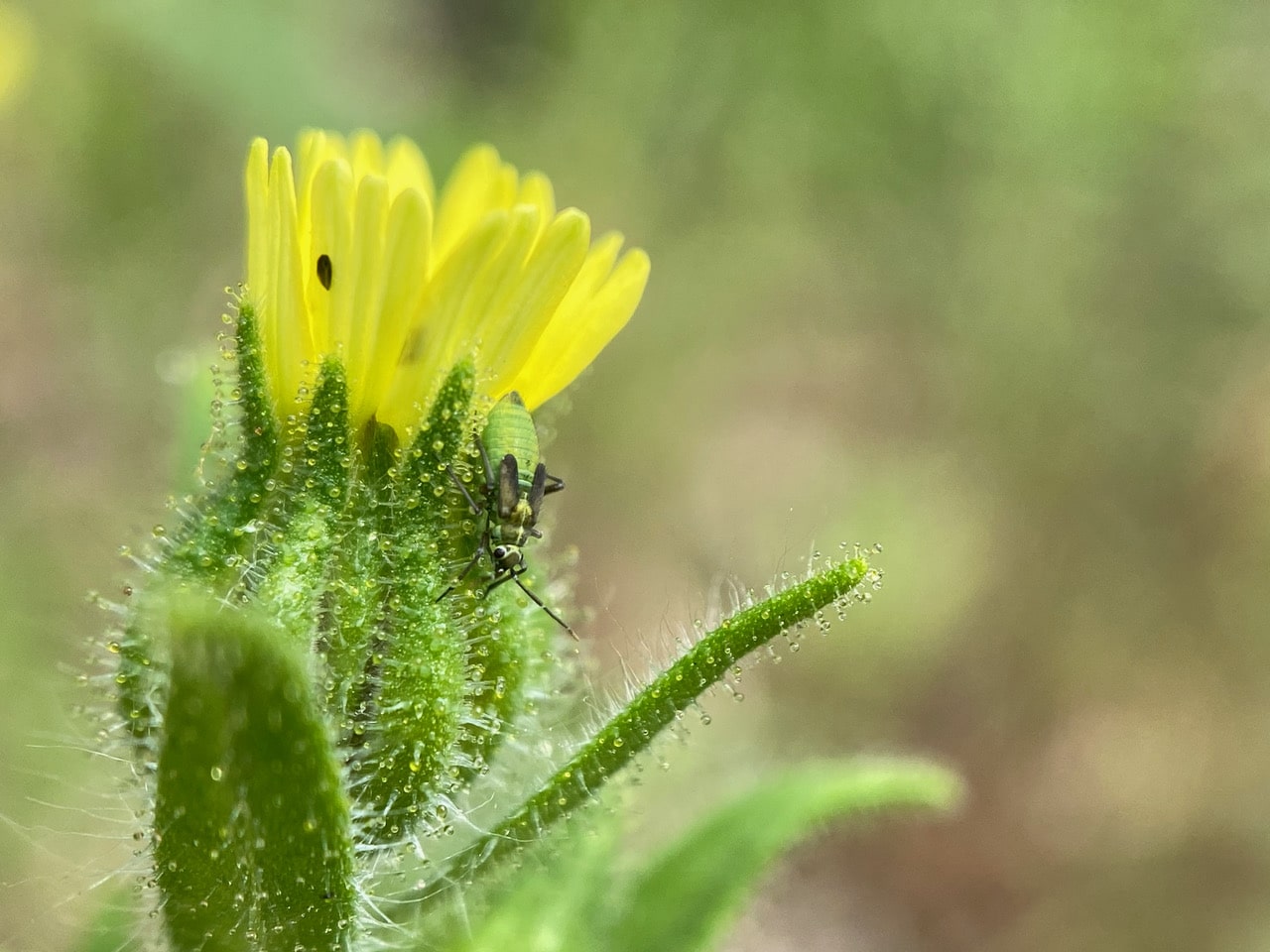
A similar nymphal bug is on the involucre of a Gumweed flowerhead that is not yet fully opened. Note its black wing pads. On the nymph’s final molt, functional wings will unfold from the wing pads. It is interesting that the nymph can move freely on the glandular surface of the plant without getting stuck.
At my approach, a Western Fence Lizard runs for cover to the side of the trail. Whoa, look at the size of its belly! A gravid female? ’Tis the season for reproduction.