

Pollinator Post 6/4/23 (3)
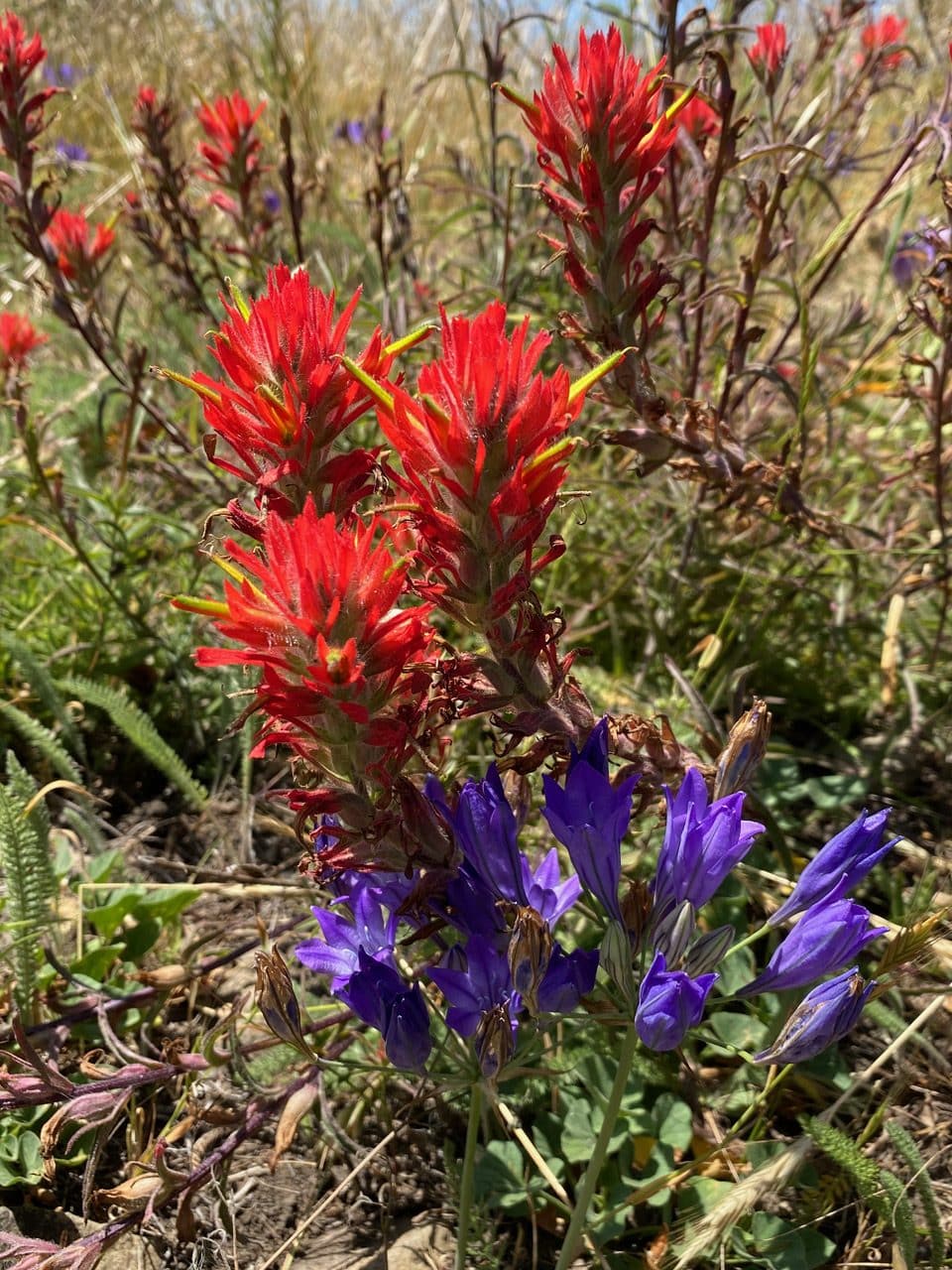
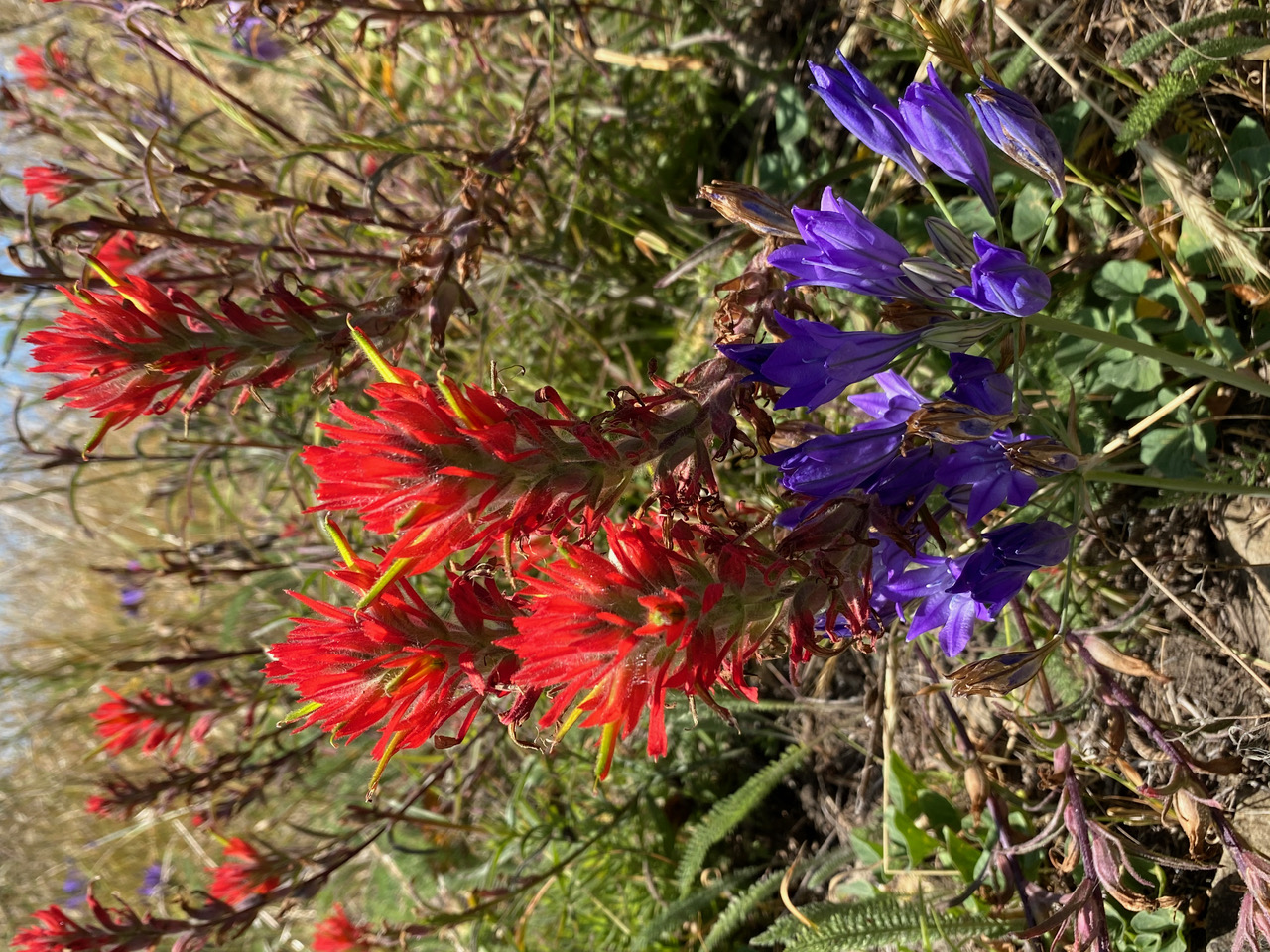
The combination of the blooming Indian Paintbrush and Ithurial Spear makes for a stunning display.
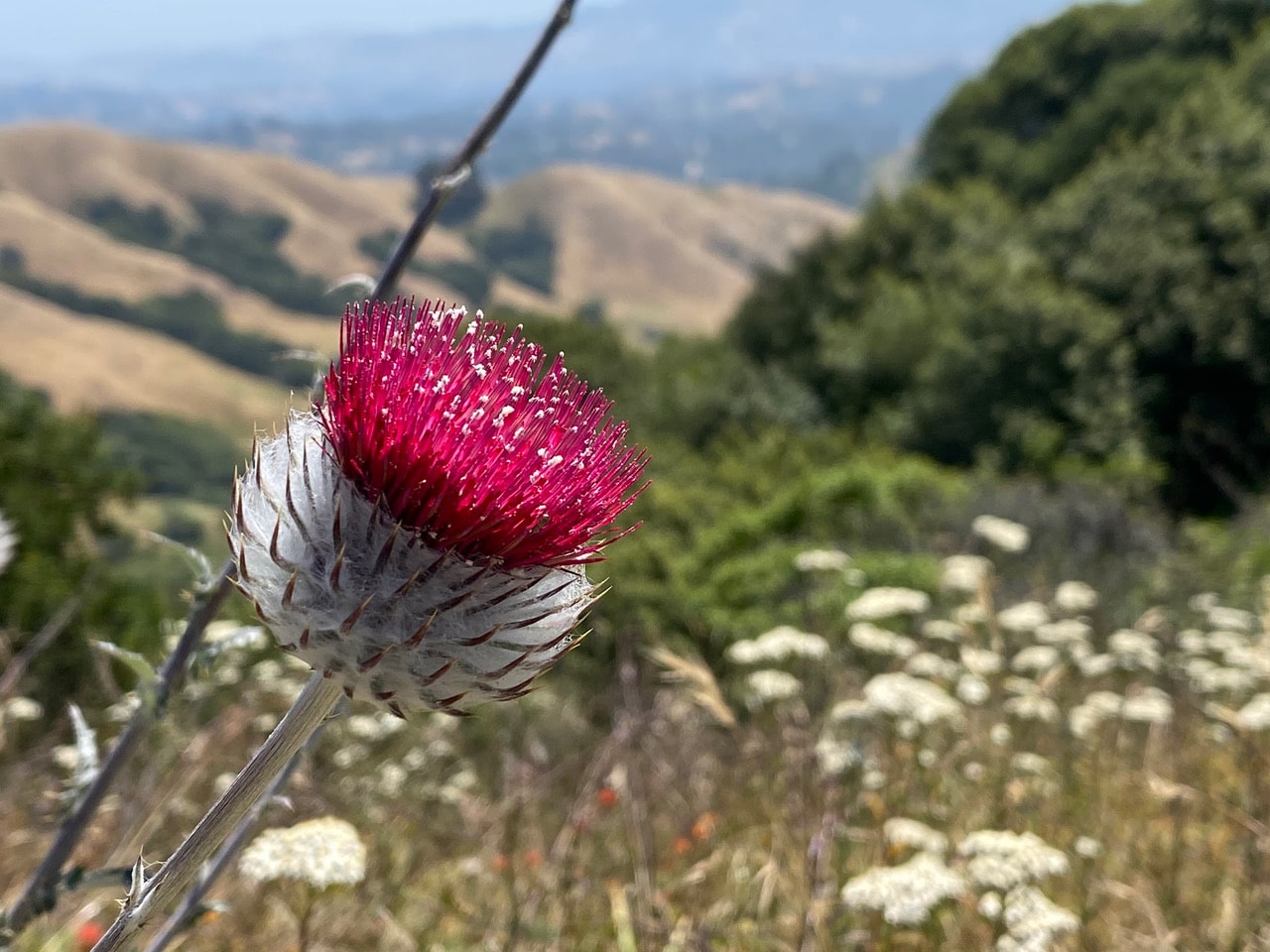
A tall and lanky Cobweb Thistle, Cirsium occidentale on the edge of the trail is blooming nicely. Having seen Thistle Aphids on this plant a while ago when it was young, I decide to stop and look.

There are no live aphids on the plant now, but hundreds, if not thousands of aphid “mummies” on the stem of the Cobweb Thistle. Apparently the parasitoid wasps in the genus Aphidius (family Braconidae) have been doing their work here. The female wasp injects a single egg into an aphid. When the larva hatches out of the egg, it feeds on the inside of the aphid, eventually to emerge as an adult by cutting a big round hole on the back of the host. What remains of the parasitized aphid is a brown, bloated, papery husk of its former self, with a big gaping hole.
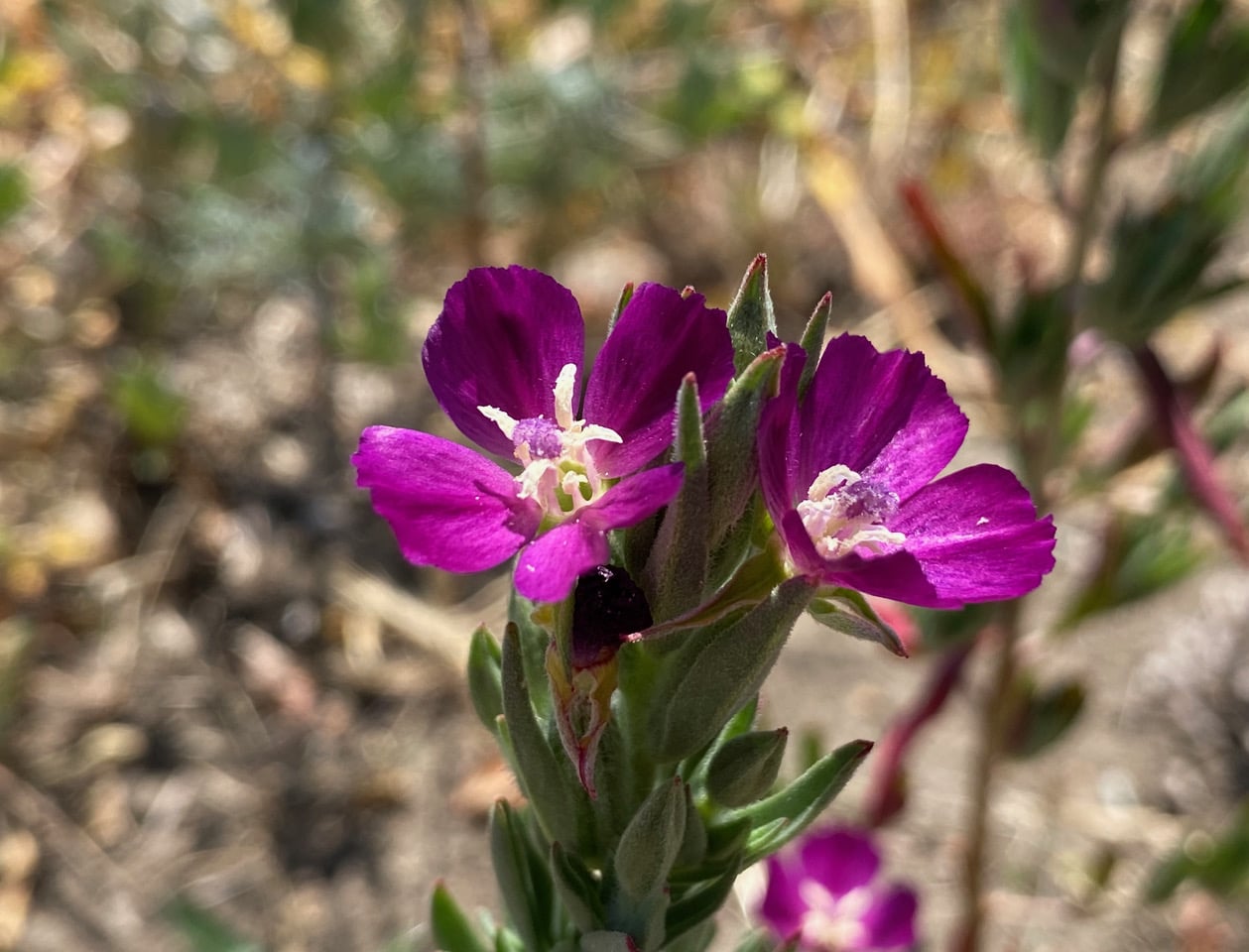



I almost don’t recognize this Winecup Clarkia, Clarkia purpurea. The fresh flowers just opened up on the tip of a sturdy, erect stem almost 3 ft tall, and the blooms are larger than I have ever seen on a Clarkia. Wow, everything seems to be supersized this year.
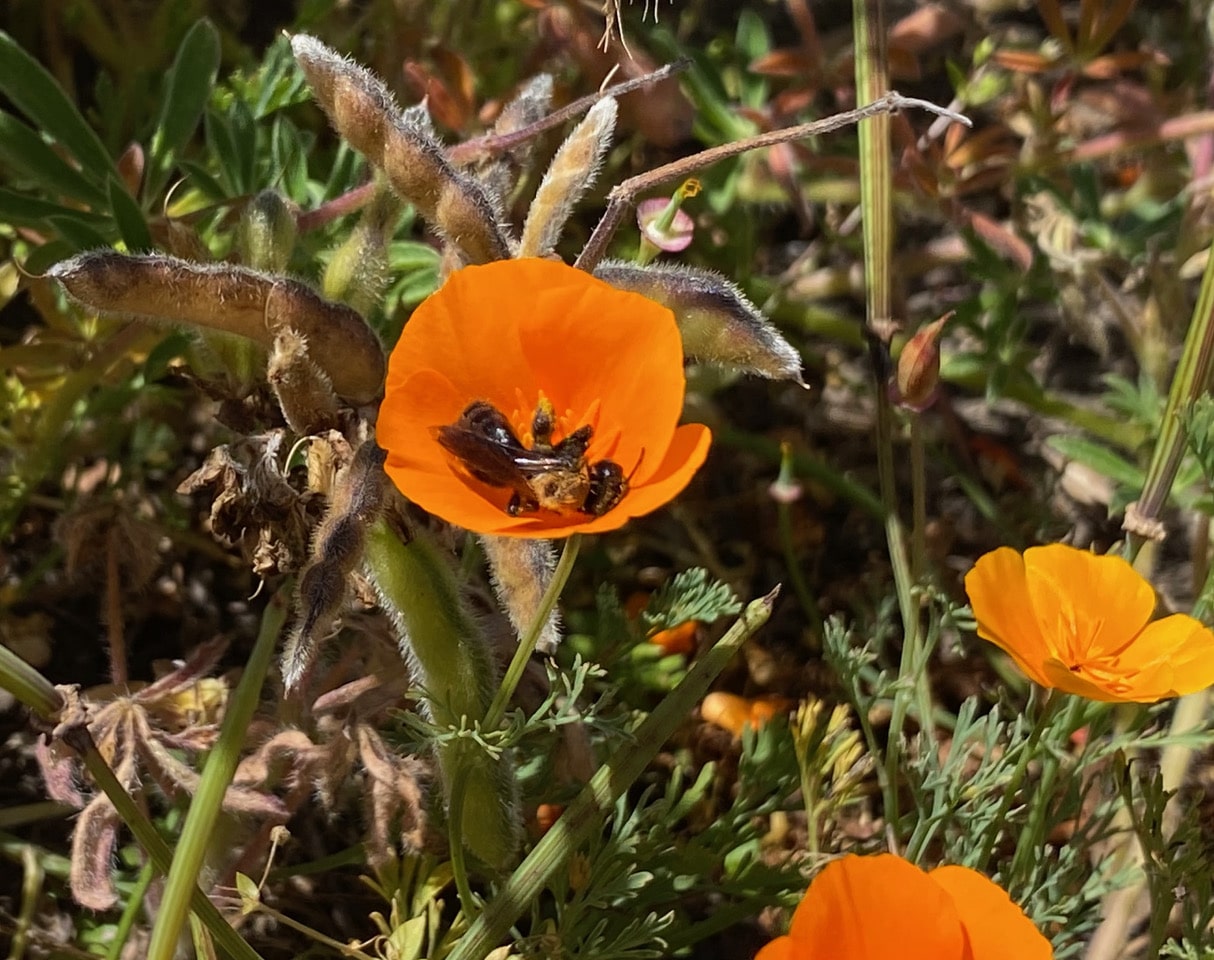
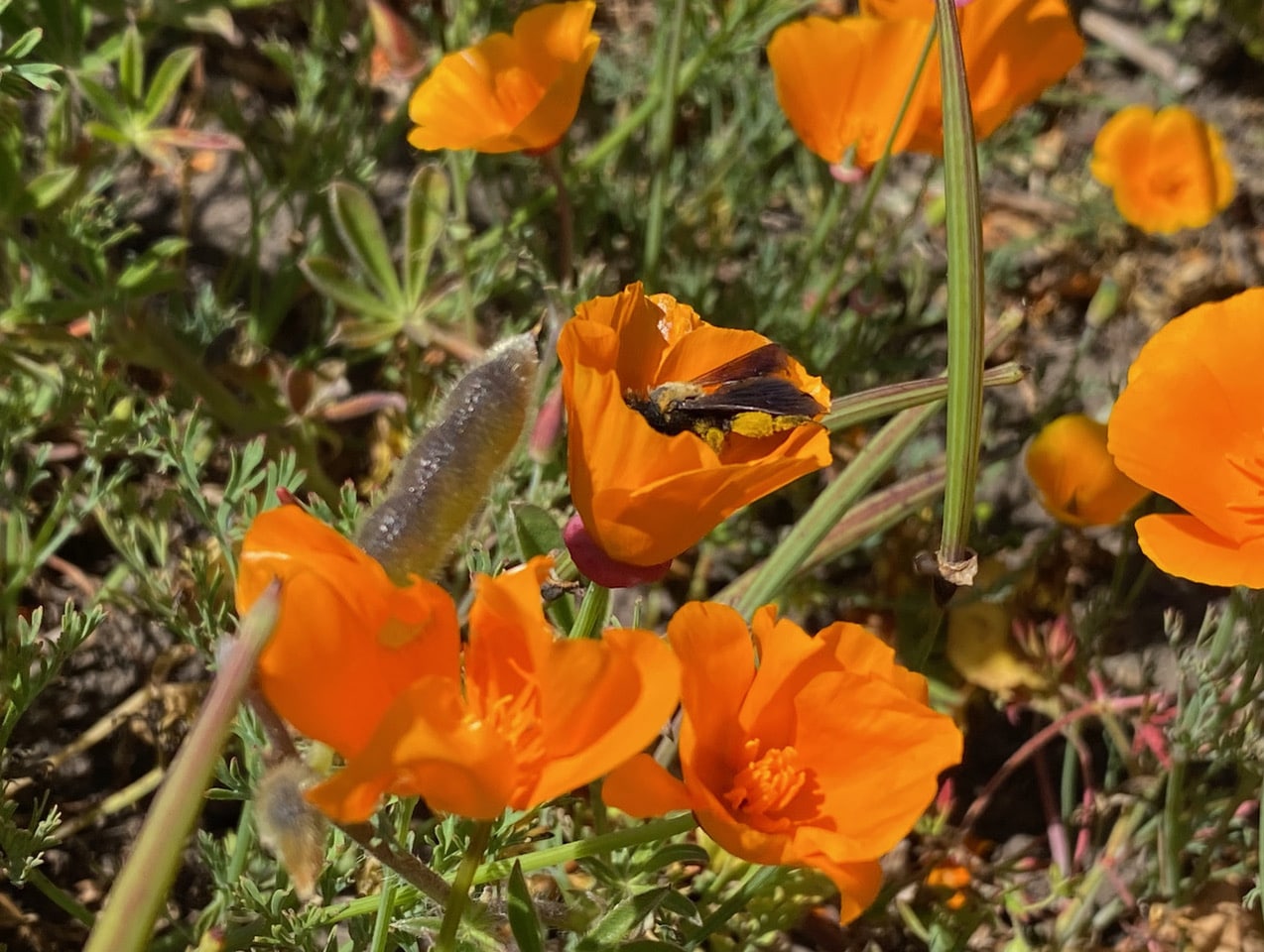
A bee with a black abdomen and beige hairs on its thorax is gathering pollen on a California Poppy, Eschscholzia californica. Poppy flowers do not produce nectar but offer an abundance of pollen in an easily accessible open bowl corolla.
All a pollinator has to do is to get on its side and wallow around the bowl-shaped flower to gather pollen. The behavior actually has a name, “scrabbling”.
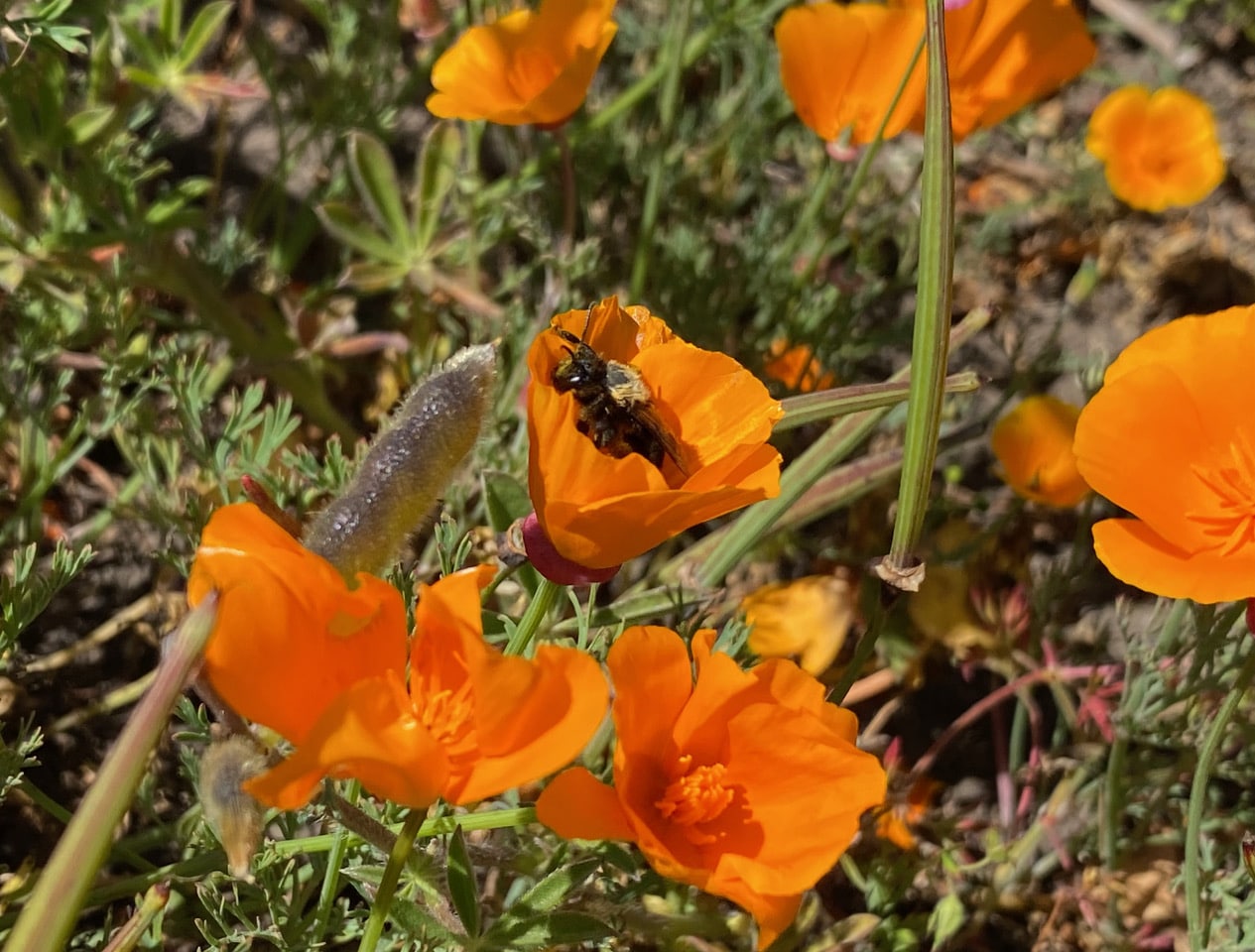
A similar bee drops in on a different California Poppy flower. Oh, look at the telltale scopa on her leg. It covers several segments of her hind leg, extending to her “armpit”. That’s typical of the Mining Bee in the genus Andrena (family Andrenidae).
A scopa (plural scopae; Latin for “broom”) is any of a number of different modifications on the body of a bee that form a pollen-carrying apparatus. It is a dense mass of elongated, often branched, hairs (or setae) on the hind leg. When present, it covers the tibia at a minimum, but some bees, depending on the species also have the hairs on the other segments of their leg. The leaf-cutter bees in the family Megachilidae have an extensive scopa on the underside of the abdomen. In the Sweat Bees (family Halictidae), the entire hind leg and abdomen carry pollen. Bumble Bees and Honey Bees have a more highly-developed structure than the scopa: the corbicula, or pollen basket. Some other bees, such as the Masked Bees (family Colletidae), transport pollen internally in the crop, and they lack a scopa. Parasitic bees do not collect pollen; they do not have a scopa.
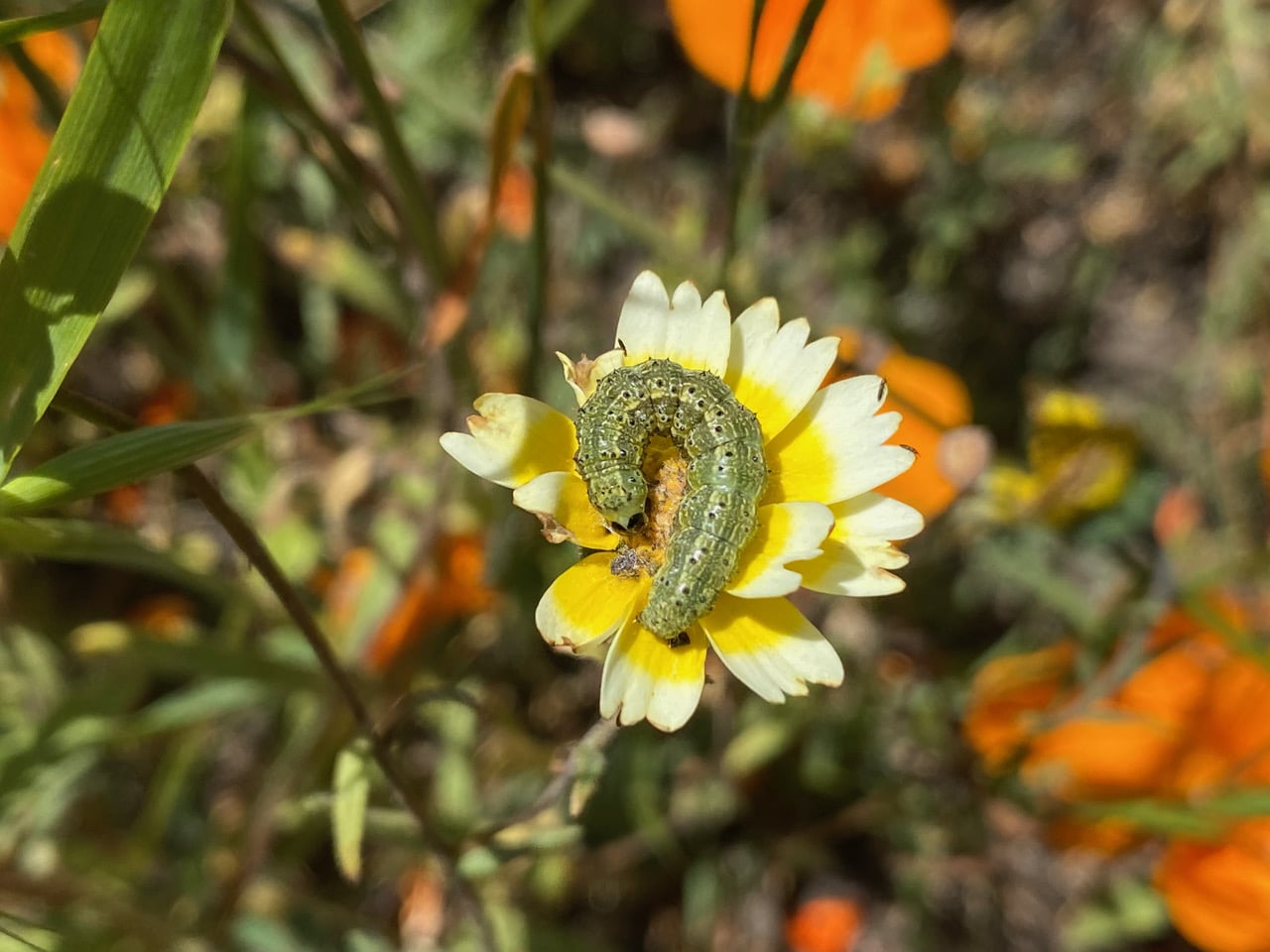
A large green caterpillar lies motionless on a flowerhead of Tidy Tips, Layia platyglossa. It is the larva of a Darker-spotted Straw Moth, Heliothis phloxiphaga (family Noctuidae). I am rather surprised that it is lying exposed and visible to predators and parasites. Unless, maybe it is already parasitized?
The larvae of Heliothis phloxiphaga are generalists, feeding on the flowers and seedheads of many kinds of herbaceous plants, with a preference for Asteraceae. It is sometimes a pest on agricultural crops.
The species’ flight season is long, lasting from May to September. Adults are reported to be both nocturnal and diurnal in activity. They are often found feeding and ovipositing during the day.
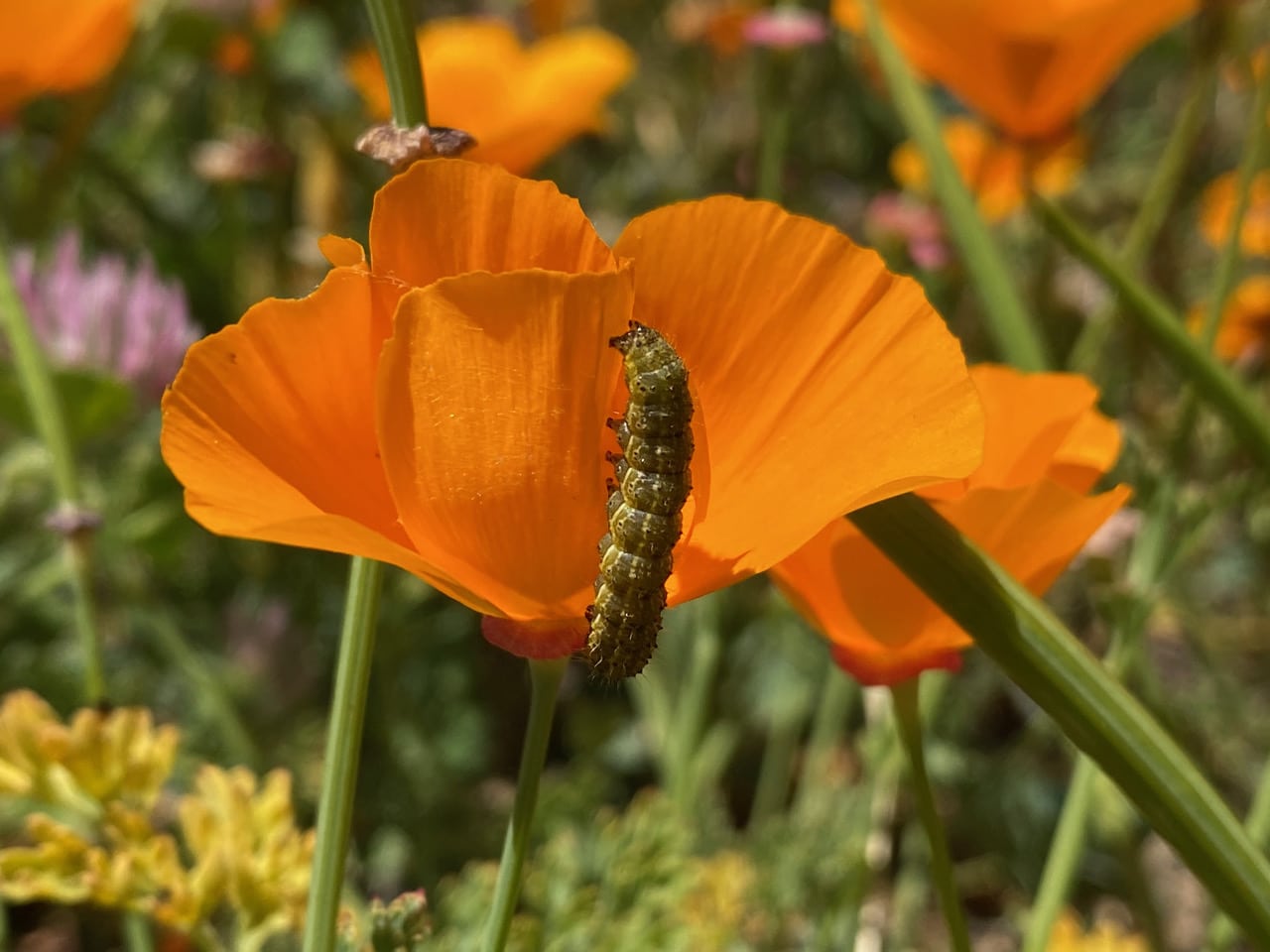
Just inches away, a similar caterpillar is feeding on a California Poppy flower. It looks considerably darker, with a tinge of orange. It is probably another larva of the Darker-spotted Straw Moth, Heliothis phloxiphaga. The darker coloration is probably derived from the food it is eating.
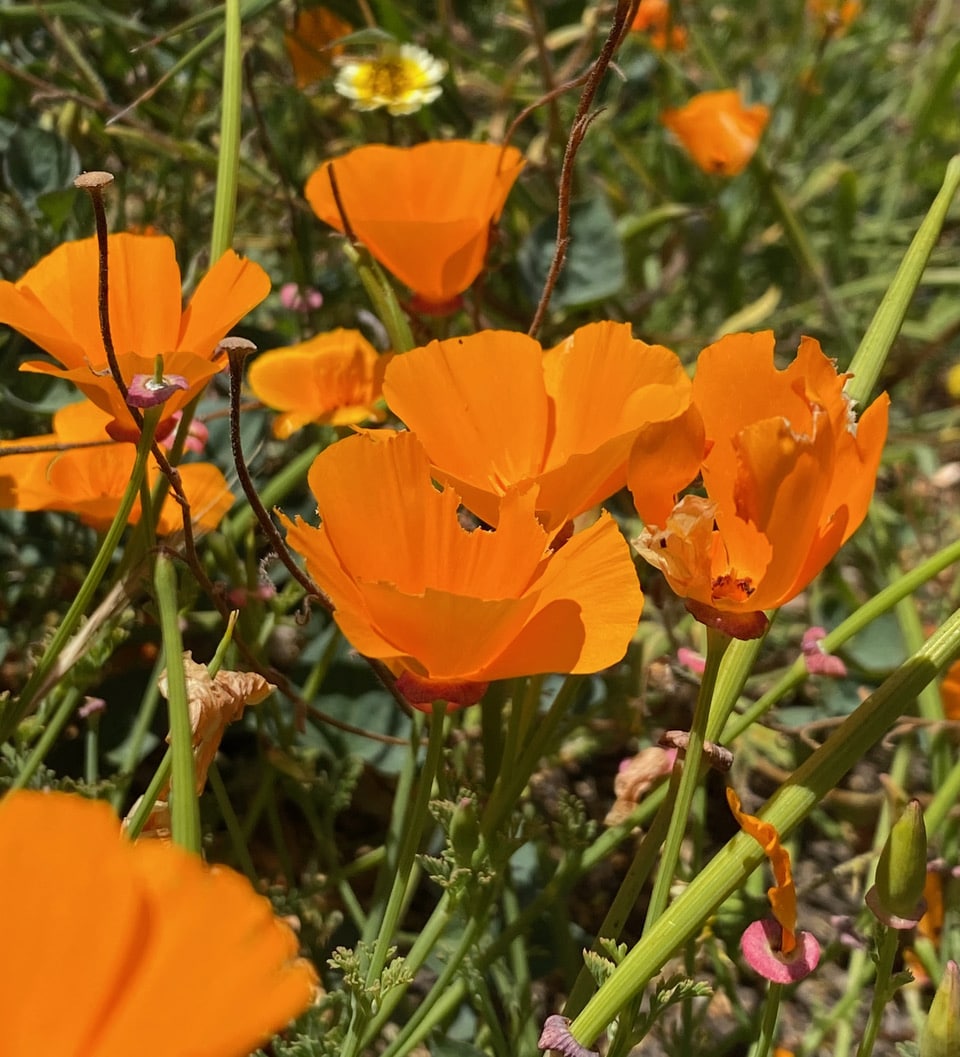
Many shredded California Poppy in the vicinity. Feeding damage from caterpillars?
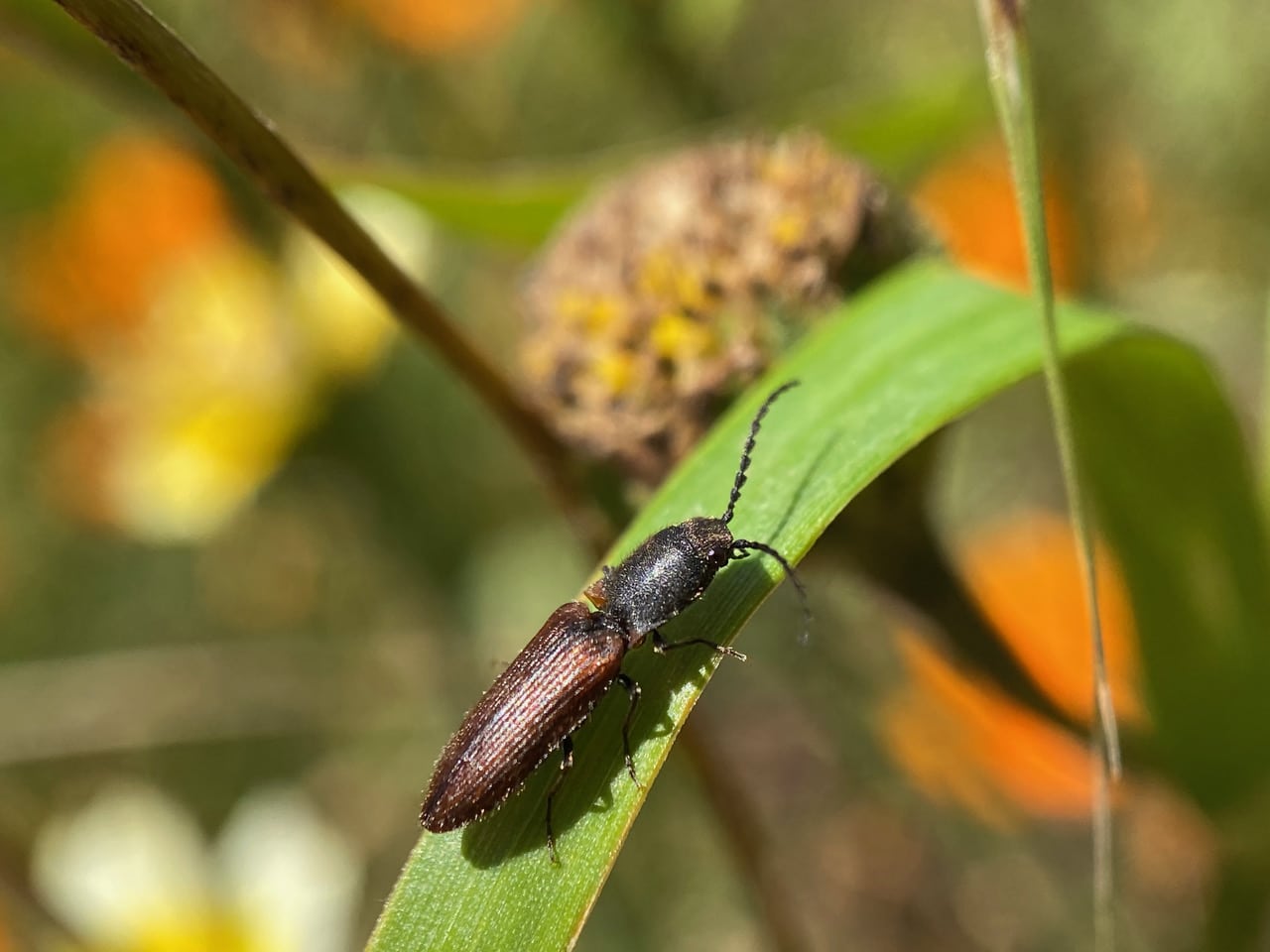
…. or maybe this Click Beetle, Athous sp. (family Elateridae)?
Click Beetles are long, narrow, straight sided beetles. Most are drab brown, black, or gray. The pronotum (shield-like part between the head and the wings) is extended into sharp points on each side toward the rear The antennae are usually serrate (the segments appearing sawtoothed).
Adult Click Beetles are typically nocturnal and phytophagous (feeding on plants). Their larvae, called wireworms, are usually saprophagous, living on dead organisms, but some species are agricultural pest, and others are active predators of other insect larvae.
Behavior helps identify Click Beetles. By snapping a spikelike structure into a groove on the underside of the thorax (beneath the pronotum), click beetles that find themselves on their backs can flip suddenly into the air. This startles predators and helps the beetle escape, in addition to helping them get back on their feet.
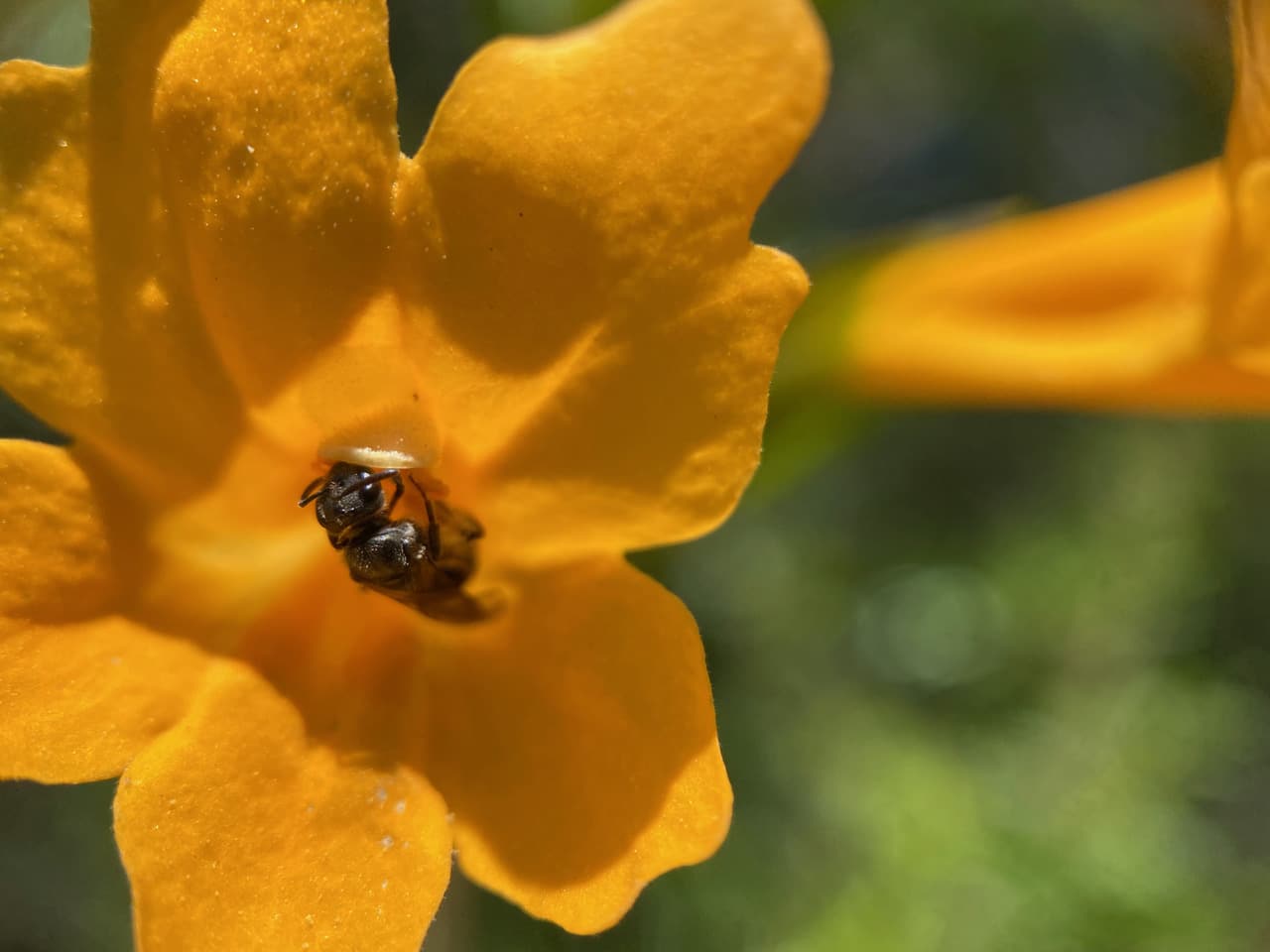
It’s a challenge to identify little bees that forage within the floral tube of the Sticky Monkeyflower, Diplacus aurantiacus. Even if the light is adequate, it is not always possible to see the salient anatomical details. This bee is too hairy and not shiny enough to be a Small Carpenter Bee, Ceratina. There are no visible yellow markings on the face, which rules out the Masked Bee, Hylaeus sp.
There’s a hint of scopa on the coxa (the first segment of the leg that is closest to the body)… the bee is relatively hairy, with a longish abdomen. A Mining Bee in the family Andrenidae? A Sweat Bee, family Halictidae?
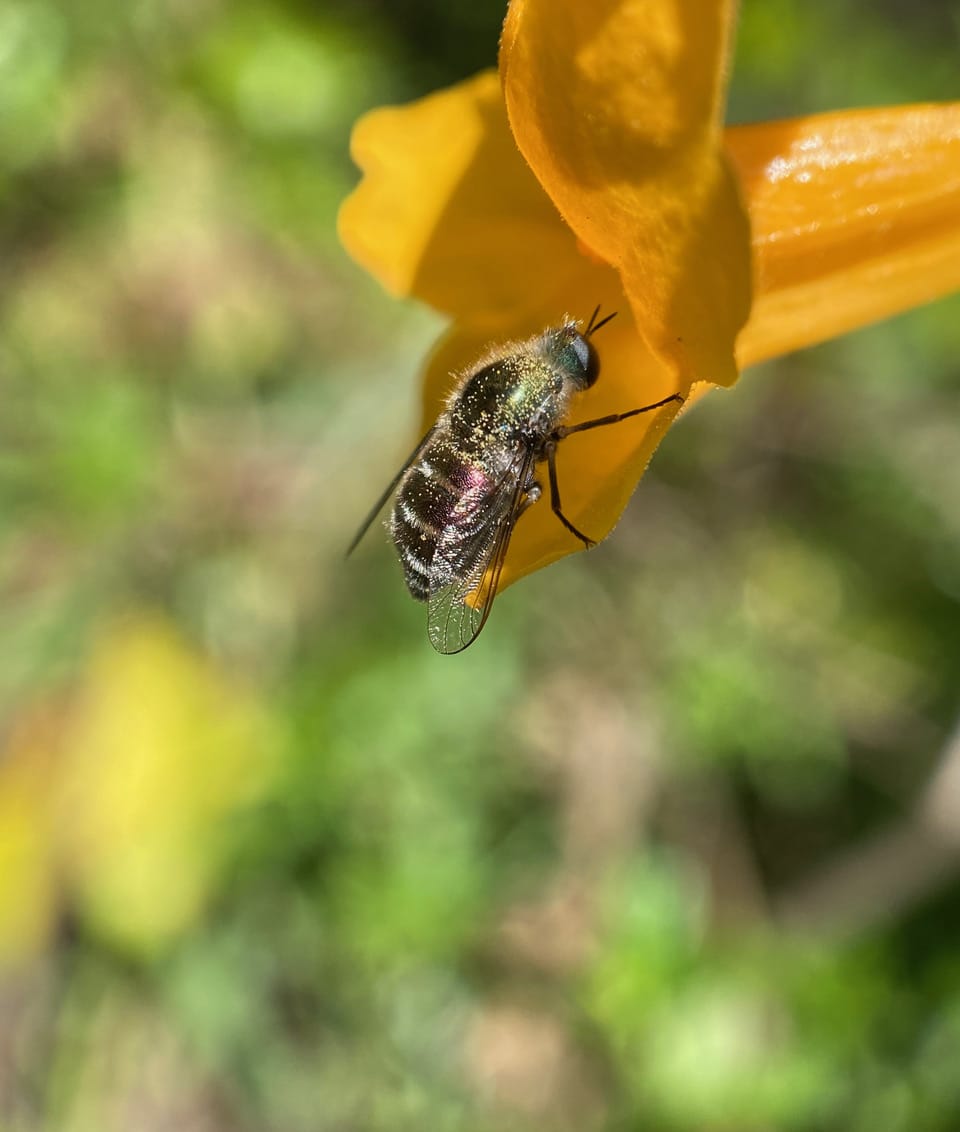
There’s no mistaking this insect. It has just landed on the Sticky Monkeyflower, a sprinkling of pollen grains on its shiny back. Most notable of all, it has a small head relative to the body. It is a Small-headed Fly, also known as the North American Jewelled Spider Fly, Eulonchus sp. (family Acroceridae).
As far as is known, all Acroceridae are parasitoids of spiders. Not just any spiders, but the Mygalomorphs of a more ancient lineage. This Acrocerid species, most likely Eulonchus tristis is known to parasitize the California Turret Spiders. Females lay large numbers of eggs near their host nests. After hatching the young larvae, called planidia seek out the spiders. The planidia can move in a looping movement like an inchworm and can leap several millimeters into the air. When a spider contacts an Acrocerid planidium, the planidium grabs hold, crawls up the spider’s legs to its body, and forces its way through the body wall. Often, it lodges near the spider’s book lung, where it may remain for years before completing its development. Mature larvae pupate outside the host. The Acrocerid adults are nectar feeders with exceptionally long probosces which are folded on the underside of the body when not in use. Acrocerids are rare but can be locally abundant. They are believed to be efficient pollinators for some native plants, including the Sticky Monkeyflowers.
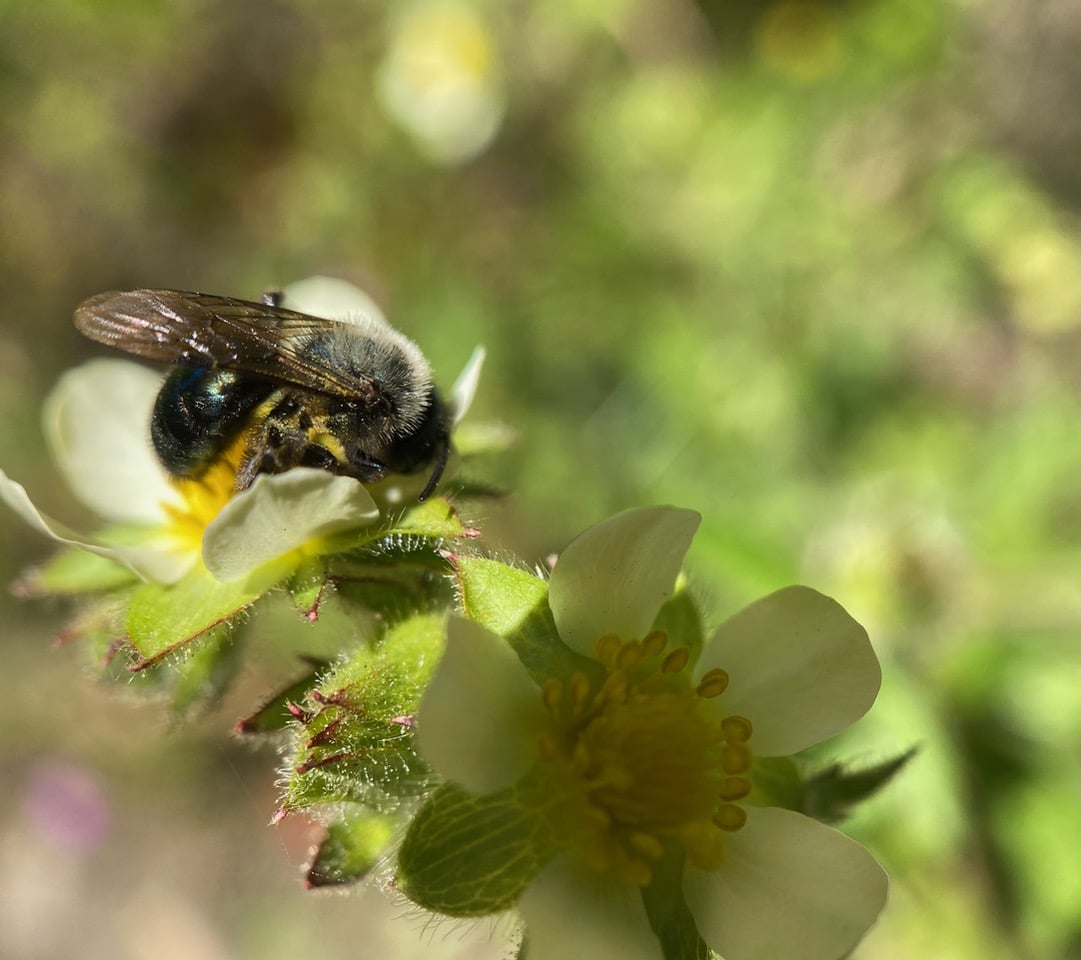
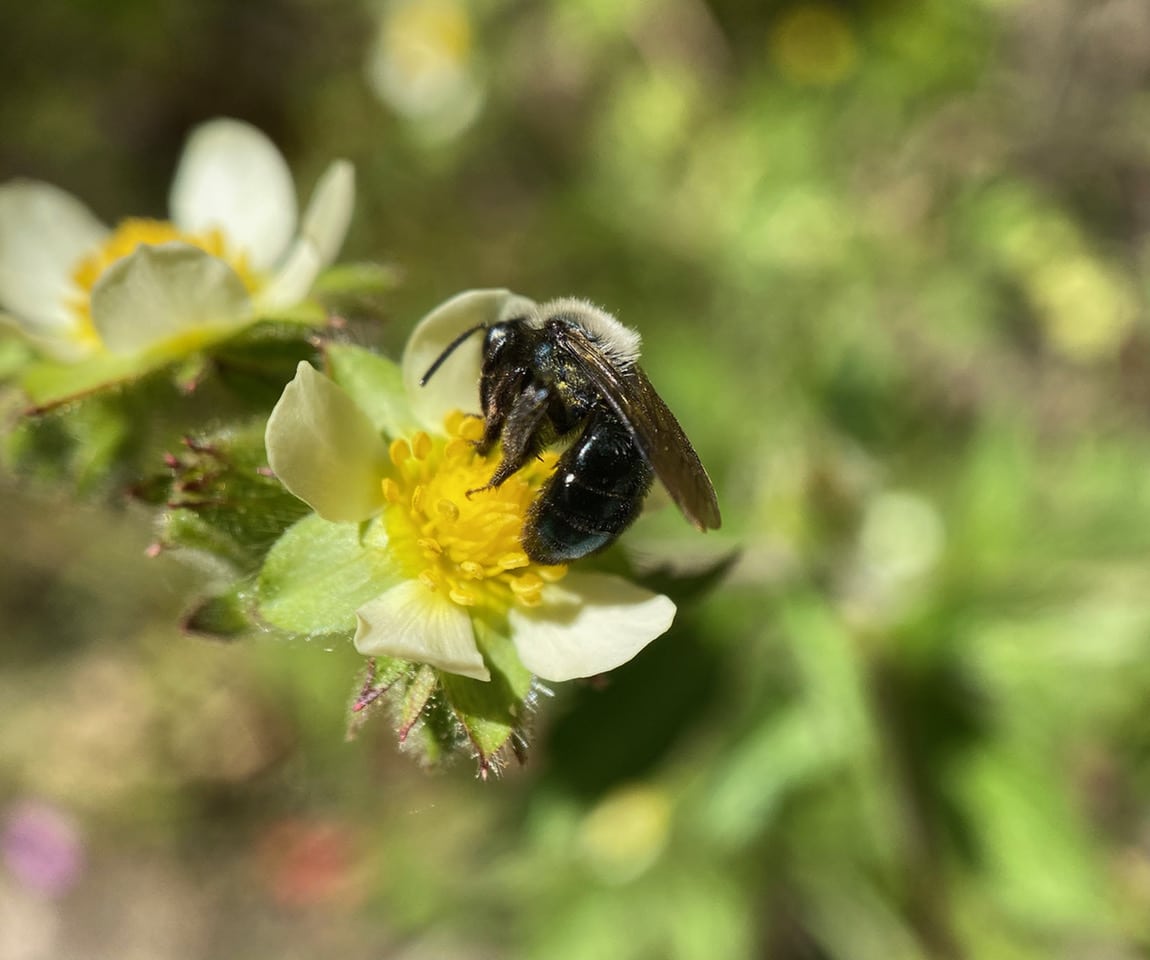
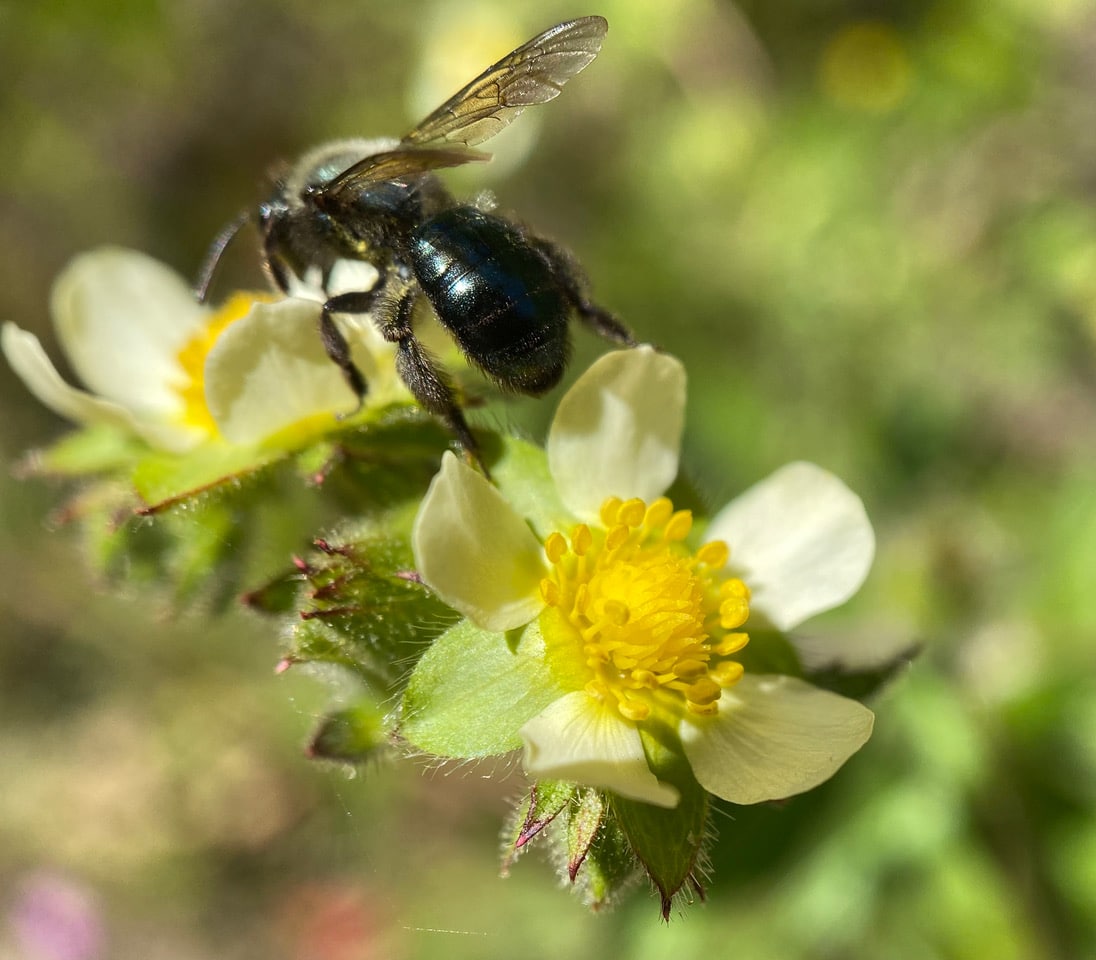
A bee is foraging on a flower of Sticky Cinquefoil, Drymocallis glandulosa.
It has a longish abdomen compared to the rest of its body.
Check out the scopa (special pollen collecting hairs) on her hind leg! It covers most segments of her leg, extending into her “armpit”. Together these features suffice to identify her as a Mining Bee, family Andrenidae.
Andrenid bees, commonly called miner bees or mining bees, are solitary ground-nesters. Andrenids are fairly small bees, usually dark-colored, and often banded. They are identified by the dense bristles (scopae) at the bases of the legs and the shin-like sections (tibias) of the legs, as well as by certain creases and grooves on the face and head and by unique wing venation.
Most andrenids are specialist pollinators whose life cycle is timed to correspond precisely to the blooming of specific flowers. Because of this, andrenids are some of the first bees to emerge in spring, and many are active in March and April, as they visit early spring wildflowers.
A female Masked Bee, Hylaeus sp. (family Colletidae) is foraging on an inflorescence of Golden Yarrow, Eriophyllum confertiflorum. There’s no sign of any scopa on her hind leg at all. That’s because she carries pollen (and nectar) internally in her crop, to be regurgitated when she returns to her nest.
Hylaeus (family Colletidae) are shiny, slender, hairless, and superficially wasp-like bees. They are small, 5 to 7 mm long, usually black with bright yellow or white markings on their face and legs. These markings are more pronounced on the males. Hylaeus do not carry pollen and nectar externally, they instead store their food in the crop and regurgitate it upon returning to their nests. They are primarily generalist foragers. Hylaeus are short-tongued, but their small body size enables them to access deep flowers. Hylaeus nest in stems and twigs, lining their brood cells with self-secreted cellophane-like material. They lack strong mandibles and other adaptations for digging, using instead pre-existing cavities made by other insects.