

Pollinator Post 6/9/23 (2)
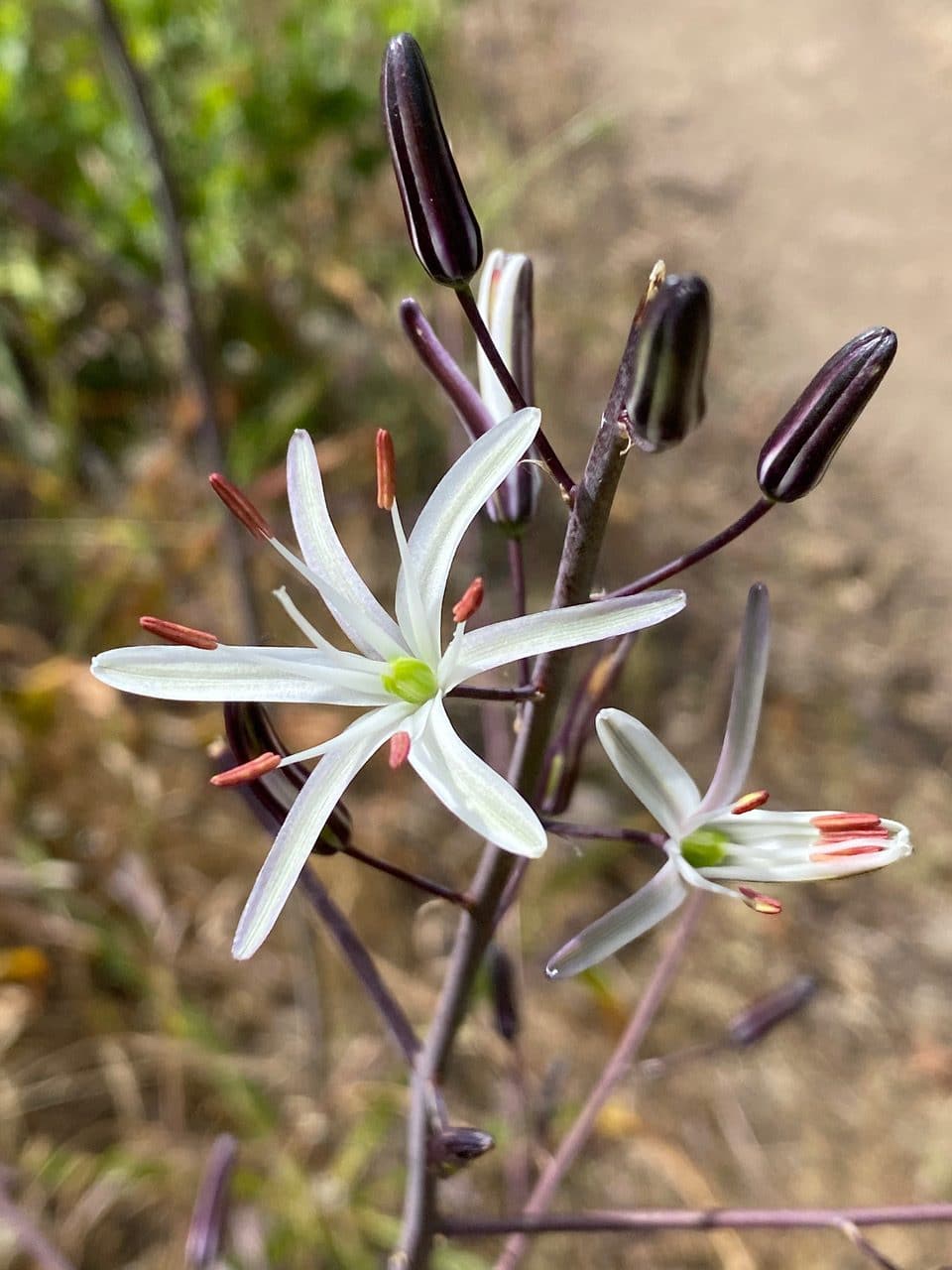
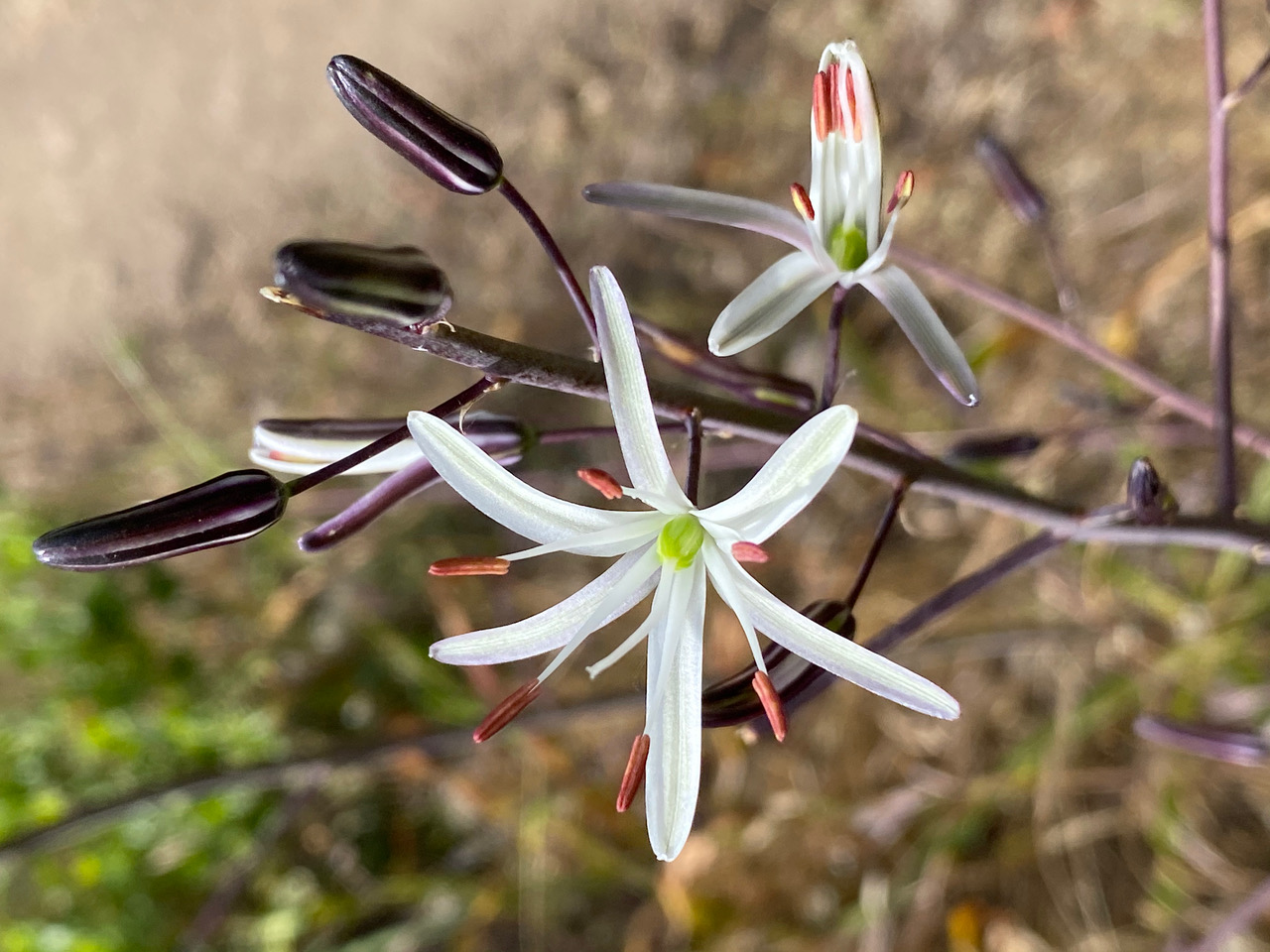
I am glad I couldn’t make it to Skyline Gardens until late this afternoon. If I have come earlier, I would’ve missed this special treat – the blooming of Soap Plant along Skyline Trail!




Soap Plant, Chlorogalum pomeridianum is a perennial that grows from a bulb. The plant is easily recognized by its linear, wavy-edged leaves. The generic name Chlorogalum means “green milk”, referring to the green juice exuded by a broken leaf. The specific epithet pomeridianum, or “past mid-day”, is the Latin phrase which gave rise to our abbreviation “p.m.” This refers to the plant’s trait of opening its flowers late in the day.
The white star-like flowers have a very short life – in the late afternoon one row of buds opens, starting from the bottom of the long stalk. Each flower remains open through the night, but twists closed (the wilted tepals twist around the fertilized ovary) by the morning and never opens again.
The flowers are pollinated during the afternoon by large bees (honey bees, carpenter bees, and bumble bees), and, after dark, by sphingid moths.
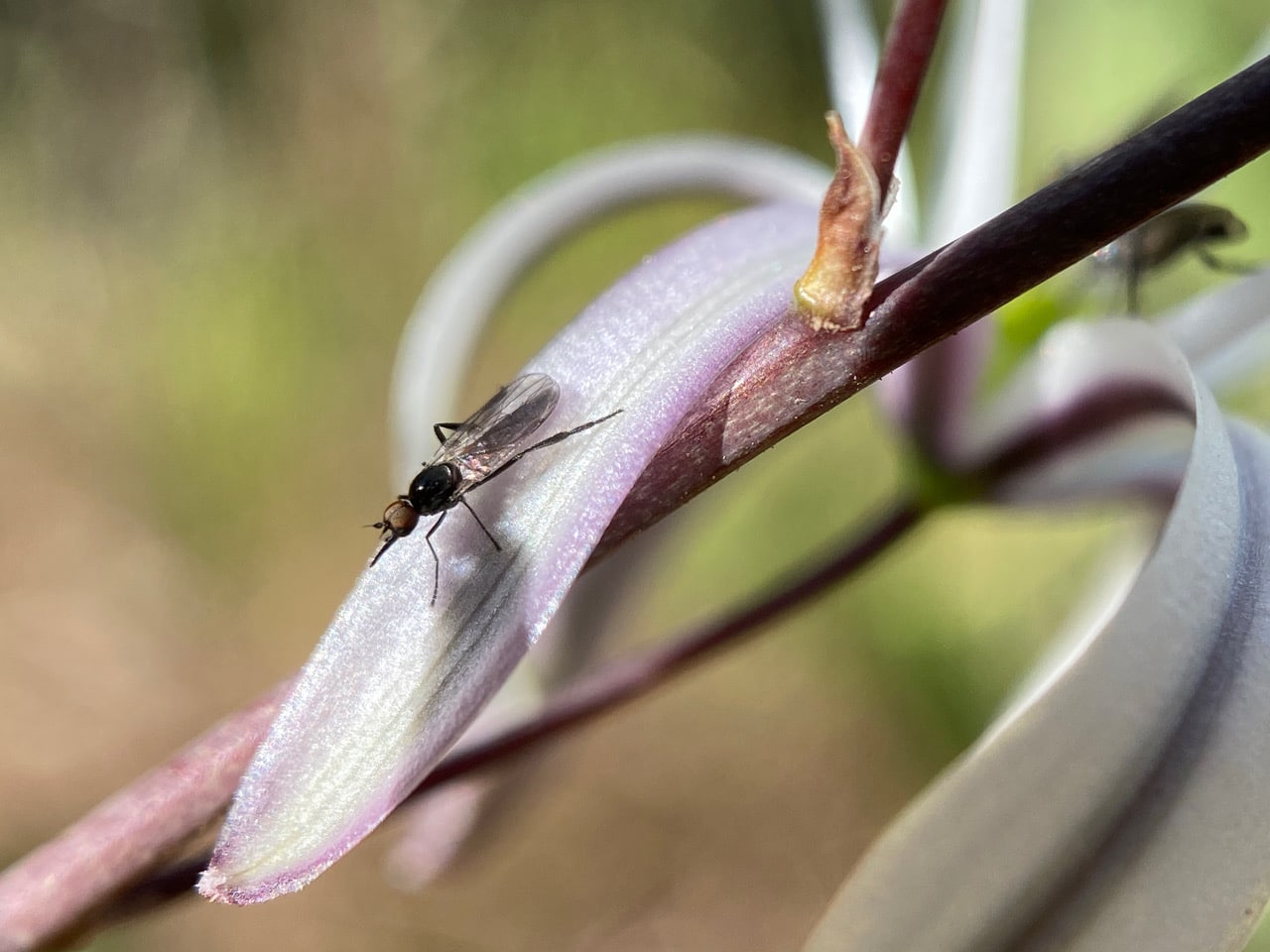
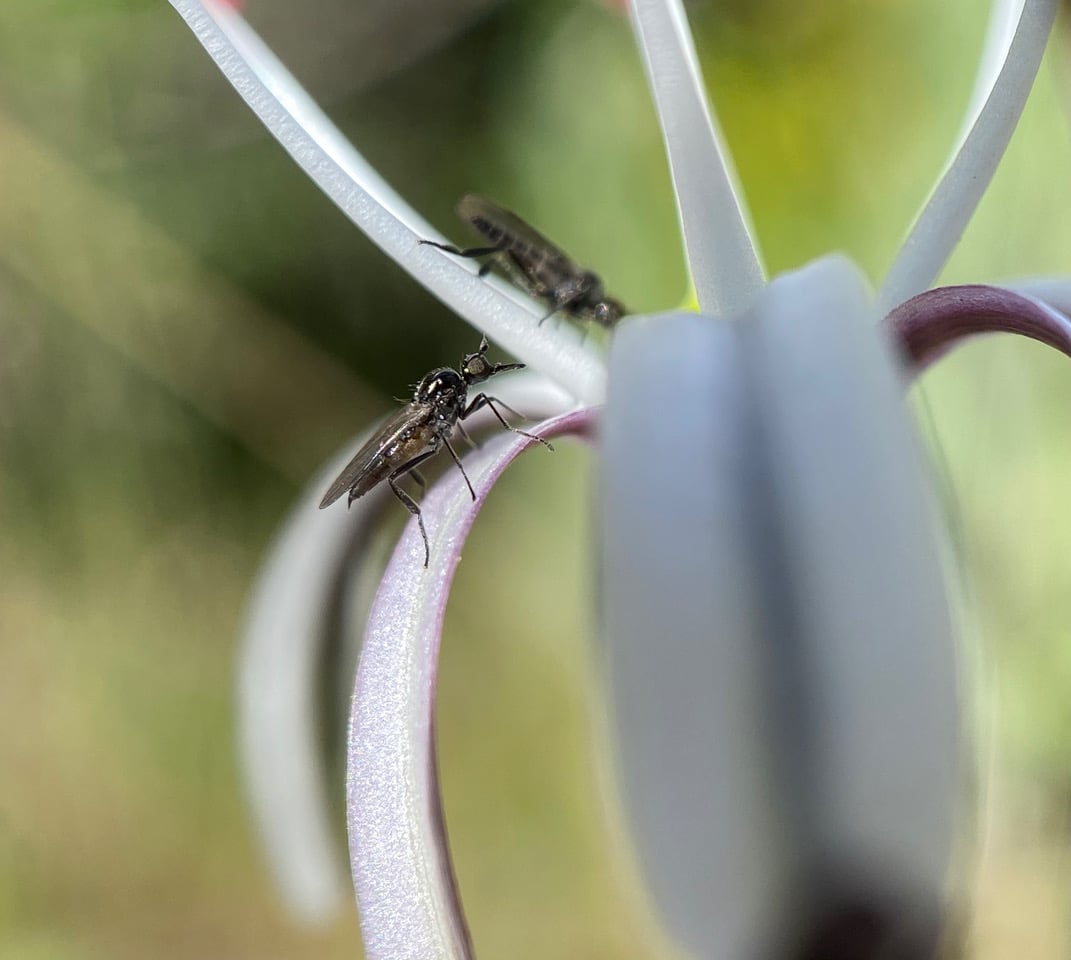
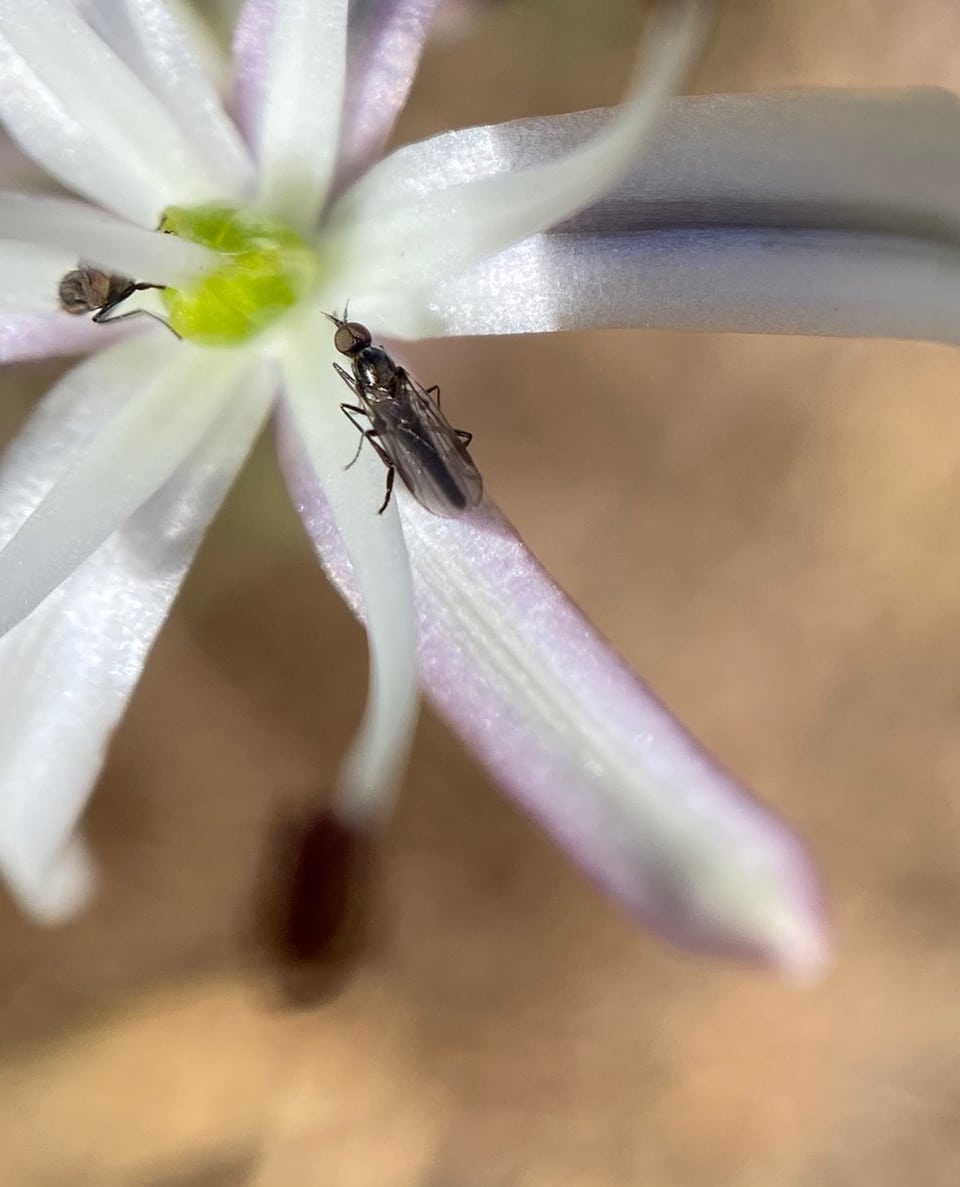
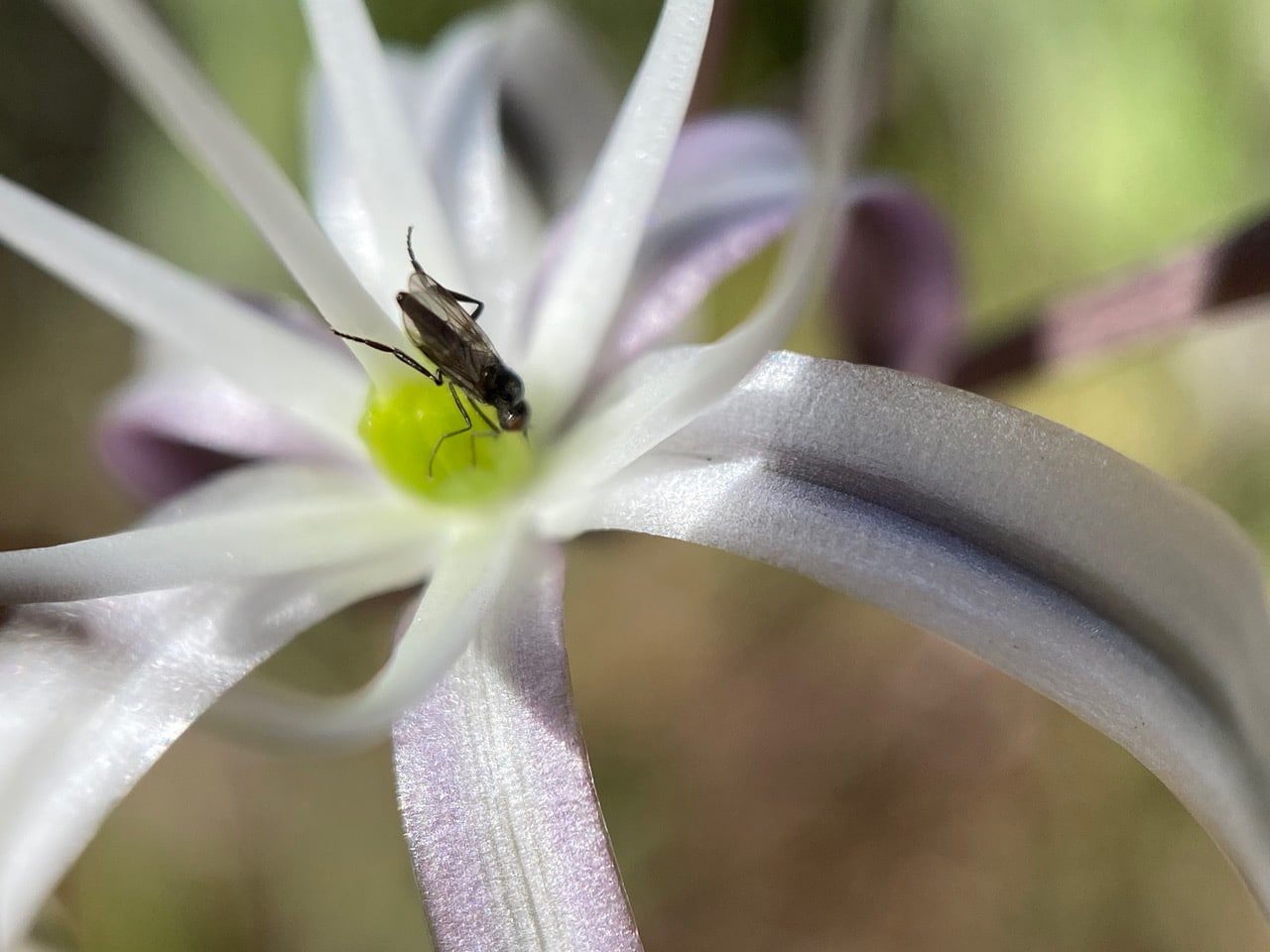
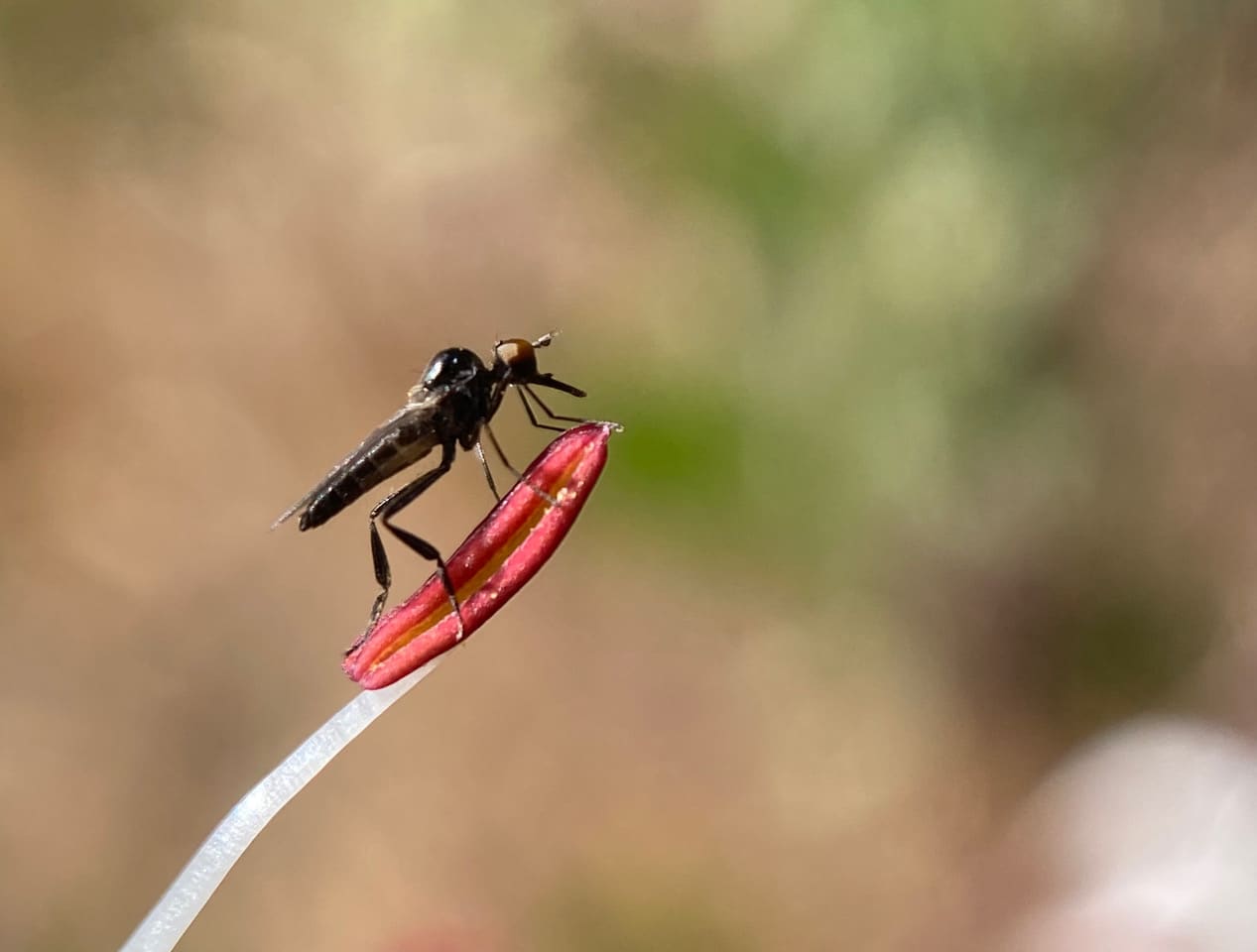
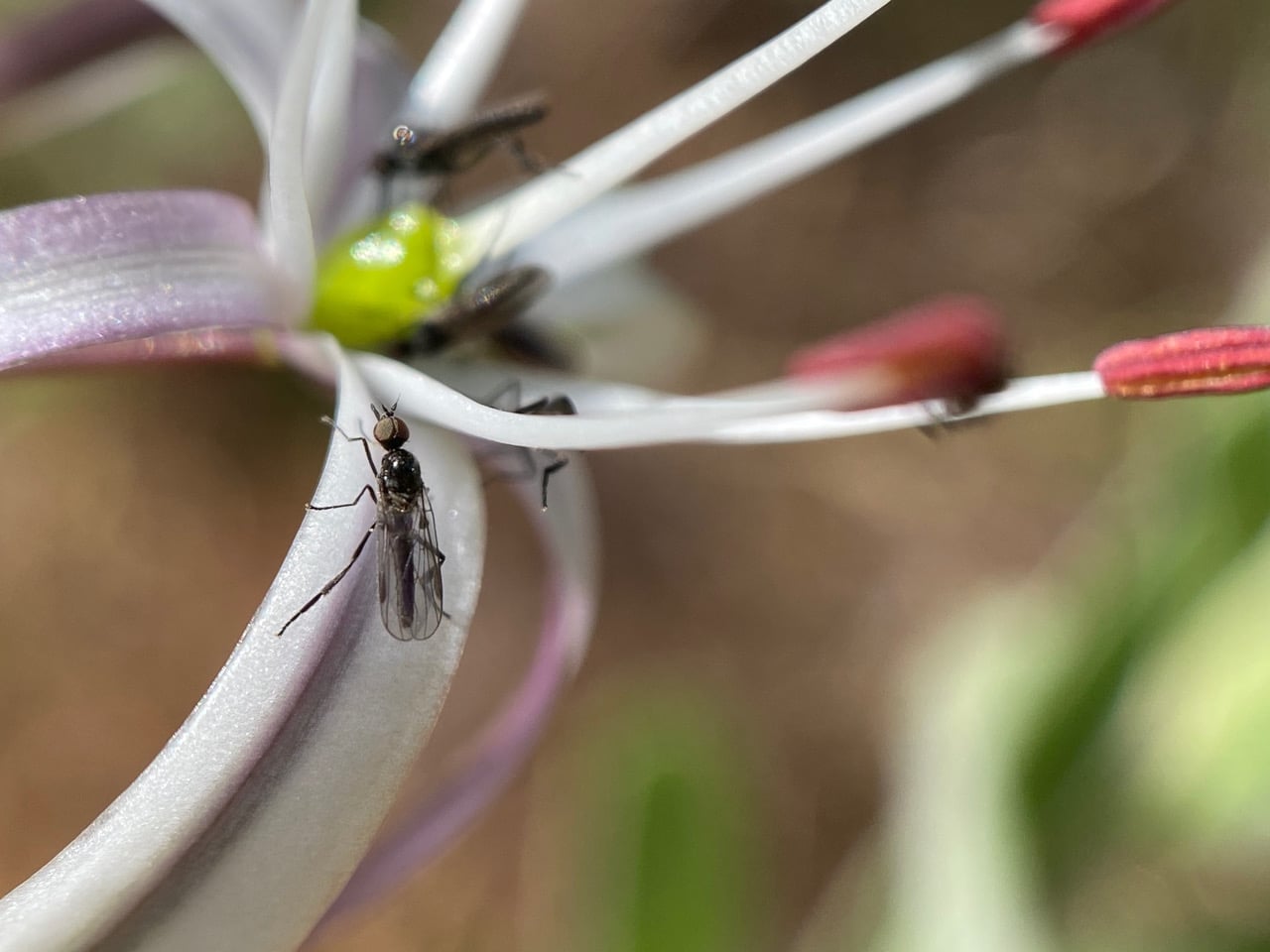
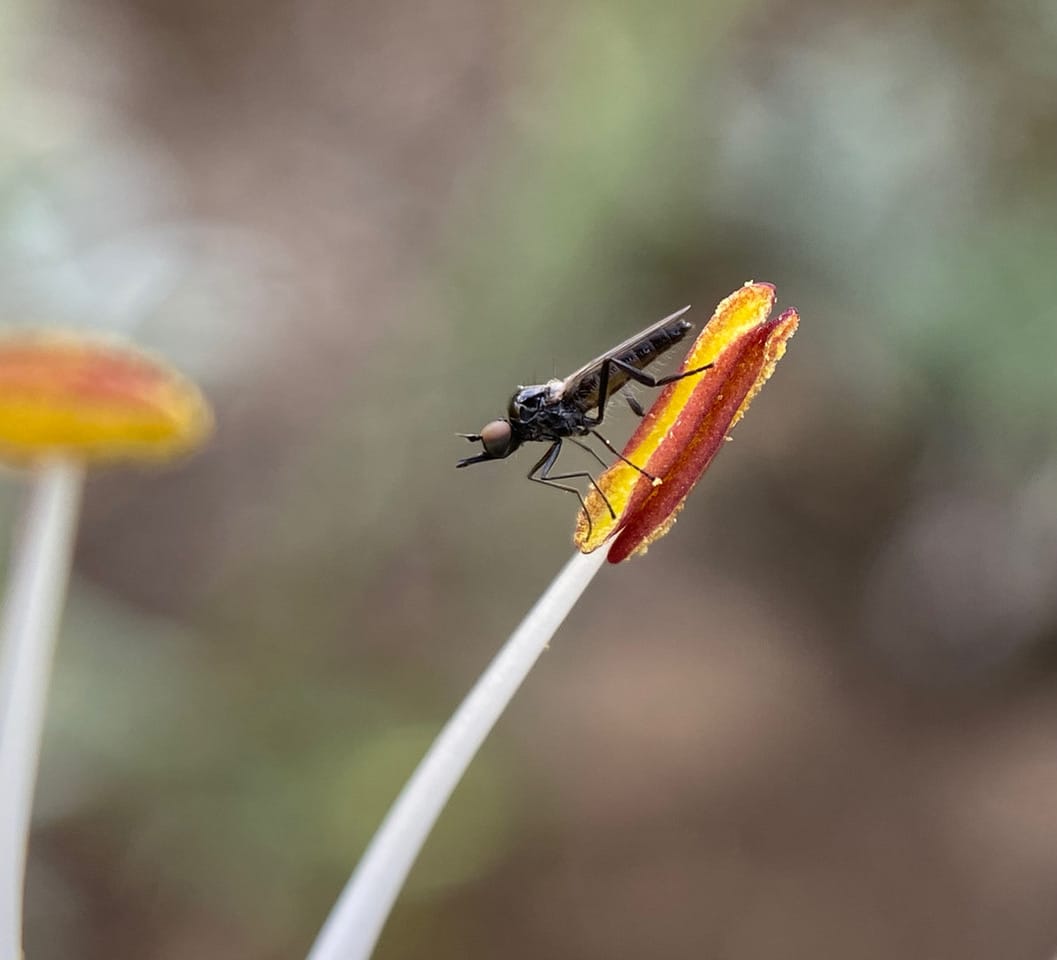
I begin to notice tiny insects on the Soap Plant flowers. They look to be flies with piercing-sucking mouthparts. That narrows down the identification nicely.
Flies (order Diptera, for “two wings”) come in a mind-boggling variety of species, sizes and shapes. Despite the diversity, these carnivores/herbivores/scavengers have been issued only two types of mouthparts – piercing-sucking (as in the Dance Flies) or sponging (as in the house fly). I am pretty sure that this is a Dance Fly (family Empididae).
Dance Flies, in the family Empididae, get their name from the habit of males of some species to gather in large groups and dance up and down in the air in the hopes of attracting females. They are predominantly predatory and they are often found hunting for small insects on and under vegetation in shady areas. Both genders may also drink nectar. Male dance flies give their sweeties a nuptial gift to eat while they mate. The gift is thought to enable her to complete the development of her eggs. Males may wrap their gifts in balloons of silk or spit, hence the other common name of Balloon Flies.
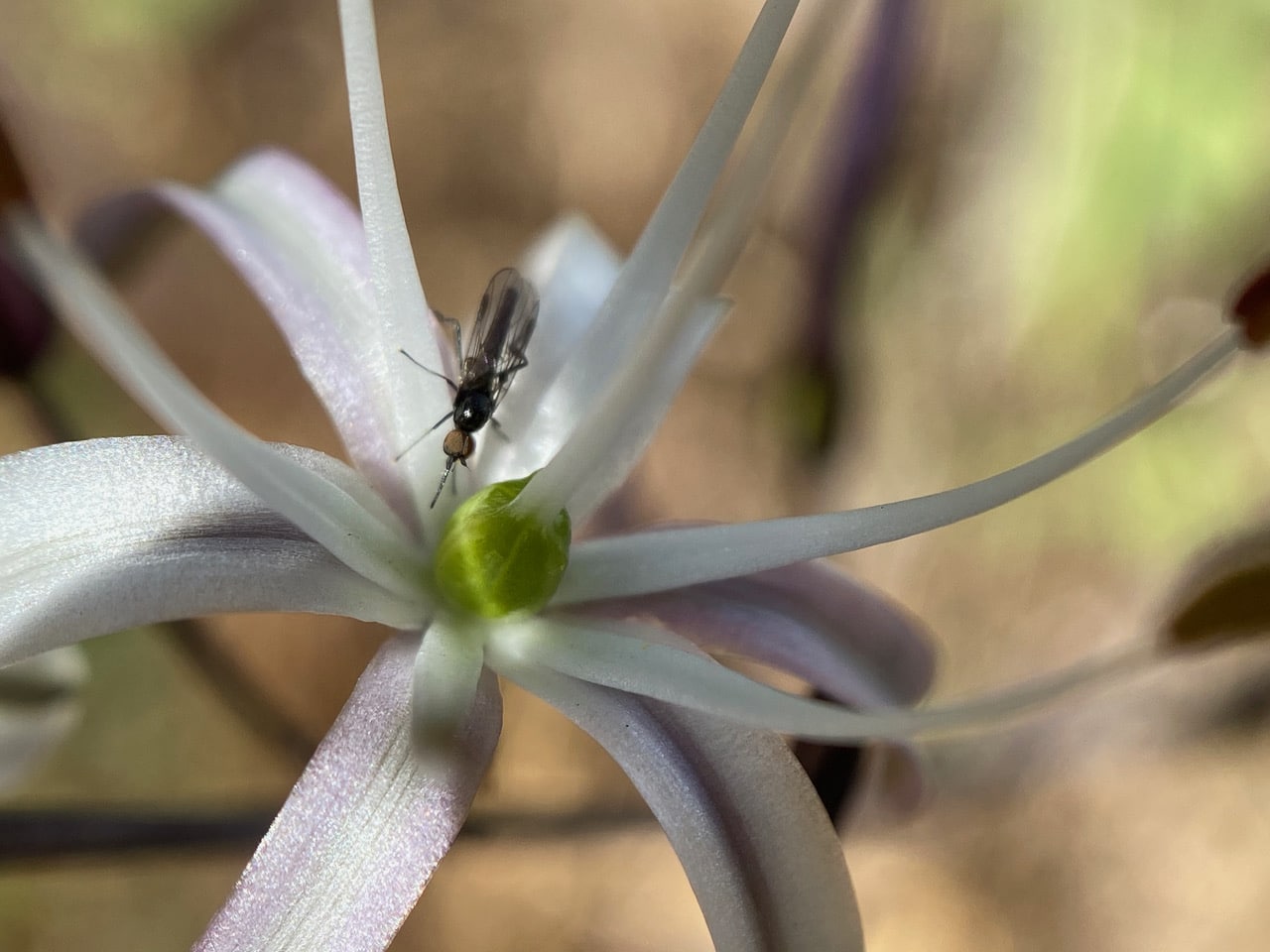
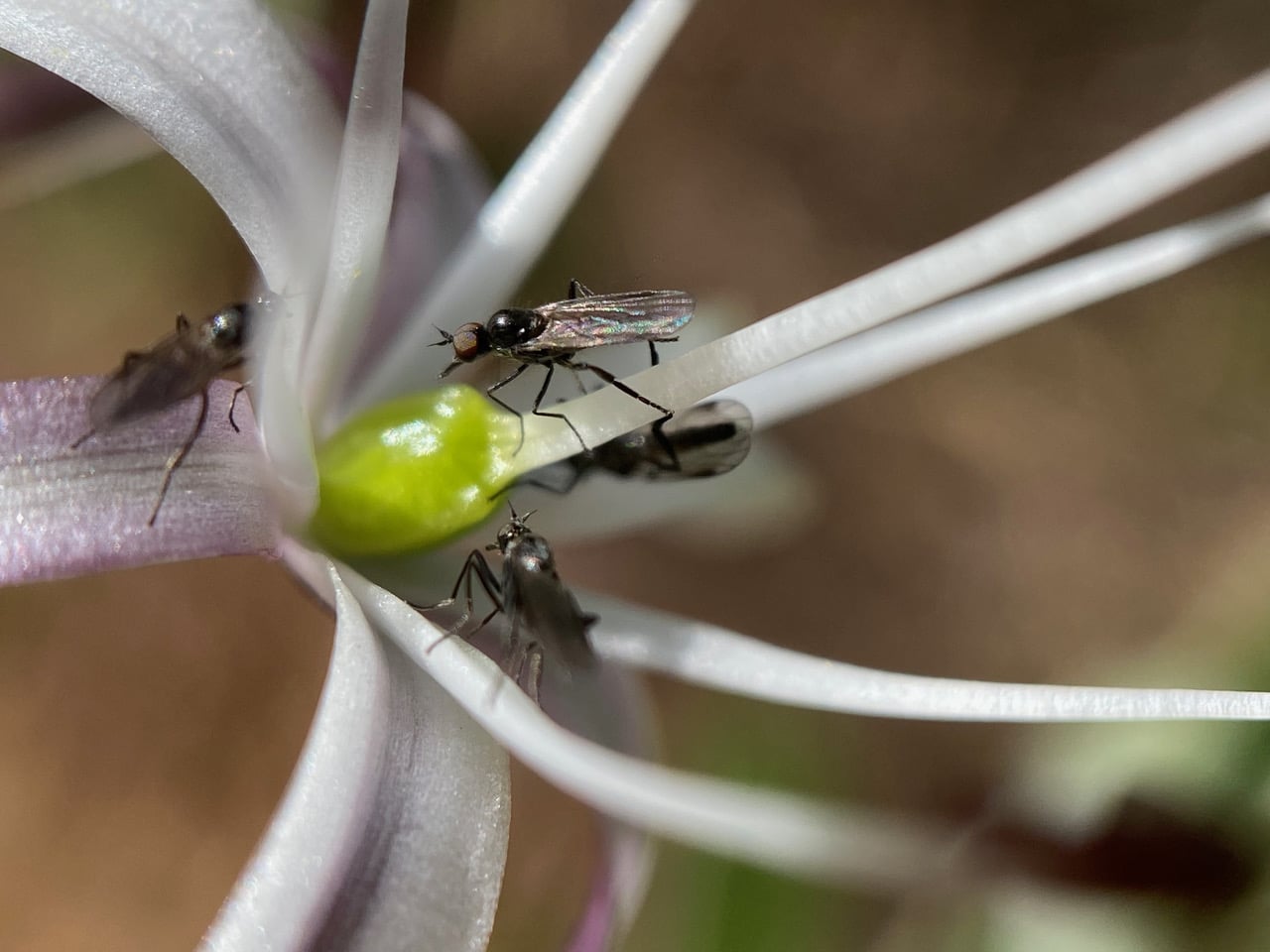
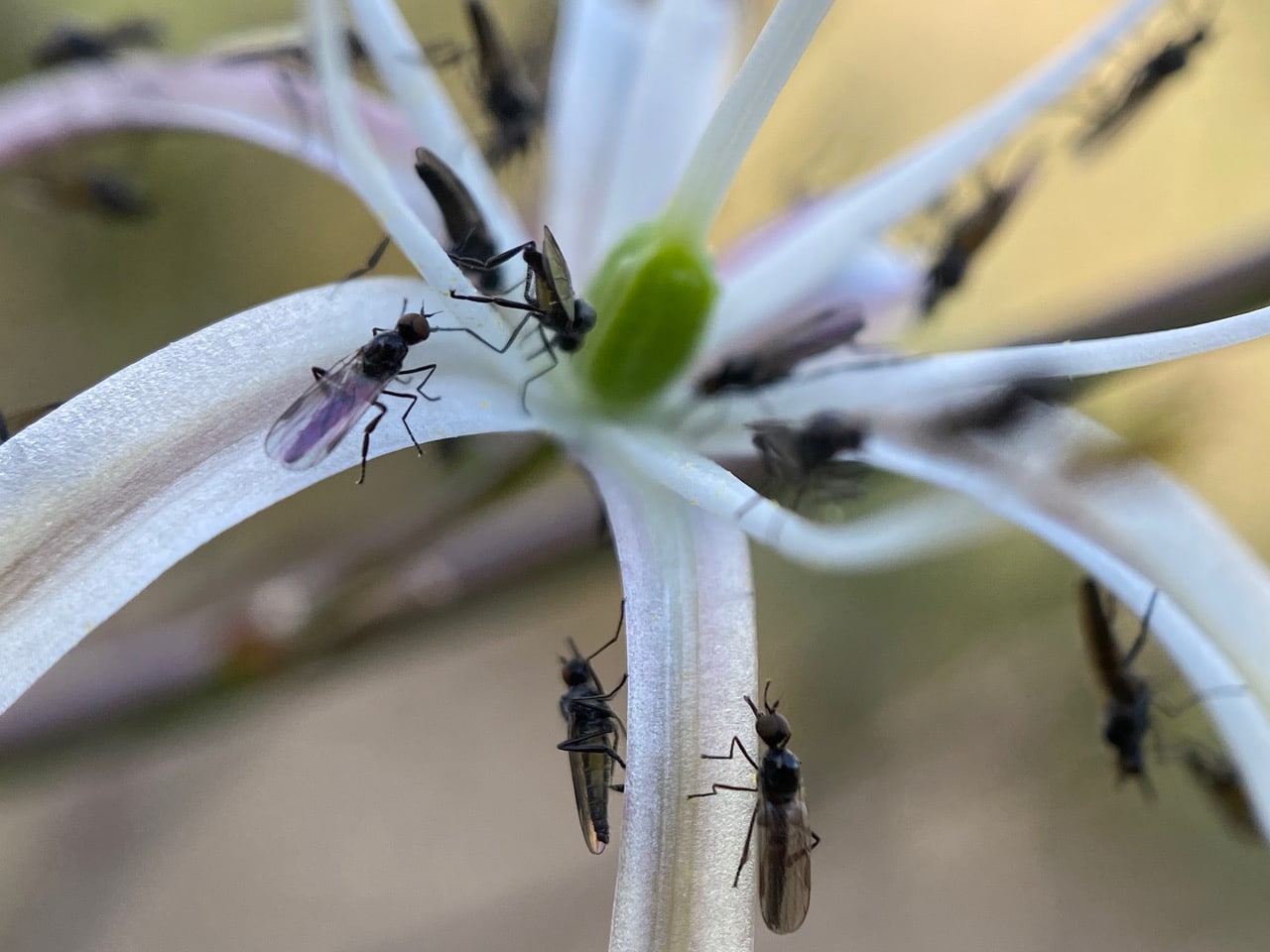
The flies seem to be attracted to the nectar at the base of the flower under the green ovary.
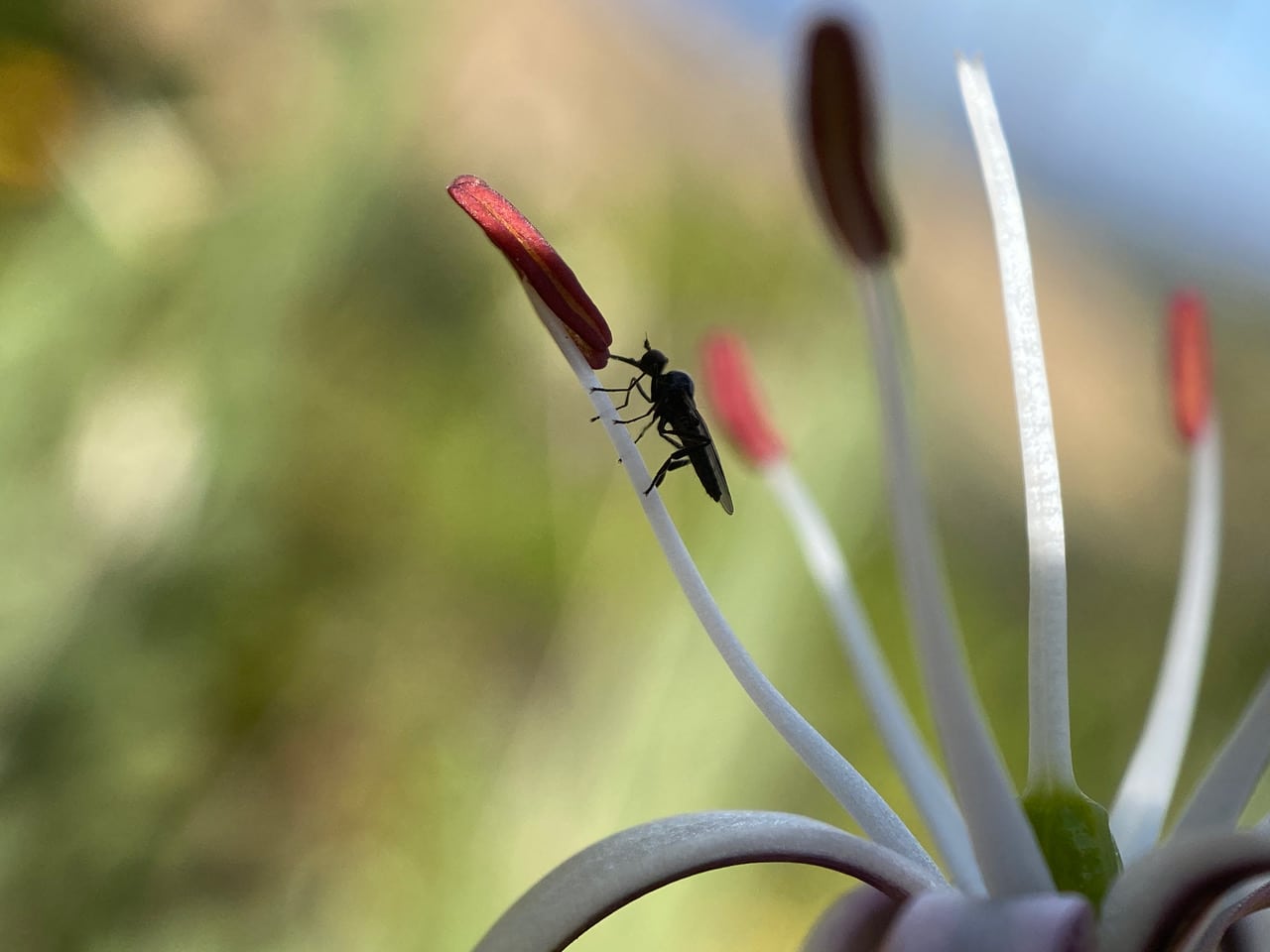
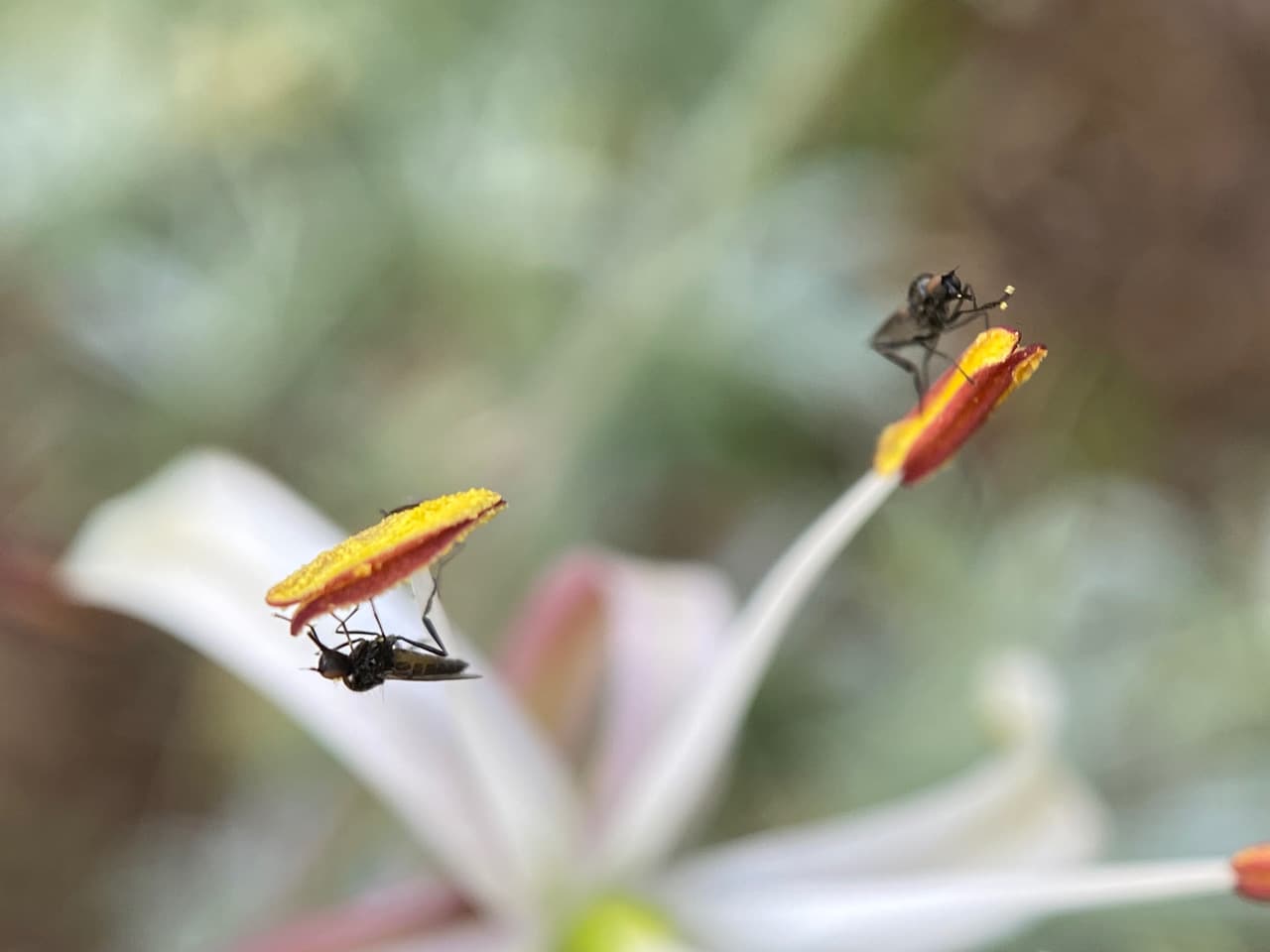
Others show interest in the anthers. Uh oh, I am fast losing the light for photography!
This fly is cleaning itself after feeding on pollen.
As the fly leaves the anther it has been feeding on, I see some yellow pollen grains adhering to the underside of its abdomen. Could the fly be a pollinator for the Soap Plant? Rather unlikely, unless it also visits the stigma of another flower. In the Soap Plant flower, the stigma is widely separated from the stamens. Unless the insects have a special attraction to the stigma, they are not likely to go there. I think it takes larger insects whose body can span the distance between the male and female parts of the flower to effectively pollinate the plant.
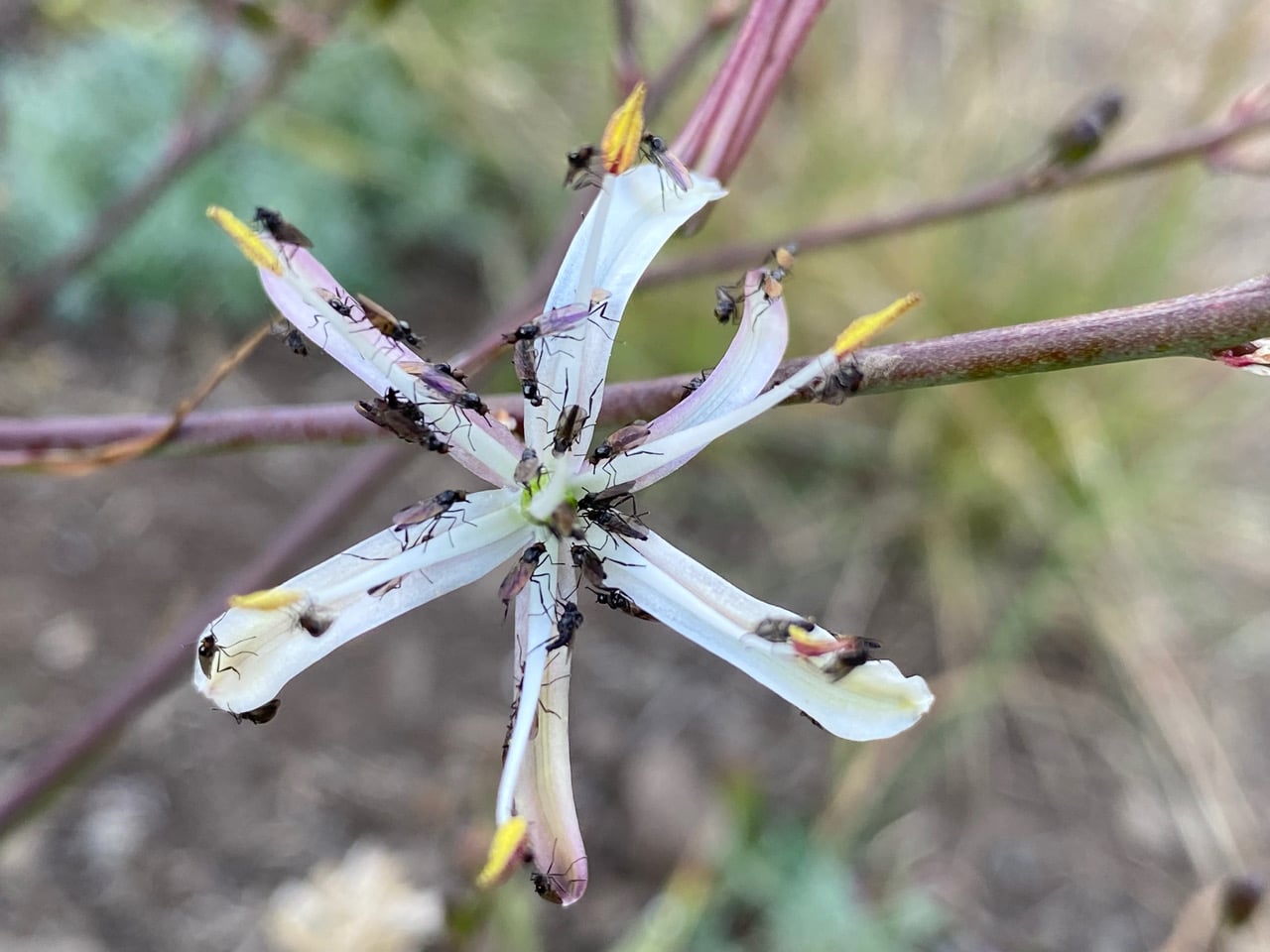
As day bleeds into nightfall (as the song lyric goes), more and more Dance Flies gather on the Soap Plant flowers. Their activities center around the nectar. Are these flies crepuscular/ nocturnal? Or maybe there’s a big hatch of Dance Flies nearby and they happen to come upon the Soap Plant flowers – a coincidence?
Some flies are actively feeding on the pollen from the ripe anthers.
I try my best to get a close-up of a Dance Fly in the fading light, and discover that the fly is actually quite hairy on the underside of its abdomen.
There, see those faint hairs?
As I walk further along Skyline Trail, I find more Dance Flies on the freshly opened Soap Plant flowers. There must be at least 30 flies at this party!
Despite the number of flies, there are no brawls – the flies all take their turns approaching the nectary. If only humans can be so civil in our gatherings!
It’s getting late – time to head for home. In the fading light, a few Yellow-faced Bumble Bees, Bombus vosnesenskii are foraging on the Soap Plant flowers. These gals have been out working since the crack of dawn!