

Pollinator Post 6/23/23 (2)
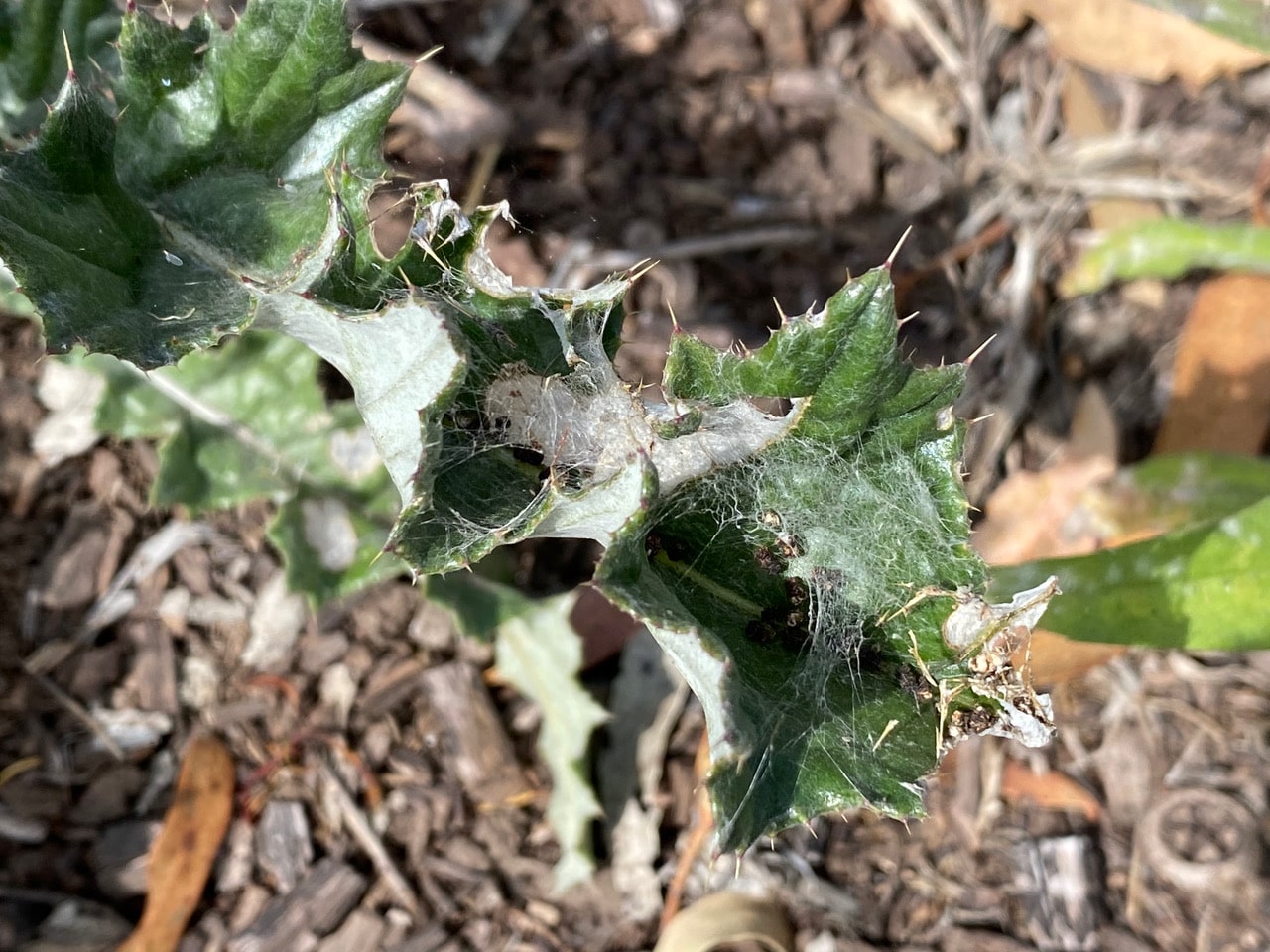
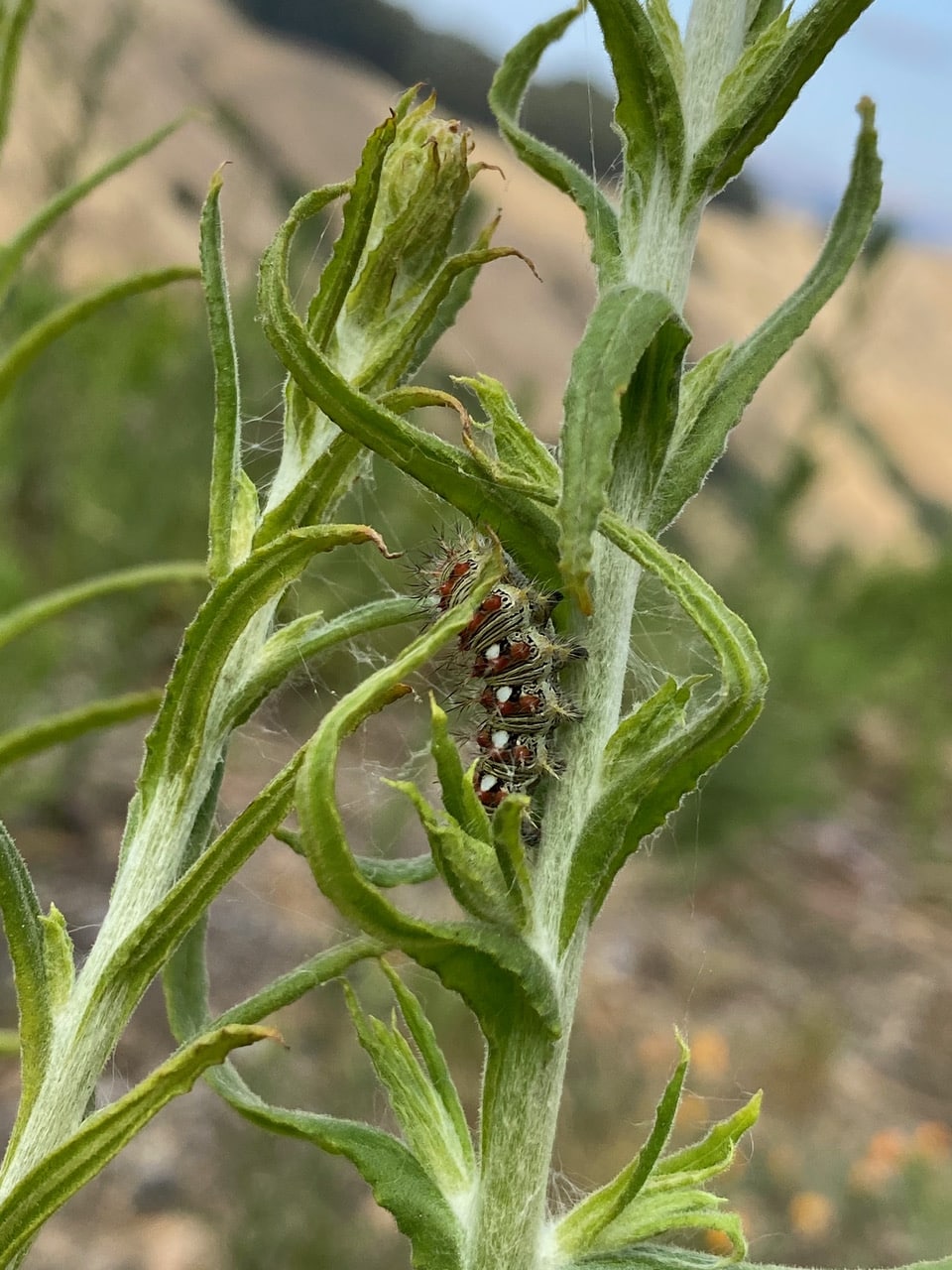
The Painted Lady caterpillars on the Cobweb Thistles are not faring well. Most of their nests on the leaves have been breached. The silk webbings have been torn open, and the caterpillars are missing.
The Painted Lady, Vanessa cardui (family Nymphalidae) is the most widespread of all butterflies. They are found on every continent except Antarctica and Australia. The butterfly also goes by the name thistle butterfly; its scientific name Vanessa cardui means “butterfly of thistle”. Although more than 100 host plants have been recorded for the species, the caterpillars’ favorites include thistles (Asteraceae), hollyhock and mallow (Malvaceae), and various legumes (Fabaceae).
Female Painted Lady butterflies lay eggs singly on the upper side of host plant leaves, sometimes on the thistle flowerheads. When small the caterpillars live for most of the time within a tent of leaves loosely spun together with silk. Only when larger are the larvae more likely to be found feeding outside a leaf tent on the food plant.
In contrast to the caterpillars of the American Lady caterpillars that construct new and bigger nest on their host plant as they grow bigger, Painted Lady caterpillars simply extend/enlarge their existing nests.
Painted Lady butterflies are known for their distinct migratory behavior. They are an irruptive migrant, meaning that they migrate independently of any seasonal or geographical pattern. The populations that migrate from North Africa to Europe may include millions of butterflies. The distance covered rivals that of the better known Monarch butterflies. The butterflies can cover up to 100 miles per day during their migration; the round trip may take up to 6 successive generations.
In California, the butterflies are usually seen flying from north to north-west. These migrations appear to be partially initiated by heavy winter rains in the desert where rainfall controls the growth of larval food plants. In the spring of 2019, the butterflies migrated by the millions across the state.
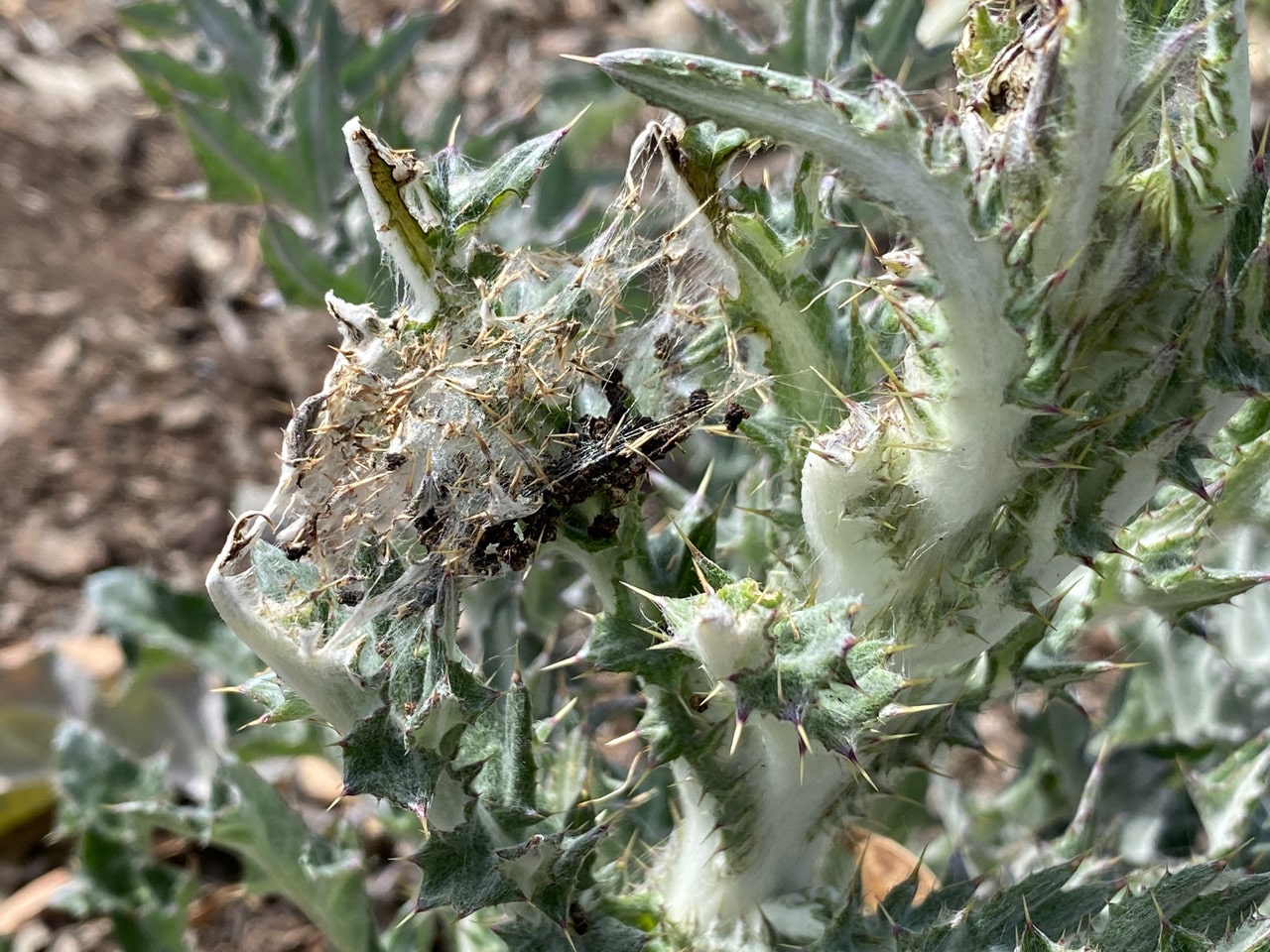
Probably predated by a bird? Caterpillars are highly sought after by birds raising their hungry chicks this time of year.
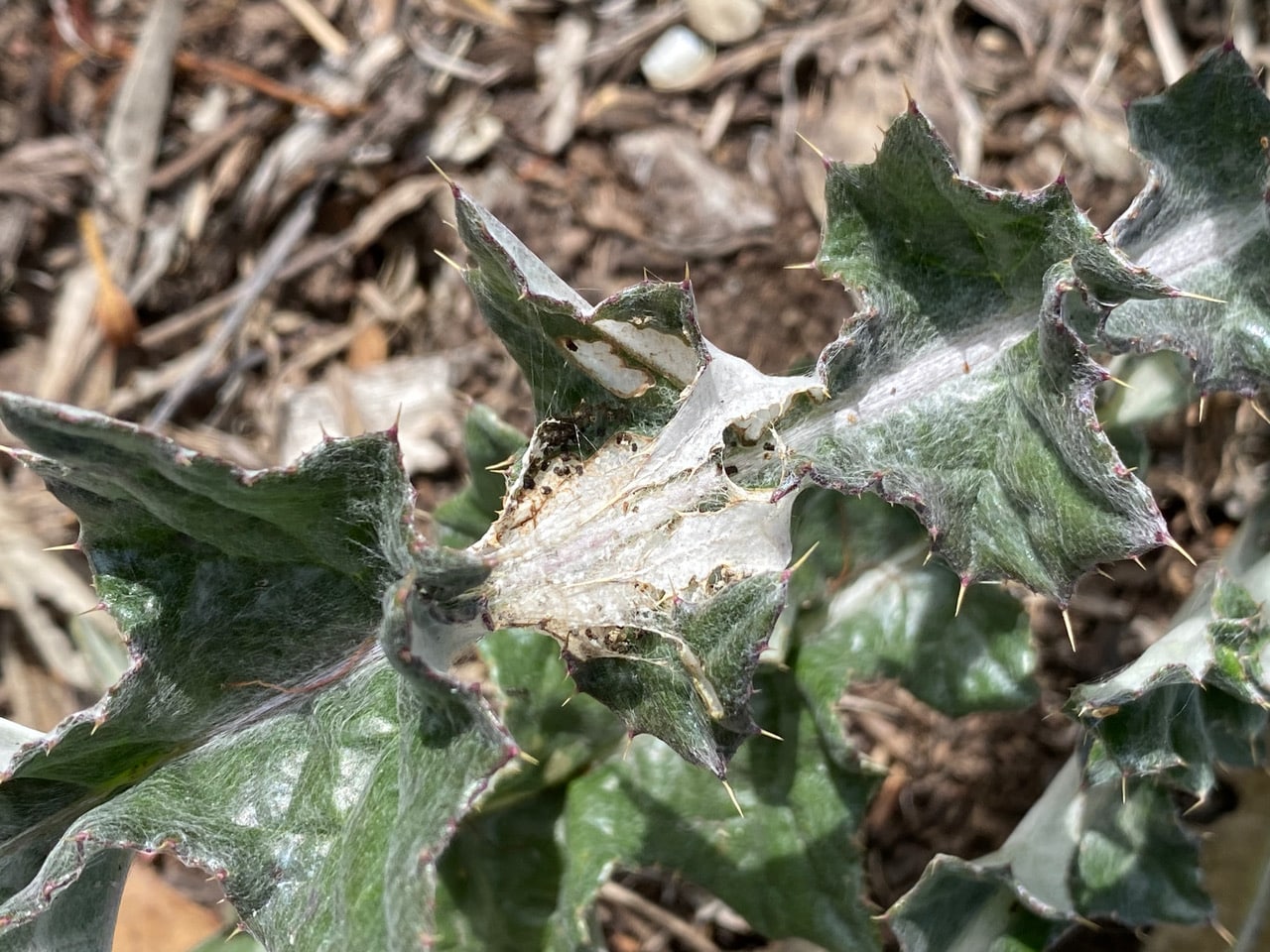
The caterpillar in this nest is gone too.

This tightly wrapped taco-shaped nest seems to be the only one not broken into. Sadly, very few caterpillars actually make it to an adult butterfly.
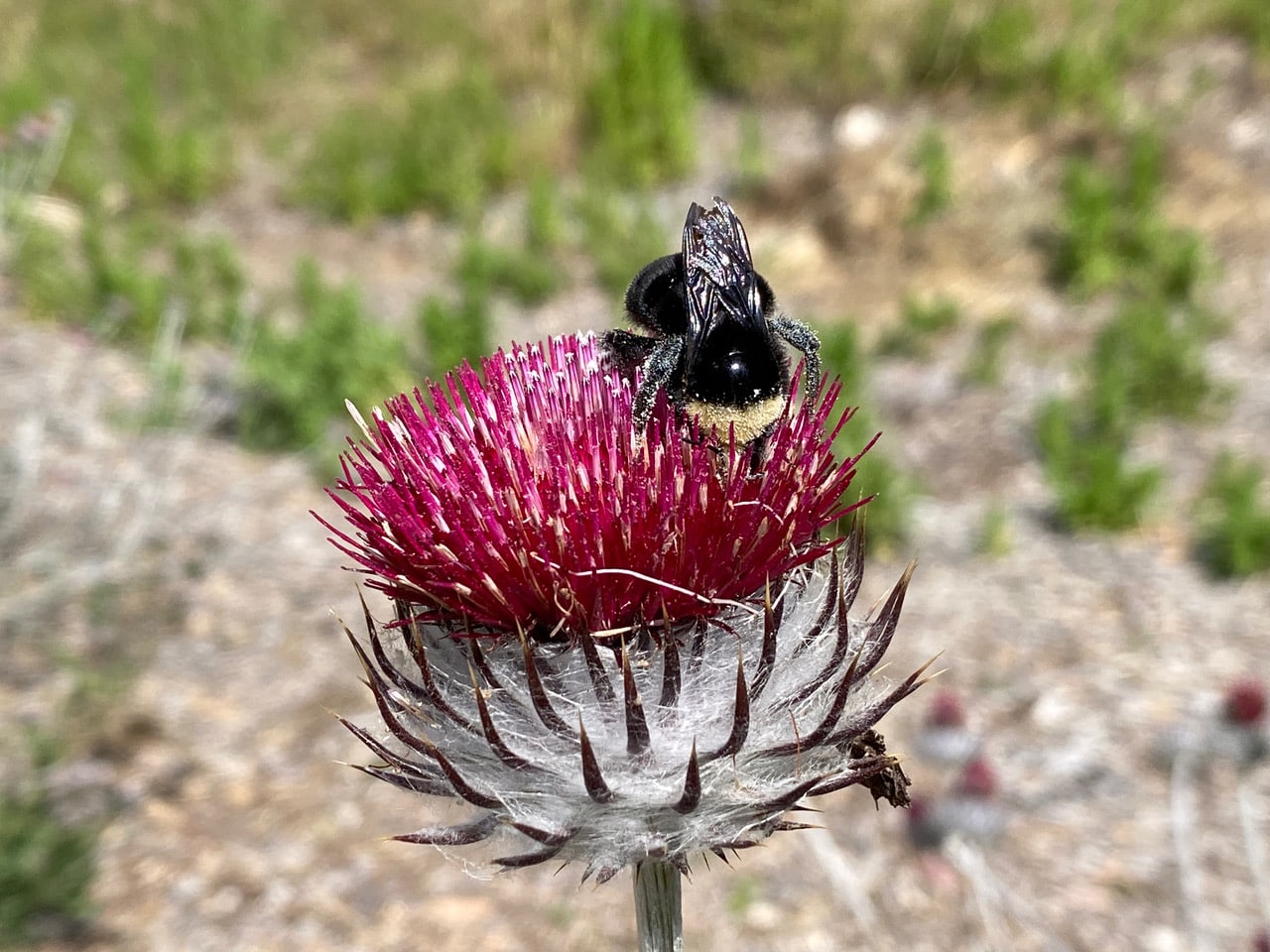
I decide to check on the two robust Cobweb Thistles, Cirsium occidentale by the Water Tank. There are no caterpillar nests on the leaves here, but a few bumble bees are visiting the remaining flowers, their heads buried deep in the flowerheads. I have to wait patiently to see this bee’s face….




Ahh, it finally lifts its head! It has yellow hairs on its head – a common Yellow-faced Bumble Bee, Bombus vosnesenskii. I am a little disappointed as I have hoped to see a California Bumble Bee instead. Once a common species, the California Bumble Bee, Bombus californicus is a species of concern as its population has declined sharply in recent years. The bees look very much like the Yellow-faced Bumble Bee, sans the yellow face. I encountered a few California Bumble Bees last year feeding on the pollen of the Cobweb Thistle, and was hoping to see them again this year…
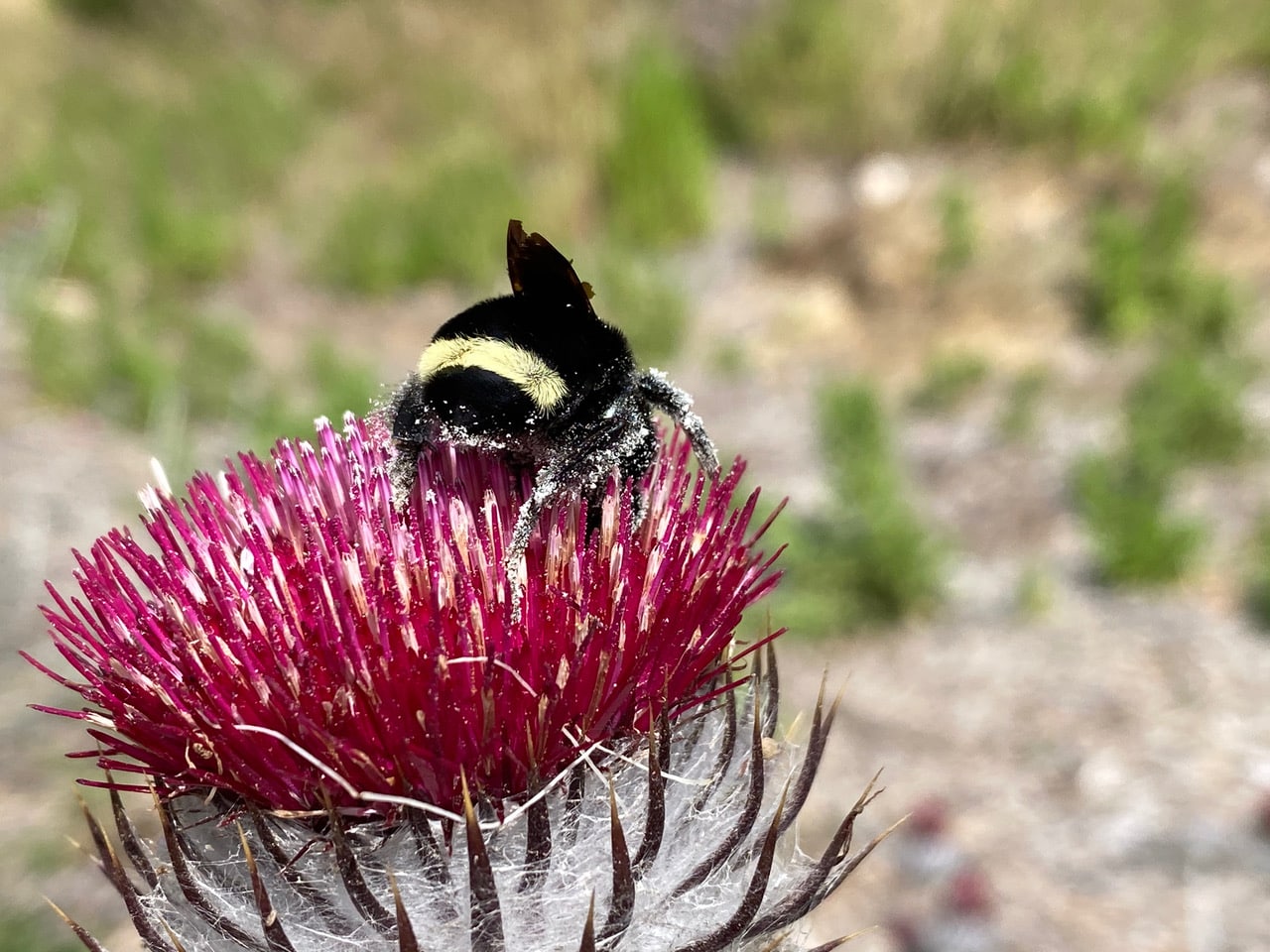
Alas, this one too turns out to be a Yellow-faced Bumble Bee. Note that the bee is not gathering pollen – no pollen in the pollen baskets on it hind legs. The sticky white pollen has simply adhered to the hairy bee as it forages.
Knee-deep among the red florets, another Yellow-faced Bumble Bee is sipping nectar on a Cobweb Thistle flowerhead.
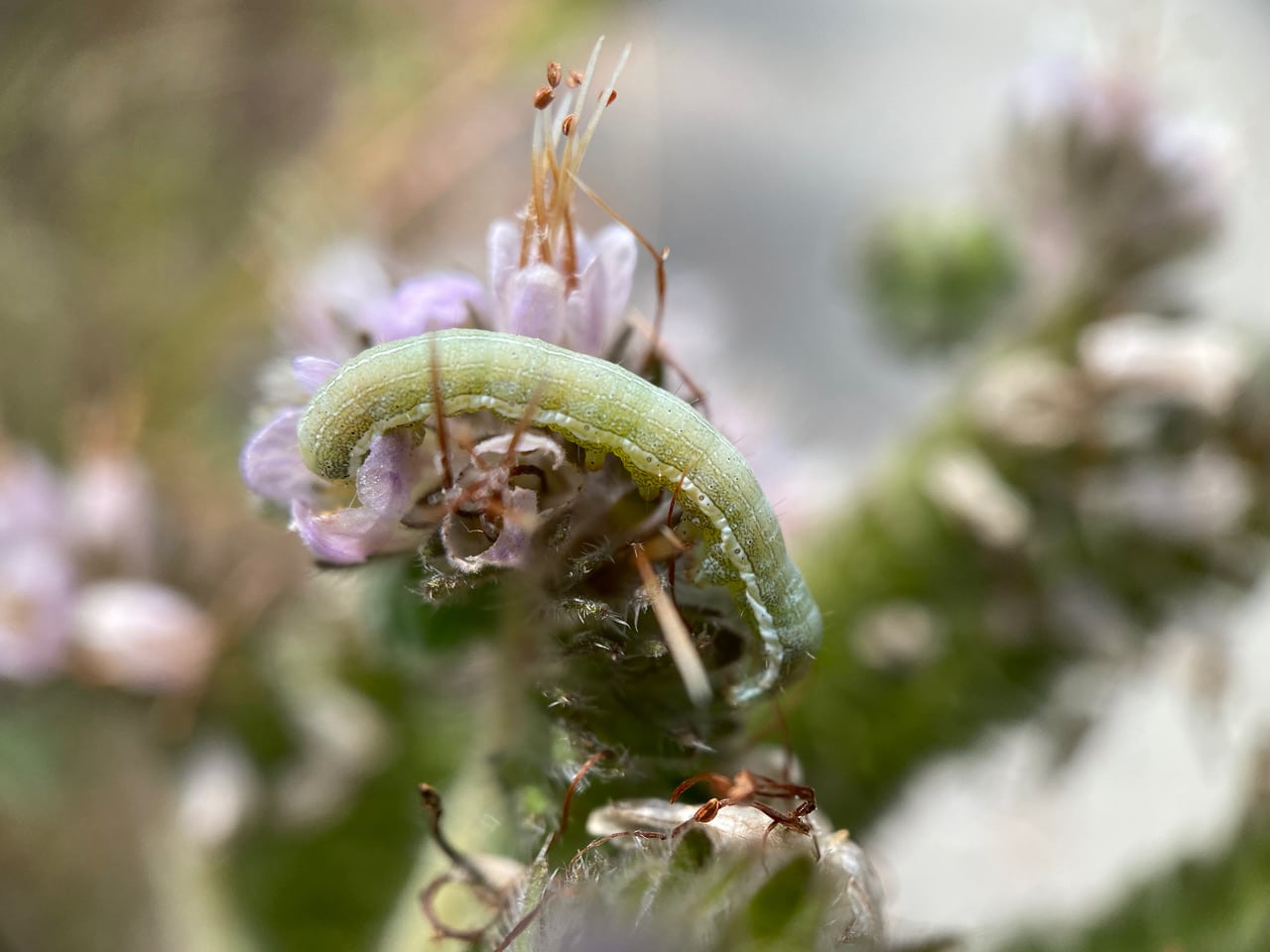
A green caterpillar is feeding on the California Phacelia. This one has a full complement of prolegs under its body – not an inchworm. It belongs to the family of Cutworm Moths and Allies, Noctuidae.
The Noctuidae, commonly known as owlet moths, cutworms or army worms, are a family of moths. The larvae are commonly green or brown; most are pudgy with rounded, short heads and few hairs. The names “army worms” and “cutworms” are based on the behavior of the larvae of this group, which can occur in destructive swarms and cut the stems of plants. Members of Noctuidae, like other butterflies and moths, perform an important role in plant pollination. Some species have developed a stronger connection with their host plants. Some feed on poisonous plants and are unaffected by their chemical defenses. Like other Lepidoptera, many adult Noctuidae visit flowers for their nectar. They also seek other liquid food resources such as plant juices, honeydew, dung, urea and mud.
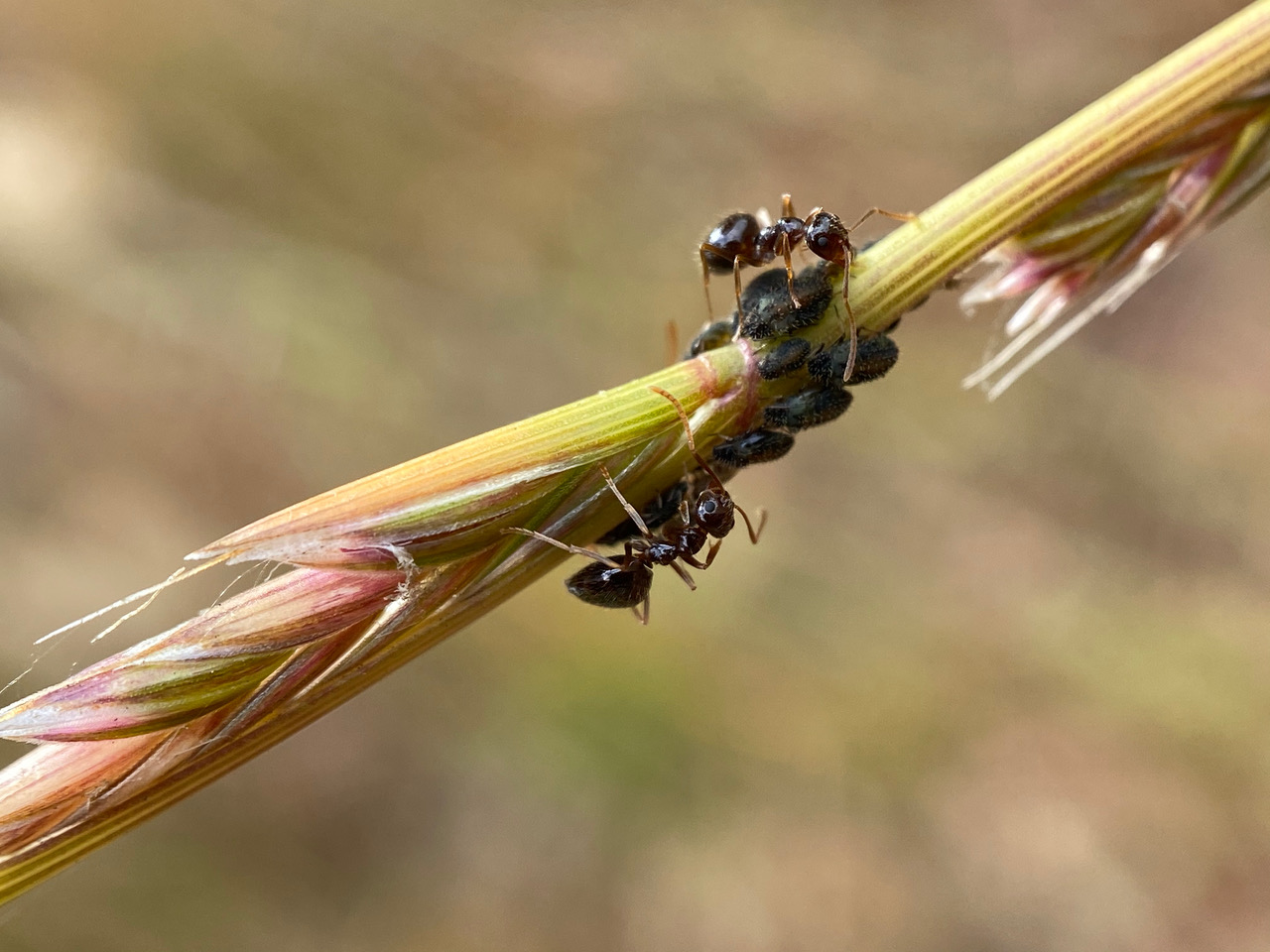
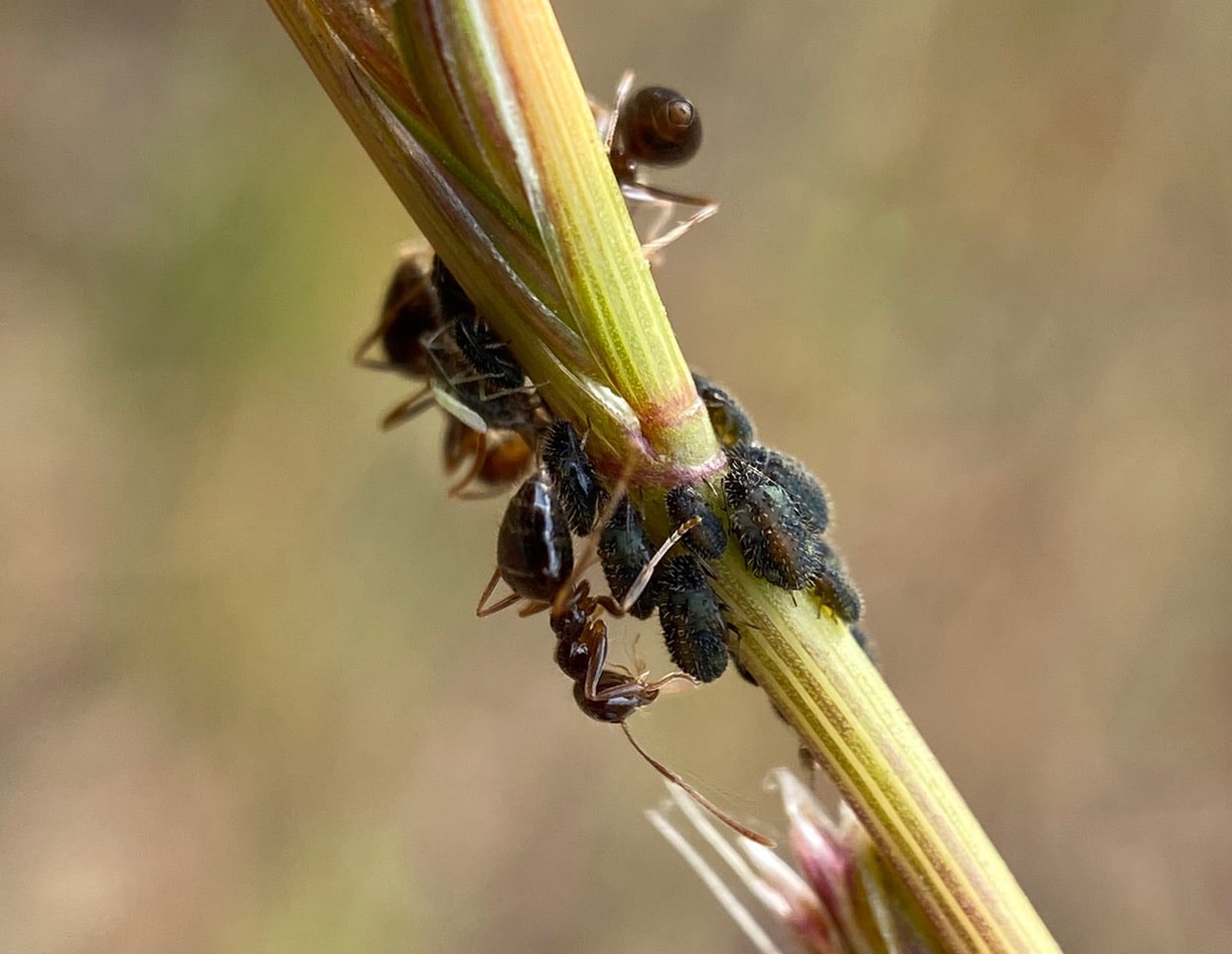
Some American Winter Ants, Prenolepis imparis (family Formicidae) are tending a small colony of dark aphids on a stem of Italian Rye Grass.
Ants and aphids share a well-known mutualistic relationship. The aphids produce honeydew, a sugary food for the ants; in exchange, the ants care for and protect the aphids from predators and parasites. Some ants will “milk” the aphids to make them excrete the sugary substance. The ants stroke the aphids with their antennae, stimulating them to release the honeydew. Aphid-herding ants make sure the aphids are well-fed and safe. When the host plant is depleted of nutrients, the ants carry their aphids to a new food source. If predatory insects or parasites attempt to harm the aphids, the ants will defend them aggressively. Some species of ants continue to care for aphids during winter. The ants carry the aphids to their nest for the winter months, and transport them to a host plant to feed the following spring.
The American Winter Ant, Prenolepis imparis is a widespread North American ant. A dominant woodland species, it is most active during cool weather, when most other ant species are less likely to forage. This species is one of a few native ants capable of tolerating competition with the invasive Argentine Ant, Linepithema humile. They are also aggressive toward other ants and produce abdominal secretions that are lethal to Argentine Ants. Prenolepis imparis is a generalist omnivore. Foragers are known for tending to aphids or scale insects from which they consume excreted honeydew, aggregating on rotting fruit, and exploiting protein-rich sources such as dead worms. The colony enters estivation (a hibernation-like state) and becomes inactive above ground for the warmer months, during which time eggs are laid and brood are reared. Reproductives overwinter and emerge on the first warm day of spring for their nuptial flight.
The Bristly Black Grass Aphids, Sipha maydis (family Aphididae) are native to the old world (Mediterranean region, Central and South Asia, and South Africa). The species is an invasive pest affecting grasses and cereal crops. It was first reported in California in 2007. The aphid feeds on numerous species of grasses (Poaceae). It is mostly found on the upper sides of leaf blades, near the base, and are usually attended by ants. Heavily infested leaves may become yellowed, rolled into tubes, and desiccated. The aphid has been recorded from almost every cultivated cereal crop species.
I pass by the little American Lady caterpillar again on the way back. In almost an hour, the caterpillar has made some headway with its nest construction. There is more silk strung between the everlasting leaves but it’s still far from an enclosed nest. We are fast losing sunlight; the wind has whipped up and the fog is rolling in. I sure hope the caterpillar will have a safe shelter soon as it’s getting cold up here. I zip up my jacket and head downhill.
Aah, the black beetle has come out of hiding and is actively moving on the California Phacelia inflorescence now!
The beetle seems to have fused elytra, rendering it flightless. iNaturalist has helped identify it as a Darkling Beetle (family Tenebrionidae), but no further.
The only Darkling Beetles I am familiar with are the desert Stink Beetles that are usually found on the ground. Those are scavengers of decaying plant materials. I have never expected to see a Tenebrionid on a living plant. Online I find a slew of gardening advice on how to control Darkling Beetles that are pests on vegetables! There’s so much I don’t know!