

Pollinator Post 6/24/23 (1)

At Siesta Nose, the Naked Buckwheat, Eriogonum nudum is in bud, ready to break into bloom. The iridescent blue beetles are already on the plants! There was a big outbreak of these Flea Beetles, Altica sp. (family Chrysomelidae) last year. It appears that might be repeated this year.
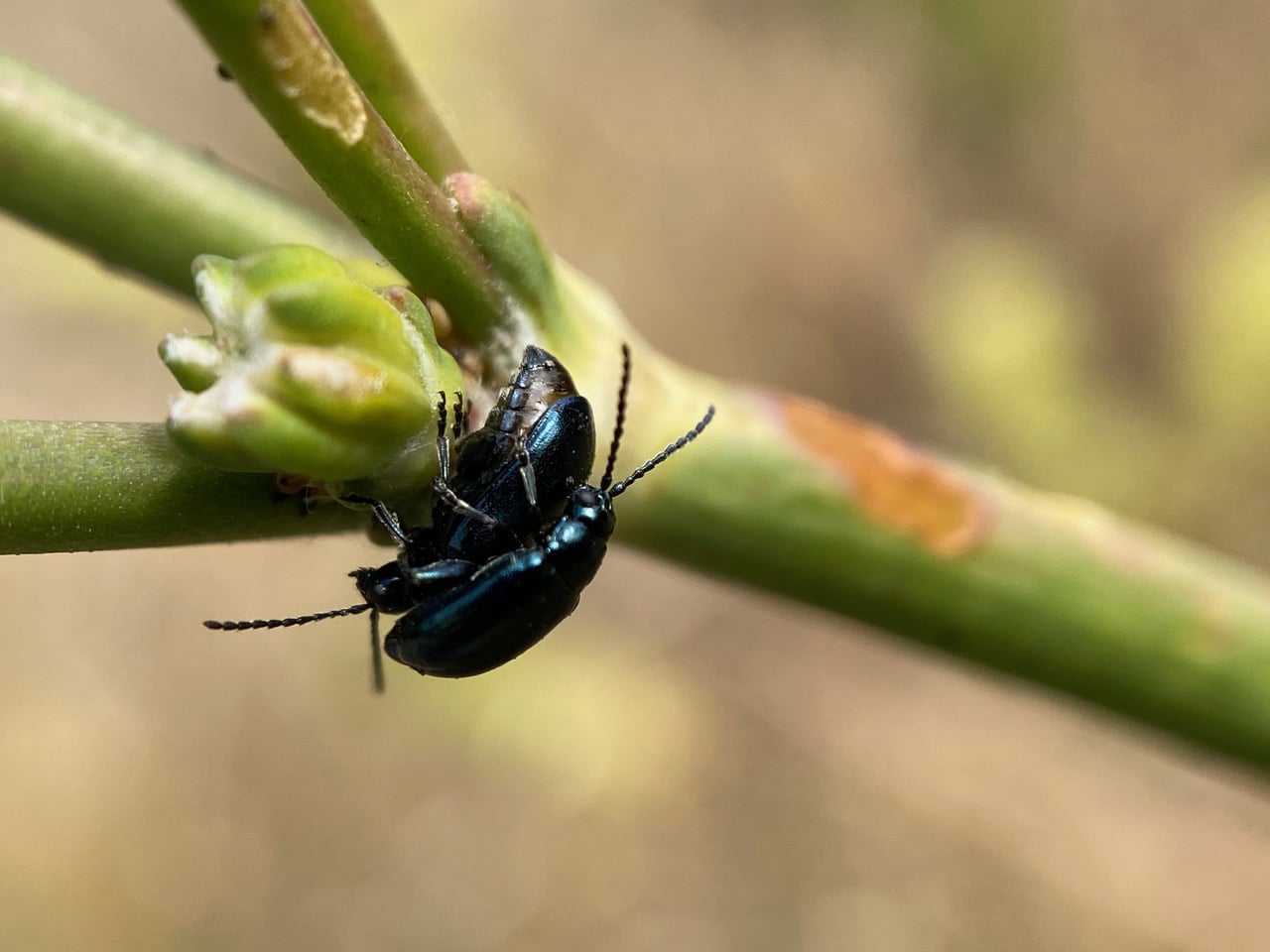
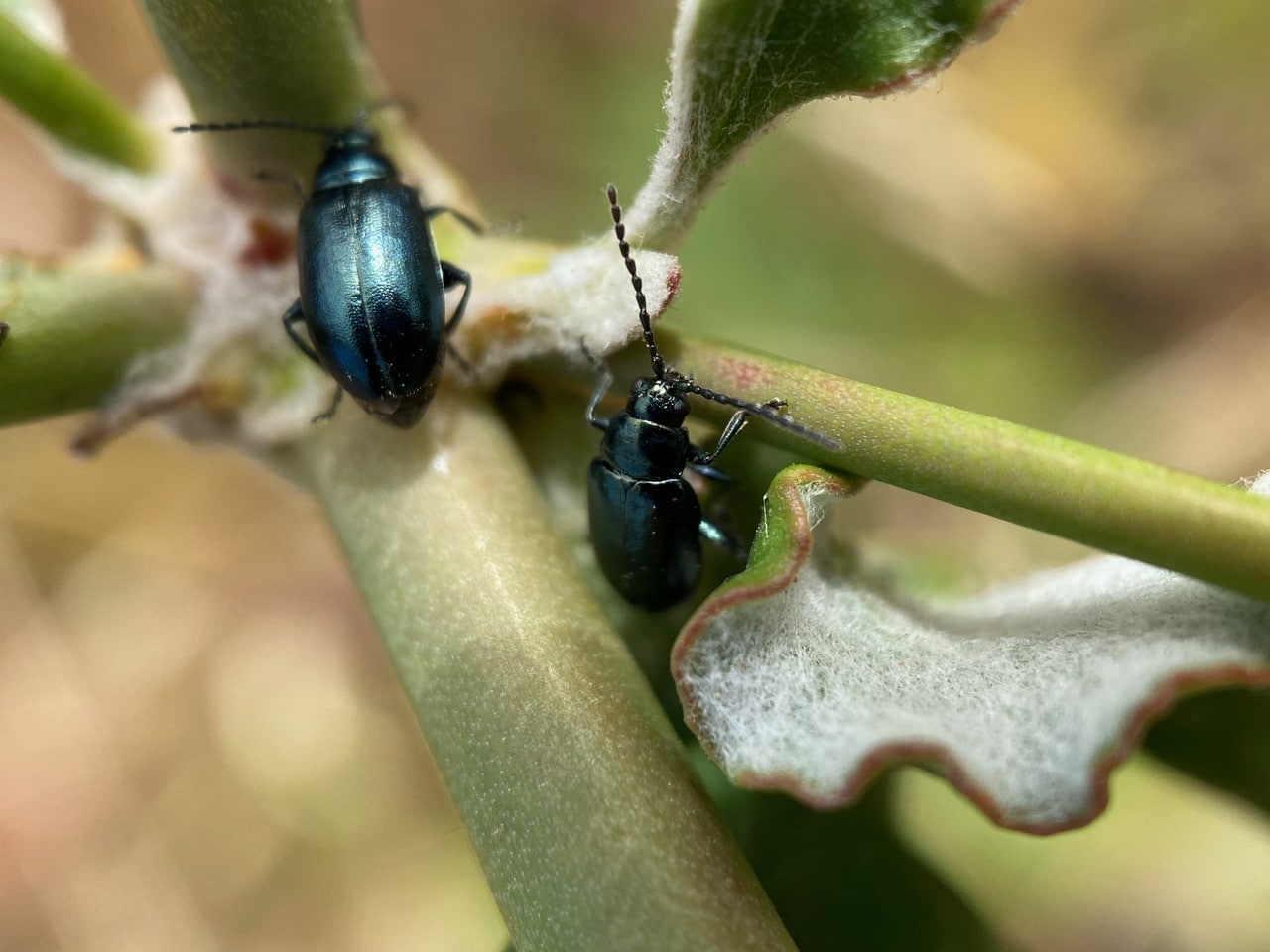

A pair of the Flea Beetles, Altica sp. (Chrysomelidae) just finished mating on the stem of Nude Buckwheat, and is about to move on. See the scars on the stems – the beetles have been chewing on them.
Flea Beetles are in the largest subfamily (Alticinae) of the family Chrysomelidae, or Leaf Beetles. The name Altica is derived from the Greek word haltikos, meaning good jumpers. The beetles have strong hind legs allowing them to jump long distances like true fleas. Altica flea beetles are 3-9 mm in length, and females are typically larger then males. Most Altica beetles have hard outer wings elytra that are metallic blue to green in color that protect similarly colored metallic bodies that reflect purple and bronze colors and are elongate oval in shape. Antennae have 11 segments and are filiform (threadlike).
The life history patterns of common flea beetles are very similar among Altica species with the major difference being host plant preference. Adults and larvae Altica flea beetles feed on all sorts of plant tissues, and all species are fully herbivorous. Many are serious pests of cultivated plants, including food crops. Others are beneficial due to their use in biocontrol of invasive weeds.
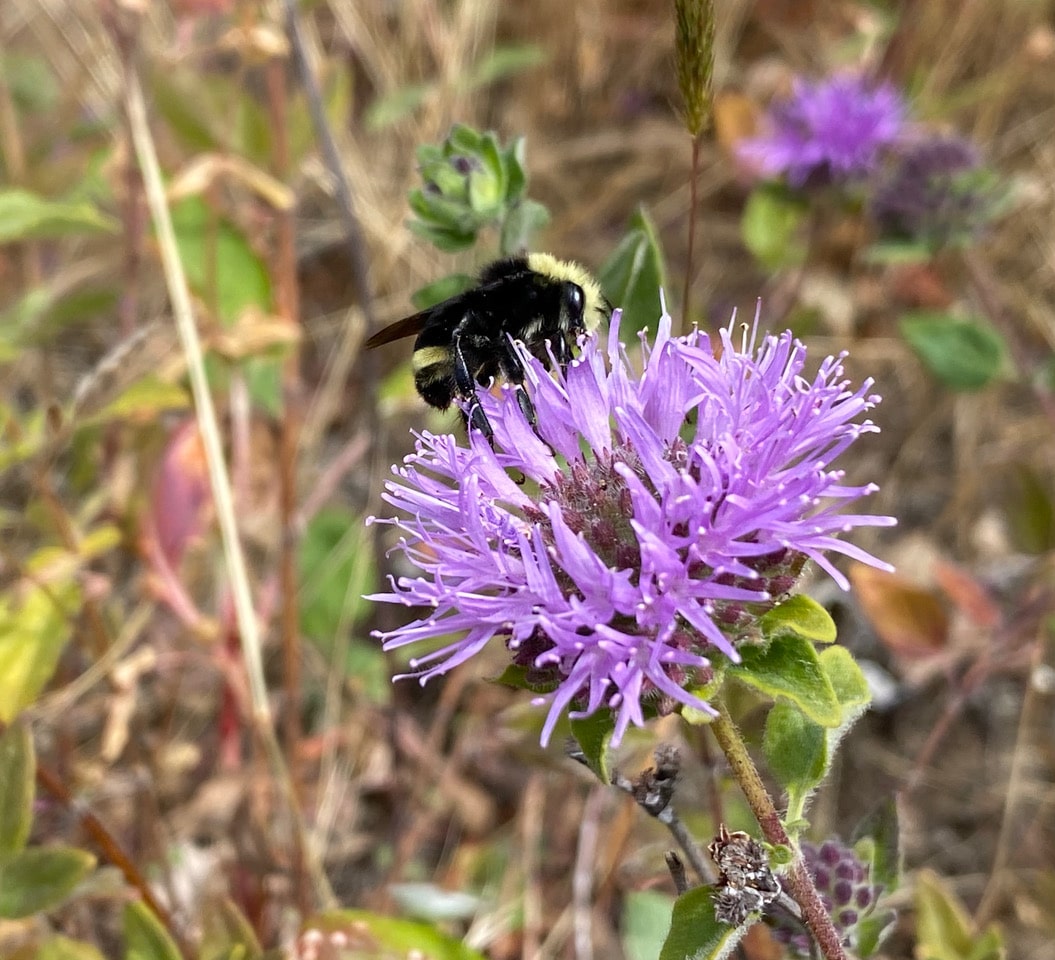
A Yellow-faced Bumble Bee, Bombus vosnesenskii is sipping nectar on a flowerhead of Coyote Mint, Monardella villosa. On a single stop, the bee is able to sample nectar from dozens of flowers crowded together. Pollen gathering is also a cake walk, as the stamens are exserted beyond the corolla.
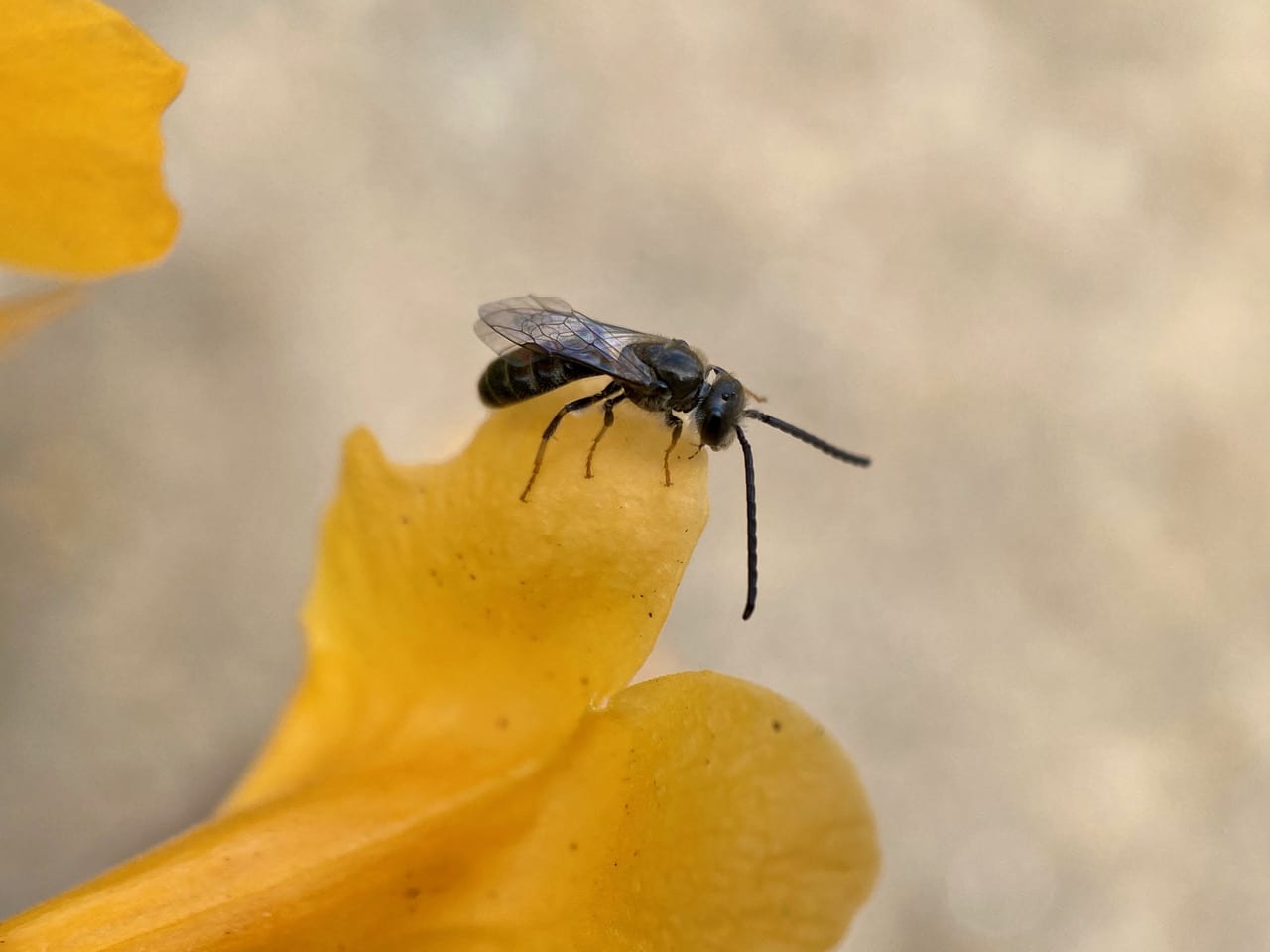
That looks like a male Sweat Bee, Halictus sp. (family Halictidae) on a Sticky Monkeyflower. Males tend to be more slender in build, have longer antennae, and unlike the females, have no scopa on their hind legs.
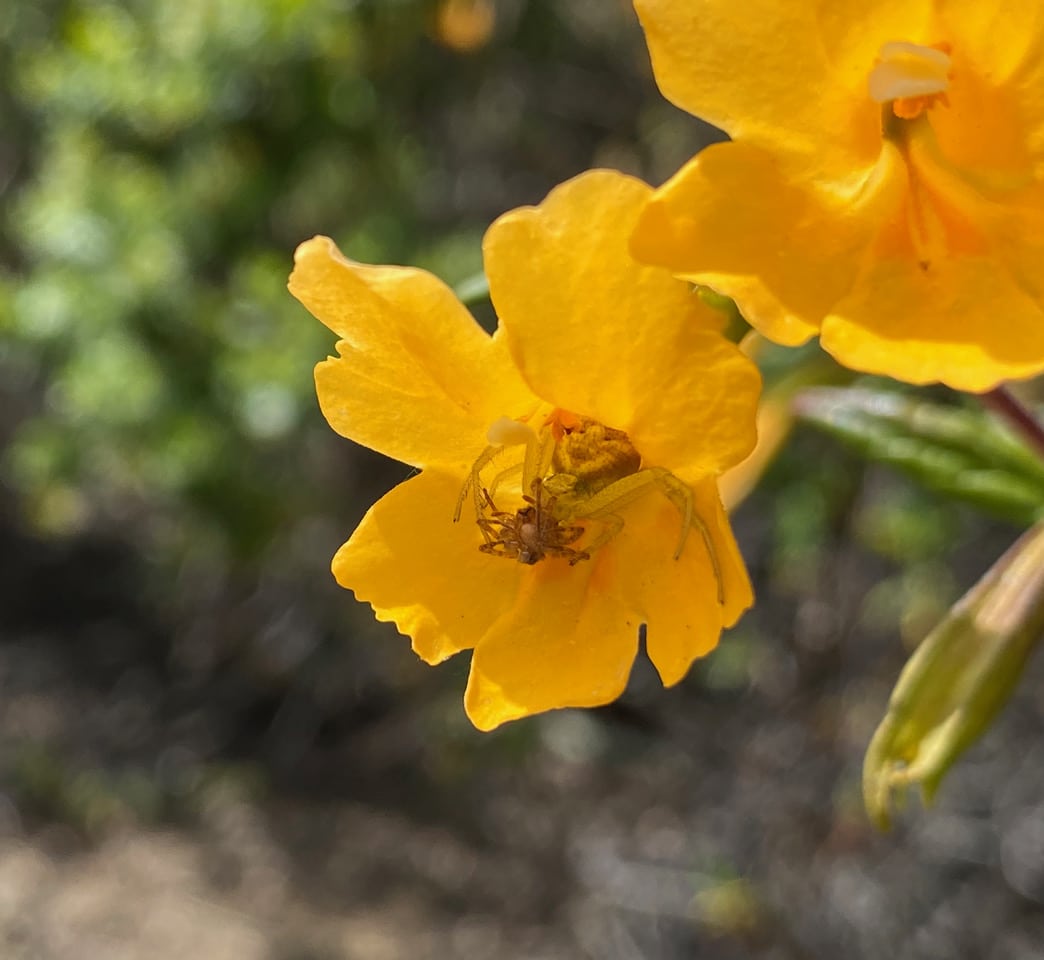
Sitting in ambush inside a Sticky Monkeyflower, a Crab Spider, Mecaphesa sp. (family Thomisidae) has caught a prey!
Members of the family Thomisidae do not spin webs, and are ambush predators. The two front legs are usually long and more robust than the rest of the legs. Their common name derives from their ability to move sideways or backwards like crabs. Most Crab Spiders sit on or beside flowers, where they grab visiting insects.
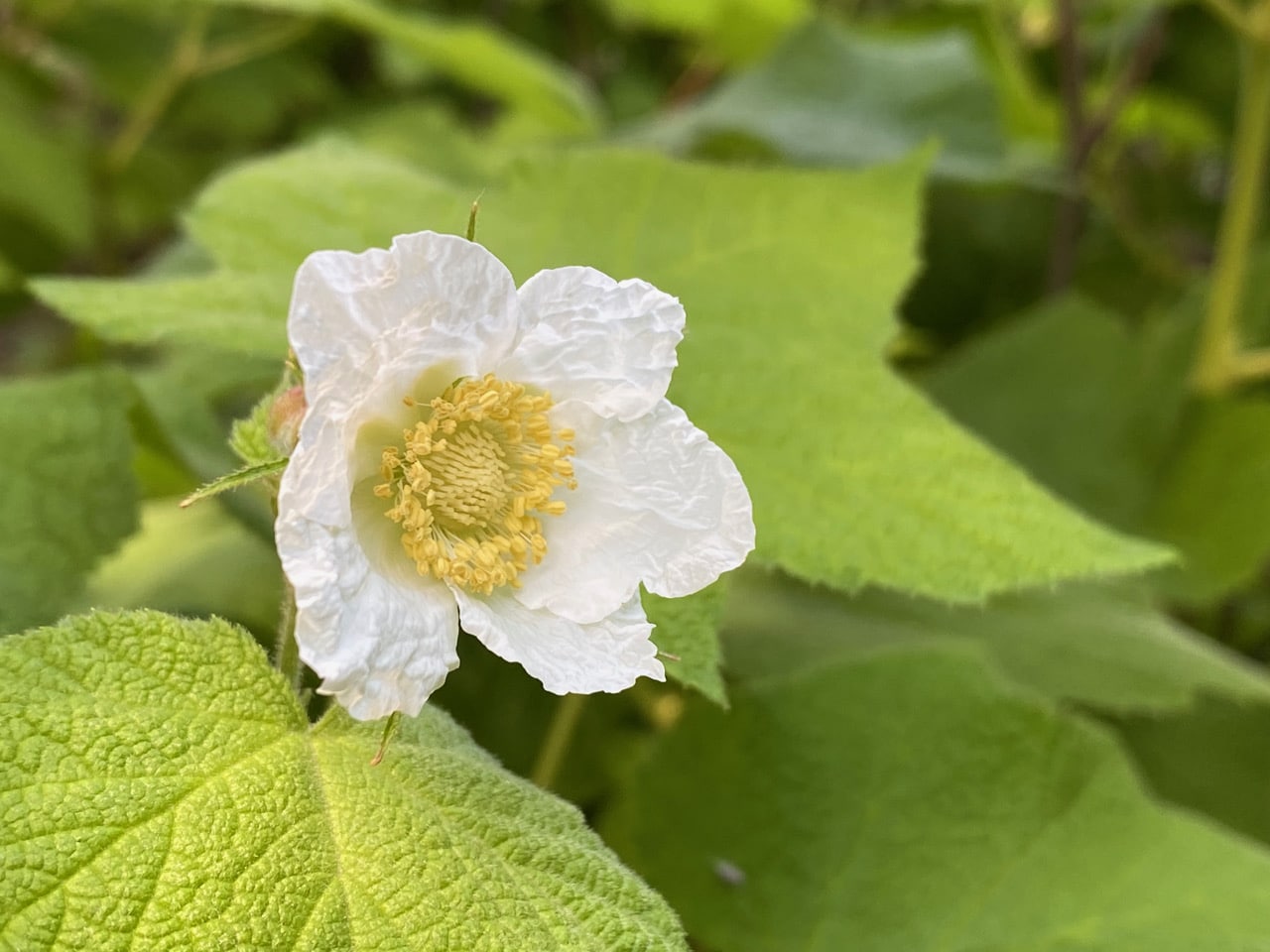
Aah, Thimbleberry, Rubus parviflorus is still blooming in the shady section of the Skyline Trail! Like a breath of fresh air.
A chain of spiny berries are hanging on a horizontal stem of Gooseberry in the dappled shade. Dark seeds are partially visible through the bloated translucent fruits.
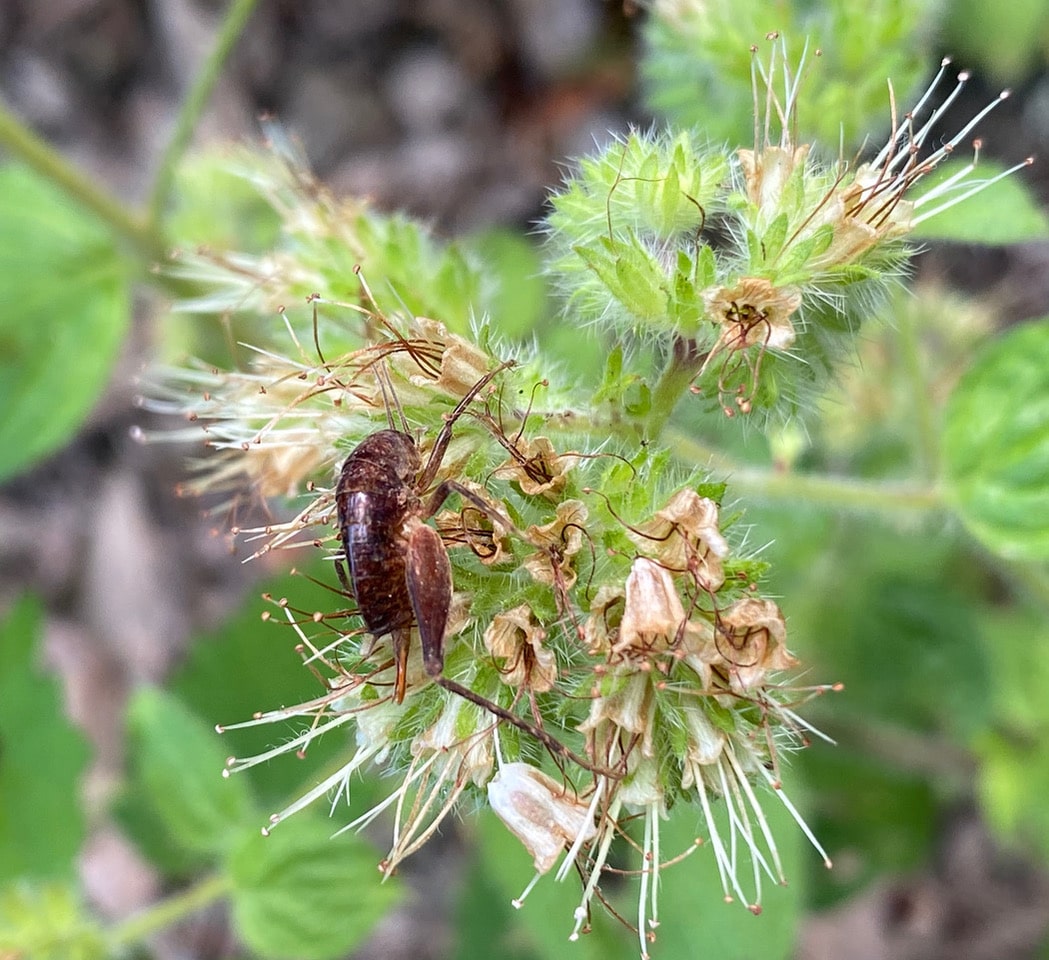
A Camel Cricket, Pristoceuthophilus sp.(family Rhaphidophoridae) clings to an inflorescence of Imbricate Phacelia, Phacelia imbricata. I recognize it as the one I have photographed here before, from its missing left hind leg.
Most camel crickets have very large hind legs with “drumstick-shaped” femora and long, thin tibia, and long, slender antennae. They are brownish in color and humpbacked in appearance, always wingless. Some species are cave dwellers. Most inhabit cool, damp environments, such as rotten logs, stumps and hollow trees, and under damp leaves, stones, boards, and logs. The cricket’s distinctive limbs and antennae serve a double purpose. Typically living in a lightless environment, or active at night, they rely heavily on their sense of touch, which is limited by reach. Given their limited vision, these crickets often jump to avoid predation. Rhaphidophoridae are primarily scavengers, eating plant, animal, and fungi material.
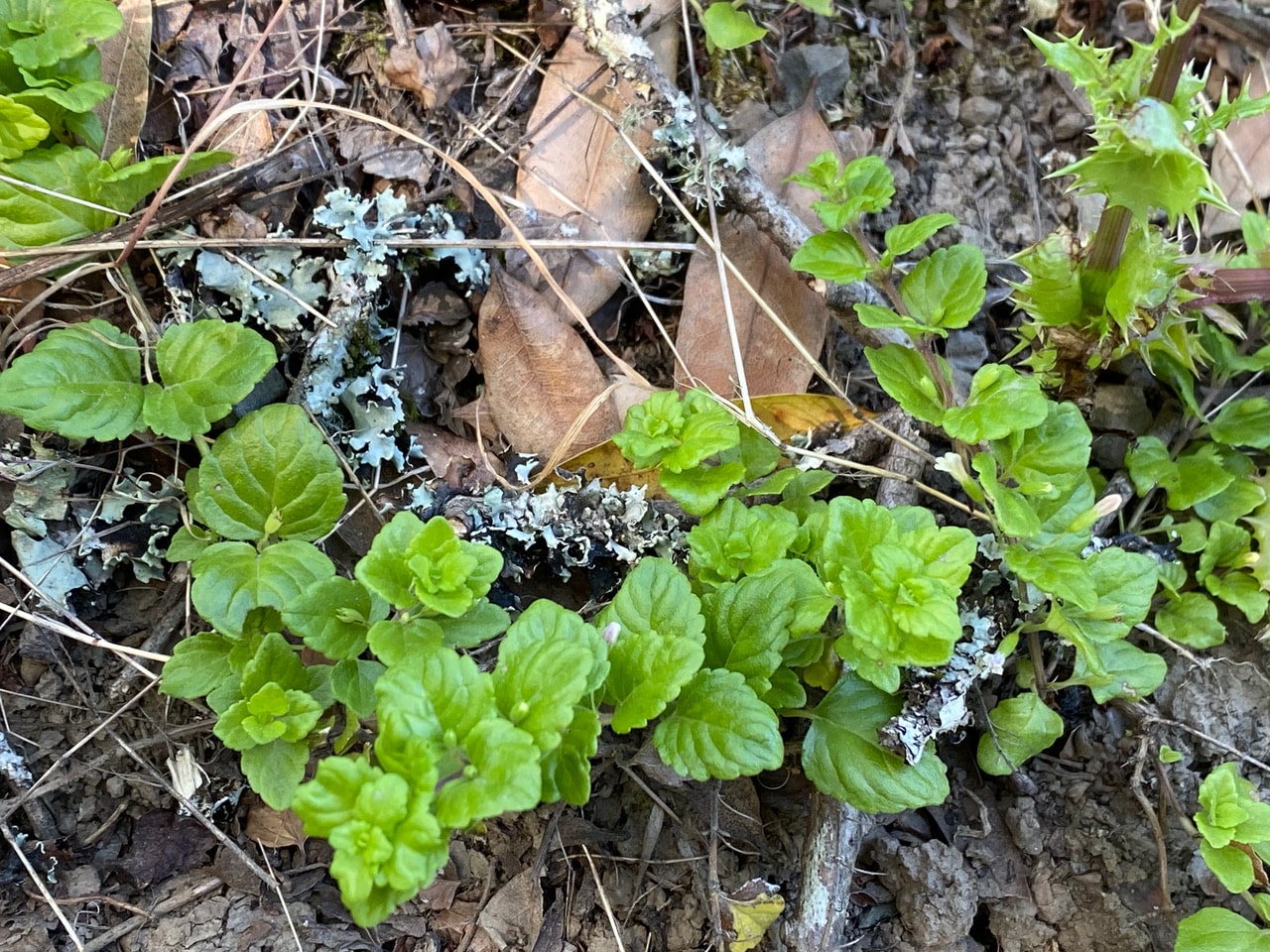
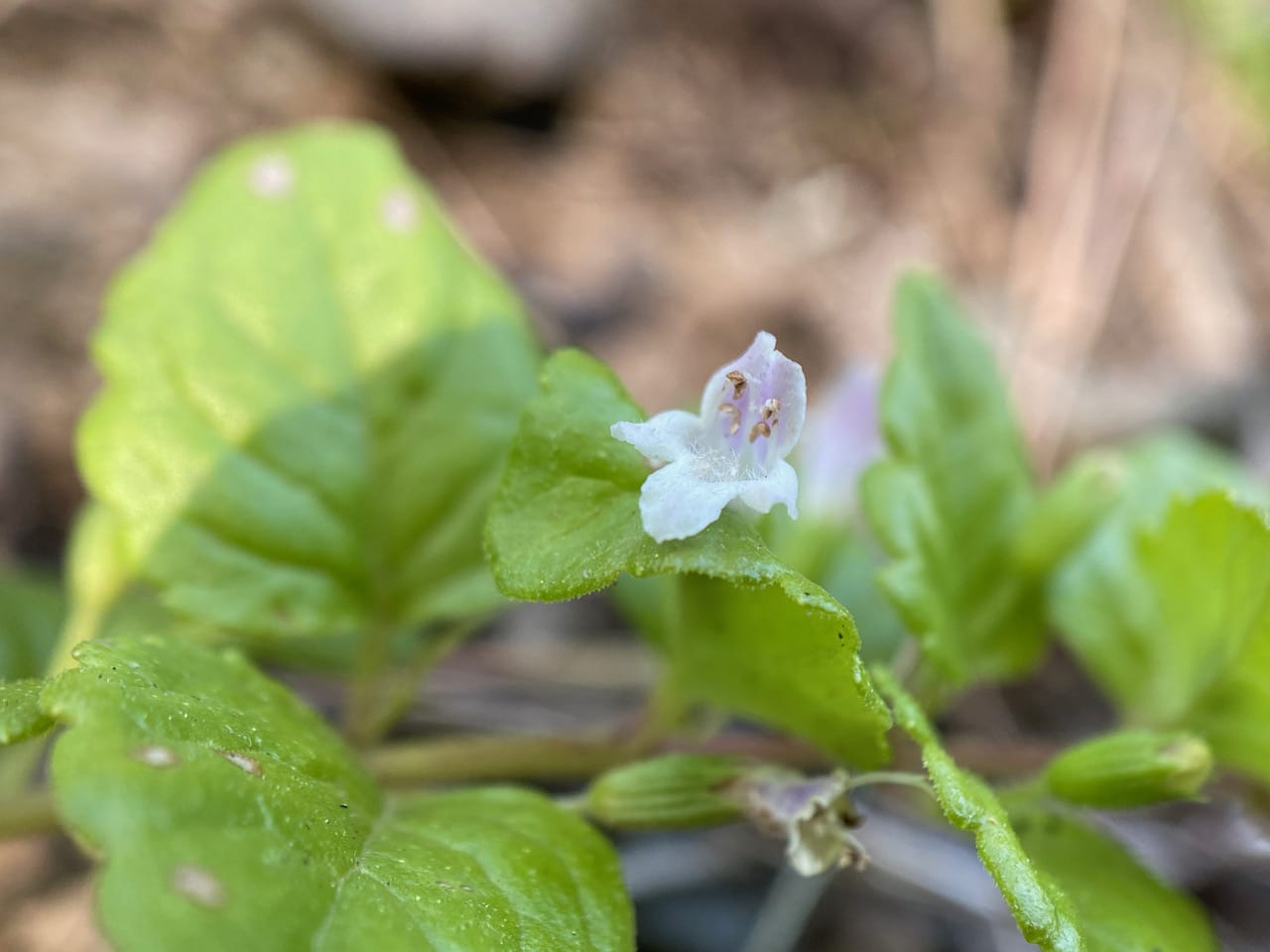
The verdant leaves of Yerba Buena, Clinopodium douglasii sprawl over the leaf litter on the side of the trail.
Little white mint flowers have appeared on the Yerba Buena. I wonder who pollinates these flowers – ants?
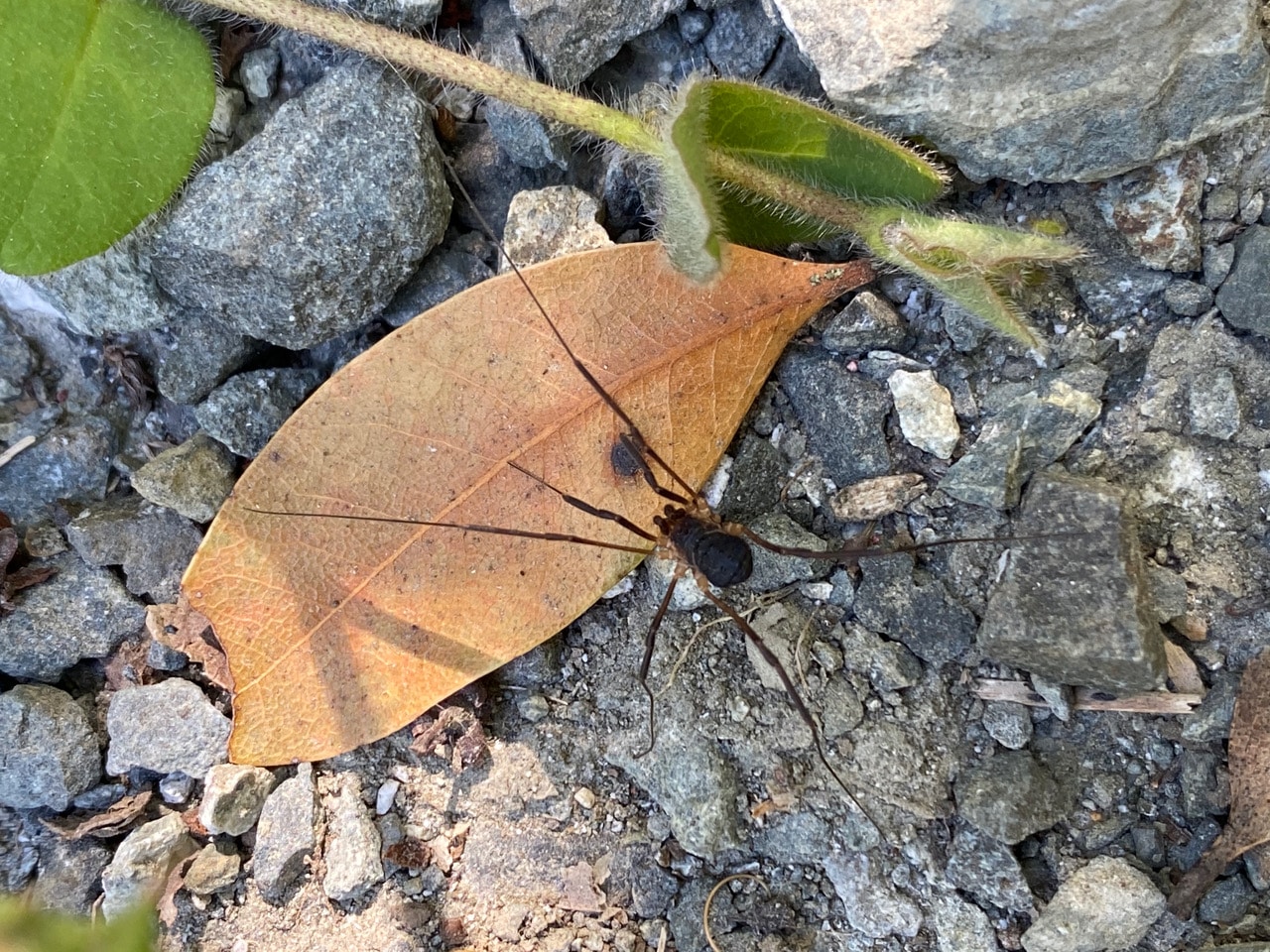
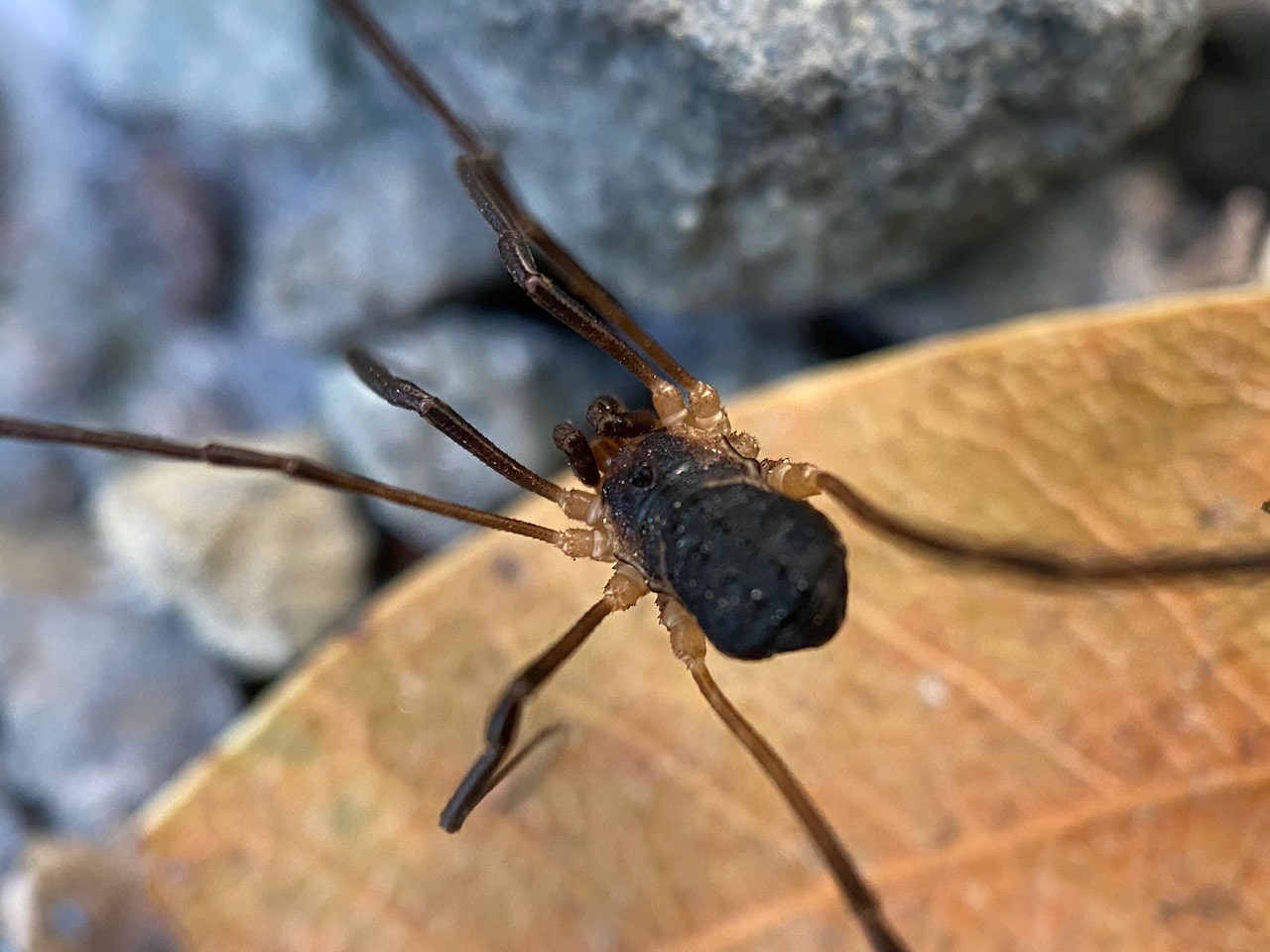
An impossibly long-legged Harvestman walks shakily across the trail.
The Opiliones are an order of arachnids commonly known as harvestmen or daddy longlegs. They are known for having exceptionally long legs relative to their body size. They are distinguished from the spiders in several ways. In the harvestmen, the connection between the cephalothorax and abdomen is broad, so the body appears as a single oval structure. Unlike spiders, Opiliones have no venom glands in their chelicerae, so pose no danger to humans. They also lack silk glands and therefore do not build webs.
Most Harvestman species are omnivorous, eating primarily small insects and all kinds of plant material and fungi. Some are scavengers, feeding on dead organisms and fecal material. Because their eyes cannot form images, they use their second pair of legs as antennae to explore their environment.
On closer inspection, the Harvestman appears to have lost one of its legs on the right side. No sweat, it can still walk fine.
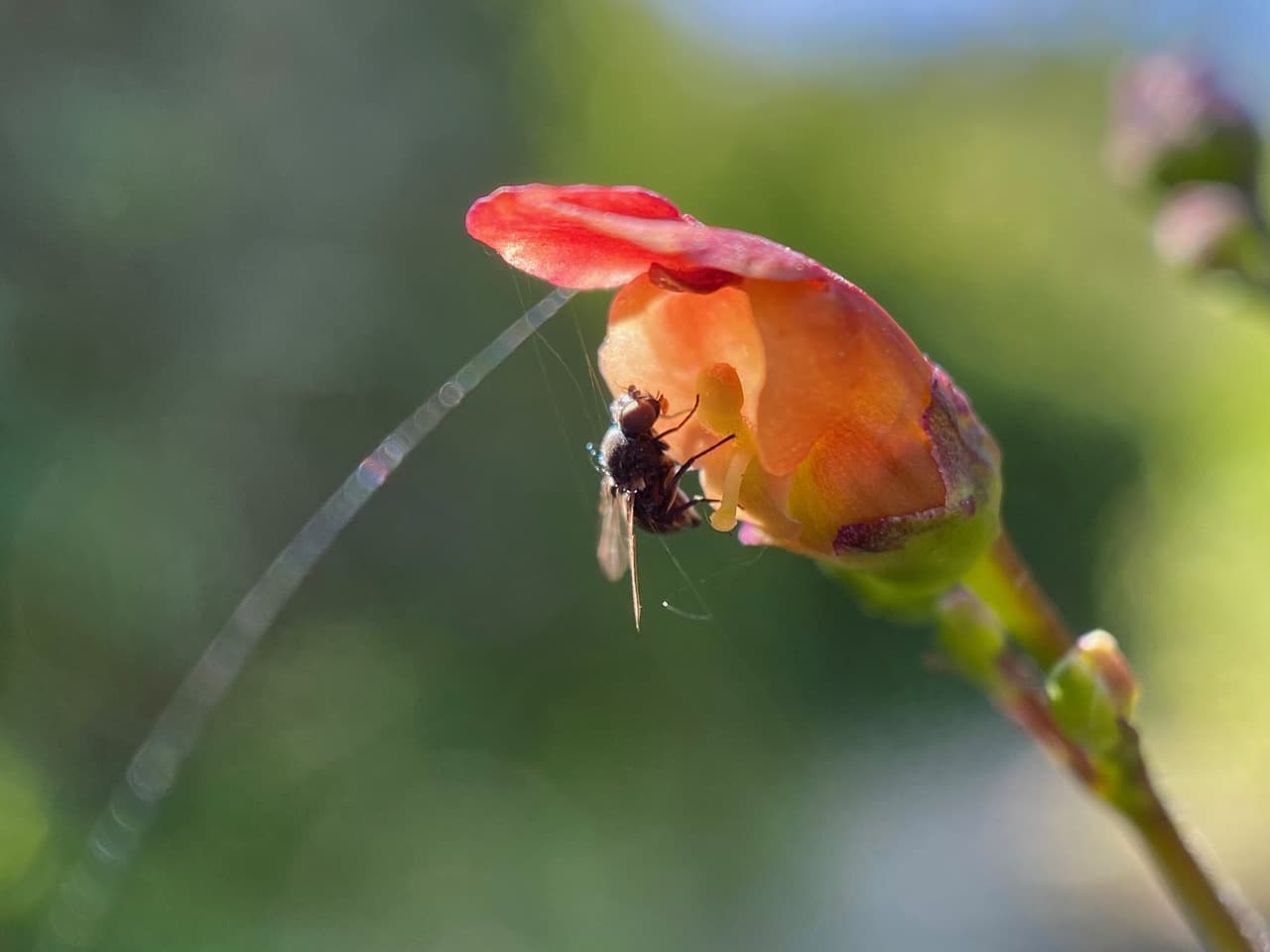
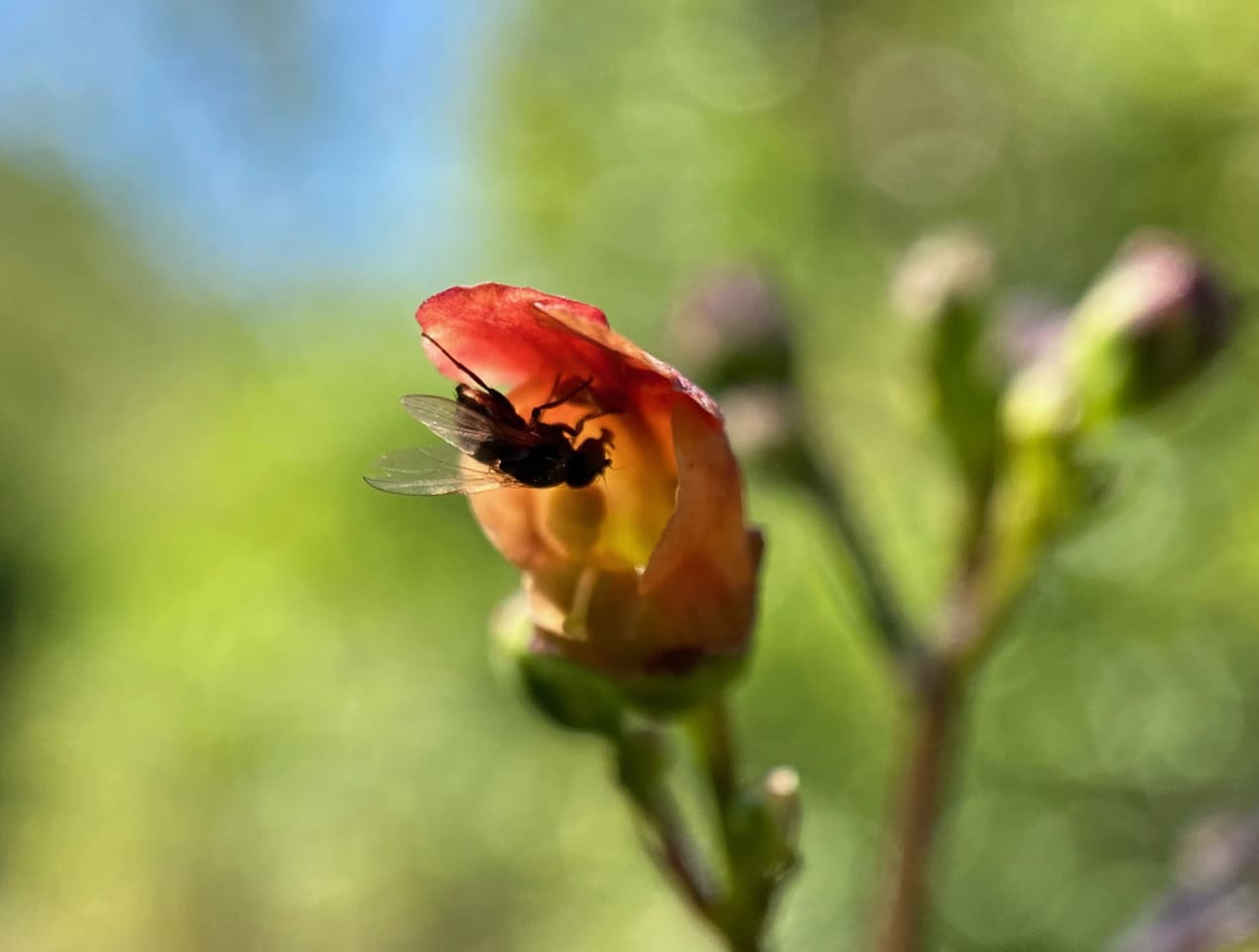
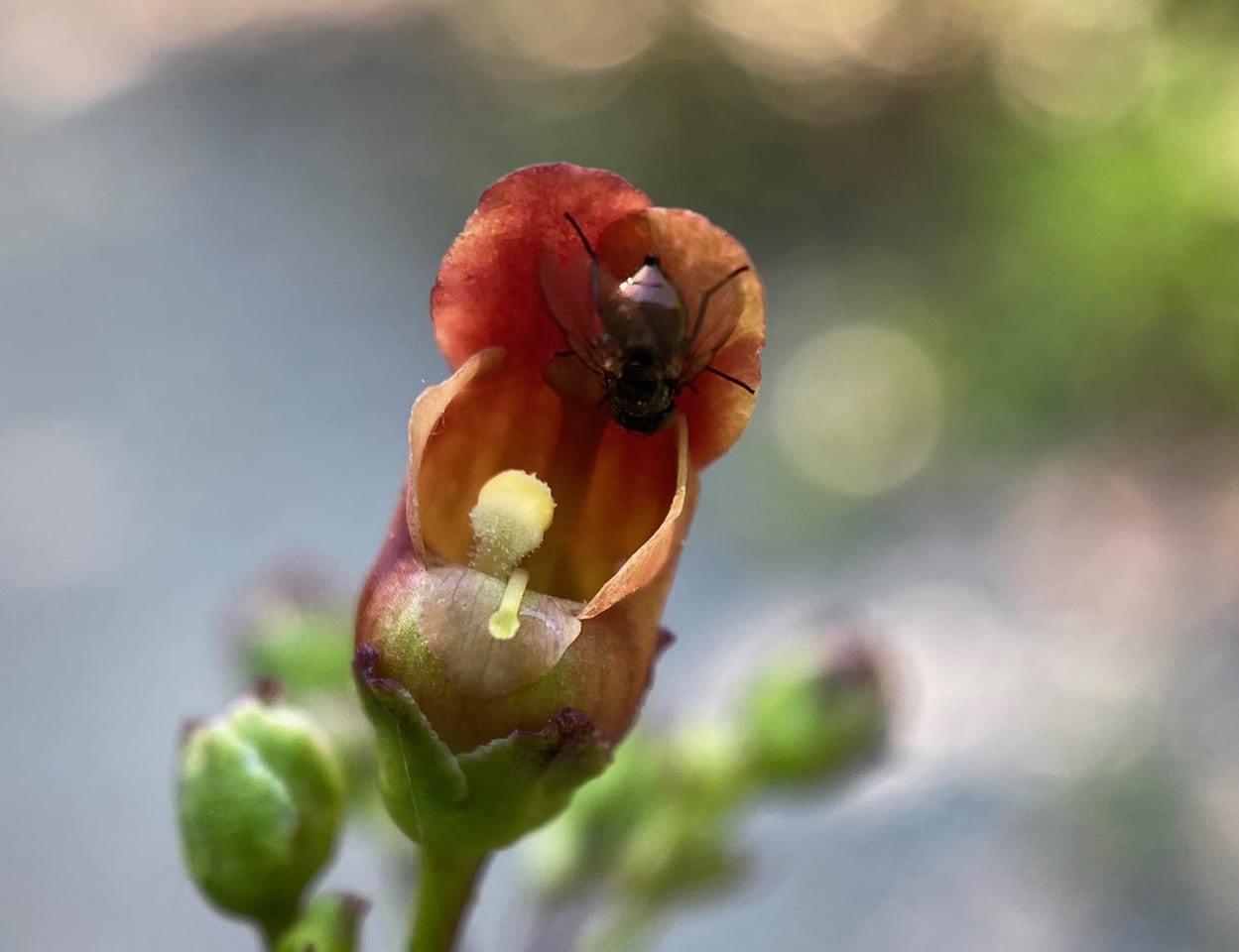
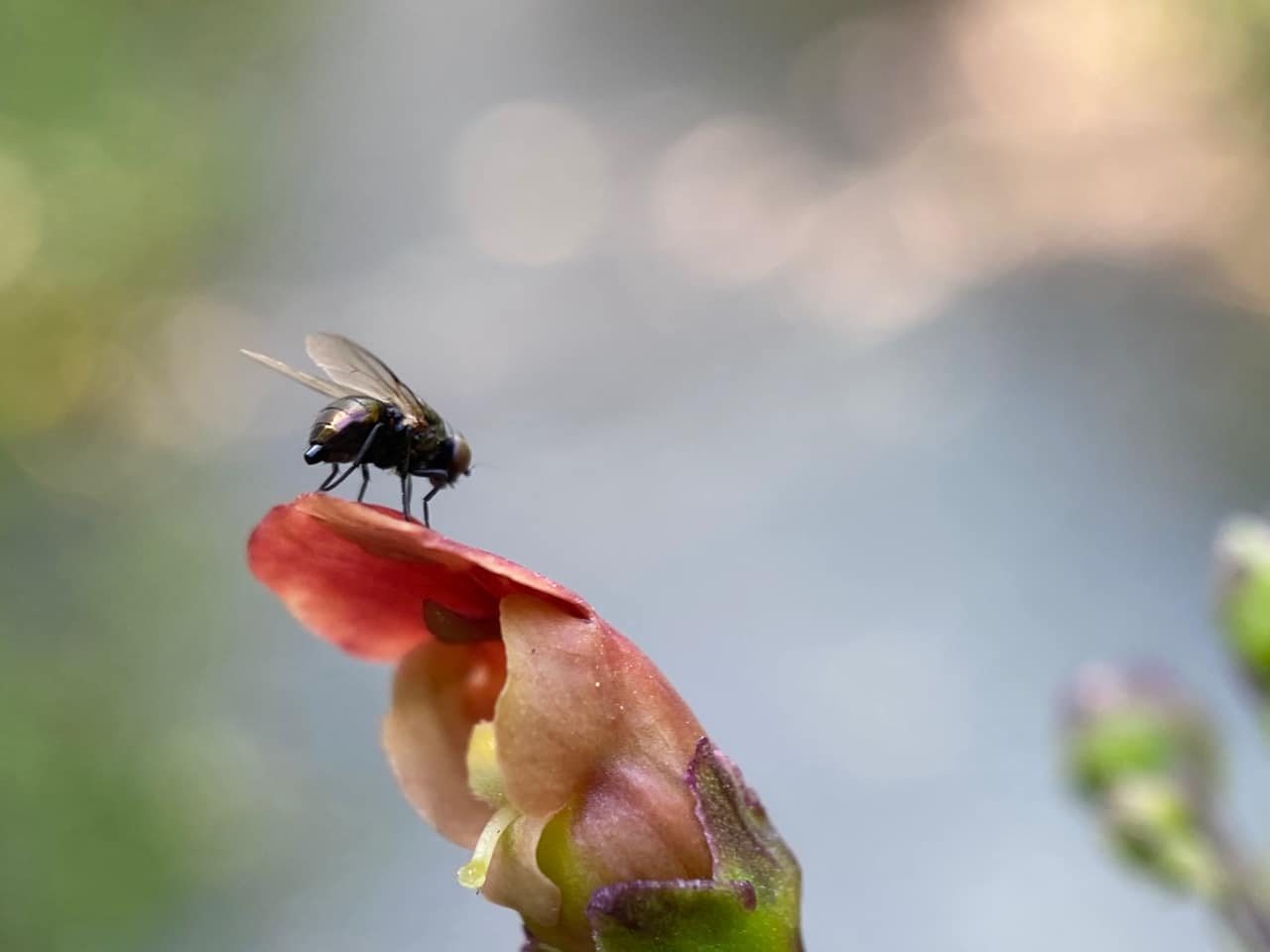
A tiny fly has landed on a flower of California Bee Plant, Scrophularia californica.
The fly is making its way to the inside of the upper petal, its spongeing mouthparts extended. It is where I think the nectar is located – behind the sterile stamen!
The fly spends an inordinate amount of time in this position, apparently spongeing up nectar.
The California Bee Plant flower is protogynous, meaning the female parts mature before the male parts. This particular flower is still in the female phase, its stigma and style protruding straight out of the corolla. One of the four fertile stamens (male) has appeared at the entrance, but is not yet releasing pollen. If the fly has pollen on its body from a Bee Plant flower it visited previously, the pollen can be rubbed off on the stigma, effectively pollinating the flower. The temporal separation of the sexes helps the plant avoid self-pollination.
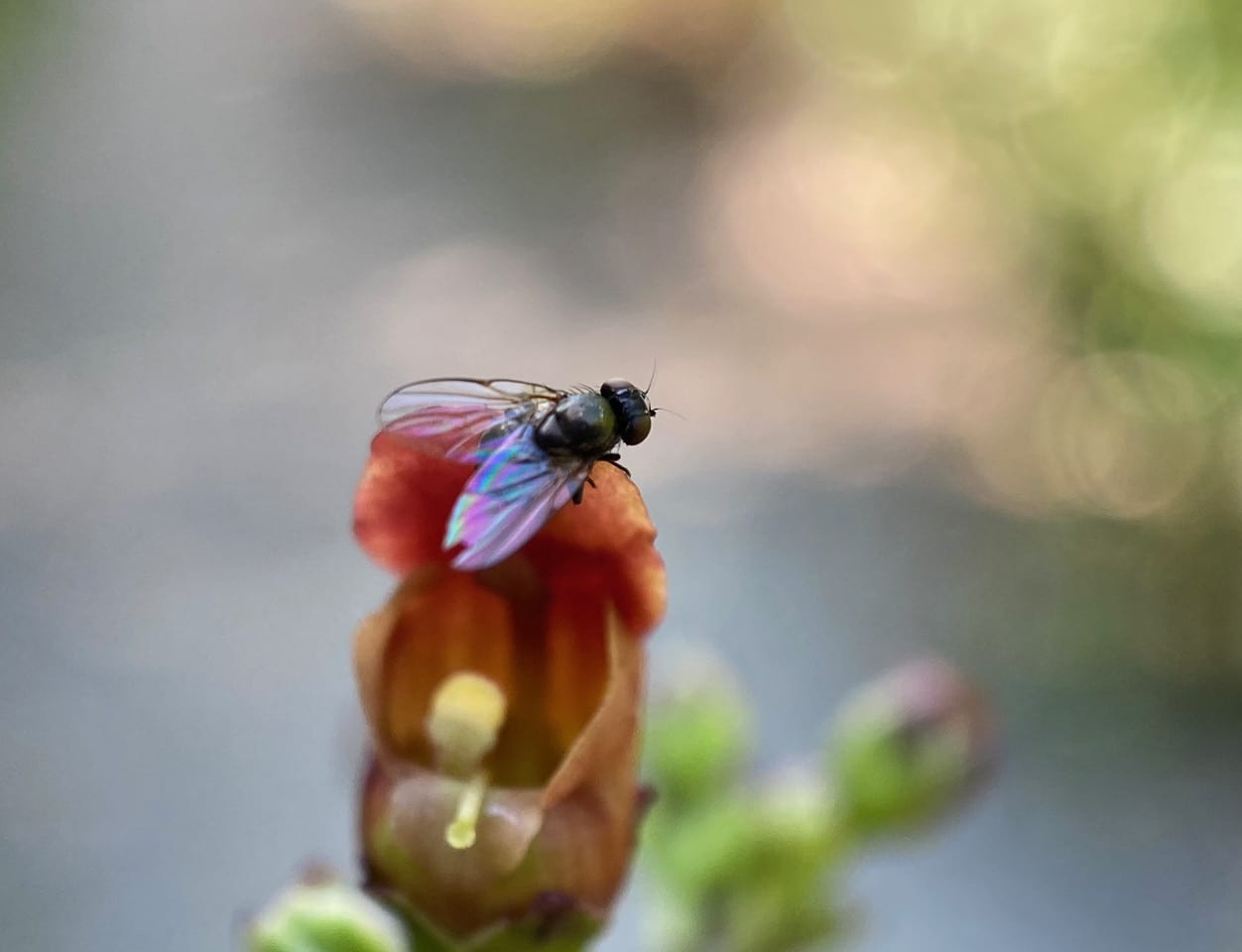
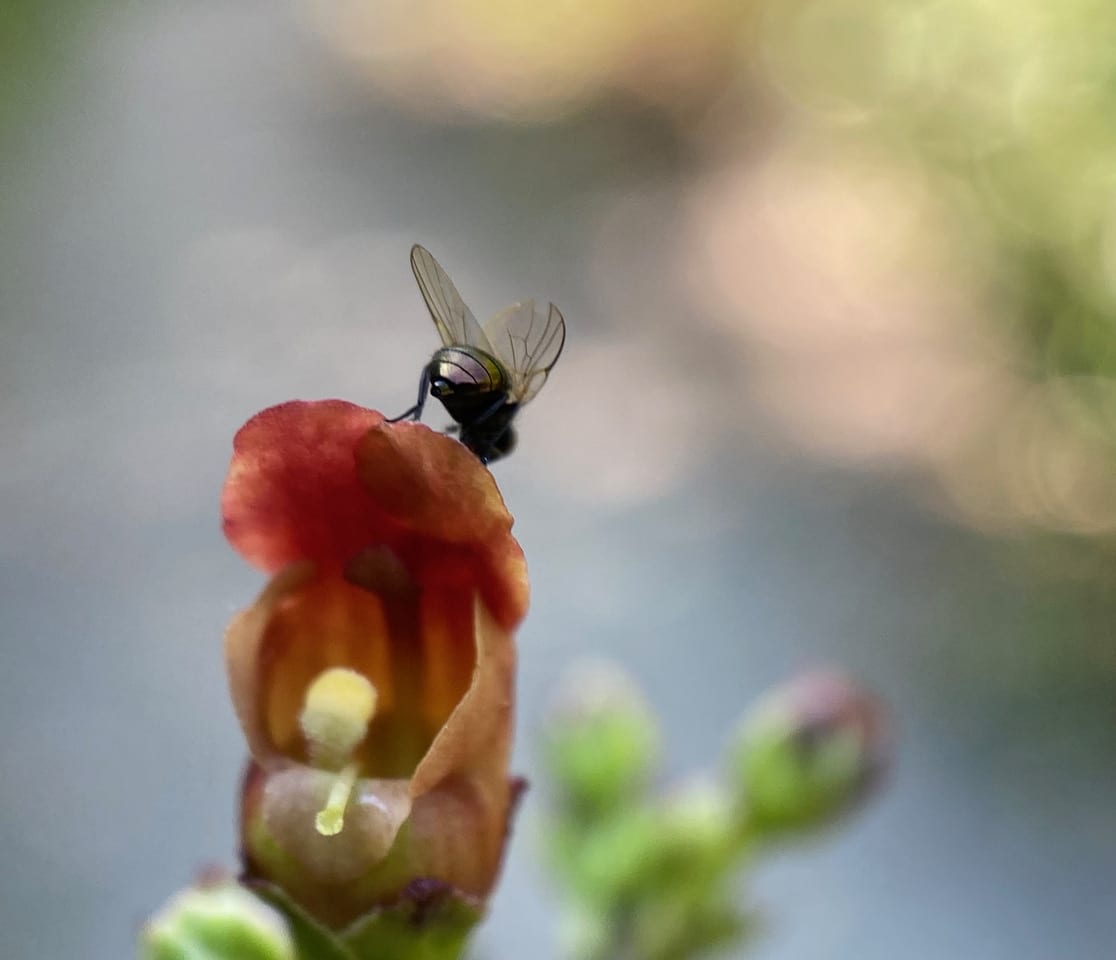
About 6 minutes later when I return to the same flower after looking at other insects, the little fly has just finished feeding and moves to the top of the flower.
Ooh, I think that rear end belongs to a Leaf-miner Fly (family Agromyzidae)! That would explain its diminutive size as well!
The Agromyzidae are a family commonly referred to as the Leaf-miner Flies, for the feeding habits of their larvae, most of which are leaf miners on various plants. They are small flies, most species in the range of 2-3 mm. Agromyzidae larvae are phytophagous, feeding as leaf miners, less frequently as stem miners or stem borers. A few live on developing seeds, or produce galls. There is a high degree of host specificity. A number of species attack plants of agricultural or ornamental value, so are considered pests. The shape of the mine is often characteristic of the species and therefore useful for identification. Adults occur in a variety of habitats, depending on the larval host plants.
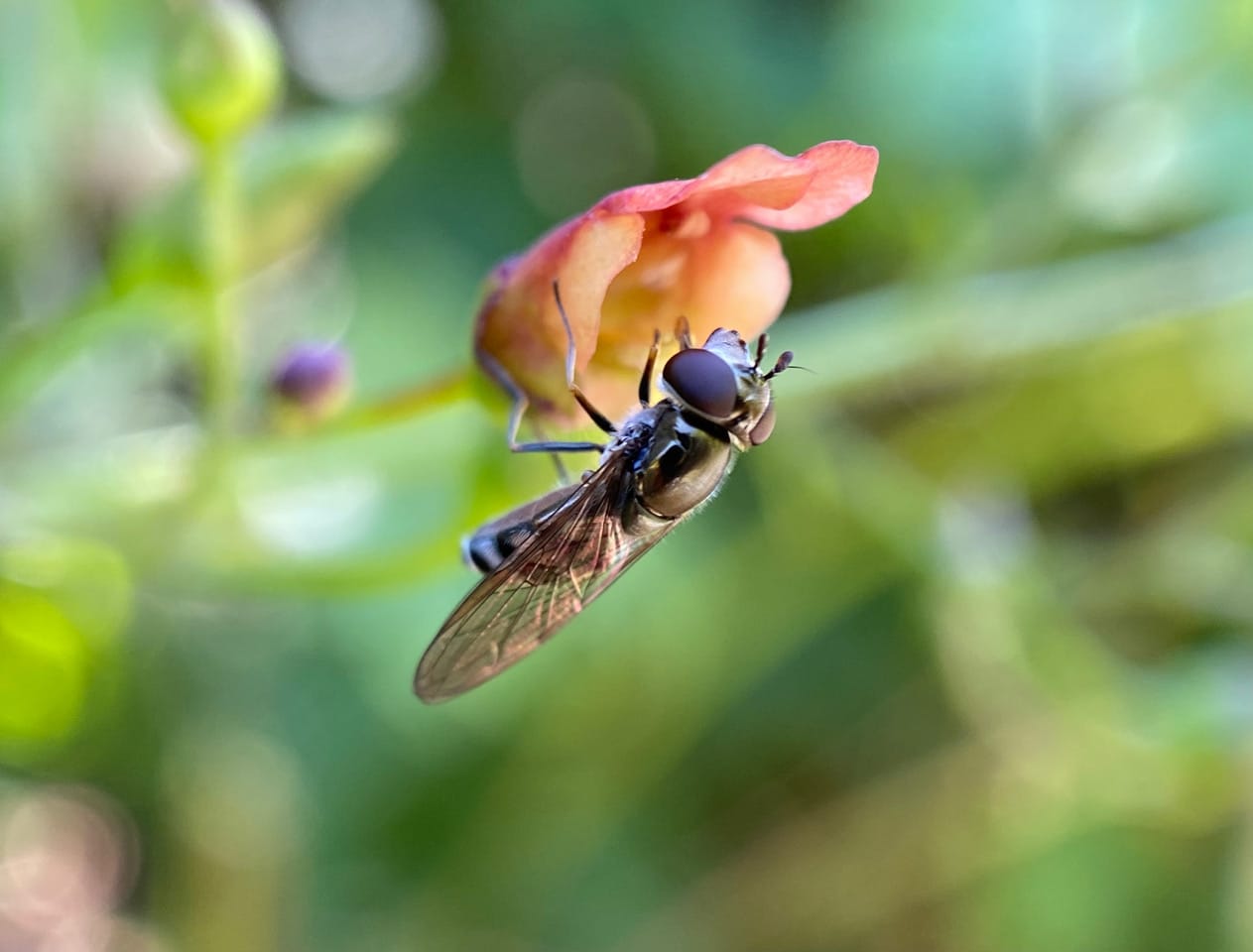
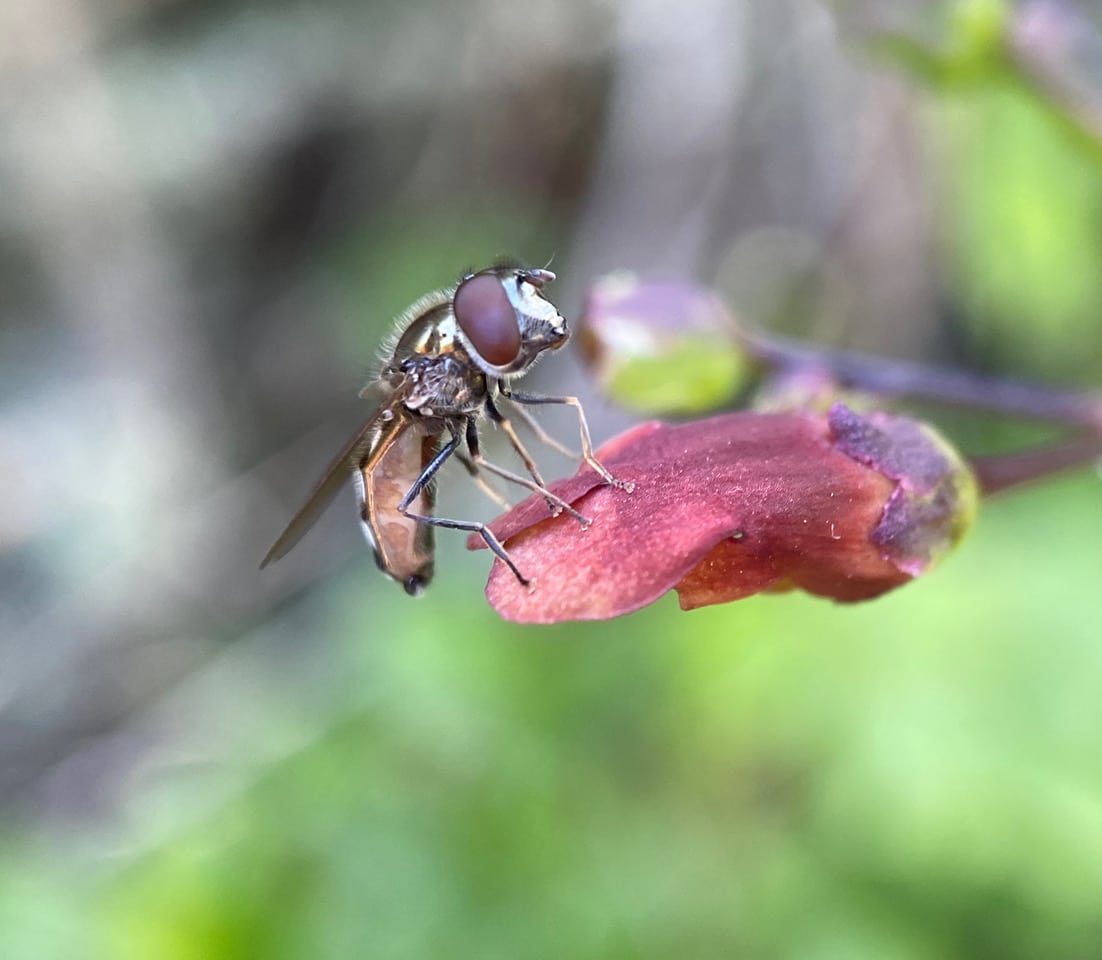
A Sedgesitter hover fly, Platycheirus sp. (family Syrphidae) visits a flower of California Bee Plant.
The afternoon sun is reflected on the metallic fly’s face and thorax nicely.