

Pollinator Post 7/10/23 (2)

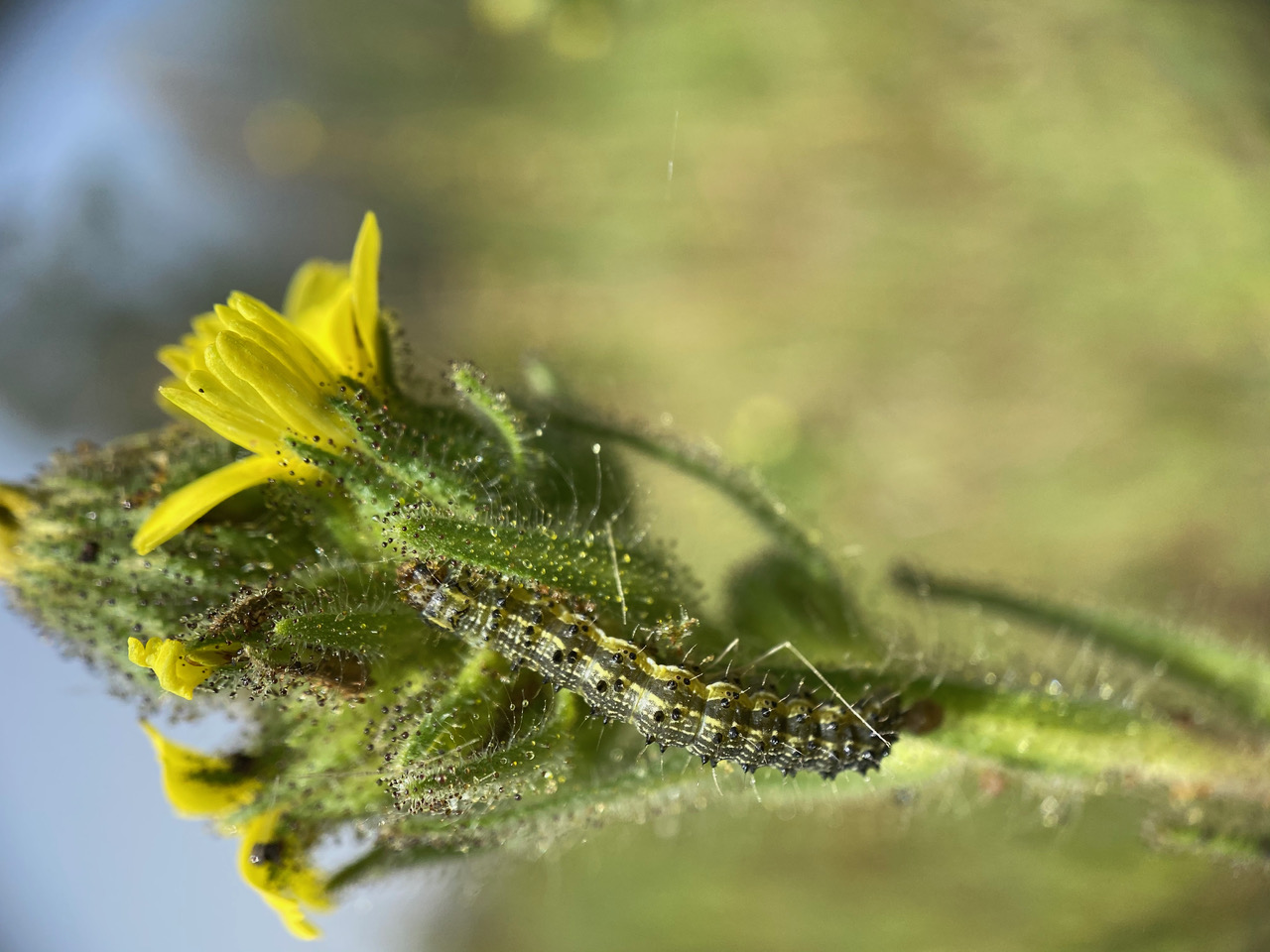
A large caterpillar of the Darker-spotted Straw Moth, Heliothis phloxiphaga (family Noctuidae) is feeding on a Coast Tarweed, Madia sativa.

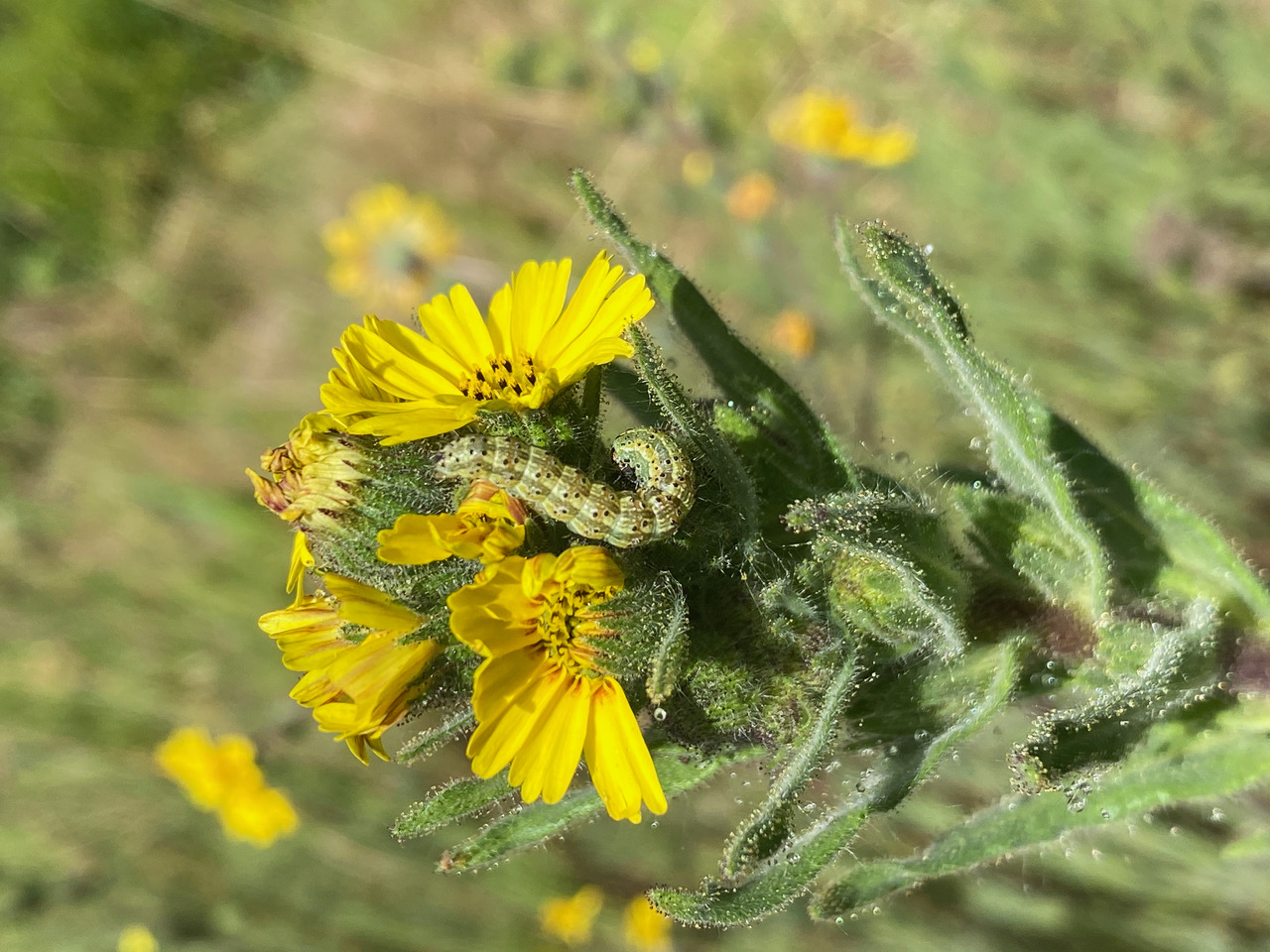

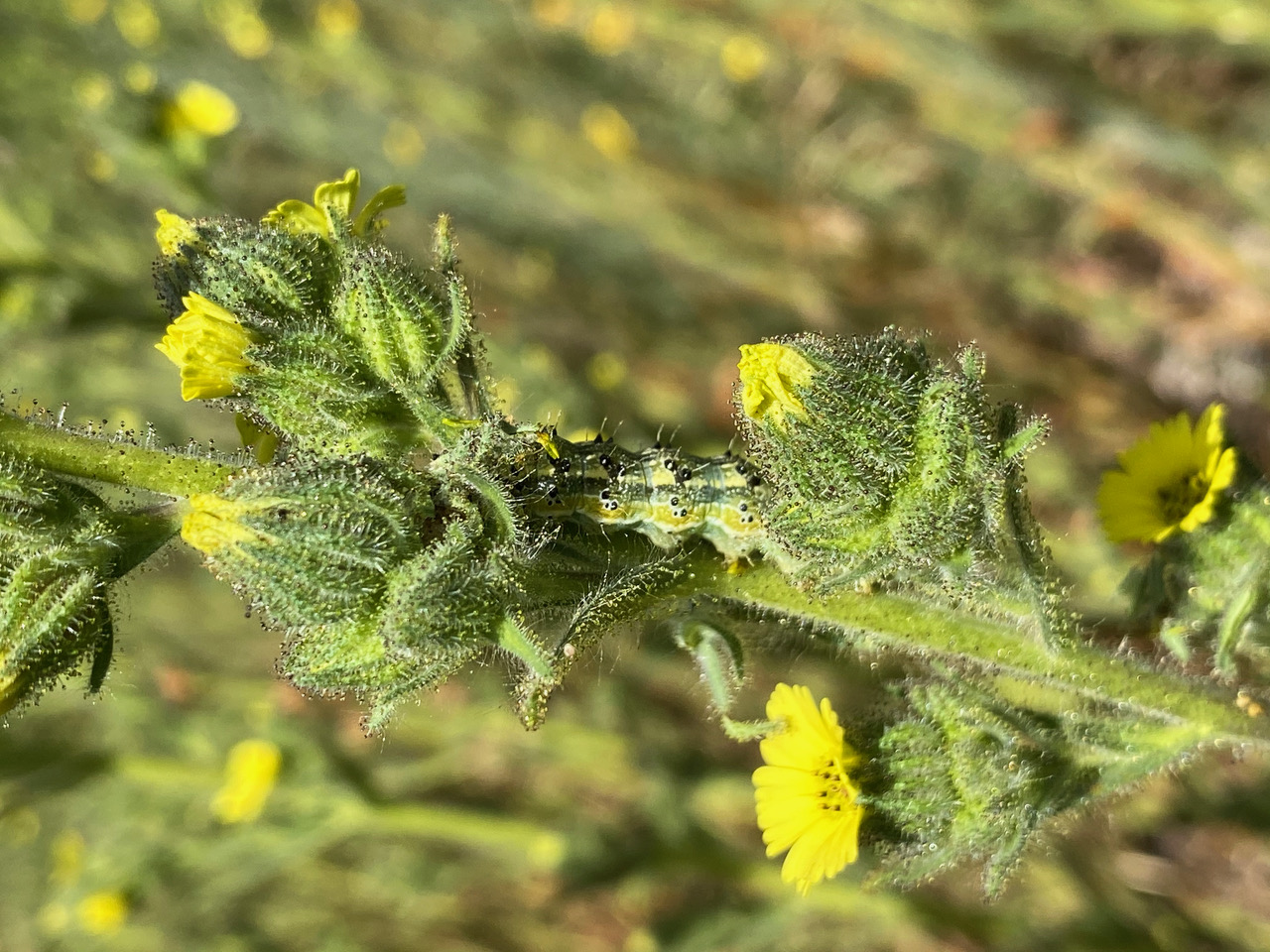


It is not often one gets to see the caterpillar’s head fully extended. Heliothis caterpillars feed on the flowers and developing seeds of their host plants.
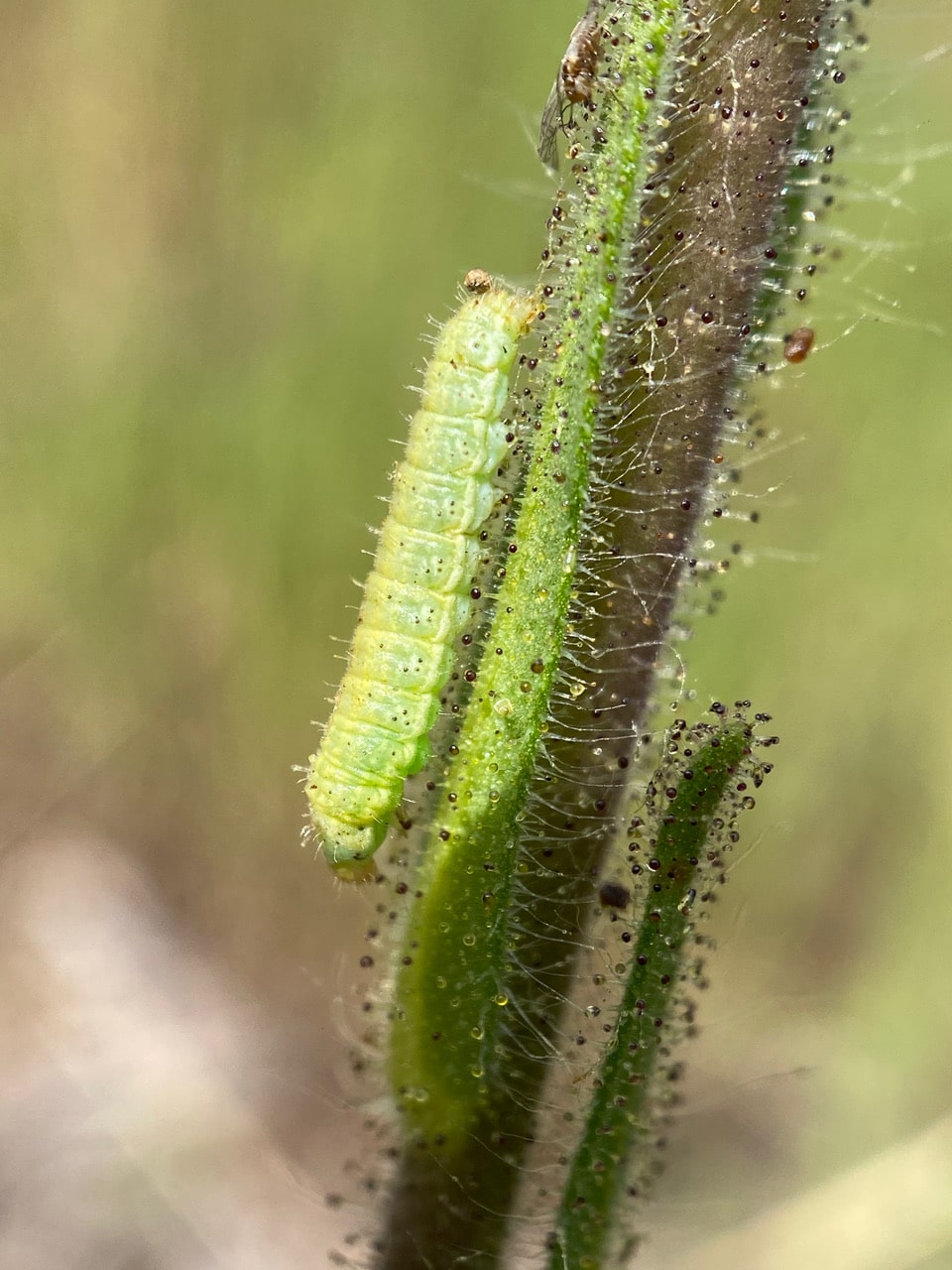
This much smaller and paler caterpillar with little markings is on the lower section of the same stem. I wonder what kind of moth it will grow up to be?
The Tarweed patch belongs to the moth caterpillars – they are on every plant. One would think that many birds would come to hunt caterpillars to feed their young, but that is not happening. Perhaps they are deterred by the sticky exudates of the tarweeds at this stage. Gold Finches often visit the Tarweeds when the plants are in seed and the foliage has dried up and turned brown.
A Black-footed Drone Fly, Eristalis hirta (family Syrphidae) is foraging on a flowerhead of Elegant Tarweed.
The Black-footed Drone Fly, Eristalis hirta (family Syrphidae) is a common Western North American species of hoverfly. The adults visit flowers for nectar and pollen. Larvae are aquatic filter-feeders of the rat-tailed type.
Ooh, another large Heliothis caterpillar!
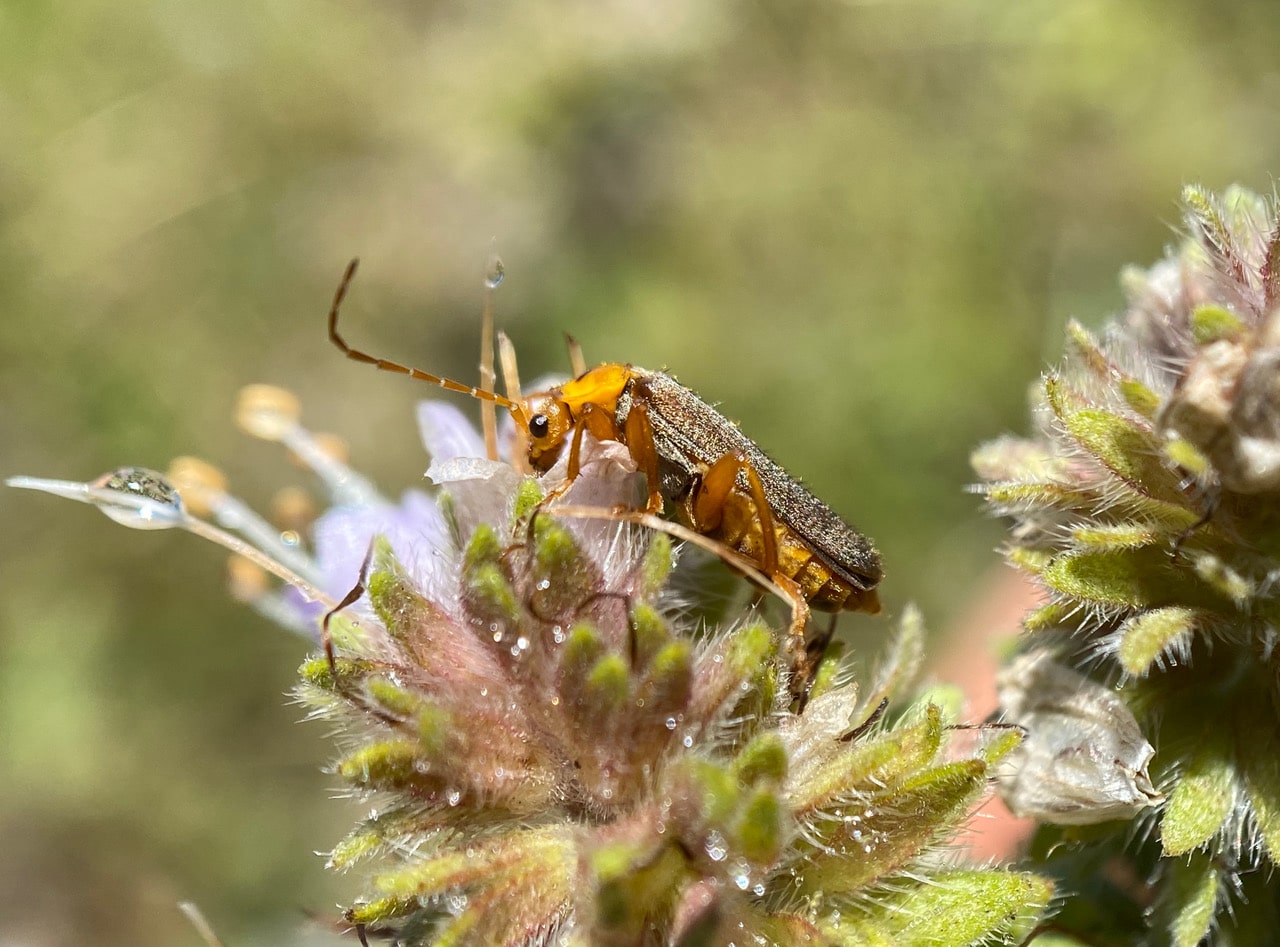
A Soldier Beetle, Cultellunguis americanus (family Cantharidae) is foraging on an inflorescence of California Phacelia, Phacelia californica.
The Soldier Beetles, family Cantharidae are relatively soft-bodied, straight-sided beetles. One of the first described species has a color pattern reminiscent of the red coats of early British soldiers, hence the common name. They are also known commonly as Leatherwings because of their soft elytra.
Soldier beetles often feed on both nectar and pollen as well as predating on other small insects. The larvae are often active, and feed on the ground, hunting snails and other small creatures. Soldier beetles are generally considered beneficial insects by gardeners.
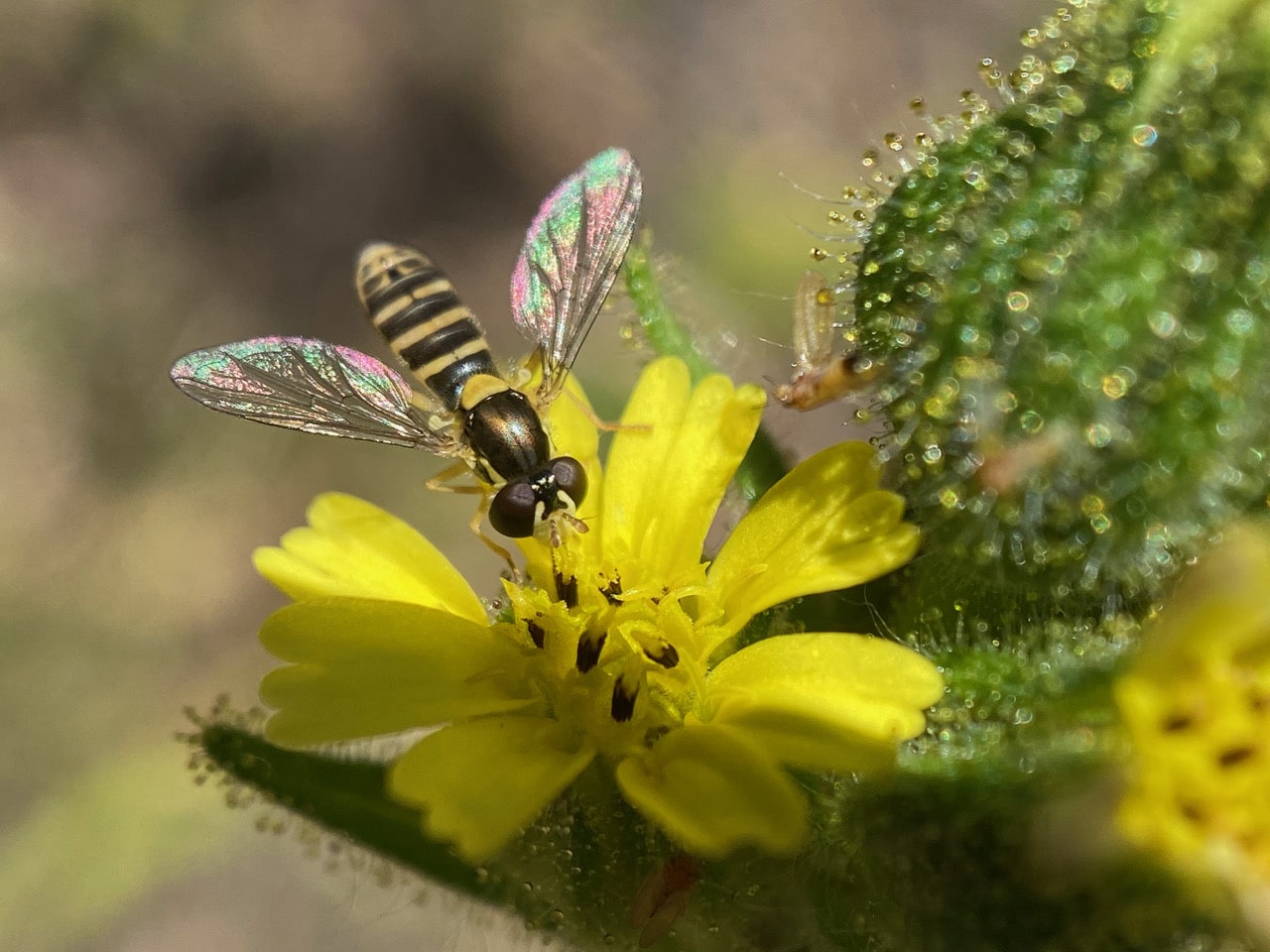
A female Forked Globetail, Sphaerophoria sulphuripes (family Syrphidae) visits a flowerhead of Coast Tarweed. Native to western North America, this species is probably the most common hover fly found on the tarweeds.
The female Forked Globetail is maddeningly hard to identify when it folds its wings over its abdomen, as its abdominal markings are necessary to distinguish it from the similar looking Diamond Spottail female.
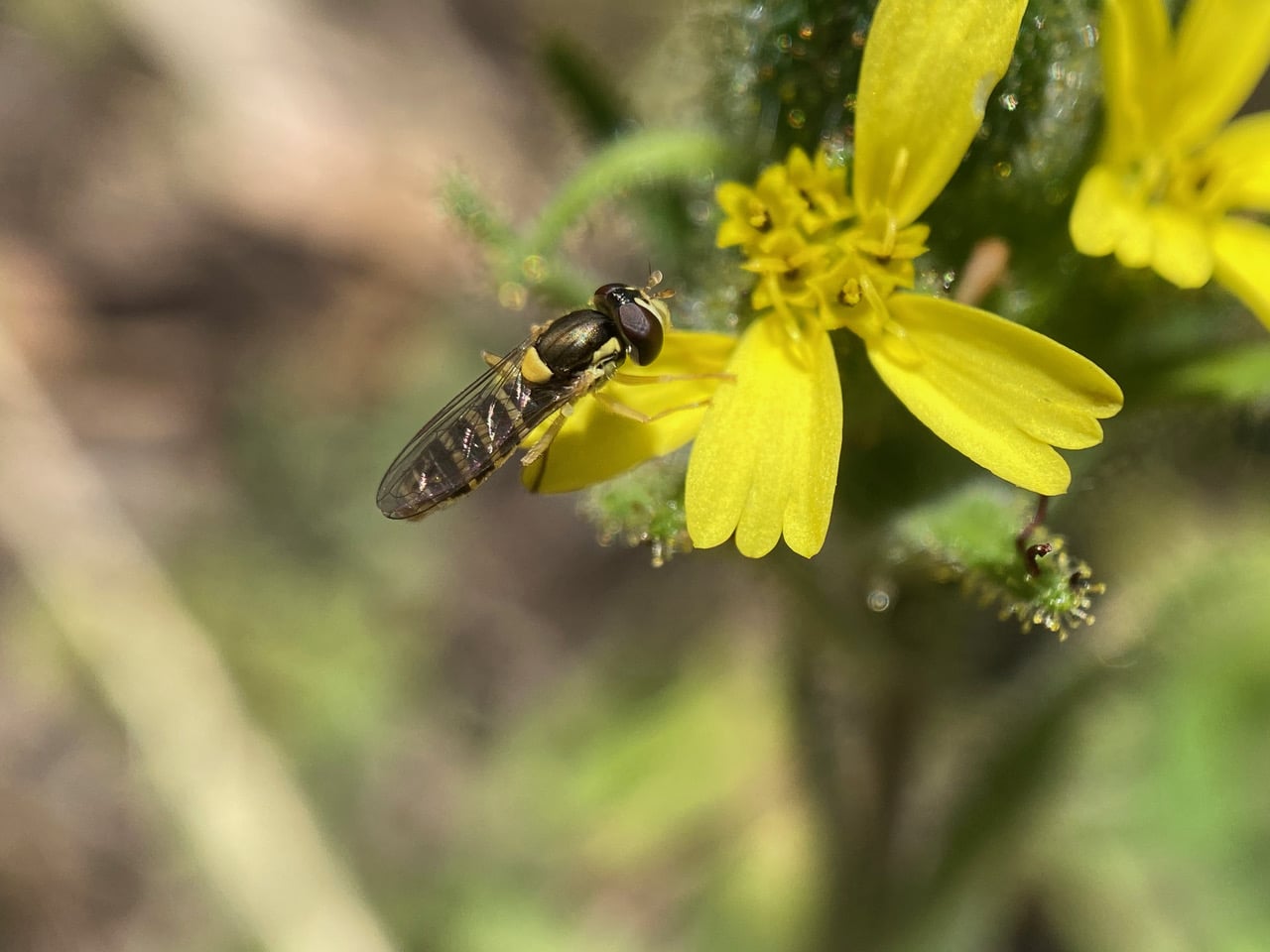
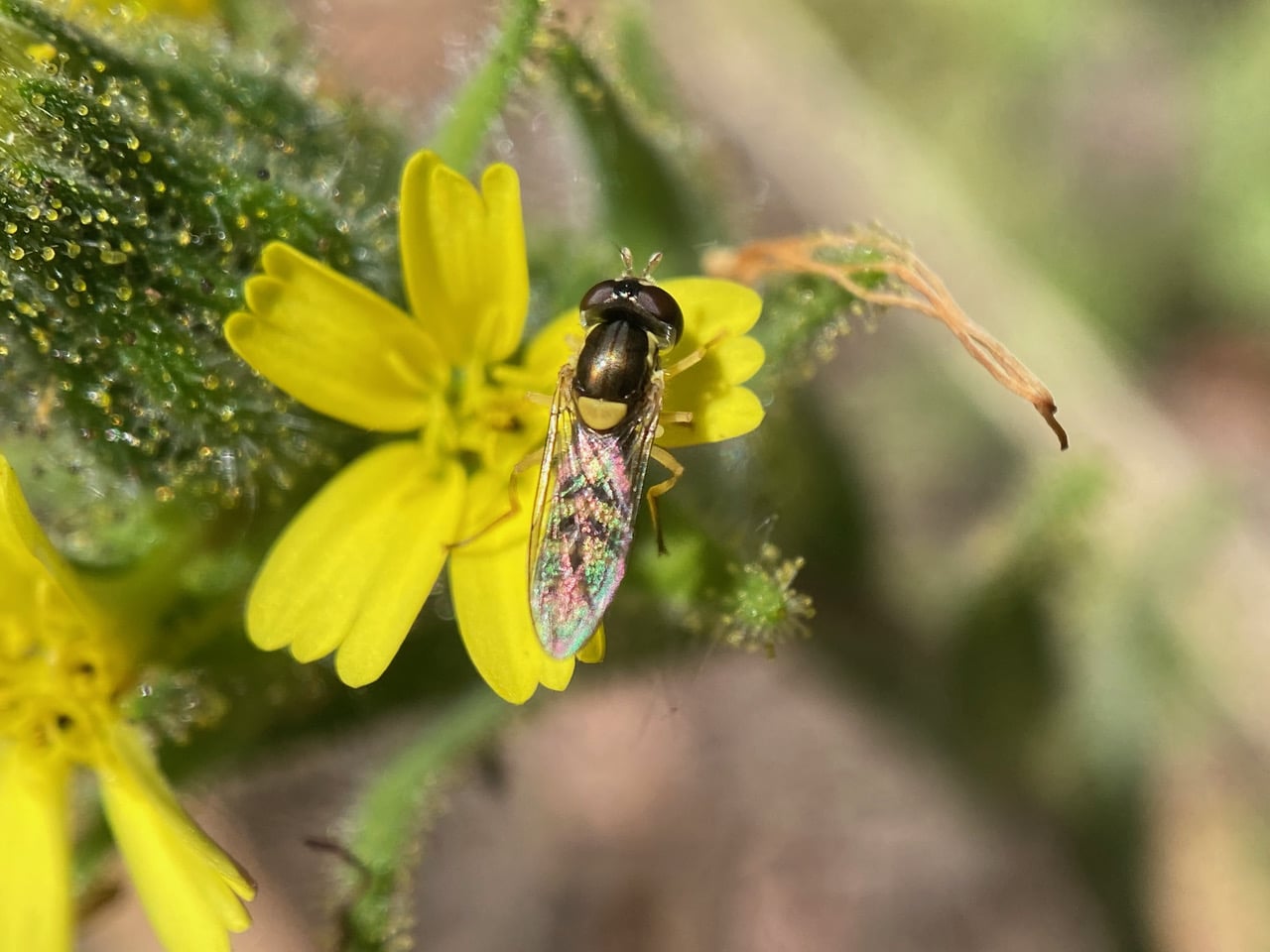
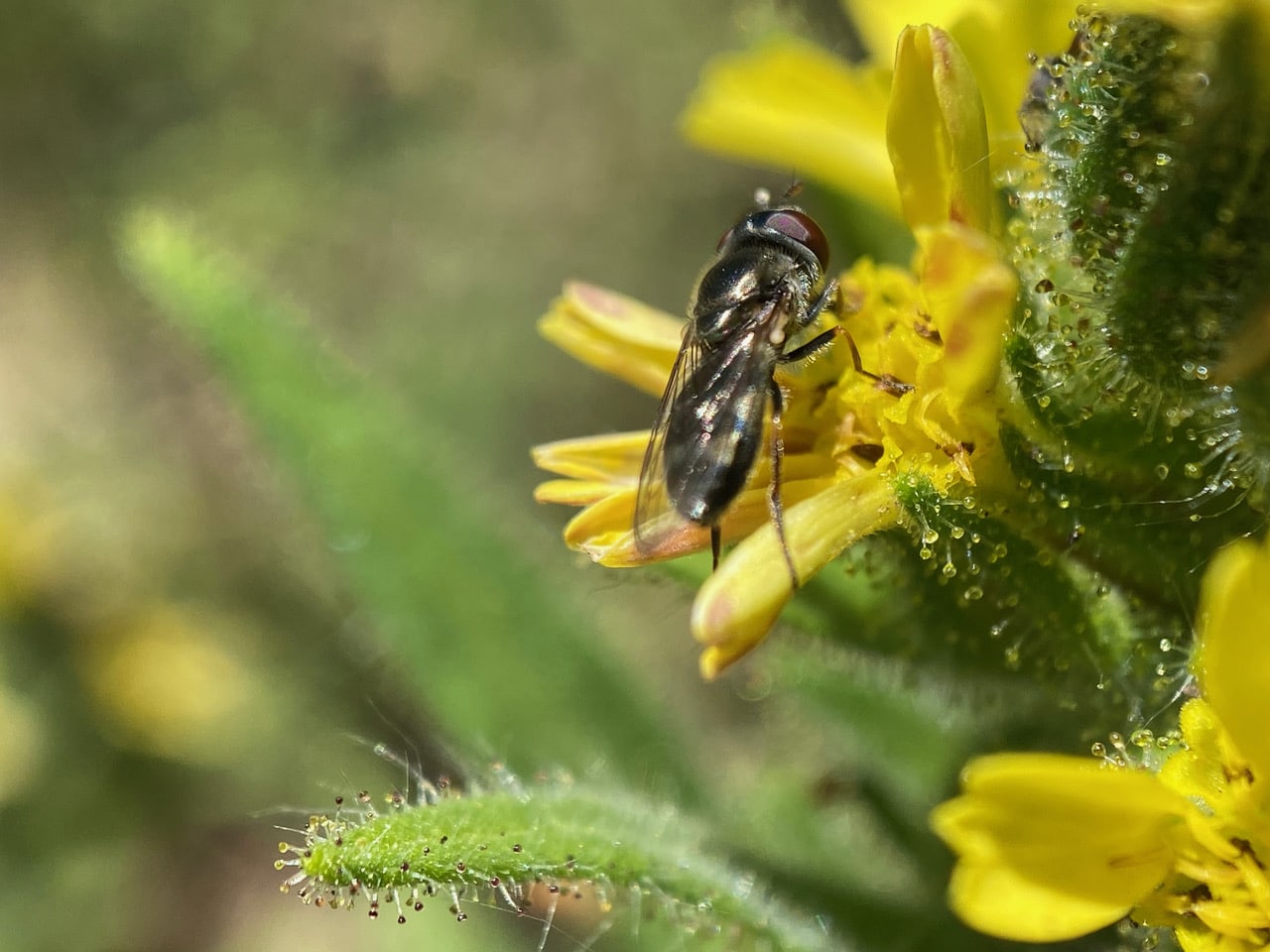
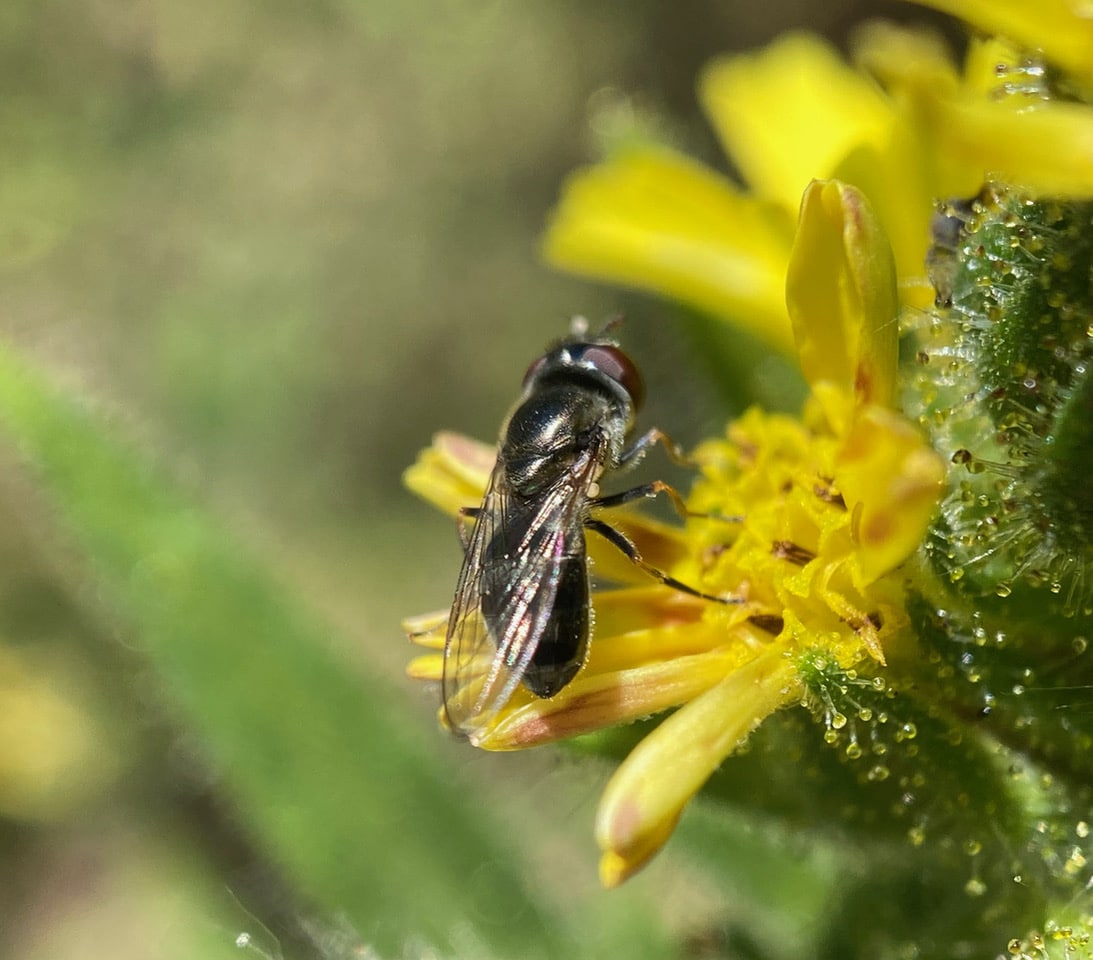
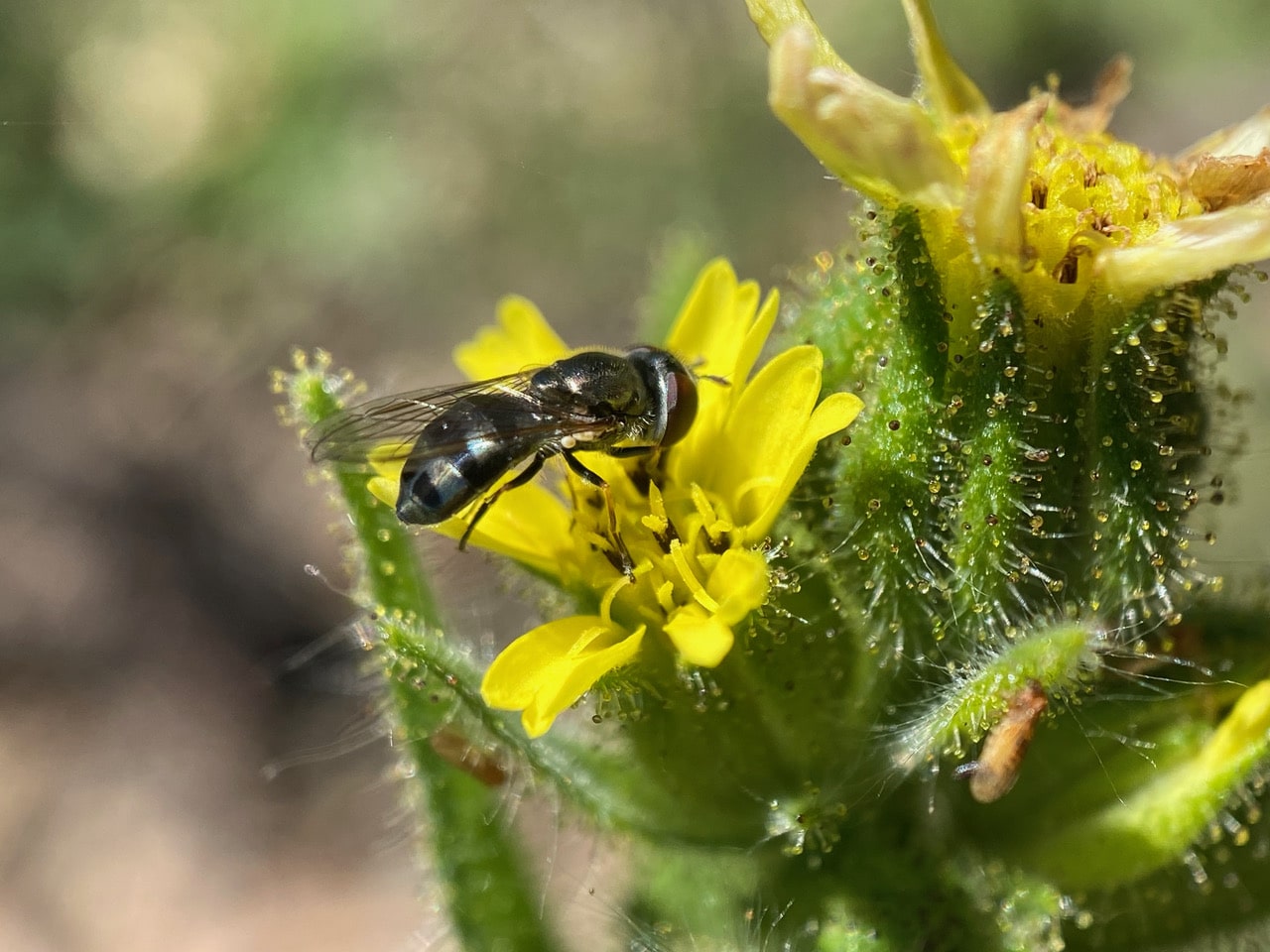
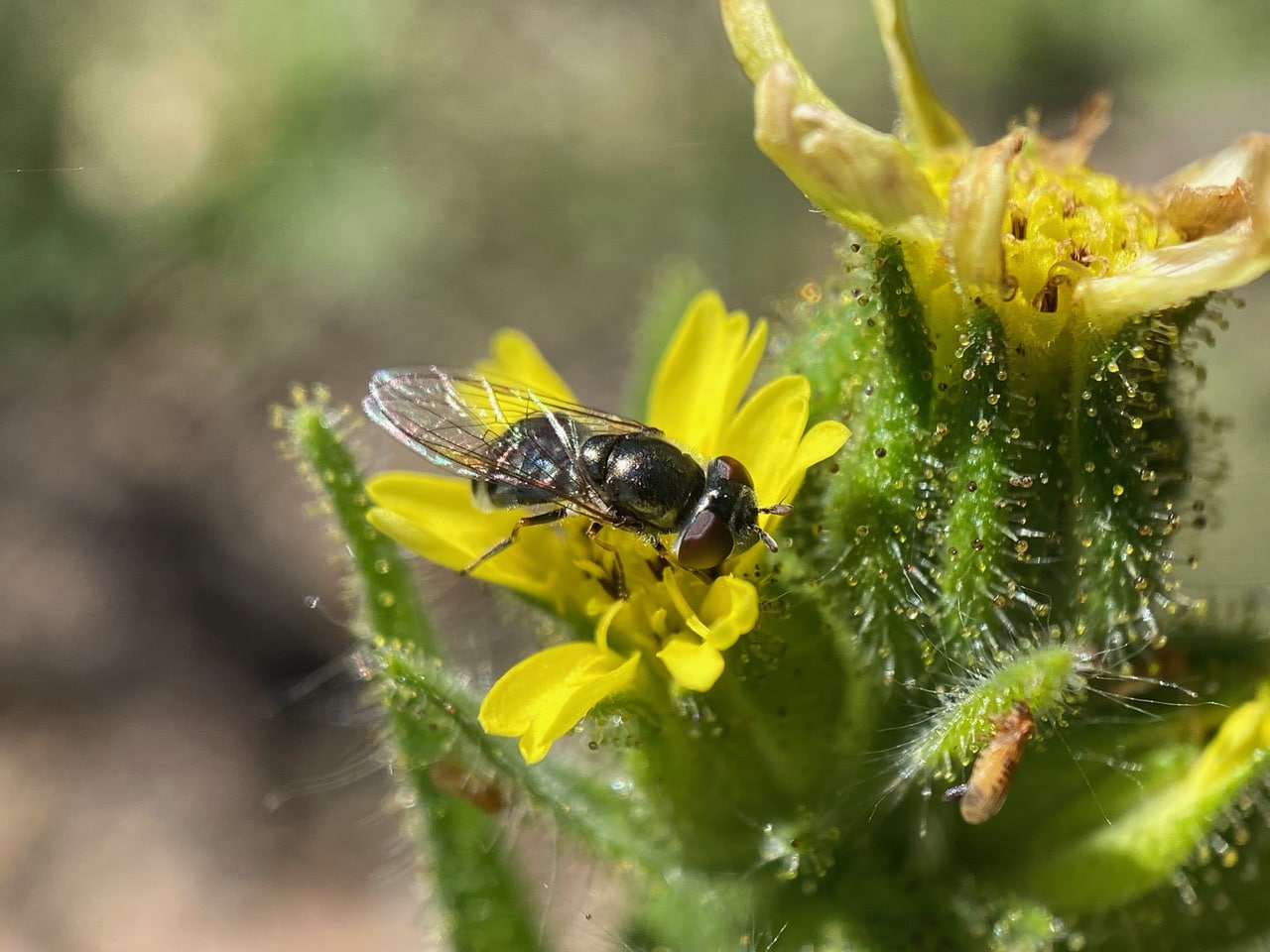
Here’s a different hover fly – the Sedgesitter, Platycheirus sp. (family Syrphidae). Its dusky, metallic sheen distinguishes it from most other hover flies.
This Sedgesitter is a female, as there’s a gap between the eyes on the top of the head. Male hover flies generally have holoptic eyes (that meet along a central line on top of the head.)
Platycheirus is found in grass and herb vegetation. Adults of many species feed on pollen of wind-pollinated plants, such as Salix, Plantago, Poaceae, Cyperaceae, but they visit other flowers also. Many stay active during cold and rainy weather. Larvae feed on aphids.
See those little brown insects on the plant? They are Eucalyptus Redgum Lerp Psyllids, Glycaspis brimblecombei (family Aphalaridae) that have fallen from the surrounding Eucalyptus trees and are trapped on the sticky hairs of Coast Tarweed. Native to Australia, the Psyllid nymphs and adults feed on sugar rich phloem of Eucalyptus. Honeydew is a sticky waste product excreted by the psyllids after digesting phloem. As nymphs feed they can use honeydew excretions to form a protective white cap called a “lerp”, the conspicuous white cone seen on eucalyptus leaves. Nymphs feed and grow to adulthood under this crystalline cap. Winged adults (4 mm) leave the protection of the lerp and fly to new plants to mate, feed, and lay eggs.