

Pollinator Post 7/14/23

Knowing it’s going to be hot, I decide to go to the garden anyway, per chance to see the Leaf-cutter bees around the flowers of Farewell-to- Spring, Clarkia ribicunda. Although the temperatures do not register very high (merely in the 70s), something about the air feels searingly uncomfortable. More Clarkias have come into bloom along Skyline Trail near Siesta Gate, but leaf-cutter bee activity seems to have subsided, with fewer flower petals cut. The only insect I find that is doing damage to the flowers is this Scudder’s Bush Katydid nymph, Scudderia sp. (family Tettigoniidae). The katydid nymphs chew irregular holes in the petals, not big, clean, round pieces like the Leaf-cutter Bees, Megachile sp. (family Megachilidae).
Scudderia is a genus of katydids in the family Tettigoniidae. They are sometimes called bush katydids and are 30-38 mm in length. They are mostly found in North America. They are herbivores, with nymphs feeding primarily on flowers and adults preferring woody deciduous plants.

A Bumble Bee is flying around, briefly stopping at the Clarkia flowers for nectar. It is not a Yellow-faced Bumble Bee, but a California Bumble Bee – with a black head!
Bombus californicus, the California Bumble Bee, is found in Central and the western half of North America. The species is now classified as Vulnerable by the IUCN. It was the most common bumble bee in California until about the 1990s when its numbers and distribution began to decline. Many factors may have contributed to its decline, including invasive species, pesticide use, commercial bumble bee rearing, habitat destruction, and climate change.
Although morphologically the species is quite variable, the “typical” color pattern of female B. californicus is black with only a single strong yellow band anteriorly on the thorax, and another single yellow band near the apex of the abdomen. Males exhibit considerably more variation.
The California Bumble Bee is an important pollinator in alpine environments in its native range. They are social bees having a queen and workers. Their colonies last for one year. New queens overwinter, usually underground, and found new colonies from scratch the following year. Queens emerge from April through mid July. Workers are present from April to September. The species is known to pollinate sage, blueberry bushes, red clover, California poppies, and many other species of flowers.
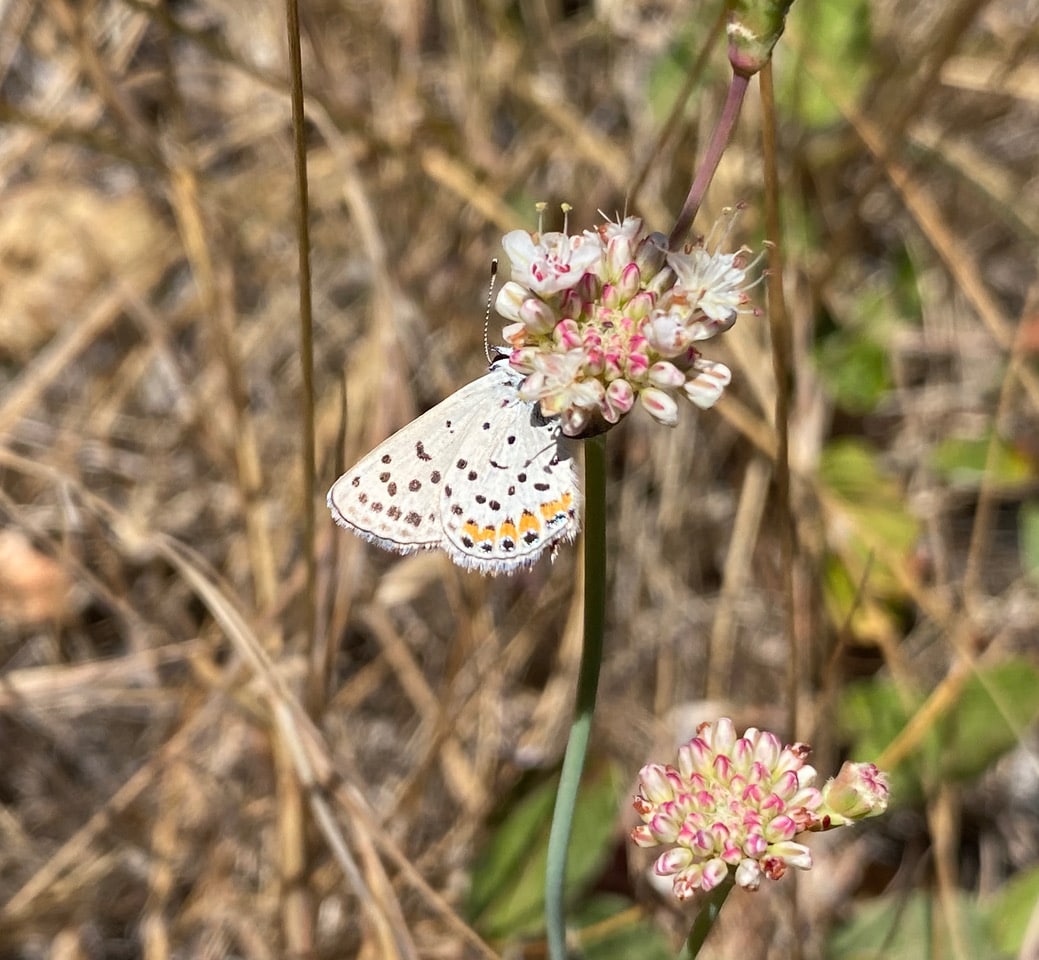
An Acmon Blue butterfly, Plebejus acmon (family Lycaenidae) is taking nectar from the flowers of Nude Buckwheat, Eriogonum nudum. Since I don’t have a good look of its upper wings, I can’t tell if it’s a male or female. Male Acmon Blue have blue upper wings, while the females are brownish. The buckwheats, Eriogonum sp. are important food plants for the larvae of Acmon Blue.

Passing the California Soap Plant, Chlorogalum pomeridianum, that I have marked previously, I pause to scan the plant for caterpillars. No caterpillar today, but what are those two pairs of wings I am seeing on a lower stem? Under the macro lens, the prominent wings resolve into two Planthoppers, Neaethus sp. (family Tropiduchidae), backlit by the sun. The bugs are small, only about 1/4 in. long.
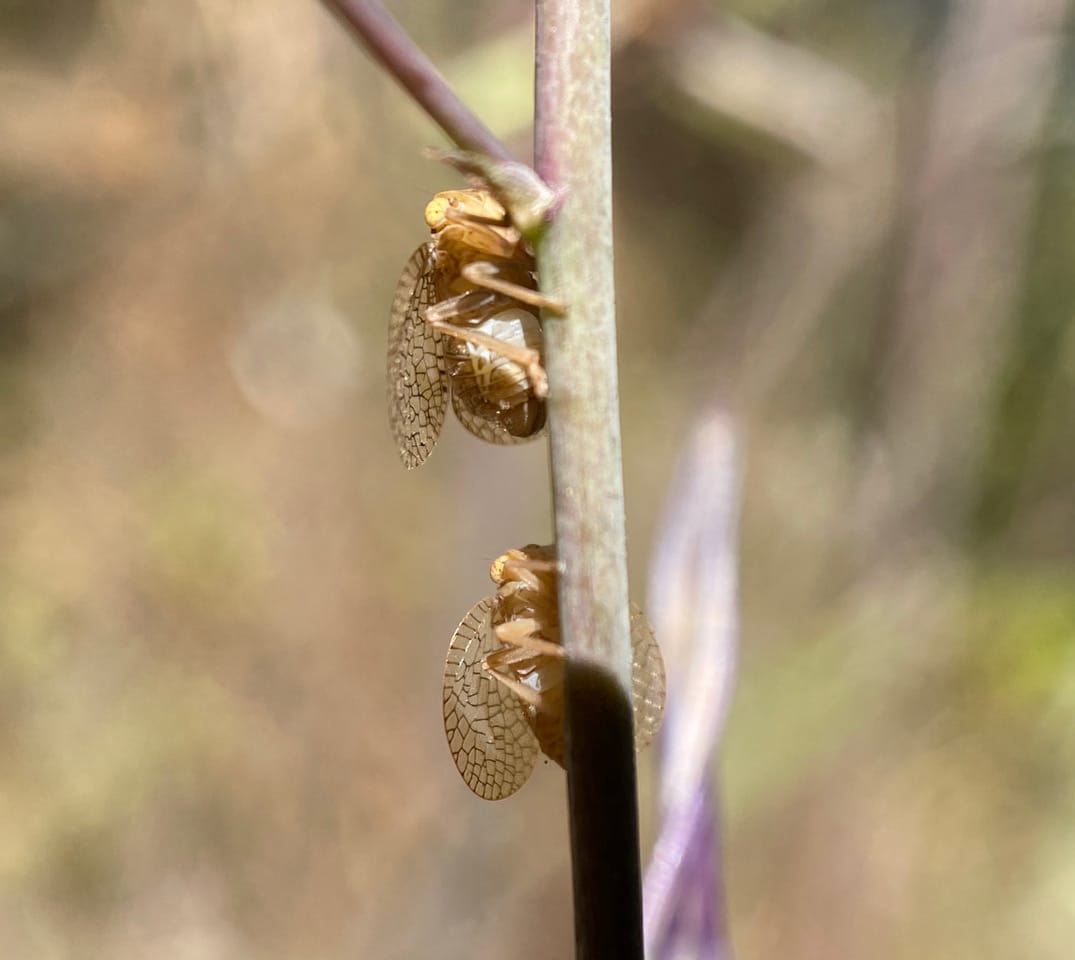
The two bugs play hide-and-seek with me, sidling to the other side of the stem every time I try for a better angle. Despite their reputation for jumping, these Planthoppers are actually reluctant to jump!
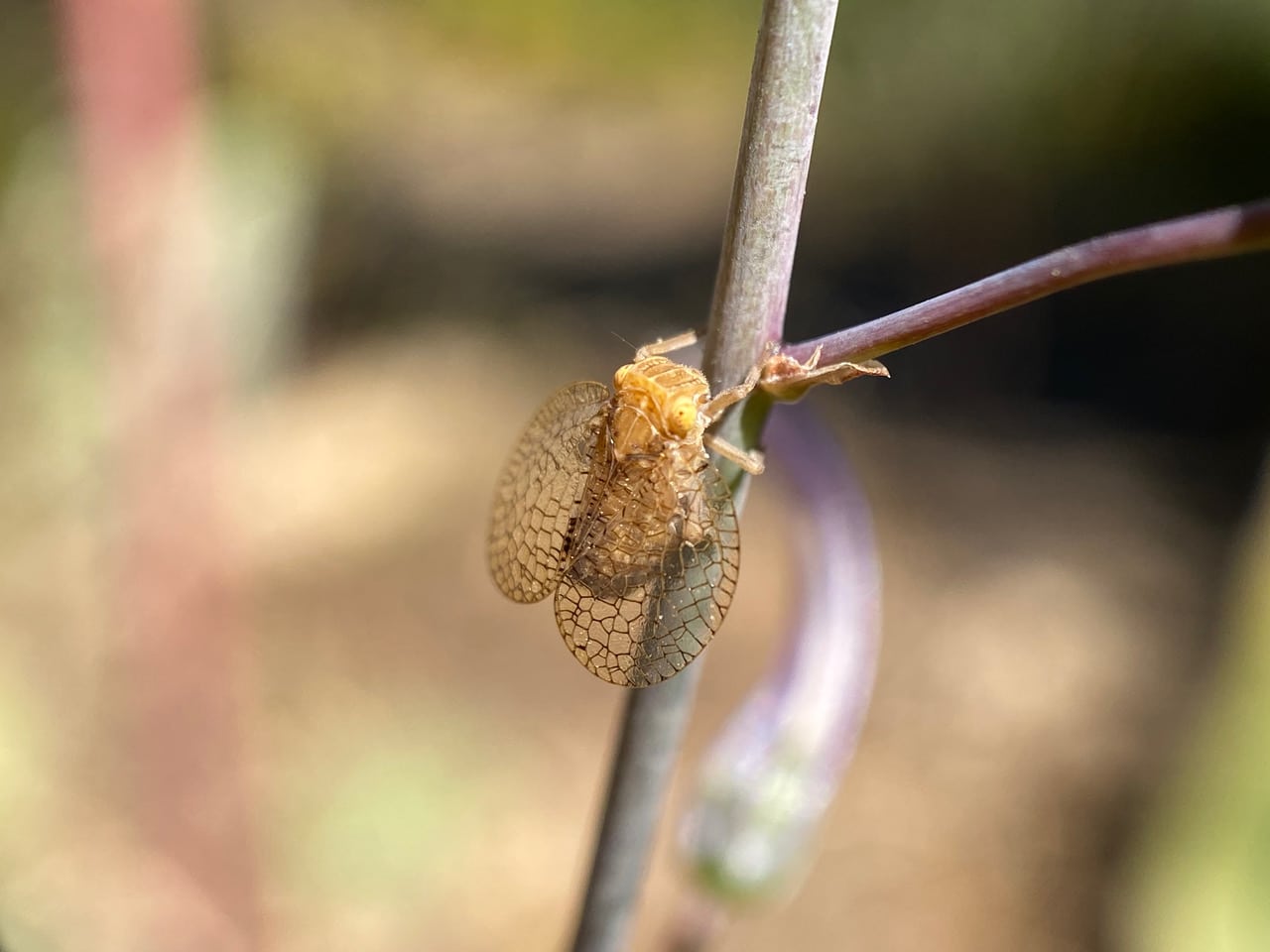
Members of the genus Neaethus are distinguished by their broadly rounded transparent to translucent wings, with prominent veins. Most are associated with oak species. Neaethus has a limited distribution, and are mostly found in California and Arizona.
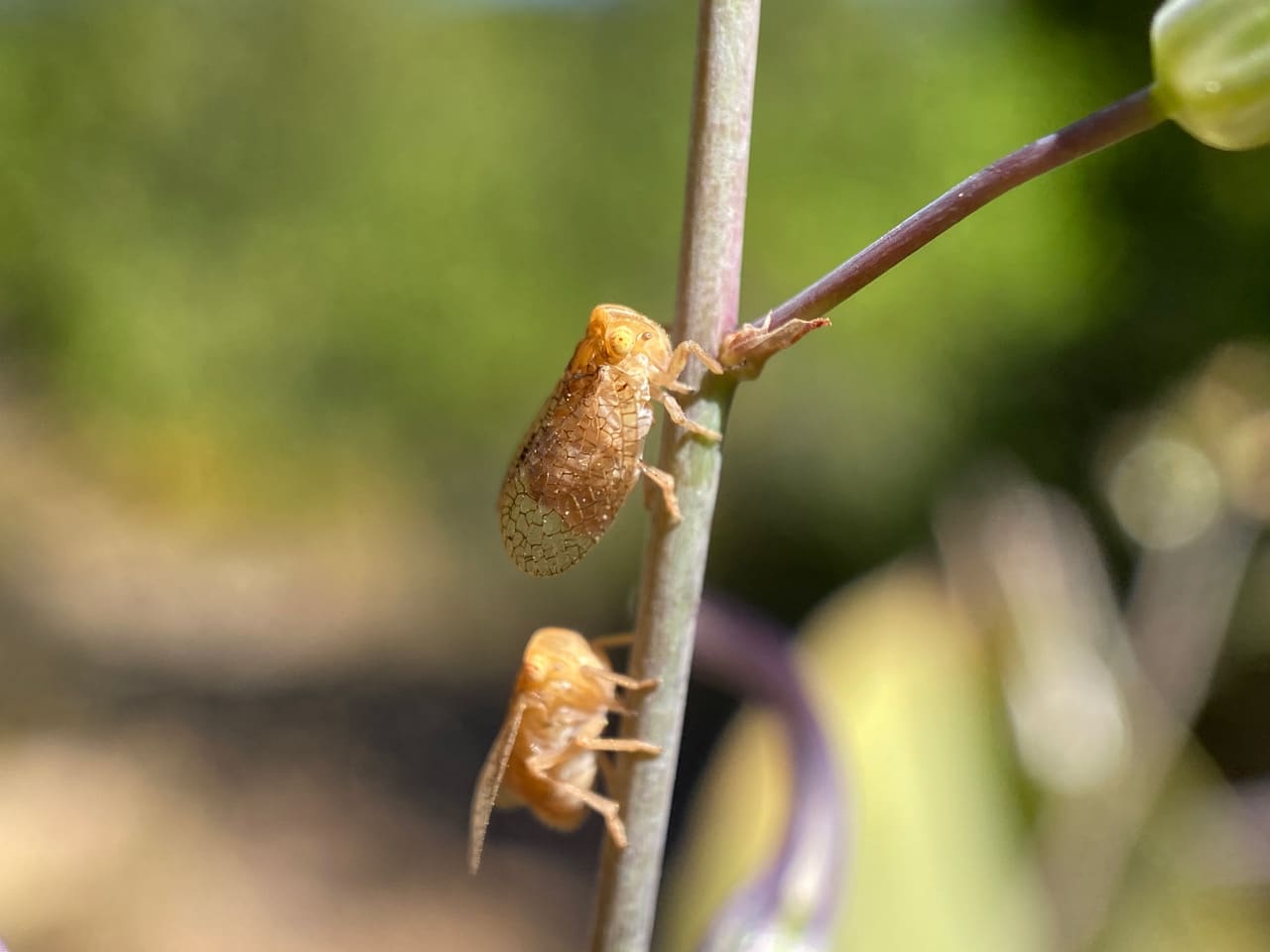
The Planthoppers have the first mechanical gear system ever observed in nature. The tiny bug uses mechanical gears on its joints to precisely synchronize the kicks of its hind legs as it jumps forward.
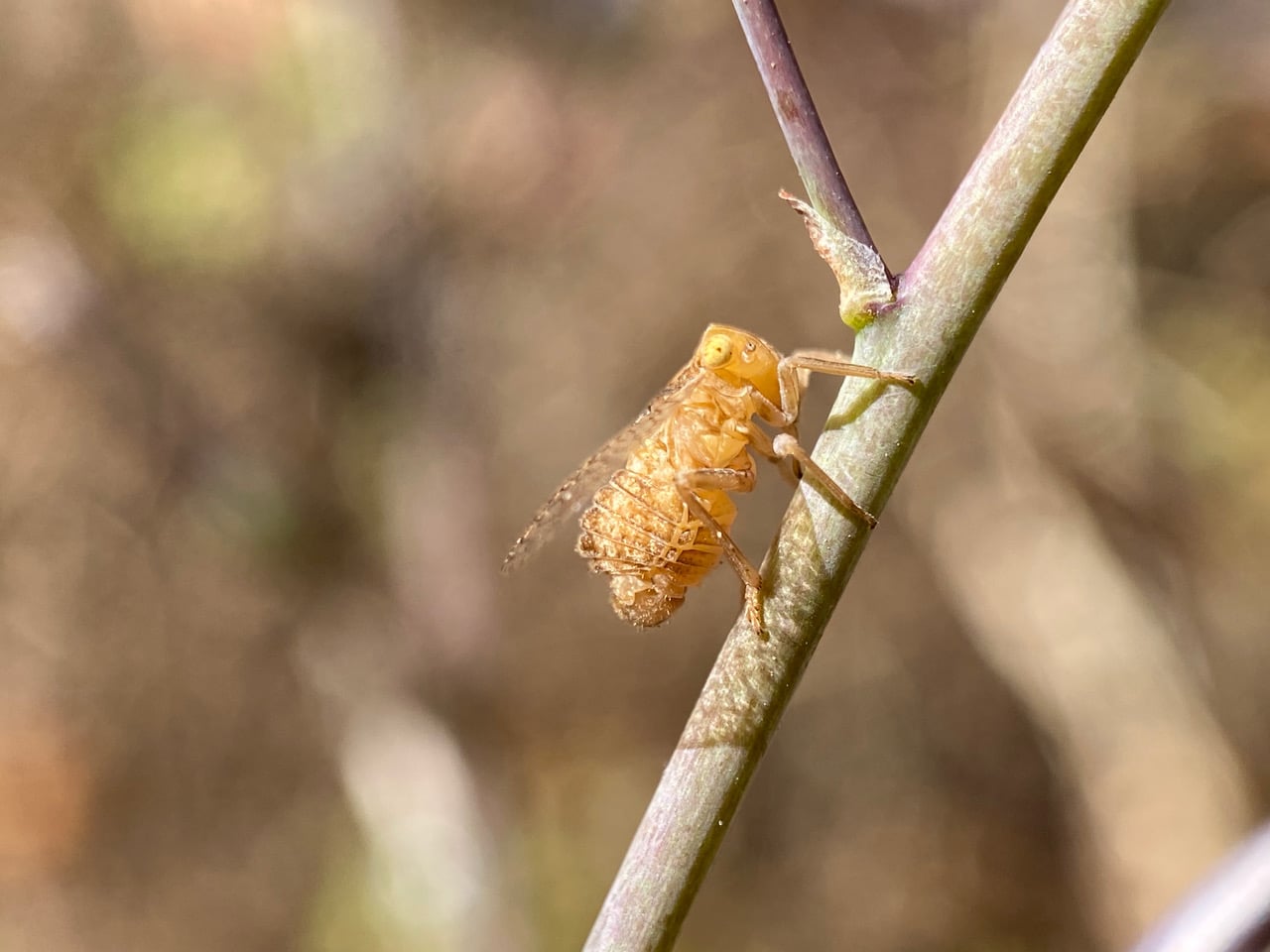
Planthoppers may be small, but they attract mates from afar by sending vibrational calls along plant stems and leaves using fast, rhythmic motions of their abdomen.
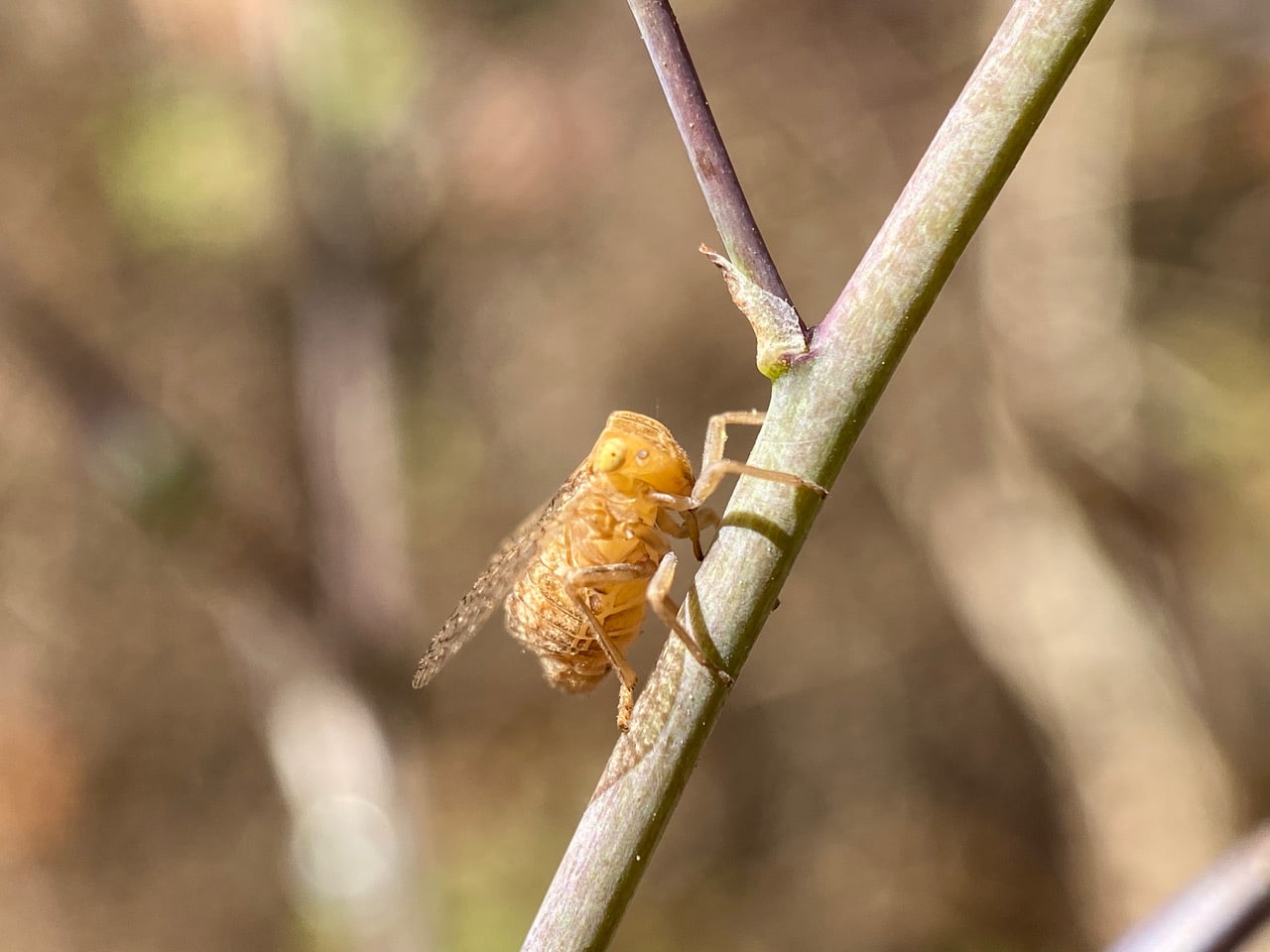
Planthoppers belong to the order Hemiptera or “true bugs”, characterized by their piercing-sucking mouthparts. Here you can see its dark-tipped
rostrum that is folded under the body when not in use.