

Pollinator Post 7/24/23

On this calm, cool afternoon (6-7:15 pm) I take a leisurely walk along the paved road from Siesta Gate. I don’t expect to be taking pictures as the light is too low.
This Woodlouse Fly, Stevenia deceptoria (family Rhinophoridae) seems to be asleep. Insects don’t have eyelids, so it’s hard to tell. The fly is resting motionless on the underside of an upturned leaf of California Mugwort, Artemisia douglasiana. A photographer’s dream!
These small, slender, black, bristly flies are somewhat related to the Tachinidae. The larvae are mostly parasitoids of woodlice (pill bugs), beetles, spiders and other arthropods, and occasionally snails.
Native to Europe, Stevenia deceptoria is now widespread in the US. The flies are parasitoids of terrestrial woodlice (roly polies) of the order Isopoda (Oniscoidea).


A Green Lacewing (family Chrysopidae) lands on a leaf of California Blackberry, Rubus ursinus.
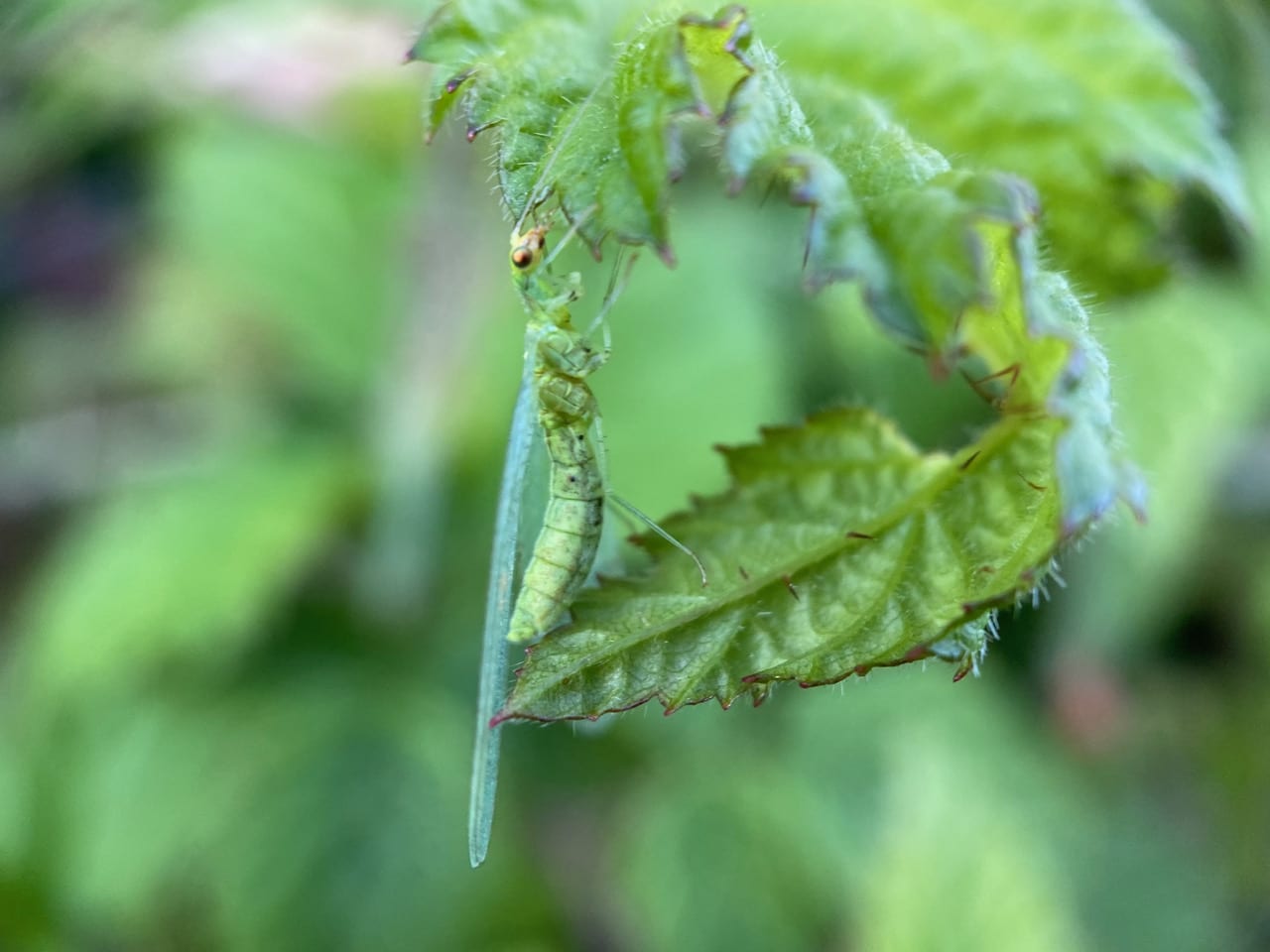
Lacewings are insects in the large family Chrysopidae of the order Neuroptera. Adults are crepuscular or nocturnal. They feed on pollen, nectar and honeydew supplemented with mites, aphids and other small arthropods. Eggs are deposited at night, hung on a slender stalk of silk usually on the underside of a leaf. Immediately after hatching, the larvae molt, then descend the egg stalk to feed. They are voracious predators, attacking most insects of suitable size, especially soft-bodied ones (aphids, caterpillars and other insect larvae, insect eggs). Their maxillae are hollow, allowing a digestive secretion to be injected in the prey. Lacewing larvae are commonly known as “aphid lions” or “aphid wolves”. In some countries, Lacewings are reared for sale as biological control agents of insect and mite pests in agriculture and gardens.
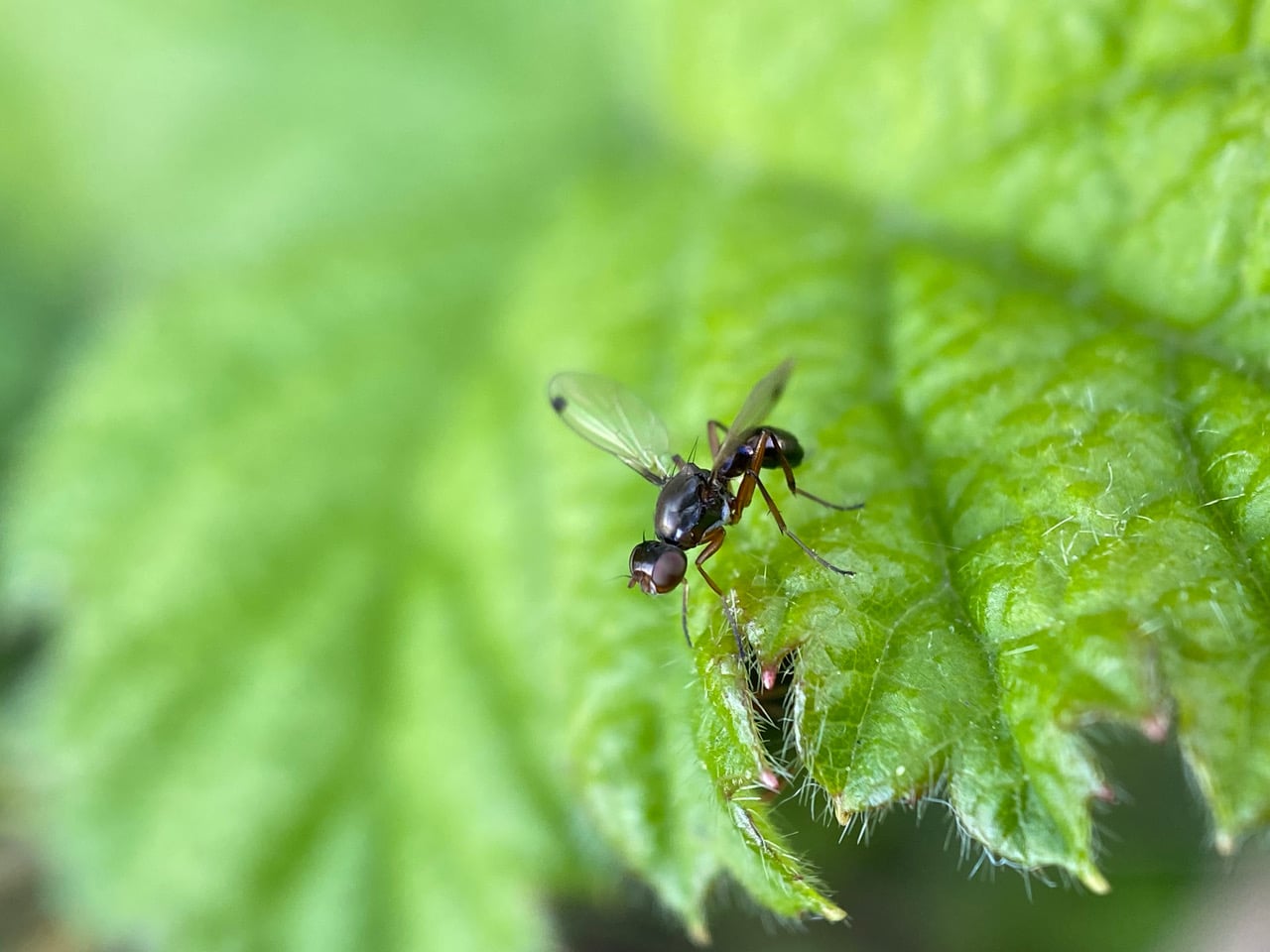
Usually a feisty, hyperactive insect, this Black Scavenger Fly (family Sepsidae) seems to be asleep too. It is posing motionless on the edge of a blackberry leaf, its wings uplifted! Maybe this is its wings’ default position?
Over 300 species are described worldwide. They are usually found around dung or decaying plant and animal material. Many species resemble winged ants, having a “waist” and glossy black body. The head is rounded. Many Sepsidae have a curious wing-waving habit made more apparent by dark patches at the wing tip. Adult flies are found mostly on mammal excrement, where eggs are laid and larvae develop, and on nearby vegetation, carrion, fermenting tree sap, and shrubs and herbs. Revolting as their dietary habits might seem, these flies serve a vital function in the ecosystem as decomposers/recyclers of organic matter.
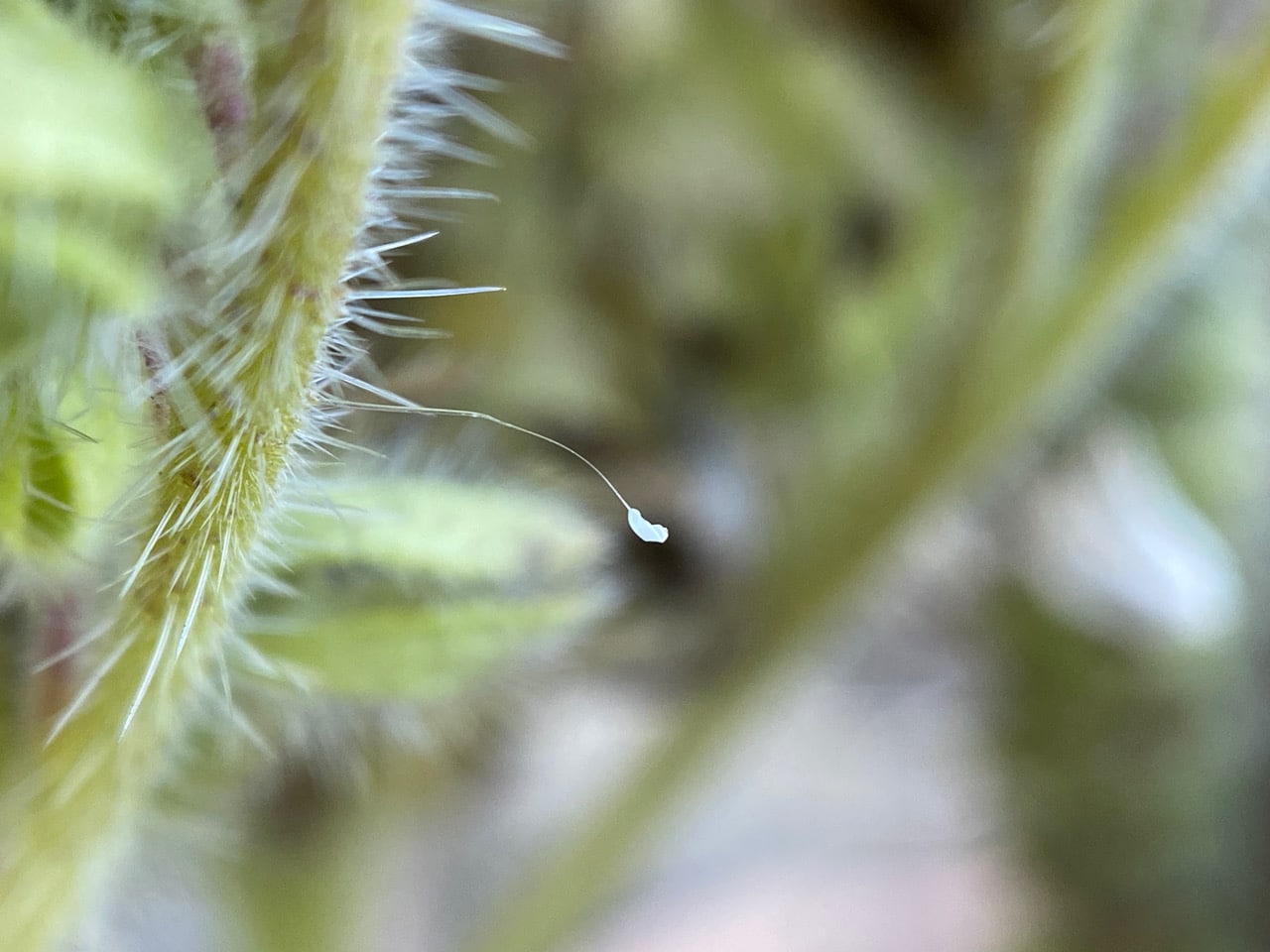
A Lacewing egg is attached by its silken stalk to the bristly inflorescence of a California Phacelia, Phacelia californica. Although there is no visible movement even under the macro lens, the shape of the egg suggests that it is in the process of hatching. I watch this, and another egg on an adjacent inflorescence of the same plant for about ten minutes, then decide to move on, marking the plant for future observation.

The small isolated patches of Soap Plant, Chlorogalum pomeridianum along the road are still in bloom – what a treat! These young plants are late bloomers compared to those along Skyline Trail below which have mostly gone to seed.
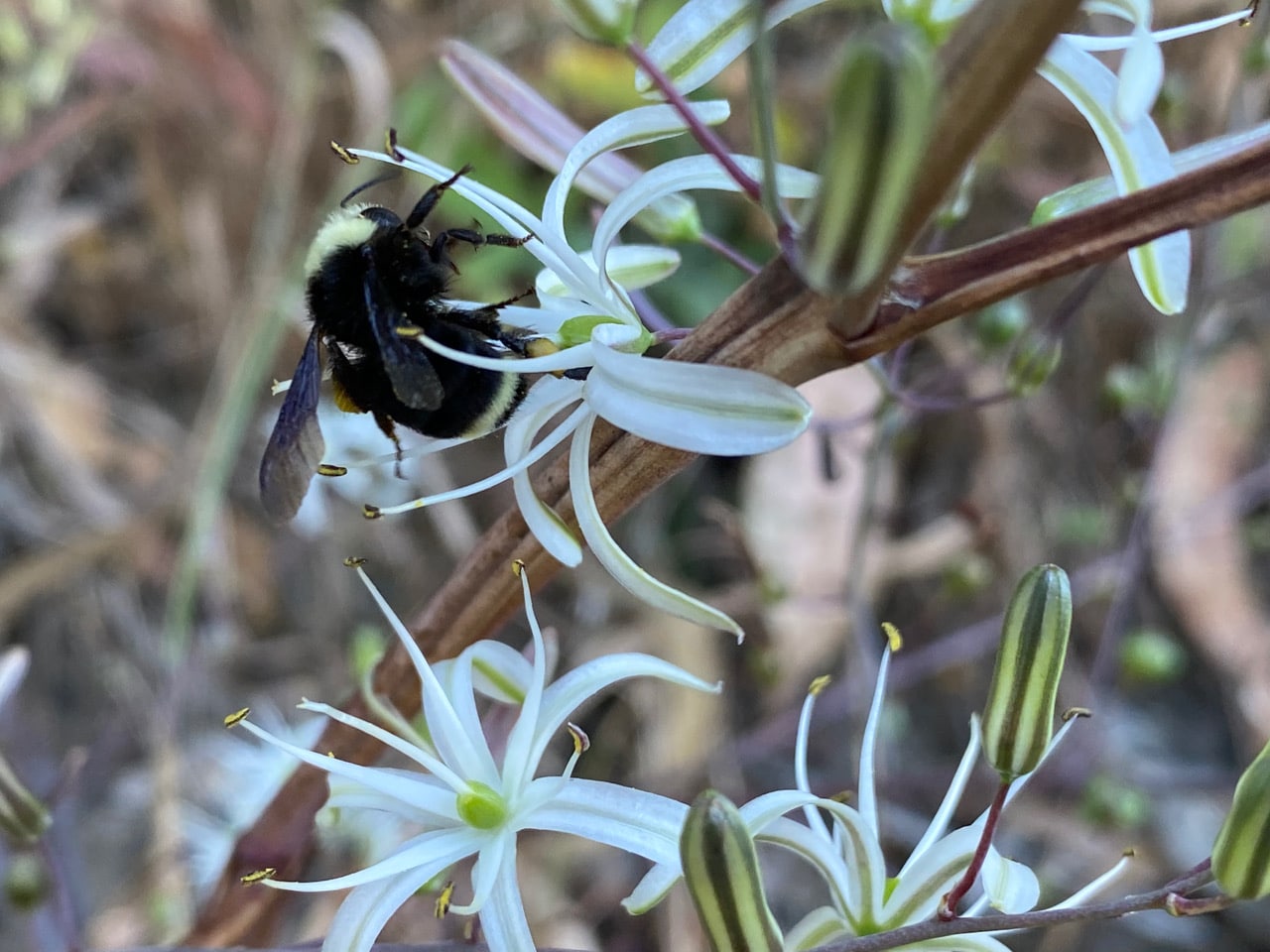
The white flowers attract a slew of Yellow-faced Bumble Bees, Bombus vosnesenskii. The hardworking bees forage tirelessly on the flowers, sipping nectar and collecting pollen.

Carefully avoiding the much bigger bumble bees, a female Oblique Streaktail, Allograpta obliqua (family Syrphidae) lands on a stamen of the Soap Plant flower to feed on pollen. It is one of the easiest species of hover fly to identify because of its distinct abdominal pattern.
The Oblique Streaktail is a common North American species of hoverfly. Adults are 6-7 mm long. Males have holoptic eyes (that meet on top of the head), while females have dichoptic eyes. Eggs are laid on surfaces of leaves or stems near aphids. The larvae are important predators of aphids while adults are pollinators.
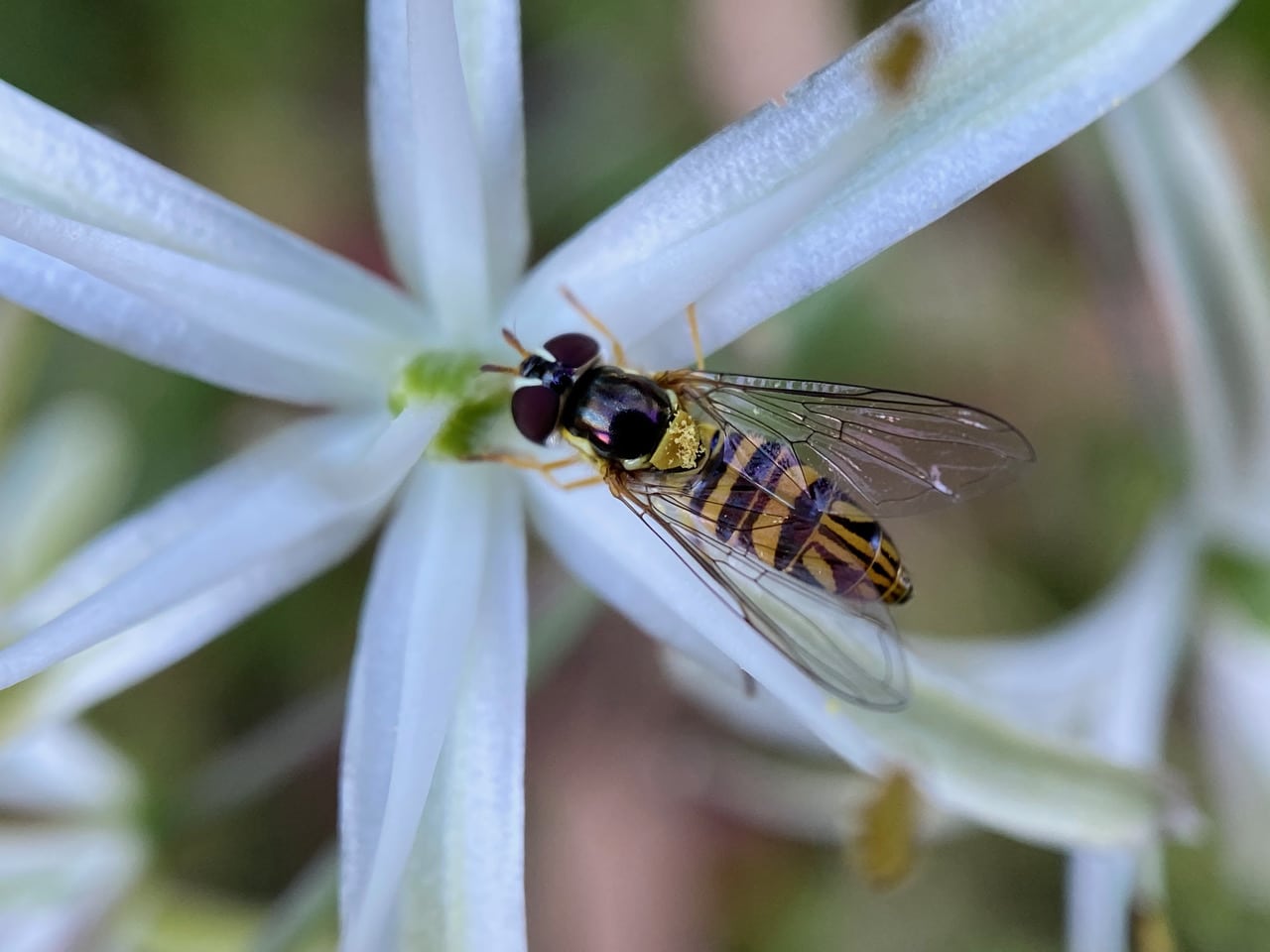 Partially folding its wings, the Oblique Streaktail descends to take nectar at the base of the flower. There seem to be pollen grains stuck to its scutellum (the posterior portion of an insect thorax).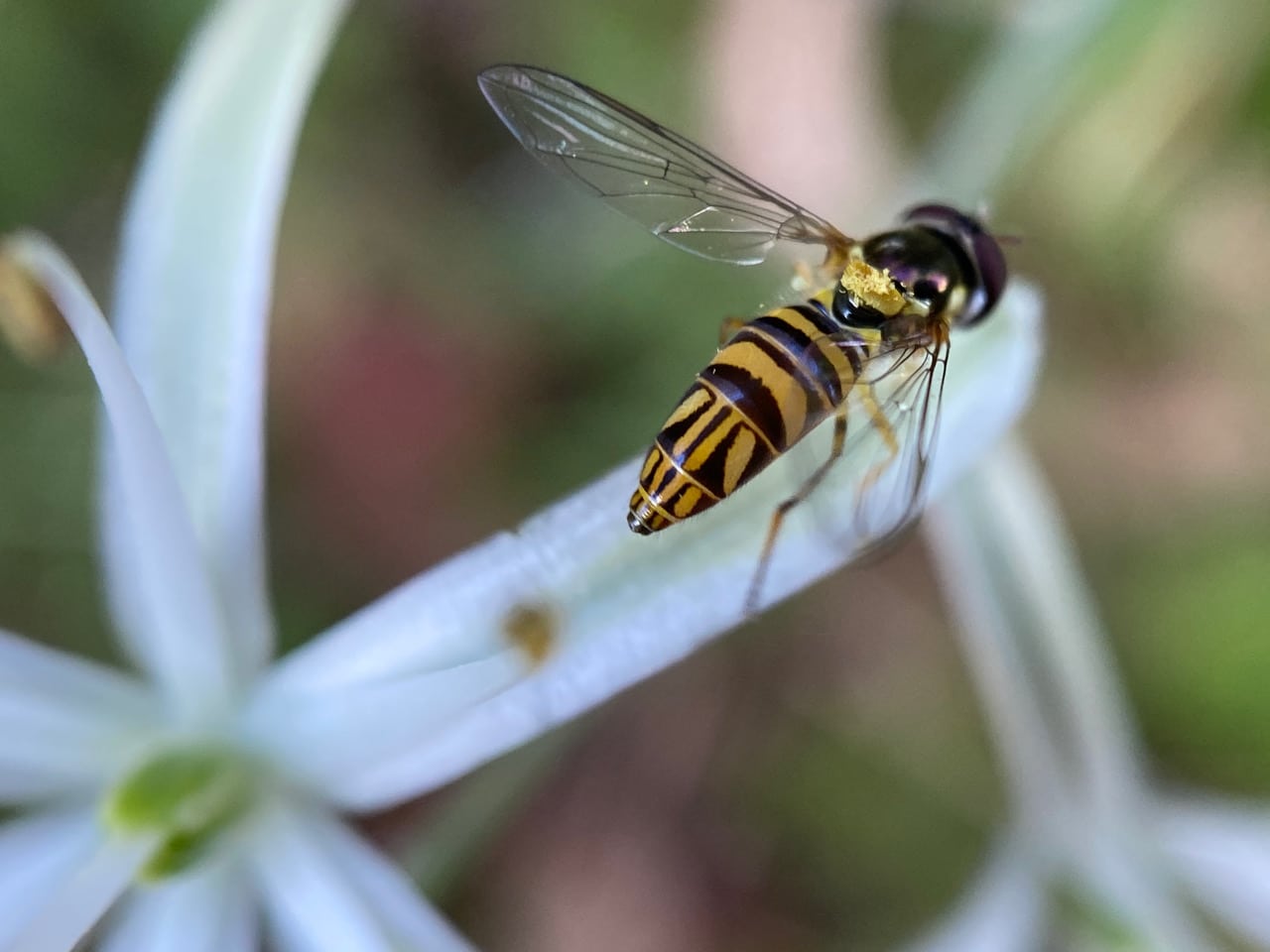
The fly climbs up a petal to launch itself into the air.
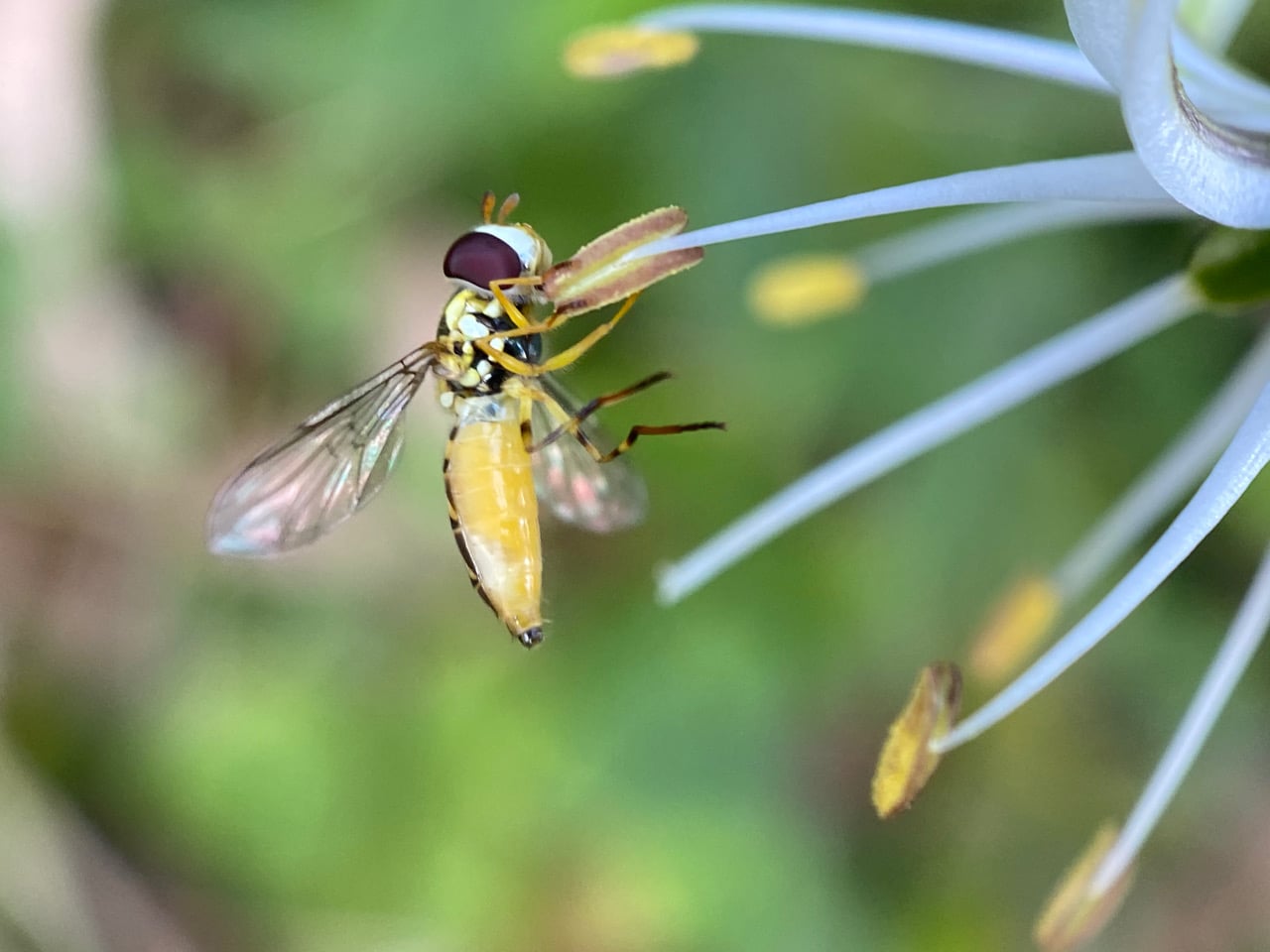
The Oblique Streaktail lands on the stamen of another flower to feed on pollen. Its abdomen is quite distended – probably a gravid female.
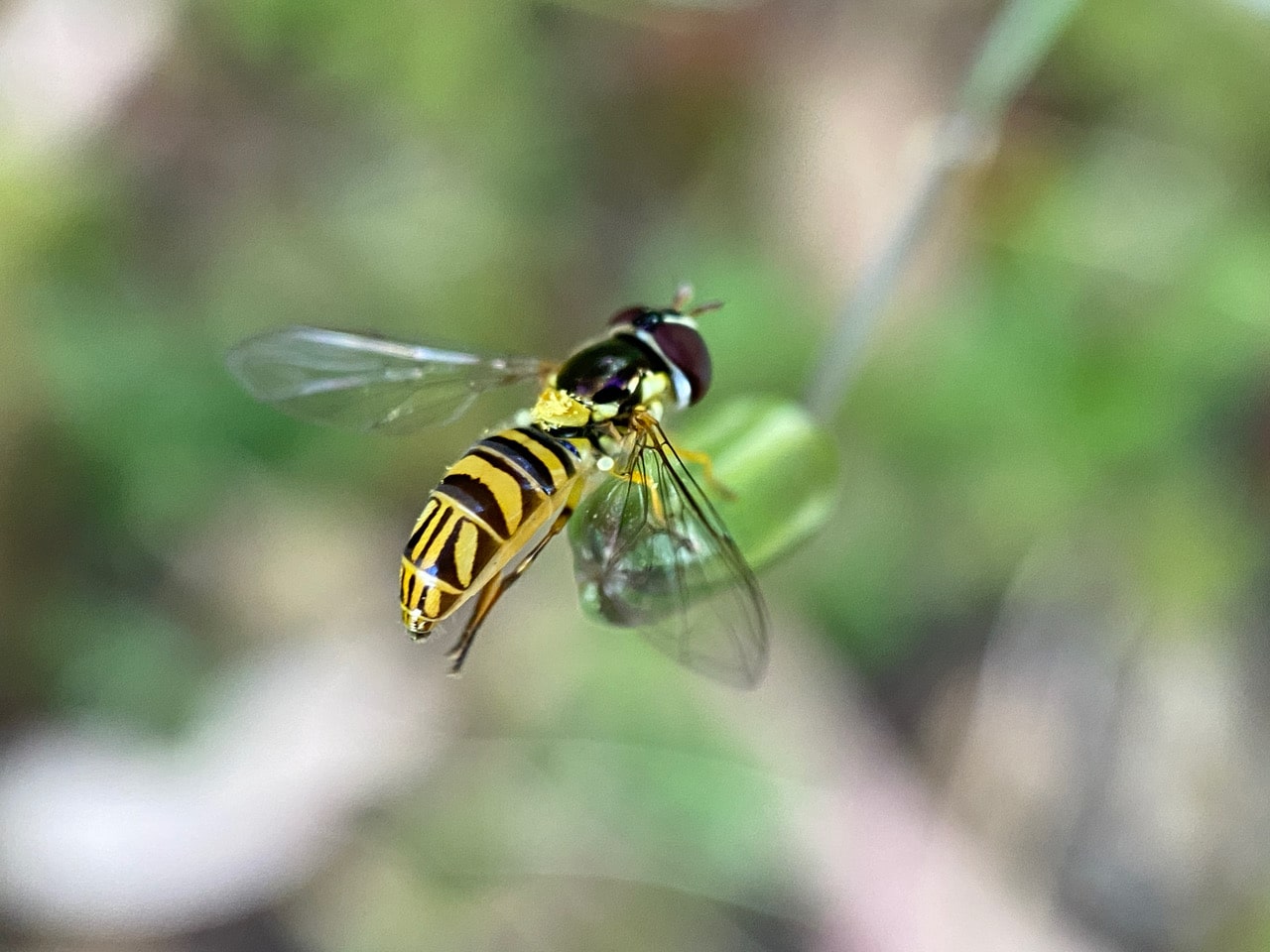
The fly then lands on a Soap Plant flower bud to groom herself. It’s all in a day’s work!