

Pollinator Post 8/10/23 (2)
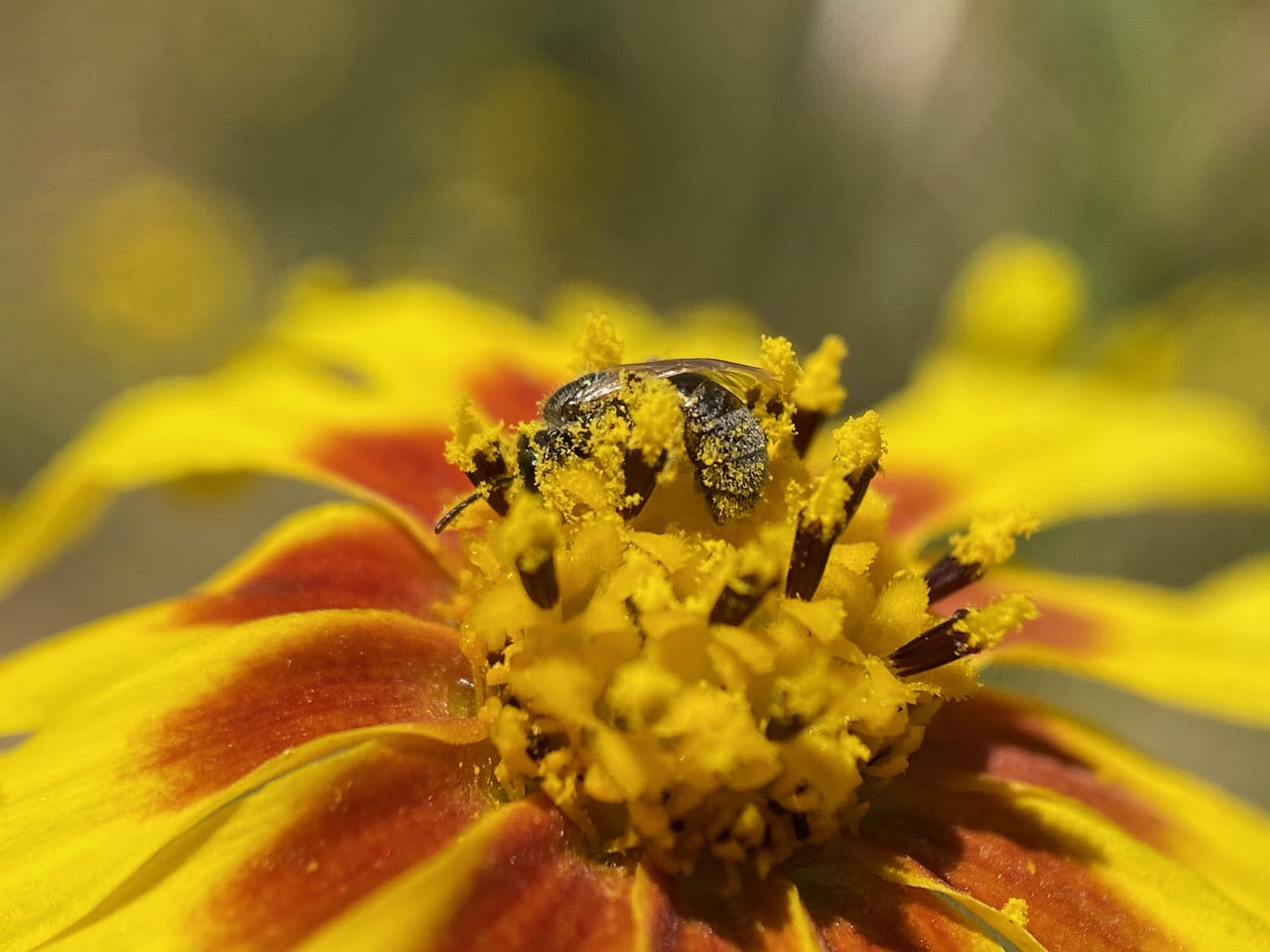
The same limited suite of insects are found on the tarweeds at the Water Tank patch today. Here a tiny Metallic Sweat Bee, Lasioglossum (Dialictus) sp. (family Halictidae) is making its way through the flowers of Elegant Tarweed, Madia elegans, its body covered with sticky pollen.



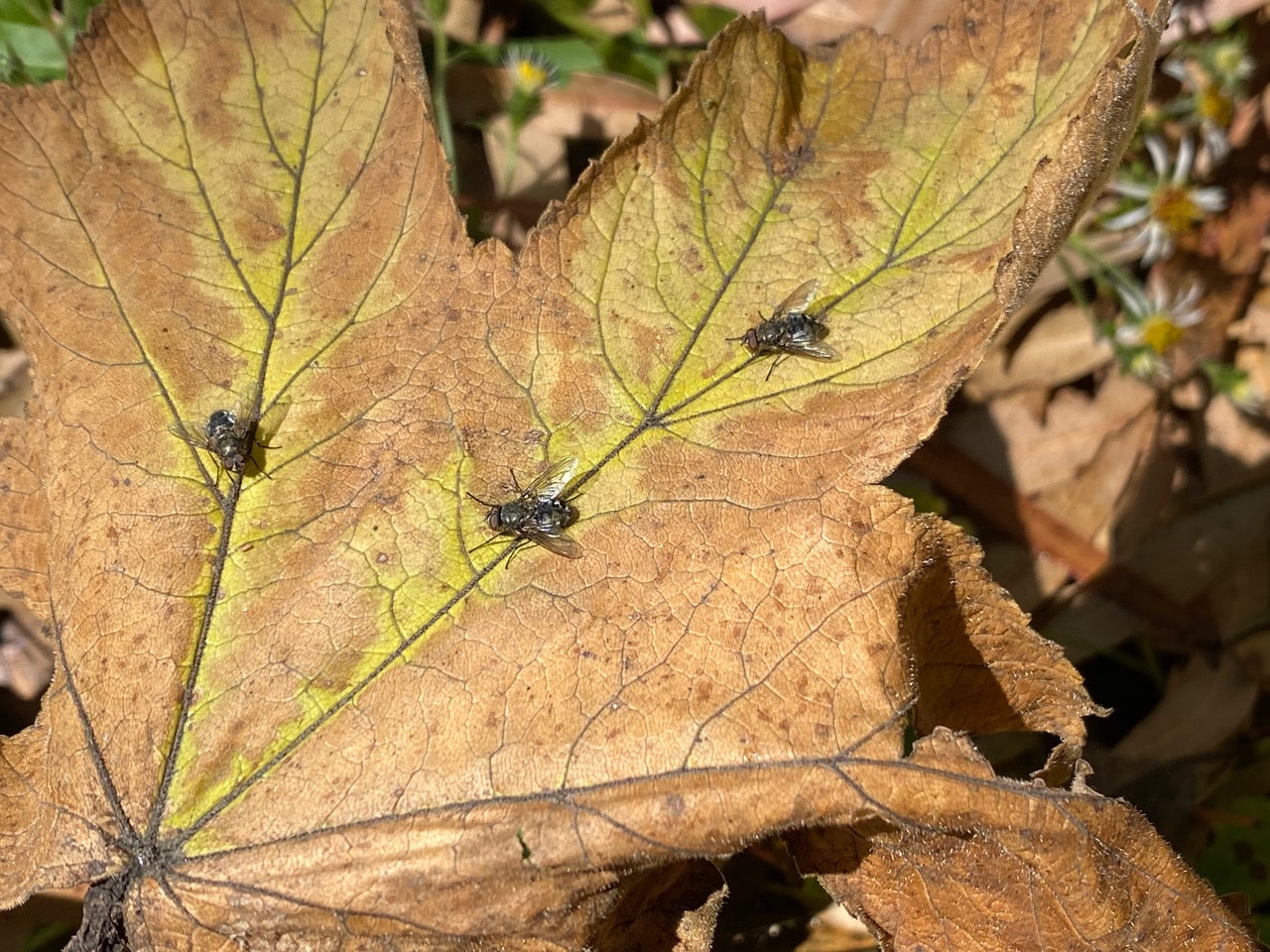 As I enter the shady section of Skyline Trail flanked by Eucalyptus and Bay Trees, I flush up a swarm of large, noisy flies that are perched on a wilted Cow Parsnip leaf. Who are these flies, and what are they doing here? Has there been a recent hatch?

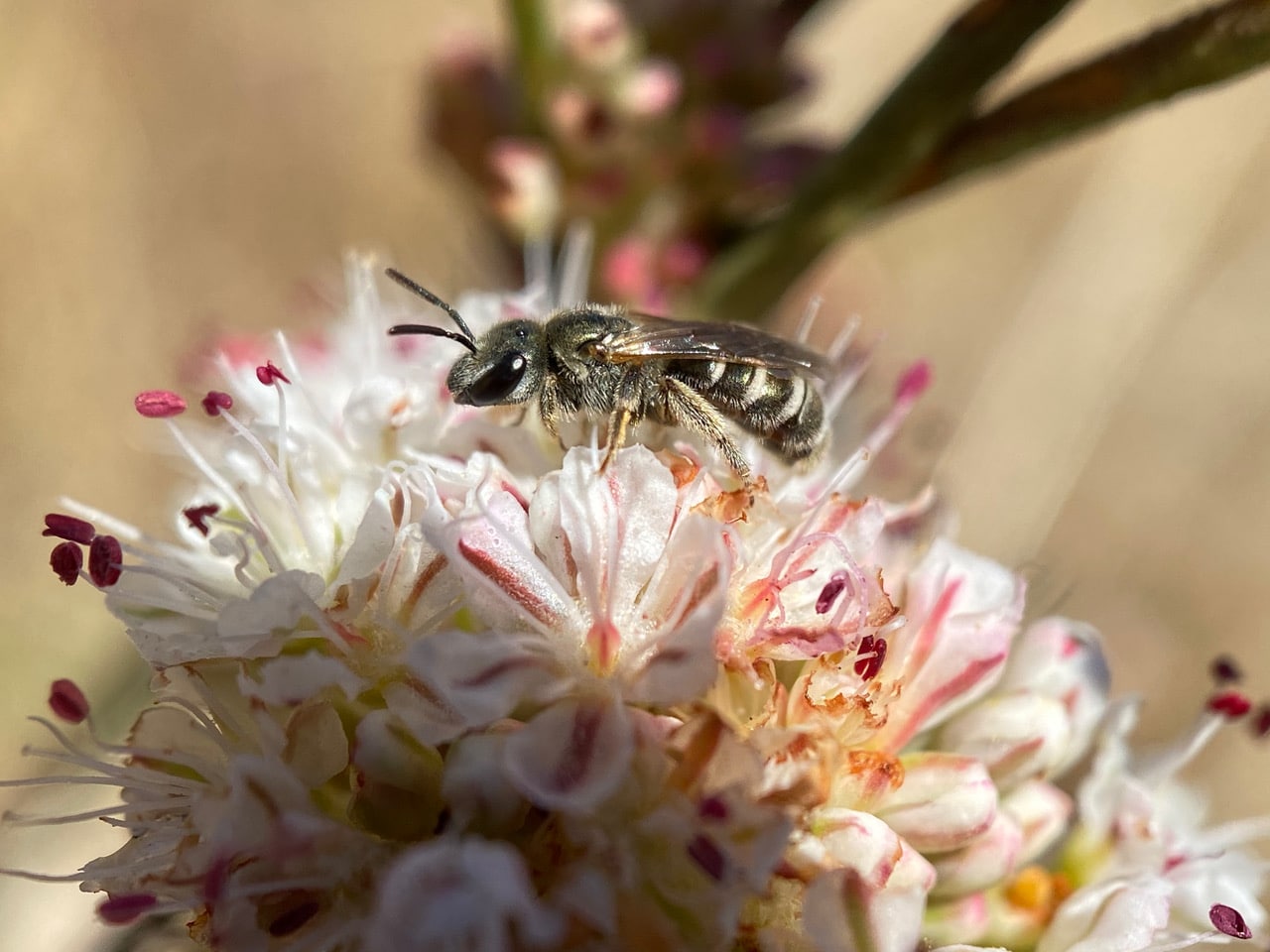
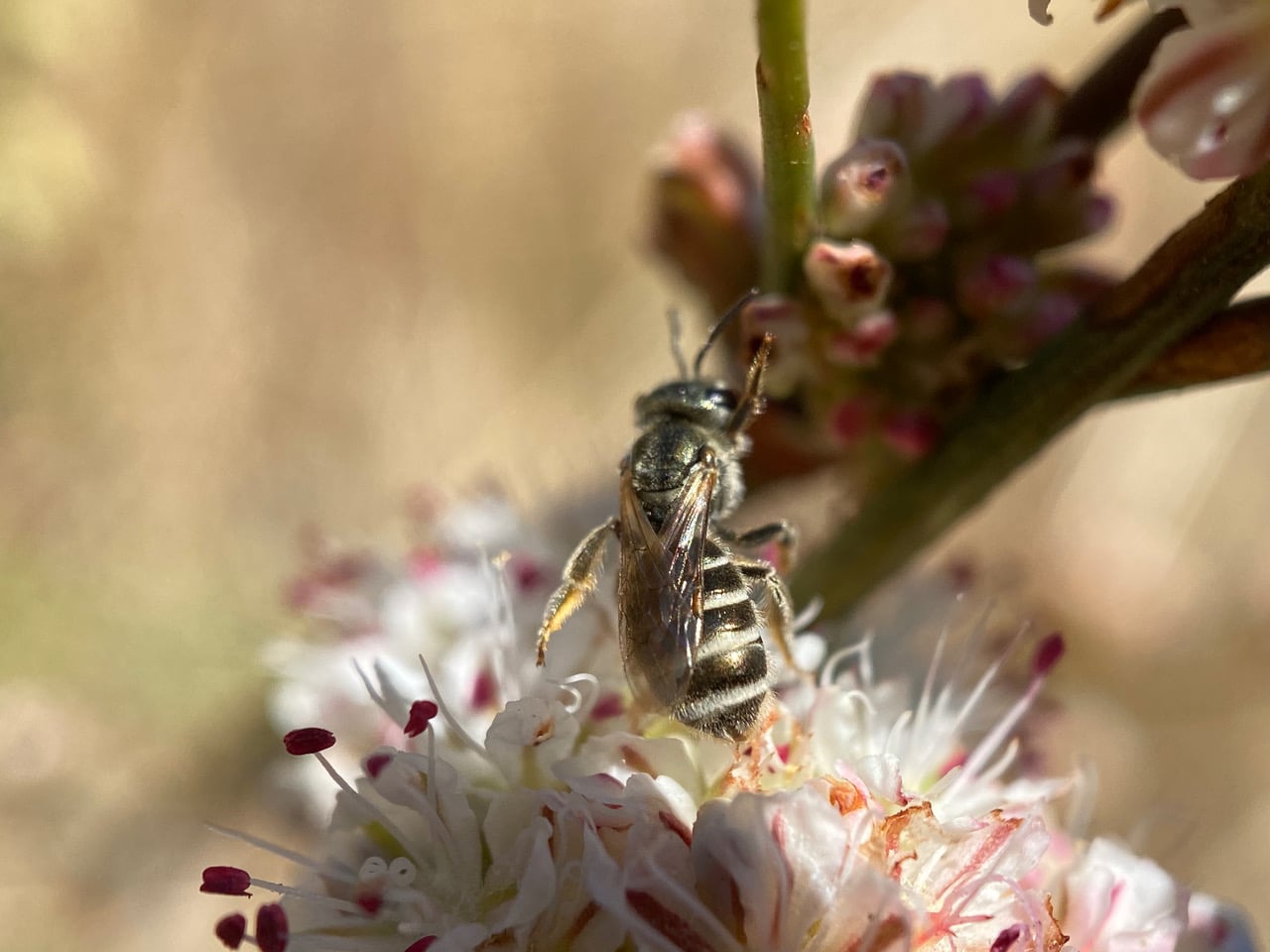
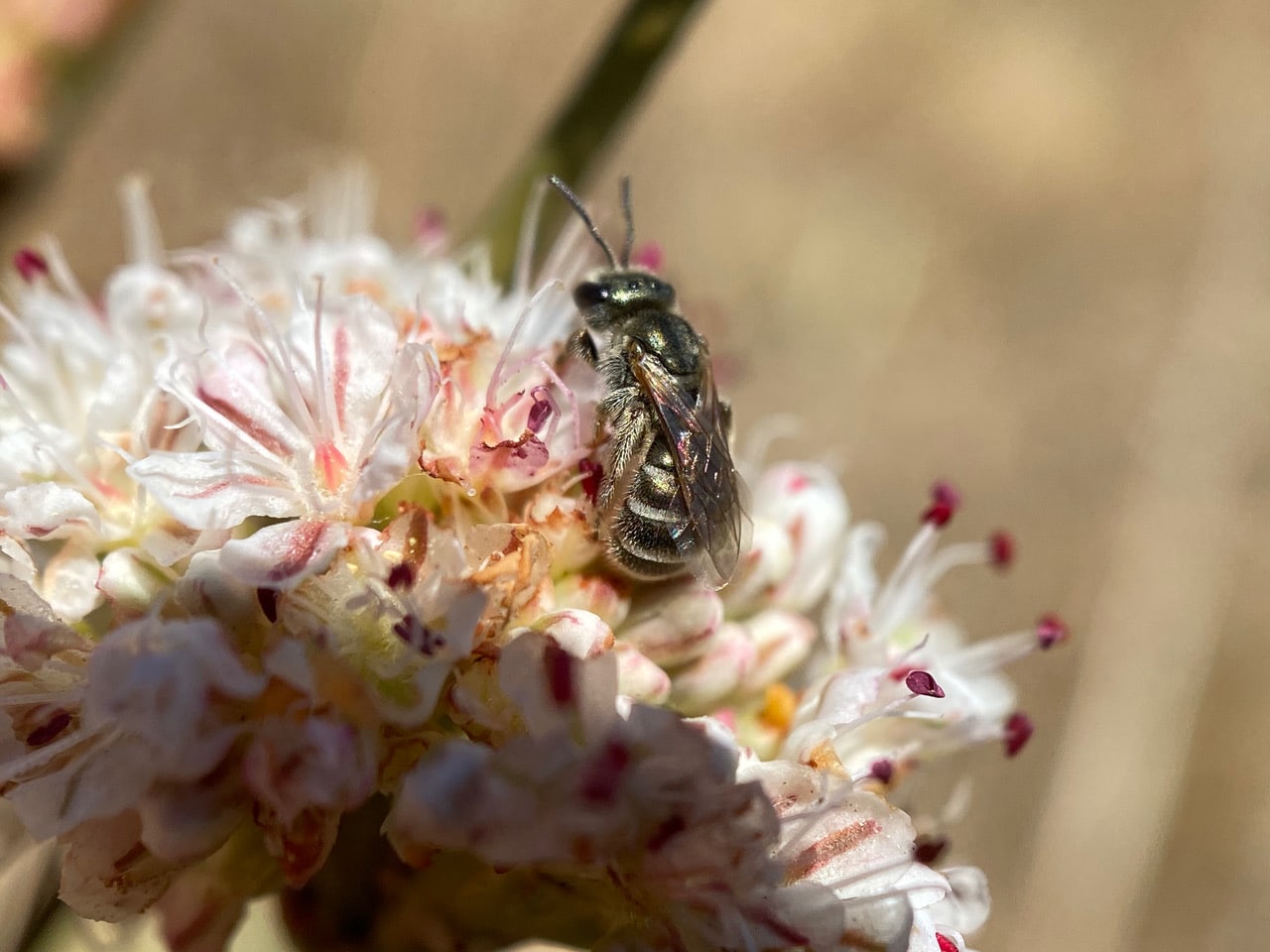 That looks like a Sweat Bee (family Halictidae) on a cluster of Nude Buckwheat flowers, Eriogonum nudum. Examination of the hairs on the abdomen is useful in distinguishing between the genus Halictus and the genus Lasioglossum. Halictus bees have hairs at the edge of each tergite as opposed to the base of the tergite, as in Lasioglossum. From this morphological distinction, the bee is identified as a member of the genus Halictus.

Pollenkitt is a sticky covering found on the surface of pollen grains. It is also sometimes called “pollen coat”. It is found in some plant families more often than others, but it is especially common in plants that are pollinated by insects. Because of this scientists believe that one of the major functions of pollenkitt is to help the pollen stick to the insect pollinators. The pollen from many wind-pollinated plants, such as grass, is much drier and not nearly so sticky. The insects benefit from lots of pollen that is easy to carry home. What’s more, pollenkitt contains lipids, proteins, and phenolic compounds that are important to bee health. For the plant, pollenkitt may prevent the pollen from blowing away or drying out, or it may protect the pollen from ultra-violet radiation and certain pathogens.
There are few bugs on the tarweeds at the Water Tank patch. This well-camouflaged Lygus Bug is a rare find.
The term lygus bug is used for any member of the genus Lygus, in the family of plant bugs, Miridae. Adult lygus are approximately 3 mm wide and 6 mm long, colored from pale green to reddish brown or black. They have a distinctive triangle or V-shape on their backs. Lygus bugs are known for their destructive feeding habits – they puncture plant tissues with their piercing mouthparts, and feed by sucking sap. Both the physical injury and the plant’s own reaction to the bug’s saliva cause damage to the plant. Many lygus bugs are well-known agricultural pests.
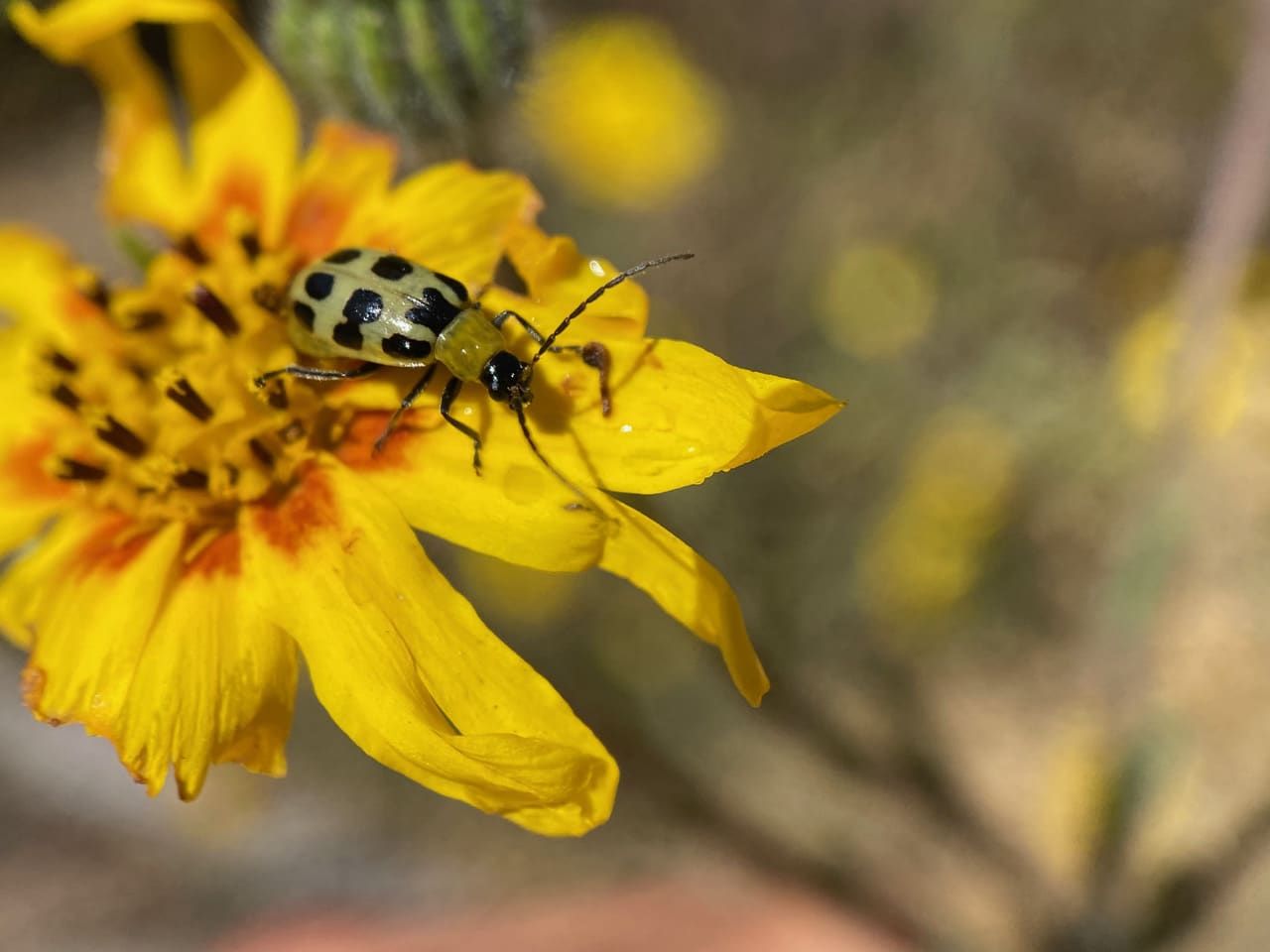
Not surprisingly, the Spotted Cucumber Beetles, Diabrotica undecimpunctata (family Chrysomelidae) have already established their presence here.
Members of the family Chrysomelidae are commonly known as Leaf Beetles. Adults and larvae feed on all sorts of plant tissues, and all species are fully herbivorous. Many are serious pests of cultivated plants, including food crops. Others are beneficial due to their use in biocontrol of invasive weeds. Chrysomelids are popular among insect collectors, as many are conspicuously colored, typically in glossy yellow to red or metallic blue-green hues, and some have spectacularly bizarre shapes. Photos of Leaf Beetles (Family Chrysomelidae) · iNaturalist
Native to North America, the Spotted Cucumber Beetle can be a major agricultural pest, causing damage to crops in the larval as well as adult stages of their life cycle. Larvae, sometimes known as rootworms feed on the roots of emerging plants. In the adult stage the beetles cause damage by eating the flowers, leaves, stems and fruits of the plant.
A Sweat Bee, Halictus sp. (family Halictidae) lands on a fresh flowerhead of Elegant Tarweed.
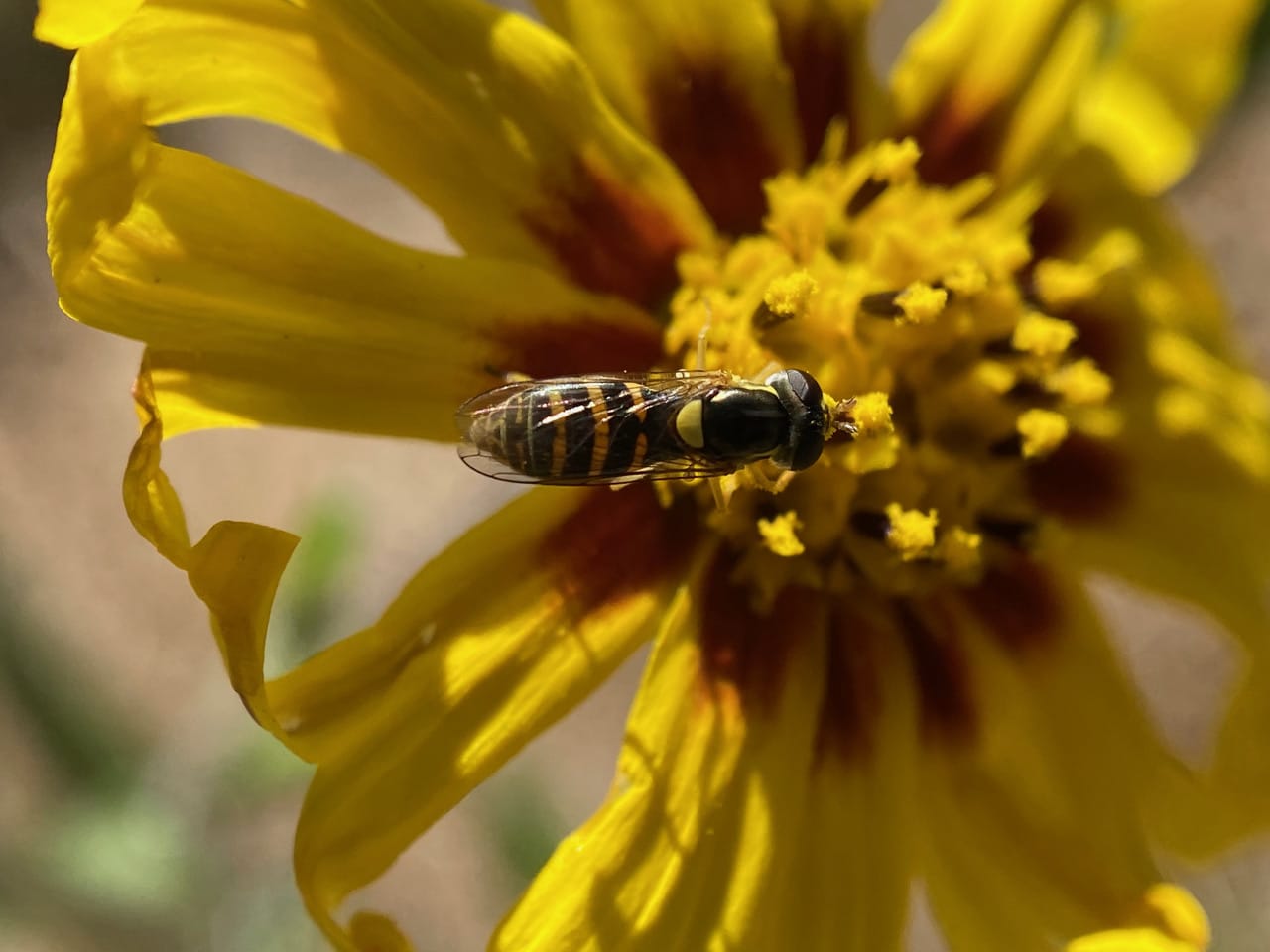
A female Forked Globetail Hover Fly, Sphaerophoria sulphuripes (family Syrphidae) is foraging on Elegant Tarweed.
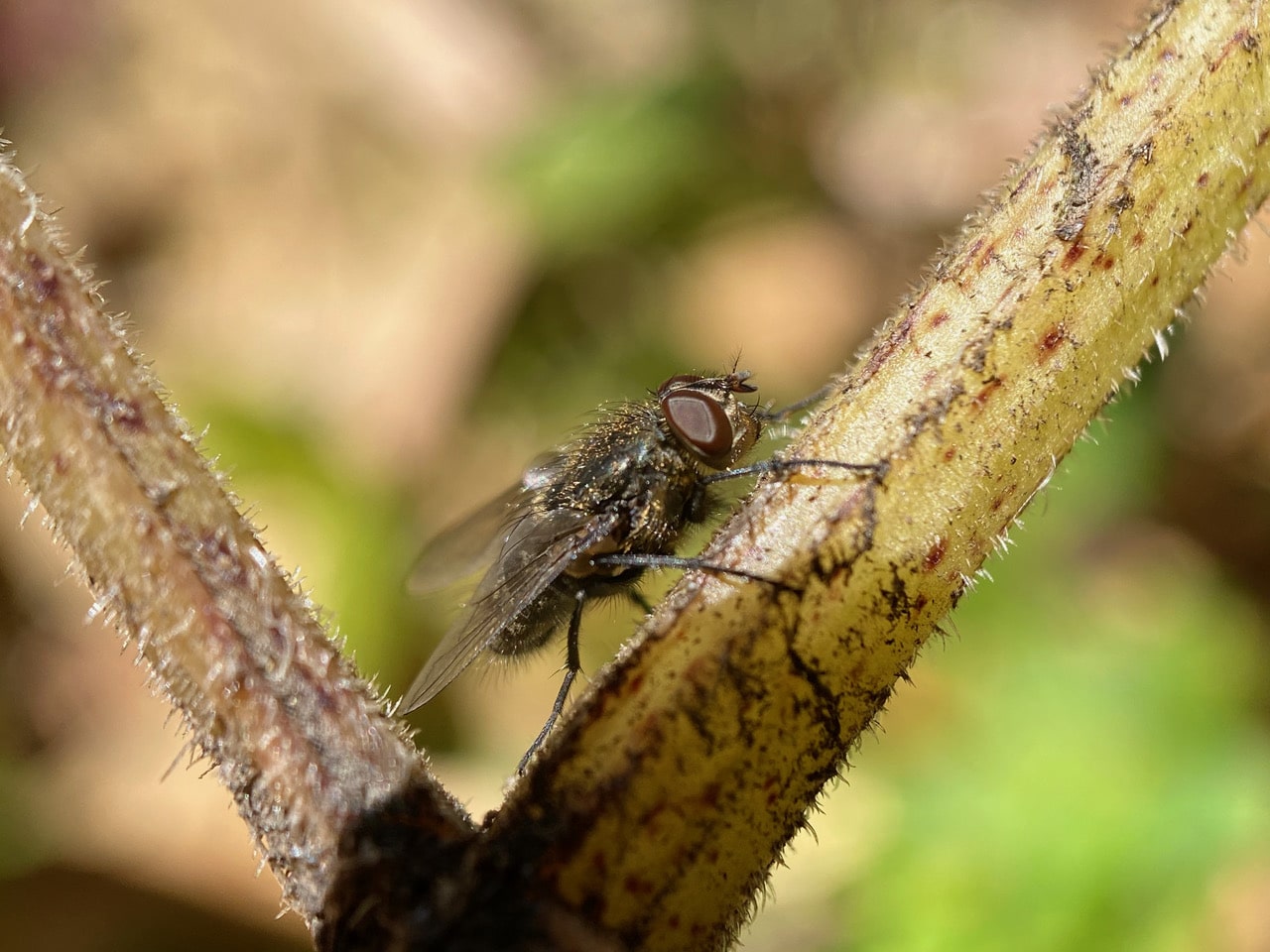
As I enter the shady section of Skyline Trail flanked by Eucalyptus and Bay Trees, I flush up a swarm of large, noisy flies that are perched on a wilted Cow Parsnip leaf. Who are these flies, and what are they doing here? Has there been a recent hatch? Close up of one of the flies that lands on the base of a leaf stalk. It appears to be a Cluster Fly (family Polleniidae). The larvae of Polleniidae are parasitoids of earthworms. It’s unlikely that the individual flies would emerge from their hosts synchronously to form a swarm. What is the attraction here? Maybe they are here to mate and lay eggs in the moist soil below that is likely to harbor an abundance of earthworms?
Close-up showing the back of a Common Cluster Fly, Pollenia rudis (family Polleniidae). It is a handsome, stocky fly with shiny black/silver checkered abdomen. This individual has lost most of the golden hairs on its thorax.
Called the Common Cluster Fly, Pollenia rudis (family Polleniidae) is slightly larger than house flies. It is dull gray with checkered black and silvery-black abdomens. A newly emerged fly has many golden hairs on its thorax which may be lost throughout the life of the fly. The common name comes from the tendency of the flies to aggregate near windows when they are trapped in human dwellings. The immature stages – eggs and larvae – are seldom seen because they are deposited on the soil where they burrow into earthworms which they parasitize. The Cluster Fly is a European species. They may have found their way to America in the ballast of ships containing soil, probably along with introduced earthworms.
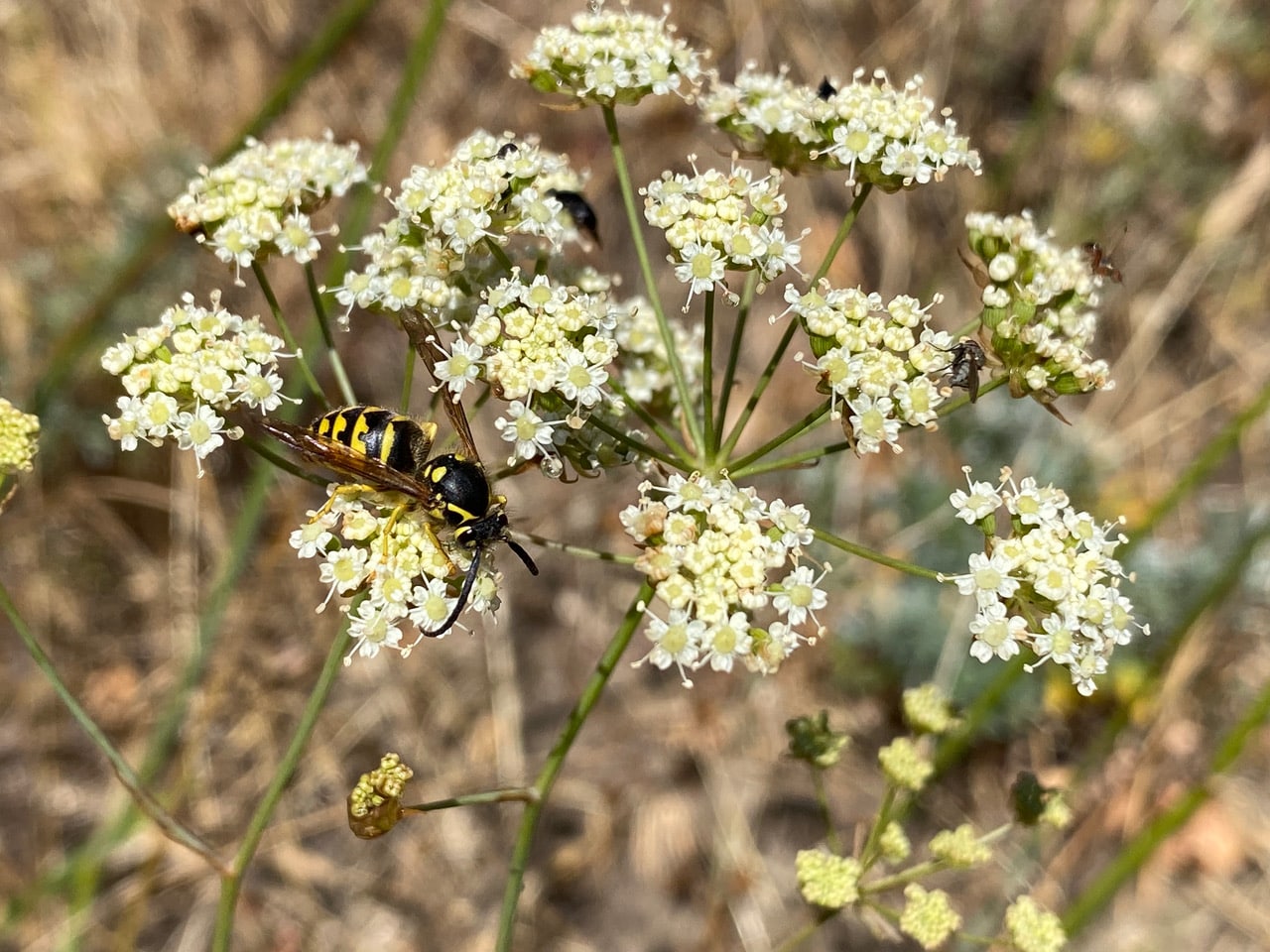
Passing Yampah Bowl, I see several Yellowjacket wasps on the Yampah flowers. With such a prevalence of these caterpillar hunters, there’s just no way that a caterpillar would survive on the plant!
That looks like a Sweat Bee (family Halictidae) on a cluster of Nude Buckwheat flowers, Eriogonum nudum. Examination of the hairs on the abdomen is useful in distinguishing between the genus Halictus and the genus Lasioglossum. Halictus bees have hairs at the edge of each tergite as opposed to the base of the tergite, as in Lasioglossum. From this morphological distinction, the bee is identified as a member of the genus Halictus. The bee’s modest scopae cover the entire length of her hind legs. She has not been collecting pollen as her scopae are empty.
Ah, here’s the best view of the bee, showing the “furrow” on her last abdominal tergite. Halictus bees are sometimes referred to as Furrow Bees for this reason. Only females have this feature.
Barely two hours after delivering Cinch to Alan, I receive an e-mail from him with pictures. Cinch has been freed from the band of constricting old skin – Hooray!
Alan reports, “It was a bit of a struggle but I managed to get the skin off. I scraped at it with my fingernail until the band broke, and the whole thing fell right off……the segments beneath are still deformed and there is a large scar on one side. If Cinch survives, the deformity on those segments will likely persist until adulthood but shouldn’t pose any functional problems.” Thank you, Alan!