

Pollinator Post 8/12/23 (3)
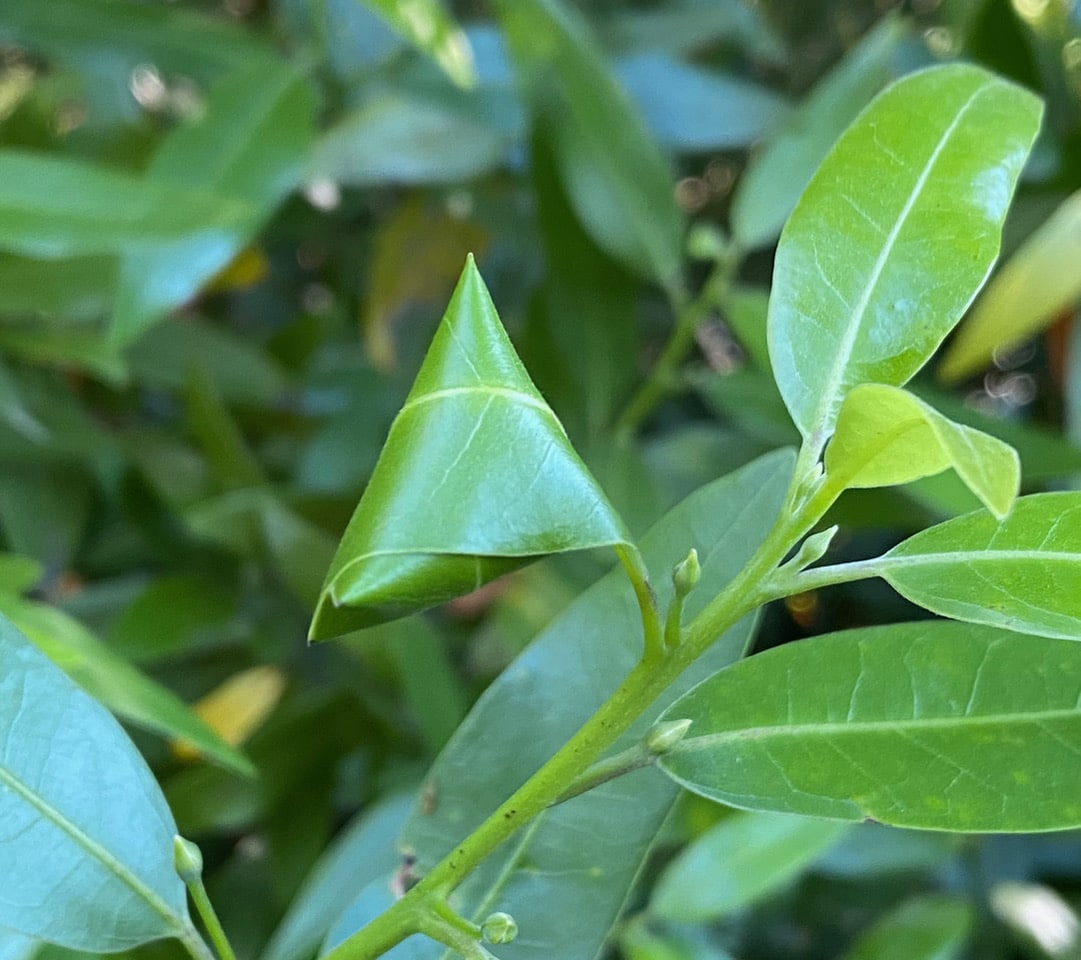
Hey, more of these mysterious folded leaves on California Bay Tree, Umbellularia californica along Skyline Trail! I find four today, all are young, tender leaves near the tip of the branches, and in shady areas. Each has been skillfully folded into this three-sided box, seamlessly sealed with silk on the edges. So far I have found only a single mention of this online, with no conclusion as to what critter made it. A mystery!

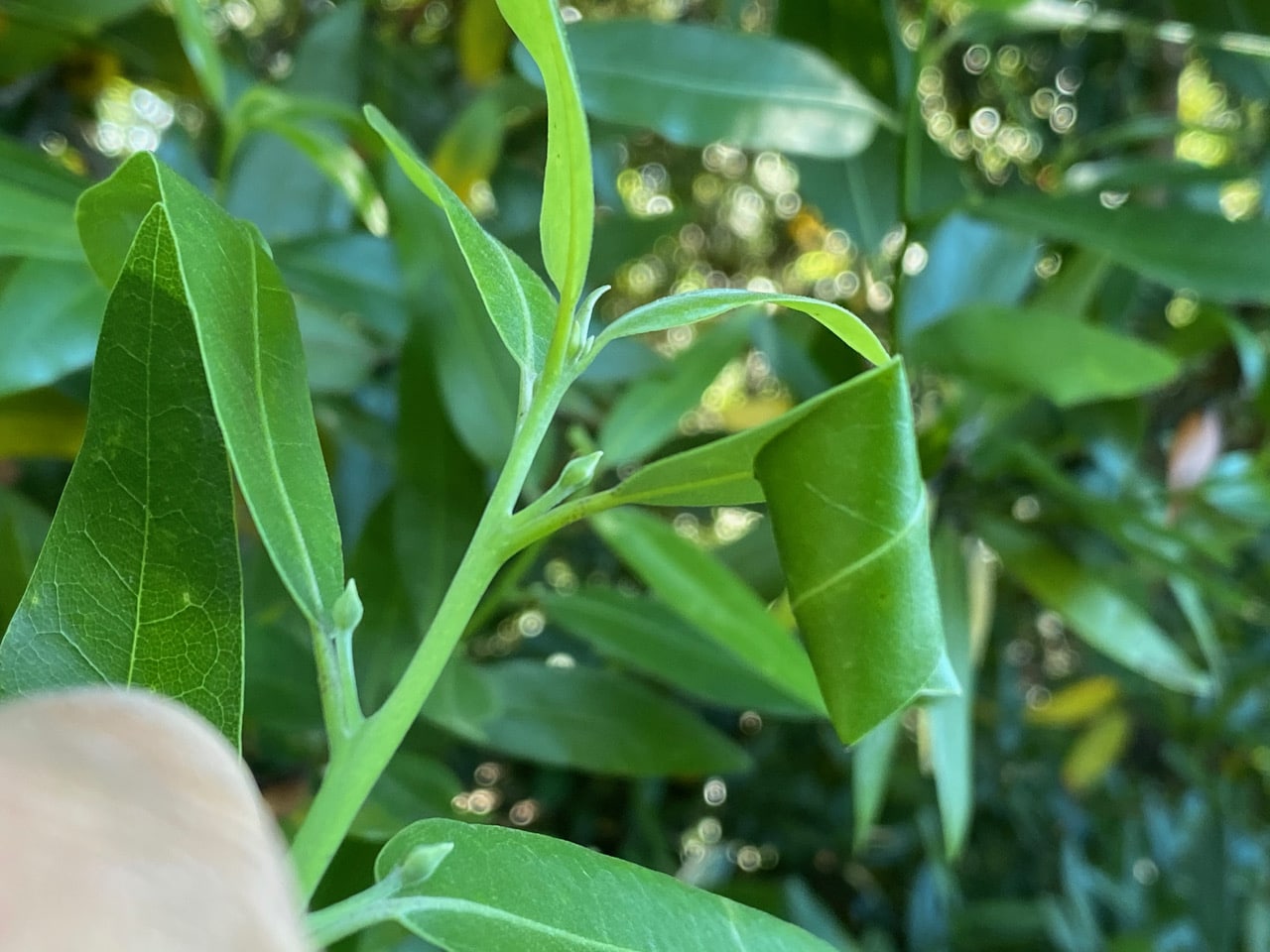
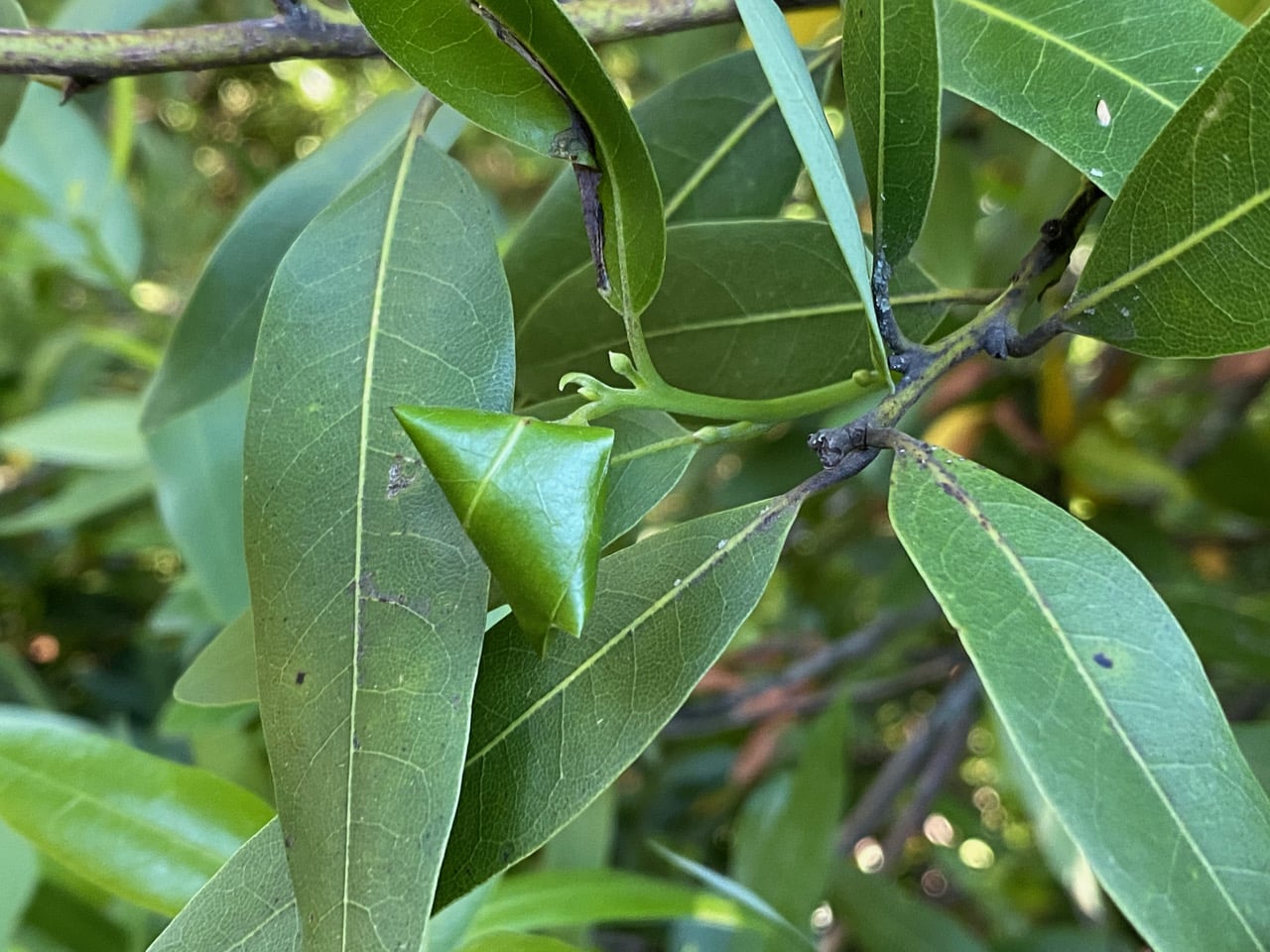

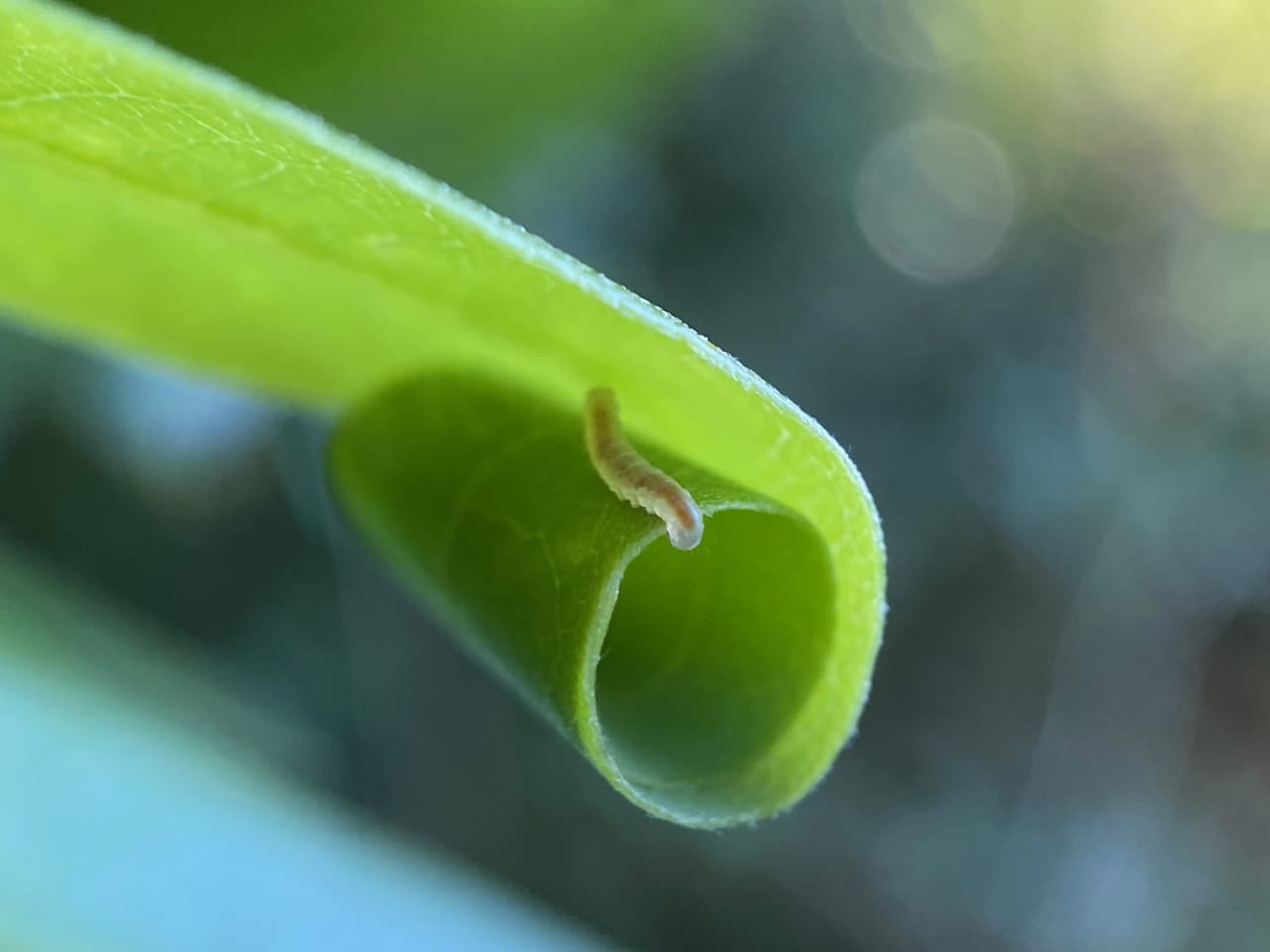
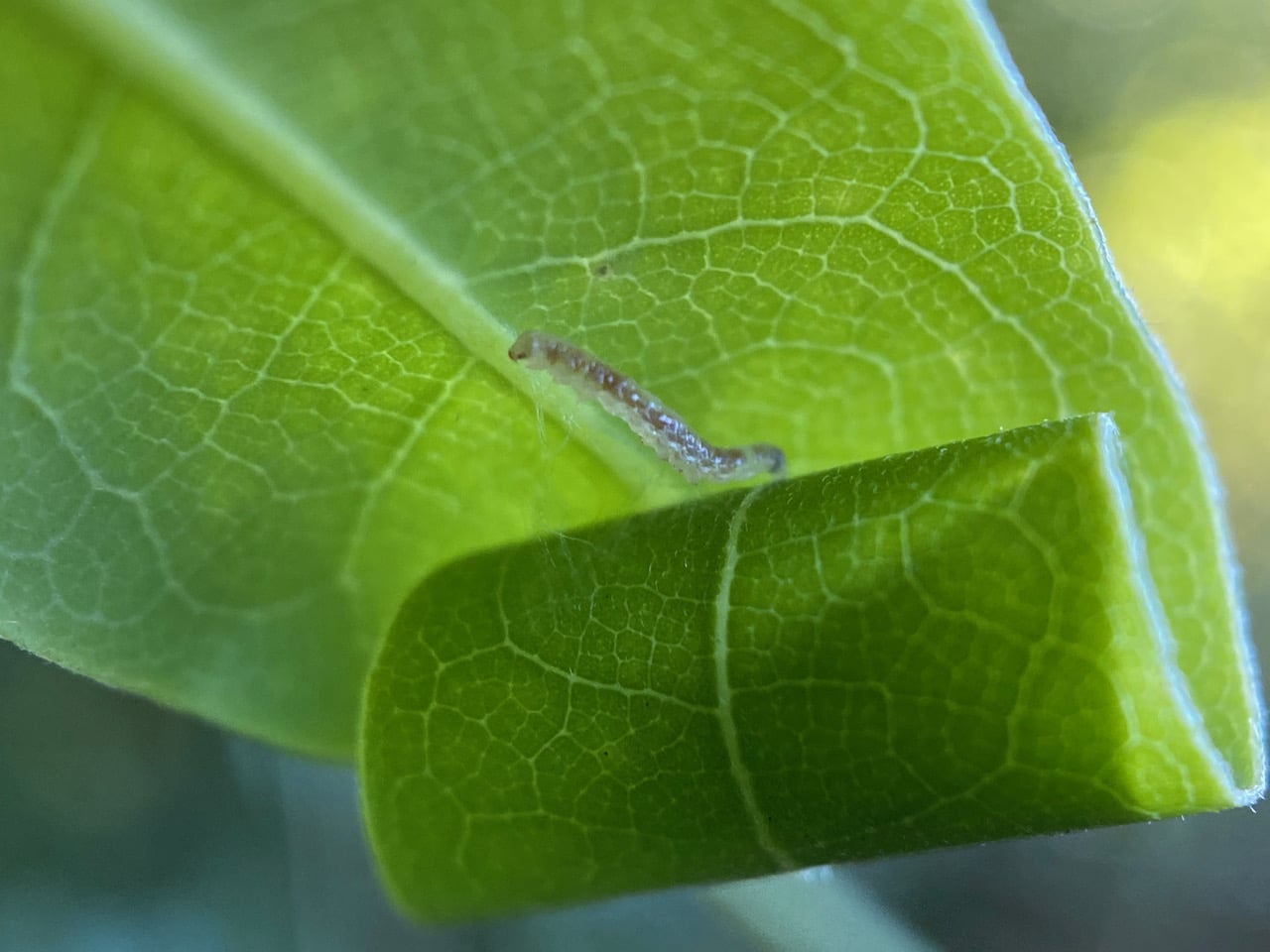 Swinging its head from side to side, the caterpillar attaches silk to the two surfaces repeatedly, moving from right to left along the roll. I record the process in a video: Leaf-roller caterpillar rolls a leaf of Bay Tree. – YouTube

 Yampah Bowl is playground for the Yellowjacket wasps in the summer.

The same folded leaf rotated to show different sides…
Yet another side of the folded Bay leaf.
Oh, here’s a different one on a separate branch of the same Bay Tree.
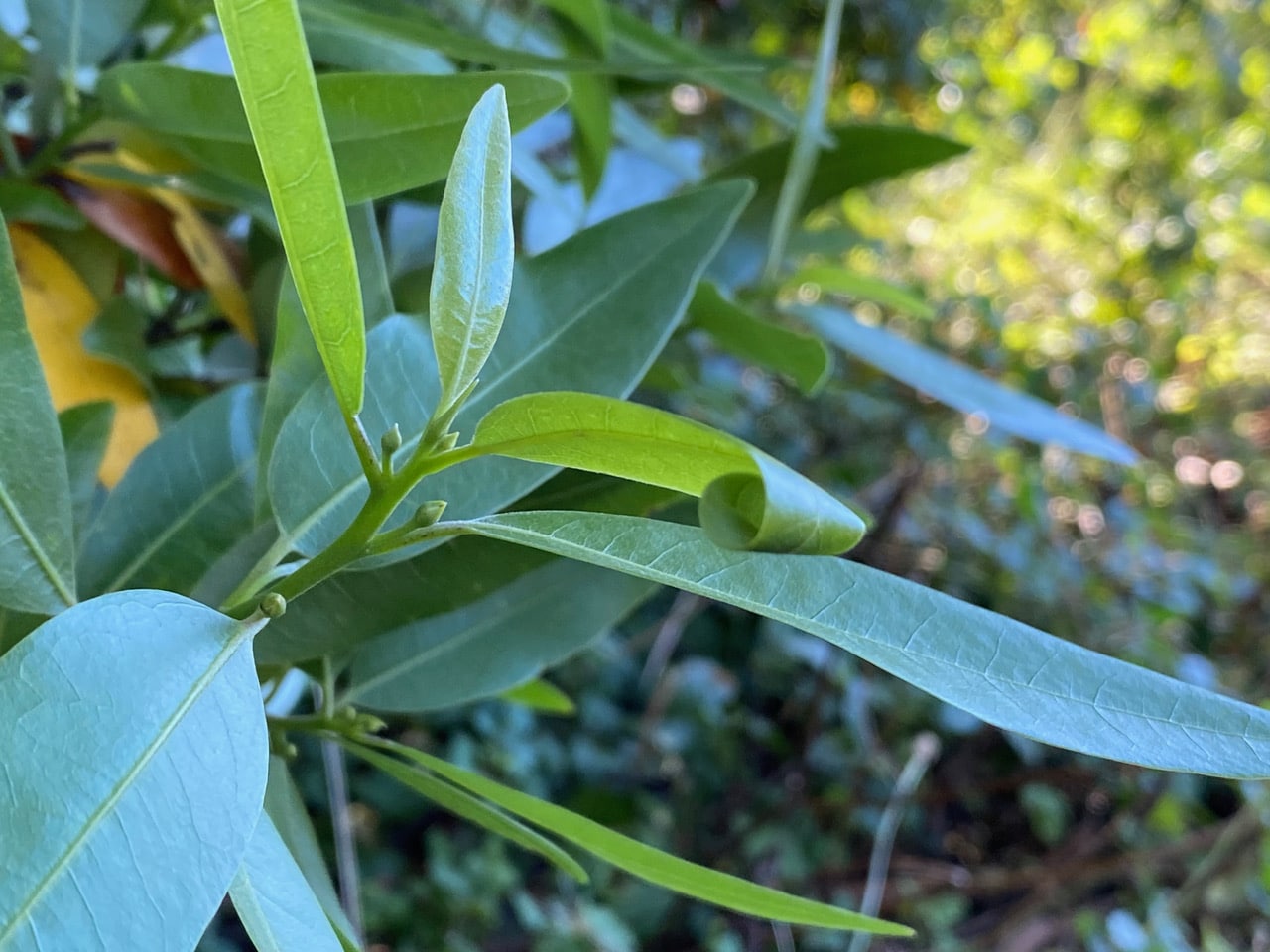
As I look around the same Bay Tree for more of the folded leaves, I spot this young leaf with a rolled tip.
As I look closer, a tiny caterpillar crawls out of the edge of the roll.
The caterpillar walks across the top of the roll and proceeds to seal the rolled edge to the flat side of the leaf with silk.
Caterpillars of both moths and butterflies have the ability to produce silk, much like a spider. Caterpillars produce silk through a “spinneret”. This tube-like structure is located on the lower side of the caterpillar’s mouth. Silk is generated as a liquid in the salivary glands and excreted through the spinneret; as it makes contact with air, it turns into a solid silk strand. Silk is one of the strongest natural fibers – it’s said that pound or pound, silk is stronger than steel.
Some caterpillars use silk to help create protective shelters. The “leaf-roller” caterpillars attach silk to both sides of a leaf. When the elastic silk draws tight, the surfaces are pulled together. The shelter hides the caterpillars from predators and creates a safe haven for feeding in peace.
Swinging its head from side to side, the caterpillar attaches silk to the two surfaces repeatedly, moving from right to left along the roll. I record the process in a video: Leaf-roller caterpillar rolls a leaf of Bay Tree. – YouTubeI think the caterpillar is a member of the family Tortricidae, commonly known as tortrix moths or leafroller moths. Leaf shelter-builders, either leaf-tiers or leaf-rollers, do not manipulate leaves directly but use their silk to draw plant surfaces together. The caterpillars impart potential energy to their silk strands by stretching them beyond their equilibrium length as they are spun out. Axial retraction of the stretched strands then draws the bound plant surfaces together. Although a single stretched strand exerts only a minuscule force, the combined force generated by many such strands attached to the same opposable plant surfaces is substantial and allows the caterpillars to manipulate leaves many times their size and mass.
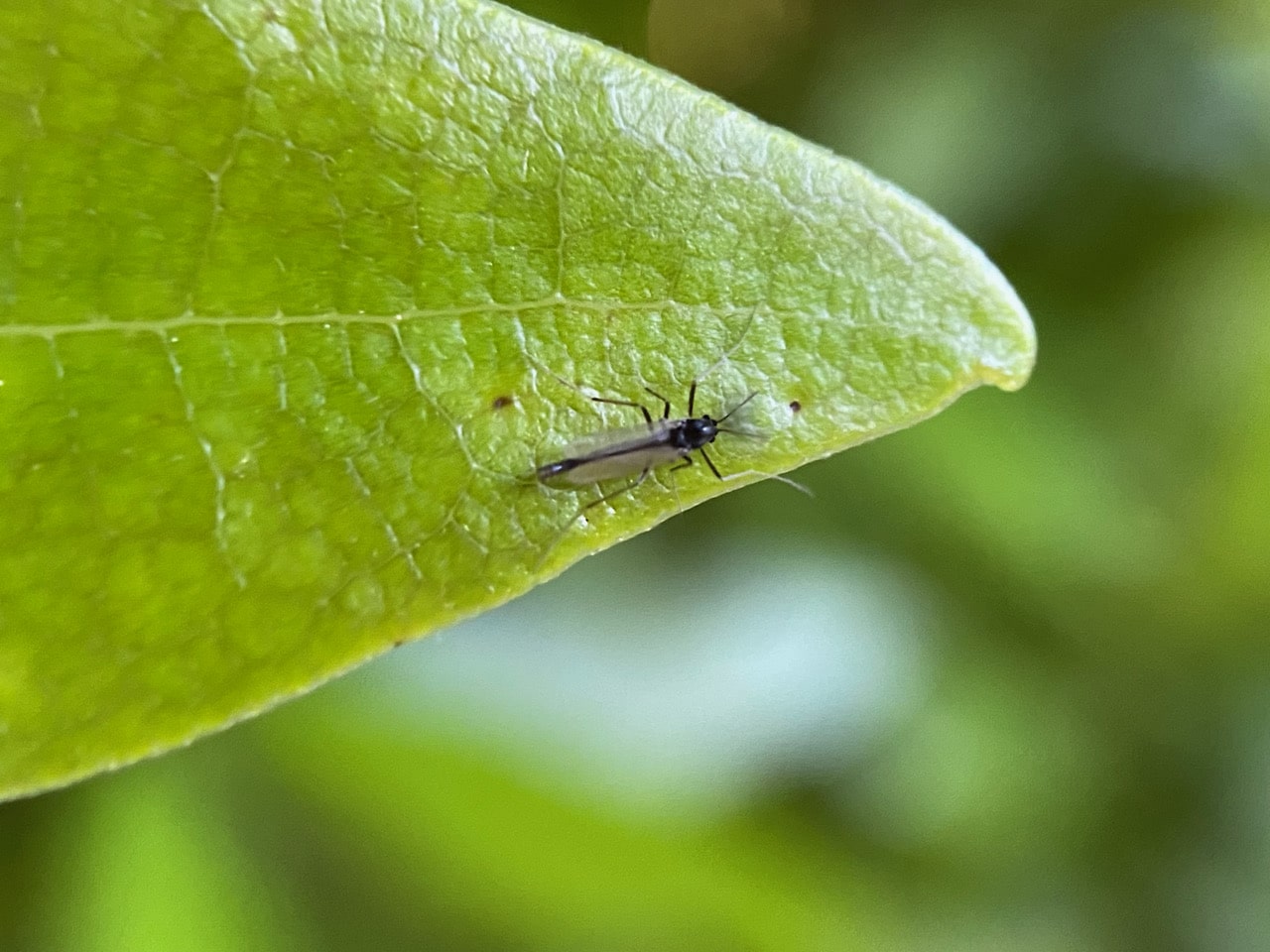
Many tiny insects can occasionally be seen racing across the surfaces of the Bay leaves. Their movements are so fast and smooth, the insects seem to be gliding on the leaves. What are they doing?
After dozens of attempts, I finally get a clear enough image of the insect to have it identified by iNaturalist. It is a member of Non-biting Midges, Cricotopus sp. (family Chironomidae).
The Chironomidae is a large and diverse family of flies, with over 20,000 species known world-wide. Adult midges are small, most measuring 1-10 mm long, with narrow bodies and long legs. They resemble mosquitos, but do not bite. Males have long, feathery (plumose) antennae. Adults are short-lived. They feed on fly droppings, nectar, pollen, honeydew, and various sugar-rich materials. Larvae are mostly aquatic or semi-aquatic; most occur in freshwater habitats, a few occur in decaying matter, under bark, in moist ground, or tree holes. Larvae are mostly scavengers/detritivores. Collectively, they play a vital role in freshwater ecosystems as primary consumers. They harvest an enormous amount of energy from detritus and are important food items for fish, amphibians, birds, and predatory insects such as dragonflies and dance flies. Adult Chironomids can be pests when they emerge in large numbers, forming mating swarms over water or road surfaces.
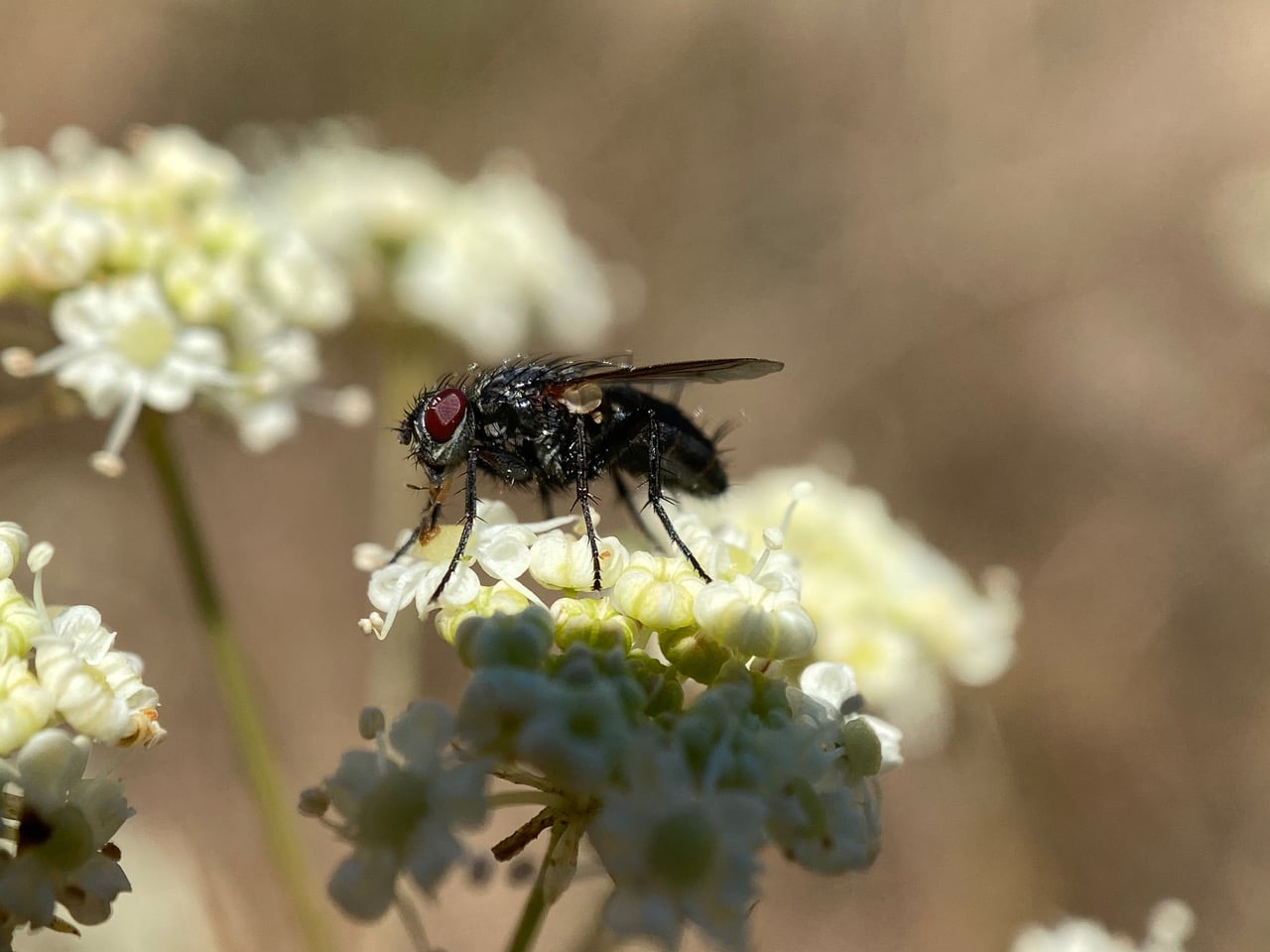
Yampah Bowl is playground for the Yellowjacket wasps in the summer. There are more species of flies feeding on the Yampah flowers than I can ever hope to photograph or identify.
A pair of Tumbling Flower Beetles (family Mordellidae) are getting it on.
The Tumbling Flower Beetles (family Mordellidae) are named for the characteristic irregular movements they make when escaping predators. They are also sometimes called Pintail Beetles for their abdominal tip which aids them in performing these tumbling movements. Mordellids are small, wedge-shaped, hump-backed beetles with head bent downward. The body is densely covered with fine silky hairs, usually black, but often very prettily spotted or banded with silvery hues. The adults feed on pollen, occurring on flowers or on dead trees, flying or running with rapidity. The larvae live in old wood or in the pith of plants, and those of some species are said to be carnivorous, feeding on the young of Lepidopterans and Diptera which they find in the plant stems.
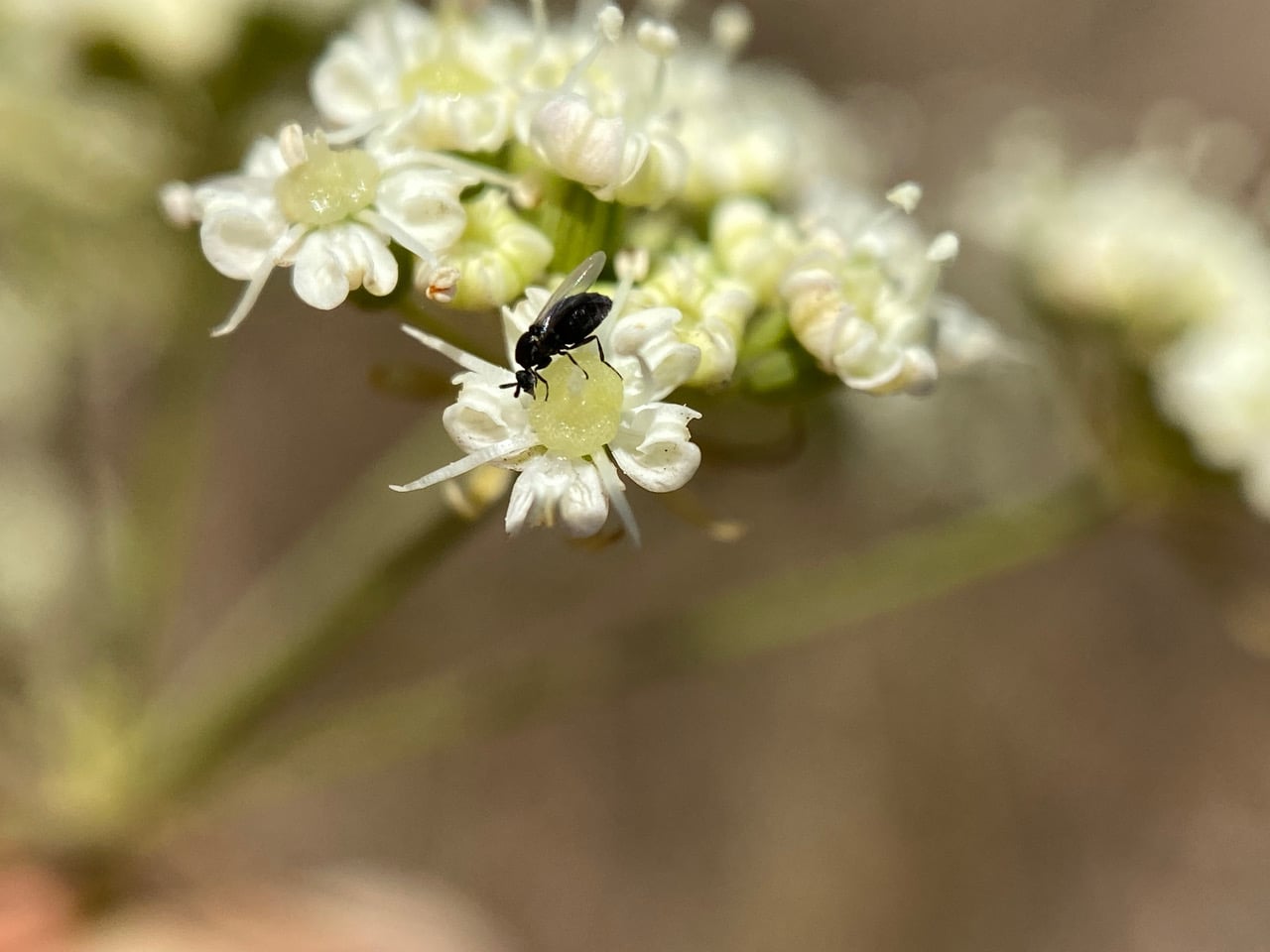
Perched on the succulent style base of a Yampah flower, a Minute Black Scavenger Fly (family Scatopsidae) is feeding on nectar.
As implied by the family name, these flies are also called “dung midges”. They are generally small, sometimes minute, dark flies (from 0.6 to 5 mm) with short antennae. Adults are often found on flowers. The larvae of most species are unknown, but the few that have been studied have a rather flattened shaped and are terrestrial and saprophagous, feeding on decaying plant and animal matter.