

Pollinator Post 8/19/23 (1)
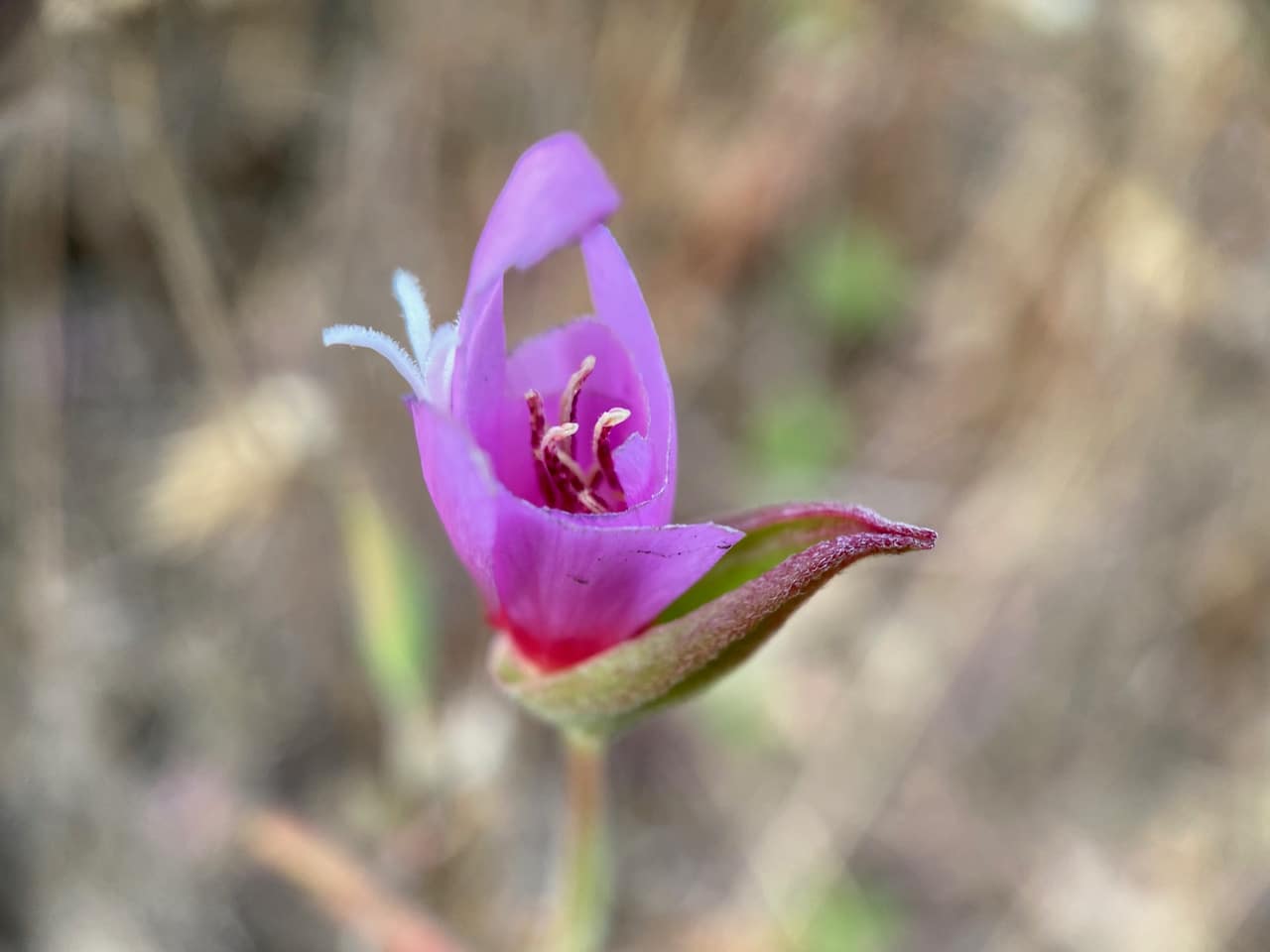
 I reach the patch of Farewell-to-spring, Clarkia rubicunda early this morning, before the sun peeks through the clouds. Most of the Clarkia flowers are still partially closed. Apparently the ones that have had pieces of their petals cut by Leafcutter Bees still manage to open and close normally.


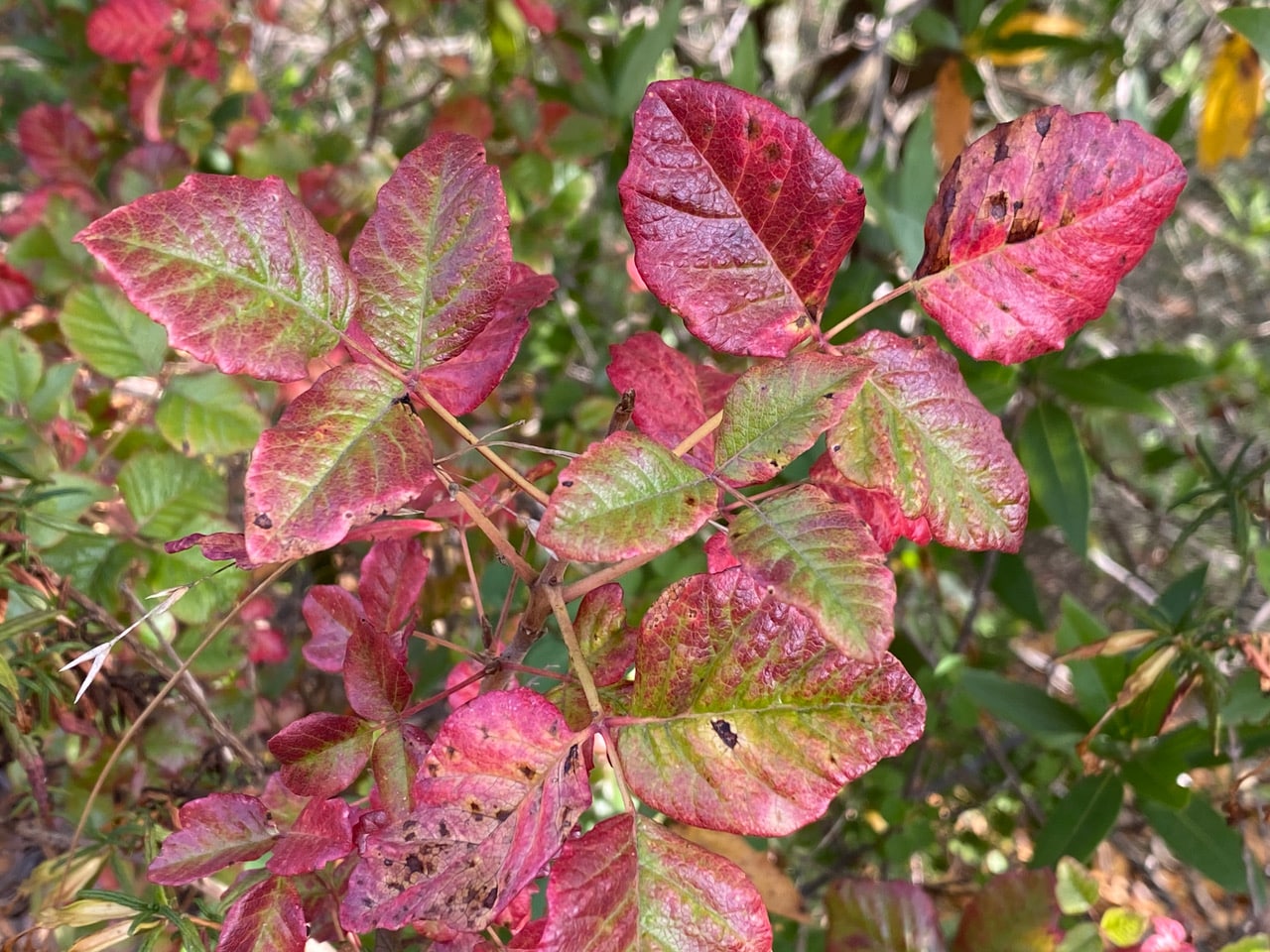
The Poison Oak along Skyline Trail is fast turning red.
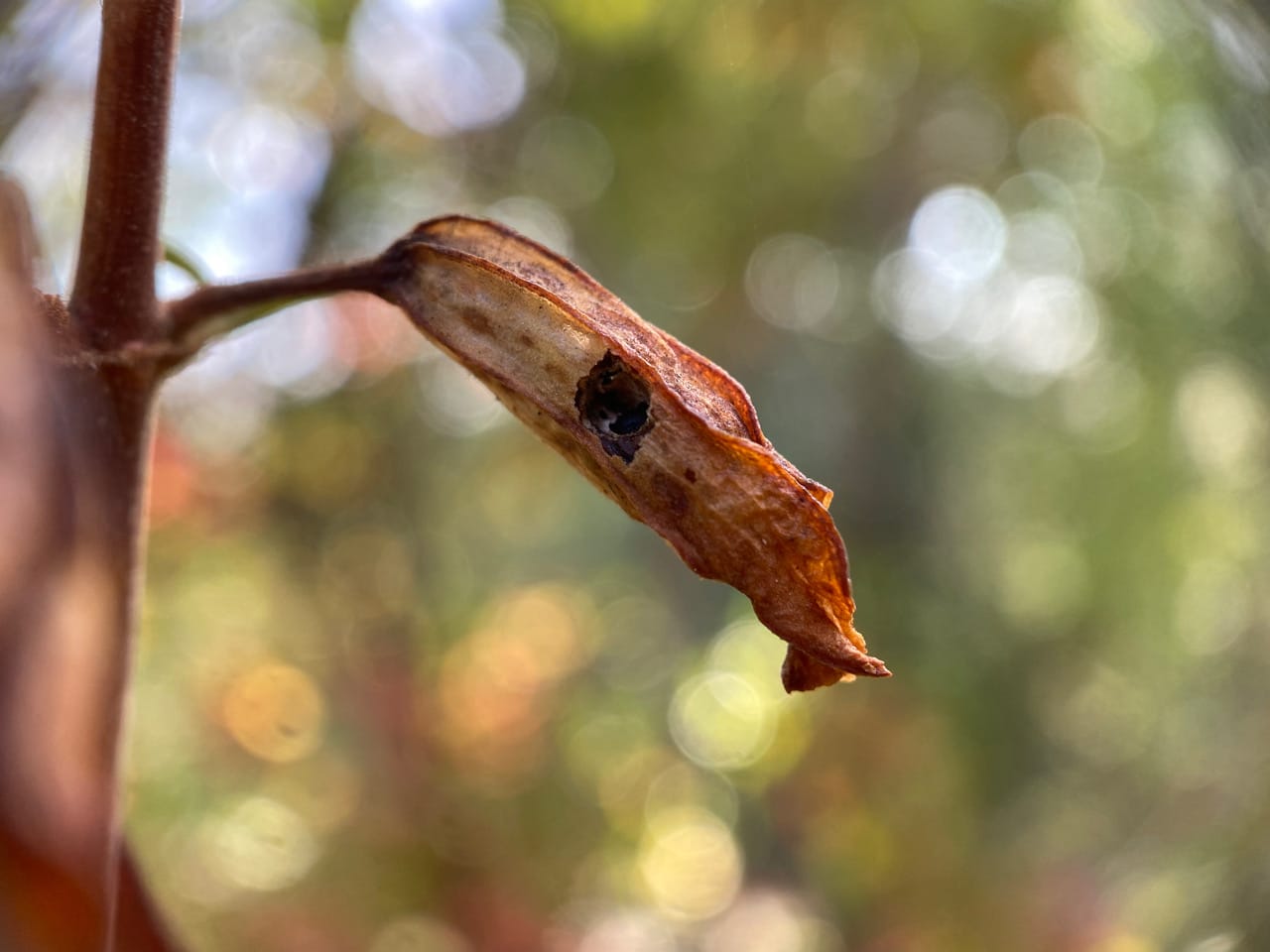
A big hole has been chewed through an old seed capsule (calyx) of Sticky Monkeyflower, Diplacus aurantiacus. Was it an inside or an outside job?

The hole on this younger seed capsule appears to have been chewed from the outside, with debris strewn about.
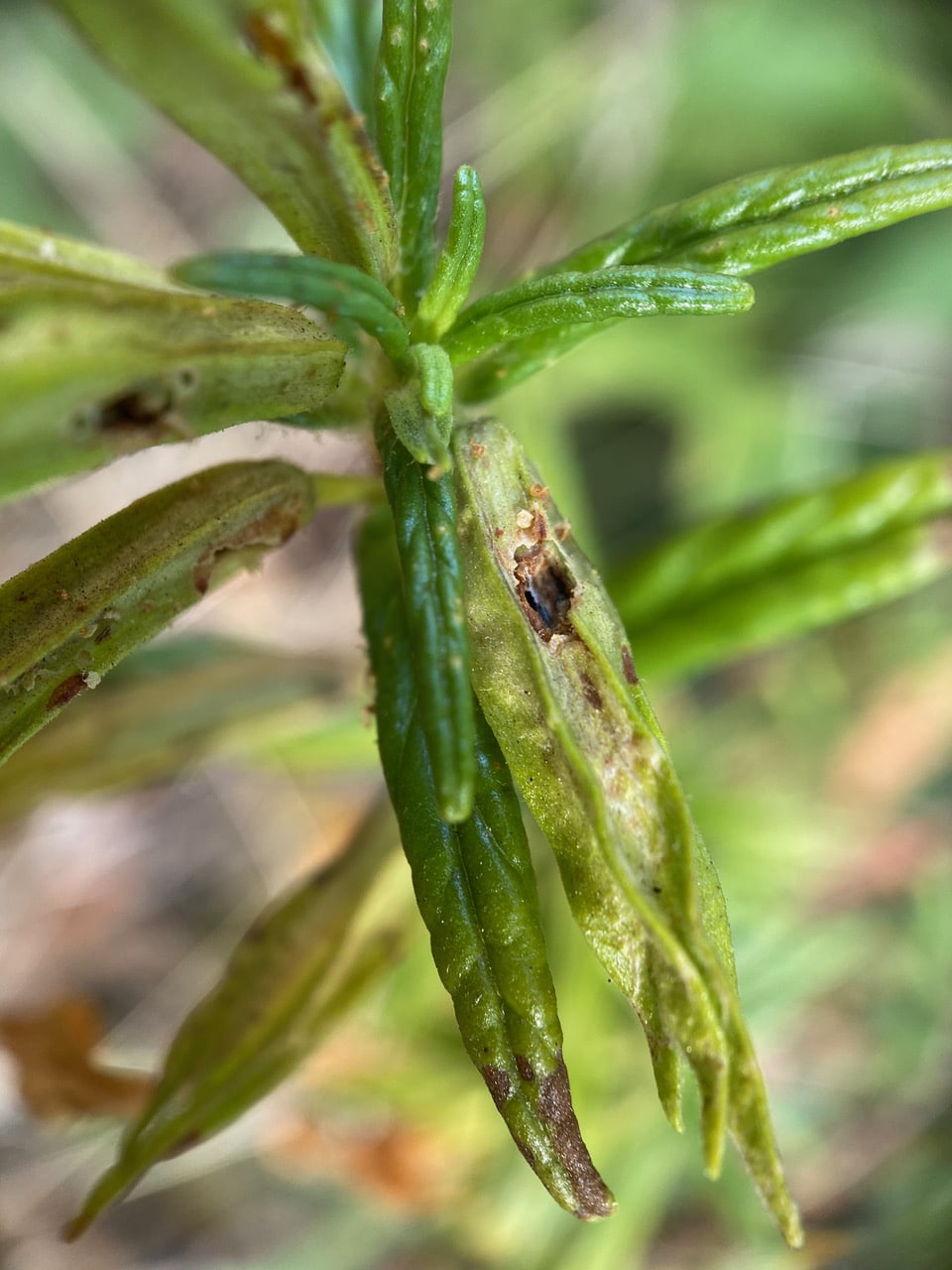
Ditto on this one.
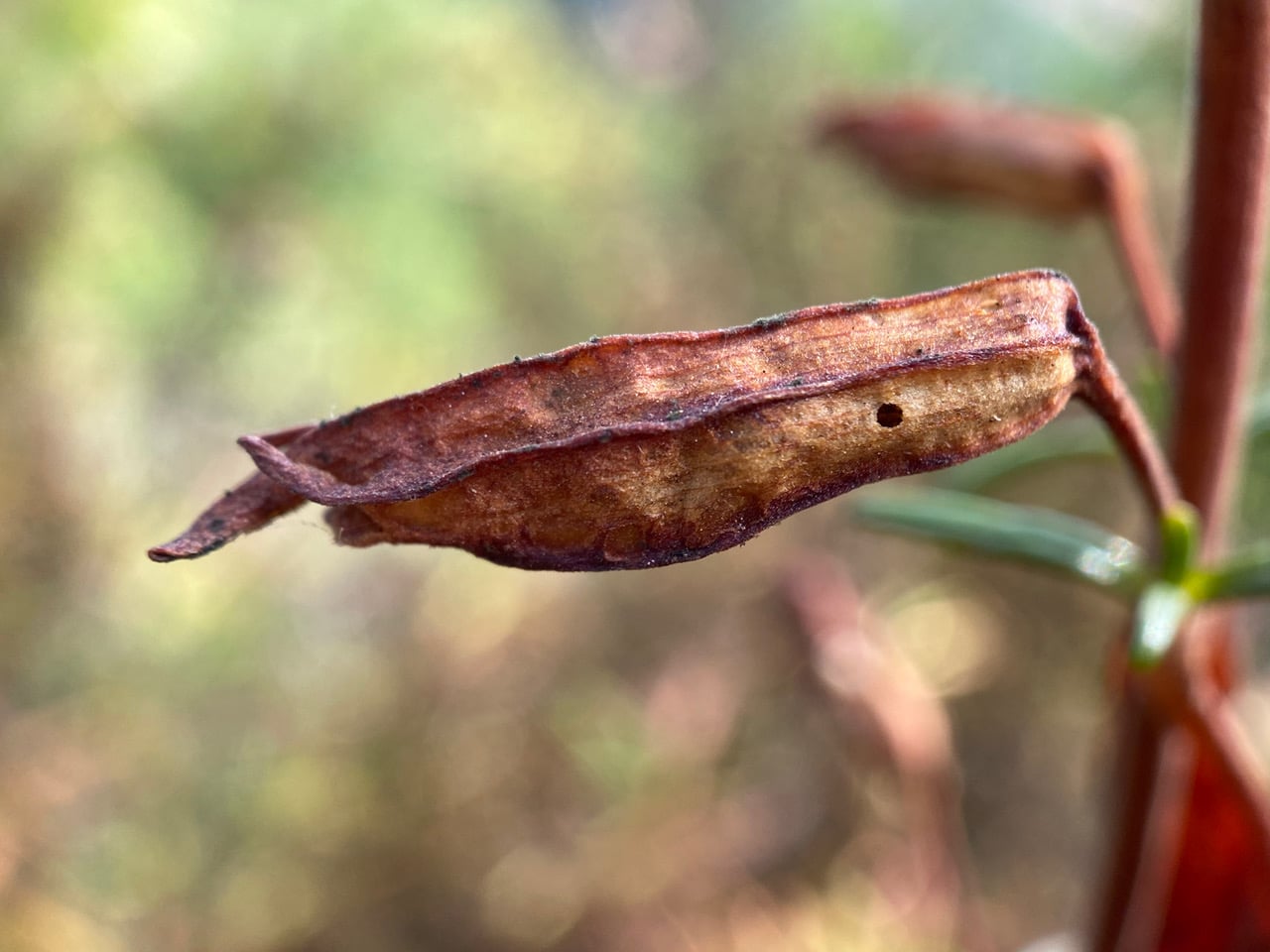
I am willing to bet that this is an exit hole of an adult insect that has spent its young life in the calyx – either as a gall maker, inquiline, parasitoid or hyperparasitoid. Much hidden drama occurs within the calyces of Sticky Monkeyflowers while they are developing.

A mama Lacewing has laid an egg on a spent flowerhead of California Everlasting, Pseudognaphalium californicum. There must be tiny insects on the plant that are invisible to me. Mama usually place her eggs where there is an abundance of food for her carnivorous young when they hatch out.

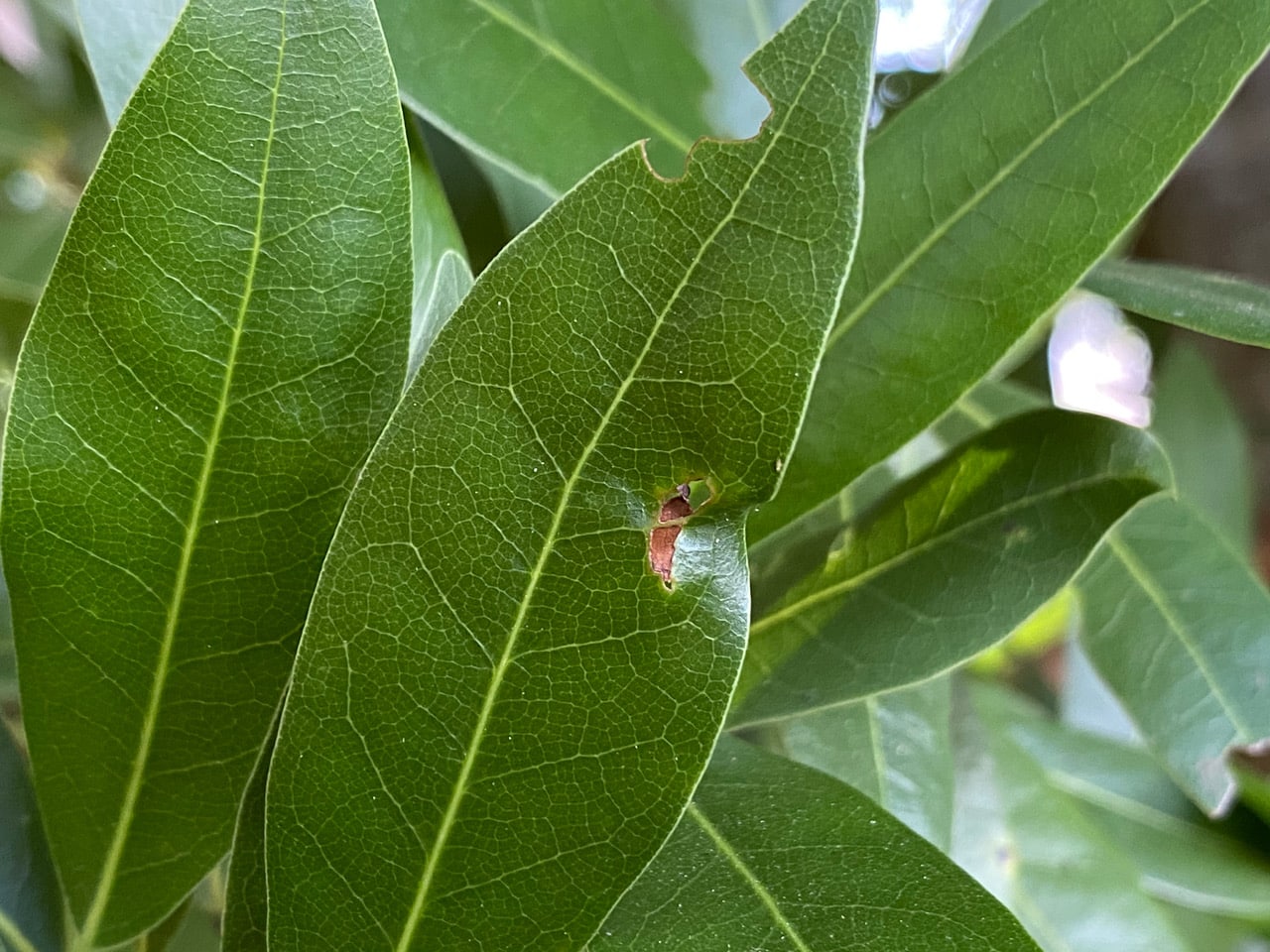
Again, I am seeing leaves of the California Bay Trees that appear to have been folded by leafroller caterpillars.
 They are bent, or deformed with what look like feeding scars.
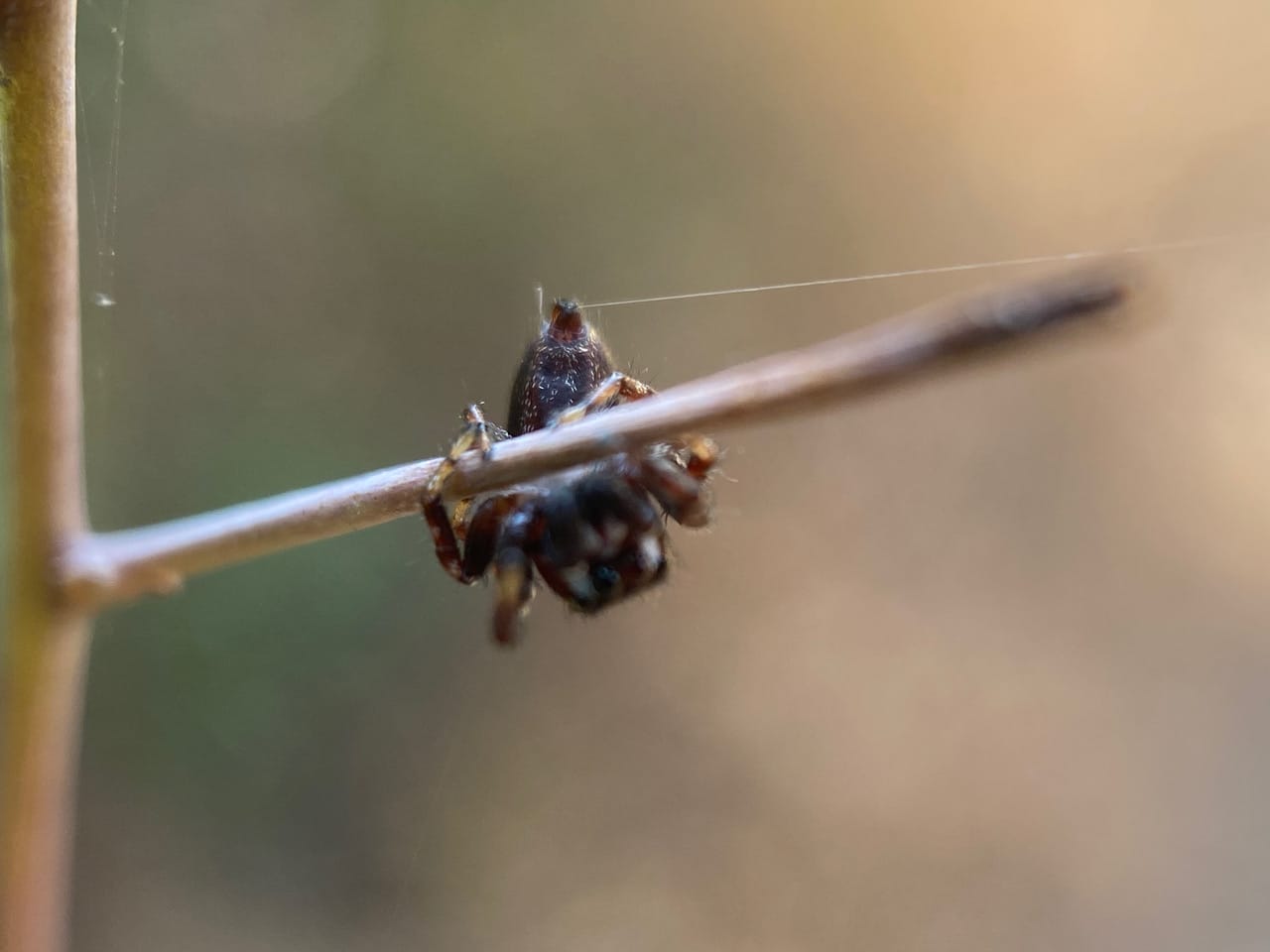
A small spider crosses the trail in front of me on a drag line that stretches from one Soap Plant to another. Here you can see the strand of silk coming out of its spinneret.
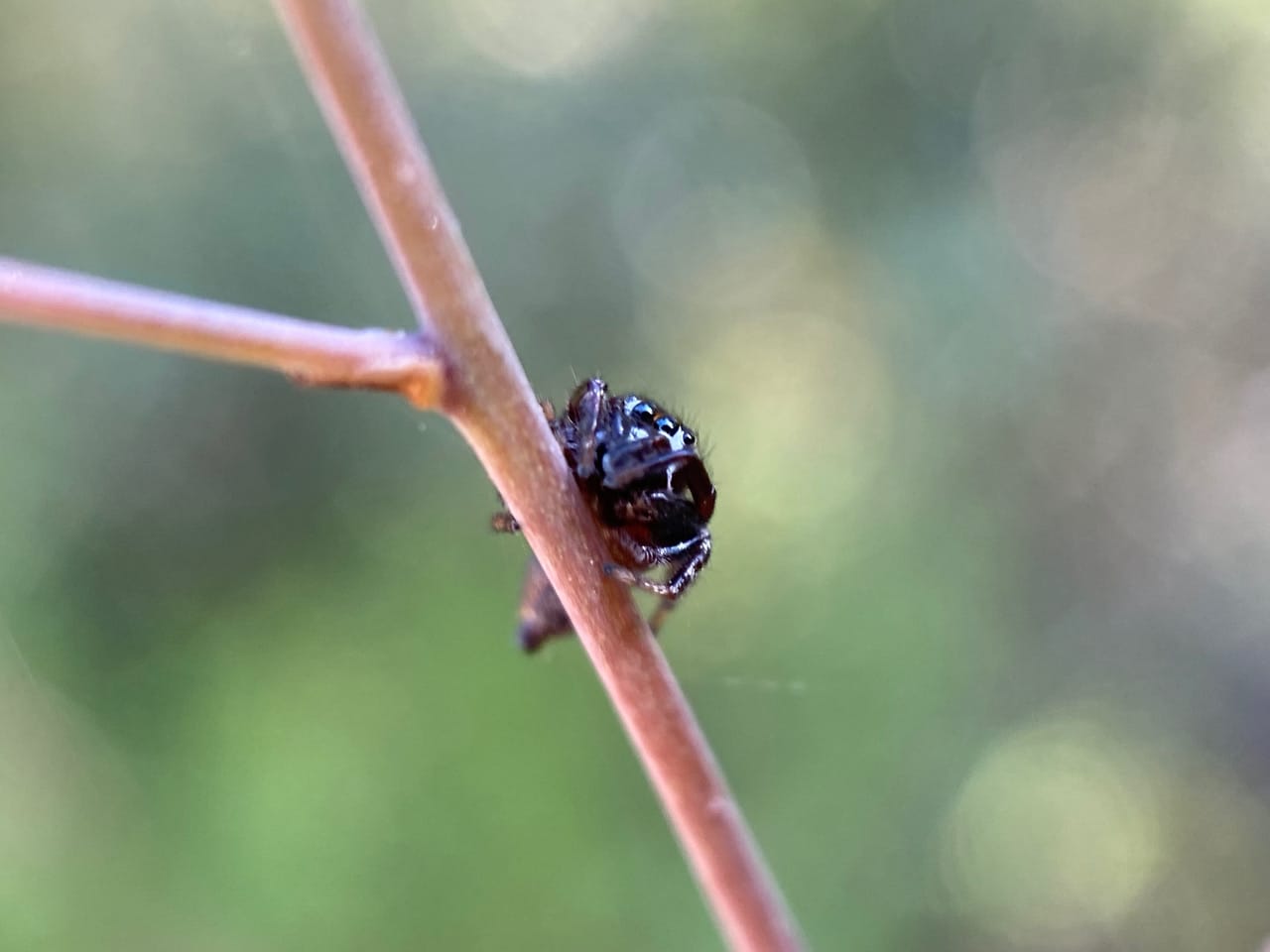
When it finally settles down, I am surprised to find that it is a Jumping Spider (family Salticidae). Somehow I never thought that the jumpers travel this way from plant to plant!
Actually all spiders make so-called dragline silk that functions in part as a lifeline, enabling the creatures to hang from structural supports. And it serves as a constant connection to the web, facilitating quick escapes from danger. Even though jumping spiders are stalkers, and do not spin a web to capture prey, they do attach a dragline on the substrate before they make a leap for the prey. This way the spider can return to its perch quickly.
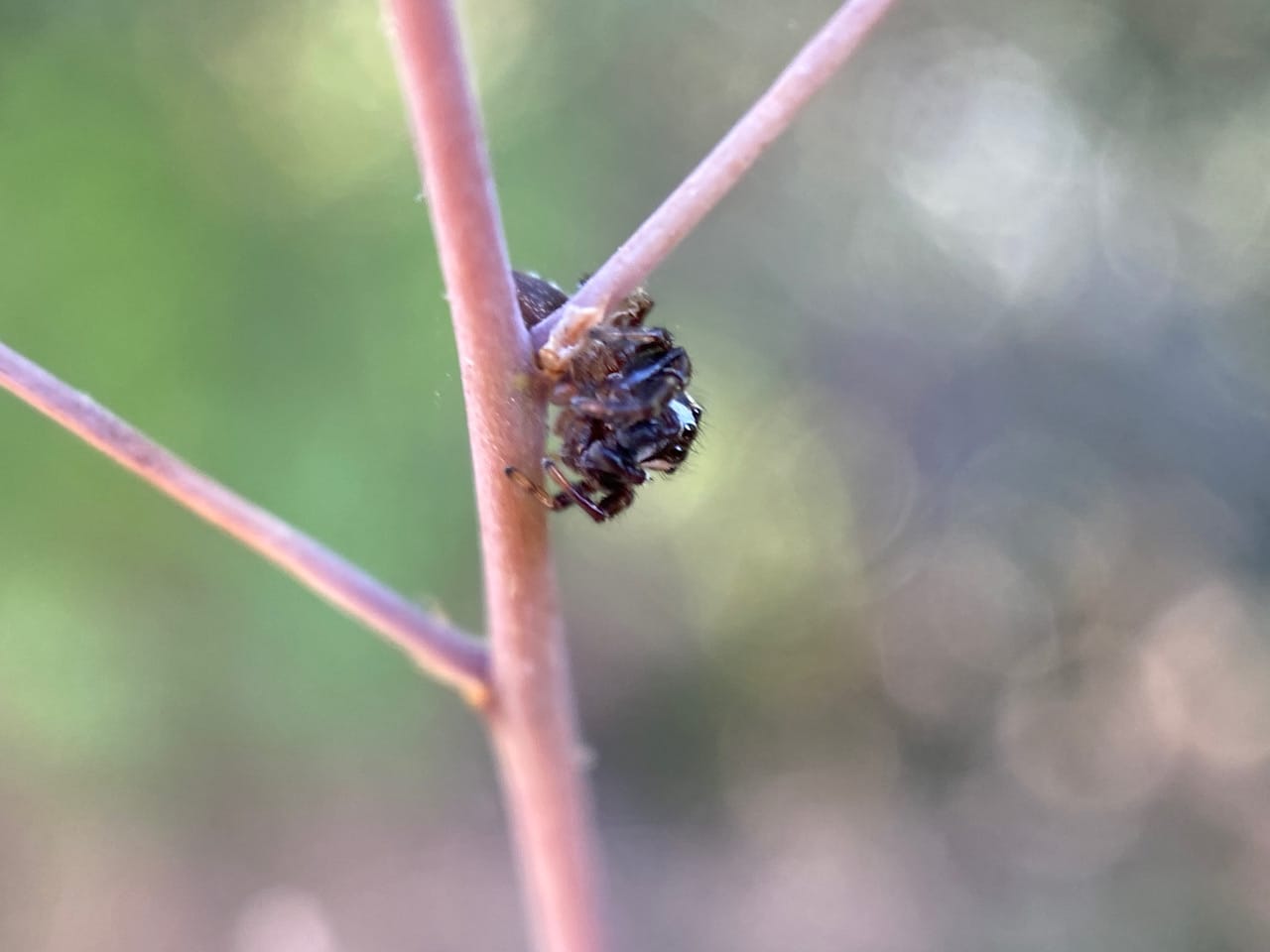
Hey, I recognize that white-painted face! It’s a male Oak Jumping Spider, Metaphidippus manni (family Salticidae).
The Oak Jumping Spider, Metaphidippus manni (family Salticidae) is commonly found in oak woodlands of the Pacific Coast, stretching from British Columbia to Baja California, and east to central Arizona. Males are distinguished by dense white patches on chelicerae (paired structures in front of the face tipped with fangs) and cheek patches that contrast against a dark, shiny body.

Although Blue, the Pale Swallowtail caterpillar never seems to do much other than sitting still on its silk pad on the Coffeeberry leaf, I am always happy to find him safe and healthy. It is incredible luck that Blue can be found so predictably on its home leaf. Does it move around to feed at night?

I venture closer to look at Blue’s false eyespot. It is merely pigmentation on the skin of its enlarged thorax.