

Pollinator Post 8/20/23 (1)
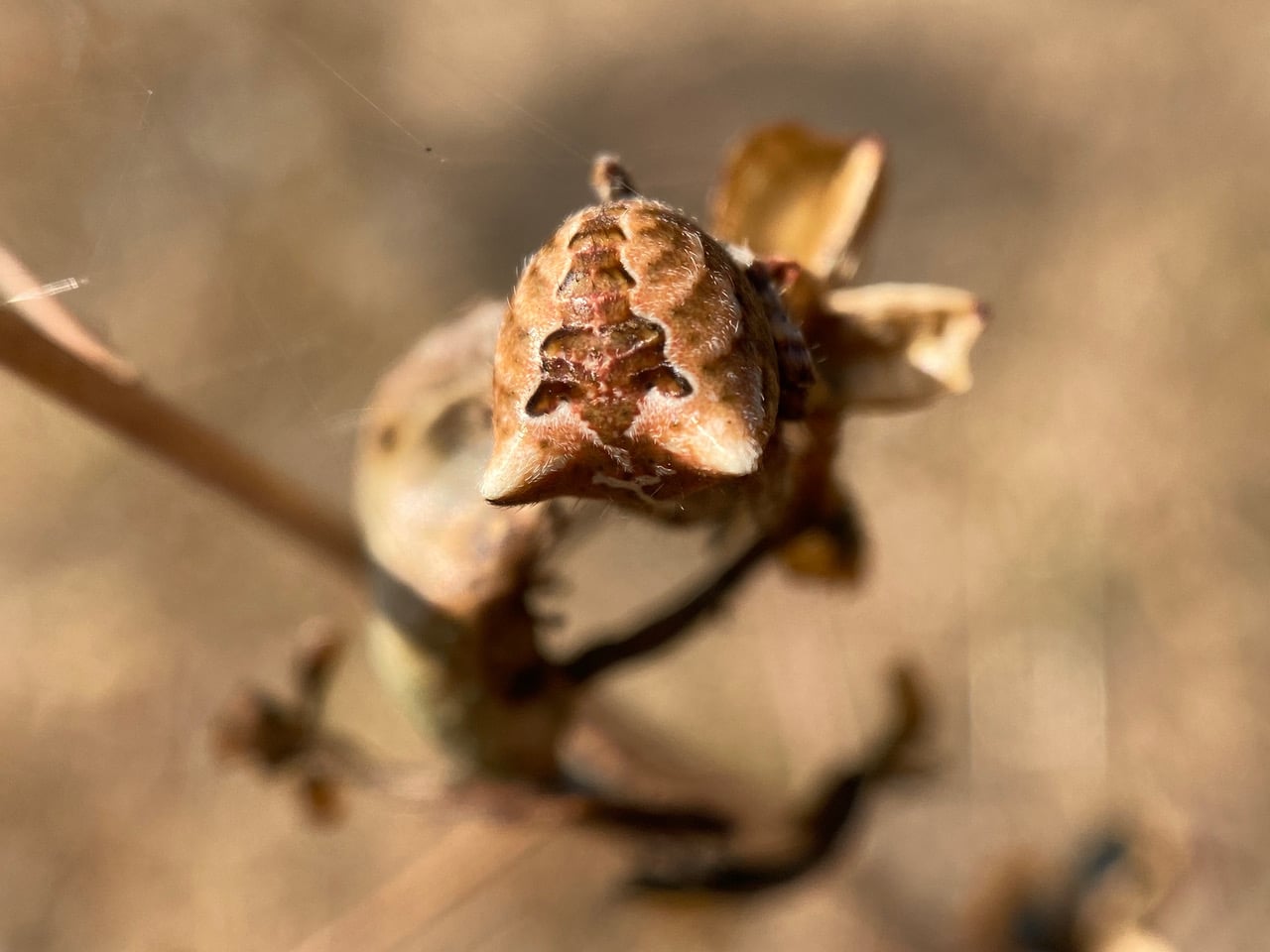
The Two-tubercled Orb-weaver Spider, greets the morning sun from her usual perch on an opened seed pod of a Soap Plant. Her abdomen is getting big and round. Life is good here!
The Two-tubercled Orb-weaver Spider, Gibbaranea bituberculata is a species of ‘orbweavers’ belonging to the family Araneidae. They are found in sunny habitats on shrubs, edges and low plants, where they can make their webs near the ground. Their basic color is very variable, but usually it is brownish, with whitish shades. The cephalothorax is covered with adpressed hairs.
Orb-weaver spiders are members of the spider family Araneidae. They are the most common group of builders of spiral wheel-shaped webs often found in gardens, fields, and forests. Generally, orb-weavers are three-clawed builders of flat webs with sticky spiral capture silk. The third claw is used to walk on the non-sticky part of the web. Typically, the prey insect that blunders into the sticky lines is stunned by a quick bite, and then wrapped in silk.
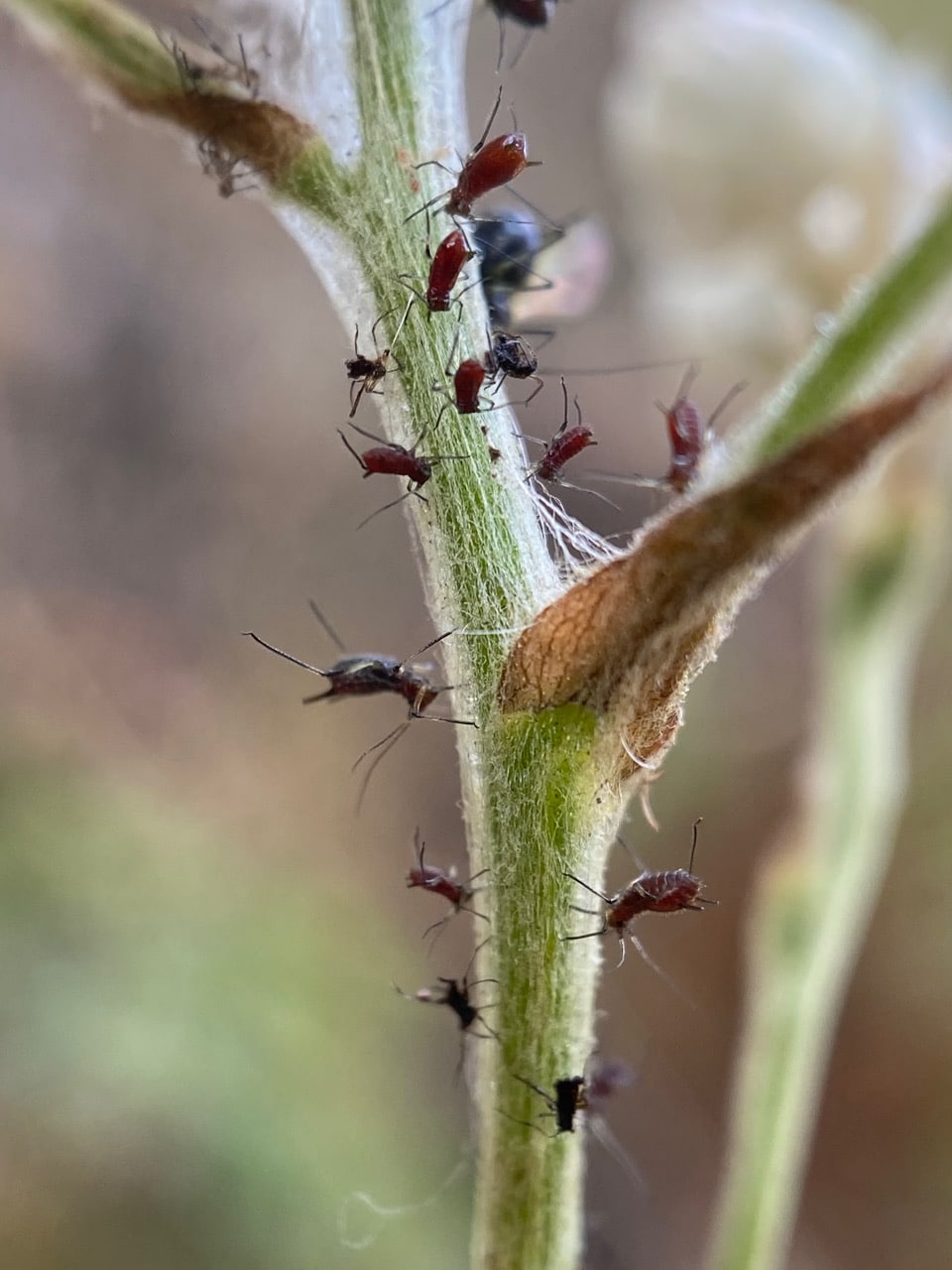
A small colony of long-legged dark brown aphids, Uroleucon sp. (family Aphididae) is occupying a branch of a California Everlasting, Pseudognaphalium californicum. Most species of Uroleucon feed on Asteraceae. Presently at Skyline Gardens we have another species of Uroleucon feeding on the Coast Tarweed, Madia sativa. It is noteworthy that both the everlastings and the tarweeds are members of Asteraceae.
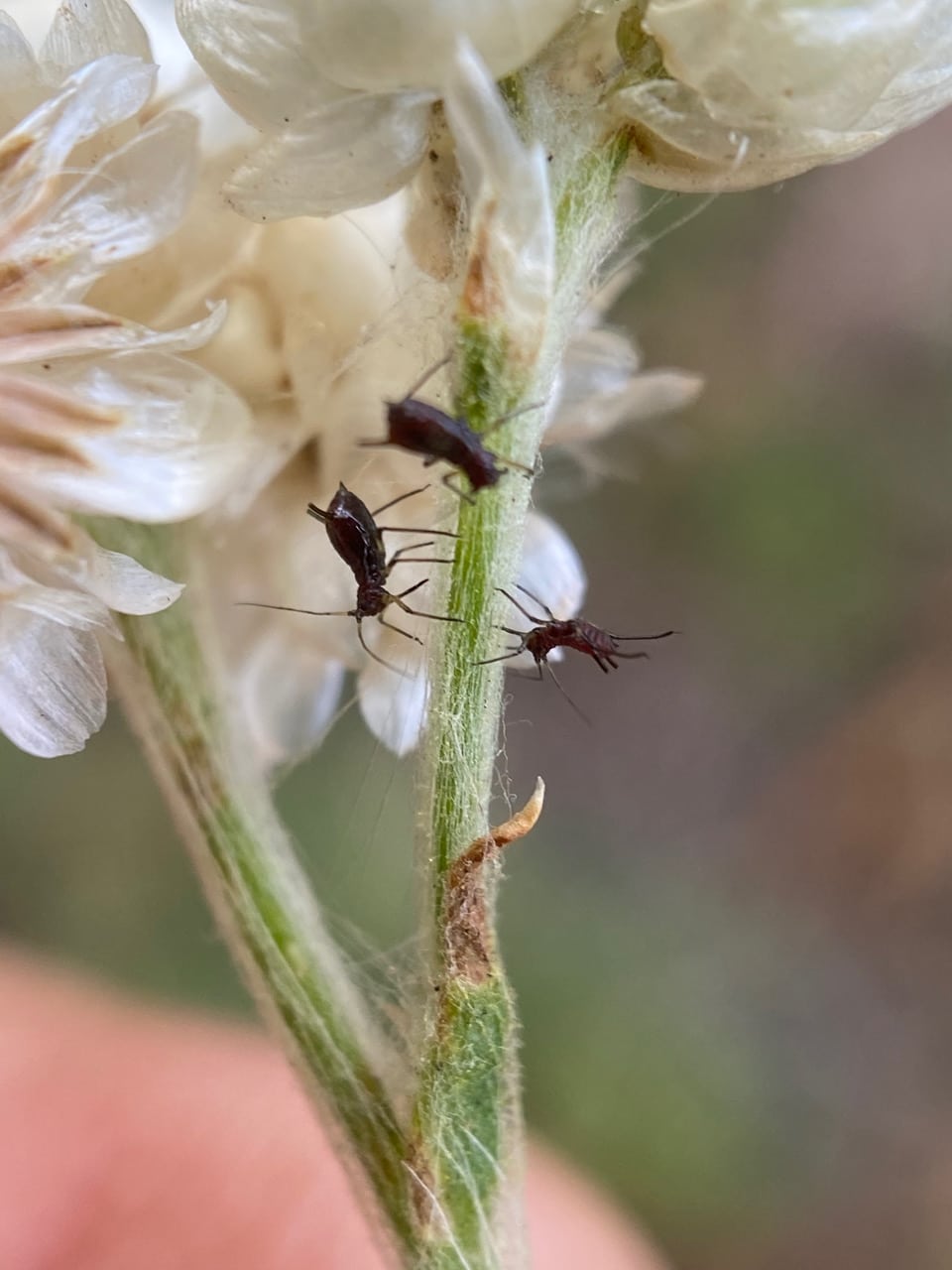
The California Everlasting is already going to seed, and will probably not support the aphids much longer. No worries, they’ll find a way to disperse, probably by producing alates.
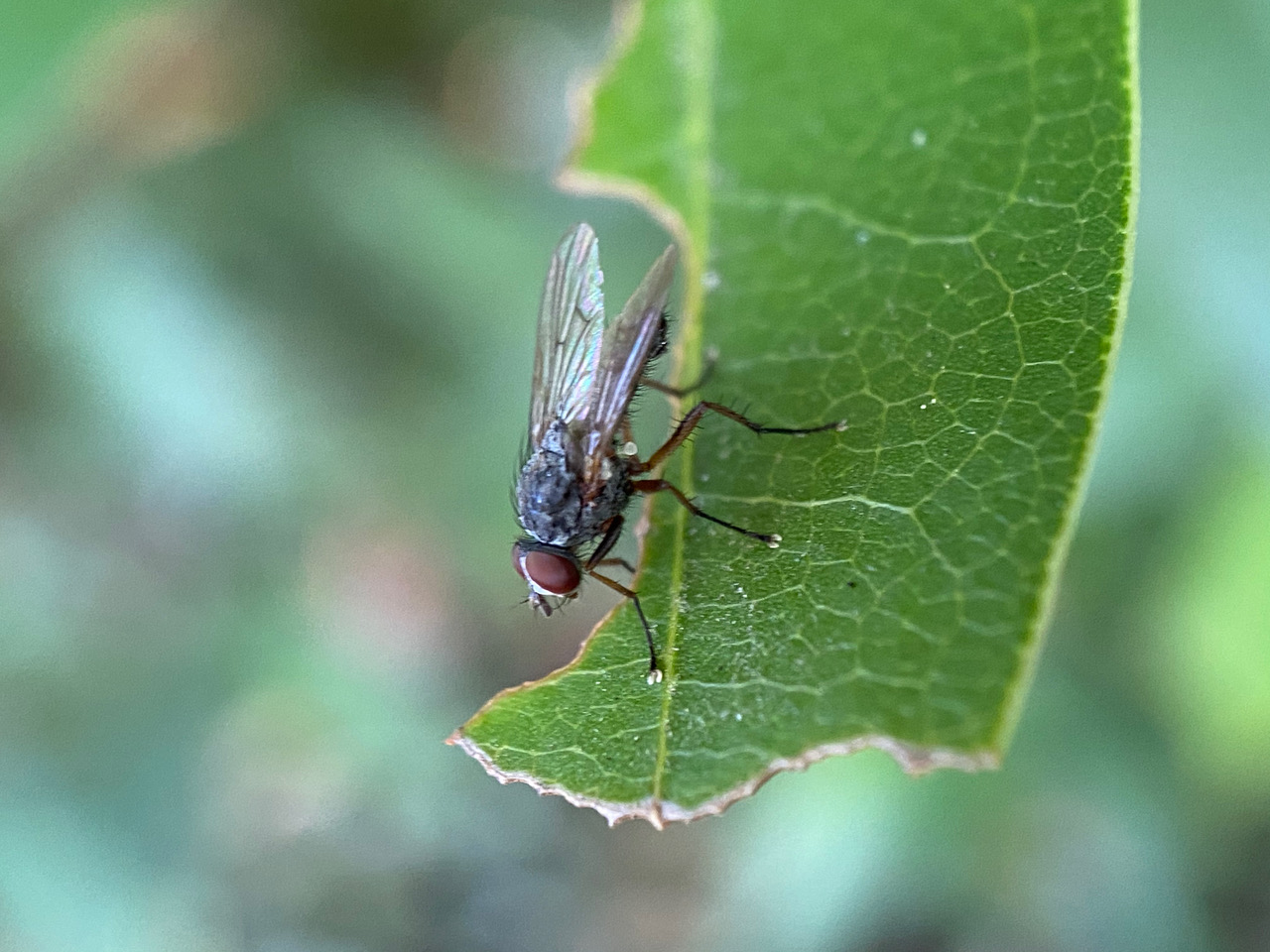
I see many of these flies on the leaves of California Bay Tree today, sometimes chasing one another. A fresh hatch? I wonder what they are doing here?

A Stilt Bug (family Berytidae) is moving among the flowers of California Goldenrod, Solidago velutina ssp. californica.
The Berytidae are extremely gracile insects with legs so long and slender as to suggest common names such as “thread bugs” and “stilt bugs”. In this they resemble the Assassin Bugs in the subfamily Emesinae with which they are easily confused. However, the forelegs of the predatory Emesinae are raptorial, while those of the Berytidae are roughly similar to those of their other legs. What’s more, the antennae of most Berytidae though long, geniculate (elbowed), and in other ways generally similar to Emesinae, tend to have a swelling at the tip. Antennae have 4 segments, the fourth enlarged.
Stilt Bugs occur worldwide and throughout North America. Most are phytophagous (plant-feeders); many may be host-specific, often associated with plants with glandular hairs in Geraniaceae, Onagraceae, Scrophulariaceae, and Solanaceae. Some are occasionally omnivorous, feeding opportunistically on insects entrapped in plant exudates or on lepidopteran eggs or aphids.
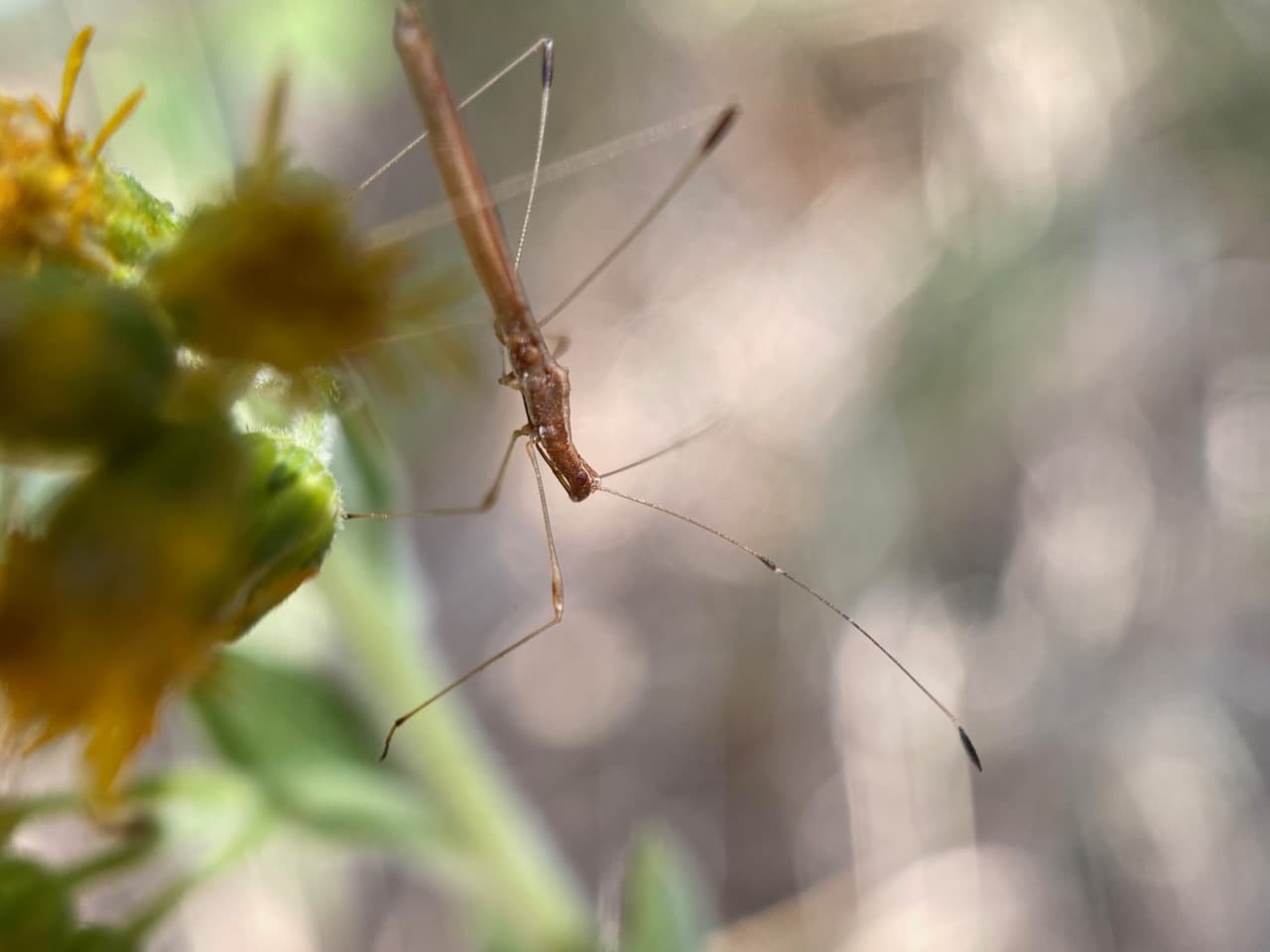
Note the needle-like rostrum (piercing-sucking mouthpart of Hemiptera) that is folded under the body of the Stilt Bug when not feeding.
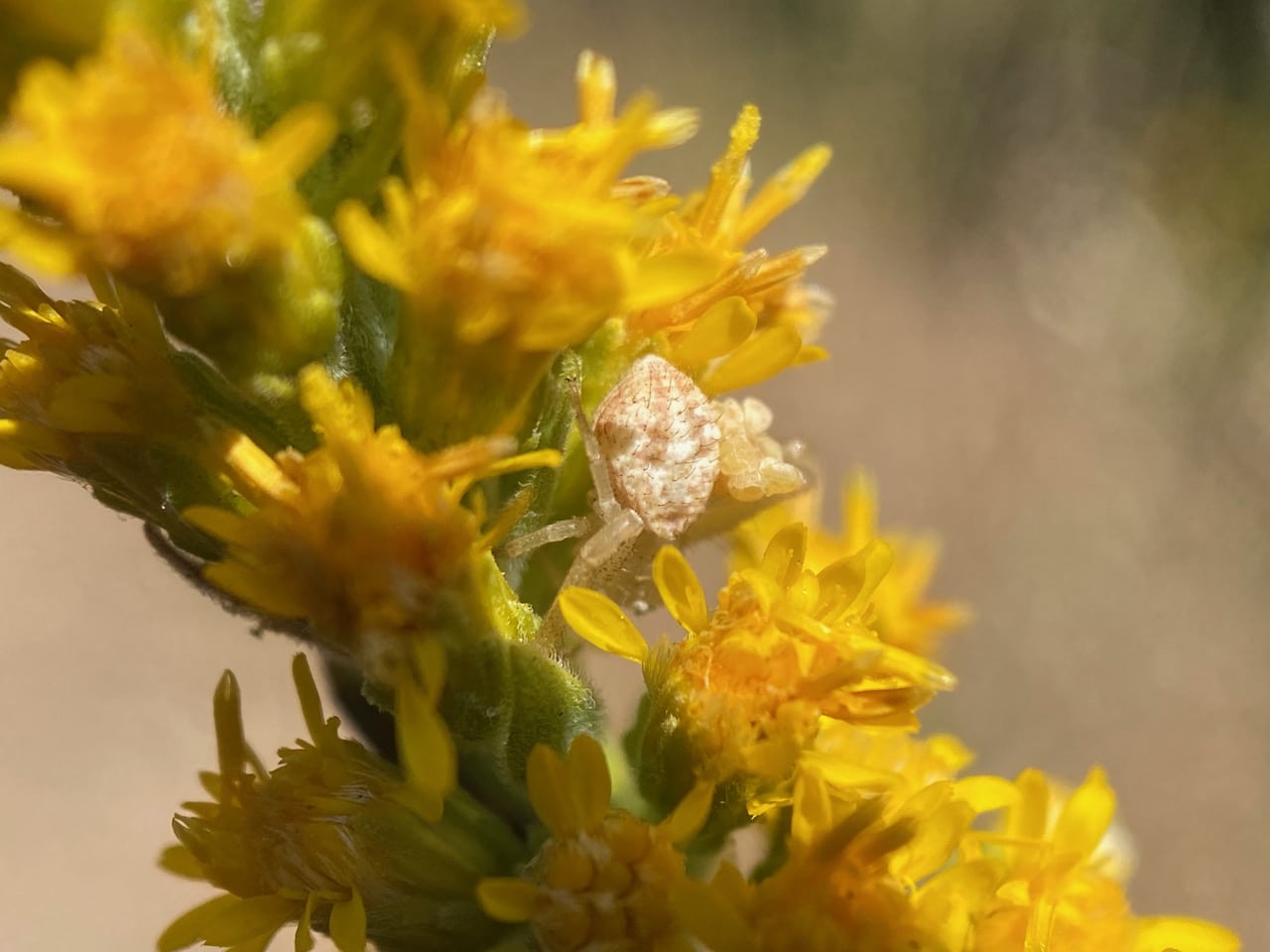
A tiny Crab Spider, Mecaphesa sp. (family Thomisidae) is lurking in an inflorescence of California Goldenrod.
Members of the family Thomisidae do not spin webs, and are ambush predators. The two front legs are usually long and more robust than the rest of the legs. Their common name derives from their ability to move sideways or backwards like crabs. Most Crab Spiders sit on or beside flowers, where they grab visiting insects. Some species are able to change color over a period of some days, to match the flower on which they are sitting.
Mecaphesa is distinguished from the other genera of Crab Spider by the size and arrangement of the eight eyes (in two curved rows of four). Mecaphesa is also often hairy, with tiny hairs protruding from the head, legs, and body.
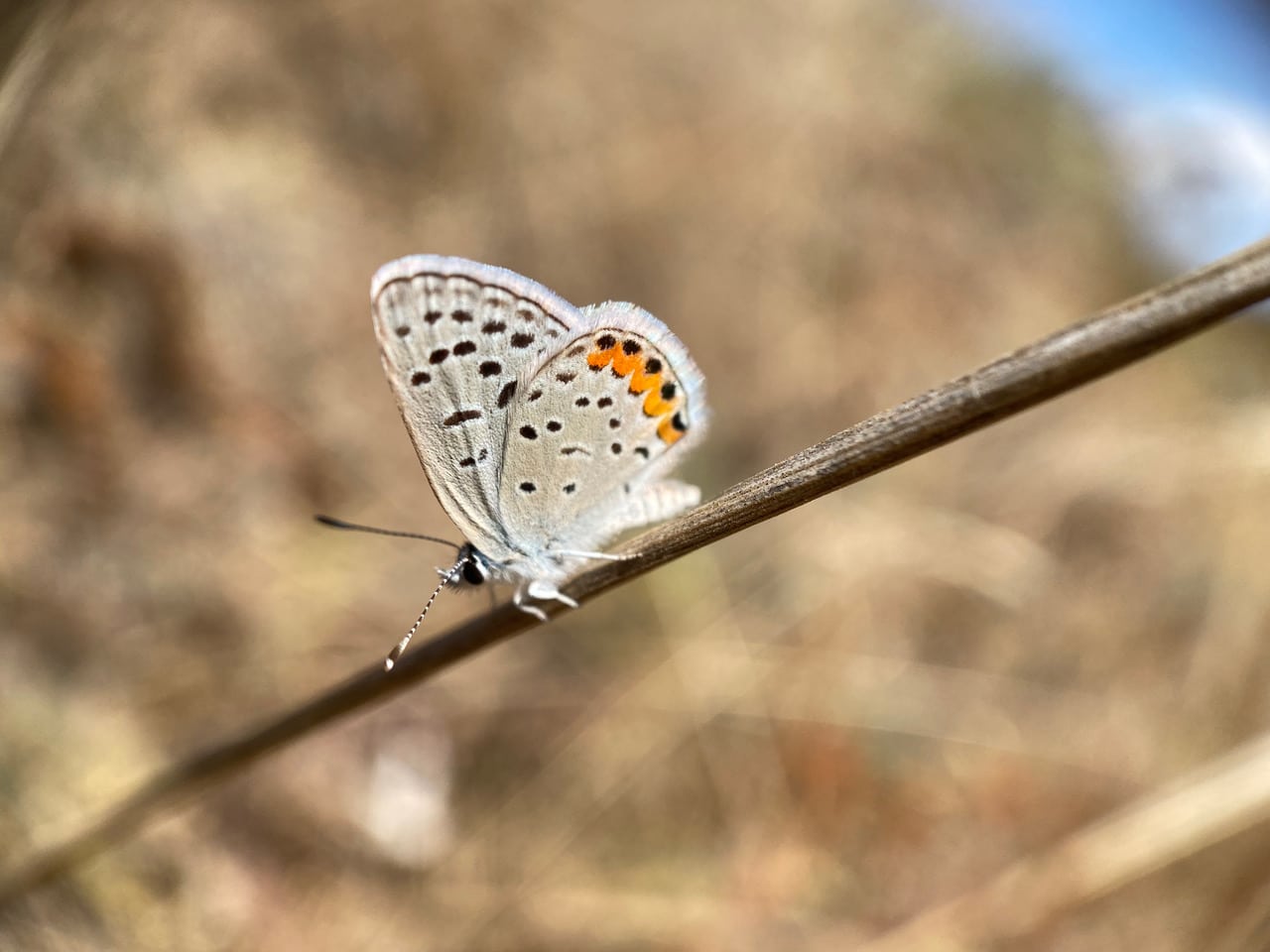
Lately I have been seeing Acmon Blue butterflies flit around the low vegetation at Diablo Bend. They never seem to land to take nectar on any plant and are generally skittish. The females are probably here to lay eggs on their larval host plants while the males are here to meet the females. This beautiful male lands on a grass stalk, giving me a close-up look of its underwings. Male Acmon Blue have blue upper wings, while the females are brownish.
The Acmon Blue butterfly is found primarily west of Sierra Nevada-Cascade Divide south into northern Baja California. Males patrol near host plants for females. Eggs are laid singly on leaves or flowers of host plants. Caterpillars feed on leaves, flowers, and developing seeds, and are tended by ants. Favorite food plants include various species of buckwheats, lupines, trefoils, and milk vetches (Astragalus).
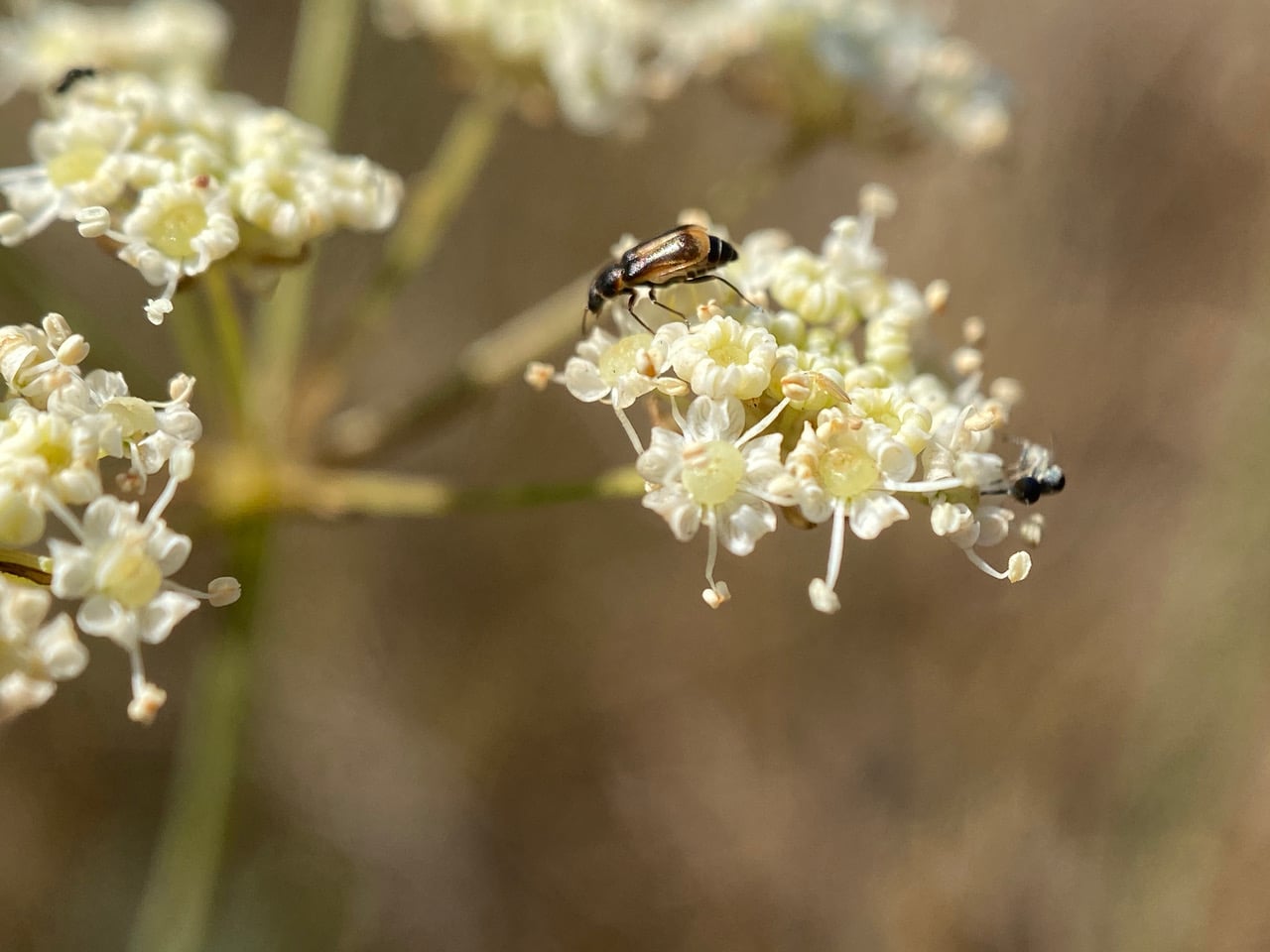
A Soft-winged Flower Beetle, Attalus sp. (family Melyridae, subfamily Malachiinae) is foraging on the flowers of Kellogg’s Yampah, Perideridia kelloggii.
Most Melyrids are elongate-oval, soft-bodies beetles 10 mm or less in length. Members of the subfamily Malachiinae have peculiar orange structures along the sides of the abdomen which can be everted, but usually kept hidden. Most adults and larvae are predaceous. Omnivorous adult Melyrids are often found on flowers out in the open, where they feed on pollen, insect eggs, and flower-loving insects that land within their grasp. The larvae generally stay concealed under tree bark or leaf litter or soil, where they prey on other invertebrates.


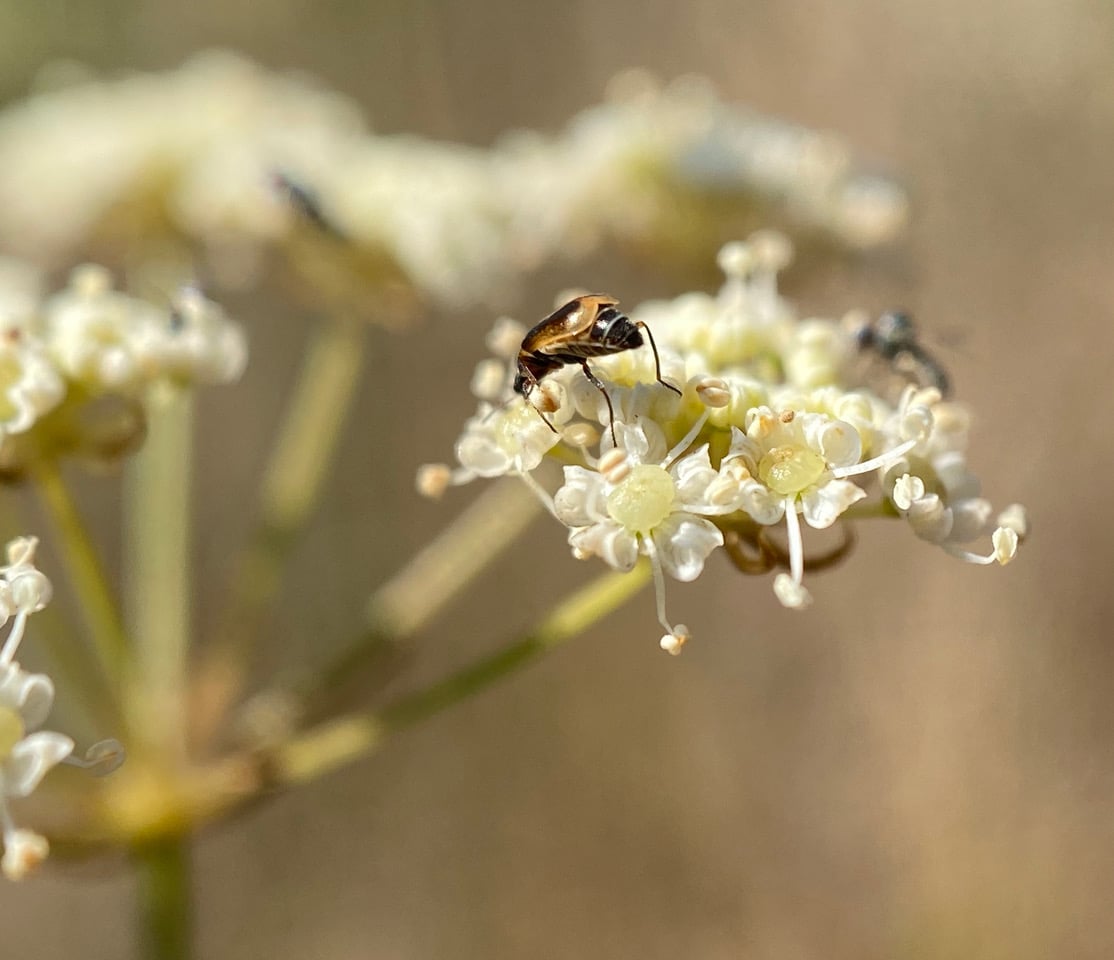


A tiny insect has landed on the beetle.

What is the insect doing on the beetle?
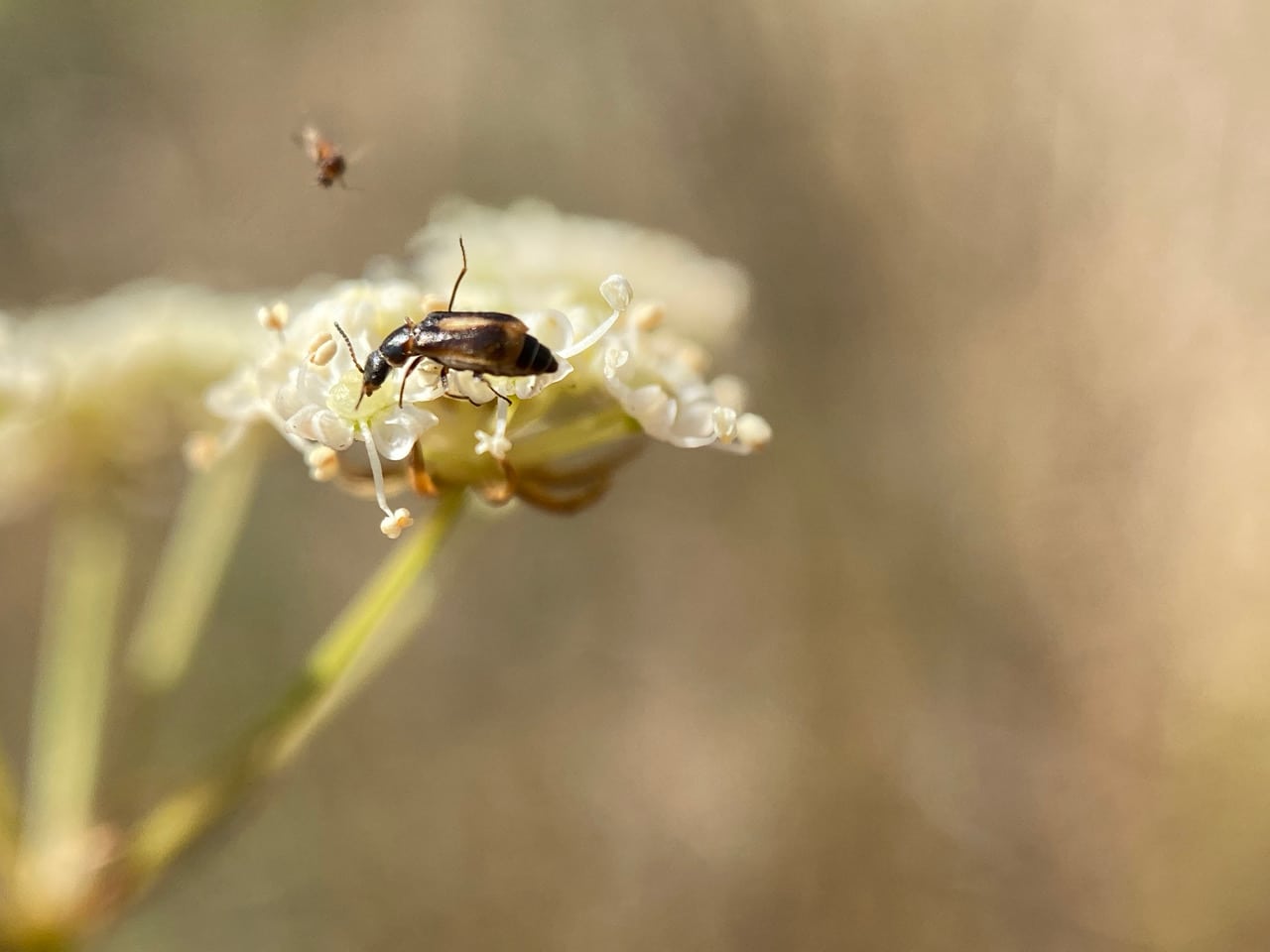
With a quick flick of its leg, the beetle sends the insect flying!

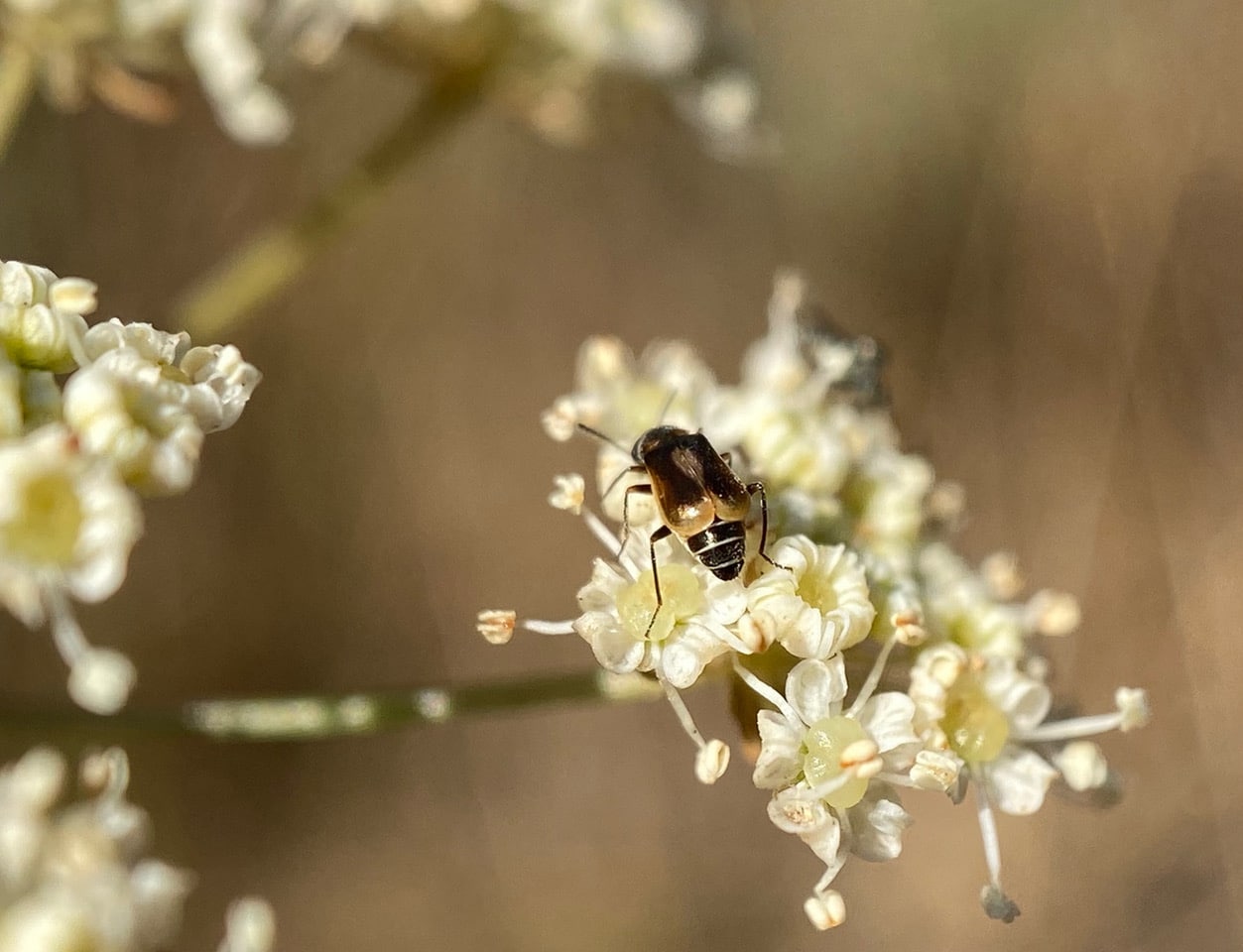
The members of the subfamily Malachiinae are easily recognizable from the elytra (wing covers) that don’t fully cover their abdomen underneath.
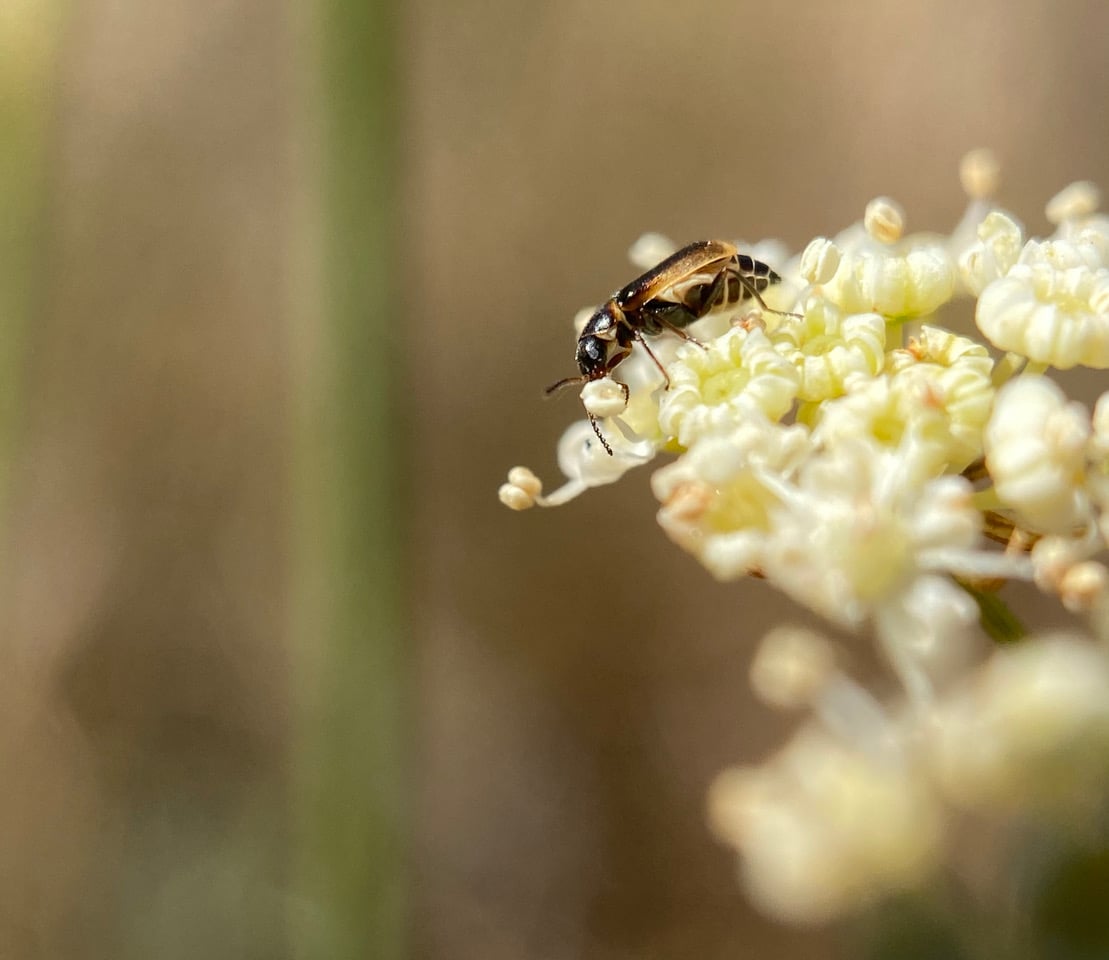
The Soft-winged Flower Beetle, Attalus sp. (family Melyridae, subfamily Malachiinae) is feeding on the pollen of Yampah flowers.
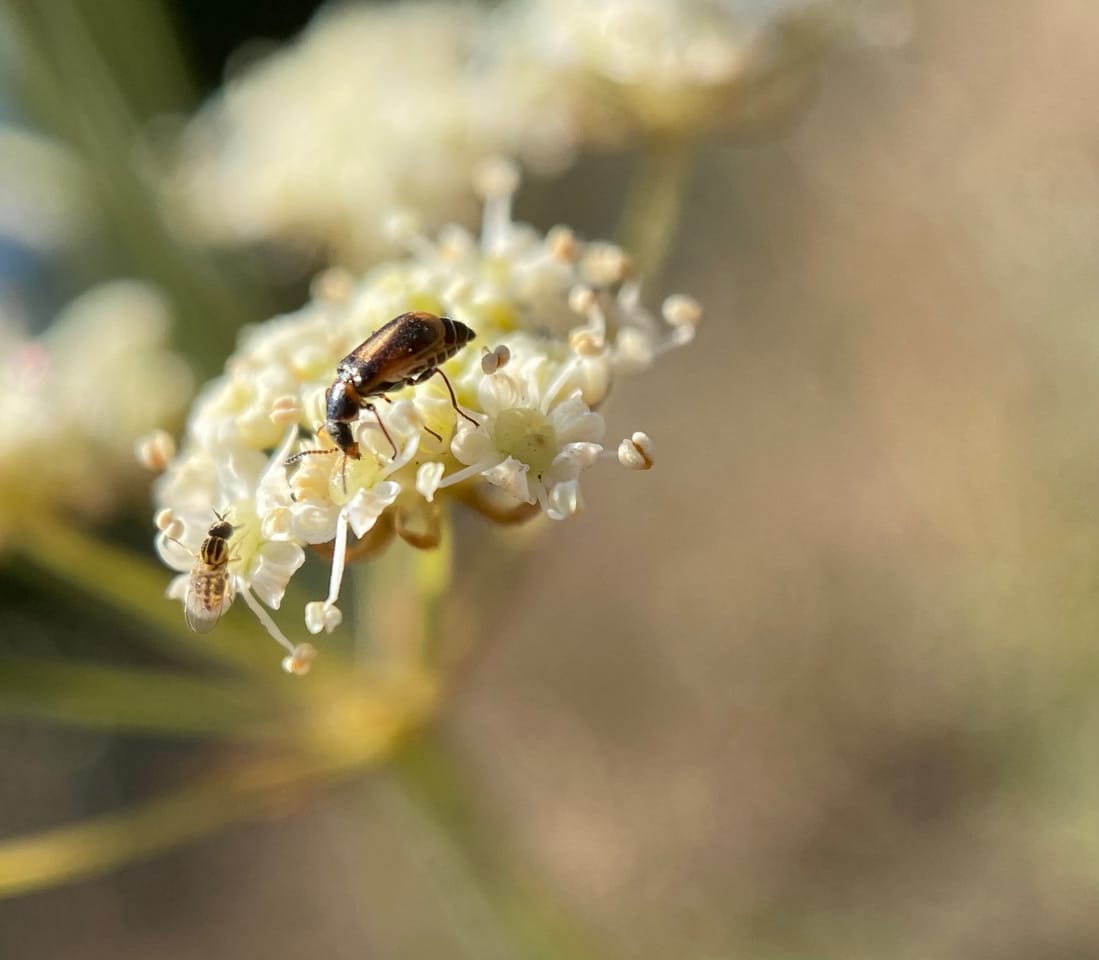
When I took this picture of the Soft-winged Flower Beetle, I wasn’t paying attention to the tiny fly close by. It is actually recognizable as a Grass Fly (family Chloropidae)!
Chloropidae are minute to small flies, usually 1-4 mm. The thorax often has a pattern of three to five longitudinal stripes against a light-colored background. The flies appear shiny due to the virtual absence of any hairs. The majority of the larvae are phytophagous, mainly on grasses.


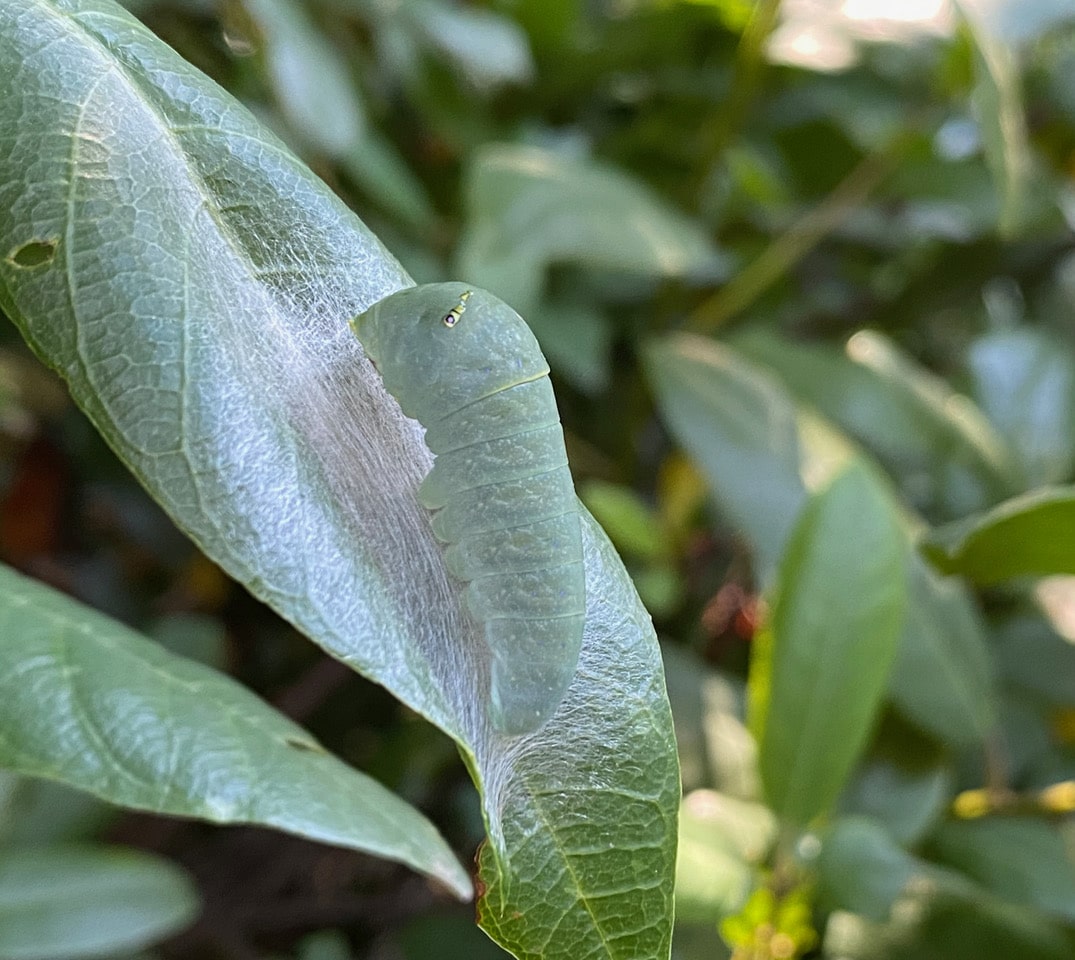
Here’s Blue, our Pale Swallowtail caterpillar on its Coffeeberry leaf. It is plump and a full inch long now.

Can you find Blue on its home leaf?
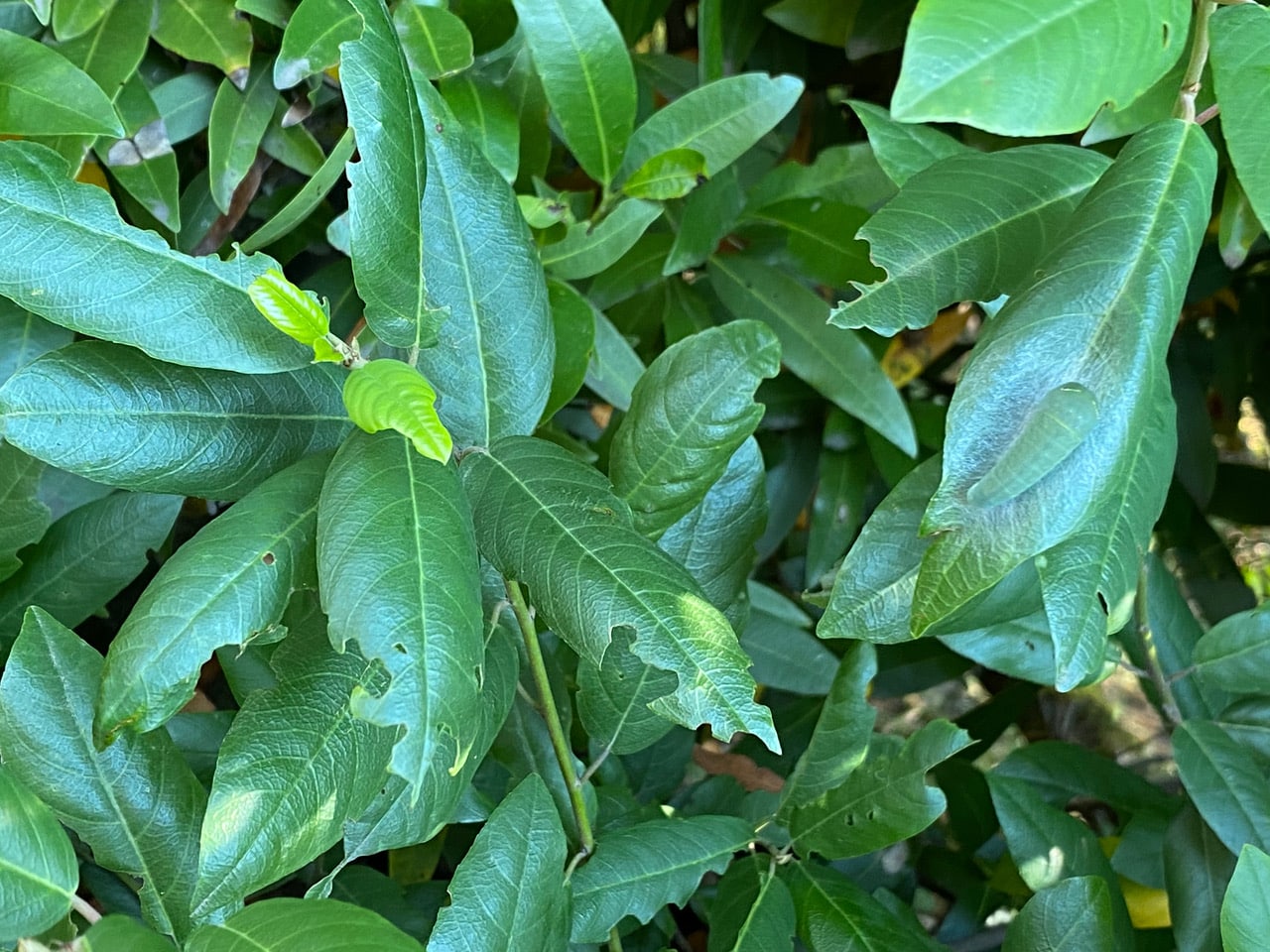
I scan the vegetation around Blue to figure out where it might have been feeding. Do you see Blue (on the right upper leaf)? The leaves on Blue’s branch do not seem to be badly chewed, but the branch to his left does. Does Blue move from branch to branch to feed? From my observations so far, Blue never chews on its own home leaf and keeps it spotlessly clean, to the extent of defecating over the edge of the leaf. Incredible and adorable caterpillar behavior! If only human babies were so tidy!