

Pollinator Post 8/27/23 (2)
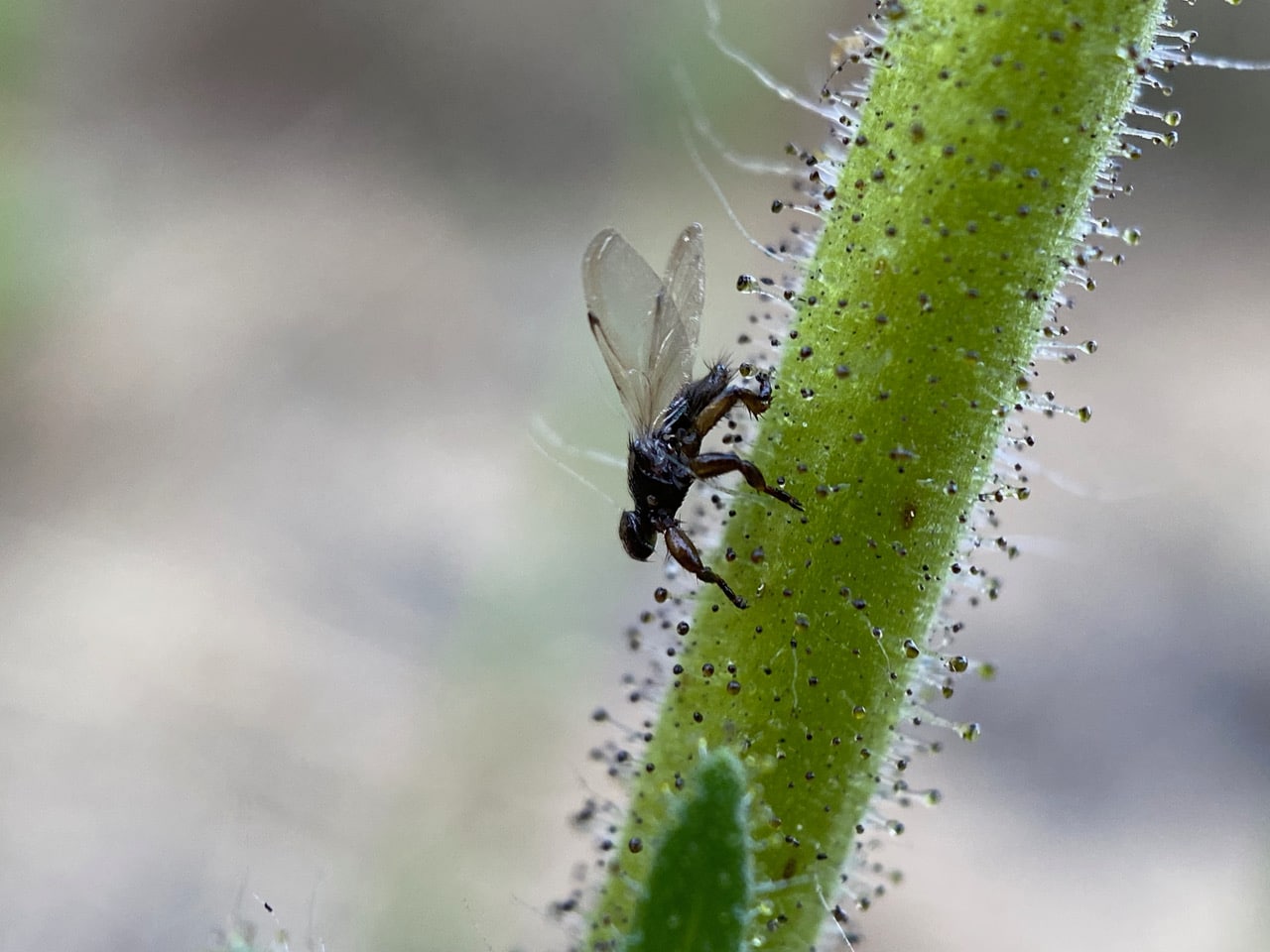
A small, chunky insect is struggling mightily coming down the stem of a Coast Tarweed, Madia sativa. With every step the insect takes, its legs get mired in the sticky exudates of the glandular hairs.
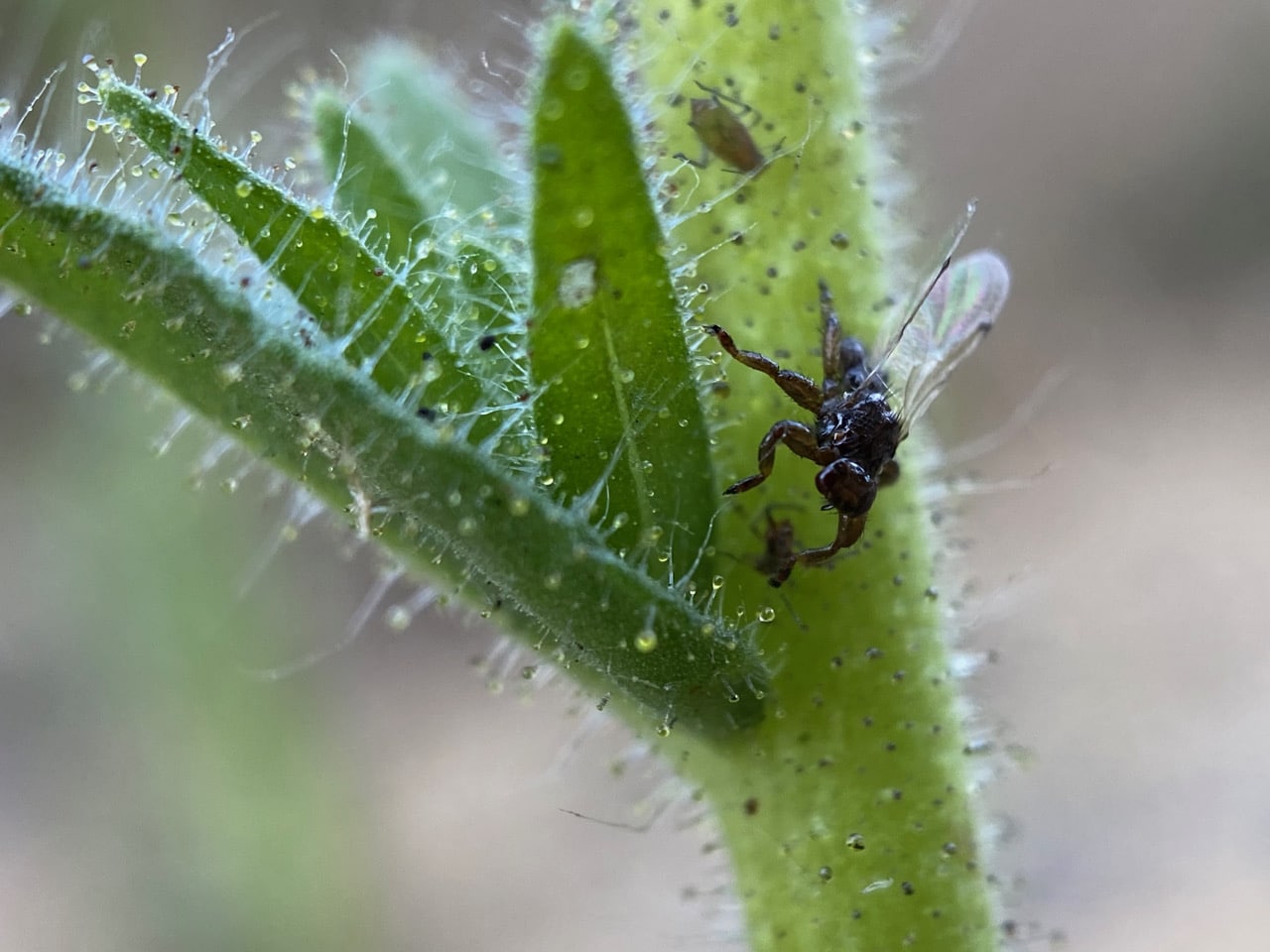
The insect has a blockish head and thick legs…
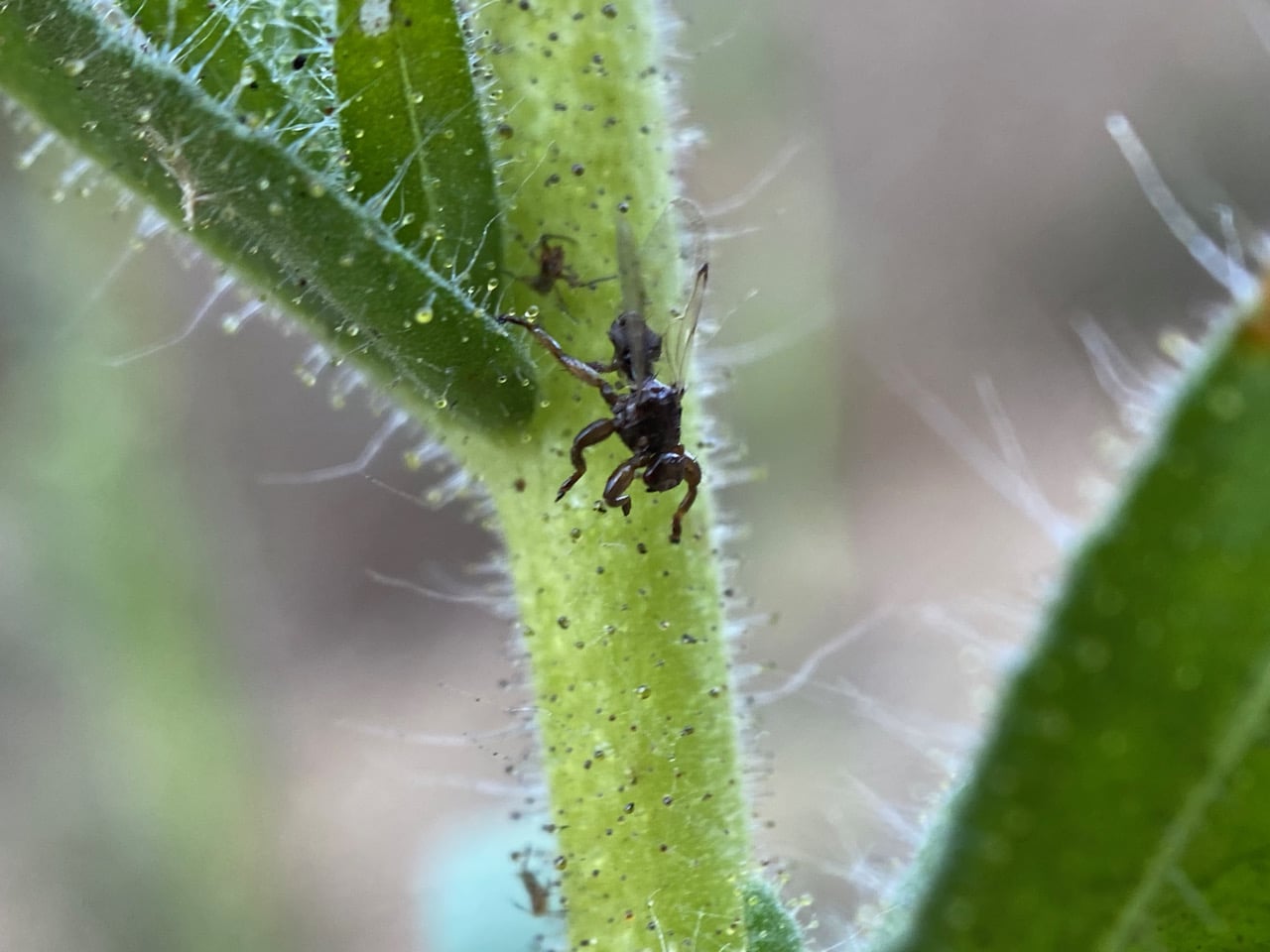
It is a Western American Deer Ked, Lipoptena depressa (family Hippoboscidae). Its life history is even more bizarre than the way it looks.
Hippoboscidae, the louse flies or keds are obligate parasites of mammals and birds. The winged species can fly reasonably well, while others with vestigial or no wings are flightless and highly apomorphic. Most of the larval development takes place within the mother’s body, and pupation occurs almost immediately.
The Western American Deer Led, Lipoptena depressa is a blood-feeding parasite of the mule deer, Odocoileus hemionus in the western US and Canada. The female fly will produce a single larva at a time, retaining the larva internally until it is ready to pupate. The larva feeds on the secretions of a milk gland in the uterus of the female. After three larval instars, a white prepupa is deposited which immediately forms a hard dark puparium. The pupa is usually deposited where the deer slept overnight. When the pupa has completed its development, a winged adult emerges and flies in search of a suitable host, upon which the fly sheds its wings and is permanently associated with the same host. Lipoptena depressa does not feed on humans.

Just a few feet away I come to the patch of flattened grass behind a big Coyote Brush. I have previously speculated that it is probably where a deer regularly beds down or nurses its young. The dried grass in the patch is darker than the surrounding grasses, almost greasy. Now that I have found a deer ked close by, my guess does not seem off base.
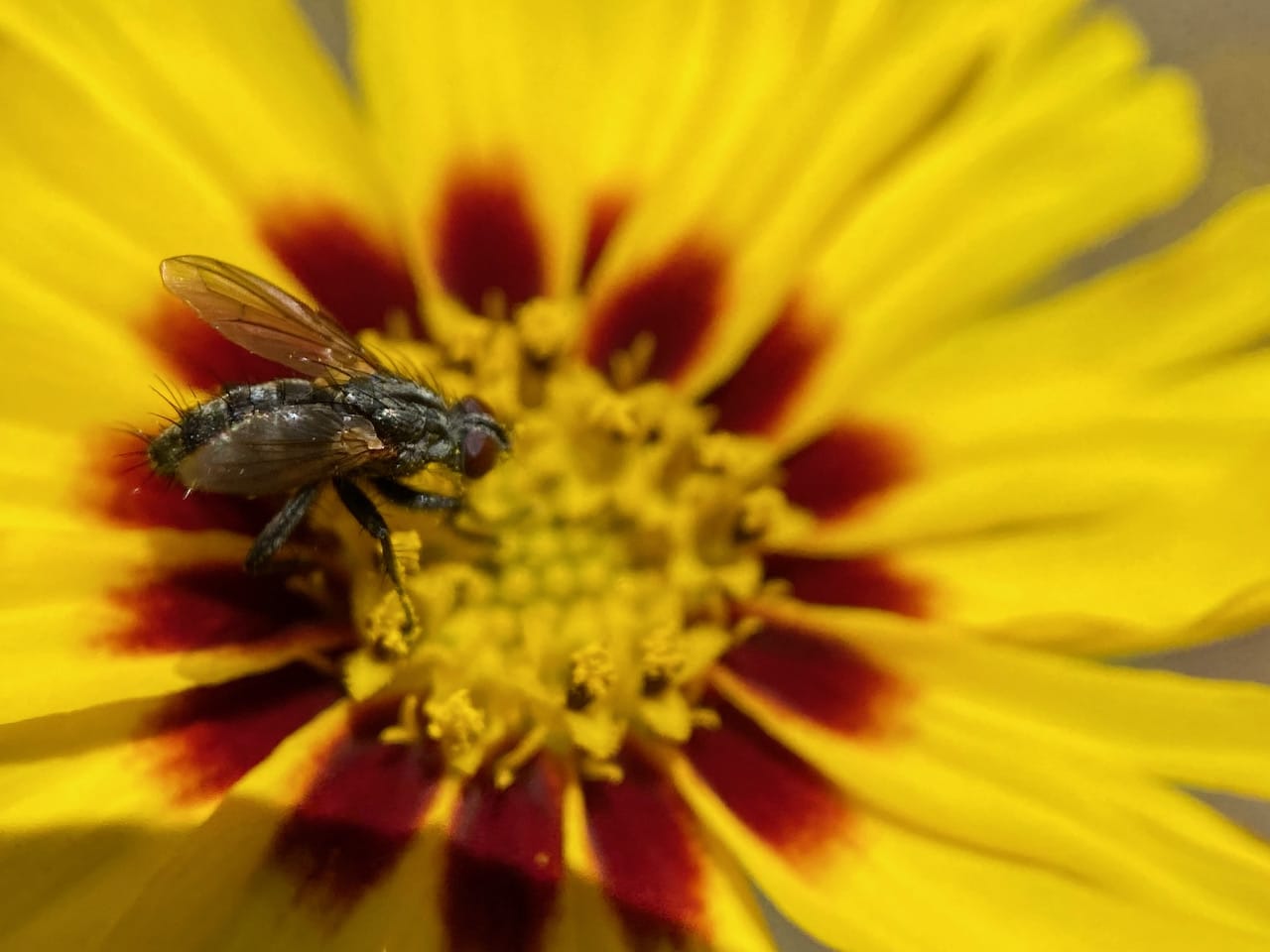
A Woodlouse Fly, Stevenia deceptoria (family Rhinophoridae) is foraging on a flowerhead of Elegant Tarweed, Madia elegans.
These small, slender, black, bristly flies are somewhat related to the Tachinidae. The larvae are mostly parasitoids of woodlice (pill bugs), beetles, spiders and other arthropods, and occasionally snails.
Native to Europe, Stevenia deceptoria is now widespread in the US. The flies are parasitoids of terrestrial woodlice (roly polies) of the order Isopoda (Oniscoidea).

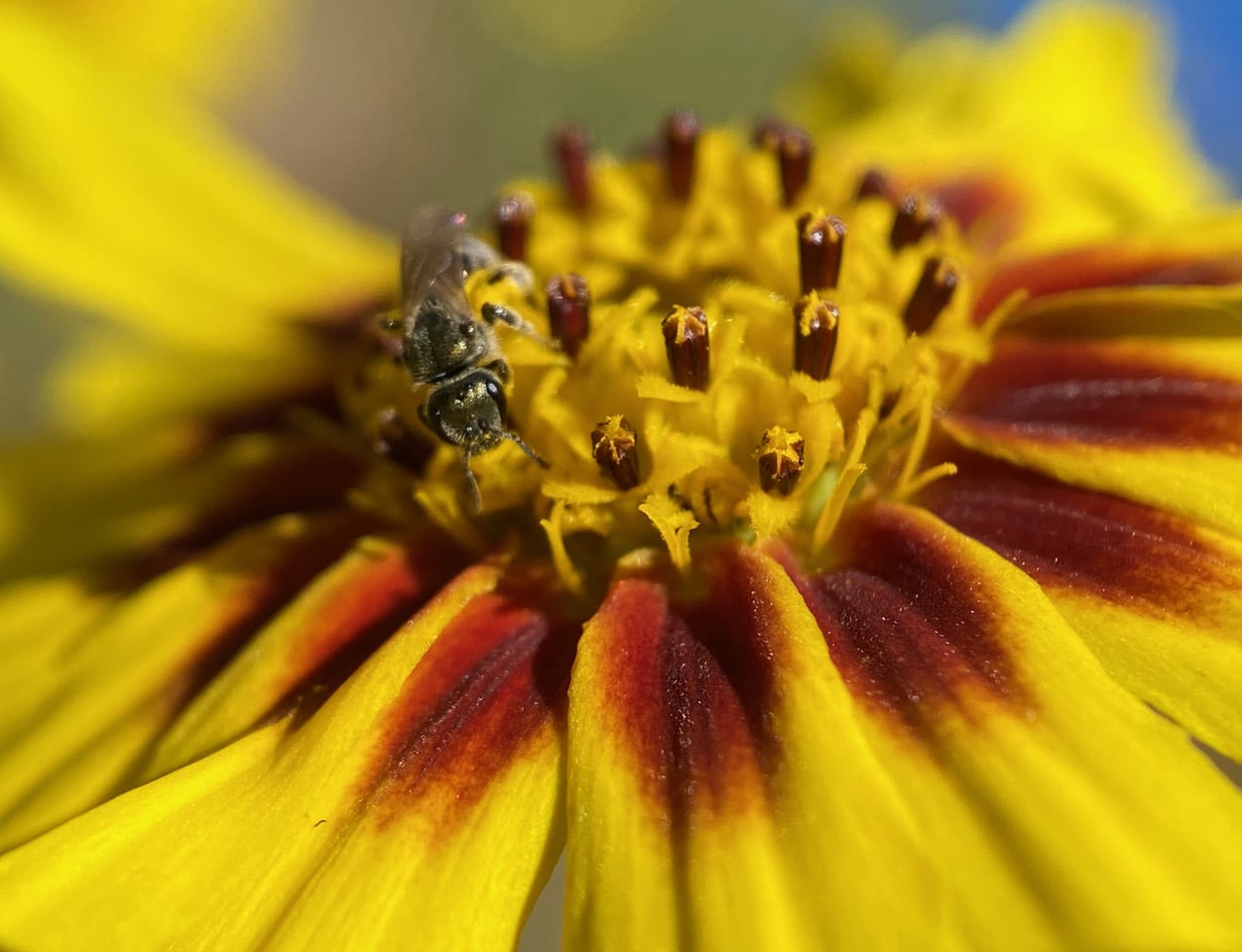
A Metallic Sweat Bee, Lasioglossum (Dialictus) sp. (family Halictidae) is foraging on a flowerhead of Elegant Tarweed.
Lasioglossum species are found worldwide, and they constitute the largest bee genus. The subgenus Dialictus are the most likely to be seen in the U.S., with over 300 species of these tiny metallic bees. The majority of Lasioglossum are generalists. Because they are so abundant throughout the flowering season, the bees are often important pollinators. Their sheer numbers are enough to achieve excellent pollination of many wild flowers, especially of plants in the Asteraceae, which have shallow floral tubes that are easily accessed by these minute bees.
Note that the ray florets on the rim of the Elegant Tarweed flowerhead are all female, bearing only the two-parted, strap-shaped stigmas. In contrast, the disc florets in the center are all males, bearing only stamens. The dark, candle-like structure protruding from each disc floret is an anther tube (composed of fused stamens) that offers pollen to visiting insects. Since only flowers with female parts can develop into seeds, only the ray florets of the Elegant Tarweed will produce seeds if they are pollinated.
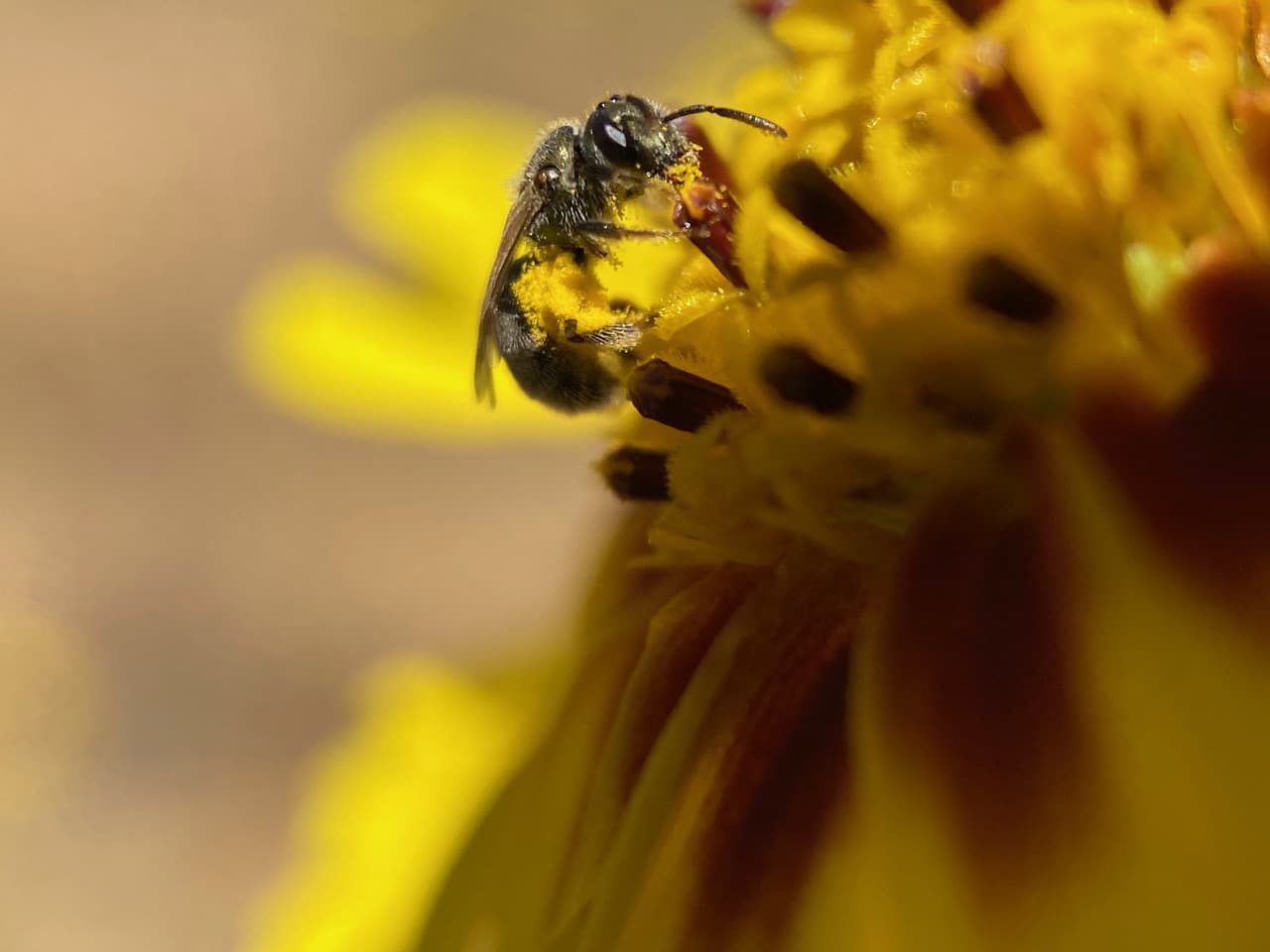
The Metallic Sweat Bee is collecting pollen from the top of the anther tube of a disc floret of Elegant Tarweed.

Note that the Sweat Bee has gathered pollen into the scopa on her belly as well as her entire hind leg. This is characteristic of the family Halictidae.

A male Forked Globetail, Sphaerophoria sulphuripes (family Syrphidae) lands on the ray floret of Elegant Tarweed.
The males of this species is easily recognizable for the slim, cylindrical, black/yellow abdomen and the bulbous reddish genitalia that is curled under the tip of the abdomen. Females have rounder abdomen and no red coloration. The larvae of Sphaerophoria feed on aphids and other soft-bodied insects. Mating Hoverfly Sphaerophoria scripta pos | Seen on birch sa… | Flickr
Hover Flies, also called Syrphid Flies make up the insect family Syrphidae. They are often seen hovering or nectaring at flowers; the adults of many species feed mainly on nectar and pollen, while the larvae eat a wide range of foods. In many species, the larvae feed on aphids, thrips, and other plant-sucking insects. In some species, the larvae are saprotrophs, eating decaying plant and animal matter in the soil or in ponds and streams. Many Hover Flies are brightly colored, with spots, stripes and bands of yellow; due to this coloring, they are often mistaken for wasps or bees. They exhibit Batesian mimicry – the resemblance to stinging insects gives the hover flies some protection from predators.
Hover Flies are considered the second-most important groups of pollinators after wild bees. Most are generalists that visit a wide range of plant species. The feeding habits of Syrphid larvae further endear them to the gardeners, serving as pest control agents and recyclers of organic matter.