

Pollinator Post 9/11/23
I go on a late afternoon walk at Skyline Gardens, expressly to check on Blue, the Pale Swallowtail caterpillar.
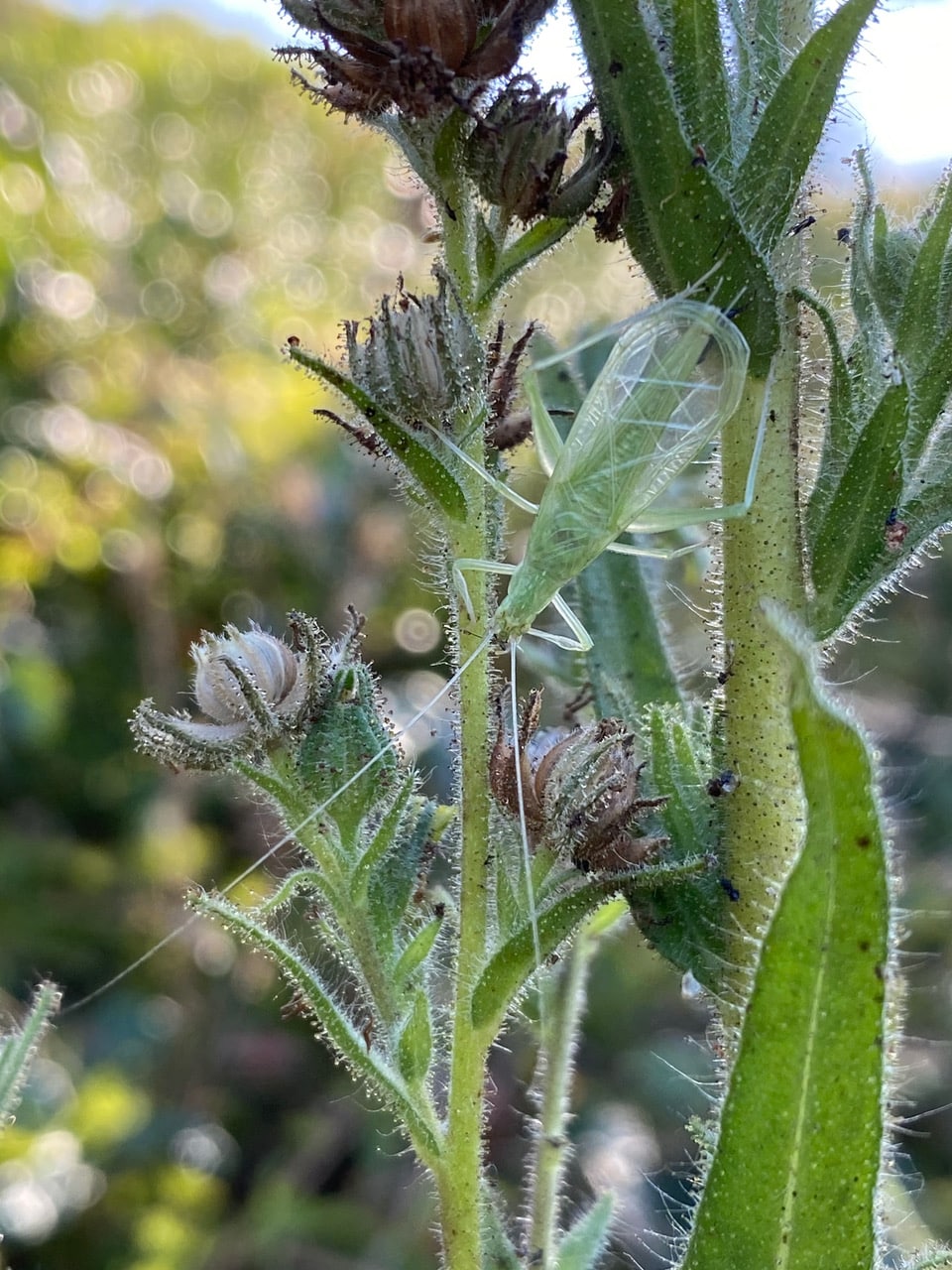
Along the little path to Skyline Trail from Siesta Gate, I meet a male Common Tree Cricket on a Coast Tarweed, Madia sativa. These songsters apparently like to hang out on the plants here. Is this male getting ready to sing?
Tree Crickets are so called because many species hang out in trees. They are in the order Orthoptera (crickets, katydids, grasshoppers, etc.) and in the “true cricket” family Gryllidae. The Common Tree Crickets are in the genus Oecanthus (the “O” is silent and the “E” is long). Tree Crickets inhabit trees, shrubs and tall weeds, feeding on plant parts, some insects (e.g., aphids, scales) and other materials (e.g., fungi, pollen).
More often heard than seen, tree crickets are active at dusk and at night. In late summer, males produce a high-pitched whine or “song”, a prelude to courtship and mating.
Tree Crickets have two sets of wings; a female’s forewings hug her body, and males’ forewings are flat and wide. Males produce sound by rubbing together rough areas (called the “rasp” and “file”) at the base of the forewings, a method of sound production called stridulation. During sound production, the males hold their wings straight up at right angle to the body. Each species of tree cricket has its signature calls, and the tempo of the call is affected by the temperature of the ambient air. Females do not call, but they do listen with auditory organs located on the forelegs. Females prefer males who sing bass (a lower call indicates a larger caller).
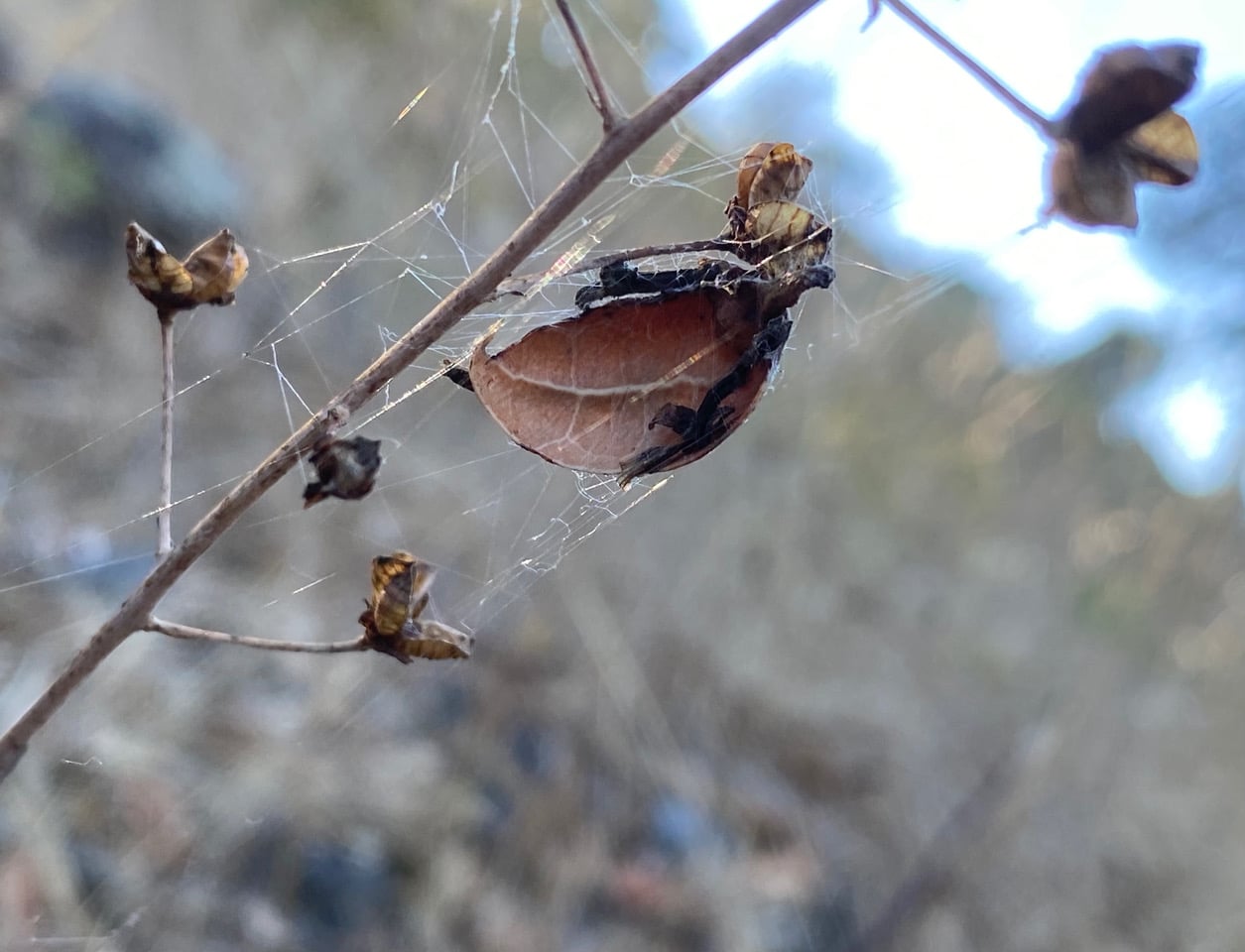
As usual, I stop at the dried Soap Plant to say hello to the Two-tubercled Orbweaver. She is not on her usual seed capsule. Neither is she on the suspended dried oak leaf I found her on last time.
The Two-tubercled Orbweaver, Gibbaranea bituberculata is a species of ‘orbweavers’ belonging to the family Araneidae. They are found in sunny habitats on shrubs, edges and low plants, where they can make their webs near the ground. Their basic color is very variable, but usually it is brownish, with whitish shades. The cephalothorax is covered with adpressed hairs.
Orb-weaver spiders are members of the spider family Araneidae. They are the most common group of builders of spiral wheel-shaped webs often found in gardens, fields, and forests. Generally, orb-weavers are three-clawed builders of flat webs with sticky spiral capture silk. The third claw is used to walk on the non-sticky part of the web. Typically, the prey insect that blunders into the sticky lines is stunned by a quick bite, and then wrapped in silk.
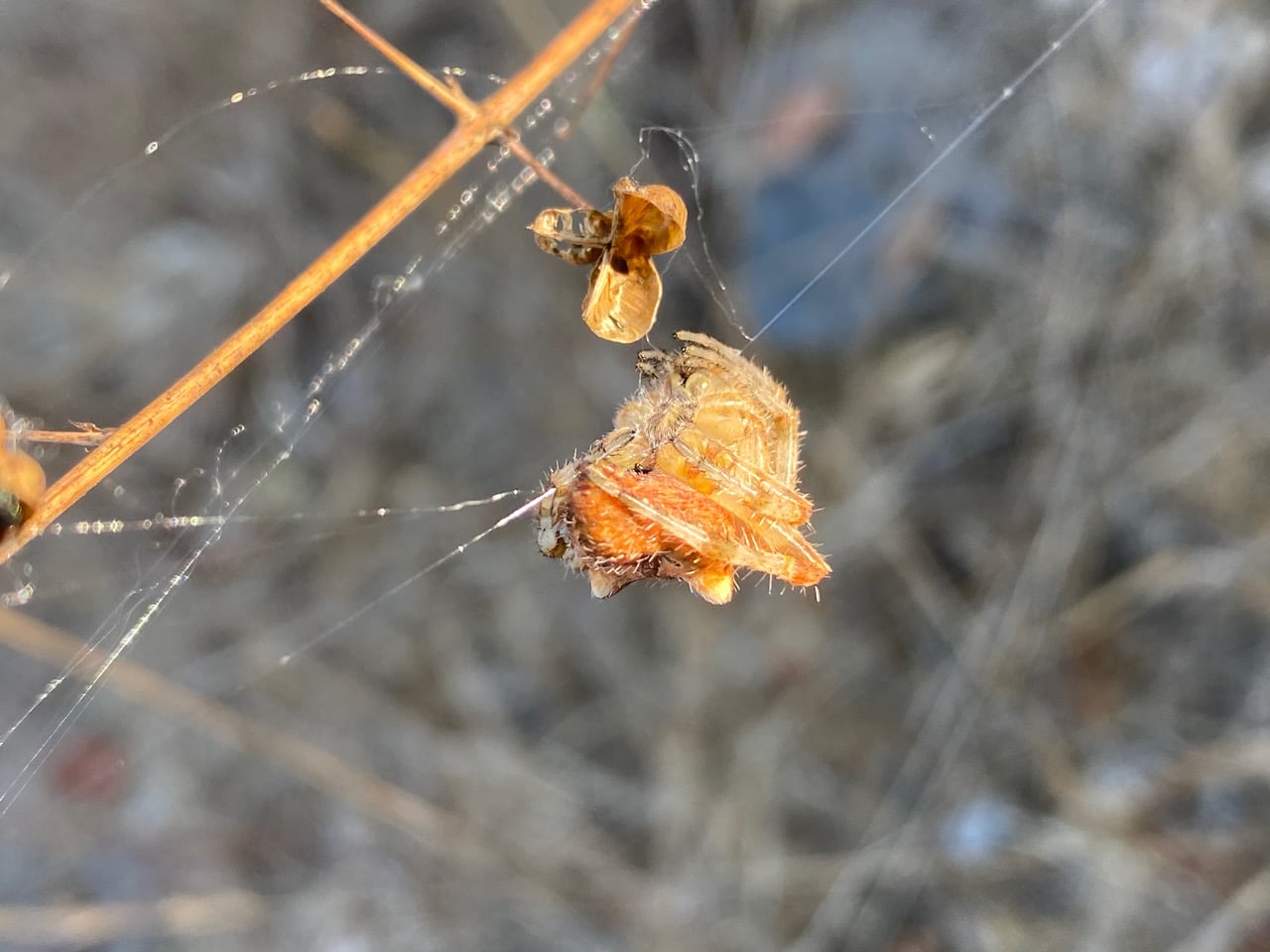
Then I spot her lower down the plant illuminated by the bright afternoon sun. She is suspended upside-down on a silk thread, motionless. Something is drastically different – her previously rotund abdomen is much reduced, shriveled. I can barely recognize her.
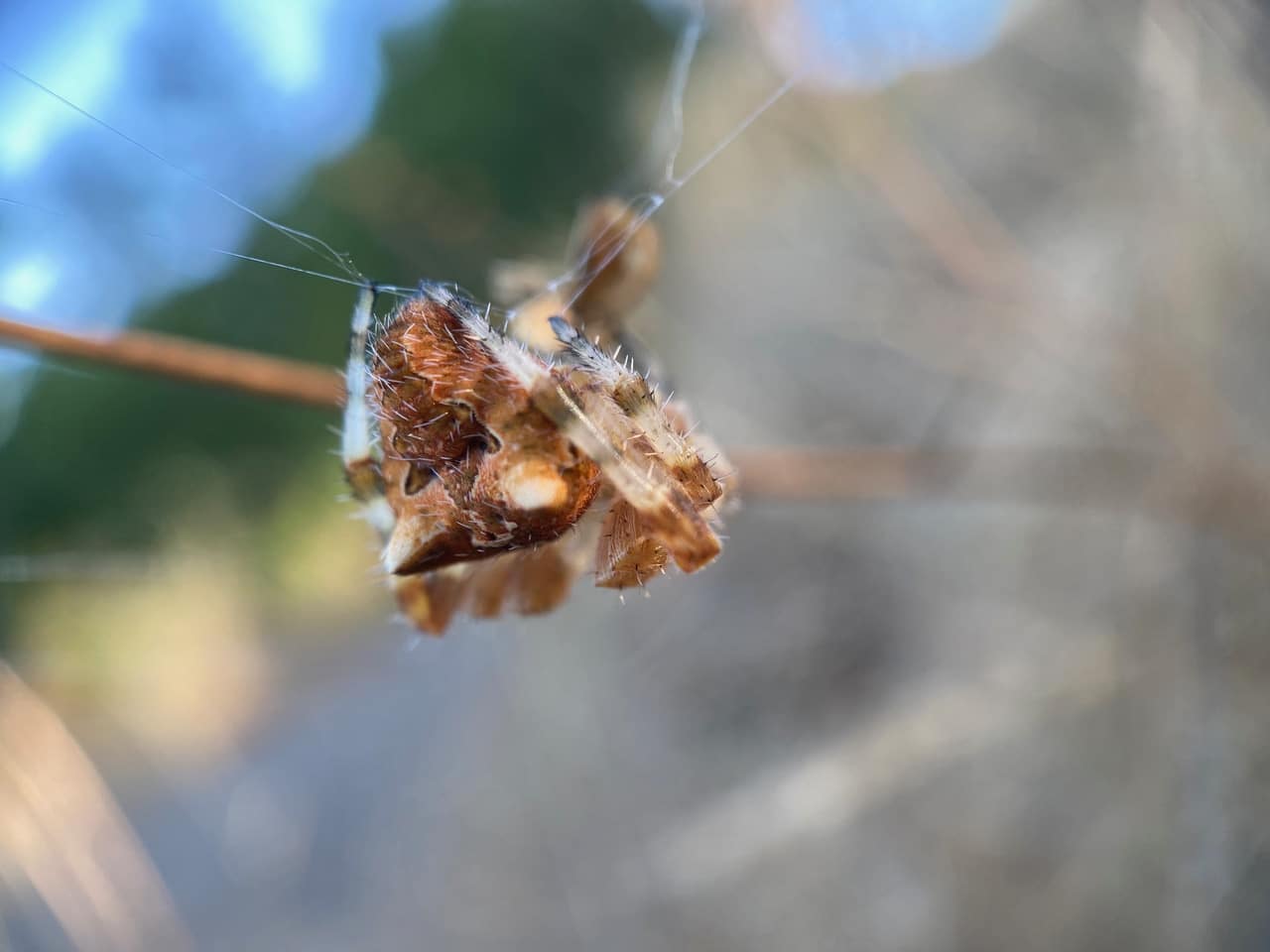
Wow, what a remarkable change! Then I realized that she must have laid a clutch of eggs. I look all over the plant for an egg sac, but can’t find it. Most likely she has placed it in the underbrush below the plant.
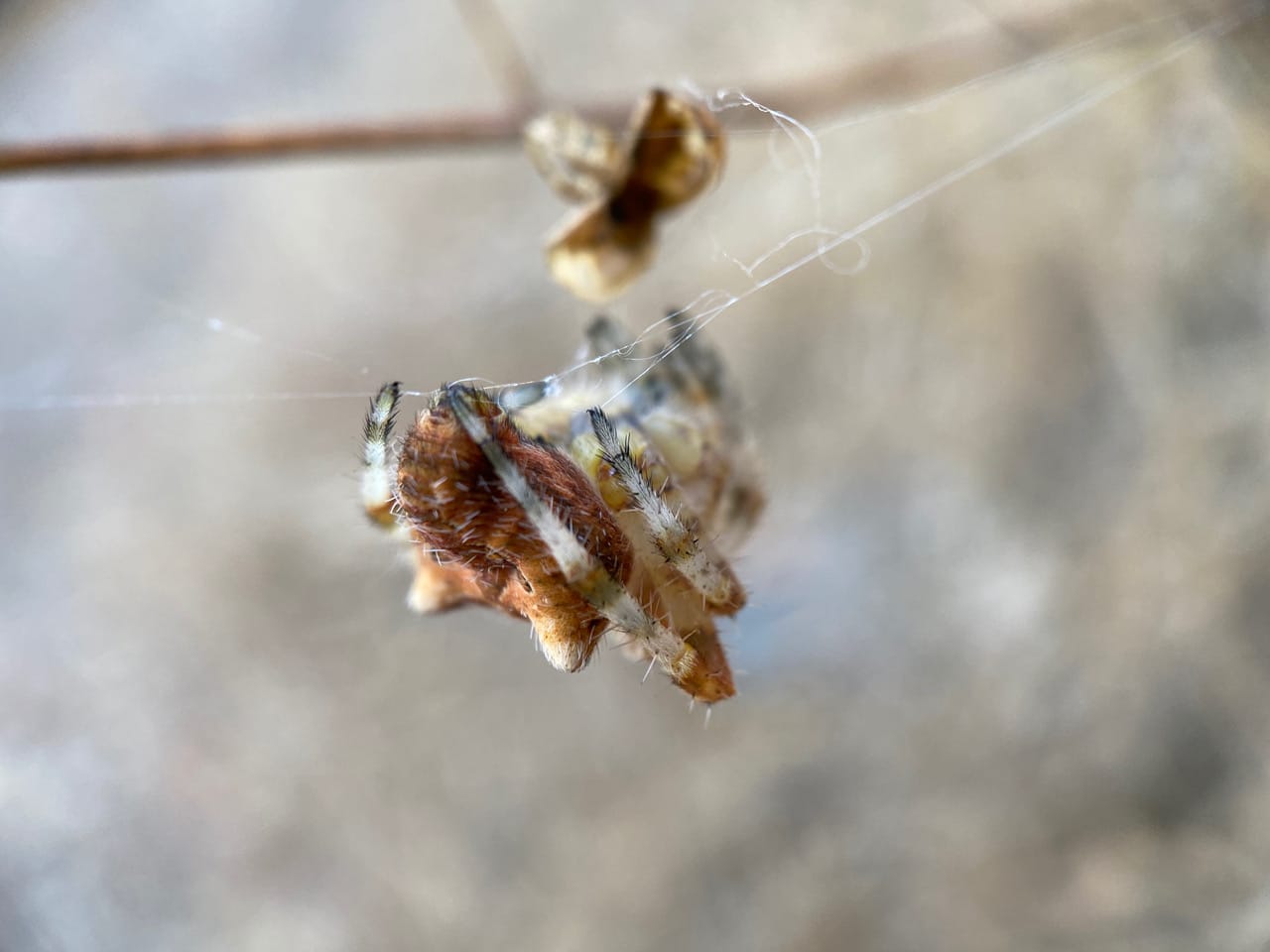
A sadness wells up in me. This could be the last time I see her – most female spiders die soon after laying their eggs. Although her death is inevitable, saying last good-byes is always hard. I have known her and watched her grow since July 9th.
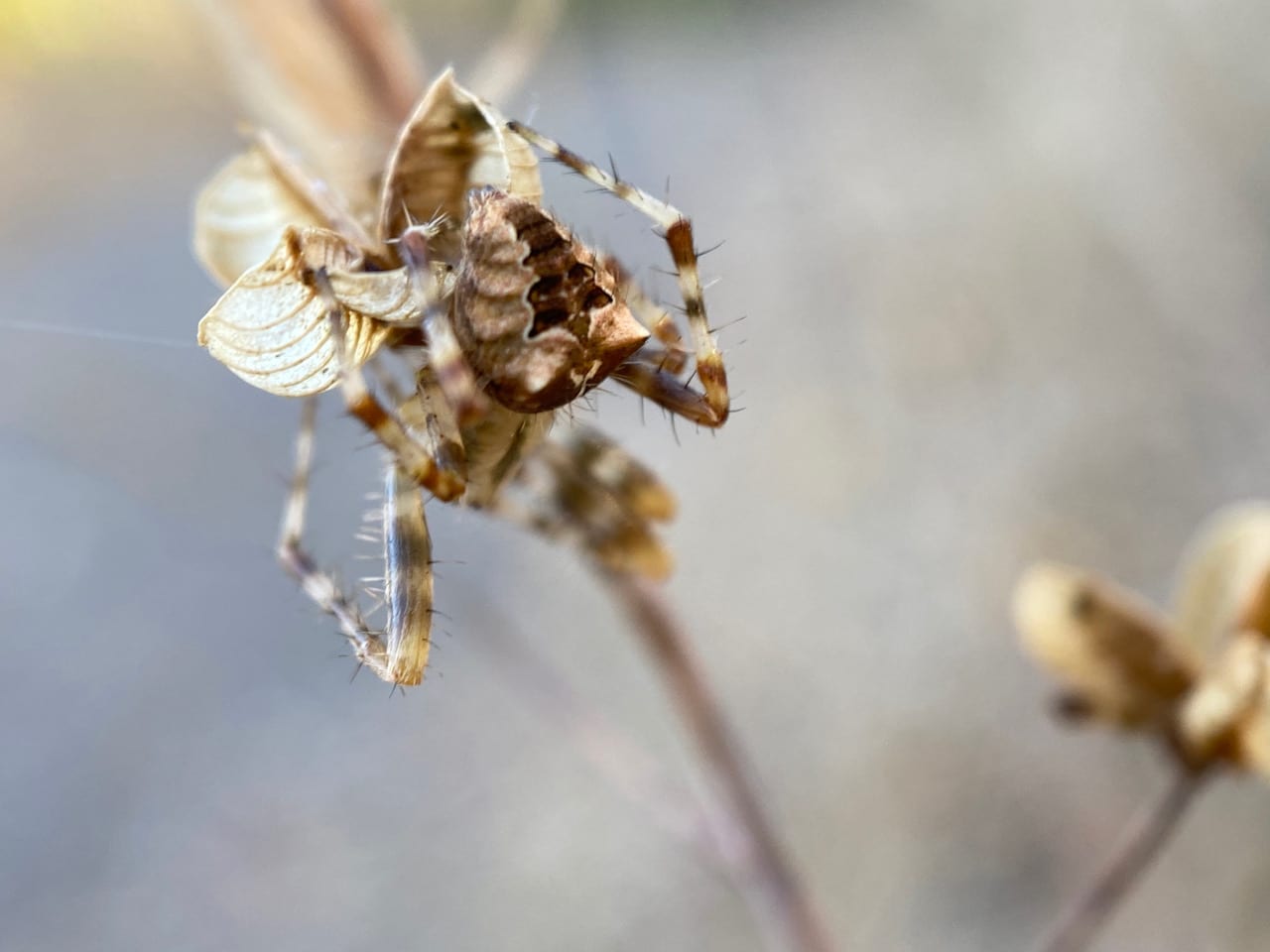
The smaller male (?) on the adjacent plant is still there on its perch. Is it the lucky father of the spiderlings that will hatch out next spring?
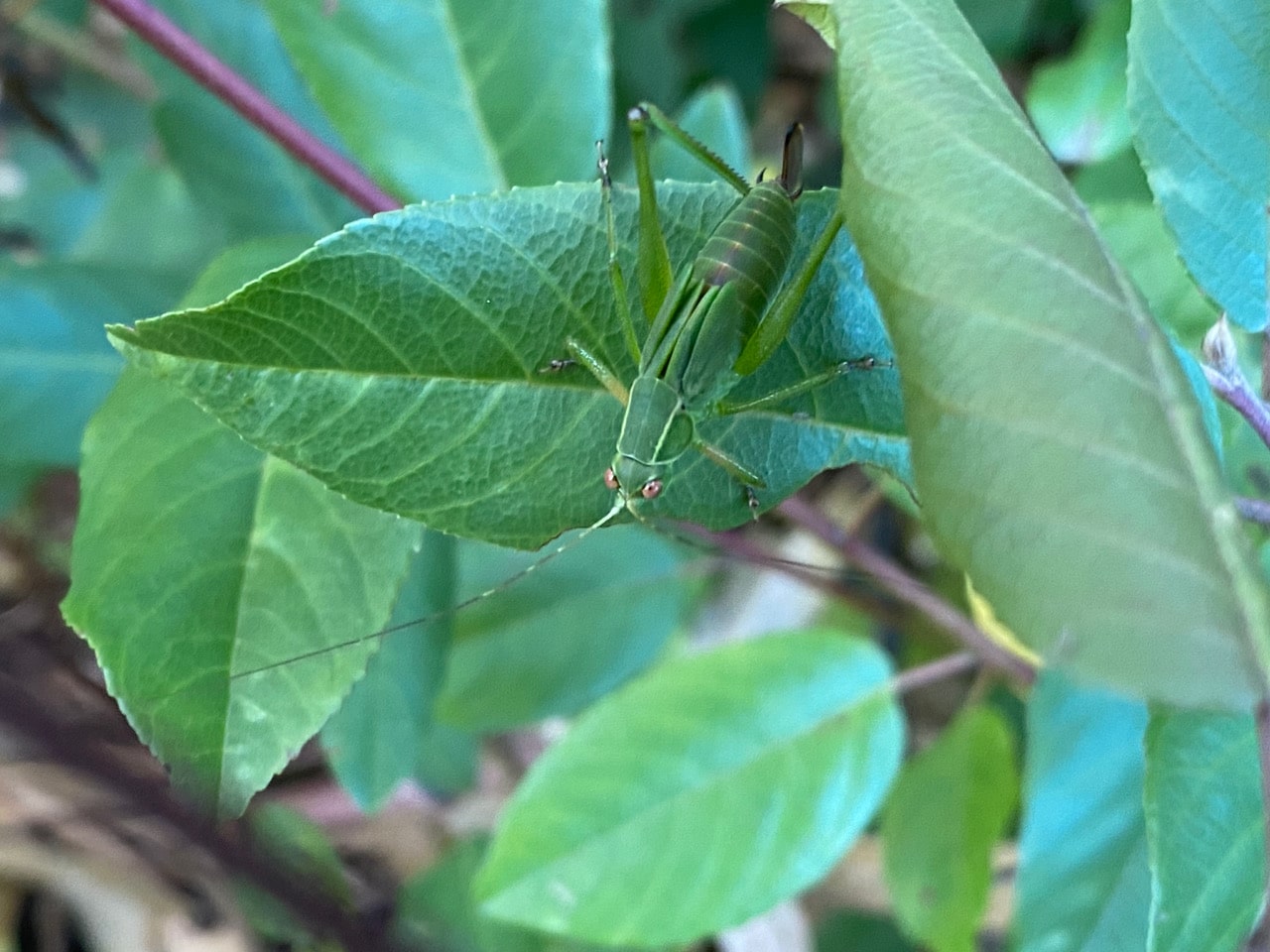
Passing the Coffeeberry bush, Frangula californica close to Blue’s, I casually scan for the Scudder’s Bush Katydid nymph I found two days ago. Much to my surprise, it is still there, just inches from where I have photographed it. Without functional wings, these juvenile herbivores are necessarily sedentary.
Scudderia is a genus of katydids in the family Tettigoniidae. They are sometimes called bush katydids and are 30-38 mm in length. They are mostly found in North America. They are herbivores, with nymphs feeding primarily on flowers and adults preferring woody deciduous plants.
Like other members of the order Orthoptera, katydids undergo incomplete metamorphosis without a pupal stage. The nymphs, which look like adults, develop through a series of molts, each time getting bigger after shedding their old exoskeleton. At the last molt, they transform into adults with functional wings and reproductive parts.
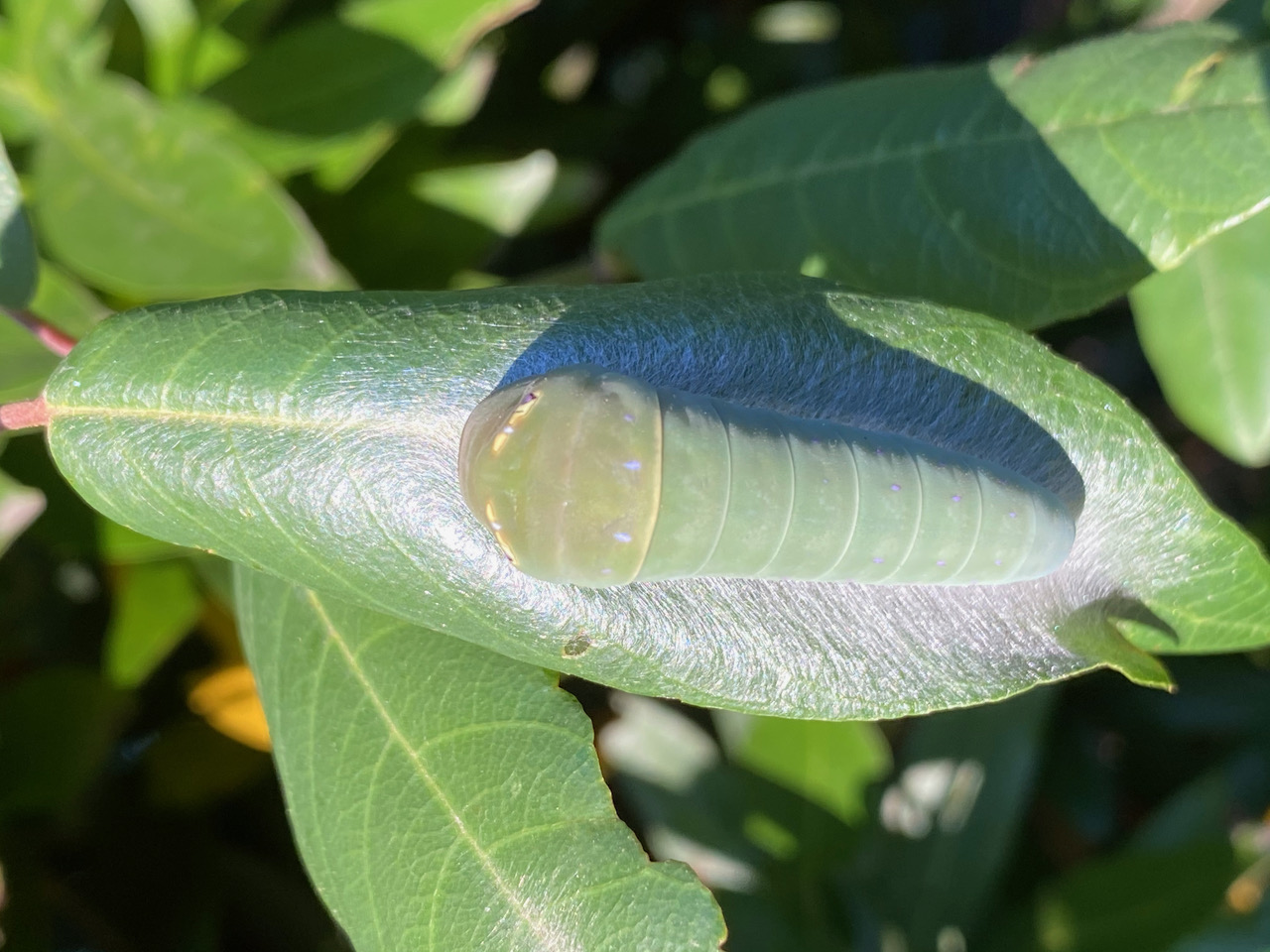
Blue, our Pale Swallowtail caterpillar is still on its Coffeeberry home leaf. It looks markedly different today. The colors on its false eyespots have faded, and the yellow band around the base of the thorax has almost disappeared. And there’s now a brownish cast to Blue’s thorax.

Side view of Blue. Its thorax seems to be a little wrinkled. Has Blue just molted?
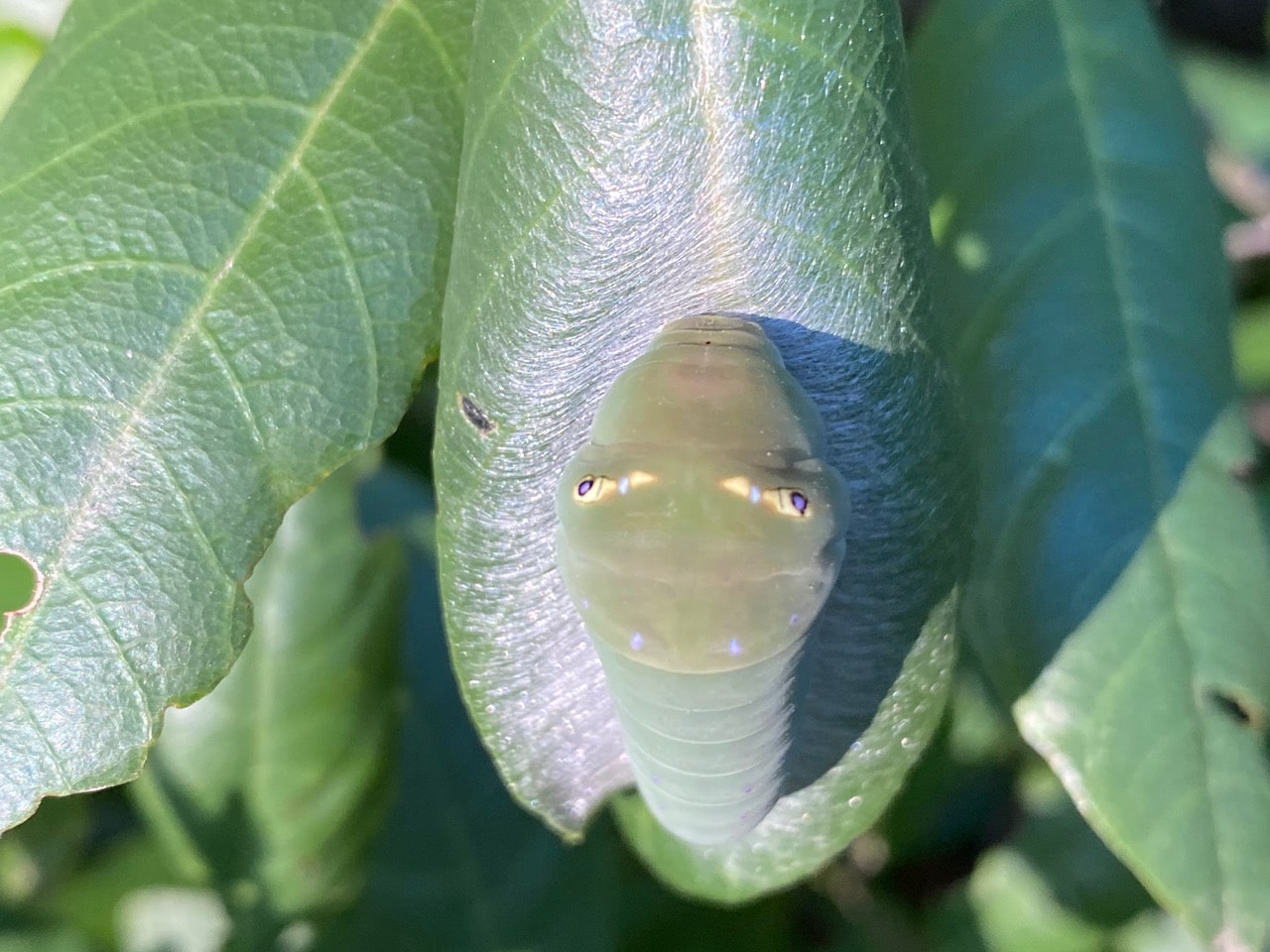
Besides the change in color, the shape of Blue’s thorax is more elongated towards the head now.
Puzzled by all these changes, I contact Alan (the entomologist who helped identify Blue) with these pictures. Here’s Alan’s reply:
“Blue is already a fifth instar, so no, it will not molt again. Based on the brownish color from today’s photos, it has finished feeding and has become a prepupa. By tomorrow it will be completely brown and most likely leave the host plant.” Wow, Blue is ready to pupate! Alan has told me previously that Pale Swallowtail caterpillars almost never pupate on their host plant. Tomorrow will be my last chance to see Blue before it goes wandering off to find a place to pupate and turn into a chrysalis!
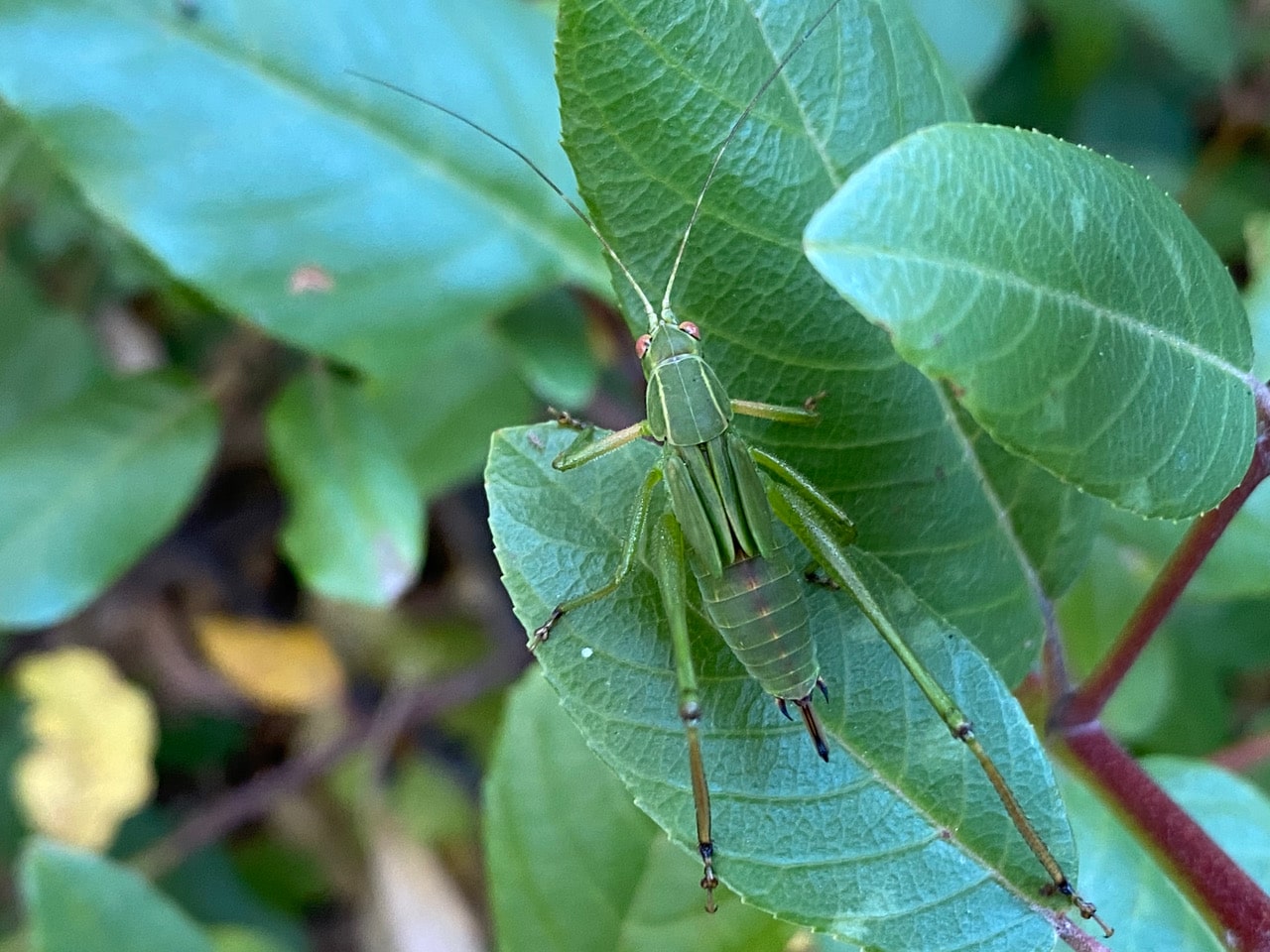
Hey, the bush katydid nymph is still in the same spot on my way back! What a handsome creature! I hope I get to see it as an adult eventually.