

Pollinator Post 0/25/23 (2)
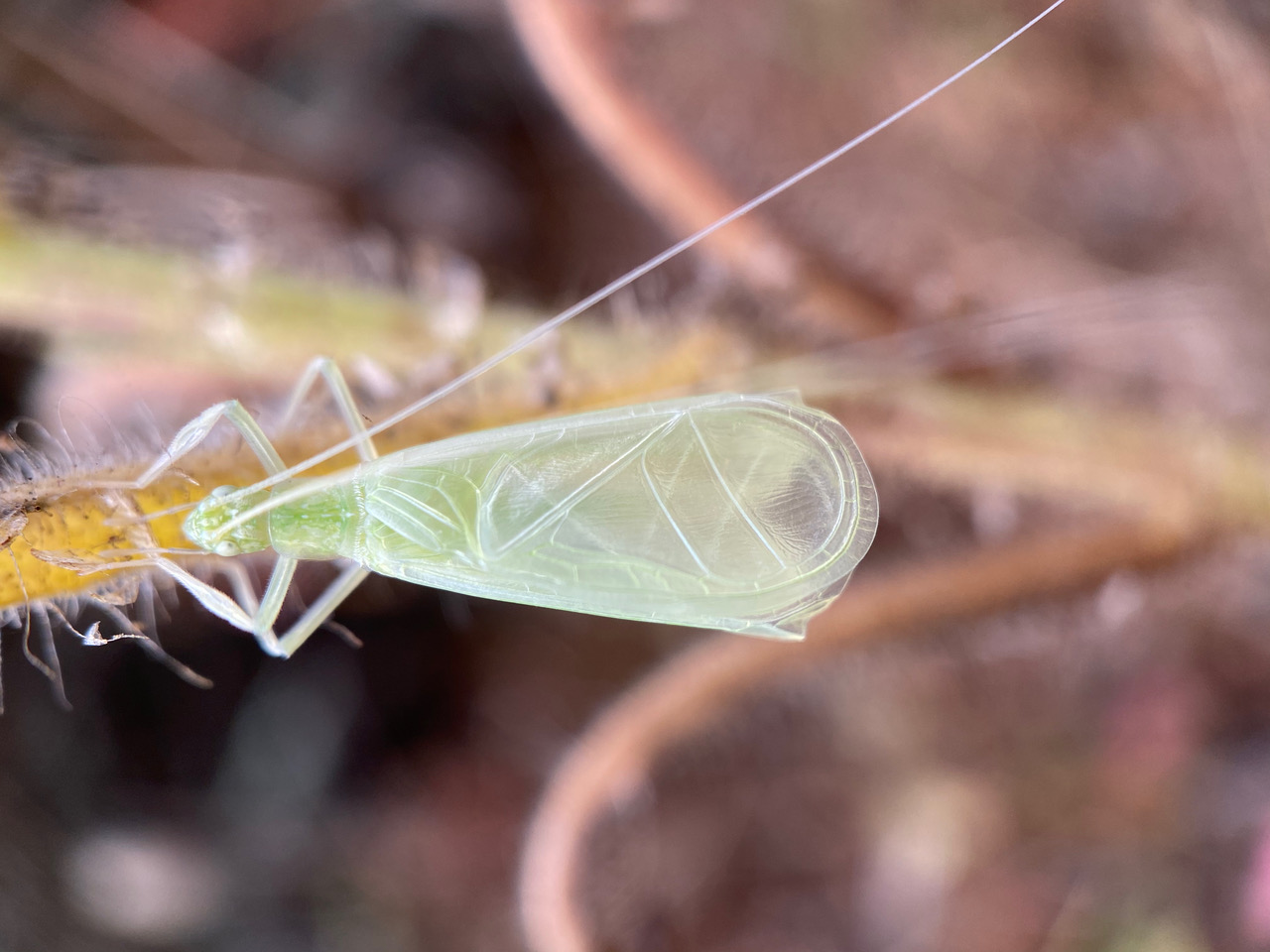
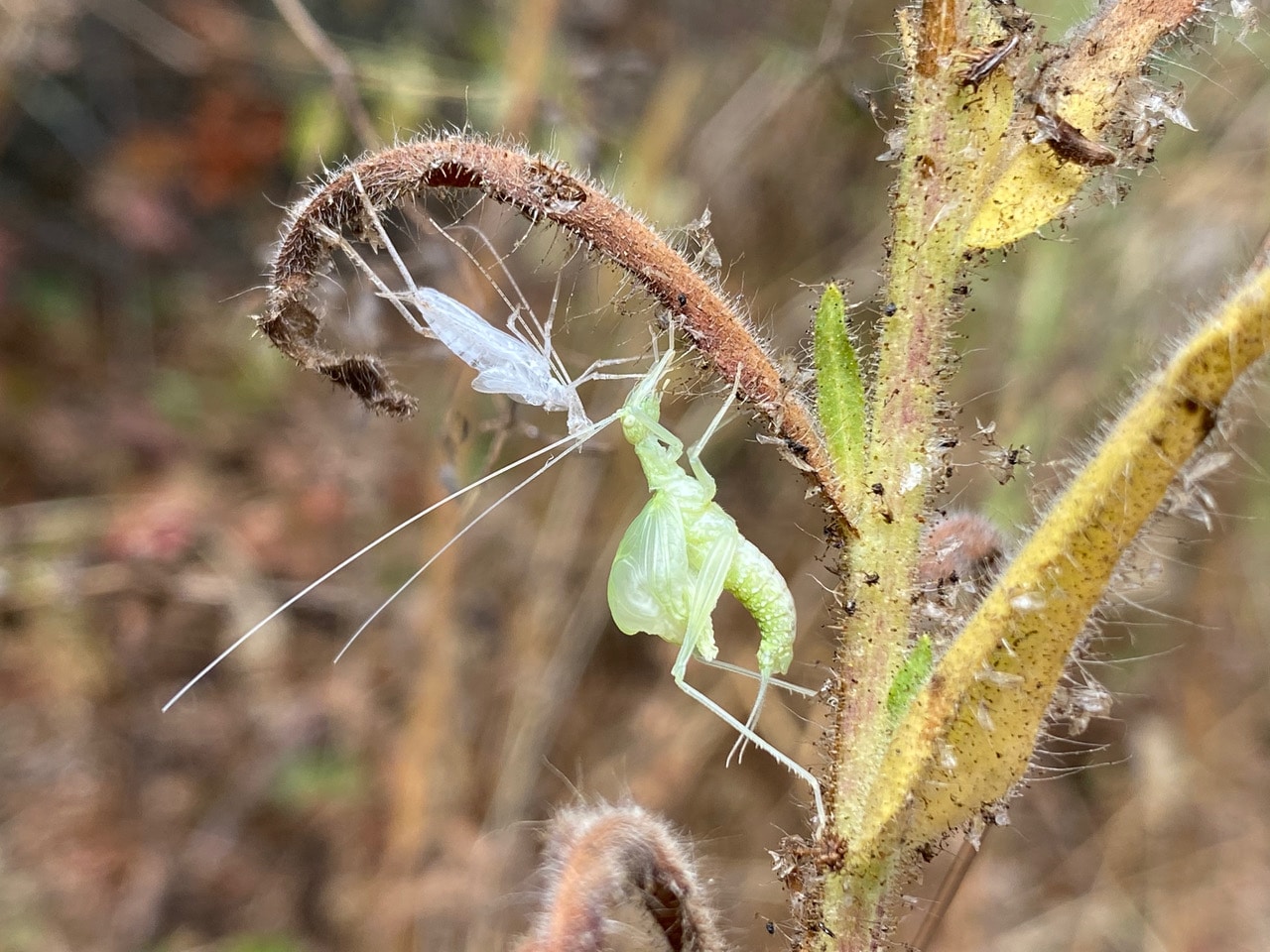 When I first came across this scene on a small Coast Tarweed at the edge of the trail, I thought I was seeing a courting pair of Common Tree Crickets, Oecanthus sp. (family Gryllidae). Closer inspection reveals that it is actually a single tree cricket that has just molted out of its old exoskeleton! The new adult has yet to expand and harden its new wings. Wow, I can’t believe the timing! The cricket stays motionless in this position for quite some time while I try to reel in my excitement and organize my thoughts. What is a nocturnal insect doing molting in broad daylight? (11:26 am to be exact.)
More often heard than seen, tree crickets are active at dusk and at night. In late summer, males produce a high-pitched whine or “song”, a prelude to courtship and mating.
Tree Crickets have two sets of wings; a female’s forewings hug her body, and males’ forewings are flat and wide. Males produce sound by rubbing together rough areas (called the “rasp” and “file”) at the base of the forewings, a method of sound production called stridulation. During sound production, the males hold their wings straight up at right angle to the body. Each species of tree cricket has its signature calls, and the tempo of the call is affected by the temperature of the ambient air. Females do not call, but they do listen with auditory organs located on the forelegs. Females prefer males who sing bass (a lower call indicates a larger caller).

All of the sudden, the tree cricket bolts from its frozen state and clumsily heads up the stem of the plant. Its new exoskeleton is still soft, so movement is difficult.


It finally settles on the leaf on the other side of the stem, its wings blown up like a short poofy skirt. It hangs motionless from this new perch to allow its wings to expand further.

Tree Crickets undergo Incomplete Metamorphosis, without a pupa stage. The insect goes through several nymphal stages. Each nymphal stage looks like a small version of the adult, getting slightly bigger with each successive molt. At the final nymphal stage the insect then molts into the adult form, complete with functional wings and reproductive organs.

Given the broad wings, I think this cricket is probably a male.
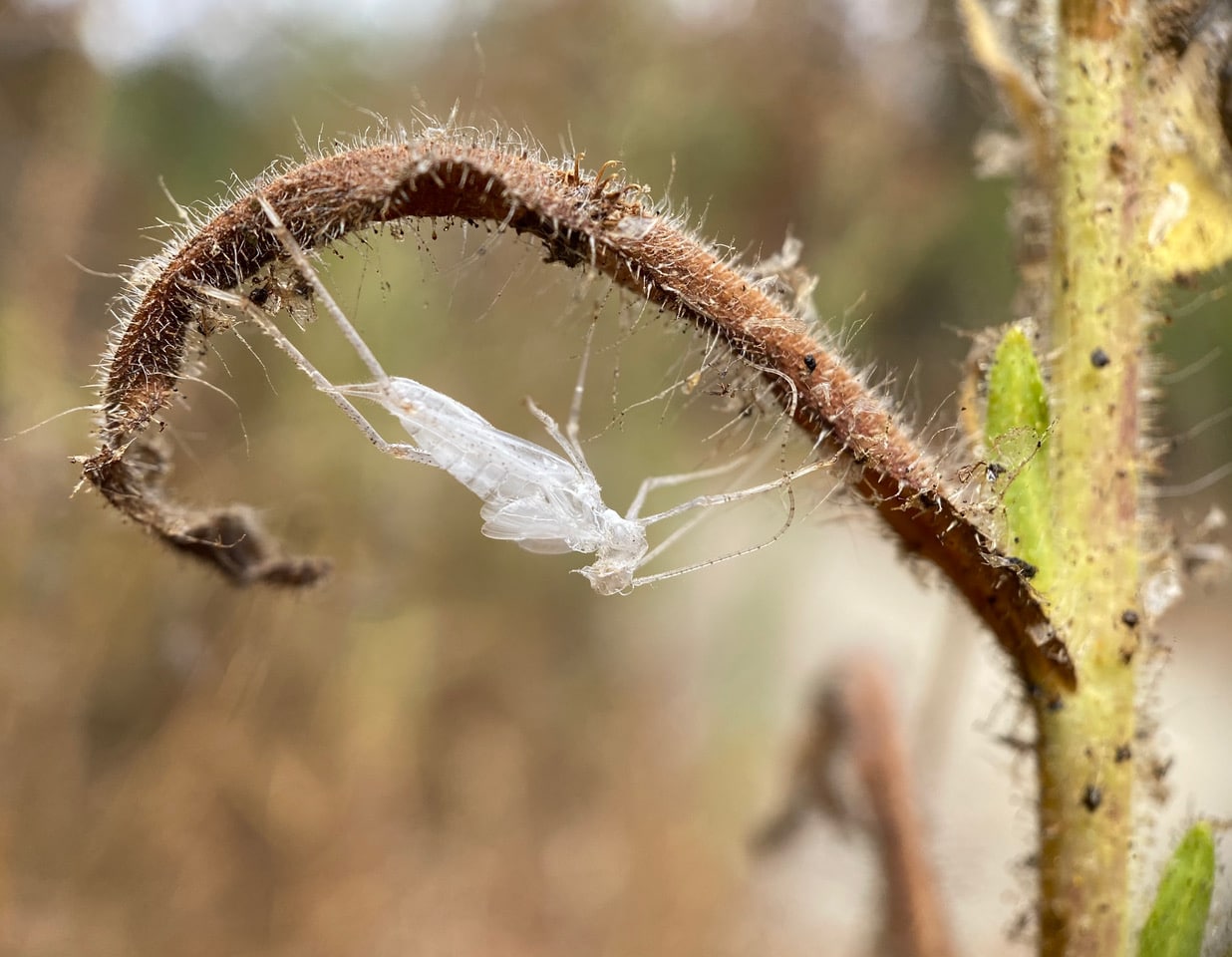
Here’s a close-up of the discarded exoskeleton. Imagine packing all the wings into those small wing buds! Note the old thread-like antennae that the insect has to pull its new antennae through. That must have been a lengthy, delicate process. The old exoskeleton usually split in the back of the thorax, from which the adult emerged.
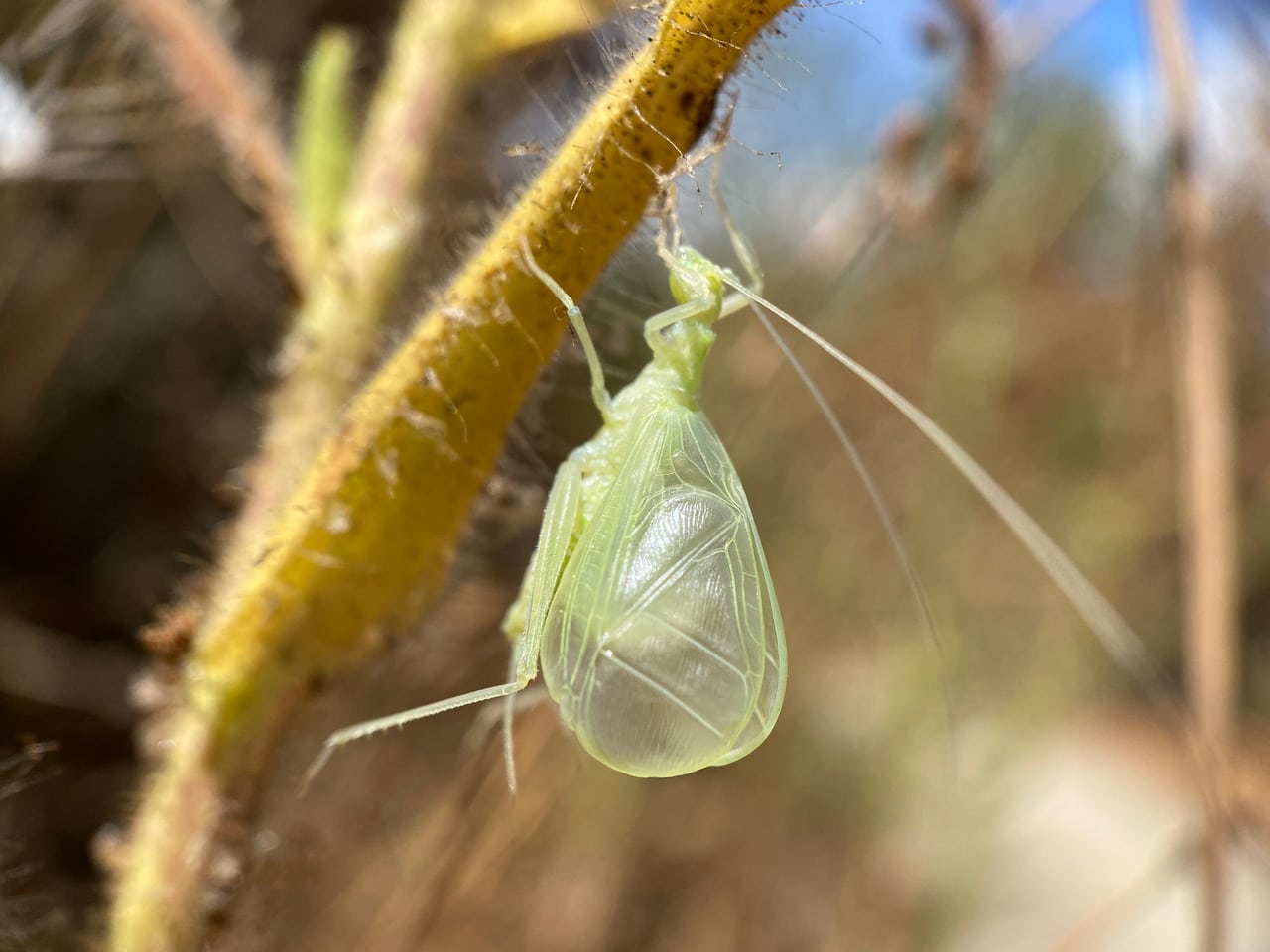
The wings lengthen as I watch. I have reared many butterflies (with complete metamorphosis) – this process of wing expansion is very similar to that of the Lepidopterans.

View from the back. Wow, the wing expansion is almost complete. Yep, it’s a beautiful male!

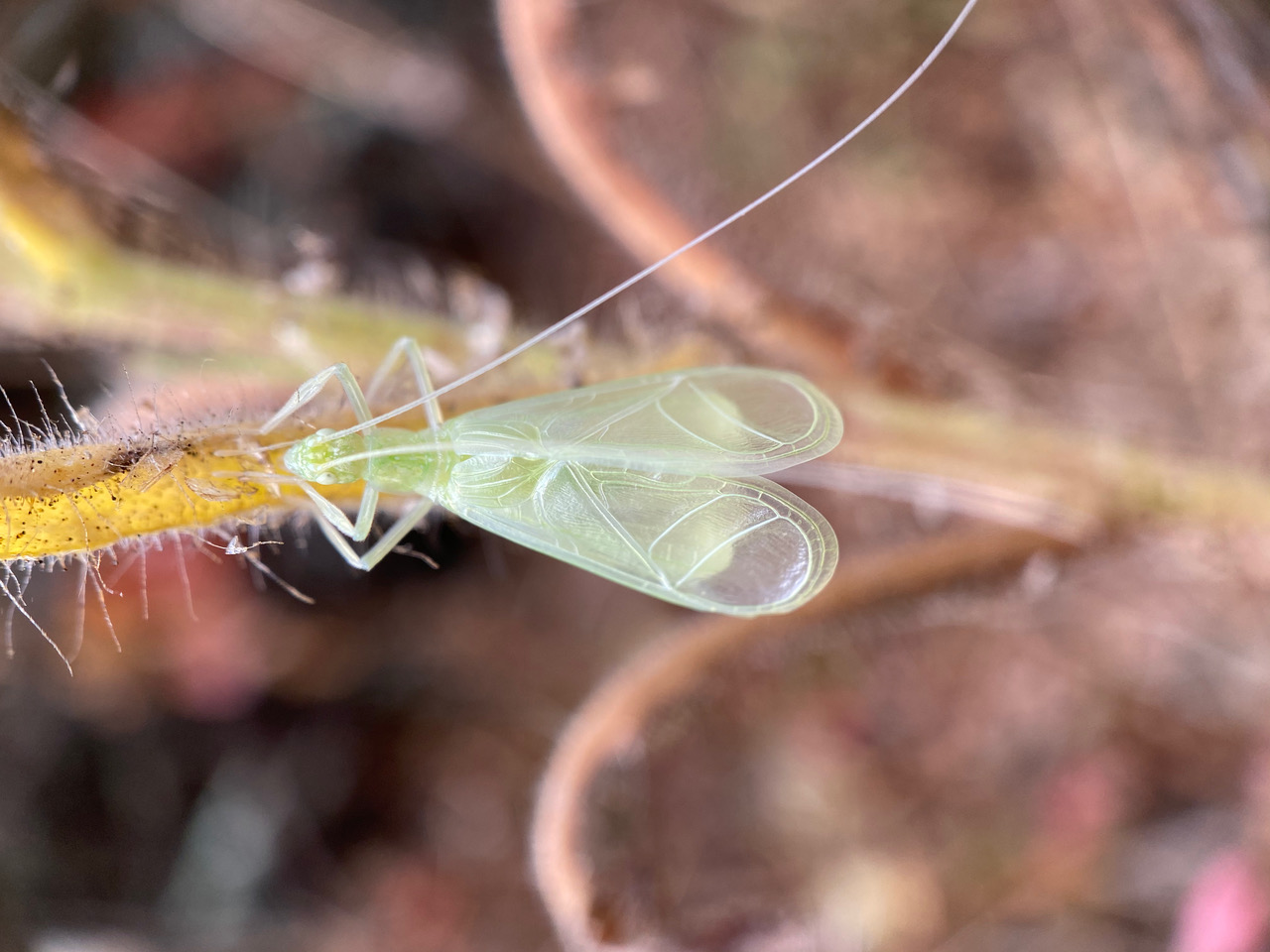

The tree cricket spreads all its wings to separate them and to give each room to expand.
The cricket can now fold his forewings, one over the other.

You can see the longer hind wings now. I watch the cricket for about 40 minutes during which most of the wing expansion occurred. The insect will need more time for its new exoskeleton to harden before it moves on. What a show – thank you, thank you! It is late in the season for a tree cricket. I hope it’s not too late for him to use his awesome wings to serenade the girl of his dreams!